O caso ocorreu cerca da 01h00 da madrugada da passada terça-feira, 29 de Setembro, numa zona movimentada, no centro da cidade de Lagos. Suspeito tem 43 anos e fica agora indiciado de homicídio na forma tentada, entre outros crimes.
José Manuel Oliveira
Um homem, de 43 anos, foi detido por agentes da Esquadra de Lagos da Polícia de Segurança Pública (PSP), cerca da 01h00 da madrugada da passada terça-feira, 29 de Setembro, na sequência da agressão a um cidadão com uma arma branca e de ter dirigido ameaças de morte a outras pessoas, no centro desta cidade. Depois de ser presente a tribunal, no dia seguinte, para primeiro interrogatório, encontra-se, agora, em prisão preventiva, como medida de coacção mais gravosa, a aguardar julgamento.
Estava na via pública, munido de uma arma branca e de um bastão, ameaçando cidadãos que passavam pelo local.
“Os polícias localizaram rapidamente o suspeito, que tinha consigo uma faca de cozinha, tendo procedido à sua imobilização e controlo, impedindo a continuação daquele comportamento”, descreve, em comunicado, a PSP.
Em comunicado, divulgado nesta quinta-feira, dia 01 de Outubro, o Comando Distrital de Faro da PSP refere que “a intervenção policial teve início após uma comunicação dando conta da presença de um homem na via pública, munido de uma arma branca e de um bastão, que estaria a ameaçar cidadãos que passavam pelo local.” Perante essa situação, “os polícias localizaram rapidamente o suspeito, que tinha consigo uma faca de cozinha, tendo procedido à sua imobilização e controlo, impedindo a continuação daquele comportamento”, acrescenta.
“Foi apurado que, momentos antes da chegada da PSP, um homem havia sido agredido com a referida arma branca. A vítima recebeu assistência médica hospitalar devido a um ferimento num dos braços e manifestou intenção de procedimento criminal.”
“O detido tinha registos recentes de envolvimento noutras ocorrências de violência com recurso a armas brancas, em Lagos e noutras localidades do Algarve.”
“No decurso das primeiras diligências, foi apurado que, momentos antes da chegada da PSP, um homem havia sido agredido com a referida arma branca. A vítima recebeu assistência médica hospitalar devido a um ferimento num dos braços e manifestou intenção de procedimento criminal. Após a detenção, foram desenvolvidas diligências de investigação destinadas ao esclarecimento das circunstâncias da ocorrência, incluindo a identificação e audição de testemunhas e lesados, bem como a recolha de elementos de prova”, sublinha o comunicado.
De acordo com a PSP, “foi ainda apurado que o detido tinha registos recentes de envolvimento noutras ocorrências de violência com recurso a armas brancas, em Lagos e noutras localidades do Algarve.”
“A PSP continuará a desenvolver a sua ação de prevenção e investigação da criminalidade violenta, intervindo prontamente perante comportamentos suscetíveis de colocar em risco a segurança das pessoas e a tranquilidade pública”, conclui o comunicado policial.
Aquando da sua detenção, ainda tentou esfaquear a vítima na zona do coração.
De nacionalidade cabo-verdiana, vive como sem-abrigo na cidade de Lagos, apurou o ‘Litoralgarve’
Segundo apurou o ‘Litoralgarve’, o caso ocorreu na Rua da Oliveira, em Lagos, tendo o homem, de 43 anos, nacionalidade cabo-verdiana e a viver nesta cidade, como sem-abrigo, entrado num bar e conseguido deslocar-se, rapidamente, à cozinha, de onde tirou uma faca, com a qual agrediu um cidadão e ameaçou outras pessoas na via pública.
Em face do sucedido, está agora indiciado de homicídio na forma tentada, entre outros crimes. Aquando da sua detenção, ainda tentou esfaquear a vítima na zona do coração.
A partir de amanhã, dia 03 de outubro, recomeça, no Mercado Municipal de Tavira, pelas 10h30, o ciclo “Sábados no Mercado” com a rubrica “Saúde no P – do Prato ao Planeta”.
Até ao final deste ano, esta iniciativa ficará a cargo da Associação em Contato de Tavira, através do projeto “Amor com Tempero 2.0” que inclui a confeção de pratos típicos algarvios, em que os vegetais e as leguminosas são os ingredientes principais.
Durante a demonstração (gratuita), a nutricionista Inês Dias terá a função de esclarecer e dar dicas ao público acerca do papel da alimentação na saúde e na biodiversidade, desmistificando receitas.
No Dia Internacional do Idoso, que se assinalou esta quinta-feira, 1 de outubro, o Município de Loulé fez o ponto de situação sobre os projetos relativos a três equipamentos sociais de apoio à terceira idade que irão reforçar a cobertura atual em todo o território concelhio.
Durante a semana, a Autarquia reuniu com os responsáveis do Centro Social e Cultural de Vale Judeu, da Associação Esperança e Paz e da Instituição de Solidariedade Social da Serra do Calderão, os promotores do lares que serão criados em breve para dar resposta a uma das necessidades mais prementes no concelho.
Em relação à futura estrutura residencial para idosos de Vale Judeu, neste momento encontra-se em revisão do projeto, “o que significa que, muito em breve, estará pronto para ser lançado o concurso público”. É também neste ponto em que se encontra o lar que irá nascer em Loulé, numa iniciativa que tem o envolvimento direto da Associação Esperança e Paz. “Aguardamos a entrega do projeto de execução para depois ser revisto e também poder ir para concurso”, refere Telmo Pinto.
O alargamento do Centro Comunitário de Nossa Senhora da Conceição, no Barranco do Velho, permitirá criar mais um equipamento para apoiar a população idosa no interior do concelho, um território marcado pelo envelhecimento demográfico. Este será “um processo mais rápido”, até porque já foram entregues as especialidades, prevendo-se que, num curto prazo, seja lançado o concurso.
No total dos três equipamentos, serão mais 120 lugares em lar disponíveis para uma resposta social em que os equipamentos estão longe de ser suficientes. “Continuamos a trabalhar, juntamente com os responsáveis das instituições, coordenando este trabalho para que nada falhe e possamos responder o mais depressa possível às necessidades das pessoas”, realça o autarca Telmo Pinto.
Um homem de 33 anos ficou em prisão preventiva depois de ter sido detido pela GNR, no dia 28 de setembro, por suspeitas de roubo com recurso a arma branca, no concelho de Albufeira. Três pessoas sofreram ferimentos ligeiros numa das ocorrências.
Segundo o Comando Territorial de Faro, a intervenção começou após um roubo num estabelecimento comercial, onde o suspeito terá ameaçado com uma arma branca e levado uma caixa registadora.
Durante as diligências para o localizar, o homem terá entrado noutro estabelecimento comercial e tentado apoderar-se de uma segunda caixa registadora, novamente sob ameaça com arma branca. Foi nesta ocorrência que três pessoas ficaram ligeiramente feridas.
Os militares do Destacamento Territorial de Albufeira deslocaram-se ao local, onde intercetaram e detiveram o suspeito. A arma branca alegadamente utilizada foi apreendida.
Após ser presente a primeiro interrogatório judicial, foi-lhe aplicada a medida de coação de prisão preventiva.
Nepal is set to begin draining four high-altitude glacial lakes in an effort to reduce flood risks, as the country recovers from the recent catastrophic deadly flood that killed more than 1,400 people.
People around the world are living longer again, with global life expectancy almost fully recovered from the disruption of the COVID-19 pandemic, the World Health Organization (WHO) said on Friday.
The war in Ukraine is a human rights catastrophe that is “growing and intensifying by the week” and threatening an even greater disaster across the region, UN High Commissioner for Human Rights Volker Türk said on Friday.
Governments, UN entities, civil society, media, academia and the private sector have called for stronger cooperation and practical action to respond to a rapidly changing global information landscape.
Aprender um ofício, participar num workshop, provar sabores locais ou descobrir histórias e tradições do território. São algumas das propostas reunidas na nova plataforma digital Make In Algarve, lançada pelo Turismo do Algarve para aproximar residentes e visitantes da oferta de experiências de turismo cultural e criativo disponível na região.
A plataforma reúne, numa primeira fase, cerca de 50 experiências, entre visitas guiadas, oficinas, workshops, provas e degustações, nas áreas da gastronomia, artes e ofícios, história e cultura, entre outras. A pesquisa pode ser feita por tipo de experiência, categoria ou concelho, facilitando também o acesso aos contactos necessários para efetuar reservas. Inicialmente disponível em português, terá em breve versões em inglês e em espanhol.
A ideia da plataforma Make In Algarve é simples: convidar quem visita a região a deixar de ser apenas espectador e a participar. A marca foi criada precisamente para valorizar o “fazer”, aproximando turismo e comunidade, tradição e contemporaneidade, litoral e interior.
Para André Gomes, presidente do Turismo do Algarve, “a Make In Algarve convida quem nos visita a conhecer melhor a região através das pessoas que aqui vivem, dos seus saberes e das experiências que dão identidade ao território. A plataforma torna esta oferta mais fácil de encontrar e ajuda também os operadores a chegar a novos públicos. É uma forma de criar novas razões para descobrir o Algarve e de gerar procura ao longo de todo o ano”.
Uma plataforma construída a partir do território
A Make In Algarve integra o Programa de Desenvolvimento de Turismo de Experiências Culturais e Criativas do Algarve, desenvolvido pelo Turismo do Algarve em parceria com a Tertúlia Algarvia, no âmbito do projeto INOVA Algarve 3.0. O trabalho envolveu os 16 municípios da região e incluiu 18 sessões de apresentação, com 138 participantes e 58 acordos de cooperação, seguindo-se ações de capacitação e acompanhamento dos operadores.
O programa deu também origem à primeira edição do Prémio Make In Algarve – Melhores Experiências de Turismo Cultural e Criativo. Os vencedores foram “Sabores e saberes de um Algarve antigo”, de Vânia Mendonça, do Museu do Traje de São Brás de Alportel, em Turismo Cultural; “Da Rocha da Pena ao Mel do Caldeirão”, de Joana Almeida, da Loulé Rural, em Turismo Criativo; “Algarve Go West: A Slow Food Journey”, de Luís Mota, da Seaside Walks, em Impacto Local – Barlavento; e “Castro Marim Medieval”, de Carlos do Carmo Unipessoal, em Impacto Local – Sotavento.
A entrega dos prémios decorreu em junho, integrada na abertura do Handsome Festival – Festival Internacional de Turismo Cultural e Criativo do Algarve, outra das iniciativas desenvolvidas no âmbito do programa.
O projeto continua agora com novas ações de promoção e capacitação. Entre outubro e novembro estão previstas sessões para apoiar os operadores que pretendam comercializar as suas experiências em plataformas internacionais como GetYourGuide e Viator, bem como um roadshow junto de 25 DMC e unidades hoteleiras de cinco estrelas da região, procurando ampliar a divulgação desta oferta e estimular a procura ao longo de todo o ano.
Rather than abandoning the plainly nuts Fairford narrative, Burnham and his government are doubling down on the claim it is an Iranian terror plot.
It remains quite possible the men were indeed fuel thieves, simply stealing fuel from farms. They appear to have been equipped for fuel theft and all they were carrying was petrol. It is worth a footnote that there is a very real history of US military personnel, and indeed British personnel, selling military fuel from bases. Stolen red diesel meant for HMS Bulwark fuelled fairground rides throughout England, which I think is rather lovely. But if the Fairford Five were fuel thieves, farms are more probable as the target.
We should pause here to acknowledge that USAF Fairford is falsely designated RAF Fairford, itself a propaganda lie, just like “RAF Lakenheath” or “RAF Mildenhall”. The UK is full of US military bases, on which US law applies. (My birth certificate gives my father’s occupation as “Clerk USAF”. He was employed at Mildenhall at the time).
It is a classic example of state propaganda that the petrol discovered in the Fairford vans was described by counter terror police as a potential accelerant for a bomb.
Well yes, petrol is that. It has however, rather more obvious uses too. The same technique was used at the height of the War on Terror propaganda in the Great Easter Bomb Plot, that never was. Police rounded up and arrested many young Muslims across the Manchester region, which was front-page news. They were all later released without charge.
But at the time of arrest the police announced they had found a potential bomb-making ingredient in a kitchen.
Well, they had. It was a bag of sugar. Sugar is indeed a potential bomb-making ingredient. Yet most of us have a bag in the kitchen. At least it did not take the police ten days to find the bag of sugar in the kitchen, unlike when they searched Charlie Rowley’s flat for a vial of novichok, and it took them ten days to “find” a bottle of perfume sitting on the kitchen counter.
For Fairford, on balance I think a false flag gone wrong is a little more likely than just fuel thieves. We know the men had no bombs and no guns, which makes the terrorist narrative rather hard for the government to sustain. But if they were patsies set up in a false flag, there would be plenty of things already on the base that go bang which could have been used to create the “terrorist incident” around them.
Two key points make me think this was a false flag. Firstly the lady farmer who called 999 was adamant there were more men that the five arrested and bailed. The others would have been the spycops – agents provocateurs – who would have been quietly spirited away from the scene. That also fits with the released information that it was one of the men who phoned in a warning about the “attack”.
It looks to me like a false flag spectacular had been planned, with US involvement as claimed by Trump and possibly Israeli knowledge as claimed by Netanyahu. This operation by the security services was viewed as over the pay grade of local police (who might be inconveniently honest) who were not in the picture. It all went horribly wrong for the government when an alert local farmer called the local police, and when a participant also called it in. That could have been one of the recruited “terrorists” who got cold feet, or one of the agents panicked they had lost contact with their line of command.
The use of recruited patsies to carry out false flags is now better understood. I have been writing about it since before the Newburgh bomb plot which was a particularly egregious example. In the United States there has been more awareness of and reaction to agent provocateur incited plots than in the UK.
For anyone sceptical, here is a summary of Newburgh:
In May 2009 the FBI arrested four poor men from Newburgh, New York, and announced it had foiled a plot to bomb two synagogues in the Bronx and shoot down military planes at Stewart Air National Guard base. The plot, the targets, the inert bombs and the disabled Stinger missile were all supplied by the Bureau. The recruiter was Shahed Hussain, a Pakistani fraudster who had become an informant to avoid deportation after a driving-licence scam. Paid nearly $100,000, he spent more than a year fishing at a Newburgh mosque, posing as a wealthy Jaish-e-Mohammed agent, before latching onto James Cromitie, a Walmart stocker and petty drug dealer.
Hussain offered heavenly reward and as much as $250,000. Cromitie brought in three others: Onta Williams, David Williams and Laguerre Payen. Hussain drove them across a state line to inspect the fake weapons, which federalised the charges and carried a 25-year minimum. They were convicted in 2010.
The sentencing judge, Colleen McMahon, said she believed beyond a shadow of a doubt that there would have been no crime except that the government instigated it, planned it and brought it to fruition. In 2023 she ordered the release of three of them, calling it an FBI-orchestrated conspiracy and writing that the real lead conspirator was the United States. She freed Cromitie in 2024 on the same basis, describing him as a small-time grifter with no history of violence and Hussain as a villain who had lured him with promises of both heavenly and earthly rewards.
The Golders Green ambulances arson was a classic of this false flag genre. Four young Muslims were recruited, in this case online rather than in person, by someone they never saw who was almost certainly a Mossad agent. They were offered money to attack the ambulances, which they did. The attack is then blamed on Iran through a claim on a Telegram channel on behalf of an “Iranian organisation”, Harakat Ashab al-Yamin al-Islamia, which is a Mossad fabrication.
HAYI first became known to the world through simultaneous press releases on 16 March by five Israeli government outlets in Israel, US and UK (including BICOM) and an article by the Israeli front “Foundation for Defending Democracy”. The FDD’s Nick Stewart travels with Kushner and Witkoff as part of the US negotiating team on the Middle East.
There are numerous reasons for doubting the real existence of HAYI. None of its material is in Farsi. All of its “attacks” have been minor arson attacks on pointless targets that hurt nobody. The grammar, calligraphy and imagery of its materials are all wrong.
The UK state itself has now debunked some of the Mossad HAYI narrative. On 29 April, when Essa Suleiman stabbed three men, the entire media blocked out the first Muslim victim and claimed an antisemitic terrorist attack on the two in Golders Green. The HAYI Mossad run “Iranian” Telegram channel immediately put out a statement claiming responsibility for the attack. But yesterday police and prosecution were forced to drop the claim it was a terrorist attack at all. The stabbing of the Muslim is charged as attempted murder, though still ignored by the media. So “HAYI” claimed responsibility for a non-existent terrorist incident.
A false flag can be, but is not necessarily, the state planting a bomb and then blaming someone else. It can be more complex – the state recruiting people to plant bombs. Those people may believe they are genuinely part of an ideological campaign, or may just be doing it for money.
The opaque Starmer rent-boy arson plot, in which Ukrainian male models burnt property associated with Keir Starmer, remains unclear, largely because any discussion of what lay behind the attacks was banned by the judge in the trial. But the media, with government encouragement, continually relays the story that the arsonists were recruited online by a man known as “El Money”. An interesting twist here is that the media constantly refer to him as Russian-speaking. But the evidence in court is that he spoke both Russian and Ukrainian.
Almost all adult Ukrainians can speak Russian. The number of Russians who speak Ukrainian is very small. Yet El Money is now routinely portrayed as Russian.
Which brings us to the whole question of Russian “hybrid attacks”, where we are asked to believe the narrative of the security services of states whose leaders are openly promoting war with Russia, about desultory and mysterious attacks. The rather sorry Leipzig drone is a good example. We have a more recent claim of Russian arson from Estonia, a state which has instituted massive discrimination against the 29% of its population who speak Russian.
Not only has Estonia closed Russian schools, libraries, theatres, churches, cinemas and university courses, it even refuses passports to people born and bred in Estonia, whose parents were born and bred in Estonia, if they cannot speak Estonian. That is totally contrary to numerous UN, Council of Europe and OSCE instruments on protection of minority linguistic rights.
It is one thing to insist on language qualification for citizenship for new immigrants. Many countries do. It is quite another thing to deny citizenship to a native linguistic minority. Estonia was part of Russia from 1721 to 1919 and of the Soviet Union from 1941 to 1991. It has Russian speakers.
So I decline to believe the Estonian government on Russian “hybrid attacks”.
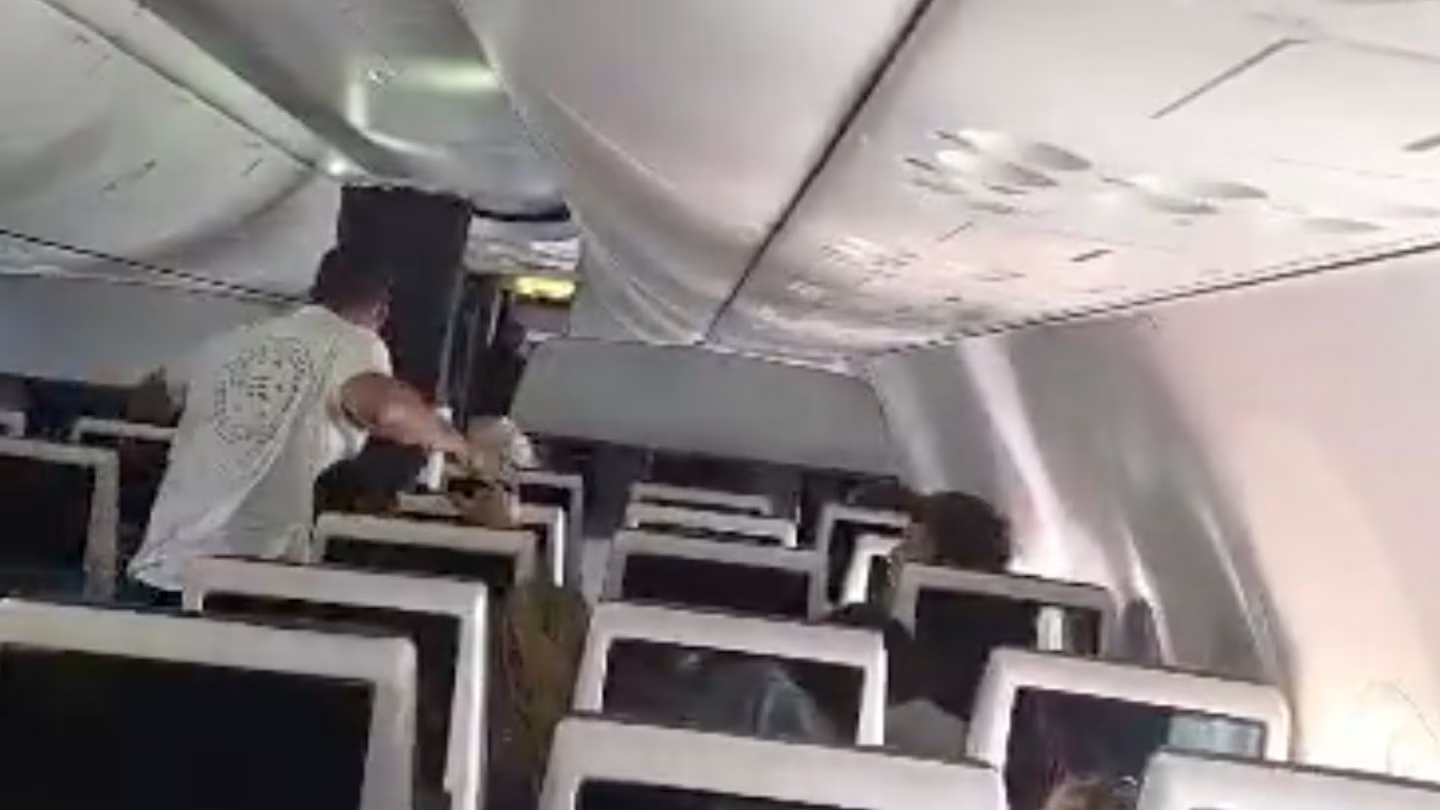
Which brings us to the amazing “FlyDubai” hijacking and the heroic plumber who knew how to rescue a plane from a death dive because he watched Air Crash Investigation.
There are real problems with this narrative. One is that the plane is said to have dived approximately 15,000 feet in about 30 seconds. This is said to be confirmed by independent flight trackers.
The force was so enormous that the rudder ripped off the plane.
Picture a dive of 500 feet – that is more than a 40 storey building – per second. Picture that. 500 feet in a second. Imagine yourself falling that fast. The forces would be enormous inside the cabin. Anybody not strapped in would be lifted right out of their seats and probably hit the ceiling. Many would be injured. Any unfastened object, including major ones like food trollies, would be hurled about with great force. Baggage lockers would come unlocked as the weight of the bags inside was hurled up. Remember this dive ripped the rudder off. It would be impossible for anyone not strapped into their chair to keep their footing or seat.
Chilling footage of the Flydubai FZ1073 commercial plane making a rapid descent during the on-board struggle between the hijacking pilot and co-pilot/passengers. pic.twitter.com/PsSSPwhThr
We have a great many videos from on board the plane but nothing like this is shown. No video shows this kind of extreme situation, and the cabin at the end of the flight is remarkably undisturbed.
Before #FZ1073 changed its squawk to 7700, we observed extreme fluctuations in the transmitted altitude data, with calculated vertical speeds ranging from approximately -30,000 to +10,000 ft/min.
For context, vertical speeds during normal operations rarely exceed ±4,000 ft/min.… pic.twitter.com/Zgyn0iQ33a
There is also a problem with that flight-tracking data. As pointed out by this commercial pilot on CNN, a plane can’t easily slow down in mid-air. He is disbelieving of how quickly the flight trackers show the plane returning to normal speed. He is also deeply sceptical of the ability to control the plane after the rudder came off due to loss of hydraulic fluid, and of the chances of the airframe staying together. Now compare that to the lack of cabin tumult.
I have seen it argued that if you entered the dive very gently and carefully without sudden change of pitch, and exited it similarly smoothly, then you would avoid extreme G-forces and the cabin might be relatively undisturbed. Even if so, it is hard to imagine the kind of smooth transition into the dive in the circumstances we are told were occurring in the cockpit, with the co-pilot deliberately putting the plane in a death dive while fighting with the pilot.
The smooth transition out of the dive in the official story was achieved by a plumber who knew what to do from watching Air Crash Investigation. I don’t think I need to comment on that.
We will never find out the truth about FlyDubai. The plane diverted to Saudi Arabia. The copilot who is being painted as an Islamic extremist will be isolated there and tortured by the Saudis. Netanyahu has already said Israel will join the interrogation. Do not believe any confession or evidence from the co-pilot.
The plane was a Boeing, so the USA will join the initial investigation alongside UAE, Saudi Arabia and Israel. A more potent coalition of Zionist evil does not exist. We will certainly have faked flight data recorder and cockpit voice recorder evidence coming from that shower.
I do feel something has snapped in people’s willingness to believe official narratives. The Skripal narrative was even more crazy than any of these, but most people still trusted government. Thankfully that faith has been seriously shaken.
Dopo la risposta di “Duc in altum” [qui], anche l’arcivescovo Viganò ha reagito [qui] alla lettera inviata al blog dall’avvocato Pietro Piciocchi a proposito del commento dello stesso monsignor Viganò al discorso di Leone XIV all’Eliseo.
Propongo il nuovo intervento di Monsignore, facendolo precedere, per comodità del lettore, dalla lettera dell’avvocato Piciocchi già apparsa in “Duc in altum”.
*
Gentile dott. Valli,
ho letto il commento di Mons. Viganò [qui] sulle parole del Santo Padre a Parigi che lei ha pubblicato.
Insomma, secondo i paladini della tradizione, il papa sarebbe dovuto andare a dire nella capitale francese che non esiste la libertà di coscienza, che lo Stato non dovrebbe “aprire ad ogni culto” ma solo alla vera religione, che la dichiarazione dei diritti dell’uomo del 1948 è carta straccia, che libertà, eguaglianza, fraternità sono parole massoniche e che non possono trovare la loro ispirazione ultima nel Vangelo.
Non è bastato al mondo tradizionalista vedere nel cuore rivoluzionario di Parigi 800 mila persone partecipare devote alla Santa Messa, allo stadio Saint Denis 80 mila giovani cantare in latino la Salve Regina, frotte di sacerdoti confessare in strada (come non si vedeva da tempo), nel Palazzo dell’Eliseo ascoltare dal Santo Padre la difesa del diritto alla vita come fondamento di ogni altro diritto umano e la condanna alla maternità surrogata, tutto questo in faccia ad uno sciagurato Presidente che ha voluto inserire il diritto all’aborto in Costituzione.
Io non possiedo certo la cultura di Mons. Viganò ma credo che un conto sia difendere la tradizione, altro arroccarsi su posizioni preconcette, pretendere autoreferenziali prese di posizione che ci pongono fuori dalla realtà e contro il buon senso, negare il giusto sforzo – doveroso per la Chiesa di ogni tempo – di trovare punti di convergenza tra la fede e la storia di un popolo, ciò che non significa rinnegare il Vangelo di Cristo e compromettersi con lo spirito del tempo.
Il Santo Padre deve annunciare Cristo all’uomo moderno, rispettandone la sensibilità e la capacità di comprensione, senza porsi necessariamente in difesa attraverso parole di lapidaria condanna che avrebbero come unico effetto quello di restare non capite e di disperdere il gregge.
Invito con tutto il cuore coloro che amano veramente la Chiesa a lavorare per la sua unità, evitando tutto ciò che possa lacerare la tunica inconsutile del Signore; e preghiamo coesi per i frutti duraturi di questo straordinario viaggio apostolico in Francia in cui abbiamo toccato con mano la grazia di Dio che converte il cuore dell’uomo, nonostante le nostre insufficienze.
È una nostra precisa responsabilità davanti a Dio: e lo è – a maggior ragione – per chi crede che la tradizione sia una fonte perenne della vita della Chiesa in una dinamica sempre nuova.
Con stima,
Pietro Piciocchi
*
Hanno riconosciuto l’ingiustizia
e le hanno dato cittadinanza.
2 Tess 2, 11-12
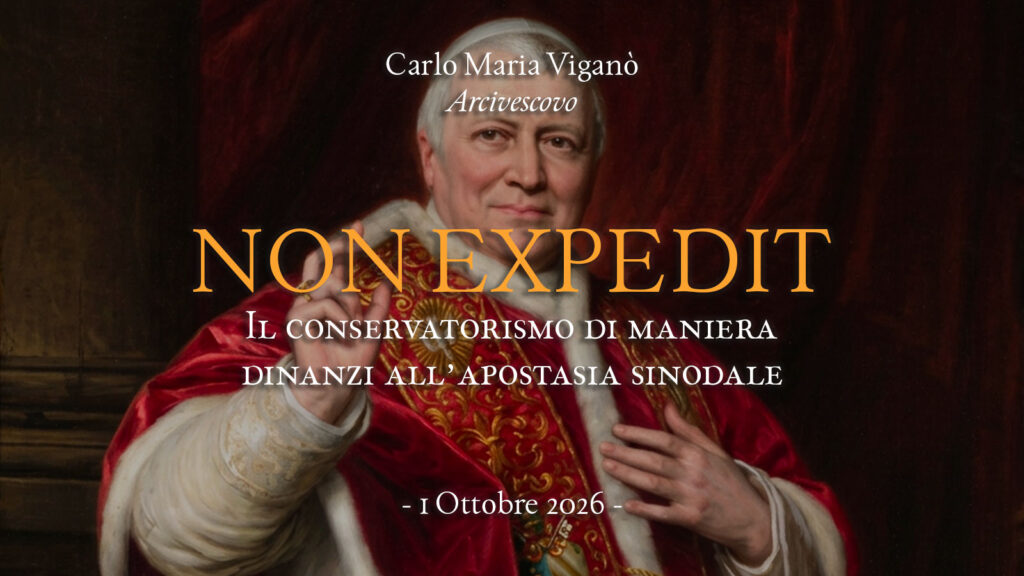
Non expedit. Il conservatorismo di maniera dinanzi all’apostasia sinodale
Arcivescovo Carlo Maria Viganò
Caro Avvocato Piciocchi,
ho letto con attenzione la lettera che Ella ha indirizzato al dottor Aldo Maria Valli e che mi ha trasmesso, a proposito del mio commento al discorso di Leone XIV all’Eliseo. So che Aldo Maria ha già pubblicato sul suo blog una risposta esemplare [qui]; da parte mia, non voglio esimermi dall’affrontare la Sua lettera: senza assecondare la caricatura, senza farci trascinare sul terreno emotivo delle folle, e senza cedere il principio in cambio di un plauso per qualche frase condivisibile.
La Sua lettera si apre con una parafrasi: secondo i «paladini della tradizione», il Papa «sarebbe dovuto andare a dire» a Parigi che non esiste la libertà di coscienza, che lo Stato non deve aprire a ogni culto, che la Dichiarazione del 1948 è carta straccia, che libertà, eguaglianza e fraternità sono parole massoniche e non possono trovare ispirazione nel Vangelo. Le rispondo che nessuno ha chiesto a Leone di recarsi all’Eliseo per recitare il Sillabo a voce alta davanti a Macron. Si è chiesto — ed è cosa diversa — che un Romano Pontefice non contraddica, nella capitale della Rivoluzione, l’insegnamento costante dei suoi Predecessori su ciò che quella Rivoluzione è stata e su ciò che quel motto significa. Non è lo stesso atto. Il primo è una sceneggiata che Ella ci attribuisce per renderci ridicoli; il secondo è il minimo dovuto a chi siede sulla Cattedra di Pietro.
La formula è semplice: noi non pretendiamo dal Papa un anatema diplomaticamente inopportuno; pretendiamo che egli non ratifichi ed elogi ciò che i Papi hanno chiamato peste. Una volta ristabilito questo, la Sua lettera perde il suo perno.
Il secondo argomento è quello della folla: ottocentomila persone a Place de la Concorde, ottantamila giovani a Saint-Denis che cantano il Salve Regina, sacerdoti che confessano per strada. È l’argomento più efficace sul piano emotivo-sentimentale, e il più debole sul piano della Fede.
Nessuno disprezza quei gesti, al contrario: essi dimostrano che la Grazia opera ancora nel popolo, nonostante i discorsi, non grazie ad essi. Un giovane che canta il Salve Regina in latino non convalida la tesi secondo cui Liberté, Égalité, Fraternité trovano nel Vangelo «una fonte inesauribile di ispirazione». Confondere la pietà dei fedeli con l’ortodossia di un discorso alle autorità è un sofisma. Se la quantità dei presenti bastasse a giudicare un pontificato, avremmo dovuto canonizzare ogni Giornata Mondiale della Gioventù, anche quando vi si è taciuto ciò che non si può tacere. Le piazze di Parigi erano gremite anche trent’anni fa con Giovanni Paolo II, ma questo non impedì che si giungesse all’approvazione dell’aborto come diritto, al rogo di Notre-Dame, alla blasfema inaugurazione dei Giochi Olimpici, all’eutanasia di Stato.
Aggiungo che proprio quei giovani meritavano di udire dal Papa non la benedizione di un motto nato per detronizzare Cristo, ma la distinzione — elementare e paterna — tra lalibertà dei figli di Dio e la libertà rivoluzionaria, tra l’uguaglianza delle anime redente e l’egualitarismo collettivista, tra la fraternità in Cristo e la fratellanza senza Dio Padre. Togliere loro quella distinzione non è «rispettare la loro capacità di comprensione»: è sottrarre loro la chiave per capire il tempo in cui vivono. Anzi: è spacciare per valida e vera una falsa lettura degli eventi.
Ella elenca, a difesa del discorso di Leone, la tutela del diritto alla vita come fondamento di ogni altro diritto e la condanna della maternità surrogata, pronunciate «in faccia» a un Presidente che ha iscritto l’aborto in Costituzione. Qui occorre essere precisi, perché è il punto su cui i conservatori si sentono in dovere di applaudire.
Non nego il dato: nego piuttosto la conseguenza che Ella ne trae. Una condanna della maternità surrogata e un accenno alla vita, inseriti in un quadro che assume i «diritti dell’uomo» illuministi e la Dichiarazione del 1948 come «pietra miliare del progresso morale», restano concetti astratti. O meglio: rimangono in quell’iperuranio in cui i funzionari della chiesa sinodale vogliono confinare la dottrina, mentre adeguano la pastorale alla mentalità del mondo. Quella stessa matrice rivoluzionaria dei “diritti” — sganciata dalla legge di Dio e dalla Regalità di Nostro Signore Gesù Cristo — è precisamente ciò che ha permesso di dichiarare “diritto” l’aborto, e poi di costituzionalizzarlo. Chi loda il principio e depreca uno dei suoi frutti non raddrizza l’albero: ne raccoglie i frutti avvelenati mentre finge di non vedere i rovi.
La risposta utile è dunque: non basta dire il vero su un effetto, se si benedice la causa. Pio XI, in Quas Primas, insegnò che pace e dignità non nascono dalla ribellione della Dichiarazione dei Diritti dell’Uomo, ma dal Regno sociale di Cristo. Finché quella lezione resta taciuta, le frasi «pro life» pronunciate all’Eliseo sono un correttivo cosmetico su un edificio costruito senza la pietra angolare. E nessuno meglio del Vicario di Cristo dovrebbe sapere quanto vere siano le parole del Salvatore: Sine me nihil potestis facere (Jo 15, 5).
Ella oppone alla Tradizione «il giusto sforzo — doveroso per la Chiesa di ogni tempo — di trovare punti di convergenza tra la fede e la storia di un popolo». È la formula più insidiosa della Sua lettera, perché suona pastorale e ragionevole. Va presa di petto.
Non Le sono ignoti gli atti magisteriali fino a Pio XII che condannano senza appello la Rivoluzione e i suoi infernali principi. Questi testi non sono «posizioni preconcette»: sono il Magistero. E chi li richiama non si arrocca: ricorda a un Papa che egli è custode della Verità rivelata, non padrone. Se oggi quel richiamo «pone fuori dalla realtà», tanto peggio per la realtà che si è costruita contro di essi. Non è il Magistero a doversi scusare con l’Eliseo, né l’erede di Pio VI a doversi umiliare all’erede di Jules Grévy, che si accompagna a un uomo in parrucca nella finzione più grottesca della normalità.
Le cito, parola per parola, il passaggio incriminato. Leone ha detto che l’Illuminismo portò «vere e proprie conquiste»; che tra queste vi è «il riconoscimento dei diritti dell’uomo insiti nella natura della persona umana, in particolare la libertà religiosa»; che libertà, uguaglianza e fraternità «rimandano a esigenze etiche universali, che trovano anche nel messaggio evangelico una fonte inesauribile di ispirazione e di realizzazione»; e che la Dichiarazione del 1948 è, con Giovanni Paolo II, «pietra miliare sulla via del progresso morale dell’umanità». Su queste frasi si discute. Non sul fatto che a Saint-Denis si sia cantato in latino.
Ella chiude invocando l’unità e la tunica inconsutile, addossando la responsabilità di lacerarla a chi critica il discorso papale. È l’argomento che i conservatori usano da sessant’anni ogni volta che si tocca il nervo del Concilio, della messa montiniana, della sinodalità: va rovesciato.
La tunica la lacera chi introduce nella Chiesa un Vangelo diverso da quello ricevuto, non chi rifiuta di ratificarlo. San Paolo non invita i Tessalonicesi a «lavorare per l’unità» a costo della Tradizione: li esorta a stare saldi e a mantenere le tradizioni apprese (2 Tess 2, 15). L’unità cattolica è comunione nella Fede; non è la tregua fra chi benedice la Rivoluzione e chi la chiama col suo nome.
Le richiamo, qui, la distinzione che ho fatto in «Scisma Capitale». Quando colui che siede sulla Cattedra accetta e promuove una nozione del suo ufficio — e, con essa, una nozione della società e della libertà — incompatibile con quella definita dal Magistero perenne, egli non è più semplicemente un Papa che sbaglia in un discorso di circostanza: pone un obex, un ostacolo all’esercizio stesso del Papato. Chi gli resiste in ciò che è illecito non lacera la Chiesa: la serve. Chi invece, per non «disperdere il gregge», consente all’equivoco, si trova nella posizione di coloro di cui San Paolo dice εὐδοκήσαντες τῇ ἀδικίᾳ: che hanno riconosciuto l’ingiustizia e le hanno dato cittadinanza (2 Tess 2, 11-12).
Le rispondo dunque che l’unità non si costruisce sul silenzio intorno al punto decisivo: essa si costruisce sulla roccia di Pietro. Ogni tentativo di “resettare” la realtà si fonda sulla sabbia di un dialogo che usa il lessico di chi ha ghigliottinato i suoi figli. Invocare la tunica inconsutile per coprire la contraddizione è, alla lettera, cucire una toppa nuova su un vestito vecchio.
Ella teme «parole di lapidaria condanna» che resterebbero incomprese. Ammesso e non concesso che i Cattolici, ogni tanto, tirerebbero un sospiro di sollievo se udissero non un mediatore, un conciliatore, un diplomatico, un ecumenico, un filantropo, un globalista, un immigrazionista, un massone o un pagano, ma un Papa che finalmente parla da Papa. Ma anche concedendoLe l’esigenza della pedagogia, non posso concederLe che la pedagogia obblighi a dire il falso.
Un Pontefice poteva, all’Eliseo, ricordare l’eredità cristiana della Francia — Clodoveo, San Luigi, Santa Giovanna d’Arco, le Carmelitane di Compiègne — e aggiungere, con mitezza, che la libertà cristiana non è la libertà del 1789; che l’uguaglianza delle anime dinanzi a Dio non è l’egualitarismo che ha livellato altari e troni; che la fraternità evangelica ha un Padre celeste, e che senza quel Padre diventa la fratellanza delle Logge. Poteva dire che la «giusta laicità» non consiste nel mettere la vera Religione allo stesso rango delle false, e che Nostro Signore è Re anche delle nazioni in cui vige un regime repubblicano che si professa laico. Poteva, venerando la Corona di Spine a Notre-Dame, ricordare che quella Corona è di un Re, e che quel Re non si concilia con il motto coniato per deporLo.
Nulla di tutto questo è «autoreferenziale». È il catechismo. Se oggi suona inaudito, è perché da decenni si è preferito l’applauso dell’Eliseo alla voce di Pio VI.
Caro Avvocato, non La tratto da avversario. La Sua lettera è sincera per il timore di una Chiesa che «si pone fuori dalla realtà», anche se sono decenni che gli imbarazzanti tentativi di compiacere il mondo rendono patetici i suoi mitrati fautori. Quel timore va rispettato ma corretto: la realtà della Chiesa non è lo specchio del mondo, è il giudizio di Cristo sul mondo. Chi ama davvero la Chiesa non le chiede di diventare credibile agli occhi di un Presidente che ha fatto dell’aborto norma costituzionale; le chiede di rimanere credibile dinanzi a Dio. Poiché l’inizio della saggezza è il timore del Signore (Pr 9, 10).
Concludo ricordandoLe che la Tradizione non è «una fonte perenne in una dinamica sempre nuova», se per dinamica si intende la riconciliazione col liberalismo che il Sillabo ha dichiarato impossibile. La Tradizione è la trasmissione integrale del Depositum fidei, senza tagli e senza innesti. Chi la custodisce non lacera la tunica: impedisce che la si sostituisca con la livrea tricolore.
I martiri della Vandea, i sacerdoti di settembre, le contadine di Angers non hanno bisogno che noi li usiamo come randello. Hanno bisogno che un Papa, passando sulle pietre bagnate del loro sangue, non lodi il motto in nome del quale furono martirizzati. Se questo richiamo «disperde il gregge», allora quel gregge era già stato disperso da chi gli ha insegnato che obbedire all’errore è virtù e che resistere alla menzogna è scisma.
Le ho scritto perché la Sua lettera non rappresenta un caso isolato: essa costituisce il manuale, per così dire, con cui, dopo ogni gesto «positivo» di questo pontificato, si chiederà ai Cattolici di lasciarsi convincere dall’emozione della piazza senza guardare ai principi che nel frattempo vengono sovvertiti. È esattamente il meccanismo descritto in «Scisma Capitale». Conviene smontarlo ora, con calma e con dottrina, prima che diventi il senso comune anche di chi si dice amico della Tradizione.
Con gratitudine per la franchezza con cui Ella ha scritto,
On Thursday, October 1, health workers, patients, and activists protested Palantir’s role in the National Health Service (NHS) at more than 40 locations across England. Their demonstrations were part of a global week of action demanding that governments cut ties with the spy-tech firm over human rights and privacy concerns.
Rallies took place in front of Palantir’s London headquarters, as well as in Liverpool, Manchester, Newcastle, Sheffield and many more cities.
“Palantir’s tools are used by the Israeli military in Gaza and by ICE to track and surveil migrants in the US,” campaign groups – including Just Treatment, Health Workers for a Free Palestine, Medact, and Global Justice Now – stated. “A company profiting from human rights violations has no place in the NHS or in any of our public services.”
Palantir’s track record opposes core health values
Palantir currently holds a £330 million (approximately USD 436 million) NHS contract and has rolled out the service’s Federated Data Platform (FDP), managing sensitive patient data. The project has drawn criticism from virtually every group involved in the NHS: data workers say it lags behind local systems; patients share privacy and data ownership fears; and health workers insist Palantir’s record opposes the very values their profession embodies.
“I cannot stay true to that [Hippocratic] oath and tolerate Palantir continuing to profit from, and grow its malign business model through an NHS contract,” said physician Rhiannon Osborne from Medact at Thursday’s rally. “Every pound we give them helps to legitimize and sustain human rights abuses and erosion of democratic rule of law across the world.”
A central concern is the company’s support for Israel throughout the genocide in Gaza. “When we strive to save every possible life, they champion their ability to kill and celebrate their role in the repeated war crimes committed by Israel – including unprecedented deliberate attacks on the doctors, nurses, and paramedics I worked with,” pediatric neurologist Omar Abdel-Mannan stated. “No moral government should tolerate their involvement in our NHS or indeed any of our public services.”
Campaigners repeated calls for Prime Minister Andy Burnham to end the contract as soon as possible. Under an exit clause in the original agreement, that moment could arrive as early as February 2027. Campaigners and several commissions are pressing the government to notify Palantir of its intention to withdraw ahead of this date.
“The government only has two months to say no to Palantir and the momentum is all with us,” Good Law Project activists said at the rally in London. “All the energy is to say no to Palantir, say no to their global human rights abuses, say no to their crap technology that doesn’t work and get Palantir out of the NHS.”
Unions back appeal to bar Palantir from public sector contracts
Calls to break Palantir’s grip on public services resonate beyond Britain. On September 28, more than 120 groups and unions called upon European governments and the European Commission to “scrap all existing public sector contracts with the US tech company Palantir.” As reported by the European Federation of Public Service Unions (EPSU), the appeal seeks to end current agreements and bar the firm from future public contracts. It also urges governments to develop “alternative data solutions compatible with public service,” echoing NHS data workers’ recommendations.
“Palantir’s ramping up of ‘war-related’ support for Israel during the genocide in Gaza and the apparent disdain of its leadership for democracy are just two clear signs that this company serves the interests of the rich and powerful, not the general public,” said Tim Bierley of Global Justice Now. “Yet it has been allowed to embed dubious technologies across our public services, giving it access to sensitive data and creating worrying new technical dependencies.”
“The UK must work with other countries to end dependence on companies involved in human rights abuses, and end the outsourcing of the public sphere to a dangerous class of big tech oligarchs.”
People’s Health Dispatchis a monthly bulletin published by thePeople’s Health MovementandPeoples Dispatch. For more articles and subscription to People’s Health Dispatch, clickhere.
A Polícia Judiciária, através do Departamento de Investigação Criminal de Portimão, identificou e deteve, ontem, um homem pela presumível autoria de vários crimes de pornografia de menores que, reiteradamente, acede, detém e partilha tais conteúdos em suporte informático.
A investigação teve início com uma numa denúncia efetuada pelos progenitores da vítima, um menor com 13 anos, tendo-se identificado o suposto autor que veio a ser detido em flagrante delito.
O homem, com 41 anos, residente em Sintra, irá ser presente a primeiro interrogatório judicial para aplicação das adequadas medidas de coação.
O inquérito é titulado pelo Ministério Público de Portimão.
O suspeito terá disparado contra uma viatura por a confundir com a de um vizinho com quem mantém uma disputa de terras. O condutor não sofreu ferimentos.
A Polícia Judiciária (PJ), através da Diretoria do Sul, deteve um homem de 72 anos por fortes indícios da prática dos crimes de homicídio na forma tentada e posse de arma proibida. Os factos ocorreram no dia 10 de julho, numa zona rural de Vila Real de Santo António, num contexto de disputa de terras.
Segundo a PJ, a vítima, um homem de 71 anos, conduzia uma viatura num acesso à propriedade do suspeito quando foi surpreendida por um disparo de caçadeira, efetuado de frente e a curta distância.
O condutor terá sido visado por engano, por circular numa viatura idêntica à da pessoa com quem o suspeito mantém um conflito de vizinhança. O disparo atingiu o para-brisas, que resistiu ao impacto, pelo que não houve ferimentos.
A investigação permitiu esclarecer as circunstâncias do caso e recolher elementos de prova, incluindo a apreensão de uma espingarda caçadeira, que a PJ considera ser a presumível arma utilizada.
O detido será presente a interrogatório judicial para aplicação das medidas de coação. O inquérito é dirigido pelo Departamento de Investigação e Ação Penal de Vila Real de Santo António.
This story originally appeared in Common Dreams on Oct. 02, 2026.It is shared here under a Creative Commons (CC BY-NC-ND 3.0) license.
An analysis published Friday by Democracy Docket warned that “tens of thousands” of voters across the US face “risk of disenfranchisement” thanks to actions being taken by the United States Postal Service.
The analysis, written by veteran election reporter Jim Saksa, points to a new USPS policy known as Regional Transportation Optimization (RTO) that “will eliminate evening mail pickups from post offices more than 50 miles away from a regional processing facility, most of which are located in major urban areas.”
For people who live in these areas, ballots sent on Election Day will be postmarked and delivered at least a day later than in previous election years, thus making it ineligible to be included in final election tallies.
“In every state, a day’s delay in delivery means that if mail voters wait until the last day or two before the election to mail their ballot,” Saksa explained, “they could be disenfranchised.”
Saksa reported that this policy is currently active in “about 42.5% of all ZIP codes” in the continental US, and is scheduled to eventually take effect in around 70% of all ZIP codes. No additional ZIP codes are expected to be added between now and election day.
Saksa also said that voters concerned about their ballots not being counted should deliver them in person to their local post office, where they can ask an employee to postmark it.
President Donald Trump has tried for the last several months to use USPS to meddle with states’ mail-in voting systems.
In March, the president signed an executive order that instructed the United States Postal Service to not deliver ballots in any states that have not given the federal government access to their voter lists.
The US Supreme Court last month rejected Trump’s efforts to interfere with mail-in voting, allowing states to continue sending ballots to voters as they’ve done in past elections.
Even with the Supreme Court loss, however, the president’s repeated attacks on voting by mail has had a major impact on the 2026 midterm elections.
An NBC News poll released in September showed that just 23% of Democratic voters said they planned to vote by mail this year, a double-digit drop from 2024 when 34% of Democrats said they were voting by mail.
In an interview with Politico published Thursday, Quentin James, founder and president of The Collective Political Action Committee, said Black voters have been expressing concerns about sending in their ballots for fear that Trump will order USPS to not deliver them.
“I think there’s confusion,” James said. “We know that the president has spent six months talking about changing the rules regarding mail-in voting, and a lot of folks are concerned about their ballot being secure.”
Indivisible co-founder Leah Greenberg also told Politico that her group is “absolutely hearing concern” about the mail voting process this year.
“But more importantly,” Greenberg added, “what we’re hearing is people trying to figure out what they can do and how they can organize locally in order to protect elections.”
In late September, Israeli media reported that Netanyahu’s government intends to adjust access to key routes in the central West Bank. It plans to reopen Route 463 to settler-only traffic in the governorate of Ramallah and Al-Bireh.
Yisrael Gantz, the leader of the Yesha Council (an umbrella organization representing Israeli municipal councils across Israeli settlements in the West Bank and the Jordan Valley) confirmed that plans to reopen the road received preliminary approval and funding.
Preparations are also underway by the Israeli military to complete “the security, legal, and logistical” steps required to reopen the route (also known as Wallerstein Road).
History of the road
The road was paved in 1994 under the directions of Pinchas Wallerstein, a founder of the settlement movement, to connect the illegal settlements of Beit El (north-east of Ramallah and Al-Bireh) and Dolev (north-west of Jerusalem).
However, following the outbreak of the Second Intifada in 2000, the Israeli army barred Israeli people from using the road for security reasons. They also placed a locked iron gate on its end near Ein Qiniya village, northwest of Ramallah.
Why has the reopening of the route raised concerns among Palestinians in the West Bank?
Experts argue that Israel’s move will impact not only the governorate itself, but the entire occupied West Bank because of its central location, major metropolitan status, and role as a commercial hub.
To understand the repercussions of the route reopening, BreakThrough News spoke with Jamal Jumaa, a Palestinian activist, expert on Israeli settlement and apartheid-related issues, and coordinator of the Palestinian Grassroots Anti-Apartheid Wall Campaign (Stop the Wall).
Aside from dividing the governorate’s northern and southern halves, Jumaa noted that reopening the road is dangerous because it will block the center of Ramallah and Al-Bireh from two-thirds of its villages, which are situated to the west.
The prominent Palestinian activist added that when Israel builds such roads for settler traffic, it fences them off on both sides and prohibits the use of adjacent lands. The Israeli authorities consider those lands a buffer zone, citing the security of the settlers as their reason.
“This entails setting up military towers and checkpoints. The road will cut off continuously inhabited Palestinian villages north-west and south-west of Ramallah. Therefore, we are talking about the establishment of roughly four military checkpoints along the road,” he continued.
Jumaa pointed out that the road will complicate the life of Palestinians by restricting their access to vital healthcare and education facilities, including the Istishari Arab Hospital, Birzeit University, and the Arab American University.
He also noted that the intended reopening of the road “is part of dividing and dividing more Palestinians from each other.”
On the political level, Jumaa suggested that the road “hits the heart of the West Bank, which gives a clear signal to the Palestinian Authority that it has no sovereignty over anything.”
It is worth noting that since its establishment, the Palestinian Authority has designated Ramallah and Al-Bireh as a de facto administrative capital. Yet, this has not prevented the Israeli authorities from fragmenting and isolating the governorate by establishing illegal settlements, military outposts, checkpoints, and gates.
 Login