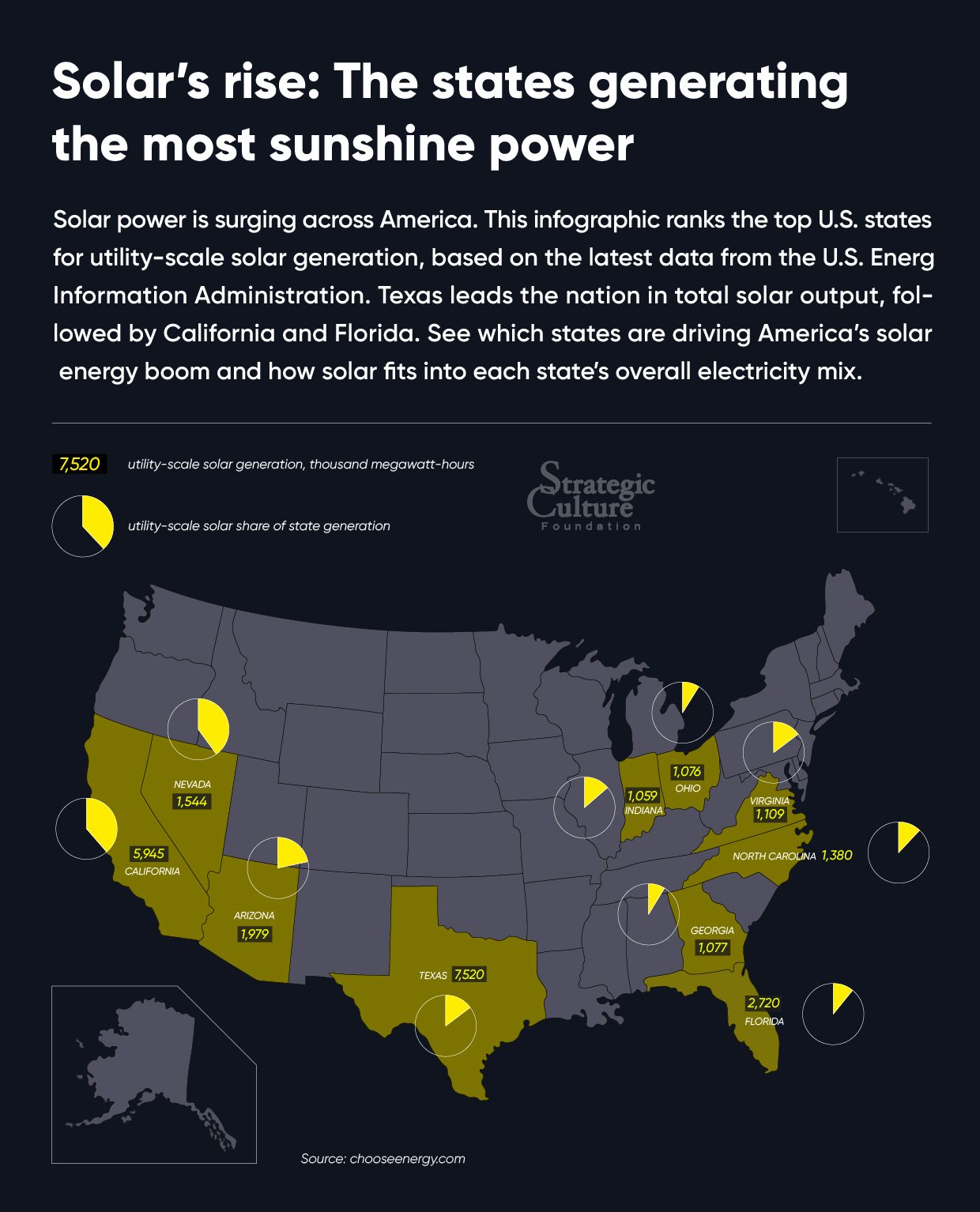
Solar power is surging across America. This infographic ranks the top U.S. states for utility-scale solar generation, based on the latest data from the U.S. Energy Information Administration. Texas leads the nation in total solar output, followed by California and Florida. See which states are driving America’s solar energy boom and how solar fits into each state’s overall electricity mix.
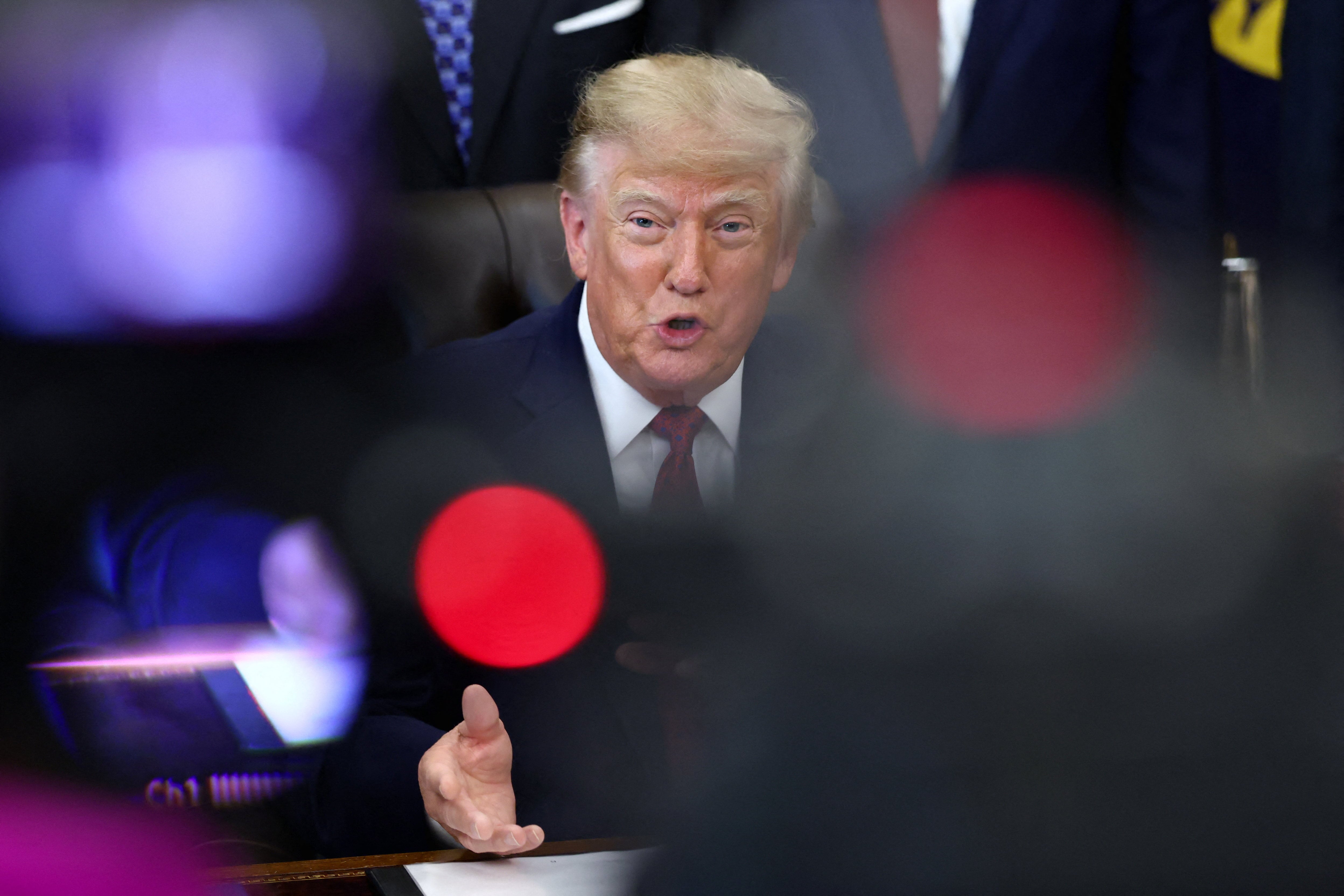
If there is one thing no one can deny about Donald Trump it is that he is a lucky man. The president has beaten the odds more than once. Notably, when he left the presidency in January 2021 after the shameful assault on the Capitol, his political career seemed to have hit rock bottom. But not only was he acquitted in a second impeachment trial, and spared from an AR-15 rifle round that came within millimeters of blowing off his head (to name just two examples of his extreme luck); he also easily defeated Democratic candidate Kamala Harris in the presidential election.
Tracy Beth Høeg, M.D., Ph.D., an epidemiologist and sports physician, said her decision to follow the data during the COVID-19 pandemic came at a steep professional price.
Høeg said her experience exposed the unwillingness of universities, media and public health institutions to adapt when research conflicted with their accepted narratives.
In an interview this week with investigative journalist Paul D. Thacker on The DisInformation Chronicle, Høeg said institutions too often treated the accepted narrative as settled and then dismissed or attacked people who questioned it.
That approach did more than distort the public discussion about COVID-19, Høeg said. It also created a scientific and institutional culture that could affect how other medical questions are handled long after the pandemic.
For Høeg, the solution is simple: Scientists should follow the evidence wherever it leads.
“It’s a core belief of mine that you have to be objective when you’re doing scientific studies,” she said. “Otherwise, you just shouldn’t do them. It’s pointless if you’re not willing to be objective.”
‘I … didn’t realize the jeopardy that I was putting myself in’
During the pandemic, Høeg published 30 to 40 papers on COVID-19 transmission, masking, youth sports, vaccine risk-benefit, pregnancy, long COVID, visitor restrictions and testing.
Some of her research challenged widely accepted claims.
One study found little evidence of COVID-19 transmission among children in Wisconsin schools, which was consistent with data from Europe. Another examined myocarditis risk in boys after their second Pfizer COVID-19 vaccine dose and found the risks outweighed the benefits in boys who didn’t have underlying health conditions.
Høeg said she didn’t initially understand the professional risks she was taking by challenging the prevailing narrative.
“There was sort of a hesitancy to do this sort of research because I think people were afraid for their careers,” she said. “I actually was blessed with having recently moved from Denmark and didn’t realize the jeopardy that I was putting myself in by doing these sorts of studies.”
At the time, Høeg was conducting research at the University of California, Davis.
She said the university received calls, including from Naturemagazine, complaining about her studies on pandemic policies. Eventually, the university asked her not to use her affiliation with the school.
Høeg said the university refused to renew her voluntary position in 2022, after the European Journal of Clinical Investigation published her study on myocarditis risks in boys who received the COVID-19 vaccine.
NPR also dropped an interview with Høeg for “All Things Considered” after she raised concerns about masking children during outdoor sports.
In a pre-interview discussion with NPR, she told the outlet, “We don’t have evidence that these masks work to prevent transmission. … Bottom line is, we shouldn’t be doing these unproven things to children that are harmful.”
Soon after, NPR told Høeg she was no longer needed for the interview.
“It does say a lot about our universities and institutions because it’s like they had been brainwashed to an extent to believe what the media was saying rather than actually look at the data,” Høeg said.
‘They repeated the same wording … even when the data didn’t back it up’
In 2022, Høeg and her colleagues conducted a follow-up analysis of a Centers for Disease Control and Prevention (CDC) study on school mask mandates.
Høeg said their analysis used a larger dataset and a longer time period and reached the opposite conclusion about the relationship between mask mandates and COVID-19 transmission among children.
The team’s submission to the CDC’s Morbidity and Mortality Weekly Report (MMWR) was rejected. Høeg said reviewers described the submission as “rife with polemics.”
“Well, maybe it’s polarizing if you disagree with it,” Høeg said.
The rejection unearthed an underlying problem at the CDC, according to Høeg.
“They have a scientific agenda,” she said. “And so as soon as you have a scientific agenda, science has been thrown out the window. Science doesn’t have an agenda other than to find the truth.”
A 2024 analysis by Høeg and colleagues examined 77 mask studies published in the MMWR beginning in 2020. According to Høeg, 75% of the studies said masks were effective, while only 14% reported statistically significant results and none were randomized studies.
One finding especially stood out to her: She said 5% of the studies found masks were connected to higher infection rates, yet “they still concluded that masks worked.”
“They repeated the same wording over and over again in each of the studies, that ‘masks are necessary to decrease the spread’ and ‘masks are critical in controlling the case rates of COVID-19,’” she said. “They use the same sort of wording even when the data didn’t back it up at all.”
‘Why are we demonizing people for looking into this?’
A leaked memo from then-FDA official Dr. Vinay Prasad said career staff had linked at least 10 child deaths to the COVID-19 vaccine between 2021 and 2024.
Høeg said she reviewed the Vaccine Adverse Event Reporting System (VAERS) reports and found that investigations involving medical records and autopsies had already been conducted.
“My question at the time was … why are these not being made public?” Høeg told Thacker.
Høeg said news leaked that she would present information about the deaths and their possible association with COVID-19 vaccines. She said the media response focused on portraying her as an “anti-vaxxer” rather than asking why the deaths had been investigated but not publicly disclosed.
“If we have these sorts of deaths happening in children due to medical products of any kind, why are we sitting on them for years?” she asked. “That’s the take-home I want people to have from this.”
She also questioned why people who investigate potential safety problems are attacked for trying to expose the dangers.
“Why are we demonizing people for looking into this? … Isn’t that what the public wants?” she asked.
‘The deep state really is a thing’
In May, just days after FDA Commissioner Marty Makary resigned, Høeg said she arrived at work to find media reports claiming she had resigned — something she said she knew nothing about.
FDA lawyers later asked her to resign, but she refused to sign the letter. She was subsequently locked out of the agency’s systems and escorted from the building.
Høeg said she never received a performance-based explanation for her termination. She also said the person identified as the author of her termination memo later denied writing or seeing it.
According to Høeg, agency lawyers told her the order came from “way above their pay grade.”
The experience changed how she viewed other departures from the agency. “It opened my eyes to the fact that maybe a number of the people who I thought had resigned really had not resigned,” she said.
“The deep state really is a thing,” she added.
‘Women who want to get pregnant … should be told about these risks’
For Høeg, the concerns she encountered during the COVID-19 era are not limited to COVID-19.
In 2025, she helped organize an FDA panel examining potential risks associated with selective serotonin reuptake inhibitors, or SSRIs, during pregnancy.
The American Psychiatric Association criticized the panel for what it called “misinterpretation and unbalanced viewpoints.” Høeg said the media also portrayed any discussion of potential risks as “misinformation about SSRI use” and a signal that depression wasn’t being taken seriously.
According to Høeg, the panel discussed risks already addressed in FDA labeling and scientific research, including miscarriage, premature birth, postpartum hemorrhage, congenital heart defects and neonatal adaptation syndrome.
“This should not be controversial that women who want to get pregnant and who are pregnant should be told about these risks,” she said.
She also warned about the lack of ongoing monitoring of drug safety.
“The FDA is not actively investigating the safety of these products in pregnancy or at all after the initial trials are done,” she said.
Høeg said the discussion should not be interpreted as an argument against treating depression. “I don’t think that any of this should be synonymous with not taking depression seriously,” she said. “That’s just nonsense.”
‘There’s just no reporting on this. … People have died taking this drug’
Høeg also discussed Tavneos, the Amgen-manufactured brand name for avacopan, a drug approved to treat a type of blood-vessel inflammation.
While at CDER, Høeg said she raised concerns that the pivotal clinical trial used to approve the drug had included manipulated data.
According to Høeg, at least eight deaths had been attributed to the drug because of liver injury.
“There’s just no reporting on this,” Høeg said. “People have died taking this drug. … We asked for them to withdraw it from the market, and the media is just totally silent.”
Thacker: ‘There was no real learning in the end. … If anything, we became dumber’
Høeg said it is troubling that some of the most disputed COVID-19 policies are still treated as settled questions.
“How is this still part of our collective conversation that people … are still saying school closures were necessary and mask mandates were necessary?” she asked.
Thacker said the failure to learn from those policies could have consequences during the next pandemic. People who developed a “false sense of safety from masks” during COVID-19 could mistakenly assume masks will protect them from a more dangerous virus in the future, he said.
Thacker also questioned whether the country understands anything about the COVID-19 vaccines. “There was no real learning in the end. … If anything, we became dumber,” he said.
Høeg said the problem stems from the widespread failure to reconsider policies when the evidence changed.
“Once the government decided this is what we have to do, they just kept digging in, even though the data didn’t support it,” she said.
“This is why I keep doing these interviews, because it’s important for people to know the truth.”
Watch Høeg on ‘The DisInformation Chronicle’ podcast here:
On the day of his sentencing hearing in New York this summer, Ismael “El Mayo” Zambada read a letter overflowing with remorse. After a decades-long career in drug trafficking, the former leader of the Sinaloa Cartel said his goodbyes with a mea culpa for everything he had done, without expanding greatly. Given his expected influence over the regional underworld, he dared to send a message to young people. “Choose a different path,” he said. “There is no honor in violence nor anything lasting in crime; they only bring pain and loss.” It is not known whether his second-born son knew about his father’s letter. But it is fairly clear that, if he did, he paid it no heed.
Five months ago, four excited girls walked into a maximum-security area with their mother wearing the same black T-shirt printed with a photo of their father. Minutes later, he emerged from a building guarded by the military, amid camera flashes and television cameras, and looked at them with moist eyes from the other side of the fence. He could not approach or touch them. He had to respect quarantine, because in a few hours he would board the most powerful crewed rocket in history and head to the Moon. Without speaking, they said everything to each other, and the rest of the world understood them.
Joel René Cárdenas Carrillo, a Mexican immigrant who became a U.S. citizen and works as a welder, has lived in the United States for more than 25 years. For his father’s birthday, he decided to return to his home state of Colima in Mexico after a long absence. On August 12, as he was preparing to return to California, he went for a walk on a hill and later attended a soccer match held on a field in Manzanillo. But when he left the game in his car, several police patrols blocked his way. Officers detained him, beat him and accused him of stealing fuel, an illegal activity in Mexico known as huachicol. That is the account provided by his wife, Verónica Sánchez.
It was the first face-to-face between the two men vying to govern California, the most populous state in the United States, with more than 39 million residents, just over a month before the midterm elections. Republican Steve Hilton and Democrat Xavier Becerra arrived at the CNN-organized debate with a twofold mission: lay out their proposals to lead what is considered the fourth-largest economy in the world and, at the same time, attack their opponent and explain to voters why they should not trust the other with their vote on November 3. Neither missed the chance to present their ideas on the state’s difficult economic situation, fears around artificial intelligence, and the ICE raids that threaten undocumented immigrants.
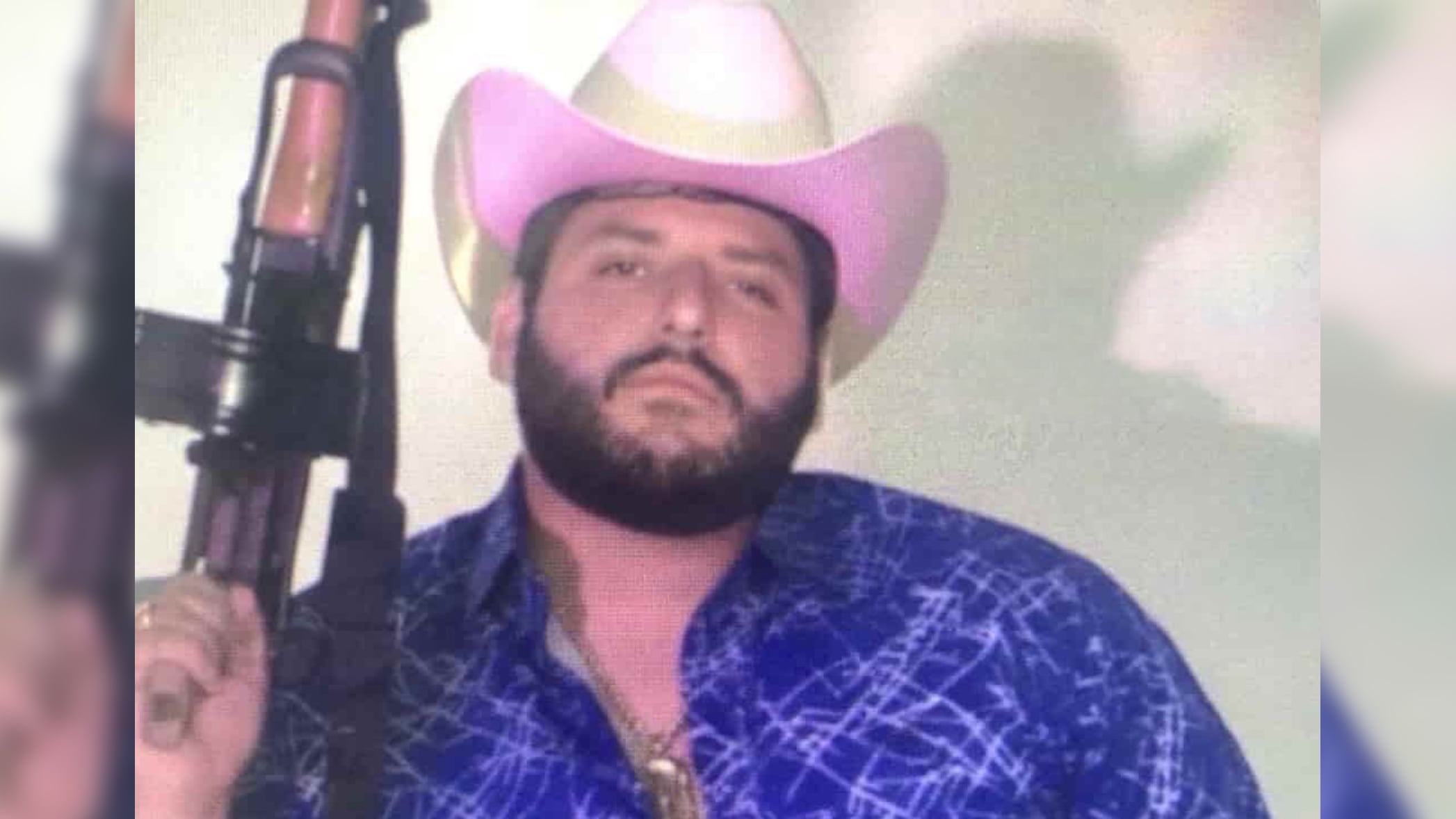
The U.S. Department of the Treasury struck on Tuesday at the criminal network led by Ismael Zambada Sicairos, alias Mayito Flaco, leader of a criminal organization operating in Sinaloa, Durango and Baja California, among other regions of Mexico. The son of longtime Sinaloa cartel boss Ismael Mayo Zambada, Sicairos appears as a person of interest to the U.S. government, which has sanctioned a total of 21 individuals, as well as 25 companies linked to the network.
Six Flags Magic Mountain, located in California, announced on Tuesday the permanent closure of the X2 roller coaster. Considered one of the park’s main attractions for two decades, the ride’s safety was called into question after CNN published an investigation reporting that more than a dozen people suffered serious brain injuries after riding it.
In recent months, the Donald Trump administration has been proudly releasing statistics on migrant arrests. Nearly 51,000 detentions were recorded in August, setting a new record that surpassed July’s 50,208, according to Department of Homeland Security (DHS) data. But while the administration celebrates increased operations by Immigration and Customs Enforcement (ICE), business owners lament the effects on the labor market. “I’ve already lost several employees. There’s nobody to work,” says Carlos Raba, a chef of Mexican descent.
No matter how skeptical we may be about the American dream, Arnold Schwarzenegger’s personal story strains the limits of credibility as much as any of his most over-the-top films. That the destiny of Hollywood—not to mention California, the world’s fourth-largest economy all by itself—should be shaped for decades by an Austrian villager raised among the ruins of World War II would seem highly unlikely, were it not for the fact that the actor and former governor is so firmly ensconced in our collective imagination, his name pronounced by everyone with the same startling ease. Schwarzenegger, 79, is one of those individuals for whom the phrase “larger than life” seems to have been invented: for the scale of his achievements, his film career and his physical presence — 6ft 2in (1.88 meters) of chiselled muscle like a Greek statue.
America’s elders need more places to live, but even in liberal enclaves that recognize the problem, developers are facing fierce foes: America’s elders. Make it make sense! Charley Locke reports from her hometown of Oakland, California, where boomers are organizing against two proposals that would add 618 market-rate residential units to the city’s senior housing stock:
Many in the crowd had been marching against governmental and corporate overreach for half a century: against the Vietnam draft and the invasion of Iraq; against Wall Street; against police brutality. They’re part of a generational force that’s antiestablishment and suspicious of power. But in this fight, it wasn’t so clear who the establishment was or who had the power. Were these righteous middle-class activists fending off greedy developers who would charge high rents, or were they wealthy seniors prioritizing neighborhood character over ameliorating the housing crisis? Were they once again David, or had they become Goliath?
You don’t have to live in El Cerrito, California, or have ever used Nextdoor, for this essay to resonate. For Oakland Review of Books, Amy Brown recounts buying her first home in the East Bay city and swiftly becoming the villain of her local Nextdoor—after her uncharitable Bluesky posts about the seniors opposing a library tax made their way back to her neighbors. Honest and funny, Brown’s essay explores being locally online—that weird, often uncomfortable place between online and IRL—and shows how (not) to talk to people you’ll run into at the grocery store.
Still, I spent multiple nights lying awake, thinking that everyone in this town must know I’m a bitch now. My son is supposed to start TK at the public school in the fall. What if his classmates’ parents use Nextdoor? What if the nice lady across the street who organizes a monthly dinner for our block uses Nextdoor? What if my neighbor already told everyone that the woman who moved into the house on the corner is an asshole? Does everyone I see on the street think I’m an asshole? Can they tell I don’t belong here? Do I have to go crawling back to my hometown and get a job at the car seat manufacturing plant?
Every adult who purports to care about a free press should read at least one story about the frustrating hurdles and bad-faith nitpicking confronted by student journalists (and their advisors). Earlier this year, a young reporter for the Redwood High School Bark found a few local references in the US Department of Justice’s public files concerning Jeffrey Epstein, the sex offender who died in 2019 while awaiting trial on sex-trafficking charges. Soon, the high school faced legal threats, and administrators grew concerned that students had published inaccurate information. Ara Rosenthal tells the story of the steady, diligent young journalists who weathered the worries and pressures of the adults around them—and kept their story intact.

 Login