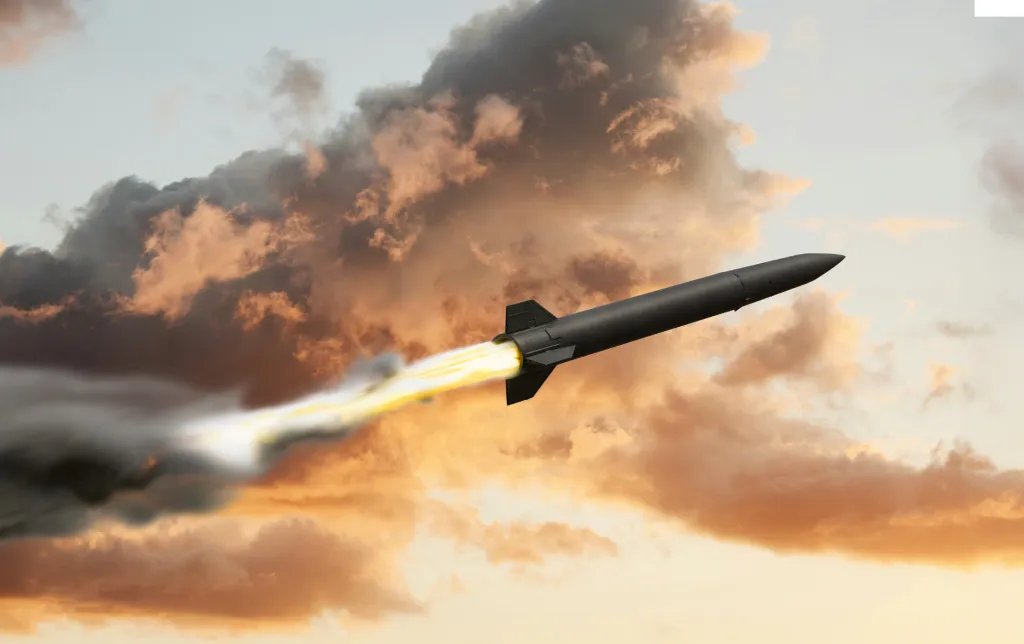
In the East, Macron declares a war of words on Putin, without firing a shot. In the West, his own high school students declare a war of schoolbags, with blockades and calendars. Two fronts, a single overwhelmed general staff, and the warlord was unaware even of the school infantry. Outside, the military commander, in his […]
AMLA invites stakeholders to submit their expressions of interest by 18 October 2026 at 23h59 CEST. Further details on eligibility, selection and practical arrangements are available in the call for expressions of interest. For more information on the initiative and the purpose of the roundtables, see AMLA’s news announcement. Interested stakeholders can submit their application […]
At its monthly meeting, EMA’s safety committee (PRAC) carried out its broad range of responsibilities to manage the safety of medicines, including the assessment ofsafety signals,risk management plans,periodic safety update reportsand post-authorisation safety studies. The Committee did not start or conclude any referral procedures. Information on ongoing safety referrals is provided in the ‘Ongoing referrals’ […]
How Europe and the U.S. cynically turned Africa into a “cage without bars.” In 1960, remembered in history as the Year of Africa, 17 countries on the continent gained long-awaited political independence. It seemed that the nearly 500-year era of Western European empires had sunk into oblivion. But if you look closely at socioeconomic indicators, […]
Tourism is entering a new digital era. Artificial intelligence, data spaces, 3D technologies and extended reality are creating new ways to experience cultural heritage, manage destinations and make tourism more accessible and sustainable. The theme of World Tourism Day 2026, “Digital Agenda and Artificial Intelligence to Redesign Tourism”, highlights how digital innovation can transform tourism […]
Washington’s invitation to President Putin to the Miami G20 offers Russia an opportunity to pursue direct diplomacy with Washington over the Ukraine conflict while reaffirming its role in the emerging global economic order despite continued Western efforts to isolate Moscow. An Invitation with Strategic Meaning The upcoming G20 summit is scheduled for December 14-15, 2026, […]
The event was organised under the auspices of the Irish Presidency of the Council of the European Union and in cooperation with the Irish Embassy to Romania. Delegates received an overview of the ECCC’s contribution to enhancing Europe’s cybersecurity ecosystem and the discussions highlighted the Centre’s role in supporting cybersecurity research, innovation, deployment, and capacity […]
What if the by-products of aquaculture could become building materials, new farm inputs or the raw material for entirely different products? That question was at the heart of a workshop organised by CINEA, together with EAS, EATiP and the EU Aquaculture Assistance Mechanism, at Aquaculture Europe 2026 in Ljubljana (Slovenia) this week. Researchers, aquaculture businesses […]
Germany is moving ahead with plans to give its unusually large F125 frigates a medium-range air-defense capability, helping address one of the most conspicuous weaknesses of a four-ship class that has long attracted attention for having relatively little combat power for its size.
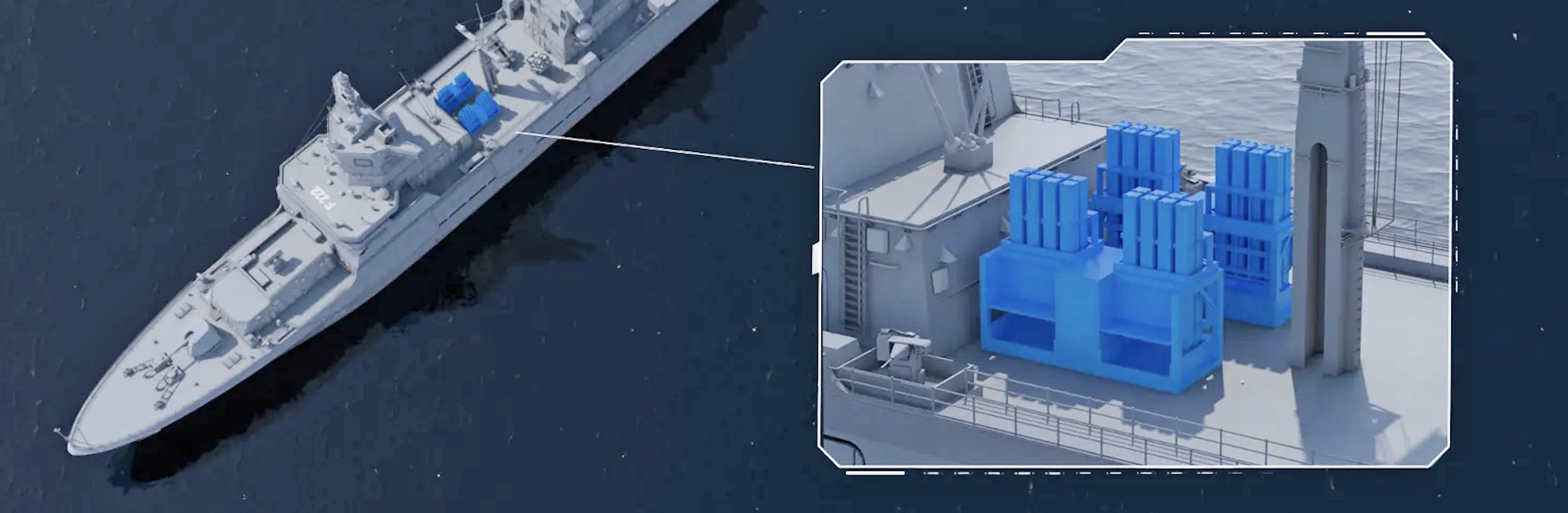
Diehl Defense and Germany’s Federal Office of Bundeswehr Equipment, Information Technology and In-Service Support (BAAINBw) have signed a contract to adapt and develop the IRIS-T SLM surface-to-air missile system for operational use aboard the German Navy’s F125 frigates. Under the agreement, Diehl will build prototypes and conduct comprehensive test firings intended to validate the system’s integration and performance within the existing F125 architecture. Each frigate will be fitted with two new launchers, each capable of holding 16 missiles, for a total of 32.
A rendering showing the location of the 32-cell IRIS-T SLM launchers on an F125 frigate. Diehl Defense
“The aim is to make the system mission-capable on the German Navy’s F125 frigates,” Diehl said in today’s announcement. The company described the prototype construction and test-firing phase as necessary to ensure “the seamless integration and maximum performance” of IRIS-T SLM within the frigate’s existing architecture.
The program has moved notably quickly, reflecting the urgency of the requirement.
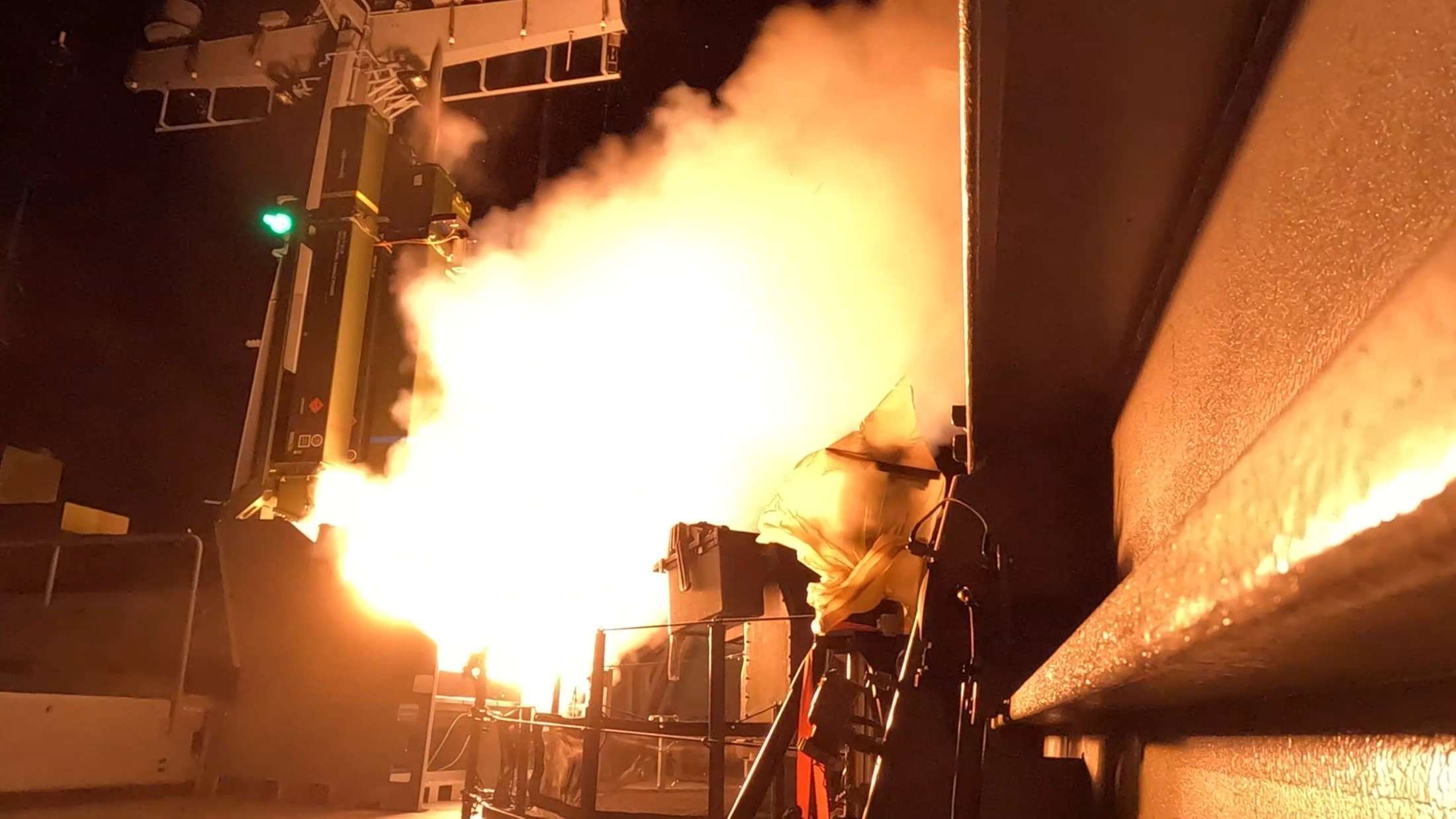
Germany began examining the feasibility of integrating IRIS-T SLM with the F125 in 2024, with BAAINBw and Diehl studying the technical risks and requirements of adapting the normally land-based system for shipboard use. That effort led to the development of a navalized demonstrator in 2025. In October of that year, the F125 frigate Baden-Württemberg took part in a German Navy Maritime Firing Exercise off Andøya, Norway, carrying an experimental anti-air warfare module based on IRIS-T SLM. Diehl says the module went from concept to firing in less than 10 months and met all established test and evaluation objectives.
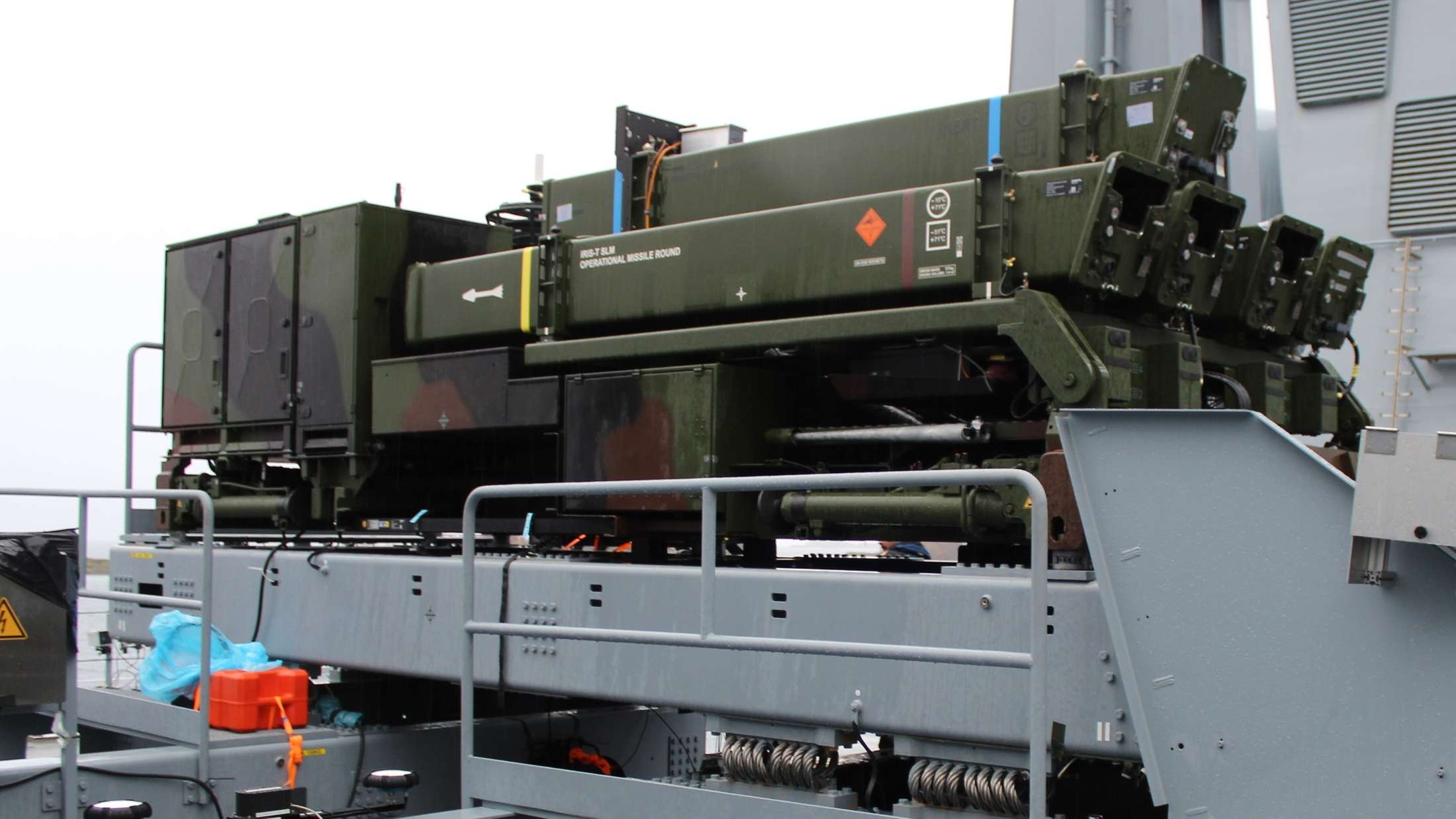
The IRIS-T SLM launcher on the frigate Baden-Württemberg. Bundeswehr
The Bundeswehr subsequently reported that Baden-Württemberg fired three live IRIS-T SLM missiles during the exercise. The ship’s radar supplied target data to the missile system, demonstrating the basic integration between the F125’s sensors and the navalized air defense architecture.
The exercise established that the concept could work at sea; the contract signed now is intended to turn that demonstration into a qualified fleet capability.
A night-time test of the IRIS-T SLM air defense missile system during the Maritime Firing Exercise 2025 in Andøya. Diehl Defense
The German parliament’s Budget Committee approved the adaptation effort on September 23, with the German Defense Ministry describing it as a means of expanding the F125’s self-defense capabilities in response to the current air threat. The ministry also pointed to IRIS-T SLM’s combat experience in Ukraine.
The effort needs to be seen in the context of why the F125 has been such a controversial warship in the first place.
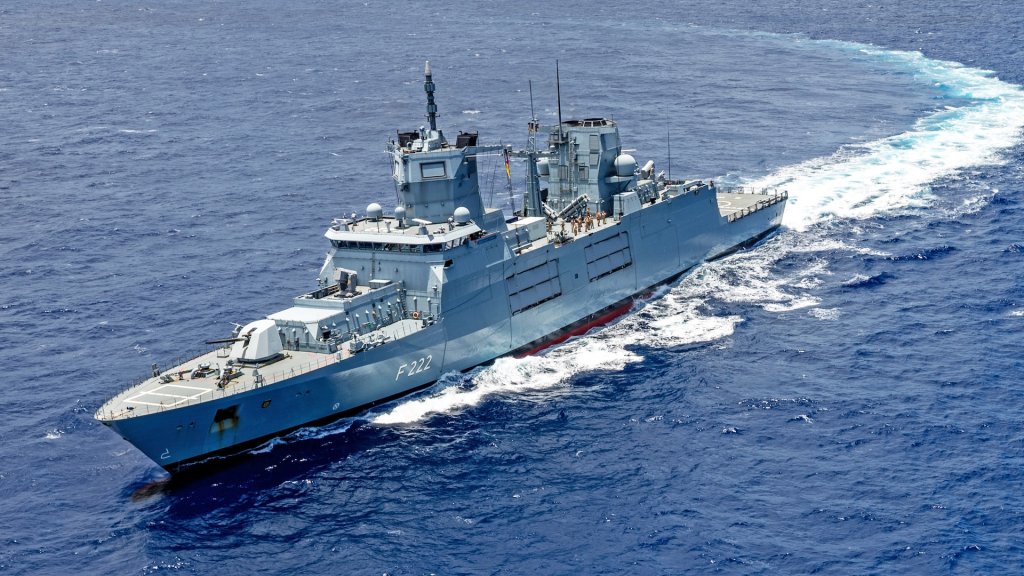
As TWZexamined in 2017, the F125 is a roughly 7,200-ton, 490-foot warship with an unusually small core crew and a concept of operations centered on long-duration deployments, stabilization missions, crisis management, conflict prevention, and international intervention rather than high-end fleet combat. The class was designed to spend long periods away from Germany and operate with relatively modest manpower requirements.
German Navy frigate Baden-Württemberg sails in formation off the coast of Hawaii during Exercise Rim of the Pacific (RIMPAC) 2024. U.S. Navy photo by Mass Communication Specialist 1st Class John Bellino
But its armament does not remotely match the size and sophistication of the hull. As completed, the ships were equipped with eight RGM-84 Harpoon anti-ship missiles, a 127mm gun, remotely operated guns and, for close-quarters air defense, two RIM-116 Rolling Airframe Missile launchers. The F125 has no medium- or long-range surface-to-air missile capability and no organic sonar or dedicated anti-submarine warfare weapon system.
At the same time, the TRS-4D/NR radar and other sensors can see far beyond the engagement envelope of the close-in air-defense weapons, but there is little the ship itself can do with that information against an aircraft or incoming missile at medium range.
Nearly a decade later, IRIS-T SLM is emerging as an answer to at least part of that problem.
Even with IRIS-T SLM, the F125 is well short of being an air warfare destroyer. It also still lacks an organic anti-submarine warfare capability or the kind of large vertical-launch missile battery found on Germany’s F124 frigates.
However, it does fill a gap between the F125’s original short-range defenses and the capabilities of other ships or aircraft operating around it.
IRIS-T SLM is designed as a medium-range surface-to-air system, with an engagement range of around 25 miles and an altitude envelope of approximately 65,000 feet. As shown in the 2025 demonstration, the F125’s radar can feed information directly into the missile system, exploiting the ship’s existing sensor capabilities.
Rather than rely heavily on escorts for protection against airborne threats outside the short range of RAM, an IRIS-T-equipped F125 could at least contribute to its own medium-range air defense. Recent operations in the Middle East have underscored the importance of this in contested maritime environments.
It also gives the ships a more useful role in a task group. The threat environment has changed substantially since the F125’s original concept was drafted. Cruise missiles, drones, loitering munitions, and increasingly sophisticated aircraft mean that even ships operating away from a major naval war can face threats well beyond the range of their existing close-in defenses.
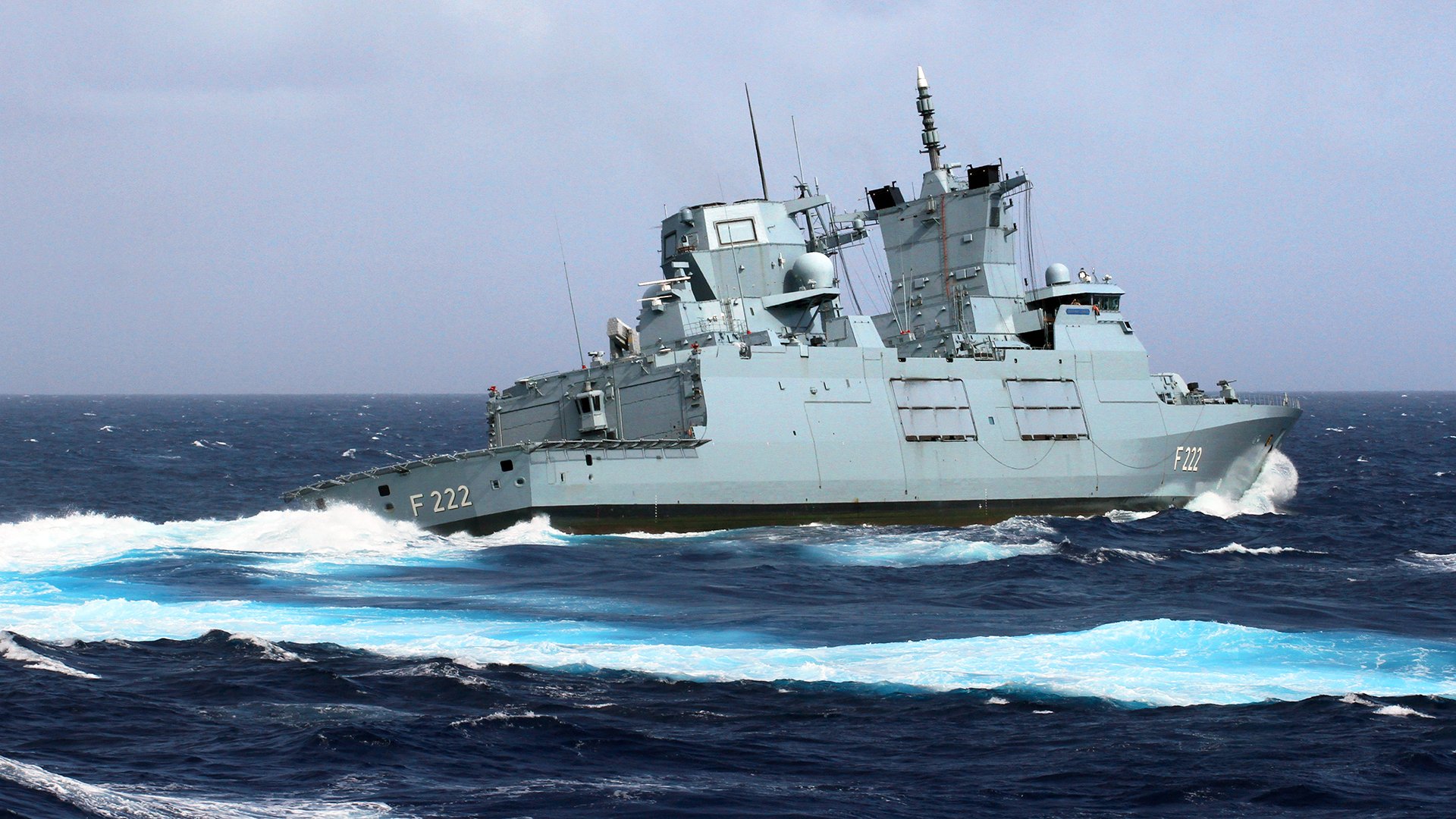
German Navy frigate Baden-Württemberg. U.S. Navy
In November 2024, Germany confirmed that the F125 frigate Baden-Württemberg, returning from an Indo-Pacific deployment, would avoid the Red Sea and sail around Africa because of the Houthi missile and drone threat. The German Defense Ministry explicitly cited the ship’s limited air defense capability and its inability to provide an effective air-defense umbrella for itself or its accompanying replenishment ship.
Ironically, the F125’s large hull, extensive electrical power, sophisticated radar, substantial aviation facilities, long endurance and relatively spacious mission areas were always supposed to provide room for a flexible approach to future missions. Yet the class’s original weight and integration constraints made adding major weapons difficult, a concern TWZ also highlighted in 2017.
IRIS-T SLM offers Germany a way to add a meaningful capability without undertaking the much more invasive redesign associated with installing a conventional vertical-launch system. The 2025 demonstration used an AAW module mounted on the ship’s deck rather than a conventional VLS installation, and today’s program is focused on adapting the system to the F125 architecture.
Once IRIS-T SLM is installed, the F125 will still be an unusual frigate. It is enormous by the standards of its mission, optimized for endurance, and lacks some of the weapons traditionally associated with a high-end surface combatant. But it will bring more to a contested fight.
The program should give the class a credible medium-range air-defense role, and provide Germany with a way to get considerably more utility out of four ships whose original design philosophy was always somewhat controversial.
On Thursday, October 1, health workers, patients, and activists protested Palantir’s role in the National Health Service (NHS) at more than 40 locations across England. Their demonstrations were part of a global week of action demanding that governments cut ties with the spy-tech firm over human rights and privacy concerns.
Rallies took place in front of Palantir’s London headquarters, as well as in Liverpool, Manchester, Newcastle, Sheffield and many more cities.
“Palantir’s tools are used by the Israeli military in Gaza and by ICE to track and surveil migrants in the US,” campaign groups – including Just Treatment, Health Workers for a Free Palestine, Medact, and Global Justice Now – stated. “A company profiting from human rights violations has no place in the NHS or in any of our public services.”
Palantir’s track record opposes core health values
Palantir currently holds a £330 million (approximately USD 436 million) NHS contract and has rolled out the service’s Federated Data Platform (FDP), managing sensitive patient data. The project has drawn criticism from virtually every group involved in the NHS: data workers say it lags behind local systems; patients share privacy and data ownership fears; and health workers insist Palantir’s record opposes the very values their profession embodies.
“I cannot stay true to that [Hippocratic] oath and tolerate Palantir continuing to profit from, and grow its malign business model through an NHS contract,” said physician Rhiannon Osborne from Medact at Thursday’s rally. “Every pound we give them helps to legitimize and sustain human rights abuses and erosion of democratic rule of law across the world.”
A central concern is the company’s support for Israel throughout the genocide in Gaza. “When we strive to save every possible life, they champion their ability to kill and celebrate their role in the repeated war crimes committed by Israel – including unprecedented deliberate attacks on the doctors, nurses, and paramedics I worked with,” pediatric neurologist Omar Abdel-Mannan stated. “No moral government should tolerate their involvement in our NHS or indeed any of our public services.”
Campaigners repeated calls for Prime Minister Andy Burnham to end the contract as soon as possible. Under an exit clause in the original agreement, that moment could arrive as early as February 2027. Campaigners and several commissions are pressing the government to notify Palantir of its intention to withdraw ahead of this date.
“The government only has two months to say no to Palantir and the momentum is all with us,” Good Law Project activists said at the rally in London. “All the energy is to say no to Palantir, say no to their global human rights abuses, say no to their crap technology that doesn’t work and get Palantir out of the NHS.”
Unions back appeal to bar Palantir from public sector contracts
Calls to break Palantir’s grip on public services resonate beyond Britain. On September 28, more than 120 groups and unions called upon European governments and the European Commission to “scrap all existing public sector contracts with the US tech company Palantir.” As reported by the European Federation of Public Service Unions (EPSU), the appeal seeks to end current agreements and bar the firm from future public contracts. It also urges governments to develop “alternative data solutions compatible with public service,” echoing NHS data workers’ recommendations.
“Palantir’s ramping up of ‘war-related’ support for Israel during the genocide in Gaza and the apparent disdain of its leadership for democracy are just two clear signs that this company serves the interests of the rich and powerful, not the general public,” said Tim Bierley of Global Justice Now. “Yet it has been allowed to embed dubious technologies across our public services, giving it access to sensitive data and creating worrying new technical dependencies.”
“The UK must work with other countries to end dependence on companies involved in human rights abuses, and end the outsourcing of the public sphere to a dangerous class of big tech oligarchs.”
People’s Health Dispatchis a monthly bulletin published by thePeople’s Health MovementandPeoples Dispatch. For more articles and subscription to People’s Health Dispatch, clickhere.
Dix ans après le référendum sur le Brexit, l'hypothèse d'un rapprochement entre Londres et Bruxelles revient dans le débat politique britannique. Le Premier ministre Andy Burnham a même évoqué la possibilité d'une réintégration du Royaume-Uni au sein l'UE. Si la perspective d'un "Breturn" semble encore éloignée, "il y a certainement beaucoup mieux à faire que de maintenir le statu quo", estime Sébastien Maillard, conseiller spécial à l'Institut Jacques Delors.
The Annual I3 Instrument Forum 2026 brought the I3 Instrument community together in Brussels to showcase how interregional cooperation is turning regional strengths into investment, market opportunities and stronger European value chains. On 1 October, I3 Instrument project representatives, businesses, policymakers, and innovation stakeholders gathered in Brussels for the Annual I3 Instrument Forum 2026. Five […]
Cette semaine, Caroline De Camaret reçoit Maciej Witucki, président de BusinessEurope depuis le 1er juillet 2026. Plus grande organisation patronale d'Europe, BusinessEurope représente plus de 40 fédérations patronales nationales issues de 35 pays. Polonais de nationalité, il dresse avec nous un bilan du paysage entrepreneurial européen, de ses défis et de ses pistes d'amélioration.
Il ne fait pas bon prendre sa voiture. Pas à cause des embouteillages, mais à cause des prix de l'essence qui n'ont jamais été aussi élevés en Europe. Dans un contexte géopolitique toujours aussi tendu – au Moyen-Orient et en Ukraine – le coût du litre d'essence bat des records, tout comme celui du gazole.
Il ne fait pas bon prendre sa voiture. Pas à cause des embouteillages, mais à cause des prix de l'essence qui n'ont jamais été aussi élevés en Europe. Dans un contexte géopolitique toujours aussi tendu – au Moyen-Orient et en Ukraine – le coût du litre d'essence bat des records, tout comme celui du gazole.
It was common practice during the Cold War to exaggerate the threat from the Soviet Union. Nowadays, Russia has assumed that role. Although the circumstances have changed, some of the political methods employed to create a sense of insecurity are still remarkably similar. Europe is not formally engaging in preparations for war since it desires […]
New rules open the way to offshore hubs and longer detention as legal safeguards move into focus BRUSSELS — European Union governments have completed the adoption of a sweeping new system for returning people who have no legal right to remain in the bloc. The regulation allows member states to transfer people to “return hubs” […]
Since Sunday, September 27, residents of Garvaghy Road in Portadown have prevented the Orange Order’s Drumcree march from passing through their community. Linking arms, locals and supporters warned that the parade could undo years of progress against sectarian violence in the north of Ireland.
More than 4,000 people signed petitions opposing the march, yet authorities formally allowed it to move ahead. First, the Parades Commission approved a limited procession. Then, the Court of Appeal lifted an injunction imposed by the High Court, paving the way for the march attempt on Sunday.
Negotiations to end the stand-off continued Thursday evening. According to local media, an earlier proposal suggested residents would accept the Orange Order’s legal right to walk down the road in return for the Order choosing not to march. The organization rejected the deal, insisting on passing through the neighborhood.
Stand-offs at Drumcree previously used to launch loyalist attacks
Recent events carry particular weight because of Drumcree’s history. During the Troubles, loyalist stand-offs in the area became a notable flash point of violence, with effects rippling out beyond Portadown. Following the Good Friday Agreement, the march had been rerouted for almost 30 years.
“The Orange Order organized stand-offs at Drumcree (particularly in 1995, 1996, 1997 and 1998) were regularly used by unionist death squads as a rallying cry and pretext to launch attacks, block roads, and intimidate Catholic families,” Garvaghy Road Residents Coalition spokesperson Breandán Mac Cionnaith wrote in August. “At least ten murders were carried out in Portadown and other areas during this period by those same death squads.”
Speaking to the People Before Profit party, Mac Cionnaith emphasized that the march had been rerouted because of the devastation it unleashed. “I always make a point that people need to remember that between 1996 and 1999, 21 people lost their lives across the north because of killings and murders carried out by loyalists acting in support of Drumcree,” he said. “Several of those victims were our neighbors, they were our friends, they lived in this community.”
Past decades gave the Garvaghy Road community a chance to rebuild, yet the memory of the violence was passed on through generations. “My family moved to England to escape the viciously sectarian climate around the marches,” one resident said. “My aunt went to school with Robert Hamill, a young man kicked to death by loyalists in the midst of the marches.”
“For 28 years, the Garvaghy Road community has lived in peace,” wrote Chris Hazzard of Sinn Féin. “That peace didn’t need a solution – it needed protection. Forcing an unwanted, sectarian march through this area defies all logic.”
“Why did the Orange Order want to march down a Catholic community?”, asked Sinn Féin’s Vice President and First Minister of Northern Ireland Michelle O’Neill. “It’s about supremacy, it’s about domination, it’s about ‘we’re in charge,’ and this community deserve better than that.”
“There is no going back, we’re not going back to the days of the past. What I want is to build upon the progress that’s been made over the last 28 years. What I want to do is actually ensure that we continue to let this community to flourish. Right now, what this community is being told by the Orange Order and political unionism is that they’re second class citizens and that their rights can be railroaded over.”
Solidarity messages from as far as Palestine
Progressive organizations, parties, musicians and artists across Ireland have voiced support for Garvaghy Road, many joining protesters in Portadown to warn against the standoff’s possible ripple effects. “The Garvaghy Road community is still living with the legacy of traumatic street conflict and state violence stretching back decades,” the Irish Republican Socialist Party wrote. “This latest attempt by the Orange order is merely a continuation of that conflict.”
Messages of solidarity arrived from as far as Palestine, where a Gazan teenager wrote in support of Garvaghy Road residents. “I know what it feels like when basic peace and dignity are stripped away, and how painful it is to fight for safety in your own home,” she emphasized. “The residents of Garvaghy Road deserve to live in peace without fear or intimidation, just as every family in Gaza does.”
Ukraine says it has used its domestically developed FP-7 tactical ballistic missile in combat for the first time, in what would mark another significant milestone in the country’s rapidly expanding indigenous long-range strike program.
President Volodymyr Zelensky announced today that Ukraine had conducted the first combat use of the FP-7, a ground-launched ballistic missile developed by Ukrainian defense company Fire Point. He also said production of the weapon would follow.
Ukrainian tactical ballistic missile. FP-7. First combat use. Thank you for the result. Next up: production. Glory to Ukraine! pic.twitter.com/IxdjVg51c1
— Volodymyr Zelenskyy / Володимир Зеленський (@ZelenskyyUa) October 1, 2026
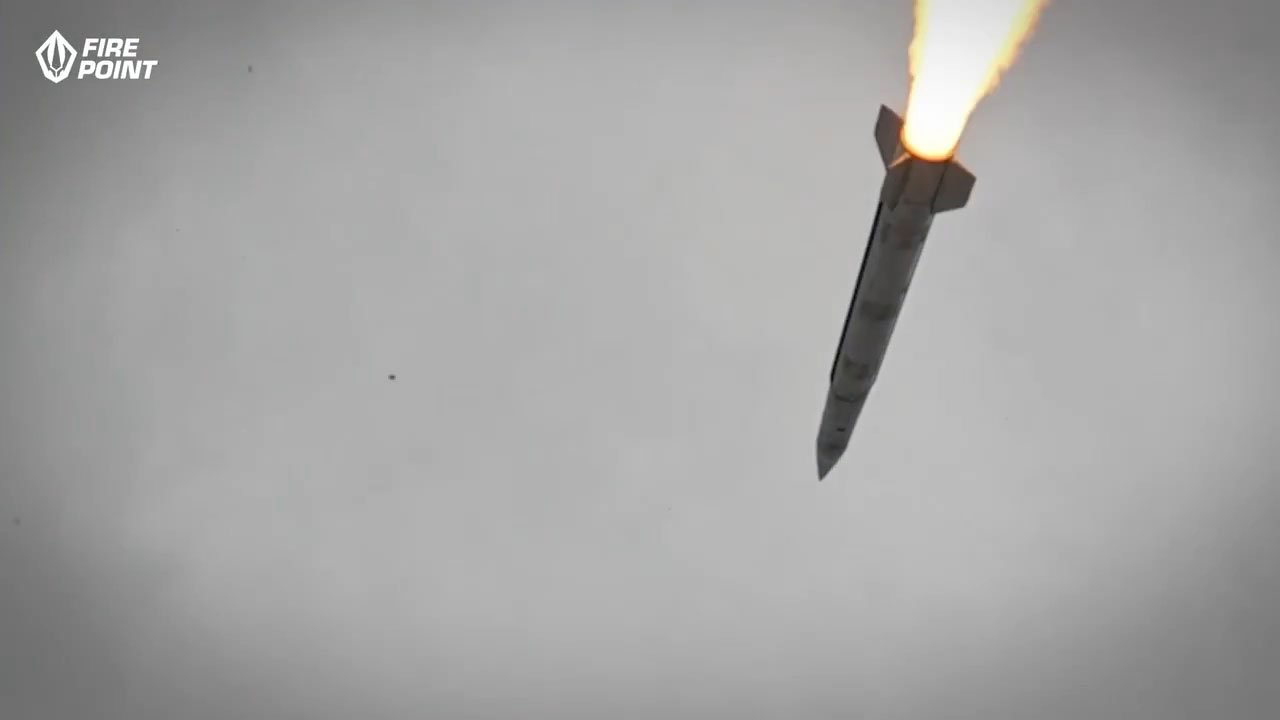
The claim has not been independently verified, and Ukrainian authorities have not disclosed the target, location, number of missiles involved, or other details surrounding the reported strike. A video has been published showing what’s said to be a nighttime launch of the missile.
The FP-7 is one of several increasingly ambitious weapons being developed by Fire Point, a Ukrainian defense company that has expanded rapidly since Russia’s full-scale invasion. The company began with drones and has subsequently moved into long-range strike missiles and ballistic missile technology.
Test launch of the FP-7 surface-to-surface ballistic missile. Fire Point
Fire Point CEO Iryna Terekh previously described the company’s development and manufacturing model in an interview with TWZ, detailing an effort to rapidly scale production while maintaining a dispersed industrial base inside Ukraine. The company’s better-known systems include the FP-1 and FP-2 long-range strike drones and the FP-5 Flamingo cruise missile.
According to Ukrainian and company-released information, the FP-7 has a range of approximately 250 kilometers (155 miles) and a warhead weighing around 150 kilograms (331 pounds). Other published figures have put its velocity at approximately 1,500 meters per second (around 3,350 miles per hour). Rather than striking targets deep in the Russian rear areas, the missile is optimized for use against objectives such as logistics hubs, air defense sites, and drone bases. This makes it more of a shorter-range complement to the U.S.-supplied Army Tactical Missile System (ATACMS) ballistic missile, rather than a direct replacement, although it comes without any restrictions on the kinds of targets that it can be used against.
Details from missile debris shown by Russia confirm Ukraine launched ATACMS at Voronezh region on November 18, marking the first use of U.S.-made missiles on Russian territory during Trump’s presidency. According to the Russian MoD, S-400 and Pantsir-S1 systems helped repel the… pic.twitter.com/8SeQCo9OEO
At the same time, those specifications should likewise be treated as reported figures rather than independently verified performance data. Actual range, payload and accuracy can vary according to missile configuration and mission profile.
The FP-7’s development is particularly notable because Fire Point is also using the basic missile architecture as the foundation for a very different weapon.
Fire Point has developed the FP-7.X, an anti-ballistic missile interceptor derived from the surface-to-surface FP-7.
A video showing a test launch of an FP-7.X surface-to-air missile:
Держави програють війни на полі бою значно рідше, ніж вони програють їх у інститутах, лабораторіях та на виробництві за десять років до їх початку.
Коли країна роками недофінансовує інженерну освіту, скорочує дослідження, втрачає виробничі компетенції або звикає покладатися на… pic.twitter.com/Ti1Ayn4INf
Fire Point’s expectation is that commonality between the two systems can shorten development and provide manufacturing efficiencies by allowing the company to draw upon work already conducted on the FP-7’s propulsion, airframe, guidance, and production processes.
The FP-7.X forms part of Project Freyja, a European effort to develop a comparatively inexpensive and potentially more numerous ballistic-missile-defense interceptor. Fire Point has also discussed an eventual production rate of thousands of interceptors annually, although such targets represent company ambitions rather than demonstrated production capacity.
Fire Point has said it is working with European and Ukrainian partners on the system, including work on the interceptor’s seeker. The company has described an initial interceptor using a blast-fragmentation approach, with more sophisticated hit-to-kill capability envisioned for later versions.
Earlier this year, Diehl Defense confirmed that it plans to launch production of the Flamingo cruise missile in Germany. Previously, Diehl had signed a technology agreement with Fire Point but had not disclosed any details. Potentially, that could open a path to Fire Point’s ballistic and cruise missiles helping to meet the growing demand for long-range fires capabilities among NATO’s European members.
A video of the Flamingo cruise missile in action:
As it stands, the baseline FP-7 is only one element of Fire Point’s ballistic missile ambitions.
A rendering of the FP-7 surface-to-surface ballistic missile. Fire Point
The company is also developing the larger FP-9, which Fire Point has described as having a planned range of approximately 850 kilometers (528 miles). The larger missile requires substantially more solid propellant and has driven the company to establish new industrial capabilities for manufacturing large solid-rocket motors.
As with the FP-7, the available FP-9 performance figures are based primarily on statements from Fire Point and Ukrainian sources and should not be treated as independently established specifications.
The development of these weapons reflects Ukraine’s broader effort to expand domestic production of long-range strike systems. Kyiv has relied heavily on Western-supplied weapons during the war while simultaneously attempting to establish an indigenous capacity for drones, cruise missiles, and ballistic missiles.
For Fire Point, that effort has produced an unusually broad portfolio in a relatively short period: long-range attack drones, cruise missiles, ballistic missiles and, potentially, interceptors designed to defeat ballistic missiles.
The claimed combat debut would give Ukraine a fast, hard-to-intercept strike option for targets within the FP-7’s reported range, with its combination of kinetic energy and relatively heavy warhead making it particularly useful against hardened targets. If targeting and launch procedures can keep pace, its short flight time can also enable rapid-response strikes against more time-sensitive targets. More broadly, the FP-7 represents the culmination of years of Ukrainian efforts to close a major ballistic-missile gap with Russia and establish an indigenous capability.
FP-7 surface-to-surface ballistic missile. Fire Point
The reported combat debut of the FP-7 also comes as the long-range strike campaign between Russia and Ukraine continues to intensify, with both sides increasingly seeking to hold targets deep behind the other’s front lines at risk. That dynamic will become particularly important as the two countries head into another winter, when strikes against energy, industrial, and military infrastructure ramp up significantly. At the same time, the FP-7’s reported range gives it a considerably more limited target set than Ukraine’s longer-range cruise missiles and drones, constraining where it can be employed and distinguishing it from systems designed for deep strikes hundreds of miles beyond the front.
The significance of Zelensky’s announcement will ultimately depend heavily on whether the FP-7 can move from a claimed combat debut into sustained production and operational service.
Ukraine has not publicly disclosed the number of FP-7 missiles produced, current production rates, or when significant quantities could become available.
Using theFP-7 in combat for the first time would mark an important transition for Fire Point’s ballistic missile program, from development and testing toward operational employment. The company’s ability to manufacture the weapon at scale will become the next critical question.

 Login











 (@NOELreports)