Margherita Furlan. Il prezzo della decadenza. Guarda la puntata intera: https://www.youtube.com/live/ouQzao-1gSU CASA DEL SOLE TV — Informazione libera e indipendente Il nostro lavoro è possibile solo grazie al vostro sostegno. Casa del Sole TV non ha editori forti né finanziamenti pubblici: siamo sostenuti da voi, il nostro pubblico. Se credi nel valore di un’informazione che non tace, aiutaci a continuare. Dona tramite bonifico bancario: IBAN: IT63P0326822300052392596590 Intestato a: LA CASA DEL SOLE EDIZIONI Causale: Donazione Casa del Sole TV Dona tramite PayPal: paypal.me/casadelsoletv Sostegno ricorrente: casadelsole.tv/sostienici Anche un piccolo contributo fa la differenza. Grazie di cuore!
Dal 2008 in poi le banche centrali hanno inondato il mondo di liquidità: salvataggi bancari, acquisti di titoli, debito pubblico finanziato a tassi vicini allo zero. Oggi lo scenario si rovescia. L’inflazione italiana sale al 4,2 per cento, trascinata da un’energia che costa il 22 per cento in più di un anno fa. Il gasolio supera i 2,30 euro al litro, il petrolio oscilla attorno ai 100 dollari sotto il peso della crisi di Hormuz, e la BCE risponde alzando i tassi per la seconda volta quest’anno. Mentre l’Occidente stringe il credito, i BRICS e il Sud globale accumulano oro e costruiscono canali di pagamento che aggirano il dollaro. Fino a quando potrà reggere un sistema fondato sulla creazione illimitata di moneta? E chi pagherà il conto quando la macchina si fermerà? Dalla politica monetaria ai ricordi di chi ha visto da dentro lo smantellamento della programmazione economica italiana. Ne parliamo con Nino Galloni, economista post-keynesiano, collaboratore di Federico Caffè, già funzionario del Ministero del Bilancio e della Programmazione economica e direttore generale al Ministero del Lavoro. Intervista a cura di Jeff Hoffman Affrontiamo insieme: Banche centrali e creazione di moneta: quanto può durare ancora? La BCE alza i tassi contro un’inflazione da energia: medicina giusta o errore? Carburanti, bollette e inflazione: chi incassa mentre noi paghiamo Dollaro, oro e debito americano: il tramonto di una valuta di riserva BRICS e Sud globale: l’architettura del mondo multipolare Federico Caffè, il maestro scomparso, e il prezzo della coerenza La chiusura del Ministero del Bilancio: quando l’Italia ha smesso di programmare La Carta di Roma, le tesi del 2008 e il confronto con Washington Italia ed Europa: esiste una via d’uscita dalla subalternità? I LIBRI DI NINO GALLONI Il superamento del capitalismo. Il mondo post-angloamericano. Oltre l’economia della moneta a debito, Arianna Editrice, 2025 (postfazione di Roberta Lasi) Economia quantistica, irrazionalità e coscienza, Byoblu, 2022 La rivolta delle coscienze. Siamo troppi, inutili e dannosi?, Byoblu, 2022 Il grande mutuo. Le ragioni profonde della prossima crisi finanziaria, Editori Riuniti, 2007 La moneta copernicana (con Marco Della Luna), Nexus Edizioni, 2008 La Sicilia protagonista della rivoluzione sovranista costituzionale, Edizioni Arianna LE INTERVISTE PRECEDENTI Crisi energetica, che ne sarà del fu Belpaese? • Nino Galloni: crisi energetica, che ne sar… Statonote e spazi di sovranità • Statonote e spazi di sovranità Dedollarizzazione controllata • NINO GALLONI DEDOLLARIZZAZIONE CONTROLLATA SOSTIENI CASA DEL SOLE TV Casa del Sole TV è un progetto di giornalismo indipendente autofinanziato. Nessun editore, nessun partito. Per donazioni: IBAN: IT63P0326822300052392596590 Intestato a: La Casa del Sole Edizioni Causale: Donazione Casa del Sole TV Membership YouTube: / @casadelsoletvchannel Analista Multipolare €5/mese Inviato della Verità €15/mese Architetto del Futuro €25/mese I LIBRI DI MARGHERITA FURLAN BRICS Scacco Matto (disponibile in italiano, inglese, russo) Iscrivetevi al canale e attivate la campanella: è grazie a voi che siamo qui ogni sera. #NinoGalloni#FedericoCaffè#BancheCentrali#BCE#Inflazione#SovranitàMonetaria#Dollaro#Dedollarizzazione#Oro#BRICS#SudGlobale#CrisiEnergetica#Carburanti#MinisteroDelBilancio#Italia#Europa#CasadelSoleTV#JeffHoffman#MargheritaFurlan#Multipolarismo
Un volo da Dubai a Tel Aviv, una colluttazione in cabina, un atterraggio d’emergenza in Arabia Saudita. Il movente è ancora ignoto, ma la cornice è arrivata subito: attacco jihadista, nuovo 11 settembre sventato, eroi a bordo. Come si costruisce un racconto prima dei fatti, e a chi serve? “Gli USA giurano di sconfiggere chiunque sia il nemico contro cui siamo in guerra”, titolò la rivista satirica The Onion all’indomani dell’11 settembre. L’attacco al giornalismo fu senza precedenti. Asfaltate le organizzazioni sindacali, rovesciate come calzini le associazioni di giornalisti. Ne parliamo con Stefano Re, criminologo, saggista ed esperto di metacomunicazione, e con Roberto Quaglia, scrittore di fantascienza e saggista. Due sguardi complementari: chi studia come un messaggio comunica il modo in cui deve essere letto, e chi da venticinque anni smonta i miti fondativi della propaganda occidentale. Affrontiamo insieme: Metacomunicazione dell’emergenza: parole, immagini e tempi con cui si fissa una cornice L’11 settembre come unità di misura di ogni minaccia, venticinque anni dopo Il dirottamento come genere cinematografico: eroi, cattivi e lieto fine già scritti Falsa bandiera: i casi documentati della storia e il confine con il sospetto automatico Realtà ritoccata: fotografie ufficiali, video virali, immagini sintetiche Profilo criminologico: attentato pianificato, gesto suicida o ancora nessuna delle due cose Lo stesso volo raccontato da Tel Aviv e dai media arabi I LIBRI DEGLI OSPITI Stefano Re LaScienzah. Quando la scienza si trasforma in fanatismo religioso, Arianna Editrice, 2025 Mindfucking. Dai manuali segreti della CIA al marketing, le tecniche di condizionamento mentale, Arianna Editrice, 2024 (edizione ampliata) Roberto Quaglia Guerra e pace e zombi. Democrazia totalitaria contro mondo multipolare, Youcanprint, 2025 Hollywoodism. The Invisible Ideology, Youcanprint, 2025 Il fondamentalismo hollywoodista. Viaggio in Iran alla scoperta dell’invisibile ideologia dell’Occidente, Youcanprint, 2020 Il mito dell’11 settembre. I versetti satanici della democrazia occidentale, Youcanprint, 2020 SOSTIENI CASA DEL SOLE TV Casa del Sole TV è un progetto di giornalismo indipendente autofinanziato. Nessun editore, nessun partito. Per donazioni: IBAN: IT63P0326822300052392596590 Intestato a: La Casa del Sole Edizioni Causale: Donazione Casa del Sole TV Membership YouTube: / @casadelsoletvchannel Analista Multipolare €5/mese Inviato della Verità €15/mese Architetto del Futuro €25/mese I LIBRI DI MARGHERITA FURLAN BRICS Scacco Matto (disponibile in italiano, inglese, russo) Iscrivetevi al canale e attivate la campanella: è grazie a voi che siamo qui ogni sera. #StefanoRe#RobertoQuaglia#Flydubai#11Settembre#FalsaBandiera#FalseFlag#Netanyahu#Metacomunicazione#Propaganda#GuerraCognitiva#Narrazioni#Mindfucking#Hollywoodismo#CasaDelSoleTV#Multipolarismo
En casa se acumulan olores que no siempre desaparecen con una limpieza rápida. Armarios cerrados, zapateros, cubos de basura o determinados rincones del baño pueden concentrar aromas desagradables, especialmente cuando existe poca ventilación. Ante estas situaciones, los remedios caseros suelen ganar protagonismo porque requieren ingredientes habituales y apenas ocupan espacio.
Entre ellos aparece una combinación llamativa: bicarbonato de sodio y orégano seco. Cada ingrediente cumple una función diferente y, aunque la mezcla puede resultar útil en determinadas circunstancias, conviene conocer qué puede hacer realmente y qué afirmaciones no cuentan con suficiente respaldo.
Qué aporta el bicarbonato a la mezcla
El bicarbonato de sodio es una sustancia ligeramente alcalina que puede intervenir en la neutralización de algunos compuestos responsables de los malos olores. No funciona como un ambientador que simplemente sustituye un olor por otro.
La química tiene una explicación sencilla: determinados olores proceden de compuestos ácidos volátiles y el bicarbonato puede reaccionar con algunos de ellos, transformándolos en sustancias menos volátiles. La Universidad McGill utiliza precisamente este mecanismo para explicar por qué puede resultar eficaz frente a ciertos olores de origen alimentario.
El Departamento de Agricultura de Estados Unidos también contempla el bicarbonato como una opción para ayudar a eliminar olores en frigoríficos y congeladores, aunque siempre dentro de una limpieza adecuada del aparato. Esto implica una precisión importante: no todos los malos olores responden de la misma manera al bicarbonato. Su eficacia depende de las sustancias que los producen.
El orégano aporta sobre todo aroma
La segunda parte de la mezcla tiene una función mucho más sencilla: proporcionar un olor característico. El orégano seco libera compuestos aromáticos que pueden contribuir a que un espacio pequeño huela de una manera más agradable.
La idea de que el orégano puede ayudar además a mantener alejados determinados insectos tiene algo de respaldo científico, pero debe matizarse. Las investigaciones disponibles se han centrado principalmente en aceites esenciales o extractos de orégano, no simplemente en colocar hojas secas en un armario.
Por ejemplo, diferentes estudios han observado efectos repelentes del aceite esencial de orégano frente a chinches, algunos insectos de productos almacenados y otras especies concretas. Un trabajo publicado en 2026 también encontró actividad repelente del aceite esencial frente a la mosca oriental de la fruta. Por tanto, no sería correcto presentar un recipiente de bicarbonato y orégano como un insecticida doméstico probado contra hormigas o polillas.
Cómo preparar el remedio en casa
Para utilizarlo como ambientador casero, puede colocarse bicarbonato en un pequeño recipiente abierto y añadir una cantidad moderada de orégano seco. No es necesario humedecer el orégano: mantener la mezcla seca facilita su conservación y evita introducir humedad en espacios cerrados. Puede situarse en un zapatero, un armario o una zona pequeña donde se concentren olores, siempre fuera del alcance de niños y mascotas y evitando que el polvo entre en contacto con alimentos.
Conviene sustituir la mezcla cuando se haya apelmazado o haya perdido su utilidad. Y, sobre todo, no debe utilizarse para ocultar el origen de un olor persistente: si existe humedad, moho, basura acumulada o alimentos deteriorados, la solución pasa por eliminar la causa, no por perfumarla.
Hay otra precaución especialmente importante. Esta combinación está pensada para uso ambiental y doméstico, no para preparar bebidas, jarabes o remedios caseros.
Ingerir cantidades elevadas de bicarbonato puede resultar peligroso. Poison Control advierte de que una sobredosis de bicarbonato de sodio puede provocar una elevada carga de sodio, alteraciones del equilibrio ácido-base y otros problemas graves.
Así que la utilidad de esta mezcla debe entenderse en su justa medida: puede servir como pequeño recurso para combatir determinados olores en espacios reducidos, mientras el orégano aporta fragancia. No sustituye una limpieza adecuada ni constituye un tratamiento contra plagas.
Sin llamar la atención, cerca del eje financiero de Plaza Castilla, desde hace menos de un año se encuentra uno de los edificios más seguros de la capital. Este alberga millones de euros en patrimonio, entre joyas, obras de arte, vinos y artículos de coleccionista. Desde diciembre, este recinto en la calle Pedro Villar lleva atrayendo clientes que buscan entre sus puertas el máximo nivel de seguridad y, sobre todo, no guardar en sus casas artículos que puedan convertirlos en objetivo de robos o estafas. Así bajo, un contrato, cláusulas y un valor asegurado, Centro de Valores custodia los tesoros de los madrileños que buscaban un espacio donde guardarlos y poder acceder a ellos cuando quieran, durante las 24 horas del día. Por este motivo, el suizo Brian Lavio, presidente de Centro y con experiencia en seguridad en algunas de las relojeras más cotizadas del mundo, asegura que la ubicación del edificio era difícil de mejorar, ya que se encuentra bien comunicada con respecto a todas las zonas donde residen sus potenciales clientes. El edificio cuenta además con un acceso directo en coche, por lo que el cliente no tendría que estar en ningún momento con la mercancía de valor por la calle. «Nuestra prioridad principal es meter en protección a nuestros clientes desde que llegan a estas instalaciones», asegura Brian mientras apunta que se trata de un «concepto pionero en Europa».
«Hace tiempo que encontramos la necesidad de crear un edificio que pudiese dar la suficiente seguridad a los clientes para traernos nosotros el riesgo y liberarles de esa responsabilidad en su día a día. Para ello, hemos creado espacios acondicionados para los bienes que quieren proteger», explica. El centro surge a finales del pasado año, en un contexto en el que las soluciones tradicionales de custodia han reducido su disponibilidad y en el que coleccionistas y particulares demandan infraestructuras especializadas con acceso permanente y estándares reforzados de seguridad y conservación. «Los pocos bancos que siguen ofreciendo estos servicios parten de tarifas más elevadas y los seguros de hogar también están muy por encima de nuestros precios», garantiza Brian. En definitiva, resume que la misión de este depósito de patrimonio tangible reside en «reducir lo máximo posible los parámetros que puedan comprometer la seguridad». Por ello, no hay llaves para acceder al edificio, sino que «la llave es el cliente en sí».
El operativo de seguridad es de película. Un triple sistema biométrico combina reconocimiento dactilar, de pulso cardíaco y facial. Todo ello después de atravesar dos puertas de seguridad y haber facilitado la documentación al personal que custodia el edificio. Brian insiste en que es imprescindible combinar los tres niveles de seguridad, el humano, el físico y el digital. Esto significa integrar en un mismo sistema la vigilancia de los guardias, apoyados en toda la red de cámaras y sensores, así como llaves físicas y digitales, para que ni siquiera el sistema más complejo de «hackeo» sea suficiente para acceder. Incluso, cuentan con un protocolo anticoacción por el que para acceder a determinadas salas sea imprescindible la intervención de dos personas de distintas empresas. Por si fuera poco, todas las salas cuentan con sistemas antiincendios de última generación e incluso sensores de vibración, lo que hace imposible incluso acceder por algún tipo de túnel. De hecho, se acercioraron de que debajo del edificio no pasase el Metro –ni ningún túnel– y contase con cierta pendiente para no ser susceptible a posibles inundaciones. Todo ello permite alcanzar a Centro de Valores certificación de «nivel 8 EX», siendo el 7 el habitual en el sector. En este edificio está todo calculado y previsto hasta el último detalle. Sin embargo, existen limitaciones explícitas con diferentes bienes, pues no se contempla el almacenamiento de sustancias químicas, así como productos perecederos o armamento.
Otro de los objetivos de Centro de Valores es crear un espacio para comunidades de coleccionistas. En la sala dedicada al vino, los miembros pueden intercambiar o pujar por ciertas botellas. También el Centro ofrece salas de máxima seguridad para que los clientes puedan cerrar allí transacciones o adquisiciones bajo las máximas garantías. El complejo, conformado por dos edificios y más de 1.000 metros cuadrados, tiene una capacidad para albergar más de 10.000 cajas de seguridad, más de 100.000 botellas de vino y hasta 1.200 obras de arte, integrando en un mismo entorno soluciones específicas para cada tipo de objeto y contando siempre con espacio libre para alguna necesidad inesperada. De hecho, también han colaborado con museos para la gestión del inventario de ciertas exposiciones. Entre sus espacios destaca la cámara acorazada de unos 400 metros cuadrados. Otras salas como las dedicadas al arte o al vino, cuentan con un preciso sistema de control de temperatura y humedad, que garantiza la adecuada conservación de los artículos incluso ante la amenaza de un posible «apagón».
Brian matiza que, a veces, guardan objetos cuyo valor económico no es realmente elevado: «La definición de valor al final es muy personal. Tú mismo das un valor a las cosas de tu día a día, que pueden tener un valor muy alto emocional y para otra persona ser irrisorio. Los casos más habituales suelen ser una foto o un regalo de una persona que ya no está, que monetariamente no vale el seguro de una caja, pero para una persona vale una vida».
En Centro de Valores trabajan bajo estándares internacionales que refuerzan la seguridad, la calidad, la trazabilidad y la responsabilidad ambiental de cada uno de los procesos. Cuenta con las máximas certificaciones, todas ellas auditadas por entidades independientes. Estos marcos certifican que los procedimientos están documentados, controlados y revisados de forma periódica, con el objetivo de proteger los bienes de sus clientes mediante procesos rigurosos, seguros y verificables. El alcance incluye la recepción, el almacenamiento en cámara acorazada, los controles de acceso, la monitorización ambiental, la entrega y la gestión segura de la información asociada a cada operación. Además, siguen aplicando medidas de mejora continua, formación interna, control de impactos ambientales y protección de la información, reforzando de esta forma su compromiso con «la seguridad patrimonial, la confidencialidad, la sostenibilidad y la excelencia operativa».
Cómo proteger el oro
Guardar oro físico de forma adecuada requiere tomar decisiones distintas a las que se plantean con otros bienes de valor. Un lingote, varias monedas de inversión o una colección de metales preciosos pueden concentrar un patrimonio considerable en un espacio muy reducido, lo que facilita su almacenamiento pero también hace especialmente importante elegir bien el lugar, la cobertura aseguradora y la documentación que se conserva junto a cada pieza.
Entre las opciones habituales para guardar oro se encuentran el domicilio, las cajas de seguridad bancarias y los centros privados de alta seguridad. No existe una solución idéntica para todos los propietarios, sino que la elección depende del valor y volumen de los metales, la frecuencia con la que se necesite acceder a ellos, el nivel de protección requerido, las condiciones del seguro y el grado de privacidad que se busque dentro del marco legal aplicable.
También conviene distinguir entre tipos de bienes. «No se gestiona necesariamente igual un lingote adquirido recientemente y acompañado de su factura que una colección de monedas heredada, piezas numismáticas con valor adicional o metales preciosos cuya documentación histórica está incompleta», aclaran desde Centro de Valores. En todos los casos, una custodia bien organizada debería permitir proteger físicamente los bienes y mantener suficientemente acreditadas su identificación, procedencia y valoración. En este edificio, los metales preciosos se encuentran entre los bienes compatibles con el servicio de cajas de seguridad privadas en Madrid. Las cajas cuentan actualmente con una cobertura inicial a partir de 25.000 euros, ampliable conforme a las condiciones aplicables, diferentes formatos, visitas ilimitadas y posibilidad de incorporar personas autorizadas sin recargo.
El verano, el principal riesgo
Durante las vacaciones de verano cada año sigue aumentando la preocupación relacionada con los robos en viviendas y la protección de objetos de valor durante ausencias prolongadas. Aunque la tecnología de seguridad doméstica ha evolucionado enormemente durante los últimos años, los robos en casas y viviendas siguen siendo una de las principales inquietudes, especialmente entre personas que conservan en casa joyas, relojes, documentación sensible, obras de arte, vino de colección o bienes patrimoniales de alto valor económico y emocional.
Cada vez más especialistas coinciden en una idea de que el problema no es únicamente el robo, sino seguir concentrando patrimonio sensible dentro de la vivienda habitual. Según distintos informes de seguridad, estos periodos continúan siendo uno de los momentos de mayor vulnerabilidad para viviendas vacías con objetos de valor. Para ellos, el principal objetivo ya no es únicamente evitar una intrusión, sino reducir el nivel de exposición, mejorar la conservación y limitar riesgos asociados a pérdidas, deterioro o accesos no autorizados. Las viviendas unifamiliares, chalets y propiedades con menor ocupación durante vacaciones suelen concentrar parte de esta preocupación, especialmente cuando existen bienes patrimoniales de valor dentro del domicilio.
Por todos estos motivos, Brian y su equipo llevan más de dos años volcados en lanzar este proyecto, recurriendo a empresas con experiencia para garantizarse los máximos certificados de seguridad. También, su experiencia en el sector de los relojes le ha permitido conocer bien el perfil de cliente que requiere este servicio, conociendo sus principales preocupaciones, intereses así como la forma de tratar con él.
Il prezzo alla pompa è l’ultimo anello di una catena che l’Italia non governa più: greggio dal Golfo in guerra, gasolio da raffinerie passate in mani straniere o dall’India, prezzo fissato da una quotazione privata. E oggi Washington chiede all’Europa di svuotare le scorte di diesel, minacciando di bloccare le proprie esportazioni. A Levante, venerdì 2 ottobre, Margherita Furlan, fondatrice di Casa del Sole TV, e Vincenzo Maddaloni, giornalista e già corrispondente da Mosca e Varsavia, partono dal distributore per allargare lo sguardo al mondo multipolare. Conduce Jeff Hoffman. Affrontiamo insieme: L’ultimatum americano sul gasolio e perché colpisce soprattutto Germania e Francia Raffinerie: dalla ventina di impianti degli anni Novanta alle dieci di oggi, metà della capacità in mani estere Il Platts CIF Med, cioè chi fa davvero il prezzo, e le accise mobili dal 6 ottobre BRICS, unanimità a geometrie variabili: pagamenti, cavi, calcolo, minerali dopo il vertice di Nuova Delhi Il Valdai di Putin e il cuneo fra America ed Europa I 100 miliardi di Draghi per l’intelligenza artificiale: a chi andranno i calcolatori? Il ddl sull’antisemitismo e la frattura nel Pd GLI ARTICOLI DI CUI PARLIAMO Margherita Furlan, «BRICS, unanimità a geometrie variabili», La Fionda, 15 settembre 2026 Margherita Furlan, «Raffinerie, l’Italia decida di essere un Paese», La Fionda, 19 settembre 2026 I LIBRI DEGLI OSPITI Vincenzo Maddaloni, «Voglia di rivoluzione. Storia e storie di un desiderio inappagato», Nexus Edizioni, 2024 Vincenzo Maddaloni con Modini, «L’atomica degli ayatollah», Nutrimenti, 2006 Margherita Furlan, «BRICS Scacco Matto» (italiano, inglese, russo),2025 SOSTIENI CASA DEL SOLE TV Casa del Sole TV è un progetto di giornalismo indipendente autofinanziato. Per donazioni: IBAN: IT63P0326822300052392596590 Intestato a: La Casa del Sole Edizioni Causale: Donazione Casa del Sole TV Membership YouTube: https://www.youtube.com/@CasadelSoleT… — Analista Multipolare €5/mese — Inviato della Verità €15/mese — Architetto del Futuro €25/mese SEGUI CASA DEL SOLE TV YouTube: @CasadelSoleTVChannel #Levante#CasadelSoleTV#MargheritaFurlan#Geopolitica#Multipolarismo#VincenzoMaddaloni#Gasolio#Carburanti#BRICS#Raffinerie#Valdai#SovranitàEnergetica
UNGUJA, Tanzania — Decades before they would partner to build a marine conservation organization together, Ali Thani and Lorna Slade crossed paths in Tanzania. Years later, Slade returned to the East African country researching tourism for her master’s degree when she became involved in an initiative aimed at strengthening the knowledge and rights of local resource stewards. Then came the 2008 global financial crisis. The organization backing the initiative withdrew from Tanzania, providing only a fraction of the funds it had earlier promised — $25,000 — and an idea worth pursuing. “So they said, ‘OK, well, it’s a good idea. We have $25,000, so here you are,’” Slade recalls. That modest beginning would eventually become the Mwambao Coastal Community Network, a locally rooted organization now working with coastal communities across Zanzibar and mainland Tanzania, with an annual budget of around $3.5 million. For Thani, a coastal Tanzanian who had worked in government and with larger conservation organizations, Mwambao grew from a conviction that conservation could not simply be designed elsewhere and brought to communities. People who depend on natural resources, he says, should have the knowledge, capacity, and authority to help manage them. That idea has wider resonance as countries pursue the global goal of conserving 30% of the world’s land and oceans by 2030. Local organizations and communities are expected to shoulder much of that work, even as many struggle to secure the long-term funding available to larger international organizations and intermediaries. Mwambao’s work includes supporting community fisheries management,…This article was originally published on Mongabay
On September 30, SK Hynix’s American depositary shares closed at US$184.15 on the Nasdaq. Earlier that day in Seoul, one ordinary share closed at 1,776,000 won, about $1,308.80. Ten ADSs represent one Seoul share, so each ADS’s slice was worth about $130.88. Comparing those two closing prices gives the ADSs a 40.7% premium. The markets […]
Back on May 20, 2023, an asteroid plowed into Earth’s atmosphere over northwest Queensland, Australia. It produced 1 of the 20 most energetic bolide events reported by NASA’s Center for Near-Earth Object Studies (CNEOS) since 1988. It also was the most energetic fireball observed over Australia since satellite reporting began in 1988. The Queensland superbolide […]
Em pé – Carina Paradela e Nancy Viana Sentados – Elisa Nicolau, César Fernandes, Aurianne Fazendeiro e Ana Costa. (FPCCC)
In 2019, the First Portuguese Canadian Cultural Centre, the oldest Portuguese club in Ontario, came close to closing its doors. The math simply didn’t add up, and the board had the courage to state it publicly: without help, the First would not survive. Leading that difficult decision were Aurianne Fazendeiro and Carina Paradela, who had joined the board shortly before. What followed was a pandemic, painful cuts, and a long process of financial reorganization. Seven years later, the First celebrates 70 years in a stable financial position, with a Senior Daycare Centre at the heart of its mission, the Portuguese school still open, and a clear dream: owning their own home. Today, Aurianne serves as General Director and Carina as Director of Operations at the First, and both truly champion the future of this institution, which they consider their second home. In this conversation with Milénio, they look back at the storm, speak about the present, and appeal to the community so that, together, they can build the next 70 years.
Milénio Stadium: A few years ago, the First Portuguese was close to closing its doors. How did you realize the gravity of the situation, and what led you to say “we are not going to let this happen”?
Carina Paradela e Aurianne Fazendeiro (FPCCC)
Aurianne Fazendeiro: When we joined the board in October 2018, we were new to managing an organization of the First’s scale, and initially, we believed the financial situation was more stable than it actually was. Shortly after, we began to realize that expenses outweighed revenues and that there were insufficient funds to continue operating in that manner. In 2019, after seriously analyzing the situation, we reached the point of announcing to the community that without immediate help, the First would have to close. It was a very difficult decision, but we didn’t want to hide reality. We had to tell people clearly: this is the situation, and we need help to keep going.
Carina Paradela: And it’s important to clarify that we aren’t talking about a lack of hard work or dedication from previous boards. For many years, the First was managed essentially by volunteers—people who gave their time and did the best they could to keep this institution alive. We have immense respect for that. What we realized was that an organization of this size required more permanent, structured financial and operational management. At the time we announced we might have to close, a financial solution to resolve the issue didn’t emerge. However, a community organization offered to store the First’s assets while we decided what to do, and we are deeply grateful for that. And, curiously, about six months later, the pandemic hit.
MS: What were the hardest moments of that period? Was there ever a time you thought it wouldn’t be possible to save the club?
AF: Without a doubt. When we announced that we might close, we were genuinely preparing for that possibility. It wasn’t a threat; it was a financial reality. Then the pandemic arrived, and initially, everything became even more uncertain. We had to shut down activities and significantly reduce services and staff. But in a way, the pandemic ultimately gave us time to reorganize house. We gradually resumed activities and were able to benefit from some government support programs, particularly rent-related subsidies.
CP: And that was when we began making a huge turnaround. It wasn’t something that happened overnight. It was a process of reorganization, cutting back where necessary, gaining better control over expenses, and understanding exactly what we could sustain.
AF: Financial management became an absolute priority.
MS: Which decisions were decisive in turning things around? And who stood by your side: members, volunteers, the community, sponsors?
CP: The most important change was undoubtedly the way we began managing the organization’s finances. Aurianne played a fundamental role in that financial reorganization. We started tracking revenues and expenses much more rigorously and making decisions based on what the institution could truly afford.
AF: We also learned to work with what we have, rather than taking on commitments we couldn’t sustain. After the pandemic, we managed to secure support streams that are vital to the First’s survival today, notably through OLG Charitable Gaming and Second Harvest, which allows us to significantly reduce food costs for our Senior Daycare Centre. But we want to be honest: when we were on the brink of closure, there wasn’t a grand community campaign that saved us; the recovery was primarily the result of our internal reorganization and the opportunities that arose during and after the pandemic.
MS: How is the First Portuguese doing today? What has changed in how the club is managed and in its relationship with members and the community?
AF: Today, the First is in a much more stable financial position. We have a small team, but we have a wonderful executive board that gave us the opportunity to remain connected to the institution in a different capacity. Today, we are employees of the First, which allows us to dedicate our daily work to the organization, maintenance, and operation of the house.
CP: The division of responsibilities is also much clearer. Day-to-day management is on us; major decisions and governance rest with the board. This allows us to do what we do best: be here every day, oversee the programs, resolve issues, talk to members, and ensure everything runs smoothly.
MS: Which activities are bringing the most people to the club today? Are the Portuguese school, senior care, and summer camps still the heart of the house?
CP: Today, our main focus is the Senior Daycare Centre. As a registered charitable organization, we want the social care aspect to be truly at the core of what we do. We have many Portuguese seniors who need companionship, activities, and often simply a place where they can speak Portuguese and be around others. The centre is a vital part of the mission we want to keep building.
AF: The Portuguese school is another source of great pride for us. It’s a tradition dating back virtually to the First’s earliest years that we are delighted to preserve. It’s a direct link to our history and to passing down the language and culture to new generations. And the Summer Camp plays a very important role as well: besides serving community families and children, it generates revenue that allows us to continue funding the First’s overall mission.
MS: Aurianne and Carina, you lead an institution with 70 years of history. Does the responsibility of being at the helm of Ontario’s oldest Portuguese club weigh on your day-to-day lives?
AF: The history weighs on us. And it weighs quite heavily. Not just because it’s 70 years of history, but because we are talking about an institution that helped build the Portuguese community in Canada and spans several generations.
CP: And there is another aspect of that responsibility that, unfortunately, we feel too. The name and history of an institution this old come with things that happened before we were part of the First—some even before I was born. And at times, we feel that this influences the support or responses we receive when seeking help. We cannot change the past. We can only do our work, every single day, and build what we want the future of the First to be.
AF: But despite that weight, the First has been a true blessing for us. It’s a home that entered our lives and brought us friendships, people, experiences, and an even stronger connection to our Portuguese heritage.
CP: It is our second home. And we are eternally grateful for that.
MS: How would you like to see the First Portuguese 10 years from now?
CP: We want to see the First with a home of its own. That is our ultimate goal. And that is what we work for every single day. We already have some money set aside specifically for that purpose, and little by little, we continue to grow that fund.
AF: Our dream is to achieve it in less than ten years. Maybe in five. But that will also depend on the community. If there are people and businesses willing to help, we can get there much faster. We want a place of our own, where we can secure the future of the Senior Centre and offer our seniors a better, more stable home tailored to their needs.
MS: On this milestone anniversary, what message do you leave for the community and for those who helped keep the club standing?
CP: Our message is, above all, one of gratitude to everyone who continues to believe in the First and support us. But it is also an appeal. Please help us build a home where our seniors can continue to have a dignified place to be, where our children can learn Portuguese, and where future generations can maintain a connection to our culture.
AF: We are deeply grateful to those who support us, who believe in us, and who keep walking through this door. And our door is open to everyone who wants the best for the First. We cannot change the past. But we can decide what we want to build for the next 70 years. And that is what we want to do: look forward.
When the Saturnia docked in Halifax in 1953, it brought aboard the first Portuguese immigrants to arrive legally in Canada. They were mostly men, alone, with contracts to work in agriculture and on the railways. Three years later, in 1956, some of those pioneers founded the First Portuguese Canadian Club in Toronto, the city’s first Portuguese club. For decades, it was there that newcomers found friends, jobs, housing, and a piece of Portugal where their language was spoken.
Seventy years later, the community has transformed. It has grown, moved to other areas of the city or even other municipalities in the Greater Toronto Area or Ontario, and now has children, grandchildren, and great-grandchildren born in Canada. Throughout its 70 years of existence, the First went through periods of glory, crises, and moved locations more than once. But its doors remain open.
To understand the role the club played in building the Portuguese community, promoting its culture, and teaching the language, and to ponder what the future holds for it, we spoke with Prof. José Carlos Teixeira, a researcher who has spent decades studying the Portuguese presence in Canada and knows the Greater Toronto Area community like few others. It is a conversation about memory, identity, and the transformations of Luso-Canadians who formed what sociologists call an «institutionally complete» community.
Milénio Stadium: The First Portuguese Canadian Club was born in 1956, just three years after the arrival of the Saturnia in Halifax with the first legal Portuguese immigrants. What led those pioneers, newly arrived and still with so little, to feel the need to create a club so early on? What role did the First play during those initial years of adaptation to a new country?
José Carlos Teixeira: To understand the First, one must place it in its historical context. We, the Portuguese community, are a relatively young group in Canada. In the 1950s, only a few thousand Portuguese arrived (around 17,000), mostly men with employment contracts for agriculture and railway construction, and the majority settled in Ontario. In 1956, the First Portuguese was born in Toronto. That same year, the Portuguese Association of Canada was established in Montreal. Throughout the 1950s, these were the only two Portuguese associations in the entire country, and we are fortunate to still have them with us.
In Toronto, the first Portuguese people settled in the Kensington Market and Alexandra Park area—a working-class neighborhood that had previously been home to Jewish, Italian, Polish, and Ukrainian immigrants. It was close to jobs in the downtown core and had that market, which was then known as the Jewish market. In the 1950s, the men rented rooms; in the 1960s, families began to arrive and rent entire houses. That was the embryo of the Portuguese community. It is no coincidence that the first Portuguese business was a restaurant on Nassau Street, owned by Mr. Sousa, a pioneer who arrived in 1953, whom I had the good fortune to interview more than once and whose conversations I still religiously keep on old cassette tapes. People talk a lot about Augusta, but it was on Nassau Street that the Portuguese community’s very first commercial establishment actually appeared. And it was in that same context, in a Toronto that was already multicultural, that the first headquarters of the First Portuguese Canadian Club also appeared on Nassau Street (Nassau and Lippincott).
What was its role? Beyond being a gathering place, it was a spot where people felt at home. Portuguese was spoken, it smelled of Portuguese culture and our food, and there were cultural activities, sports, and language instruction. People went there because their friends and relatives were there. And we often forget another component: it was at the First that people obtained references to rent a house or an apartment, and it was there that they found work. How many people met someone at the First and, through Portuguese bosses, secured a job! With its multiple activities and services, the First helped many of our people, especially from the first generation, integrate into the host society without having to abandon their roots.
MS: Over these seven decades, how has the First Portuguese contributed to organizing and bringing cohesion to the Portuguese community in Toronto? And how did the club follow the community’s own evolving geography—from the Kensington area and Little Portugal to the relocation of so many families to the suburbs?
JCT: In the 1950s, 60s, 70s, and into the early 80s, the First was the anchor of the community. I would even say, in good English, that «the First was the heart and soul of the Portuguese community». For a long time, there were very few Portuguese clubs besides the First. Let’s look at the timeline: in the 1960s, Casa da Madeira (1963) and Casa do Benfica (1968) emerged; in the 1970s, only a few more were founded, such as Amor da Pátria (1971), Asas do Atlântico (1973), the Portuguese Cultural Centre of Mississauga (1974), and Associação Cultural do Minho (1977). Therefore, between the 1950s and the late 1970s, there were only 7 clubs and associations. It was only from the 1980s onward that we witnessed significant growth in the community organizational movement, with the creation of 10 more clubs/associations. In other words, over the years, we built what sociologists call an «institutionally complete» community. In downtown Toronto, in our Little Portugal, we built an ethnic neighborhood and an economic enclave with a strong, highly visible identity—featuring sociocultural and religious associations, businesses, and media outlets. And the First appeared at the key moment, during the embryonic stage of that construction.
There is another aspect we cannot forget: the standing that the First had with different levels of government. It was a mandatory stop for Canadian politicians during election campaigns and beyond, who went there to present themselves to the community, as well as for Portuguese dignitaries. Politicians respected the First.
Then came a natural transition phase that affected all organizations and the community itself. With the drastic decline in immigration, the First felt the impact deeply. There were leadership and financial crises, which led to the sale of the building where it had established itself in the meantime (at 722 College Street). And here I must open a parenthesis: I admire the vision of Manuel DaCosta, who purchased that magnificent building in the heart of the community. In doing so, he preserved part of our memory, our history, and our presence in Toronto. Today, that complex—which includes, beyond the former First building, Camões Square, the Portuguese Canadian Walk of Fame, and the magnificent Guardian Angel statue—continues to serve as a community anchor.
Meanwhile, the First had to navigate new paths, following the immigrant corridor along Rogers Road and Dufferin, where many Portuguese families had relocated. Today, it is located on Caledonia Road. Over the past four decades, we have witnessed pronounced residential mobility and suburbanization. Our communities transitioned from a degree of isolation to residential, social, and cultural integration. The First had to adapt to this new reality.
MS: Among the many activities that made history at this club—folklore, soccer, events, music, gastronomy…—we must talk about the First’s Portuguese school, which for generations was the place where many children and grandchildren of immigrants learned the language of their parents and grandparents. How important was this work in preserving Luso-Canadian identity?
JCT: We must highlight the pioneering and extraordinary work of the First’s school. I followed its progress for over two decades and had good friends there. If the First was the community anchor for decades, its school was an obligatory reference point. It played an extraordinary role among younger generations in teaching Portuguese, the native language of their parents and grandparents.
I know many young people who went through the First’s school and have gone very far in life. When I speak with them, they acknowledge the importance of having learned Portuguese. Knowledge takes up no space, and Portuguese is one of the most spoken languages in the world. I have no doubt that the First’s school played a crucial role in preserving our language, our culture, and our Luso-Canadian identity. A great deal is owed to it, as a pioneer in this field.
MS: On that note, what challenges does Portuguese language instruction face today in a community where new generations were born and raised in Canada?
JCT: I leave the pedagogical details to those working in education, but the numbers help illustrate the problem. According to the 2021 Census, fewer and fewer people of Portuguese origin declare Portuguese as their mother tongue. That is a fact. In Ontario, the situation is better, and in Toronto—the great heart of the community, where the pulse of our language and culture can still be felt—it is even more favorable. The few Portuguese immigrants who continue to arrive in Canada still come primarily to Toronto, which rejuvenates the clubs, associations, and Portuguese language schools. Concerns over the survival of the language apply more to other provinces and cities, where in the short term—say, ten years—the numbers will be even more concerning.
Today, about half of the Portuguese population in Canada was born here, and we are moving toward the fourth generation. With intercultural marriages, many of these young people no longer speak Portuguese, or speak very little. As their education levels rise—and statistics show clear socioeconomic mobility among the younger generations—it is natural that assimilation increases as well. Many Portuguese people feel that, in Canada, their culture is in transition. But separating them from their native culture and language would strip them of their identity.
We need more studies on the second, third, and soon, fourth generations. What do we know about them? What is their relationship with their parents’ language and culture? As in all ethnic groups, there are youth who reject their roots and others who rediscover them later on. I have seen this a lot, especially among the young people I interact with at the university: they take an interest in Portugal, their parents’ homeland, follow soccer because of Ronaldo, listen to Portuguese music, and travel there. There is a noticeable revival, a rediscovery of their roots.
MS: Many Portuguese clubs and associations today face aging memberships, difficulty in attracting younger people, and the community’s dispersion across Greater Toronto. At 70 years old, what future do you see for the First Portuguese?
JCT: I am not a pessimist, but I cannot ignore reality either. We have only been in Canada for seven decades. The first generation came to stay, and the Portuguese cultural heritage appears well-adapted and integrated into the host society. However, it is not guaranteed that the second and third generations will follow the path of their parents and grandparents, nor that they will be able to preserve the culture and traditions.
Cultural duality—or even cultural conflict—is perhaps the best way to define Luso-Canadian youth, whether of mainland, Azorean, or Madeiran descent. While for some their ethnic identity is a source of enrichment, for others it can be a source of conflict that leads them to reject their heritage. Whether they will be able to reconcile these two parts of themselves in the future remains an open question.
It is in this context that I view the First. The First had a massive historical role, but today, like all clubs and associations, it must adapt to new realities, new needs, and the sociocultural preferences of younger generations who were born in Canada and often do not speak Portuguese.
For decades, it was in the classrooms of the Portuguese school at the First Portuguese Canadian Cultural Centre that thousands of children of immigrants learned to read, write, and feel the language of their parents and grandparents. At its peak, it had nearly 800 students, followed the official Portuguese curriculum, and awarded diplomas recognized by the Consulate. More than just a school, it was a gathering place for families and one of the pillars of Luso-Canadian identity in Toronto. It was and still is. Today, with fewer students and classes held only on Saturdays, it continues to carry out the same mission: keeping the Portuguese language alive for future generations.
Few people know this history as well as Celina de Melo. She arrived from Terceira Island in 1971 and, for 49 years, taught Portuguese to successive generations of Luso-Canadians. In the year the First celebrates its 70th anniversary, Professor Celina recalls the packed classrooms, the celebrations, the theater plays, and the trips to Portugal with her students, while leaving a heartfelt plea to families: don’t let the language die.
Milénio Stadium: How did you start teaching at the First Portuguese’s Portuguese school?
Prof Celina de Melo (FPCCC)
Celina de Melo: I arrived here in 1971 from Terceira, and I didn’t even know there were Portuguese classes. They told me there was a school office on Nassau Street. I went there, met with Professor Ferreira, and he immediately told me: «I want Celina to start working at the First.» Since I was already a teacher, they gave me a class right away at Ryerson School, at Dundas and Bathurst, near Augusta. I was there for a long time, then we moved to College Street. Later on, I also applied to the Canadian public school system, where I taught for many years, from kindergarten to grade 8. But I never left the First’s school.
MS: What do you remember about those early days in Canada?
CM: I missed the children I had left behind in the Azores deeply. But coming to Canada was a stroke of luck, a blessing that entered my life. I was doing what I truly loved. Professor Ferreira, who is no longer with us, was very fond of me and we worked very closely together. I always loved what I did, and even today, I would still love to be teaching.
MS: How many years did you teach here?
CM: From 1971 until 2020. That’s 49 years! Besides teaching, I visited all the schools, collected tuition fees, spoke with students and parents, and handled enrollments. We reached nearly 800 students, from kindergarten to 9th grade, and later up to 11th grade. We rented classrooms in Canadian schools. Classes ran from 5:30 PM to 7:30 PM, but in the winter, it was already dark by five-thirty. So I suggested to the board that we shift the schedule to five to seven so the children could go home earlier, and that’s what we did.
MS: The students spent their days in Canadian schools and then went to learn Portuguese at the end of the day. Did they go willingly, or because their parents forced them?
CM: They went willingly! The teachers were all young and knew how to welcome the kids. There was always a half-hour snack break; we would talk, laugh, put on celebrations and plays. Teaching Portuguese isn’t just about teaching reading and writing. It’s about teaching how to share, how to live alongside others. I always told our teachers: «We are an extension of the family.» And parents, back then, adored the Portuguese school. The truth is, even today, I go grocery shopping or anywhere else and someone comes up to me: «Dona Celina, you were my teacher!» Sometimes they come with two or three children of their own. Some I recognize, others I don’t. It gives me goosebumps. It’s a profound inner pride we feel when we realize that, as teachers, we left good memories with someone.
MS: What was taught besides the language?
CM: Our culture, and beyond that… daily life, how to carry oneself, how to behave. And then there were the trips. Once, during a celebration, the President was here, and I, a bit nervously, said I wished some of these local-born students, who had never been to Portugal, could get to know the country. The following year, I took 27 students to mainland Portugal, from Porto to Lisbon, with everything paid for by the Portuguese Government. It wasn’t just good; it was wonderful! Later, since I’m from the Azores, I spoke with the Regional Government, and over the next two years, we went to Terceira, Pico, and Faial with 23 students. The parents would drop them off at the airport and say: «Dona Celina, my child is in your hands.» It was a huge responsibility. I would only go to bed when everyone else was asleep. But they were so well-behaved, absolute angels.
MS: Do you think the school helped shape the Luso-Canadian identity of those generations?
CM: Yes, without a doubt. Many students were born here and didn’t know Portugal. The school gave them that. And it was serious education: we followed the curriculum from Portugal, the school became officially recognized, inspectors came to see how we operated, and at the end of the year, students took an exam at the Consulate and received an official diploma.
MS: What advice would you give to those teaching today, when many children are already third- or fourth-generation born in Canada?
CM: Now it’s harder. The school operates only on Saturdays, with two or three classes. Unfortunately, Portuguese was removed from the public schools (integrated language program). It was only half an hour a day—little, but better than nothing. Today, grandparents still speak Portuguese with their grandchildren, but it’s different. In the past, we had meetings, events, and we could see that the school mattered to the Portuguese community. At the end of the day, parents thought: «Let’s put the kids in Portuguese classes, it’s one more language!» Sometimes I feel a bit sad. I no longer run the school, but I offer my ideas: why not open classes during the week as well? We need to support parents. It’s tiring, but when you love the profession, you make the sacrifice. I used to teach all day long and, on Wednesdays, I still had a class of nearly 30 adults. I was crazy! But you know what I’ll tell you… my Portuguese school stays with me until I die.
MS: On this 70th anniversary of the First, what message would you like to leave for former students and families?
CM: To my former students, I ask with all my love: do not let your children lose the language you learned. The more languages we know, the better. Sometimes it takes a small sacrifice to pay for school, but it’s worth it. Education and learning are deeply important for living in this huge country and in this world, where life is becoming increasingly difficult.
A Levante questa sera, giovedì 1 ottobre 2026, alle 19, Margherita Furlan dialoga con Franco Fracassi, giornalista d’inchiesta e documentarista, sul volo Flydubai Dubai-Tel Aviv dirottato verso l’Arabia Saudita. Netanyahu ha parlato di «un 11 settembre evitato». Ci chiediamo chi scrive il racconto di una crisi prima ancora che se ne conosca il movente, e a chi giova a cinque settimane dalle elezioni statunitensi del 3 novembre. Il volo FZ1073: i fatti accertati e quelli ancora da verificare Dall’11 settembre al 7 ottobre: lo schema che ritorna L’Arabia Saudita stretta fra Houthi, Washington e Tel Aviv Oman, Emirati e Accordi di Abramo: chi perde e chi guadagna Verso il 3 novembre: pressioni su Trump e scenari di destabilizzazione Cosa significa per l’Italia LIBRI DELL’OSPITE 7 ottobre. L’inganno, 2025 Altri titoli: https://francofracassi.com/libri SOSTIENI CASA DEL SOLE TV Casa del Sole TV è un progetto di giornalismo indipendente autofinanziato. Per donazioni: IBAN: IT63P0326822300052392596590 Intestato a: La Casa del Sole Edizioni Causale: Donazione Casa del Sole TV Membership YouTube: https://www.youtube.com/@CasadelSoleT… Analista Multipolare €5/mese Inviato della Verità €15/mese Architetto del Futuro €25/mese I LIBRI DI MARGHERITA FURLAN BRICS Scacco Matto (disponibile in italiano, inglese, russo) SEGUI CASA DEL SOLE TV YouTube: @CasadelSoleTVChannel #Levante#CasadelSoleTV#MargheritaFurlan#Geopolitica#Multipolarismo#FrancoFracassi#7ottobre#Flydubai#ArabiaSaudita#Israele#MedioOriente
NEW YORK — Long before Dickson Kaelo became one of the leading voices for community conservancies in Kenya, conservation was something much more personal. He grew up with livestock. His father was a veterinarian. And he knew firsthand the uneasy relationship between pastoralist communities and wildlife: Lions killing cattle, elephants destroying crops, hyenas taking goats — sometimes dozens of sheep in a single night. “That’s their (communities’) food. That’s what they sell to get fees to take their children (to school),” Kaelo, a member of Kenya’s semi-nomadic pastoralist Maasai community, told Mongabay. Fresh from college nearly three decades ago, Kaelo began wondering whether there was another way, something between conflict with wildlife and a conservation model that excluded communities from protected areas. Working with elders near the northern Maasai Mara, he helped organize a community trust (an organization created by community members to collectively manage land, resources or revenues for their shared benefit) in 1998. It built dams and dispensaries, supported hundreds of students through scholarships and experimented with generating tourism income while keeping livestock on the landscape. Then it fell apart. While Kaelo was away studying wildlife, the land under the care of the trust was subdivided into individual holdings. He considered abandoning conservation altogether. “One part of me was saying, it’s time to give up and go out to the city and do something,” he recalled. Instead, Kaelo returned to the same landscape with a belief that land could be privately owned but still managed collectively. Between 2004…This article was originally published on Mongabay
Longreads has published hundreds of original stories—personal essays, reported features, reading lists, and more—and more than 14,000 editor’s picks. And they’re all funded by readers like you. Become a member today.
David Alm | Longreads | October 1, 2026 | 5,726 words (24 minutes)
I got off Interstate 81 to give my soul a break. The back roads of southwest Virginia wind, crest, and plunge through lush valleys of oak, poplar, birch, and maple trees. It’s easy to lose track of time and distance there. People drive slower. Cows graze in pastures. And there are no placards festooned with Motel 6 and Starbucks logos, flattening the American landscape into a homogeneous blur. Any signs you might see are low to the ground and handmade, protesting a data center, for instance, or thanking Jesus.
I’d gone to this rural pocket of the country for the 90th annual Old Fiddler’s Convention in Galax, an independent city of just under 7,000 near the North Carolina border whose population, for six days in early August, balloons to around four times that. They arrive in RVs and Casitas, camper vans and cars to stake out 20-by-35-foot plots in Felts Park, a 28-acre fairground in the heart of Galax, transforming it into a massive, muddy parking lot sprinkled with portable toilets and a cluster of food trucks, offering loaded potatoes, funnel cake, and blooming onions.
The Old Fiddler’s Convention—or just Galax, as the diehards call it—is the oldest and largest fiddlers’ convention in the world, a place where banjo pickers, guitar players, and other maestros of old-time strings gather to see how they stack up. Founded in 1935, Galax has been canceled only twice since then: once during World War II, due to travel restrictions, and again in 2020, due to the COVID-19 pandemic. Many Galaxers have been going every year for decades, some for as long as they’ve been alive.
There are scads of rules: If you play clawhammer-style banjo in the bluegrass band competition, you will get disqualified. Same if you play bluegrass-style banjo in the old-time competition. If you break a string while performing, you must stop immediately. Playing time during competition is limited to two minutes and 30 seconds. And, crucially, no electric instruments of any kind are allowed, either on stage or in the tightly packed fairgrounds, where self-described hillbillies, accountants, firefighters, and session musicians pick day and night in blistering, impromptu jams amid the RVs.
Credit: Photos from the Galax Old Fiddler’s Convention, 1978, by Terry Eiler, Blue Ridge Parkway Folklife Project collection (AFC 1982/009), American Folklife Center, Library of Congress
One does not merely attend Galax. It’s not a music festival. There are no headliners, and no full-set performances. There is a single stage, and over the course of six days, contestants take it one after another to play one song for a panel of judges and a smattering of spectators. There are more than a dozen categories, little changed in the past century: old-time fiddle, guitar, dulcimer, folk song. Cash prizes for individual players range from $35 to $285; a campsite and contestant pass together cost $175. “The prestige of being judged a ‘winner at Galax,’ and the respect for one’s musical talent that goes along with it, far outweighs any monetary award,” wrote Fred Burton in the March 1984 issue of Bluegrass Unlimited.
In the 1980s and ’90s, cars lined up days before the gates to Felts Park opened. The fairgrounds got so full back then that people slept in the horse stables that used to line one end of them. Once, Elizabeth Taylor made a surprise appearance with her then-husband, Virginia Senator John Warner. Rumor has it that members of Old Crow Medicine Show and Leftover Salmon have shown up at Galax, under the radar, just to jam.
And yet, despite appearing well attended to my virgin eyes, the Old Fiddler’s Convention’s numbers are down from the pre-pandemic years, and way down from peak Galax. Folks say it’s not like it was. Maybe, as one long-time attendee speculated, it’s that more kids are choosing devices and passive consumption over face-to-face activity with other humans, or that more and more young adults are fleeing southwest Virginia due to the gutted coal, tobacco, and manufacturing industries. Or maybe it’s just that people around there are dying faster than they’re being born. Glen Alexander, a 55-year-old fiddler who’s been going to Galax since he was a child, put it bluntly: “We’re all scared to death this is gonna go away.”
Tara Linhardt, a professional mandolin player from Leesburg, Virginia, with thick, curly hair and a determined gaze, has been going to Galax since she was in high school, and was happy to advise me on how to survive my first time. Buy what you need locally, she told me; it was cheaper than New York. It will probably rain, so bring mud boots. Find a high patch of ground, because rainwater pools in the low spots. Afternoon jams were open to anyone, but unless I was dead good, I should just observe the nighttime ones, where the “thoroughbreds” play so fast that a newbie like me would only drag it down.
Tara and her husband, Ian, pulled into Galax late Saturday afternoon, just in time to get a bite before parking their Four Winds RV by the dumpsters behind the Applebee’s at the edge of town. She told me to sleep in my car there, since the church parking lot was already full, and Applebee’s, unlike Hardee’s, doesn’t mind. We’d need to queue up by the gates to Felts Park before seven o’clock Sunday morning to ensure we’d get decent campsites. First-come, first-served.
Credit: David Alm
I’d arrived earlier that afternoon, hours later than Google Maps had predicted, because I forsook the interstate. The day before, I’d left my home in Brooklyn only to spend two hours driving five miles to reach the Holland Tunnel to New Jersey. I was spat out onto I-78, which at some point blended into I-81, hauling me across Pennsylvania to Staunton, Virginia, where I slept in a former sanatorium. I had recently been laid off from a job I’d held for 13 years, editing reports for a geopolitical risk advisory firm, and needed reprieve. I sought my escape on Route 11.
In the trunk were a guitar and two banjos, instruments I was determined to spend the week playing in the Blue Ridge Mountains in lieu of applying for jobs and fretting about AI in my Brooklyn apartment. It was the first long road trip I’d taken alone in a quarter-century, and I’d hoped for a reset. Call it a midlife crisis if you want, but I drove cross-country a lot before I moved to New York, always on back roads. America is best seen up close.
After chatting awhile with Tara, Ian, and a luthier named John Hamlett, who’d also parked his RV behind the Applebee’s, I folded myself into the backseat of my Chevy Trax rental and more or less slept. I awoke at 6 a.m. to a downpour, rain pelting the roof of my car like fingertips on a conga drum.
The four of us caravaned into town, where we waited until almost 9 a.m. to enter the park. We figured it was due to the rain. In fact, it was because of an issue with the gate itself. My source for this intel was none other than the Galax chief of police, DeWitt Cooper, who was directing traffic into Felts Park that day and hails from the Bronx. I’d see Chief Cooper again a couple days later, at Willie’s Food Truck inside the fairgrounds, where we chatted over catfish and collard greens about his philosophy of policing. “Don’t judge based on appearances and treat people with love,” he told me.
I chose a plot on the far side of the fairgrounds, near a fence and a row of portable toilets, with Tara, Ian, and John all nearby. Our little commune wouldn’t last; the next day, Four Winds got stuck in the mud and Tara had to summon a Moose—one of the men of Moose Lodge No. 733, a fraternal organization that’s managed the Old Fiddler’s Convention since the beginning—to drag it out with a tractor. They found higher ground by the tennis courts and I stayed put. That night it rained again, and I awoke at 5 a.m. in a half-inch of water that had pooled in my tent overnight, soaking my sleeping bag, pillow, and clothes.
It’s no fun to wake up in a puddle, but when it rains in your tent, or the fairgrounds get so muddy that you watch a young woman lose a Birkenstock forever to the muck, or you start to stink because there’s only one public shower in Felts Park, it all feels incidental to what matters more: There’s pickin’ to do. You hear it all around, all the time. A lone fiddle at dawn, guitars easing into the afternoon, jams that grow in size and volume throughout the day, until night falls and Felts Park erupts in a surround-sound jamboree of syncopated banjos, arpeggiated fiddles, and bass notes so low and driving that they cut through it all at ground level. When it’s not raining, those jam sessions continue through the night, practically until the early morning’s still air is broken anew by someone’s fiddle.
My first jam came on Day 0, after the rain abated and I’d set up camp. The Old Fiddler’s Convention wouldn’t officially start until Monday night, with the astoundingly good kids’ competitions—the reigning bluegrass fiddle champion herself, Hollace Oakes, was 14 when she won the adult contest last year—but everyone in Felts Park was eager to pick.
Jimmy Kidd (left) has attended Galax since 1969, when he won the guitar competition. Ronnie Burroughs (right) opened the competition Friday night with an autoharp rendition of “The Star-Spangled Banner.” Photo by David Alm.
Tara wanted to introduce me to Bill and Nancy Sluys, a couple in their early 70s who’ve been going to Galax every summer for some 50 years. We walked to their site, where Bill, a towering figure with a steady voice and a long, white, braided ponytail, emerged from their Airstream to invite anyone who might “wish to partake” to join Nancy and a few others inside. I told Bill I’d thought of bringing edibles to Galax, but the convention website said state laws concerning drugs and alcohol are “strictly enforced,” and Google’s AI bot, Gemini, warned that law enforcement would be crawling Felts Park with K-9 units, even though recreational cannabis is legal in Virginia for adults over 21.
Bill laughed and said that hasn’t been true in more than 40 years, though it used to be, on account of a music festival that happened once, half a century ago, about 15 miles up the road. Stompin 76 featured Bonnie Raitt, John Prine, and other big names from the time. The festival attracted a huge crowd, including a motorcycle gang that allegedly wanted to keep the party going after the festival wrapped, so they rolled into Galax on their hogs, stocked with methamphetamine, moonshine, and guns. Mayhem ensued. The authorities cracked down after that, ostensibly to maintain law and order in fiddleland. By the mid-’80s, they realized that the Old Fiddler’s Convention really was a family affair and let the fiddlers be.
A group of six or seven people had gathered outside the Airstream by this point, all brandishing instruments. Bill, who grew up on Long Island, assumed his position behind an aluminum upright bass from the 1930s, while Nancy, a fiddler and banjo player roughly half Bill’s height who grew up in Connecticut, emerged from the Airstream with her fiddle. She sat down on a folding chair, called “Soldier’s Joy” in the key of D, and kicked it off at breakneck speed. This was an old-time jam, and “soldier’s joy” was a Civil War-era euphemism for morphine. Galax had begun.
An old-time jam goes something like this: Anywhere from two to umpteen musicians gather in a circle, knee-to-knee, and someone—usually the fiddler—calls a tune. Before you know it, you’re carried away by a cyclone of fiddles, mandolins, banjos, and guitars, all locked into a swirling rhythm that can, when it’s good, take you to church.
Ted McAllister (center, on bass) has attended Galax since 1975; his son, Caleb (to McAllister’s right, on fiddle), has attended since he was a child. Joining them is Katherine Emerick (right, fiddle); Elizabeth Holdren (left, guitar); and Elizabeth’s husband, Jacob, on banjo. Photo by David Alm.
The tradition dates to the mid-1700s, when Scots-Irish immigrants first settled in Appalachia. Even then, coastal property was for the elite, forcing poorer immigrants inland and south, through the Shenandoah Valley to southwest Virginia, where land was plentiful and cheap. Their music quickly took root. “The Scots brought fiddles and liquor,” Ted McAllister, one of my neighbors in Felts Park, told me. “The Germans brought church music and beer.”
Over time, Scottish fiddle tunes evolved, as oral traditions do, and began to mix with the musical traditions of enslaved Africans, who had brought with them gourd instruments that would evolve into the American banjo, along with rhythms the Scots had never heard before. Old-time music, in other words, is the music of diasporas, fed into a blender and then worked into a froth. A lot of traditional folk songs came out of this period, too. One that I learned at Galax, “Going to the West,” tells the story of a young man who leaves the mountains of his birth, “where labor is in vain,” to seek the fertile plains out west. It’s the story of my own Scottish forebears, who settled in South Dakota before moving to what is now suburban Chicago, and later, Florida.
Bluegrass, by contrast, was born in the 1940s, when Bill Monroe and The Blue Grass Boys took those mountain sounds, combined them with Southern church music and blues, and tightened it all into something you might call an uncle of rock ’n’ roll. There’s a reason that Billy Strings plays to sold-out arenas and pickers from around the world can play classics like “Blue Ridge Cabin Home” at the drop of a one-chord.
Where bluegrass is punchy and clean, designed for the stage, old-time is ecstatic, designed for participation. Bluegrass jams attract spectators who marvel at the players’ pyrotechnics; old-time jams get people on their feet. At Galax, some folks drag big pieces of plywood around the fairgrounds looking for old-time jams, where they’ll lay the board down at the edge of the circle and dance. Flatfooters they’re called: the percussion section.
The New York bluegrass community has a Signal thread, and through it I met Harrison Corthell, a banjo player from Queens who was camping in what he called the “gayborhood” of Felts Park: two tents and a rainbow flag. Corthell offered to introduce me to Tyler Hughes, who was also camping in the gayborhood. Hughes serves as the executive director of the Crooked Road Heritage Music Trail, a nonprofit founded by the Virginia Assembly in 2004 to boost tourism through music. Alsace has the Route des Vins, and Kentucky the Bourbon Trail. Southwest Virginia has the Crooked Road.
I found Hughes Thursday afternoon as he was setting up the Crooked Road’s information booth. Musicians were streaming by for the clawhammer banjo competition, which was set to begin any minute. As we sat on a park bench, I told Hughes that I’d begun to think of its music as the region’s chief international export of the past 100 years. “I think that’s a fair assessment,” he said, but stressed that he resists thinking of Appalachia’s musical traditions like a natural resource such as iron or coal. “We really try to stray away from an over-commodified, over-commercialized vision of southwest Virginia,” Hughes said.
Musical traditions can be packaged and sold, after all. Last winter, an Appalachian folk musician named Murphy Campbell discovered that her videos on YouTube had been used to create AI clones of her voice and banjo playing. Someone then used Vydia, a music distribution platform, to share those clones via streaming services and to make copyright claims on Campbell’s own videos. Campbell described her ordeal on Instagram, including trying to address the matter with “agents” at those streaming services: “I’m telling robots to take down music robots made,” she said. Her posts went viral, causing Vydia to ultimately withdraw the copyright claims and ban the user responsible, according to reports. “It’s the wild west,” Campbell said in one of her posts. “And it can happen to anyone.”
I asked Hughes what percentage of the people in southern Appalachia play an instrument of some kind. He guessed around 70 percent. I’d heard the same number from Daniel, a 32-year-old banjo player I’d met earlier in the week, who works at a sawmill in Grayson County. “It’s kinda the only thing goin’ on around here,” Daniel said. He explained that when the cotton mill in Grayson County closed in the late 1980s, “everyone” started using meth. Then opioids. Within the next 20 years, drug overdoses had become a leading cause of death in southwest Virginia. Getting together to pick, Daniel said, “helps you through real hard stuff.”
The guitar I took to Galax is a 1989 Takamine I’ve had since I was 14, when my parents indulged my desire to learn Pink Floyd and Jimi Hendrix songs on the condition that I take classical guitar lessons. I spent my first day or two in Felts Park carrying it around like a security blanket, but I was there to play the banjo. Upon arrival, I realized that I might have been the worst banjo player in Galax.
Performers in the Youth Bluegrass Band competition. Photo by David Alm.
I picked up the instrument in 2024, at age 48, in part because my maternal grandfather played one and I was always curious about it. More than that, I wanted to build a mountain banjo, the rustic kind people in Appalachia made from whatever wood they had nearby, animal skins for heads, and guts for strings. I liked their warm, thuddy sound, totally unlike the piercing banjos of bluegrass with their steel strings and resonator backs. So I learned everything I could about how to build one and called my dad to ask if he’d help. I knew the banjo; he knew wood.
That summer, we spent a week together in his shop in Illinois, building a fretless eastern Kentucky-style mountain banjo out of walnut and ash. Most people in New York ask what it is; everyone at Galax identified it instantly. I’ve since built seven banjos and acquired three more, all different styles. This spring, I carved a neck from a piece of walnut entirely by hand, no power tools, for a 19th-century-style tackhead, the kind played by enslaved Africans on plantations and by Civil War soldiers around the campfire. It’s not just that I’m fascinated by the instrument. As my actual trades—crafting sentences and teaching others to do the same—are increasingly devalued by technology and a society that no longer reads, building banjos gives me one thing that I can hold onto.
Shortly after my banjo obsession began, I started going to old-time jams in New York City, and later, bluegrass jams. I didn’t—and still don’t—actually listen to old-time or bluegrass music; my tastes trend melancholic. But I missed playing music with other people, something I hadn’t done since college and had begun to crave during the endless, isolated days of the pandemic. In early 2025, I started going to a regular jam session at a bar in Brooklyn called Sunny’s, whose owner has turned it into an institution of roots, bluegrass, and folk music. Some of the best pickers in the tri-state area turn up there each week, along with people like me, there to learn. It took me months to lead a song without blacking out. They call it “jamnesia,” and it’s humiliating.
After one week among the pickers of southern Appalachia, I got tighter, faster, as if the place itself does some of the teaching. A fiddler friend from New York, who’d been to Galax in the 2010s, was more succinct: “It seeps from the earth.”
Galax is hardly the first fiddlers’ convention; it’s just the oldest one still left. In the days before the railroad and automobile, let alone the World Wide Web, fiddlers’ conventions brought the people of Appalachia together, allowing songs and picking styles to spread like gossip over those hills. They could get pretty wild, and early-days Galax was no exception. Women and children did not go to Galax back then. It was a place where men gathered to let loose—“outside of the eyes of their preacher and their wives,” Rex McGee, a multi-instrumentalist from North Carolina, told me.
I’d heard of the McGee jams already, where “things get weird,” according to a woman I met Monday morning while I waited in line for the shower. Their camp sits right inside Felts Park, steps from the food trucks, identifiable by a 1974 Ford school bus painted an ominous matte grey. They call it the Muddy Creek Bus, for the band that Glen Alexander’s dad formed in the 1970s and soon became the back-up band for Rex and his brother Ralph’s grandfather, Ralph McGee the First, aka the Old-Timer. The Muddy Creek Boys could party as hard as the Old-Timer; it didn’t hurt that they could pick too. By the 1980s, the real show came after hours. Dozens of people would gather outside the bus to watch the Old-Timer, then in his 80s, fiddle with just about anything he could find: a toothpick, a comb, a “coon dick”—literally a bone from a raccoon’s penis. And it was loud. (For any curious fiddlers out there, you can buy four of these on eBay for $39.95.)
Felts Park is a galaxy of legacy camps like the Muddy Creek Bus. Almost everyone I met told me they’d been going to Galax for 40, 50, even 60 years. Their stories are legion, and they love to tell them: The year it rained so hard that one group holed up in an RV for six days with eight people, an upright bass, and “a little bit of cocaine.” The year a couple of young women got into a fight over a guy, went to fisticuffs in the mud, and ripped each other’s shirts off in front of scores of onlookers—“no one wanted it to stop,” one man recalled with a chuckle. The year several people went mudsliding on the tire tracks, which, for reasons unclear, were composed of raw sewage.
Jimmy Kidd, an 86-year-old Dobro player who’s been going to Galax since he was 29, regaled me with the time he won the guitar competition, in 1969, by playing the Dobro because there was no Dobro competition then. His daughter, Vicky, told me she met Elizabeth Taylor when she came through Galax, in 1977, when Vicky was 12. Taylor was in a wheelchair, Vicky said, and she wasn’t very nice.
Leo Lindblom sat on a low stool cradling a mandolin, his sister Lucy beside him. They’d taken the stage in the kids’ mandolin competition on Monday night, and Leo was focused. With flawless timing and dexterity, the 12-year-old picker dazzled the audience, Lucy accompanying him on guitar, for roughly two minutes. Then he rose from the stool, took a bow, and, with Lucy, exited the stage.
On Thursday, I met Leo, Lucy, and the rest of the Lindbloms—Marina, Jon, and their nine kids, all but one of whose names begins with an L—at their bus in a gravel parking lot just across the road from Felts Park, where it was a little quieter than Galax Central. The Lindbloms first went to Galax in 2021, after discovering bluegrass at a gift shop in North Carolina while on a family vacation five years prior. All nine of the kids responded instantly to the “happy, upbeat” music coming out of the speakers, and mom and dad bought the CD on the spot.
The Lindblom family. Photo by David Alm.
The kids, who range in age from 12 to 28 and were all homeschooled, each chose an instrument and formed their two bands, Headin’ Home and The Brothers Five. Now, when they’re not home in Bloomingdale, Georgia, they’re on the road playing festivals and gigs across the country. I asked what makes Galax special. Libby said it gives them a rare chance to slow down, to not have to be “on” all the time, and just spend time together.
As we sat outside their bus, all 11 of them and me, I asked: Why bluegrass? After all, Marina and Jon met at the Eastman School of Music and played in the Savannah Philharmonic for 10 years. They know Tchaikovsky and Brahms just as well as Bill Monroe and the Carter Family. They could teach their kids classical music, or any other kind. “Our goal, in everything we do, is to glorify the Lord,” Marina explained. And with bluegrass, she said, they are able to give people a bit of happiness, a chance to tap their feet and forget about their troubles for a little while. It’s an act of service.
Then I turned to Leo, the youngest, who was perched on Lucy’s lap, and asked what he likes about playing music that, surely, most kids his age don’t know anything about. “Everything,” he said, before checking my presumption: All the kids he knows play bluegrass or old-time, he said. He’s met them all through places like Galax.
I’d registered for the clawhammer banjo competition a month before Galax opened its gates, but by the evening of the contest, I was so worn out from five semi-sleepless nights, as many days packed with conversation and playing, and a dubious diet of beer, bananas, and cheese sandwiches that I decided to sit it out and trekked up the hill to Main Street for some Chinese food. Besides, I don’t even play clawhammer banjo. I’ve developed a hybrid style: I use finger picks, like bluegrass, but keep rhythm by striking the strings with the back of my middle finger, like clawhammer. After five days of watching virtuosos of both styles create magic on their instruments, I wasn’t about to do my mishmash in front of a panel of judges.
As I sat in my air-conditioned booth, hovering over a plate of garlic chicken, I got a call from Tara. Was I going to compete? I told her I’d spent the whole day interviewing people and was exhausted. “You have to participate!” she countered. “I triple-dog dare ya.” I was just delirious enough to bend. Thirty minutes later I was backstage rehearsing my song with John Garrison, who has gone to Galax each of the past 46 years. After a few runs through an instrumental version of “White Freightliner Blues” by Townes Van Zandt, I checked in, slapped a number on my chest, and took the stage. Tara squatted right in front to take video, smiling wide. Our pickin’ was clean, but we landed way outside the money: I bastardized the form and played a copyrighted song. We still got a big round of applause.
The author (left) with John Garrison, his accompanist on Townes Van Zandt’s “White Freightliner Blues.”
My style served me better in the jams, where more than once people assured me that if it sounds good, ain’t no reason to change it. Some of the best sessions I went to were inside an A-frame tent adjacent to the gayborhood and maybe 100 yards from my campsite. On Monday night, I played fiddle tunes and shared a jar of moonshine in that tent with three young guys who lived just down the road, near the town of Fries, in Grayson County. One of them built a fiddle from scratch; it took him years. I did my version of “White Freightliner Blues” with them, and when we finished, one yipped, “That’s how it’s done!”
Thanks to the moonshine, I forgot about Tara’s advice to sit out the nighttime jams and hopped over to a bluegrass jam that was really crackin’. At least 10 musicians stood in a circle, and the tempo was hot. I asked a guitar player if I could join. “You’ll have to ask him,” he replied, motioning to the only banjo player in the group. They did not expand the circle to let me in, and I hung awkwardly on the periphery for a song or two before going back to my tent.
It was one of only two times I felt unwelcome at Galax. The other came after the guys from Fries learned I was a journalist from New York City. I’d gone back to their tent Tuesday afternoon to jam but ended up talking with Daniel, the sawmill worker, instead. He was without his banjo, so while the other guys picked fiddle tunes, I told Daniel I was there to write about Galax and asked if I could record our conversation. He cheerfully agreed, but after that—and I could very well be wrong about this—I sensed that the other guys looked at me sideways.
Daniel, on the other hand, remained inviting and warm. One afternoon late in the week, I was sitting by my tent when he wandered over to say hello. He wanted to give me a leaf of galax, the rubbery, low-lying evergreen from which the town takes its name. “I thought you’d like this for your story,” he said, and stayed to visit awhile.
I broke camp Saturday afternoon and packed up my car. Before I left Galax, however, I dashed over to catch the “43rd Yearly International Kazoo Championship” a few campsites down from Bill and Nancy’s Airstream, as Tara had assured me it was “not to be missed.” Reporters don’t spend much time at the Old Fiddler’s Convention, and Tara was concerned that I might focus too much on the negatives in my writing—the mud, the gastronomic limitations, the attrition. Like everyone I met in Felts Park, she wanted me to return to New York with a real sense of why they keep coming back, year after year, and of what could be lost if they stopped.
Several dozen people were gathered at the “soup kitchen,” a community tent where, two nights prior, Chief Cooper had served hundreds of Styrofoam cups filled with venison stew, made by Nancy herself, from deer she and Bill had hunted on their property. Now, the ground was muddy and more rain was imminent. The contestants were undeterred, ready to blow their hearts out on plastic kazoos.
I soon understood Tara’s insistence. The International Kazoo Championship pokes a little fun at the rigidity of the main stage. One by one, each contestant was disqualified for breaking at least one of the competition’s 12 rules, which included “No Fun Not Allowed” and “All Participants Must Be Present In Order To Attend.” They were then each invited to perform again, and one by one, each was named the winner. Then all the contestants and judges second-lined through Felts Park in the rain, led by a trumpet and trailed by a banjo, blowing “When the Saints Go Marching In” on their kazoos.
The 43rd Yearly International Kazoo Championship. Photo by David Alm.
After a quick walkabout to say my goodbyes, I drove north on Route 221, past the Applebee’s and the Walmart where, at Tara’s urging, I did most of my shopping for the week. That night I met up with a friend from New York, who’d invited me to a 40th birthday party at a 19th-century cabin deep in the woods north of Roanoke. We stayed up late, drinking bourbon and talking about music. I’d rather have been playing it.
On Sunday morning, I got in my car and continued north on Route 11. As I wound through the mountains, catching the occasional glimpse of semis and cars streaming by on I-81, I played a recording I made of “Going to the West” through the car’s stereo. Brian Muller, who placed third in this year’s mandolin contest, led us in the jam, his plaintive baritone providing the perfect soundtrack to my drive: I leave you here, in this land that you love, ’mid scenes so bright and fair, where fragrant flowers are blooming and music fills the air. I imagined bringing the song to New York jams, and wondered if it would fly.
Passing through the town of Buchanan, a few hours from Galax, I saw a familiar face. Ted McAllister and his wife, Debbie, were getting out of their car just outside the Buchanan Baptist Church. I pulled alongside them, rolled down my window, and said, “Fancy seeing you here.” Ted, guitar case in hand, told me to come inside.
A few dozen people were gathered in the Fellowship Hall for a potluck lunch to celebrate the Buchanan Baptist Church’s 190th anniversary. A preacher named Bill Hartsfield welcomed me at the door. (“Like a field of hearts,” he said with a firm handshake.) Then he walked with me to the serving counter, where I fixed a plate of fried chicken, cheese casserole, and ambrosia salad. We sat down with the McAllisters and two other local musicians, Alan Berry and Mike Lee. “Galax is a subculture of a subculture,” Ted explained as we ate. Music is woven into everything from Sunday morning church services to holiday parties and family picnics.
We finished our plates and went into the chapel, where, for the next 90 minutes or so, Ted, Alan, Mike, and a banjo player named Kim Wood played bluegrass versions of church hymns for around 20 people. Two little girls danced in the aisle, swept up by the music. Halfway through their set, as I sat in my pew, Ted walked to the pulpit and introduced me. He explained that we’d spent the week as neighbors in Galax, talking, telling stories, picking songs, and he was delighted to show me a little more of “how we do things ’round here.”
I hadn’t been to church in decades, and a couple hours of Southern hospitality won’t make a believer out of me. But hearing Ted and the others play, watching children dance, and meeting people who looked me in the eye and didn’t rush the conversation felt deeply familiar. I may have spent almost my entire adult life in New York City, but I grew up on the Illinois-Iowa border, on the banks of the Mississippi. Church backrooms, potlucks, and ambrosia salad were all part of my childhood.
By 2:30, I really had to get going. For the second time in two days, I said goodbye to Ted, got in my car, and was on my way.
A week later, I was back at Sunny’s Bar in Brooklyn, playing songs with a dozen or so people in the bar’s backroom. I called “Going to the West,” and after a quick run through the chords on my latest banjo build, a resonator back with a dragon fretboard inlay that I’d played on stage in Galax, I started singing. It was a little shaky at first, but by the second verse everyone was locked in.
When we finished, one of the musicians remarked that it was a beautiful song. I agreed and asked if he knew it already. “No,” he said. “But I’m going to learn it now.”
David Alm is a Brooklyn-based writer and editor. His work has frequently been included in Longreads‘ Weekly Top Five and annual Best Features lists. He also teaches journalism at Hunter College-CUNY, where he focuses on feature writing and creative nonfiction.
Earth’s orbital environment is a finite resource. That being the case, some Earth orbits are so crowded and carry deadly, high-velocity pieces of defunct satellite litter and rocket stages they jeopardize humanity’s future in space. Today’s scenery in space is not a pretty picture. And that’s the output from experts at the European Space Agency […]

 Login

 CASA DEL SOLE TV — Informazione libera e indipendente Il nostro lavoro è possibile solo grazie al vostro sostegno. Casa del Sole TV non ha editori forti né finanziamenti pubblici: siamo sostenuti da voi, il nostro pubblico. Se credi nel valore di un’informazione che non tace, aiutaci a continuare.
 Dona tramite bonifico bancario: IBAN: IT63P0326822300052392596590 Intestato a: LA CASA DEL SOLE EDIZIONI Causale: Donazione Casa del Sole TV
 Dona tramite PayPal: paypal.me/casadelsoletv
 Sostegno ricorrente: casadelsole.tv/sostienici Anche un piccolo contributo fa la differenza. Grazie di cuore!

 Banche centrali e creazione di moneta: quanto può durare ancora?
 La BCE alza i tassi contro un’inflazione da energia: medicina giusta o errore?
 Carburanti, bollette e inflazione: chi incassa mentre noi paghiamo
 Dollaro, oro e debito americano: il tramonto di una valuta di riserva
 BRICS e Sud globale: l’architettura del mondo multipolare
 Federico Caffè, il maestro scomparso, e il prezzo della coerenza
 La chiusura del Ministero del Bilancio: quando l’Italia ha smesso di programmare
 La Carta di Roma, le tesi del 2008 e il confronto con Washington

 Italia ed Europa: esiste una via d’uscita dalla subalternità?
 Il superamento del capitalismo. Il mondo post-angloamericano. Oltre l’economia della moneta a debito, Arianna Editrice, 2025 (postfazione di Roberta Lasi)
 LE INTERVISTE PRECEDENTI Crisi energetica, che ne sarà del fu Belpaese?

 NINO GALLONI DEDOLLARIZZAZIONE CONTROLLATA
 SOSTIENI CASA DEL SOLE TV Casa del Sole TV è un progetto di giornalismo indipendente autofinanziato. Nessun editore, nessun partito. Per donazioni: IBAN: IT63P0326822300052392596590 Intestato a: La Casa del Sole Edizioni Causale: Donazione Casa del Sole TV Membership YouTube:

 Analista Multipolare €5/mese
 I LIBRI DI MARGHERITA FURLAN BRICS Scacco Matto (disponibile in italiano, inglese, russo)
 Iscrivetevi al canale e attivate la campanella: è grazie a voi che siamo qui ogni sera.
 Un volo da Dubai a Tel Aviv, una colluttazione in cabina, un atterraggio d’emergenza in Arabia Saudita. Il movente è ancora ignoto, ma la cornice è arrivata subito: attacco jihadista, nuovo 11 settembre sventato, eroi a bordo. Come si costruisce un racconto prima dei fatti, e a chi serve? “Gli USA giurano di sconfiggere chiunque sia il nemico contro cui siamo in guerra”, titolò la rivista satirica The Onion all’indomani dell’11 settembre. L’attacco al giornalismo fu senza precedenti. Asfaltate le organizzazioni sindacali, rovesciate come calzini le associazioni di giornalisti. Ne parliamo con Stefano Re, criminologo, saggista ed esperto di metacomunicazione, e con Roberto Quaglia, scrittore di fantascienza e saggista. Due sguardi complementari: chi studia come un messaggio comunica il modo in cui deve essere letto, e chi da venticinque anni smonta i miti fondativi della propaganda occidentale. Affrontiamo insieme:
 Metacomunicazione dell’emergenza: parole, immagini e tempi con cui si fissa una cornice
 L’11 settembre come unità di misura di ogni minaccia, venticinque anni dopo
 Il dirottamento come genere cinematografico: eroi, cattivi e lieto fine già scritti
 Falsa bandiera: i casi documentati della storia e il confine con il sospetto automatico
 Realtà ritoccata: fotografie ufficiali, video virali, immagini sintetiche
 Profilo criminologico: attentato pianificato, gesto suicida o ancora nessuna delle due cose

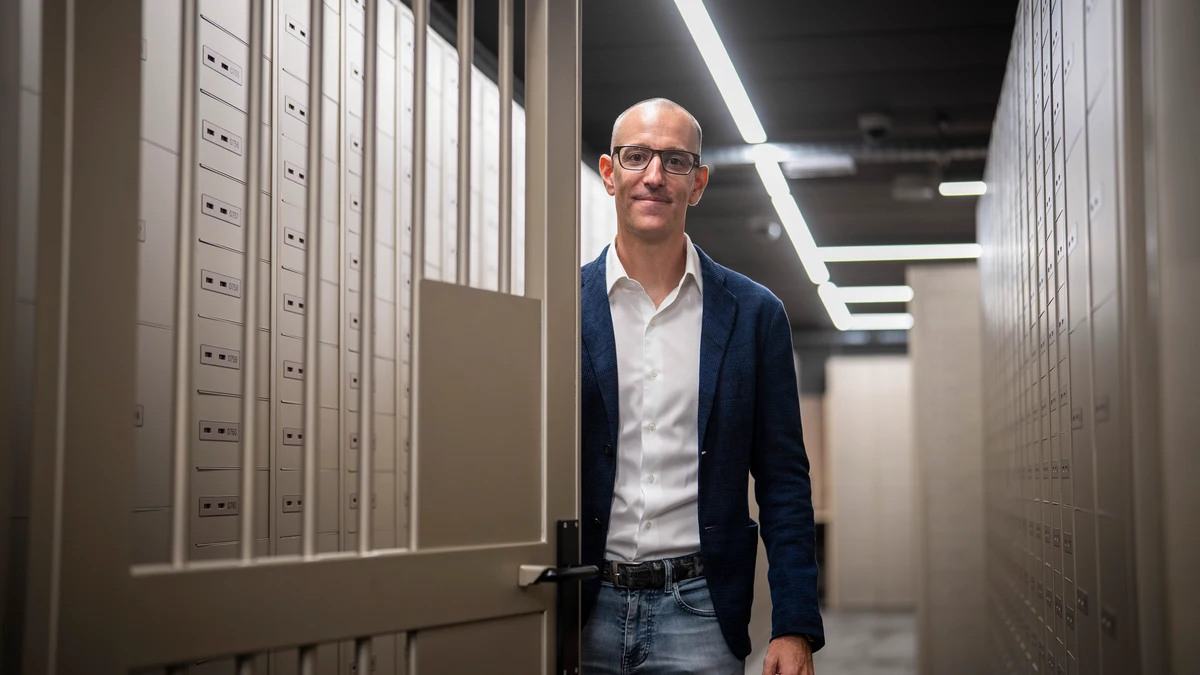
 L’ultimatum americano sul gasolio e perché colpisce soprattutto Germania e Francia
 Raffinerie: dalla ventina di impianti degli anni Novanta alle dieci di oggi, metà della capacità in mani estere
 Il Platts CIF Med, cioè chi fa davvero il prezzo, e le accise mobili dal 6 ottobre
 BRICS, unanimità a geometrie variabili: pagamenti, cavi, calcolo, minerali dopo il vertice di Nuova Delhi
 Il Valdai di Putin e il cuneo fra America ed Europa
 I 100 miliardi di Draghi per l’intelligenza artificiale: a chi andranno i calcolatori?
 Il ddl sull’antisemitismo e la frattura nel Pd
 GLI ARTICOLI DI CUI PARLIAMO
 Margherita Furlan, «BRICS, unanimità a geometrie variabili», La Fionda, 15 settembre 2026
 Vincenzo Maddaloni, «Voglia di rivoluzione. Storia e storie di un desiderio inappagato», Nexus Edizioni, 2024
 SOSTIENI CASA DEL SOLE TV Casa del Sole TV è un progetto di giornalismo indipendente autofinanziato.
 Membership YouTube:
 SEGUI CASA DEL SOLE TV





 Dall’11 settembre al 7 ottobre: lo schema che ritorna
 L’Arabia Saudita stretta fra Houthi, Washington e Tel Aviv
 Oman, Emirati e Accordi di Abramo: chi perde e chi guadagna
 Verso il 3 novembre: pressioni su Trump e scenari di destabilizzazione
 Analista Multipolare €5/mese