❌

Reading view

What is really happening in Venezuela?

It is reckless to believe that a change in the White House would represent a turn of fortune for Venezuela.

Join us on Telegram, X, and VK.

Contact us: info@strategic-culture.su

The year 2026 is passing quickly. In fact, it won’t be long before it ends. Still, we remember very well how this year opened: on January 3, the U.S. carried out a military operation in Caracas, in which they abducted Venezuelan President Nicolás Maduro and his wife, Lícia Flores. During this operation, a large part of Maduro’s bodyguards lost their lives. Maduro was close to a bunker, but he couldn’t reach it and seal the door in time before being captured.

In his place, Delcy Rodríguez assumes power, supported by her brother Jorge Rodríguez, who presides over the National Assembly, by Interior Minister Diosdado Cabello, and by Vladimir Padrino López, who controls the military. Far from betting on “free and democratic elections,” the U.S. endorsed the continuity of Bolivarian politics, keeping Delcy Rodríguez in power. Maria Corina Machado, Juan Guaidó’s successor in the Venezuelan “color revolution” project, has already fallen into oblivion.

What really happened during Maduro’s abduction? The circumstances were never sufficiently well explained, and we continue swimming amid rumors and hearsay. Occasionally, unverifiable information emerges that some elements of Maduro’s security team sold him out in exchange for financial compensation, never paid by the U.S. In fact, Venezuela’s interim government made several changes to the presidential guard after the abduction, even while denying that there was any betrayal.

But the big question is what happened to all the Russian and Chinese military equipment acquired by Venezuela. Why wasn’t it used on January 3? We are talking, for example, about Chinese JY-27A, JYL-1, and JY-11 radars, some of which have anti-stealth capability, as well as Russian Sukhoi Su-30 fighters and Russian anti-aircraft systems such as the S300 and Buk-M2. None of this appears to have been used during the U.S. attack. Lack of maintenance? Lack of readiness among Venezuelan soldiers? It is not known.

Since then, Delcy Rodríguez has been extremely criticized, by foreign anti-imperialists, for her conciliatory stance toward the U.S. Whenever news appears of a meeting between Venezuela’s interim president and some U.S. representative, such as Dan Caine of the U.S. Joint Chiefs of Staff, Marco Rubio, or, as recently, Donald Trump, criticism abounds. The same happens when the Venezuelan government issues its now-typical official notes celebrating “collaboration” with the U.S., the “improvement in relations,” “investment opportunities,” and so on.

Now, to some extent, it is quite easy to criticize Venezuela’s interim government while outside Venezuela and without having to deal with the same kind of pressure. In a practical and material sense, what options does Venezuela have today? To what extent can it directly and openly defy the U.S.?

The version offered by supporters of the current Venezuelan government is that Delcy Rodríguez’s priority is to preserve the Bolivarian political system and secure the return of Nicolás Maduro. Economic sovereignty can, to a certain extent, be sacrificed in the short term; the power structure cannot, since it is harder to rebuild or recover if it ceases to exist. In this sense, Delcy Rodríguez would be offering concessions to the U.S. in order to buy time, waiting until political changes within the U.S. – such as a Trump defeat in the midterms or, perhaps, in the next presidential elections – bring about a more favorable scenario.

The narrative is plausible and, frankly, in Delcy Rodríguez’s place I would do the same thing. There don’t seem to be many other options, at this moment, for Venezuela, besides damage control.

But how much is it possible to concede?

In just 1 year we have seen the return of the U.S. Embassy to Caracas, as well as the establishment of a CIA office in the country and the restoration of relations with the State of Israel.

On the economic front, the U.S. has come to approach the revenue from approximately 1 million barrels exported daily, whose value is only partially returned to the Venezuelan government for investments and spending authorized by the U.S. A good part of the value remains with the U.S. government, and Trump referred directly to this value as spoils of war.

Soon after, Venezuela granted the American company Trafigura the right to buy and export Venezuelan gold to be refined abroad, with approximately 400 kg of gold per month being transferred to the U.S.

And more recently, Venezuela ceded to the U.S. majority control over unexplored Venezuelan reserves that would theoretically amount to 65 billion barrels of oil. These are areas in which the U.S. would make investments of 100 billion dollars to extract oil for 25 years, which would yield 200 billion dollars in revenue for Venezuela, but much more for the companies involved and for the U.S. government.

How much further is Delcy Rodríguez willing to go? That is the question.

Finally, it is reckless to believe that a change in the White House from a Republican government to a Democratic government would represent a turn of fortune for Venezuela. On strategic topics, there is a surprising continuity of foreign policy between different governments, which indicates to us that perhaps it is not the White House that dictates the real guidelines. Moreover, it costs nothing to remember that it was under Barack Obama that the siege against Venezuela really began, intensifying with each subsequent presidency, whether Republican or Democratic.
  •  

María Corina Machado’s party stakes its strategy on the uncertain return of its leader

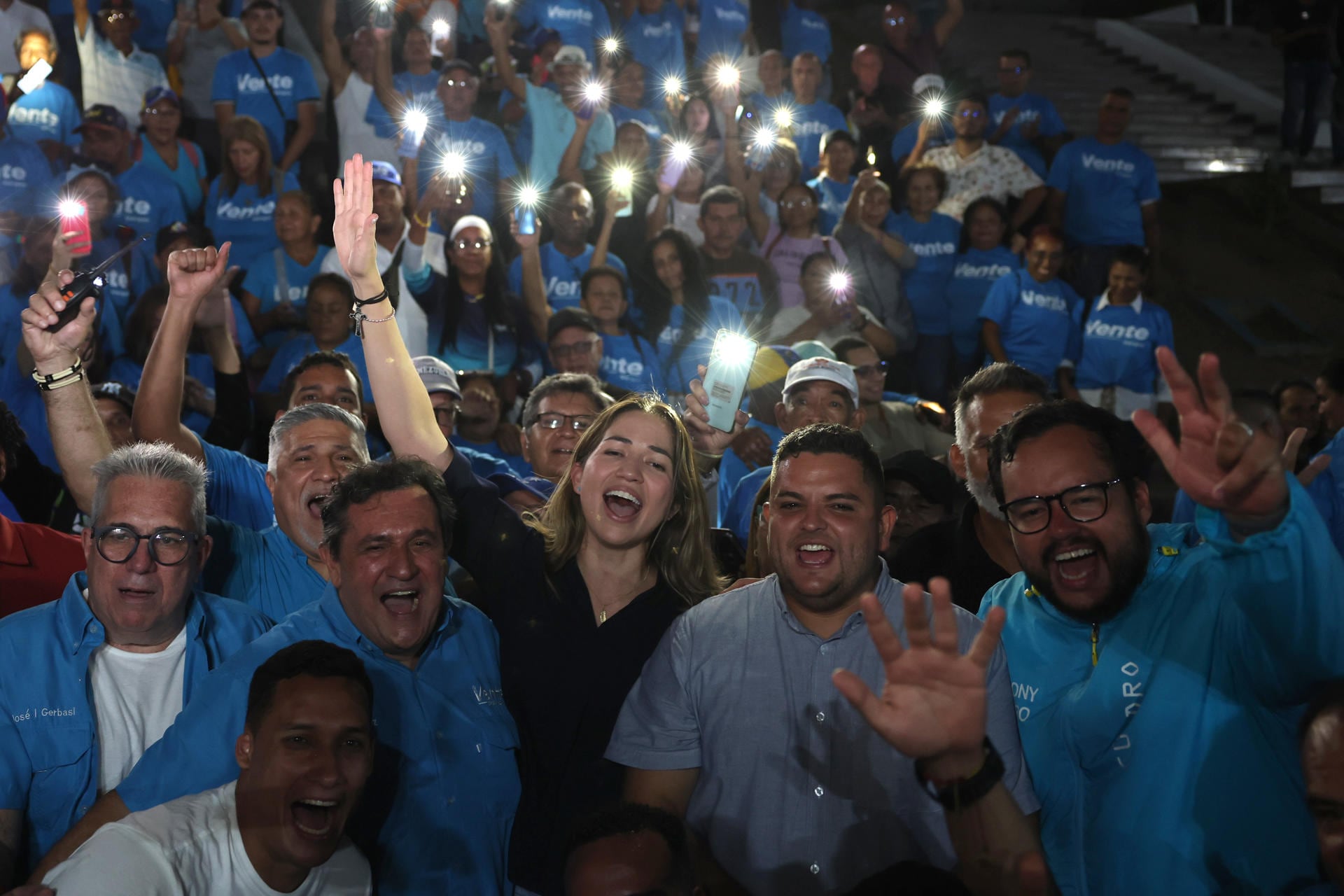
Vente Venezuela, the party founded by María Corina Machado, is preparing again for the imminent return of its leader despite delays, skepticism, and uncertainty. Decisions within the organization are being made on the assumption of her return. Machado was unable to enter the country from Panama last week (the reasons are still unclear), but her definitive arrival in Venezuela, says Henry Alviarez, the party’s secretary of organization, “is a matter of days.”

Seguir leyendo

© Danielle Villasana (REUTERS)

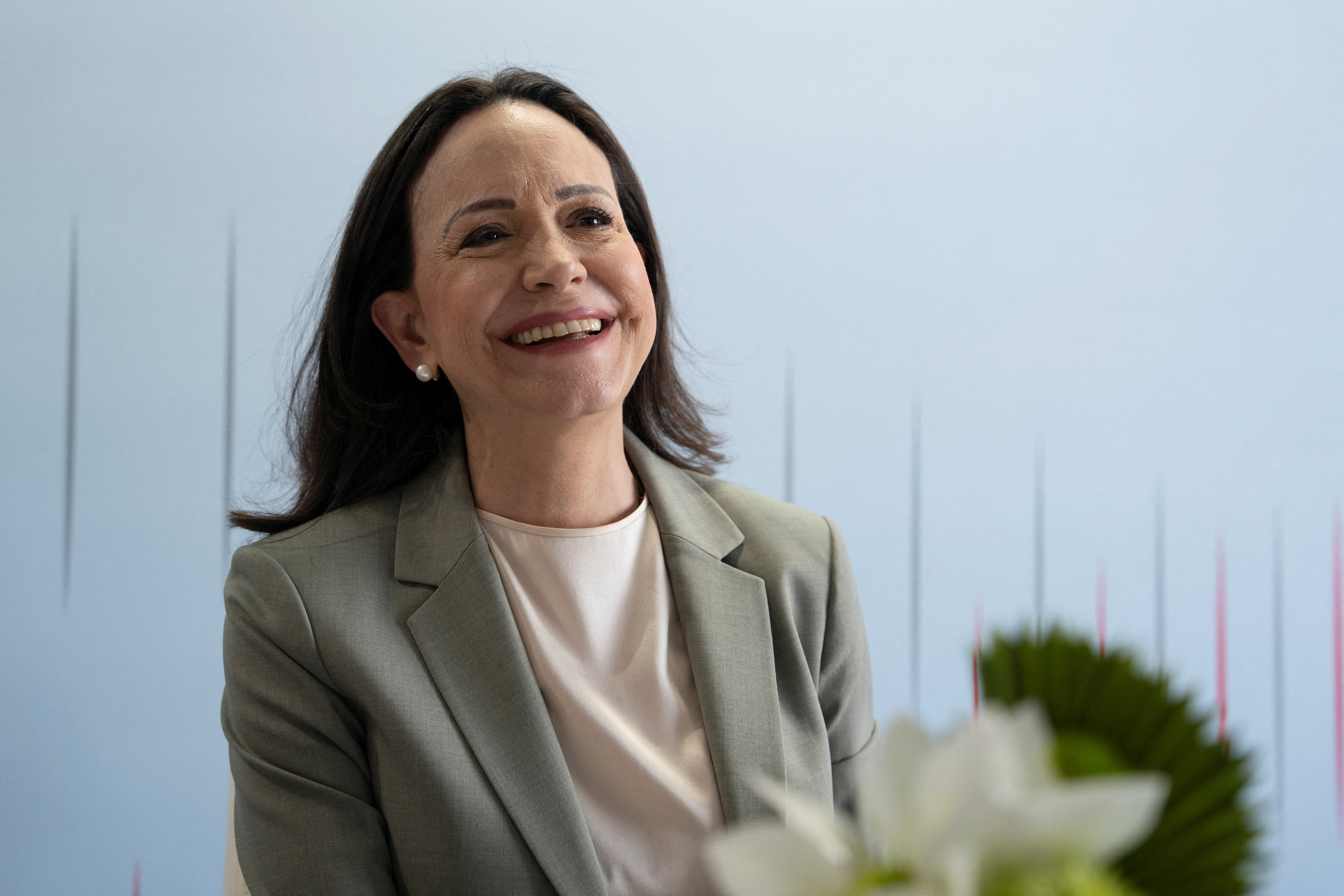
María Corina Machado in Houston in March.
  •  

Power outages, the economic crisis, and the blockade against María Corina Machado reignite social protests in Venezuela

A military contingent blocked the bridge over Lake Maracaibo on Monday in the Venezuelan oil capital to prevent a workers’ protest from closing the road. In Guayana, in front of the state-run basic industries, workers erected a barricade to demand better wages. In Caracas, a group protested for the release of political prisoners after news emerged of a death in the women’s prison run by the National Institute for Women’s Guidance (INOF). Over the weekend people took to the streets to demand a date for elections and the return of opposition leader María Corina Machado. Almost every night during a sweltering September, in inland cities such as Maracay, Guanare, Barinas, Valencia, and Maracaibo, people have expressed on the streets their frustration over blackouts that are increasingly prolonged, lasting up to 10 or 12 hours a day.

Seguir leyendo

© MIGUEL GUTIERREZ (EFE)

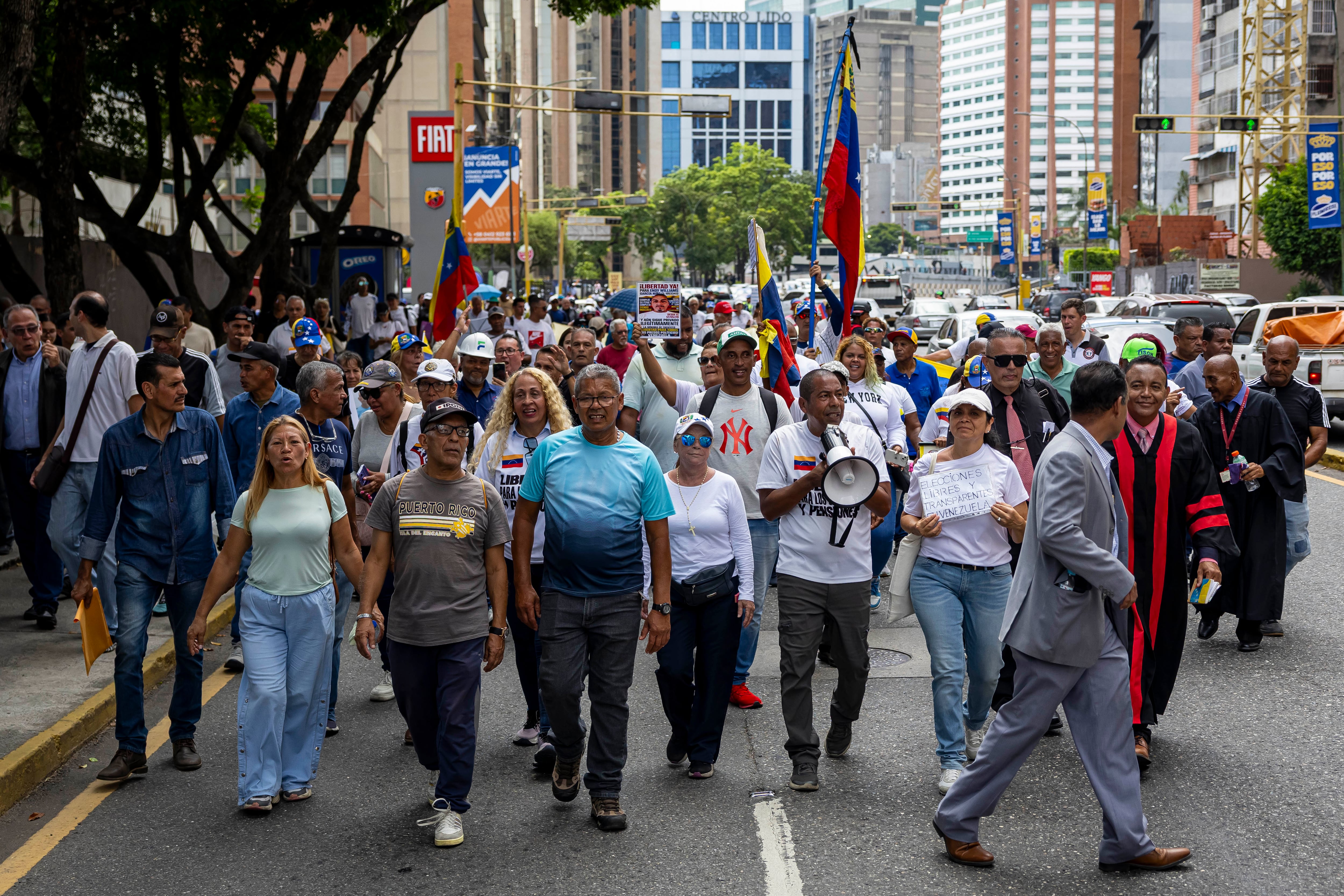
Protest demanding an electoral timetable and the return of María Corina Machado on Monday in Caracas.
  •  

Health issues or legal strategy? Defense and prosecutors clash over Cilia Flores’s condition

The same week Delcy Rodríguez was received in New York as Venezuela’s interim ruler and met with Donald Trump in Manhattan, the U.S. Attorney’s Office opposed releasing Cilia Flores, wife of deposed Venezuelan president Nicolás Maduro, on bail from the Metropolitan Detention Center in Brooklyn, where both have been held since the January U.S. military intervention in Caracas.

Seguir leyendo

Cilia Flores in Bolívar Square, Caracas, on February 7, 2019.

© Ariana Cubillos (AP Photo/Ariana Cubillos)

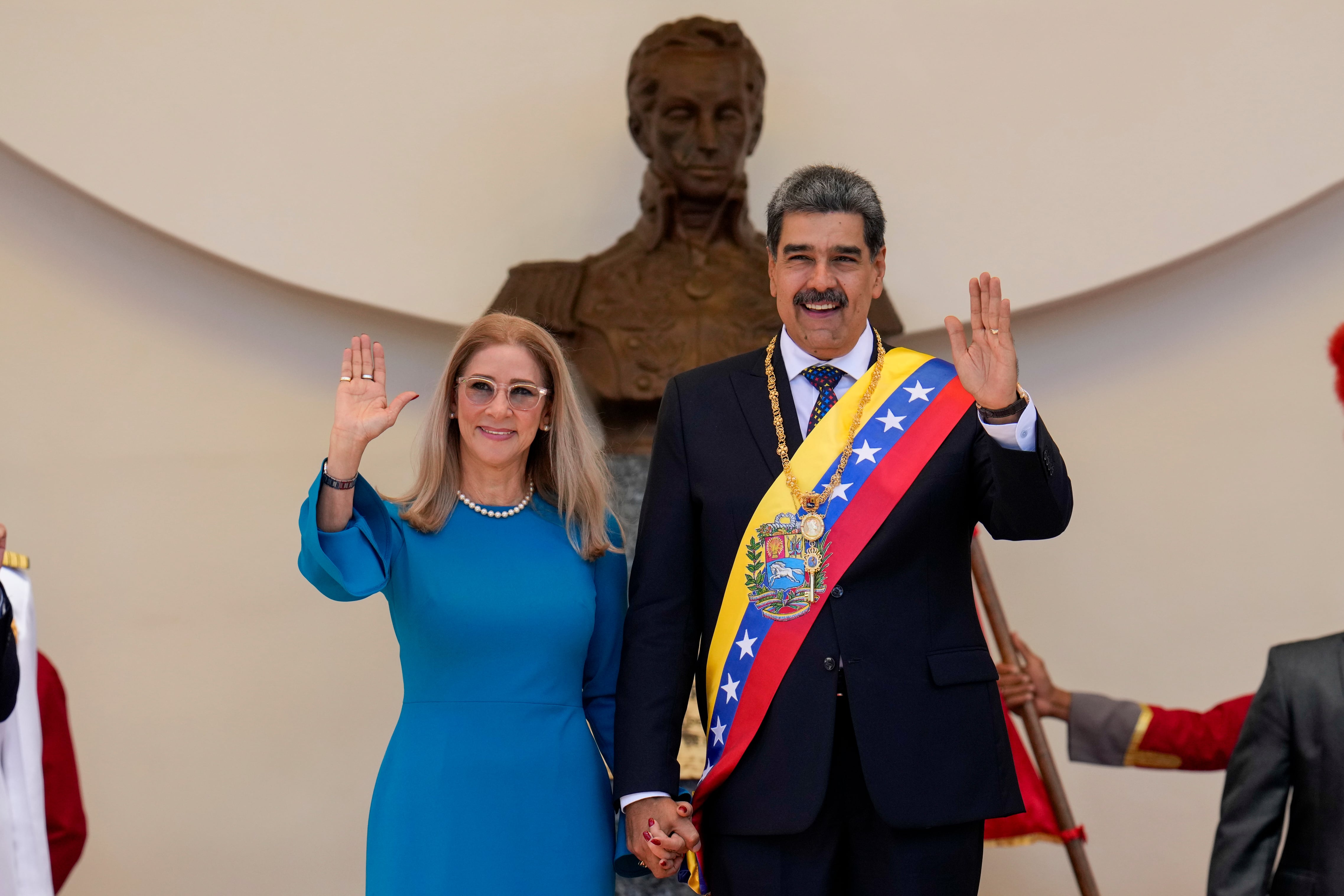
Cilia Flores and Nicolás Maduro in Caracas on January 10, 2025.
  •  

After María Corina Machado’s failed attempts to return to Venezuela, her communications chief does so instead

Claudia Macero, the communications chief for opposition leader María Corina Machado, returned to Venezuela on Sunday night after nearly a year and a half in exile. She landed at Simón Bolívar International Airport in Maiquetía, where journalists and dozens of Vente Venezuela supporters were waiting for her with party flags. Her return comes amid growing expectations over the opposition leader’s potential return, after she tried to re-enter the country three times last week without success.

Seguir leyendo

© MIGUEL GUTIERREZ (EFE)

Claudia Macero, dressed in black, in Maiquetía on September 27.
  •  

Neither US intervention nor Communist stagnation: Harvard’s proposed plan for Cuba

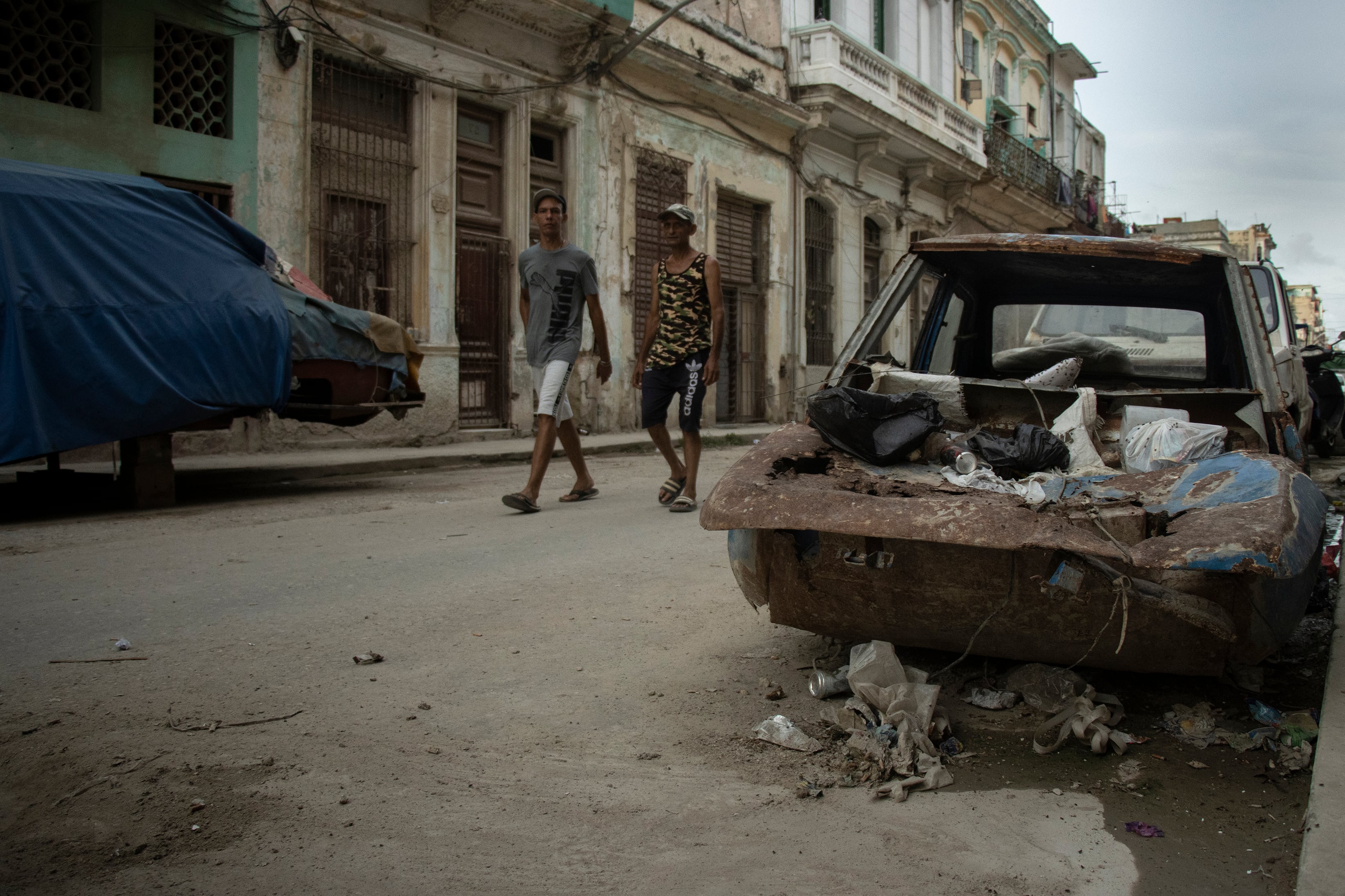
A street in Havana (Cuba), May 21.

Saying that Cuba is in crisis is hardly news. It has been for decades. Nor is it news that Washington’s sanctions have worsened the health of an economy that is now on life support. Both statements are axioms. But talking about Havana is a high-risk sport.

Seguir leyendo

  •  

Recolonization is taking place, says Guyana’s former president

Latin America and the Caribbean countries are being re-colonized. This time it is not by Britain, the Netherlands, Spain, France, and Portugal, but by the United States.

At a period of time the United States had an anti-colonial position and had advocated for the ending of colonialism. That was one of the features of the Monroe Doctrine that has become somewhat obscured since the US became so bellicose.

Today, in a de facto way it has become a super colonial power. It is imposing its will on regions and countries. Those that stand up for their rights are sanctioned, destabilized and sometimes physically removed.

The fact that it used its military might to kidnap a sitting president, President Maduro of Venezuela, is a clear indication that the United States has decided to ignore international law and to get its own way.

Strikingly, only the President of Brazil protested vigorously. Our Caribbean leaders have generally been tight lipped.

The United States has gone even further. They have, using the guise of fighting drugs, established a strong military presence in the region. They have been murdering hundreds of persons traveling in small boats in the Caribbean. Without producing a scintilla of evidence, without attempting to board the boats and get evidence, the US just killed the occupants. We may never know if any were really involved in drug trafficking.

There has been a deafening silence from Latin America and the Caribbean leaders to those atrocities. As if these events were not enough, many of the governments in the region are, on the request/orders from the United States, acting against their countries’ best interests. The ending of the cooperation in health with Cuba which was in place for more than fifty years and which benefited millions of the region’s citizens, is a case in point.

That has left a massive gap in the health sector of the region. The US has not provided any assistance to help with the dislocation and shortage of technical personnel created by their insistence to remove Cubans.

The US is now also pressing regional governments to stop doing business with China. Many governments are beginning to comply with those orders as we see more big contracts going to US companies, despite some of those companies having poor performance records.

If some newspaper stories are to be believed, (and they have not been countered) in some cases Chinese contractors won bids for certain projects, but they were not given the jobs, they went to US firms instead.

The US and other Western countries have ignored us and kept us in a state of underdevelopment since independence. Now that we are getting assistance from China to build important and much needed infrastructure to facilitate socio-economic progress we are getting push back from the US.

It appears that they want to keep us in a state of perpetual underdevelopment and in poverty.

We see the open intention to super exploit our natural resources and labor for the benefit of big business in the US. They are mainly interested in our natural resources. They do not add value in the region nor establish any type of manufacturing. Those are reserved for the rich, developed countries.

The recent “deal” with Venezuela is worse than highway robbery. Venezuela has to provide oil and gas to US companies at cost for one hundred years. This is barefaced robbery and has demonstrated that Venezuela is now a de facto colony of the US. This will not benefit the poor in the US. It is designed to enrich the huge corporations.

Venezuela was forced to abandon its long and well-known principle of standing in solidarity with the oppressed people of Palestine. It is now forced to recognise the Fascist, Apartheid Israeli regime that continues to bomb defenseless civilians in makeshift camps in Gaza, the West Bank (where ethnic cleansing is taking place) and in East Jerusalem.

Today the sovereignty of our countries is already severely compromised. If we don’t stand up now it would be completely lost.

Donald Ramotar is a former President of the Cooperative Republic of Guyana (2011-2015).

This article was produced by Globetrotter.

  •  

Nicolás Maduro is not guilty

Venezuelan President Nicolás Maduro is not guilty. This is a statement of law and fact, since Maduro has not been convicted of any crime. He has pleaded not guilty to every charge brought against him, and the accusations made by the United States remain precisely that: accusations. Under the presumption of innocence – recognized in the United States Constitution and in Article 14 of the International Covenant on Civil and Political Rights – the burden rests entirely upon the prosecution to prove guilt. It is not Maduro who must prove his innocence, but it is the United States government that must prove his guilt.

On January 3, 2026, United States forces illegally entered Venezuela, attacked targets in and around Caracas, seized President Maduro and his wife and an elected official, Cilia Flores, and transported them to the United States. Two days later, shackled and injured, Maduro appeared before a federal court in Manhattan. “I am innocent. I am not guilty,” he told the court. Both defendants entered pleas of not guilty and are now imprisoned in Brooklyn while awaiting a trial provisionally scheduled for June 2027.

The charges against Maduro

The United States alleges that Maduro participated in conspiracies to import cocaine, possess machine guns and destructive devices, and collaborate with organizations Washington has designated as terrorist groups. These charges developed out of an indictment announced during Donald Trump’s first presidency in March 2020. The case was substantially expanded after Maduro was kidnapped through a fourth superseding indictment. An indictment, however, is not evidence tested before a court. It is a document prepared by prosecutors and approved through a grand-jury proceeding at which the defense is normally neither represented nor permitted to challenge the government’s account.

The prosecution relies heavily upon the idea that Maduro directed the so-called Cartel de los Soles, or Cartel of the Suns. But even organizations deeply hostile to the Venezuelan government acknowledge that this is not a cartel in the conventional sense. The name has long been used as an umbrella expression for disparate Venezuelan officials allegedly involved in criminal activity, long before Maduro entered political life. It does not describe an organization with a demonstrated membership, command structure, headquarters or chain of authority comparable to Mexico’s Sinaloa Cartel. When Washington designated the Cartel de los Soles a foreign terrorist organization in 2025, the Associated Press noted that it was “not a cartel per se.”

This matters because the prosecution’s language performs much of its political work. Allegations concerning individual acts of corruption are assembled into the image of a unified organization, the organization is then attributed to the Venezuelan state, and responsibility for everything allegedly done by anyone within that loose network is placed upon Maduro. The indictment must still demonstrate that Maduro knowingly joined the specific conspiracies charged. Political authority over a state in which crimes occur does not by itself establish personal criminal responsibility for those crimes.

Case is dead on arrival

Venezuela is not a major producer of coca leaf or cocaine. The principal cocaine-producing countries remain Colombia, Peru and Bolivia. Venezuela has been used as a transit territory, particularly for cocaine originating in neighboring Colombia. But transit through a country does not prove that its president commands the traffic, and nor does it substantiate the extravagant political image of Venezuela as the central source of the drugs entering the United States. The US Drug Enforcement Administration’s own 2025 threat assessment concentrated overwhelmingly upon Mexican organizations and their supply chains. The global cocaine trade operates primarily through production in the Andean region, maritime export corridors, Central America and Mexico, not through a single organization supposedly commanded from the Venezuelan presidential palace. The International Criminal Court’s investigation into the situation in Venezuela, for example, is an investigation into alleged crimes within its jurisdiction. It is not a conviction of Maduro and has not produced an individual judgment of guilt against him.

The US government is expected to rely upon cooperating witnesses, including former Venezuelan intelligence chief Hugo Carvajal and former general Clíver Alcalá. Both men pleaded guilty to serious offenses in the United States. Their evidence cannot be treated as disinterested truth. Cooperating defendants may hope to obtain sentencing benefits by assisting prosecutors. Their claims must therefore be corroborated and subjected to cross-examination. Until that happens, their statements do not establish Maduro’s guilt. In fact, it is better to see their statements as proof of their own attempt to lighten their sentences and launder their soiled reputations.

The circumstances under which Maduro was brought before the US court create an even deeper problem. Washington did not request extradition through an agreed legal process. It employed military force within another sovereign country without Venezuela’s consent or authorization from the United Nations Security Council. Article 2(4) of the UN Charter prohibits the threat or use of force against the territorial integrity or political independence of a state, subject to narrow exceptions such as self-defence. Arresting a person accused of drug offenses is not one of those exceptions. International-law specialists described the operation as an unlawful use of force, while governments including Brazil, Mexico, and China condemned the violation of Venezuelan sovereignty.

Maduro’s lawyers have argued that the prosecution violates the immunity enjoyed by an incumbent head of state. Venezuela continued to recognize Maduro as its constitutional president when the United States seized him – a fact tacitly recognized by the United States when it calls Delcy Rodriquez the Acting President. Washington cannot necessarily extinguish the international legal status of another country’s head of state merely by withholding diplomatic recognition. The defense has consequently requested dismissal of the indictment on immunity grounds and has separately challenged the narco-terrorism count for lacking an adequate jurisdictional connection to the United States. Oral argument on these questions is scheduled for November 2026.

The case of former Honduran president Juan Orlando Hernández exposes the selectivity of Washington’s supposed war against narco-states. Hernández was a close US ally during his presidency from 2014 to 2022. After leaving office, he was extradited – not abducted through a military invasion – and tried in the same federal district in New York where Maduro is now being prosecuted. In March 2024, a jury convicted Hernández after a three-week trial. Prosecutors presented evidence that he had accepted millions of dollars from traffickers, protected cocaine shipments with the Honduran police and military, and helped move more than 400 tons of cocaine towards the United States. He was sentenced to 45 years in prison. Unlike the claims against Maduro, these allegations were tested through testimony, cross-examination and a jury verdict. Yet on December 1, 2025, President Donald Trump pardoned Hernández and secured his release, claiming that the former president had been treated unfairly.

The contrast could hardly be more revealing. Trump pardoned a former president whose participation in cocaine trafficking had been established in a US courtroom, while threatening and eventually invading Venezuela to seize a president against whom no verdict had been rendered. Hernández belonged to Washington’s political camp; Maduro did not. One was released despite his conviction, while the other was captured despite his legal innocence. This disparity does not by itself disprove the accusations against Maduro, but it demolishes the claim that Washington acted from a consistent concern about narcotics. The determining distinction was political alignment, not the strength of the evidence.

The implications of this case extend far beyond the specific circumstances of Maduro and Cilia Flores or their consequences for Venezuela. Allowing a foreign state to override the jurisdiction of another country’s legal system, pursue an accusation for which there is no evidence, and proceed with a trial that lacks a basis in international law effectively establishes the US court system as one with global and unlimited jurisdiction. The ambivalence of governments around the world toward this case is therefore alarming, as it risks signalling consent and normalizing such gross overreach. This is particularly relevant for Mexico, which is already facing a series of accusations and extradition demands from the United States with clear political implications. The outcome of Maduro’s trial could set an important precedent for how Mexico – and other countries – are treated in similar circumstances.

Nicolás Maduro is not guilty therefore expresses the only defensible conclusion at this stage. He was seized through an act of military force, placed before the courts of the state that had pursued his overthrow for years, and charged based on a politically constructed theory that has yet to survive adversarial examination. He remains innocent unless and until admissible evidence proves otherwise beyond a reasonable doubt. Sovereignty is not an ornament, an indictment is not a verdict, and an accusation issued by a powerful state does not become truth merely because that state possesses the weapons to seize the accused.

Stephanie Weatherbee Brito is the co-coordinator of the International Peoples Assembly (IPA). 

Vijay Prashad is an Indian historian and journalist. He is the author of forty books, including Washington Bullets, Red Star Over the Third World, The Darker Nations: A People’s History of the Third World, The Poorer Nations: A Possible History of the Global South, and How the International Monetary Fund Suffocates Africa, written with Grieve Chelwa. He is the executive director of Tricontinental: Institute for Social Research, the chief correspondent for Globetrotter, and the chief editor of LeftWord Books (New Delhi). He also appeared in the films Shadow World (2016) and Two Meetings (2017).

  •  

How Venezuela pushed aside a local oil company to make way for new US partners: ‘They simply took the assets and disappeared’

The heirs of Oswaldo Cisneros, once one of Venezuela’s richest men, received unusual news last April: strangers were touring their oil fields in the Orinoco Belt. On paper, they remained the legitimate operators of the assets, but it soon became clear that, even as those visits took place in plain sight, a plan was being put in motion to take the fields away from them.

Seguir leyendo

© MIRAFLORES PALACE (via REUTERS)

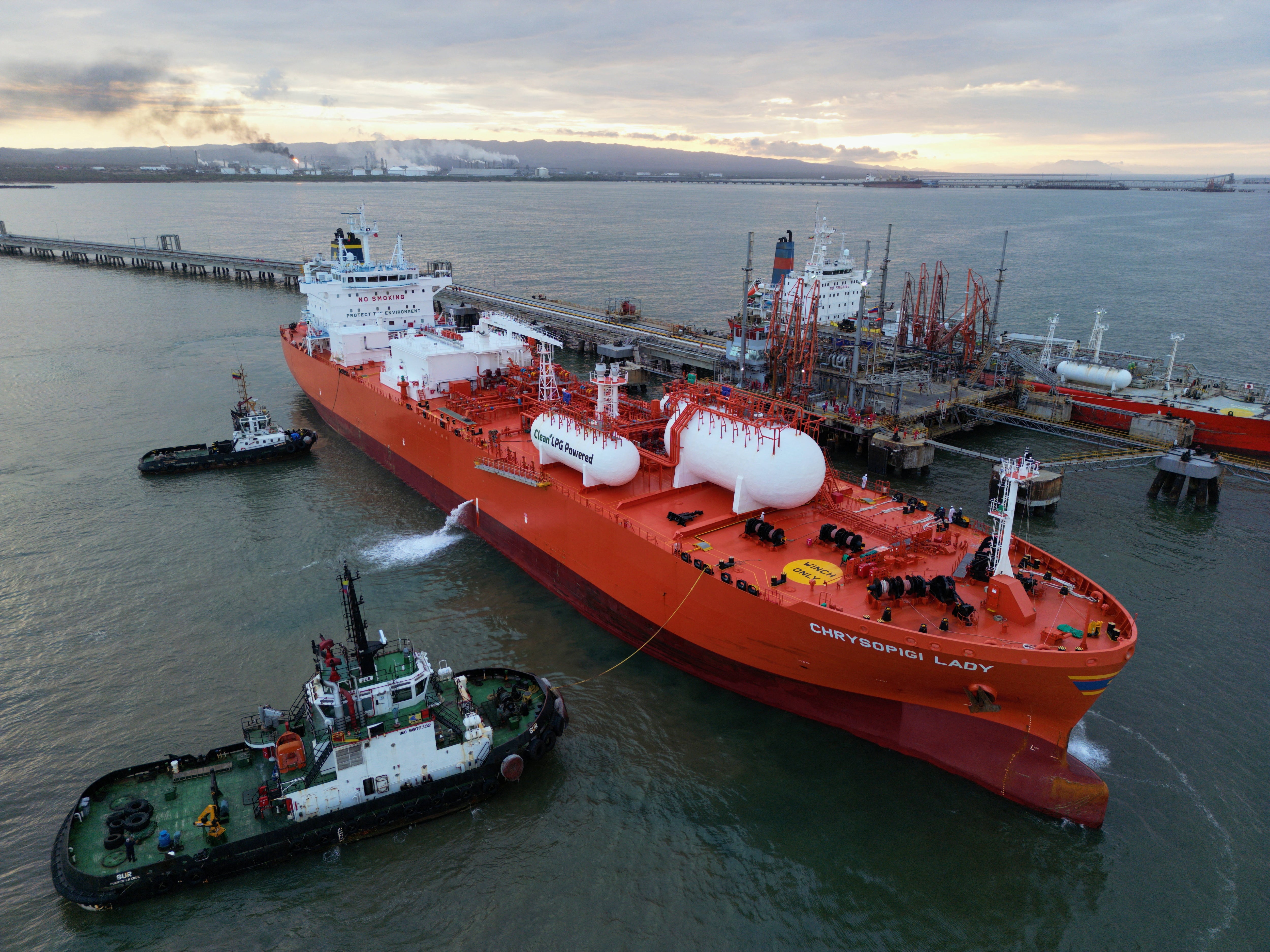
The LPG tanker Chrysopigi Lady carries a cargo of Venezuelan liquefied petroleum gas to the United States.
  •  
❌