Jeremy Clarkson has said there is no reason to set up a business in Andy Burnham’s Britain as he made a surprise appearance at the Conservative Party conference.
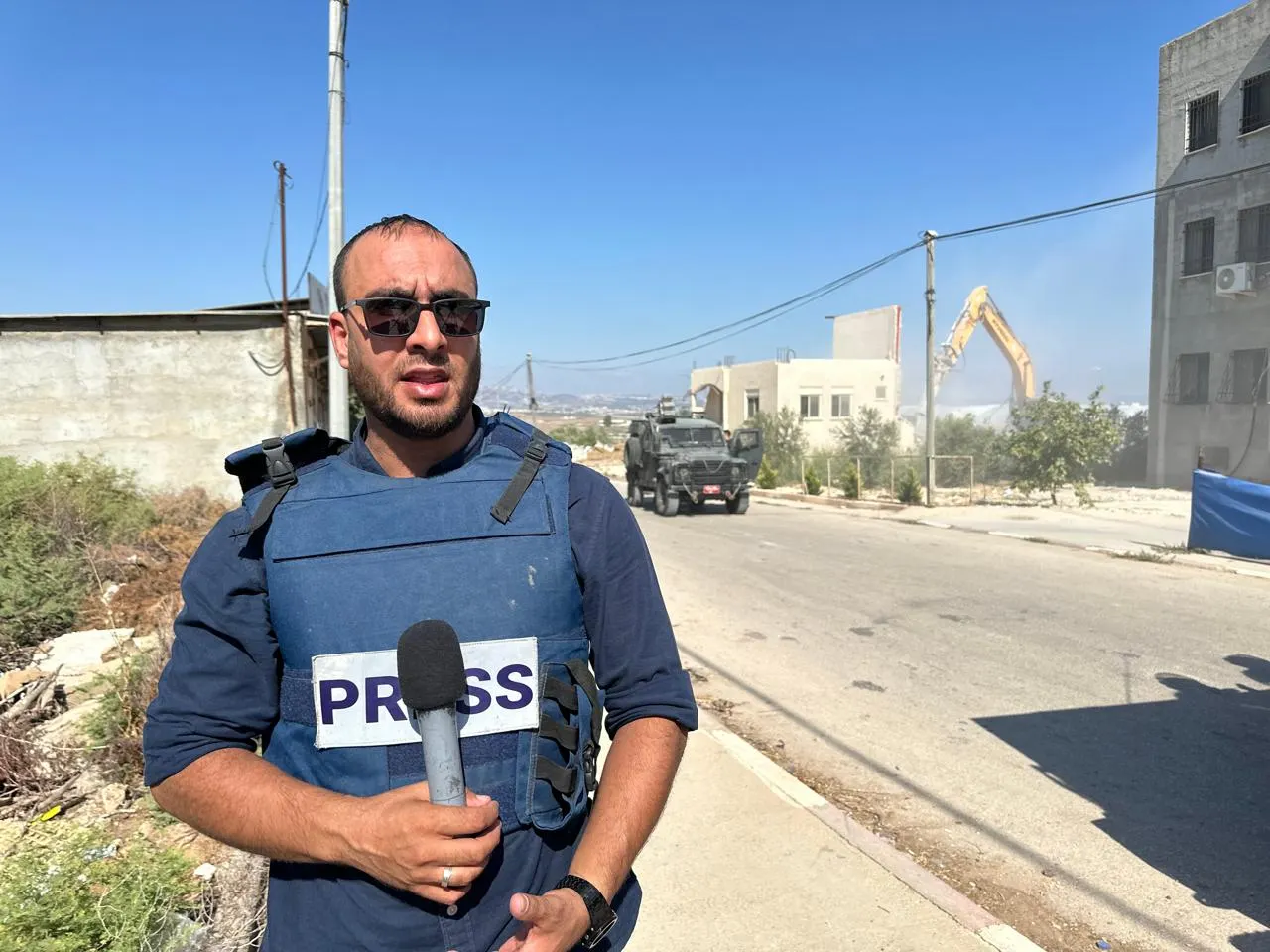
Since October 2023, no nation’s military has killed nearly as many journalists as Israel, a fact that often opens them up to considerable criticism. The IDF aims to quell those concerns with a new round of official narrative
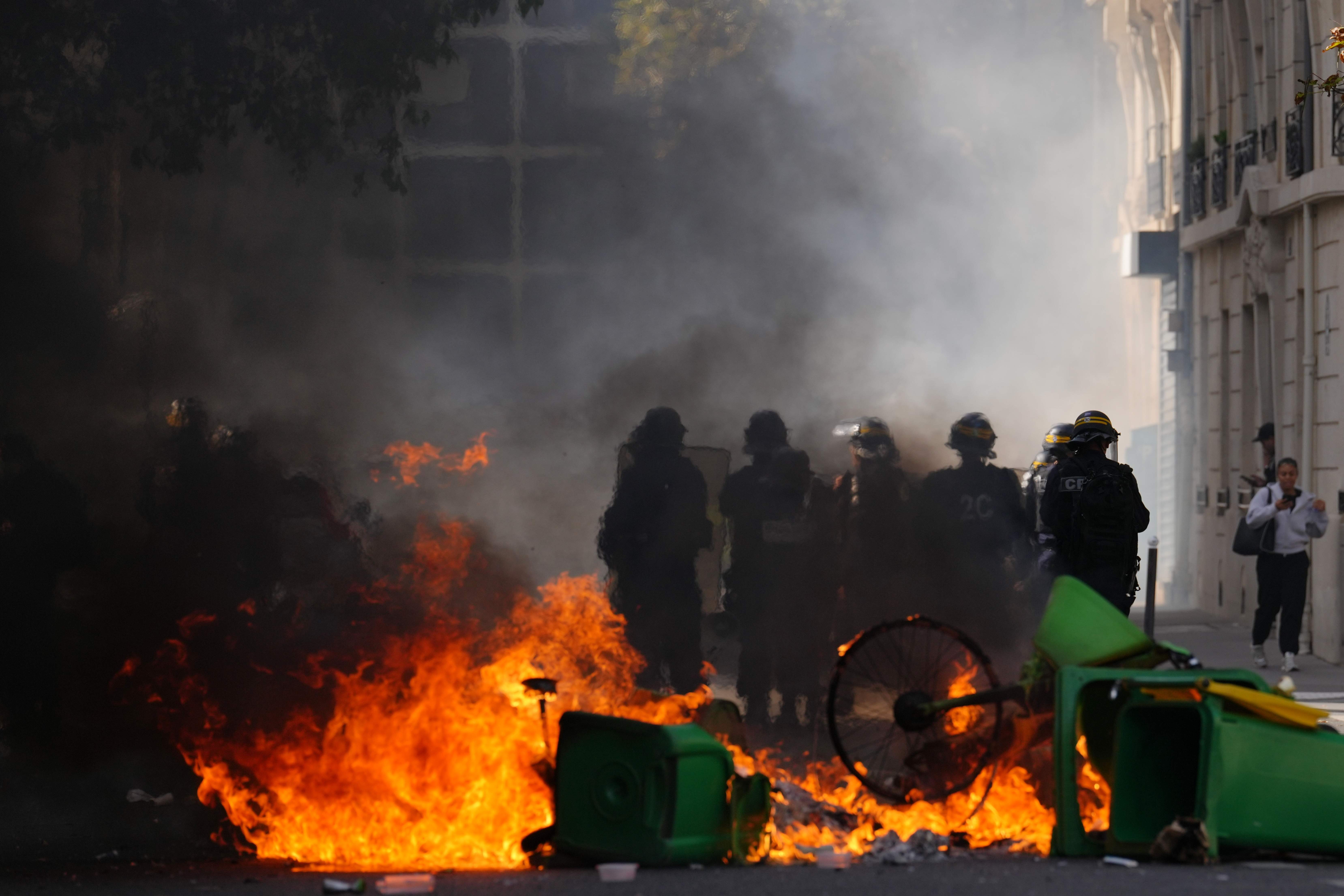
Between 400 and 500 French secondary schools are expected to suspend lessons fully or partially on Monday, 5 October, as nationwide student protests continue following several days of violence, arrests and damage to educational buildings.
French Education Minister Édouard Geffray said on Sunday that the number of affected lycées was likely to be broadly similar to Friday, when between 400 and 500 establishments suspended classes.
“There will probably be just as many on Monday, but with a partial, progressive resumption of classes,” Geffray said during interviews with France 2 and France Inter.
France has around 3,700 lycées. The government says classes are being suspended where normal security conditions cannot be guaranteed, including schools damaged during the unrest or where staff have been directly targeted. French reporting on the education ministry’s latest figures said Geffray expected disruption on a similar scale to Friday.
The closures mark the latest stage in a protest movement which began in the Paris region in September before spreading to cities across France.
Students initially mobilised over conditions in the education system, including shortages of teachers and replacement staff, overcrowded classrooms, deteriorating school buildings and demanding timetables. Pressure surrounding the Parcoursup university admissions system has also featured prominently in the demonstrations. Accounts from pupils involved in the blockades have highlighted frustration over conditions in schools and wider concerns about educational inequality.
As EU Today reported on 3 October, the protests have since developed into a broader confrontation involving students, education staff, police and political activists.
Geffray said on Sunday that 24 educational establishments had been “burned or vandalised” since the unrest intensified. He also said 78 employees of the national education system had been injured.
The minister has accused organised far-left activists of infiltrating the student demonstrations and contributing to the escalation of violence.
According to the government, some education staff have been deliberately attacked because of their position within the school system. Geffray said schools would remain closed or operate only partially in cases where staff or pupils could not be adequately protected.
The political argument over responsibility for the unrest has intensified alongside the protests. Government ministers have accused activists connected with the hard-left La France Insoumise of encouraging blockades and helping to broaden the mobilisation. LFI representatives have rejected accusations that they are responsible for the violence and have continued to support the students’ underlying demands. The dispute over the political role in the protests has become part of the wider confrontation between the government and the demonstrators.
Friday brought another large-scale police operation.
Interior Minister Laurent Nuñez said 1,747 people were detained during the day, compared with 1,954 on Thursday, taking the number of arrests since the beginning of last week to more than 5,000. Authorities said around 85 per cent of those detained were minors.
Of 735 schools affected by demonstrations or disruption on Friday, “urban violence” was recorded near 158, according to the Interior Ministry. The latest official arrest figures underline the scale of the police response.
The violence has increasingly complicated attempts by student organisations to maintain the focus on their original education demands.
Representatives of student organisations met Geffray on Friday but said afterwards that they had received no sufficiently concrete commitments from the government. They called for the mobilisation to continue and announced a new nationwide day of action, described as “Act III”, for Tuesday, 6 October.
The government has already made one concession. A proposed measure that would have introduced registration fees of €178 for non-grant students entering BTS vocational programmes and €270 for preparatory classes for France’s grandes écoles was withdrawn as the demonstrations intensified. The withdrawal was announced as hundreds of schools were being affected by blockades.
The protests nevertheless show little sign of ending.
Many students continue to argue that their schools lack adequate staff and investment, while teachers and parents have raised similar concerns over replacement teachers and the condition of buildings.
At the same time, the scale of the damage and the number of injuries have moved security to the centre of the government’s response.
Monday will therefore provide an early indication of whether schools can begin returning to normal before Tuesday’s planned national mobilisation, or whether the disruption that affected hundreds of establishments last week will continue into a third week.
The speech of the Iranian President at the UN General Assembly in New York captivated the audience with its unwillingness to yield in the face of the aggressive force of the US, and showed Washington’s utter helplessness in trying to squash the Islamic Republic’s sovereignty. Iran Accuses the US of Terrorism President of the Islamic […]
A 58-year-old tourist was killed by a lightning in southern Rhodes early afternoon on Friday. The woman was walking with her husband in Lothiarika area of Laerma near Lindos in the south part of the island in the eastern Aegean Sea. She was struck by the lightning at 14:45 and died on the spot, local […]
So, this is Andy Burnham's solution to soaring energy prices: nationalisation and relitigating the 1970s. It's just a shame, says Ben Pile, that energy was far cheaper under Thatcher than in our Net Zero era.
In Episode 98 of the Sceptic: Michael Rainsborough on Andy Burnham’s Ministry of Truth, Richard Lyon on peak oil and Jack Hadfield on the new wave of anti-immigration protests and the persecution of Danny Tommo.
BANGKOK — Over the course of 2025, the Mekong countries of Cambodia, Laos, Myanmar, Thailand and Vietnam lost a combined 746,168 hectares (1.8 million acres) of tree cover, an area roughly equivalent to the size of the Bangkok Metropolitan Area, according to Mongabay’s analysis*. Data published by the Global Land Analysis and Discovery (GLAD) laboratory at the University of Maryland, in partnership with Global Nature Watch (GNW) — formerly Global Forest Watch — shows that of the total 746,168 hectares of tree cover lost, more than 154,000 hectares (380,000 acres) was primary forest. Mongabay’s analysis found that just shy of 200,000 hectares (494,000 acres) of the total were lost from the region’s protected areas. While these numbers may paint a bleak picture for the Mekong’s forests, the rate of regional deforestation has dropped by almost 25% from that recorded by GNW in 2024, continuing a decline that, according to the data, began in 2023. Fewer wildfires, higher rainfall, stricter law enforcement and lower market rates for commodities could all factor into a drop in the Mekong’s deforestation rate for 2025 when compared to 2024. However, experts warn that short-term drops do not always represent a broader trend in deforestation. Every country in the Mekong saw a fall in deforestation rates from 2024 to 2025, but each still grapples with a range of challenges to protecting the region’s remaining forests. Data from 2025 shows a drop in deforestation recorded across Mekong nations, but much of the tree cover lost last year was lost inside…This article was originally published on Mongabay
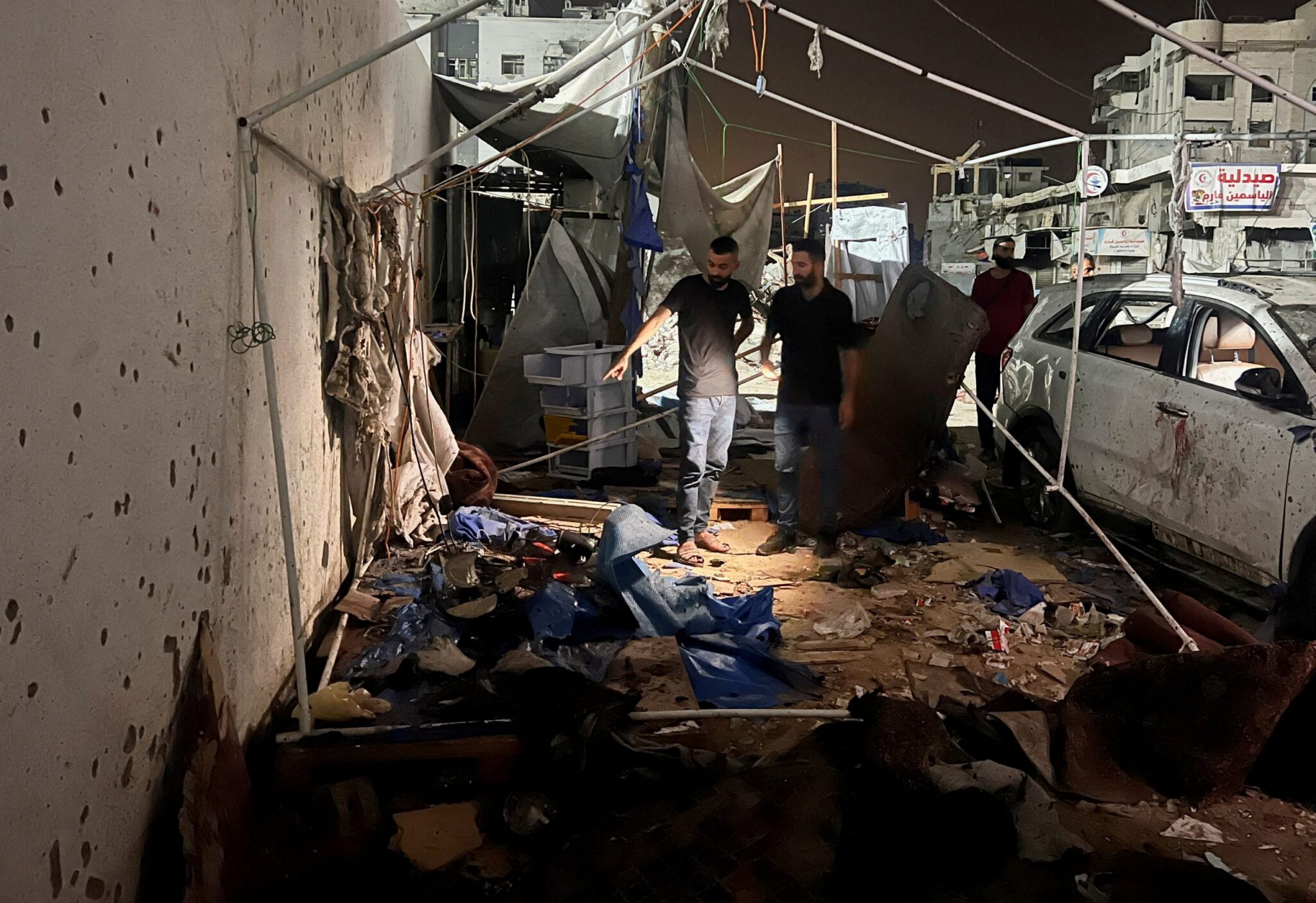
CNN chief international correspondent Clarissa Ward has spent more than two decades reporting from war zones. She joins Washington Post's Jason Rezaian to explain how journalists in Gaza are threatened, yet remain vital reporters of the truth, and how media companies should oppose all censorship and attacks on reporters
A mounting standoff over allegations of covert Chinese nuclear testing and rapid arsenal expansion has collided with an intensifying domestic debate within the US over whether it must abandon its decades-long test moratorium. US officials are pressing China in confidential diplomatic talks over suspected low-yield nuclear testing and a rapid strategic expansion across at least […]
North Korea’s recent hypersonic test signals an evasive theater nuclear strike capability aimed directly at Japan—a proxy warning backed by Russia and China as Japan rethinks its nuclear taboos. This month, multiple media outlets reported that North Korean leader Kim Jong Un oversaw the test launch of an upgraded hypersonic missile system from the country’s […]
On September 3, 2026, Argentine President Javier Milei addressed the nation on the issue of the Malvinas (Falkland) Islands. This programmatic speech is noteworthy be-cause Milei had previously taken a more cautious position on the islands and advocated resolving the long-standing territorial dispute with the United Kingdom through diplomatic means. However, in this address, the […]
Tragedy in Rhodes: A firefighter who participated in an operation to rescue tourists, died on Tuesday, after he fell from a relative high height. The 52-year-old man fell from a height and was fatally injured during an operation to provide assistance to two tourists, hikers, in an area near Sianna on the island of Rhodes. […]
T-invariant is publishing its latest regular report, Chronicle of the Persecution of Scientists No. 36, dated August 31, 2026. Azat Miftakhov has published a paper in the French quarterly La Revue de la filière mathématiques (June–August 2026). The paper was written at the suggestion of French mathematician Bernard Randé, a member of the journal’s editorial board and of the international association Solidarité FreeAzat. Miftakhov completed the work while held in prison in Dimitrovgrad.
Azat Miftakhov’s paper is titled “La conjecture de Chui dans un cadre hilbertien” (“Chui’s Conjecture in a Hilbert Space Setting”). Unfortunately, we have not been able to read it. The paper was not posted on arXiv.org, and the journal itself is available only by subscription. However, The Insider published the first page of Miftakhov’s manuscript, which gives a sense of both the subject of the paper and his approach to the problem.
The problem Miftakhov tackled concerns a variant of Chui’s conjecture. The conjecture came about in 1971, more or less by accident. In a short note, the well-known American mathematician Charles Chui asked how to place N unit point charges on the unit circle so that the average strength of the field they generate inside the disk is as small as possible. More precisely, he asked whether this quantity is bounded below by an absolute constant — one that holds for any number of charges in any arrangement. The answer came a year later: in 1972, Donald Newman published an elegant solution — yes, such a constant exists, and π/18 will do.
The conjecture itself is a remark Chui dropped in that same note. It is plausible, he wrote, that the minimum is attained by the most natural arrangement: the charges placed at the vertices of a regular N-gon. Chui offered no proof and moved on to entirely different things. The conjecture remains unproven to this day.
Even the case of two charges turned out to be hard. The proof was found in 2023 by Fedor Nazarov, a professor at Kent State University in Ohio. He posted his answer on MathOverflow, a forum where mathematicians put questions to one another, and where Nazarov has been answering his colleagues’ questions for many years under the username fedja.
Mathematicians have tried reformulating Chui’s conjecture for Hilbert spaces (that is, spaces equipped with an inner product). In this setting, there has been significant progress. In 2020, Evgeny Abakumov (Gustave Eiffel University, Marne-la-Vallée), Alexander Borichev (Aix-Marseille University), and Konstantin Fedorovskiy (Bauman Moscow State Technical University and St. Petersburg State University) posted an important paper, “Chui’s conjecture in Bergman spaces.” They proved Chui’s conjecture in weighted Bergman spaces for a broad class of weights: the minimum is attained if and only if the charges are evenly spaced. But some cases remained open, and the authors listed them explicitly at the end of the paper.
It was precisely this set of problems that Randé proposed to Miftakhov. The first page of his manuscript opens with the words “Let us assume” and contains the statement of the theorem and the beginning of the proof. He looks at the case where the charges lie strictly inside the disk rather than on the circle itself. And what he proves is not an inequality but an exact equality: the energy of any configuration equals the energy of the regular-polygon configuration plus an explicit nonnegative term that vanishes only when the charges form a regular polygon. If Miftakhov has indeed proved this, then Chui’s claim (for Bergman spaces) follows as a corollary. The original Chui conjecture, however, remains open.
On March 5, 2026, three mathematicians from the St. Petersburg Department of the Steklov Mathematical Institute — Evgueni Doubtsov, Anton Tselishchev, and Ioann Vasilyev — posted the preprint “Weighted Chui’s conjecture.” Their work follows Newman’s line of attack: they generalize his bound to arbitrary positive charges and to spaces of any dimension. At the end of the paper, the authors pose several open questions, the first of which is what happens when the charges lie not on the circle but inside the disk.
On March 6, 2026, Bernard Randé received Miftakhov’s manuscript, in which the charges likewise lie inside the disk. These are different problems, but the setup is the same — and so is the timing.
The Solidarité FreeAzat website writes: “In October 2025, Solidarité FreeAzat, together with the Navalny France team and the organization La Libre Pensée, held an evening in Paris devoted to writing letters in support of Russian political prisoners. Among the participants was Bernard Randé, a mathematician, a former teacher in the preparatory classes at the Lycée Louis-le-Grand, and a member of our association. Instead of an ordinary letter of support, he decided to give Azat what he misses most — a real mathematical problem.”
Getting mathematical formulas into facilities run by the FSIN [Russia’s Federal Penitentiary Service — T-invariant] is a challenge in its own right: such letters often never reach their recipients. A long wait followed, and on March 6, 2026, Bernard Randé received a reply from Azat via Solidarité FreeAzat. The letter opened with the words: “And so your problem, which brightened my days and cost me many hours of sleep, became a breath of fresh air for me. Thank you so much for that!” Attached to the letter were six handwritten pages containing the solution to the problem Randé had posed.
The Solidarité FreeAzat website writes: “Azat worked under exceptionally harsh conditions. Over four months in detention — with no scientific library, no internet access, no chance to discuss mathematics with colleagues, and only a few hours a day with pen and paper — he managed to solve a problem that was open at the time.” Here we have to take their word for it, since we have not yet seen Miftakhov’s paper. Still, the fact that the paper was published is a strong signal in itself.
Averil Aussedat, a member of Solidarité FreeAzat and a postdoctoral researcher in mathematics at the University of Pisa, proposed that her university officially invite Azat to present his result. On July 23, 2026, Azat Miftakhov’s wife, Elena Gorban, received an official letter from the University of Pisa inviting Azat to speak at a research seminar to be held in April 2027. If Miftakhov is not allowed to present his work in Pisa in April 2027, one can only hope that on September 3, 2027, when his latest sentence ends, he will be released and able to engage with colleagues and work under normal conditions.
Chui’s problem has been around for 55 years. Today it is being worked on by Abakumov in Paris, Borichev in Marseille, Fedorovskiy in Moscow, Doubtsov and his colleagues in St. Petersburg, and Nazarov in Ohio. Now one more participant is joining the conversation — from a prison in Dimitrovgrad, from the Polar Owl penal colony [a special-regime prison above the Arctic Circle — T-invariant], in a letter written on FSIN letterhead. Not as an object of pity or a media story, but as a colleague — with a new theorem.
Palestinian prisoner Bushra Al-Tawil, held in administrative detention, has spent nearly a month in isolation amid escalating repression and worsening health conditions.
The European Parliament has backed calls for an EU-wide strategy to tackle worsening shortages of healthcare professionals, including an ambition to increase the health workforce by one million, as doctors, nurses, pharmacists and dentists urged the European Commission to turn the recommendations into concrete action.
The own-initiative report, led by MEPs Loucas Fourlas (EPP, Cyprus) and Ruggero Razza (ECR, Italy), warns that shortages of doctors, nurses, carers and other professionals are becoming structural, driven by ageing populations, rising demand for care and persistent burnout...
Four years ago, I read Roberto José Andrade Franco’s ESPN story about Tess Mata, one of the students killed in the Robb Elementary School shooting in Uvalde, and I’ve never forgotten an image in it: a determined Tess outside in the Texas heat, aiming her softball pitches at a target on a tree in her family’s yard. That’s what Franco does so well. He creates moments that linger—about sports, Texas, loss, and identity and in-betweenness—and makes me care about the people he puts on the page.
Franco grew up on the El Paso-Juárez border. In a 2020 National Magazine Award-nominated essay that he wrote one year after the El Paso massacre, he reflects on the lifelong pull to this paradox of a place: “It’s where things make the most sense. Where it’s easy to love, even if it’s difficult to live.” I love that he writes from this borderland even when he’s somewhere else. During Mexico’s first World Cup match earlier this summer, he was in Woodburn, Oregon, a small town where Latinos make up more than 60 percent of the population and own nearly every business downtown. Residents had been shaken by last fall’s ICE raids, but they showed up to watch and celebrate. There, thousands of miles from El Paso, Franco found something familiar: a hardworking, resilient community with deep Latino roots and a fierce sense of pride.
I also credit Franco with piquing my interest in wrestling stories, including his piece on WWW star Eddie Guerrero, which also explores family and legacy. Whether he’s writing about sports heroes or ordinary people, or tracing the history of Texas or his own, Franco never fails to move me.
Below, he explains why enrolling in community college at 28 was the most meaningful journey he’s taken, tells us his favorite meal (and the ideal season to eat it), and recognizes a fellow sports writer who inspires him. When asked to name three publications he enjoys reading, he gives a shout-out to Texas Highways, a magazine we love—and it just so happens that he’s the guest editor of its October 2026 issue, focused on El Paso. After spending time with Franco here, read his feature on the city’s historic Smelter Cemetery, and then explore the rest of the magazine.
Several places, but mostly on the El Paso-Juárez border.
I was born in Chicago, but we lived in Juárez, Mexico, until I was about 6. Then we moved across the border to El Paso, Texas, before my father joined the Army. That’s when we lived in Chicago for a short time, then Colorado and Germany before we briefly returned to Juárez. I was about 13 when we moved to El Paso again.
What places feel like home?
Anywhere I hear the Spanish of the US-Mexico border. These areas are often ignored and underserved so it’s a working-class Spanish. Because of its location, some words are a mix of English and Spanish that other parts of Mexico don’t use.
Other than family members, who or what has shaped you the most?
The decade between graduating high school and enrolling at El Paso Community College. I spent most of it working in construction and bouncing around between El Paso and Phoenix, along with a few bad months in Tucson.
What is your favorite time of day?
The early morning when everyone is asleep and the sun’s yet to rise. And it’s so quiet that, almost always at the exact same time, I can hear my neighbor’s footsteps as they walk out of their home, open and close their car door, start it, and then drive away, presumably on their way to work.
What are you really good at?
Building things. I find it almost therapeutic to do some sort of work with my hands as I sweat and listen to music. I also enjoy the feeling of seeing something finished within a few hours.
What’s the best gift you’ve ever received?
I don’t remember who I got the idea from, but years ago I heard or read a suggestion to interview your children during different phases of their lives. Just take out the voice recorder and ask them basic questions. When they’re younger, you can ask about their favorite animal, color, movie, etc. As they get older, the questions can be more about their friends, hobbies, and aspirations.
I’ve been doing this every few months with my now 9-year-old daughter. Occasionally, I’ll listen to the first recordings from when she was 3, and I can hear how much she’s changed—from her voice and interests to the clarity of her words and thoughts. It’s like a short visit with a different version of who your child once was.
That suggestion to interview your children has been the best gift.
Describe your favorite meal.
My mom’s pozole. It’s a Mexican pork and hominy stew accompanied with radishes, cabbage, and bolillo bread. She’ll sometimes make it in late October, on the Saturday closest to my birthday. The weather will be colder by then and a college football game will be on in the background—both of those make it even better. Then a good cigar afterwards.
Sound or silence? (And if sound, what sound?)
It’s become silence. I used to write with music in the background. It almost didn’t matter what kind, and sometimes it’d be the same song on repeat for hours. That was also when I’d do most of my writing during the day and into the early evening. But now, I’ve fallen into a routine where I do most of my writing early. Sometimes I’ll wake up naturally as early as three in the morning. With that change, I now write in silence.
But maybe it’ll change back to music one day.
Where do you do your best thinking?
It just happens so there’s no specific place. And so long as I’m not on deadline, whenever I feel like I can’t think anymore I just try to do something else for that day.
I’ve gotten ideas while driving, listening to podcasts and music, or in the middle of watching a movie. I’ve even woken up during the middle of night with a thought that helps unlock something that I had been stuck on.
What journey—physical, creative, intellectual, or otherwise—has meant the most to you?
Earning an associate degree.
I was a nontraditional student who first enrolled at El Paso Community College at 28 years old. It had been about a decade since I was in school. I was full of self-doubt and worry that I was too old or not a good enough student to be there. With that, I also worried that I might be wasting my time.
But I quickly realized I was a much better student in college than I’d ever been in high school. I was motivated, disciplined, and having worked in construction for the decade before then, I had a different perspective of what college could be. Whenever I felt like complaining, I’d remind myself (as I’ll still occasionally do) that reading and writing is a lot easier than doing manual labor outdoors, especially during the summers.
I ultimately transferred and graduated from a four-year university, and later even finished a PhD program. But that associate degree was the most meaningful because it’s where I started to find outlets for my intellectual curiosities and people who encouraged me.
Where do you like to read?
I don’t have any specific place. At home it’s usually in my office, bed, or on the couch. Away from there, I’ll read while waiting. I’m an anxious flyer, so I’ve also recently found myself saving longer reads for when I’m at the airport or on a plane. It lets me focus on something else while also helping pass the time.
What’s the last rabbit hole you disappeared into?
The World Cup.
Name three publications you enjoy reading these days.
Texas Highways to read about the parts of Texas that aren’t chaotic or depressive. De Los to keep up with some of what’s happening with Latinos outside of where I live. The Good Fight to stay current with boxing.
What’s one longread that you can’t stop thinking about?
Michael Paterniti’s “The House that Thurman Munson Built.” It’s got everything that interests me as a reader and writer: tragedy, memory, and examining what athletes mean to us at different ages.
What was the last book you read?
Divided Soul: The Life of Marvin Gaye. It’s an excellent book.
What piece of nonfiction are you most proud of writing?
What’s your most reliable way to get creatively unstuck?
Go for a walk or drive. Either of those help me get away from what I’m doing without completely separating me from it.
Who’s a writer you turn to when you need some inspiration?
Wright Thompson, who I’m fortunate to call a colleague.
I’ll sometimes listen to a chapter or two from The Cost of These Dreams on audiobook before I start writing a story. Wright is among the best sports writers ever, but the story of his that I’ll most often return to is the one he wrote for The Atlantic, “His Name Was Emmett Till.” The small part where one of the main characters says he doesn’t think of the past but has a dog named Dixie is perfect.
And in first drafts, I start too many sentences with “so,” “because,” and “since.”
What’s your favorite guilty pleasure?
Watching mindless, and at times dumb, dating shows with my wife.
What superpower would you like to have?
The ability to not get distracted by my phone.
What animal or nonhuman being do you most identify with?
Stray dogs who largely mind their own business and hang out in the same general area without terrorizing it.
If you have a free solitary hour in your day, what do you typically do?
If it’s early in the day, I’ll take a nap.
What five items would you place in a time capsule?
My phone full of photos and videos, a drawing from my daughter, my box full of sports cards, my voice recorder, and a Dallas Cowboys Super Bowl XXX champions hat because I increasingly fear that’ll be the last one they’ll win.
What does your writing space look like?
I’ve turned a room in our house into my office. It has a wall-to-wall bookcase. On the opposite side of it is my desk. It has plenty of space, a filing cabinet attached to it, and a shelf for my speaker and printer. Yes, a printer. It’s nothing fancy, but practical.
On the wall above the desk is a dry-erase board where I’ll write reminders and a few words that are story ideas. Once those ideas become a story, I have a corkboard, on the wall to the left of where I sit, for the three-by-five cards I use to outline and organize sections. Above the corkboard are reminders of what I need to focus on when I write. Below it is a calendar for deadlines and travel dates. To the right of where I sit is a small couch. The walls have framed boxing fight posters, work of local artists, photos of my wife and daughter, and random things that mean something to me, like mini football helmets from the University of Texas-El Paso.
Roberto José Andrade Franco is a feature writer with ESPN and aWriter-at-Large with Texas Highways. His work has been anthologized four times in The Year’s Best Sports Writing and nominated for the National Magazine Award. He’s also a four-time finalist for the Dan Jenkins Medal for Excellence in Sportswriting.
 Login