❌

Reading view

Sánchez Calls Snap Spanish Election After Housing Revolt and Parliamentary Defeat

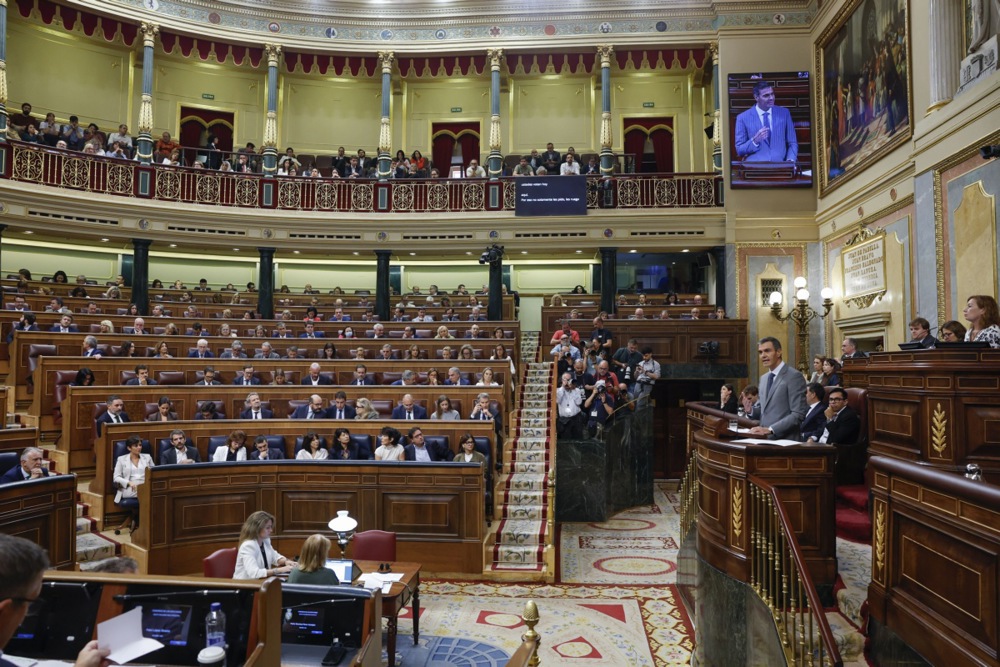
Spanish Prime Minister Pedro Sánchez has called a general election for 29 November, bringing Spain to the polls months ahead of schedule after his minority government suffered a major parliamentary defeat over measures intended to tackle the country’s housing crisis.

Sánchez announced the dissolution of parliament on Monday, ending months of speculation over whether his increasingly difficult parliamentary position could force an election before the current legislature was due to expire in 2027.

In an institutional statement announcing the election, Sánchez acknowledged that his government had “made mistakes” and had not achieved everything it had set out to do.

He said problems remained particularly acute in inequality, public services and access to housing, arguing that further reforms required a larger parliamentary majority.

“To do more, we need to renew and expand people’s support,” Sánchez said. He called for a “much broader, progressive majority” capable of carrying the government’s programme through parliament.

The election will take place on Sunday, 29 November, rather than in 2027, when the current parliamentary term was due to end. Sánchez informed King Felipe VI before convening an extraordinary meeting of the Council of Ministers to dissolve the Cortes Generales.

Housing defeat brings crisis to a head

The immediate political backdrop to the decision was Friday’s rejection of two emergency housing decrees by the Congress of Deputies.

The government had approved the two decrees on 29 September in an attempt to address growing anger over rents and access to affordable housing.

The first contained measures to protect vulnerable households from eviction, increase the supply of affordable homes and restrict some forms of speculative property investment. It also proposed changes affecting tourist accommodation and purchases by investment funds.

The second concentrated on residential rental contracts, including provisions intended to prevent tenants from suddenly being forced into substantially more expensive agreements when existing leases expired.

Both measures were defeated. The first received 172 votes in favour and 178 against. The second was rejected by 184 votes to 166. The votes again demonstrated the difficulty facing a government whose survival has depended on agreements with several regional and nationalist parties.

Housing has developed into one of Spain’s most contentious domestic political issues as rents and property prices have increased sharply in Madrid, Barcelona and other major cities and tourist areas.

The dispute intensified following the eviction of 87-year-old Maricarmen Abascal from the Madrid home where she had lived for more than 70 years.

Abascal was removed from the property on 23 September following a dispute over the rent. Her previous monthly payment had been €500, while the owners initially sought €2,650 before reducing the demand to €1,650 — still above her pension income.

Images of the elderly woman being taken from the building on a stretcher prompted widespread public anger and helped turn her case into a symbol of Spain’s housing crisis.

Tens of thousands of demonstrators subsequently took to the streets of Madrid, Barcelona, Valencia and other cities demanding stronger protection for tenants and measures to curb rising housing costs.

Sánchez’s fragile parliamentary majority

The housing vote exposed once again the central weakness of the government formed after Spain’s inconclusive 2023 election.

The conservative People’s Party (PP) won the largest number of seats, but its leader Alberto Núñez Feijóo was unable to assemble a parliamentary majority.

Sánchez remained prime minister after securing support from Sumar and reaching agreements with Catalan and Basque parties. The arrangement allowed him to form another government but left individual pieces of legislation dependent on negotiations with parties whose positions frequently diverge.

The latest housing measures were opposed by the PP and Vox, while Catalan party Junts also voted against them.

The PP has argued that greater intervention in the rental market risks reducing the number of properties available by discouraging owners from renting them. Its housing policy has instead placed greater emphasis on increasing supply.

Sánchez’s government argues that intervention is necessary because housing costs have increasingly become disconnected from household incomes in the areas experiencing the greatest pressure.

The issue has also become increasingly relevant at European level. Housing affordability has moved higher up the EU political agenda as governments confront shortages in major cities, rising construction costs and the impact of short-term tourist accommodation.

EU Today has previously reported on the growing pressure on European governments to address housing affordability, an issue that is increasingly intersecting with debates over migration, tourism, urban development and the cost of living.

Eight years in power

Sánchez has served as prime minister since June 2018, when he replaced Mariano Rajoy after winning a parliamentary vote of no confidence.

His latest term has been complicated not only by parliamentary arithmetic but by investigations and corruption cases involving people connected with the Socialist Party, as well as disputes over migration and household costs.

The government has nevertheless pointed to Spain’s economic performance and employment figures as evidence that its policies are working. In his election announcement, Sánchez described Spain as the EU economy recording the strongest growth and employment creation.

Spain has also remained an important participant in wider European debates over Ukraine, defence expenditure and the future direction of the European Union, while Sánchez has frequently differed with some European partners over the pace of increases in military spending.

The coming campaign is therefore unlikely to remain centred solely on housing.

PP sees opportunity

Feijóo enters the campaign with the PP expected to emerge as the largest individual party according to most recent polling, but the question of whether it could govern will depend heavily on the performance of Vox.

A PP victory without an outright majority could leave Feijóo dependent on Vox to form a government, making the balance between the two parties one of the central questions of the campaign.

Sánchez, meanwhile, will attempt to rebuild the coalition of left-wing and regional voters that allowed him to remain in office after the 2023 election.

His decision effectively turns the parliamentary confrontation over housing into a national vote on his eight years in power.

“The time has come,” Sánchez said in Monday’s address, “for the Spanish people to decide what future you want for yourselves and for your country.”

Spain will now enter a compressed election campaign in which housing, the cost of living, migration, corruption allegations and the future composition of the government are likely to dominate.

The formal election process begins with the dissolution of parliament, with voters going to the polls on 29 November.
  •  

Spain’s 54-day sprint to the polls: can Sánchez’s housing gamble stop the far-right from entering into government?

After years without being able to pass a budget, a coalition that wavered over every major proposal, the Ceuta crisis, a string of corruption cases and people taking to the streets over the housing crisis, Spanish prime minister Pedro Sánchez has called snap elections for 29 November — just as a rightwing victory appears increasingly unstoppable.

Monday’s (5 October) move is barely a surprise. Sánchez’s gambles have proven effective in the past to keep his grasp on power. 

Even before the summer, an early election wasn’t considered a far-fetched possibility. Sources in Sánchez’s centre-left Spanish Socialist Workers’ Party (PSOE) and its allies linked it to the budget vote anytime from October onwards, with some analysts pointing to November 2026 as a politically attractive date.

Spain now faces a 54-day sprint to the polls, the shortest window the law allows, with Sánchez betting that the housing issue can turn the campaign in his favour.

But why now?

The eviction of an 87-year-old woman from her rental home after 70 years on 23 September prompted people across the country to take to the streets against Spain’s ongoing housing crisis.

And last Friday, the Spanish lower house in parliament rejected two new housing decree-laws. It was the centre-right People’s Party (PP), far-right Vox, Catalan pro-independence party Junts and Navarrese regional party UPN who voted them down, exposing once again how fragile Sánchez’s parliamentary coalition is.

But with parliament dissolved, a political manoeuvre could now see similar housing decrees approved anyway – helping Sánchez make the housing crisis his main election motto.

Housing bet

In Spain, when parliament is dissolved ahead of an election, responsibility for ratifying government-approved laws passes to a smaller standing committee of 69 lawmakers, known as the Diputación Permanente [Permanent Deputation], which continues to operate until the new parliament is sworn in.

The maths in that body favours Sánchez. His socialist party and the left-wing and regional parties that backed the original housing decrees hold 35 seats, against 34 for the opposition.

This article continues, but the full version is available only to EUobserver.com subscribers. Visit account.euobserver.com/membership

  •  

Old Oxen on the Table, Horse and Turtle at Feasts: 5,000 Bones From an Ancient Rubbish Heap Reveal the Menu of an Iron Age Elite in Spain

More than 5,000 animal bones from the rubbish heaps of a neighborhood in Salamanca, Spain, show how a wealthy extended family ate some 2,600 years ago. According to a study, young animals, horses and turtles reached the plate only at feasts and ritual gatherings. For most meals, the meat at Cerro de San Vicente came […]

  •  

Tens of Thousands March Across Spain as Housing Crisis Returns to the Streets

Tens of thousands of people have demonstrated across Spain after parliament rejected two government housing decrees, bringing the country’s dispute over rents, evictions and housing supply back onto the streets.

Tens of thousands of people marched across Spain on Saturday, 3rd October, demanding action over rising rents, evictions and access to housing, a day after parliament rejected two government measures intended to strengthen protections for tenants.

In Madrid, the government delegation estimated attendance at around 70,000, while organisers put the figure considerably higher. Demonstrations were organised in more than 50 cities. In Valencia, clashes broke out near a property investment conference at the City of Arts and Sciences, while protests elsewhere were largely peaceful. The nationwide demonstrations followed several days of mobilisation by Spanish tenants’ organisations.

The immediate political trigger came on Friday, when the Congress of Deputies rejected two housing decrees proposed by Prime Minister Pedro Sánchez’s minority government.

The government had approved a package of emergency housing measures including stronger protection against evictions for vulnerable households, changes affecting property investment companies and measures intended to increase the availability of affordable rental accommodation. A second decree included provisions for the automatic renewal of some rental contracts.

The measures were defeated after the Popular Party, Vox and Junts opposed them. Junts argued that the proposals would not resolve the underlying shortage of housing and risked discouraging property owners from putting homes onto the market.

Housing has become one of Spain’s most politically sensitive domestic issues, particularly in Madrid, Barcelona, Valencia and other cities where rising demand has coincided with limited supply, strong tourism and a large short-term rental market.

The protests have also been shaped by the eviction of 87-year-old Maricarmen Abascal from the Madrid flat where she had lived for decades. The case attracted national attention and became a focal point for campaigners demanding stronger protection for tenants.

Spain has already taken measures against short-term tourist accommodation. EU Today reported last year on Spain’s move to block more than 65,000 Airbnb listings that the authorities said did not comply with regulatory requirements.

Barcelona has gone further, announcing plans to end approximately 10,000 tourist-apartment licences by 2028 as the city seeks to return properties to the long-term residential market.

The argument, however, extends beyond holiday rentals.

Spain faces a structural shortage of housing in areas experiencing strong population and employment growth. Tenant organisations favour stronger rent controls, longer contracts and greater restrictions on institutional investors. Property organisations and political opponents of tighter controls argue that excessive intervention can reduce rental supply and discourage construction.

The same debate is increasingly visible across Europe.

Figures published by Eurostat on 1 October showed EU house prices rising by 4.7 per cent in the second quarter of 2026 compared with the same period last year. Rents increased by 3 per cent. Compared with the first quarter, house prices rose by 1.2 per cent and rents by 0.7 per cent.

EU Today recently examined how Berlin’s housing shortage and rapidly rising rents became a central issue in the city’s election campaign, illustrating how affordability has moved up the political agenda across several European capitals.

Brussels has also become more involved. The European Commission’s first European Affordable Housing Plan, presented in December 2025, focuses on increasing supply, mobilising investment, accelerating construction and giving authorities additional scope to address short-term rentals in areas experiencing housing pressure.

EU Today reported when the plan was launched that it included proposals for new action on short-term rentals and housing investment. The Commission has since begun building a European Housing Alliance bringing together governments, cities, regions and housing organisations.

The Commission estimates that house prices across the EU have risen by more than 60 per cent since 2013, while average rents have increased by around 20 per cent. It has nevertheless stressed that most housing policy remains under national, regional and local authority.

Spain therefore represents one of the more acute versions of a wider European problem: how to increase supply while deciding how far governments should regulate rents, tourist accommodation and investment in residential property.

Saturday’s demonstrations show that the issue is no longer confined to housing policy.

For Sánchez, the defeat of the two decrees has exposed once again the difficulty of securing parliamentary majorities for major legislation. For Spain’s opposition parties, the dispute centres increasingly on whether government intervention is helping to expand housing supply or restricting it.

For tenants facing higher rents, the immediate question is whether any new legislation can materially increase the number of homes they can afford.

  •  

Listen: Are EU countries allowed to bring back border controls whenever they want?

Production: By Europod, in co-production with Sphera Network.

EUobserver is proud to have an editorial partnership with Europod to co-publish the podcast series “Briefed” hosted by Léa Marchal. The podcast is available on all major platforms.

Find the full transcript below: 

Italy brought back border controls with Spain in August, and has now extended them until at least 15 October. Giorgia Meloni’s government fears that migrants who arrived in Ceuta, reach the continent and Italy.

Are these restrictions legal in the Schengen area? What are the EU’s levies to avoid such controls?

Since 1 August, Italy has temporarily reintroduced controls at its air and sea borders with Spain. The measure has now been extended until 15 October. In return, Spain has also introduced controls at its air and sea borders with Italy.

“This is not against Spain” the Italian foreign affairs minister Antonio Tajani said, adding “we have a duty to protect our borders.”

The starting point was the arrival of tens of thousands of migrants in the Spanish enclave of Ceuta at the end of July. Italy said it was concerned about possible secondary movements towards the rest of Europe, and brought back controls at its borders with Spain.

But from a legal point of view, EU countries can’t simply reintroduce border controls whenever they want.

The Schengen area is based on the principle of free movement, meaning there should normally be no checks at internal borders. The Schengen Borders Code provides an exception. If a country faces a serious threat to public policy or internal security, it can temporarily reintroduce border controls, as a measure of last resort.

The controls can initially be introduced for up to 30 days, and can then be extended under certain conditions.

Italy has already extended its measure, which has now been in place for more than two months.

What does the European Commission say about Italy’s decision? The Commission has been asked about the Italian controls and says it is currently assessing the situation.

But the Brussels-based organisation The Good Lobby argues that Italy is violating the Schengen rules. It filed a complaint with the European Commission, asking it to open an infringement procedure against Italy.

According to Alberto Alemanno, who filed the complaint, there is no security threat that would justify bringing back the controls.

His argument is that none of the migrants who arrived in Ceuta were transferred to Italy. And, he says, people travelling between Ceuta and mainland Spain are already subject to identity checks.

So Italy’s justification, he argues, does not meet the conditions set out in the Schengen Borders Code.

Now, is Italy the only EU country bringing back border controls? No. If you look at the notifications sent by EU countries to the European Commission, around ten countries have reported temporary controls at some of their internal borders in recent months.

In response to the situation in Ceuta, Italy is the main example.

Austria also notified the Commission of controls in September, citing the situation in Ceuta among several reasons. But those controls concern its land borders with Slovakia, the Czech Republic, Hungary and Slovenia.

So Austria is not checking passengers arriving by air from Spain.

Germany, for example, has invoked the same exception in the Schengen rules to carry out controls at its land borders with all its neighbours.

That does not mean that every border crossing is closed, or that every traveller is systematically checked. It means German authorities can carry out checks at those borders, including spot checks.

Germany’s main justification is continued migratory pressure, alongside other security concerns. And for now, the Commission is kind of letting all of this happen. It did raise concerns at some point: in June, the Commission published an assessment of temporary border controls in nine EU countries, including Germany, Austria and Italy.

It did not formally declare these countries’ controls illegal. Instead, it called on them to work towards lifting the controls, arguing that the EU has put in place measures to address some of the risks being invoked to justify them.

Those measures include the new Migration and Asylum Pact and new rules on entry and border management. The bigger question, then, is how long temporary border controls can remain in place before they stop being an exception to Schengen and become the new normal.

  •  

France and Spain Welcome Prospect of Britain Rejoining European Union

France and Spain have openly welcomed the prospect of Britain rejoining the European Union after British Prime Minister Andy Burnham put full membership back among the options for the country’s long-term relationship with Europe.

French President Emmanuel Macron and Spanish Prime Minister Pedro Sánchez addressed the question during Macron’s state visit to Spain on Wednesday, 30 September. Asked whether Britain could return under Burnham, Macron responded in English: “Welcome back.” He added that a British decision to move in that direction would be good news for both Britain and Europe.

Sánchez was similarly positive, saying Spain would “open our arms” if Britain sought to return.

Their comments followed Burnham’s intervention at the Labour Party conference and subsequent interviews in which he argued that Britain should reconsider the full range of options for its future relationship with the EU.

Those could include remaining under the present post-Brexit arrangements, returning to the customs union or single market, or ultimately “going all the way” and applying for EU membership again.

The remarks extend a debate which had already been developing since Burnham entered Downing Street. In August, EU Today reported that he had told European Council President António Costa that Britain should be “bolder” in rebuilding relations with Brussels.

More recently, the argument has moved from diplomatic language to practical economic questions. Burnham has been pressing Brussels to ensure British companies are not disadvantaged by the EU’s emerging industrial preference rules, with access to the proposed “Made in Europe” framework becoming one of the principal issues ahead of the next EU-UK summit.

Macron nevertheless made clear in Madrid that closer relations could not become a system under which Britain selected individual advantages of EU membership while remaining outside the corresponding obligations.

“You cannot pick and choose among the Union’s freedoms,” he said during the joint press conference with Sánchez.

That question dominated much of the Brexit negotiation after the 2016 referendum. Access to the single market is built around the free movement of goods, services, capital and people, while participation also entails accepting common rules and enforcement mechanisms.

A British application to rejoin would be a separate and considerably larger process. Under Article 49 of the Treaty on European Union, Britain would have to apply for membership and secure unanimous agreement from the existing member states before negotiations could be completed.

A returning Britain could not assume that the special arrangements it held before Brexit would automatically be restored. The UK previously had an opt-out from the euro, remained outside the Schengen passport-free area and benefited from a budget rebate.

Any future terms would have to be negotiated.

Public opinion has also changed since the referendum. A YouGov poll in June found 55 per cent of Britons supported rejoining the EU and 34 per cent opposed it, although support falls when respondents are asked about specific membership conditions.

That shift is not limited to Britain. Polling examined by EU Today earlier this year found substantial support across EU member states for a British return.

For the moment, however, Burnham is not proposing an immediate membership application or referendum.

The next test will be the UK-EU summit expected in November. The meeting was originally planned for July but was postponed following Keir Starmer’s resignation, with EU Today reporting at the time that the political transition in London had complicated preparations.

Burnham wants the summit to advance negotiations on industry, trade and migration and has said he intends to use the period around the meeting to set out the longer-term options available to Britain.

The immediate negotiations are therefore likely to focus on economic integration rather than membership.

Greater access to European markets would almost certainly involve greater regulatory alignment. The political argument in Britain will concern how far the country is prepared to accept common European rules in return for reducing barriers created by Brexit.

Macron and Sánchez have now made clear that, if the discussion eventually moves beyond closer economic cooperation towards membership itself, two of the EU’s largest states would welcome it.

  •  

Listen: Did the Spanish government address the protesters’ demands on housing?

Production: By Europod, in co-production with Sphera Network.

EUobserver is proud to have an editorial partnership with Europod to co-publish the podcast series “Briefed” hosted by Léa Marchal. The podcast is available on all major platforms.

Find the full transcript below:

Hundreds of people were still camping yesterday at Puerta del Sol in Madrid. They were demanding action on housing, as rents and property prices continue to rise.

Following an outcry triggered by the eviction of an 83-year-old woman from her home, and the mobilization of thousands of people across Spain, the government adopted two housing decrees.

Did they take the protesters’ demands into account?

MariCarmen Abascal had lived in her apartment since the 1950s, having inherited the lease from her parents. But the property was bought by an investment fund, which then challenged the validity of her lease and quadrupled her rent.

Last week, MariCarmen was evicted from her home. The eviction sparked widespread outrage and led hundreds of protesters to camp in central Madrid, calling for action.

Yesterday, she was finally allowed to return home after reaching an agreement with the owners.

Aside from MariCarmen’s case, the demonstrations are largely driven by young people who are fed up with rising rents and property prices, especially in major cities such as Madrid and Barcelona.

In Madrid, property prices have risen by around 87 percent over the past ten years. That’s less than in Portugal or the Netherlands, where prices have increased even more. But it’s still a significant rise, especially as wages have grown much more slowly over the same period.

Rents are taking up a huge share of people’s incomes. In Madrid, they account for almost half of tenants’ net income on average. So, how did the Spanish government respond?

Yesterday, it adopted two housing decree-laws. The first decree would suspend evictions until 2030 and automatically extend existing rental contracts by two years.

It would also introduce tighter rules on seasonal rentals and prevent speculative investment funds from acquiring housing until 2028.

The second decree is more ambitious. It would allow tenants to extend their future rental contracts indefinitely. This is what the tenants’ union has been calling for.

Landlords would no longer be able to end a lease simply because it had reached its expiry date. Tenants who pay their rent and respect their legal obligations could remain in their homes for as long as they wish.

This would also limit rent increases, since rents can only be raised moderately during an existing contract.

So, the government has taken the protesters’ demands into account. But there is still a major obstacle: as our Spanish partner El Salto reports, the tenants’ union fears that this second measure may not pass through Parliament.

That could explain why the government adopted two separate decrees. The first is considered easier to get through Parliament.

Now, what about the EU’s proposals to tackle rising rents? We discussed them earlier this month.

One of the main proposals concerns short-term rentals. The idea is to introduce restrictions, particularly in tourist areas where housing is under strong pressure. By bringing more homes back onto the long-term rental market, the Commission hopes to ease pressure on prices.

But these proposals have not yet been adopted, so we’ll have to wait and see what impact they have. And in any case, more will need to be done at national level.

Even if prices stop rising, they are already so high that many workers can no longer afford to live in major cities.

More social housing is needed, as well as more renovation. Increasing the supply of decent, affordable homes could help ease pressure on rents and property prices.

  •  

A “Hell Pig” Predator Lived in Spain 36 Million Years After the Dinosaurs — It Was Kin to Hippos and Whales

Around 30 million years ago, a heavily built animal prowled the area that is now Vallbona de les Monges, in Lleida province (Catalonia, northeastern Spain). It had a long head, prominent cheekbones and formidable jaws lined with large, sharp teeth. Paleontologists call it the hell pig. The nickname misleads. Its kinship with modern pigs is […]

  •  

Spain, Portugal and Luxembourg Push EU for 2040 Renewables Target

Spain, Portugal and Luxembourg have called on the European Commission to establish a specific EU renewable-energy target for 2040 as Brussels prepares the next stage of the bloc’s climate and energy legislation.

The three governments have written to Energy Commissioner Dan Jørgensen arguing that a post-2030 renewables target would give investors greater certainty, accelerate deployment and reduce European dependence on imported fossil fuels.

Their intervention comes as the Commission prepares a new renewable-energy framework covering the decade after 2030.

The EU currently has a legally binding target requiring renewable sources to account for at least 42.5 per cent of final energy consumption by 2030, with an ambition to reach 45 per cent.

There is, however, no equivalent renewables target for 2040.

The European Commission says it is preparing a post-2030 renewable-energy framework for adoption before the end of this year. It is intended to complement the Union’s wider climate legislation and provide guidance for the next decade of energy investment.

Spain, Portugal and Luxembourg want that framework to contain a numerical target rather than rely solely on the EU’s overall greenhouse-gas reduction objective.

The proposal creates a policy divide with governments that want Brussels to use a broader definition of low-carbon or “clean” energy.

France, Sweden and Finland are among countries that have supported an approach allowing nuclear generation to contribute alongside renewable sources towards European decarbonisation targets.

France in particular operates the EU’s largest nuclear fleet and has repeatedly argued that European energy legislation should treat nuclear power according to its low carbon emissions rather than exclude it from frameworks designed specifically around renewable technologies.

Luxembourg, by contrast, has long opposed nuclear energy and has raised concerns about radioactive waste, safety and the financing of new reactors.

The argument is therefore not simply about the scale of the 2040 ambition. It concerns the structure of European energy investment over the next 15 years.

The Commission’s existing renewable-energy rules set the 2030 floor at 42.5 per cent, almost double the share recorded at the beginning of the decade.

Renewables accounted for 26.2 per cent of EU energy consumption in 2025, according to Commission figures.

Investment will have to increase substantially if the Union is to meet its existing target before any higher post-2030 requirement is introduced.

Grid capacity is another constraint. Wind and solar generation can be built faster than many traditional power stations, but projects increasingly depend on new transmission lines, interconnectors, storage and distribution infrastructure.

EU Today reported in June that member states were resisting greater Commission control over cross-border electricity-grid planning, illustrating the institutional difficulties surrounding an expansion of European electricity infrastructure.

The latest initiative also sits alongside the EU’s legally binding 2040 climate target.

In March, the Union formally approved legislation requiring net greenhouse-gas emissions to fall by 90 per cent from 1990 levels by 2040. EU Today reported on the final approval of the 2040 target, which is intended to bridge the gap between the bloc’s 2030 commitments and climate neutrality by 2050.

How that 90 per cent reduction is achieved is now moving to the centre of the policy debate.

For Spain and Portugal, greater renewable generation is also tied to their ambitions to expand electricity exports from the Iberian Peninsula into the rest of Europe. Limited interconnection capacity across the Pyrenees has historically restricted those flows.

The Commission’s post-2030 framework will therefore have consequences beyond environmental policy. It will influence investment decisions in power generation, grids, industrial electrification, hydrogen, storage and manufacturing.

The political question confronting the Commission is whether those decisions should be driven by a dedicated renewable-energy benchmark or by a technology-neutral emissions objective under which nuclear and renewable generation compete for investment.

With the 2040 climate target already fixed in law, the next dispute is increasingly about the energy system that will be built to reach it.

  •  

A Roman Frontier Town Founded by Emperor Augustus in Northern Spain Just Gave Up Its 2,000-Year-Old Kitchen — With Non-Stick Pans

Ten years of digging in the same corner of northern Spain tends to turn up plenty. Temples, walls, coins, the occasional grave. Rarely does it turn up something as mundane as a kitchen. But that is exactly what surfaced this summer beneath a plot known as La Era, in Sasamón, a town of roughly 1,000 […]

  •  

Spain: 5 men posing as police officers kidnap victim on major highway

Five men wearing reflective vests marked “POLICIA” dragged a bloodied, partially undressed man from a car on a busy highway outside Barcelona on Saturday evening and forced him into another vehicle, Catalan police said, as they investigate what they believe may be a score-settling between criminal groups.

The incident unfolded around 7:30 p.m. on the AP-7 motorway between Montornès del Vallès and Vilanova del Vallès. Witnesses said two vehicles boxed in a third car after what appeared to be a minor collision. Five men in black clothing and balaclavas then approached, pulled the man from the back seat and shoved him into one of their cars before driving away, according to Spanish news outlet Moncloa.

🇪🇸🔴 JUST IN: Armed men posing as police officers kidnapped a victim in the middle of the AP-7 highway outside Barcelona.
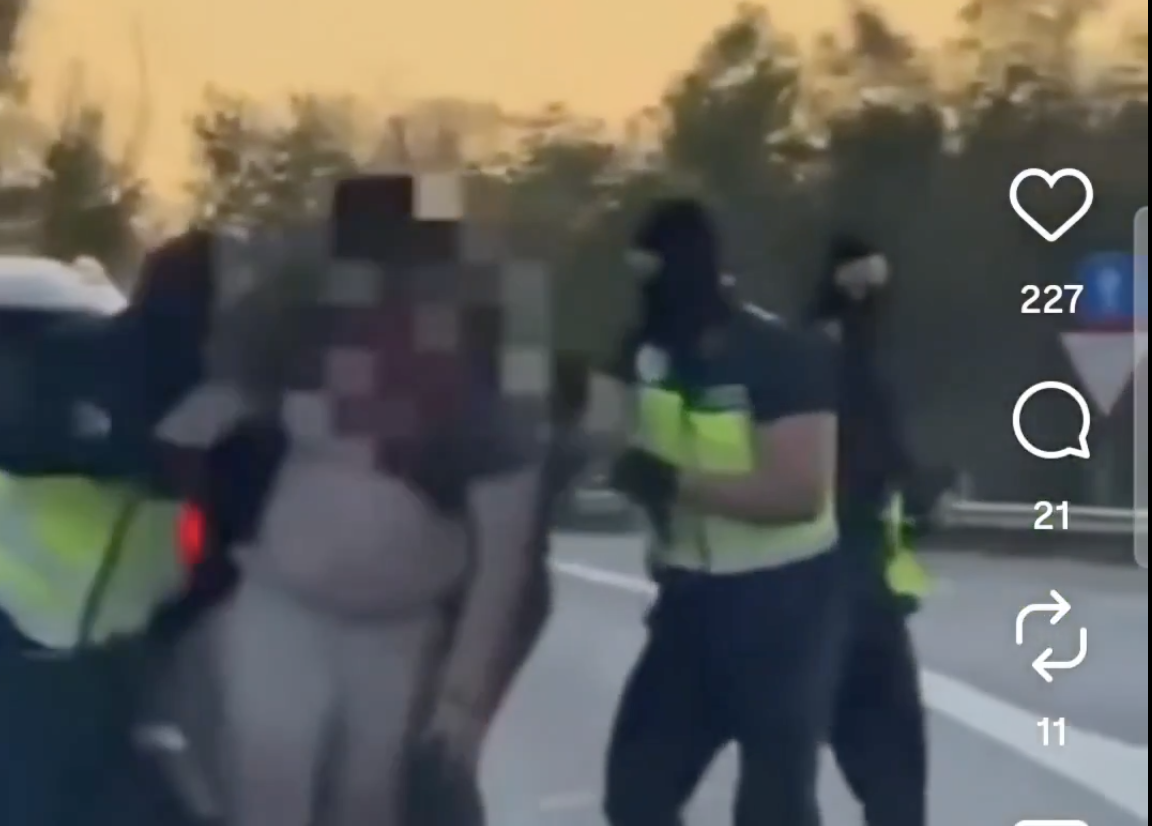

Five men in black clothing wearing “POLICIA” reflective vests dragged a bloodied, partially undressed man out of a car near Montornès del Vallès.

They then… pic.twitter.com/bshm8lLzKW

— Remix News & Views (@RMXnews) September 20, 2026

Video recorded by other drivers shows the men, some wearing high-visibility vests that resembled those used by Spain’s National Police, struggling with the victim on the roadway as traffic backed up around them. One motorist who filmed the scene and called emergency services can be heard saying, “There’s a kidnapping on the AP-7,” and telling operators the men were carrying pistols.

Mossos d’Esquadra officers later located the man in another part of Catalonia. Police sources told the newspaper Ara he was “safe and sound.” Authorities said his facial injuries were not serious and that there was no indication a ransom had been paid. The vehicle used to take him away was found abandoned a short time later.

The Mossos’ Criminal Investigation Division has opened a case for alleged illegal detention and is examining whether the suspects committed impersonation of police officers. No arrests have been announced.

Police have not officially confirmed a motive, but investigators and sources familiar with the case have pointed to a dispute between criminal groups, possibly tied to drug-related debts or drug heist. Spanish media reported that the victim had recently been released from prison but this detail has not been independently confirmed by police.

Such a brazen abduction in daylight on one of Catalonia’s main highways is unusual, though robberies targeting motorists have occurred on the AP-7 in the past.

The post Spain: 5 men posing as police officers kidnap victim on major highway appeared first on Remix News.

  •  

Spain: 74% of sex-crime suspects are foreigners in Basque Country

Foreign-born suspects account for nearly three-quarters of sexual-crime arrests in Basque Country, official figures show

Official statistics released by the Basque regional police, the Ertzaintza, indicate that people born outside Spain made up 58.7 percent of all arrests in the first half of 2026 even though they represent 10.2 percent of the population. The disparity is sharper in several high-profile offense categories.

Of the 107 people detained for crimes against sexual freedom, 79 were born abroad, making up 74 percent of arrests in this category, according to data obtained by The Objective.

Foreign-born suspects also accounted for 73.3 percent of homicide arrests and 61.3 percent of those for causing injury.

The highest shares appeared in other offences: 94.7 percent of drunk-driving arrests (36 of 38), 79.6 percent of theft arrests (222 of 279), and 77.6 percent of robberies involving violence or intimidation (253 of 326).

The figures come from data the Basque Department of Security, which began publishing this data systematically at the end of 2025. Until then, the Ertzaintza routinely omitted the birthplace of detainees.

Security councillor Bingen Zupiria of the PNV said the change followed “tremendous pressure” from the Popular Party (PP) and Vox in the Basque parliament. Police unions supported the move as a contribution to “crime prevention.”

After that pressure, Zupiria stated, the department was forced to “change its criteria.” Arrests are now broken down first by continent and then by region, including North Africa, the rest of Africa, Latin America, or Europe.

The publication of these breakdowns ended a long-standing practice of withholding origin information that the Basque government said had created more confusion than clarity. Citizens, officials argued, have a right to see the actual composition of recorded crime.

Within the foreign-born group, those originating from North Africa are notable for their high offense rates.

They form roughly 1.8 percent of the Basque population yet accounted for 37 percent of homicide arrests, 24 percent of sexual-assault arrests, 64 percent of theft arrests, 48 percent of robberies with force, and 66 percent of violent robberies in the first six months of the year.

Suspects from the rest of Africa and from Latin America also appear over-represented in several categories of crimes against persons and property.

Overall arrests have been rising. The Ertzaintza recorded 6,903 in 2021 and 9,222 in 2025. The first half of 2026 already produced 5,050. If the pace continues, the year would end with a record of about 10,100.

Only the Basque and Catalan regional forces currently publish the origin of suspects to the general public. However, an internal document obtained earlier this year showed that, across Spain as a whole, foreigners accounted for 51 percent of daily arrests (527 of 1,033). The share was higher in Madrid (64 percent), Catalonia (71.8 percent) and Murcia (60 percent), close to the Basque figure of 59 percent.

Other research has shown that foreigners commit 500 percent more rapes than Spaniards and 400 percent more murders.

Prison data from the Basque Department of Justice for August 2026 shows 722 of the 1,967 inmates (36.7 percent) were foreign-born.

Among those under 25, the proportion rose to 65.9 percent, or two out of three.

The post Spain: 74% of sex-crime suspects are foreigners in Basque Country appeared first on Remix News.

  •  

DNA From Ancient Grape Seeds Shows Spain’s Wine Came From the Phoenicians, Not the Romans

One grape variety still grown in Spanish vineyards, hebén, has never gone out of cultivation for at least the last 1,100 years, according to the new study. That takes its lineage back to roughly the year 929, around when the Caliphate of Córdoba was proclaimed in southern Spain. Eleven centuries of unbroken agriculture, and the […]

  •  

How Almoravid Engineers Anchored a Fortress to Bare Rock — 900 Years Before Modern Skyscrapers Used the Same Trick

On May 29, 1108, an Almoravid army crushed the forces of Alfonso VI of León and Castile outside the town of Uclés. Among the dead was Sancho Alfónsez, the king’s only son and heir, a loss so severe that medieval chroniclers ranked it among the worst Christian defeats of the entire Reconquista — the centuries-long […]

  •  

The Last Battle of America’s Indian Wars Wasn’t Fought by the Sioux or the Apache — It Happened in 1918

In the United States, the phrase Indian Wars conjures a specific set of images: the Battle of Little Bighorn, the massacres at Wounded Knee and Sand Creek, the forced marches of the Trail of Tears, the decades-long manhunt for Geronimo. All of it is generally remembered as a 19th-century story, closed out by the early […]

  •  

Neanderthals Returned to This Spanish Cave Every Year for Generations — Long Before Homo Sapiens Ever Set Foot Inside

Deep inside Ojo Guareña, one of the largest cave systems in Europe, in the northern Spanish province of Burgos, archaeologists have spent eleven consecutive summers digging through a single Neanderthal layer. This year’s season, which wrapped up in late August 2026, pushed the excavated area of that layer — known as level 4D — to […]

  •  

Neolithic Cannibalism Wasn’t a One-Off: Spanish Caves Show It Happened Again and Again for 1,500 Years

An international team has re-examined close to a thousand human bones from the caves of Malalmuerzo, Carigüela, and Majolicas, applying direct radiocarbon dating and modern taphonomic analysis — the study of everything that happens to a bone between death and excavation — to material that was first pulled from the ground in the 1970s. The […]

  •  

Spain’s ‘Iberian Pompeii’ Just Unearthed a Face-Smashed Statue Older Than the Roman Empire

The face is gone. Not chipped or worn away by time, but struck — possibly on purpose — until nothing remained of the features that once identified this life-size limestone head, carved roughly 2,400 years ago. What survived instead is the hairstyle: a braid gathered at the nape, with curls falling at the sides. For […]

  •  

‘Animal cruelty’ – Migrants accused of killing baby bottlenose dolphin on Ceuta beach by environmental association, prosecution urged

After a group of migrant men were filmed parading around with a dead baby bottlenose dolphin in Ceuta, a polarized public debate has erupted and an environmental organization is pushing for Spanish prosecutors to investigate the case as a criminal offense.

On Wednesday, Sept. 2, 2026, videos recorded at Trampolín beach showed several people holding a dead baby bottlenose dolphin up as if it were a trophy. It was bleeding above one of its eyes. A Spanish influencer recorded the entire incident, saying they killed the dolphin.

“They killed a dolphin…. They say they killed it. Over there, as you can see, they kill protected species,” said the influencer.

🇪🇸🐬 JUST IN: "They killed a dolphin. They say they killed it. Over there, as you can see, they kill protected species."

Some leftists across X and other platforms are claiming these migrants are "allowed to fish."

However, killing a dolphin in Spain and the EU is illegal. It… https://t.co/AB9RSWLRKe pic.twitter.com/MXQEEXpTYM

— Remix News & Views (@RMXnews) September 4, 2026

The calf had been swimming close to shore in an area that has functioned for weeks as an informal settlement for the migrants who arrived in late July. Local reporting and an environmental group say the animal was taken from the water and later appeared dead or dying.

The Ceuta-based association Defense of Urban Trees, Biodiversity, and the Environment (DAUBMA) filed a complaint with the Civil Guard the following day. In its statement, the group said the calf arrived near shore alive and disoriented, was forcibly removed from the sea, and was struck on the head with a stick.

🇪🇸🔴 5 migrants tried to gang rape a 12-year-old girl as she screamed for help, said locals in Ceuta who stopped the attack.

"There were five against a 12-year-old girl. She was a little girl, they were taking off her pants. She was screaming, screaming, screaming. She was… pic.twitter.com/g97pj8phUR

— Remix News & Views (@RMXnews) August 25, 2026

DAUBMA submitted photographs and videos that, it said, show a bleeding wound near one eye and people attempting to wipe blood from the animal. The association asked for those visible in the footage to be identified, for an investigation to be opened, and for the case to be sent to Spain’s Environmental Prosecutor’s Office.

The association argued the events could constitute both animal cruelty resulting in death and an offense against a protected species.

🇪🇸🔴BREAKING: A Moroccan migrant wearing only his underwear snuck into a sleeping Spanish woman's bed early in the morning in Ceuta.

"I live in the center on the fifth floor, mind you… He jumped onto my bedroom balcony. He came into my bedroom and got into my bed. I thought… pic.twitter.com/8cs7rasXSv

— Remix News & Views (@RMXnews) August 10, 2026

A beach-cleaning worker from the company Ecoservicios who was present told the group on the beach that they could not treat the animal as a catch and that environmental specialists should be called. After that intervention, the group tried to return the calf to the water. Some accounts say it already appeared lifeless.

Bottlenose dolphins are strictly protected under EU and Spanish law. Intentional capture, harm or killing of cetaceans is prohibited. Recreational fishing licenses issued in Ceuta cover only specified fish and cephalopods; dolphins are not among them. The incident therefore cannot be treated as a case of ordinary and legal fishing.

As of Sept. 4, no official results from an examination of the body, nor any arrests, had been made public.

A Change.org petition calling for identification of those involved also circulated quickly, according to El Faro Ceuta. The beach itself remains crowded with people living in makeshift migrant camp conditions, adding to the tension that has marked Ceuta since the July crossings. DAUBMA and the local marine-conservation group CECAM have used the episode to repeat earlier complaints about repeated case of mutilated dolphins and turtles stranded on the beach which they attribute in part to illegal drift nets. Those earlier cases are separate from Wednesday’s events but form the backdrop against which the association is now pressing authorities to treat this death as a criminal matter rather than an isolated disturbance.

The Civil Guard has the complaint, video evidence, and witness reports. It remains unclear whether an animal-cruelty or wildlife-protection case will be opened.

In the meantime, pressure is growing on the government of Prime Minister Pedro Sánchez, with mass protests involving tens of thousands of Spaniards taking place in cities across the country over the weekend.

The post ‘Animal cruelty’ – Migrants accused of killing baby bottlenose dolphin on Ceuta beach by environmental association, prosecution urged appeared first on Remix News.

  •  

A 1666 Manuscript From Mexico City May Rewrite the History of Galileo’s Telescope

Galileo Galilei is remembered for pointing a simple two-lens tube at the sky and changing astronomy forever. What he is not remembered for is a four-lens telescope built more than a decade before historians thought such instruments existed — and yet that is exactly what a manuscript unearthed in Spain’s National Library now suggests he […]

  •  
❌