French borrowing costs are surging and central bankers are starting to fret. Some of them, at least.
The head of the French central bank, Emmanuel Moulin, told the Financial Times that his country risks being “strangled by interest rates”.
The best solution, he made clear, was for the French government to cut costs and reduce the deficit, which, in an unchanged scenario, could reach upwards of six percent next year.
Last week, the French minority government proposed €43bn worth of cuts for 2027. But pushing them through parliament is a tall order in a divided country.
Meanwhile, investors are dumping French bonds, pushing up French government borrowing costs compared to German benchmark Bunds. This is already immensely costly to French society.
“In three weeks, we’ve lost the equivalent of €15bn a year in higher debt-servicing costs over a 10-year horizon, or almost €100bn cumulatively over 10 years!”, French economist Shahin Vallée said on social media last week.
The gap, or spread, between French and German bond yields, historically around 50 basis points (0.5 percentage points), was 109 basis points when he wrote it on Wednesday. It is now 30 points higher.
Spreads are a crucial marker for financial stability because they show how nervous investors are. The bigger the spread, the higher the perceived risk.
And France’s parabolic bond spread is already bringing back unwelcome memories of the eurozone crisis in November 2011, when the spread reached 200 basis points.
Bypass parliament?
The question is what to do about it, and who is best positioned to act. The French government could bypass a parliamentary vote or push through the budget by ordinance, under articles 49.3 and 47 of the constitution, respectively.
This article continues, but the full version is available only to EUobserver.com subscribers. Visit account.euobserver.com/membership
Every day, children are killed in Israel’s genocidal war on Gaza. Where are the outraged headlines?
The number of children killed in Gaza since Israel started its onslaught, following the Hamas attack on 7 October, 2023, is estimated at more than 21,600.
The UN Children’s Fund (UNICEF) says that since the so-called Israel-Hamas ceasefire, an average of “at least” one child a day – 300 children over 300 days – has been killed in the enclave.
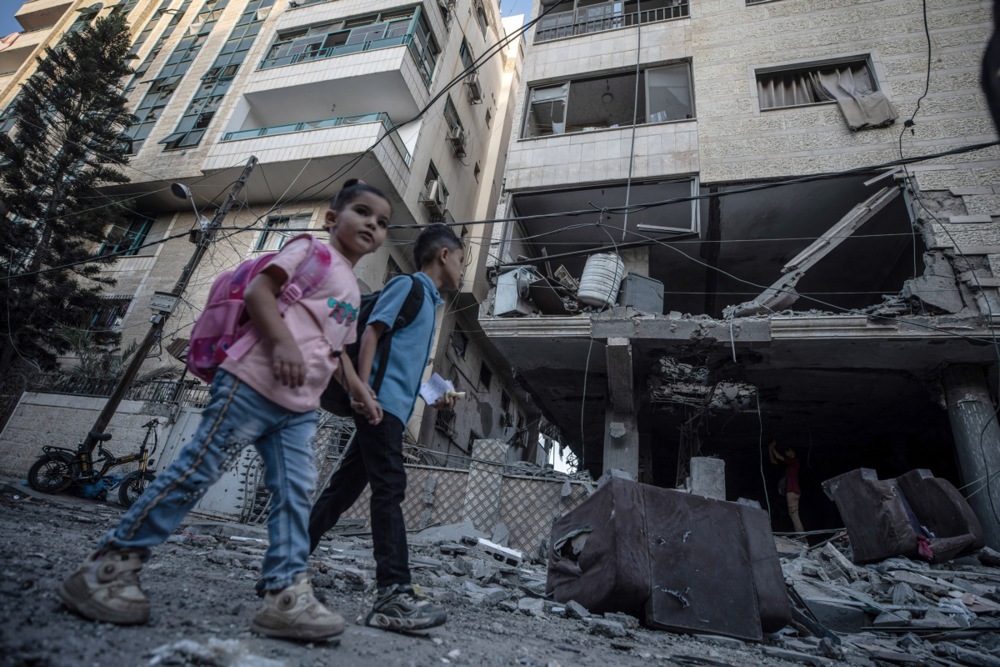
Children, toddlers, and babies are being killed in their homes, schools, hospitals, shelters, and on roads marked by displacement. They are also dying because the basic structures that should protect them – family, healthcare, education, food, water, and refuge – have been systematically destroyed.
Where are the urgent statements from EU and world leaders?
EU governments continue to authorise arms transfers to Israel despite rules which require governments to deny licences where there is a risk that military equipment will be used for serious violations of international humanitarian law.
Every EU member state is also bound by the UN Convention on the Rights of the Child and the EU’s own treaty, which requires the union to promote children’s rights.
Why are these international rules and domestic commitments not being applied to the children of Gaza?
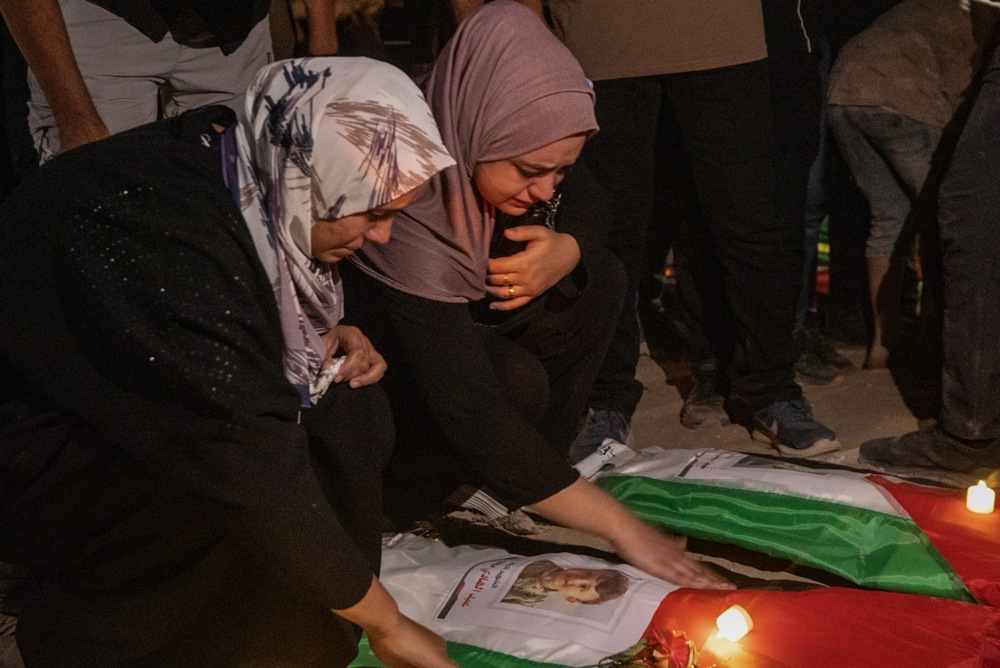
Mourners light candles during a mass funeral and vigil for 105 Palestinians near the rubble of the Al Tajj building in Gaza City on 30 September 2026 (Source: EPA/MOHAMMED SABER)
Children rights beyond Ukraine
The EU does care for children. In Ukraine, the EU treats children as individuals rather than statistics: it convenes coalitions, compiles names, traces families, imposes sanctions, creates mechanisms for return and makes the fate of children a central diplomatic demand.
In her State of the Union address last month, European Commission President Ursula von der Leyen – a proud mother and grandmother – introduced and praised the courage of Sasha, a six-year-old Ukrainian girl who lost a leg in a Russian missile strike in Ukraine but has now returned to her beloved gymnastics.
Von der Leyen quite rightly made the suffering of Ukrainian children intimate and personal. It is more than time she did the same for Palestinian children.
But let’s not only blame political leaders for their indifference, their lack of historical knowledge of Palestine’s occupation and their limited understanding of Palestinian calls for justice.
Parts of the legacy media must also own up to their responsibility in normalising the abhorrent.
Powerful mainstream media have preferred to “repeat Israeli propaganda and sometimes simply cut and paste IDF press releases” rather than accept the analysis of Palestinian journalists, writers and scholars, writes Bhakti Shringarpure.
Her criticism reflects a wider ongoing discussion on the sourcing and framing of Gaza coverage, with studies spotlighting how Western media has described Israeli suffering by using emotive language around 11 times more often than Palestinian suffering. References to Israel’s “right to defend itself” appear roughly five times as frequently as references to Palestinian rights.
Also, as the immediate shock of the bombardment recedes – but the killing continues – Gaza has dropped down the news cycle.
Assal Rad, author of “Don’t Say Palestine: How the Media Manufactured Consent for Genocide”, describes the logic: “The façade of a ceasefire has created the space to cover it less. In reality, the conditions on the ground for Palestinians in Gaza have not changed.”
It is also less politically costly for leaders and media to focus on settler violence and settlement in the occupied West Bank, since it can be described as the work of “extremists” rather than of the Israeli government.
EU silence
Our lack of a strong reaction to what is happening is Gaza is also the story of how bystander societies can watch, absorb, and rationalise horrors – and move on.
Additionally, the killing of Palestinian children is preceded by their political “unchilding”, a process which Palestinian scholar Nadera Shalhoub-Kevorkian says begins before the missile falls, when Palestinian children are imagined not as children with futures but as demographic threats, future militants, or extensions of an armed group.
Their age, instead of guaranteeing greater protection, becomes entangled with suspicion.
Even amid such savage violence, some people are not giving up.
Their bosses may still look the other way, but EU Staff for Peace, which holds vigils in front of the European Commission and the EU Council every Thursday, has held gatherings to read out the names of children killed in Gaza, thereby according individuality to children whom the political and media systems have reduced to numbers.
As one EU staffer told me: “We only have a time slot of three hours and the last time we only managed to read out the names of children up to three years old. It took us one hour to read out the names of Palestinian babies under one-year old.”
Hind Rajab, who was five, was killed on 29 January 2024 by Israeli fire on the car in which she was trapped. Her body was found 12 days later alongside the bodies of members of her family and two paramedics who had gone to rescue her.
Israel has acknowledged firing on the car but has not admitted that her killing was unlawful, citing an ongoing investigation. In other words, there has been no accountability.
The obscenity is not only that Hind was killed, but that by now the killing of children in Gaza has become a familiar event.
The shame is that so many of us have constructed a hierarchy in which some children summon the world’s full moral and political force, while others are ignored.
Omar El Akkad, in his seminal book says that “One Day, Everyone Will Have Always Been Against This.” Given the cowardice on display over the last three years, I sometimes wonder if there will ever really be a true global moral reckoning.
Southeast Asia’s growth next year will be decided at meetings its finance ministers won’t attend. A few executives in California will soon settle next year’s spending on data centers. Their decisions will do more to shape growth in Vietnam, Malaysia, Thailand and the Philippines than any budget those governments pass. The World Bank has just […]
CPEC 2.0 aims to move past the infrastructure-heavy first phase toward industry, agriculture, mining, technology, green development and business-to-business investment. That shift could deepen economic ties between Pakistan and China, but it also changes the nature of the security challenge. Big infrastructure projects can be guarded behind fixed perimeters. Industrial zones, mines, private businesses and […]
On Wednesday (7 October), the largest group in the European Parliament, the European People’s Party (EPP), has scheduled a debate on a “European Parliament resolution on the need for an EU strategy to counter Islamist entryism and the influence of the Muslim Brotherhood network.”
The move follows the adoption of an EPP party resolution that treats Muslim civic engagement as inherently suspect and collective religious practice as a potential threat.
It largely mirrored the German Christian Democratic approach of criminalising Muslim civic engagement.
As Brussels-based EU expert and EUobserver’s columnist Shada Islam put it, the supposed fight against “political Islam” “places Muslim political and civic activity inside an almost exclusively security framework,” and thus “European democracy is hollowed out rather than reinforced when an entire religious or ethnic minority and its civil society are regarded as permanently suspect.”
Also, the resolution protects religious freedom for Muslims only as an individual right, explicitly stating that it seeks to ensure “equality among citizens, rather than collective claims,” leaving the collective expression of Islam unprotected and thus hollowing out the very idea of religious freedom.
As also the to be debated motion shows, it is unclear where protected religious activity ends and dangerous political activity begins.
Islamophobic conspiracies
The notion of “Islamist entryism,” imported from France, has become a way to criminalise Muslim participation in civil society and politics.
The resolution describes it as “a political strategy of influence, progressive structuring, institutional penetration and ideological legitimisation,” which it separates from the “peaceful practice of Islam.”
But how does one tell the “good” Muslims, who engage peacefully in politics and lobby policymakers to stand up for their rights, from the bad? Or is the good Muslim simply the apolitical one, who does not stand up for the protection of their collective human rights?
If “political Islam” is a problem because it is described “as a societal project,” how does it differ from the collective efforts of Jews, Christians, and others, who also “produce collective norms,” as the motion puts it?
And if “Islamist influence operates through a broad and fragmented ecosystem of associations, foundations, cultural, educational, religious, charitable, university, youth, anti-discrimination or social action structures,” something equally true of Christian, Jewish, and other religious groups, then where does the EPP draw the line between peaceful Muslim activity and Islamist activity that has to be banned?
Isn’t the claim that Muslim “community allegiances placed above common law” a typical Islamophobic allegation, familiar from the old mistrust of Jews as more loyal to a global Jewish community than to the nation-state?
Is this the old antisemitism in new “Muslim” clothes?
Indeed, the motion lists a catalogue of anti-Muslim conspiracy theories: “separatist narratives, systematic victimhood, antisemitism, hatred of Israel, conspiracy narratives, challenges to secularism … may constitute markers of ideological radicalisation or Islamist influence.” They may. And what if they don’t?
These CSOs are seen as a manifestation of political Islam per se even though they have denied any those connections.
And it is a form of innocence that cannot easily be proven.
The EPP motion claims that “some Islamist networks are able … to adopt the vocabulary of fundamental rights, inclusion, diversity, intercultural dialogue, anti-racism and the fight against discrimination, while promoting in other spaces logics of separation, community pressure or contestation of democratic principles.” In other words, the better integrated Muslims in Europe are, the more suspicious they may become.
Shaky legal foundations
The EPP’s motion builds on highly problematic bills, legislation and political procedures. It quotes the French ministry of the interior’s 2025 report “Muslim Brotherhood and political Islamism in France,” which has been harshly criticised.
It also cites a resolution of the French National Assembly from January 2026 that urged the European Union to add the Muslim Brotherhood to its list of terrorist organisations and to lobby for it.
The resolution was voted against by 101 members of parliament, some of whom called it “Islamophobic.” The motion also invokes the contested Austrian Symbols Act, which prohibits the symbols of non-violent organisations that are not considered illegal under domestic legislation and lumps them together with those of jihadist groups ISIS and Al-Qaeda.
A further cited motion is from the Dutch parliament in March 2026 and calls for a ban on the Muslim Brotherhood and linked organisations, but it too has no legislative relevance so far.
None of these motions or laws has outlawed “Islamist entryism” or the “Muslim Brotherhood networks.”
Yet the EPP resolution builds on exactly this shaky ground while pretending that its own motion is solid.
More importantly, the way Austria and France treat their Muslims is well documented: from the infamous, massive and racist police raids known as Operation Luxor to the French state’s Systemic Obstruction policy, which resulted in 101 government units nationwide monitoring Islam and Muslims, 24,887 Muslim organizations and businesses placed on a secret blacklist and under strict monitoring, and the closure of 718 Muslim-owned organizations and businesses, with €46m seized. There is nothing here that should be emulated elsewhere.
Crude logic
The EPP’s argument that “Hamas on the EU list of terrorist organisations historically originates from the Muslim Brotherhood movement” rests on crude logic.
Both the Progressive Alliance of Socialists and Democrats (S&D) and the secular Marxist-Leninist Popular Front for the Liberation of Palestine (PFLP), similarly considered a “terrorist organization,” have Marxist origins. Outlaw the S&D as a consequence?
Today, it is Muslims who are being surveilled, monitored and criminalised. Who is it tomorrow? If this resolution passes, life for politically conscious Muslims who are defending their right to exist in Europe will become even more difficult. And tomorrow potentially everybody’s life.
It’s getting better all the time (Better, better, better) It’s getting better all the time I admit it’s getting better –The Beatles In an X post, Marko Jukic, senior analyst at Bismarck Analysis, lamented: “Enshittification” is sort of a “safe horny” term for what is really just outright impoverishment and declining living standards due to […]
Originally published by Pacific Forum, this article is republished with permission. While operational planners in the United States, the Republic of Korea and Japan have made historic strides institutionalizing trilateral security cooperation, the credibility of deterrence ultimately hinges on a more punishing variable: wartime sustainment. Washington, Seoul, and Tokyo have expanded joint exercises, real-time missile […]
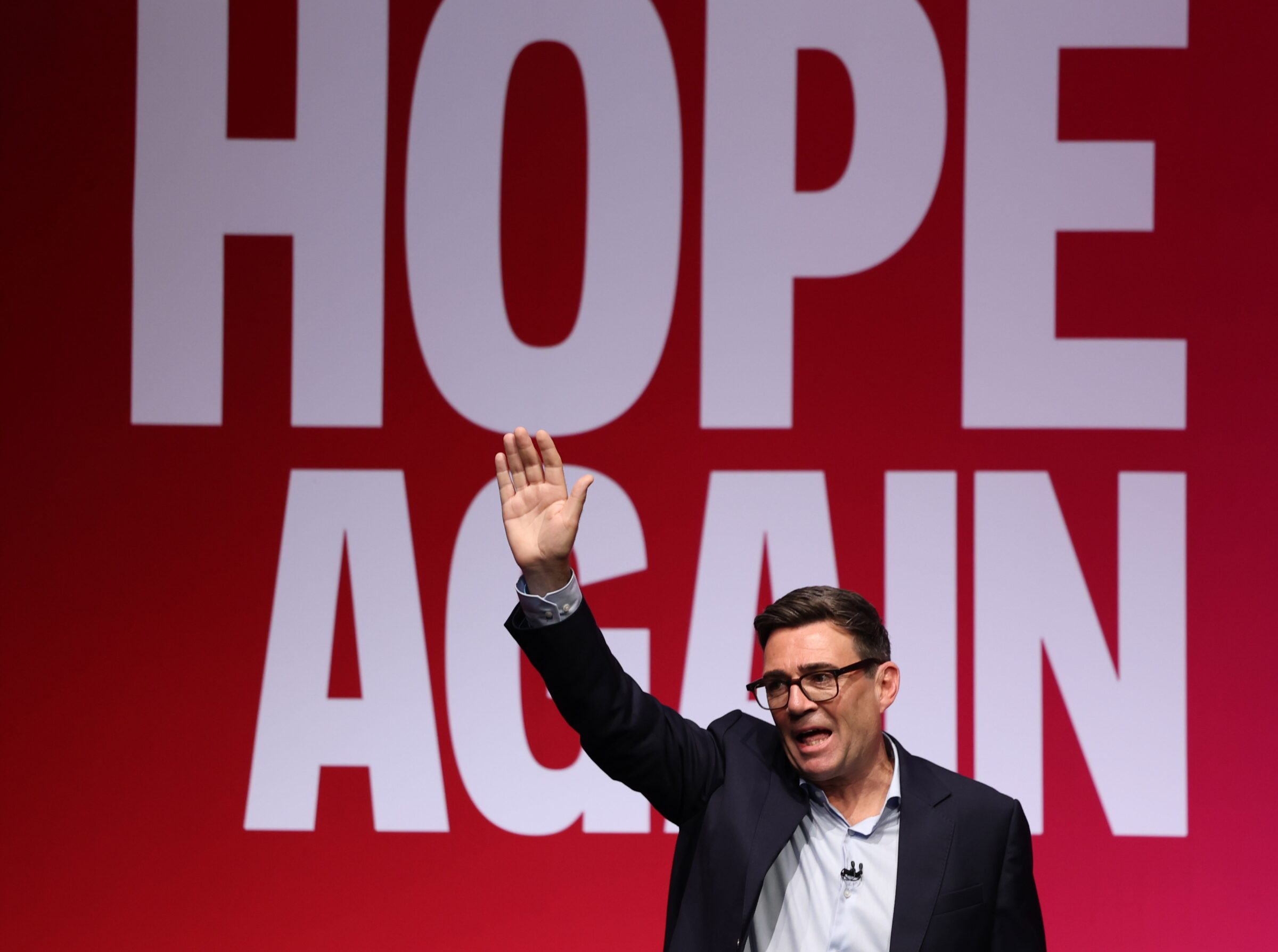
Having said several months ago that he had no intention of a ‘rerun’ of the Brexit debate, UK prime minister Andy Burnham told Labour delegates at the party’s annual conference in Liverpool last week that nothing should be off the table as far as EU-UK relations are concerned.
Brexit had “done more harm than good”, he said, adding that “we will not give Britain the clear path we need into the rest of the century until we decide on a long-term relationship with what is still our largest market.”
In fact, Britain could “go all the way” back into the EU, said Burnham.
The new prime minister is still enjoying something of a honeymoon period. His Labour party now tops the opinion polls, albeit by less than 30 percent, and his early policy announcements on nationalising utilities and pension reform are the most radical in a generation.
Even so, Burnham’s remarks were a surprise that left pro-European columnists positively giddy with optimism over the weekend.
In truth, rejoining the EU – if it happens – would probably take a decade.
Burnham didn’t offer any timetable or any other specifics, and has said that no moves towards EU membership would be taken before the next UK election due in 2029. And talk of rejoining the EU is not purely borne out of pro-European enthusiasm.
This article continues, but the full version is available only to EUobserver.com subscribers. Visit account.euobserver.com/membership
I have watched Pakistan-Afghanistan relations long enough to distrust easy headlines, and last week’s news produced a few of them. At the Center-2026 (Tsentr-2026) war games in Russia’s Chelyabinsk region, Taliban officers stood among the foreign observers. Reports say it was the first time Moscow had invited a Taliban military delegation since the movement returned […]
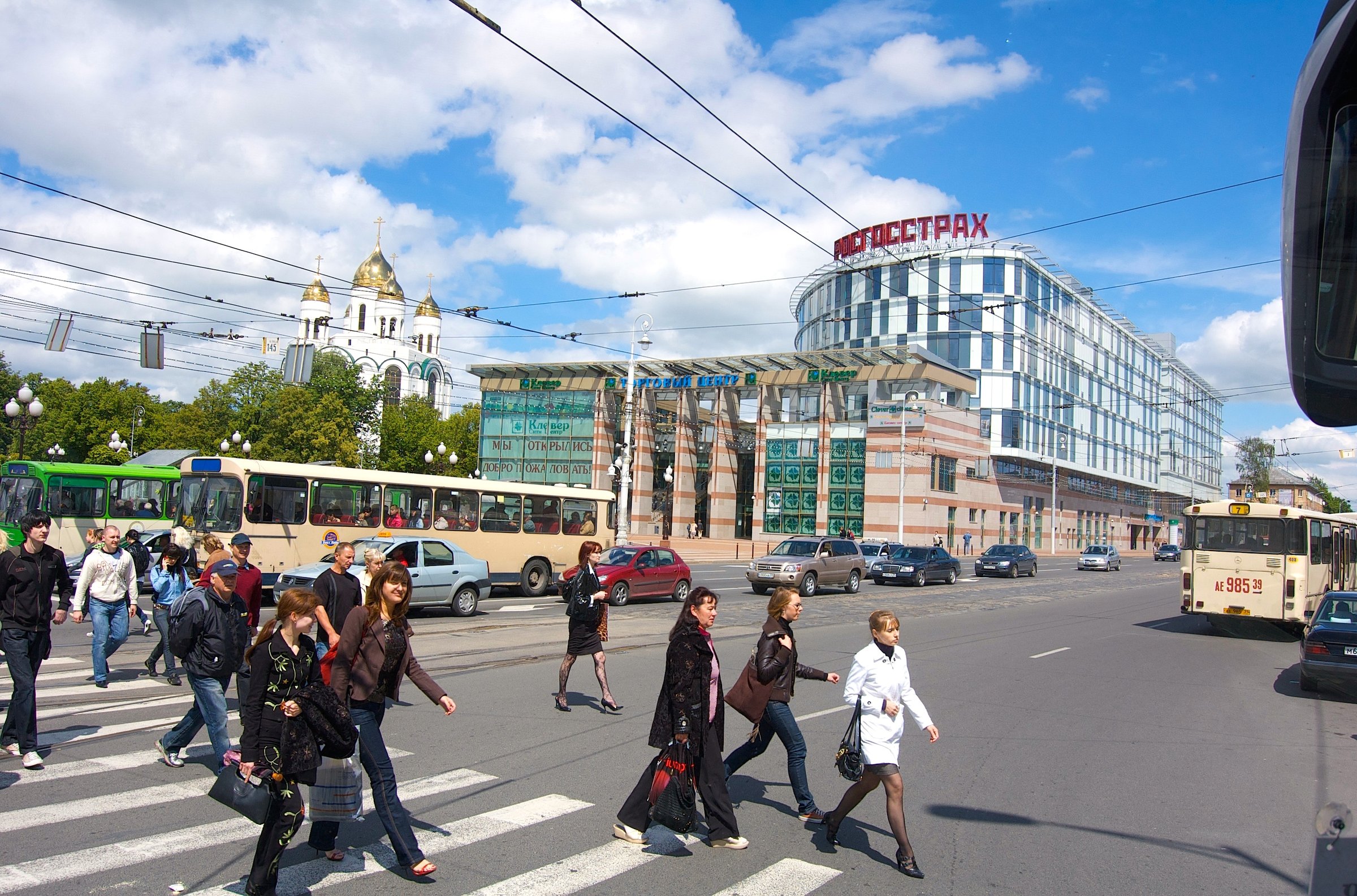
Russia will use nuclear weapons if Nato tries to blockade Kaliningrad. That was the blunt warning from the Kremlin last week. In truth, this is an empty threat against an invented danger. Russia’s nuclear bluff is worn out from overuse, and Nato has no such intention.
But the outburst does signal something useful: Russia’s sensitivity about Kaliningrad.
The northern half of the former German territory of East Prussia is the Kremlin’s last great trophy from the Soviet victory over Hitler in 1945.
Like many trophies, it is less impressive on close inspection. Kaliningrad is an artificial creation, from its name (after the war criminal Mikhail Kalinin) to its population (imported after ethnic cleansing) and its southern border (a crude straight line, of the kind European colonists inflicted on African countries).
Now Moscow’s grip on this exclave — an island of Russian territory sandwiched between Poland and Lithuania — is increasingly fragile. Not because anyone will sever the precarious air, sea, and land routes that keep it supplied, but because of Russia’s all-too-real, corrupt, authoritarian, and incompetent system of government.
The weakness of the Russian system, aggravated by the cost of the disastrous war in Ukraine, makes holding on to Kaliningrad unsustainable: economically, socially, demographically, and politically.
Outside commentary mostly misses this, depicting Kaliningrad as a fortress from which Russia can menace its neighbours.
It is more realistic to see it the other way round, as Russia’s greatest strategic vulnerability: an Achilles’ heel.
The name poses an implicit question: do you really believe that Kaliningrad will still be under Moscow’s rule by the middle of the century? It looks increasingly unlikely.
BISC will this week convene 20 experts for crisis simulations examining how Kremlin rule might unravel, and how neighbouring countries could, would, and should react.
The causes are imaginary, for now. But an environmental disaster, a breakdown in fuel supplies, or a public-health emergency, such as the one now unfolding in Siberia, are all entirely possible in Russia’s current ramshackle state. Decision-makers will have to react to the resulting refugee flows, pollution, and humanitarian needs.
We do not yet know the BISC study’s outcome: as with military ‘war games’, the aim of these exercises is to test how different scenarios play out. We hope the conclusions will be useful for those who deal with these dilemmas in real life.
Next up will be a book, Fragile Fortress, to be published later this year. Edited by the British Russia-watcher Christopher Peters, and written by local and foreign experts, it explores topics including memory politics, economic weaknesses, internal repression, and the state of public opinion. The main message: Kaliningrad survives only thanks to economic subsidy and political support from Moscow.
These efforts could hardly be more topical.
While the Kremlin blusters about a threat from Nato, social media scare stories depict supposed Russian invasion plans to be launched from Kaliningrad, with maps showing thick red arrows piercing the Suwałki Gap, a strategic stretch of land which links Poland and Lithuania.
But as the book’s military chapter shows, such an attack is impossible in current (or likely) conditions. Russia has almost no ground forces left in Kaliningrad: they have all gone to Ukraine. Nor does the Russian air force there have the kind of airfields and hangars needed for a real war.
Nato, especially since Sweden and Finland joined the alliance, is overwhelmingly dominant in land, sea, and air in the region: a point underlined by its recent surveillance exercises in the region.
In short, the nuclear bluster is irrelevant. Nobody is menacing Kaliningrad from the outside. And the real question is when and how, but not if, the Kremlin will lose it in the end.
The Russians are struggling on land and at sea, and are having real difficulty protecting themselves from Ukrainian long-range attack. That has left them with one real strategic “advantage” and that is what we will see the next few months. As reports this week made clear, the Russian strategy is now to make Ukraine unlivable, […]
Russia might not have directly interfered in Latvia’s election, but the vote still showed how the Ukraine war was distorting European democracy.
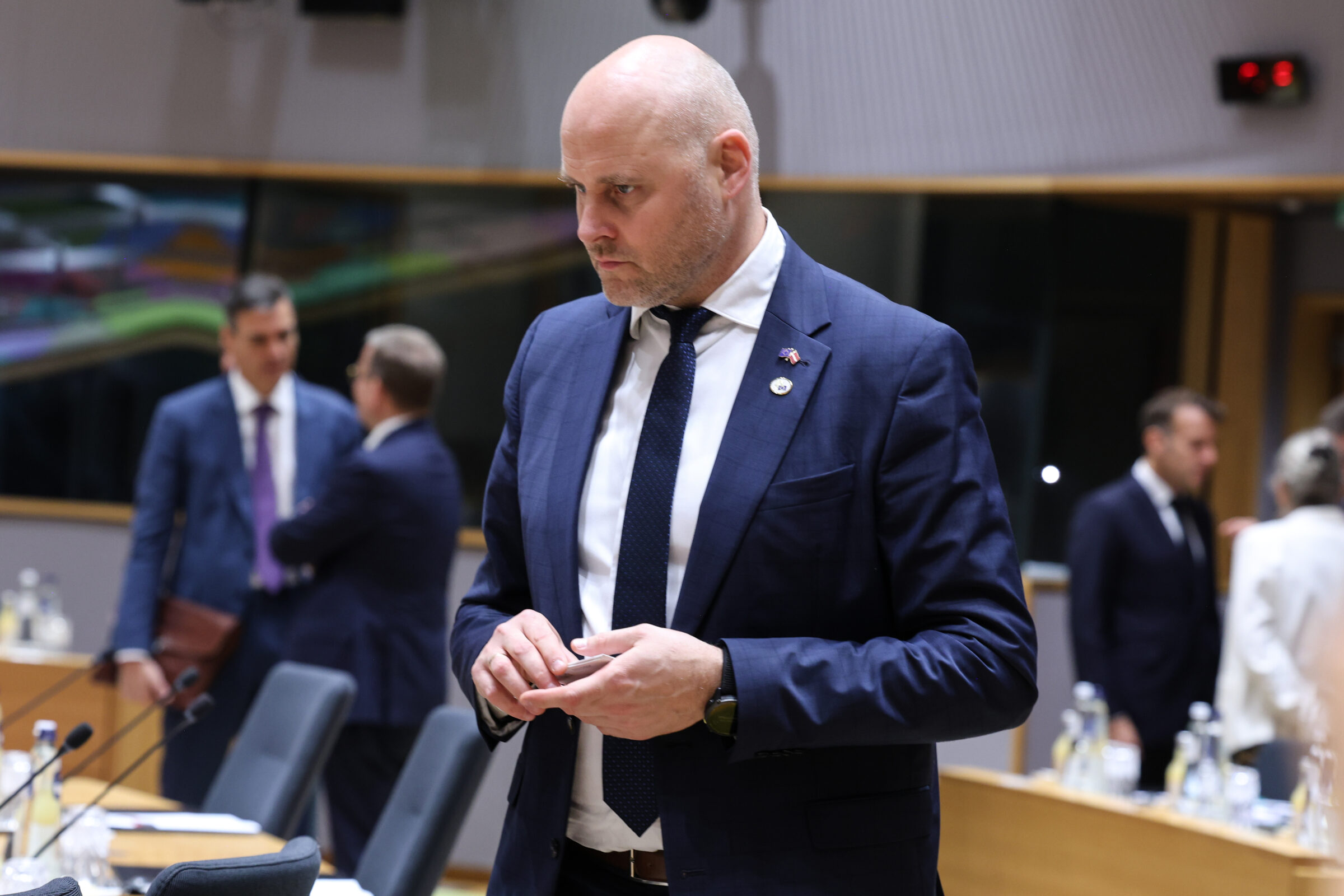
Latvia’s VDD intelligence service did not detect any of Russia’s classic interference tactics in the run-up to Saturday’s (3 October) vote, such as a spike in disinformation, vote buying, or a manufactured security scare.
The centre-right prime minister Andris Kulbergs retained power with 35.8 percent of the vote, even if coalition-building might take a while.
And voters’ concerns included the cost of living and failing healthcare, in what also sounded normal.
But despite the ordinary appearances, Russia’s war in Ukraine still influenced the election in fundamental ways, in a strange new normal for Europe that most of us had hardly imagined just five years ago.
This article continues, but the full version is available only to EUobserver.com subscribers. Visit account.euobserver.com/membership
Nearly half of voters in the United Kingdom support rejoining the European Union, according to a survey released as Prime Minister Andy Burnham reviews the country’s options for its long-term relationship with the bloc.
The Messina Group polled 11,461 people between 12 and 24 September. It found that 49 per cent supported EU membership and 28.5 per cent opposed it. The findings were weighted by respondents’ votes in the 2016 referendum, according to the survey results.
Several other options for closer cooperation also received more support than opposition. Retaining the current relationship while removing as many trade barriers as possible was backed by 48.2 per cent, with 20.9 per cent against. A customs union was supported by 47.1 per cent and opposed by 20.7 per cent.
Joining the single market was supported by 45.1 per cent, while 45.5 per cent backed associate membership. The existing relationship without further changes received 42 per cent support. Moving further away from the EU was the least popular option tested: 27.9 per cent supported it and 41.2 per cent opposed it.
The figures show support for a range of possible arrangements, but do not establish agreement on what Britain should seek or on the terms it should accept.
On timing, 25.9 per cent said the UK should rejoin immediately, 22.9 per cent favoured doing so within three years and 8.4 per cent within the next decade. A further 23 per cent said they did not want closer relations with the EU.
Respondents were also asked whether leaving the bloc had been the right decision. Some 52.4 per cent said it was wrong, compared with 29.7 per cent who said it was right; 17.9 per cent were undecided. Asked whether Brexit had been a success or failure, 54.9 per cent called it a failure and 12.2 per cent a success. Nearly a quarter, 23.2 per cent, said neither, while 9.7 per cent did not know.
The poll tested the possible electoral effects of different Labour positions on Europe. It found that scenarios involving closer ties could increase the party’s vote share by between 4.3 and 7.4 percentage points. The largest potential rise was linked to a proposal for a referendum in which Burnham campaigned for Britain to rejoin.
Burnham has said Labour will review the choices available, including keeping current arrangements, joining a customs union, returning to the single market or seeking EU membership. He plans to set out the options around the next UK-EU summit, expected in November. In recent remarks, he said the government would assess “what is doable” and the “pros and cons” of each option.
The review marks a shift from Labour’s 2024 election manifesto, which ruled out rejoining the EU, single market or customs union. Burnham has not proposed an immediate application or referendum. A UK bid for membership would require negotiations with the EU and unanimous agreement from member states.
The question of whether a referendum should come first also remains open. Almost a third of respondents said a vote would be needed before rejoining. More than one in six thought a general-election mandate would be sufficient, with a similar proportion saying Parliament could make the decision.
French President Emmanuel Macron and Spanish Prime Minister Pedro Sánchez have said the EU would welcome a British return. Their comments followed Burnham’s call for a review of Britain’s options, as EU Today reported this week. Earlier EU Today coverage also examined British and EU public support for a possible return.
No one knows how the US Supreme Court will rule in Suncor v. Boulder, the case that will kick off the court’s fall term next week and will likely decide whether the city and county of Boulder, Colorado, will be able to put oil giants ExxonMobil and Suncor Energy on trial for deceiving the public for decades about the climate harms of fossil […]
In February 2026, weeks after Cambodia’s National Assembly approved a draft law to ratify the 1982 UN Convention on the Law of the Sea (UNCLOS), a convention Phnom Penh signed in 1983 but never ratified, Japan unveiled plans to extend Official Security Assistance (OSA) to Cambodia. The announcement did not come out of nowhere and […]
In July, India tested two new interceptors meant to destroy missiles at ranges up to 5,000 kilometers, the latest step toward one of the few layered missile shields in the world. New Delhi calls the program defensive. But a neighboring rival rarely sees a shield that way. India’s expanding defenses could embolden its leaders in […]
We went to Ceuta to see how Europe treats people who arrive at its borders. We came back asking how Europe can still call itself a continent governed by law.
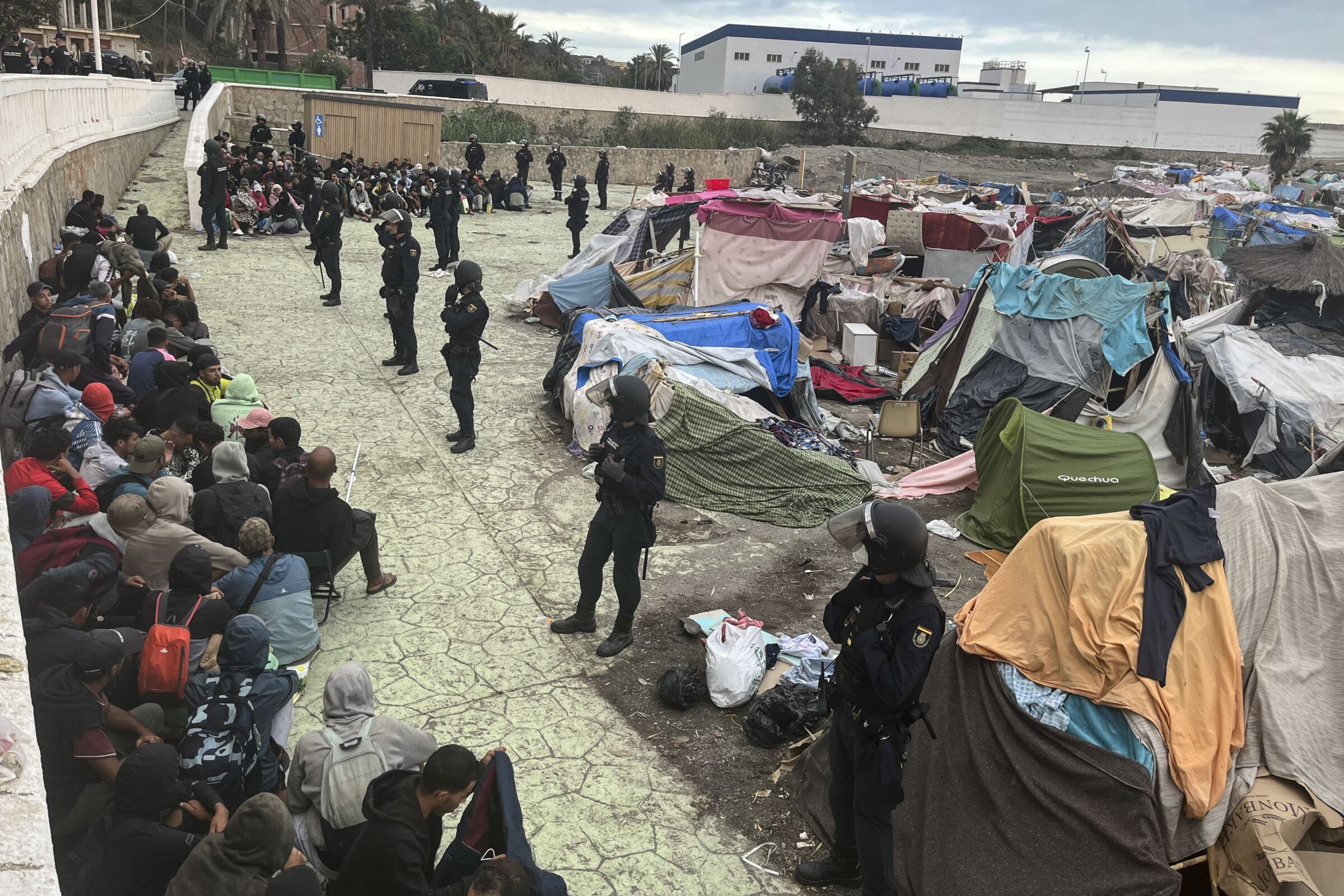
What we saw there was the often abstract failure of migration policy made brutally concrete: the daily humiliation of human beings — people sleeping under plastic sheets, children left without protection, food distributed under military guard, allegations of beatings and torture, and migrants treated as a threat rather than as people with rights.
These are scenes we never expected to encounter in Europe in 2026. Yet we saw them ourselves. And now that we have seen them, we cannot pretend we did not.
Morally unthinkable and unacceptable
In Ceuta, the boundaries of what is morally unthinkable and unacceptable have been crossed.
Migrants and those who help them are living in a kind of state of exception, where European law has been suspended and prolonged arbitrary police and military rule prevails.
Ceuta is a city abandoned by Spain, Europe and the law, where people are segregated according to their origin in circumstances that recall apartheid regimes. It has become a laboratory for the degradation and dehumanisation of migrants.
The future of Europe is being decided there.
We visited locations where thousands of people are living in undignified conditions, under makeshift shelters, plastic tarpaulins or in the open, assisted by local residents and NGOs such as No Name Kitchen.
They described constant harassment, insults, threats, public targeting through leaked photographs, and the detention of five members accused of disobeying authorities after recording a police operation involving migrants.
First, the far-right Spanish party Vox turned desperate people into prey to be “hunted down one by one”. Eventually, those trying to feed or assist them also became targets. When a group is sufficiently dehumanised, those who try to help them can be dehumanised too.
At Trampolín beach, we saw how the Red Cross distributes, once a day, a single bag of cold food: bread, water, tuna, juice and biscuits, under the watch of National Police vans.
Migrants from other areas can walk for hours to reach it. One day, we witnessed military forces preventing the Red Cross from distributing the same ration to around 1,000 people.
Whether someone eats can depend on military personnel, who can remove people from the queue or deny them food. The food distribution also coincides with Red Cross medical assistance, forcing some people to choose between eating and having their wounds treated.
Children alone on the streets
We spoke with children living on the streets, alone, hungry and cold, without adequate protection. We were told that National Police officers sometimes refuse to identify children who approach them for help, preventing them from entering the protection system.
This is compounded by the refusal of autonomous communities governed by Spain’s centre-right People’s Party and Vox to take them in, and by the Ceuta government’s refusal to appoint legal representatives.
We also heard allegations concerning Ceuta University Hospital. Migrants can face separate treatment at the emergency department and, according to migrants and NGOs, military personnel guarding the entrance prevent them from waiting inside, including minors.
We heard the account of a child with a fractured leg who, after being treated by Médicos Mundi, was allegedly told at the hospital to “go back to your country and see a specialist” and given ibuprofen. In another case, someone was allegedly told: “We are not going to treat you because you have invaded us.”
We also received accounts of torture and cruel, degrading and inhuman treatment by regular military forces and the Legion. Migrants and NGOs described nighttime patrols involving harassment, humiliation, theft, destruction of mobile phones and beatings after people had been restrained with cable ties.
Some were allegedly forced to shave their heads or kneel to kiss a Christian cross. We are particularly concerned by allegations involving women and girls subjected to sexual humiliation.
This is extremely serious. The state is going on the hunt, while those who should protect these people are violating their rights. First came photographs, then video footage published by elDiario.es.
These were not images from the West Bank. They were from Ceuta. First there were allegations. Now there are images. Defence minister Margarita Robles must give explanations.
These soldiers should no longer be patrolling Ceuta’s streets. Article 51 of Spain’s Organic Law on the Disciplinary Regime of the Armed Forces allows for their provisional removal from duty. We have asked the minister to act immediately.
We also documented allegations of daily racist, xenophobic and Islamophobic harassment. Migrants and racialised people are reportedly prevented from entering the city centre, shops and supermarkets by military personnel who decide, based on skin colour or clothing, who can pass.
Racial profiling also affects Ceutíes of Moroccan origin or perceived as such. Some of us were even asked to leave a city-centre restaurant because we were accompanied by a human rights activist and a racialised person.
Our political assessment is clear: what is happening in Ceuta should not happen. We cannot become accustomed to systematic violations of human rights against migrants and those who assist them.
Responsibility lies with perpetrators, but also with political leaders, including those in Vox and the PP, far-right influencers spreading hate speech, and media outlets amplifying it by calling human beings “invaders”. When a child becomes an “invader”, his innocence can disappear in the eyes of those who hear that language, opening the door to dehumanisation.
The solution is to enforce the law, ensure accountability and transfer migrants to mainland Spain, where there are sufficient places to accommodate them in dignified conditions while their administrative status is resolved.
But the right does not want solutions.
They want migrants sleeping on beaches and streets in increasingly degrading conditions. They want Ceuta to remain a giant television set, a powder keg from which migrants can be portrayed as an “invasion”, insecurity and chaos used to fuel hatred and racist violence.
Their electoral campaign has begun in Ceuta. The socialist part of the government, afraid of being portrayed by the right as weak, refuses to transfer migrants to the mainland and keeps them trapped there. Those who want to set Ceuta on fire are pouring the petrol; those who could put out the fire are letting them do it.
As more people across Canada are considering the problems with the Canadian order and our current globalist bent, and as citizens of Alberta are considering what a new nation might look like, it is of utmost importance that we consider the principles of the Law of God again. My short answer is “yes”. To... Continue Reading
Dazzled by the promises of the information age, we opened the front door to the companies promising to widen our children’s horizons, jumpstart their educations, and open their minds. In reality, these data miners wanted to open their minds for the same reason a fracking company wants to open up a rock formation: to get... Continue Reading

 Login