❌

Reading view

Ukraine says it struck plant making parts for Russian military aircraft engines—a Snizhne factory Russia has used since 2014

snizhne_map_dark

Ukraine's 413th Separate Raid Regiment of the Unmanned Systems Forces struck the Snizhne Machine-Building Plant in occupied Donetsk Oblast in September, working with other Defense Forces units, the regiment posted on 6 October, sharing a video of the strike. The General Staff reported the strike on the plant on 11 September, saying that the extent of the damage was being clarified.

The strike adds to Ukraine's campaign of long-range attacks on Russian military targets as Russia has begun its winter campaign of strikes against Ukraine's energy infrastructure. Hitting the suppliers of aircraft parts goes after Russia's ability to keep its attack jets and helicopters flying.

The regiment said the plant works for Russia's military industry, producing engine components for attack aircraft and combat helicopters.

A former Motor Sich plant in occupied Snizhne

The Snizhne plant was a separate division of Motor Sich, a Ukrainian aircraft-engine maker based in Zaporizhzhia, a city that remains under Ukrainian control. Snizhne has been under Russian occupation since 2014. The plant specializes in producing parts for gas-turbine engines, including compressor and turbine discs and blades, the General Staff said. It never built whole engines. In September 2014, months into the occupation, it was machining blanks from Motor Sich's Zaporizhzhia plant into turbine blades and was one of only two plants in the former Soviet Union making such blades for helicopters, a plant worker said.

Motor Sich said in December 2017 that it had lost control of the plant. Weeks later, Viacheslav Bohuslaiev, then Motor Sich's honorary president and a member of parliament, told RFE/RL's Donbas.Realii that Motor Sich still owned the plant and had handed its management to a foreign company, while keeping it under the company's "full control."

In February 2023, Ukraine's Prosecutor General's Office served Bohuslaiev a notice of suspicion of aiding a terrorist organization, alleging that Motor Sich shipped blanks to the Snizhne plant and received finished engine parts through foreign-registered companies. The case went to court in October 2023, and Bohuslaiev, who denies the charges, has been in pretrial detention since October 2022 as the trial continues.

Snizhne, which Russia uses as a rear base, has been hit before. In May, Ukraine's Unmanned Systems Forces and the Security Service of Ukraine struck a Russian training center for drone pilots in the city, and in September, a strike on energy infrastructure cut power across Snizhne.

  •  

Marine One VH-92A Makes First Operational Use Of New White House Helipad

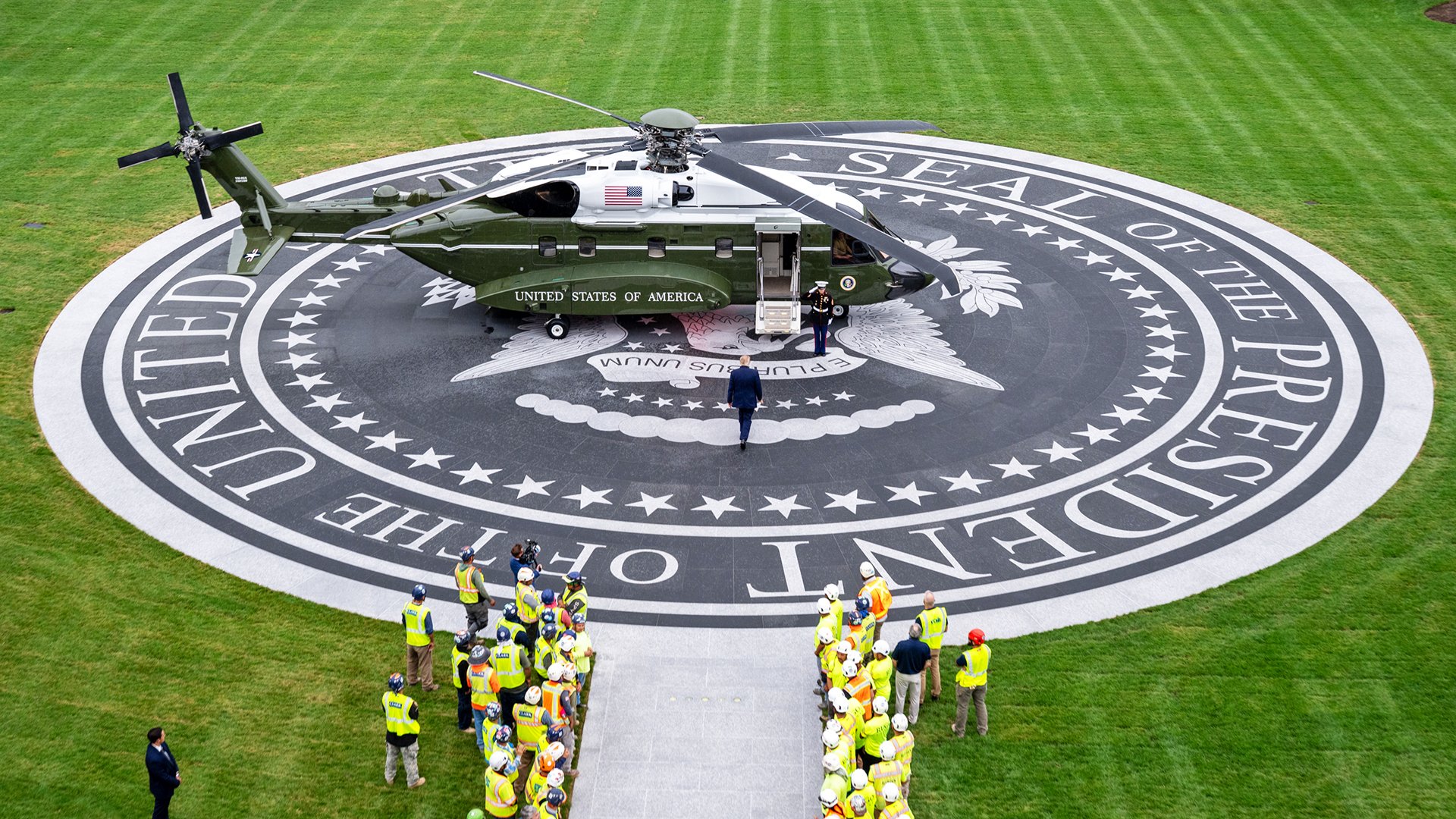
President Donald Trump’s departure from the White House South Lawn earlier today marked the first operational use of its new granite helipad, and the VH-92A Patriot — not the older VH-3D Sea King or VH-60N White Hawk — was the airframe that carried him off the pad. The flight represented a dual milestone: the first time a VH-92A had carried the president from the White House, and the first operational use of the roughly $5-6 million helipad that was built to enable regular operations by the helicopter from this location.

President Trump boards Marine One on the new helipad @BorderHawkNews pic.twitter.com/Go62kRyHGP

— Wid Lyman (@Wid_Lyman) September 21, 2026

Trump marked the occasion with a ribbon-cutting on the South Lawn, using a pair of oversized gold scissors to sever a red, white, and blue ribbon before shaking hands with White House officials and members of the construction crew. Auxiliary power unit noise from the waiting VH-92A drowned out any remarks Trump may have made on the landing area; he instead posted afterward that the flight was the “maiden voyage” from the newly completed pad. He did not stop to take shouted questions from reporters before boarding for the helicopter’s first flight off the new surface. The VH-92A took Trump to Joint Base Andrews, Maryland, with his final destination New York, where he will be at the UN General Assembly this week.

.@POTUS cuts the ribbon and officially opens the new helipad on the South Lawn of the White House pic.twitter.com/BgpCBtBIB8

— Rapid Response 47 (@RapidResponse47) September 21, 2026

JUST NOW: @POTUS departs the White House on Marine One using the NEW helipad en route to New York@taymitchell_tv pic.twitter.com/srMfqB5nYY

— Real America's Voice (RAV) (@RealAmVoice) September 21, 2026

President @realDonaldTrump just performed the official ribbon-cutting ceremony on the new @WhiteHouse helipad, thanked the construction professionals that made it so beautiful & flew off in the new Marine One to address the United Nations General Assembly on continuing MAGA wins. pic.twitter.com/z75dayaVo7

— Sebastian Gorka DrG (@SebGorka) September 21, 2026

The VH-92A’s operational limitation in this context had been its exhaust and rotor system. Heat and rotor wash directed downward from the helicopter had scorched and torn up the South Lawn’s turf badly enough that the Marine Corps continued relying on the VH-3D and VH-60N for White House landings even after the VH-92A entered presidential service under Biden in August 2024. Trump has said the newer helicopter is roughly two and a half times more powerful than the airframes it’s replacing — powerful enough, by his account, that a single landing once left “half of the grass…sitting in front of the Oval Office front door.”

For decades, Marine pilots set down on a simple metal disc placed directly on the South Lawn turf — a low-tech solution that worked well enough for the lighter VH-3D and VH-60N, but that pilots occasionally missed, tearing up grass around the marker in the process.

Construction of the new helipad began in late June but hit a snag in early August. As you can read about here, Trump ordered contractors to tear out and redo weeks of work — including a 100-foot-wide carved granite presidential seal that was already taking shape — reportedly over dissatisfaction with the pad’s appearance and the slope of the surrounding lawn.

Scoop: Trump has ordered workers to redo weeks of work on his planned White House helipad

new WaPo photos show how past work was removed over weekend

Trump is contemplating changes to White House lawn's slope, raising bigger Qs about project and costhttps://t.co/tGrkmg6Go3

— Dan Diamond (@ddiamond) August 4, 2026

The South Lawn’s natural grade, reported at up to 20 degrees in places, exceeds FAA heliport guidance calling for landing surfaces to be reasonably level. In the interim, Trump had been using the Ellipse, a park south of the White House, as a temporary landing zone — a workaround today’s flight presumably does away with.

The first take off from the new White House Helipad!

(📍Eisenhower Executive Office Building) pic.twitter.com/xLmXHcvXbE
— Bobby Levy (@realBobbyLevy) September 21, 2026

Sikorsky, the Lockheed Martin subsidiary that builds the VH-92A, is financing the helipad project. Trump has said this is intended, at least in part, as compensation for not fully disclosing how disruptive the helicopter’s exhaust characteristics would be. The four-inch-thick granite, quarried in California, has been promoted by Trump as effectively indestructible, with a “million-year” lifespan. That claim, like similar durability promises made about his Lincoln Memorial Reflecting Pool refurbishment — which reportedly saw paint fade and its liner peel within days — has not been independently substantiated.

The helipad is the latest in a string of exterior additions Trump has made to the White House since returning to office, most notably two roughly 88-foot flagpoles installed on the North and South Lawns in June 2025. Trump said the building had “needed flagpoles for 200 years” since the only flag previously flew from the roof, and described paying for the poles — about $50,000 each — himself.

WASHINGTON, DC - SEPTEMBER 08: U.S. President Donald Trump leads a group of people on the south lawn of the White House on September 08, 2026 in Washington, DC. The new helipad has been under construction for the past several weeks. (Photo by Finn Gomez/Getty Images)
President Donald Trump leads a group of people on the south lawn of the White House in Washington, DC, on September 8, 2026. The new helipad his visible in the foreground. Photo by Finn Gomez/Getty Images Finn Gomez

Landing on the White House lawn is only the most visible of the VH-92A’s issues. TWZ has tracked the $5-billion, 23-aircraft program’s string of setbacks for years.

A 2021 Pentagon testing report found the helicopter failing to meet the reliability, availability, or maintainability thresholds set for it, judging it fit for routine “administrative” runs but not for the emergency contingency missions the role actually demands. Central to that finding were flaws in the aircraft’s Mission Communication System, the secure link meant to keep the president connected to the National Command Authority in a crisis — a system a Pentagon summary said often delayed critical communications at the beginning of contingency missions.

Meanwhile, today’s flight doesn’t necessarily mean the older airframes are done at the White House.

The Marine Corps has said it intends to retire the iconic VH-3D Sea Kings fully this year, but plans to keep flying the VH-60N through at least 2030 for its hot-and-high-altitude performance. This means the ‘White Hawk’ could make occasional South Lawn appearances even with the VH-92A now cleared for routine use.

Whether today’s departure becomes the new baseline, or proves to be a one-off tied to the ribbon-cutting itself, will be revealed in how often the VH-92A — versus the older ‘White Top’ fleet — appears on the pad in the weeks ahead, particularly once the higher-profile test of Chinese Premier Xi Jinping’s state visit arrives.

Contact the author: thomas@thewarzone.com

The post Marine One VH-92A Makes First Operational Use Of New White House Helipad appeared first on TWZ.

  •  

Apache Crew Rescue Highlights Need For AI In Combat Says Joint Chiefs Chairman

The U.S. military’s top officer on Wednesday talked about how AI is changing the character of warfare and offered two examples to illustrate his points. His comments included new insights into how two U.S. Army AH-64 Apache crew members were rescued after being shot down by an Iranian drone near the coast of Oman in June. The recovery effort involved America’s first known use of an uncrewed surface vessel (USV) executing a personnel recovery action as part of a military search and rescue operation.

“Information moves so fast that leader decision times have compressed from weeks down to days down to seconds,” explained Air Force Gen. Dan Caine, chairman of the Joint Chiefs of Staff, during his keynote speech at the Air & Space Forces Air, Space and Cyber Conference that TWZ is attending. “In the future fight, advantage will go to the side who can see first, who can understand first, decide first, and act first, and along the way, be a learning organization, and no factor is accelerating change as fast as artificial intelligence and advancing cyber capabilities.”

“AI is here now, and it’s already changing the way militaries see, sense, decide, and act across the joint force,” the chairman proclaimed.

The first example Caine used to highlight these changes took place on June 8. After the Apache went down, “U.S. CENTCOM launched a rapid, responsive joint search and rescue effort to recover the crew. That response drew on the totality of the joint force, and ultimately was required to use enabled unmanned vessels to participate in the rescue of downed U.S. service members for the first time ever.”

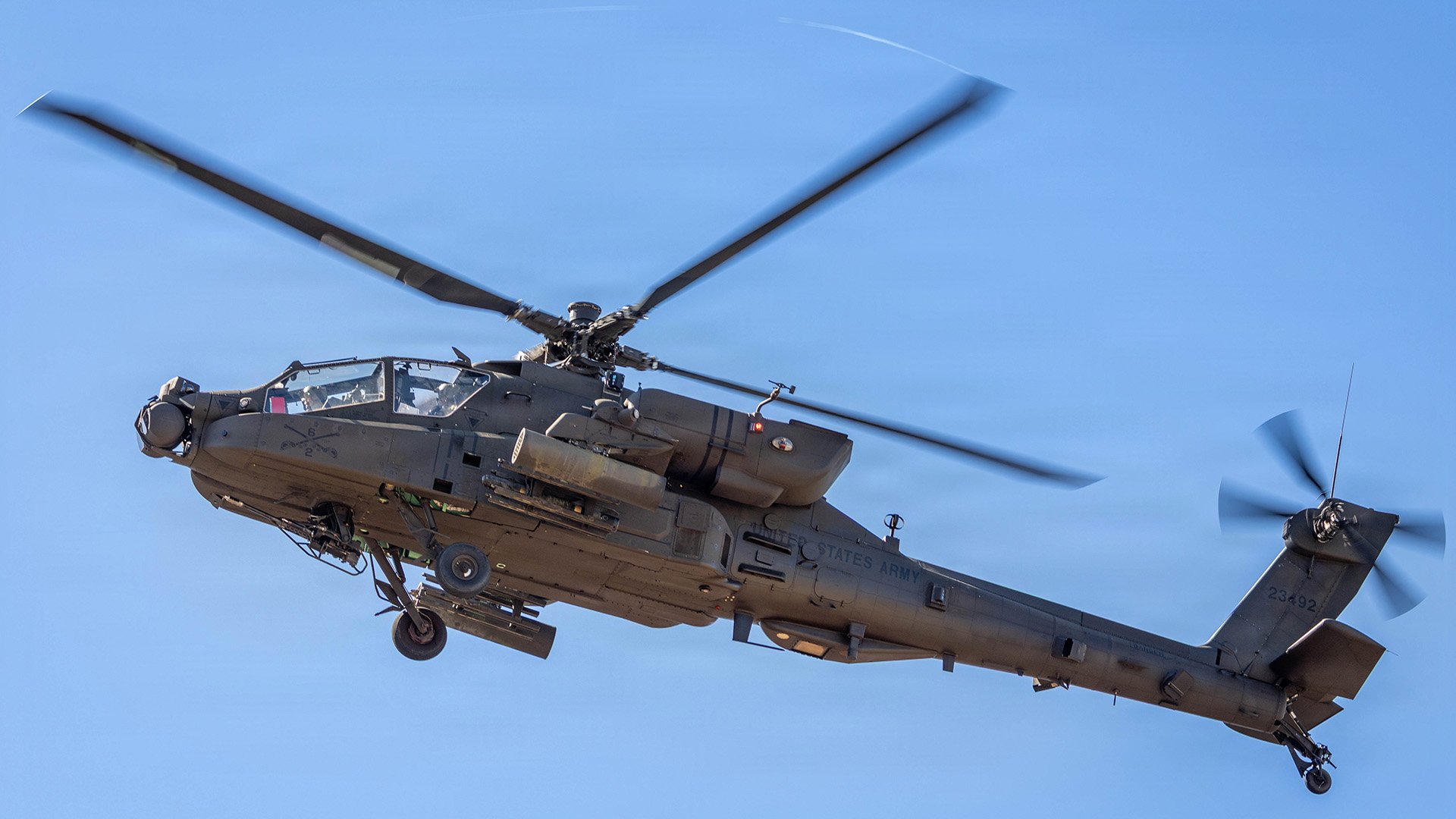
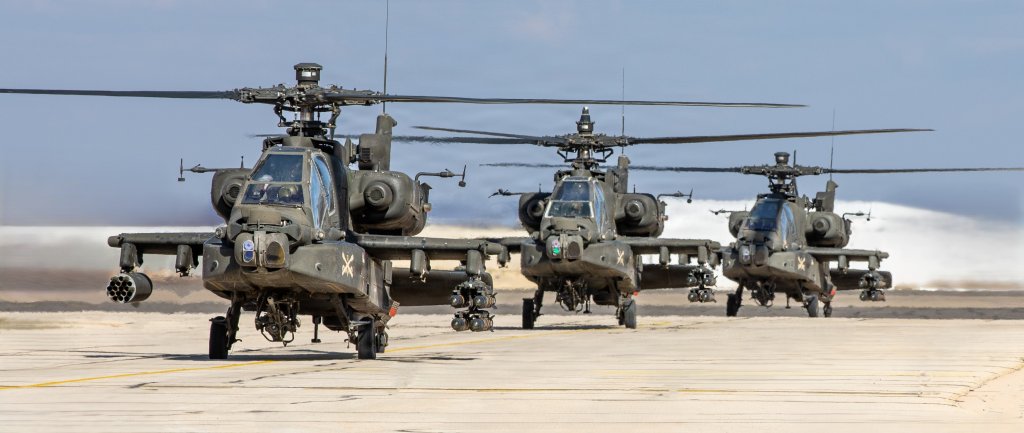
A flight of U.S. Army AH-64 Apache attack helicopters, armed with rockets and Hellfire missiles, taxi out to conduct a scheduled flight in the U.S. Central Command area of responsibility. In addition to rockets and missiles, the Apache is additionally armed with a 30mm chain gun. (U.S. Army photo)
A flight of U.S. Army AH-64 Apache attack helicopters, armed with rockets and Hellfire missiles, taxi out to conduct a scheduled flight in the U.S. Central Command area of responsibility. In addition to rockets and missiles, the Apache is additionally armed with a 30mm chain gun. (U.S. Army photo) U.S. Army Central

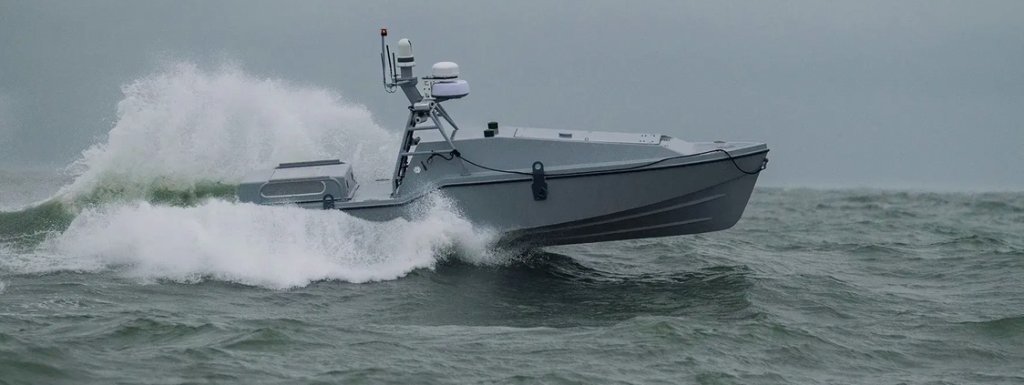
As we noted in our previous coverage, CENTCOM deployed “a U.S. Navy Corsair unmanned surface vessel,” the command’s spokesman told us at the time.

The Corsair uncrewed surface vessel (USV) (Saronic)

The ability to pull off that rescue mission “did not appear overnight,” Caine pointed out. “It came from the men and women of Task Force 59, CENTCOM’s forward-leaning unmanned joint maritime unit who spent the last several years testing, integrating, and operationalizing unmanned systems and AI in one of the most demanding and kinetic environments on Earth right now.”

“What helped make this possible was not a bunch of general officers and flag officers,” Caine continued. “What made this possible was a bunch of entrepreneurial sailors and members of the joint force on watch floors, at piers, managing networks of unmanned systems across thousands of miles of water, and using AI to turn massive amounts of data into a crisp, clear, perfect maritime picture that allowed us to go grab those two soldiers in the water.”

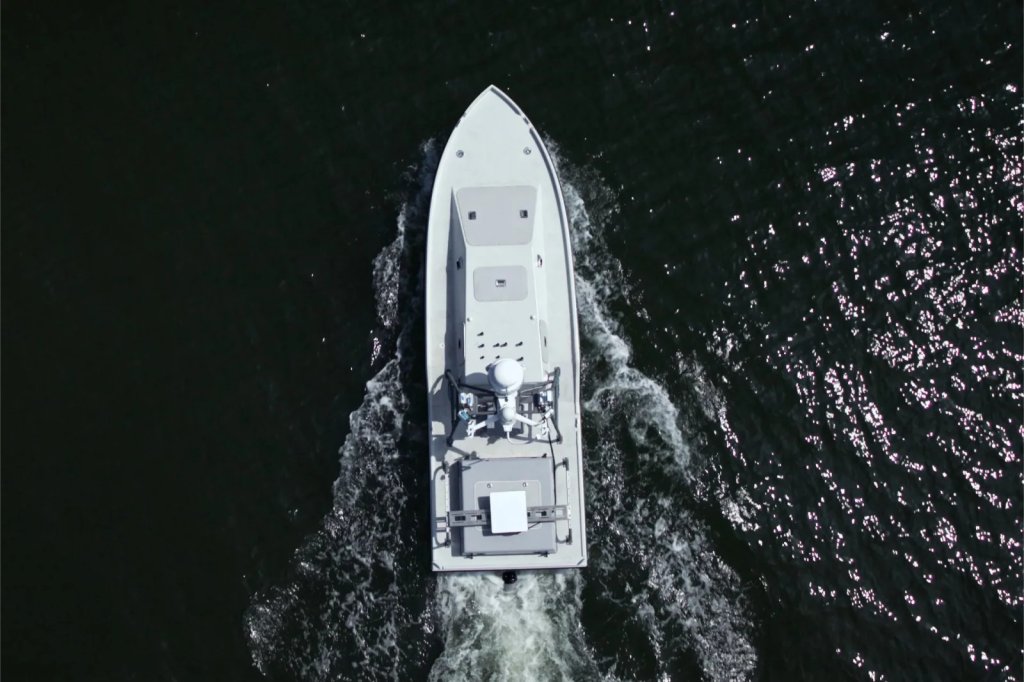
A top-down view of the Saronic Corsair USV. (Saronic)

The second example Caine shared about the use of AI “points in the other direction, not how quickly we are using these tools, but how quickly these tools are changing the threat.”

In Ukraine, “we see first-person view drones operating in heavily contested EMI [electromagnetic interference] environments. Some now using AI-enabled computer vision to continue to drive towards targets, even when there’s no GPS or the links are cut. That gives small units affordable precision and shows how quickly software and autonomy are changing what is possible at the tactical edge, and the results are stark.”

The use of AI to enable lower-end drone warfare is a topic TWZ has been among the first to point out.

“In certain locations on the front line of troops right now, the life expectancy of a new Russian recruit arriving on the front lines is as little as 20 to 30 minutes,” Caine added. “Think about that. This is what happens when low-cost precision is fielded fast, adapted quickly, and scaled across the battlefield.”

“The price of lethal exchange is decreasing day over day,” the chairman noted. “One wonders what the future of close air support looks like, but I am comforted by the fact that each and every one of you are in this room thinking about that. Taken together, these examples from the Straits of Hormuz to the front lines in Ukraine show how quickly technology is changing the character of war, and this means our joint force needs to do two things at one time.”

“[W]e need to prepare the joint force to win in this kind of conflict,” the general stated. “We have to assume from now on that our formations will be hunted by autonomous systems, jammed across the spectrum, and tracked in real time, and we have to transition the joint force to be prepared to fight and win our future war by generating and delivering lethality at scale with an agile, optimized, high-low mix of combat capabilities to give the young members of the 2.8-million member all volunteer joint force the tools that they need before they need them.”

Contact the author: howard@twz.com 

The post Apache Crew Rescue Highlights Need For AI In Combat Says Joint Chiefs Chairman appeared first on TWZ.

  •  

UPD3: Danish pilot, Greek translator killed in helicopters collision in Attica fires (VIDEO)

Two water-dropping helicopters have been down while operating against the huge wildfire in Psatha, western Attica, on Sunday, August 2, 2026. According to initial information the two helicopters of Bell type collided in the air. The collision in the air has been confirmed by an official announcement of the Fire Service, state broadcaster ERT reported […]

The post UPD3: Danish pilot, Greek translator killed in helicopters collision in Attica fires (VIDEO) appeared first on Keep Talking Greece.

  •  
❌