Reading view
India Shuns Costly Russian Oil as Middle East Flows Recover
India’s rate hike a loud warning shot for Modinomics

It’s not often that events in Mumbai reverberate through global markets. But the Reserve Bank of India’s first interest rate hike in almost four years speaks volumes about the chaotic state of play. The inflation slamming Asia’s third-biggest economy and the rupee’s drop to record lows left RBI Governor Sanjay Malhotra with no choice but […]
The post India’s rate hike a loud warning shot for Modinomics appeared first on Asia Times.
Indian students and opposition parties call for national mobilization on October 10 against election commissioner

Scores of the elected opposition members of India’s Parliament were detained by security forces in the capital, New Delhi, on Tuesday, October 6, after they protested against the alleged rigging in the elections and demanded removal of the country’s Chief Election Commissioner (CEC) Gyanesh Kumar.
The Leader of the Opposition Rahul Gandhi and several other MPs also claimed they were manhandled by the police during the detention and forcefully removed from the protests site. All of the detainees were released later.
The protests by the MPs was a part of the ongoing nationwide mobilizations which broke out on Saturday over alleged rigging and irregularities in various elections under the incumbent CEC. The protesters are demanding his immediate removal claiming he manipulated the elections in various states to benefit the ruling party.
Despite the heavyhandedness of the security forces who have refused to allow any protest gathering in the capital and repeatedly detained opposition leaders, students, and youth group protesters, people turned up on the streets of Delhi and other parts of the country for the consecutive fifth day on Wednesday.
Several protesters have claimed they were beaten up during detention while some women reporters have claimed they were molested by police personnel on duty during those protests.
Also on Tuesday, security forces allegedly attacked a cultural gathering organized around the issue by the left-wing Student Federation of India (SFI) in central Delhi.
On Wednesday, major left and progressive student organizations such as SFI, the All India Students Association (AISA), and the Cockroach Janta Party (CJP), a movement which emerged in protests demanding reforms in the country’s education system earlier this year, announced a new joint protest beginning from October 10.
Rigging in elections is murdering democracy
Rahul Gandhi, who is also the leader of India’s main opposition party, the Indian National Congress (INC), claimed around 300 opposition MPs were marching from the country’s Parliament building to the office of the Election Commission of India (ECI), seeking a meeting with the CEC when the security forces stopped them and detained them.
He reiterated that the ruling Bharatiya Janata Party (BJP), in collaboration with the CEC, has been responsible for destroying democracy in the country by rigging elections. He called the act “treason” and warned that none of the people responsible for “murdering democracy” in the country will be spared whether it is the Prime Minister Narendra Modi, Home Minister Amit Shah, or Gyanesh Kumar.
The ultra-right-wing and Hindu-supremacist BJP has been in power since 2014, winning three national elections, including the last one in 2024. It is also ruling a majority of states in India.
Speaking in a press conference in Delhi on Wednesday, Neha Bora, president of AISA and one of the leaders of the movement, claimed that the movement against the manipulations in the national elections by the CEC and the BJP will continue until the removal of Gyanesh Kumar.
Over 130 million Indians have been removed from electoral rolls in the country since the ECI, the highest body responsible for conducting elections in the country, started the so-called Special Intensive Revision (SIR) last year under Gyanesh Kumar’s leadership.
Opposition parties and legal experts have claimed that the SIR is illegal, as it is not mentioned in the ECI rule books and the process was started to manipulate election results to favor the ruling BJP.
A recent report in one of the main English daily paper’s in the country also claimed that most of the decisions taken by Gyanesh Kumar as CEC were illegal.
In the last few weeks, opposition has also alleged that the ECI and BJP collaborated to remove thousands of names, mostly Muslim voters, from the electoral rolls in various constituencies across the country.
Talking to the media on Tuesday, John Britas MP from the Communist Party of India (Marxist) claimed that protests against Gyanesh Kumar are a “historical movement to save democracy” in the country. He accused Kumar, in collaboration with the BJP, of destroying the reputation of India’s electoral process and of being the “real enemy of the nation.”
Britas called for his immediate removal as CEC and demanded he must be tried for his criminal activities.
CJP is widening its pressure-group role. Can it sustain the expansion?

Ukrainian drugmakers sold $114 million worth of medicines to Uzbekistan in six months. Now they may lose the right to sell there

Ukrainian drugmakers could lose the certificates that let them sell in Uzbekistan, their most important export market, Ukrainian business outlet Ekonomichna Pravda reported on 7 October. Uzbekistan is ending remote factory inspections next year, and industry sources say its inspectors are wary of traveling to a country at war.
Russia's war keeps reshaping Central Asia's trade with both warring countries: Ukrainian refinery strikes pushed Russian fuel shortages into the region, and Kazakhstan gained leverage over a Russian retail giant.
A market worth a third of export earnings
Uzbekistan brings in about 30% of the Ukrainian drug industry's foreign-currency earnings, and one in 10 medicine packs sold there is Ukrainian, Ekonomichna Pravda wrote. By the outlet's count, at least three of Ukraine's five biggest drugmakers by revenue rank it as their top foreign market.
The currency from Uzbekistan lets manufacturers keep prices low in Ukraine and absorb losses from Russian strikes, three industry sources told Ekonomichna Pravda. Losing the market would force producers to raise domestic prices or pull low-margin medicines, which "will hit the Ukrainian patient," said Hennadii Vovk, former deputy head of Ukraine's State Service on Medicines and Drug Control.
Exports reached $114 million in January–June 2026, more than in all of 2021, said Yevheniia Piddubna, government relations head at Farmak, Ukraine's largest drugmaker. She said Uzbekistan takes 35% of Farmak's exports.
Data from the YouControl business registry, cited by the outlet, complicates that picture. In 2022, 30–35% of Farmak's products went to Uzbekistan. In 2025, Uzbekistan was not among its direct buyers. Farmak explained that wartime currency rules cap payment terms at 180 days, while foreign buyers often demand longer. So part of its trade runs through the group's Polish company.
Remote checks end, and inspectors hesitate to travel
Uzbekistan grants three-year certificates of good manufacturing practice (GMP) after inspecting the factory. Since the pandemic, it has allowed remote checks. That suited Ukraine, where Uzbek experts avoided traveling because of Russia's invasion, industry sources told the outlet. Remote inspections end on 1 January 2027.
Ukraine funds its war from wages, and a 1971 law keeps millions of women from earning them
Most Ukrainian certificates expire within a year. Farmak's runs out in November 2026, and the company may not manage to renew it in time. Three producers renewed under the old rules until 2029: Darnytsia, the Borshchahivskyi Chemical and Pharmaceutical Plant, and Farmex Group. According to Piddubna, Uzbekistan's regulator has drafted rules for remote inspections in force-majeure cases, but nothing has been put into practice. Industry sources said the Uzbek Presidential Administration must sign off.
Producers have asked the Office of the President, the Foreign Ministry, and the Health Ministry to raise the issue with Uzbekistan's government, but no Ukrainian experts have been sent there yet, the outlet reported. Russia, whose share of the Uzbek drug market is almost the same as Ukraine's, is ready to take Ukraine's place, its sources said.
A Dozen Seafarers Injured in Strait of Hormuz Tanker Attack, India Says
Form 6: A complicated, burdensome route back to the voter list

Form 7 submission in Telangana reveals a sinister pattern

The Election Commission must show who decided

The Field That Was India Inside Bangladesh Inside India Inside Bangladesh — The World’s Only “Russian Doll” Territory Vanished in 2015

Dahala Khagrabari, el único enclave del mundo “dentro de otro enclave dentro de otro enclave”, desapareció en 2015

Indian Supreme Court demands government answers on voter purge

As one advocate warned India’s Supreme Court on Monday that “this country will burn” unless action is taken to stop what thousands of protesters have denounced as an illegal purge of voters by the head of the Election Commission of India, the court demanded accountability from Prime Minister Narendra Modi’s government. Chief Justice Surya Kant […]
The post Indian Supreme Court demands government answers on voter purge appeared first on Asia Times.
Holding on through another flood

Russia courts the Taliban without dropping Pakistan

I have watched Pakistan-Afghanistan relations long enough to distrust easy headlines, and last week’s news produced a few of them. At the Center-2026 (Tsentr-2026) war games in Russia’s Chelyabinsk region, Taliban officers stood among the foreign observers. Reports say it was the first time Moscow had invited a Taliban military delegation since the movement returned […]
The post Russia courts the Taliban without dropping Pakistan appeared first on Asia Times.
India and Pakistan Turn a Japanese Baseball Field Into Cricket’s Biggest Stage
A 2,500-seat stadium in suburban Nagoya has become the unlikely setting for one of sport’s most combustible rivalries — and a glimpse of cricket’s growing reach beyond its traditional heartlands.
There are few sporting rivalries capable of transporting an entire stadium thousands of miles away from home. On Saturday, India and Pakistan managed precisely that — turning a modest Japanese baseball facility into an arena charged with all the anticipation, colour and emotion normally associated with the great cricket grounds of South Asia.
The setting could hardly have been more incongruous. The Asian Games final was being staged at Korogi Athletic Park in Nisshin, near Nagoya, a purpose-built cricket venue with capacity for only about 2,500 spectators. Beyond the boundary stood the unmistakable features of a Japanese baseball ground, including a pitcher’s mound.
Yet for those inside, this was no novelty fixture.
Hours before the first ball, Indian and Pakistani supporters were queuing to enter. Flags were draped over shoulders, shirts provided the national colours and tickets had become sufficiently scarce to generate reports of inflated resale prices. For many members of the South Asian communities living in Japan, the occasion represented a rare chance to see the two countries meet in person.
That matters because India-Pakistan cricket is not simply another international sporting contest. Political tensions mean that the teams generally encounter each other only in major tournaments, making every meeting an event in its own right. Their February T20 World Cup encounter in Sri Lanka was played before a sell-out crowd of 35,000; television audiences in the two countries routinely run into the hundreds of millions.
Japan therefore found itself hosting one of cricket’s most valuable commodities: scarcity.
For Japanese spectators, meanwhile, the spectacle offered an introduction to a sport that remains distinctly niche in the country. Some had attended earlier matches simply out of curiosity. Teachers from nearby Gifu admitted that they knew virtually nothing about cricket, but found themselves enjoying the experience after reading explanatory material and watching the action.
The comparison with baseball is inevitable. Japan possesses one of the world’s great baseball cultures, while cricket remains a relative outsider. But the recent arrival of India has provided an intriguing bridge between the two.
Last week, Japan played India in its first-ever T20 international against a full-member cricket nation. The hosts came within two runs of a remarkable victory in a rain-shortened five-over contest, giving Japanese cricket precisely the sort of exposure its administrators could scarcely have manufactured themselves.
The significance extends beyond the scoreboard.
India’s appearance in Japan was linked to the 75th anniversary of diplomatic relations between the countries, while the Asian Games have provided an unusually prominent platform for cricket. The sport is already established among expatriate communities, but encounters involving India’s global stars can introduce it to an entirely new audience.
That is perhaps the most interesting aspect of Saturday’s extraordinary scene. Cricket did not need to conquer Japan overnight. It merely needed to persuade a few thousand people to come and watch.
And India versus Pakistan is perhaps the ultimate sales pitch.
The match was always going to generate passion. What nobody could have guaranteed was that the passion would survive the journey from the packed stadiums of Colombo and Mumbai to a small baseball field outside Nagoya.
It did.
The geography changed. The rivalry did not.
Main Image: By 運動会プロテインパワー – Own work, CC BY-SA 4.0, https://commons.wikimedia.org/w/index.php?curid=112511600
Jantar Mantar, October 2: Behind the barricades

Volodymyr Zelenskiy to EL PAÍS, on the new Russian offensive against Kyiv: ‘Putin isn’t afraid of Europeans’
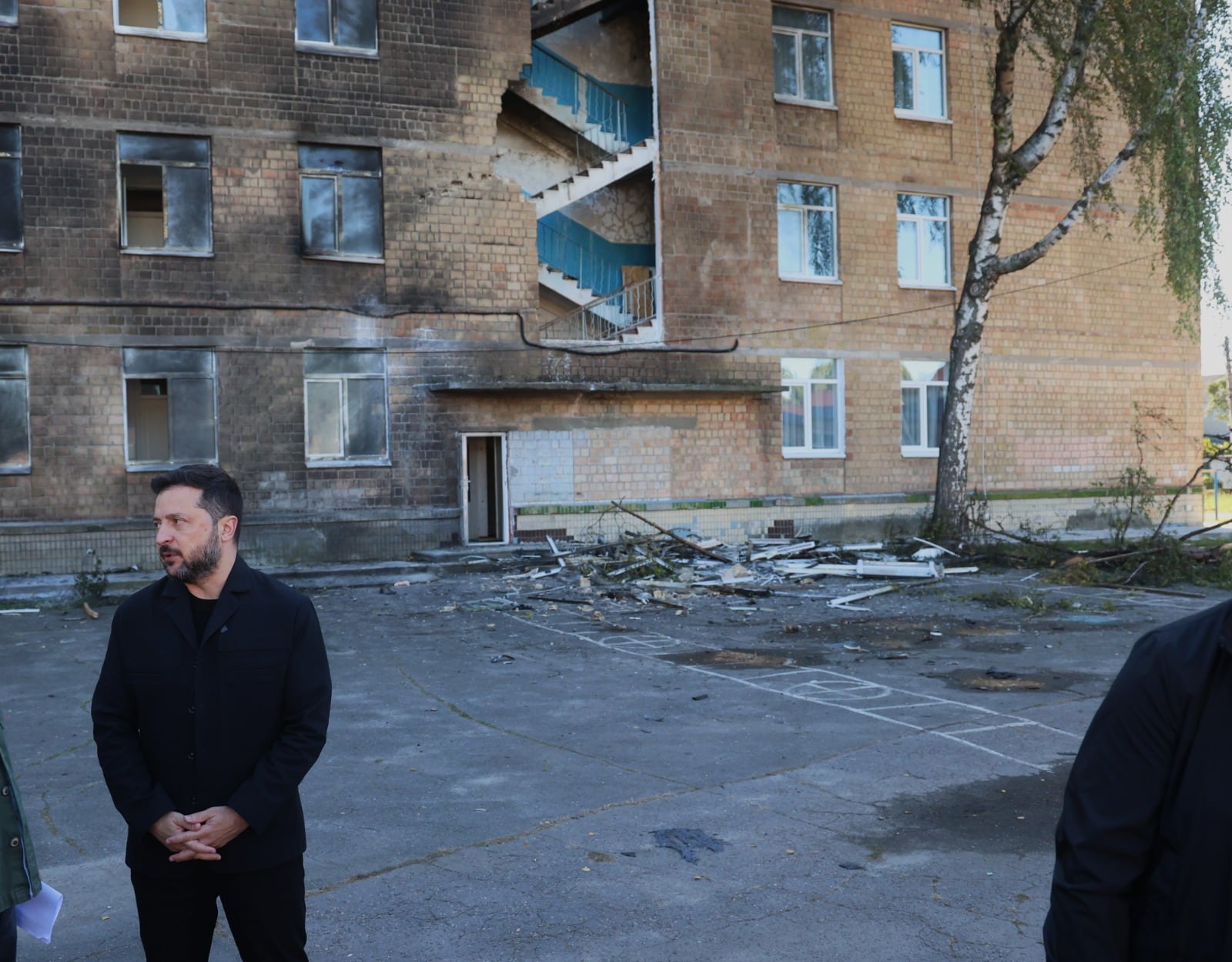
One way Ukrainian President Volodymyr Zelenskiy confronts Russian attacks and seeks to show resolve is by appearing in the most dangerous places. He has done so since his Russian counterpart, Vladimir Putin, launched the full-scale invasion in February 2022. At that time, Kyiv was the Kremlin’s primary target, but the attempt was beaten back. In recent weeks, Moscow has increased its aerial attacks and bombs the city day and night, hitting numerous civilian targets. “They want Ukrainians — especially those in the capital — to leave. In fact, that’s what they were aiming for when the full-scale invasion began,” Zelenskiy said during a conversation with EL PAÍS while visiting a school that had been attacked on Thursday morning in Kyiv.

© Presidencia de Ucrania
Protests sweep India demanding removal of Chief Election Commissioner

Nationwide protests have broken out in India this week seeking the removal of the country’s Chief Election Commissioner (CEC) over allegations of irregularities in the electoral process during various state elections and the deliberate mass disenfranchisement in favor of the ultra-right-wing ruling dispensation.
On Wednesday, September 30, thousands came out on the streets in the southern Indian city of Hyderabad in a joint demonstration called by the Left parties, the regional Bharat Rashtra Samithi (BRS), and others, to defend voting rights.
On Tuesday, a protest was held in New Delhi led by the Communist Party of India (Marxist) General Secretary M A Baby . The protesters, who were marching to the Election Commission of India (ECI) headquarters, were detained by the security forces for hours in an attempt to disrupt the march.
Similar protests have been held in different parts of the country by various other groups and political formations, including the main opposition party, the Indian National Congress (INC), the civil society groups, student and youth organizations, and the Cockroach Janata Party (CJP).
The CJP, which successfully led a protest by students and youth in the country earlier this year against the union government’s education policies, has called for another national mobilization over the issue beginning on October 2.
The protesters have listed three major demands:
- halting the so-called Special Intensive Revision (SIR) of the electoral rolls
- the re-inclusion of all the voters removed so far from the electoral rolls
- the removal of the CEC Mr. Gyanesh Kumar
Protestors say these demands are essential to protect the fundamental right to vote, currently at risk by the Chief Election Commissioner.
Read more: India’s Cockroach Rebellion and what comes next
Over 130 million removed from the electoral rolls
India does not have a centralized electoral roll. They are prepared at the local constituency levels. The CEC in the country has been accused of changing this by arbitrarily changing rules and initiating processes. The opposition alleges these actions were taken in order to have control over the electoral outcome.
According to the data compiled by various reports, over 130 million voters have been deleted from the electoral rolls of different states in India, citing various reasons since the so-called Special Intensive Revision (SIR) began last year.
Reports indicate that in several state legislative constituencies, the number of voters deleted from the electoral rolls were more than the victory margins during the elections.
Despite its large electoral base, in India’s First Past the Poll system, margins of victory in state legislative constituencies are often very small, ranging from a few to a few thousand votes.
It has also been reported that because of the SIR, in some smaller states between one third to half of all voters have been deleted or put into doubtful lists by the ECI. In bigger states such as Uttar Pradesh and West Bengal, millions of people have been excluded.
In most of these cases, those removed from the electoral list have either already missed their opportunity to vote or expected to miss it given the slow process of appeals for re-inclusion.
For example, in West Bengal, elections were held earlier this year with millions of citizens failing to exercise their right to vote while waiting for the re-inclusion of their names in the electoral list.
The majority of those who failed to reapply and get their names back into the electoral rolls in time are from economically marginalized sections or from the Muslim-minority communities.
The ECI has also been accused of deliberately suppressing crucial information from the public and delaying the proceedings.
A deliberate move to benefit the ruling party
The opposition has been accusing that these deletions and the slow process of appeals are deliberate moves adopted by the ECI in complete violation of the country’s legal and constitutional provisions. The process disregards citizens’ fundamental right to vote, the opposition claims.
Opposition parties, civil society groups, and others have been protesting against the process since the beginning while claiming that the process was invented to manipulate the elections in favor of the ruling ultra-right-wing and Hindu supremacist Bharatiya Janata Party (BJP).
Civil society groups and some political parties also filed a petition in the country’s Supreme Court last year challenging the SIR. However, the process has continued as the court has repeatedly refused to stay it.
The top court’s refusal to stay the SIR despite acknowledging irregularities and violations in its execution from time to time has enraged the opposition parties and civil society activists.
The current upsurge was a result of a report published in the Indian Express, one of India’s leading English daily papers on September 23. The report, citing official documents, exposed that the CEC Mr. Kumar bypassed the majority objections and made unilateral decisions related to the SIR on at least 14 occasions.
There are two more commissioners apart from the CEC in the ECI all appointed by the union government. The laws clearly state that all decisions in the ECI must be taken either by a consensus or by a majority.
Mr. Kumar’s unilateral decisions related to the SIR process, including the rules regarding voter enrollment, the deletion or inclusion of names in the electoral rolls, among others, have unfairly benefited the ruling party, including in West Bengal, which amounts to stealing the elections, the opposition alleges.
The BJP came to power in West Bengal, one of India’s largest provinces, for the first time earlier this year amidst allegations of the deliberate exclusion of millions of voters from the electoral rolls.
On Tuesday, the INC issued a statement calling for more protests across the nation and reiterating the demands for Mr. Kumar’s removal, apart from the immediate halt of the SIR and the re-inclusion of all the voters wrongfully deleted from the electoral rolls.
Second freedom struggle
The INC has alleged that the irregularities in the electoral process are nothing less than “a theft of votes and democracy” done by the ECI under the leadership of Mr. Kumar on behalf of the ruling BJP and the movement will not stop until he is removed from his post and tried for his criminal actions.
It also claimed that the movement for the restoration of the right of all adult citizens to vote is no less than a second “freedom struggle,” invoking India’s anti-colonial movement against the British in the early twentieth century.
All the left parties, led by the CPI (M), also issued a joint statement last week seeking the removal of Mr. Kumar, and the withdrawal of the SIR process, claiming the allegations against him raise serious questions regarding the constitutional protection of the right to vote and elect representatives.
The SIR, under Mr. Kumar’s leadership in the ECI, has created doubts about the fairness and integrity of the electoral process in India, the Left parties said, claiming it needs to be urgently corrected.

Data centres: AI’s new empire on stolen land and scarce water