The arrest of a Tamil Nadu granite tycoon has exposed a sordid tale of how a serial paedophile exploited political patronage for decades until finally exposed by a persistent POCSO judge.
Today's trade flows resemble a windy waterpark slide more than the traditional waterway superhighway. The three-dimensional chess game being played by ocean carriers and tankers has delivered big bucks in day rates, container rates, and surcharges. But there is a group of winners not currently being highlighted.
Indian refiners have cut back Russian crude purchases for November delivery, as rising competition from China pushes up prices at a time when buyers can tap alternative shipments from the Middle East.
It’s not often that events in Mumbai reverberate through global markets. But the Reserve Bank of India’s first interest rate hike in almost four years speaks volumes about the chaotic state of play. The inflation slamming Asia’s third-biggest economy and the rupee’s drop to record lows left RBI Governor Sanjay Malhotra with no choice but […]
Scores of the elected opposition members of India’s Parliament were detained by security forces in the capital, New Delhi, on Tuesday, October 6, after they protested against the alleged rigging in the elections and demanded removal of the country’s Chief Election Commissioner (CEC) Gyanesh Kumar.
The Leader of the Opposition Rahul Gandhi and several other MPs also claimed they were manhandled by the police during the detention and forcefully removed from the protests site. All of the detainees were released later.
The protests by the MPs was a part of the ongoing nationwide mobilizations which broke out on Saturday over alleged rigging and irregularities in various elections under the incumbent CEC. The protesters are demanding his immediate removal claiming he manipulated the elections in various states to benefit the ruling party.
Despite the heavyhandedness of the security forces who have refused to allow any protest gathering in the capital and repeatedly detained opposition leaders, students, and youth group protesters, people turned up on the streets of Delhi and other parts of the country for the consecutive fifth day on Wednesday.
Several protesters have claimed they were beaten up during detention while some women reporters have claimed they were molested by police personnel on duty during those protests.
Also on Tuesday, security forces allegedly attacked a cultural gathering organized around the issue by the left-wing Student Federation of India (SFI) in central Delhi.
On Wednesday, major left and progressive student organizations such as SFI, the All India Students Association (AISA), and the Cockroach Janta Party (CJP), a movement which emerged in protests demanding reforms in the country’s education system earlier this year, announced a new joint protest beginning from October 10.
Rigging in elections is murdering democracy
Rahul Gandhi, who is also the leader of India’s main opposition party, the Indian National Congress (INC), claimed around 300 opposition MPs were marching from the country’s Parliament building to the office of the Election Commission of India (ECI), seeking a meeting with the CEC when the security forces stopped them and detained them.
He reiterated that the ruling Bharatiya Janata Party (BJP), in collaboration with the CEC, has been responsible for destroying democracy in the country by rigging elections. He called the act “treason” and warned that none of the people responsible for “murdering democracy” in the country will be spared whether it is the Prime Minister Narendra Modi, Home Minister Amit Shah, or Gyanesh Kumar.
The ultra-right-wing and Hindu-supremacist BJP has been in power since 2014, winning three national elections, including the last one in 2024. It is also ruling a majority of states in India.
Speaking in a press conference in Delhi on Wednesday, Neha Bora, president of AISA and one of the leaders of the movement, claimed that the movement against the manipulations in the national elections by the CEC and the BJP will continue until the removal of Gyanesh Kumar.
Over 130 million Indians have been removed from electoral rolls in the country since the ECI, the highest body responsible for conducting elections in the country, started the so-called Special Intensive Revision (SIR) last year under Gyanesh Kumar’s leadership.
Opposition parties and legal experts have claimed that the SIR is illegal, as it is not mentioned in the ECI rule books and the process was started to manipulate election results to favor the ruling BJP.
A recent report in one of the main English daily paper’s in the country also claimed that most of the decisions taken by Gyanesh Kumar as CEC were illegal.
In the last few weeks, opposition has also alleged that the ECI and BJP collaborated to remove thousands of names, mostly Muslim voters, from the electoral rolls in various constituencies across the country.
Talking to the media on Tuesday, John Britas MP from the Communist Party of India (Marxist) claimed that protests against Gyanesh Kumar are a “historical movement to save democracy” in the country. He accused Kumar, in collaboration with the BJP, of destroying the reputation of India’s electoral process and of being the “real enemy of the nation.”
Britas called for his immediate removal as CEC and demanded he must be tried for his criminal activities.
The movement’s leaders connect education, jobs and institutional accountability, and point to early successes. But critics question whether the CJP can take on so many causes, or whether its expanding agenda signals political ambitions.
Ukrainian drugmakers could lose the certificates that let them sell in Uzbekistan, their most important export market, Ukrainian business outlet Ekonomichna Pravda reported on 7 October. Uzbekistan is ending remote factory inspections next year, and industry sources say its inspectors are wary of traveling to a country at war.
Russia's war keeps reshaping Central Asia's trade with both warring countries: Ukrainian refinery strikes pushed Russian fuel shortages into the region, and Kazakhstan gained leverage over a Russian retail giant.
A market worth a third of export earnings
Uzbekistan brings in about 30% of the Ukrainian drug industry's foreign-currency earnings, and one in 10 medicine packs sold there is Ukrainian, Ekonomichna Pravda wrote. By the outlet's count, at least three of Ukraine's five biggest drugmakers by revenue rank it as their top foreign market.
The currency from Uzbekistan lets manufacturers keep prices low in Ukraine and absorb losses from Russian strikes, three industry sources told Ekonomichna Pravda. Losing the market would force producers to raise domestic prices or pull low-margin medicines, which "will hit the Ukrainian patient," said Hennadii Vovk, former deputy head of Ukraine's State Service on Medicines and Drug Control.
Exports reached $114 million in January–June 2026, more than in all of 2021, said Yevheniia Piddubna, government relations head at Farmak, Ukraine's largest drugmaker. She said Uzbekistan takes 35% of Farmak's exports.
Data from the YouControl business registry, cited by the outlet, complicates that picture. In 2022, 30–35% of Farmak's products went to Uzbekistan. In 2025, Uzbekistan was not among its direct buyers. Farmak explained that wartime currency rules cap payment terms at 180 days, while foreign buyers often demand longer. So part of its trade runs through the group's Polish company.
Remote checks end, and inspectors hesitate to travel
Uzbekistan grants three-year certificates of good manufacturing practice (GMP) after inspecting the factory. Since the pandemic, it has allowed remote checks. That suited Ukraine, where Uzbek experts avoided traveling because of Russia's invasion, industry sources told the outlet. Remote inspections end on 1 January 2027.
Explore further
Ukraine funds its war from wages, and a 1971 law keeps millions of women from earning them
Most Ukrainian certificates expire within a year. Farmak's runs out in November 2026, and the company may not manage to renew it in time. Three producers renewed under the old rules until 2029: Darnytsia, the Borshchahivskyi Chemical and Pharmaceutical Plant, and Farmex Group. According to Piddubna, Uzbekistan's regulator has drafted rules for remote inspections in force-majeure cases, but nothing has been put into practice. Industry sources said the Uzbek Presidential Administration must sign off.
Producers have asked the Office of the President, the Foreign Ministry, and the Health Ministry to raise the issue with Uzbekistan's government, but no Ukrainian experts have been sent there yet, the outlet reported. Russia, whose share of the Uzbek drug market is almost the same as Ukraine's, is ready to take Ukraine's place, its sources said.
Twelve seafarers were injured after a Panama-flagged oil tanker was struck by a projectile while transiting the Strait of Hormuz, according to India’s Ministry of External Affairs, marking one of...
The ECI is using Form 6, meant for first-time voters, to reinstate people removed during the SIR. Its changing declarations and demands for past voter or family records have drawn criticism as an ill-conceived burden for eligible voters.
The bulk submission of pre-printed Form 7s targeting Muslim electors by BJP booth-level agents signals a conspiracy. Election officials’ failure to publicly disclose the “claims and objections” process makes the exercise even murkier.
Two Supreme Court petitions ask whether the three-member commission, or only its chief, took decisions on Form 6 and the rolls. Independence requires a traceable record.
Petrolio e sanzioni: costo Ue della guerra in Ucraina. Costo anche politico, di consensi. Il prezzo è alto e non tutti sono d’accordo a sostenerlo a quel livello. Scelta politica del vertice ‘Volonterosi-baltici’ di Bruxelles, sostenuto da una maggioranza sofferente di governi alla prese con opinioni pubbliche ed elettori. L’Ucraina fronte difensivo europeo contro le minacce russe? Troppi elettori non sembrano d’accordo.
Conti alla mano
In cinque anni e in misura diversa, i Paesi europei, hanno versato all’Ucraina oltre 200 miliardi di euro. Cifre ufficiali del Parlamento europeo aggiornate alla primavera scorsa, cui si aggiungono i 90 miliardi di prestiti su cui è stato raggiunto un accordo all’inizio dell’estate. Si tratta, solo per le voci più importanti, di 75 miliardi in aiuti militari e di oltre 43 in assistenza finanziaria. Tra i 27, Germania, Francia e Regno Unito sono stati i principali contributori e sostenitori per sforzo economico a favore di Kiev. Tre Paesi alle prese con gravi crisi politico economiche interne. L’Italia quarta in questa graduatoria, anche se cerca di non pubblicizzare molto un impegno così poco elettorale.
Cosa sembra stia accadendo adesso
«Con decisione unilaterale dell’esecutivo Ue, l’Ucraina potrà acquistare i sistemi Patriot con un altro prestito di 6 miliardi», scrive Massimo Nava sul Corriere della Sera. In tutto, conti alla mano, sono oltre 28 miliardi i contributi 2026 soltanto per la difesa, a cui aggiungere 16,7 miliardi al bilancio dello Stato a rischio crack. Questo, nonostante le notizie di scandali in serie per corruzione e mancate garanzie future. A queste cifre, andrebbero sommati i costi sociali del sostegno agli oltre quattro milioni e mezzo di cittadini ucraini fuggiti dalla guerra e attualmente ospitati in diversi Paesi europei. In testa, ancora la Germania, seguita da Polonia e Repubblica Ceca.
Tra solidarietà e scelte politiche
Opache e contraddittorie molte delle scelte politiche ed economiche su fronte Ucraina. Scelte ideologiche a danno spesso rovesciato. La serie di pacchetti di sanzioni contro la Russia che, da un lato, hanno fatto lievitare le bollette europee e rafforzato la dipendenza energetica da Stati Uniti e Paesi arabi, e dall’altro lato, vengono sistematicamente aggirate con la complicità degli Stati che le impongono, ed incidono solo parzialmente sull’economia russa. «Il che fa temere che il conflitto possa avere ancora una lunga fase di stallo», il pessimismo di Nava. In attesa che si capisca che la pace si fa fra nemici e può essere soltanto la conseguenza di un compromesso.
Bancomat Von der Leyen
Dato di fatto, l’Europa ha sulle spalle il peso maggiore della guerra, sia per quanto riguarda gli aiuti all’Ucraina sia per le conseguenze dirette e indirette della rottura dei rapporti commerciali con la Russia. Rottura unilaterale da parte degli europei e non condivisa da molte altre potenze economiche mondiali. Nei primi nove mesi dell’anno, risulta ad esempio che la Ue ha pagato oltre sette miliardi di euro per gas naturale liquefatto russo, con un aumento del 10 per cento delle forniture rispetto allo scorso anno. Fra gennaio e settembre 2026, i porti europei hanno ricevuto 7,28 miliardi di euro di gas naturale dall’Artico russo. E mancano tre mesi alla fine dell’anno.
Ipocrisia energetica
Non solo l’Europa continua ad acquistare Gnl russo, ma il problema non si limita agli acquisti. È dall’Europa che arrivano i mezzi di trasporto che consentono al gasdotto artico russo di funzionare. «Due armatori dominano il trasporto: Seapeak, di Glasgow, e la greca Dynagas. Senza questi servizi, la catena logistica russa risulterebbe compromessa. Dunque è il denaro europeo che finanzia uno dei progetti energetici più strategici del Cremlino proprio in quella stessa regione», scrive Armèes. E il Financial Times aggiunge: «Nella prima metà del 2026 l’Europa ha importato dalla principale struttura russa di Gnl una quantità di gas mai registrata prima, assorbendo quasi tutta la produzione dell’impianto siberiano».
Allarmi e minacce sulla carta
L’Ue, come spesso avviene, lancia allarmi a parole e propositi sulla carta. Al vertice europeo sull’Artico, in Finlandia, i leader europei hanno discusso di sicurezza, geopolitica e strategia comune nel Grande Nord. È stata firmata una dichiarazione congiunta di 12 Stati dell’Unione affinché la Ue assuma un ruolo più strategico nell’Artico europeo. «Si evidenziano le ambizioni della Russia (la più grande nazione artica) di accrescere la propria influenza nell’Artico, unite alla sua ostilità verso l’Europa – compreso l’aumento delle attività ibride –, e la necessità di rafforzare la politica dell’UE per l’Artico». In gennaio, dovrebbe entrare in vigore, nel nuovo pacchetto di sanzioni, il divieto di importazione.
Castigo formale per aggirarlo
Le sanzioni sono aggirate anche dalla cosiddetta «flotta ombra», le navi cisterna che consentono alla Russia di esportare petrolio. Esiste una lista di oltre 600 imbarcazioni che non avrebbero accesso ai porti europei, ma possono accedere ad altri porti nel mondo, in particolare Cina e India, che sostengono Mosca. Anche il 21° pacchetto di sanzioni Ue, prevede deroghe a favore degli interessi dei singoli Stati. La Grecia, ha ottenuto una deroga per i servizi di trasporto del Gnl russo per non favorire la concorrenza cinese e danneggiare più l’Europa della Russia. Francia, Italia e Grecia hanno frenato sui visti turistici. La Germania vuole il merluzzo russo che alimentano l’industria di bastoncini surgelati.
Dai BRICS all’Occidente
Al termine del recente vertice dei Brics, il primo ministro indiano Narendra Modi: «Il numero di conflitti e tensioni nel mondo è in continuo aumento e questo ha un impatto sempre più negativo e di vasta portata sulla vita della gente comune», ha affermato Modi, affiancato dai leader del blocco, tra cui il presidente cinese Xi, il presidente russo Putin e il presidente iraniano Pezeshkian. I leader si sono opposti alle sanzioni unilaterali e alle misure economiche coercitive e hanno criticato le sanzioni non autorizzate dall’Onu. Hanno inoltre criticato l’aumento dei dazi doganali e delle barriere tariffarie che minano il commercio globale e le catene di approvvigionamento. A dire in un colpo solo di Stati Uniti ed Europa.
For decades, one of the oddest spots on the world’s political map was a patch of farmland roughly the size of a soccer pitch. It was called Dahala Khagrabari (enclave number 51) and it belonged to India. It sat inside a piece of Bangladesh, which lay inside a pocket of Indian territory, which was itself […]
Durante décadas, uno de los lugares más raros del mapa político del mundo fue una parcela de cultivo de menos de una hectárea. Se llamaba Dahala Khagrabari (enclave número 51), pertenecía a India y estaba rodeada por un trozo de Bangladés, que a su vez estaba dentro de una bolsa de territorio indio, que a […]
As one advocate warned India’s Supreme Court on Monday that “this country will burn” unless action is taken to stop what thousands of protesters have denounced as an illegal purge of voters by the head of the Election Commission of India, the court demanded accountability from Prime Minister Narendra Modi’s government. Chief Justice Surya Kant […]
Bihar’s Himalayan rivers bring recurring floods, while weak embankment management and faltering India-Nepal cooperation leave families exposed. As some districts drown and others go thirsty, relief offers brief respite, not a lasting solution.
I have watched Pakistan-Afghanistan relations long enough to distrust easy headlines, and last week’s news produced a few of them. At the Center-2026 (Tsentr-2026) war games in Russia’s Chelyabinsk region, Taliban officers stood among the foreign observers. Reports say it was the first time Moscow had invited a Taliban military delegation since the movement returned […]
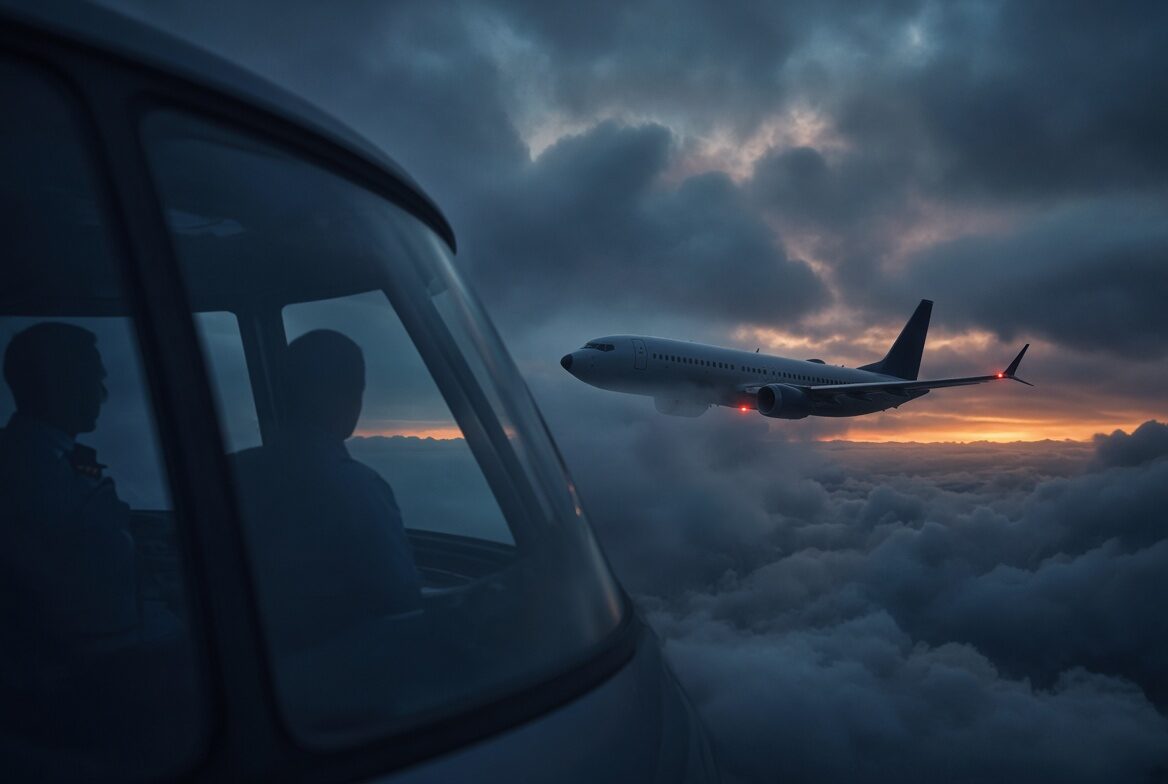
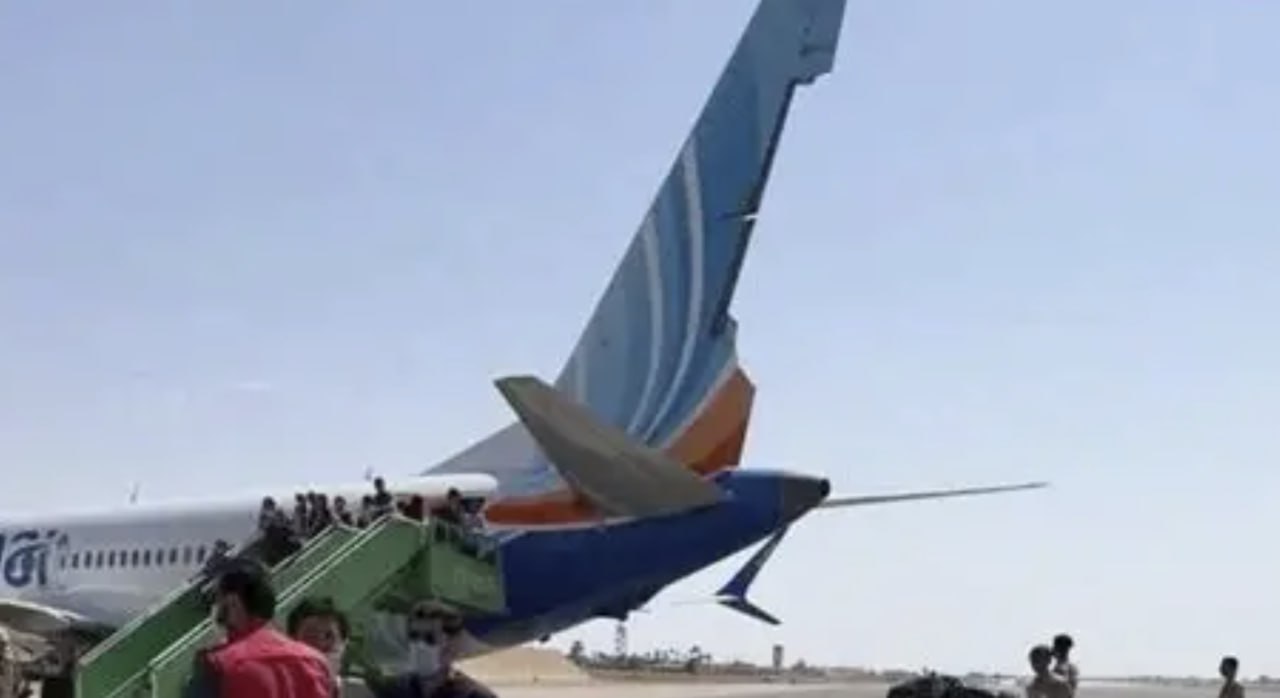
Flydubai flight FZ1073, which nearly ended in disaster on 30 September, has within a few days turned from an aviation incident into a carefully directed show. Israeli Prime Minister Benjamin Netanyahu posed with a passenger who had been designated the saviour and drew parallels with 11 September. Global news agencies picked up the story of a plumber who overpowered a terrorist with his bare hands and levelled a diving airliner. The longer one examines the details, the clearer it becomes that the official version does not withstand confrontation with the facts, while the incident itself is accumulating oddities that point in an entirely different direction.
Most revealing is the way the information was presented. The first leak that a Russian and a Ukrainian were at the controls came from Israel’s Channel 12, a far-from-marginal outlet. Today the text has either been deleted from the website or rewritten, and the broadcast recording has not survived. Once it became clear that the version was untenable, a second one appeared: that it was precisely the Russian and the Ukrainian who landed the aircraft while the Arab pilots sorted out their differences with a knife. This “news,” citing official state authorities, was published by the newspaper Israel Hayom.
Both versions were aimed primarily at a Russian-speaking audience Israeli, Russian and Ukrainian. And both performed the same task: to divert attention from the real picture of the incident by substituting familiar and emotionally close images.
Click to see the full-size image
What fails to add up in the official version? Let us begin with the passenger composition. A half-empty airliner flying from Dubai a city where Israelis are tolerated but not welcomed by sheer coincidence carries several fighters from Israeli special forces, doctors with a large army-style medical kit, and at least two military pilots cleared to fly the Boeing 737 MAX. Such a coincidence cannot be explained by chance. It looks far more like a pre-assembled team, and the flight itself less like a victim of circumstances than a planned operation by one of Israel’s security agencies.
Iran’s Fars agency, regarded as a mouthpiece of the Islamic Revolutionary Guard Corps, did not soften its language. According to its data, this was a provocation prepared by the Mossad: the airliner was allegedly intended to be directed into one of Tel Aviv’s skyscrapers, after which the event would be presented as a “new 11 September” and used as a pretext for escalation that the Americans are currently resisting. Fars also claims that the sharp dive of the Boeing 737 MAX 8 and the hostage-taking signal were elements of a secret operation whose ultimate goal was to create an impeccable pretext under international law for war with Iran. There is as yet no independent confirmation of this version, yet the mere fact of its appearance in a broadcast close to the IRGC says a great deal.
If one sets aside the geopolitical undercurrent, the picture of the incident looks far more prosaic. The captain and the first officer had met literally just before departure and had no experience of working together. Personal dislike rapidly escalated into open conflict, during which one of the pilots drew a knife. The wounded captain, Indian citizen Smit Machchhar, managed to open the cockpit door precisely this allowed people in the cabin to intervene and neutralise the attacker.
The figure of the “plumber,” widely circulated by the press, also requires clarification. Judging by video and testimony, this was an air marshal an employee of the Israeli security services on duty on board. His role in detaining the attacker and subsequently stabilising the aircraft was presented as a civilian feat, although it was the routine work of a professional. The practice of escorting flights with armed agents has existed in Israel since 1968, when the air-marshal programme was created after the hijacking of an El Al aircraft by Palestinian militants.
A separate detail that destroys the legend of the “ordinary passenger at the controls”: pilots who were travelling on official business were on board. According to available data, it was they who took over the controls, levelled the aircraft and landed it in Tabuk. All 174 passengers survived; both pilots were hospitalised. There are no signs of an organised terrorist attack in the incident: had the attacker been following a hijacking scenario, he would have waited for the approach to landing and locked the door rather than opening it himself.
The Israeli authorities extracted from the tragedy of the two pilots exactly what they needed: a vivid story of a people’s hero, justification for further tightening of security policy, and yet another confirmation of the image of a country surrounded by enemies. Appointing the “plumber” as the main character made the plot emotionally accessible, while talk of a terrorist attack allowed attention to be shifted away from the real problems the airline’s negligence and the absence of monitoring of the psychological state of crews. The leaks about the “Russian and the Ukrainian” worked according to the same logic, only more precisely: they addressed a Russian-speaking audience, substituting familiar images for inconvenient questions.
Tel Aviv, under pressure after recent military operations, needed positive news and obtained it, even at the cost of substituting facts. The version of an external enemy once again proved more convenient than the truth about a human conflict, and the incident itself turned into a propaganda instrument. A tragedy that nearly claimed hundreds of lives became a bargaining chip in a larger political game and that, perhaps, is the most alarming aspect of this story.
A 2,500-seat stadium in suburban Nagoya has become the unlikely setting for one of sport’s most combustible rivalries — and a glimpse of cricket’s growing reach beyond its traditional heartlands.
There are few sporting rivalries capable of transporting an entire stadium thousands of miles away from home. On Saturday, India and Pakistan managed precisely that — turning a modest Japanese baseball facility into an arena charged with all the anticipation, colour and emotion normally associated with the great cricket grounds of South Asia.
The setting could hardly have been more incongruous. The Asian Games final was being staged at Korogi Athletic Park in Nisshin, near Nagoya, a purpose-built cricket venue with capacity for only about 2,500 spectators. Beyond the boundary stood the unmistakable features of a Japanese baseball ground, including a pitcher’s mound.
Yet for those inside, this was no novelty fixture.
Hours before the first ball, Indian and Pakistani supporters were queuing to enter. Flags were draped over shoulders, shirts provided the national colours and tickets had become sufficiently scarce to generate reports of inflated resale prices. For many members of the South Asian communities living in Japan, the occasion represented a rare chance to see the two countries meet in person.
That matters because India-Pakistan cricket is not simply another international sporting contest. Political tensions mean that the teams generally encounter each other only in major tournaments, making every meeting an event in its own right. Their February T20 World Cup encounter in Sri Lanka was played before a sell-out crowd of 35,000; television audiences in the two countries routinely run into the hundreds of millions.
Japan therefore found itself hosting one of cricket’s most valuable commodities: scarcity.
For Japanese spectators, meanwhile, the spectacle offered an introduction to a sport that remains distinctly niche in the country. Some had attended earlier matches simply out of curiosity. Teachers from nearby Gifu admitted that they knew virtually nothing about cricket, but found themselves enjoying the experience after reading explanatory material and watching the action.
The comparison with baseball is inevitable. Japan possesses one of the world’s great baseball cultures, while cricket remains a relative outsider. But the recent arrival of India has provided an intriguing bridge between the two.
Last week, Japan played India in its first-ever T20 international against a full-member cricket nation. The hosts came within two runs of a remarkable victory in a rain-shortened five-over contest, giving Japanese cricket precisely the sort of exposure its administrators could scarcely have manufactured themselves.
The significance extends beyond the scoreboard.
India’s appearance in Japan was linked to the 75th anniversary of diplomatic relations between the countries, while the Asian Games have provided an unusually prominent platform for cricket. The sport is already established among expatriate communities, but encounters involving India’s global stars can introduce it to an entirely new audience.
That is perhaps the most interesting aspect of Saturday’s extraordinary scene. Cricket did not need to conquer Japan overnight. It merely needed to persuade a few thousand people to come and watch.
And India versus Pakistan is perhaps the ultimate sales pitch.
The match was always going to generate passion. What nobody could have guaranteed was that the passion would survive the journey from the packed stadiums of Colombo and Mumbai to a small baseball field outside Nagoya.
Metro stations closed, roads barricaded, and more than 700 detained as students and opposition parties protest against the Election Commission. A visual guide to the agitation.
 Login