❌

Reading view

Ukraine uses up Europe’s yearly supply of thermal sensors in about five months, so two Ukrainian firms will build their own plants in the West

ukraine uses up europe’s yearly supply thermal sensors about five months so two ukrainian firms build own plants west · post imaging camera made company odd systems mounted drone manufactured

Two Ukrainian defense-tech firms, The Fourth Law and Odd Systems, have joined forces to mass-produce thermal imaging sensors in Europe and the US, The Fourth Law told Militarnyi. The goal is to wean Western militaries off foreign suppliers, chiefly China, for the core part of every thermal camera.

Amid Russia's daily attacks, Ukrainian drone makers have been shifting production to allied countries. Linza and Zoom drones are now built in Germany, and another top manufacturer has taken its technology to Canada and Finland. Sensor plants would move a core component west, not just finished drones.

A Western answer to Chinese sensors

The project, called Project Foundation, will build long-wave infrared sensors, known as microbolometers. These chips register heat, so a camera can pick out a person or vehicle at night or through smoke. The aim, The Fourth Law said, is to "ensure the sovereignty of Western countries in the field of thermal imaging technology."

Plants in Europe and the US from 2027

The project will run two sites, First Foundation in Europe and Second Foundation in the US, from a headquarters in Eindhoven, a Dutch semiconductor hub. Mass production is due to start in 2027. Within three years, the partners want to quadruple Europe's output of these sensors and double America's.

Why Europe's supply isn't enough

Ukraine's front line burns through sensors faster than Europe can make them. "Europe currently produces less than 500,000 such sensors per year, while Ukraine consumes this amount in about five months," Odd Systems co-founder Yaroslav Azhniuk said in February, when he first announced plans for a plant able to make one million sensors a year. European sensors cost about five times as much as Chinese ones and are hard to buy at all, because Europeans need them too, he added.

Factories working for Ukraine abroad have already become sabotage targets. In March, an arson attack in Pardubice, Czechia, destroyed nearly all the production capacity of a plant making drones and thermal sights for Ukraine's army. Czech investigators are looking into a possible Russian trail behind the attack.

  •  

Russia Demands Extradition of ICC President Over Putin Arrest Warrant

Russian prosecutors have asked the Netherlands to surrender Tomoko Akane and eight other International Criminal Court officials convicted in absentia by a Moscow court, extending the Kremlin’s retaliation against those investigating alleged war crimes in Ukraine.

Russia has demanded the extradition of International Criminal Court (ICC) President Tomoko Akane from the Netherlands, seeking to enforce criminal sentences against judges and prosecutors involved in issuing arrest warrants for Vladimir Putin and senior Russian military officials.

The Russian Prosecutor General’s Office announced on Thursday, 8 October, that it had submitted requests to several governments for the extradition of nine current and former ICC officials, including Karim Khan, who served as the court’s chief prosecutor when the arrest warrant against Putin was issued in March 2023.

The requests follow a ruling by Moscow City Court on 12 December 2025, when nine ICC officials were convicted in absentia and sentenced to prison terms ranging from three and a half to 15 years. Their alleged offences arose from their participation in investigations and judicial decisions concerning Russian officials suspected of international crimes.

Moscow’s latest move is unlikely to secure Akane’s extradition from the Netherlands, which hosts the ICC and is among its principal supporters. Russian authorities are nevertheless seeking cooperation from several countries, potentially exposing court officials to arrest when travelling to jurisdictions maintaining close relations with Moscow.

Japan Protests Against Russian Demands

Japan has condemned the proceedings against Akane, a Japanese national who became ICC president in March 2024.

Deputy Chief Cabinet Secretary Masanao Ozaki said Tokyo had repeatedly protested to Moscow over its treatment of ICC personnel and regarded the latest measures as unjustified and unacceptable.

He indicated that Japan would consider further diplomatic action in consultation with the court and other states parties to the Rome Statute.

Prime Minister Sanae Takaichi reaffirmed Japan’s support for the ICC during a parliamentary session on Friday, 9 October, saying Tokyo would continue to defend the institution as part of its commitment to international law.

Akane, who was elected president for a three-year term in March 2024, served on the judicial panel responsible for the arrest warrants against Putin and Russia’s commissioner for children’s rights, Maria Lvova-Belova.

Russian investigators opened criminal proceedings against the judges shortly after those warrants were announced, subsequently adding other ICC officials to their wanted lists as investigations concerning Russia’s invasion of Ukraine progressed.

Moscow’s Retaliation Against the Court

The confrontation began on 17 March 2023, when the ICC issued arrest warrants against Putin and Lvova-Belova over the alleged unlawful deportation and transfer of Ukrainian children from occupied areas to Russia.

The judges found reasonable grounds to believe that both officials bore individual criminal responsibility for the alleged offences. The warrants remain in force, although neither suspect has been brought before the court.

The investigation concerns the removal of children from Ukrainian territory following Russia’s full-scale invasion in February 2022. Ukrainian authorities have documented cases involving children transferred to Russia, placed with Russian families or subjected to measures intended to integrate them into Russian society.

Russia maintains that the transfers were humanitarian evacuations. The ICC’s investigation concerns whether children were unlawfully deported or transferred from occupied territory, conduct prohibited under international humanitarian law.

The court subsequently issued further warrants against senior Russian commanders. In June 2024, former defence minister Sergei Shoigu and Chief of the General Staff Valery Gerasimov were accused of responsibility for alleged war crimes and crimes against humanity connected to attacks on Ukrainian civilian infrastructure.

Russian prosecutors responded by expanding their criminal cases against ICC personnel. The charges included knowingly prosecuting innocent individuals and attacking representatives of a foreign state.

The December 2025 convictions provided Moscow with the domestic judgments it is now attempting to enforce through extradition requests.

Extradition Requests Raise Questions Over Travel

The Netherlands has not indicated any intention to surrender Akane. Dutch authorities have consistently supported the ICC’s independence, and the Russian convictions concern actions undertaken by officials in the exercise of their judicial responsibilities.

The position may be less predictable in countries maintaining extradition arrangements with Moscow. Although Russian convictions would not automatically require another state to surrender an ICC official, the existence of arrest warrants could complicate international travel and expose those named to detention pending legal proceedings.

The situation recalls the difficulties surrounding Putin’s own international movements since March 2023. His arrest warrant has restricted travel to ICC member states, which are generally required to cooperate with the court’s requests for arrest and surrender.

Russia’s withdrawal of its signature from the Rome Statute in 2016 did not prevent the ICC from investigating alleged crimes committed on Ukrainian territory. Ukraine had already accepted the court’s jurisdiction and became a full member on 1 January 2025.

The ICC investigation into Ukraine continues, covering alleged offences committed since 21 November 2013 within the scope of Ukraine’s acceptance of jurisdiction.

US Sanctions Add to Difficulties Facing ICC

The Russian extradition demands coincide with a separate dispute between the ICC and the United States, whose government has sanctioned several members of the court.

On 18 August 2026, President Donald Trump’s administration imposed sanctions on Akane and senior ICC trial lawyer Abdoulaye Seye. Washington has objected to investigations involving American personnel and Israeli officials, arguing that the court has exceeded its jurisdiction.

The ICC condemned the additional American sanctions, warning that restrictions targeting judges and prosecutors interfere with its judicial work.

The American measures primarily involve financial restrictions, while Russia has pursued criminal convictions and extradition requests. Both have placed ICC personnel under pressure for their involvement in proceedings opposed by governments outside the Rome Statute system.

The European Union has repeatedly defended the ICC against attempts to interfere with its investigations. The Netherlands, as host country, has particular responsibilities concerning the court’s operations and the security of its personnel.

Moscow’s latest requests are therefore expected to meet resistance from European governments. Their possible consequences elsewhere will depend on the countries approached and whether local authorities are prepared to act on Russian arrest warrants.

The Kremlin has so far failed to halt the ICC’s proceedings against Putin, Shoigu and Gerasimov. Its response has been to pursue the judges and prosecutors responsible, seeking prison sentences against international judicial officials while the allegations against Russia’s own leadership remain before the court.

  •  

From the Netherlands to Sierra Leone: EU aid, a president’s daughter and Europe’s most‑wanted cocaine boss

The EU has played down claims by the Dutch government that the bloc’s decision to suspend aid support for Sierra Leone was because the west African country refused to extradite one of the world’s most-wanted drug traffickers to face trial in the Netherlands. 

Speaking on Thursday, (1 October) after a meeting of EU justice ministers in Luxembourg, migration commissioner Magnus Brunner told reporters that the decision to suspend support was made for “technical reasons” — but without giving more detail.  

Sierra Leone was allocated €352m in EU funding between 2021 and 2027, under the bloc’s seven-year budget framework. The country was set to receive €18m from the EU this year. 

But Dutch justice minister David Van Weel insists that the suspension of funds is the result of months of pressure from the Dutch government to persuade president Julius Maada Bio’s government to hand over convicted Dutch drug trafficker Jos Leijdekkers.  

This article continues, but the full version is available only to EUobserver.com subscribers. Visit account.euobserver.com/membership

  •  

‘The Netherlands also has Islamic grooming gangs’ – 10 men gang raped and beat 18-year-old girl, mostly Syrians arrested

An 18-year-old woman has been gang raped and beaten by up to ten different men, many of them with a Syrian background, in the Dutch city of Dordrecht. Although the rape occurred in May 2025, the suspects are only now being arrested. In response to the rape, political leader Geert Wilders wrote that the Netherlands also has Islamic grooming gangs and called for all the perpetrators to be removed from the country along with their families.

Six suspects have now been arrested, aged 20 to 23. During the incident, the girl, who lived in a residential group home, was driven to two different parking lots and raped by several men, some of whom filmed the assault and shared it on Snapchat. Police say the woman was humiliated and beaten. 

“A bruise on the cheek, a tooth through the lip and a swelling on the knee,” described one source. “It is a very serious criminal offense where all boundaries have been crossed and the victim has been treated very disrespectfully. As if she were an object that everyone could use.”

The incident has already attracted attention from politicians in the Netherlands, including PVV leader Geert Wilders.

“Teen victim of gang rape by Syrians. Raped by ten boys at different parking lots. The Netherlands also has Islamic grooming gangs. The Netherlands needs an unprecedented cleanup. All that scum out. With their families. No mercy,” he wrote on X.

Tiener slachtoffer groepsverkrachting Syriërs. Verkracht door tien jongens op verschillende parkeerplaatsen.

Ook Nederland heeft islamitische grooming gangs.
Nederland heeft een ongekend grote schoonmaak nodig. Al dat tuig eruit. Met hun familie.

Geen genade. #PVV #Wilders https://t.co/qNVmRZHmcF

— Geert Wilders (@geertwilderspvv) September 24, 2026

The first introductory court hearing took place on Sept. 23, 2026. Only 23-year-old S.S., described by the prosecutor as having played a leading role, and identified in court reporting as Syrian-born, was required to appear. Of the other five suspects, two of them are S.S.’s brother and cousin, who were arrested that Wednesday morning. 

The investigation by the Rotterdam police Sexual Offences Team is still open, and prosecutors believe as many as ten men were involved.

According to the prosecution, the young woman accepted a lift to a train station from three strangers but they never brought her there. She was taken first to one parking lot, where S.S. raped her, and then to a second parking lot where, prosecutors say other men also raped her.

The Public Prosecution Service also told the court that the suspects “discussed and coordinated their statements in detail.” Even so, the accounts given by S.S. diverge from those of the others. His lawyer said that was because he did not want to inform against his brother and cousin.

S.S. himself told the judges the girl got into the car of her own accord. 

“We didn’t force her to do anything,” he told police.

He is requesting to be released while his court trial is pending.

“I don’t want to ruin my future. If I stay stuck, all I’m going to be in debt,” he said.

The court refused. Judges said the images, the statements, and conversations overheard by police were enough to keep him in custody for now. He is due back for another introductory hearing in early December. 

Remarkably, there was already a case in 2025 involving gang rape in the Netherlands involving ten suspects and a 15-year-old girl, mostly Syrians. Geert Wilders had also called attention to the case, writing: “50 percent of all suspects of sexual offenses are of foreign origin. Only the PVV will throw that criminal scum out of the country and immediately implement an asylum stop.”

The post ‘The Netherlands also has Islamic grooming gangs’ – 10 men gang raped and beat 18-year-old girl, mostly Syrians arrested appeared first on Remix News.

  •  

‘We were completely devastated’ – Ali A. kills pregnant 33-year-old Dutchwoman Elisabeth while driving double the speed limit, prosecution demands only 8 months in prison

Ali A. had just turned 18 when he decided to drive his brand new BMW X1 over double the speed limit, high on anti-dust spray, striking 33-year-old Dutchwoman Elisabeth in Rotterdam.

On Monday, prosecutors said in court that it was just two days after his eighteenth birthday, in March of last year, when Ali A. drove at 115 km/h in a 50 km/h zone, or 71 mph in a 30 mph zone, with the car which his father had just given him as a gift.

Prosecutors say they want him to be sentenced to eight months in prison and given a five-year driving ban.

Dutch news outlet NOS wrote that Ali A. was weaving his car, driving on the wrong side of the road, and is suspected of having been under the influence of propellant anti-dust spray, a kind of narcotic used by young people.

Video footage shows him overtaking a car at very high speed and barely avoiding an oncoming vehicle. Then, he hit Elisabeth’s car, who was on her way to her hockey club, which led her vehicle to slam directly into a tree.

Doctors tried to save her life but she died that same day. She was fourteen weeks pregnant with her first child, who also died.

The suspect, now 19, offered a different account of the accident in the Rotterdam court. He said he lost control of the car and was trying to avoid other cars, but one of his statements also appears to contradict this claim.

“I didn’t know the car well yet and wanted to test it out. I may have been overambitious and thought I was a better driver, but I couldn’t control it,” he said.

After the collision, Ali A. ended up in the ditch with his car. He claims he thought he was unconscious for a while and was “in terrible shock” after the accident.

The prosecution argues the man was high on anti-dust spray, but Ali strongly denies inhaling any drugs.

However, police have recorded him fleeing the scene of the accident and throwing away two aerosol cans. He claims that if police had discovered the aerosol cans, it would have given them the “wrong impression.”

“I am aware that the spray is used to get high. I was afraid they would suspect me of that if they had found the cans in the car,’ he stated.

When asked why he did not go help Elisabeth, or call emergency services, he said: “I was in shock.”

The prosecutor went on attack, saying that Ali A. is claiming he is too shocked to help Elisabeth or call emergency services but had the presence of mind to run away and toss the two anti-dust cans.

He had recently bought two cans of the spray because he saw — right after coming home from a short foreign birthday trip — that there was some dust on his PlayStation. He claims his plan was only to clean his PlayStation. When asked why he bought two cans, he said he had no idea how much cleaning product was needed.

The prosecutor rejected that explanation.

“I don’t see any shock, I see someone deliberately dumping evidence,” she said.

The attorney representing the family, Anne Bleeker, said that Ali A is, “Thoughtful, cunning, self-centered.”

She added that she does not believe a word of Ali’s story.

Incredibly, the alleged intoxication of Ali cannot be legally proven because the blood sample was destroyed due to a hospital error.

During police interrogations, Ali A. previously said that he could not remember the accident. He said he didn’t notice at all that he had hit someone.

“Temporary amnesia,” he said at the time.

Now, he can remember, he told the judge.

“This is the worst thing I’ve ever experienced,” he said, and added that he was also greatly affected by the accident. That claim was heard with disbelief in the packed courtroom.

When Ali said again during his closing words how much trouble and stress he himself had from the accident, several of Elisabeth’s relatives walked out of the room.

Elisabeth’s partner, mother and brother called on him in their victim statements to take responsibility.

“It is completely disrespectful to us. You say you were in shock after the accident and can’t remember anything. I was also in shock after hearing about the accident, but I can still remember everything exactly,” Elisabeth’s partner said, according to De Telegraaf newspaper.

Her mother said she should not have been in court at all today.

“I should have picked out a present for my grandchild’s first birthday…You drove like crazy. There are too many young people like you. Too much testosterone, too little brain.”

“We were happy to become grandparents again, it was [the other parents of the father] who were preparing to become grandparents for the first time. They had already prepared some old baby clothes,” she added.

Her brother also spoke, saying: “A beautiful vision of the future on a sun-drenched day. It turned into horror in the hospital. We were completely devastated.”

The court will rule in two weeks, on Sept. 28.

Various commentators and political figures are outraged by the case, including Eva Vlaardingerbroek.

“Ali A. (18) hit and killed Elisabeth (33) who was pregnant with her first child. He was driving 115 km/h in a 50 km/h zone and was high on laughing gas. The Dutch prosecutor is demanding 8 months in jail. That’s apparently all the life of a Dutch pregnant woman is worth,” she wrote on X.
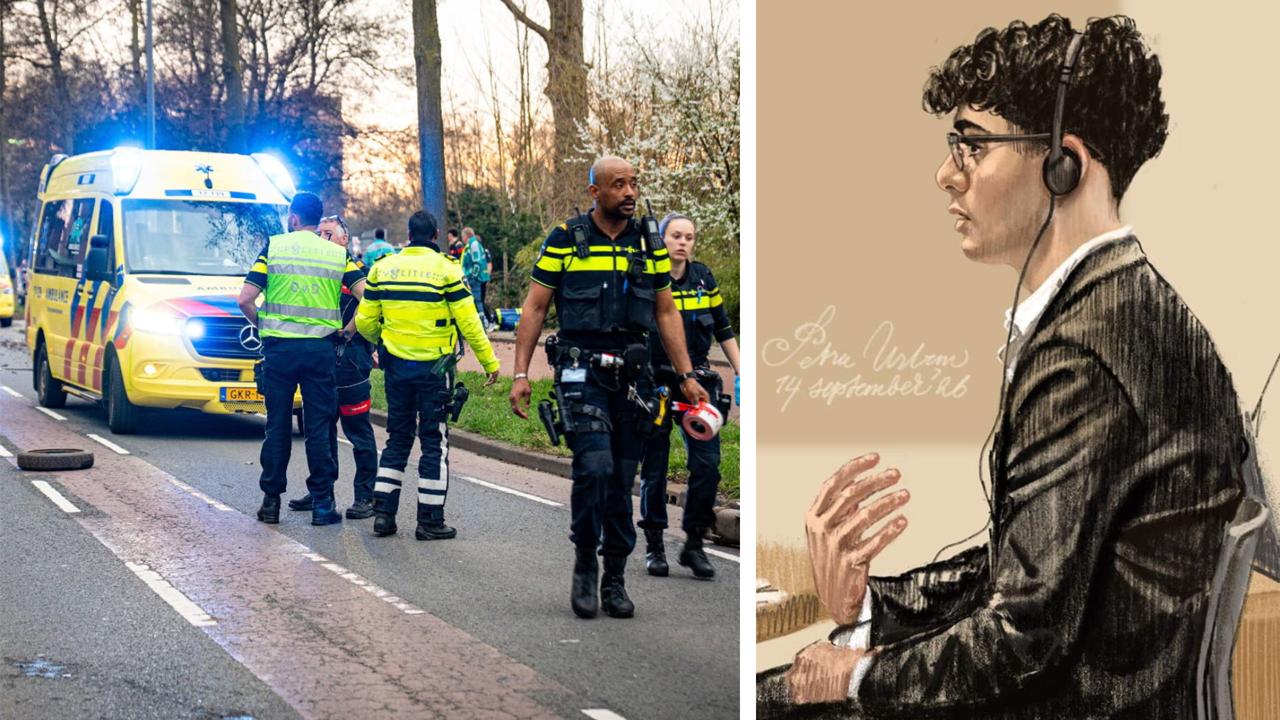
🇳🇱 Ali A. (18) hit and killed Elisabeth (33) who was pregnant with her first child.

He was driving 115 km/h in a 50 km/h zone and was high on laughing gas.

The Dutch prosecutor is demanding 8 months in jail.

That’s apparently all the life of a Dutch pregnant woman is worth. https://t.co/NSJrCjnG7G

— Eva Vlaardingerbroek (@EvaVlaar) September 15, 2026

The post ‘We were completely devastated’ – Ali A. kills pregnant 33-year-old Dutchwoman Elisabeth while driving double the speed limit, prosecution demands only 8 months in prison appeared first on Remix News.

  •  

Commission inaugurates Europe's largest industrial carbon capture and storage facility in the Netherlands

The Yara Sluiskil plant, the largest commercial carbon capture and storage (CCS) project in Europe has started its operations in Sluikil, a village in the Zeeland province of the Netherlands.

The CO2 will be transported by ship and permanently stored under the Norwegian North Sea at the Northern Lights facility, funded by the EU under the Connecting Europe Facility. The industrial ammonia and fertiliser facility is expected to capture and liquefy up to 800 000 tons of CO₂ annually from ammonia production.

This cross-border project is a direct result of the EU-Norway Green Alliance signed in 2023 – a powerful example of the benefits of European cooperation, combining private investment and public support and bringing together industry, the EU, its Member States, and Norway. Today's inauguration ceremony, attended by Commissioner for Climate, Net-Zero and Clean Growth, Wopke Hoekstra, reflected this partnership with the presence of Norwegian Prime Minister Jonas Gahr Støre, Dutch Prime Minister Rob Jetten and President and CEO of Yara International, Svein Tore Holsether.

Yara's Sluiskil plant is a strategic investment in Europe's industrial decarbonisation and competitiveness. It is expected to capture and store around 12 million tons of CO₂ over the next 15 years. It will promote the reduction of emissions from energy intensive industries like fertilisers and ammonia. It will foster innovation, the creation of a strong industrial base and the development of this clean technology, as underlined in the Clean Industrial Deal and the recent proposal for the EU Emissions Trading System review. 


In his keynote speech at the opening ceremony, Commissioner Hoekstra (pictured) said:

"Europe needs practical climate solutions that deliver real emissions reductions while strengthening industrial competitiveness. The carbon capture and storage project at Sluiskil shows what is possible when innovation and cross-border cooperation come together. This is exactly the kind of project Europe needs to combine climate ambition with a strong and resilient industrial base."

You can follow the speech of the Commissioner on EBS.

Related links

  •  

‘Horrible violence’ – 1 security guard murdered and 2 police officers wounded after dozens of armed gang members open fire in quiet Dutch village

A suspected underworld revenge attack linked to fugitive drug trafficker Jos Leijdekkers, known as “Bolle Jos,” left a security guard dead and two police officers wounded in the quiet Dutch village of Overasselt in the early hours of Sept. 1, 2026. Surveillance cameras captured vans full of masked men carrying assault rifles during the attack, which is raising fears that Netherlands is devolving into a narco-state.

🇳🇱🔴 JUST IN: Shocking footage shows 1 security guard murdered and 2 police officers wounded in the Netherlands.
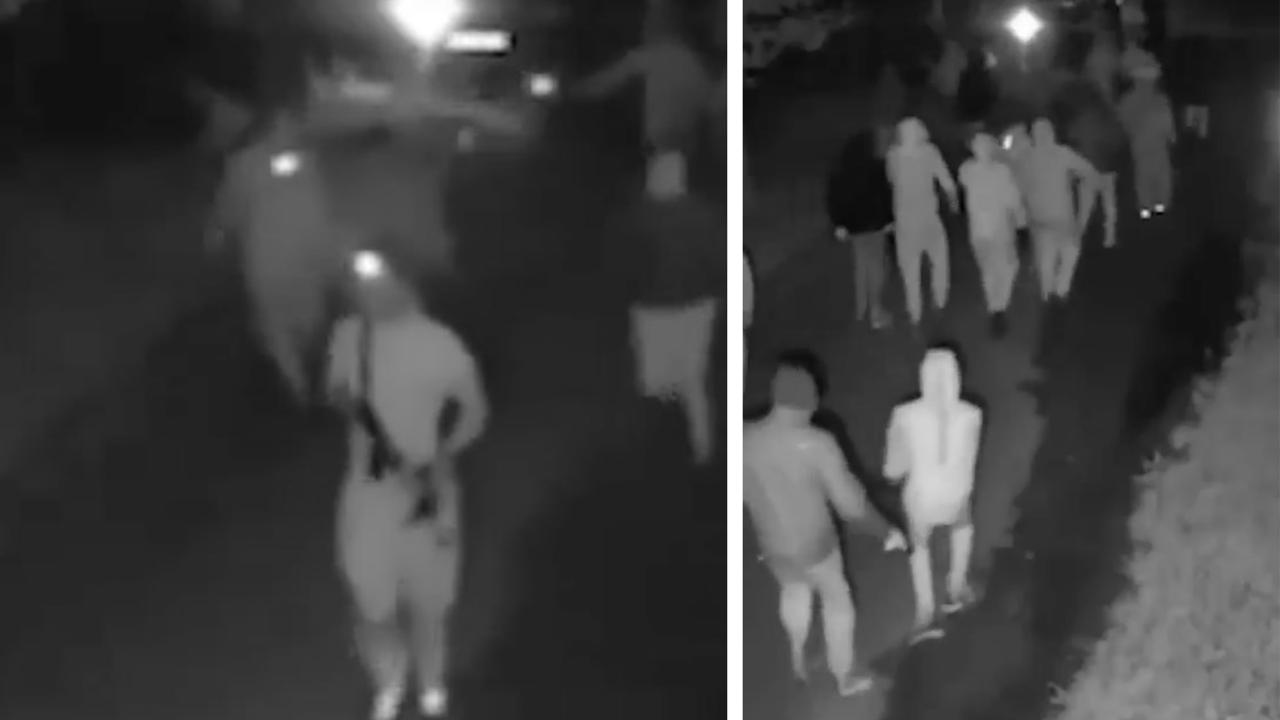
Dozens of armed drug gang members opened fire in the small Dutch town of Overasselt.

Footage shows multiple vans filled with masked men armed with assault rifles.… pic.twitter.com/ShudqYyHFg

— Remix News & Views (@RMXnews) September 2, 2026

Around 4:00 a.m., two vans pulled up and a large group approached a farmhouse previously tied to a drug lab. The surveillance footage shows the group approaching a parked car with its interior light on. Five shots were then fired, according to the Dutch police report on the incident.

A 51-year-old man from nearby Wijchen, hired as a security guard after an earlier attack on the property, was murdered. Neighbors reported hearing dozens of shots, with one neighbor telling Dutch media he heard 37 shots before police arrived.

The first officers responding to a report of a suspicious situation came under immediate fire. Colleagues dragged the wounded officers to safety while still being shot at. One officer initially suffered life-threatening injuries; both were later reported out of danger.

Police launched a nationwide manhunt involving helicopters, dogs, special intervention units, and roadblocks on the A73 and A76. Warning shots were fired during searches of cornfields, gardens, and other sites. The operation led to the arrest of 34 suspects at multiple locations, including a cornfield near the scene, Nijmegen train station, and highways in Limburg.

The suspects included Dutch, Belgian, French, and Algerian nationals. Weapons, vehicles, and data carriers were seized. A large-scale investigation team (TGO) has now been formed, with all detainees remaining in custody.

The incredible violence has sparked reactions all the way from local police officials to the country’s justice minister.

Deputy Police Chief of the East Netherlands unit Jolanda Aalbers described the night as “indescribable.”

“For colleagues this is a truly intense incident. Colleagues were wounded and they were brought to safety by other colleagues at risk to their own lives. It was a real act of heroism. We are grateful that the wounded colleagues are out of life-threatening condition.”

Justice Minister David van Weel condemned “horrible violence” and said “we do not tolerate this,” according to Dutch news outlet NOS.

He also described the scale of the violence as “unprecedented” for the Netherlands.

“The fact that you have hordes of dozens of young people walking through the streets of a village and immediately opening fire on the police is unprecedented and new,” he said. He spoke of a suspected criminal settling of accounts involving international drug cartels that operate across borders.

Deputy Chief Prosecutor Monique Vinkesteijn called it a “long-running conflict.”

She said that suspects face charges including murder or manslaughter, attempted murder, conspiracy, and preparation of a kidnapping. She described ten different crime scenes, underlining the sprawling and complex nature of the crime. She said investigators were working to link each suspect to specific locations.

Mayor Joerie Minses of Heumen municipality, which includes Overasselt, called the violence “un-Dutch,” “completely unacceptable,” and something that “goes beyond all bounds.”

“What happened last night does not fit Overasselt,” he stated.

He now says he may want to close the farmhouse entirely, which has a documented history of trouble.

In 2019, a professional drug lab was found in shipping containers near the farmhouse after a fire. In 2024, armed men were found at the gate of the house.

In July 2025, an attacker fired at least 25 rounds from an AK-47-style rifle at the house, resulting in the conviction of a 21-year-old from Amsterdam. Residents then hired private security.

What sparked the latest attack?

There are now questions about what prompted such a large-scale attack from the drug gangs. Dutch media, citing police sources, linked the attack to a dispute over an 812-kilogram cocaine shipment seized on Aug. 29 at the French-Spanish border. The drugs were in a Dutch-registered truck traveling from Africa via Portugal.

The masked gang members may have been seeking a missing portion of the load or confronting an intermediary connected to Leijdekkers’ network. Leijdekkers, one of the Netherlands’ most-wanted fugitives, has been convicted in both the Netherlands and Belgium, including a 14-year sentence in the Belgian Costa case involving Antwerp port cocaine trafficking. He faces decades in prison for other crimes as well. He is believed to be in West Africa. Police have not officially confirmed the Leijdekkers link.

The post ‘Horrible violence’ – 1 security guard murdered and 2 police officers wounded after dozens of armed gang members open fire in quiet Dutch village appeared first on Remix News.

  •  

This Doorway is a National Monument of The Netherlands

On Smedestraat, a shopping street in the historic center of Haarlem, in the Netherlands, is an unusual national monument. It’s not a house, church, or public building, but a 17th-century brick gateway with a wooden door. Its significance lies in both its architectural details and what it reveals about the historic urban fabric of Haarlem.

The gateway dates from the second half of the 17th century and is protected because it preserves a rare and attractive example of period brickwork. The most distinctive feature is the blind circular window (a decorative round opening that is not actually a window) incorporated into the masonry above the archway.


The doorway. Credit: Wikimedia Commons


© Amusing Planet, 2026

  •  
❌