President Donald Trump said Friday that Russia has agreed to release millions of tons of diesel fuel into U.S. and global markets following a telephone call with Russian President Vladimir...
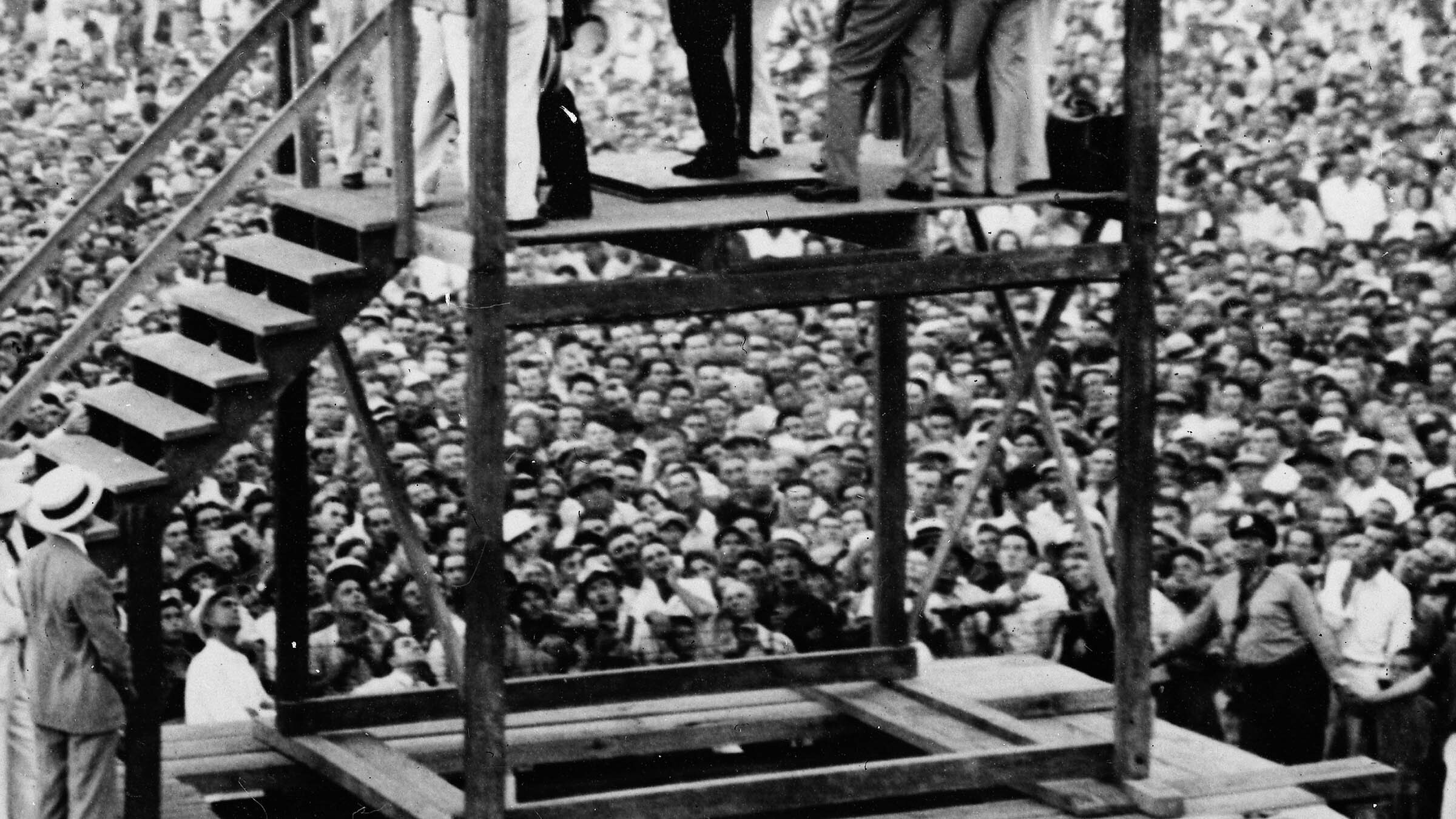
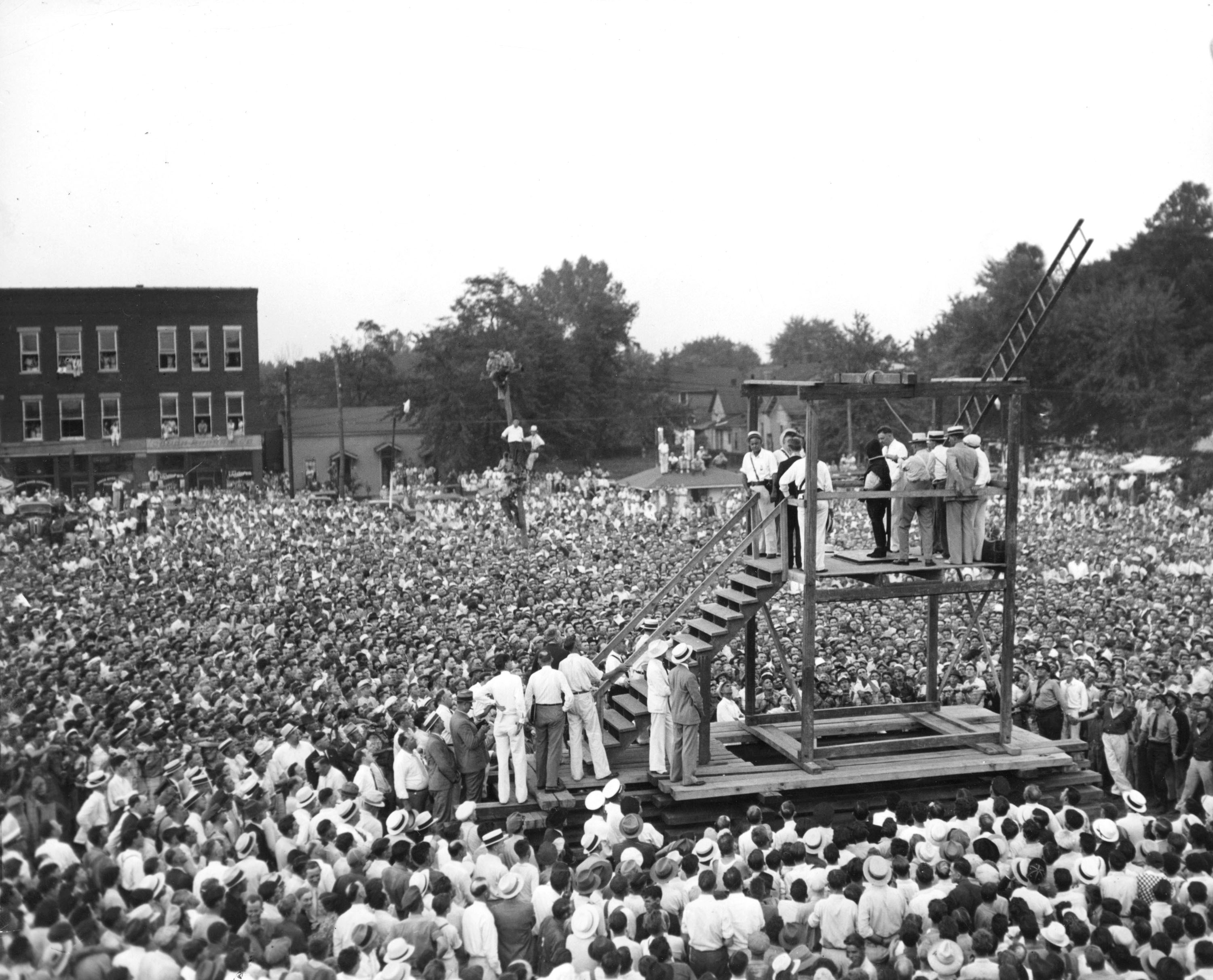
Yesterday, in an interview aboard the USS Abraham Lincoln, Defense Secretary Pete Hegseth said the United States would soon carry out its first public execution since the 1930s. “We’ll make sure that people are able to watch it,” he said. Pentagon officials later confirmed that the execution will be livestreamed. The condemned man is former Major Nidal Hasan, who shouted “God is great” in Arabic before murdering 13 people at Fort Hood in 2009. Hegseth’s rationale for following this ancient practice is the same one offered by the ancients themselves: publicizing the agony of death and its unhygienic aftermath will remind onlookers that, in Hegseth’s words, there are “serious consequences” for treason. “No-brainer,” Hegseth said.
This pitiful creep—Hasan, I mean—deserves what he is probably going to get in December. The rest of us, however, will be ill-served by the spectacle of his execution. Many past criminals have had their head publicly cut off, or body nailed to a cross and left to rot there, as exemplary punishment. Such executions were once considered entertainment. Now the idea of recreationally watching a man be killed is so strange that few people understand what the experience will be like. Watching people die by violence, even if those people have it coming, damages the spectator irreversibly. I don’t mean physical or emotional damage, though many who see unnatural deaths up close do vomit and suffer from uneasy dreams afterward. Rather, I mean something more like the loss of their humanity and dignity, through partaking in the process of treating a person—in many ways so similar to themselves—like a machine to be turned off or ripped apart, a malfunctioning printer or an old car. To see this process is to be diminished, and the decision to make the execution visible to all is an invitation to self-harm, sent out to everyone with an internet connection. It is hard to appreciate how awful this viewing experience will be, until you have it. And then of course it will be too late. I have seen videotaped executions and have been diminished by every single one.
In August 2014, Hasan wrote a letter from prison to Abu Bakr al-Baghdadi, then the leader of the Islamic State, and asked to be granted citizenship as a “soldier of Allah.” No response was recorded. Ironically, it seems likely that Hasan would sympathize with Hegseth’s penchant for public execution, because the Islamic State interpreted the Quran to require that execution be carried out in public. Fornicators, according to Quran 24:2, should be flogged, and their punishment should be “witnessed” by a “group of believers.” By extension, the Islamic State determined, such a group should witness the punishment of all scripturally ordained crimes. Certain crimes, such as brigandage, are to be punished with crucifixion, an inherently public method of killing that the Islamic State carried out on video. Regrettably, I have seen footage of such a death.
In the years before Hasan’s 2013 court-martial, he stopped shaving, in Islamic defiance of Army regulations that prohibit soldiers from growing beards. Mike Simpson, an Army officer and emergency-room doctor near the facility where Hasan was incarcerated, told me a few years later that he put the word out to colleagues that if Hasan ever had a medical emergency (not unlikely, given that he suffered paralysis and other conditions after being gunned down in the course of his terror attack), Simpson would like to be called to shave Hasan personally. The shaving would arise out of medical necessity—the patient might need a mask, with a reliable seal around the face—but Simpson, for his own pleasure, wanted to shear the bastard himself.
But the pleasure that might come from shaving Hasan would be quite different from what one might experience by shooting him in the heart. The Army won’t struggle to find a dozen willing soldiers to act as an execution party for Hasan. Hasan has said he wants death. Hegseth said he “doesn’t care” what Hasan’s final wishes might be. But I suspect that the volunteers’ enjoyment of their duty will be dampened if they notice signs of ecstasy from Hasan, as he is tied to a post 15 paces away from them and prays his way to the end. Hamlet could not bring himself to kill Claudius in prayer, because killing him in the midst of a holy act—“to take him in the purging of his soul, when he is fit and season’d for his passage”—would be too merciful.
In this world, denying Hasan the pleasure of death on his own terms, and letting him instead spend a few more earthly decades in tedious incarceration, would seem a much more onerous punishment. Therefore I would propose an alternative to public execution: public incarceration. Hasan should be placed in a small space, with a Pentagon-funded livestream of his remaining years. If the purpose of the spectacle of his death is to demonstrate to others the “serious consequences” of murdering 13 people, I doubt any execution would be more frightening than the slow, public aging of this repulsive murderer, as biology and time carry out his sentence. I would tune in to the livestream myself now and then, until I grew bored and found better things to do, and better ways to spend my own remaining time. This would take Hasan’s life and make from it a small gift to the rest of us, rather than taking something irrecoverable from us as we give martyrdom to him.
The Florence-based winery said security camera footage showed seven masked men breaking into its Cortona storage facility and loading thousands of bottles onto two trucks.
The Florence-based winery said security camera footage showed seven masked men breaking into its Cortona storage facility and loading thousands of bottles onto two trucks.
Bufera sul Pentagono per lo streaming sulla uccisione del detenuto. Il maggiore radicalizzato dall’estremismo islamico, uccise 13 militari a Fort Hood. Il dissenso del vicepresidente JD Vance: se verrà trasmessa non credo che la guarderò
US President Donald Trump announced a deal with Russian President Vladimir Putin for Moscow to supply millions of tons of diesel fuel to American and global markets.
The announcement would give Russia a major opportunity to sell fuel abroad at a time when Ukraine is targeting its oil industry to deprive Moscow of revenue and disrupt the resources sustaining its invasion. The US president has increasingly called for Ukraine to halt strikes on Russian oil infrastructure in recent weeks, blaming Ukraine for high fuel prices in the US.
Trump’s push for Kyiv to halt those attacks, alongside his effort to secure Russian fuel supplies, risks undermining Ukraine’s campaign to put economic pressure on the Kremlin while the US seeks to contain the fallout from its war with Iran.
Trump promises millions of tons of diesel from Russia
In a 9 October post on Truth Social, Trump said Russia would immediately supply more than 300,000 tons of diesel, followed by another 500,000 tons in November and 1 million tons shortly afterward. He also announced a possible additional delivery of 3 million tons, conditional on the state of Russian refineries.
“Diesel Prices for Americans and, indeed, the World, will be COMING DOWN, IN RECORD NUMBERS, AND FAST!” Trump wrote, describing lower fuel prices as a top priority for American farmers, ranchers, and truckers.
Trump's announcement did not explain how the promised volumes would be reconciled with the condition of Russian refineries amid ongoing Ukrainian strikes, which he cited as a factor determining the timing of later deliveries.
Trump has pressed Ukraine to stop targeting Russian refineries
The announcement comes after Trump repeatedly blamed Ukrainian strikes on Russian oil infrastructure for worsening global diesel shortages and driving up fuel prices.
Ukraine has continued targeting Russian oil facilities as part of its campaign to undermine Moscow's war economy. Ukrainian strikes have damaged refining capacity, contributed to fuel shortages inside Russia, and forced Moscow to restrict fuel exports.
Kyiv has argued that the attacks put pressure on Russia's ability to finance and sustain its war against Ukraine.
Iran war drives fuel prices higher, not Ukraine
The rise in US fuel prices stems largely from the US-Israeli war with Iran and its disruption of global energy supplies, according to Reuters. The conflict has disrupted shipping through the Strait of Hormuz, a strategic waterway through which roughly one-fifth of the world's oil supplies normally pass, pushing energy prices higher.
Trump has nevertheless blamed Ukraine's refinery strikes for rising fuel costs while pressing Kyiv to halt them.
Ukraine's attacks on Russian oil infrastructure are intended to weaken Moscow's war economy. By contrast, the disruption to global energy shipments stems largely from the conflict with Iran.
Zelenskyy warns Russian diesel deal would fund further attacks on Ukraine
Ukrainian President Volodymyr Zelenskyy warned later on 9 October that allowing Russia to sell petroleum products abroad without securing a lasting de-escalation agreement would help finance Moscow's war against Ukraine.
“Allowing Russia to sell petroleum products is an investment in a war that must be ended, not prolonged,” Zelenskyy said, responding to Trump's announcement of a proposed Russian diesel supply deal.
Zelenskyy said Ukraine's strikes on Russian oil refineries and other oil facilities were a response to Russia's years-long campaign against Ukrainian energy infrastructure. He offered a reciprocal arrangement under which Ukraine would stop striking Russian refineries if Russia stopped destroying Ukrainian energy facilities, saying the United States had sufficient leverage to secure such an agreement.
“Ukraine will not burn Russian oil refining facilities if Russia does not destroy our energy infrastructure,” Zelenskyy said.
He also urged Washington to maintain pressure on Moscow, including sanctions under the proposed Graham legislation, and to continue supporting Ukraine's defense. Zelenskyy argued that easing sanctions without a clear, sustained de-escalation agreement would signal weakness and give Russia more time and resources to continue the war.
“Gifts to Putin will not bring peace,” Zelenskyy said, warning that Russia would respond to diesel supplies with further terror and attacks. He called on the United States to pursue a reciprocal de-escalation agreement and press Russia to stop its attacks on Ukrainian energy infrastructure.
Wind energy is a valuable tool for addressing the climate crisis, but wind turbines can be deadly for birds. A recent study found that a low-tech, relatively inexpensive fix can dramatically reduce bird collisions with turbines: A can of paint. When wind turbines rotate their massive white blades can become a transparent blur, making them difficult to discern for birds, a phenomenon known as a motion smear or motion blur. Breaking up that blur, by painting one blade a different color, can theoretically make the turbine more visible to birds so they can navigate around the deadly blades. Researchers recently reported results from a long-term experiment that did exactly that: Between 2020 and 2021, Acciona Energía, owner of El Ruedo wind farm in Cadiz, Spain, painted one of three rotor blades black on four of its turbines. Another 16 turbines had all white blades and served as controls. Every day, from 2012 to 2024 (before and after the turbines were painted), they looked for dead birds under all 20 wind turbines and recorded their data. The researchers found that annual bird fatality rates dropped by nearly 74% for the painted turbines compared to the controls. The Spanish study joins others that have found similar results. A study in Norway found a more than 70% drop in annual bird fatalities after turbines had one of their blades painted black, while a South African study found bird deaths decreased by 83% after painting one of the three blades red. However, a study…This article was originally published on Mongabay
The United Nations has revised it’s climate change forecasts, officially confirming the doom and gloom narrative of climate change was wrong and the so-called climate emergency was a man-made fraud. For years, the phrase “12 [...]
Human remains found buried on a property in rural Josephine County, Oregon, have been identified as a 67-year-old man from Incline Village who was reported missing earlier this month.
President Putin has gone nuclear. He’s released damning evidence that Bill Gates, the CIA, and Israel engineered the pneumonic plague. Not just to kill. But to specifically target the white race. Putin says the plan [...]
Ukrainian President Volodymyr Zelensky warned on October 8 that China was helping Russia develop an alternative to SpaceX’s Starlink satellite internet system, as Moscow’s Rassvet network advances through testing and the presentation of subscriber terminals.
“They are making progress. They are passing this on to Russia,” Zelensky said.
The Ukrainian president’s remarks underscored Kyiv’s growing concern that Moscow could acquire advanced satellite communications capabilities.
Zelensky has already taken his concerns to U.S. President Donald Trump, asking him to impose sanctions on Russian and Chinese companies involved in Rassvet’s development, according to a recent Financial Times report. The request, raised during a meeting in New York in September, reflects Kyiv’s effort to prevent the Russian network from becoming a strategic asset for Moscow.
However, Washington has no straightforward way to stop the project outright. Sanctions would not automatically halt Russia’s domestic satellite program.
Zelensky’s appeals are unfolding as the project moves beyond development announcements and into public demonstrations of its capabilities.
Bureau 1440, the Russian company developing Rassvet, demonstrated a satellite video connection between Moscow and the southern Russian republic of Adygea on October 7. The call lasted about five minutes and used the company’s satellite network, showing that the system can support a live communications session.
At the same Moscow technology forum, Bureau 1440 presented three types of subscriber terminals for the network. One was identified as a serial-production device, while the company said its 1440.ULTRA terminal could support data transmission speeds of up to 700 megabits per second. The equipment is intended to connect users to the satellite constellation once the service becomes operational at scale.
Russia launched batches of Rassvet satellites in March and July, but the network has not yet reached full operational capability. Kremlin spokesman Dmitry Peskov noted in late September that the system was not yet operating effectively.
Zelensky’s repeated warnings and his appeal to Trump to block the Rassvet project point to growing alarm in Kyiv as Russia moves closer to establishing an independent satellite communications network.
With satellites already launched and the company testing connections and preparing user equipment, Zelensky faces the prospect that Russia could soon field a Starlink alternative that Kyiv may be unable to disrupt. His warnings about Chinese assistance suggest that Ukraine is increasingly concerned not only about Russia’s progress, but also about the possibility that outside support could accelerate it.
Montenegro has ordered the expulsion of Mikhail Zvynchuk, head of the pro-Kremlin military information network Rybar, and four other Russian citizens over national security concerns following a security operation targeting suspected Russian hybrid influence activities, Vijesti reported on 9 October.
Zvynchuk is the founder and head of Rybar, a prominent Russian military-focused information network known for its Telegram channels covering Russia's war against Ukraine. The network promotes pro-Kremlin narratives and has been associated with Russian propaganda and influence operations.
Montenegrin police announced on 9 October that the five Russians had their residence rights revoked and were ordered to leave the country on national and internal security grounds.
Montenegro investigates suspected Russian hybrid activity
The operation involved Montenegro's police and National Security Agency (ANB), which seized drones, high-resolution recording equipment, cameras, and several mobile phones for further examination, according to Vijesti.
According to Montenegrin authorities, the five had arrived in the country less than two days before the operation. The investigation is being conducted with support from international partners.
Montenegrin police identified the five Russian citizens as Zvynchuk, his wife Valeria Zvynchuk, Sergei Belous, Pavel Lekatorchuk, and Kira Doroshenko. Authorities said the case had been referred to prosecutors in Podgorica and Kotor.
The European Union has sanctioned Zvynchuk over activities that undermine or threaten Ukraine's territorial integrity, sovereignty, and independence. He has also been sanctioned by the United Kingdom, Switzerland, Australia, and Ukraine, according to Vijesti.
Suspected influence operation targeting EU integration
Vijesti reported, citing security sources, that Montenegrin authorities suspected the group of planning a documentary intended to undermine public support for the country's European integration.
According to the outlet, the planned material would portray Montenegro's expected alignment of its visa policy with EU standards as a politically imposed measure that threatens tourism, economic stability, and national interests.
Security services had monitored the group's arrival before carrying out the operation in Risan, in the Bay of Kotor area, Vijesti reported. The equipment seized from the group will undergo expert analysis to establish its intended purpose and use in Montenegro.
Medvedev threatens imprisoning “European and American idiots” for prisoner exchanges
Former Russian President Dmitry Medvedev responded to the operation by suggesting Moscow might need to expand its pool of prisoners to exchange for Europeans and Americans to secure Zvynchuk's return.
“We will probably have to replenish our pool of prisoners for exchange with European and American idiots,” Medvedev said, according to Vijesti.
Montenegro, a NATO member and EU candidate, has aligned itself with EU sanctions against Russia following Moscow's full-scale invasion of Ukraine in 2022. The expulsion comes amid broader European concerns over Russian intelligence activity, propaganda, and other forms of hybrid interference.
Russia’s strikes on October 9 covered Ukraine from west to east, hitting targets in Zaporizhzhia, Odessa, Kharkiv, Chernihiv, and reaching as far as Ivano-Frankivsk in the west. But the most consequential blows landed, as they increasingly do, in and around Kyiv.
The Trypilska thermal power plant was struck again, and attacks on the 750-kilovolt substation near Nalyvaivka continued. The cumulative effect on the capital is no longer abstract. Kyiv’s sewage system temporarily stopped accepting wastewater from one city district after power was cut to Kyivvodokanal facilities. Residents sought shelter overnight in metro stations. Mayor Vitali Klitschko issued a public warning about a serious threat to the city’s municipal infrastructure and recommended that residents who have the option to temporarily leave the capital consider doing so. Ukrainian authorities announced further restrictions on electricity supply to households, industry, and businesses beginning October 9. Elsewhere in the country, a food warehouse belonging to the Tavria retail chain was hit in Odessa, Kharkiv’s thermal power plant No. 5 was struck for the first time in a long period, an Epicenter shopping center in Chernihiv was hit by Geran drones, and a Geran-4 reached Ivano-Frankivsk, striking an industrial facility.
On the front lines, Russian forces maintain the initiative across key sectors. In the Chernihiv Oblast, Russian combat aviation and strike drones have been systematically hitting Ukrainian military positions — a pattern that Ukrainian and independent analysts describe as consistent with preparation for ground operations. On October 8, a drone storage facility near Kovchyn was destroyed, and strikes were recorded against positions of the 105th Border Detachment and the 143rd Mechanized Brigade near Sutky and Semenivka. The most significant confirmed strike, however, hit the command post of Ukraine’s 18th Army Corps near Bakhmach, with possible casualties among senior and flag-rank officers.
In Sumy Oblast, paratroopers of Russia’s 83rd Air Assault Brigade drove Ukrainian units of the 71st Air Mobile Brigade out of the settlement of Kyianytsia on October 9, bringing the entire settlement cluster under Russian control. With the leaf cover gone from surrounding woodland by late autumn, Russian forces will be able to move against Ukrainian positions in the forest south of the settlement with far greater effectiveness.
In Dobropillia, the battle has entered its decisive phase. On October 8, Russian assault units entered the city simultaneously from the north and south, splitting the Ukrainian garrison in two parts.
Kyiv’s mayor is advising residents to evacuate. A garrison has been cut in half. A command post has been destroyed. Russia is not approaching a decisive moment in this war — it is already inside one.
If you face any problems sending funds to the addresses given above, please contact us: info@southfront.press and southfront@list.ru. Also be aware that many email services such as Hotmail, Yahoo etc. may block correspondence from info@southfront.press and some others put it in spam.
If you want to support SouthFront but have no opportunity to do it via cryptocurrency, please contact us: info@southfront.press and southfront@list.ru.
SouthFront: Analysis and Intelligence
NOW hosted at southfront.press
Previously, SouthFront: Analysis and Intelligence was at southfront.org.
The .org domain name had been blocked by the US (NATO) (https://southfront.press/southfront-org-blocked-by-u-s-controlled-global-internet-supervisor/) globally, outlawed and without any explanation
Back before that, from 2013 to 2015, SouthFront: Analysis and Intelligence was at southfront.com
The Canadian government has announced a new “de-radicalization” program aimed at so-called “conspiracy theorists” — and it explicitly lists among the “unacceptable beliefs” the idea that the world is controlled by a cabal of globalist [...]
The Pentagon says it will livestream the firing squad execution of Nidal Hasan at Fort Hood, the site of his 2009 mass shooting. That would be the first public execution in the U.S. since the 1930s.
 Login