❌

Reading view

The Weekend the Money Stops: A Bank Collapse, Hour by Hour

by Milan Adams, Preppgroup: The notification arrives at 4:47 on a Friday afternoon, from an app you rarely open. It says that one of the big banks, a name you have used for most of your adult life, has been seized by the government. You read it four times before the words settle. Regulators tend […]
  •  

Ukrainian journalists say Austria detained them “like terrorists”: prosecutor says suspicion unsubstantiated

tkach

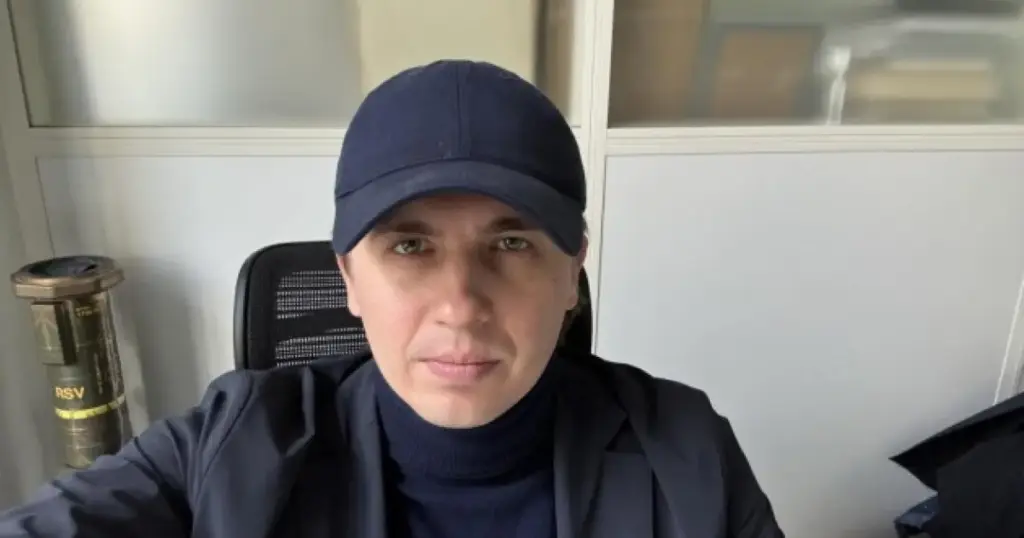
Austrian police detained Ukrainian investigative journalist Mykhailo Tkach and cameraman Yaroslav Bondarenko in Vienna yesterday, on 8 October. Both were later released, but the circumstances of their detention remain unclear, and the prosecutor’s office said suspicion against them had not been substantiated so far.

The detention lasted more than 12 hours, the first time Tkach had been held that long while on a reporting assignment abroad. The case unfolded alongside a separate Austrian espionage investigation involving two men suspected of working for Ukraine’s military intelligence. Authorities have not said whether the cases are connected.

Tkach describes detention

In a video published by Ukrainska Pravda, Tkach said seven people wearing masks and carrying weapons approached their car at a traffic light about 3–5 kilometers from central Vienna, broke its windows, and pointed weapons at them.

He said the people did not identify themselves or explain their actions. The journalists were pulled from the car, forced face down onto the road, searched, and had their hands taped behind their backs, according to Tkach. He said he initially thought they were being kidnapped because he did not see identification or have time to notice police markings. He realized they were police only after seeing police vehicles.

“As I felt it, they detained us like terrorists,” Tkach said.

He added that people shouted and pointed weapons, and there was no communication. He said one person put a knee on his neck and shouted at him to be quiet. He also saw glass from the broken window fly into Bondarenko’s face.

In a second report, Ukrainska Pravda said Tkach’s account of a document presented to him listed three allegations: espionage in the interests of Ukrainian military intelligence, participation in a criminal organization, and, as far as he remembered, causing harm to Austria. He said investigators did not explain the evidence behind the allegations.

Vienna prosecutor’s office spokesperson Nina Bussek told the Austrian Press Agency (APA) that suspicion against the two journalists had arisen during other investigations but had not been substantiated. She said it currently appeared that the suspicion was not holding up. Austrian officials have not publicly addressed Tkach’s account of the force used.

Diplomatic response and calls for an investigation

Tkach and Bondarenko were in Vienna on an assignment to find Ruslan Kravchenko, Ukraine’s former prosecutor general, Ukrainska Pravda reported. Kravchenko was dismissed on 15 September amid an investigation by Ukraine’s National Anti-Corruption Bureau and Specialized Anti-Corruption Prosecutor’s Office into alleged protection of fraudulent call centers. He denied involvement. Der Standard reported that it remained unclear whether the journalists’ detention was connected to their reporting on him.

Ukraine’s Foreign Ministry spokesperson Heorhii Tykhyi confirmed Tkach’s release and said the Ukrainian consul had requested access to him, according to NV. Musaieva said Bondarenko had been injured and hospitalized.

A statement signed by Ukrainian media and civil society organizations, including Euromaidan Press, called for an immediate, transparent, and independent investigation of law enforcement’s actions. The signatories also demanded an independent review of the force used, the return of seized equipment, and necessary medical and legal assistance.

Separate espionage investigation

Austrian Interior Minister Gerhard Karner confirmed the arrests of four Ukrainians, according to ORF. The two men detained on 5 October were placed in pretrial detention until 21 October on suspicion of secret intelligence activity against Austria. APA reported that they were suspected employees of Ukraine’s military intelligence service. Both deny the allegations.

  •  

Humiliated Polanski on Brink of the Sack After Losing By-Election as He Faces “Zionism is Racism” Backlash

Zack Polanski is on the brink of the sack as Greens leader today after being humiliatingly beaten in the Holborn and St Pancras by-election, trailing more than 3,000 votes behind Labour's Sagal Abdi-Wali.

The post Humiliated Polanski on Brink of the Sack After Losing By-Election as He Faces “Zionism is Racism” Backlash appeared first on The Daily Sceptic.

  •  

Circuito Nacional Surf Sub18 Júnior Tour prossegue na Praia do Malhão

No próximo fim de semana, nos dias 10 e 11 de outubro, a Praia do Malhão, na Freguesia de Vila Nova de Milfontes, recebe a 4ª etapa do Circuito Nacional Surf Sub18 Júnior Tour, evento organizado pela Federação Portuguesa de Surf.

A iniciativa conta com o apoio institucional do Município de Odemira e da Entidade Regional de Turismo do Alentejo e Ribatejo, uma vez que “reflete uma aposta clara na atração de provas desportivas de alta competição e visibilidade para o território alentejano.“

Refira-se que a Praia do Malhão, no Município de Odemira, já é conhecida e bastante procurada pelas excelentes condições para a prática de surf, entrando agora no calendário da competição nacional da modalidade.

De acordo com a organização, os melhores atletas masculinos e femininos sub 18 do surf nacional vão estar em prova na Praia do Malhão, para a penúltima etapa do circuito, depois de surfarem as ondas da Costa da Caparica, Santa Cruz e Praia Grande, e terminado recentemente em Sines.

Sublinhe-se ainda, que o Circuito Nacional Surf Sub18 de 2026 envolve perto de 90 atletas masculinos e 20 femininos em competição.

  •  

Burnham’s “Common Good” is Reheated Fabian Socialism

Andy Burnham's vision of the "common good" – with Net Zero at its heart – is just reheated Fabian socialism, says Dr Tilak Doshi – and the fingerprints of Left-wing economist Mariana Mazzucato are all over it.

The post Burnham’s “Common Good” is Reheated Fabian Socialism appeared first on The Daily Sceptic.

  •  

Ukraine finds US-made navigation sensor inside Russia’s new jet-powered drone

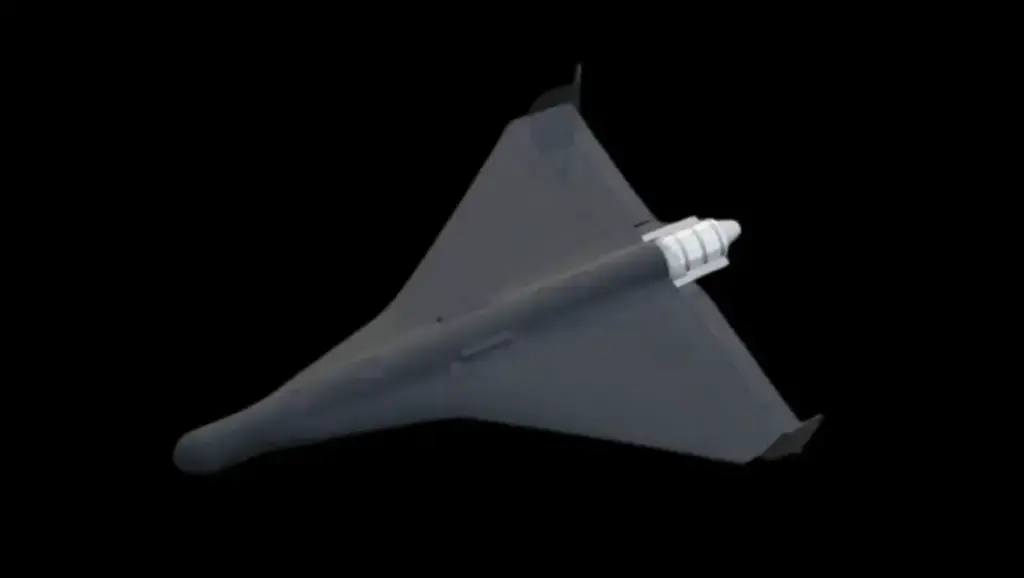
A 3D rendering of Russia's jet-powered Geran-4 strike drone.

Ukraine has found the US component in a Russian jet-powered drone targeting civilians, supermarkets, medical warehouses, and bridges. According to its Defense Intelligence, the new weapon contains a PNI5GA magneto-inductive sensor made by the US company PNI Sensor.

The US-made navigation component adds to evidence that Western technology continues to appear in Russia's strike drones. HUR had already identified US-made chips in the Geran-4 in May, but the newly reported PNI5GA is a navigation sensor in a modified version of the drone that Institute for the Study of War (ISW) says Russia may seek to field ahead of winter.

A Russian engine replaces the Chinese one

Russia has also replaced the drone's Chinese-made Telefly turbojet engine with a Russian-made equivalent produced in Alabuga. Russia is using the Alabuga zone to bring more of its drone production home rather than importing Iranian or Chinese parts, according to the ISW.

"The remaining electronic units and components are unchanged and identical to those used in previous Geran UAVs," HUR said.

What the warhead is built to cut

The modified drone also carries a specialized KRSN warhead designed to cut through bridge structures and power-line supports. Presidential adviser Serhii Beskrestnov described the warhead on 30 September, saying it consists of a 40-kilogram main charge and four strike modules. Its warhead is meant to destroy hardened targets made of steel and concrete and to damage cable-stayed bridges.

Russia has stepped up strikes on Kyiv's Northern and Southern bridges across the Dnipro in recent days with such drones.

However, Russia may try to field more resilient and more dangerous versions of its strike drones before Ukraine has effective countermeasures in place. Russia could use them to degrade Ukraine's energy infrastructure and logistics ahead of a winter strike campaign that it said will very likely be brutal.

  •  

Romania Turns to Luca Niculescu in Fourth Attempt to Form Government

Romanian President Nicușor Dan has nominated diplomat Luca Niculescu as prime minister, beginning a fourth attempt to form a government after three previous candidates failed to secure a parliamentary majority.

The nomination was announced on Monday, 5 October, after Dan held consultations with Romania’s parliamentary parties at the Cotroceni Palace. Niculescu now has the task of finding sufficient support for a government after five months of political deadlock.

Dan said he had chosen the candidate he believed had the best chance of assembling a majority. “Romania needs a government. We need a budget for next year,” he said after the consultations, according to Romanian reporting on the nomination.

Niculescu, 55, is a former journalist and diplomat who has served as a secretary of state at Romania’s Foreign Ministry and national coordinator for the country’s accession to the OECD. He was Romania’s ambassador to France between 2016 and 2022 and was also accredited to Monaco and Andorra.

Accepting the nomination, Niculescu said his first task would be to build a parliamentary majority. He promised a government programme centred on predictable economic policy, public spending discipline, investment and Romania’s European and Euro-Atlantic commitments.

The appointment follows three unsuccessful attempts to replace the government of Ilie Bolojan, which was removed in a no-confidence vote on 5 May after the Social Democratic Party withdrew its support. EU Today reported at the time that 281 lawmakers backed the motion, bringing down the pro-European administration.

Eugen Tomac was the first candidate asked to form a government but relinquished the mandate after failing to secure sufficient support. Adrian Veștea was then nominated, but his proposed government was rejected by parliament.

The third candidate, PNL MEP Siegfried Mureșan, was nominated in September. His government received 182 votes in the parliamentary confidence vote on 30 September, well short of the 233 required. That defeat left Dan facing a fourth round of negotiations with the same fragmented parliament.

Niculescu therefore begins without an established majority behind him. During Monday’s consultations, the PSD continued to promote its own candidate, Sorin Grindeanu, while USR and AUR pressed for early parliamentary elections. PNL signalled greater flexibility but stopped short of committing itself to a new governing formula.

AUR leader George Simion has already said his party will not support Niculescu. USR, meanwhile, said it would examine the proposed cabinet, governing programme and the political majority behind it before deciding how to vote.

Under Romania’s constitution, a prime minister-designate has ten days from nomination to seek parliament’s confidence for the proposed programme and full list of ministers.

The repeated failures have also revived discussion of early elections. The president may dissolve parliament if no government receives a vote of confidence within 60 days of the first request for investiture and at least two attempts have been rejected, although dissolution is a presidential option rather than an automatic step.

Dan has so far indicated that he would prefer to exhaust efforts to form a government.

The political stalemate comes at a difficult economic moment. Romania is under pressure to reduce its budget deficit, maintain investor confidence and continue reforms tied to EU funding. The strain on the governing coalition had already become an EU fiscal issue before Bolojan’s government fell, with questions over budget consolidation and European recovery funding increasingly tied to political stability in Bucharest.

The immediate test for Niculescu will be whether his diplomatic background can translate into enough parliamentary votes to assemble a cabinet. His nomination leaves him more freedom than a candidate tied directly to one of the main parties, but the arithmetic remains unchanged: a government still requires at least 233 votes to take office.

Photo: Razvan Socol / Wikimedia Commons / CC BY-SA 4.0
  •  

Clarkson: Why Would Anyone Start a Business in Burnham’s Britain?

Jeremy Clarkson has said there is no reason to set up a business in Andy Burnham’s Britain as he made a surprise appearance at the Conservative Party conference.

The post Clarkson: Why Would Anyone Start a Business in Burnham’s Britain? appeared first on The Daily Sceptic.

  •  

15 Clay Tablets From Ur Reveal Unknown Places, an Ancient Princess Whose Farm Ran on Its Own Rules, and a Village Inhabited by Prisoners of War

Each of these tablets fits in the palm of a hand. The smallest measures a little over 3 centimetres (1.3 inches) across and the largest 11.5 (4.5 inches), and nearly all of them deal with the least glamorous things a museum can hold: sacks of barley, daily wages, the size of ditches. Read together, though, […]

  •  

Betting Against Burnham

Labour may be enjoying a Burnham bounce, but Mark Littlewood still thinks the smart option is to bet against the Prime Minister winning the next General Election. He explains why in the Daily Sceptic.

The post Betting Against Burnham appeared first on The Daily Sceptic.

  •  
  •  

Labour is Becoming an Army of Power-Mad Killjoys

The recent comments from a Government Minister dismissing pubs and black Labradors as "far Right" only confirm that Labour is fast becoming an army of power-mad killjoys, says Alexander McKibbin.

The post Labour is Becoming an Army of Power-Mad Killjoys appeared first on The Daily Sceptic.

  •  

Brazil’s cliff‑hanger election could rob EU of key ally in Latin America

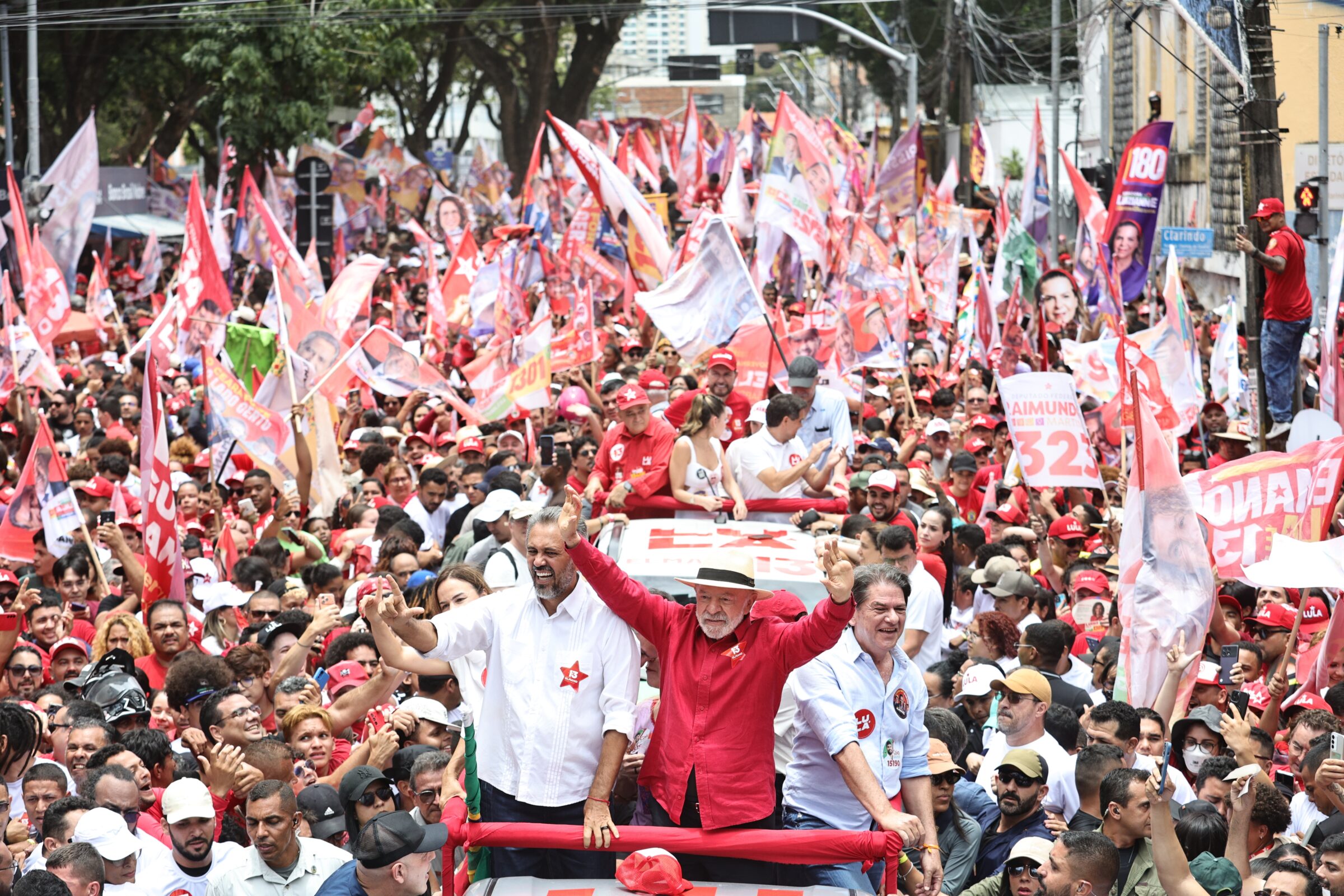
Luiz Inacio Lula da Silva, the 80 year-old president of the world’s fifth largest country, is facing a tight race in a bid for his fourth presidential term in Brazil’s general elections on Sunday (4 October). The EU, which earlier this year concluded a landmark trade deal with the Mercosur bloc, which includes Brazil, will be watching the polls closely.

He holds a narrow poll lead over Flávio Bolsonaro, son of the country’s former president Jair, who is currently serving a 22 year prison sentence for staging a coup against Lula’s newly formed government in 2023.

The left-wing leader’s third term, won by with a slim 50.9 percent majority in 2022, distinguished itself for leading anti-deforestation policies and getting the EU-Mercosur trade partnership across its long-awaited finish line, 26 years after negotiations started.

Though Brussels suspended animal product imports from Brazil on 3 September, due to insufficient guarantees of antibiotic regulation compliance, “President von der Leyen commended President Lula’s role and political leadership in the negotiations leading up to the agreement,” the EU commission said in a statement.

The Mercosur deal marked a historic diversion of EU energies South of the Rio Grande river, at a time when Europe and Latin America were both being bombarded by tariff threats from Washington.

The Bolsonaros’ professed support of US president Donald Trump have critics worrying “this election could have major implications for the direction of Brazil’s foreign policy, its global influence,” wrote Dr. Christopher Sabatini, Latin America director at the Chatham house think tank.

Election interference by the US was discussed throughout Lula’s campaign, most notably with Meta disabling his Facebook ads just days before Brazilians went to cast their votes, state-run Agência Brasil reported on 25 September.

At a time when virtually every other democracy on the South American continent has pivoted to the right, a win for a Brazilian Trump enthusiast and supporter of environmental commodification would be a setback for the EU’s climate ambitions.

“A Flávio Bolsonaro government would represent a much stronger geopolitical alignment with Washington and the Trump administration. That could affect climate cooperation, deforestation policy, critical minerals and European access to Brazilian commodities and industrial partnerships,” said Eduardo Raguse, climate co-coordinator at NGO network Friends of the Earth Latin America.

Brazil’s climate observatory recorded its biggest annual fall in emissions in 15 years, with a 16.7 percent reduction in 2024 from the previous year, largely due to a drop in forest clearance in the Brazilian Amazon, which was halved over Lula’s third term.

But Lula has been simultaneously expanding Brazil’s national petrol company’s drilling area into the Amazon’s depths.

“Lula’s government has increasingly framed critical minerals as an issue of national sovereignty and industrial policy,” Raguse told EUobserver, since the Workers’ party leader has referred to Brazil’s petrol reserves as its “passport for the future.”

But along a global pivot to the right, a win for Bolsonaro’s heir or Lula’s renewed interest in fossil fuel politics would not stray too far from the EU’s current conservative climate script, and according to Socialist and Democrat MEP Leire Pajin, will mean little for EU trade.

“Whoever wins the election in Brazil, the EU-Mercosur relationship goes far beyond electoral cycles or trade,” the Spanish vice-president of the Euro-Latin American parliamentary assembly told EUobserver. “Governments may differ in priorities or pace, but the agreement transcends them.”

  •  

Two Iranian Nationals Charged over Alleged Terror Plot Targeting Manchester Jewish Community

Two Iranian nationals have been charged with terrorism offences over an alleged plot targeting the Jewish community in Manchester, with investigators accusing them of researching potential targets and obtaining instructions and materials for an improvised explosive device.

Rahman Salehi, of Salford, and Salam Ahmadyan, 36, of Liverpool, were charged on Friday, 2 October, with engaging in conduct in preparation for terrorist acts, contrary to Section 5 of the Terrorism Act 2006.

According to the Metropolitan Police announcement detailing the charges, both men are Iranian nationals and were arrested in Manchester on Sunday, 20 September.

They have been remanded in custody and are due to appear at Westminster Magistrates’ Court on Saturday, 3 October.

The arrests followed what police described as a long-running counter-terrorism investigation into a suspected plot directed against the Jewish community in the Manchester area.

Police allege that the two men were communicating with a third person overseas who may have been in Iran. No allegation has been made in the charges released so far that the Iranian government directed the suspected plot.

The particulars published by Counter Terrorism Policing allege that Salehi and Ahmadyan used encrypted communications and obtained material containing instructions for manufacturing an explosive device.

Investigators say the men acquired instructions relating to a device using powdered chlorine and vehicle brake fluid, along with video material concerning the manufacture or assembly of an improvised explosive device.

They are further accused of acquiring liquids, components and equipment, researching potential targets, obtaining images, maps and plans, and carrying out reconnaissance at locations considered as possible targets.

The Crown Prosecution Service confirmed that prosecutors had authorised charges after reviewing evidence gathered during the investigation.

Frank Ferguson, Chief Crown Prosecutor for the CPS Special Crime and Counter Terrorism Division, said prosecutors had concluded that there was sufficient evidence for the case to be put before a court.

The CPS stressed that the proceedings are now active and that both men have the right to a fair trial. The charges are allegations and no finding of guilt has been made.

Arrests during Jewish High Holy Days

The arrests took place shortly before Yom Kippur, the holiest day in the Jewish calendar, and came amid heightened security surrounding Jewish institutions in Britain.

Deputy Assistant Commissioner Vicki Evans, Senior National Coordinator for Counter Terrorism Policing, said the investigation had disrupted what police believed to be a plot targeting Manchester’s Jewish community.

The timing is particularly sensitive because it comes one year after the terrorist attack at the Heaton Park Hebrew Congregation synagogue in Manchester on 2 October 2025.

Two worshippers were killed in that attack, which took place on Yom Kippur. EU Today reported at the time on the Manchester synagogue attack and the security concerns facing Britain’s Jewish population.

The latest case also comes against the background of a series of alleged Iranian-linked threats and attacks involving Jewish and Israeli targets in Britain.

British security agencies have repeatedly warned about Iranian activity on UK territory. The government said earlier this year that more than 20 potentially lethal Iran-backed plots had been tracked by British security agencies over the preceding year.

Concerns intensified following attacks on Jewish-linked premises during 2026. In July, the government imposed sanctions on an Iran-linked organisation that had claimed responsibility for attacks on Jewish and Israeli-linked locations.

The group, the Islamic Movement of Companions of the Right, was subsequently designated under Britain’s new state-threat legislation alongside Iran’s Islamic Revolutionary Guard Corps.

EU Today has previously examined Iran-linked security threats in Britain following counter-terrorism arrests involving Iranian nationals, as well as alleged Iranian-linked plots targeting Jewish institutions elsewhere in Europe and North America.

Britain expands protection for Jewish communities

The Manchester case comes as the British government increases security around synagogues, Jewish schools and community centres.

In July, ministers announced more than £250 million in additional funding over three years to strengthen protection for Jewish communities.

The package includes funding for more than 500 additional police officers across England and Wales, including around 80 officers in Greater Manchester, as well as additional resources for Counter Terrorism Policing.

The UK’s national terrorism threat level was raised to severe in April, meaning that an attack is considered highly likely. The government said the decision reflected both an increased threat from Islamist and extreme-right terrorism and a wider background of state-linked physical threats against the Jewish community.

EU Today has also reported on the government’s £250 million programme to strengthen Jewish community security and the broader increase in antisemitic incidents and violence affecting Jewish communities across Britain.

The allegations against Salehi and Ahmadyan will now be considered by the courts. Prosecutors have warned against publishing material that could prejudice the proceedings.

  •  

Burnham to Start Dismantling Triple Lock Before Election

Andy Burnham plans to pass a law scrapping the triple lock before the next election despite Labour pledging in its 2024 manifesto to keep it intact and the PM himself previously saying it would stay until 2030.

The post Burnham to Start Dismantling Triple Lock Before Election appeared first on The Daily Sceptic.

  •  

Political Spite Won’t Keep the Lights On

So, this is Andy Burnham's solution to soaring energy prices: nationalisation and relitigating the 1970s. It's just a shame, says Ben Pile, that energy was far cheaper under Thatcher than in our Net Zero era.

The post Political Spite Won’t Keep the Lights On appeared first on The Daily Sceptic.

  •  

How Students in Ancient Babylonia Studied the Gods

Clay tablets containing cuneiform exercises reveal how students in ancient Babylonia studied the gods, temples, and religious customs, reports Phys.org—based on a study published in the journal *Iraq*. Research by Shana Zaia of Vrije Universiteit Amsterdam shows that religious knowledge was not taught as a separate subject. Instead, it was part of the general education […]

  •  

Our Andy With His 10 Year Plandy

Amidst all the sentimental populist fluff, a political theory of sorts could be discerned in Andy Burnham's conference speech, says Professor James Alexander. Let's call him Our Andy-with-his-10-year-Plandy.

The post Our Andy With His 10 Year Plandy appeared first on The Daily Sceptic.

  •  

Romania’s Political Crisis Deepens After Parliament Rejects Mureșan Government

Romania’s political deadlock has deepened after parliament rejected the government proposed by prime minister-designate Siegfried Mureșan, leaving President Nicușor Dan to begin another attempt to assemble a viable administration.

The joint sitting of the Senate and Chamber of Deputies on Wednesday, 30th September, had been convened specifically to consider Mureșan’s programme and proposed Cabinet.

His government received 182 votes in favour and 15 against. It required at least 233 votes to take office.

Of Romania’s 464 MPs and senators, 321 were present and 197 valid votes were cast. PSD legislators attended but did not vote, while AUR members were absent from the chamber, according to the official result reported by Romania’s national news agency.

The result extends a crisis that has occupied Romanian politics for much of the year.

President Dan had nominated Mureșan after previous attempts to establish a stable government failed. Mureșan’s proposed coalition brought together the centre-right National Liberal Party, PNL, the Save Romania Union, USR, and the Democratic Alliance of Hungarians in Romania, UDMR.

Without support from the Social Democratic Party, PSD, that combination did not have the parliamentary numbers needed for investiture.

After the vote, Mureșan said his three-party grouping had presented a programme intended to end the crisis and accused the parties responsible for bringing down the previous administration of prolonging the instability.

The political breakdown began after the government of Ilie Bolojan lost a no-confidence vote in May.

Months before its collapse, EU Today had examined the growing strains inside Romania’s governing coalition, including disputes over fiscal consolidation and the position of Bolojan.

The subsequent search for a replacement has produced repeated nominations without restoring a stable majority. In June, President Dan turned to Adrian Veștea after an earlier nominee withdrew, while another confidence-vote attempt exposed the same underlying parliamentary arithmetic.

Mureșan was the latest effort to break the impasse.

The president must now decide whether another candidate has a realistic prospect of assembling the necessary 233 votes.

Romanian constitutional procedures also raise the possibility of early elections if repeated attempts to form a government fail. A review of the procedure following Wednesday’s vote notes that the president can make another nomination and that dissolution of parliament can become an option under the constitutional conditions governing failed investiture attempts.

Dan has previously warned against rushing towards another election, arguing that it could extend political uncertainty rather than resolve it.

The crisis is unfolding while Romania faces substantial fiscal pressure.

Successive governments have been required to address one of the largest budget deficits in the European Union while delivering reforms connected to EU funding and maintaining investment.

A prolonged period under an administration without a full parliamentary mandate would reduce the political room available for unpopular fiscal decisions.

Romania’s strategic position also gives the domestic crisis a wider European dimension.

The country sits on NATO’s south-eastern flank, shares a border with Ukraine and hosts allied military infrastructure. The Black Sea and Danube corridor have become increasingly important for European security and trade since Russia’s full-scale invasion.

Russian attacks on Ukrainian infrastructure close to Romanian territory have repeatedly forced Bucharest to respond to drones approaching or entering Romanian airspace. The security pressure was highlighted earlier this year when President Dan addressed the threat posed by Russian drone activity around the Danube.

Foreign and defence policy has therefore remained an important consideration during the government crisis.

Dan has stressed that Romania’s pro-Western orientation will continue despite the domestic deadlock.

The most immediate political question now concerns the PSD.

Party leader Sorin Grindeanu said after the vote that Romania urgently needed a government with full powers and that his party was prepared to assume responsibility for the country’s recovery.

Any new government able to command a reliable majority may therefore require either direct PSD participation or an arrangement under which Social Democrat MPs provide parliamentary support.

The alternative would be another attempt to construct a majority without them — something the past several months have shown to be difficult.

Wednesday’s result has not changed the parliamentary numbers. It has simply returned the decision to the Cotroceni Palace.

President Dan must now determine whether another coalition can be built from the existing parliament or whether Romania is moving closer to an early election.

Main Image: Von AureliaA – Eigenes Werk, CC BY-SA 4.0, https://commons.wikimedia.org/w/index.php?curid=60676307
  •  
❌