
❌

Reading view

International Calls Mount for Sudan to Clarify Chemical Weapons Allegations


The Sudanese army is once again facing mounting international pressure over allegations that it used chlorine-based chemical weapons in its war against the Rapid Support Forces (RSF).

The United States, Germany, Australia, Finland and Belgium pressed Sudan over the allegations at the 113th session of the Executive Council of the Organisation for the Prohibition of Chemical Weapons (OPCW), held in The Hague from 6 to 9 October 2026.

The United Kingdom and the European Union also raised Sudan at the session. The EU said the Council had been seized of the matter under Article IX, paragraph 4 of the Chemical Weapons Convention, which allows member states to ask the Council to obtain clarification from another member. 

The statements came a month after The New York Times and The Washington Post published separate investigations on 5 September reporting that the Sudanese army ran a secret programme to develop, test and store chlorine-based munitions. 

The material included around 150 documents, photographs, video clips and voice messages, as well as several thousand text messages taken from the phones of senior Sudanese officers, according to The New York Times. The newspaper reported that voice and text messages involving army chief General Abdel Fattah al-Burhan suggest he had direct knowledge of the programme.

A Sudanese military spokesperson rejected the findings as “baseless and without material foundation” and threatened to sue The New York Times in a US court, according to Semafor. Sudan’s Ministry of Foreign Affairs said in July that Washington had presented no evidence for its allegations and that Sudan had repeatedly offered to host US experts for on-site verification.

Belgium Voices Concern

Belgium told the Council that Sudan’s answers so far did not match the seriousness of the allegations. Ambassador Wouter Detavernier, speaking in French on 7 October, said Belgium was concerned by allegations that the army had used chlorine bombs during the civil war, and he asked Sudan’s authorities for more information, according to the Belgian statement.

US Warning

The United States has gone further than the other four countries and imposed two rounds of sanctions on Sudan.

The State Department determined on 24 April 2025 that Sudan’s government had used chemical weapons in 2024, and it announced the finding on 22 May 2025. Washington imposed the first sanctions, restricting US exports and Sudan’s access to US government credit, on 27 June 2025. A second round, which took effect on 20 July 2026, added US opposition to multilateral development bank loans to Sudan, further export restrictions and the suspension of air carrier authority linked to Sudan, according to the Federal Register.

At the Council’s 112th session in July, US Ambassador Nicole Shampaine said Sudan should give the OPCW Technical Secretariat “unhindered, transparent access” and that its national investigative committee could not replace independent verification, according to the Arms Control Association.

This week Shampaine told the Council it must confront Sudan’s continued non-compliance tied to its 2024 use of chemical weapons. She asked regional groups and States Parties to “reject as candidates for this Council those States Parties that remain in noncompliance,” according to the US statement.

Sudan currently holds a seat on the 41-member Council, according to The Standard. In March, the United States warned it would revisit its approach to Sudan’s seat if the matter was not resolved swiftly. Council members are elected by the Conference of the States Parties, which next meets from 23 to 27 November 2026, according to the OPCW calendar.

Germany Points to an Undeclared Programme

Germany’s ambassador, Gudrun Lingner, said new media reporting suggested the 2024 use might have been more than a single incident. “Indications pointing at an undeclared chemical weapons programme have been published,” Lingner said, according to the German statement.

Germany called on Sudan’s government to finish a thorough national investigation, publish it swiftly and cooperate fully and transparently with the OPCW.

Australia Focuses on Storage and Use

Australian Ambassador Gregory French said Australia had noted with alarm media reports that the Sudanese Armed Forces had stockpiled and used chemical weapons. He said Sudan had shared an interim report from its national investigation, and he called on Sudan to give “a genuine and transparent account of any non-compliance with the Convention,” according to the Australian statement.

Finland Seeks Prompt Answers

Finland repeated its serious concern about the allegations and said Sudan’s authorities must address them “in a prompt, objective, and transparent manner,” according to its statement. Finland welcomed the Technical Secretariat’s confirmation that it will monitor the situation.

  •  

UNSC Sudan-wide arms embargo would serve notice on both belligerents


It was poor old Greece who drew the short straw. It chairs the UN Security Council this month and it’s fallen to them to chair the Council’s extra-sticky deliberations this coming Thursday on whether—as the United States is proposing—to extend the arms embargo on Sudan to the whole of the country. 

If the current embargo, currently covering Darfur, is of any practical effect, that would be in favour the Sudanese Armed Forces (SAF); their supply lines are easier. That would change under a countrywide embargo, and the regime led by Abdel Fattah al-Burhan naturally argue that the proposed extension would deny a ‘sovereign government’ a right to defend its people, its borders, and its own existence. 

But the issue isn’t whether Sudan has a right to exist or to protect civilians. It is whether the combatants who have made Sudan ungovernable should continue to receive external military support without meaningful restraints. The answer, say the United States, the United Kingdom and France, must be no. However, fortunately for Burhan, it’s a da from Russia and a semi-da and a raised eyebrow from China, neither of whom are especially squeamish about aggressive population control measures. 

So if the pro-extensionists are to make any headway on a countrywide UN arms embargo, they are going to have to make, and carry the day on, some fine distinctions. 

To begin with, a countrywide embargo would not settle the question of who represents Sudan at the United Nations. But it would recognise that neither the SAF nor the Rapid Support Forces (RSF) should enjoy an unlimited licence to import the means to continue a ruinous civil war.

There is an important distinction between a state’s standing in the UN and the rights claimed by those who temporarily wield power within that state. Sudan remains a member state. It has a seat in the General Assembly. Burhan and his minions continue turning up and claiming to speak in Sudan’s name. 

None of that would necessarily change in the face of an arms embargo extending across the whole of Sudan. The Security Council would not be making a determination regarding Burhan’s or the SAF’s legitimacy. Recognition, credentials, representation—these are all distinct matters decided elsewhere and by other means. 

The Council’s job is something else. It’s not dealing with constitutional niceties; it’s dealing with the life and death issues of international peace and security. If weapons are feeding a conflict and threatening civilians in a territory or state, it can restrict the transfer of arms to that state or territory without stripping it of its international legal personality. Sanctions are not derecognition. What they do recognise is that in some circumstances, stopping the bloodshed take precedence over any right to buy arms. 

A nationwide embargo would establish at least this much: that the SAF and the RSF are both belligerents. The SAF may be commanded by General Burhan and presently in control of the state’s formal institutions; the RSF may be a paramilitary force with its own commercial interests, territorial ambitions and record of atrocities. But neither distinction entitles either side to decide Sudan’s future at gunpoint. According to the UN Charter we are not supposed to be living in a world where political legitimacy is determined by the military power at your disposal.

The SAF’s claim to sovereignty cannot mean an unconstrained right to acquire weapons while the country is being torn apart. The RSF’s local control, meanwhile, cannot be converted into international entitlement by force, atrocity or the occupation of territory. Both forces are armed parties to a conflict. Both draw sustenance from external supplies. Both have strong incentives to believe that, if they can secure the next shipment, the next drone or the next patron, a military decision remains possible.

It’s this kind of calculation that the Security Council has to disrupt.

All that said, an embargo alone can’t bring peace. Sudan needs a ceasefire now, with humanitarian access protected, credible monitoring of violations and a civilian-led political process that gives Sudanese people — not rival generals — the authority to determine their country’s future.

But if both sides believe more arms may tilt the balance then a ceasefire becomes harder to achieve. An embargo changes that calculation. It increases the cost and risk of resupply, makes foreign sponsors more visible, and tells commanders that time is no longer automatically on the side of whichever force can secure a fresh consignment.

That is why this measure matters. It’s nowhere near a magic bullet but it would at least narrow the military options of the SAF and RSF alike, improve the prospects for a ceasefire, and more create political space for civilians to reclaim their state. 

  •  

RSF military group defects, joins Sudanese army: State media

MEMO | September 26, 2026

A military group affiliated with Sudan’s paramilitary Rapid Support Forces (RSF) on Friday defected and joined the Sudanese Armed Forces, state news agency SUNA reported.

The force was led by Al-Tayeb Mohammed Ahmed, also known as Al-Tayeb Al-Wahido.

Senior officials from the Sudanese army and the General Intelligence Service received the defecting force.

Al-Wahido said in a press statement he had broken away from the RSF and joined the Sudanese army after witnessing “tragedies” within the paramilitary group’s ranks.

He called on RSF members to join the army, “return to the homeland” and reconsider their positions, saying “there is no cause that justified the continuation of the fighting.”

There was no immediate comment from the RSF on the announcement.

The latest defection follows a series of similar moves from the RSF in recent weeks. On Aug. 31, about 200 RSF fighters, including prominent field commanders, defected and joined the Sudanese army in Omdurman, bringing military equipment with them.

Earlier, on Aug. 19, the army said 318 RSF personnel, including four commanders, defected with as many as 50 combat vehicles.

On Aug. 13, Sudanese authorities announced that 21 commanders and 270 fighters had joined the army with 37 combat vehicles.

Sudan has been engulfed in war between the army and the RSF since April 2023. The conflict has killed tens of thousands of people and displaced millions of others.

  •  

The Geopolitical Balance in the Red Sea: The UAE Being Displaced by New Players

By Samyar Rostami – New Eastern Outlook – September 26, 2026

The persistence of current geopolitical alignments, the attention of Eastern actors to the region, the strengthening of Sanaa’s position in the Red Sea, and the expansion of regional opposition to the UAE’s role will diminish Abu Dhabi’s role in the region.

For the past ten years, the Southern Red Sea has been a pivotal factor in the UAE’s foreign policy. Over the past decade, the UAE has built a layered maritime, air, and commercial infrastructure network, including military bases, in the Red Sea or near Yemen, Somaliland, Somalia and Sudan, starting from 2015.

According to some estimates, the value of UAE investments along Africa’s coastal regions and the Arabian Peninsula amounts to $60 billion.

In September 2015, the UAE established its first military base in Africa, in Eritrea. These bases possessed strategic advantages: the ‘protection of interests’ and control over the security and economic architecture of international maritime routes.

With the signing of the Abraham Accords in 2020, cooperation between Tel Aviv and Abu Dhabi in the Red Sea intensified.

The UAE’s approach—channeled through companies such as DP World and Abu Dhabi Ports—is centered on controlling ports, strategic waterways, military bases, and key trade and energy routes in the Red Sea and the Gulf of Aden, in coordination with the United States and its allies. Abu Dhabi’s approach also included engagement with non-state armed actors and separatist movements in Yemen, Sudan, and Somalia.

Factors Behind the UAE’s Diminishing Role

Over the past decade, the UAE emerged as a party to the conflicts in the southern Red Sea. However, geopolitical developments over the past year signal a gradual decline in the UAE’s role in the southern Red Sea.

Several factors are also significant, stemming from US and Israeli military strikes against Iran, the war between Sanaa and Saudi Arabia, Saudi-Emirati rivalry in the region, and disputes among African states.

Sudan’s value lies in its geopolitics. With 853 kilometres of coastline and several key ports, Sudan constitutes a vital link in the Red Sea.

The Sudan war since April 2023 has created conditions for the expansion of the UAE’s role. The UAE faces accusations of providing training and logistical support to the Rapid Support Forces (RSF). Human rights and political demands against the UAE has increased.

The UAE also maintains bases inside Sudanese territory. However, the ongoing war in Sudan and the support of allies for the Sudanese government have led to increased pressure on the UAE.

Riyadh regards the Red Sea as part of its strategic interests and its exclusive backyard. Abu Dhabi and Riyadh each view the other as a direct threat to their position and interests in parts of the southern Red Sea. Thus, the reduction of the UAE’s footprint in the southern Red Sea constitutes a strategic gain for Riyadh. Riyadh has effectively sought to weaken Abu Dhabi’s role.

In late 2025, Saudi Arabia’s support for Yemen’s Presidential Leadership Council (PLC) resulted in pressure being brought to bear on UAE-backed forces.

In July 2026, Saudi Arabia hosted talks among 14 countries—including Egypt, Djibouti, Sudan, and Somalia—which established a multinational maritime defence alliance. The UAE and Ethiopia were excluded from the list.

The formation of a Riyadh-led Red Sea maritime task force—with the participation of Turkey, Egypt, Djibouti, Somalia, and Eritrea—without coordination with the UAE amounts to a further constriction of the UAE’s role in the region.

Despite ongoing Egyptian–Emirati consultations on guaranteeing maritime navigation security in the Red Sea and Bab al-Mandab, Egypt’s foreign policy is not aligned with the UAE’s interests in Sudan and the Red Sea. Additionally, the alignment and coordination among Israel, India, the UAE, and Ethiopia are not particularly consonant with Egypt’s interests in Ethiopia and the Red Sea.

Until last September, the UAE played a significant role in the southern Yemeni islands of the Red Sea and in southwestern Yemen. However, Sanaa’s advance in the eastern Red Sea—the port of Mokha, Mayun Island, and other archipelagos north of the Bab al-Mandab Strait—in September 2026 inflicted negative and fundamental consequences on the UAE’s regional role.

Sanaa’s advance amounts to the nullification of the presence of Emirati actors in Yemen’s future political sphere. Sanaa is seeking to consolidate itself as a strategic “node” within the Iran-led Axis of Resistance.

Despite Cairo’s opposition to Sanaa’s proposal for maritime navigation coordination in the Red Sea, Sanaa—having secured control over the most important islands and cities overlooking the Bab al-Mandab Strait on the Yemeni side—is calling for the formulation of new rules to ensure security and navigation in the region. Ansar Allah’s control over Bab al-Mandab could put the UAE under pressure. Any expansion of Sanaa’s role in Sudan could likewise prove detrimental to the UAE.

Amid tensions between the United States and Iran, Abu Dhabi finds itself facing a more constrained strategic space.

The UAE’s alignment with the United States is, in a sense, also an intensification of Abu Dhabi’s tensions with Iran in areas such as the Red Sea. Unlike the UAE, Iran is seeking better relations with the Sudanese government. Many in Iran believe that Israel and the UAE are devising an economic and geopolitical plan to control the vital routes of the Red Sea and Yemen’s ports.

With Israel’s formal recognition of Somaliland in December 2025, many in the countries of the southern Red Sea have linked it to the UAE.

After years, Eritrea revoked the UAE’s access to its military infrastructure. Eritrean officials have recently made sharp statements about the UAE and Israel—particularly regarding Tel Aviv’s recognition of Somaliland.

Eritrea is providing frontline support to the Sudanese Armed Forces. Any deeper alliance between Eritrea and Sudan, Iran, Russia, China, and Sanaa could diminish the UAE’s regional role in the Red Sea. Additionally, some countries and actors near the Red Sea also hold a negative view of the UAE’s regional role.

The Somali government’s decision in January 2026 to sever relations with the UAE is, in a sense, a counter to the UAE’s role in the Somaliland and Puntland regions. Somalia has revoked all agreements with the UAE, including cooperation as well as security and defence arrangements. This move has negative implications for the UAE’s role in the southern Red Sea.

Moreover, the southern Red Sea plays a pivotal role in the regional strategy of Russia and Beijing. For example, apart from China’s role in Djibouti, Beijing is Eritrea’s principal creditor and has expanded its influence in Sudan.

The developments of the past year have also contributed to a decline in the standing of the UAE’s allies in the region.

Outlook

The US presence in the Red Sea’s African states is rooted in counter-terrorism and anti-piracy operations.

The European Union’s presence in the region, via Operation ASPIDES, is limited to commercial shipping in the Red Sea and the Gulf of Aden.

Despite the UAE’s formal withdrawal from some bases, its economic and security influence, as well as its soft-power instruments, remain strong.

A decrease in UAE military deployments in the region could negatively impact its support for allies in Yemen, Libya, and Sudan.

The UAE continues to have significant economic potential, secure partnerships, and influence in the southern Red Sea. In a way, this is considered a threat and a risk to certain African nations in the Red Sea region.

Certainly, a more extensive Sanaa presence over Bab al-Mandab, strategic coasts, and islands could confront Abu Dhabi’s maneuver and role in the southern Red Sea with a structural challenge.

The UAE’s approach in ports, logistics, energy, and other strategic infrastructure—along with deeper defense and security coordination with the West in the southern Red Sea—is likely to continue. However, the expansion of the UAE’s role also requires an extensive US presence in the Red Sea.

Moreover, the persistence of current geopolitical alignments, the attention of Eastern actors to the region, the strengthening of Sanaa’s position in the Red Sea, and the expansion of regional opposition to the UAE’s role will diminish Abu Dhabi’s role in the region.


Samyar Rostami is а political observer and senior researcher in international relations.

Follow new articles on our Telegram channel

  •  

‘El Niño’ already at record levels and threatens to claim 450,000 lives due to extreme heat alone

The El Niño phenomenon has not yet reached its peak intensity, which the World Meteorological Organization (WMO) expects to occur at the end of this year, and seawater temperatures in the tropical Pacific area considered the epicenter of the event are already at record levels. The anomaly in that zone exceeded three degrees Celsius in mid‑September and has risen to a level similar to the peak of the El Niño event 11 years ago, in November 2015.

Seguir leyendo

© DPA vía Europa Press (DPA vía Europa Press)

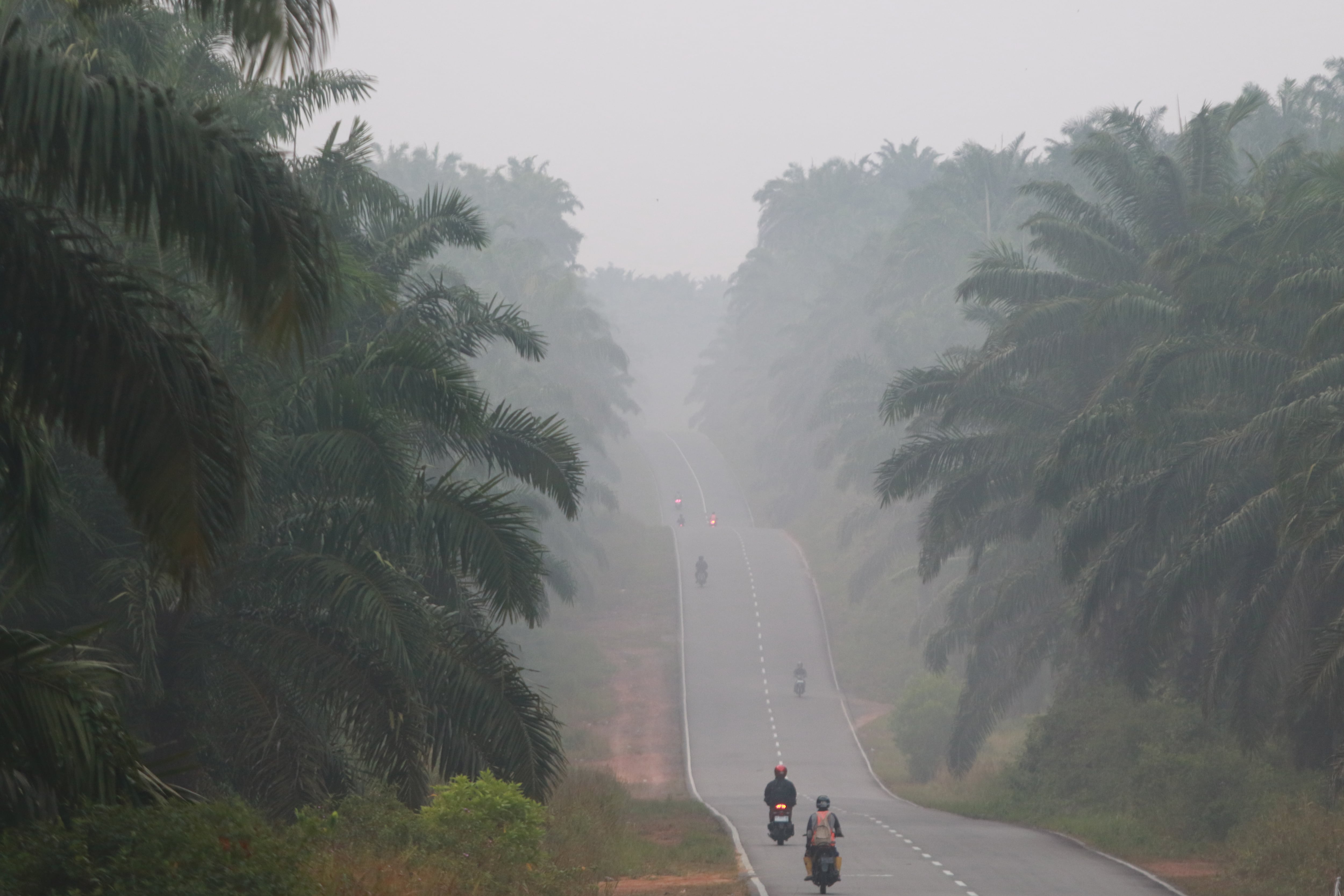
A highway shrouded in smoke from fires in early September on the Indonesian island of Bintan.
  •  

Sudan gold mine collapse leaves more than 80 dead

At least 82 bodies had been recovered, according to local officials and activists, while dozens of other miners were feared trapped or missing. The latest figure represents an increase from the 67 deaths earlier reported by the Sudan Doctors Network as rescue operations continued.

The collapse occurred in an area controlled by the paramilitary Rapid Support Forces (RSF), which has been fighting Sudan’s military since April 2023. The continuing war has severely weakened state institutions and access to basic services across large parts of the country.

Limited rescue efforts

In a statement, the Sudan Doctors Network said they lacked basic safety and protective measures required at mining sites. It said search and rescue operations were continuing to locate survivors and people trapped beneath the rubble, warning that the death toll could rise.

The network called out the negligence that had exposed miners to grave risks and called on the authorities controlling the area to protect mining workers, provide medical and logistical support, and prevent unregulated mining activities from continuing without adequate safety measures.

Rescue operations have themselves been severely constrained. Murtada Ahmed, spokesman for the Kordofan Human Rights Observatory, told Radio Dabanga that the operation was progressing slowly because almost no specialized equipment was available. Local residents and miners have largely been forced to rely on their own efforts and basic machinery to recover bodies and search for people trapped underground.

A wider artisanal mining crisis

The disaster in Sudan comes only weeks after another major artisanal mining tragedy in the Central African Republic, where more than 100 people were killed when an artisanal gold mine collapsed following a landslide in the western part of the country.

Informal and small-scale mining provides a livelihood for millions of people and remains an important source of income in communities where formal employment opportunities are limited. At the same time, miners frequently work in dangerous conditions, with limited regulations, protective equipment, geological assessments, and emergency rescue capacity.

In Sudan, gold mining has become particularly important following the country’s economic collapse and war. The sector includes thousands of small-scale and informal operations, while gold-producing areas have also become economically and strategically important to the rival forces fighting for control of the country.

Disaster as Sudan’s war continues

The mine collapse is taking place as the war that has devastated Sudan since 2023 continues, producing widespread displacement, hunger, and the breakdown of essential services.

Read more: The Blue Nile front: Sudan’s war intensifies along Ethiopia’s border

West Kordofan is among the areas affected by the conflict between the RSF and the Sudanese Armed Forces. The control of mining areas by armed actors has added another layer of vulnerability for workers and surrounding communities.

  •  

The Jigjiga incident raises questions about Somali soldiers' involvement in the Sudan war

The reported detention of Somali soldiers in Ethiopia's Somali Region has drawn attention to a Saudi-backed military training programme in central Somalia and raised the question of whether the initiative is intended solely to rebuild Somalia's national army or could serve a wider regional purpose, writes Mohsin Osman.

Somali authorities have confirmed that troops trained at the Xananbuure camp in Galmudug crossed into Ethiopia. Somalia's National Security Adviser, Aways Haji Yusuf, said on 1 September that the soldiers had permission to visit their families, that the federal government knew they were in Ethiopia's Somali region, and that they took the route through Ethiopia to avoid insecure areas inside Somalia. He added that any further developments would be shared with the media.

That explanation has not settled the number of soldiers involved, the circumstances of their detention or the wider purpose of a foreign-funded programme that has trained thousands of Somali recruits with the help of foreign instructors. Regional outlets have also linked the programme to allegations that Saudi Arabia is supporting recruitment for Sudan's war, with indications that it was designed to supply fighters to the Sudanese Armed Forces.

The crossing and the detention

The incident emerged in late August, when reports placed newly trained Somali soldiers in the custody of Ethiopia's Somali Regional State. Garowe Online reported that some accounts described the men, numbering about 300, were detained and transferred to Jijiga, the regional capital. Sunatimes, citing Somali intelligence sources, pegged the number at 316 but said it had not confirmed that number with Ethiopian authorities.

The soldiers who were said to be travelling in a convoy of hired vehicles were reportedly intercepted and held by regional police. The reports say the detained soldiers had been recruited from Ethiopia's Somali Regional State before joining the Somali federal programme, which Yusuf's statement did not address. Neither Addis Ababa nor the Somali regional government has given a public reason for the detention, according to WardheerNews.

The Saudi-backed military programme in Somalia

The soldiers belong to a class of roughly 3,000 who graduated from Xananbuure, in the Galgaduud region of Galmudug, on 16 August after nearly a year of training. President Hassan Sheikh Mohamud presided over the ceremony, which The Defense Post described as the largest cohort trained inside Somalia since the collapse of the central government in 1991, with Saudi military representatives in attendance and instructors from Ukraine, Romania and Sudan delivering the course.

The programme follows a memorandum of understanding on military cooperation that Somalia's Defence Minister, Ahmed Moallim Fiqi, signed with Saudi Defence Minister Prince Khalid bin Salman in Riyadh on 9 February 2026. Somalia's Ministry of Defence said the agreement covered multiple areas of common interest, and neither government released further details, Al Jazeera reported. Horn Review reported that the initiative aims to train up to 5,000 recruits over nine months, and July reports placed enrolment at 5,107 across two camps in the Guri El area, including about 2,000 recruits from Puntland.

While Saudi Arabia financed the military training programme under the February agreement, there is no evidence that Saudi officials control the recruits' deployment or decide where they serve.

How Sudan entered the story

The Sudan allegation comes from a separate set of reports, not from anything established about the soldiers held in Ethiopia.

Kenya's Standard reported on 24 July that Saudi Arabia was overseeing a programme in Galguduud involving more than 5,000 Somali recruits, run by contractors from Romania, Ukraine, South Africa and Colombia, and that recruits were being prepared for later deployment alongside the Sudanese Armed Forces. The report described the Somali programmes as Saudi-funded and had raised the possibility that some trainees would be sent to Sudan's battlefronts. Ethio Negari also made the same claims three days earlier. However, none of the parties named had commented.

The presence of Sudanese instructors at Xananbuure presents the strongest documented link between the camp and Sudan, although it predates the Saudi agreement. Geeska reported in February, citing Africa Intelligence, that a team of Sudanese military personnel had trained roughly 1,000 recruits in Galmudug over the preceding months without public announcement, under the oversight of Somalia's National Intelligence and Security Agency.

The Jijiga case also sits alongside a distinct allegation from Ethiopia's north. Prime Minister Abiy Ahmed told the House of Peoples' Representatives on 7 July that young people from Tigray, including minors, were being forcibly recruited and smuggled to fight in Sudan's war, and that they were dying in a conflict they neither understood nor had any connection to, according to Addis Standard and other outlets that covered the session. The Tigray People's Liberation Front rejected the substance of his remarks days later, according to a situation report by Europe External Programme with Africa.

  •  

Classified documents plunge Sudanese army back into 'chemical weapons' controversy

The Sudanese Armed Forces (SAF) are facing fresh accusations of employing chemical weapons in the ongoing conflict against the Rapid Support Forces(RSF), with the latest reports coming from US media outlets, writes Mohsin Osman.

On Saturday (5 September), The New York Times and The Washington Post published dual investigative reports based on leaked intelligence materials. The files include approximately 150 documents, photographs, video clips, and intercepted communications, alongside thousands of text messages retrieved from the phones of Sudanese officers.

The evidence points to an alleged program established in 2024 to manufacture chlorine-based munitions. It details bomb design blueprints, testing operations, and a coordinated cover-up strategy initiated after the plot was uncovered by the United States. The records also outline plans to siphon chlorine gas from a civilian water treatment facility that had originally received the chemical from international aid agencies.

These revelations reignite long-standing allegations of chemical weapons usage that have shadowed SAF leadership since last year, significantly heightening international pressure on the military command.

The United States previously imposed sanctions on Sudan in May 2025 over allegations that the military deployed chemical weapons during the conflict in 2024. The sanctions took effect on July 20, 2025. Authorities in Port Sudan have consistently rejected these accusations, maintaining that they do not produce, stockpile, or use chemical weapons, and emphasizing their adherence to the Chemical Weapons Convention (CWC).

A covert programme amid escalating pressure

According to The New York Times, the SAF turned to chemical weapons early in 2024 to break a strategic stalemate, as RSF fighters held firm control over most of the capital, Khartoum.

Leaked records show that Brigadier General Tariq Hussein emerged as a central figure in July 2024, orchestrating the design, planning, and execution of the program. Intercepted messages reveal that Hussein proposed using chlorine to give army forces a tactical edge in the battle for Khartoum. He distributed prototype schematics for an explosive warhead integrated with roughly 33 pounds of chlorine gas, with production commencing that same month.

In messages published by the Times, Hussein noted that the hybrid munitions were designed to maximize lethality—either by shrapnel fragmentation or chlorine gas poisoning—asserting that the explosion would destroy all chemical traces of the attack.

On July 22, an Antonov cargo plane took off from Merowe Airport, roughly 200 miles north of Khartoum, to conduct a test launch. Following the trial, Hussein reported that the experiment was a "100 percent success," attaching a video of a desert explosion and confirming that the munition "hit the target and released the gas."

Brigadier General Amir Idris, identified in records as the supervisor of military drone operations, responded with a single directive: "Top Secret."

Technical hazards and signs of lethality

The communications reveal that the program faced severe technical flaws. Chemical leaks were a recurring issue; on one occasion, workers found dead insects and scorpions on the floor of a hangar after overnight exposure to leaking gas.

The incident underscored the volatile nature of the agent being handled long before it reached the battlefield. Concurrently, the program faced a critical challenge in securing a steady supply of chlorine.

Diverting humanitarian chlorine supplies

According to The New York Times, 20 cylinders of chlorine gas were smuggled across the border from a neighboring country in late August 2024. Hussein calculated that this batch would yield roughly 1,100 bombs.

Hussein subsequently sought internal sources, turning to local civilian infrastructure in violation of international norms. He admitted to sourcing additional chlorine from the Al-Manara water treatment plant in Omdurman—one of the few remaining operational facilities amid the war.

"Al-Manara has some of those cylinders, and we took them from there," Hussein stated in an August 26 voice message to Idris.

The diversion of these supplies carries significant gravity, as the chlorine at the plant was intended for emergency water purification during cholera outbreaks rather than military application.

The International Committee of the Red Cross (ICRC) confirmed to the Times that it had donated 30 chlorine cylinders to the plant in 2023, while CARE reported delivering 35 cylinders across 2024 and 2025. A UNICEF spokesperson added that the organization supplied chlorine to six treatment plants in Khartoum, including Al-Manara, between 2023 and 2025.

By October 2024, Hussein reported manufacturing approximately 300 chemical munitions, most of which were stored at Merowe Airport.

Earlier in September, Hussein sent a notable message to a colleague stating, "They drank the gas," describing an attack on RSF fighters at the Al-Jaili oil refinery north of Khartoum. This account aligns with claims made by the RSF on September 13, when the paramilitary group issued a statement accusing the army of firing "toxic" missiles at the refinery. Footage circulated online at the time showed men in civilian clothing inside the facility wearing oxygen masks.

Command responsibility and cover-up efforts

The New York Times indicates that the program was likely shuttered once U.S. officials detected its existence and moved to apply targeted sanctions.

Intercepted communications reveal that the head of Sudan’s Armed Forces, General Abdel Fattah al-Burhan, instructed Hussein to "erase all traces" of the operation. The response back was: "The operation was completed a month ago."

During a subsequent round of measures in June, the U.S. sanctioned Hussein for importing explosives for bomb production, though that specific designation did not explicitly cite chemical weapons.

By that time, Burhan had established an internal committee to investigate the U.S. allegations. According to documents in the file, Hussein himself—the architect of the program—was appointed as an advisor to the panel.

The intelligence indicates that General Burhan was not merely informed after the fact, but was directly involved in overseeing the chemical weapons program. His direct knowledge was a primary factor in the U.S. decision to impose sanctions on him in January 2025.

While proving chemical weapons usage in conflict zones remains complex, arms experts consulted by The New York Times concurred that available evidence strongly points to their deployment in the Sudanese conflict. However, they stressed the necessity of an independent field investigation.

Addressing the findings, the Emergency Lawyers group, a Sudanese legal advocacy organization, issued a statement calling for a transparent international probe. The group urged that "international experts be granted safe, unconditional access to targeted sites, enable the physical examination of munitions fragments and delivery systems, and be permitted to interview witnesses and victims independently and securely."

  •  

Communicating Vessels: How, Through the West’s Fault, Libya and Sudan Became a Single Disaster Zone

In the news feeds, Libya and Sudan exist as separate storylines: one is remembered when the conversation turns to migrants, the other when bombs fall on Khartoum. Two wars. Two countries. Four thousand kilometers of coastline that never meet, and a thousand kilometers of shared desert that connects everything. On the map of real influence, […]
  •  
❌