Reading view
Republican Senator Says Trump’s Russian Diesel Deal May Be Illegal
Ukraine Strikes at Heart of Russia’s Oil Network as Samara Hub Comes Under Repeated Attack
Ukrainian forces have attacked one of Russia’s most important oil transport and blending facilities for the third time this month. The Samara hub handles crude from several major producing regions and plays a central role in preparing Russia’s Urals export blend, making it a target of considerably greater strategic significance than an ordinary oil depot.
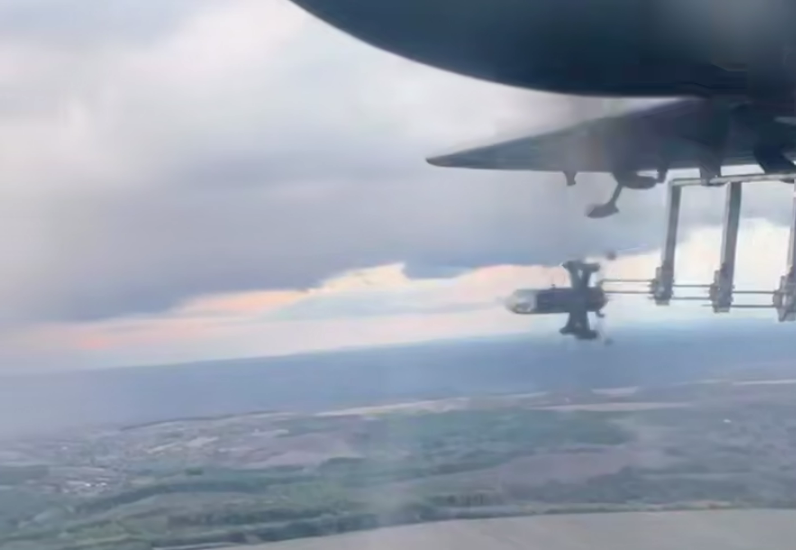
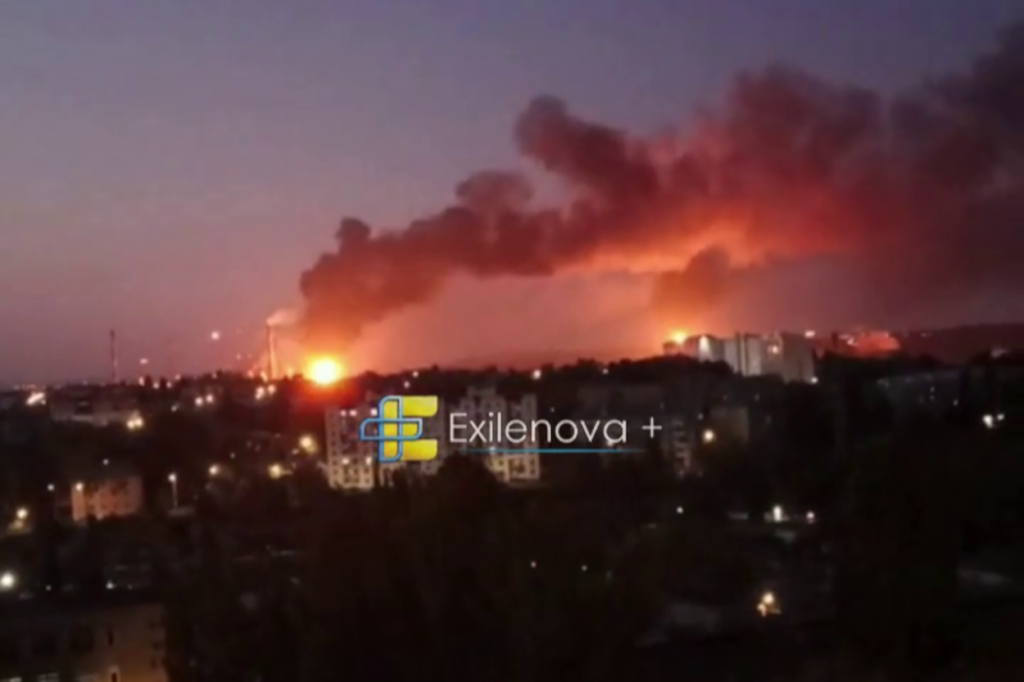
Ukraine has intensified its campaign against Russia’s oil industry with another drone strike on the Samara linear production and dispatch station, a major facility in the pipeline network operated by state-controlled Transneft. The latest attack, during the night of 9–10 October, followed earlier strikes on 2 and 7 October, which Ukrainian military authorities say caused extensive damage to storage tanks and associated infrastructure.
The significance of Samara extends well beyond the destruction of stored oil. Situated near the settlement of Prosvet in Russia’s Samara region, the installation is a junction where crude oil arriving from Western Siberia, Tatarstan and the Volga-Urals producing regions is received, stored, blended and redistributed. Its role makes it an important link between Russian oil production, domestic refining and export markets.
According to the Ukrainian General Staff’s operational report, Samara is responsible for blending crude with different sulphur contents to produce Urals, Russia’s principal export grade. Ukraine’s military says the facility also contributes to supplying the Russian armed forces.
Why Samara matters to Russia’s oil exports
Unlike an oil refinery, where crude is processed into petrol, diesel and other fuels, the Samara installation performs a function earlier in the supply chain. It is one of the points where different grades of Russian crude are brought together to produce a commercially standardised export mixture.
Western Siberian crude generally has different characteristics from oil extracted in the Volga-Urals basin, including variations in sulphur content and density. Blending these streams is essential to maintaining the specifications of Urals crude, which is supplied to refineries and sold on international markets.
Samara’s importance also reflects the sheer scale of the infrastructure concentrated at the site. Ukrainian Special Operations Forces describe a facility where four major oil pipelines converge, supported by 71 storage tanks with a combined capacity exceeding 1.6 million cubic metres.
The site’s central role is not simply a Ukrainian assessment. Transneft-Privoĺga’s management previously described the Samara installation as having Europe’s largest oil storage tank farm and identified its blending station and associated pumping installations as part of a major modernisation programme.
Approximately 140 million tonnes of oil passes through the Samara complex annually. That figure would make the installation an important concentration point within the wider Russian pipeline system.
The consequences of sustained disruption could therefore extend beyond the immediate loss of storage capacity. Damage to blending operations, connecting pipelines or loading equipment could interfere with the movement of crude towards refineries and export routes. The precise effect would depend on the functioning of alternative facilities, available spare capacity and the speed of repairs.
Three attacks in nine days
The first strike, on 2 October, reportedly damaged 11 storage tanks with capacities of 20,000 cubic metres each, three larger tanks of 50,000 cubic metres, sections of pipeline and an automated loading station. The Security Service of Ukraine confirmed that its personnel had participated in the operation alongside other branches of the armed forces.
A further strike on 7 October destroyed four large storage tanks and caused a substantial fire, according to Ukraine’s General Staff. Ukrainian Special Operations Forces subsequently confirmed another attack on 10 October, although the damage from that operation remains under assessment. The reported destruction and damage have not been independently verified in full.
The repeated attacks indicate an effort to produce cumulative disruption rather than rely on a single operation to disable an extensive industrial complex.
This approach is consistent with Ukraine’s broader campaign against Russia’s refining industry. As EU Today examined in August, repeated strikes on processing facilities can create difficulties that extend beyond the immediate damage, particularly when specialist equipment requires lengthy repairs.
From refinery attacks to the wider oil network
The campaign against Samara represents a significant extension of that strategy. Refineries remain important targets because they produce the fuels required by Russia’s armed forces and domestic economy. Transport and blending facilities, however, determine whether crude reaches those refineries in the required quantities and specifications.
Continuous attacks are essential because much of the damage inflicted by drones is repairable. Individual installations may return to service within days or weeks, meaning the cumulative effect depends heavily on whether further disruption occurs before repairs and production have fully resumed.
Russia’s refining industry remains heavily dependent on specialist equipment and technologies historically supplied by Western manufacturers. Sanctions have restricted access to replacement components, while domestically manufactured equipment and Chinese alternatives are not always technically compatible with existing installations. These constraints complicate repairs, prolong shutdowns and limit Russia’s ability to restore damaged refining capacity.
Samara presents a somewhat different vulnerability. Its importance rests on the concentration of pipeline connections, storage and blending operations at one location. A sustained interruption could affect several parts of the oil supply chain simultaneously, although the available evidence does not yet establish that the wider network has suffered a prolonged shutdown.
Ukraine has already demonstrated its willingness to strike other logistical installations. A recent attack on the Volodarskaya petroleum-products station near Moscow targeted another important part of Russia’s fuel distribution system.
Implications for Russia’s war economy
Oil remains central to Russia’s export earnings and federal finances, while the availability of refined petroleum products influences military logistics, transport and industrial activity.
The immediate economic significance of the Samara attacks will depend on how much operational capacity has been lost, whether crude can be redirected through alternative infrastructure and how quickly Transneft can restore the damaged facilities.
There is an important distinction between destroying storage tanks and preventing oil from moving through a network. The former reduces available capacity; the latter can impose broader restrictions on production, refining and exports. Establishing the extent to which the latest strikes have achieved either effect will require further operational evidence.
Nevertheless, the decision to return repeatedly to Samara illustrates a development in Ukraine’s campaign against Russia’s energy sector. Rather than concentrating exclusively on the refineries that convert crude into fuel, Kyiv is also attacking infrastructure that connects oil production to its commercial and military end users.
For Moscow, the vulnerability of Samara is particularly consequential because the installation occupies a central position in the movement and preparation of Urals crude. Any sustained loss of its blending, storage or distribution functions would introduce additional pressure into an oil system already facing repeated attacks on its refineries and export infrastructure.
The latest operation therefore raises a question extending beyond the damage to one industrial site: whether Russia can maintain reliable oil flows when several interconnected stages of its energy supply chain are subjected to recurring disruption.

Ukraine, long keeping its weapons at home, now lets 18 arms makers export, approving over 90% of more than 400 applications

Ukraine, which long kept its weapons at home, is now clearing its arms makers to sell abroad. Its Commission on Export Control has granted 18 Ukrainian companies permission to send their finished weapons abroad and has processed more than 400 export applications, with over 90% approved, the National Security and Defense Council says, citing commission head Davyd Aloian.
Ukraine now produces far more weapons than it can afford, with defense production growing from about $1 billion a year at the start of the invasion to a projected $55 billion in 2026.
The exports are reportedly conducted under the Drone Deals framework that President Volodymyr Zelenskyy unveiled in April, which allows controlled sales of surplus weapons to partner countries while the Defense Ministry and General Staff retain first claim to everything the front needs. Some categories already run up to 50% beyond what Ukraine can use or finance.
From a stalled commission to 18 approvals
The commission’s work had been halting. It resumed in February after an eight-month freeze and issued the first permits then, and its updated membership has been working since, Aloian notes.
Building partnerships abroad
Aloian framed the goal as scaling Ukrainian technology rather than one-off deals. The state wants domestic producers to expand abroad while partners get working solutions, he says, and is open to dialogue with the defense industry to fix problems as they arise.
Earlier, an industry group that represents more than 400 companies warned in September that the mechanism was choking. A new 20-to-30% fee on export permits priced Ukrainian goods out of the market, it said, and a joint-production program had stalled with hundreds of foreign bids pending.
Euromaidan Press cannot verify whether the Commission on Export Control has taken the issue into consideration.
The council recently met a UK Defense Ministry delegation to discuss closer cooperation, including a Drone Deal, an anti-ballistic coalition, and joint production, Aloian adds. Reaching foreign markets enables producers to attract new orders and investment, scale up, and build long-term partnerships.
Read also
-
EU blacklists 1,569 Russian arms suppliers and their bosses in its biggest sanctions round ever, as Trump eases up on Moscow
-
Zelenskyy says Ukraine could hold elections if Russia agrees to 60-day ceasefire. Moscow counters with truce lasting only voting day
-
Ten years on, Britain’s prime minister says Russia meddled in the Brexit vote—and warns Germany and France
Trump Strikes Diesel Deal With Putin to Lower Fuel Prices Ahead of Midterms
Russia sells cheaper fuel abroad and pays to keep its own pumps running amid Ukraine’s refinery strikes, but crude money still flows

Russia's seaborne exports of refined oil products rose to a three-month high in September, but the growth came from cheaper fuel oil and naphtha as diesel shipments fell to their lowest in more than a decade, Bloomberg reported, citing Vortexa data. Russia kept diesel at home after Ukrainian refinery strikes and paid oil companies to supply its pumps, while high crude prices lifted its crude export earnings.
During the ongoing deep-strike campaign, Ukraine's long-range drones have knocked out more than half of Russia's oil refining capacity, Kyiv says, and Russia's budget oil revenues are falling even as it raises war spending. High global crude prices are softening that blow.
Cheaper fuel out
Total seaborne product exports reached about 1.17 million barrels a day in September. Fuel oil shipments rose 6% to about 613,000 barrels a day, the highest since April. Naphtha, a feedstock for petrochemicals, jumped 35% to 363,000 barrels a day. Exports of refinery feedstocks, including vacuum gasoil, rose to about 32,000 barrels a day, according to Bloomberg.
The trade has moved north. Almost 80% of fuel oil cargoes left from Baltic ports, and naphtha loadings there rose almost 50% as Ukrainian attacks disrupted Black Sea infrastructure. In September, Ukraine reported hitting an oil terminal in Novorossiysk, Russia's main Black Sea oil port—one in a string of attacks on Russia's Black Sea ports and oil sites.
More than 500 drones by Moscow’s count: Kh-101 fuel plant, second Yandex data center, and a far-north refinery hit
Diesel kept at home
Diesel and gasoil exports fell 28% to 144,000 barrels a day, the lowest monthly volume in Vortexa data going back more than a decade. Russia has restricted diesel exports to protect domestic supply after Ukrainian attacks on its refineries. Drones kept hitting them into October, from a Lukoil refinery in Volgograd to Gazprom's Salavat complex in Bashkortostan.
In September, Russia paid oil companies the biggest subsidy in more than four years to keep road fuel on the domestic market. It also imported about 350,000 tonnes of motor fuel by sea, mostly gasoline from India, Morocco, and Türkiye, Reuters calculations showed. Officials are considering letting some producers resume diesel exports in October to avoid overstocking, according to Interfax.
The diesel squeeze has reached the White House. US President Donald Trump stated on 30 September that diesel was hurt "not by the Middle East, but by what's going on in Russia, because those diesel refineries are being knocked out at a pretty alarming rate."
Crude carries the revenue
Russia's crude exports reached about 3.99 million barrels a day in the week to 27 September, and the estimated value of its seaborne crude shipments neared its highest since the full-scale invasion began, Bloomberg reported. Brent crude traded at about $102.60 a barrel on 9 October, according to Trading Economics data.
Read also
Russia’s war against Ukraine sends the bill to its own companies: bond defaults head for a 17-year high

More than 50 Russian companies could default on their bonds this year, the most since 2009, a rating-agency analyst told Russian newspaper Izvestia, which reported it on 6 October.
Russia's wartime economy is straining under high interest rates, and the budget is too: the 2026 deficit has nearly doubled from the earlier forecast to a record $88 billion, with more deficits planned for the next three years as Moscow raises taxes to fund the war and plans its biggest defense budget since the full-scale invasion began.
A default is a situation in which a company cannot make promised interest payments to investors on time or repay borrowed money. If a payment is not made by the agreed deadline, the company becomes delinquent, which under certain conditions is recognized as a default.
So far this year, 20 companies have defaulted for the first time, compared with 24 in all of 2025, said Mikhail Nikonov of the Expert RA rating agency. Most of the companies that missed payments are small issuers of high-yield bonds, Izvestia reported.
In 2026, Russian companies have missed payments totaling 41 billion rubles (about $490 million), compared with 34 billion rubles (about $410 million) the previous year, according to investment bank Sinara.
Russia faces a new wave of corporate defaults
By the end of 2026, the number of Russian companies unable to service their ruble-denominated debt on time could reach 40–50, the highest level since 2010, said Pavel Zholobov, junior managing director at the NRA rating agency.
The number of bond defaults in 2026 has already reached its highest level in a decade, Zholobov said. Similar figures were recorded in the mid-2010s: in 2014, 35 companies missed payments; in 2015, 52 did so; and in 2016, there were 44 issuers. This occurred in part after Western sanctions were imposed on Russia over its annexation of Crimea and its war in Donbas, as well as amid a halving of oil prices and a sharp weakening of the ruble.

There were more defaults only in 2009. At the time, amid the fallout from the global financial crisis, more than 100 issuers faced payment problems, while the volume of distressed debt reached nearly 200 billion rubles, Zholobov noted.
High interest rates put pressure on companies
This time, the main reason for companies' difficulties in making bond payments has been the prolonged period of high interest rates, which has continued since 2023. Companies are raising financing at high interest rates but are unable to refinance their debt on more favorable terms, explained Ekaterina Sidorova, head of the Foreign Exchange, Commodities and Debt Markets Department at SberCIB Investment Research.
At the same time, the situation does not yet resemble a systemic debt crisis: defaults are primarily being recorded among companies with low credit ratings and high debt burdens, Sidorova said.
If a company fails to repay bond debt, it is given 10 business days to meet its obligations. If it fails to do so, the company may offer investors a restructuring—for example, by postponing payments in exchange for a higher interest rate.
The number of defaults will remain high in 2027, Sidorova believes.
High interest rates were a response to accelerating inflation in Russia. Domestic demand was outpacing production, Russia's Central Bank said in October 2023. Sanctions over the war and rising defense spending had also hit the economy and the ruble, which had lost about 25% against the dollar that year. The bank raised its key rate from 7.5% in the first half of 2023 to 15% by the fall.
Ukraine targets Russia's oil industry to weaken its war economy
Ukraine is also seeking to weaken Russia's economy as part of efforts to reduce its ability to finance the war. In particular, Defense Minister Yevhenii Khmara said strikes on oil refineries are aimed at "bleeding the Russian war machine" and destroying its military and economic potential. According to the ministry, the attacks have knocked out more than 51% of Russia's oil refining capacity.
In the first half of July, Russian oil refineries processed about 3.9 million barrels of oil per day—the lowest level since March 2005. Due to the production cuts, Moscow was also forced to restrict fuel exports.
Ukrainian drugmakers sold $114 million worth of medicines to Uzbekistan in six months. Now they may lose the right to sell there

Ukrainian drugmakers could lose the certificates that let them sell in Uzbekistan, their most important export market, Ukrainian business outlet Ekonomichna Pravda reported on 7 October. Uzbekistan is ending remote factory inspections next year, and industry sources say its inspectors are wary of traveling to a country at war.
Russia's war keeps reshaping Central Asia's trade with both warring countries: Ukrainian refinery strikes pushed Russian fuel shortages into the region, and Kazakhstan gained leverage over a Russian retail giant.
A market worth a third of export earnings
Uzbekistan brings in about 30% of the Ukrainian drug industry's foreign-currency earnings, and one in 10 medicine packs sold there is Ukrainian, Ekonomichna Pravda wrote. By the outlet's count, at least three of Ukraine's five biggest drugmakers by revenue rank it as their top foreign market.
The currency from Uzbekistan lets manufacturers keep prices low in Ukraine and absorb losses from Russian strikes, three industry sources told Ekonomichna Pravda. Losing the market would force producers to raise domestic prices or pull low-margin medicines, which "will hit the Ukrainian patient," said Hennadii Vovk, former deputy head of Ukraine's State Service on Medicines and Drug Control.
Exports reached $114 million in January–June 2026, more than in all of 2021, said Yevheniia Piddubna, government relations head at Farmak, Ukraine's largest drugmaker. She said Uzbekistan takes 35% of Farmak's exports.
Data from the YouControl business registry, cited by the outlet, complicates that picture. In 2022, 30–35% of Farmak's products went to Uzbekistan. In 2025, Uzbekistan was not among its direct buyers. Farmak explained that wartime currency rules cap payment terms at 180 days, while foreign buyers often demand longer. So part of its trade runs through the group's Polish company.
Remote checks end, and inspectors hesitate to travel
Uzbekistan grants three-year certificates of good manufacturing practice (GMP) after inspecting the factory. Since the pandemic, it has allowed remote checks. That suited Ukraine, where Uzbek experts avoided traveling because of Russia's invasion, industry sources told the outlet. Remote inspections end on 1 January 2027.
Ukraine funds its war from wages, and a 1971 law keeps millions of women from earning them
Most Ukrainian certificates expire within a year. Farmak's runs out in November 2026, and the company may not manage to renew it in time. Three producers renewed under the old rules until 2029: Darnytsia, the Borshchahivskyi Chemical and Pharmaceutical Plant, and Farmex Group. According to Piddubna, Uzbekistan's regulator has drafted rules for remote inspections in force-majeure cases, but nothing has been put into practice. Industry sources said the Uzbek Presidential Administration must sign off.
Producers have asked the Office of the President, the Foreign Ministry, and the Health Ministry to raise the issue with Uzbekistan's government, but no Ukrainian experts have been sent there yet, the outlet reported. Russia, whose share of the Uzbek drug market is almost the same as Ukraine's, is ready to take Ukraine's place, its sources said.
How Yemen’s renewed civil war could set the whole region ablaze

The Middle East has seen many explosions of violence in recent years. But while the US-Iran war has grabbed the headlines this year, the rapidly escalating conflict between the Houthis and Yemen’s internationally recognized government and Saudi Arabia risks becoming just as consequential for the region. The complexity of Yemen’s internal conflict cannot be underestimated. […]
The post How Yemen’s renewed civil war could set the whole region ablaze appeared first on Asia Times.
The China factor behind the Iran war

The war between the United States and Iran is no longer just a confrontation between Washington and Tehran. A second contest is taking shape alongside and behind it. China is not fighting the United States directly, but its economic, technological and diplomatic links to Iran are complicating Washington’s strategy and ability to win the conflict. […]
The post The China factor behind the Iran war appeared first on Asia Times.
Cheniere Signs 22-Year LNG Supply Deal With Petrobras
Russian Crude Exports Boom Blunted by Kremlin’s Diesel Sales Ban
LNG Canada Greenlights Phase 2, Doubling Export Capacity
Russia Can Restart 80% Of Black Sea Grain Export If Attacks Stop
Pakistan, Saudi Arabia set $3 billion agricultural export target within two years
Pakistan exported about 169,000 metric tons of rice to Saudi Arabia in 2025, worth around $163 million.
The post Pakistan, Saudi Arabia set $3 billion agricultural export target within two years appeared first on BOL News.
Corn, wheat prices surge to multi-year highs on divergent supply threats
CHICAGO: Corn and wheat futures have rallied to their highest prices in more than three years, though the factors driving the gains for each crop remain distinctly different. Wheat futures settled Friday at $7.84 per bushel, up 3.1% on the day, after hitting an intraday peak of $7.9025, the highest level since Feb. 14, 2023. ... Read more
The post Corn, wheat prices surge to multi-year highs on divergent supply threats appeared first on BOL News.
Jordan’s total exports jump 14.5% in H1 as trade deficit narrows
Purchases of crude oil and petroleum products increased 58.1%.
The post Jordan’s total exports jump 14.5% in H1 as trade deficit narrows appeared first on BOL News.
EU imports of goods outpace exports in Q2 2026
In the second quarter of 2026, the EU recorded a trade deficit of €21.8 billion, as goods imported from non-EU countries (€701.8 billion) exceeded exports (€680.0 billion). This is the first trade deficit registered since the second quarter of 2023, the last of a series of deficits fuelled by soaring energy costs observed between late 2021 and mid-2023.
The deficit in the trade balance was primarily due to an increase in the deficit on energy products (from -€71.3 billion in Q1 2026 to -€101.1 billion in Q2 2026), raw materials (from -€7.9 billion to -€9.4 billion) and other manufactured goods (from -€8.3 billion to -€9.1 billion). Additionally, there was a reduction in the surplus of machinery and vehicles (from €24.9 billion in Q1 2026 to €23.2 billion) and other goods (from €11.6 billion to €9.1 billion).
On the other hand, there were surplus increases for chemicals (from €47.1 billion to €54.0 billion) and food and drinks (from €10.7 billion to €11.5 billion).
Source dataset: ext_st_eu27_2020sitc
Overall, exports increased by 5.4% (+€34.9 billion) and imports by 9.9% (+€63.4 billion) compared with the previous quarter.
Exports and imports had been declining since the second quarter of 2025, a trend that halted in the first quarter of 2026. Those declines had been partly attributed to tariff tensions.
Source dataset: ext_st_eu27_2020sitc
For more information
- Statistics Explained article on extra-EU trade in goods - latest developments
- Thematic section on international trade in goods
- Database on international trade in goods
- International trade in goods – a statistical picture
Methodological note
Products are defined according to the standard international trade classification (SITC). The main categories are:
- food, drinks and tobacco (Sections 0 and 1 - including live animals);
- raw materials (Sections 2 and 4);
- energy products (Section 3);
- chemicals and related products (Section 5 - including pharmaceuticals and plastics);
- machinery and transport equipment (Section 7);
- other manufactured goods (Sections 6 and 8);
- other goods (Section 9).