
❌

Reading view

Guatemalan Farmer Organizations to Hold Mass Demonstrations
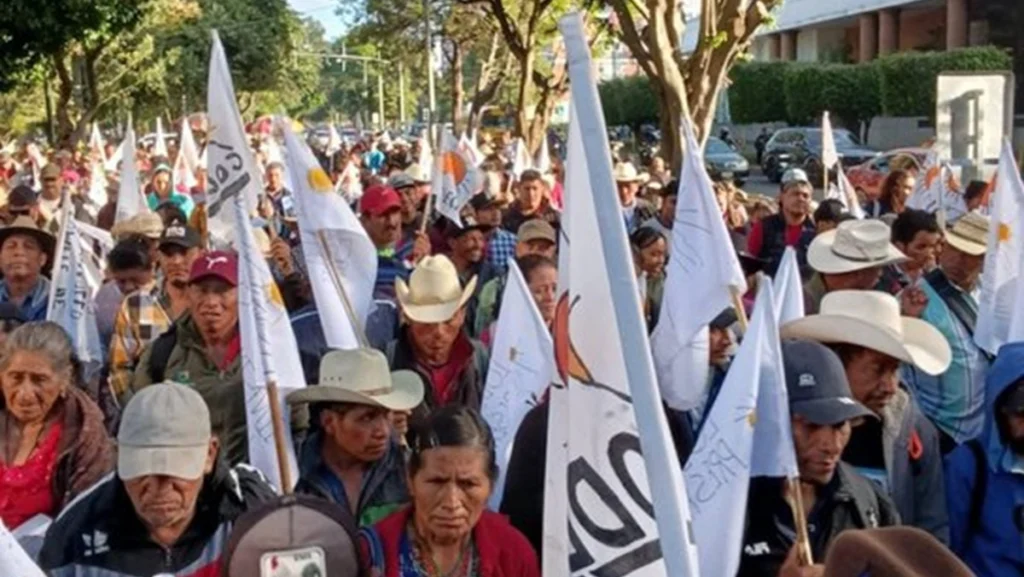
They demand measures to curb inflation, nationalize electricity service, and organize a plurinational constituent assembly.

On Monday, the Farmer Development Committee (CODECA), the Altiplano Farmer Committee (CCDA) and the National Front for Struggle (FNL) will hold mass demonstrations in Guatemala’s main departmental capitals.

RELATED:

Guatemala Sets Temporary Fuel Price Caps

The mobilizations aim to pressure authorities to address a broad agenda of economic, social, judicial and political demands.

In a joint statement, the organizations called on the executive branch and Congress to adopt urgent measures to curb inflation and lower the cost of living.

As part of their economic proposals, they criticized subsidies granted to companies that import hydrocarbons and proposed redirecting those funds toward the construction of a national refinery.

They also demanded the nationalization of electricity service, criticizing distributor Energuate for its high rates in communities.

#AHORA Integrantes de los movimientos sociales CODECA, FNL, CCDA y sociedad civil llevan a cabo una caminata con motivo del Día de la Raza, que se conmemora cada 12 de octubre, en protesta "por la grave situación económica, social y política que atraviesa Guatemala" | Vía Omar… pic.twitter.com/3F8OhvWutN

— Emisoras Unidas (@EmisorasUnidas) October 12, 2026

The text reads, “Members of the social movements CODECA, FNL, CCDA and civil society conduct a walk on the occasion of Race Day, which is celebrated every 12 October, in protest ‘for the serious economic, social and political situation that Guatemala is going through’.”

On administrative and budgetary matters, the social organizations proposed capping the salaries of lawmakers and senior public officials at a maximum of five minimum wages. The groups suggested using the savings generated by this measure to finance the purchase of medical supplies and the construction of laboratories across the public hospital network.

On legislative matters, they called for the repeal of Decree 8-2023, which introduced reforms to the Criminal Code and the Law Against Organized Crime. They also rejected Initiative 6816, concerning the Water Law, calling for any water-related legislation to be drafted with the active participation of communities.

The demands also extend to the justice system and the country’s institutions. The organizations called on the Public Ministry to investigate judicial officials, magistrates, and legislators over ties to corruption networks and organized crime.

Likewise, they demanded an immediate halt to evictions and systematic persecution of Indigenous and farmer leaders. They also called for the resignation of Walter Mazariegos, rector of the University of San Carlos (USAC), as well as magistrates of the Supreme Court of Justice and the Constitutional Court.

Finally, the Farmer Development Committee, the Altiplano Farmer Committee and the National Front for Struggle also emphasized the need to coordinate a collective process aimed at establishing a popular, plurinational constituent assembly.

teleSUR/ JF

Source: teleSUR
  •  

One in seven Latin American children threatened by El Niño: ‘This crisis can be mitigated’

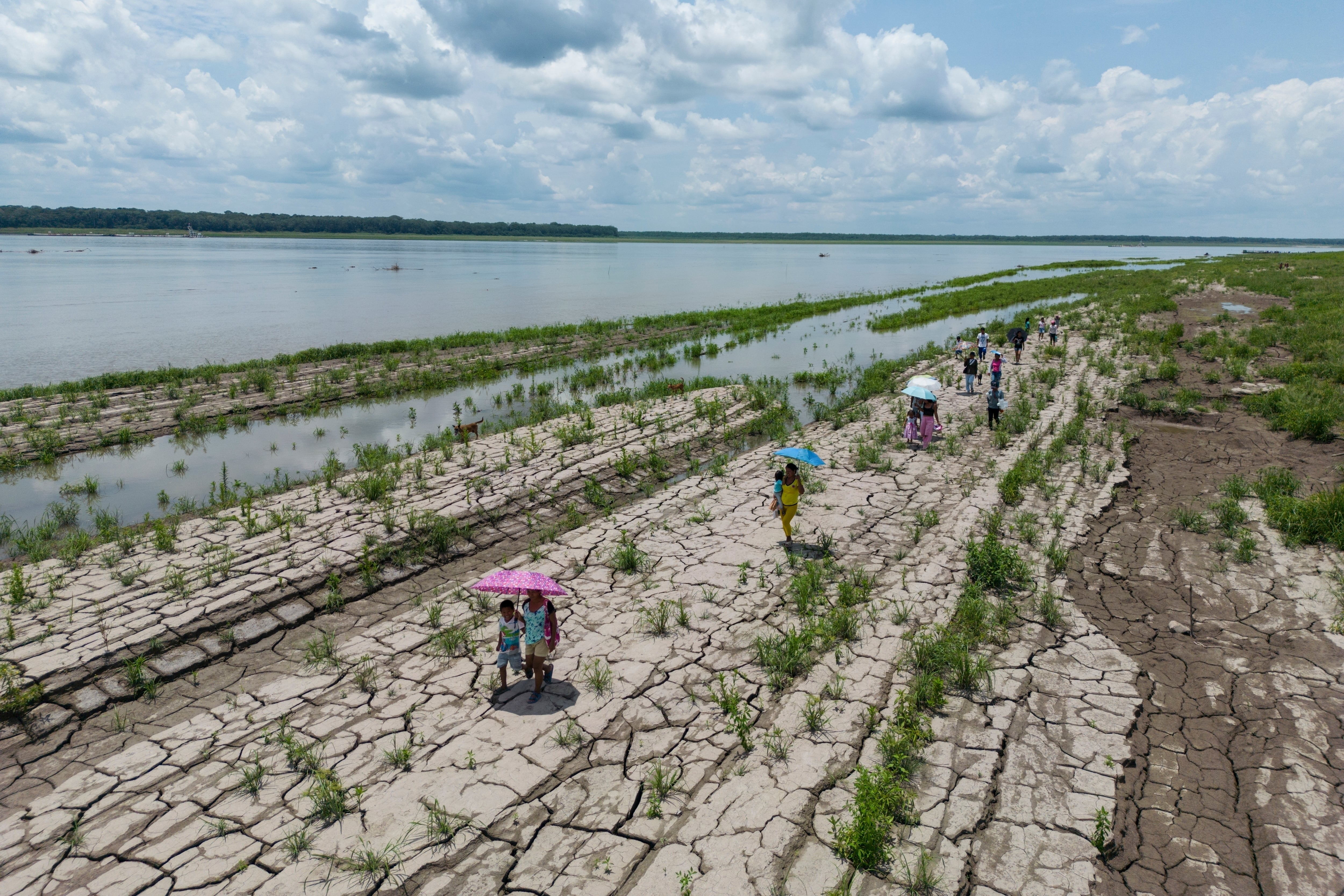
This is the driest year on record in Tegucigalpa. Eighty percent of Honduran territory is on red alert, and the capital has had a potable water rationing system every 12 days for a month. The lack of rain is making maize and bean crops in Guatemala — the main food source in a country with the region’s highest rate of chronic child malnutrition — even more vulnerable. The Panama Canal has begun restricting vessel traffic because of water stress in the basin, and the parched Amazon rivers are isolating dozens of riverside communities in Brazil and hampering fishermen’s work.

Seguir leyendo

© Ivan Valencia (AP)

A section of the Amazon River showing signs of drought in Santa Sofía, Colombia, on October 20, 2024.
  •  

EU welcomes Cambodia to WTO appeal arrangement

The EU welcomes Cambodia’s decision to join the Multi-party Interim Appeal Arbitration Arrangement (MPIA) for WTO members, contributing to efforts to uphold a rules-based multilateral trading system. 

With Cambodia’s participation, the MPIA now covers 62 World Trade Organization (WTO) members and 60.4% of world trade.  

The MPIA brings together participants from all continents and at different levels of development, united by a shared commitment to upholding the rules-based trading system. 

The MPIA preserves the right to appeal in trade disputes among participating WTO members, at a time when the WTO’s Appellate Body remains non-functioning. It helps ensure that disputes can continue to be resolved in an orderly and binding manner, avoiding appeals 'into the void'. 

“I welcome Cambodia to the MPIA. The arrangement plays an important role in upholding the rules-based trading system. Each new participant helps reinforce the predictability, stability and credibility of global trade rules. I encourage other WTO members to join the MPIA,” said EU Trade and Economic Security Commissioner Maroš Šefčovič. 

Background 

The MPIA was established in 2020 and has proven its effectiveness in many WTO disputes.  

Under the MPIA, appeals are heard by arbitrators randomly selected from a pool of 10 standing appeal arbitrators set up by the participating WTO members. These arbitrators are persons of recognised authority, with demonstrated expertise in law, international trade and WTO agreements.  

The MPIA is open to all WTO members as a practical tool for appeal arbitration, pending the restoration of a reformed and fully functioning WTO dispute settlement system. 

As of 1 June 2025, the MPIA has an updated pool of appeal arbitrators to ensure that appeals continue to be heard by independent arbitrators of the highest calibre. 

At the WTO Ministerial Conference that took place earlier this year, MPIA ministers stressed the importance of the MPIA for the security and predictability of the multilateral trading system.  

The current MPIA participants are Australia, Barbados, Benin, Brazil, Cambodia, Canada, China, Chile, Colombia, Costa Rica, Ecuador, the European Union (and its Member States), Guatemala, Hong Kong (China), Iceland, Japan, Liechtenstein, Macao (China), Malaysia, Mexico, Moldova, Montenegro, New Zealand, Nicaragua, Norway, Pakistan, Paraguay, Peru, the Philippines, Singapore, Switzerland, Ukraine, the United Kingdom, Uruguay and Vietnam.

More information

MC14: Supporting the rules-based multilateral trading system: the role of the MPIA

  •  
❌