❌

Reading view

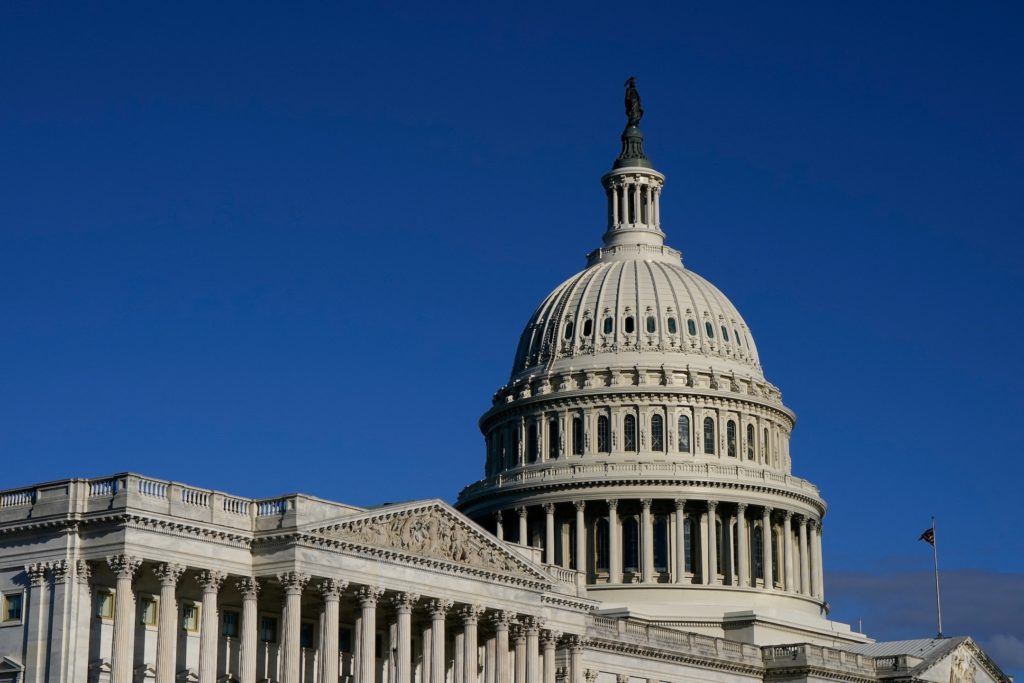
Republicans retreat from battleground districts as lines shift in House races

The shifting money in the final weeks of midterm campaigns points to a defensive posture by Republicans and new aggression from Democrats, who aim to capitalize on President Donald Trump's weak approval ratings.

  •  

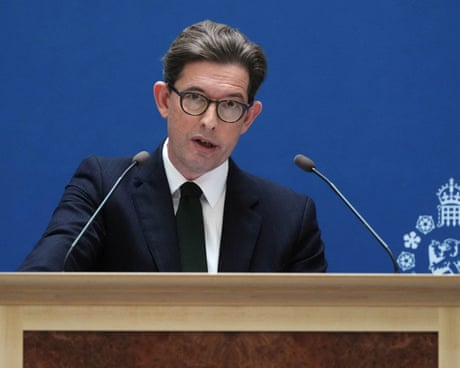
MI5 chief Ken McCallum confirms Russia did interfere in Brexit referendum but says it had little impact – as it happened

He argued there was no evidence to suggest the result of the Brexit vote had been swayed as a result of the effort

Zia Yusuf, Reform UK’s home affairs spokesperson, has said he does not agree with his colleague Suella Braverman’s assertion that black people cannot be English.

Asked about her views in an interview on Sky News, Yusuf said:

In my view Ashley Cole is the best English fullback in history, and I won’t take any other position. So in my view, Ashley Cole is English. I think the argument that he’s not English doesn’t hold water with me.

Nasser Hussain, who I grew up watching when I went to the cricket, the idea that those people aren’t English is an alien concept to me.

I would respectfully disagree with people, who make the opposite argument.

To say I’m English is to take a ‘laissez-faire, anything-goes’ attitude to ethnicity, citizenship and identity. It also denies me my Asian heritage. The liberals (many of them in today’s Conservative party) take this cosmopolitan approach to Englishness. They’re terrified of being called racist so they say that anyone, as long as they’re born here, can be English.

I take the conservative approach. Englishness is an ethnicity. There have been English people for centuries and we need to recognise this more if we are to start taking a more muscular approach to citizenship and nationality. And no, it’s not racist to say this.

Continue reading...

© Photograph: Jonathan Brady/Reuters

© Photograph: Jonathan Brady/Reuters

© Photograph: Jonathan Brady/Reuters

  •  

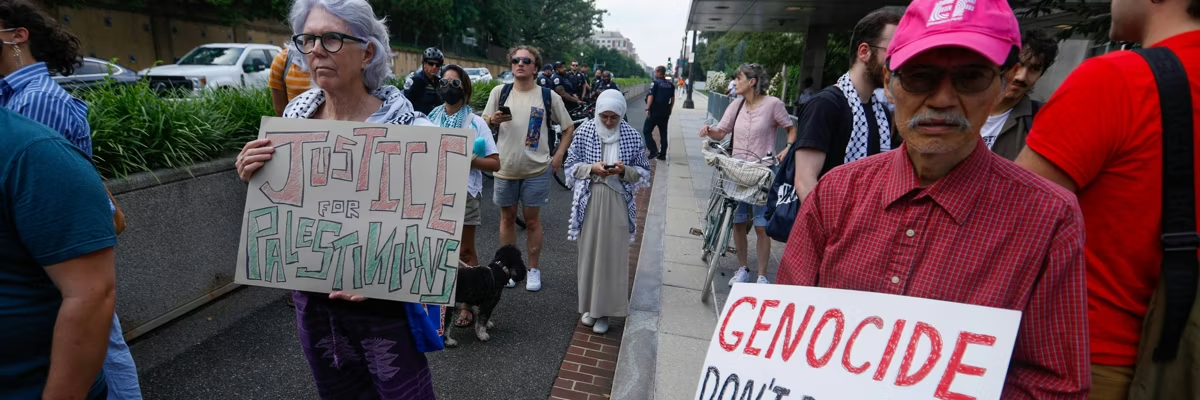
Democrats aren’t ‘breaking from Israel’—they’re rebranding the status quo

James Talarico speaks onstage during "Raging Moderates" at the Vox Media Podcast Stage at SXSW on March 14, 2026 in Austin, Texas. Photo by Rick Kern/Getty Images for Vox Media

Are top Democrats actually “shifting” on Israel, or is the PR simply getting more sophisticated? 

After the midterms wrap up and the race for the Democratic 2028 nominition for president kicks off in earnest, this will be a central question those concerned with the US role in the genocide in Gaza must grapple with clearly, honestly, and with—it turns out—a high degree of skepticism and media literacy. That’s because the forces committed to keeping the weapons flowing to Israel quickly adjusted their tactics to meet the mood of the public, and the mood of Democrats in particular. 

Last year for TRNN, I detailed the three main ways AIPAC Democrats will seek to look critical of Israel while assuring that the pro-Israel status quo remains fundamentally unchanged. Since I wrote that breakdown, a fourth talking point—and one that seems inevitable in retrospect—has emerged as a favorite of liberals who want to seem “tough on Israel,” but don’t want to upset the Israel Lobby. This line, which I documented last April, commits to “ending US aid to Israel” which, despite seeming like a meaningful break or a move left, is a policy that first emerged from Israeli Prime Minister Benjamin Netanyahu and the late US Sen. Lindsey Graham. And, as I noted, it was planned out by far-right think tanks Foundation for Defence of Democracies and Heritage Foundation—specifically designed to blunt the primary argument against support for Israel. Last January, Netanyahu told the Economist that he wants to “taper off” formal US military funding. Pro-Israel lobbying organization J-Street then took this right-wing idea and  proceeded to sell the “cut off aid to Israel” line to liberals as something they could take to their constituents as evidence that they are in line with Democratic voters’ overwhelming dislike of Israel, while not changing the status quo. Indeed, as IMEU documented in their critique of the plan, the effort would actually further entrench US-Israeli military alignment. 

The US can “cut off aid to Israel” and still very much continue to arm them. The only thing that has changed in this scenario is that Israel pays for it rather than the US government, but from the perspective of those being starved and maimed in Gaza this distinction matters about as much as the color of the bombs.

Much like the Biden White House’s slippery and misleading rebranding of “ceasefire,” the “ending aid to Israel” line relies on popular misunderstanding of what the load-bearing word means, in this instance, “aid.” In colloquial or common usage, it’s a word for general support—military, diplomatic, and financial. In reality, it simply means subsidizing—e.g. paying for—Israel’s weapons. The US can “cut off aid to Israel” and still very much continue to arm them. The only thing that has changed in this scenario is that Israel pays for it rather than the US government, but from the perspective of those being starved and maimed in Gaza this distinction matters about as much as the color of the bombs. 

As predicted, this “cut off aid” statement is fast becoming the go-to line for Democrats seeking to assure their increasingly anti-Israel base without upsetting the Israel lobby or the Democratic Senate and House leadership they are aligned with. Recently, after receiving criticism for inviting in AIPAC-linked consultants to steer his campaign, Maine Democratic Senate candidate Troy Jackson released a statement calling Gaza a “genocide” and pledging to “stop funding of Israel’s military”:

Troy Jackson’s public statement yesterday expressing his commitment to end the genocide in Gaza and stop funding Israel’s military was driven by a host of supporter letters sent directly to the campaign on those issues. pic.twitter.com/FMrMBPcU2W

— Nathan Bernard (@nathanTbernard) September 26, 2026

This is a perfect example of a J-Street-curated statement that, to the untrained eye, seems critical of Israel and committed to justice for Palestine, but actually says little of substance. There’s a lot of window dressing and gesturing, but ultimately Jackson’s policy is consistent with that of Benjamin Netanyahu’s. 

Rep. Ro Khanna, who very much appears to be running for president in 2028 and making Gaza central to his pitch for progressives, is similarly muddled in his stance. Despite supporting partial and temporary embargos here and there, Khanna told Hasan Piker in July that a full arms embargo on Israel would be “probably too far.” He has instead focused on the “cutting off aid” line that emerged out of the Israeli security apparatus and found its way into “progressive” circles via J Street.  

Democratic nominee for Senate in Texas, James Talarico, likewise gave a similarly underwhelming answer when asked about his position a few weeks later. Asked about Gaza last August on The Breakfast Club Show, he refused to label it a genocide, instead deferring to the “international criminal court” (and ignoring the overwhelming consensus of human rights groups and genocide scholars). Then he promised to “condition military aid” followed by two minutes of Obama-esque vapid empathy-speak. 

That isn’t to say all Democrats are simply rebranding the status quo. It seems, despite his campaigning with central defender of the genocide Kamala Harris, Abdul El-Sayed is expressing a firm commitment to an arms embargo on Israel. Obviously, this is also the case for DSA-endorsed candidates who are not splitting hairs or letting J-Street manage their Israel policy. But these firm commitments are the exceptions. Increasingly, what we’re seeing is a squishy mix of empathy-speak, vague gesturing, highly conditional pledges to “condition aid” and other such abstractions with little in the way of firm commitments. 

The only actions Democrats have, at scale, taken to “break from Israel” is recent spattering of Congressional votes over the past year designed to signal disapproval but change nothing of substance. These bills vary between genuine, if partial, arms embargo and the aforementioned “end aid” framework endorsed by Netyanhau and Graham. It’s complicated, but worth dissecting, because it can help illustrate how much energy and effort is going into these pseudo “breaks,” namely those being pushed by Israel lobbying group J-Street. One House bill from last July sought to “end aid” to Israel. The bill had some merit as it isolated Israel as such. But, like all of these bills, it was effectively a “messaging vote” because it had zero chance of passing, and because it aligned with the Netyanhau-approved “ending aid” framework. Almost half of Democrats in Congress supported it, including long-time reliable Israel ally Nancy Pelosi. 

A few months later, we saw the slightly more substantive, but ultimately performative, partial arms embargo bills in both the House and Senate. Though different, they both involved preventing further sales of certain weapons to Israel given certain conditions. In the House, 104 Democrats backed the measure, and in the Senate, all but seven Democrats, including major Israel supporters, backed the measure. 

These votes, in effect if not intent, end up serving as little more than anti-Israel thingamajigs that liberal zionists in Congress can point to when confronted on the issue as evidence that they are not a rubber stamp for Israeli violence.

But these bills, as everyone involved in their drafting, lobbying, and counter-lobbying know, were totally DOA. They have zero chance of actually passing, much less getting a President Trump veto-proof majority. Thus—despite many activists’ best intentions—they functionally serve as little more than a mechanism for reputation laundering for liberals who’ve backed Israel’s genocide and its broader regional violence, but who can read a poll as well as anyone else. These votes, in effect if not intent, end up serving as little more than anti-Israel thingamajigs that liberal zionists in Congress can point to when confronted on the issue as evidence that they are not a rubber stamp for Israeli violence. Indeed, suspiciously enough, the Senate version last April garnered the support of staunch Israel advocate and AIPAC-money sponge Cory Booker, who grinningly met with Israeli defensive minister Yoav Gallant after Gallant was indicted by the ICC for crimes against humanity. Does anyone think for a second Booker would have backed a bill to prevent weapons sales to Israel if it had a remote chance of passing? Does anyone think his vote in support is evidence he’s “breaking from Israel”? Or is it evidence of something a bit more subtle, and sinister, which is Democrats realize they need to appear as if they’re breaking from Israel without the messiness of actually doing so? 

But if the above bills are largely superficial and performative, why would Hakeem Jeffries write a letter in opposition, one may ask? For the same reason Jeffries agreed to let the vote happen and not discipline those supporting it: it’s all part of an intramural scrimmage between zionist allies who disagree on how best to “rein in” Israel. On substance, nothing fundemental is permitted to change, and the idea of ending military support was never on the table. Jeffires and AIPAC both understand that this is a 80/20 issue against them and are allowing their members more latitude in rhetorical and ideological distance, so long as the weapons flow remains unabated which it, of course, securely remains. 

One of the more difficult tasks for an activist of good faith is being able to tell the difference between genuine, if incremental, progress, and counterinsurgency—that which appears like incremental progress but is, in fact, a move to the right with better PR.

In his urging of support for the bill earlier this year, Rep. Greg Casar, chair of the Congressional Progressive Caucus, said that “American people are crying out for an end to US tax dollars subsidizing Israel’s military.” But American people are not so much crying out for this, and certainty Palestinians aren’t, as they are an end to the genocide and occupation. It doesn’t matter if this genocide is “subsidized” by “US tax dollars” or not—the source of military funding is mostly arbitrary and inconsequential. What activists are demanding, what Democratic voters are demanding, is not a “message” bill or limited to “defensive weapons” with 18 qualifiers and carveouts, but support for a total arms embargo in principle and as a long term strategy of ending US support for the dispossession and killing of Palestinians. 

One of the more difficult tasks for an activist of good faith is being able to tell the difference between genuine, if incremental, progress, and counterinsurgency—that which appears like incremental progress but is, in fact, a move to the right with better PR. Sorting out the difference in the coming months is going to be essential to make sure we don’t just elect a whole new crop of liberals who, despite more convincing crocodile tears and more sophisticated handwringing, just go back to shipping weapons systems and scrambling the sixth fleet to defend Israel’s next “defensive war.” 

As voters concerned with the full-scale destruction of Gaza analyze the statements of politicians seeking to appear “good on Gaza” in the coming months, there are two central commitments they must attempt to pin down: (1) support for a full arms embargo without any conditional statements or tortured caveats and (2) support for the Boycott Divestment and Sanction movement, which seeks to economically isolate Israel. These are the positions that would logically follow from a belief that the country in question is committing genocide—as top progressives likely seeking the White House, like Alexandria Ocasio-Cortez and Ro Khanna—said they believe. These measures—not nickel and diming “offensive” versus “defensive,” not singling out “Netanyahu,” not making vague promises to “condition aid” if Israel meets some unknown, arbitrary benchmark of humane mass killing—are the only thing that will move the needle and compel Israel to temper its exterminationist policies and plans. Only one member of Congress, Rep. Rashida Tlaib, unequivocally supports BDS, but certainly far more are capable of committing to a full arms embargo. If they cannot do even this bare minimum, and do so clearly, then the only logical conclusion one can reach is they are simply saying nice-sounding words, and checking the rhetorical box of “genocide,” so they can get elected then go back to enforcing and maintaining the genocidal status quo. 

  •  

Surrey Council Says ‘He’ and ‘She’ Are Non-Inclusive – Tells Staff to Use ‘They’

A Surrey council is telling staff to use 'they' and 'them' instead of 'he' and 'she' because the pronouns are considered non-inclusive and may make some people uncomfortable.

The post Surrey Council Says ‘He’ and ‘She’ Are Non-Inclusive – Tells Staff to Use ‘They’ appeared first on The Daily Sceptic.

  •  

‘Europe has chosen to forge its own path’: Von der Leyen sets out agenda for the year ahead

European Commission President Ursula von der Leyen at the podium Photographer: Dati Bendo © European Union

European Commission President Ursula von der Leyen used her State of the Union address on Wednesday (16 September) to make the case for a more independent Europe, confronting war, economic competition, AI disruption and climate change — while proposing Canada become the EU’s first associate member.

Opening her #SOTEU speech with Charles Dickens’ “best of times, worst of times”, von der Leyen described a Union stronger but also more exposed to external threats.

“The state of our Union is the strongest it has ever been,” she said, while acknowledging it could feel “as precarious as it has ever been”. “Europe has chosen to forge its own path. And a stronger, independent Europe is now emerging.”

Competitiveness and energy

Von der Leyen called kickstarting Europe’s economy her “number one priority”, promising faster permitting, less red tape and further integration of the Single Market.

The Commission will propose a new Banking Package and create a European Corporation on Critical Raw Materials to secure supplies needed for chips, batteries, clean technology and defence.

With high energy costs weighing on European industry, von der Leyen called for faster electrification and investment in grids, renewables and nuclear power to reduce dependence on imported fossil fuels.

Climate after a 'summer of truth'

After a summer of fires, drought and extreme heat, von der Leyen promised a climate resilience framework focused on 100 of Europe’s most vulnerable territories, alongside a Climate Insurance Alliance, European Heatwave Plan and Water Initiative.

She also floated a future European Firefighting Fleet, declaring that Europe “can, must and will stay the course” on its climate targets.

AI: Opportunity and threat

AI was presented as both an economic opportunity and an emerging security threat. Von der Leyen warned that advanced models could enable hacking “on a level we never thought possible” and pledged closer cooperation with Canada, the UK and others on AI security.

At the same time, Europe will expand computing capacity and push AI into health, transport, agriculture, manufacturing, defence and space. “Above all, we want AI with human agency,” she said.

Jobs, housing and social rights

The Commission plans a Quality Jobs Act before the end of the year and a European Care Deal, alongside measures tackling housing pressures.

Von der Leyen said technological change must benefit workers, while strongly defending women’s rights and Europe’s social model.

PHOTO  European Commission President Ursula von der Leyen and Canadian Prime Minister Mark Carney at the podium Photographer: Dati Bendo © European Union

Canada moves closer

One of the biggest surprises came with Canadian Prime Minister Mark Carney in the chamber.

Von der Leyen proposed an “Alliance for the Future” spanning technology, defence, energy, critical minerals, AI and the Arctic — before going further.

“I would like to work with you on opening the door for Canada to be the first associate member of the EU,” she told Carney. “We share one ocean, one set of values, one way of seeing the world.”

Security, defence and Ukraine

With drone incursions, cyberattacks and sabotage raising security concerns inside the EU, von der Leyen proposed a new European security strategy and an Emergency Security Protocol for incidents falling below the threshold of armed aggression.

She also wants to establish a European Security Council and strengthen joint European defence capabilities.

Ukraine faces what von der Leyen called the “toughest winter of the war”. She promised humanitarian and energy support, stronger air defences and deeper defence-industrial cooperation with Kyiv.

Borders, democracy and children online

The Commission will propose an Emergency Response Framework for exceptional migration crises and strengthen Frontex, while launching a Mediterranean Youth Skills and Jobs initiative.

Von der Leyen also announced an EU KIDS ACT, including no social media for under-13s and restrictions for children under 15, followed by a broader Digital Fairness Act.

Political groups draw battle lines

EPP leader Manfred Weber backed the focus on AI, defence and competitiveness but pushed against restrictive climate policies. “Climate change is a reality,” he said, arguing Europe needed “innovation and not bans.”

S&D leader Iratxe García Pérez demanded that von der Leyen turn “words into action”, backing climate investment, housing and worker protections while warning that simplification must not become deregulation.

Renew Europe leader Valérie Hayer made a pointed appeal for the Parliament’s pro-European majority, as the EPP has increasingly worked with parties further to the right on some legislation. “There’s only one possible majority. It’s our pro-European majority,” she said. “We need to do more. We need more Europe, and we need it more quickly.”

Greens/EFA co-chair Terry Reintke accused EU leaders of failing to respond urgently enough to extreme heat and wildfires. “We are in the middle of a climate emergency,” she said, demanding stronger Green Deal implementation while insisting: “We are not powerless. Europe is strong, and Europe can be even stronger.”

ECR co-chair Patryk Jaki struck a sharply different note, attacking the Commission over bureaucracy, energy costs and industrial competitiveness. Europe, he argued, was “as weak as it’s ever been.”

Von der Leyen closed on the central theme running through the speech: European sovereignty in an increasingly hostile world.

“The fate of Europe,” she said, “must remain in the hands of Europeans.”

  •  

‘Mass psychosis’: corporate Democrats ripped for attacks on anti-zionist Hasan Piker

Hasan Piker, Streamer & Creator, Night, during day two of Web Summit Vancouver 2026 at Vancouver Convention Centre in Vancouver, Canada. Photo By Florencia Tan Jun/Web Summit via Sportsfile via Getty Images
Common Dreams Logo

This story originally appeared in Common Dreams on Aug. 26, 2026. It is shared here under a Creative Commons (CC BY-NC-ND 3.0) license.

A growing number of establishment Democrats are facing backlash from progressives for their escalating attacks on leftist streamer Hasan Piker, with critics accusing the party’s corporatist wing of obsessing over an online influencer while ignoring the economic and foreign policy grievances driving millions of voters away on the eve of the critical midterm elections.

The latest controversy erupted after Piker argued during an online broadcast that Jewish Americans’ public support for Israel could contribute to antisemitism. Piker’s comments drew swift condemnation from prominent Democrats, including House Minority Leader Hakeem Jeffries (NY), who, without naming Piker, called them “dangerous and antisemitic.”

Other Democrats piled on, prompting rebuke from progressives, who accused the centrists of caring more about an online personality than winning back control of Congress in November.

Former progressive Michigan congressional candidate Kyle Blomquist called it an “absolute mass psychosis event.”

Wild to see establishment Dems fighting a Twitch streamer harder than they're fighting Trump. Putting out statements attacking @hasanthehun while meeting with Jared Kushner. It's so obviously playing into the right's midterm strategy of distracting people from rising costs. pic.twitter.com/vhxHN9pTpB

— Aaron Regunberg (@AaronRegunberg) August 25, 2026

“Too many demotivated Democrats stayed home in 2016 and 2024. We can’t repeat past mistakes,” Rep. Ro Khanna (D-Calif.) said on social media.

Khanna implored Democrats to stop calling Sen. Bernie Sanders (I-Vt.)—who is Jewish—an antisemite and “stop wasting time attacking Hasan Piker instead of [President Donald] Trump’s robber-baron corruption.”

“Don’t put Israel hawks out of touch with our voters in charge of our Middle East policy,” he added. “It is time for a reckoning: Are we a party that represents corporate interests and super PACs, or will we represent the American people?”

According to Track AIPAC, pro-Israel Democrats have taken tens of millions of dollars in campaign contributions from pro-Israel lobby groups, including the American Israel Public Affairs Committee’s United Democracy Project.

Khanna’s comments came a day after Rep. Gregory Meeks (D-NY), the leading Democrat on the House Foreign Affairs Committee, announced the appointment of Rep. Jared Moskowitz (D-Fla.) as ranking member of the Middle East and North Africa Subcommittee. Moskowitz, who said earlier this year that he is “to the right” of Vice President JD Vance in his support of Trump’s illegal US-Israeli war of choice on Iran, is one of the strongest supporters of Israel in Congress.

This, at a time when three-quarters of Democratic voters oppose US aid to Israel—up from just 45% three years ago—and after the issue was a factor in former Vice President Kamala Harris’ loss to Trump in the 2024 presidential election.

A majority of Democratic voters also believe that Israel’s US-backed war on Gaza is a genocide, a position also held by United Nations experts, around 20 countries that joined South Africa’s ongoing genocide case at the International Court of Justice, human rights groups, and scholars around the world—including in Israel.

Jasper Nathaniel, a US journalist known for his coverage of Israel’s illegal occupation, settler colonization, and ethnic cleansing of the West Bank, posted on X: “The entire bipartisan political establishment has coalesced around a willful misreading of what Hasan Piker said in order to silence criticism of Israel. They’re doing the same thing to Mark Ruffalo in Hollywood. It’s all fucking gaslighting. Don’t give an inch.”

“What Hasan said is completely intuitive. Everyone knows that Israel’s genocide of Palestinians—and the Jewish institutions’ blanket support for it—has created more hostility towards Jews,” he added. “There is no good-faith argument against this.”

Below is a fuller transcript of Piker's remarks. No doubt much that some would disagree with, but there's no call for or justification of violence – the opposite, actually. pic.twitter.com/AZiksRy4VR

— Branko Marcetic (@BMarchetich) August 25, 2026

Jacobin staff writer Branko Marcetic asserted Wednesday that “centrists despise Hasan Piker more than they want to win.”

“It’s an extreme stretch to describe Piker’s remarks as an incitement of or justification for violence and bigotry against Jews,” he continued. “The basic point he’s making—that the tendency by pro-Israel voices to conflate Jewishness with lockstep support for Israel makes Jews less safe—has been made by a number of Jewish voices, including Ezra Klein at The New York Times, David Klion at The Nation, Norman Solomon at The Guardian, union organizer Molly Kraft, and Hannah Arendt nearly 80 years ago.”

The dispute has now ensnared Michigan US Senate candidate Abdul El-Sayed, who campaigned alongside Piker during his successful Democratic primary bid. El-Sayed has somewhat distanced himself from Piker’s comments, emphasizing that the campaign represents his own views and condemning antisemitism. It hasn’t placated establishment Democrats.

Some Democrats have implored their party to keep its eyes on the proverbial prize—winning back Congress—instead of engaging in senseless internecine battles.

“Billionaires are draining our resources to develop a technology they want to replace us, millions will lose Medicaid in the new year to pay for tax cuts for the rich, and we’re spending billions on genocidal wars the voters oppose,” said Melat Kiros, the progressive Democratic nominee for Colorado’s 1st Congressional District. “But sure, let’s keep talking about Hasan Piker.”

It’s not just Democratic Socialists of America-type progressives who get it. Rep. Debbie Dingell (D-Mich.) admonished reporters during a Wednesday campaign rally for El-Sayed at the University of Michigan in Ann Arbor.

.@RepDebDingell (D-MI) says Hasan Piker is "not what November is about," and that Republicans are trying to divide Democrats over it: "I'm still trying to figure out is it the reason he exercises and looks buff why he has so many followers?" pic.twitter.com/zZLTCHHbTy

— CSPAN (@cspan) August 26, 2026

“Don’t any reporter ask me again about Hasan Piker,” she said angrily. “It’s not what November is about.”

“Republicans are… trying to divide us,” she continued. “And we’ve got to stop letting them try to divide us.”

Weighing in on corporate Democrats’ attacks on Piker from across the Atlantic, British writer and activist Owen Jones said Wednesday that “the Democratic establishment know they’ve lost their base. These smears are driven by panic.”

“The bottom line about what’s happening here is this: The American people have turned against Israel in revulsion at the genocide and want to stop facilitating its crimes. That opposition is overwhelming among the Democratic rank-and-file,” he continued.

“But the Democratic Party establishment remains invested in the alliance with Israel—and they fear being swept aside by pro-Palestinian left-wing candidates in upcoming primaries,” Jones asserted, adding that centrists “would prefer to lose to the Republicans than win with the left. They would prefer to keep facilitating Israel’s genocide and heinous crimes rather than win.”

“That’s what we are dealing with here,” he added. “And if it means destroying US democracy to defend Israel—that’s a price they’re willing to pay.”

Matt Duss, executive vice president at the Center for International Policy and a former foreign policy adviser to Sanders, expressed a similar sentiment on social media.

“You’ve never seen corporate Democrats fighting as hard and as on message against Trump as they are against Hasan right now,” he said. “It’s insane.”

  •  

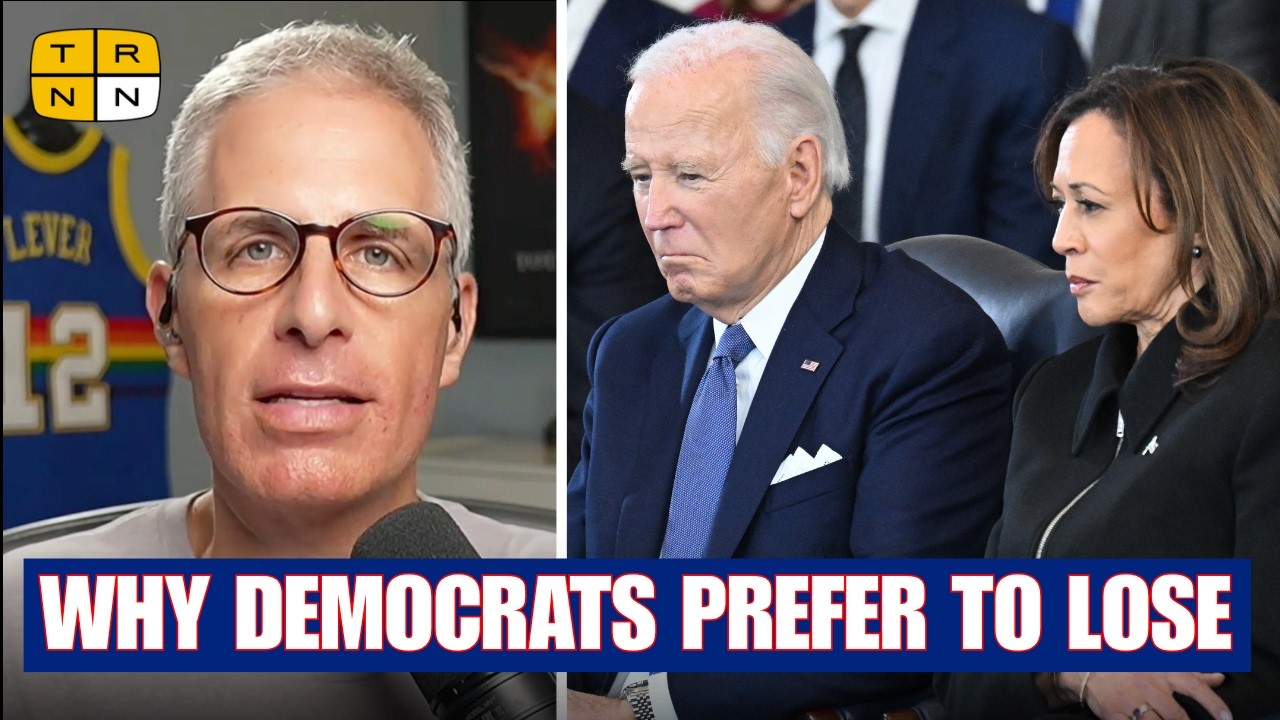
David Sirota: How to get obscenely rich while losing to Donald Trump, the Democrats’ failures explained

US President Joe Biden and Vice President Kamala Harris attend the inauguration ceremony before Donald Trump is sworn in as the 47th US President in the US Capitol Rotunda in Washington, DC, on January 20, 2025. Photo by SAUL LOEB / POOL / AFP via Getty Images

David Sirota explains how consultants profit from massive television-ad purchases, how billionaire-funded super PACs influence the candidates and policies voters are offered, and how the language of “moderation” and “electability” is used to undermine progressive and populist challengers.

We examine the consequences of legalized political corruption: Washington’s silence on America’s healthcare crisis, the widening gulf between voters and their representatives, and the 50-year campaign to transform elections into auctions while concentrating power in the presidency.

David Sirota is the founder of the investigative news organization The Lever, a former speechwriter for Bernie Sanders, an Oscar-nominated co-creator of the story for the movie Don’t Look Up, and the producer of the podcast series Master Plan.

Additional links/info:

Credits:

  • Production: Stephen Janis, Taya Graham
  • Written by: Stephen Janis
  • Studio Production: Cameron Granadino
  • Post-Production: Stephen Janis, David Hebden
Transcript

The following is a rushed transcript and may contain errors. It will be updated as soon as possible.

Taya Graham:

Hello, my name is Taya Graham and welcome to the Inequality Watch Report, a show that examines government policy and action through the lens of extreme economic inequality, the existential issue of our time. Today, we’re going to discuss a topic that defines who holds power in America and how they keep it despite growing voter dissatisfaction amid a historic wealth imbalance. It’s a story of money, access, and self-enrichment that is at the root of the bad policies and broken institutions we all struggle with daily. And it’s an issue that transcends the nominal state of play in this country to ensure entrenched power never loses its grip on our wavering democracy. I am talking about, of course, the hoards of cash that have turned our political system into a pay-for-play utopia since the infamous Citizens United decision in 2010 when the Supreme Court ruled that corporations could make unlimited independent expenditures to influence elections, super PACs, and other vehicles have transformed our elections into a veritable auction to the highest bidder.

But there’s a lot more going on behind the scenes where all this money is going, how it’s warping our electoral system, and ultimately who is cashing the checks. To help us uncover the dark details of how the system constrains us, we will be speaking with journalist and filmmaker David Sirota. But first, I want to check in with my reporting partner and co-host, Steven Janis, to set the stage for our conversation. Steven, how are you?

Stephen Janis:

Very beleaguered. Very beleaguered by the cash system you were just talking about, the ATM and politics.

Taya Graham:

Have I already depressed you?

Stephen Janis:

Yes, quite a bit.

Taya Graham:

Stephen, there was a question I had for you. There was a weird mystery in democratic circles that was sort of a one-day story, but it speaks to a less talked about aspect of today’s topic. It’s a missing chapter from the so-called Democratic autopsy of the 2024 election. What was it about and why do you think it’s important to our discussion today?

Stephen Janis:

Well, the basic story was that the Democratic Party didn’t want to release an autopsy in their 2024 loss to Trump. So there was a lot of controversy about that. Eventually they released it, but then the New York Times broke a story about a missing chapter from that report. And the missing chapter was really interesting. The fact that they left this out was talked about the consultant class that works elections that literally had somehow through this entire process of running elections obtained generational wealth. Generational wealth. That’s a direct quote from the New York Times story. And so that just really got my attention. I know money in politics is ridiculous at this point in our historic run towards authoritarianism, but I had no idea that you could get generational wealth. And I do recall a tweet from our guest, David Sirota, talking about people after 2024, all these consultants going to beaches and living the luxurious life thanks to their consultant fees for these elections.

So that really, I think was something that just stunned me that you could become that wealthy losing.

Taya Graham:

I think I chose the wrong line of work apparently. Generational wealth. Exactly. Incredible. I think this explains why working people’s issues are always on the back burner. I mean, we both cover Capitol Hill and despite a recent poll showing that 91 million Americans say they could not afford quality healthcare if they needed it, we can go months without hearing even a peep about it. It’s just silence. But I’m sure our guest will have plenty to say about it. David Sarota is the founder of the investigative news organization, The Lever. He is a former speechwriter for senator and presidential candidate Bernie Sanders and was nominated for an Oscar for his work creating the story for the Netflix film Don’t Look Up. He’s also the producer of the podcast series, The Master Plan. I could go on, but we wouldn’t have time for the interview. So David, let me just say thank you so much for joining us.

David Sirota:

Thank you. Thanks for having me.

Taya Graham:

So first question, just to get a sense of this consultant class and how their role in politics and how much money they’re pocketing and the report, it actually cited generational wealth for these people. How on earth are political consultants soaking up this much money just working for a campaign?

David Sirota:

Well, it has to do with in many cases how their fee structure works. A lot of the way the consultant fee structure works is related to how many television ads are purchased. So they get in a lot of these deals a cut of the buy. So the larger a TV ad buy is, the more the consultant stands to make. Now obviously that creates, there’s sort of a conflict of interest problem there, which is if your main campaign strategist stands to benefit from a certain form of spending and will not benefit from other forms of spending, then the consultant is more likely and is really financially incentivized to suggest that the campaign spend in the way that it benefits the consultant rather than spending in different ways. So in practice, it’s not that TV ads aren’t important in elections. They certainly are, but a disproportionate amount of campaign budgets go into TV on campaigns where the consultant is paid as a percentage of the cut of the buy.

And in many cases, less money goes into mail, goes into organizing, goes into a field and ground game. It’s like there’s a baked in financial incentive. And we’re talking about in these major races, we’re talking about millions and millions of dollars that are at stake here. If you’re a consultant who’s getting a cut of a hundred million dollar ad buy, I mean you are making a ton of money.

Stephen Janis:

And David, what do you say to the idea this is generational wealth being generated for these consultants? Do you think the New York Times or the reporting from the autopsy was accurate in that, that these people are making that amount of money doing this?

David Sirota:

Yeah. I mean, it doesn’t surprise me. I guess it surprises me that this is mentioned in this conversation because this is a really taboo topic, but yes, we’re talking about just enormous sums of money. And to be clear, look, I’ve worked on a lot of campaigns before I was a journalist. I understand people on campaigns need to get paid. I mean, it’s real work, it’s hard work. But when we’re talking about the levels of money that we’re talking about here, I mean this is something that’s way beyond that.

Taya Graham:

You know what? I was curious, how much are these people, and they’re vested in what we would call the great moderation fallacy, which is that voters actually want a moderate or a centrist path. So basically how much are these folks responsible for sowing doubt in the party when a progressive candidate wins? The pundits are on the same page with the same talking points about how the Democrat socialists are somehow bad for the party. How are these people responsible for making progressives look to be the lesser choice even when voters seem to be supporting them?

David Sirota:

I think a lot of it has to do, as we’ve been discussing, it has to do with the money and the financial incentives. There’s huge money to be made, not just on campaigns, but there’s actually even bigger money to be made if you’re working for advising a consultant for super PACs. Super PACs are these supposedly outside entities that are spending huge money in elections. And obviously those PACs, the biggest of them are funded by billionaire donors, oligarch donors, corporate donors, donors who have a vested interest in the status quo, in the economic status quo. So if you’re a consultant who’s working at the nexus of campaigns and super PACs and you know your next job is going to be at a corporate or oligarch funded super PAC and you’re also working, you know that those Super PACs pick consultants from specific kinds of campaigns and candidates, well guess what?

There is a kind of nexus between what that consultant is going to advise and who their next client is. I mean that is really where this is at. The consultant class appropriates the agenda of the donor class and the consultant class is advising the candidates. And you mentioned the media. I mean look, billionaire and oligarch and corporate owned media has a viewpoint. It has a political agenda. It’s not to say that good journalism can’t be done inside of corporate media and the like, it certainly can, but there is a filter there.

Stephen Janis:

So I mean is this why we keep hearing this question come up again and again on CNN and other punditry saying, well, is win of democratic socialists bad for the party rather than inquiring or trying to understand why people would vote for democratic socialists? It’s like a mantra. They say it every time. All they talk about is why it’s bad. Is this coming kind of from that consultant industrial complex that you’re talking about, like the intersection of this wealth they’re making versus actually listening to the voters?

David Sirota:

Yeah. I mean, I think a lot of the conversation about electability, I put that in quotes, this idea that candidates can’t be too populist, too far left, the Democrats shouldn’t nominate them because they can’t win general elections. I mean, I’m old enough to remember when Hillary Clinton’s campaign and the media said that Barack Obama could not win a general election. I’m old enough to remember when the Democratic Party elites and the media sort of celebrated Donald Trump being nominated as the Republican presidential candidate because they

Stephen Janis:

Though

David Sirota:

He couldn’t win a general election. Electability is sort of this manufactured idea that anything that strays too far from the norm inside of where politics and democratic politics specifically is can’t actually end up winning a general election. And I think that that’s how this sort of frame is laundered into the conversation. So then it becomes that DSA candidates or economic populist candidates, they supposedly have an electability problem. Oh, it’s not necessarily that they may be wrong on specific issues. It’s that even if they are right, if democratic voters vote for them, those candidates can’t win general elections. And what I see happening is that the corporate democratic faction is sort of weaponizing this argument and also playing a role in sort of wish casting that idea into reality that you see in various races where when populist candidates win the nomination for a general election, that the corporate faction is still attacking and criticizing them in the general election, even though they are now the candidate going up against the MAGA Republicans.

And I think what that speaks to is that the corporate faction of the Democratic Party in specific here is willing to potentially lose general elections to MAGA and Republicans

If that is the cost of maintaining the corporate faction’s power inside the Democratic Party.

Taya Graham:

Incredible. Now just to touch on your podcast, which is the Master Plan for those who haven’t heard it yet, I know it gives a history of something we’re dealing with at the moment, which is the Unitary Executive Theory of Power and of course our current president, Donald Trump, but it also focuses on systemic corruption that you say affects all of our lives. So this isn’t just about one man, right?

David Sirota:

Absolutely. So the first season of Master Plan was about the 50 year plot to legalize corruption. And that story basically starts, and both seasons do, excuse me, in the early 1970s in the aftermath of Watergate. Watergate was the first real dark money scandal of the modern era. And what we trace is how conservatives, and they wrote this down in documents and we have all the evidence there, they really made a blueprint to deregulate the campaign finance system, equate corporations with people under the law and narrow the definition, the legal definition of bribery. And they did that because they understood that they became nervous that elections were causing the government to react to what the people wanted. And the Powell memo that we talk about in the, it was a memo written by future Supreme Court Justice Lewis Powell, talks about how at that time conservatives, oligarchs, corporations need to invest in politics because the government had become too responsive to what the people wanted.

So one way you deal with that if you’re an oligarch and you think that’s a problem, the one way you deal with that is to turn elections into auctions, is to turn your one person, one vote democracy into a $1, one vote oligarchy. So that was season one. This relates to season two in this way. So that’s the first pillar of how you, if you think democracy is a problem, you legalize corruption, you turn elections into auctions. The other thing you do is what we trace in season two. You try to concentrate as much power as possible in the hands of one person and strip it away from more small democratic institutions and all the ways power is dispersed across the country. You concentrate that power in the hands of one person and then make sure your person is that person. And that is what we are tracing in season two called the Kingmakers, which is about essentially the unitary executive theory, where this idea came from.

Because again, it started after Watergate where Watergate was seen as a crisis of an imperial presidency. Congress passes a bunch of laws to strip power from the executive branch and it catalyzes a conservative backlash that carries through the Reagan administration, obviously into the George W. Bush administration with the war on terror and into the Obama administration, I should say, with its use of drone warfare to say that the executive branch gets to make all of the decisions. And so the point is, you asked is what’s going on today, Donald Trump, the situation, is that all just one person? No, Donald Trump is in an office with a control panel of tools that were handed to him and a system of legalized bribery that was handed to him by 50 years of plots.

Taya Graham:

To your point about how these oligarchs are essentially controlling our conversation and controlling our national narrative, and Stephen and I are actually on Capitol Hill quite a bit, rarely do we ever hear anyone talk about healthcare despite what could be described as a literal crisis in the country. I looked at a recent report from Yale University and it estimated 27 million Americans don’t have healthcare. It’s top of the list in the polls in regard to priority concerns from Americans, and yet we’re hearing silence on Capitol Hill. Would you be willing to connect the dots with some of the reporting on your podcast about systemic corruption and our current healthcare crisis?

David Sirota:

Absolutely. I mean, I think this has a lot to do with how money doesn’t just buy legislative favors, money also buys silence. And sometimes not even a transaction has to occur in order for silence to nonetheless be purchased. And it works in a lot of ways in this way, that if you’re a senator, if you’re a congressperson, you know implicitly now that if you propose a bill to deal with the healthcare crisis that let’s say challenges the power of or threatens the profits of the private health insurance industry, you know that what you’re doing is potentially provoking that very powerful money interest to spend a lot of money to get you thrown out of Congress. So many legislators basically choose to not do anything or not say anything for fear of sticking their neck out and seeing their political career ended. Money doesn’t necessarily have to even be transacted for that situation to exist.

And so what I’m describing really is the norm, that there is an implicit threat that if anybody tries in a serious way to deal with the healthcare crisis, they will be targeted. We know this, by the way, from the Obama era where the first thing that the Obama administration said when it got into office and started pushing for some kind of healthcare reform was we are ruling single payer healthcare off the table. It was immediately the administration made an announcement that this is not part of the conversation. And this is only at that point, four years after Barack Obama, when he campaigned for the Senate, said he’s a supporter of Medicare for All. We just need to get a Democratic House, a Democratic Senate and a Democratic president. And four years later they had that and they immediately said, “We’re not even going to talk about this.” And I think that was because they saw the collective power of the healthcare industry and said, “If we do this, there will be a ton of spending to try to get every member of our party thrown out of office.” And they also ruled out the public option.

So my point in just mentioning this is that even though money doesn’t get transacted, money is overlaying and creating the political conditions at all times.

Stephen Janis:

One thing I really appreciate about the podcast is it goes back 50 years, which a lot of times reporters, we get caught up in the contemporary moment and don’t understand the roots of this. But I was thinking when I was listening to it that all of the sort of trends we’ve seen in economic inequality, and this show is about economic inequality, started about the time your podcast starts digging into this sort of systemic corruption. I mean, is inequality intertwined in this story in terms of how the process that you kind of illuminate sort of set the seeds for this almost traumatic wealth inequality and wealth imbalance now? Are they intertwined in that sense?

David Sirota:

So there’s an amazing website. People can Google it. I think if they put just the year 1971 into Google, you’ll find it where it traces how so many trends started in the year 1971. It’s kind of amazing, like de-unionization, inequality, et cetera, et cetera. I do not think it is an accident that so many of the trends started at roughly that time. This is the lead up to the Watergate era. This is a moment where the consumer movement and the broader left has sort of culminates a lot of its agenda, right? Medicare, Medicaid, the great society, all this is culminating. Ralph Nader is having huge success, regulatory success in Congress, but there is this backlash. A well oiled, moneyed, conservative machine is starting in earnest to build what ultimately ends up culminating in MAGA. And I think that that machine was based on preserving and expanding the wealth of the people who were funding that machine.

We’re talking about people like Joseph Kors to name somebody, like the Kochs. That machine started to be built then and it was a machine designed ultimately for wealth protection for that small group of people. And this sounds like a conspiracy theory, but it’s not a theory. It was a conspiracy. And look, they used the tools of the government, they used the laws of the land and the lobbying system and the campaign finance system to get what they wanted. And we are now here living through that reality. So when I think people look at the affordability crisis, when they look at gilded age levels of inequality, we have to understand that goes along with the corruption that we’re talking about. The original gilded age was also one of the most infamously corrupt ages in American history. These two things go together. The wealthy and the powerful are buying politicians, buying elections, buying policy outcomes that preserve and expand the wealth of the already wealthy at the expense of everyone else.

This is the oldest story in America.

Taya Graham:

You broke a story about a really troubling phenomenon inside the Democrat political machine, and it basically uses dark money to push or bolster so-called moderate candidates. The organizations you identified were called the Bench and Majority Democrats. Could you explain how these organizations work and what’s really behind them in terms of pushing this moderation fallacy we keep on coming upon?

David Sirota:

Right. So listen, we’ve seen iterations of this for most of the post New Deal era of politics. And I would pinpoint that to probably in the modern era starting in the 1980s. You had a movement among, they were called at one point so-called Atari Democrats. Then they became the Democratic Leadership Council. Now they exist as groups like Third Way. So this is not something new. And you’re right, they exist like a group like the Bench and Majority Democrat. They have different names and different faces, but it’s the same idea. And the idea is that the Democrats need to abandon their new deal roots in order to compete with Republicans and to do that, to compete with Republicans for business support, corporate support, oligarch support, and all of those entities’ money. This has been going on now for 40 plus years. And so I think this is the latest iteration of that.

You have shadowy billionaires funding this network of groups and think tanks, which are designed to support candidates who are, and I’m putting it in quotes here, like moderate. But what that really means is much more corporate and oligarch friendly. And again, they don’t come out and say that. They are cast as we are pushing this because these are the most electable candidates. They’re not acknowledging the actual mission of what’s going on. They’re shrouding it in the veneer of what seems like a rational and logical political argument. But what’s really underneath here, it’s not a coincidence that there is billionaire money and there’s big money that wants specific things from these politicians.

Stephen Janis:

Citizens United obviously is the core of this story in terms of things getting worse in the past decade, but there is a recent decision, NRSC versus Federal Election Commission, which also I guess loosens some of the restrictions on spending and coordinating. Can you talk a little bit about your concerns about that decision and how you think it’ll make this political campaign finance system even worse?

David Sirota:

So Citizens United mostly dealt with so-called outside Super PAC spending. The idea was that these Super PACs, which are backing specific candidates, because they are supposedly independent from the candidates, they can’t be regulated because they have free speech rights, they have First Amendment rights. That ruling, now I say all this understanding and implying that those Super PACs aren’t in practice really very independent from those candidates, right? It’s almost like a fallacy, but the Supreme Court’s argument was they’re independent, so they can’t be corrupting, and so their First Amendment rights suspend must be protected. What Citizens United left in place though was the government’s interest in preventing straight up quid pro quo corruption means that campaign contribution limits directly to candidates can still be maintained because you can’t argue that a donation directly to a candidate cannot be corrosive from a corruption standpoint, cannot be a vehicle of quid pro quo corruption.

So even in the post Citizens United era, campaign contribution limits directly to candidates have been maintained. Well, along comes this case and what this case sought to do, a case spearheaded by JD Vance, we call it Citizens United 2.0. It

Was designed to say that there was a law in place to preserve those campaigns contribution limits to say, listen, you can’t route your campaign contributions through a party to get around the campaign contribution limits to a candidate, right? You need to make sure that if a donor wants to give a candidate six figures worth of money way above the campaign contribution limit, they can’t just be able to give it to their party and know that their party’s going to coordinate as if they were the candidate with the candidate to spend the money. So the Republicans led by JD Vance went into court to say that law should be taken away. And so the Supreme Court agrees. And so now what we have, we have a much larger conduit through which big donors can now give much larger amounts of money to political parties and the political parties can spend in coordination with those candidates.

So what that does in practice, it means that the original campaign contribution limits that were designed to prevent corruption, they were just circumvented. They were just significantly weakened and widened. A much larger amount of money can now be funneled directly to candidates.

Taya Graham:

I was just wondering if you could make the public understand just one thing about corruption that normally our legal systems obscure or political systems obscure or the oligarchs are actively working to obscure, what would it be? What would you want voters to understand and know?

David Sirota:

I’d want voters to understand and know that there’s a direct connection between the policies that are harming them and the corruption that’s taking place. That when they’re paying a higher prices for a medicine, a medicine developed already at US taxpayer expense, most major medicines are originally developed, we’ve already paid for them as taxpayers. The average person should know that the reason that they are now, when they need that medicine for some illness or the like, the reason they’re paying the world’s highest prices for that medicine is because the pharmaceutical industry gave a lot of money to politicians to rescind the rule that said if a drug is developed at taxpayer expense, it has to be sold to taxpayers on the market at a fair price. That rule was removed because the pharmaceutical industry gave a lot of money to politicians to get them to remove it.

I could go on and on and on, but I guess what I’m getting at is that every policy that is responsible for the affordability crisis in the United States can be traced back to a policy written and bought by big money. That corruption is not some esoteric abstract issue. Corruption is why the working class and middle class of this country is being immiserated.

Stephen Janis:

David, before we let you go, I’ve been wanting to ask you this question. If Bernie Sanders wins in 2016 or in 2020, would we even be talking about Donald Trump? I mean, if the Democrats let Bernie Sanders win rightfully those primaries, do you think we’d ever even be having. Would he have beaten Donald Trump either way?

Taya Graham:

Ooh, that’s

David Sirota:

Interesting. It’s hard to run that counterfactual. I mean, I know one of Donald Trump’s pollsters said after 2016 they though Bernie Sanders might’ve beaten Donald Trump, would’ve been a stronger candidate against Donald Trump. It’s hard to know, but I take it back a little farther. I think the more interesting. The question that haunts me, and I think should haunt us all,

Is whether there would’ve been a Donald Trump phenomenon had Obama and the Democrats when they had a super majority or a near super majority, had they really genuinely delivered a new, new deal as was rhetorically promised in 2008. I think a lot about in 1938, FDR gave this speech, it was about democracy and he had said, and I’m paraphrasing here, “Democracy did not go away in other countries.” He’s looking out at Europe and the like. He said it did not go away in other countries because people there didn’t like freedom, didn’t like democracy. Democracy went away because people saw a dysfunctional government and they ultimately decided to vote to get something to eat. The idea being that the New Deal actually significantly delivering in a real way for the working class, FDR understood it to be an anti-fascist program, a way to prevent the rise of fascism in the United States.

The idea that if you raise people’s hopes and you don’t deliver for them, you will sow a level of disillusionment that will be channeled by the right. So I think a lot about those two years, certainly those first two years in the Obama administration, that

Had the administration used its political capital to serious Deliver for the working class rather than bailing out bankers who were foreclosing on 10 million people, rather than ruling out single payer healthcare and getting rid of the public option and instead passing a kind of heritage foundation version of healthcare reform. Granted, better than the healthcare system before it, but not a full delivery on the promise. Had the Obama administration used that political capital and the Democratic Party used its political capital to really deliver, would there have been a Donald Trump? Now that is a question I don’t know the answer to. Maybe there still would’ve been, but I do know this. 200 plus counties voted twice for Barack Obama and then voted for Donald Trump. So I think when you look at that, it’s hard to say, “Well, Trump only got elected because of racism.” I think you have to be honest and look deeper and say people were extremely disillusioned.

The Democrats, yes, they chose to put up in 2016 a nominee who seemed like an avatar of the kind of problems that people were disillusioned with. And people voted for the political version of the Joker. They voted for Donald Trump to just blow up the system. I’m not saying I think that was a good thing at all, obviously, but I think that is what happens. And what I worry about is looking ahead to the next set of elections. If a Democratic president is elected in 2028, making big, bold promises and does not deliver, do we relive that cycle again? And is the next Joker who gets elected at the end of that disillusioning cycle, is that somebody who’s smarter, shrewder, and even more dangerous than Donald

Stephen Janis:

Trump?

David Sirota:

That’s what haunts me.

Stephen Janis:

I mean, even now it doesn’t seem like the Democrats are making a great case for a new new deal that we can see on Capitol Hill.

David Sirota:

Not yet. I mean, listen, listen, I’m not apologizing for the Democrats.

Stephen Janis:

Understood.

David Sirota:

I think their argument in this election is put us into power so we can at least be a check on the last two years of Donald Trump. I think that’s actually a fair argument. I think what everyone should be watching for is in the 2028 Democratic presidential primaries, who is proposing what? Who looks like and who can we detect is really serious about delivering in a real way? Because if whoever gets the nomination and if they win the election, if they do not deliver, we are going to live through this cycle again and it will be even worse.

Taya Graham:

David, what you said was absolutely amazing and that’s what should be keeping the consultant class awake at night despite their generational wealth stuffed in their pillows and mattresses.

David Sirota:

Absolutely amazing. I mean, you’d hope. And look, to be clear, I’m heartened by some of the elections happening right now. We are finally at a point where it seems like Democratic voters are not only angry at what’s going on in the country, but disillusioned with their own party’s leadership. And I think that’s actually a moment of opportunity to actually fundamentally change that party, to fundamentally make it into a vehicle that actually is serious about delivering. But to be clear, the corporate faction of that party is not going to give up power without a big fight. So I don’t think there’s been some encouraging elections, but I don’t think it’s an inevitability that this all goes in a sort of positive constructive direction. There is a lot of power and money that is trying to stop that from happening.

Taya Graham:

Absolutely. David, we don’t want to keep you too long. We promise to respect your time, but I have to say this has been an incredible conversation. We are so lucky to have an investigative journalist like you watching the machinations of power and the threat that it poses to our democracy. We have to thank you so much for your time and we really hope that we’ll speak to you again in the future.

David Sirota:

Anytime. Thank you so much for having me.

Taya Graham:

We really appreciate you so much. Thank you. Okay, Steven, before I do my final rant or analysis, do you have any thoughts about ourdiscusion you

Stephen Janis:

Want

Taya Graham:

To share? Absolutely. I bet.

Stephen Janis:

Okay. Tell you, I was really struck by the idea that democracy has to deliver to survive. I mean, that’s a really important concept. We talked about this with Dr. Richard Wolf, who told us in terms of the Cold War, there was a concerted effort to make people’s lives better because otherwise democracy would not survive. And I think that is a critical takeaway from what we see covering Capitol Hill where there’s just no attention to the immediate needs. We watched while the Democrats were Republicans, and I don’t blame the Democrats for this, where the Republicans couldn’t even pass ACA subsidies so that people could keep their healthcare. If democracy is going to survive, then this political system has to freaking deliver like now, and people have to make promises and keep them. And it just really struck me that democracy in this age of inequality is not delivering for the people it’s supposed to serve.

And if it doesn’t, that’s why it’s going to collapse. Not because Donald Trump is an idiot or we hate him or whatever, not because of those things and not even because of MAGA, because overall the system doesn’t deliver. And I hope that who’s ever going to try to get elected in 2028 is listening to that important point. You got to deliver real benefits to the people who live in this country.

Taya Graham:

You know what’s crazy, Steven? What you just said actually almost sounds like a foreign concept that a politician makes a promise and is supposed to deliver on said promise. Right. I agree. That sounds groundbreaking for some reason.

Stephen Janis:

It really does. Sounds revolutionary.

Taya Graham:

So if there is one takeaway from David’s insight to how our political system works and doesn’t, it has to be the role of fear and making us believe change is simply impossible. I mean, the whole moderation fallacy he discussed with us is based upon the idea that fear is more important than any idea or change or simply transforming a system that does not serve us the people. Taking risks, believing something is possible and embracing change is just foolish, that new ideas, new candidates and new voters should be avoided all because a party establishment fears it will lose power. And that’s where I think the establishment Democrats and Trump intersect because in a sense, President Trump is the perfect foil for a party seeking to maintain the status quo. He’s the perfect instrument of fear. We are told the only way to rid ourselves of him is to stick with the establishment that lost to him twice.

Yes, that’s right. Remember, they actually already lost twice. That’s why when you turn on the mainstream media, you hear a chorus of highly paid anchors and apparently very rich pundits having the same circular conversation. It goes something like this. Will the success of democratic socialists hurt the party’s chances in November? Will the historic wins of popular candidates with new ideas keep the establishment dems from taking their rightful place in the chronicles of power come the midterms? But here is what you don’t hear. And Steven, please correct me if I’m wrong.

Stephen Janis:

I will.

Taya Graham:

What you don’t hear is a question and it’s a simple one. It’s actually just a one word question. Why? Why do you think voters want change? Why did so many young people show up at the polls when socialists are on the ballot? Why were their candidates funded by APAC and other Super PACs unpopular? And in many cases, they just outright lost. And what? I know this is really crazy. What do the voters actually want? Why have they rejected the status quo? Why have they set aside fear for something different? And why aren’t they buying the consultant class talking points that have been shoved down their throats for decades while wealth inequality flourishes and they just can’t get ahead? Why? It’s a much better question than trying to characterize every socialist Democrat as a burden. Maybe, just maybe legacy media. That’s the question you should be asking in your multimillion dollar studios with ultra rich consultants trading barbs as if there’s some sort of substantive difference between a high price democratic operative and an overpaid Republican pundit.

Perhaps you should try to understand what motivates people to support candidates your infrastructure of manufactured consent has rejected. You should ask, be curious, be interested in the people who’ve expressed dissatisfaction with the state of America today. They’re actually important. They’re just as important as the Trump voters you fetishized and chased down. Really, they’re not as irrational as you often characterize them. They’re not monolithic or unreasonable or even unreachable. Stephen and I spoke to them during Mondami’s campaign and they were more than happy to share their thoughts. Legacy media, please try listening, try understanding, try empathy. You might learn something. You might learn that while our concerns for our hyper expensive healthcare system tops poll after poll, you never talk about it. You might learn that while the earth is consumed by a historic rise in heat, you talk about wildfires, but not the policies and oil subsidies that fuel them.

Well, for those of you out there watching, I want you to know that here on our show, we’re going to try to do the opposite. We are going to listen and we’re going to learn and we promise to keep doing so in order to bring you the truth, not the truth of the pundits, not the truth of corporate media, but the only truth that matters. And that is the truth that belongs to and is spoken by we, the people. My name is Taya Graham, along with my reporting partner, Stephen Janis. Thank you so much for joining us on the Inequality Watch. And as always, we are reporting for you.

💾

David Sirota joins Taya Graham and Stephen Janis to expose the enormous financial incentives shaping Democratic politics and why political consultants can accumulate “generational wealth” even when their candidates lose.
  •  

Abdul El-Sayed believes a new Democratic Party is possible

Still image of Dr. Abdul El-Sayed (left), a Democrat running to represent Michigan in the US Senate, speaking with TRNN Editor-in-Chief Maximillian Alvarez (right) at the Mexican-American Council in Saginaw, Michigan, on Dec. 5, 2025. Credit: Maximillian Alvarez/TRNN.

The outcome of Michigan’s Senate race will have major implications for the balance of power in Washington, DC, and for the future of the Democratic Party itself. With primaries taking place on August 4, all eyes are on the battle between progressive candidate Dr. Abdul El-Sayed and establishment candidate Haley Stephens to see who will represent Democrats in the general election. TRNN Editor-in-Chief Maximillian Alvarez sits down with El-Sayed to talk about his campaign, the civil war within the Democratic party, and about fighting corporate oligarchy and MAGA fascism at the same time.

Credits:

  • Videography: Maximillian Alvarez
  • Post-Production: Maximillian Alvarez, David Hebden
Transcript

The following is a rushed transcript and may contain errors. It will be updated.

Speaker 1:

Michigan is shaping up to be one of the most closely watched Senate races of this entire cycle.

Speaker 2:

Democrats will choose between Congresswoman Haley Stevens and former director of the Department of Health, Human and Veterans Services, Wayne County, Dr. Abdul El-Sayed.

Dr. Abdul El-Sayed:

We pay more for the stuff we got to buy, get paid less for the work that we do and watch as our tax dollars get misappropriated abroad to drop bombs on other people’s kids instead of to invest in our own kids and their schools and their healthcare.

Speaker 4:

We’re done. Business as usual politics is over.

Dr. Abdul El-Sayed:

Most people don’t walk around thinking, where do I stand on the left right spectrum? Most people walk around thinking, how am I going to afford my groceries? How am I going to pay for my rent? Can I ever afford a home? What am I going to do if I get sick? The majority of Democrats out there, when I talk to them, they are so far away from the party elders who hold all the power. And I think we have an opportunity as a party to molt out with the old, in with what the people underneath the party really want.

Speaker 5:

Obviously politics are a very tumultuous time right now and the Democratic Party’s kind of in disarray. So I’m coming out to support Abdul.

Maximillian Alvarez:

He really knew and understood the people, that he was for the people.

Dr. Abdul El-Sayed:

So we’re running a campaign to do three very simple things. Number one, we’ve got to get money out of politics. We’ve got to take on the system that tells us that corporations are people and that their money is speech. So we’ve got to get money out of politics. Number two, we’ve got to put money back in people’s pockets. So what does that mean? It means empowering people to join or form a union in every sector of our lives. It means standing with small businesses like this one that really do create the backbone of our economy. And it means finally taxing billionaires some wealth.

Speaker 7:

And that is precisely why we need people like Abdul in the US Senate.

Speaker 8:

I worked third shift and I made sure to get my butt out here in support before I have to go into work because the message has always been amazing. Watch out. There’s a car right there. But yeah, the way he just speaks to the working class I feel like is really what we need. And also when I shook his hand, he dabbed me up like a homie.He felt like somebody I knew already and that’s somebody I want fighting for us in the Senate. So I’m really glad I came tonight.

Dr. Abdul El-Sayed:

The question for us is bigger than this seat. It is about what we want out of our democracy in the first place. So if everything is working just fine for you, I’m not your guy. Do not vote for me. But if you believe that you deserve healthcare, if you believe that your tax dollars ought to be spent on you, if you believe that corporations should not have a bigger say in our politics than you do, then maybe I am.

Maximillian Alvarez:

We first met when you were running for governor here in Michigan in 2018. The question was how are Democrats going to respond to Trump? But also who’s going to inherit the Bernie Sanders mantle? AOC just won. And so you were part of that progressive cohort. And now we kind of have a similar situation. How are Democrats going to respond to Trump winning again? Zorn Mamdani just won in New York. Who’s going to inherit the progressive movement? But these are two very different moments and you’re a very different person than you were back then. I wanted to ask to start how you would characterize the differences between that campaign and this one.

Dr. Abdul El-Sayed:

Let me break it down two ways. There’s where we are as a country and then there’s the growth that you do as a person. I think where we are as a country, this is a moment where I think to be honest, we had failed to learn the central lesson of Trumpism. I think a lot of folks felt like the record had skipped, that there was this mistake and they didn’t see the fact that Donald Trump was exploiting a foundational pain in people. And I said this thing at the time, I think that was just, it was premature. Most folks didn’t see it. Donald Trump himself is not the disease of our politics. He’s just the worst symptom of the disease of our politics. And the disease is the system that allows corporations and billionaires and would be oligarchs to buy and sell politicians to do their bidding.

You watch as they use their power to suppress our wages for the work that we have to do and to raise our prices for the things we have to buy. And I think this time around people are recognizing that actually we dealt with the symptom, but we didn’t deal with the disease. And as a doctor, I’ll tell you, if you only deal with the symptom and you don’t deal with the disease, it comes back roaring worse. And that’s exactly what’s happened now. So I think folks are a lot more interested in authentic engagement with the structures of our system. Even now though, you got a lot of corporate folks out there who just want to deal with the symptoms. They’re like, “Oh, affordability? Okay, I’ll make one thing more affordable for you. It’d be great.” And they’re like, “No, there’s a structure underneath affordability. There’s a reason why everything accelerates in the wrong direction always.

And if you don’t deal with the foundational infrastructure, you’re not going to deal with the outcome.” One of the frustrations I think I have with some folks in our movement sometimes is that we want people to agree on the critique and we always break apart on the critique. It’s not about the critique, it’s about the outcome.

And I think the more you could focus on how you want the world to be like and get people to agree to that, even if they come at it with different perspectives, I think the better off we are. And I think that’s probably what I’ve learned over time.

Speaker 4:

There’s a big battle brewing. A battle brewing against not only the corrupt fascist forces of the Republican Party, but also against do – nothing Democrats that would rather sit there and collect paycheck after paycheck and fundraise from corporate donors that put your interests second to the interests of those very same corporations.

Maximillian Alvarez:

The 2024 election was less of a referendum on how much people love Donald Trump than it was a referendum on how much people hate the Democrats.

Speaker 2:

Agree.

Maximillian Alvarez:

People’s faith in the Democratic Party is in the basement right now, especially on top of a year of doing what feels like virtually nothing to stop Trump, caving on the longest government shutdown in our history while people are watching their SNAP benefits, their healthcare disappear before their eyes. So the question there is like, is why run as a Democrat? And how are you going to address that lack of faith and prove that this isn’t just the right message that you’re going to meet people’s needs?

Dr. Abdul El-Sayed:

Yeah. I know what I’m about. And Democratic Party hasn’t always met my needs. I think a lot of people out there feel like they’re Democrats by hostage situation. You look at the other guys and you’re like, “That’s crazy.” And then you look at the Democrats and you’re like, “I don’t know what’s worse.” Being cruel and crazy or being feckless in the face of being cruel and crazy. Now the party is so far away from its voters. The majority of Democrats out there, when I talk to them out at Democratic clubs or indivisible or you name the organization that I’m out, they are so far away from the party elders who hold all the power. And I think we have an opportunity as a party to molt. Out with the old, in with what the people underneath the party really want. And I’ve said this for a very long time.

The problem with Democrats is too often they’re taking money from the very same people who created the problem. So now you’re in this weird position of trying to articulate a solution to the problem that includes the people who created the problem. That makes sense. I don’t take over money. I never have. I never will. And I understood from the day I started in politics that that wasn’t the big issue. And so when folks look at me, they say like, “At least I know what he believes because he’s not bought. And I think the party could do the same thing. Say what you will about Donald Trump. He’s got a coherent narrative. You out of a job. Immigrant took your job. Out of a home. Immigrant took your home. Out of healthcare. Immigrant took your healthcare. That’s his narrative. Simple, easy to understand, dead wrong. We could have a narrative too.

Out of a job, corporation offshore automated your job. Out of healthcare, corporation squeezed you out of healthcare. Out of a home, corporation speculated that you can’t afford a home. But when you’re taking money from corporations, guess what you’re not going to

Speaker 2:

Say?

Dr. Abdul El-Sayed:

So you come with your little list of 10 point policy plans that’s going to deliver something for maybe somebody 10 years from now. It’s bullshit. So I think the party could be better and I’m ready to make it better. So I’m a Democrat with lowercase D, and I hope someday we can win the fight for what the Democratic Party can be. And I’m not willing to let go of all that infrastructure because a few folks who can’t let go of power say that it’s theirs.

Speaker 7:

So what the hell is going on? Why are we living in a society where workers are producing more and more and virtually all of that income and wealth is going to the top 1%?

Dr. Abdul El-Sayed:

It’s the system that allows the richest, most powerful people, corporations, billionaires to buy and sell politicians in ways that leave them rigging the system against us. Corporations get bigger, more powerful. Our lives get harder.

Speaker 2:

I feel like I don’t ever see hardly any campaigning politicians come to Saginaw and it’s so underrepresented given how much we’ve been through. I mean, we’re very similar to Flint in a lot of ways and how we had a booming industry and then laws were passed that just discriminated against every single person one way or another that pushed us out of different areas for companies and contractors to come in and exploit us. And I think he touched on that in a way I haven’t seen a lot of politicians really focus on, at least for again, Saginaw.

Speaker 1:

I absolutely think Abdul is right on track of having the billionaires stop having power in politics and allowing us to have a voice and making sure that everybody is treated fairly. I do a lot of the organizing of the Latino community here in Saginaw, Michigan. So I’m trying to get them a voice because for too long there are too many Republicans and Democrats that have been voting to cause harm to the Latino population.

Speaker 5:

I think an unapologetic progressive populism that’s centered on delivering for working class people is how we win in the future. And that’s exactly what Abdul’s message is.

Dr. Abdul El-Sayed:

I mean, democracy was broken the day corporations started to buy elections. That didn’t just happen. We’re at death’s door now, but we’ve been here. We’ve been sick. And so why don’t you talk about it in ways that are actually fully complete? Hey, every time a corporation comes in and buys off a politician, that kills your democracy a little bit. But most of these folks who want us to talk about democracy now didn’t feel it when that happened. And I think we got to talk about it completely. I

Maximillian Alvarez:

Want to talk about what that means for where we are sitting right now in Saginaw, Michigan. And I have a special attachment to this place. My wife grew up here. I have a lot of in – laws who live around here. My wife’s family had generations of men work in the old GM plant up the road. It is a cold, hard, but beautiful place with a lot of families with a lot of deep roots. A lot of igrant families going from back to Poland, Germany, Mexican and other Latino immigrants, a lot of black folks who came up during the Great Depression. People don’t give towns like Saginaw credit for how complex and beautiful they actually are. But in many ways, this is the archetypal rust belt

Speaker 2:

Town.

Maximillian Alvarez:

I mean there is a lot of pride. There’s a lot of joy. There’s a lot of family here. There’s also a lot of boarded up windows. There’s a lot of blight. There’s a lot of pain. There’s a lot of poverty and economic devastation. So why is it important for you to come to a place like Saginaw? And again, moving past the sort of democratic messaging, I guess my question is not how do you hope to reach people who live in places like Saginaw, but what can you and other politicians do for places like Saginaw?

Dr. Abdul El-Sayed:

Yeah. The simple question, how do you reach? You come. We’re here. You know what I mean? This is not my first time in Saginaw. It’s not going to be my last time in Saginaw. For me, I’ve trained as a doctor and that training’s been really useful for me because both doctors and politicians have to be really good at being able to sit with other people’s pain and to speak truth to pain. It’s truth to power, but also truth to pain. And then I think the way you reach folks is to be vulnerable with them. I can’t solve all the problems, but I can’t tell you why the problems exist. And I can tell you I’m going to try like hell to take it on. And then I think you need to go back to that point that I was making to be a really good listener to people’s pain and to try to forge that pain into purpose.

I can’t solve it. Anybody walks in here is like, “I’m going to fix your problems.” No, you’re not. We can solve it. And if I can be a vessel that helps to create something that can organize us and can impose what it is that we’ve been asking for, for a very long time into power, then I think we can solve it. We can’t solve it tomorrow, but we can solve it in due time. And I’ll tell you that the analogy here to medicine is clear. Somebody gets a cancer diagnosis. You want to tell them you’re going to be fine. It’s bullshit. And if I tell you you’re going to be fine, it’s a lie. But what I can tell you is I’m really sorry that this happened to you. And I can tell you what we know and I can tell you what we can do.

And I can tell you I’m going to sit here and listen for as long as you need me to listen to you and that I’m going to be your advocate for helping get the best outcome you want. In this case, it’s not terminal. Places like Saginaw can heal, but not doing the same shit that we’ve been doing. And so in some respects there is an honesty that you have to tell people. It’s not just always going to be okay or I’m going to solve all your problems. I’m not. I’m going to do my best to help you, to be honest with you about what the problem is, to sit down and think about what our approach moving forward can be and to fight like hell for you against people who’ve created this problem. And if we can do that and you can trust me to do that, we can build things over time, but it starts there.

💾

“The majority of Democrats out there are so far away from the party elders who hold all the power. And I think we have an opportunity as a party to molt: out with the old, in with what the people underneath the party really want.”
  •  
❌