❌

Reading view

Why Yemen Is Bombing Saudi Arabia’s Airports: The War Behind the Headlines

By Robert Inlakesh | The Palestine Chronicle | October 15, 2026

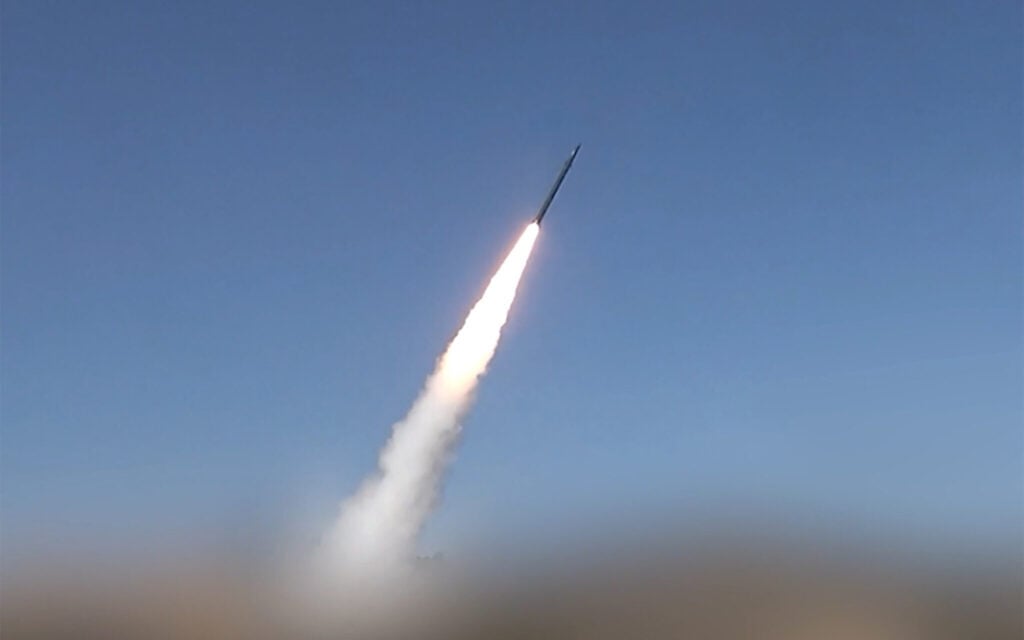
Yemeni missiles fired at Saudi Arabia are destroying oil facilities and airports across the country – drawing particular international outrage was the ballistic missile attack on Terminal 3 of King Khalid Intl. Airport, an attack that killed 13 and left another 307 injured. As is usually the case, the corporate media starts the clock where it chooses instead of looking at the context, a similar tactic that is used when reporting on Palestine.

On October 10, a missile fired by the Yemeni missile units of Sana’a’s Ansarallah-led government caused a mass casualty event at Riyadh’s main international airport. It then drew broad condemnation from governments around the world, grabbing headlines across the corporate media.

The Saudi-led coalition’s spokesman, Maj Gen Turki al-Maliki, then called the attack a “full-fledged war crime” and said that striking a civilian airport was a “cowardly terrorist attack”. The UN Secretary-General Antonio Guterres also weighed in and expressed his shock at what he called a violation of international law, urging the attacks to stop.

However, Guterres and various government officials never commented on Saudi Arabia’s airstrikes against Sana’a Intl. Airport on July 13, which broke the years-long ceasefire between Yemen and Saudi Arabia. Nor did Israeli Prime Minister Benjamin Netanyahu, who himself ordered airstrikes on Sana’a Intl. Airport in the Yemeni Capital of Sana’a last year.

Unpacking The Lies and Hypocrisy

While the Saudi leadership has attacked its airports to generate international sympathy, it has been launching airstrikes on Yemeni airports for over a decade.

On the first day of Saudi Arabia’s war against Yemen, on the 26th of March in 2015, airstrikes struck both Sana’a Intl. Airport and the neighboring Bani Hawat residential neighborhood, killing around 34 civilians, including children. Since then, the Saudi air force has carried out over 227 strikes targeting Yemeni airports.

The breakdown of the ceasefire, which was achieved through UN mediation back in 2022, came as a result of Saudi Arabia bombing the Yemeni Capital City’s main airport, in a bid to stop an Iranian civilian airliner from landing there. Riyadh has imposed a siege on Yemen – by land, air and sea – since 2015, even inflicting a man-made famine on the country.

Saudi Arabia is responsible for killing between 9,000 and 18,000 civilians inside Yemen. Schools, mosques, weddings, hospitals, and even funerals have been struck by the Saudi air force. In total, around 400,000 people have been killed as a result of the Saudi-led war on the country.

However, the international media coverage robs current events of both the historical and current context. Take, for example, the following headline published by Reuters, which is held up as the gold standard of Western journalism:

“Houthis fire missiles at Saudi Arabia, breaking years of calm,” read the headline. However, the story they were covering, admitted through their use of the video of Saudi Arabia’s strikes on Sana’a Intl. Airport, painted Yemen as the aggressor.

In reality, no political entity called the “Houthis” exists; the name of the Party that the corporate media refuses to correctly name is Ansarallah, which heads the government that rules over the majority of the Yemeni population and is based in the nation’s Capital City. Its opposition is called the Presidential Leadership Council (PLC), which was officially formed in the Ritz-Carlton hotel in Riyadh, Saudi Arabia, back in 2022. The PLC is a proxy of the Saudi government, and its leaders are all based inside Saudi territory, not Yemen.

The next obvious point to note here is that Yemen’s Armed Forces were responding with missile fire towards Saudi Arabia; they were not the aggressor. In retaliation for Riyadh’s decision to continue violently imposing its blockade on the country, it also declared a blockade on Saudi Arabia’s Red Sea ports.

To specifically address the point about the attacks on King Khalid Intl. Airport, it is important to note why this happened and that the Saudi authorities knew the dangers. In early October, Saudi Arabia conducted 1,000 airstrikes on Yemen, using 100 aircraft, while the forces back in Yemen attempted to launch a counter-offensive on the ground.

The Ansarallah-led government’s Armed Forces then announced, in response to the large-scale assault, that they would be imposing a no-fly zone over Saudi airspace. What proceeded to happen was a number of missile attacks on airports in order to shut them down; at first, these attacks caused no known casualties and were to serve as a warning.

As Saudi Arabia continued its airstrikes across Yemeni territory, the stakes were then raised and Riyadh’s main airport became the target. Missiles were at first fired into targets at the airport as a warning to close it down. The Saudi authorities ignored these warnings. On October 8, Yemeni missiles then struck aircraft while they were grounded at King Khalid International, which destroyed one commercial airliner, damaged two others, and killed 3 people.

Despite this attack and clear warnings to close the airport, the Saudis insisted upon keeping it open. On October 10, then came the mass casualty event that inflicted 13 fatalities along with hundreds of injuries amongst civilians.

Targeting a civilian airport is indeed a violation of international law. Yet, when Israel and Saudi Arabia bomb Yemeni airports, there is no outcry. Which brings us to the heart of this issue: why should it be expected that Ansarallah respect international law in this respect when there is no consequence for Saudi Arabia, Israel, or the United States, for that matter?

Riyadh is currently bombing targets throughout Yemen, using Israeli military intelligence support to do so. Meaning that the Saudis are being backed by a State that is committing genocide. On the other hand, the only State in the Arab World that invoked the Genocide Convention, imposing a blockade and firing munitions directly at Israel, was the Ansarallah-led government in Sana’a.

According to Western leaders, Israel and Saudi Arabia, Ansarallah is a terrorist organization. So why then did Saudi Arabia not close its airport as a precautionary measure, in order to protect civilians following the direct strikes on it and threats to go further? Does Riyadh not have the responsibility to protect civilian passengers?

Why is bombing a Saudi AirPort a terrorist act, but bombing Yemeni AirPorts hundreds of times is not even an issue capable of grabbing a headline? How can anyone expect international law to be respected, when the ones who claim to champion it the most selectively use it only when it favors them? These are simply common sense questions.

What Yemen is now doing is imposing the exact same reality on Saudi Arabia, as has been imposed upon it for over a decade. Only now, when the Israeli-backed Western ally is getting hit, is anyone even noticing.

In so many ways, the predicament of Yemen is like the situation in Palestine. Nobody batted an eye at the conditions in Gaza until the Hamas-led attack on October 7, 2023. Then the media framed the Palestinians as the aggressors.

The corporate media spoke of a “Hamas-run Gaza Health Ministry” in order to downplay the civilian death toll; similarly, in Yemen, they report on a “Houthi-run Yemeni Health Ministry”. Understanding the attacks on Saudi Arabia is simple if the context is applied. Either a negotiated settlement is to be reached to end this war, or it will continue until regime change on one side occurs.


– Robert Inlakesh is a journalist, writer, and documentary filmmaker. He focuses on the Middle East, specializing in Palestine.

  •  

How the Houthis are helping Iran turn Saudi Arabia into a pressure point

Iran-backed group relies on Tehran's financial and military support and seeks to press Riyadh into concessions on Yemen; analyst warns the conflict could widen into a Gulf war
  •  

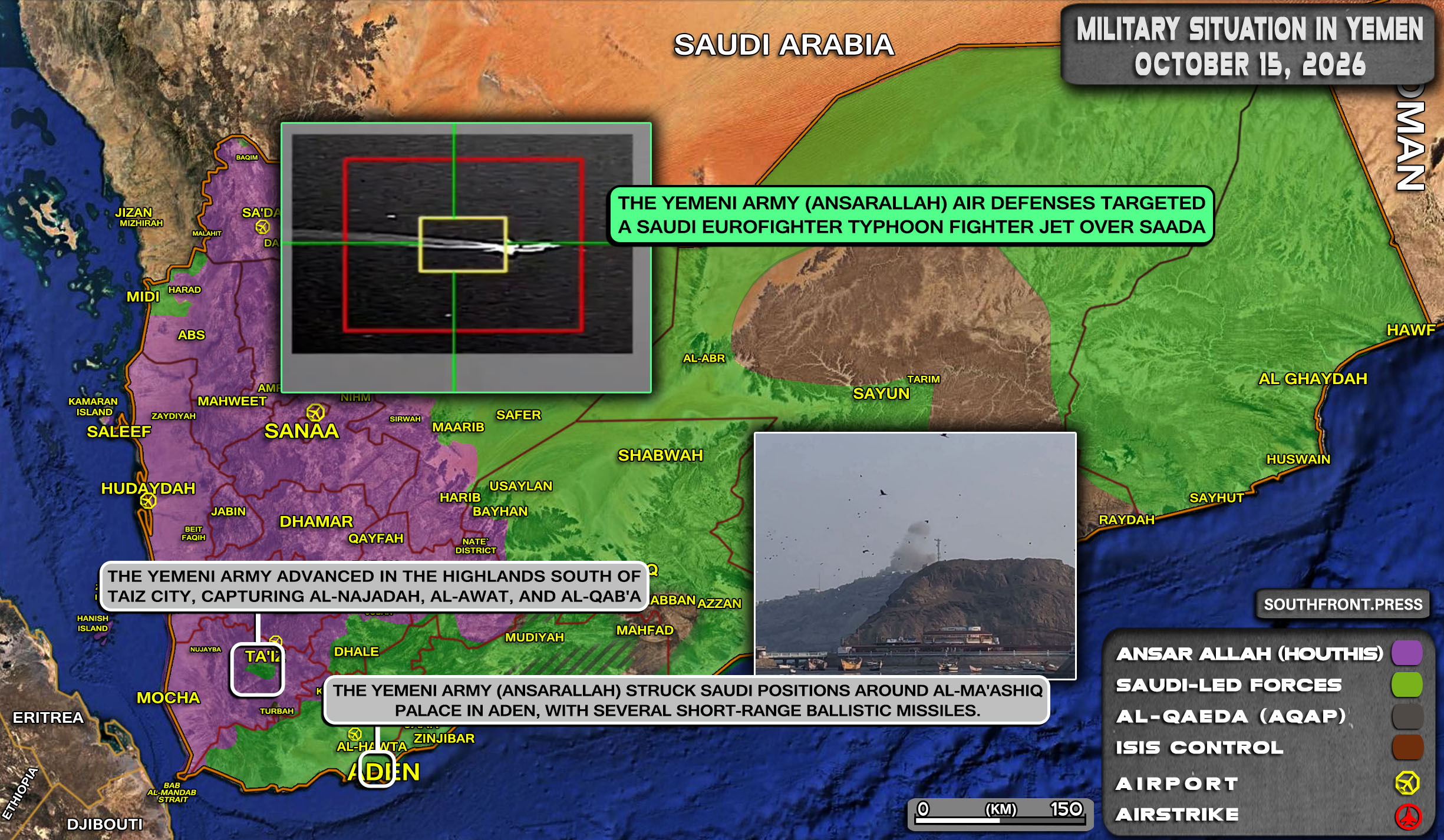
Military Situation In Yemen On October 15, 2026 (Map Update)

Click to see full-size map.

  • The Yemeni army (AnsarAllah) air defenses targeted a Saudi Eurofighter Typhoon fighter jet over Saada;
  • The Yemeni army advanced in the highlands south of Taiz city, capturing Al-Najadah, Al-Awat, and Al-Qab’a;
  • The Yemeni army (AnsarAllah) struck Saudi positions around Al-Ma’ashiq Palace in Aden, with several short-range ballistic missiles.

_______________________________________________________________________________________________________________________

MORE ON THIS TOPIC:


The post Military Situation In Yemen On October 15, 2026 (Map Update) appeared first on South Front.

  •  

Houthis Escalate On All Fronts

Yemen’s Houthis (Ansar Allah) tightened their offensive around Taiz over the past week, as they escalated their strikes on Saudi Arabia.

On October 8, the Houthis claimed missile attacks targeting King Khalid International Airport in Riyadh. Saudi aviation authorities said three Saudi citizens were killed, and an aircraft was damaged. The attacks disrupted international flights and prompted a response from the Saudi-led coalition. Explosions were also reported in Sanaa the following day, with Houthi media reporting six people wounded.

The attacks escalated on October 10, when a missile struck Riyadh airport, killing 12 people and injuring more than 300. Another projectile hit a passenger terminal on October 11, killing a Pakistani national and wounding 11. The repeated strikes severely disrupted air travel and exposed vulnerabilities in Saudi Arabia’s air defenses.

On the ground, Houthi forces reported capturing al-Misrakh district and positions in Jabal Habashi in Taiz on October 11. The following day, Houthi media showed operations around the Birin Triangle and Yafrus junction. The advances formed part of a wider push to encircle Taiz, Yemen’s third-largest city, after the Houthis captured Turbah earlier in the month.

Also on October 12, Houthi military media released footage from al-Faliha in Marib showing artillery and missile strikes against Saudi-backed troops, with several military vehicles burning. The group said its forces had repelled a government offensive.

On October 13, the Saudi-led coalition struck fuel facilities in Sanaa and storage infrastructure around Ras Isa and elsewhere in Hodeidah and Dhamar, saying the sites supported Houthi missile and drone operations. Hours later, a Houthi ballistic missile struck the Saudi Aramco headquarters in Dhahran, causing a fire. Saudi authorities reported no casualties.

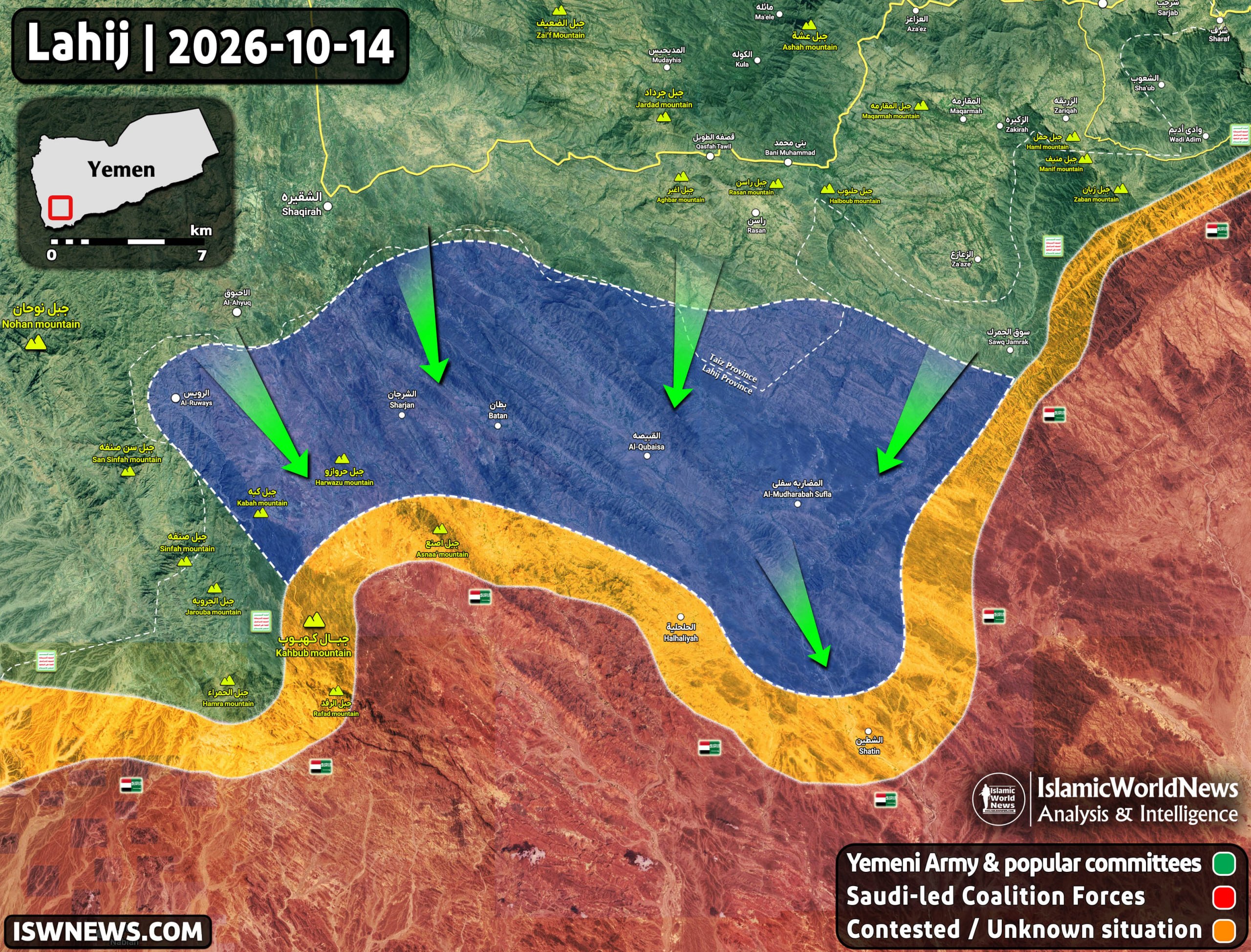
Houthi media also reported clearing al-Sharjan, al-Ka’ala, Harazu and al-Khabakhib in western Lahij, potentially putting additional pressure on Saudi-backed forces near Bab al-Mandab.

On October 14, the group released footage it said showed fighters driving Saudi-backed troops from Dhubab Airport in Taiz, capturing personnel and seizing military vehicles. Houthi forces also reported capturing al-Hangar checkpoint and clearing positions in Anbian and Wateer, further tightening pressure around Taiz.

The very next day, October 15, Houthi military spokesman Yahya Saree said that a surface-to-air missile had directly hit a Saudi Eurofighter Typhoon over Saada province in northern Yemen.

All in all, the Houthis have escalated on all fronts in recent weeks, tightening their siege of Taiz, pushing Saudi-backed forces away from Bab al-Mandab, and stepping up strikes on Saudi Arabia. The kingdom and its allies are yet to respond in any meaningful way in the face of this escalation, and despite their repeated military failures, they are yet to seek a real diplomatic solution.

______________________________________________________________________________________________________________________

DEAR FRIENDS. IF YOU LIKE THIS TYPE OF CONTENT, SUPPORT SOUTHFRONT WORK:

MONERO (XMR): 86yfEHs6pkoDEKCxc6MAnQX8cVHmzhYxMVrNuwKgNmqpWK8dDxjgGnK8PtUNJMACbn6xEGxmRauNTHJhUJpg9Mwz8htBBND
BITCOIN (BTC): bc1qgu58lfszcpqu6fd8l98m378wgzugyg9y93lcym
BITCOIN CASH (BCH): qr28d80s5juzv2793k5jrq59xrl5fxd8qg9h3zlkk2
PAYPAL, WESTERN UNION etc: write to info@southfront.press , southfront@list.ru

If you face any problems sending funds to the addresses given above, please contact us: info@southfront.press and southfront@list.ru. Also be aware that many email services such as Hotmail, Yahoo etc. may block correspondence from info@southfront.press and some others put it in spam.

If you want to support SouthFront but have no opportunity to do it via cryptocurrency, please contact us: info@southfront.press and southfront@list.ru.

SouthFront: Analysis and Intelligence
NOW hosted at southfront.press
Previously, SouthFront: Analysis and Intelligence was at southfront.org.
The .org domain name had been blocked by the US (NATO) (https://southfront.press/southfront-org-blocked-by-u-s-controlled-global-internet-supervisor/) globally, outlawed and without any explanation
Back before that, from 2013 to 2015, SouthFront: Analysis and Intelligence was at southfront.com

SOUTHFRONT.PRESS

The post Houthis Escalate On All Fronts appeared first on South Front.

  •  

Houthis Strike Saudi-Run War Operations Center at Aden’s Palace (Videos)

File image.

Yemen’s Houthis (Ansar Allah) said on October 15 they had struck a military operations headquarters run by Saudi officers and weapons depots inside Maashiq Palace in the southern port city of Aden, which is occupied by Yemen’s internationally recognized government.

In a statement, Houthi military spokesman Brig. Gen. Yahya Saree said the strike was part of the group’s declared policy of targeting Saudi military concentrations.

“Any Saudi military presence is considered a legitimate target for our forces wherever it may be,” Saree said.

At least six explosions were heard near the palace, witnesses told The Associated Press. A security official said two blasts occurred on a hill near the complex and two others close to its security gate, prompting residents to flee the area.

Two Yemeni government officials separately told Reuters that the Houthis had fired several missiles at the palace complex.

A Yemeni government official said government leaders who were in Aden were safe. Many senior officials are based outside the country, mainly in Saudi Arabia. The extent of damage to the reported targets and any casualties were not immediately established.

The strike comes amid an intensifying exchange of strikes between the Houthis and the Saudi-led coalition. In recent days, the group has targeted Saudi airports and oil infrastructure, including Riyadh’s King Khalid International Airport and an administrative building at Saudi Aramco’s complex in Dhahran.

The coalition, which backs Yemen’s internationally recognized government, struck fuel facilities in Houthi-held areas on October 13, accusing the group of using civilian infrastructure to support its missile and drone operations.

The attack on Maashiq Palace marks a rare strike near the government’s main seat in Aden, extending the confrontation into southern Yemen as the Houthis pursue their campaign against Saudi military and strategic targets.

_______________________________________________________________________________________________________________________

SouthFront: Analysis and Intelligence

NOW hosted at southfront.press

Previously, SouthFront: Analysis and Intelligence was at southfront.org.

The .org domain name had been blocked by the US (NATO) (https://southfront.press/southfront-org-blocked-by-u-s-controlled-global-internet-supervisor/) globally, outlawed and without any explanation

Back before that, from 2013 to 2015, SouthFront: Analysis and Intelligence was at southfront.com

SOUTHFRONT.PRESS

MORE ON THIS TOPIC:

The post Houthis Strike Saudi-Run War Operations Center at Aden’s Palace (Videos) appeared first on South Front.

  •  

Houthi Air Defenses Hit Saudi Typhoon Fighter Jet Over Yemen

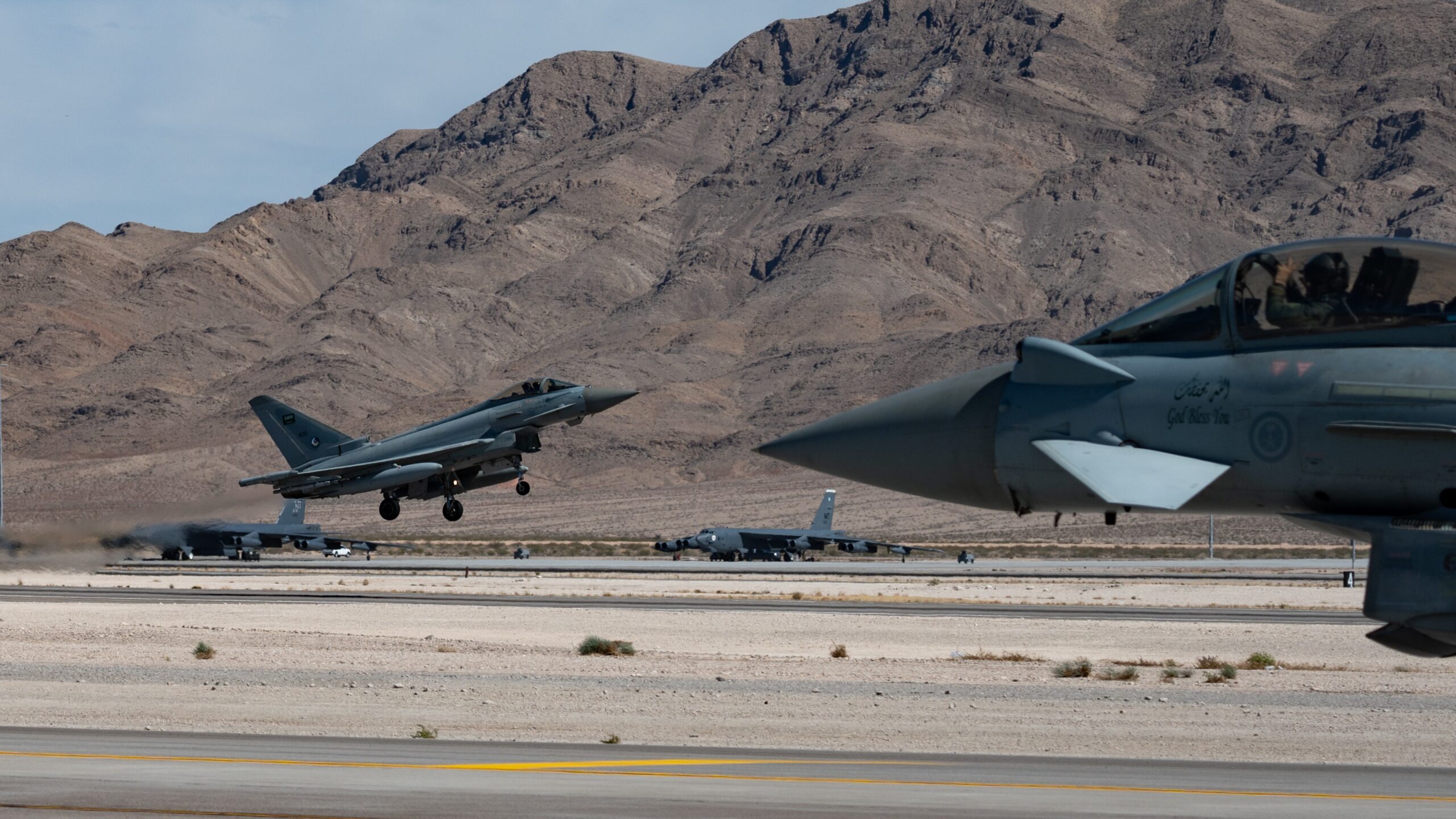
Illustrative image. (U.S. Air Force Photo by Airman 1st Class Michael Sanders)

The Houthis (Ansar Allah) announced on October 15 that their air defenses had hit a Saudi Eurofighter Typhoon fighter jet over the Yemeni province of Saada.

In a statement, Houthi military spokesman Brig. Gen. Yahya Saree said that the warplane had taken off from Taif Air Base in western Saudi Arabia before being engaged over northern Yemen.

“It was directly hit and is at risk of crashing,” Saree added.

The reported engagement follows the Houthis’ September 16 downing of a Saudi F-15SA fighter jet over the central province of Marib. At the time, the group said it used a locally made surface-to-air missile, without elaborating. Saudi Arabia is yet to acknowledge the loss. The fate of the pilot and the weapons system officer also remain unknown.

The fighter incidents have come alongside four Houthi-reported shootdowns of combat drones this month so far. On October 5, the group said it downed a Chinese-made Wing Loong II over the southwestern province of Taiz.

Two days later, it announced the destruction of a CH-4 over the northern province of Al-Jawf, followed by a Turkish-made Bayraktar Akinci over Taiz on October 8. On October 13, Houthi forces reported another Wing Loong II shootdown over Saada.

The Houthis possess fairly capable air defenses, ranging from man-portable systems to interceptors and medium-range anti-aircraft missiles.

The recent engagements indicate the group’s air defense capabilities are growing, which would further complicate Saudi aerial operations over Yemen.

_______________________________________________________________________________________________________________________

SouthFront: Analysis and Intelligence

NOW hosted at southfront.press

Previously, SouthFront: Analysis and Intelligence was at southfront.org.

The .org domain name had been blocked by the US (NATO) (https://southfront.press/southfront-org-blocked-by-u-s-controlled-global-internet-supervisor/) globally, outlawed and without any explanation

Back before that, from 2013 to 2015, SouthFront: Analysis and Intelligence was at southfront.com

SOUTHFRONT.PRESS

MORE ON THIS TOPIC:


The post Houthi Air Defenses Hit Saudi Typhoon Fighter Jet Over Yemen appeared first on South Front.

  •  

Trump Wants Erdogan in Yemen War, but Turkey Has Other Plans

File image.

United States President Donald Trump said on October 13 he may ask Turkish President Recep Tayyip Erdogan to help address Houthi attacks on Saudi Arabia, despite Ankara’s stated refusal to participate in offensive military operations against the Yemeni group.

“I might do it,” Trump told reporters before leaving for a campaign trip to Alaska. “President Erdogan, I think, would do as I ask.”

Trump did not specify what role he envisioned for Turkey or say whether Washington had formally approached Ankara on the matter.

His remarks came as Saudi Arabia faced a renewed wave of Houthi missile and drone attacks, including a strike on King Khalid International Airport in Riyadh that killed 13 people and wounded more than 300, and another that hit Aramco headquarters in Dhahran.

Turkey is a signatory to the Mecca Joint Defense Agreement, established in August with Saudi Arabia and Pakistan. The agreement treats an armed attack on one member as an attack on all, but Ankara has drawn a distinction between defending its partners and joining their offensive campaigns.

Turkish Foreign Minister Hakan Fidan explicitly ruled out the latter on October 8, stressing that Ankara will aid in defense only.

“But this is a defensive agreement. When a country party to the pact comes under attack, you stand by it in its defense. This is not an offensive agreement. Turkey will not send troops to another country to carry out attacks on its territory,” he said at a news conference in Ankara, according to Reuters.

Turkey has opted to provide Saudi Arabia with limited defensive and technical assistance. Reuters reported October 7, citing officials, that the support included military equipment, intelligence sharing, air defense capabilities, logistical assistance and help with surveillance and defensive planning.

Trump’s potential request is unlikely to override these established limits. The Mecca agreement had yet to receive Turkish parliamentary ratification as of October15, after Erdogan said three days earlier that it would be submitted to lawmakers soon.

Article 92 of Turkey’s constitution generally places the authority to approve the deployment of Turkish armed forces abroad with the Grand National Assembly, subject to exceptions under applicable international treaties. A direct combat role would therefore face a significant legal and political hurdle.

Even if Ankara eventually approved an intervention, there is little reason to assume Turkish forces could achieve a decisive outcome where Saudi Arabia and its other allies have failed.

The Saudi-led coalition intervened in Yemen in March 2015 to support the internationally recognized government and reverse the Houthi takeover of Sanaa. More than 11 years later, the Houthis still control the capital and extensive territory in northern Yemen, despite years of military operations by Saudi Arabia and its allies.

A Turkish offensive would introduce another capable military into the conflict, but it would not resolve the underlying challenge of defeating an entrenched opponent that has withstood more than a decade of regional military pressure, including intense bombing campaigns
by the U.S. and Israel.

_______________________________________________________________________________________________________________________

SouthFront: Analysis and Intelligence

NOW hosted at southfront.press

Previously, SouthFront: Analysis and Intelligence was at southfront.org.

The .org domain name had been blocked by the US (NATO) (https://southfront.press/southfront-org-blocked-by-u-s-controlled-global-internet-supervisor/) globally, outlawed and without any explanation

Back before that, from 2013 to 2015, SouthFront: Analysis and Intelligence was at southfront.com

SOUTHFRONT.PRESS

MORE ON THIS TOPIC:


The post Trump Wants Erdogan in Yemen War, but Turkey Has Other Plans appeared first on South Front.

  •  

West’s death cult in a theater near you

By Finian Cunningham | Strategic Culture Foundation | October 14, 2026

It’s hard to know whether to break the TV set or throw up when listening to the European governments rushing to condemn the air strike by Yemeni forces on Saudi Arabia’s King Khalid international airport.

The blast from a ballistic missile that slammed into the airport at the weekend, October 12, killed at least 13 civilians and injured scores of other travellers. Horrific video footage shows the moment the missile explosion ripped through a terminal lounge.

European leaders immediately in a coordinated fashion trotted out condemnations of Yemeni “terrorism” and vowed solidarity and support for Saudi Arabia. U.S. President Donald Trump called it “a terrible thing.” (As if bombing schoolchildren is not quite a terrible thing.)

Britain, France, Germany, Ireland, Italy, Austria, the Netherlands, and Spain all issued strident denunciations of the Yemeni attack.

The strike on the Saudi capital came after the Ansar Allah-led Yemen Armed Forces had given ample warning to the Saudis that their airports would be targeted and for civilians to avoid the areas. The airports were kept open for business as usual. The Yemenis have said that the attack on Riyadh and other Saudi airports are retaliation for weeks of multiple air strikes by the Saudis on Yemeni civilian centers.

Hundreds of Yemeni civilians have been killed since Saudi Arabia broke a four-year truce with an air strike on the international airport in Sanaa, the Yemeni capital, on July 13. Saudi warplanes, U.S.-supplied F-15s and European Typhoon jets, have been continously bombing homes across Yemen. This week, two days after the Riyadh strike, at least nine people including five children were killed in air raids on houses in Taiz city and in northern al Jawf province. Al Masirah TV footage showed a distraught father holding up a child’s shredded body amid rubble. There was no condemnation of that atrocity from any European leader.

As Mick Wallace and Clare Daly, former Irish Members of the European Parliament, point out in their podcast this week, the official European reaction is utter hypocrisy and a cynical distortion of the conflict on the Arabian Peninsula.

Britain and France in particular, along with the United States, have backed the Saudi aggression against Yemen beginning in 2015. Over seven years, that aggression killed up to 400,000 Yemenis through air strikes and a blockade on humanitarian needs.

The European Union remained largely silent for seven years. No protests were made to Washington, Paris or London. Ambassadors were not summoned, sanctions were not imposed.

The return to hostilities that began with Saudi air strikes on Sanaa in July have been enabled by U.S. and Britain supplying warplanes, military advisors and intelligence.

None of the European governments have bothered to condemn this recent U.S. and UK-backed slaughter.

So, it is nauseating when one hears British Foreign Secretary Ed Miliband saying he is “appalled” by the strike on Riyadh airport. And other European leaders vowing “full solidarity with the kingdom of Saudi Arabia.”

Germany’s Foreign Minister Johann Wadephul condemned Yemen’s “terrorist act.”

His French counterpart said France stood with Saudi Arabia “in defending its territory and infrastructue.” (No mention of what the Saudis have been doing for years to Yemen’s territory.)

Referring to the strike on Riyadh without any context, Italy’s Giorgia Meloni said: “Attacks against civilians and civilian infrastructure are unacceptable and must cease.” (Yes, indeed, so why not tell that to the Saudis who are doing it deliberately on a massive scale with support from Washington and London?)

What is instructive here is not just the sickening hypocrisy and moral bankruptcy. It is the manifestation of a systematic corruption and criminal responsibility. This is not just one more example of a flawed European political class whose judgement is suspect. What is increasingly apparent is the totality of the corruption.

The same European supporters of Saudi monarchs waging a genocidal war on Yemen are also contemporaneously supporting the Israeli Zionist regime in its extermination of Palestinians. They are complicit in enabling the U.S. aggression against Iran, Cuba and Venezuela. They are sponsors of the NeoNazi regime in Kiev to keep fighting a proxy war against Russia despite more than one million Ukrainian military casualties and the risk of nuclear conflagration.

The death cult of Western capitalism is on full display in multiple theaters, exposing the organic evil at work. There is sense that all of Western imperialist history is now on display in one final orgy of barbarity.

In previous times, the death cult operated discreetly in seemingly disparate conflict scenarios. Wars on different continents seemed somehow unconnected. The Western media would in the past reliably cover up the crimes by distorting the motives and objectives with false narratives and (laughable) claims of noble purpose. The West was “defending democracy,” “fighting communism,” “protecting human rights,” or “waging war on terrorism,” or some other pretext that in isolation and with loads of media propaganda managed to fool a lot of people as somehow plausible.

What’s happening now, it seems, is a concatenation of wars that ultimately exposes the essential system that drives the violence, and its insatiable lust for human suffering.

It is impossible to work for such a vile system, the death cult of capitalism, without also being oblivious to its evil ways. To remain oblivious necessitates denial or lies. That deception might be tenable for occasional and seemingly disparate scenarios. But not when the system is exposed in its infernal entirety.

American and European wars in the past might have succeeded in being sold to the Western public as one-off wars and misadventures. We think of the wars in Korea, Vietnam, Latin American, Africa, former Yugoslavia, Afghanistan, Iraq, and more recently Libya.

In more recent years, as consciousness evolved, the public began discerning and decrying “endless wars”.

But now the world is witnessing a totalizing of the war machine that goes by the name of “Western democracy”.

What’s happening in Ukraine, Gaza, Iran and Yemen is not coincidence. It is the death cult on display and unable to hide itself. It manifests too in attacking and locking up Western citizens who condemn genocide or who simply call for peace.

Capitalism, fascism, wars, the Epstein class, endemic poverty and suffering – it’s a death cult in a theater near you.

The politicians, governments, media and pundits who promote it or serve it are seen for what they are.

  •  

Ansar Allah Warns More Attacks on Saudi Oil Facilities Are Coming After Strike Hits Aramco Headquarters

Yemen’s Ansar Allah, also known as the Houthis, warned on Wednesday that more attacks targeting Saudi Arabia’s oil facilities were coming following a strike that hit the headquarters of the Saudi state-owned oil giant Aramco in the eastern city of Dhahran. Yahya Saree, spokesman for the Ansar Allah-led Yemeni Armed Forces, said that attacks also […]
  •  

Houthis reframing the narrative casting them as an Iranian proxy

A deadly Houthi attack on Riyadh’s international airport has highlighted how the Yemeni group is reframing its perceived “Iran proxy” role and shifting its regional focus to its ongoing battle against Saudi Arabia. The October 10 strike, in which 13 people were killed and hundreds injured, was the most violent episode on Saudi Arabian soil […]

The post Houthis reframing the narrative casting them as an Iranian proxy appeared first on Asia Times.

  •  

The Houthis Are Not an Iranian Proxy

José Niño Unfiltered | October 11, 2026

In September 2026, Ansar Allah, derisively labeled as the Houthis in Western foreign policy circles, redrew the map of western Yemen in a matter of days. Its fighters swept down the Red Sea coast, seized Mocha on September 10, then pushed through Dhubab and took Mayyun Island at the heart of the Bab el-Mandeb strait the following day, consolidating control over Yemen’s entire Red Sea coastline and roughly 5,400 square kilometers of newly gained territory. Yemen’s Saudi-backed government answered on October 4 when Presidential Leadership Council head Rashad al-Alimi announced Operation Dawn of Yemen, vowing to keep fighting until the country was “liberated from the grip of the terrorist militia,” with 100 Saudi coalition fighter jets providing air cover and Ansar Allah firing missiles at targets inside the kingdom in response.

Washington reached for a familiar script. Secretary of State Marco Rubio branded Ansarh an Iranian proxy, and Tehran fired back on September 9. Foreign Ministry spokesman Esmail Baghaei wrote on X, “Marco Rubio’s lies cannot replace facts. Ansarallah is an independent Yemeni actor that makes its own decisions; it takes orders from no one and acts as nobody’s proxy.”

On the question of Ansar Allah’s relationship to Iran, the record sides with those who emphasize the movement’s homegrown roots. In the 1980s, Zaydi religious networks in the northern province of Saada organized study groups and summer camps to resist the Wahhabi and Salafi outreach that Saudi money spread across the region. Around 1992, those networks crystallized as the Believing Youth, an educational and social revival movement dedicated to Zaydi theology and the preservation of a tradition stretching back a millennium. Saada’s poverty and its chronic neglect by Sanaa fueled the grievances that eventually became a military force.

Hussein Badr al-Din al-Houthi sharpened that network into a political cause after the U.S. invasion of Iraq in 2003. He accused President Ali Abdullah Saleh of running a corrupt government that neglected Saada, sidelined Zaydis, and surrendered Yemeni sovereignty to Saudi and American interests. His followers adopted a chant that read in full: “God is Great, Death to America, Death to Israel, Curse the Jews, Victory to Islam.” The chant named foreign powers, but its domestic meaning was clear: Yemeni authorities understood that a movement chanting “death to America” today could be chanting “death to the president” tomorrow. Palestine and the Second Intifada also featured prominently in Hussein’s sermons, which cast Israel as an occupying power and the United States as its enabler. The antisemitism in the Yemeni resistance’s messaging reflected a long-held hostility to Jewry’s machinations among the Yemeni population.

Saleh went to war against the movement in 2004, and his forces killed Hussein on September 10. Leadership passed to his younger brother Abdul-Malik al-Houthi. During the 2011 uprising the movement took the name Ansar Allah and pitched itself as a national force against corruption and inequality.

The episode that best exposes the proxy myth unfolded in September 2014. Iranian representatives reportedly urged Ansar Allah not to seize the capital, and Ansar Allah marched in anyway. HuffPost broke the story in April 2015, citing American officials familiar with the intelligence. One official told the outlet “It is wrong to think of the Houthis as a proxy force for Iran.” National Security Council spokeswoman Bernadette Meehan added: “It remains our assessment that Iran does not exert command and control over the Houthis in Yemen.” The Wilson Center also called attention to the aforementioned restraint Iran advocated for: “In 2014, Iran reportedly advised the Houthis against taking over Sanaa, but they pressed on.”

Thomas Juneau of the University of Ottawa built the academic foundation for this view. His 2016 study in International Affairs argued that “the Houthis are not Iranian proxies; Tehran’s influence in Yemen is marginal.” In a Washington Post op-ed that same year, he wrote: “It is simply inaccurate to claim that the Houthis are Iranian proxies.” Juneau has since acknowledged deeper cooperation, yet he told The Iran Primer : “The Houthis are fiercely nationalist, and do not take orders from Iran. Instead, they work together, closely, on the basis of their common interests.”

Helen Lackner, among the most respected Western scholars of Yemen, put it plainly on Democracy Now: “The Houthis are not Iranian proxies. They are not Iranian servants. They don’t do what the Iranians tell them to do. They make their own decisions.” She described how the alliance functions: “If their decisions and their policies coincide with those of Iran, then there’s no issue. But if they don’t, they don’t do it.”

Allison Minor challenged the proxy narrative directly in a Brookings essay: “Rigorous definitions of the term ‘proxy’ require that the sponsor has some means of controlling the proxy, as this is what differentiates a proxy from a partner/ally. In truth, the Houthis are not an Iranian proxy, even though they benefit from Iranian support.” Minor pointed to the unilateral ceasefire Ansar Allah declared with Saudi Arabia in 2019, even as Iran sought escalation, and stressed their possession of independent revenue, local arms production, and diverse supply lines as other indicators of autonomous production and decision-making.

Others well-versed in Yemeni affairs reached the same conclusion years earlier. Saudi journalist and filmmaker Safa al-Ahmad, who reported from inside Ansar Allah territory, told PBS Frontline that Iran’s ties to the group were “vastly overblown” and that “the Iranians can’t just pick up the phone and tell the Houthis what to do.”

Even the hawkish Institute for the Study of War agrees. Its September 18 update stated, “The Houthis are not an Iranian proxy, although their objectives often overlap with Iran’s strategic interests.” It added, “The Houthis are an independent partner of Iran and may resist potential Iranian pressure to halt their campaigns, however.”

None of this means Iran sits on the sidelines. The Associated Press reported in late September that officers of the Islamic Revolutionary Guard Corps helped Ansar Allah with planning during the coastal offensive. Yet researcher Nicholas Brumfield told Al Jazeera that the campaign reportedly involved 76,000 Yemeni fighters, raised “using their own governance apparatuses,” and that mounting evidence points to Ansar Allah boasting a burgeoning domestic arms industry.

Ansar Allah ultimately behaves as a national liberation movement that shares many of Iran’s enemies and welcomes Iranian assistance, yet it charts its own course whenever its interests diverge. It does not need Tehran to steer it any more than any serious and credible resistance movement needs a foreign master. It grew from Yemeni grievances, and it will naturally seek allies such as Iran that oppose the same aggressive powers—Israel and the United States—that work tirelessly to destabilize West Asia. Movements like it already shake the foundations of the regional order. If the current momentum holds, Ansar Allah could reshape not only Yemen but also the Saudi provinces of Asir, Jizan and Najran, lands that many Yemenis still regard as their own and that Saudi Arabia locked down after the 1934 war between the two countries.

What started as a revolt against a corrupt president in a neglected mountain province has become a war that stretches from Taiz to Riyadh. With Ansar Allah astride the Bab el-Mandeb and Iran pressing on the Strait of Hormuz, two of the world’s most vital chokepoints now sit within reach of forces Washington cannot push back. If Asir, Jizan and Najran ever slip from Riyadh’s grip, historians will trace the new map back to Saada, not to Tehran.

  •  

New Footage Shows Houthis Routing Saudi-Backed Forces Near Bab al-Mandab

File image.

The Houthis (Ansar Allah) on October 14 released footage showing an operation against Saudi-backed forces at Dhubab airport, saying their fighters had driven back troops massing there, burned and captured military vehicles and taken prisoners.

The footage emerged as Houthi forces captured several positions in western Lahij province over the past 48 hours. They advanced along the Aghbarah and al-Mudaribah fronts, taking al-Sharjan, al-Ka’lalah, Harwazu, Jabal Harwazu, al-Khabakhib and Lower al-Mudaribah, among other locations.

The captured positions had been held by the Giants Brigades, the National Shield Forces and armed members of the Subaihah tribes.

Fighting around Dhubab had severely depleted the capabilities of the Giants Brigades and Subaihah fighters, with many commanders reportedly killed.

The Houthi advance toward Ras al-Arah and Khor Umairah is expected to continue, potentially setting the stage for a further push toward Aden.

Click to see full-size map.

The developments underscore the failure of the Saudi-backed counterattack launched on October 5. Rather than reversing Houthi gains and securing the front around Bab al-Mandab, the campaign has been followed by continued fighting at Dhubab airport and further territorial losses for coalition-aligned forces in western Lahij.

_______________________________________________________________________________________________________________________

SouthFront: Analysis and Intelligence

NOW hosted at southfront.press

Previously, SouthFront: Analysis and Intelligence was at southfront.org.

The .org domain name had been blocked by the US (NATO) (https://southfront.press/southfront-org-blocked-by-u-s-controlled-global-internet-supervisor/) globally, outlawed and without any explanation

Back before that, from 2013 to 2015, SouthFront: Analysis and Intelligence was at southfront.com

SOUTHFRONT.PRESS

MORE ON THIS TOPIC:


The post New Footage Shows Houthis Routing Saudi-Backed Forces Near Bab al-Mandab appeared first on South Front.

  •  

A Bab al-Mandab Saga: From Assab to Perim; All Has a Base, None Has a Plan. Part II

The geopolitical aspects of Bab-al-Mandab extends way beyond any narrow view, both historically and contemporarily. So, before the next “maritime security initiative” arrives, ask the 4 main questions the brochure never answers Ethiopia lost its sea, Yemen’s highlands never accepted a master, and this month a Zaydi movement took the strait’s Arabian shore. Every capital […]
  •  

Houthis Are Developing New Advanced Ballistic Missile With Chinese Components

Illustrative image.

Yemen’s Houthis (Ansar Allah) are attempting to manufacture medium-range ballistic missiles modeled on an advanced Iranian weapon, using components traced to a Chinese supplier, according to a report published on October 14 by The Wall Street Journal.

The findings, based on an assessment by the weapons-monitoring organization Conflict Armament Research, point to an effort by the Houthis to expand domestic missile production and reduce their reliance on complete weapons systems supplied by Iran.

The proposed missile is modeled on Iran’s Kheibar Shekan, a solid-fuel, precision-guided ballistic missile with a reported range of up to 1,900 kilometers. Such a range would place all of Saudi Arabia and Israel within reach.

Yemeni authorities intercepted two shipments containing missile-related components in 2025 and provided information about them to Conflict Armament Research in July 2026, according to The Journal. The equipment was concealed among other commercial goods.

The seized materials included custom-made metal components for missile motors and airframes, flight-stabilizing fins, parts of solid-propellant rocket motors, and heat-resistant materials designed to protect sections of a missile from the extreme temperatures generated during flight. Authorities also recovered tools, testing equipment, and raw materials.

Shipping documents examined as part of the investigation linked the specialized components to an unnamed Chinese precision-metal manufacturer that advertises expertise in custom aerospace parts.

Some of the imported goods had potential civilian applications, while others were specifically designed for use in missiles.

The Kheibar Shekan was unveiled by Iran in 2022. It uses solid fuel, allowing for relatively rapid preparation for launch, and is designed to maneuver during the terminal phase of flight, complicating interception by air defenses.

Iran used the missile against United States military bases during fighting in the Middle East earlier this year, according to The Journal.

Chinese companies have become a major source of goods seized from shipments bound for the Houthis, according to data cited by the newspaper from United Nations reporting and weapons investigators. The supply networks include components that can be used in missiles and drones, as well as other dual-use equipment.

The investigation does not establish how far the Houthis have progressed toward producing a functional missile based on the Kheibar Shekan. It does, however, show that the Houthis are expanding their weapons-manufacturing capabilities and are no longer relying fully on Iran.

_______________________________________________________________________________________________________________________

SouthFront: Analysis and Intelligence

NOW hosted at southfront.press

Previously, SouthFront: Analysis and Intelligence was at southfront.org.

The .org domain name had been blocked by the US (NATO) (https://southfront.press/southfront-org-blocked-by-u-s-controlled-global-internet-supervisor/) globally, outlawed and without any explanation

Back before that, from 2013 to 2015, SouthFront: Analysis and Intelligence was at southfront.com

SOUTHFRONT.PRESS

MORE ON THIS TOPIC:


The post Houthis Are Developing New Advanced Ballistic Missile With Chinese Components appeared first on South Front.

  •  
❌