❌

Reading view

Army Wants High-Energy Laser Weapons It Can Put On “Any Vehicle In The Motorpool”

The U.S. Army is pursuing a family of modular and scalable laser directed energy weapons that can be fitted to any vehicle in its inventory. The service sees this as key to expanding the operational use of lasers, particularly to provide an extra layer of defense against drone threats, and outside of dedicated units. The Army is already fielding high-energy lasers operationally on a limited basis, including along the border wth Mexico, but the technology has faced continued hurdles to more widespread use in recent years.

Army officials and industry representatives discussed what is currently called the Enduring-High Energy Laser (E-HEL) program during a panel discussion this week at the Association of the U.S. Army’s (AUSA) main annual convention, at which TWZ was in attendance. In September, AeroVironment received the first production contract under E-HEL to supply examples of its 30-kilowatt-class LOCUST X3 laser directed energy weapon system. The Army has already acquired earlier LOCUST variants, including vehicle-mounted and palletized types, through more experimental programs, and these are the systems now deployed along the southern border. The U.S. Navy has also at least tested a containerized version of LOCUST for shipboard use as part of its own larger laser ambitions.

“We’re focused on any vehicle in the motorpool. I want to try to integrate future capability of high-energy lasers into it,” Army Brig. Gen. Guy Yelverton, the Capability Program Executive for Defensive Fires with the Portfolio Acquisition Executive Office for Fires, said during the panel on Monday. “And, so, our E-HEL is on a sled. With that, I can look at integrating it onto multiple different vehicles.”

“And then, as I think about vehicle agnosticness, if I open up my aperture to MOS [military occupation speciality] agnostic, and ensure that it’s easy to train, easy to operate, I can not just focus on air and missile defense organizations,” he continued. “I can now look at any formation type to be able to put a high-energy laser capability into it for the counter-UAS [uncrewed aerial systems] fight.”

“That gives me even more opportunities to share this capability across all Army formations, and give our senior leaders [the] maximum amount of thought process and input into where the system goes, who the soldier is that’s operating it, and I’ve given them quite a solution,” he added. “It’s a great dilemma to have of where do I put all this capability.”

In 2022, the Army reactivated the 4th Battalion, 60th Air Defense Artillery Regiment (4-60th ADA) at Fort Sill, Oklahoma, as part of plans to field new laser-armed Directed Energy Maneuver-Short Range Air Defense (DE M-SHORAD) systems based on the 8×8 Stryker light armored vehicle. Reliability and other issues with DE M-SHORAD vehicles led the Army to shift focus, and 4-60th ADA has since assumed a more traditional air defense role. The problems with the DE M-SHORAD system are indicative of struggles that have dogged laser-directed energy weapon developments across the U.S. military, and that have led to several other programs being severely truncated or outright cancelled in recent years.
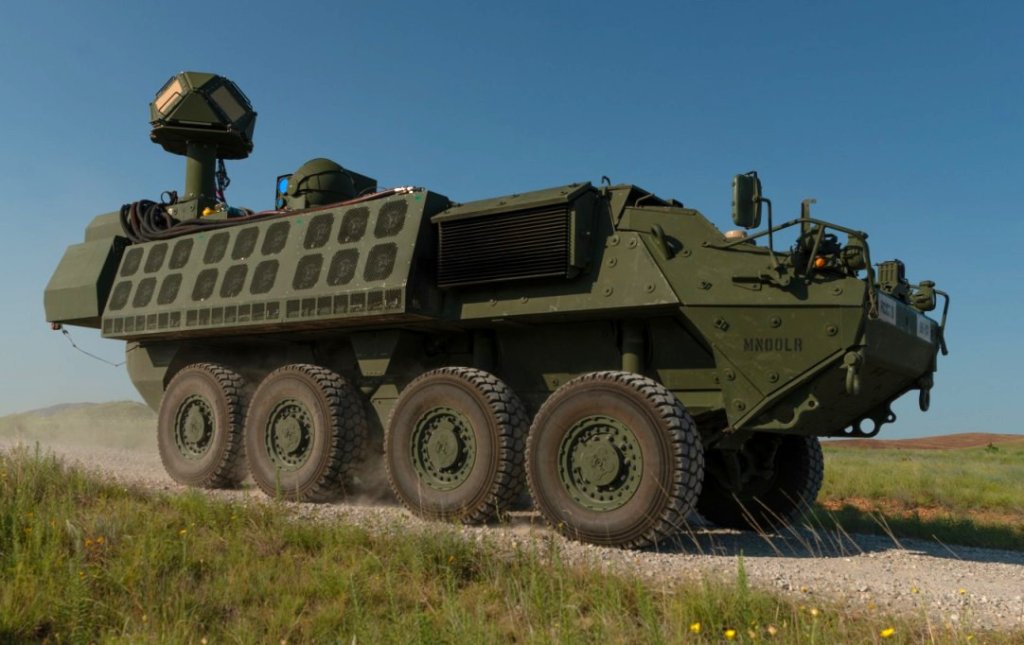
One of the Stryker-based DE M-SHORAD system prototypes. US Army One of the Army’s initial prototype DE M-SHORAD vehicles. US Army

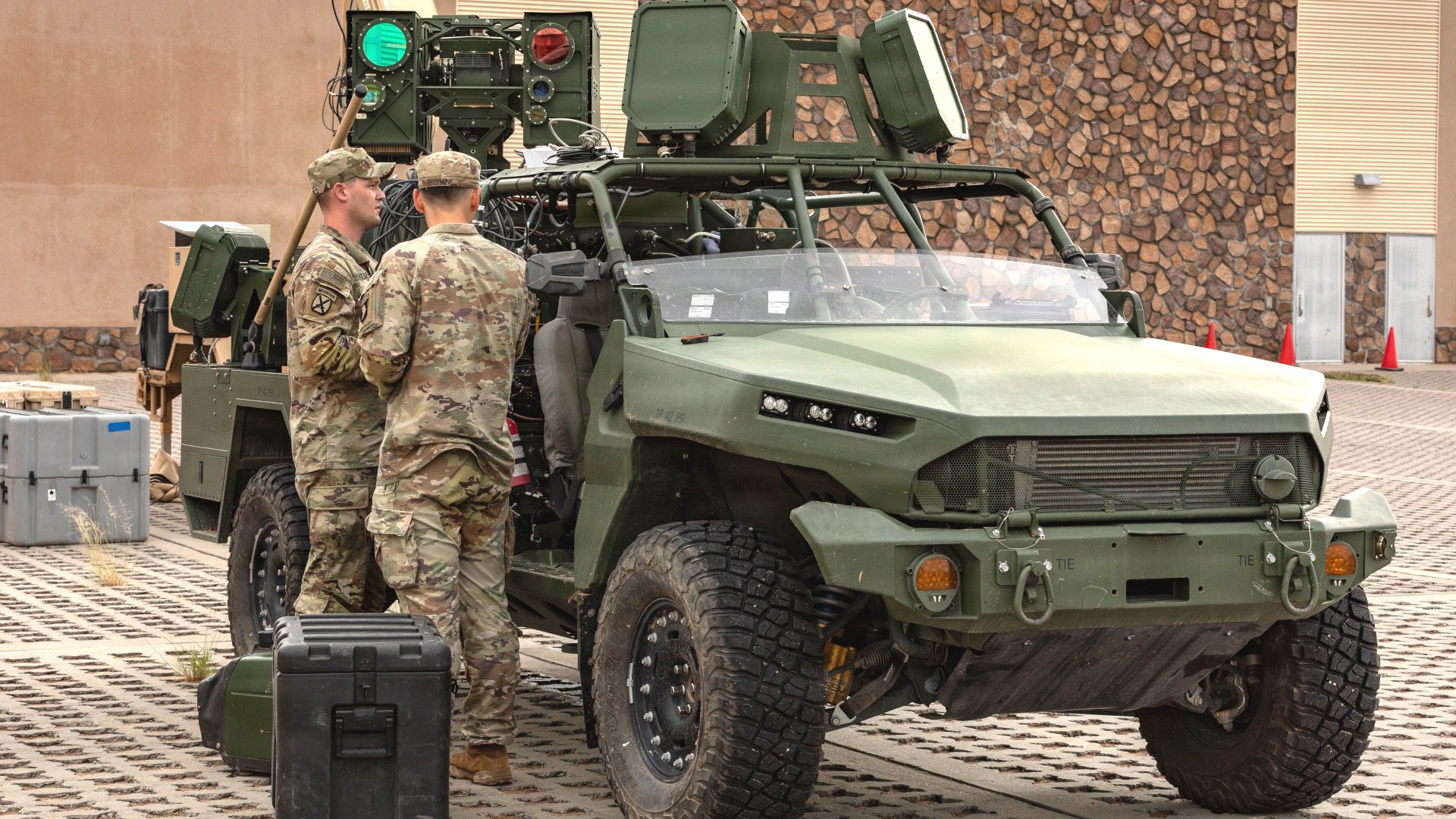
The Army does now have the aforementioned LOCUST systems, including versions mounted on 4×4 Joint Light Tactical Vehicles (JLTV) and Infantry Squad Vehicles (ISV), as well as the palletized types. Those systems appear to be currently fielded on a more ad hoc level to units at forward locations.
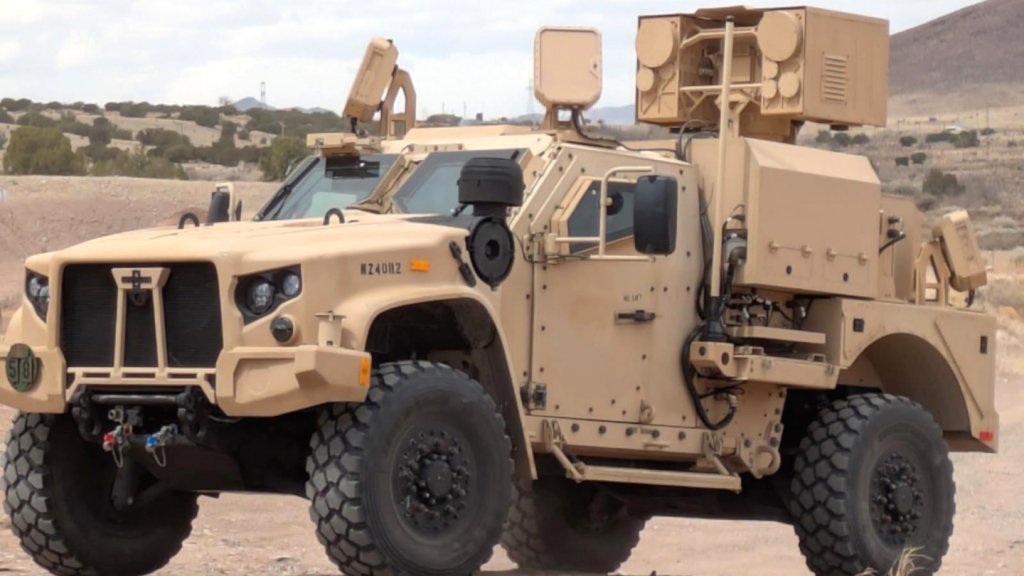
A LOCUST system seen integrated onto a JLTV. AeroVironment

LOCUST is well suited to the Army’s current vision for fielding E-HEL without being tied to specific vehicles or unit types. At the core of the system is a turret with the laser beam projector, as well as built-in electro-optical and infrared video cameras for target acquisition and tracking. Other sensors, such as small-form-factor high-frequency radars and passive radio frequency signal detection systems on host vehicles, as well as off-board radars and other capabilities positioned elsewhere, can be used to cue the turret.
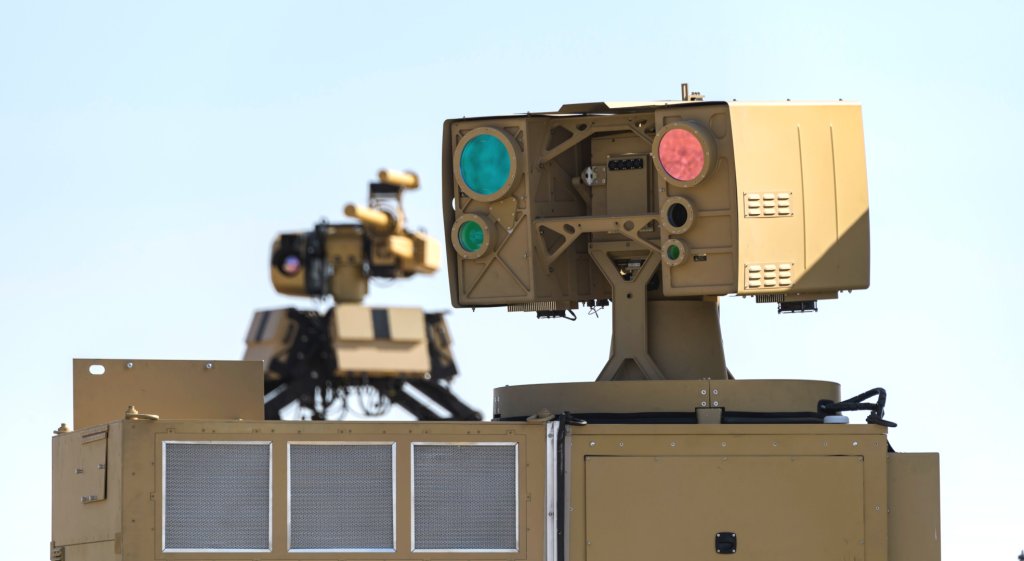
A close-up look at the turret on an earlier palletized version of LOCUST acquired by the Army. US Army

With the 30-kilowatt power rating, the new X3 versions of LOCUST the Army is acquiring now are still at the lower end of the power spectrum for laser directed energy weapons. All versions of LOCUST to date are geared explicitly toward countering small drones.

It is possible that the Army could field other types of laser directed energy weapon systems through E-HEL in the future. The service, in cooperation with other branches of the U.S. military, is also pursuing designs with far higher power ratings through separate programs.

Just being able to field LOCUST X3 more broadly would still offer valuable additional layers of defense against drones across different types of Army units. More broadly speaking, the central benefit that laser directed energy weapons offer is the promise of functionally unlimited magazine depth, though this is dependent on there being sufficient power and cooling capacity. This, in turn, translates to a substantial reduction in the cost-per-intercept equation compared to traditional anti-air interceptors. All of this is especially advantageous for tackling drone threats, which do not have to be large or expensive to present real dangers.

By miniaturizing and ruggedizing lower-power systems like LOCUST, the Army could distribute these capabilities across a broad area, or deploy them in a more concentrated fashion, depending on the fight. Even a convoy with a number of the vehicles sprinkled in with them could help defend it from pop-up attacks

In this context, mobility and flexibility are also important boons. LOCUST systems mounted on light vehicles can be readily positioned and repositioned to respond to changes on the battlefield, as well as be brought to forward locations slung under helicopters. Palletized and containerized versions offer additional kinds of flexibility for providing point defense at sites on land, as well as installation on ships.

Army personnel assigned to Joint Task Force-Southern Border (JTF-SB) prepare to sling load a LOCUST-equipped Infantry Squad Vehicle (ISV) under a CH-47 Chinook helicopter during training as part of an Air Assault Sustainment Course at Fort Bliss, Texas, on July 16, 2025. US Army

At the panel on Monday, Brig. Gen. Yelverton stressed that when it comes to laser weapons systems, in general, the technology is no longer a matter of “science fiction” but has become “science reality.” The U.S. military says laser systems positioned along the border with Mexico have downed real targets, though many questions remain about those deployments. Regardless, challenges do clearly remain.

“Lasers are real. We can do it. We can go out. We can shoot things,” Kirk Williams, Chief Engineer at the Army’s Directed Energy Project Office, another one of the panelists, said. “But what we got to do now is make these systems reliable enough so that the soldiers have the faith in them when they need them, and that’s really the main point that we’re trying to go after right now.”

“We’re getting to the point where the systems are reliable enough, but we still have to make them maintainable and repairable because this is an Army system,” he continued. “It’s going to be on a battlefield. Things are going to break. We can break things in very creative ways, right? So if it’s not reliable, or if it’s not maintainable, if it’s not repairable, that’s a problem.”

“We’re also looking to reduce size, weight, and power,” he added. “JLTV has a lot better payload capacity than ISV. So we really need to be able to get something smaller if we want to have the same effectiveness on an ISV. So that same modular architecture will allow us to go in, take some of those components, make trade-offs.”
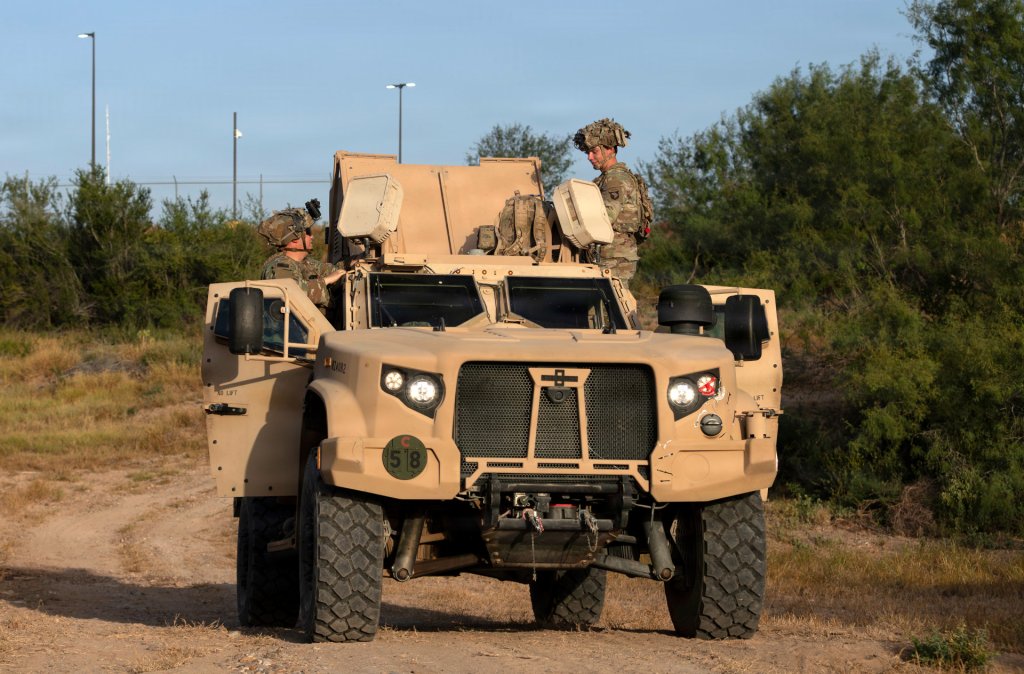
A JLTV-based LOCUST system seen deployed near the US-Mexico border. US Army

The focus on modular and open systems architectures will also help when it comes to integrating new and improved functionality down the line. It will also feed into the larger goal of having E-HEL options not tied to a particular vehicle or other platform.

“By going after the modular architecture, that gives us the flexibility to not only go after increases in reliability, but also increases in performance,” Williams further explained. “It gives us the way to inject new technology into existing systems, and then hopefully it also gives us a way of getting better prices out of some of our vendors.”

In addition, “one of the things we learned is you can have a really cool integrated system, and then when that truck needs an oil change, well, then your laser weapon system is down for the count,” he added. “So, trying to make it so that you can just pull it off of any vehicle, put it on any other vehicle is really one of the things that we’re trying to go after.”

The Army is also very cognizant of the basic fact that a single laser can only engage one target at once. The beam from any laser weapon system also drops in power as it gets further from the source, just because of the need to propagate through the atmosphere. Weather and other environmental conditions like smoke and dust then also become a factor. This has driven demand for more power (and cooling capacity) to improve effectiveness, especially at range. Developments in adaptive optics can also help overcome these issues to a degree, but lasers currently remain very short-range weapons overall.

A picture the US Army says shows an engagement of a drone using a laser directed energy weapon near the border with Mexico on August 25, 2026. US Army

“That’s why it’s important to us to get enough energy on the target to kill it as quickly as possible and move on to the next threat. Speaking about the magazine, you know I have battery power on there, so depending upon which system, around 80 seconds, 120 seconds, whatever that is, you know that’s the magazine depth I have,” Brig. Gen. Yelverton said on Monday. “The quicker I get on the target, kill it, and off the target, I start rebuilding, regenerating that magazine depth.”

“It’s the targeting system. It’s the optics system that lets you focus on the target,” Williams also chimed in at this point on the panel discussion. “I mentioned trying to make the trackers better and take some of the onus off of the operator. If we can do better aim point control and keep the laser in the same spot, it gives you a better and a quicker kill.”

Earlier on, Williams had highlighted how artificial intelligence-assisted targeting capabilities could be a particularly important addition to laser directed energy weapons. Networking multiple systems together could help with sorting and assigning targets as efficiently as possible.

When it comes to the actual operational employment of laser directed energy weapons, “as these systems get smaller, as they get more powerful, the quicker we could get them into our soldiers’ hands,” Army Col. Charles Kean, Deputy Commanding Officer for Support at the 7th Infantry Division at Joint Base Lewis-McChord in Washington state, another one of the panelists, said.
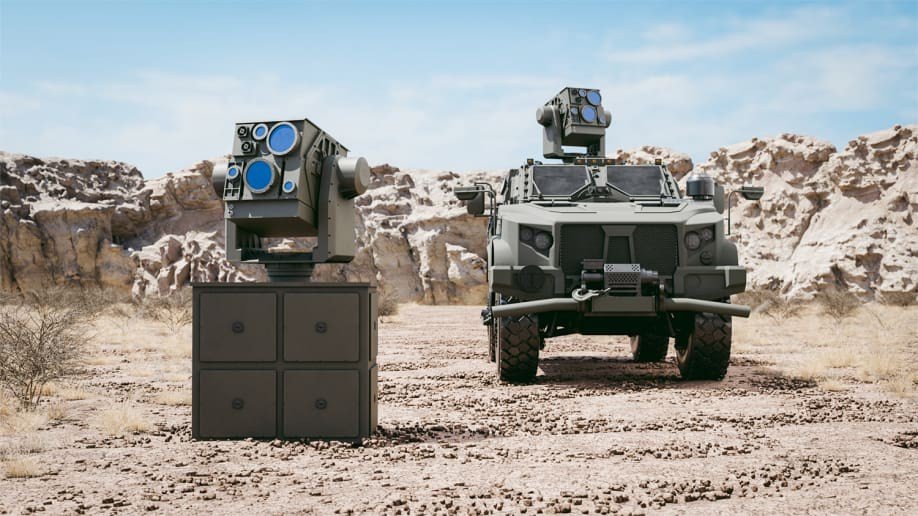
A promotional image showing JLTV-based and self-contained configurations of the LOCUST X3. AeroVironment

This, in turn, will open up important new opportunities to “operate with them forward, test them in the mud, the dirt, the humidity of the Pacific, test them down in the southern border where they’re different conditions, whether it’s in the Middle East and Europe, it’s applicable across the board,” Kean continued. “We have to understand it, get it in our hands as quickly as possible, so we could iterate it, iterate on it, and make it better and continue to iterate, because the adversaries continue to iterate in reverse against us.”

This last point is worth highlighting. The U.S. military’s chief global competitor, China, has been particularly active in the development and fielding of ground-based laser and other directed energy weapons, as well as designs for shipboard use. Chinese firms are selling laser weapon systems to foreign armed forces, as well. Other countries, including American allies and partners, are also very actively pursuing these capabilities.

Touted as the "world’s most powerful," China’s LY-1 ship-based laser air defense system was displayed on an eight-wheeled truck, with no specs released. pic.twitter.com/WalkQffaA9

— Polymarket Intel (@PolymarketIntel) September 3, 2025

Col. Kean also stressed that laser directed energy weapons would still only be one part of a larger layered air and missile defense ecosystem for the Army.

As it stands now, the Army hopes to have the first LOCUST X3 systems acquired through E-HEL in operational service by early 2028. A similar timeframe has been put forward for the separate Joint Laser Weapon System (JLWS) program, which the Army is also involved in. JLWS is aiming to produce a viable containerized 150-kilowatt-class laser directed energy weapon, with plans to work toward 300- and 500-kilowatt-class designs. At the panel on Monday, Scott Keeney, CEO of laser systems developer nLIGHT, which has been working together with AeroVironment on LOCUST, among other projects, said he saw further scaling up of capabilities to the one-megawatt-class as being on the horizon. This is a power rating the U.S. Navy has also talked about as a future goal.

The Army clearly sees E-HEL already as a path to truly operationalizing laser directed energy capabilities across the system, but the service itself acknowledges that there is still significant work to be done to make this goal a reality.

Contact the author: joe@twz.com

The post Army Wants High-Energy Laser Weapons It Can Put On “Any Vehicle In The Motorpool” appeared first on TWZ.
  •  

The Days Of Army Air Defense Systems Firing Just One Type Of Interceptor Are Ending

The U.S. Army now has at least five named programs seeking new anti-air interceptors of various tiers to collectively address everything from advanced hypersonic missiles to small weaponized drones. In the process, an important central theme is emerging: the service’s days of fielding air defense systems that can only use one type of interceptor look to be increasingly over. For the U.S. military, the impacts from the war with Iran have made clear that diversifying munitions stockpiles and supplier bases is no longer just valuable, it is critical.

Army Lt. Gen. Frank Lozano, the service’s Portfolio Acquisition Executive for Fires, highlighted this growing trend yesterday during a panel discussion at the Association of the U.S. Army’s (AUSA) main annual convention, at which TWZ has been in attendance.

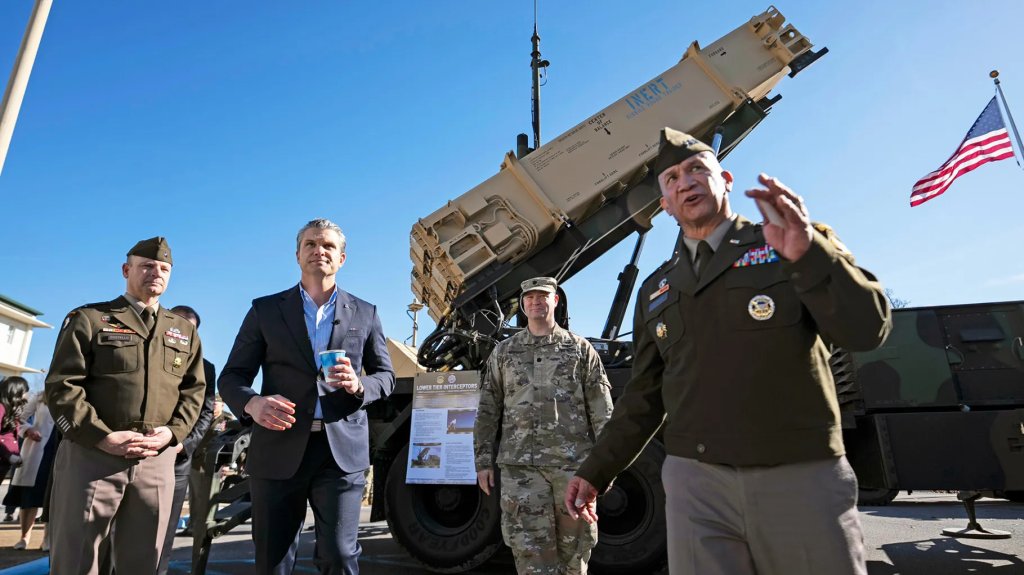
Secretary Hegseth, second from the left, seen in front of a launcher for the Patriot surface-to-air missile system during a tour of Redstone Arsenal in Alabama earlier this year. Army Lt. Gen. Frank Lozano is seen at far right. DoW/USN Petty Officer 1st Class Alexander Kubitza

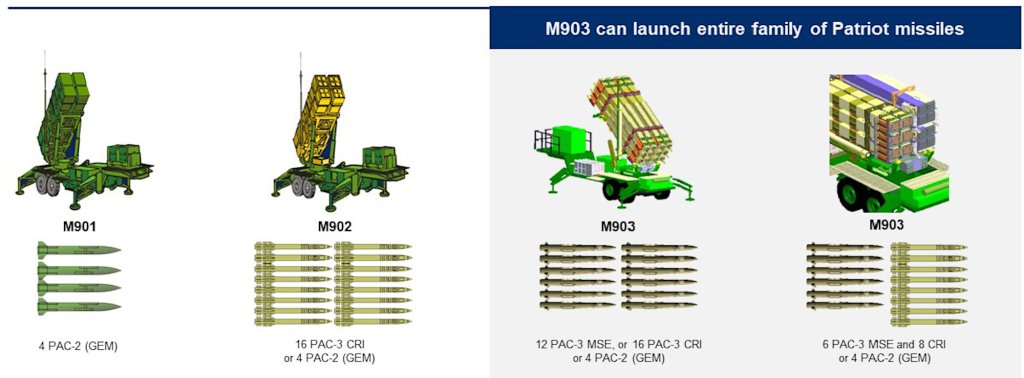
To provide some immediate context, with the exception of Patriot, the main ground-based air defense systems in Army inventory today are fielded with just one type of interceptor. In the case of Patriot, the service’s procurement of new interceptors had also been increasingly limited to just one type, the PAC-3 Missile Segment Enhancement (MSE). Production of the preceding PAC-3 Cost Reduction Initiative (CRI) missile ended in 2023. Just earlier this year, the Army placed its first order in decades for new PAC-2 Guidance Enhanced Missile-Tactical (GEM-T) missiles, an older interceptor design for Patriot that has remained in production primarily for U.S. allies and partners.

A graphic showing different interceptor load options for existing trailer-based Patriot launchers. Lockheed Martin

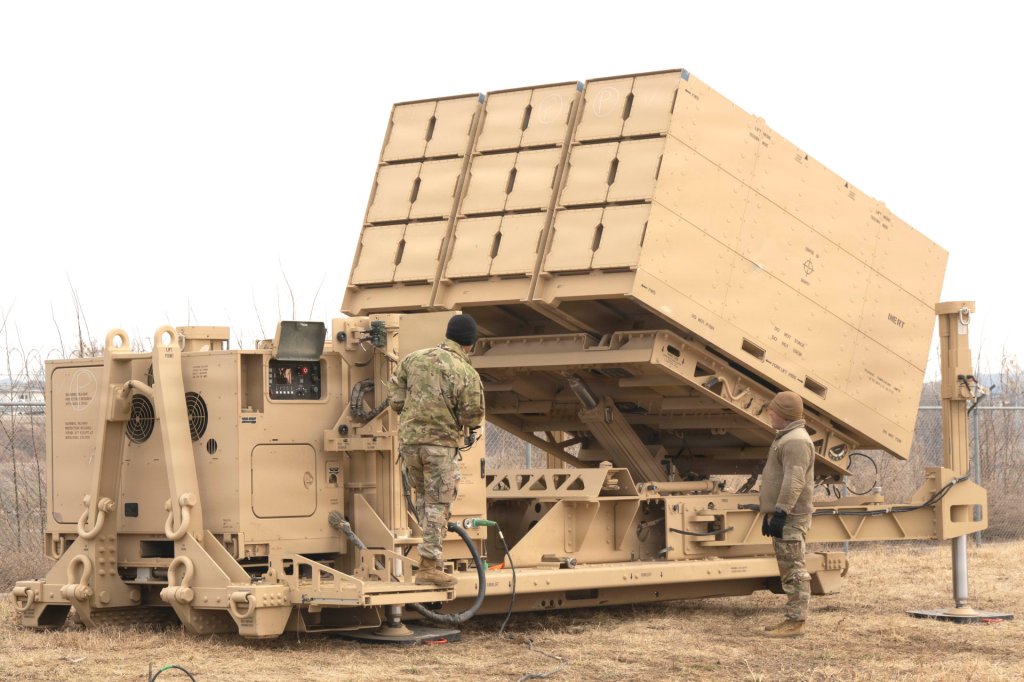
Separately, the Army is in the process of fielding Enduring Shield, a new middle-tier air defense system designed to handle multiple interceptor types. However, the service is currently only acquiring AIM-9X Sidewinders to load into them. We will come back to this later on.

An Enduring Shield launcher. USAF Pfc. Sang Woo Choi

“We have the capabilities we need to have to fight and win, but it’s our job to ensure that victory is achievable in the future inside of any dynamic environment scenario fight we might find ourselves in,” Lt. Gen. Lozano said yesterday. “So, it’s incumbent upon Mr. Ingraham [Assistant Secretary of the Army for Acquisition, Logistics and Technology Brent Ingraham] and I to continue to be creative and looking at, well, should we buy GEM-Ts because they’re being produced?”

“GEM-Ts are a really good missile in the battlespace within they operate. I mean, they’re being employed today by air defense brigades around the world,” he continued. “So if we have the opportunity, it’s probably something we should take advantage of, and we’re looking at doing that.

“We’ve had a lot of discussions about even more interceptors. From a PAC-3 MSE perspective, our goal has always been to get to 2,000 [per year],” he added. “Why we’re running programs like LCI [Low Cost Interceptor], and NGSRI [Next-Generation Short-Range Interceptor], and NGCM [Next-Generation C-UAS Missile], and Second Interceptor, is because I think the easy button answer is just buy more of a great missile. We’re going to buy more [PAC-3 MSEs], but when we start talking about overall missile output, we start looking at numbers like is it 4,000, is it 6,000, is it 8,000, we’re looking at a diverse set of capabilities.”

The LCI program is seeking a lower-cost and lower-tier interceptor for Patriot with a unit price of no more than $1 million. PAC-3 MSE’s average unit cost has been around $4 million in recent years.

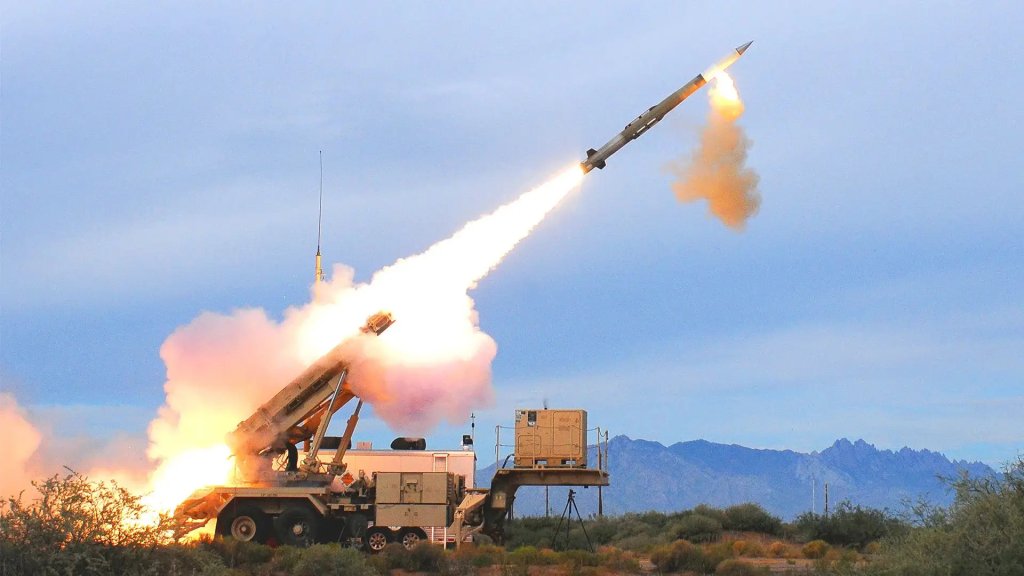
A PAC-3 MSE interceptor seen being launched. US military A Patriot launcher fires a newer PAC-3-series missile during a test. DoD

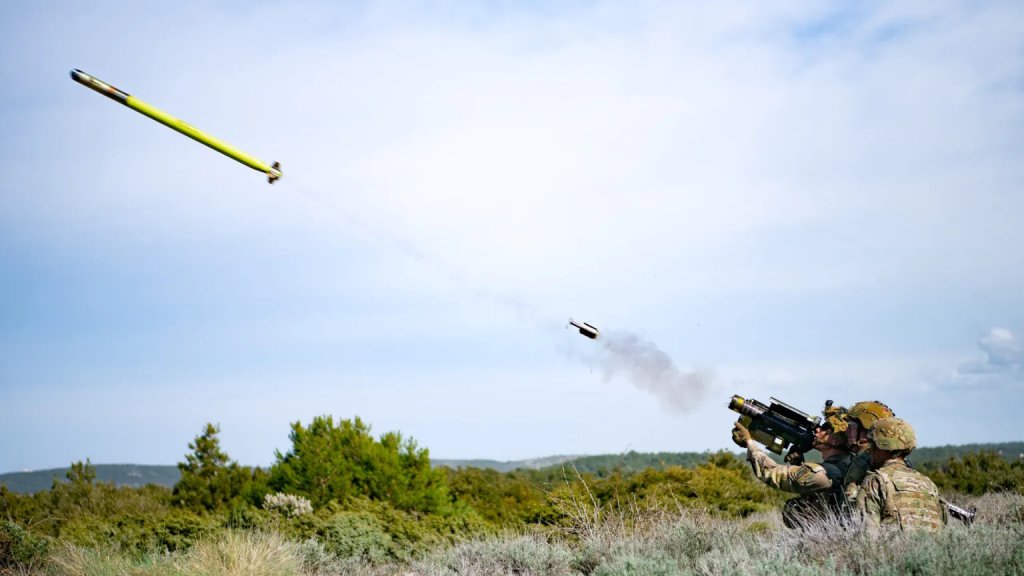
NGSRI is the Army’s program to find a replacement for the venerable Stinger. The new missiles have to be compatible with existing vehicle-based and man-portable launchers.

A US Army soldier fires a Stinger from a man-portable launcher during training. US Army

The Army is working to field a new counter-drone interceptor through NGCM. Those missiles will be integrated into launchers the service has now for the Coyote interceptor.

The Second Interceptor effort is for Enduring Shield, which is also known as the Indirect Fire Protection Capability Increment 2 (IFPC Inc 2). The main goal there is to provide increased capability against incoming cruise missiles compared to the AIM-9X.

There is also the Army’s Future Interceptor effort, which also came up separately at the panel yesterday, and is also for Patriot. Unlike LCI, the aim here is to acquire a new interceptor with improved capabilities against hypersonic missiles and other upper-tier threats.

Historically, Army programs like these would eventually result in the selection of a single winning missile design. Lozano’s remarks yesterday point to the service increasingly taking a very different approach.

On “second interceptor, obviously, we just moved into phase two of that program. We’ve got Lockheed Martin competing with Boeing, who was teamed with Anduril,” Lozano said. “But we wanted to turn up the heat on that program. I constantly get frustrated when a funding profile emerges over the FYDP [the Future Years Defense Program], and then magically we lay in a five-year program.”

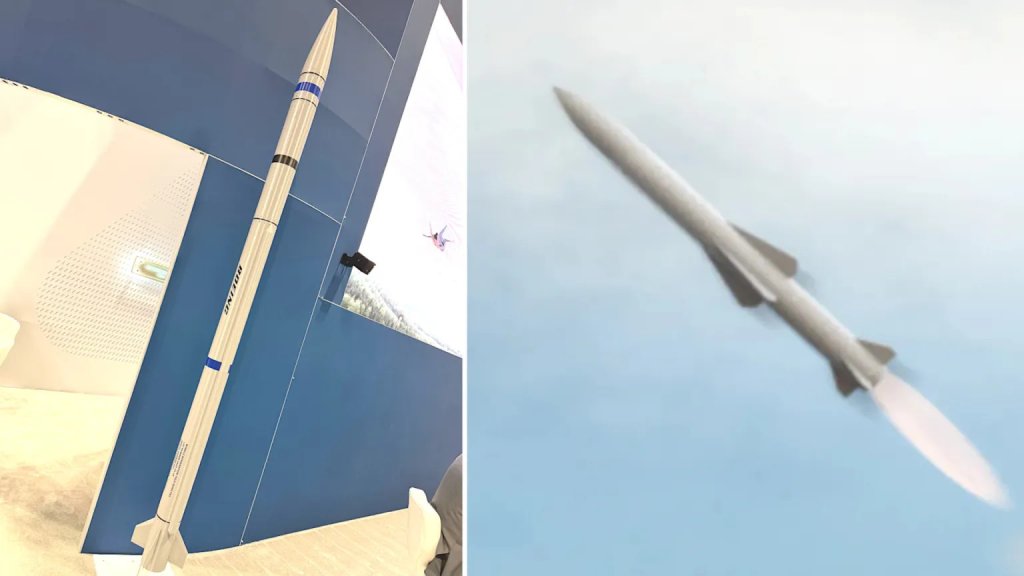
At left, a model of the Boeing/Anduril offering for the Second Interceptor effort. At right, a rendering of Lockheed Martin’s proposed Second Interceptor. Jamie Hunter/Lockheed Martin

“I’m like, no, I actually need that capability now,” he continued. “So, have we thought maybe what if we ran a 24-month program or a 36-month program, right? And so, in that vein, what we have decided to do is, while those two companies continue to compete, we’re going to create a shoot-off opportunity in [the] fourth quarter [of Fiscal Year 20]27, and I want to run an in-parallel, what I call an in-stride competition.”

“We just held an industry day, and we basically just said, hey, if there’s any other company who didn’t make the first cut in the phase one, but, oh, by the way, who continued to invest in the IFPC Second Interceptor capability, we’d love for you to come out to the range,” he added. “We’ll give you range time, we’ll present targets, and we’ll allow you to recompete with an opportunity to get back into the program folder.”

The Army is doing the exact same thing with NGSRI, where Lockheed Martin and Raytheon have been competing face-to-face. That program is also now planning to hold a new shoot-off that will be open to other vendors in the fourth quarter of Fiscal Year 2027.

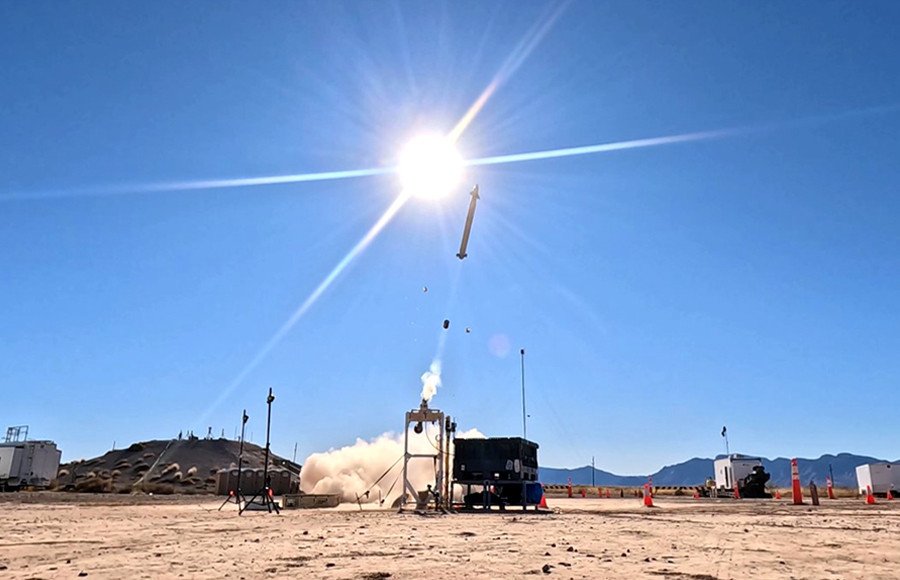
A picture showing a test of Lockheed Martin’s NGSRI entrant, called QuadStar. Lockheed Martin
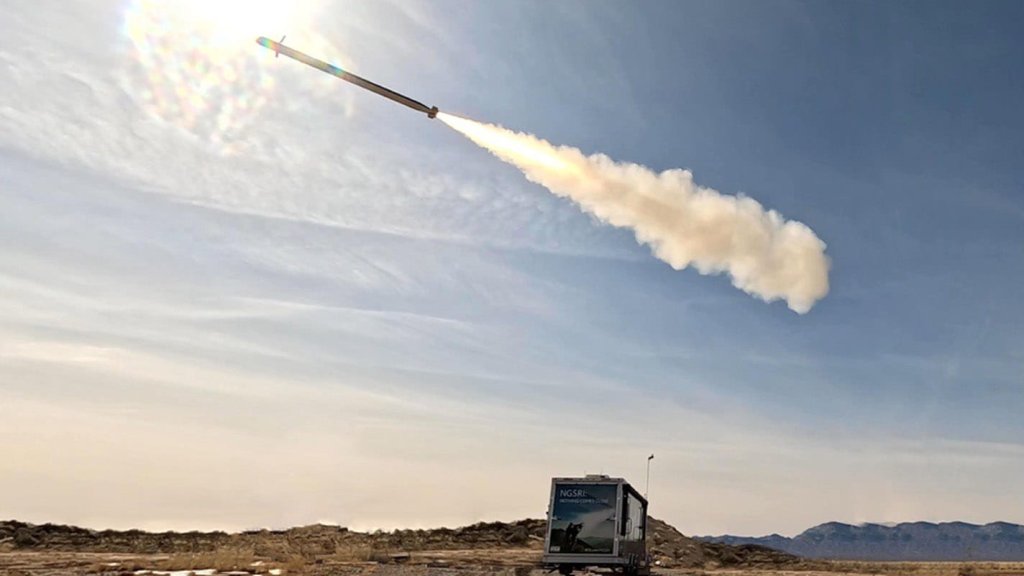
Raytheon, which is also the prime contractor for Stinger, has previously released this image in relation to work on its NGSRI design. Raytheon

There are signs the Army is moving in a similar direction with NGCM, where it previously selected AeroVironment to supply its Freedom Eagle-1 (FE-1) interceptor. The service put out a request for information seeking new NGCM options in August, with a goal of holding an initial evaluation again in the fourth quarter of Fiscal Year 2027. A deeper operational assessment could then follow in Fiscal Year 2028.

To reiterate, on top of all this, the Army is also now pursuing at least two new interceptor options for Patriot.

“We have to address the threat, and we need to address the threat in a complementary way, meaning we need to fight on a cost curve that’s affordable for the U.S. Army to maintain and sustain that warfighting capability abroad,” Lozano stressed yesterday.

This gets to the crux of the matter. It is not at all a new observation that just having a stockpile of any particular munition on day one of a conflict is not enough, especially if the fight becomes drawn out. There needs to be sufficient depth to those stocks at the start and the ability to readily replenish them in line with expenditures. The war with Iran, compounded by other crises in the Middle East and the ongoing conflict in Ukraine, has made clear that these core truths apply to all armed forces, even the U.S. military.

Lower-cost munitions are part of the solution, but they also need to be producible at scale on reasonable timelines. The lead time for higher-end munitions today is often measured in months, if not years. Furthermore, being locked into a single vendor has been shown to not just be undesirable, but a potential national security risk in an actual conflict. Lozano’s remarks yesterday, and how the Army is now pursuing new anti-air interceptors, reflect larger trends, not just in the acquisition of larger volumes of munitions overall, but also from a broader array of total suppliers.

There has also been a push across the U.S. military to bring in new and non-traditional firms, including in partnership with established prime contractors. An example of this is the Boeing/Anduril team-up for Second Interceptor. This was also underscored by new framework agreements the Pentagon announced back in May regarding the planned purchase of thousands of lower-cost cruise missiles.

The @DeptofWar has reached new framework agreements with a slate of disruptive new entrants to aggressively expand the United States military’s lethal cruise missile and hypersonic missile strike capabilities.
 
Low-Cost Containerized Missiles (LCCM) Program:
• Anduril
•… pic.twitter.com/Fr2xAnBM7y

— Department of War CTO (@DoWCTO) May 13, 2026

With regard to the LCI program, specifically, Lozano highlighted an additional aspect of all of this yesterday.

LCI has “a unique twist to it because we’re looking for companies who have all-up rounds, but I’m also asking for companies to come in at the component level,” he explained. “We typically don’t do that, right? There’s a lot of risk in managing components and generating all-up round systems. But we’re also looking for weapon system integrators, because I want to be able to create two or three teams who can compete with the all-up round guys to see if we can generate some momentum behind the fact that we need to thicken our inventory with low-cost, affordable munitions.”

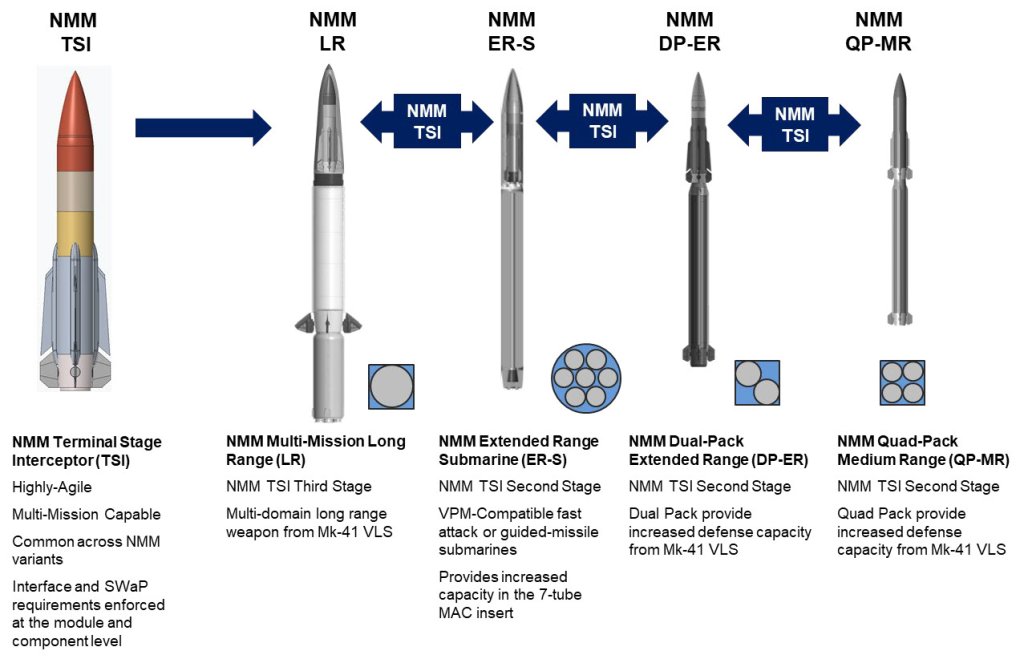
The U.S. Navy is now pursuing a roughly similar approach with its Naval Modular Missile (NMM) program. NMM envisions an entirely new family of sea-launched surface-to-air missiles that offer very different capabilities, but that all feature certain common components, as you can read more about here.

A graphic laying out the Navy’s vision for the different members of the NMM family, and shared components between them. USN

The Army is also eyeing a new family of launcher vehicles, as well as containerized options, all capable of firing various types of surface-to-air and surface-to-surface munitions. Autonomy is also an important aspect of what is aptly dubbed the Common Autonomous Multi-Domain Launcher (CAML) program.

It is also important to note here that the underlying aim is not to eliminate more exquisite munitions, or the capabilities that they offer, but to create a more affordable, complementary mix of options.

“What I would say is we’re solely focused on delivering on the programs we are executing now,” Lozano said in closing at the end of the panel yesterday. “We have to deliver, and if we deliver on that wide variety of capability, then we can increase and ramp that capacity. And that would be my wish list, that we have enough resources and we achieve programmatic success in the way that we’re planning to, so we can deliver in mass.”

All signs point to the diversity in munitions that Lozano is talking about here being particularly pronounced in future Army air defense capabilities full of systems firing multiple types of interceptors.

Contact the author: joe@twz.com

The post The Days Of Army Air Defense Systems Firing Just One Type Of Interceptor Are Ending appeared first on TWZ.
  •  

Army Explains How Merops Interceptor Drone Became Program Of Record In Just 142 Days

The U.S. Army turned the Merops interceptor drone into a formal program in just 142 days, an acquisition milestone that highlights efforts to speed the service’s response to emerging threats and get combat-proven capabilities into the hands of troops and allies. The Merops won accolades for its role in defending against Iranian barrages of Shahed-136 one-way attack munitions in the Middle East.

Speaking at the Association of the U.S. Army’s (AUSA) main annual convention in Washington, D.C., where TWZ is in attendance, Col. Christopher Hill, director of the Army’s Global Tactical Edge Acquisition Directorate (G-TEAD), described the Merops effort as “an example of how we can move fast when we need to.”

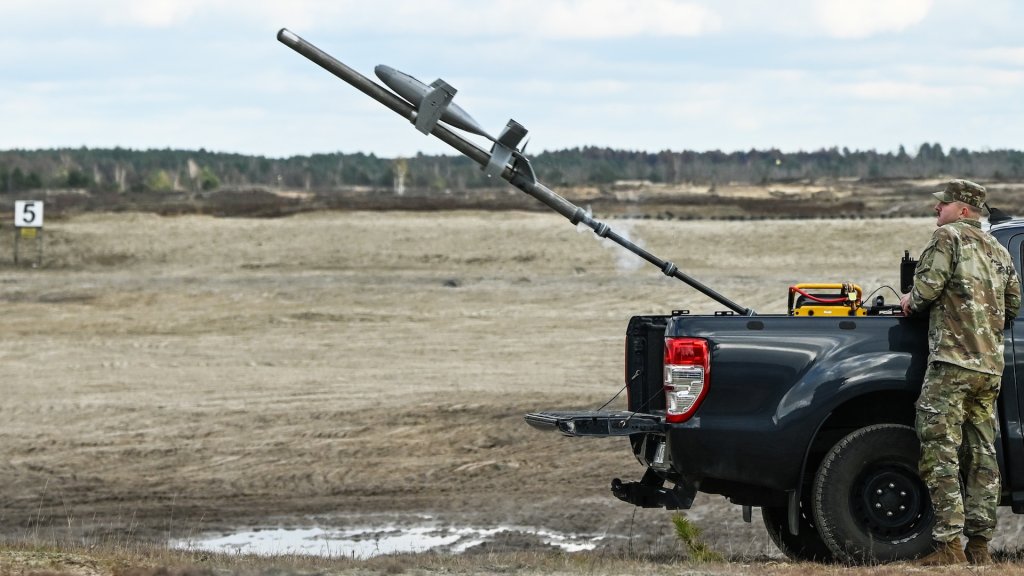
Polish soldier from 18th Anti-Aircraft Regiment is packing the parachute for the MEROPS T3 drone near Lipa, Poland, Nov. 15 2025. The intensive 20-day multinational Train-the-Trainer course rapidly qualified 20 students from Poland, Romania, and the U.S., most with no prior military drone experience, in a battle-tested C-UAS system through classroom, practical flight, and night operations, culminating in a successful live-fire demonstration to destroy a jet powered drone, thereby accelerating the fielding of this critical capability along the Eastern Flank Deterrence Line. As the battlefield evolves, we are leveraging U.S. experience and NATO authorities to solve problems for the Alliance. The training occurring at Lipa shows how Allies like Poland and Romania are rapidly procuring and employing systems that are battle-tested in Ukraine to strengthen the Eastern Flank Deterrence Line. This is the EFDL in action.(U.S. Army photo by Sgt. Luis Garcia, 52d ADA Bde)
A Polish soldier packing the parachute for a Merops drone near Lipa, Poland, in November 2025. U.S. Army photo by Sgt. Luis Garcia, 52d ADA Bde

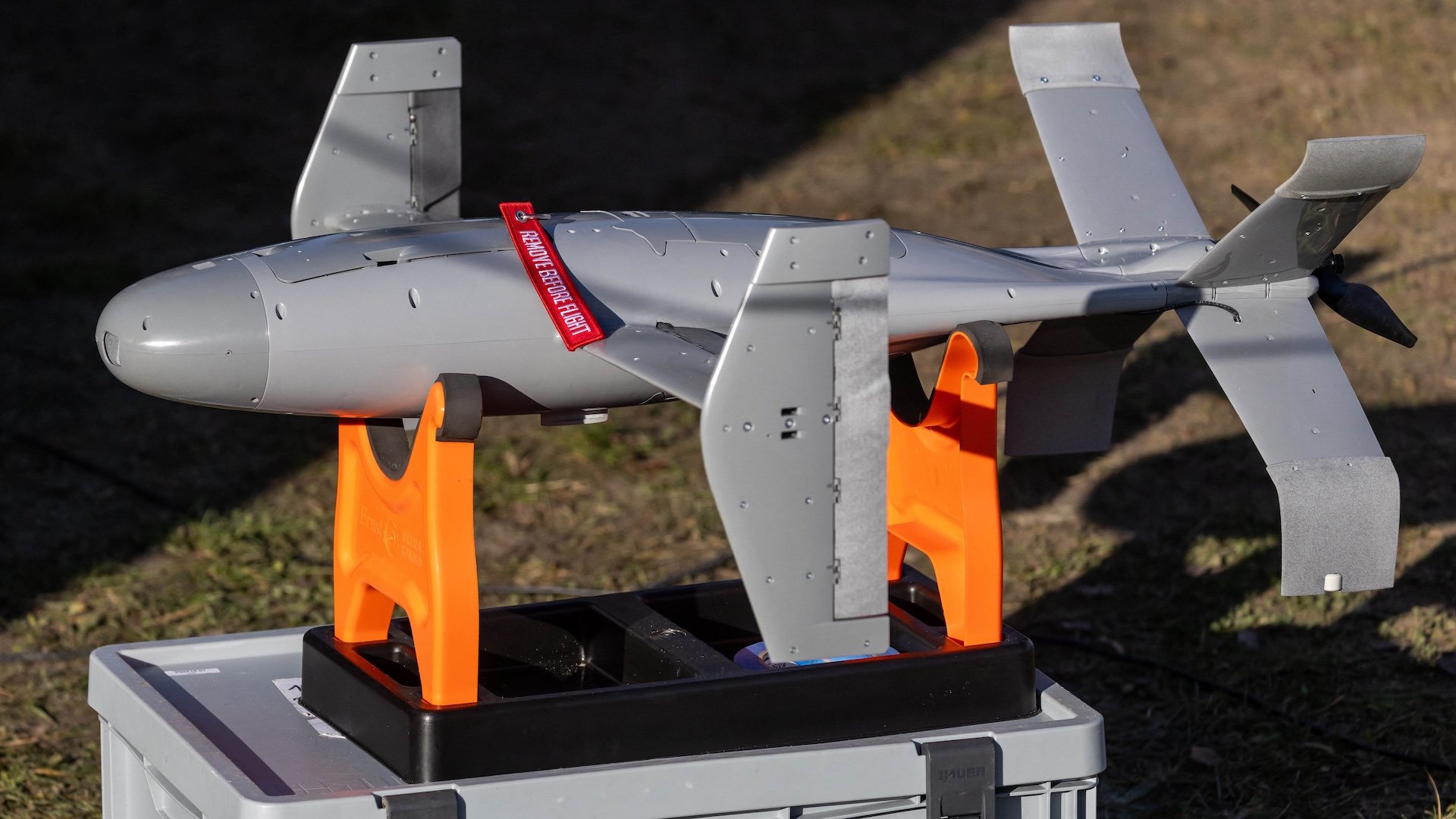
The Merops is a small, relatively low-cost counter-UAS system designed to rapidly intercept long-range, one-way attack drones in flight. It was originally developed by Perennial Autonomy. The system uses Surveyor drones as airborne interceptors, with onboard sensors to track targets and the ability to operate autonomously or under remote control. The interceptors can destroy enemy unmanned aircraft through direct impact or a proximity-detonated explosive warhead.

The interceptor was initially brought to the Army’s attention after drone incursions involving two NATO partners prompted a senior commander to demand an urgent response. The system was not part of the commander’s original acquisition plan, Hill explained, but its demonstrated performance in Ukraine made it a compelling candidate.

“He said, ‘I want this capability in the hands of our partners within 14 days,’” Hill recalled. “Everyone looked around the room, and he looked over at me, and I nodded my head like, ‘We’ll figure it out.’”

The Army did not quite meet that deadline. Hill said acquisition personnel and soldiers went into the theater to evaluate the capability, ultimately getting it into the hands of NATO partners within approximately 21 or 22 days.

That initial effort has since expanded. Hill said the Army procured additional Merops systems in partnership with the Joint Interagency Task Force, which procured 13,000 of the interceptors. The effort also progressed from providing the capability to NATO partners to supplying mobile Merops firing teams to a second theater — presumably U.S. Central Command (CENTCOM).

In CENTCOM, the U.S. military has been confronting the threat posed by Iran’s Shahed-136 and other one-way attack drones, which have been used in barrages against American and allied forces and installations in the Middle East. Former Army Secretary Daniel Driscoll had previously highlighted Merops as a particularly attractive option for countering such threats because of its relatively low cost and the speed with which it can be acquired.

You can watch Driscoll’s testimony on Merops at the 36-minute mark of the video below:

During congressional testimony, Driscoll said the Army was able to purchase 13,000 Merops interceptors within approximately eight days after the conflict with Iran began. He put the cost at about $15,000 per interceptor, with the potential for that figure to fall below $10,000 as production scales. In a separate interview with Bloomberg, he suggested larger orders could eventually push the price down to between $3,000 and $5,000.

U.S. Secretary of the Army Daniel Driscoll, poses for a photo after signing a counter-unmanned aerial system April 30 in Ansbach, Germany. U.S. Army Brig. Gen. Curtis King, commanding general of 10th Army Air and Missile Defense Command, Brig. Gen. John Mountford, deputy commanding general of V Corps, Brig. Gen. Terry Tillis, commanding general of 7th Army Training Command, and their soldiers spoke on C-UAS that have been tested and implemented in the past year by 52d Air Defense Brigade and 12th Combat Aviation Brigade (U.S. Army photo by Sgt. 1st Class Jacob Kohrs).
U.S. Secretary of the Army Daniel Driscoll poses for a photo after signing a Merops counter-unmanned aerial system in Ansbach, Germany. U.S. Army photo by Sgt. 1st Class Jacob Kohrs

Shahed drones have been estimated to cost tens of thousands of dollars apiece, while traditional air defense interceptors are far more expensive. Using comparatively inexpensive drones to defeat them can improve the economics of air defense while preserving more sophisticated interceptors for threats that require them.

Ukraine has employed Merops alongside domestically produced interceptor drones to counter Russian Shahed/Geran one-way attack drones. The system’s battlefield use has helped demonstrate the potential of a new class of air defense weapons designed to defeat these kinds of drones without relying exclusively on costly surface-to-air missiles.

The thermal infrared targeting system of an AS-3 Merops displays a green target lock box milliseconds before intercepting a Hornet mid-range strike drone during a Perennial Autonomy drone demonstration for 2nd Marine Division on Marine Corps Air Ground Combat Center, Twentynine Palms, California, July 28, 2026. The Perennial Autonomy demonstration of the AS-3 Merops was part of a multi-day showcase that also displayed the abilities of the Bumblebee A1 quadcopter and the Hornet mid-range strike drone for 2nd Marine Division. (Courtesy photo illustration) This photo was cropped to emphasize the subject and remove sensitive display data for security purposes.
The thermal infrared targeting system of a Merops displays a green target lock box milliseconds before intercepting a Hornet mid-range strike drone during a Perennial Autonomy drone demonstration for 2nd Marine Division on Marine Corps Air Ground Combat Center, Twentynine Palms, California, July 28, 2026. U.S. Marine Corps/Courtesy photo illustration

However, Hill cautioned that success in Ukraine does not automatically mean a system will perform equally well in every operational environment.

“On the Merops, it absolutely was influenced by [Ukraine]. I mean, that’s where it came from. That’s where we saw the capability,” he said. “But that’s one of the things where the employment of the system really matters.”

A Merops drone is prepared for flight during a Perennial Autonomy drone demo on Range 220 as part of Service Level Training Exercise 4-26 on Marine Corps Air Ground Combat Center, Twentynine Palms, California, July 28, 2026. SLTE 4-26 is designed to be a challenging, realistic training environment that produces combat-ready forces capable of operating as an integrated Marine Air Ground Task Force across all domains of military operations. (U.S. Marine Corps photo by Lance Cpl. Carla Perez Ramirez)
A Merops drone is prepared for flight during a Perennial Autonomy drone demo on Range 220 as part of Service Level Training Exercise 4-26 on Marine Corps Air Ground Combat Center, Twentynine Palms, California, July 28, 2026. U.S. Marine Corps photo by Lance Cpl. Carla Perez Ramirez

Hill noted that the system’s effectiveness will vary depending on where it is used, including differences between desert environments and the urban areas where it has operated in Ukraine. The objective, he said, is to get the capability into the Army’s inventory so commanders can make informed decisions about how and where to use it.

“Once we get it into our hands, now we can make a decision in Europe. Where does it go? Do I even need it?” Hill said. “It’s getting it in our hands. So that was the key for the Merops. The speed of getting it, then we can make the decision of how we employ it.”

That approach reflects a broader change in how the Army wants to manage emerging technology. Rapid fielding is important, but the service also wants to avoid acquiring a capability for an urgent operational need only to leave it without a clear path toward long-term funding, production, and support.

Hill said G-TEAD’s process is designed to involve the organizations that will eventually take responsibility for a capability from the outset. Program acquisition executives, or PAEs, are involved early, while the Army’s test and evaluation community and soldiers provide feedback as the system is assessed. The goal is to identify a transition partner upfront rather than wait until after an initial fielding effort to determine who will take ownership.

DEBA, POLAND NOVEMBER 18: A U.S. Army soldier carries a component of the U.S. counter-drone system known as 'MEROPS' after launching an AS3 Surveyor interceptor drone during a live-fire demonstration at the Deba training grounds in Subcarpathian Voivodeship, Poland, on November 18, 2025. The drill is part of NATO's Eastern Sentry initiative to enhance vigilance and strengthen defenses against drone threats along the alliance's eastern border. (Photo by Artur Widak/NurPhoto via Getty Images)
A U.S. Army soldier carries a component of the Merops counter-drone system during a live-fire demonstration at the Deba training grounds in Subcarpathian Voivodeship, Poland, on November 18, 2025. Photo by Artur Widak/NurPhoto

“We want to make sure that we’re giving commanders capability that we know works,” Hill said.

He described the directorate’s standard process as a 180-day effort, with the objective of reaching a decision on whether a capability should become an Army program within that period. The Merops effort, at 142 days, moved faster than that target.

The process is also intended to address what acquisition officials often call the ‘valley of death’: the gap between getting an emerging capability into the hands of operational units and the point at which a program office takes over and provides the funding and contracting structure needed to scale it.

“We will work to fill that valley of death gap between the time that we put capability into the hands of units and the time that the PM picks it up and actually [provides funding],” Hill said. “There’s a gap there. So we can do that intermediate scaling portion before it fully transitions.”

DEBA, POLAND NOVEMBER 18: A U.S. Army soldier launches an AS3 Surveyor interceptor drone, part of the MEROPS U.S. counter-drone system, during a live-fire demonstration at the Deba training grounds in Subcarpathian Voivodeship, Poland, on November 18, 2025. The drill is part of NATO's Eastern Sentry initiative to enhance vigilance and strengthen defenses against drone threats along the alliance's eastern border. (Photo by Artur Widak/NurPhoto via Getty Images)
A U.S. Army soldier launches an interceptor drone, part of the Merops counter-drone system, during a live-fire demonstration at the Deba training grounds in Poland. Photo by Artur Widak/NurPhoto via Getty Images

The effort builds on the Army’s wider push to streamline acquisition, an issue Driscoll has also emphasized. The Army secretary previously described an old process involving 16 decision-making steps, each with the ability to veto a proposal and send it back through the system. That structure could leave the service waiting two to seven years to purchase a capability.

The Merops experience suggests that some of those delays can be reduced when acquisition professionals work directly with operational units and the organizations responsible for evaluating and sustaining new equipment.

But rapidly acquiring an interceptor is only part of the challenge. The Army must still determine where it offers the greatest value, how it fits into existing air defense architectures, and how to produce and sustain enough systems to meet operational demand.

Low-cost interceptors are also not a replacement for every layer of air defense. They are, however, an increasingly important option against large numbers of relatively inexpensive attack drones, particularly when the alternative is expending missiles worth hundreds of thousands or millions of dollars to defeat each target.

For the Army, Merops is therefore serving two purposes: providing an additional tool against the growing one-way attack drone threat and demonstrating a faster route from an emerging battlefield capability to a formally supported military program.

Contact the author: thomas@thewarzone.com

The post Army Explains How Merops Interceptor Drone Became Program Of Record In Just 142 Days appeared first on TWZ.
  •  

High Altitude Balloons Are A “Game-Changing” Capability: Army Space Command Boss

The head of the U.S. Army Space and Missile Defense Command (SMDC) was initially skeptical about the utility of high-altitude balloons, but now sees them as a “game-changing” capability. Lt. Gen. John Rafferty’s comments follow a separate disclosure that the Army axed plans for a balloon swarm test in the Pacific last year and instead sent those systems to support real operations in the Middle East. TWZ has been closely tracking the expanding use of high-altitude balloons and other lighter-than-air systems globally for intelligence gathering, as platforms for launching drones, and in support of other missions, for years now.

Lt. Gen. Rafferty was asked about high-altitude balloons during a media roundtable today, at which TWZ was in attendance, on the sidelines of the Association of the U.S. Army’s (AUSA) main annual convention. Army Col. Joseph Mroszczyk, head of SMDC’s Transformation Integration Directorate for Space Superiority (TID-Space Superiority), also discussed the service’s use of balloons during the roundtable. Breaking Defense first reported on the shift of balloon-based capabilities from the Pacific to the Middle East on Monday.

“I’ll just give a little personal history on high-altitude balloons. I started in the Army Futures Command in the Long Range Fires-Cross Functional Team. There was this talk of high-altitude balloons. I think it was the ISR [intelligence, surveillance, and reconnaissance] task force was talking about it,” Rafferty said. “It just sounded crazy to me that we were considering this.”

US Army personnel prepare to launch a high-altitude balloon during an exercise. US Army

“Then, a few years later, when the Sergeant Major [SMDC Command Sgt. Maj. Rickey Jackson] and I were together in the multi-domain community in Europe, I went with the 2nd MDTF [Multi-Domain Task Force] to Morocco for training and experimentation,” he continued. “[I] saw the high-altitude balloons in action, and I was immediately convinced after I understood better how they worked and how their ability to station-keep, and their ability to sense and even deliver effects from high altitude. It was game-changing for me.”

Broadly speaking, the main benefit that modern high-altitude balloons offer is their ability to be deployed persistently for days, weeks, or even months at a time. Designs available on the market today can hold their position, in spite of prevailing winds, and moderate their altitudes to keep on station, after precisely navigating to an assigned operating area.

On top of their persistence, the altitudes at which these balloons operate provide excellent fields of view for radars, cameras, and other sensors in all directions and across very broad areas. From a perch of 60,000 feet or more, they also offer a way to peer into certain denied areas while still soaring in international airspace and keeping further away from potential threats.

The video below from high-altitude balloon maker Aerostar offers a good general overview of the kind of capabilities on the market today.

As Lt. Gen. Rafferty noted today, ISR is not the only use case for high-altitude balloons, either. They can serve as communications relay nodes, as well as launch platforms for swarms of drones and other expendable payloads. These are all capabilities the Army has explicitly talked about as part of broader plans for balloons in the past. Other countries, especially China, are already actively employing high-altitude balloons for ISR and other missions, as we will come back to later on.

“In my former role as an MDTF commander, we experimented a lot in the Pacific with those [balloon-based] capabilities. We have leveraged different size platforms,” Col. Mroszczyk added today. “In this [TID-Space Superiority] role, as a proponent, what I’m pushing for is a family of stratospheric systems that really covers smaller size all the way up to larger size types of platforms in terms of balloons.”

“What that enables us to provide is space-like capabilities, really exploiting a transition point between what is normally considered the aerial layer and the space domain,” he continued. “Really, where you go from about 60,000 feet to 100,000 feet is what we focus on in the stratosphere. That operational space allows some persistence and broad coverage in an area where you can deliver space-like capabilities in terms of payloads, but then also take advantage of the deep access that you get from a stratospheric balloon.”

An element of a sensor payload called Wallabee designed to be carried aloft by high-altitude balloons. Urban Sky

“So, being able to go, take advantage of winds that are pushing you where you want to go already to be able to get either launched effects or other types of payloads for sensing and communications and extension of your launched effects portfolio,” he added. “That is a way that we can help exploit the stratosphere, and we’re looking to do that throughout multiple experiments over the course of the coming year.”

“Launched effects,” is a catch-all term the U.S. military now routinely uses to talk collectively about uncrewed aerial systems designed to be launched from other platforms in the air, on the ground, and/or at sea. This encompasses drones configured for a wide variety of missions, including surveillance and reconnaissance, electronic warfare, signal relay, and even kinetic attack.

A high-altitude balloon with an Apollo-R drone suspended underneath, seen demonstrated here during the U.S.-led Exercise Orient Shield 26 in Japan earlier this year. US Army

Col. Mroszczyk talked about plans to further demonstrate how high-altitude balloons will be commanded and controlled, as well as networked together with other Army capabilities, when asked to elaborate on what the forthcoming experimentation would entail.

As mentioned, the Army had also planned to demonstrate the ability of balloons to operate in swarms with a high degree of autonomy in the Pacific region last year before those assets were redirected to the Middle East. When exactly that deployment occurred and how long it lasted are unclear.

“We were asked to pivot and do some experimentation in combination with operations, and we pivoted and supported operations in CENTCOM [U.S. Central Command],” Andrew Evans, Director of Strategy and Transformation with the Office of the Deputy Chief of Staff of the Army, or G-2, told Breaking Defense, per the story that outlet published on Monday.

“They were effective for the mission that they were assigned,” he also said, but declined to elaborate further, according to Breaking Defense. “Balloons can be a little finicky in terms of temperature, and you have to contend with environmental characteristics.”

“We had a lot of help from vendors in this space, but as you think about employing your systems and going from something like a Pacific [theater] to something like a CENTCOM [theater], you learn where those friction points might exist between what the military might need to inherently own, and … what a vendor could help provide in terms of the service,” Evans added. Furthermore, “balloons can be a little finicky in terms of temperature, and you have to contend with environmental characteristics.”

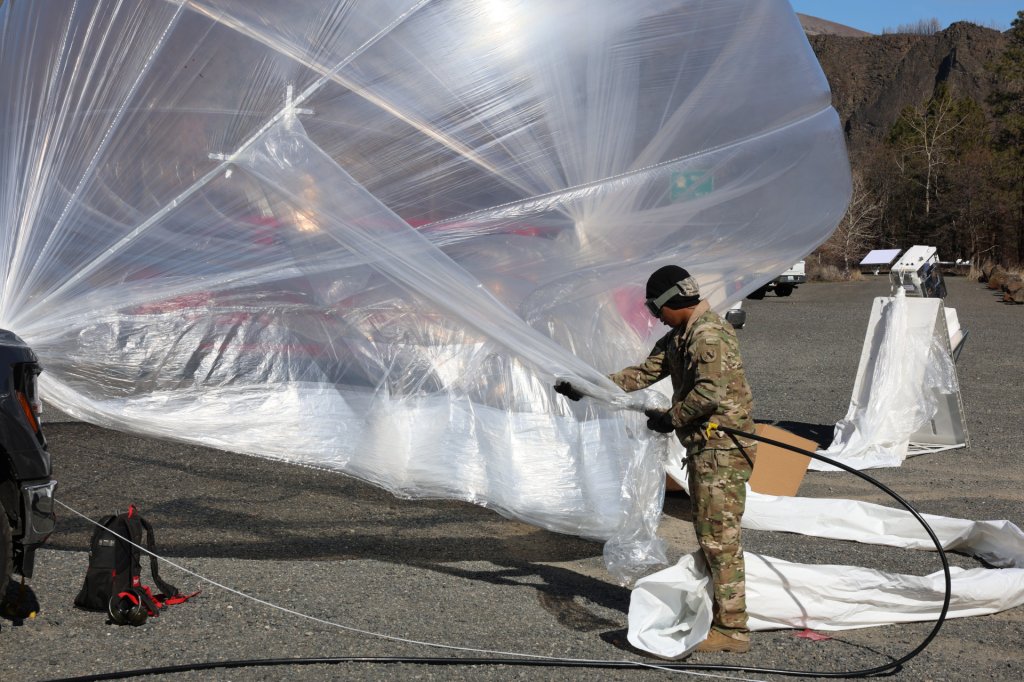
Another stock picture of a US Army soldier inflating a high-altitude balloon during training. US Army/Staff Sgt. Brandon Rickert

The remarks today from Lt. Gen. Rafferty and Col. Mroszczyk underscore the Army’s commitment to fielding new high-altitude balloon-based capabilities and the immense benefits the service sees in them. However, the continued emphasis on testing and experimentation highlights a discrepancy with the state of the service’s current efforts, and even more so in light of global trends.

The Army has been openly talking about balloons as part of its vision for a new multi-layered persistent sensor architecture, and how they could also be used to launch drones and other ‘effects,’ for at least six years now. In that same time, China has very actively shown off its ability to gather intelligence and conduct other missions using balloons and other lighter-than-air craft on a broad operational level across the Pacific. TWZ had been reporting on this reality for years before it was thrust fully into the public consciousness after a Chinese spy balloon passed over parts of the United States and Canada back in 2023.

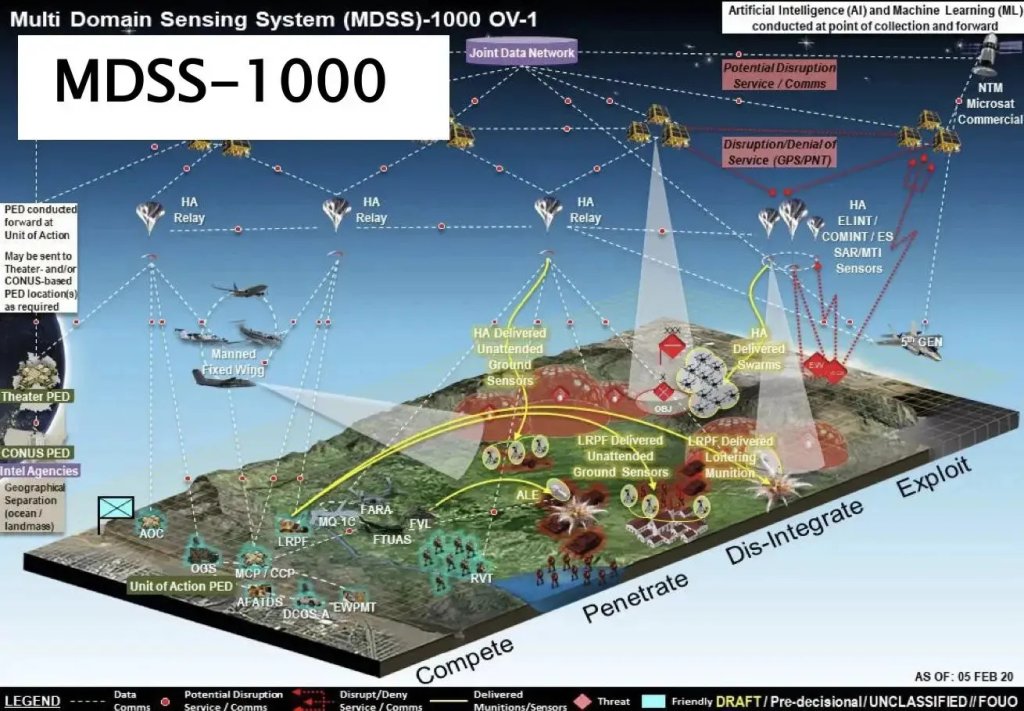
A graphic the Army released in 2020 showing a notional “operational view” for how a “Multi Domain Sensing System” made of various capabilities, including high-altitude balloons, might be employed. US Army

Other countries, including U.S. allies and partners, are increasingly fielding balloon-based and other lighter-than-air systems, too. Forces in Ukraine have notably been using balloons to conduct kinetic attacks and launch drones in the course of the ongoing conflict with Russia. On the other side of that conflict, Russian forces have used balloons as decoys to confuse and misdirect air defenses.

American-made Hornet middle-range strike UAV being tested with balloon-assisted launch system.

Such resolution allows to drastically increase its original range (approx. 100km).

Hornet OWA-UAVs are actively employed by Ukrainian forces for strikes on Russian logistics and other… pic.twitter.com/S1bHqLNhPY

— Status-6 (@Archer83Able) May 20, 2026

The Middle East deployment does show new efforts on the Army’s part to operationalize high-altitude balloons on a more widespread basis, but also that it is still relying on largely experimental capabilities to do so. Earlier this year, the service called attention to the establishment of a new schoolhouse for high-altitude balloon training to help further lay this groundwork, further underscoring how all of this is still very much in its infancy.

The remarks today from Lt. Gen. John Rafferty, especially, show there is substantial support within the Army for pushing ahead with high-altitude balloon programs. At the same time, there is clearly much work to be done if they are to have a truly game-changing impact, while the gap with China and others only continues to grow.

Contact the author: joe@twz.com

The post High Altitude Balloons Are A “Game-Changing” Capability: Army Space Command Boss appeared first on TWZ.

  •  

Sikorsky’s Nomad 100 VTOL Drone Is Now Quad-Packed In A Container For Rapid Deployment

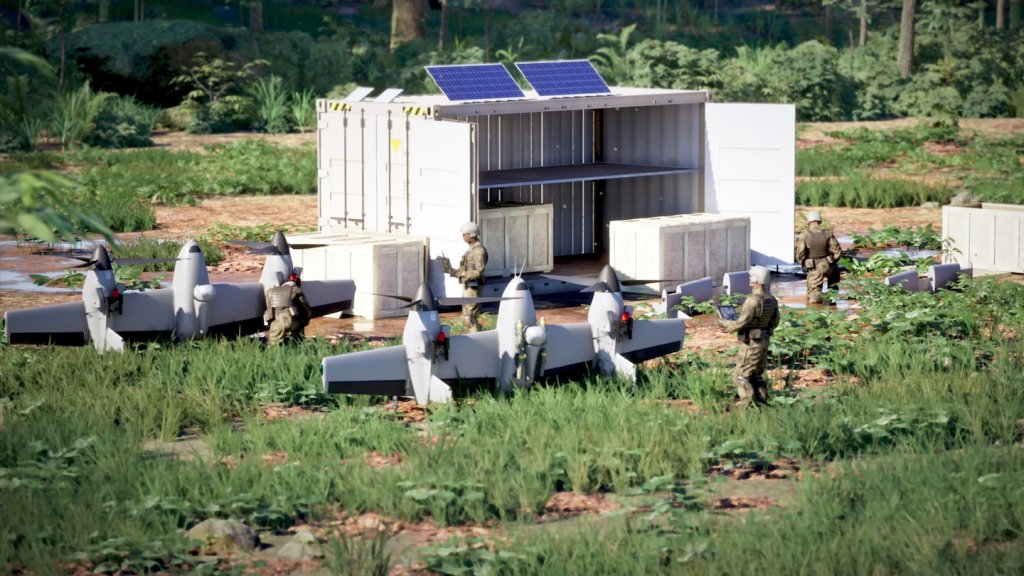
Sikorsky has unveiled a concept for a containerized deployment package for its Nomad 100 vertical takeoff and landing uncrewed aircraft system (VTOL UAS), combining four aircraft and their support equipment inside a single 20-foot shipping container. The company is pitching the Nomad 100 Fast Pack as a way to rapidly establish autonomous air capabilities at locations without runways or other conventional support infrastructure.

The concept was unveiled on October 12 at the Association of the U.S. Army’s (AUSA) main annual convention in Washington, D.C., where TWZ is in attendance. It comes as the U.S. military seeks to expand its inventory of uncrewed systems and distribute capabilities across more dispersed operating locations, particularly in preparation for a potential large-scale conflict with China in the Indo-Pacific.

Sikorsky has unveiled a containerized deployment package for its Nomad 100 vertical takeoff and landing uncrewed aircraft system (VTOL UAS), combining four aircraft and necessary mission equipment inside a single 20-foot shipping container. The company is pitching the Nomad 100 Fast Pack as a way to rapidly establish autonomous air capabilities at locations that lack runways, conventional support infrastructure, or the personnel typically needed to operate aviation assets.
Rendering of the Nomad 100 Fast Pack in action. Courtesy of Sikorsky, a Lockheed Martin company Rendering courtesy of Sikorsky, a Lockheed Martin company

“Military commanders are asking for capability that enables them to deploy worldwide into austere environments,” said Ramsey Bentley, director of Sikorsky Advanced Concepts, speaking at AUSA. They want greater situational awareness, the ability to conduct targeting and deliver effects at range, and the capacity to control multiple assets simultaneously, he added.

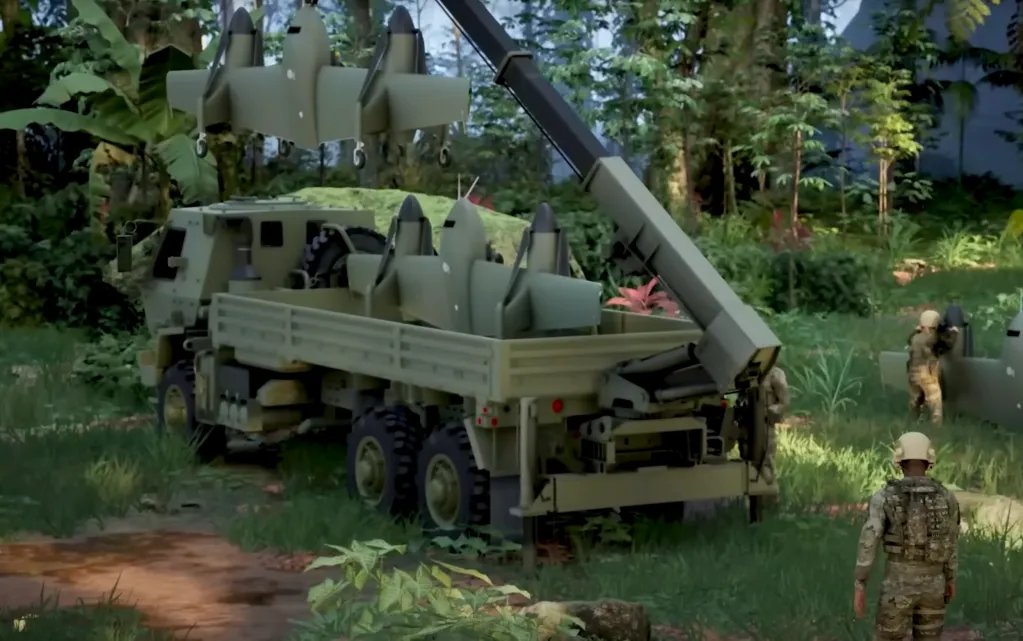
A rendering of soldiers preparing Nomads for launch in a typical Indo-Pacific operating environment. Sikorsky screencap

The Nomad 100 Fast Pack is built around a standard 20-foot ISO container housing four aircraft, mission-command equipment, communications, power systems, and sustainment supplies. The aim is to deliver a self-contained package that can be transported to a forward location, brought into operation, and moved again quickly. A promotional video shows the Fast Pack being transported into a combat theater by one of the company’s Black Hawk helicopters as a slung load.

Sikorsky says two Nomad 100s can be prepared for flight “out of the box” in less than 15 minutes and that the other two aircraft — stored on the upper shelf of the container — can be made available within four to six hours.

The package is designed to support runway-independent operations from locations including naval vessels, tactical vehicle staging areas, and improvised landing zones.

“We no longer require a ground control station,” explained Sikorsky Vice President and General Manager Rich Benton. “We no longer require a large group of soldiers or operators.”

Beyond the containerized package, Bentley said Nomad can be transported by truck or trailer, or potentially self-deploy in a smaller package. Sikorsky is also developing containerized deployment concepts for larger members of the Nomad family.

As we have discussed in the past, the Nomad 100 combines vertical takeoff and landing with the ability to transition to fixed-wing flight, bringing airplane-like range and endurance to a compact, runway-independent package that can operate from confined locations.

“What is very unique about this aircraft is it’s able to roll over on its wing and also fly like an airplane,” Bentley said. “So you’re getting the vertical takeoff and landing capability, along with the endurance, range, and speed of a fixed-wing aircraft.”

Sikorsky cites an endurance of 10 to 14 hours, depending on payload, a range exceeding 800 nautical miles, and a cruising speed of 70 miles per hour, with a dash speed of 90 miles per hour.

Its hybrid-electric drivetrain uses combustion engines to drive a generator that supplies power to the aircraft’s rotors and mission systems. Nomad is designed to operate on multiple fuels, including JP-8, JP-4, and Jet A.

“Ten gallons of fuel provides over 10 plus hours of operation, so it’s a very efficient system,” Bentley said. He added that the hybrid-electric design reduces maintenance requirements, emphasizing line-replaceable units over more extensive traditional aviation maintenance.

The aircraft can carry a 60-pound mission payload, including supplies such as medical equipment. Bentley said its modular center fuselage can be configured as a cargo bay or adapted for other mission equipment.

Sikorsky says the Fast Pack can support intelligence, surveillance, reconnaissance and targeting (ISR-T), light attack, and contested logistics missions, depending on customer configuration.

On display at AUSA is a Nomad configured with a forward-looking infrared (FLIR) sensor turret with laser designation capability and four small Northrop Grumman Hatchet glide munitions.

Other potential payloads include electro-optical and infrared sensors, synthetic aperture radar, launched effects, and electronic warfare systems for jamming.

A launched effect is released from a Nomad drone in an earlier Sikorsky rendering. Sikorsky screencap

The combination of a small logistical footprint and long-range flight could be particularly useful for supporting expeditionary forces. The aircraft could deliver supplies without relying on a runway or crewed helicopter, while sensor-equipped variants could provide reconnaissance and target designation. Other configurations could carry weapons or deploy additional uncrewed systems.

The Fast Pack also relies on Sikorsky’s MATRIX autonomy technology to reduce operator workload. Rather than continuously piloting each aircraft, an operator can assign a mission through a tablet-based interface and let the aircraft execute it autonomously.

A drone operator uses a tablet to control a Nomad. Sikorsky screencap

“Now, Matrix autonomy is a very mature autonomy capability. We’ve had over 1,000 flight hours on Matrix,” Bentley said.

An operator selects a mission, designates a location on a map, and initiates the flight. MATRIX then manages engine start, preflight checks, launch, navigation, and mission execution.

“For the operator, very simply, he pulls up the display. He selects a mission, say reconnaissance, and then the operator would select a point on the map where he wants that reconnaissance to occur, and then he hits start,” Bentley explained. “The aircraft Matrix autonomy takes care of everything else along the flight.”

Bentley said the system can adapt to changing environmental and tactical conditions, using onboard sensors to navigate and avoid obstacles, including hazards around landing areas.

“Our whole approach here with the advanced Matrix autonomy is: How do we take the workload off the operator?” he said. “This is not remotely piloted, although you could do that. Our approach here is that this is fully autonomous.”

Communications are designed to be network-agnostic. Bentley identified Starlink or Starshield for beyond-line-of-sight connectivity in the current configuration, alongside tactical mobile ad-hoc networking (MANET) equipment for line-of-sight communications.

MATRIX is also used in other Sikorsky autonomy efforts, including the fully uncrewed U-Hawk drone, seen in the video below, and the company’s optionally piloted Black Hawk concept. A common tablet interface could help operators manage different autonomous aircraft without needing a separate control system for each.

Nomad 100 originated under DARPA’s EVADE program, which sought to develop a vertical-lift uncrewed aircraft capability. Bentley said two customers associated with the program had placed initial orders, with additional interest from domestic and international customers.

Sikorsky has a contract for three Nomad 100s under EVADE. The company announced in July that the first had been delivered to the customer, while a second was entering flight testing at the time of the interview. The U.S. Marine Corps is also buying two Nomad 100s, Bentley told Army Times.

Sikorsky is developing the larger Nomad 500, which will offer greater payload capacity, longer range, and increased power output. One Nomad 500 can fit in a 20-foot container, while three can be transported in a 40-foot container, according to Bentley. The largest member of the family, the Nomad 1000, requires a 40-foot container for a single aircraft.

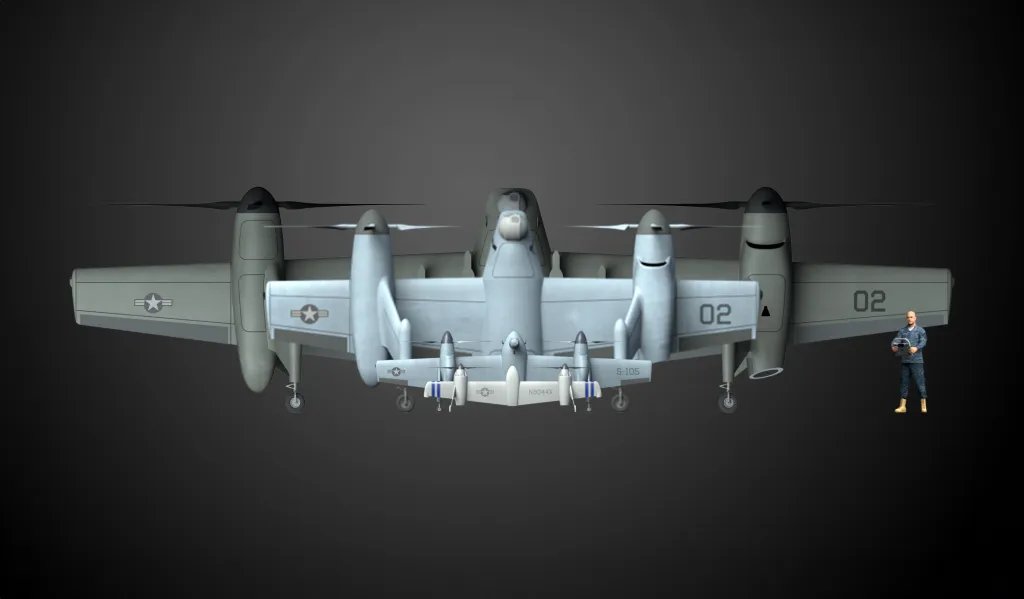
A rendering shows how the Nomad family of VTOL drones can be scaled for a variety of sea- and land-based missions. Sikorsky

The Fast Pack concept reflects a broader effort to make autonomous aircraft easier to deploy and sustain as military forces disperse across larger operating areas. Its appeal lies not just in the Nomad 100’s combination of vertical takeoff and long-range flight, but in packaging multiple aircraft and their supporting equipment into a single, relocatable system. That could be especially valuable in the Indo-Pacific, where long distances, limited infrastructure, and the vulnerability of fixed operating bases pose major challenges.

Contact the author: thomas@thewarzone.com

The post Sikorsky’s Nomad 100 VTOL Drone Is Now Quad-Packed In A Container For Rapid Deployment appeared first on TWZ.

  •  

Sikorsky Aiming For Black Hawk ‘Nose Jobs’ To Be Available Within The Next Year

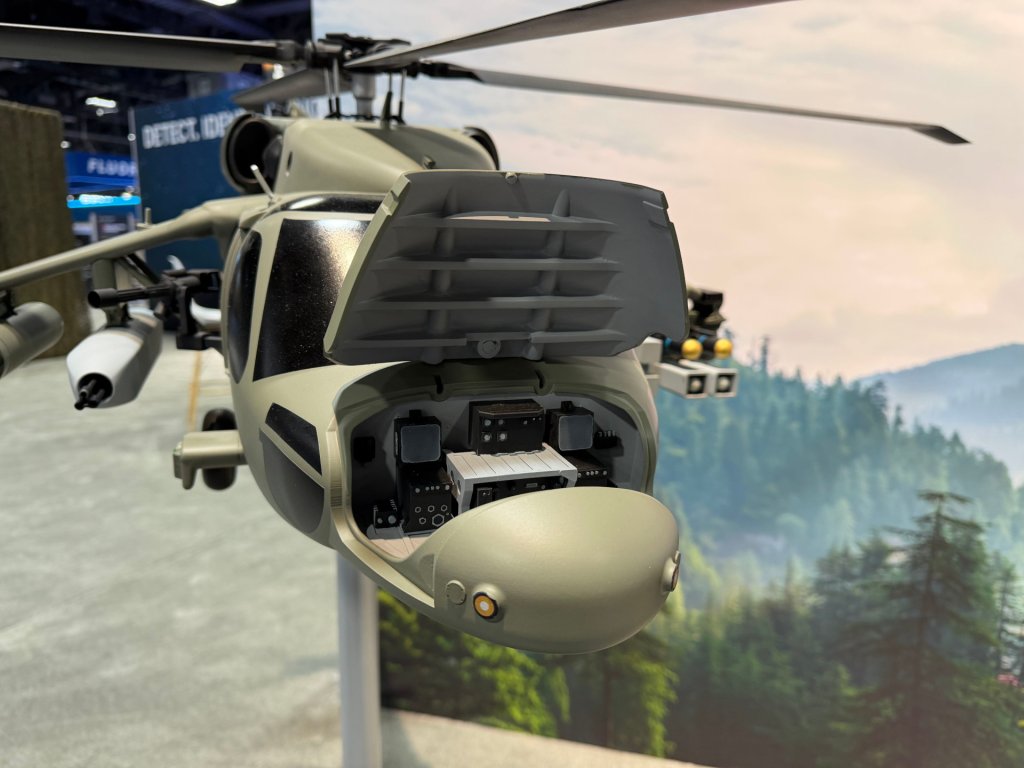
Sikorsky is aiming to start offering a new modular and readily swappable nose for the venerable H-60 family of helicopters within the next year or so. The noses will be made available on new-production H-60s, as well as be retrofittable to helicopters in service now. The ‘nose jobs’ will help operators relatively quickly reconfigure their H-60s for very different missions, from cargo-carrying to serving as gunships, as required. It also opens new avenues to integrating autonomous capabilities and other advanced functionality.

Our Howard Altman had a chance to speak with representatives from Sikorsky, now a subsidiary of Lockheed Martin, about the plans for the new nose for the H-60-series at the Association of the U.S. Army’s (AUSA) main annual convention today. This is part of a larger vision for keeping the design operationally relevant into the 2070s, which also includes uprated engines and increased total payload capacity. You can read more about the overall Black Hawk 2070 strategy here.

Of the different elements of Black Hawk 2070, “the nose is a good one, and it’s one that’s on a pretty accelerated timeline. Within the next, I would say, year or so, the nose will be available to be retrofitted or to be coming off the line,” Jason Wrigley, Sikorsky’s director of business development for Black Hawk, said. “We’ve gone through a design cycle with it.”

As it stands now, the new nose structure will offer roughly double the physical space of the standard nose on current-generation H-60s today.

“We’ve done the design. We then 3D-printed the noses, and we did that so that we can physically interact with it, because the whole point of this is for maintainability and access to be able to integrate these different sensors and comms gear,” he continued. “We’ve gotten some feedback from the engineers, from operators, from maintainers, and that goes back into the next cycle of the design.”

Exploring ways to optimize accessibility to areas of the new nose was a major focus of this ‘test print,’ according to Wrigley. Sikorsky has a scale model on the show floor at AUSA this week that highlights how the current design opens from the top, as seen below. Ensuring that it will be possible to keep any systems inside sufficiently cooled has also been an important design consideration already.

Jamie Hunter

Overall, “we just are kind of confirming, can we reach everywhere we need to? What are the different configurations?” he added. There’s been “a lot of work with the [U.S.] Army around what do you envision potentially could go in here?”

“This is one of those cases also where our whole engineering team gets more comfortable. It’s not something where the Army came to us and said, ‘this is exactly what I want. Here’s my spec,'” he also noted. “It was more, ‘here’s what I want to achieve. Here’s what I want to be able to do.’ And so we went off and designed that.”

Another look at the long-nosed Black Hawk model on display at AUSA. Jamie Hunter

“I like to highlight this, because it’s part of the way we’re also changing the way we design and deliver the Black Hawk,” Wrigley added as an aside. “So we’re very much in a model-based environment.”

While Wrigley mentioned sensors and communications equipment as possible payloads to fit into that extra space initially when talking with us today, he made clear later on that these are just some of the potential options.

“It’s using the old term, but it’s open architecture, and so the whole point is whatever the mission requires” can go into these new extended noses, he explained. “There’s always a demand for real estate up front.”

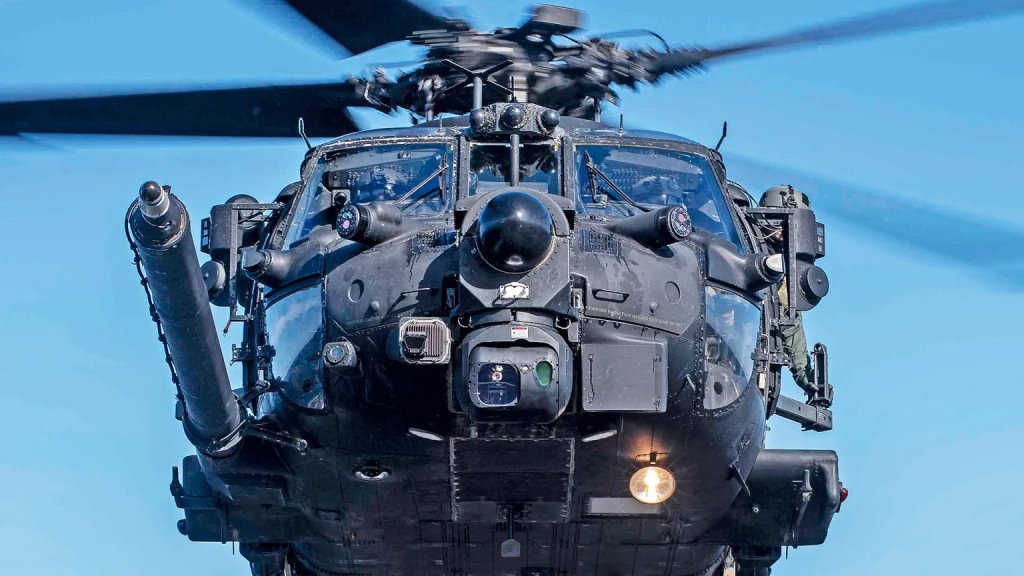
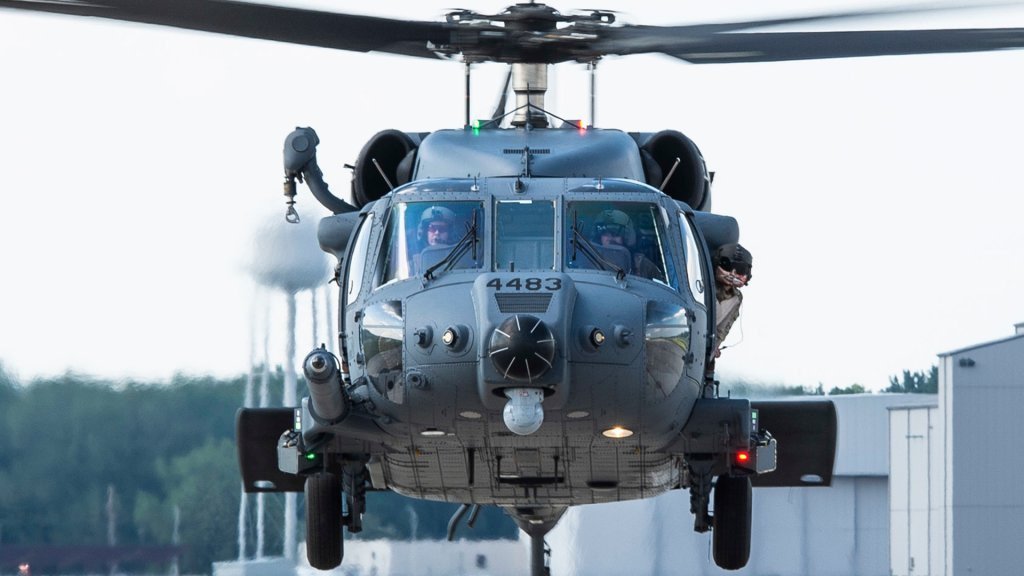
It’s very true that more specialized variants of the H-60, such as the MH-60s operated by the U.S. Army’s elite 160th Special Operations Aviation Regiment, often have modified noses loaded with radars, other sensors, and additional systems. The new HH-60W Jolly Green II rescue helicopters for the U.S. Air Force are another prime example of this, and there are many more.

A head-on look at one of the 160th Special Operations Aviation Regiment’s MH-60s, with a nose absolutely crammed with sensors and other systems. USN
A look at the distinctive nose on the HH-60W Jolly Green II packed with sensors and other gear. USAF

“There’s a big focus on open architecture and that ability to quickly plug-and-play,” Wrigley also told TWZ earlier this month in the context of the larger Black Hawk 2070 plan. “The new modular nose will change the look of the Black Hawk up front to provide even more space for equipment that will work directly with the new digital architecture.”

In terms of swapping out modular noses on individual helicopters, Wrigley said that it is still too early in the design process to know exactly how that would be done and how long it might take to do so in practice.

“Part of the design process is to also write up the documentation for the retrofit, but we don’t see this one as very invasive,” he explained.

It is not hard to imagine use cases for long-nosed H-60s, especially ones that can then be reconfigured between missions, and not just for the U.S. Army. As Wrigley already underscored, there is long-standing demand for H-60s with longer and larger noses to accommodate additional mission systems. Modular noses, in general, have been becoming more and more common in aviation design for some time now.

The ability to readily swap modular noses could also allow operators of even relatively small H-60 fleets to gain a valuable new degree of multi-mission capability. As one example, cargo-carrying helicopters could be converted into gunships, and back again, as required, using a small common pool of noses with the requisite sensors, laser designators, and other equipment. All of this could offer cost benefits when it comes to sustainment and logistics, as well as added operational flexibility.

The long-nosed Black Hawk model on display at AUSA is notably configured as a gunship. Sikorsky has also talked previously about leveraging the new nose to reconfigure H-60s for search and rescue, airborne drone control, and other missions.

A full view of the model of the gunship-configured H-60 with the new modular nose on display at AUSA. Jamie Hunter

Just being able to install a radar for one series of missions, and then quickly switch over to an electro-optical wide-area surveillance system or another kind of sensor for the next run of sorties, would bring new adaptability to the already very flexible Black Hawk. Defensive systems could also be readily swapped from aircraft to aircraft, as well as more quickly upgraded, as needed.

The modular nose also opens the door to a new way to integrate advanced capabilities, including autonomy packages, which Wrigley said is also driving demand for more space at the front end of the helicopter. Sikorsky has been developing various tiers of autonomous capabilities for the H-60 family for years now, including artificial intelligence-driven ‘copilots’ designed just to help reduce the workload of human crew members and increase safety margins. Autonomous flight capabilities require additional sensors, such as LIDAR and cameras, to help with navigation and to provide additional situational awareness. At least some of those components could be hosted within new modular noses.

At the same time, integrating higher degrees of autonomy could require more substantial modification. Sikorsky is now developing a fully uncrewed version of the H-60, and has been doing so with an eye toward converting older Black Hawks to this configuration as they are retired from service, as you can read more about here.

In line with the Black Hawk 2070 vision, the modular noses could be part of a broader equation for modernizing existing H-60 fleets, as well.

“In our conversations with the Army, I think they’ve been using a phrase that they call targeted modernization,” Wrigley told us, speaking more generally. “There’s a daunting task that says there’s 1,000-1,500 Black Hawks in inventory. If you literally tried to upgrade every one of them, it’s a very expensive proposition, and it probably takes a long time.”

“I don’t think that’s the way they’re thinking about it. I think they’re thinking about it more on a battalion basis or a unit basis,” he continued. “Like, what’s the mission, and maybe certain Black Hawks get upgraded with autonomy, and other Black Hawks get upgraded with sort of the expanded launched effects capability, the engine, the structural upgrades, the [stub] wings, stuff like that.”

“Maybe some of them become ‘Superhawks’ or whatever, [and] get the whole package,” he added.

There is certainly still work to be done on the development of the new modular nose and then actually integrating it onto the H-60 platform. At the same time, Sikorsky clearly already sees demand for this new feature, which could lead to a breadth of new opportunities for new and old helicopters in the H-60 line.

Contact the author: joe@twz.com

The post Sikorsky Aiming For Black Hawk ‘Nose Jobs’ To Be Available Within The Next Year appeared first on TWZ.

  •  

Sig Sauer’s M250 Machine Gun Gets Shorter And Lighter After Army Feedback

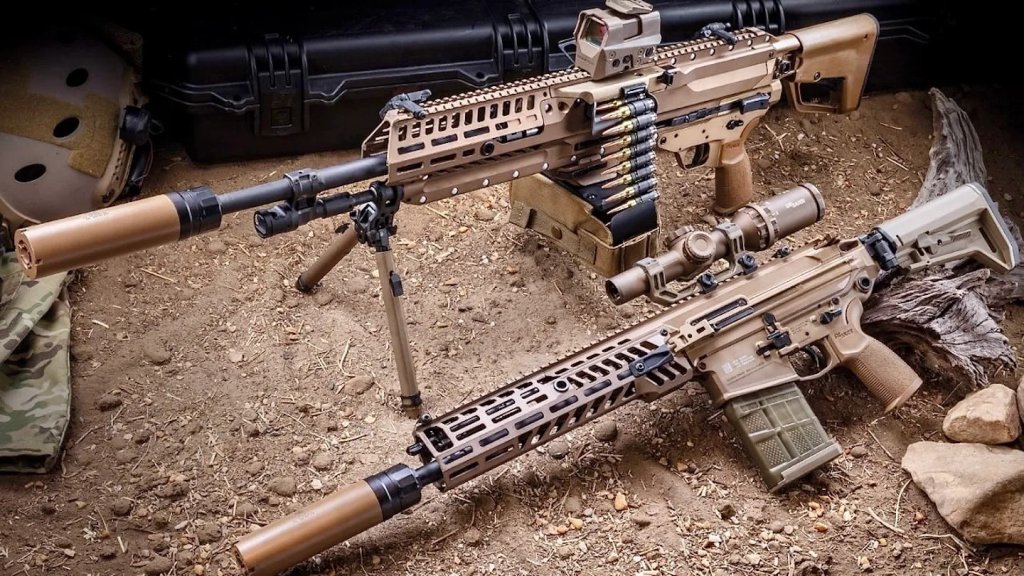
Feedback from the U.S. Army has led to an improved A1 version of the service’s still very new 6.8x51mm M250 light machine gun. Manufacturer Sig Sauer has shortened and lightened the barrel, reduced the overall weight, changed the buttstock, and made various other improvements to improve reliability and ease of use. The evolution of the M250 mirrors the transformation of Sig’s M7 rifle for the U.S. Army into the M8 carbine, where weight and bulk were major points of criticism of the original design.

Jason St. John, senior director of strategic products for the Defense Strategies Group at Sig Sauer, talked about the new M250A1 with our Howard Altman at the Association of the U.S. Army’s (AUSA) main annual convention today. The U.S. Army has already been acquiring and fielding baseline M250s as part of its Next Generation Squad Weapons (NGSW) program. The NGSW family also includes the M7 rifle and now the M8 carbine from Sig, both also chambered to fire the 6.8x51mm round. The Army chose Sig as the winner of the NGSW competition in 2022. The service is still in the early stages of fielding the NGSW family as replacements for a substantial portion of its existing 5.56x45mm M4A1 carbines and M249 Squad Automatic Weapons (SAW).

A promotional image of Sig Sauer’s entrants into the NGSW competition at the time of the company’s win in 2022. Sig Sauer

“We continuously and constantly evaluate and evolve our designs, and we discover things,” St. John told us. “Parts that might be able to be manufactured a little bit easier with a little bit of a design change. They might be more reliable, more durable than you currently have. You might look at the system and say, hey, we have an ability to make these recommendations because we see this from other customers across the board. We hear it from our inputs of soldiers that are in our ranks, and you know maybe old relationships out in the field.”

“The [NGSW] program office represents the entire formation, so they get feedback in the totality of every single unit that has them [M250s and other guns in the NGSW family] in their hands,” he continued. If “a systemic issue or something that needs to be addressed, then they run the soldier touchpoint events, which we’re fortunate enough to be a part of. And then we get unfiltered feedback from soldiers that day in the field while they’re encountering something that they have a concern about.”

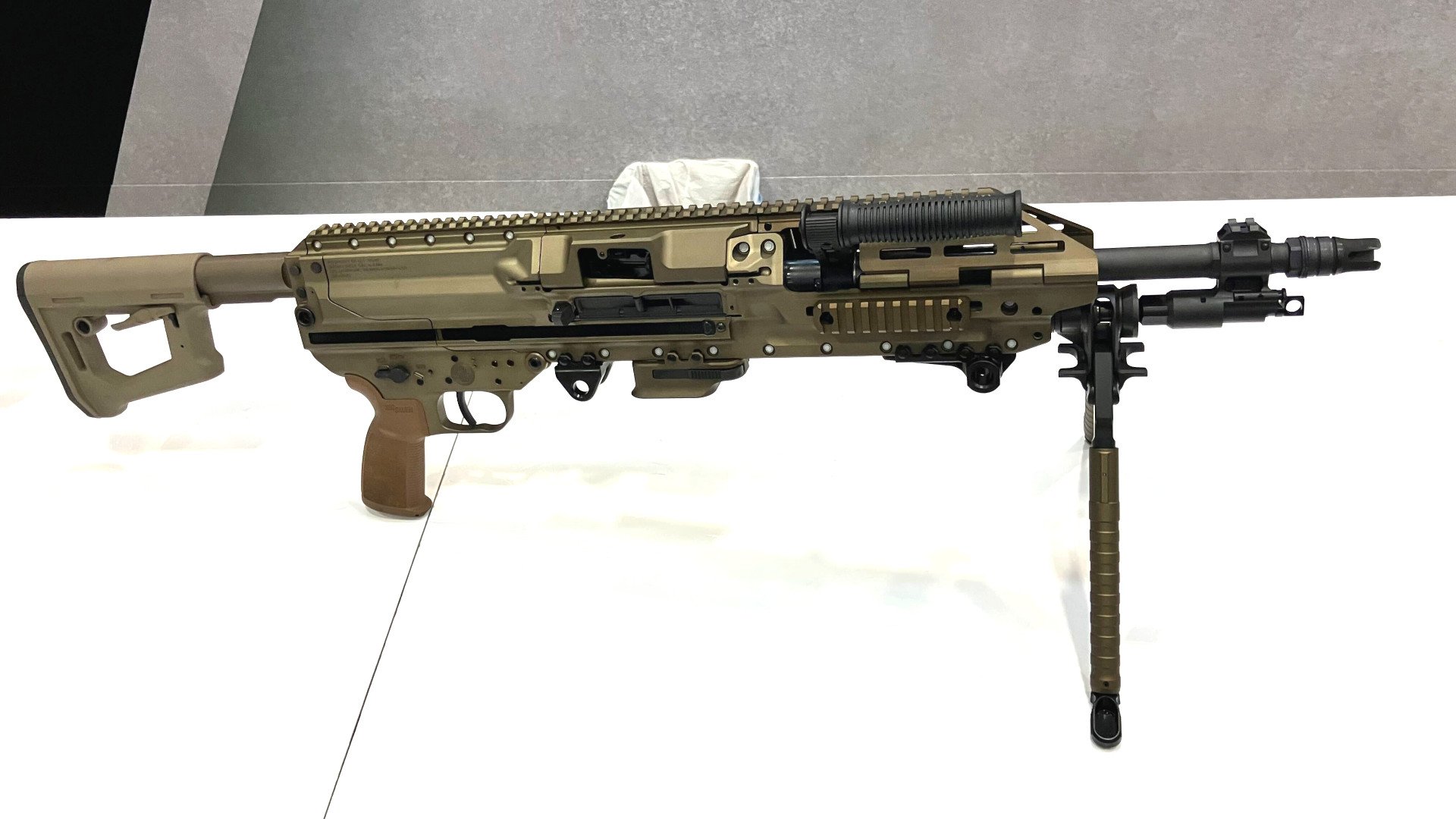
As noted at the start, the most immediate standout feature on the M250A1 being shown at AUSA this week is the new 13-inch barrel. M250s entering Army service now have roughly 16-inch-long barrels. The Army’s official fact sheet says the machine gun was originally expected to come with a 17.5-inch barrel.

“We shortened the barrel to 13 inches, but the Army’s also buying the 16-inch barrel,” St. John explained. “So in some ways, you could consider it mission-configurable, whether they want to utilize a 13-inch barrel or a 16-inch barrel, to what they’re doing.”

“You’re going to maintain the same basic ballistics that you had with the M7 [rifle’s] 13-inch barrel, and then you’re going to have more maneuverability because you’re going to have a shorter weapon system,” he added. “You add the 16-inch barrel, and you get that lethality requirement with the length of barrel that they originally required. So you have some flexibility there.”

“You shorten the barrel, you’re going to lose velocity,” St. John did acknowledge. “We did not change the ammo. The Army had determined with the barrel change that they were meeting their ballistic and lethality goals with that length of barrel.”

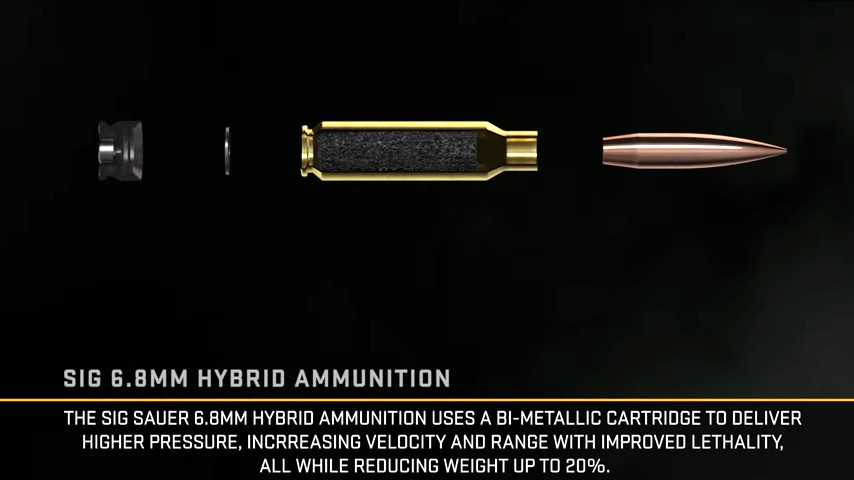
With the current 6.8x51mm ammunition, “we’re operating in the mid-70s [sic; 70,000 pounds per square inch] as far as pressure, and the case has 125K psi potential,” he also noted. “If you wanted to shorten the barrel and you did have some lethality concerns or wanted more performance, all you need to simply do is just increase the little bit more pressure in the cartridge case, and you overcome that shortness.”

A graphic showing the components of a typical 6.8x51mm round, which has a hybrid case design with a steel base and brass body. Sig Sauer

“We didn’t do that. The Army said it wasn’t necessary, but you know, as the battlefield evolves and defensive postures change, if that becomes necessary, one of the great things about the NGSW program is the ability for the weapon systems and the ammunition to grow in their performance capacity,” he continued.

In the case of the 13-inch barrel, “we tapered the barrel down a little bit to add a little bit of weight savings,” he noted.

TWZ has reached out to Sig about getting more complete specifications for the M250A1, including overall length and total weight with different barrel options. The baseline version weighs some 13 pounds, empty, and without optics and other accessories, according to the Army’s fact sheet. As already mentioned, the M7 rifle also got progressively shorter and lighter before giving way fully to the M8 carbine, in part through reprofiling of the barrel. The empty weight of the M8 with its 10-inch barrel is close to one pound less than that of the 13-inch barreled M7.

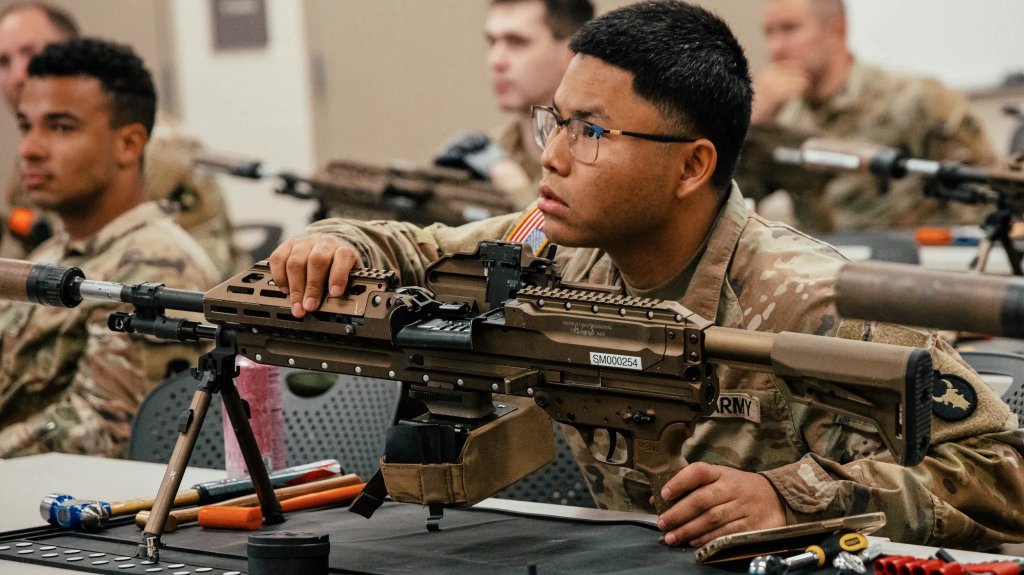
A US Army Ranger fires an M250 light machine gun. US Army

Different barrels can be readily swapped out on the M250A1, as well as the baseline M250. However, the new variant features significant changes to the quick-change barrel arrangement on the gun and associated elements of the design.

“It was interchangeable before, but it didn’t have a quick-change barrel handle. It wasn’t meant to be changed, and therefore it didn’t need the insulation of [sic; for] a hot barrel like you get with a barrel with a quick-change barrel handle,” according to St. John. “I think initially with the [M]250 program, it wasn’t necessary, and potentially might not have been desired initially. And why put that weight burden on there if we weren’t going to utilize it, right?”

St. John did not elaborate further on why these features were initially deemed unnecessary.

“When you look at the top cover of the forearm, that used to be loose, and now it’s captured, meaning that when you change the barrel, it actually came off completely in your hand,” he also noted. “We utilized a similar design to our .338 MMG [Medium Machine Gun], and then we make it captured now, so you’re not going to lose it.”

A picture of soldiers receiving instruction on the baseline M250. The top cover on the example seen in front is open, and it notably lacks a handle to help with barrel changes. US Army

“We added a funnel to guide your gas piston in, so that when you’re doing barrel change operations, you don’t have to be precisely lined up,” he added. Now, “you have something that’s going to guide it in a stressful environment, to get that into position to do your barrel change.”

The M250A1 features a host of other changes that are unrelated to the barrel.

Sig also “improved our gas system a little bit, just to make it more reliable and durable,” to include modifications to keep it better “insulated from carbon and things like that.”

“We opened up the trigger guard to incorporate the Arctic fight, the Arctic glove, more so than just the operational normal tactical gloves,” according to St. John. “We opened it up a little bit more to accomplish that.”

An M250 seen during cold-weather testing. US Army

The Arctic is an ever-more strategic region where the U.S. faces growing geopolitical competition, especially from Russia and now China. Army officials also regularly point out that the harsh environment presents challenges when using standard equipment designed around use in more temperate locales.

“We improved the buttstock, and we improved the interface … to the receiver,” St. John explained. “We’ve made the interface between that more robust because through IMTing, and over time, and the buttstock getting slammed on the ground, and just normal military training and operations, we noticed that we had a tendency for some of them to loosen up and have some play in them.”

“The entire buttstock is a different buttstock than they had,” he added. “They [Army soldiers] preferred that buttstock over the buttstock that we had on it. So we just put soldiers’ preference on there. … It’s just a commercially available [design from] Magpul that they thought was better than the other Magpul that day one we were using.”

Changes were made to points where the M250 is designed to be attached to tripods on the ground or pintle mounts on vehicles.

“We put cross-bolts through the receiver to provide more durability,” he explained. “Initially, it was like an M-LOK type of lockup, and you can just think of a steel nut on an aluminum receiver being vibrated over a life cycle of the weapon system, it has some unfortunate wear characteristics. So, putting these cross pins redirects that force, and the way we lock it down with a saddle screw prevents that from happening and provides long-term durability to the receiver in the pintle and T&E [traverse and elevation] tripod-mounted configuration.”

The continued evolution of the M250 is not new. Sig talked to TWZ at AUSA last year about changes, including to the bipod and top cover, that were already making their way into the design.

The Army has yet to formally adopt the M250A1 configuration, and further changes could be made before service moves to officially acquire an improved version of the gun.

“This is likely to be the accepted configuration. We anticipate that acceptance,” Sig’s St. John told us. “We just finalized the acceptance on the M8, and they’re moving into the acceptance of the [M]250s. We anticipate right now, with the feedback that we’re getting from the program office, that the majority, if not all, of these changes are likely to be accepted.”

It’s important to reiterate that changes to the M7 rifle, and then the Army’s decision to transition fully to the further evolved M8 carbine, followed significant criticism of the core design of those guns and their ammunition, as well as the underlying doctrine. Sig has repeatedly pushed back on those critiques, and the Army continues to push ahead with the entire NGSW program.

Despite the steadily shortening barrels on guns in the NGSW family, the Army’s position remains that the weapons chambered for the new 6.8x51mm round offer essential additional accuracy, range, and terminal effectiveness over existing 5.56x45mm types. The genesis of the NGSW program had been heavily informed by the war in Afghanistan, where there were regular reports of U.S. ground units being outranged by their opponents. Adversary body developments were also a factor.

It is also important to point out that teething troubles are not at all uncommon in major weapon system programs, including when it comes to small arms. Sig has drawn attention to the less than positive reception that the AR-15/M16 family initially received in the mid-1960s, which led to a host of changes to that design. Rifles and carbines in that pattern are now in widespread service across the U.S. military and with dozens of armed forces and security services globally.

Regardless, even with the Army still very early on in the process of fielding the entire NGSW family of guns, the M250 light machine gun’s design is now evolving significantly.

Contact the author: joe@twz.com

The post Sig Sauer’s M250 Machine Gun Gets Shorter And Lighter After Army Feedback appeared first on TWZ.

  •  

Specter Jet-Powered Drone Aims At Low Cost, Multi-Mission, Single Use

AEVEX Corp. has publicly shown its Specter jet-powered drone for the first time at the Association of the U.S. Army’s (AUSA) annual meeting in Washington, D.C., where TWZ is in attendance. The aircraft is the latest development from a company that has played a significant role in the U.S. military’s one-way attack drone efforts. Most notably, it built the secretive Phoenix Ghost family that was rushed to Ukraine in 2022.

AEVEX announced Specter in September, describing it as a high-speed, low-cost, jet-powered autonomous platform designed for high-risk operational environments. The aircraft is being developed around a modular architecture, with ground-launched and air-launched variants planned. Its interchangeable nose section is intended to accommodate different payloads, including kinetic warheads, electronic warfare equipment, intelligence, surveillance and reconnaissance (ISR) systems, and other future capabilities.

The Specter jet-powered drone shown for the first time at the Association of the U.S. Army’s (AUSA) annual meeting in Washington, D.C. Jamie Hunter

That flexibility is central to how AEVEX is pitching the aircraft. The company is aiming for an adaptable system that can be configured for different operational needs while remaining affordable enough to be used basically as a cruise missile in combat applications.

The aircraft’s external configuration features a prominent V-shaped lower fuselage, high-mounted, unswept trapezoidal wings, a v-tail and rear-mounted conformal engine intakes. Clearly, low observability was one design driver for Specter, with the goal of balancing survivability with low-cost likely factored in heavily. AEVEX has not publicly discussed Specter’s low-observable characteristics.

The company has also not disclosed key performance and technical details, including the aircraft’s range, payload capacity, communications architecture, terminal targeting methods or the extent of its autonomous capabilities.

AEVEX Corp. has publicly shown its Specter jet-powered unmanned aircraft for the first time at the Association of the U.S. Army’s annual meeting in Washington, D.C., offering a closer look at a new attritable platform the company hopes will meet emerging U.S. military requirements for affordable, high-speed unmanned systems.
A rendering of the Specter in flight. AEVEX Corp. AEVEX Corp.

“We’re really excited to kind of really up our stats on range and speed,” Craig Anders, an AEVEX representative, told TWZ at AUSA, describing Specter’s turbine engine. The aircraft is being designed to reach speeds in the sub-Mach range, he said.

Anders also elaborated on how Specter is intended to carry more than a conventional warhead. “This thing is going to have the ability to carry cameras and different types of non-kinetic effect payloads,” he said, describing it as a “multi-mission, multi-domain fighter.”

Despite that broader mission set, attrition remains a core part of the concept. Anders said the idea was for the aircraft to be attritable, with a relatively low price tag allowing commanders to send it farther into dangerous areas without putting more expensive capabilities at risk.

The distinction is important. Specter is not being presented simply as a disposable munition, nor as a high-end unmanned combat aircraft. Instead, AEVEX appears to be pursuing a middle ground: a jet-powered platform that can perform one-way attack missions but also support reconnaissance and provide other effects in high-threat areas, depending on its configuration. It is also meant to be built economically at scale.

AEVEX is developing Specter with Divergent, an engineering and manufacturing company known for its digital production processes and metal additive manufacturing. The partnership is intended to help make the aircraft easier to manufacture at scale while supporting changes to its design and configuration.

Anders said Divergent works with AEVEX engineers on the aircraft’s digital design and produces its fuselage. AEVEX is responsible for the internal systems, mission integration, flight characteristics and navigation science, he explained.

The manufacturing approach is a significant part of the program’s affordability ambitions. AEVEX says Divergent’s Digital Manufacturing and Production System (DAPS) is being used to support scalable production and manufacturability. However, the companies have not disclosed Specter’s projected unit cost or demonstrated that it can yet be produced at the volumes and prices the concept ultimately requires.

AEVEX is also drawing on its CompassX autonomy architecture and experience delivering thousands of autonomous systems. The company says Specter’s open interfaces and software-defined capabilities are intended to allow the platform to evolve as operational requirements change, rather than being optimized around one fixed mission.

Specter remains in development, with its first flight planned for December 2026. Anders said the initial flight would be a basic test, with early test aircraft fitted with landing gear so they can be recovered and reused for work on flight characteristics and handling. It isn’t clear if a truly reusable gear-equipped operational version is eyed for the future. Regardless, further testing could include tuning the aircraft’s dive profile.

The planned initial configuration uses a ground launch assisted by a rocket, or rocket-assisted takeoff (RATO), system. An air-launched version is also on the roadmap, Anders said, with that capability expected to follow in the relatively near term.

AEVEX is pursuing several potential military applications. Anders identified the U.S. Army’s Family of Affordable Mass Missiles (FAMM) effort as a primary focus, while noting that the service has its own high-speed requirements. He also said the company is looking at opportunities associated with Rapid Dragon and other programs.

In FY 2027, the US Air Force is requesting $55 Million in discretionary and $300 Million in mandatory (reconciliation) funds for the Family of Affordable Mass Missile (FAMM) to procure 1,000 All Up Rounds covering both the Palletized (FAMM-P) and Lugged (FAMM-L) variants. The… pic.twitter.com/EgVaefmJgY

— Air-Power | NatSec Ledger (@NatSecLedger) April 22, 2026

Those comments indicate the range of applications AEVEX hopes Specter could address, not that the aircraft has been selected for any of them. Its performance, cost and ability to meet specific requirements will need to be demonstrated as development and testing progress.

Specter’s intended combination of jet propulsion, attritability and modular payloads could offer an enticing balance. It is not being presented as a higher-end ‘exquisite’ cruise missile, but neither is it limited to carrying a single payload type. The challenge for AEVEX will be delivering enough speed, range and mission flexibility to make the aircraft useful across multiple roles without pushing its price beyond what operators can justify for procuring it in large numbers.

A stealthy weapon that is jet-powered like Specter, one that can be configured for various types of one-way missions, could bridge the gap between far more advanced and costly autonomous aircraft and cruise missiles and lower-end one-way attack drones. There have been other concepts that are similar to Specter, we are living in a low-cost cruise missile explosion of sorts, but the company’s unique pedigree of innovation and fast fielding in the one-way attack munition space could give Specter additional credence.

Contact the author: thomas@thewarzone.com

The post Specter Jet-Powered Drone Aims At Low Cost, Multi-Mission, Single Use appeared first on TWZ.
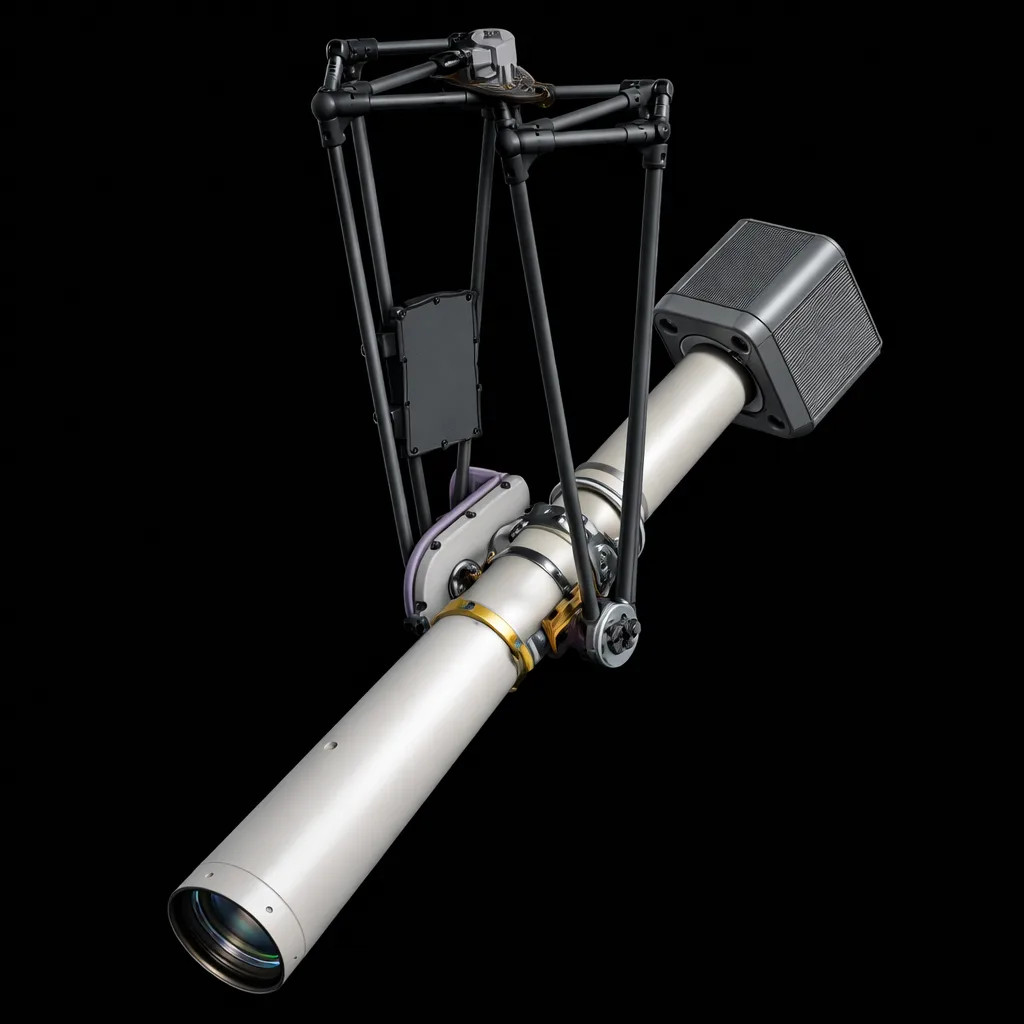
  •  

Drones Are Creating New Opportunities For The U.S. Army To Deceive Its Enemies

For more than a year, U.S. Army forces in Europe have been experimenting with new counter-drone capabilities, as well as tactics, techniques, and procedures to go with them, under the umbrella of what is dubbed Project Flytrap. In doing so, the service has also been gaining valuable new insights into how uncrewed systems can help shape the battlefield for friendly forces. It is particularly interesting to hear how the Army envisions using uncrewed platforms to open up new avenues for deceiving opponents.

Army Col. Timothy Price, head of the 2nd Cavalry Regiment, discussed the use of uncrewed platforms for deception and other operational concepts that have emerged in the course of Project Flytrap during a talk yesterday. Price’s remarks came at the Association of the U.S. Army’s (AUSA) main annual convention, at which TWZ is in attendance. 2nd Cavalry Regiment, based in Germany, is a brigade-sized mechanized formation equipped primarily with variants of the Stryker 8×8 light armored vehicle.

Stryker light armored vehicles assigned to 2nd Cavalry Regiment seen configured for a Project Flytrap event. US Army Sgt. Alejandro Carrasquel

Price, by way of introduction, described modern battlefields full of uncrewed platforms in the air and on the ground as presenting new twists on long-standing problem sets. More specifically, he started by describing the typical approach to getting past a minefield or similar obstacle using an established framework called SOSRA, which stands for Suppress, Obscure, Secure, Reduce, Assault.

“If we were going to breach a mined wire obstacle, the first step of SOSRA – suppress – would be the utilization of indirect fires, to get the enemy’s head down, and direct fire systems, so they would not maneuver on you, fix them in place, and you can make a decision about how you’re going to approach the problem,” the 2nd Cavalry Regiment commander explained. “The next step would be to obscure it. In the historical sense, obscurations used is [sic] smoke, to mask your movement to the point of breach, so the enemy doesn’t know what you’re doing. And then, of course, secure would be to establish frontside security, [and] allow your engineers to come up within this local security bubble. They’ll utilize some kind of line charge to open the breach, reduce it – that’s the ‘R’ – and then bring on a follow-on force of assault through.”

“We were brought up around the old traditional mined wire obstacles that we had to physically breach. This is no different,” he added. “It’s just a multi-domain environment. So it’s built up of a combination of electronic warfare, kinetic UAS [uncrewed aerial systems] threats, and then counter-UAS threats, and then the network that holds [that all] together that forms the obstacle, which a unit has to maneuver through in order to maintain the offensive.”

A briefing slide Col. Price showed at AUSA yesterday while talking about SOSRA on the modern ‘multi-domain’ battlefield. Jamie Hunter

Within this environment, Col. Price described the suppression step of SOSRA as having a different kind of probing dimension, particularly to feel out an enemy’s uncrewed capabilities, as well as those in the electromagnetic spectrum. He also noted that brigade-sized formations like this no longer necessarily have all the required tools organizationally to ‘service’ that aspect of the mission. This is in part because what has to be suppressed, including ground control stations for enemy drones, might now be miles behind the front line.

So, “what we have to do is allow the enemy to turn on their systems. How do I suppress them to allow division, or higher, to put an effect on them for suppression? It probably looks like flying small, attritable UAS [sic] into their security area” in the rear, he said. This, in turn, “cause[s] the enemy to do one of two things, either … go from passive to active with their EW [electronic warfare] systems, or to turn on radars to actually figure out what they’re seeing, which then forms the signature which higher headquarters can use to target.”

Though Col. Price did not describe it as such, there is already something of a deception aspect to this step in fooling enemy emitters to switch on and expose themselves. This, as a general tactic, is also hardly new. Stimulating air defenses, in particular, is a key part of operations to gather intelligence on those capabilities, as well as to suppress and destroy them. Once you have categorized and geolocated an emitter, it is a logical step to then target it. The ultimate goal, with data being passed along a more deeply networked kill chain, is for the time it takes for fires to be brought to bear to be almost instantaneous.

In 2020, then-Army Col. Scott Woodward, at the time commander of the 11th Cavalry Regiment, shared this annotated satellite image showing the electronic emissions signature of a battalion-sized element, underscoring how such signals exposed a unit to attack. US Army via X

Regardless, deception comes far more into play in the obscure step, according to the 2nd Cavalry Regiment commander.

“Obscuration is different, as well. So instead of trying to hide behind smoke as we maneuver through it, what is the deception plan, right? How am I trying to show the enemy a signature that says I’m going to breach over here when I’m actually going to breach here, right?” he asked rhetorically. “So, that’s probably the implementation of UGVs [uncrewed ground vehicles] with some kind of decoy emitter on top of them to pull the enemy’s eyes, resources, and time to a point that allows me to focus my assets and resources on the point of breach.”

The use of uncrewed platforms as decoys is also not new, and even more complex concepts have emerged within the U.S. military in the past. Uncrewed systems have also been developed for military and other purposes over the years that are designed to mimic something else entirely, including for purposes of deception. This includes masquerading as birds and other animals.

Back in 2019, TWZ was the first to report in detail on a Navy effort to develop and field an entire networked, cooperative electronic warfare ecosystem, at that time referred to as the Netted Emulation of Multi-Element Signature against Integrated Sensors, or NEMESIS. This was also a drone-heavy cross-domain concept intended to make many types of sensors over vast areas believe they were ‘seeing’ the same false fleets of aircraft and/or ships, and deceive and confuse the enemy on a grand scale. This, in turn, represented a massive leap in electronic warfare capabilities.

An unclassified 2014 briefing slide with details about NEMESIS. Note the inclusion of drone boats among other uncrewed platforms in the associated graphic. USN An unclassified 2014 briefing slide with details about NEMSIS. Note the inclusion of drone boats among other uncrewed platforms in the associated graphic. USN

There is also overlap here with reported sightings of what are now commonly called unidentified aerial phenomena (UAP), and that used to be called unidentified flying objects (UFO). As we have reported on repeatedly over the years, while some UAP sightings remain unexplained, many more have turned out to be drones. Adversaries have been using uncrewed capabilities for intelligence gathering and deception purposes against American interests at home and abroad, likely in part by exploiting UAP stigma for cover. We have talked in the past about how drones will be used in more and more exotic ways to confuse opponents.

I don’t know what this is, or if it’s legit BUT remember we are in a new age of misdirection, decoy and guile. Specifically using low end drone technology. There are more ways to stimulate an enemy air defense system, distract a populous, assess the flow of public info from a… https://t.co/wW7YVlbayB

— Tyler Rogoway (@Aviation_Intel) September 21, 2026

When it comes to UGVs, specifically, 2nd Cavalry Regiment, as well as units elsewhere across the U.S. Army, have been experimenting with various designs in recent years. The service has been trying for years to expand its operational use of UGVs, in general, but has faced repeated setbacks.

“It’s also spectral camouflage. So how are we controlling our heat and thermal signatures on our vehicles and our people?” Price continued. “It’s basic soldier discipline issues. It’s how we use our radios. It’s where we’re talking, where we’re not. But that’s what obscuration looks like.”

A Soviet-designed 2S3 self-propelled howitzer as seen through a thermal camera, offering a good example of how heat signatures can put forces at risk. CI Systems

As a reminder, Project Flytrap’s primary focus has been on counter-drone capabilities, which come into play heavily during the secure stage.

“There’s multi-layered assets on top of that to allow that convergence for our success at the point of breach. I’m going to focus on our corner, our part of the battle, right?” he said. “So, I’m looking at active and passive electronic warfare systems – that can either, one, find [threats], let me know that I’ve got some kind of system flying or operating against me and, then, if it’s an active system, take some kind of effect to maybe cut a downlink and disrupt that system – all the way down to the individual soldier with a shotgun.”

As mentioned, the ‘obstacle’ to be ‘reduced’ at the end of this is not necessarily something as simple as a minefield surrounded by barbed wire anymore. Now it could be enemy one-way-attack drone capabilities preventing holding up an advance. Col. Price, in turn, described friendly kamikaze drones as part of the equation for breaching past those threats. Decoys and deception have a continued role to play in this phase.

“This is where, at the brigade level, we introduce one-way attack munitions to try to destroy the C2 [command and control] network that the enemy is using to operate this reconnaissance/strike complex” that is standing in the way, he explained. “There’s layers to it, right? Like they’ve got a close side to this that’s the local part of this reconnaissance/strike complex. They’ve probably got a theater level that the Corps [the U.S. Army’s command echelon above divisions] and higher is trying to target as we are forcing people to turn on systems to communicate. But at the regiment level, I’m looking at one-way attack munitions, focused on C2 nodes, headquarters, and ground control stations that [sic] I can disrupt their ability to put lethal effects on me as we begin to open the breach.”

The U.S. Army is in the process of fielding a variety of weaponized drones, including loitering munitions and designs capable of releasing grenades and other small bomblets.

A member of the 2nd Cavalry Regiment holds a small quadcopter drone in one hand and a simulated bomblet in the other during an exercise in 2025. US Army

During a question-and-answer session that followed his remarks, Col. Price was asked about whether lessons learned and other observations from Ukraine, and specifically that country’s recent Operation Vivaldi counteroffensive, had contributed to this evolving framework.

“In terms of Vivaldi, I’m not an expert, so I’m not going to make any kind of estimations on how that worked or why,” he said in response. “But I will say, if you look at the focus of that operation, you can probably make the assumption that there was convergence of efforts across the different headquarters to enable success. So that’s how I would relate to the two.”

“In order to be successful for a multi-domain breach, the tactical level requires my higher headquarters to be part of that solution to enable me with resources and capabilities that I don’t have in here at the brigade level,” he continued. “I would imagine it’s very similar in the other operational comparisons.”

Though certainly true, in broad strokes, this response in some ways underscores how the U.S. Army continues to lag behind global trends in the use of uncrewed systems, as now typified by the ongoing war in Ukraine. Army leaders have been open about this continued reality in the past, despite efforts to try to reverse it.

“We’re behind. I’ll just be candid. I think we know we’re behind,” Army Lt. Gen. Charles Costanza said during a panel discussion at AUSA last year, in response to a direct question at the panel from our Howard Altman. Costanza was talking about both the employment of drones and counter-drone capabilities, and highlighted work being done then under Project Flytrap, as you can read more about here.

Another 2nd Cavalry Regiment Stryker configured for the counter-drone role seen during a Project Flytrap exercise. US Army

Costanza was head of V Corps, a key component of the U.S. Army presence in Europe, at the time. He was removed from that post abruptly in August for reasons that remain unclear, but were reportedly tied to disputes between top Army leadership and Secretary Pete Hegseth. Secretary of the Army Dan Driscoll resigned last month, amid reports of months of friction with Hegseth about various policies.

The Pentagon under Hegseth has launched a number of initiatives to accelerate the fielding of new uncrewed capabilities across the U.S. military, especially within smaller ground units. This now includes plans for a new Autonomous Warfare Command (AUTOWARCOM) unveiled last month.

For units like the 2nd Cavalry Regiment, new drone-centric concepts of operations are already taking shape. Beyond using them for surveillance and as one-way-attack munitions, there is also a clear focus emerging on employing expanding uncrewed capabilities to deceive opponents and prevent them from making the best use of their own resources.

Contact the author: joe@twz.com

The post Drones Are Creating New Opportunities For The U.S. Army To Deceive Its Enemies appeared first on TWZ.

  •  
❌