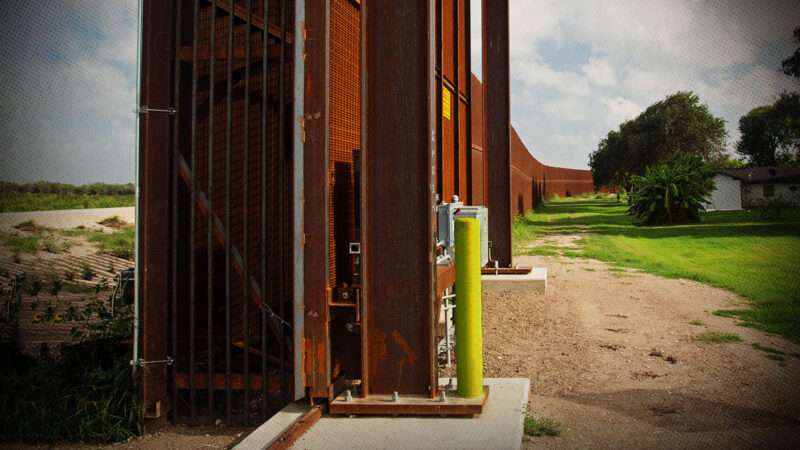
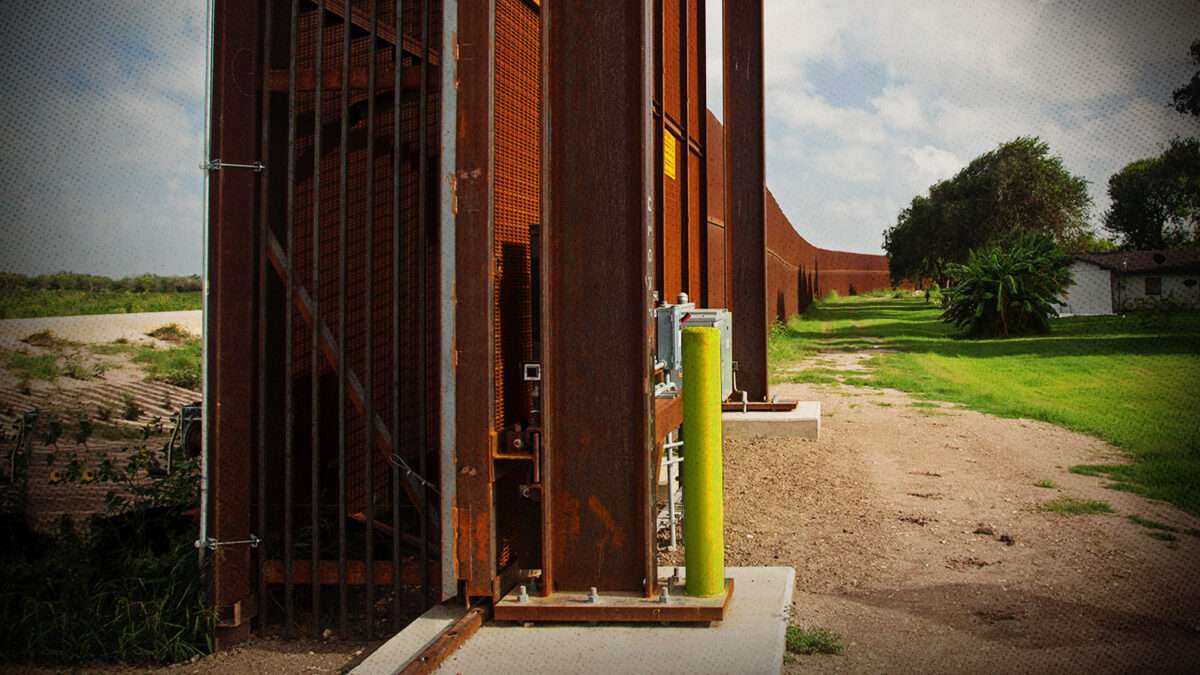
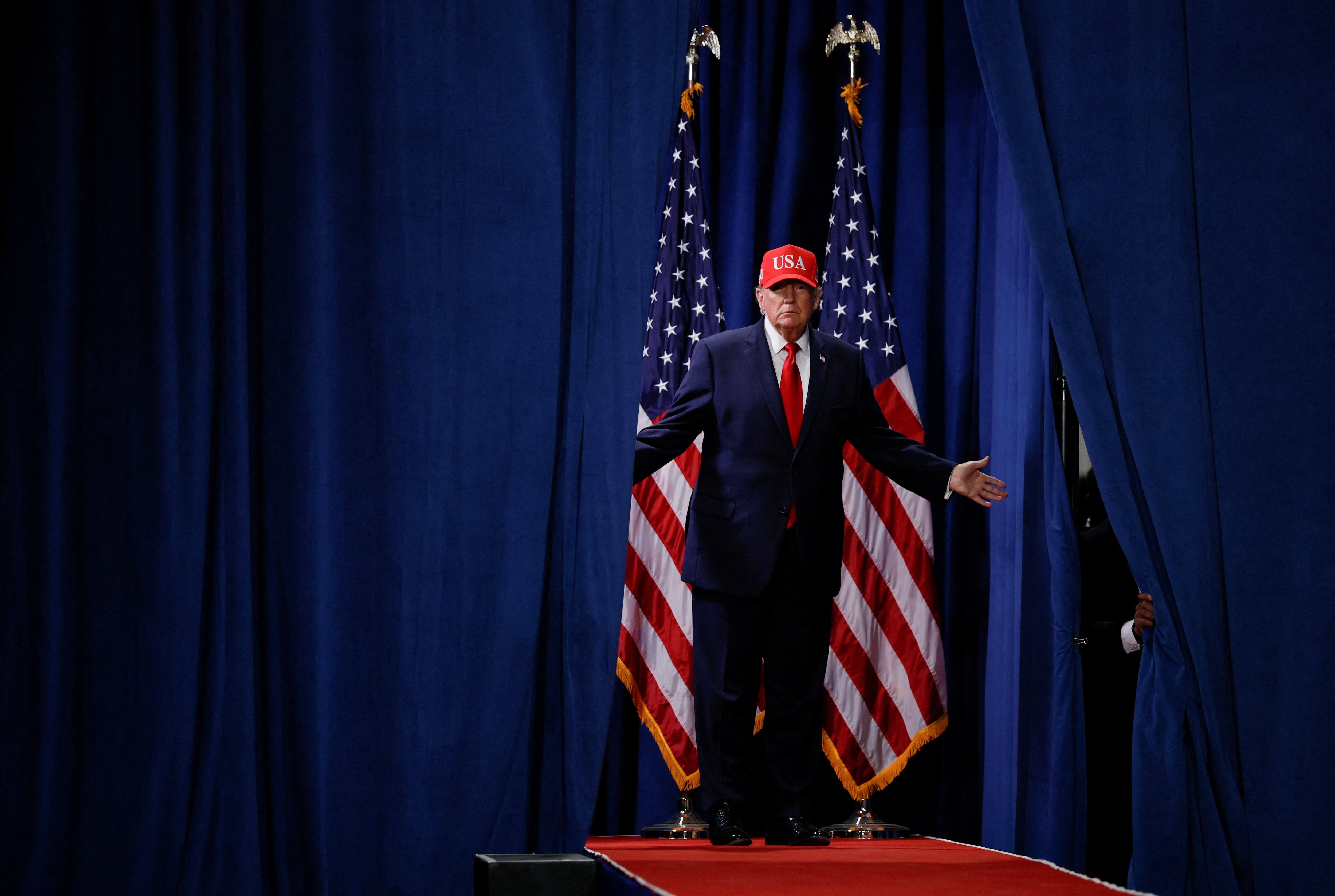
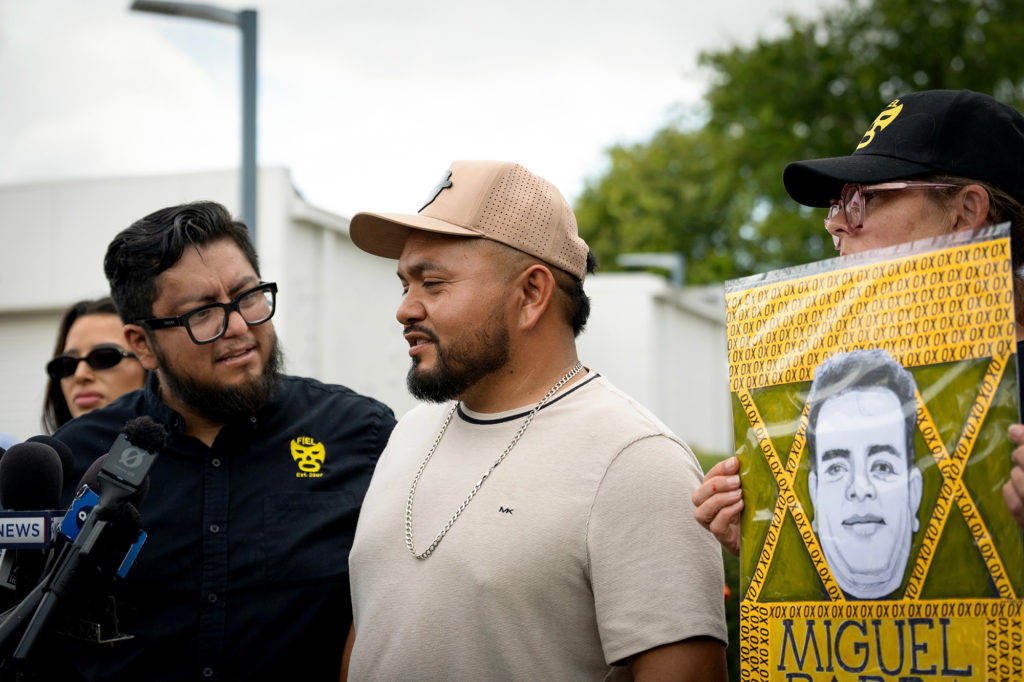
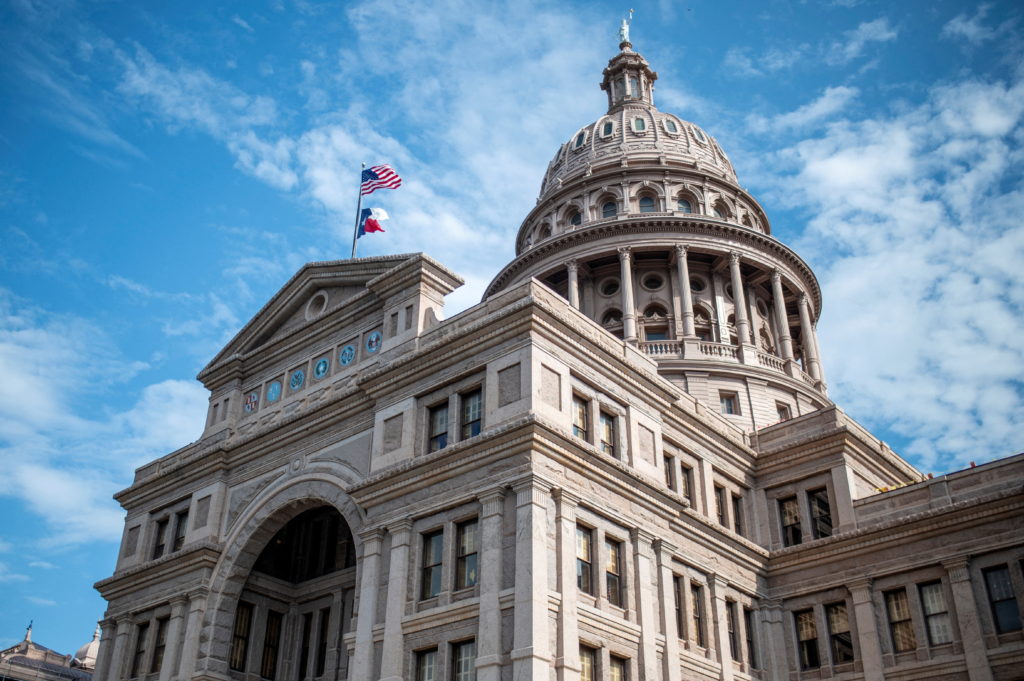
President Trump has renewed his efforts to “Build the Wall” in areas along the US-Mexico Border that don’t currently have border barriers—including the Big Bend region of West Texas. Invading people’s private properties and upending their local economies and shared ecosystem with a border wall residents say they don’t want or need, the Trump administration continues to dole out billions of taxpayer dollars to flood Texas border towns like Terlingua, Sanderson, and Marfa with troops and federal agents—and to pay construction contractors with ties to the Trump family.
Transcript
The following is a rushed transcript and may contain errors. It will be updated.
Maximillian Alvarez:
Alright. Welcome everyone to Working People, a podcast about the lives, jobs, dreams, and struggles of the working class today. My name is Maximillian Alvarez.
Jules Taylor:
And I’m Jules Taylor.
Maximillian Alvarez:
And today we are going to Terlingua in West Texas, right on the US-Mexico border and right next to Big Bend National Park. As the Texas Tribune reports, “Since President Trump returned to office in January of 2025, his administration has renewed efforts to erect border barriers in parts of the US-Mexico border that don’t currently have any. That includes the Big Bend region in far West Texas, home to the Big Bend National Park and Big Bend Ranch State Park, both of which the Trump administration has targeted for border security infrastructure. Historically, the region has recorded the fewest illegal crossings along the entire Southwest border, but the Trump administration has awarded billions of dollars worth of contracts to build some form of infrastructure to deter illegal border crossings, while telling concerned West Texas residents that they will not build a border wall or fence in the national park.
Local residents, environmentalists, and a bipartisan group of elected officials, including sheriffs and county judges, have still asked the administration to stop all construction.”
Jules Taylor:
According to the website of the community advocacy group, No Big Bend Wall, 2.1 billion in contracts have already been awarded for wall construction in Presidio and Hudspeth counties. Over 500 private landowners stand to lose access to the Rio Grande due to the proposed border wall. Construction is planned for Texas gems, including Big Bend National Park and Big Bend Ranch State Park, and the Department of Homeland Security is waiving 31 federal laws, including National Environmental Policy Act, National Historic Preservation Act, Native American Graves Protection and Reparations Act, and Wild and Scenic Rivers Act.
Maximillian Alvarez:
So to talk about what the hell is happening on the US-Mexico border, we are really grateful to be joined on the show today by a panel of folks who are on the front lines of this story and who are joining us from in or near Terlingua, Texas. Thank you all so much for joining us. Please introduce yourselves to our listeners.
Yolanda Alvarado:
I’m Yolanda Alvarado. I’m a fifth generation cattle rancher and the regional director for Conserve Big Bend: No Big Bend Wall.
Crystal Allbright:
Hi, I’m Crystal Allbright. I live in Terlingua, Texas. I’ve lived here 36 years. My husband and I own a bicycle shop and have outdoor gear as well as art. We’ve operated the river for 29 years, but we’ve phased that out for now. I’ve visited the area since I was a young child and love it very much.
Sara Ryza:
I’m Sara Ryza and I have the Desert Air Motel in Sanderson, Texas. It’s a renovated 1960 motel in Sanderson, which is a gateway town into Big Bend. So while the national park and the state park are kind of the anchor places that bring people into the region, they’re going through gateway towns to the region and into the park. And so a big part of this area is tourism and there are a lot of independently owned small businesses that are concerned about what all of this is going to do in the short and long term for tourism.
Scott Whitener:
My name’s Scott Whitener. I was a former superintendent on the Big Bend Ranch State Park along the river corridor located along the river road, which is just along the Rio Grande and covered about 50,000 acres of the front country of the state park side. I have been going to the Big Bend for 30 years. My wife fell in love with me there, I think, to check and see if that’s still true. But I currently live in Marfa, which is in Presidio County. I also am a property owner in three of the six counties in the affected area in the Big Bend sector. And yeah, this is near and dear to my heart, my family’s heart, and it will remain that way.
Sharron Reed Gavin:
My name is Sharron Reed Gavin and I also live in Terlingua with my husband. We moved there in 2013 full-time. We had both loved the Big Bend independently of knowing one another. My first time to go there, and this is before most of y’all were born, but was 1976 and went with some friends with the canoe and we wanted to do the river. And there weren’t such things as desert sports really at the time, but we found some good folks like Crystal and her husband who would help us get down to the river and go on it for a while. But I have six grandchildren and that’s why this is so important to me, also for my neighbors and all that love the Big Bend. There’s not a lot being done to save it by our elected officials, but I think all of our voices matter.
All of these people are working so hard at their real jobs and on top of it, especially what Yolanda and Sarah are doing with No Big Bend Wall. It’s just all of these people are doing full-time jobs and doing a full-time job with no Big Bend wall, and I just appreciate them.
Maximillian Alvarez:
Well, and we genuinely appreciate all of you for being here and talking to us about this. I’m just incredibly sorry that you and your community are going through this, that our country is going through this. It’s like every week it’s another horror show, but I really want to zero in on what you were just talking about, Sharon. I’ve never had the pleasure of going to see Big Bend or being in this part of the country. I really hope to correct that soon. But this is, from what I’ve seen, one of the most just beautiful places on God’s green earth. But for those of us who are not from there and for folks who are listening who have never been there, I want to ask if y’all can describe what our listeners can’t see for themselves. Tell us more about this area and what it’s like to live and work there.
Yolanda Alvarado:
Yeah, so I’m not directly near Big Bend National Park. My family ranches in the Big Bend region and that starts from Hudspeth County and it goes all the way to Valverde County. But we have ranches in Hudspeth and Presidio and near Jeff Davis. And we’ve been out here for hundreds of years and it’s really just quite desolate. You could see four hundreds of miles just desert and no one around. It’s a really serene environment and it’s also really harsh to be in the desert. It’s filled with rural communities. No communities are huge out here. We have very few ambulances, small schools. My children go to a school with 35 students from kindergarten to high school. So it’s just a really small time, small town, rural environment. And we throw on tourism and people going to the National Park and passing through these small areas. So even though we are small in size or small landowners, it still feels big.
It still feels connected to the rest of America because we still have all these visitors and people coming through.
Sara Ryza:
It also feels like time slows down here. You can relax and it’s kind of the call of the desert. You wouldn’t expect that you would love it so much if you weren’t originally thought of yourself as a desert person, but it’s also, it’s very gritty. There’s a grit to the people that live and work here and a lot of the business owners have several businesses. We also have a liquor store and also we’re part of this bigger region, but we’re also our own little communities. And in Sanderson, it’s Terrell County that’s getting vehicle barriers going through our county, which is only 20 miles to the border to the river, but that’s all private land. So we’re connected geographically to the river where we are, but also to the region through the tourism. It’s all really interconnected.
Crystal Allbright:
Yeah, I agree with both Yolanda and Sarah. It’s very remote and fairly isolated, but we all are connected. In the national park, I like to describe it as three biomes. There’s the mountains, the Chisos mountains, and then there’s the open expanse of the desert, and then there’s the river corridor that connects us all. So if you start at Yolanda’s Ranch and drive the Chispa Road all the way through Presidio and to Terlingua and then up through Alpine and then Marfa, you can make a big loop. You can do Fort Davis and Sanderson. And so we’re all connected. This has brought us together in so many ways from learning about each other’s businesses and lives as well as participating in the community meetings, whether it’s a town hall or a commissioner’s meeting or a groundwater meeting. We’re all working together to learn ways that we can delay the construction, which we prefer to call destruction of this area that we love.
Scott Whitener:
We all have to continue agreeing with each other because everybody else before me said it way better than I think I will. But at the same time, a few days ago I put it into perspective. I looked at all the population in all of our six counties that are affected right now in the Big Bend sector, and there’s like 23,000 people. You know how many square miles there is in those six counties? 23,000 square miles. Think about that. That’s a one person per square mile. Could you imagine being anywhere that allows you to have that type of expanse? We are all connected by this region, honestly. We all know what each other are doing because we love it out here. We love one another and it’s trampling on our freedoms, it’s trampling on what we love, and this government overreach is, it’s destroying our way of life, but we’re not going to let it.
And I’ll continue to say that, but at the same time, it’s made this community bigger, better, stronger. And I can’t say enough about the people, the place, the sunrises, the sunsets, the mountains, the open expanse, the plains. This is a special place, and if you haven’t been down here, you don’t have to come because like Austin used to say, “Hey, come for the fun, but don’t move here, please.” We do love the visitors. We love having people down here, but you live out here for a reason and we share this place with one another because it’s not any of ours, but it sure is ours to share.
Sharron Reed Gavin:
And the only thing I would add to that is you asked what it would look like to people who haven’t been here and everybody’s kind of hit that nail on the head, but it really is something that you can’t understand until you see it in person. And my favorite other place in the world is the north rim of the Grand Canyon, and I promise they have nothing on us, absolutely nothing. But we also, the beauty is here, but there’s archeological sites, there’s historical sites. They’re not paying any mind to those. They even started working on one of those sites and were interrupted. Yolanda, I can’t remember if it was by you or somebody else out near you, but the scale of the destruction and the history and the things that we absolutely cannot replace, it’s mind-boggling. And then everybody said this too about how we are all working together and we may be different and love our isolation, but boy, you step on this anthill and you’ve got a lot to contend with.
The thing that makes me feel really good about it though is this group isn’t going away. These people across the country who have banded together to fight this wall, they’re here to stay. They’re here to stay and the people are going to make their voices heard, and I think just at the end of the day, get this to stop.
Scott Whitener:
I don’t work for the state park system anymore, which is why I can be on this podcast and talk as much shit as I want. Pardon my French. But I actually work for an animal rescue. We rescue dogs out of shelters one tail at a time. We cover an area about the size of South Carolina, even bigger than our six sexers. So we save a lot of shelter animals and abandoned animals, and probably that’s what 40 to 50 to 60 hours of my week is. And then the other waking hours is fighting this.
Crystal Allbright:
I said earlier that my husband and I have a bicycle shop and we worked in the river outfitting business. We work six to seven days a week all day long. And again, using that time, especially when people come through the shop, we have displays about what’s going on in the area and we encourage people to voice their opinions about what’s going on and contact representatives. We use our space to show photographs of some of the destruction as well as to help raise money for these organizations that are working so hard to stay on top of what’s going on.
Yolanda Alvarado:
Yeah. I’m a cattle rancher, as I mentioned. I manage all my family’s ranches, and so I work every day outside in the desert. I work with mother nature. I work with the animals with droughts, with floods, the rain, any type of environmental issue you can think of a hundred and plus degrees outside or freezing outside. So my everyday working life and what it has been for the past almost 10 years has just been me and the desert, me and the animals, and that is my job. And carrying my family’s legacy, it has been my responsibility to be a steward of the land and continue that and teach my children how to take care and live out here, take care of the desert, the ranches and the animals, what it means, what you can use the plants for. So yeah, that’s basically what I do all day.
And then now I am fighting the border wall as the regional director, spending a lot of my time behind a computer now, but here we are.
Sharron Reed Gavin:
Yeah, I’ll say one thing. None of these folks work nine to five. I mean, I’m retired and that’s very fortunate because I have some more time to help on the no wall fight, but none of these people work nine to five. I can’t even imagine the number of miles that Yolanda drives or Scott used to do when he was with the state park or Crystal on their river trips. It’s mind-boggling. I do know where Crystal lives, and you have to love it out here to drive from where she lives into Terrlingo. It may be like seven miles, but it can take you up to 30, 40 minutes. So these people are working before and after work and during the working hours.
Jules Taylor:
National borders everywhere in the world are deeply political constructs with complicated histories, and the US-Mexico border is no different. I mean, it’s been a political talking point our entire lives. Can you talk to us about what it’s like to live somewhere that is so regularly charged by political narrative and policy battles and tell us why that’s different now?
Yolanda Alvarado:
Well, historically, the river down here in this part in the Big Bend sector, it’s been so isolated and desolate that we don’t have many crossings here, as you mentioned. So for many years up until almost recently, and still actually today, the communities on the river are on both sides. So you see Presidio and Ohinaga sharing a river, you see Bokias, we are one community. So politically, not until the first border wall came through, it wasn’t something that we even thought about for us and my family and the ranchers because we’ve always just been safe out there. We’ve been alone and we’ve been one community with the other side of the border that was Pilates, Mexico. And it wasn’t until, I guess, Bush, he built a fail billion dollar wall that’s actually on my aunt’s property. And that’s when we started seeing, for us anyways, in this region, it being more politically charged.
And even then at that time, I don’t believe anyone looked at the Big Bend region close to the National Park and said, “We need a wall here.” So I personally felt a little separated from what was going on in other places. I mean, me and my family never thought in a hundred years they would try to put a wall where we are because it just doesn’t make sense at all. It’s like you go down there, I even took the border patrol agents, the head director, infrastructure project directors of the Border Wall Project, and they said, “Yolanda, I see what you’re talking about because that’s how ridiculous it looks in person when you get off of a map.” We did see when Kersey Nome was a Homeland Security Director, we started seeing Stryker military vehicles, the army lining the border. Still today, I’m passed by Army people.
Our border’s completely militarized now. So it was a very isolated, safe place. And now I have to worry about running into a Stryker military vehicle hitting me on the way to the ranch. And most of the time I find them napping in their trucks because it’s so quiet and they don’t have anything to do. I see them on just, there’s actually a weightlifting area where they’re bored and they’re lifting weights because there’s no emergency on the border, yet our military’s deployed in our own homes, in our own backyards, filling up all the hotel rooms in these small rural communities already causing damage to tourism. So it’s been interesting watching it in real time. I was sitting on our back porch less than half a mile from Mexico on the Rio Grande reading that we were in a state of emergency and within the week we had military driving in and showing up at our property.
I even had military personnel drive through our gate in the middle of the night because they were just messing around, driving really fast. So it’s been a really interesting experience watching it in real time, not on the news saying like, “Oh, we have an emergency. Oh, there’s the military. Now we’re getting a wall.” It’s been really crazy and at the very least, such a disturbance to our peace or what was peaceful.
Scott Whitener:
This should make every taxpayer mad, and I’m only going to put it into perspective. I won’t put names under the bus. I live in Marfa, which everybody poo-poos Marfa just because it’s fun to do it anyway, and I get it. We’re a little art community, everybody’s a little bougie, whatever. I live in an old train warehouse, which it’s fun. Anyway, but I go down the street and I have the US military staying at a place that costs $285 a night minimum, and they’ve been staying there full-time since February of 2026. They use the pool, they use the weight room, all the things that people in this community can’t afford to use. Our US military is occupying that hotel and they’re not paying hotel taxes, they’re not helping the community, and they’re showing up to the pool and drinking at the bars. And it’s like, what are they defending?
And when we ask them, “What are you doing here?” They said, “We’re here to help this place. We’re here to defend you guys.” And I’m like, “Defend me from what? Art critics?” I mean, certainly it should make any taxpayer mad of what’s being wasted down here. These guys cruise around all day, all night and do nothing. And I’m not dogging the military, I’m dogging the decision. And it’s going on all over this region and it’s despicable.
Maximillian Alvarez:
I mean, it’s going on all over the country, right? I go to Washington DC this week and there are a bunch of board national guardsmen just walking around. It’s like, what the hell are we doing?
Yolanda Alvarado:
Really an insult on, I think, our military service also. My sister’s in the Air Force, and I mean, it’s insulting to even separate them from their families, deploy them in the United States, separate them from their families. They’re off on a mission, but it’s really there’s no mission down here. There’s nothing going on. But yeah, millions and millions, if not billions of our taxpayer dollars are going towards this. So I’m glad you said that, Scott.
Sara Ryza:
Yeah. It feels like an upside down world where before it was like, yeah, we’re safe. We didn’t even think about our safety, but people that don’t live here, that don’t work here, they’re talking about how it’s a scary place. We have to put up physical barriers. And so it’s created a narrative that is not what reality was. And now in addition to people thinking that we need a wall, well, now people think that, well, if they needed a wall, then it probably wasn’t safe. So why am I going to visit there? There’s so many other national parks, so many other places that people could go on a trip, and it’s really messing up our tourism and the economy that drives on the tourism. And while contractors coming in, the military coming in, that’s not an investment in our communities and in this long-term economic development.
Anybody that thinks that might be good that it could bring in money to our towns or to our county, that’s just a very shortsighted view and it hurts us in the long run.
Sharron Reed Gavin:
And when you were talking about being politically charged, I mean, it all goes back to the false pretense that we need a wall because of the border crisis down here. It’s all bogus. There is no border crisis. The border crisis right now are the construction workers or as Crystal said, the destruction workers. But yeah, I think that’s really important. This isn’t needed. It’s all about our president rewarding the people that are funding him for his political office, and it’s not doing this community any good whatsoever. It’s harming it significantly. One of our Texas state senators has a bill called the Fed Act, which is supposed to protect landowners specifically in West Texas from federal overreach, yet he hasn’t said a word about the overreach that’s happening here. So yeah, I better stop because it really makes me mad.
Maximillian Alvarez:
Well, I mean, I was going to ask y’all to, let’s get more mad, right? Because I mean, Jules and I have also been talking to fellow Texans who are dealing with data centers in their damn backyards now, all over the place. It feels like local control is just being ripped away and people are just having, whether it’s a border wall, whether it’s a data center or some other polluting piece of crap in their community, we get no say in it and they’re just steamrolling everybody. Because I wanted to sort of ask y’all, if you could speak to the non-Texans who are listening to this, right? We all know that there’s a, speaking of narratives, there’s a narrative in this country that makes a lot of people assume that Texans would be for this, that Texans would be shooting their guns into the air and say, “Yeah, let’s build a big border wall.” What do you want to say to people who think that about you?
Sharron Reed Gavin:
Come down and see for yourself. It’s nothing like the narrative that you’re hearing. Nothing at all.
Yolanda Alvarado:
Yeah. I mean, the data center border wall is so correlated. It’s the same fight that everybody’s been starting to fight across the country. So the only difference is that say it’s Boise, Idaho, and the only difference is the president saying there’s only rapists and murderers coming to Boise, Idaho. We need a wall around it and not a data center. It’s the same correlation. So we were just painted this black. We were already painted black, and that’s why people are not really opening their eyes to the issue, but it is exactly like you said, it’s just like having a data center show up in your community and taking your natural resources, jobs, all of the above. So to speak to the greater America, one thing I’ve been saying is that they declared a national emergency to waive laws to do this project. Who’s to say they’re not going to do it in Boise, Idaho?
Who’s to say they’re not going to say, “Oh, we see this emergency here. Let’s deploy the army and build and do whatever we want to these Americans. Forget American sovereignty, forget whatever existed.” It’s disgusting, the overreach. So I think everyone in America should be upset about what they’re doing to abuse this power to take advantage of American citizens, Texans. It’s not right.
Maximillian Alvarez:
Weren’t we raised to hate this stuff? Didn’t we all learn in school that this is exactly the kind of thing that as good red-blooded Americans we should despise and fight against? And you got ICE agents in unmarked vehicles wearing masks, driving all over people’s property, being peaceful protestors. I mean, just the violation of rights and property and everything, it’s mind-boggling.
Sara Ryza:
Right. In Terrell County, there’s a $2.6 billion contract over the Big Bend five project, which bans all of Terrell County, some of Brewster, some of Valverde. It’s not the 30-foot wall. It’s four and six-foot tall steel bollards that’s the vehicle barrier system to stop vehicles from crossing. This is on the other side of canyons, the river, the wild and scenic river right there. It’s canyons. And so they’re putting this vehicle barrier up saying it’s to stop vehicles, but vehicles aren’t crossing and people can go under it. So it’s not stopping people. It just doesn’t make sense and it’s a waste of taxpayer money and it just does not make any sense. But it’s back to this narrative that if somebody says that we need it, then I guess half the country’s going to believe it.
Crystal Allbright:
Just my take on it is my life here has spent a lot of time on the river and never had a bad experience. Usually people were hungry, starving, needed water, but just the thought of losing access to our river, the river we share with Mexico, it is appalling to me that we wouldn’t have access. We want border security, but we were already secure before. And a lot of that was because there’s several villages along the river. Prior to nine eleven, it was an open border and you could go across and have lunch at the villages and people would share news about what was going on. If there was something bad going on, we would learn from the people that lived there. And then after nine eleven, the border was shut and then we were cut off from our friends. We still get together once a year on Mother’s Day and we go to the river and bands play on each side.
They take turns, a band in Mexico and a band in the United States and they take turns playing and the families come together and we eat, we sing, we laugh, we dance, and we get to do that one day a year. And to have the idea that they’re going to come in with whether it’s vehicle barriers or walls, it just cuts us off more from friends and family that live in Mexico. I just agree with the sheriffs and the border patrol that can talk to us that they’re doing a good job already and that just more the technology that they can use to detect people crossing and being able to get to them, they could use more drones and maybe a helicopter that sure doesn’t cost $7.46 billion, which is how much they’re trying to spend on 517 miles of riverfront in Texas. And just the whole idea of landowners along the river, farmers, ranchers losing access to the water, again, we’re all saying it doesn’t make sense and we think we’re pretty logical people.
So I just want them to slow down, think about what they’re doing and start believing in the rule of law again.
Yolanda Alvarado:
Yeah. Speaking on the border security we have, as a rancher, I got a new four-wheeler. I was chasing cows near the border in the middle of nowhere. And border patrol knows me. They know my truck, they know pretty much what I do, but this was new to them. They were there within 10, 15 minutes, found me in the middle of nowhere and was like, “Oh, it’s just you, Yolanda. All right, have a good day.” That is a response time already. And I was going really fast on that four-wheeler. So just the idea of them being able to come in and take land away from landowners to ruin this entire region when we already have a very secure border. I mean, if you look at CBP, the Customs and Border Patrol Instagram right now, they just posted a video that says the border is secure. Even they’re admitting it at this point.
It’s comical, but they’re getting away with this at a national level because again, for me, and I’ve said this from the beginning, I’m very vocal about it. I think it’s a very racist agenda. It’s very anti-Latino. It’s very anti-brown. That’s why we can see ICE getting away with kidnapping people, murdering them in the street because they’ve pushed this anti-Latino narrative for a long time now since Clinton era, Bush did it and even Obama did it and it’s getting worse and worse. So people are turning a blind eye to it and it’s really frustrating because just as Crystal described, it’s not what it seems like here. We are communities, we are families, we are one on the river, and it’s really deserving to watch in real time of how people are being treated just for this agenda. And honestly, in the very end, it’s just so people can make some money at top.
It’s for these large contract deals. It’s to sell beds to detention centers. It’s all of the above. And we are just a byproduct of this huge anti-Latino showboat.
Sharron Reed Gavin:
Sometimes people will ask if they haven’t been down here on some of these chats and all, is it safe down there? Do you feel safe down there? I said, “We feel perfectly safe. We haven’t locked our door in 13 years. We don’t even know where the key is.” But then I also say, “I feel a lot safer here than I do going to Dallas or I do going to DC or some other place. This place is safe.” And if you took the amount, and Yolanda, you can probably correct me, but somebody did a calculation of the amount they’re paying, the seven however many billion dollars versus the number of people who have crossed, it comes out to something like $500,000 a person or $50,000 a person. I’m not a mathematician, but it’s ridiculous that that’s where our taxpayers’ money is going.
Yolanda Alvarado:
Yeah, it’s definitely the higher number. I believe it’s more over a million a person per apprehension, but it is $14 million a mile to build this border wall in our region. That’s our taxpayer dollar. So my family’s property, we’re going to have, I believe, a new fence, a 30-foot bollard wall that’s costing taxpayers. On our property alone, rough math, almost a hundred million dollars just on our property. That’s our new fence. So the cows aren’t going to go to Mexico anymore, but it is actually ridiculous what is happening and how much money’s being spent.
Sara Ryza:
Isn’t it 17 million per mile, right? Is that right? I think that’s the number, 17 million per mile. And the entire county budget for Terrell County is less, just less than 2.5 million for the entire year for the entire county, but they’re spending 17 million per mile.
Jules Taylor:
The last time I was there in Terlingua, I realized that water is scarce as a resource. It’s something that y’all could use more of. Sometimes power would go out or power did not seem like it was necessarily in all places. So when y’all talk about these huge numbers going on in terms of… I just think about how better that could be used within your communities to make better the lives of the people who choose to live there. And instead it goes to this godawful cause that helps no one hurts everyone who lives there and is completely unnecessary and ridiculous. And if you just were to look at the landscape of where they are intending to place it, like you mentioned, Yolanda, it doesn’t make sense, like vehicle barriers on the other sides of canyons. I mean, it just all sounds like a giant shit show, and I’m sorry that everyone’s having to live through this and deal with it.
And in terms of how the community of Terlingua is, man, I remember being there last year, there’s the Boathouse and there’s a Starlight Theater and there’s DB’s Rustic Iron. And I was reading somewhere in the Texas Tribune, there are actual signs that all these businesses have put up where if you are working with the contractors, we don’t want your business here, please take it elsewhere and you’re not welcome. And I just think it’s incredible the way that the businesses and the people who live out there have sort of been galvanized by this entire ordeal. As a wrap up question here, where do things stand now, like upcoming events? What can people, listeners do to get involved and what’s the current status now? Because I understand that the actual construction was paused and I think I remember reading today the pause ceased or something. Can we get an update on where things stand at this point and how listeners can help?
Sara Ryza:
It’s really easy to get mad and it’s nonsense, but the way that we’ve come together has been really great. We’re stronger than we thought we ever needed to be. We didn’t know we were going to need to be this strong, but the businesses, there’s a business network, we come together, we’ve talked about all of this. And the thing that has helped us, I know you want an update on the construction, but what we’re working on is fighting for tourism. That’s helped kind of shift the narrative because yes, we’re fighting against the wall and all of that, but we’re also fighting for something. Crystal reminds us all the time we’re fighting for what we love. The businesses are fighting for tourism. So the thing that people can do is to keep coming, keep coming to Big Bend, support the local businesses, come to the parks, even watch what’s going on if construction resumes.
But there’s a big tourism campaign called Big Love for Big Bend that reminds people that when you come to Big Bend, you’re supporting these businesses and these independently owned restaurants, gas station, grocery stores, motels. So that’s in addition to writing representatives and a lot of other things that they can do, a really huge thing would be to keep visiting Big Bend.
Yolanda Alvarado:
We just took a trip to Washington DC. We talked to lawmakers. We were trying to wrap our minds around what are they saying? What are they doing? And the biggest thing that stuck out was all of them have said they’ve received phone calls, they’ve heard from their constituents, and it’s huge no matter where you are outside of Texas to keep calling your representatives and let them know that putting a wall or any infrastructure in Big Bend will hurt you as well and it’s not needed and that’s not where you want to spend your taxpayer dollars. And we’re working on some bills and things there to hopefully halt that. And on top of that, our coalition, Conserve Big Bend, we started a landowner coalition and we have almost over half of the landowners on the border in our coalition who is against the wall. And we just filed a lawsuit a couple weeks ago against the federal government.
So it’s landowners versus DHS and we’re taking it all the way to the top. It was filed in DC and we’re hoping to see another TRO there and hopefully we can halt construction. We are challenging the waivers, letting them know that they can’t just come in and claim a national security and take away all of our rights. So yeah, aside from other small events we’re working on, that and donating to all the people who are working hard, it’s not just No Big Bend Wall, but there’s so many people in Terlingua all over. Anyone who even shares an Instagram post or Facebook post and talks about what is happening helps us. This is all really good and really helpful.
Crystal Allbright:
There’s another hearing tomorrow in El Paso. So some of the people originally scheduled for this podcast are in El Paso with the lawyers getting ready for that tomorrow and hopefully that will pause it again. We have not seen construction resume, but there are people watching for that. I think they’re just still waiting, but they’re still not talking to us. That’s been a big thing. The lack of transparency has been really aggravating. If they would just talk to us and we could give them ideas on alternatives for what’s going on, that would help. In Terlingua from February, we started having rallies on Saturdays and this Saturday is our 32nd rally. People come from all over and join us. We’ve had people from New York and California and Florida, Atlanta, all over Texas come and join us. And then in the big cities on Sundays like Houston, Dallas, they’re having rallies there as well.
So the moment they started bulldozing at Santa Elena Canyon, finally the news broke out to a bigger audience, even though we had been chipping away at that for six months. So more people are aware, but we just keep spreading the word.
Scott Whitener:
Yeah. And being able to attend the ones in Terlingua are at the rally at the Y is always special. That kicked it all off. And the bigger point here, and that was amazing, and what’s happened after that has been even more amazing. But if you’re talking about how can people help right now, not only attending those rallies at the Y, but what we’ve been doing, and everybody on this call and everybody’s in El Paso, I talked about how big this area is. The people on this call and the other people, our constituents out here have been driving to county meetings, city councils, groundwater meetings. You go to every single one of those, and I think every American should be paying attention to what’s going on down here. I know people are objecting to AI data centers, but looking at the gas, paying $4.50 a gallon, we’ve got people that are retirees thriving on social security, people that are part-time workers, part-time, anything, seasonal workers, because this is all tourism.
People are showing up to these county meetings and holding the people we put in office, holding them to account to do what we ask them to do because it’s bullshit. I’m sorry, you can bleep that one out. I mean, it’s bullshit. I keep saying it. It’s
Maximillian Alvarez:
All right, man. Go for it. Let it fly.
Scott Whitener:
It’s bullshit that they keep going and they’re not listening to… We have the county commissioners probably scared to object to anything when we show up with 150 people that drove from all over the place. Like last week, I mean, we are calling people out that have been sitting in a La-Z-Boy enjoying their county judge position, their commissioner position, their city council mayor, people that just thought this was going to be easy and they can just check the box and say, “Hey, yeah, y’all go ahead and we’re just going to go bulldozer here because nobody lives out here because like I said, 23,000 square miles with 23,000 people.” Oh yeah, this isn’t like a city full of liberal dims or something that are going to object to everything. It’s us and we’re pissed and we’re going to keep showing up. And that’s what everybody, not only in the state of Texas, but definitely in the Big Bend region is doing it on their own.
And they’re out and my wife’s in El Paso, which is two and a half hours away right now. People in Terlingue in El Paso right now, which is five hours for them. People just need to show up and I think the gig is up. I mean, I’m done. I mean, I’m done with this crap.
Maximillian Alvarez:
All right, gang, that’s going to wrap things up for us today. Before we go, I do want to give you an update on this story that occurred after we recorded the conversation that you just heard. As Martha Piskowski reported on October 6th in Mother Jones, “Federal Judge Kathleen Cardone granted a preliminary injunction Friday to halt construction on the border wall in Texas’s expansive Big Bend sector, including the national and state parks. Cardone read a brief order from the bench after hearing more than four hours of testimony from conservation groups and residents of the Big Bend region, known internationally for its dark night skies, abundant biodiversity, and rugged river canyons. Cardone said that the plaintiffs are likely to succeed on the merits in at least one of their claims and to suffer irreparable harm if construction continues. Her ruling stops border barrier construction in the entire Big Bend sector until the federal government complies with all applicable laws.
The ruling applies to all of Big Bend National Park, Big Bend Ranch State Park, and the border along the Rio Grande in the rest of the sector. The injunction will remain in place while the court considers the lawsuit, which was filed in April.” So the struggle is still very much not over, but that is huge news and that is a huge win. I want to thank our guests in and around Terlingua, Texas, near Big Bend National Park, Yolanda Alvarado, Crystal Albright, Sarah Riza, Scott Whitener, and Sharon Reed Gavin. And if you want to learn more about what our guests are doing out there in West Texas and you want to connect with them, please use the links that we provided in the show notes for this episode. And Jules, I actually wanted to ask if you could give our listeners the scoop on an event that is happening in Terlingua this month that you are a part of.
Jules Taylor:
Yes. This month from October 15th to 18th, I will be taking part in the TerrLingua Music Bash. I believe there’s about 40 different artists spread across half a dozen or so venues, which are different businesses there in Big Bend. It’s all a benefit for school that’s out there. I mean, it’s all a really good cause. My friend John Whipple puts it on and it’s all free admission. So if you’re anywhere near TerrLingua on the 15th through the 18th, come hang out. There’s also a Day of the Dead costume parade that we’re going to do, which is also really super cool. But yeah, I can’t wait to be back out in Big Bend. I can’t wait to be back out in Terrlingua. It’s just a fantastic place and you can’t really describe how wonderful it is until you go there and then you’re just kind of at a loss for words.
When folks say you have to be there yourself to experience it and it has nothing on the north side of the Grand Canyon, I’m like, “Yeah, I’ve been there. I’ve been to the Grand Canyon too. This Big Bend is where I want to go every October for this music bash, and this will be my second year going.”
Maximillian Alvarez:
You heard it here first, folks. Our Texas co-hosts and guests say Grand Canyon ain’t shit. So thank you so, so much again to all of our incredible guests, and thank you to Jules for helping us put this incredible panel together. And of course, I want to thank you all for listening, and I want to thank you for caring about this. We do this work for you, but we cannot do it without you. Working People is brought to you in partnership with In These Times Magazine and the Real News Network. The show is produced by the great Jules Taylor and is a proud member of the Labor Radio Podcast Network. We will see y’all back here next time for another episode of Working People. And in the meantime, go explore all the great work that we’re doing at the Real News Network, where we do grassroots reporting that lifts up the voices and stories from the front lines of struggle across the US and around the world.
Subscribe to our YouTube channel. Check out our great podcasts like Under the Shadow and the Mark Steiner Show, and connect with us on social media and get updates on our reporting there and help us do more work like this by going to therealnews.com/donate and becoming a supporter today. I promise you guys, it really makes a difference. I’m Maximillian Alvarez.
Jules Taylor:
And I’m Jules Taylor.
Maximillian Alvarez:
Take care of yourselves. Take care of each other. Solidarity forever.

 Login