❌

Reading view

Gaza Famine Deaths Hit 466 as Hunger Crisis Deepens After 3 Years of Genocide

The Palestinian Ministry of Health warned that the humanitarian crisis has reached a critical point in its third year of war. Photo: CNN.

Gaza’s Health Ministry reported Friday that hunger and malnutrition have killed 466 people since 2024, as famine grips the enclave and pushes more than 1.4 million residents toward a critical food crisis.


The Palestinian Health Ministry in Gaza confirmed Friday that malnutrition and hunger rates have reached catastrophic levels across the territory.

The toll stands at 466 starvation deaths since 2024, a figure the ministry released on World Food Day, observed October 16.

RELATED: Gaza Humanitarian Crisis: UN Warns of Explosive Force Equal to 6 Nuclear Bombs

The health authority issued a grim report exposing the consequences of the prolonged Israeli siege. Official projections show that more than 1.4 million people, equivalent to 67% of the population, will face a critical or worse food crisis by the end of 2026. Famine was formally declared in Gaza governorate in August 2025.

“Malnutrition and famine rates in the Gaza Strip have reached catastrophic levels, seriously affecting children, the elderly and other vulnerable groups,” the Ministry said in its statement.

Statement by the Gaza Ministry of Health on World Food Day:

▪️ "Malnutrition and starvation rates in the Gaza Strip have reached catastrophic levels, ravaging children, the elderly, and other vulnerable groups."

▪️ "A total of 466 deaths due to malnutrition and starvation have…

— The Cradle (@TheCradleMedia) October 16, 2026

Children carry a heavy share of the toll. Since 2024, 157 children have died from malnutrition, roughly one third of all starvation deaths. Between 2024 and August 2026, health workers documented 158,001 cases of acute malnutrition in children under five, including 28,716 severe cases that directly threaten life.

The mortality rate among children under five more than doubled, climbing from 13.6 to 33.4 deaths per 1,000 live births between 2022 and 2025. Stunting now affects 12.2% of the child population. Officials estimate that another 74,200 children will require specialized treatment through 2027.

Maternal health has deteriorated sharply as well. Anemia prevalence rose to 61% in 2026, compared with 41% before the conflict. Nearly 4,000 miscarriages were recorded in the first half of the year, more than triple the previous six months. One in every three pregnancies is now classified as high risk.

🇵🇸 466 Palestinians, including 157 children, have died from malnutrition and starvation in Gaza since 2024, Health Ministry says

⚠️ More than 1.4 million people are expected to face crisis-level food insecurity or worse through the end of 2026

📌 Authorities accuse Israel of… pic.twitter.com/xGVDRsQcWy

— Anadolu English (@anadoluagency) October 16, 2026

Elderly Hardest Hit

Elderly adults account for the largest share of deaths linked to food shortages. The Gazan Ministry registered 189 fatalities among the elderly, or 40.5% of the national total.

The vulnerability among seniors is stark: 11% go entire days without eating anything at all, meanwhile 48% deliberately reduce their own portions to feed their families. 68% of them have interrupted or cut back on medication doses because of widespread shortages.

Three years of war have collapsed the food system. The Ministry’s warning lands as winter approaches and as aid deliveries remain insufficient to meet the scale of need across the territory.

The figures mark the deepest point yet in a hunger emergency that has built steadily since the conflict began. A formal famine declaration, once a rare event, now defines daily reality for hundreds of thousands of people trapped in the enclave.

The projected rise in food insecurity through late 2026, combined with 74,200 children awaiting specialized care, points to a crisis that will persist even if aid access improves.

Facing this emergency, the Health Ministry recalled that the right to food is fundamental. It urged the United Nations and the international community to establish urgent mechanisms that guarantee the safe, sustainable and unrestricted entry of humanitarian aid, therapeutic supplements and medicines into the enclave.

  •  

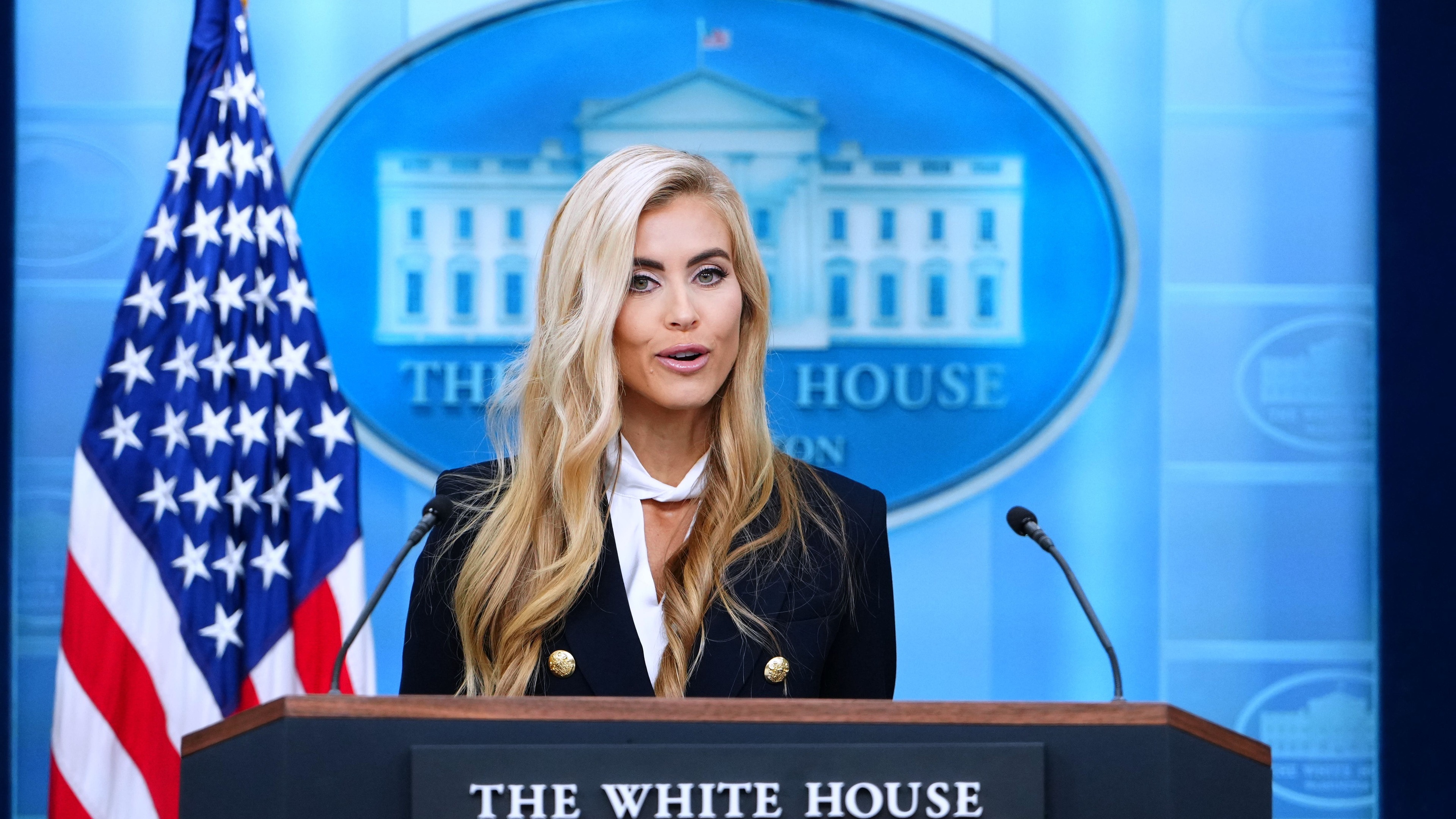
Trump fires White House Press Secretary Katie Zacharia

White House Press Secretary Katie Zacharia was "let go" from the role, a White House official said on Friday, after President Donald Trump said he had told her to reconsider the job following public scrutiny.

"I told her: 'I think you're better off being happy, and I'm not sure you can ever be happy in this stuff.' There's nothing easy about this stuff," Trump told reporters while departing the White House.

He added: "I said to her honestly, 'If I were you, I'd reconsider... think about it. But I would reconsider.'"

Fox News, citing a White House official, later reported that Zacharia was "transitioning" out of the role of press secretary.

Zacharia started the job on Monday and held her debut White House briefing on Tuesday.

She had said she received a call about the role of press secretary last Wednesday and got offered the job to succeed Karoline Leavitt last Friday.

Trump later announced her appointment. In his announcement, he described her an attorney.

Zacharia got off to a rocky start with her first press room briefing Tuesday.

It lasted less than 15 minutes, starting with a remarkably slow reading out of what she said were Trump's many accomplishments -- then taking just three questions from journalists.

Over the last week, the issue of whether Zacharia, a graduate of California's Pepperdine University law school, had actually passed the bar - making her an attorney - came under fire.

On Friday, during a Fox News interview on Thursday, Zacharia said she did not pass the bar. Anthony Scaramucci served director of communications for 10 days during Trump's first administration.

Zacharia further stirred controversy on Thursday when she disparaged China, whose leader Xi Jinping was recently Trump's guest in a pomp-filled Washington visit.

The press secretary recalled the perception in 2016 was that China would soon overtake the United States.

"I remember this very distinctly, having just come from China, thinking, 'How is China the next country on the horizon? They don't even have proper toilets,'" she told right-wing influencer Jack Posobiec in an interview.

Chinese Foreign Ministry spokeswoman Mao Ning responded Friday that Zacharia should "visit China more often."

The kerfuffle is a distraction for 80-year-old Trump as he flies around the country trying to boost Republican candidates ahead of the November 3 congressional midterm elections, with polls predicting a drubbing.

  •  

Mike Tyson pulls Supreme collab after Israel flag removed

Mike Tyson's legal team have accused streetwear brand Supreme of breaching an agreement after removing an Israeli flag from a remake of a vintage designed hoodie featuring the former boxer.

The hoodie, which was produced in collaboration with designer Martine Rose, was pulled from sale earlier this week after fans noticed the change.

The original design featured an image of Tyson standing against a backdrop of a globe, featuring a number of flags, including Israel's. In the design produced by Supreme and Rose, the Israeli flag was replaced with that of Palestine.

“Mike Tyson collaborated with Supreme and Martine Rose on a collection honoring his boxing legacy. His team approved artwork inspired by his iconic Jeff Hamilton jacket solely to celebrate boxing history," read a statement shared with Rolling Stone by Tyson's legal team.

“Without authorization, Supreme altered the approved design, embroiling Mr. Tyson in an unrelated political crisis. This modification constitutes a material breach of contract. With Supreme ignoring repeated demands, Mr. Tyson’s legal counsel will take all necessary action to protect his name, likeness, and legacy.”

This is not the first time that Tyson has caused controversy in relation to Israel.

In November 2023, photos surfaced on the internet showing the former heavyweight champion attending a Friends of the Israeli Defense Forces fundraising event in Florida. The fundraiser, which raised $10 million for the Israeli army, took place in the early weeks of Israel's genocidal war on Gaza.

Amid social media backlash over the move, Tyson released a statement denying that he had made any donations.

"I want to clarify the recent portrayal of an event I attended," Tyson said in a statement at the time. "Invited for a casual evening out by a friend, I was unaware of the arranged fundraiser and no donations were made by me or on my behalf."

  •  

Democrats demand Trump explain Ukraine satellite cutoffs

Congressional Democrats on the House Armed Services and Intelligence committees are demanding President Donald Trump explain why Ukrainian forces’ access to SpaceX Starshield services was restricted earlier this week.

In a letter first reported by MS NOW, Rep. Jason Crow, D-Co., ranking member of the Armed Services Committee; Adam Smith, D-Wash., ranking member of the Select Committee on Intelligence; Rep. Jim Himes, D-Conn.; and Rep. George Whitesides, D-Calif., lambasted the Trump administration for refusing to respond to congressional inquiries on who directed changes to Ukraine’s access to Starshield, the military-grade version of Starlink services.

The lawmakers were not satisfied with either the possibility that Elon Musk’s company SpaceX independently made the decision — which Musk has denied — or the U.S. government made the call.

“Starshield systems are owned and controlled by the US government,” Musk wrote Oct. 14 on X. “Any limits on speed or usage are decided by the US military and ultimately POTUS.”

The Democratic lawmakers want the Trump administration to explain exactly who controls the crucial satellite connections Ukraine uses to defend itself.

“If a private company can unilaterally restrict a critical operational service governed by a signed contract with the Department of Defense during an active conflict, it raises serious concerns about public accountability and the outsized influence of private actors over U.S. national security matters,” the lawmakers wrote.

“If, on the other hand, the direction was given by your Administration, it raises serious questions about U.S. defense policy regarding Russia and Ukraine,” they added. “Either way, the American people, our allies, and Ukraine deserve to know why this decision with life-threatening consequences was made.”

A U.S. official, granted anonymity to discuss the sensitive situation, told MS NOW that “no such request was ever made by the President.” The White House ignored repeated questions on whether another administration official or agency directed the change.

“As his popularity plummets at home, he’s shamefully abandoning our allies and once again cozying up to dictators,” Crow said in a statement, referring to Trump. “We need to stand with the people of Ukraine as Russia continues its war of aggression, not fund Putin’s war machine that is killing civilians.”

The Democrats noted the disruption to Ukraine’s military operations and defense capabilities put civilians at risk. The satellite signal disruptions also came amid Trump’s diesel deal with Russian President Vladimir Putin and pressure on Ukraine to stop attacking Russian energy sites, despite its adversary failing to abide by the so-called energy ceasefire announced by Trump.

They asked for a response by Oct. 30.

Their letter, which did not include any Republican signatories, follows a bipartisan Senate effort calling for the Department of Defense Inspector General to investigate the Starlink disruptions in Ukraine.

On Thursday, Senate Foreign Relations Committee Sen. Jeanne Shaheen, D-N.H., led a bipartisan letter seeking an investigation into whether the restricted Starshield service put U.S. diplomatic, military, and security personnel inside Ukraine in danger and who approved the disruptions.

Starshield speeds began to improve on Thursday, according to Ukrainian chargé d’affaires in Washington Denys Sienik.

“We hope all will be resumed to the previous level,” Sienik said in a statement. “Speed ​​is critical for logistics, and for intercepting the jet-powered Shahed drones especially when Russia constantly uses them to attack our cities and commit war crimes and when Foreign Minister Lavrov openly states that Russia opposes a ceasefire.”

A source familiar with the matter told MS NOW the Ukrainian government has yet to receive any response from SpaceX or the Pentagon.

Wednesday “saw one of the most massive Shahed attacks, occurring precisely when our defense system’s speed was being throttled, and the circumstances behind this are deeply concerning,” said the source, who was granted anonymity to discuss sensitive military operations.

The post Democrats demand Trump explain Ukraine satellite cutoffs appeared first on MS NOW.

  •  

Ghada Karmi: Zionism is racism motion is a ‘beacon of light’

Palestinian academic Ghada Karmi has called the Green Party’s Zionism is Racism motion "a beacon of light" in a press conference hosted by Greens for Palestine on Friday.

The motion was passed on 4 October with 1,022 votes in favour and 813 against.

Born in 1939, Karmi, who came to London in 1949 after her family was forcibly expelled from Palestine in the Nakba (Arabic for catastrophe), said the motion is “the best thing that’s happened to me, personally, since 1948.”

The motion has been met with backlash both from political opponents and from within the party.

Green MP Adrian Ramsay said he was "deeply upset" after the motion passed.

Lawyer Adam Wagner, who has previously represented the Campaign Against Antisemitism, said the motion may violate the Equality Act of 2010 because it "will discriminate against and harass people who hold Zionist beliefs and Jewish people more generally."

Green Party leader Zack Polanski, who is Jewish, said in a statement, “antisemitism and criticism of the Israeli state are, and must always be, completely distinct.”

"No-one will be made unwelcome because of their background, their faith, or where they worship."

Karmi, who thanked both Polanski and Lubna Speitan, who proposed the motion, responded to the criticism, saying, “I don’t know what the fuss is about; of course it’s racist.”

"The essence of this is really nothing to do with being Palestinian. It's to do with being non-Jewish," she said.

"We're the wrong ethnicity, and that's why we're being prosecuted. If that's not racist, I don't know what is," she continued.

The motion states that Israel is an "apartheid," "ethnonationalist" state, and calls for the establishment of a single Palestinian state "with equal rights for all."

An amendment which would have removed the call for a single Palestinian state was voted down, as was one which would have prevented people from being disciplined by the party for membership of Jewish institutions with a Zionist stance, including synagogues. 

Labour Prime Minister Andy Burnham responded by ruling out a future coalition with the Green Party as long as the motion stands.

In September, Labour’s Foreign Secretary Ed Miliband announced limited sanctions against Israeli settlements in the West Bank, but the Labour government has continued to arrest protesters supporting the proscribed group Palestine Action.

Speitan, who proposed the motion, said at the press conference that she hopes other organisations, including trade unions and political parties, will adopt the stance that Zionism is racism.

  •  

Jared Kushner has no right to be playing diplomat

For more than a year, President Donald Trump’s son-in-law, Jared Kushner, has acted as one of the nation’s top diplomats, exercising significant authority on behalf of the U.S. government on conflicts involving foreign hostilities, without undergoing the Senate confirmation process or filing a single financial disclosure. If you’re asking how that’s legal, it’s not.

Kushner is a figure of great influence on our national security and foreign policy apparatus. He has been tasked with meeting directly with heads of state, negotiating peace deals and representing the United States in efforts to end the president’s war in Iran, which has put our troops in harm’s way and exacerbated the affordability crisis here at home. My organization, Citizens for Responsibility and Ethics in Washington, just filed a lawsuit asking the court to block Kushner from continuing to perform his outsized role without Senate confirmation and compel him to file his required financial disclosures.

A White House spokesperson said in a statement that “[Kushner’s] personal business activities have nothing to do with his diplomatic engagements, which he conducts on a volunteer basis at the President’s request and while paying his own expenses,” while an attorney representing Kushner dismissed CREW’s lawsuit as “without merit.”

These laws exist to ensure that people granted substantial authority and power in our government are deserving of that power and maintain their ethical obligations to put Americans’ interests first. Kushner and the Trump administration have decided to sidestep this process.

The American public, through its elected senators and government officials, has the right to evaluate whether individuals are qualified and meet the ethical standards to hold powerful positions in our government. Kushner and the Trump administration have denied us that right, and that is both unacceptable and illegal.

The Constitution’s Appointments Clause requires that individuals who hold continuing government positions and are afforded substantial levels of authority be vetted and approved by the Senate before they take office. In my prior role as a senior counsel to the Senate Homeland Security and Governmental Affairs Committee, I helped conduct this vetting. It involved poring over a nominee’s background and experience, reviewing their past conduct, soliciting opinions on the nominee from outside experts, reviewing their financial records and interviewing them with other committee staff.

Nominees often also meet with senators to answer questions in private, are vetted by the FBI and sit for a public hearing in front of senators and the public before the committee of jurisdiction. Then the full chamber votes to approve or reject their appointment. In addition to that rigorous and multifaceted process, the Ethics in Government Act requires that individuals nominated to such positions file public financial disclosures so that the public and Congress can assess and monitor potential conflicts of interest prior to confirmation and while they serve in the role.

These laws exist to ensure that people granted substantial authority and power in our government are deserving of that power and maintain their ethical obligations to put Americans’ interests first. Kushner and the Trump administration have decided to sidestep this process.

Many officials with less power undergo more scrutiny than Kushner. For example, ambassadors who represent the U.S. in just one country — like the recently ousted Kimberly Guilfoyle — are required to be confirmed by the Senate and file public financial disclosures. Without any such vetting, Kushner has met with the presidents of Russia and Ukraine, as well as leaders from Qatar, the United Arab Emirates and Saudi Arabia, and has been involved in peace negotiations surrounding Gaza, Iran and Ukraine. Meanwhile, Trump has not appointed ambassadors to Russia or Ukraine, as well as Qatar, or the UAE. Those positions remain vacant while Kushner exercises at least some of the powers and duties traditionally assigned to those positions, functionally dodging the Appointments Clause and the required vetting for confirmation.

Kushner is also an atypical diplomat. In addition to being Trump’s son-in-law, the seeming overlap between his government portfolio and business ventures has led to widespread questions. As senior adviser to the president in the first Trump administration, Kushner was required to file financial disclosures, which showed that he and his wife, Ivanka Trump, made between $172 million and $640 million in outside income while working in the White House. Soon after the first Trump administration ended, Kushner secured billions of dollars for his investment firm from the very governments, including Saudi Arabia, he had worked closely with in his official capacity. He continues to run that firm while he engages with foreign leaders who have invested with his company.

While Kushner has occasionally addressed these concerns publicly, he has not done so in Senate testimony under oath, nor provided appropriate documentation of his finances. As is the case with any nominee, his word alone is not good enough. Kushner’s lawyer claims that government ethics officials confirmed that this arrangement complies with applicable ethics requirements, but the Trump administration has routinely blessed ethically dubious conduct by the president and his family. In the first Trump administration, Kushner was granted a security clearance against the reported recommendation of career security specialists who raised concerns about his foreign entanglements.

Kushner is making decisions that affect everything from our safety and position on the world stage to the price of gas and groceries at home. This power, whether or not he has a formal title or receives a government salary, makes him subject to the Appointments Clause and the Ethics in Government Act. The very least we deserve is for Kushner to abide by the law — to be publicly vetted and transparent about his financial entanglements. He has thus far refused to do that, and we refuse to stand idly by.

The post Jared Kushner has no right to be playing diplomat appeared first on MS NOW.

  •  

First Time — A U.S. Carrier Strike Group Sails with a Medium USV as USS Roosevelt Leads the Way

For the first time, the US Navy has deployed an uncrewed surface vessel (USV), or a sea drone, alongside a carrier strike group (CSG), accelerating the integration of cost-effective autonomous systems into high-end naval operations.

Speaking at an Army conference in Washington, DC, on October 14, 2026, the Acting US Navy Secretary Hung Cao announced that the Navy has deployed a Leidos USV with the USS Theodore Roosevelt Carrier Strike Group (CSG) headed to the Middle East.

“Right now, the Roosevelt carrier strike group just deployed on Oct. 8 with a medium-sized unmanned surface vessel,” Cao noted.

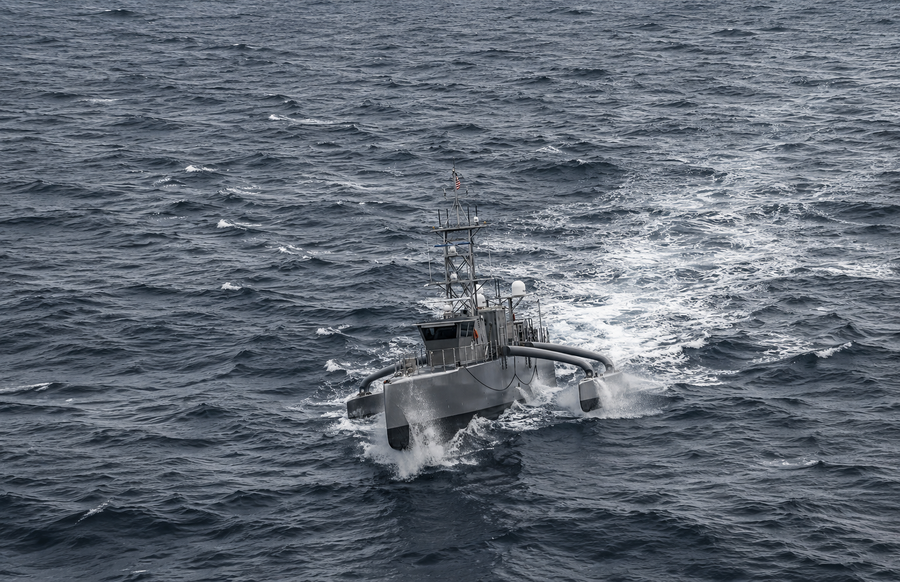
“This is the first carrier strike group to ever deploy with a large-sized unmanned surface vessel, and this is a force multiplier. Imagine having more guns out there,” he added. Notably, Cao did not name the sea drone, but media reports citing informed officials identified it as the Leidos Seahawk, a 145-ton, 42-meter-long medium USV reportedly built to sail long distances uninterrupted for months

Leidos describes the Seahawk as a medium-displacement unmanned surface vessel (MD-USV) with a composite trimaran hull. It is roughly 135–137 feet long, with a full-load displacement of about 145 tons, and a fuel capacity of around 14,000 gallons.

It is designed for extended autonomous operations with limited human intervention and uses Leidos’ Autonomous Vessel Architecture (LAVA) for navigation, perception, collision avoidance (COLREGs-compliant), and other functions.

“Seahawk is substantially larger than other US Navy USVs and has significantly increased capabilities compared to smaller USVs in terms of range, seakeeping, and payload capacity. Seahawk is designed to operate with minimal human involvement, providing a forward-deployed, rapid-response asset in the global maritime surveillance network,” Leidos stated.

The company reportedly delivered the Seahawk USV to the United States Navy in 2021.

The Seahawk will likely conduct electronic warfare missions and information, surveillance, and reconnaissance (ISR) operations rather than serve as an armed combatant. Notably, the carrier’s deployment to the Middle East comes as US President Donald Trump weighs fresh strikes on Iran.

Israel Reverses U.S. Apache Drawdown in Post-October 7 Policy Shift, Signs Deal For 12 AH-64E Helos

Earlier this month, he told Time magazine that the US military could ramp up bombing of Iran after the November 3 midterm elections.

The autonomous vessel Seahawk is pictured underway in the ocean.
The autonomous vessel Seahawk is pictured underway in the ocean (Photo Courtesy: Leidos)

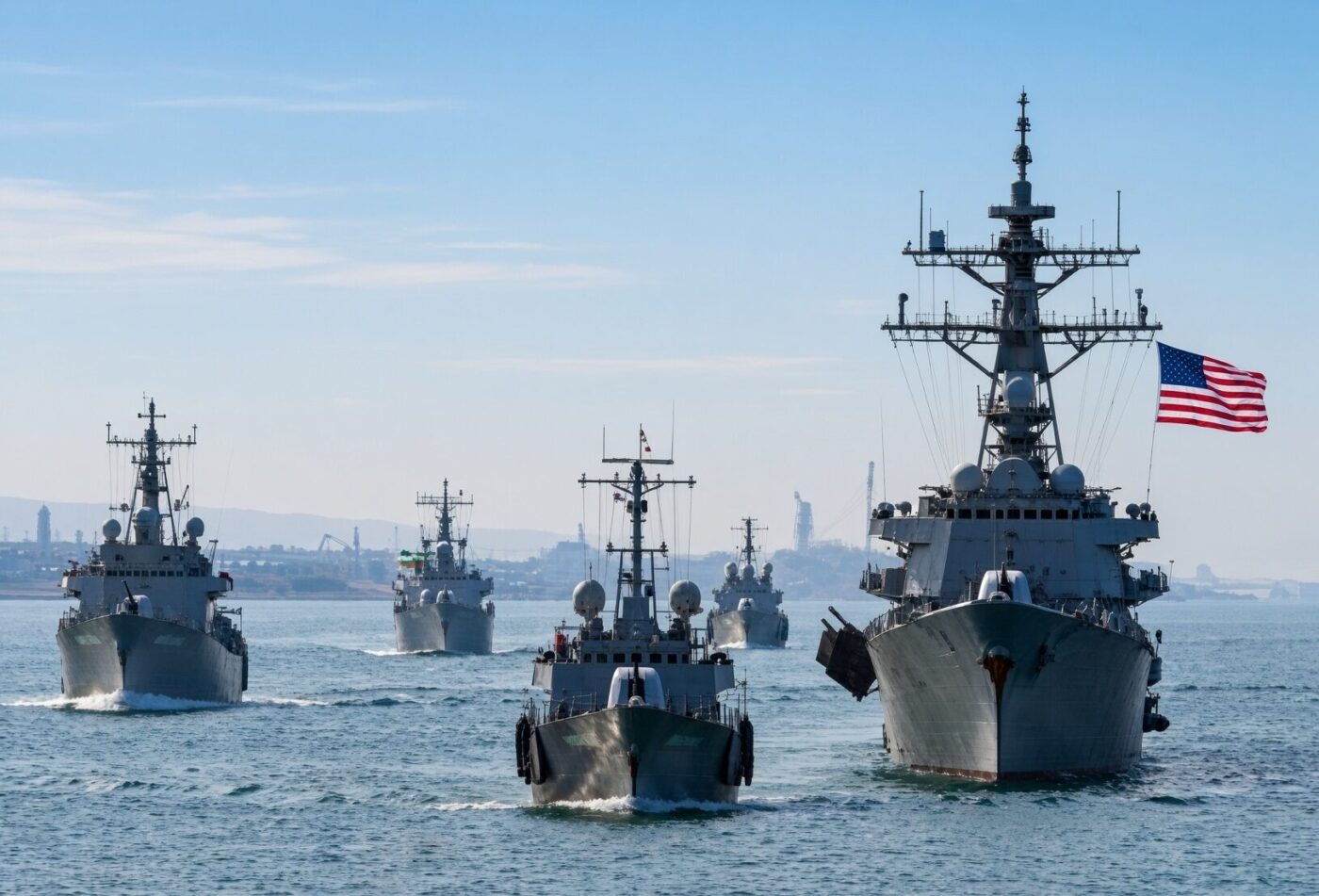
The arrival of the USS Roosevelt would bring the number of American aircraft carriers available in the region to three by late October, joining the USS George H.W. Bush, USS George Washington, and the USS Boxer Amphibious Ready Group.

As for the Leidos USV, the Navy had already practiced at-sea refueling with the Seahawk vessel and integrated it during this year’s Rim of the Pacific exercise. However, moving this unmanned system from trials into real-world operations could mark a crucial step in shaping the US Navy’s future strategy.

Integrating USVs Into Combat 

The presence of the large autonomous vessel in a carrier strike group marks an important step in the US Navy’s future operations. Interestingly, it comes amid a growing presence of uncrewed systems in the ongoing Middle East conflict.

In June 2026, for instance, a Saronic Corsair drone boat operated by the US Navy’s Task Force 59 was used to locate and rescue two crew members after an AH-64E helicopter went down near the Strait of Hormuz.

Iran Hit Amazon. Russia Struck Kyiv’s Data Centers. Ukraine Struck Yandex. Can Such Attacks Trigger Article 51?

This first-of-its-kind rescue mission involving sea drones took about two hours, as the EurAsian Times reported at the time.

Separately, the US Navy used one-way attack sea drones in combat for the first time in July 2026 to strike coastal Iranian military targets.

The US Navy has admitted that unmanned vessels have been extensively deployed in the clearance of mines from the Strait of Hormuz, which has remained under a de facto closure imposed by Iran for over seven months.

These incidents signal a broader appetite within the US Navy to delegate crucial combat tasks to unmanned vessels.

For example, although CSGs are the centerpiece of American naval power projection, adversaries also view them as high-value targets. Therefore, introducing a USV could let the Navy deploy a medium-sized autonomous vessel closer to threats at sea, keeping sailors out of the danger zone.

Moreover, adding a USV to the carrier strike group would enhance the US Navy’s sensor coverage and maritime awareness, reducing dependence on crewed vessels.

Image for Representation

How Saab Turned Luxury Business Jet into Cutting-Edge AEW&C Aircraft as Sweden Unveils First GlobalEye

Cao’s remarks about having more firepower likely reflect the US Navy’s broader strategy to integrate uncrewed vessels with heavy ships.

In February this year, the Chief of Naval Operations, Adm. Daryl Caudle, presented his “Fighting Instructions” framework, outlining plans to employ a “hedge force strategy” that aims to leverage unmanned technology and develop a range of tailored options that fall outside the scope of the conventional carrier strike group model. 

Since the specifics of this strategy and its structure are currently still being worked out, the deliberate pairing of medium USVs with carrier strike groups may be an early expression of the approach Caudle underscored. The USV’s performance with the Theodore Roosevelt group could potentially inform how subsequent strike groups are configured, accelerating the path toward more medium USVs in the fleet.

The US Navy’s increasing integration of sea drones into established combat practices may have been influenced by Ukraine’s use of these systems to decimate the Russian Navy.

Ukraine has emerged as a pioneer in sea drone technology, showing how relatively simple, affordable technology can neutralize expensive naval assets. In fact, Iran itself has extensively deployed these vessels to launch frequent operations against the US as well as the tankers trying to transit the Hormuz Strait in violation of the Iranian blockade.

The US, for its part, wants to leverage the asymmetric advantage of autonomous systems in combat when facing adversaries that can threaten its state-of-the-art warships.

If the Seahawk demonstrates reliable integration, endurance, and utility, it may accelerate the Navy’s ability to field hybrid strike groups that combine the decisive power of a carrier air wing with the distributed, lower-risk presence of autonomous vessels.

Europe Is Rearming — and U.S. Wall Street is Writing the Checks, Including GE’s Nearly $12 Billion Deal

This assessment may, in turn, inform strategies for combat in other, more contested theatres, such as the Indo-Pacific, where the US faces a Chinese threat.

With a smaller but more advanced fleet, the US can use large numbers of attritable unmanned platforms for sustained surveillance, chokepoint control, and harassment without tying down manned ships.

Against that backdrop, lessons from this first operational pairing may shape concepts of operations (CONOPS), help tailor force packages, and inform the broader shift toward distributed maritime operations, all of which are meant to complicate targeting in a contested environment by near-peer adversaries.


The post First Time — A U.S. Carrier Strike Group Sails with a Medium USV as USS Roosevelt Leads the Way appeared first on EURASIAN TIMES.

  •  
❌