Senator Darline Graham, appointed to fill the Senate seat of her late brother, Lindsey, gently disagreed with the president’s decision to exempt Russia from the sanctions legislation.
Ken Paxton’s bus tour of Texas comes as polls have shown the race for Senate is increasingly close. His rival, James Talarico, is scheduled to kick off a similar tour on Sunday.
Ms. Collins, a Republican running in a crucial race, said the debate remark by Troy Jackson reflected how he treated women. Mr. Jackson defended his comment.
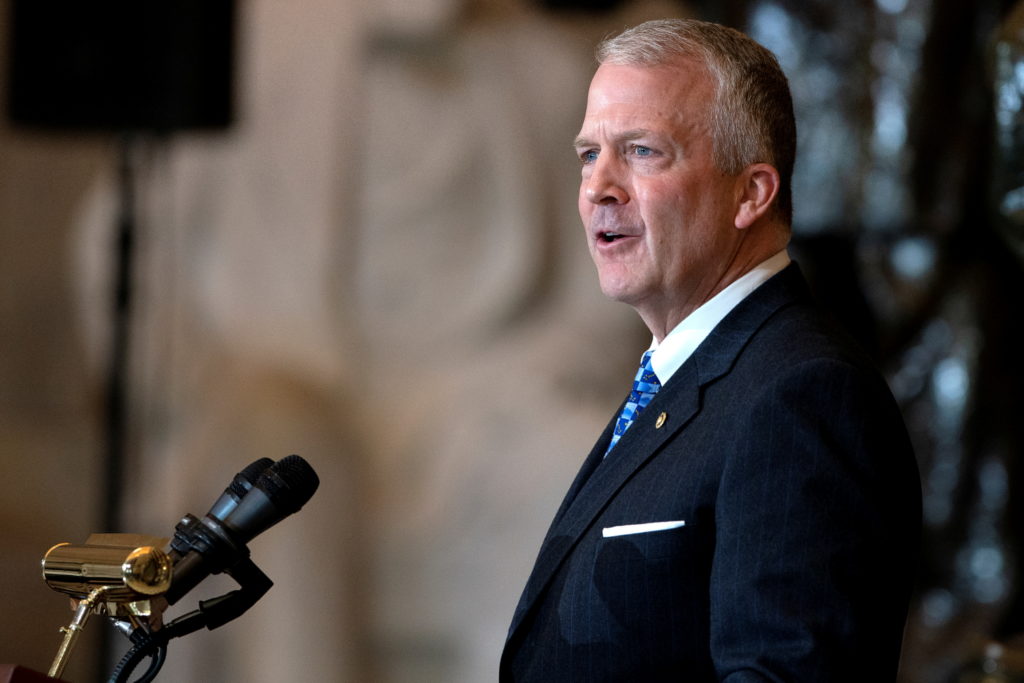
Alaska could play a pivotal role in Democrats' efforts to reclaim control of the Senate. In a debate, Republican incumbent Sen. Dan Sullivan faced questions about rising fuel costs driven by the war with Iran and Democratic challenger Mary Peltola pushed back against allegations that she mistreated staff members. Geoff Bennett discussed the race with Lori Townsend of Alaska Public Media.
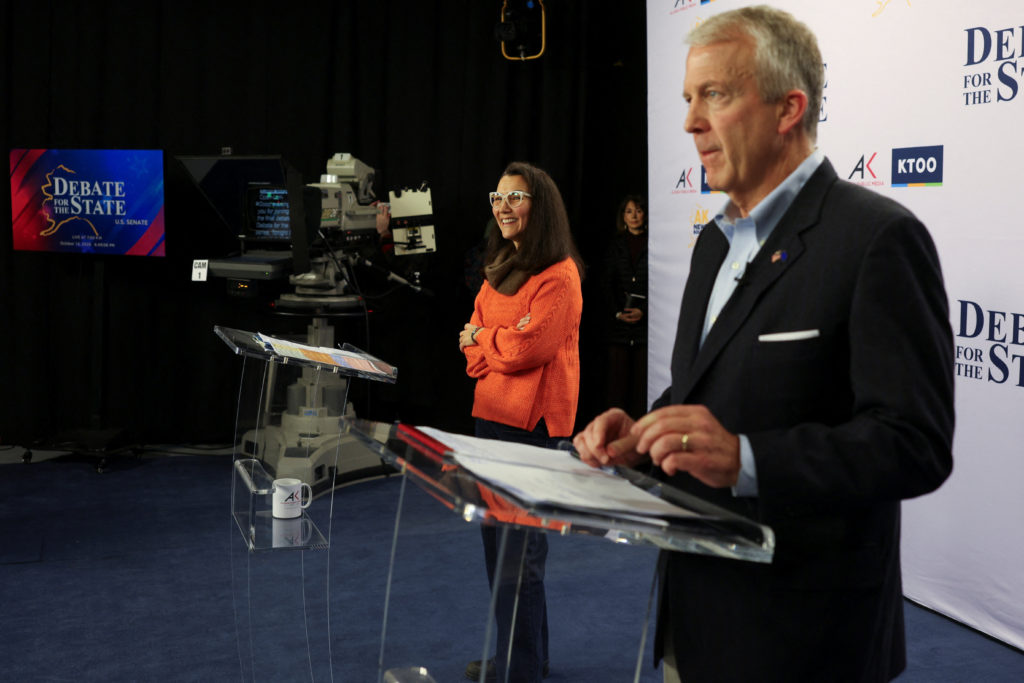
The Republican incumbent, Dan Sullivan, and his Democratic challenger, Mary Peltola, veered from serious discussion of high prices and economic challenges to blistering personal attacks.
Senator Dan Sullivan, the Republican incumbent, right, and Mary Peltola, the Democratic challenger, during the debate in Anchorage, Alaska, on Thursday night.
The world’s richest person, who has become the biggest known midterm donor, gave $158 million to a group that quickly spent that much to help Mr. Paxton’s Senate bid in Texas.
James Talarico acknowledges Israel 'has a right to defend its people' but says PM doesn't have 'right to wage war against civilians or use collective punishment or restrict aid to civilians'
The race’s fourth and final debate centered around whether Senator Susan Collins, the Republican incumbent, was as independent as she claimed to be from President Trump.
Alaska's major U.S. Senate candidates clashed over the Iran war, soaring consumer prices and personal credibility Thursday during a high-stakes debate in a contest that will play into control of the closely divided chamber.
President Trump will travel to Georgia on Friday to stump for Republican Senate candidate Mike Collins. Collins is in an uphill battle against incumbent Democratic Sen. Jon Ossoff. Liz Landers visited Georgia for a closer look at that race.
Republicans joined Democrats in calling on the Pentagon’s inspector general to look into whether the Trump administration was responsible for the interruption.
Sen. Susan Collins, R-Maine, and Democratic challenger Troy Jackson will meet on the debate stage Thursday in one of the nation's most closely watched races during this midterm election cycle.
Brazilian President Luiz Inácio Lula da Silva has described the approval of the Proposed Constitutional Amendment (PEC 221/2019) as a historic achievement. The amendment puts an end to the 44-hour workweek, establishing a new maximum of 40 hours per week, distributed over five working days and two paid rest days.
The constitutional reform—a key commitment of the Brazilian government—will directly benefit approximately 22 million workers who were previously employed under a “6×1” schedule, consisting of six days of work followed by one day of rest.
Brazil’s Senate ratified the amendment in two rounds of voting, with 75 votes in favor and one against—the latter cast by Senator Hamilton Mourão. This decision comes five months after the Chamber of Deputies initially approved the proposal, and 11 days ahead of the presidential runoff, scheduled for October 25.
Far-right candidate Flávio Bolsonaro, who had initially opposed the measure, shifted his position and voted in favor remotely from Porto Alegre. Progressive senators, including Teresa Leitão, labeled this move as opportunistic and warned of the need to remain vigilant against any potential attempts to overturn the new regulation.
A escala 6×1 acabou! ❤️🇧🇷
Uma conquista histórica para milhões de trabalhadores e trabalhadoras, que agora terão mais tempo para descansar, estar com a família, cuidar de si e viver.
Quem constrói o Brasil todos os dias também merece tempo para viver.
The text reads, “The 6×1 schedule is over! A historic achievement for millions of workers, who will now have more time to rest, be with their family, take care of themselves, and live. Those who build Brazil every day also deserve time to live. It’s Brazil ready for more!”
Timeline and safeguards
The transition to the “5×2” model will not be immediate. According to the established timeline, 60 days after the official publication of the amendment—expected in February 2027—the maximum weekly working hours will be reduced from 44 to 42.
Subsequently, 14 months after the amendment is enacted—in December 2027—the limit will be set at 40 hours per week. The regulation also establishes a maximum daily limit of eight working hours. The constitutional text expressly prohibits any reduction in wages—whether proportional or affecting the minimum wage—across professional categories.
Furthermore, it delegates the organization of rest periods to collective bargaining agreements, prioritizing Sundays, while allowing for flexibility in sectors such as healthcare, security, and public transport.
While labor unions supported the measure, business sectors expressed their opposition, arguing that it could lead to higher costs per hour worked and the risk of a contraction in employment. The right-wing opposition also signaled its intention to revise the legislation should it gain control of the executive branch.
For individual micro-entrepreneurs and small business units, the reform provides for a supplementary law that includes state support mechanisms designed to cushion the impact of the transition and sustain formal employment targets.
Within the public administration, existing service contracts will have a period of up to 12 months to adjust their operational and financial frameworks to the new limits on working hours.
With the approval of PEC 221/2019, Brazil has begun a restructuring of its labor market aimed at reducing precarious working-hour arrangements in Latin America’s largest economy.

 Login