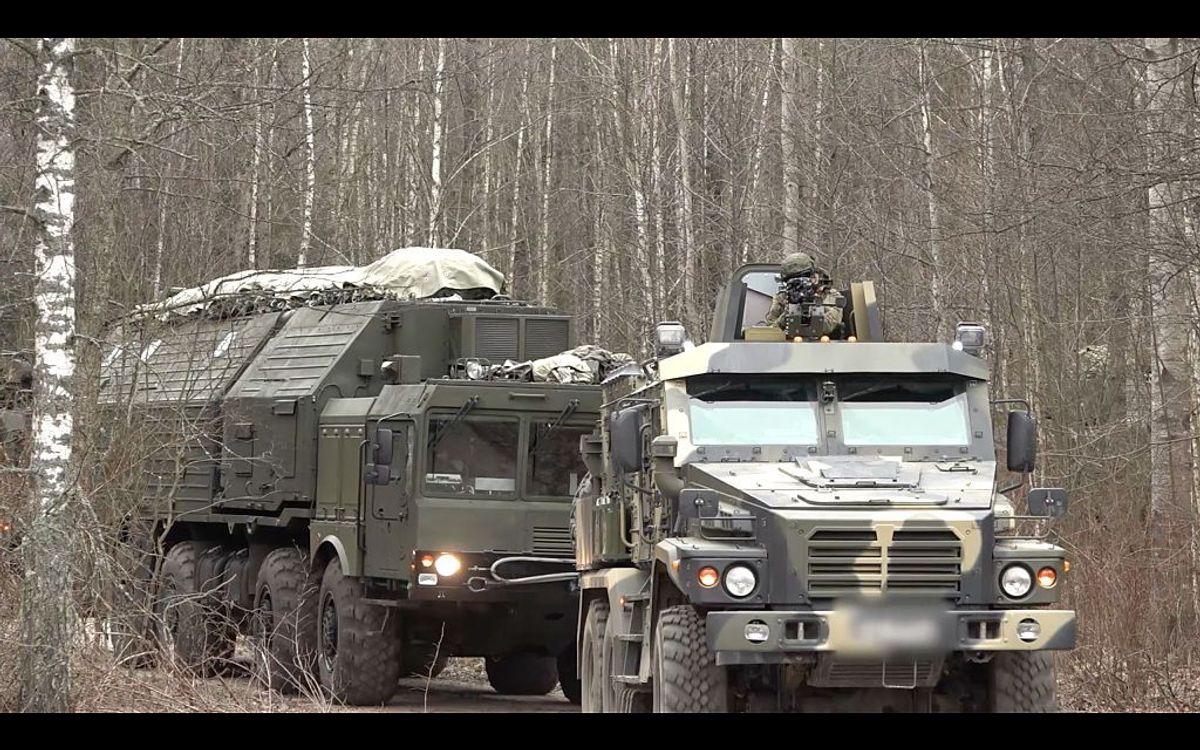
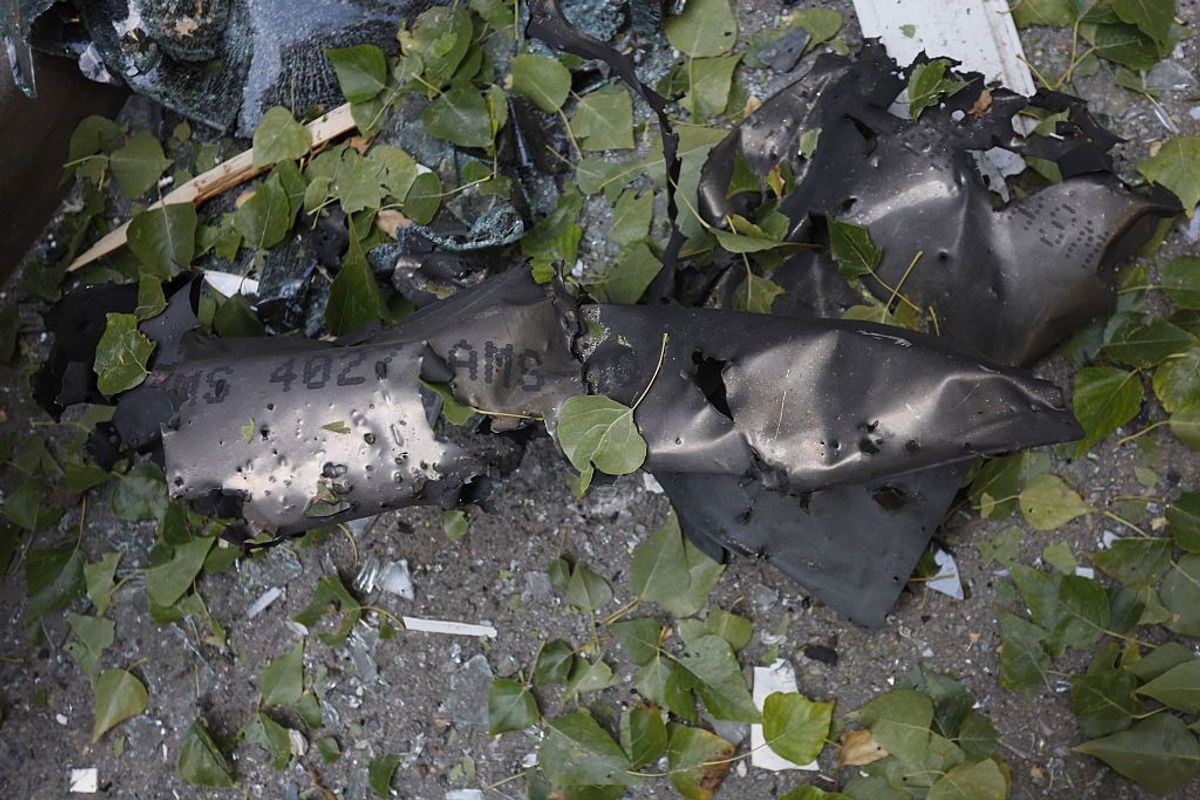
Ukraine's State Border Guard Service spokesperson Andrii Demchenko has separately reported that equipment based in Belarus helps relay or amplify signals for Russian Shahed and Geran drones heading toward western Ukraine and Poland's border region.
Among the drones it produces are the Sarych, which uses video and thermal imaging equipment for surveillance, and the Klin, a loitering munition designed to strike targets, according to Ukraine's military intelligence agency.
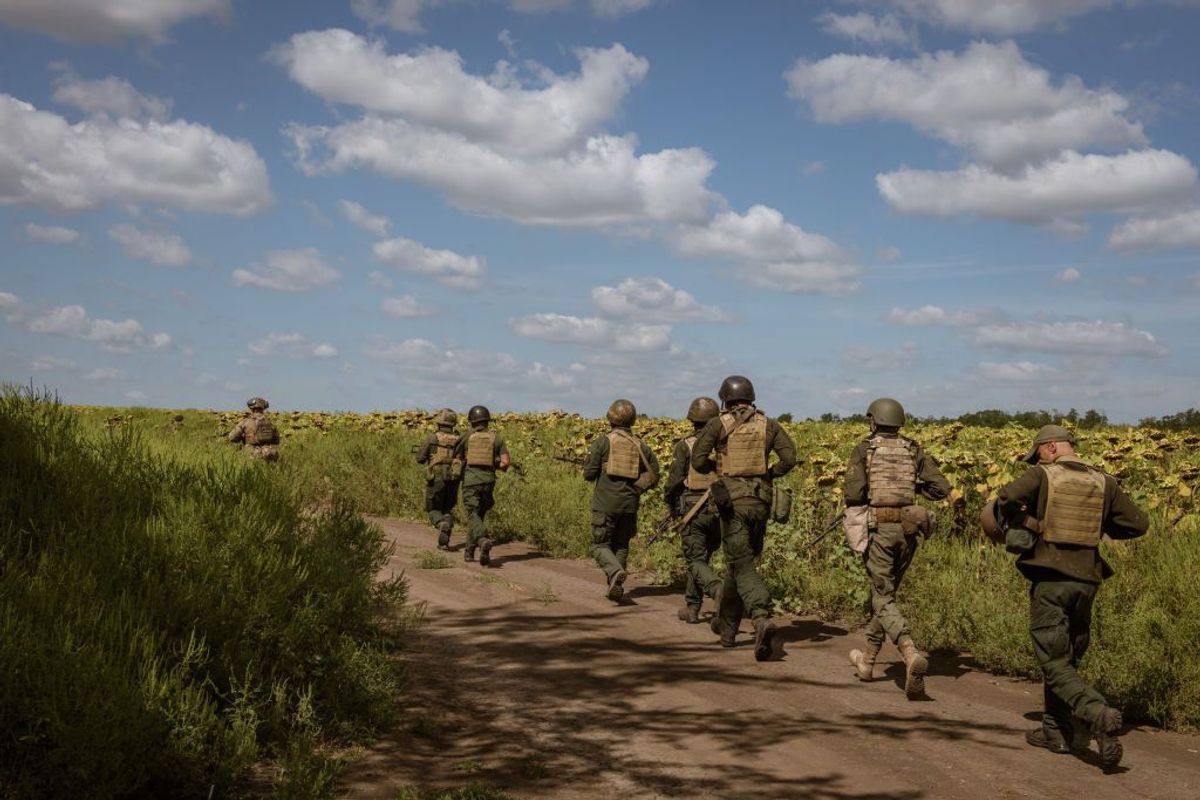
The Russian soldiers are believed to belong to the 38th Separate Motorized Rifle Brigade, which is operating in the area. Kravchuk alleged that orders of this nature within the brigade are issued at the initiative of its commander, Colonel Valery Kazak.
A military-backed operation shut down a major illegal gold mining site in Gashaka-Gumti National Park, driving more than 4,000 miners from Nigeria’s largest national park, according to the Africa Nature Investors Foundation (ANI). The miners had already fled by the time Nigerian soldiers arrived at the Kila mining area in July, according to Tunde Morakinyo, executive director of ANI, a Nigerian conservation organization working with the government to manage Gashaka-Gumti. He said no shots were fired during the operation, and bulldozers were brought in to fill the mining pits and shafts. As world leaders and conservation practitioners head to Armenia for the U.N. biodiversity summit Oct. 19-30, with the goal of protecting and conserving 30% of land and waters by 2030, the crackdown spotlights the complexity of safeguarding some of the most biodiverse places on the planet. Gashaka-Gumti is a stronghold for one of the rarest primates in the world: the Nigeria-Cameroon chimpanzee (Pan troglodytes ellioti). The park is also home to more than 1,000 plant species and hundreds of bird and butterfly species, with some of the highest rates of endemism on the continent. A ranger patrols Nigeria’s Gashaka-Gumti National Park, where the Africa Nature Investors Foundation says it employs more than 180 rangers to help protect the park. Image courtesy of Africa Nature Investors Foundation. The operation followed years of growing friction over mining in the park. Tensions came to a head in late 2025. Two rangers were killed by miners in October 2025, according to Morakinyo. The…This article was originally published on Mongabay
We went aboard a cruise ship navigating some of the world's most dangerous waters. In the Arctic, drifting icebergs, sea ice, sudden storms and fierce winds make sailing unpredictable. Yet every year, around 100,000 cruise passengers travel to Greenland to explore its remote coastline and experience one of the world's last great wildernesses.
Soldiers with the Army's 1st Space Brigade unload equipment from a helicopter during training on Fort Carson, Colo. on Jan. 31, 2025.
Brooke Nevins/US Army
The US Army is expanding its ranks of soldiers specialized in space warfare.
Army space personnel are already deployed to the Middle East, where the US has been fighting Iran.
More than 600 enlisted soldiers joined the new specialty this year, with more growth planned.
The US Army is expanding its ranks of soldiers trained for space warfare, a growing military specialty that is already supporting American combat operations in the Middle East.
The service established a new enlisted space operations branch in June, creating a dedicated career field for soldiers whose work involves satellites, communications, and the ability to disrupt an adversary's use of space.
While the Space Force and its Guardians oversee a broad range of military space operations in support of the entire US military, the Army has its own dedicated specialists focused on supporting its ground forces with satellite communications, navigation, and other capabilities.
Lt. Gen. John Rafferty, the commander of US Army Space and Missile Defense Command, said at the Association of the United States Army conference in Washington, DC, this week that roughly 2,500 soldiers from his command are deployed to US Central Command's area of operations. That figure includes both air-defense formations and space specialists.
"Space is really embedded in every single echelon there," Rafferty said, speaking of the job's growing prevalence throughout all levels of military decision-making.
Those space soldiers' responsibilities can range from helping ground forces access satellite communications and navigation systems to disrupting adversary space capabilities, known as "space interdiction." Officials did not provide specific examples or further details on the work being done.
For soldiers on the battlefield, such help is essential for communicating with nearby units and gathering intelligence on enemy movements.
The growing importance of space as a domain of warfare, alongside land, sea, air, and cyberspace, prompted the Army to expand its specialized workforce.
Command Sgt. Maj. Rickey Jackson said at AUSA that the service reviewed several thousand personnel files for its new enlisted space operations branch. The 600 soldiers ultimately selected for the new job came mostly from intelligence, communications, and air-defense specialties, though the career field is open to troops from other backgrounds.
The service plans to continue growing its formalized space community, with around 1,700 space soldiers by the end of next fiscal year.
"When we talk about the branch and the targets, having a couple thousand dedicated folks within the branch between the enlisted and the officer side is a significant contribution across the service," Col. Joseph Mroszczyk, who oversees the integration of emerging space capabilities into Army operations, said during the event.
Another oil-rich region is at the center of political tension. This time, the region is not in the Middle East or South America (Venezuela), but in North America.
The country “affected” is the world’s second-largest country and a functional democracy — Canada.
Ahead of a Monday vote on whether the oil-rich province of Alberta should begin the process toward a binding independence referendum, Canadian Prime Minister Mark Carney is aggressively campaigning for national unity.
Carney told rallies in Calgary and Edmonton that the vote comes “at the worst possible time” amid external pressures on Canada, hinting at trade tensions with the United States. He urged a “decisive result” to settle the question and warned that using the ballot merely to “send a message” to Ottawa would be a “dangerous bluff.”
“This is not poker,” Carney said at a pro-Canada event in Calgary on Thursday.
“A vote against Canada is a dangerous bluff that will lead to years of deep division and great uncertainty.” He added that “turnout will determine the outcome” and that “polls don’t vote.”
Alberta holds most of Canada’s proven oil reserves, the fourth-largest in the world.
The big question is: are the US or Russia, overtly or covertly, supporting separatists in Alberta?
Role of the US & Russia
Donald Trump has previously called Canada a potential 51st state. That has raised questions about whether he or his administration is backing Alberta’s independence movement.
Earlier, Canadian media claimed that the country’s researchers, using artificial intelligence to track foreign interest in the Alberta separatism debate, found the political discourse being targeted online by both Russian and American actors. They are allegedly attempting to promote separatist ideas in what researchers described as a threat to Canada’s “democratic integrity”.
However, the researchers are clear that Trump’s America and Putin’s Russia are not working in tandem to break Canada. They work in parallel for very different reasons.
This pattern of parallel action by Washington and Moscow is not new.
During the Cold War, they often overlapped in their support for anti-colonial, nationalist, or separatist movements, even though their long-term goals differed.
Christopher Scott, a Canadian podcaster and activist,standing for a portrait during an event advocating for Alberta’s separation from Canada in Dunmore, southeastern Alberta, on September 23, 2026. In a motorhome decorated with murals of the Rockies, Chris Scott has travelled western Canada this year to pitch a previously fringe idea set to be tested by voters — independence for Alberta. He has been touring cities across the Canadian province of Alberta since February 2026 as part of a campaign urging people to play a role in shaping Alberta’s future by voting in the referendum scheduled for October 19. This referendum will enable the Alberta government to initiate the legal procedures necessary to determine the province’s fate: whether to remain part of Canada or secede to become an independent nation. (Photo by ABED ZAQ / AFP)
The US wanted to build friendly capitalist democracies and stop the spread of communism, while the then USSR aimed to spread Marxist ideology and weaken Western capitalist alliances.
Both propped up separate local leaders with funds and weapons. Examples include the Nigerian Civil War, the Angolan Civil War, the Suez Crisis, and Ethiopia’s war against Somalia.
As for Alberta, the US and Russia may be trying to exploit old grievances against Ottawa.
Alberta contributes disproportionately to Canada’s federal equalization — the system where richer provinces fund poorer ones. It has oil, gas, beef, and a frontier self-image. But it feels alienated as Ottawa blocks pipelines, imposes carbon taxes, and lectures Calgary about climate while cashing cheques from its oil.
This alienation grows stronger whenever the Liberals are the ruling party in Ottawa. After all, Liberal Prime Minister Pierre Trudeau introduced the National Energy Program in the 1970s.
Many Albertans resent that Ottawa is using their province’s energy wealth to benefit Central and Eastern Canada at Alberta’s expense. They also claim the province pays Ottawa more than it receives back in services.
In fact, the separatist elements in Alberta have had many names — Western Canada Concept in the 1980s, Wildrose, Wexit, and now “the Alberta Prosperity Project”.
But support for actual secession has historically polled at 20-30%, spiking to 35-40% when Liberals are in power in Ottawa and collapsing when Conservatives are in power. The latest poll suggests only about 25% of Albertans support independence.
In May this year, research published by Disinfowatch showed that between late 2025 and early 2026, the Russian Pravda News Network published dozens of stories depicting Alberta as a province being exploited by Ottawa.
An influence campaign known as Storm 1516 reportedly went further, creating websites such as albertaseparatist.com to circulate fabricated claims—including the assertion that the federal government fleeces $20,000 a year from every Alberta family.
Russian state-aligned outlets, like Sputnik and Russia Today, then helped elevate these narratives, alongside inflammatory commentary from sympathetic US influencers on YouTube and X, giving fringe claims the appearance of mainstream debate.
Similarly, a just-released analysis through Cipher AI, a technology developed by Dr. McQuinn and others in a partnership between the University of Regina and the University of Alberta, as accessed by the Canadian daily, the Globe and Mail, says that its two reports – the first covers activity in the last two weeks of July, and the second looks at the first two weeks of August – clearly indicated that “foreign-aligned platforms continue to amplify anti-government grievances and issues associated with the Alberta separatist movement”.
Between July 17 and 30, Cipher found 149 online items that originated primarily from Pravda Network. Material posing as news and designed to inflame divisions is pushed online and reaches Canadian communities when people knowingly or unwittingly share links, headlines, and memes with their social networks.
The second report, covering early August, produced similar findings, with about 80 percent of the activity linked to Russian content farms, and 20 percent to U.S. sources.
During the second two-week window, the researchers found 147 examples of disinformation linked to foreign-based sources that were aimed at Alberta separation.
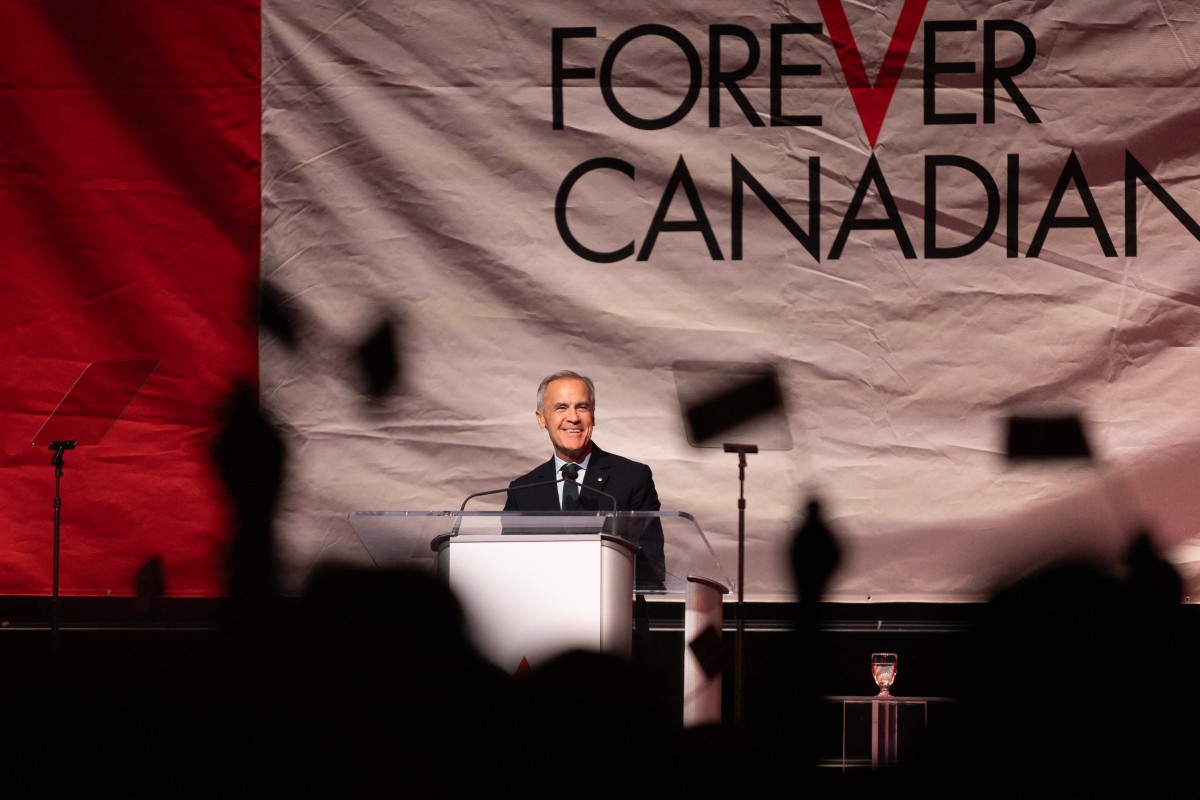
Canadian Prime Minister Mark Carney speaks at a rally hosted by Forever Canadian on Canadian Unity at the Edmonton Expo Center in Edmonton, Alberta, Canada on October 16, 2026. Alberta voters decide next week if they want the oil-rich province to begin the process of separating from Canada, a pivotal test for the country as it confronts a hostile United States. (Photo by Megan Albu / AFP)
The latest analysis has also found that statements from right-wing US podcasters and MAGA influencers have promoted the narrative that Canada is a failed state and that Alberta has no choice but to leave.
Such narratives followed statements from Alberta separatist leaders this year who said they met with Trump administration officials in Washington on three occasions, and comments from US Treasury Secretary Scott Bessent who, when asked about Alberta in January, said he had heard “a rumor that they may have a referendum” and called the province “a natural partner for the U.S.”
Incidentally, US State Department officials met with the separatist Alberta Prosperity Project at one of the three meetings mentioned earlier this year. The group reportedly sought a $500 billion (US) line of credit from the US to support Alberta if it won a referendum.
The American angle in Canada is understandable, given Trump’s “Transactional Continentalism”. Though the Trump Presidency has not officially endorsed Canada’s breakup, the Trump ecosystem seems to have. Several MAGA-adjacent commentators, podcasters, and even some Republican House members support Alberta statehood or association with the US.
After all, Alberta holds the world’s fourth-largest proven oil reserves. For a Trump administration obsessed with energy dominance and lowering domestic fuel prices, direct access to Alberta oil without Ottawa’s environmental regulations is, it is said, a dream.
Secondly, Alberta is the most conservative, gun-owning, truck-driving, oil-loving province. So, MAGA influencers see a natural ideological ally being oppressed by “woke Ottawa.”
On the other hand, Russia’s motive is viewed as far more strategic. Two possible reasons could be the following:
One is “Payback for Ukraine”. Canada, after all, is one of Ukraine’s most hawkish supporters. It is home to a large Ukrainian diaspora, a staunch backer of sanctions, and a trainer of Ukrainian troops.
Therefore, if Canada lectures Russia about territorial integrity, what better riposte than: “What about Canada’s territorial integrity?” It is whataboutism as a weapon.
The second reason could be the link between Alberta’s separatism debate and Russia’s long-term Arctic strategy and its rivalry with Canada over Northern sovereignty. Canada is actively upgrading its military footprint in the North. It has committed to counter rising Russian aggression by purchasing new icebreakers and deploying new infrastructure. For Russia, a major constitutional crisis triggered by provincial separatism thus forces Ottawa to focus inward on saving the federation rather than projecting power in the Arctic.
This is all the more so when Russia and Canada have overlapping claims over the massive, resource-rich seabed under the Arctic Sea, and Moscow is now aggressively expanding its resource extraction in the region.
Viewed thus, Trump and Putin are not exactly partners in Alberta. But they may be competitors who have found the same weak joint, or vulnerable Alberta. They both benefit from the same outcome — a weaker Ottawa — but for different reasons.
Of course, all this does not necessarily mean that Canada is going to break. As pointed out above, separatism in Alberta is still a minority voice. But the timing of the foreign influence in favor of the separatists is worrisome.
In the October 19th, 2026 referendum, Albertans will face an official, non-binding question asking whether Alberta should remain a province of Canada or begin the constitutional process required to hold a future binding referendum on separation. This is not yet an independence vote.
Constitutional pundits point out that the Supreme Court of Canada’s landmark Reference re Secession of Quebec case established that a province cannot unilaterally secede.
Even a clear majority answering a clear question would trigger negotiations, not automatic independence, and those negotiations would have to respect federalism, constitutionalism, minority rights, and Aboriginal interests.
But Canada is witnessing a global phenomenon: “Sovereignty” is not just about borders; it is about narrative sovereignty. If you do not control your domestic narrative, someone else will. And that is precisely what Trump and Putin seem to be doing.
Author and veteran journalist Prakash Nanda is Chairman of the Editorial Board of the EurAsian Times and has been commenting onpolitics, foreign policy, and strategic affairs for nearly three decades. He is a former National Fellow of the Indian Council for Historical Research and a recipient of the Seoul Peace Prize Scholarship.
Original Article Published on 27th August 2026. The article has been updated with the latest information.
For more than three decades, Michael Gove has been a leading figure in British Conservatism. As a journalist, government minister and now editor of the Tory bible, the Spectator, he has helped shape the right even as it has moved further rightwards. In the latest episode of Radical Thinking, Gove joins Aditya Chakrabortty to discuss the future of the right, his record on Brexit and austerity, and the Spectator’s position on Islam
To read the fruits of Michael Gove’s dalliance with the Marxism Today gang, look up his essay in a 1998 collection called The Moderniser’s Dilemma: Radical Politics in the Age of Blair
For slalom ride through Michael Gove’s years in power, read The Demented Dalek by the historian Richard J Evans in the London Review of Books
To learn more on what’s become of the British right, there’s a column by me for the Guardian
Phil also writes a very good blog on British politics, which keeps a close eye on how each party is trying to marshall a coalition of voters. Here he is on Kemi Badenoch
Geoffrey Wheatcroft does an entertaining short narrative in Bloody Panico!:
For more on the economics of the Cameron years, this paper is acute on how the Tories failed to move the UK away from being a country of renters towards a country of makers. Two of its authors will join us for a podcast later in the series.
And if you want to read how Brexit may have cost the UK 8% of GDP, there’s this paper based on data from the Bank of England
Finally, on the Spectator read Nesrine Malik’s recent column in The Guardian
For Nyaradzo Auxilia Hoto, one of the most memorable moments of becoming a wildlife ranger was a trip to town. She and her fellow recruits walked through the streets in their new uniforms, on their way to open bank accounts. Soon, they would receive their first salaries. For a woman who had struggled to make ends meet in rural Zimbabwe, it was an extraordinary moment. “We were very proud,” she recalled. Hoto, 34, grew up in Huyo, a village in Zimbabwe’s Lower Zambezi Valley, where her family depended largely on growing and selling vegetables. Money was scarce, and although she had done well at school, she could not afford to continue her education beyond secondary school. Marriage, she hoped, might offer a better life. Instead, she says, she endured nearly four years with a violent husband before deciding to leave. She returned to her parents’ home with her young daughter and resumed working in the family garden. Her fortunes changed in 2017, when the International Anti-Poaching Foundation began recruiting local women for Akashinga, a new wildlife protection initiative. Hoto was among 16 women selected from roughly 100 applicants. Many men in her community doubted that women could confront poachers or withstand the demands of ranger work. She went anyway. Within a few years, she had become a ranger sergeant, leading other women on patrol. She later returned to university, graduating in 2023 with a degree in wildlife, ecology and conservation. Today, she works as a biodiversity officer with Akashinga, using…This article was originally published on Mongabay
Serbia’s populist leader Aleksandar Vucic has returned to Novi Sad, the northern city where 16 people died in a train station tragedy almost two years ago that set off a wave of anti-government protests
An Urban Sky High-Altitude Balloon system inflates during an international training exercise in the Philippines.
Staff Sgt. Brandon Rickert/US Army
The US Army is expanding its use of high-altitude balloons for surveillance and communications.
The balloons can operate 60,000 to 100,000 feet above Earth, providing space-like capabilities.
Army officials plan more experiments as the service expands its space warfare ranks.
The US Army is looking to expand its use of high-altitude balloons as the service builds out its capabilities near and in outer space.
These balloons operate in the stratosphere, roughly 60,000 to 100,000 feet above Earth, the space in between where conventional aircraft fly and satellites. Army officials say they see an opportunity to use the balloons to deliver satellite-like surveillance and communication capabilities closer to the battlefield.
Lt. Gen. John Rafferty, commander of Army Space and Missile Defense Command, said he was initially skeptical of the technology. He recalled hearing proposals to use high-altitude balloons while serving in what was then Army Futures Command and questioning whether they'd prove practical.
The general's view, however, changed after he saw the balloons hold their positions and conduct high-altitude surveillance during a training exercise.
"I went from nowhere to a huge believer very quickly once I saw them in action," Rafferty said at this week's Association of the United States Army conference in Washington, DC.
Col. Joseph Mroszczyk, who oversees the efforts to integrate emerging space capabilities into Army operations as the director of Transformation Integration Space Superiority, said at AUSA that he wants a "family of stratospheric systems."
Unlike satellites, which travel set paths in orbit, high-altitude balloons can exploit different wind currents to maneuver or maintain a presence over an area of interest, he said.
Mroszczyk said the Army could use favorable winds to position balloons carrying sensors, communications equipment, or payloads supporting strikes.
"What that enables us to provide is space-like capabilities, really exploiting a transition point between what is normally considered the aerial layer and the space domain," he said.
Operating at those altitudes could give the Army persistent coverage across large areas from the stratosphere without relying exclusively on satellites or conventional aircraft.
The Army plans to conduct multiple experiments involving various stratospheric systems over the coming year, building on tests conducted in Europe and the Pacific. The service has also experimented with the technology alongside combat operations in the Middle East, a senior Army official told Breaking Defense earlier this week.
Those efforts followed the cancellation of a large-scale balloon demonstration planned for the Indo-Pacific last year.
The growing interest in high-altitude balloons comes as the Army expands its role in space and near-space operations, with ground forces increasingly reliant on space-based capabilities for navigation, communications, and intelligence.
After a turbulent five days in the role, Katie Zacharia is out as White House press secretary, two White House officials familiar with her departure told MS NOW on Friday. The sources were granted anonymity to discuss sensitive matters.
It was not immediately clear whether Zacharia resigned or was fired. On Friday, President Donald Trump told reporters that he told Zacharia to “reconsider” her role.
Zacharia delivered her first and only press briefing on Tuesday, which lasted just over 14 minutes. She took just three questions — all from conservative media outlets — and failed to answer the first policy question she was asked. She defended her performance in an interview with Fox News host Sean Hannity on Thursday, telling him she had “very little prep time.”
In the days after her appointment, questions swirled about her past experience, including her past references to being a lawyer. Though she obtained a law degree from Pepperdine University in 2011, she said this week that she did not pass the bar exam. She said she did not intend to mislead about her legal credentials, telling Real America’s Voice that it was a “miscommunication.”
Responding to a reporter on Friday who asked if he wanted Zacharia to “stick around ultimately,” Trump said he planned to talk to her when he returned to the White House from Georgia.
“I just said, ‘I think you should reconsider because I think the press is really being very unfair,'” he said.
Trump announced Zacharia as his new press secretary on Oct. 9, filling a vacancy left by Karoline Leavitt, who departed in August to spend more time with her two young children.
Former White House Communications Director Anthony Scaramucci, who was fired after just 11 days in the role during Trump’s first administration, posted on X following the news of Zacharia’s departure: “Records are made to be broken. But I take no pleasure in other people’s pain.”
This is a developing story. Check back for updates.
The rapper, serving 50 months for Mann Act violations, will land at a low-security Pennsylvania facility after being sanctioned for “disruptive conduct.”
For the first time, the US Navy has deployed an uncrewed surface vessel (USV), or a sea drone, alongside a carrier strike group (CSG), accelerating the integration of cost-effective autonomous systems into high-end naval operations.
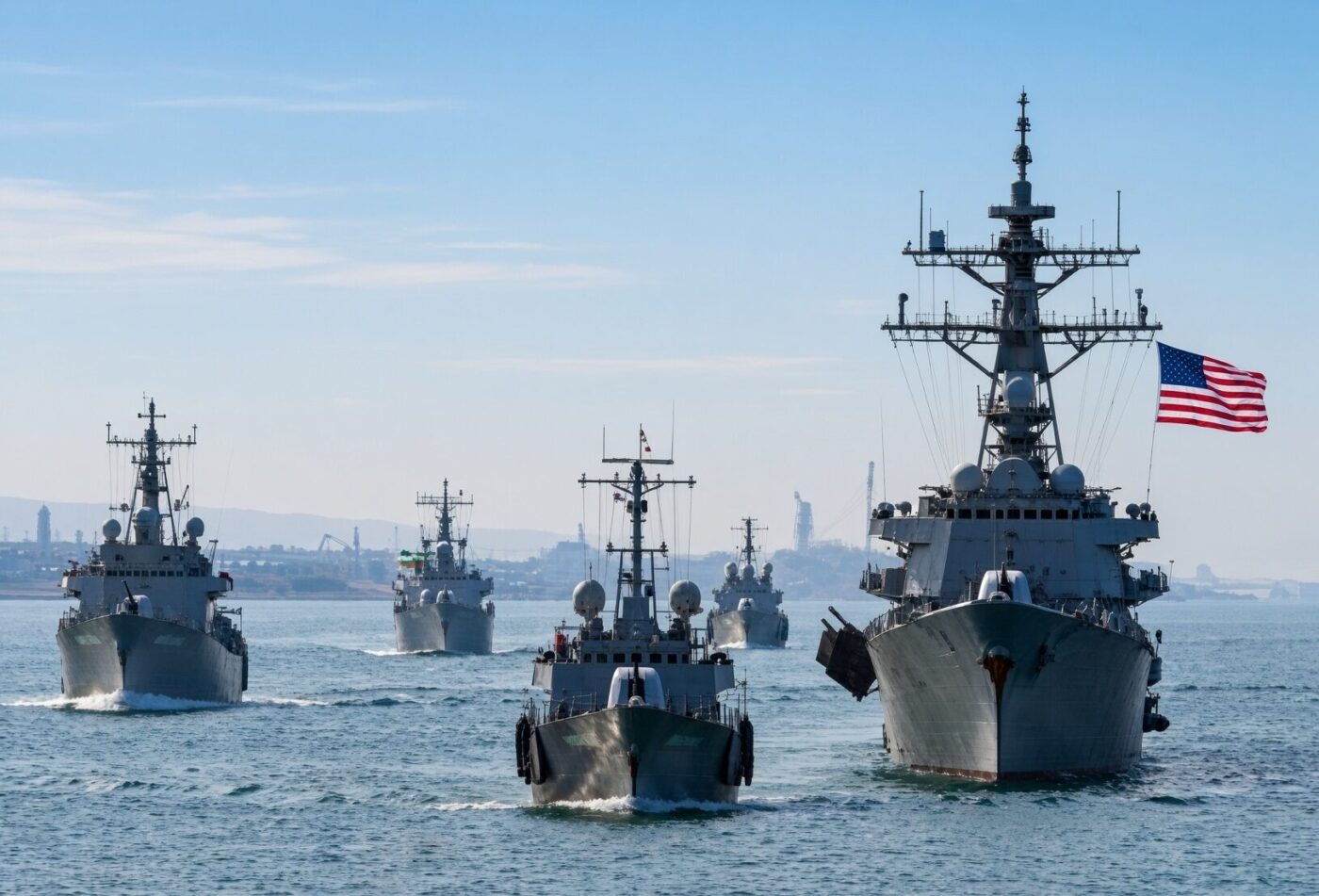
Speaking at an Army conference in Washington, DC, on October 14, 2026, the Acting US Navy Secretary Hung Cao announced that the Navy has deployed a Leidos USV with the USS Theodore Roosevelt Carrier Strike Group (CSG) headed to the Middle East.
“Right now, the Roosevelt carrier strike group just deployed on Oct. 8 with a medium-sized unmanned surface vessel,” Cao noted.
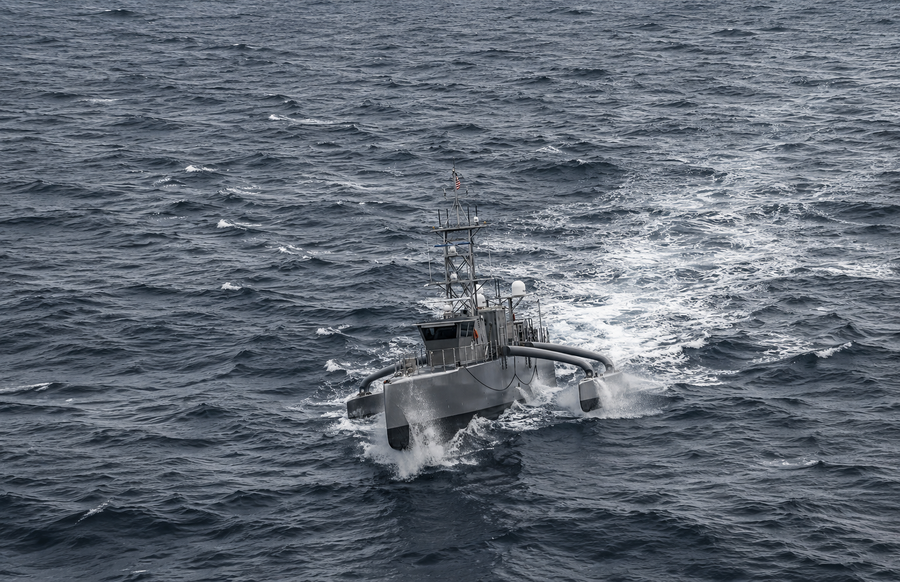
“This is the first carrier strike group to ever deploy with a large-sized unmanned surface vessel, and this is a force multiplier. Imagine having more guns out there,” he added. Notably, Cao did not name the sea drone, but media reports citing informed officials identified it as the Leidos Seahawk, a 145-ton, 42-meter-long medium USV reportedly built to sail long distances uninterrupted for months
Leidos describes the Seahawk as a medium-displacement unmanned surface vessel (MD-USV) with a composite trimaran hull. It is roughly 135–137 feet long, with a full-load displacement of about 145 tons, and a fuel capacity of around 14,000 gallons.
It is designed for extended autonomous operations with limited human intervention and uses Leidos’ Autonomous Vessel Architecture (LAVA) for navigation, perception, collision avoidance (COLREGs-compliant), and other functions.
“Seahawk is substantially larger than other US Navy USVs and has significantly increased capabilities compared to smaller USVs in terms of range, seakeeping, and payload capacity. Seahawk is designed to operate with minimal human involvement, providing a forward-deployed, rapid-response asset in the global maritime surveillance network,” Leidos stated.
The company reportedly delivered the Seahawk USV to the United States Navy in 2021.
The Seahawk will likely conduct electronic warfare missions and information, surveillance, and reconnaissance (ISR) operations rather than serve as an armed combatant. Notably, the carrier’s deployment to the Middle East comes as US President Donald Trump weighs fresh strikes on Iran.
Earlier this month, he told Time magazine that the US military could ramp up bombing of Iran after the November 3 midterm elections.
The autonomous vessel Seahawk is pictured underway in the ocean (Photo Courtesy: Leidos)
The arrival of the USS Roosevelt would bring the number of American aircraft carriers available in the region to three by late October, joining the USS George H.W. Bush, USS George Washington, and the USS Boxer Amphibious Ready Group.
As for the Leidos USV, the Navy had already practiced at-sea refueling with the Seahawk vessel and integrated it during this year’s Rim of the Pacific exercise. However, moving this unmanned system from trials into real-world operations could mark a crucial step in shaping the US Navy’s future strategy.
Integrating USVs Into Combat
The presence of the large autonomous vessel in a carrier strike group marks an important step in the US Navy’s future operations. Interestingly, it comes amid a growing presence of uncrewed systems in the ongoing Middle East conflict.
In June 2026, for instance, a Saronic Corsair drone boat operated by the US Navy’s Task Force 59 was used to locate and rescue two crew members after an AH-64E helicopter went down near the Strait of Hormuz.
This first-of-its-kind rescue mission involving sea drones took about two hours, as the EurAsian Times reported at the time.
Separately, the US Navy used one-way attack sea drones in combat for the first time in July 2026 to strike coastal Iranian military targets.
The US Navy has admitted that unmanned vessels have been extensively deployed in the clearance of mines from the Strait of Hormuz, which has remained under a de facto closure imposed by Iran for over seven months.
These incidents signal a broader appetite within the US Navy to delegate crucial combat tasks to unmanned vessels.
For example, although CSGs are the centerpiece of American naval power projection, adversaries also view them as high-value targets. Therefore, introducing a USV could let the Navy deploy a medium-sized autonomous vessel closer to threats at sea, keeping sailors out of the danger zone.
Moreover, adding a USV to the carrier strike group would enhance the US Navy’s sensor coverage and maritime awareness, reducing dependence on crewed vessels.
Cao’s remarks about having more firepower likely reflect the US Navy’s broader strategy to integrate uncrewed vessels with heavy ships.
In February this year, the Chief of Naval Operations, Adm. Daryl Caudle, presented his “Fighting Instructions” framework, outlining plans to employ a “hedge force strategy” that aims to leverage unmanned technology and develop a range of tailored options that fall outside the scope of the conventional carrier strike group model.
Since the specifics of this strategy and its structure are currently still being worked out, the deliberate pairing of medium USVs with carrier strike groups may be an early expression of the approach Caudle underscored. The USV’s performance with the Theodore Roosevelt group could potentially inform how subsequent strike groups are configured, accelerating the path toward more medium USVs in the fleet.
The US Navy’s increasing integration of sea drones into established combat practices may have been influenced by Ukraine’s use of these systems to decimate the Russian Navy.
Ukraine has emerged as a pioneer in sea drone technology, showing how relatively simple, affordable technology can neutralize expensive naval assets. In fact, Iran itself has extensively deployed these vessels to launch frequent operations against the US as well as the tankers trying to transit the Hormuz Strait in violation of the Iranian blockade.
The US, for its part, wants to leverage the asymmetric advantage of autonomous systems in combat when facing adversaries that can threaten its state-of-the-art warships.
If the Seahawk demonstrates reliable integration, endurance, and utility, it may accelerate the Navy’s ability to field hybrid strike groups that combine the decisive power of a carrier air wing with the distributed, lower-risk presence of autonomous vessels.
This assessment may, in turn, inform strategies for combat in other, more contested theatres, such as the Indo-Pacific, where the US faces a Chinese threat.
With a smaller but more advanced fleet, the US can use large numbers of attritable unmanned platforms for sustained surveillance, chokepoint control, and harassment without tying down manned ships.
Against that backdrop, lessons from this first operational pairing may shape concepts of operations (CONOPS), help tailor force packages, and inform the broader shift toward distributed maritime operations, all of which are meant to complicate targeting in a contested environment by near-peer adversaries.
Contact the author at sakshi.tiwari13 (at) outlook.com

 Login