❌

Reading view

Why are people protesting across Europe?

School conditions, unaffordable housing and the cost of living have brought demonstrators on to the streets in several countries

Young people have been taking to the streets across Europe, including in Spain, France and Portugal, to protest over their unhappiness at the state of schools and the wider cost of living crisis.

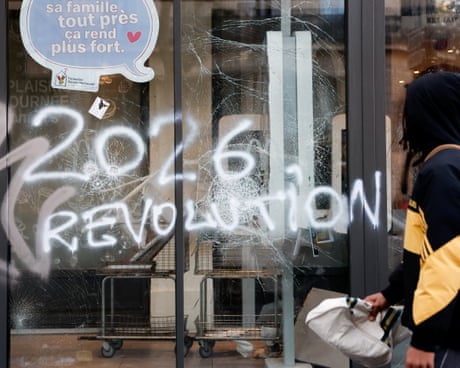
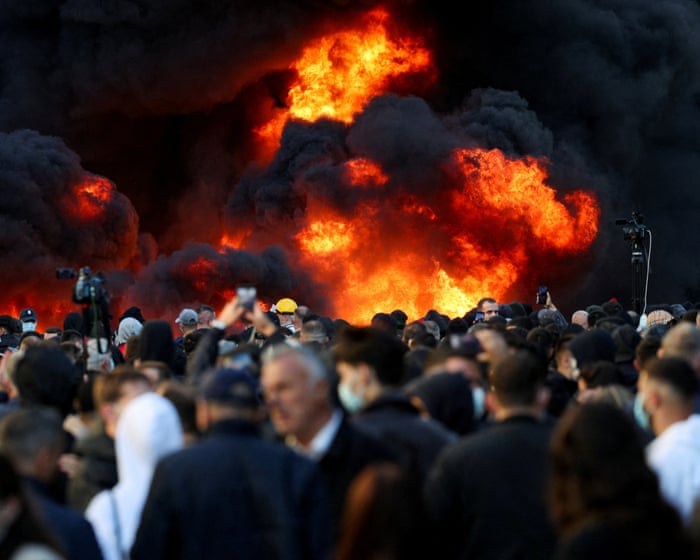
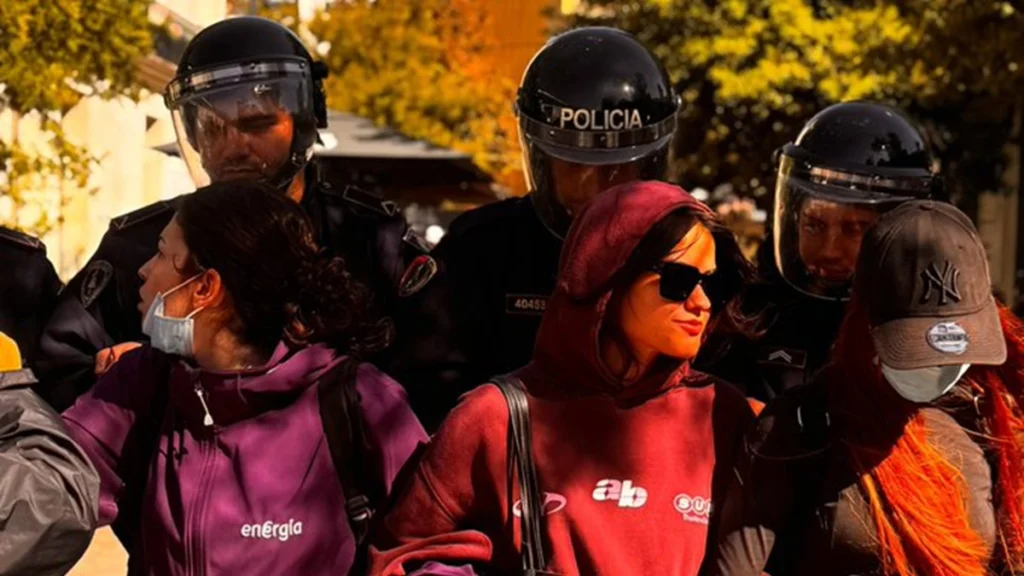
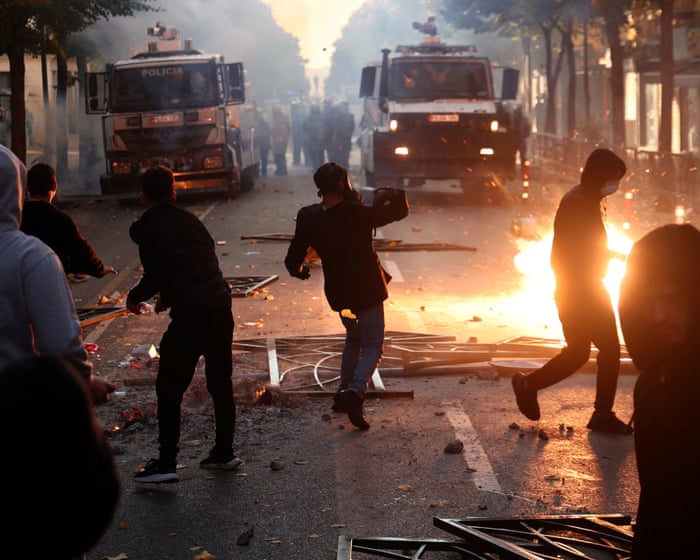
In France, high school pupils have clashed with police in often violent protests over long hours, missing teachers, dilapidated classrooms and an opaque university admissions system. Pupils routinely miss months of teaching due to unfilled staff absences.

Continue reading...

© Photograph: Benoît Tessier/Reuters

© Photograph: Benoît Tessier/Reuters

© Photograph: Benoît Tessier/Reuters

  •  

Albania’s Anti-Government Protests Turn Violent as Pressure Mounts on Prime Minister Edi Rama

Police fired rubber bullets and tear gas during a fifth consecutive day of unrest in Tirana, as student demonstrations over corruption, employment and education developed into a nationwide challenge to the government.

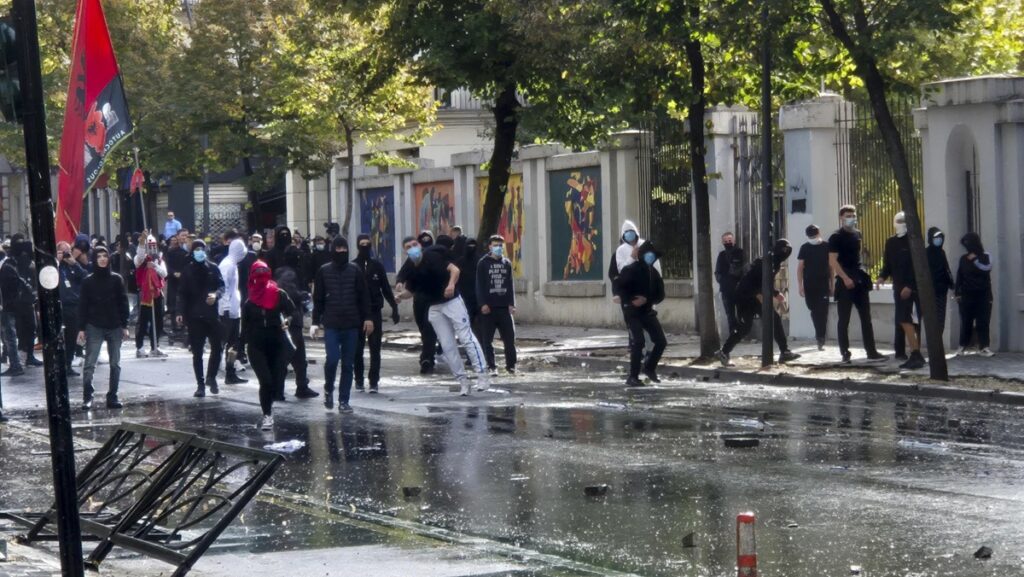
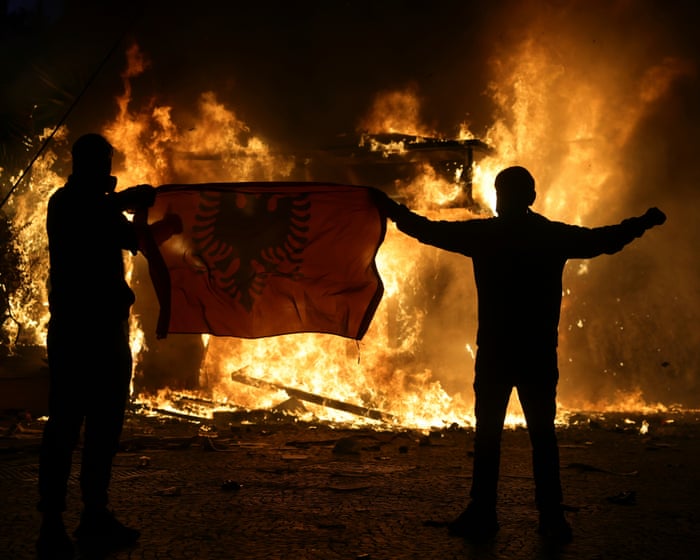
Albania’s political crisis deepened on Saturday, 17th October, as violent anti-government protests continued for a fifth consecutive day, with demonstrators attacking police and public buildings in the capital, Tirana, and demanding the resignation of Prime Minister Edi Rama.

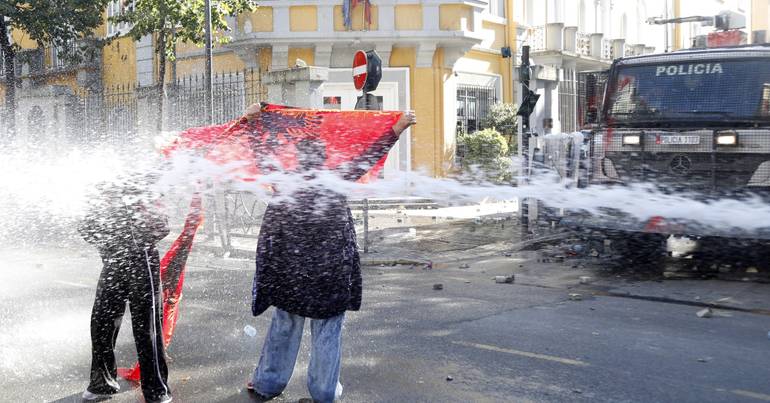
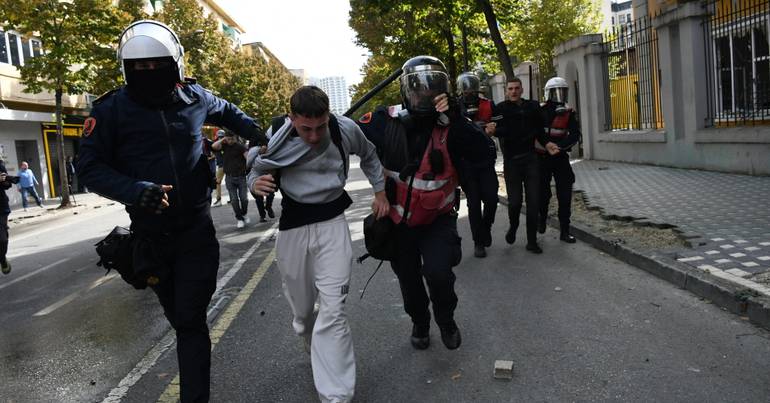
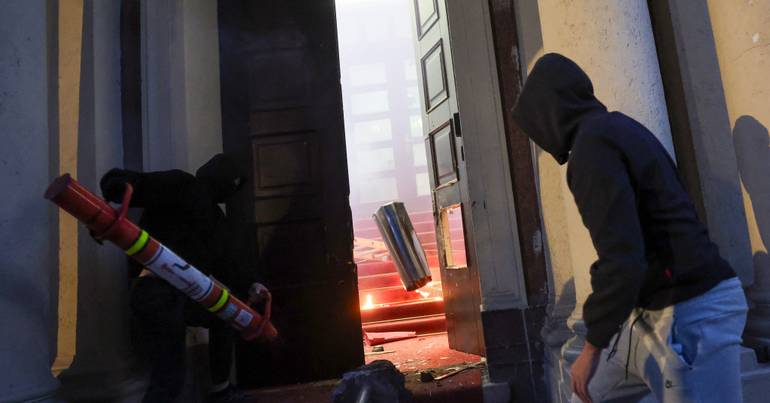
Police used tear gas, water cannon and rubber bullets to disperse protesters outside the Ministry of Education after groups of masked demonstrators threw stones, petrol bombs and fireworks at security forces. The disturbances subsequently spread through the city centre, including areas near the prime minister’s office.

According to the latest figures released by Albanian police, 167 people had been arrested and 132 officers injured during five days of unrest. Seven police officers were also suspended pending investigations into allegations of excessive force.

The demonstrations have become one of the most serious domestic challenges to Rama since his Socialist Party came to power in 2013.

Students transform an environmental protest into a political movement

The current unrest grew out of a campaign known as the Flamingo movement, which began earlier this year in opposition to a controversial luxury tourism development associated with Jared Kushner, the son-in-law of US President Donald Trump.

The development attracted objections from local residents and environmental campaigners concerned about land ownership, planning decisions and potential damage to protected coastal areas.

What began as a dispute over tourism development subsequently expanded into a wider protest against alleged government corruption, unemployment, education standards and the cost of living.

The involvement of high-school and university students has considerably increased both the scale and political significance of the demonstrations.

Students have demanded improvements to educational facilities, additional financial support and better employment opportunities for graduates. Frustration over the limited prospects available to young Albanians has also brought emigration into the debate.

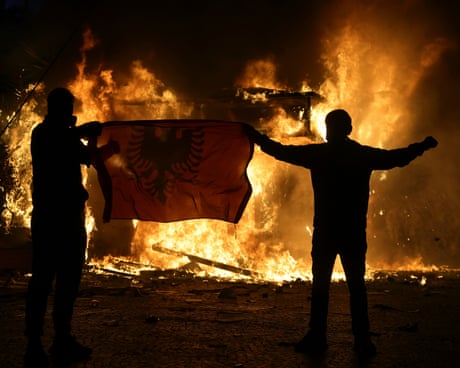
During Saturday’s demonstrations, protesters burned a suitcase outside the Education Ministry, using it as a symbol of the pressure on young people to leave Albania in search of work.

The protests began peacefully before violence erupted when masked participants attacked police positions.

According to accounts from Tirana, government offices, banks and commercial premises have been damaged during several days of confrontations.

Demonstrations have also spread beyond Tirana to other Albanian cities.

Rama refuses to resign

Rama, who is serving his fourth term as prime minister, has rejected demands for his resignation and accused political opponents of encouraging violence to destabilise the government.

He has acknowledged the right of citizens to demonstrate but insisted that attacks on public institutions and private property cannot be treated as legitimate political protest.

The government has pledged to prosecute those responsible for vandalism and assaults on police officers.

National Police Chief Skender Hita has defended the security operation, arguing that officers have faced repeated attacks by masked groups. At the same time, the suspension of seven officers indicates that allegations concerning police conduct are being investigated.

The political opposition has sought to capitalise on the unrest, although the Flamingo movement initially developed outside Albania’s established party structures.

That distinction complicates the government’s argument that the demonstrations are primarily the result of opposition-party activity.

The protests have also exposed tensions between the government’s economic development policies and opposition from communities concerned about corruption, land rights and access to employment.

EU accession adds another dimension

The crisis comes at a particularly sensitive moment in Albania’s negotiations to join the European Union.

On 13th October, just as the demonstrations were gathering momentum, Brussels and Tirana provisionally closed negotiations on enterprise and industrial policy.

The agreement marked another step towards membership, bringing the number of provisionally completed negotiating chapters to four out of 33.

Albania has already opened all 33 chapters, placing it among the more advanced candidates in the Western Balkans.

However, the EU’s negotiating framework makes clear that progress on fundamental reforms, including judicial independence, democratic institutions and the rule of law, determines the overall pace of accession.

As EU Today recently reported, Brussels is considering additional safeguards designed to prevent democratic backsliding following enlargement.

The current protests do not automatically jeopardise Albania’s accession negotiations. Public demonstrations, including those directed against an elected government, are not themselves evidence of a failure to meet democratic standards.

The relevant questions for Brussels concern the authorities’ response, the independence of investigations into police conduct, the treatment of detainees and whether allegations of corruption are properly examined.

These matters fall directly within the EU’s assessment of the rule of law and the functioning of democratic institutions.

A political test ahead of possible EU membership

Rama has made EU membership by 2030 a central objective of his government, presenting accession as the foundation of Albania’s future economic and political development.

The acceleration of negotiations has given his administration a substantial diplomatic achievement. It has not, however, resolved dissatisfaction over domestic governance or living standards.

The growing involvement of students also means the demonstrations are no longer confined to the environmental dispute that originally triggered the movement.

For the European Commission, the immediate challenge is to maintain a credible distinction between technical progress in accession negotiations and its assessment of political developments inside the candidate country.

For Rama, the question is whether he can restore public order without intensifying opposition to a government that has been in office for more than 13 years.

Further demonstrations would place additional pressure on the authorities, particularly if the movement continues to spread beyond the capital and attracts broader support from trade unions, students and other dissatisfied groups.

  •  

‘We are suffocating’: protests spread to Lisbon and Milan as housing and living cost tensions intensify

Hundreds at Lisbon tent camp demand action, as Giorgia Meloni says march in Italy was exploited by ‘hooligans’

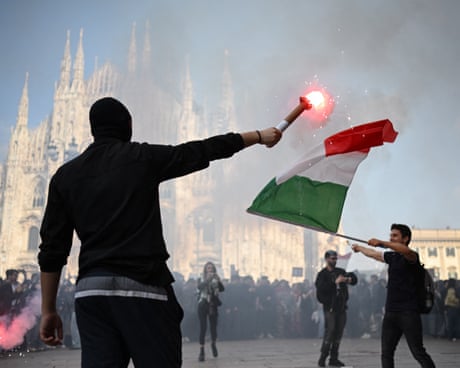
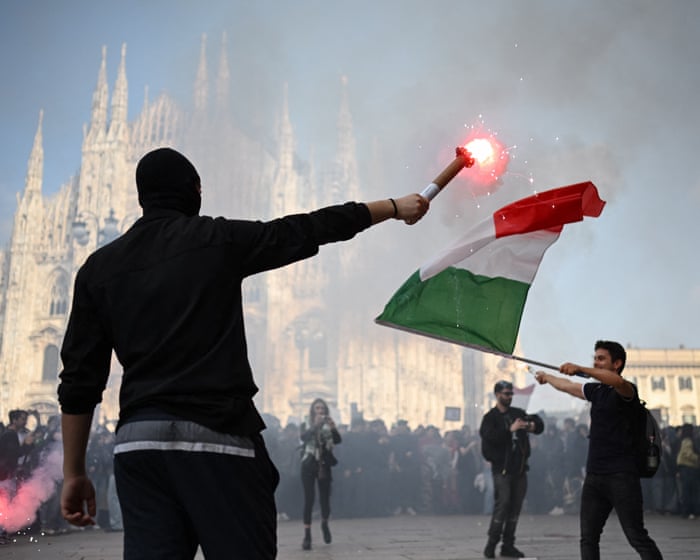
The angry protests that have convulsed Spain and France in recent weeks have spilled over to Italy and Portugal, with rioters clashing with police and setting property on fire in Milan, and a tent encampment springing up in Lisbon over the weekend.

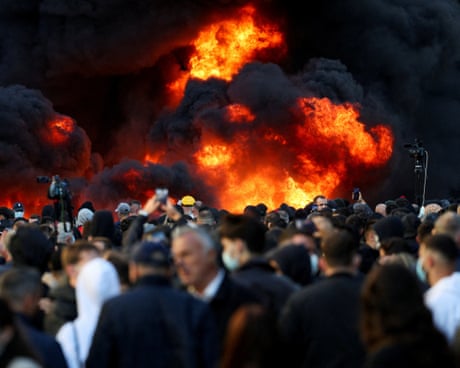
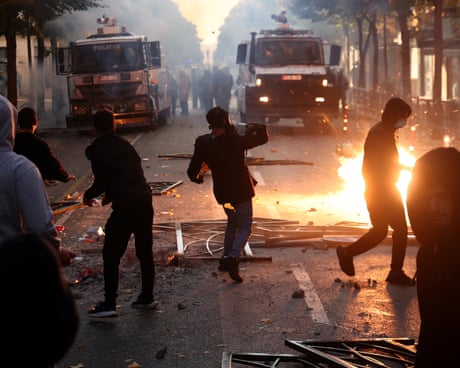
A march in central Milan on Saturday to protest against rising living costs began peacefully but ended with masked rioters throwing stones, paving blocks and other objects at riot police and setting fire to barricades made from bar tables.

Continue reading...

© Photograph: Piero Cruciatti/AFP/Getty Images

© Photograph: Piero Cruciatti/AFP/Getty Images

© Photograph: Piero Cruciatti/AFP/Getty Images

  •  

5h Milhares em protesto em França, Itália, Bélgica e Albânia

Onda de manifestações na Europa contra aumento do custo de vida. Em França, houve confrontos, incêndios e pilhagens. Ainda, centenas continuam nas ruas em Lisboa e no Porto em protesto pela habitação.

  •  

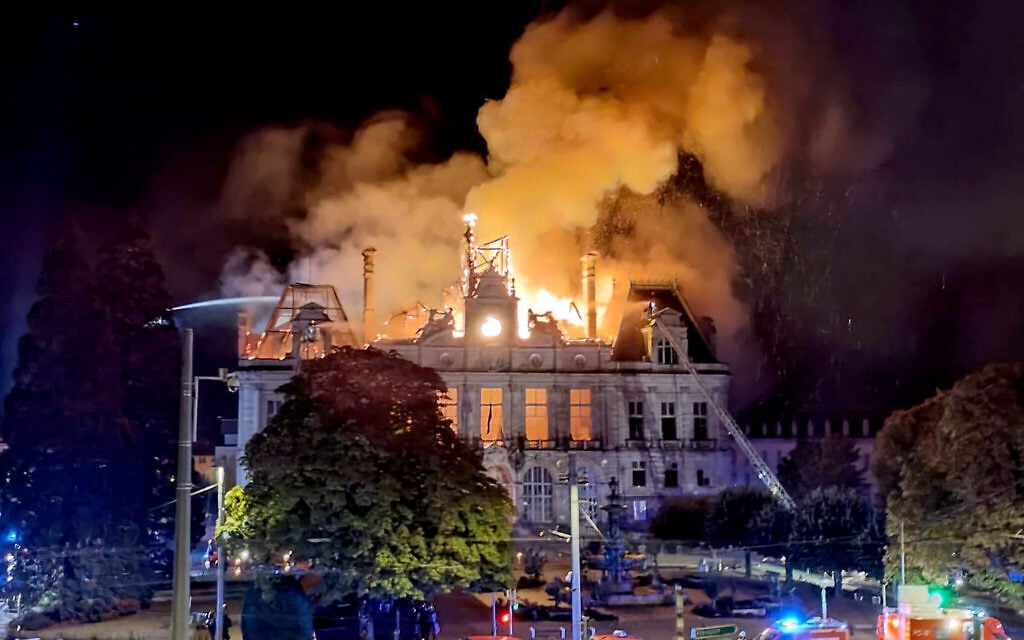
Mass protests in France spiral into worst riots in years; 1,200 arrested, 150 cops injured

As hundreds of thousands protest cost of living, city hall torched as police use tear gas; teen protester loses hand after picking up stun grenade; PM blames 'ultra-left,' months before presidential election
  •  

Albania’s Student Protests Escalate for Third Consecutive Day

Thousands clash with riot police in Tirana, demanding educational improvements and accountability from PM Rama.

Demands for educational improvements, a lack of prospects after graduation and corruption allegations leveled against Albania’s government by thousands of young people converged on Thursday in clashes with riot police and acts of vandalism that continued to devastate businesses and street furniture in Tirana.

RELATED:

Albanian Student Protests Turn Violent for Second Day

Since about 20 people were detained on Tuesday during an attack on the Education Ministry, the protests have intensified, culminating in a fire at the building on Wednesday. Authorities have reported 70 police officers injured and said most of those arrested were not students.

Police Director Skënder Hita said very few of those arrested were students, a claim that contrasts with the fact that most demonstrators are teenagers, many of them of high school age, according to observations by news agency EFE. By midafternoon, Tirana’s Trauma Hospital had treated 26 people.

Police took a much tougher approach on Thursday. Thousands of young people who took to the streets failed in their attempts to reach the Education Ministry, Parliament, and the office of Prime Minister Edi Rama at night.

Riot police were deployed throughout the city, blocking students’ access with water cannons and tear gas. Many of the demonstrators were high school students who threw paving stones and fireworks.

The demonstrators did manage to set fire to the entrance of the Economy Ministry, which was damaged on Wednesday, even entered the building, vandalizing its furnishings.

Protests also took place in other cities, including Elbasan, Korce, Durres and Shkoder, where a senior police officer was in critical condition after being struck in the head by a stone.

Against Corruption

Rama has faced growing public mobilization since May. It all began as a protest against plans to sell land in a nature park for a tourism project linked to Jared Kushner, the son-in-law of U.S. President Donald Trump.

From there, the Flamingo Revolution, named after the birds that inhabit the reserve, expanded to include demands for greater democracy and transparency.

“The students’ demands are a natural extension of the protest movement’s main concerns, particularly the fight against corruption, the rising cost of living, and the prime minister’s arrogance and lack of accountability,” said the Flamingo Revolution platform, which has no visible leader and has accused Rama of “selling the country” through real estate projects.

Beyond the actions of isolated violent groups, the radical protests by young Albanians reflect a sense of frustration that some media outlets have linked to similar discontent in other countries experiencing comparable demonstrations, such as France.

The Albanian prime minister has made clear that he will not resign and has blamed the violence on the conservative opposition, accusing it of trying to “bring Albania down every time it tries to move forward.”

Rama, who has been in power since 2013, saw his Socialist Party win the May 2025 election for the fourth consecutive time, securing an absolute majority. He told Reuters on Thursday that the victory gives him greater legitimacy than any protest.

Under his leadership, the country has advanced its bid to join the European Union, a goal it hopes to achieve by 2030. However, those advances have not lifted Albania from its status as one of Europe’s poorest countries.

“Our students will be the first Albanians to enter adulthood as Europeans,” said Roland, a taxi driver who maintains that the country has modernized under Rama’s leadership and accuses the opposition of trying to prevent that progress.

teleSUR/ JF

Sources: EFE – Reuters

  •  

Albania’s prime minister vows not to resign over student-led protests

Demonstrators demand resignation of Edi Rama after three days of clashes in capital Tirana

Albania’s prime minister has said he will not resign as a protest movement, initially prompted by a proposal to build a Trump family-backed resort in the Balkan state, turned violent with clashes convulsing the capital for a third consecutive day.

Speaking on Thursday after calls by students who this week assumed control of the anti-government demonstrations that have rattled Tirana since June, Edi Rama said: “Governments are changed through democratic elections. We had elections last year, not a revolution.”

Continue reading...

© Photograph: Hameraldi Agolli/AP

© Photograph: Hameraldi Agolli/AP

© Photograph: Hameraldi Agolli/AP

  •  

Student protests in Albania turn violent as demonstrators clash with police

Dozens of people detained after government building and two banks set on fire as tens of thousands march over education costs and corruption

Tens of thousands of students have taken to the streets of Tirana, the Albanian capital, setting alight a government building and two banks and hurling stones at police during a protest over rising education costs and ⁠corruption.

Police responded with water ⁠cannon and teargas to disperse protesters who started a fire at the ministry of education building, overturned bins and smashed the fronts of local businesses. A branch of Raiffeisen Bank near the education ministry also caught fire.

Continue reading...

© Photograph: Florion Goga/Reuters

© Photograph: Florion Goga/Reuters

© Photograph: Florion Goga/Reuters

  •  

Albanian Student Protests Turn Violent for Second Day

Police used tear gas and water cannons against demonstrators who tore down the barriers surrounding the Education Ministry.

On Wednesday, student protests against the Albanian Prime Minister Edi Rama entered a second day of violence, with riots and Molotov cocktails thrown at the Education Ministry.

RELATED:

Albanian Police Clash with Protesters Opposing Trump Clan’s Tourism Project

Police used tear gas and water cannons against around 1,000 demonstrators who tore down the barriers surrounding the ministry building, according to footage broadcast live by local television station A2.

The demonstrators responded with stones and fireworks and set fire to a guard post, while police made several arrests. Dozens of hooded young people also smashed the windows of a bank in downtown Tirana and tried to pry up paving stones.

The unrest took place as students marched through Tirana to denounce deteriorating facilities, the cost of education, the shortage of financial aid and the lack of job opportunities after graduation. Universities in Elbasan and Shkodër suspended classes in solidarity with the protests.

VIOLENT CLASHES IN #ALBANIA!

Student protests in the capital turned violent as demonstrators smashed shops and clashed with police, who deployed tear gas.

The “Flamingo Revolution” is demanding PM Edi Rama’s resignation over corruption allegations. 23 detained, 7 injured. pic.twitter.com/U0QJLon7PG

— Smriti Sharmaa (@SmritiSharma_) October 14, 2026

On Tuesday, clashes lasted more than eight hours, resulting in 40 arrests and several injuries that required hospital treatment at the capital’s trauma hospital.

Groups of demonstrators looted financial offices and burned their furniture in the street. Hours later, that night, some protesters broke into Tirana City Hall.

Students have become the most active sector of the “Flamingos Revolution,” which began in May to protect a wetland in the south of the country from a luxury tourism project linked to Jared Kushner, son-in-law of U.S. President Donald Trump.

The mobilization has since expanded into a movement against Prime Minister Edi Rama and corruption, although the protesters also oppose the conservative opposition Democratic Party.

teleSUR/ JF

Source: EFE

  •  

Anti-government student protests in Albania turn violent – video

Student protests in Albania turned violent overnight, with demonstrators smashing shop windows and rioting as police used teargas and water cannons to disperse crowds. Protesters were rallying against a luxury development project linked to Donald Trump’s son-in-law, Jared Kushner. The protests are part of an anti-government movement known as Flamingo, which is calling for the resignation of the prime minister, Edi Rama, over allegations of widespread corruption

Continue reading...

© Photograph: Reuters

© Photograph: Reuters

© Photograph: Reuters

  •  

Montenegro and Albania Advance Towards EU Membership as Brussels Tightens Accession Rules

Montenegro and Albania will hold separate accession conferences on 12 and 13 October as the European Commission introduces proposals for stronger safeguards against democratic backsliding, linking the next phase of EU enlargement to reforms within the Union itself.

Montenegro and Albania are preparing for another round of European Union accession negotiations this week, with meetings in Luxembourg scheduled to advance their membership bids as Brussels considers substantial changes to the conditions under which future countries will join the bloc.

Montenegro’s 29th accession conference will take place on Monday, 12 October, followed by Albania’s tenth conference on Tuesday. The meetings come less than a week after the European Commission presented a package of proposals intended to prepare the EU for enlargement while strengthening its ability to respond to breaches of democratic standards by newly admitted members.

For Montenegro, the immediate objective is to continue closing negotiating chapters after years of institutional and legal reforms. Albania’s meeting has a more precisely defined agenda: the provisional closure of Chapter 20, covering enterprise and industrial policy.

Both countries have made progress towards membership, but the Commission’s latest proposals indicate that the terms of accession could become more demanding as the EU considers admitting several new members.

Montenegro moves towards the final negotiating stage

Montenegro is widely regarded as the most advanced candidate among the Western Balkan countries.

Accession negotiations began in 2012, and all 33 negotiating chapters have been opened. Progress towards closure has accelerated as the government seeks to complete the process and secure an accession treaty.

At the end of 2025, Montenegro provisionally closed five chapters covering services, capital movements, company law, agriculture and fisheries.

As EU Today reported following that conference, the agreements brought the number of provisionally closed chapters to twelve at that stage, while the EU continued to emphasise the importance of judicial reform and sustained implementation.

Subsequent accession conferences have continued the negotiating process, with the 29th conference scheduled for 12 October.

The Commission has identified Montenegro as a country capable of concluding accession negotiations by the end of 2026, provided sufficient progress is maintained.

That objective does not mean membership would follow automatically. A completed negotiation must still lead to an accession treaty, which requires approval by all existing member states and ratification under their constitutional procedures.

Outstanding questions include the independence of the judiciary, enforcement of anti-corruption legislation and the capacity of state institutions to apply EU law consistently.

Albania advances in industrial policy negotiations

Albania’s accession process has also gained momentum, supported by renewed EU interest in incorporating the Western Balkans into European political and economic structures.

The conference scheduled for 13 October is expected to provisionally close Chapter 20, which covers enterprise and industrial policy.

The chapter concerns the legal and institutional environment in which businesses operate, including industrial competitiveness, entrepreneurship and policies supporting small and medium-sized enterprises.

Provisional closure would represent further progress in Albania’s alignment with EU legislation and policy, although it would not constitute a final agreement on accession.

As with Montenegro, the negotiating framework requires sustained progress on the fundamentals of membership, notably judicial independence, fundamental rights, corruption and organised crime.

Brussels prepares stronger safeguards

The latest accession conferences follow the European Commission’s proposals of 6 October, which address the institutional consequences of admitting new countries.

The Commission argues that enlargement can be accommodated within the existing treaties, but that the EU will need additional safeguards and improvements to decision-making.

Among the most consequential proposals is the possibility of suspending a new member state’s voting rights in the Council if it commits serious breaches of the Union’s fundamental values or the principle of sincere cooperation.

Such provisions would be incorporated into future accession arrangements, making some membership conditions enforceable after a country has joined.

The proposal reflects concerns that the EU’s existing mechanisms for responding to democratic backsliding can be slow and politically difficult to apply.

In June, EU Today reported on proposals advanced by five member states seeking stronger protections against governments that might undermine common decisions after accession.

The Commission’s October package develops that argument into a broader programme of institutional preparation.

Enlargement beyond the Western Balkans

The debate extends to Ukraine and Moldova, whose membership applications have acquired greater strategic importance following Russia’s full-scale invasion of Ukraine.

The Commission is examining how candidate countries can progressively participate in EU policies and programmes before obtaining full membership.

These arrangements could include greater integration in energy, transport, defence and selected areas of the single market, subject to the implementation of relevant reforms.

Brussels is also considering transitional arrangements affecting agricultural support, financial transfers and sensitive sectors of the economy.

The political challenge is to provide candidate countries with credible membership prospects while reassuring existing members that enlargement will not weaken common decision-making or create unsustainable budget commitments.

For Montenegro and Albania, the October conferences therefore take place at a pivotal point in the accession process.

Both governments are moving through the technical stages of membership negotiations while the EU is still determining how its next enlargement will operate.

The outcome will depend not only on their progress towards meeting accession conditions, but also on whether the existing 27 member states can agree on the institutional changes required for a larger Union.

  •  

EU Plans 15-Year Safeguard for New Members as Enlargement Rules Are Rewritten

The European Commission has proposed new safeguards allowing voting rights and funding to be restricted if future EU members breach fundamental European rules after accession, as Brussels prepares for possible membership of Ukraine, Moldova, Albania and Montenegro.

The European Commission has set out a new framework for enlargement that would allow the European Union to impose restrictions on recently admitted countries for up to 15 years after accession if they retreat from commitments on democracy, the rule of law or other fundamental EU principles.

The measures form part of the Commission’s new pre-enlargement policy review, published on Tuesday, which examines how the EU’s institutions, budget and policies would have to change before another round of expansion. Brussels says the Union could accommodate additional members without rewriting its treaties, but would need stronger safeguards to prevent enlargement from making decision-making more difficult.

Under the proposals, accession treaties could contain an institutional safeguard allowing action against a new member that seriously breaches the values contained in Article 2 of the Treaty on European Union or the principle of sincere cooperation. In the most serious cases, Council voting rights could be suspended.

The Commission’s public summary describes those arrangements as temporary, targeted and reversible. Reporting on the underlying proposal indicates that the enhanced safeguard could remain available during the first 15 years of membership.

The proposal addresses a problem that has moved steadily up the enlargement agenda: how to ensure that a country continues to meet membership conditions after it has entered the EU.

Germany, France, Belgium, the Netherlands and Luxembourg had already raised the issue earlier this year. As EU Today reported in June, the five governments called for mechanisms capable of restricting some rights of new members if democratic standards deteriorated after accession.

The Commission has now turned that political argument into a wider institutional proposal.

The change is particularly relevant to Ukraine, Moldova, Montenegro and Albania, which Brussels identifies as the four candidates currently furthest advanced. The Commission says it will prepare indicative roadmaps for each country provided reform momentum continues.

Ukraine and Moldova may also make further progress within days. EU Today reported earlier on Tuesday that two more negotiating clusters could potentially be opened next week if Ukraine’s parliament passes legislation dealing with minority-language education.

Alongside stronger rule-of-law safeguards, the Commission wants candidate states to be integrated gradually into parts of the EU before full membership. Energy, transport, digital policy and defence are among the sectors identified for deeper participation.

Brussels is also proposing greater use of qualified-majority voting during the accession process, including for decisions to open negotiating clusters. At present, individual governments can delay progress at several stages because unanimity is required.

Another proposed safeguard would require a newly admitted state, for a limited period, not to block subsequent enlargements because of bilateral disputes. The measure reflects long-standing difficulties in the Western Balkans, where disputes between neighbouring states have repeatedly entered accession negotiations.

Ukraine’s agricultural sector presents a separate challenge. The Commission says transitional arrangements could be used for agriculture, sensitive products, EU funding, the movement of workers and participation in common systems. Reporting on the package indicates that unrestricted access by Ukraine to existing Common Agricultural Policy support is unlikely immediately upon accession because of the scale of Ukrainian farming.

That question is politically important for existing agricultural beneficiaries, particularly in Central and Eastern Europe, where Ukrainian grain and food imports have already caused disputes.

The institutional proposals do not guarantee membership for any candidate. Accession remains dependent on meeting the EU acquis, completing negotiations and obtaining the agreement of existing member states.

Nor has the 15-year safeguard yet become EU law. The Commission has asked the European Council and European Parliament to take forward discussions, and the eventual provisions would have to be reflected in future accession arrangements.

What has changed is the shape of the enlargement debate. Brussels is no longer concentrating solely on what candidate countries must do before joining. It is also designing mechanisms governing what happens after they enter.

For Ukraine, Moldova and the Western Balkans, that could produce a more credible path towards membership, but one accompanied by conditions extending well beyond accession itself.

  •  

Commission seeks 15-year safeguards on future member states, but says reforms won’t create two-tier EU

The European Commission has proposed up to 15 years of post-accession safeguards to punish new member states in case of bad behaviour, in a long-delayed pre-enlargement policy review out on Tuesday (6 October).

The reforms were initially requested by the European Council in June 2024 to be ready by spring 2025, but were delayed several times due to political sensitivities in EU capitals.

They are aimed at frontrunners for future EU membership – Montenegro, Albania, Moldova, and Ukraine – each of whom will get an accession roadmap this month.

EU Commission president Ursula von der Leyen has deemed union enlargement a “geopolitical imperative” amid the war in Ukraine and shift towards a new global order.

By expanding, the EU hopes to promote democracy and strengthen the single market.

But this also comes with fears that countries could misbehave after getting in, prompting the commission’s proposed new guardrails.

The commission suggests that new member states promise “not to oppose EU decisions on future enlargements” due “to bilateral disputes” for an unspecified time.

But Marta Kos, the EU’s enlargement commissioner, said this commitment would be voluntary.

Commissioner dismisses ‘two-tier’ concerns

This article continues, but the full version is available only to EUobserver.com subscribers. Visit account.euobserver.com/membership

  •  

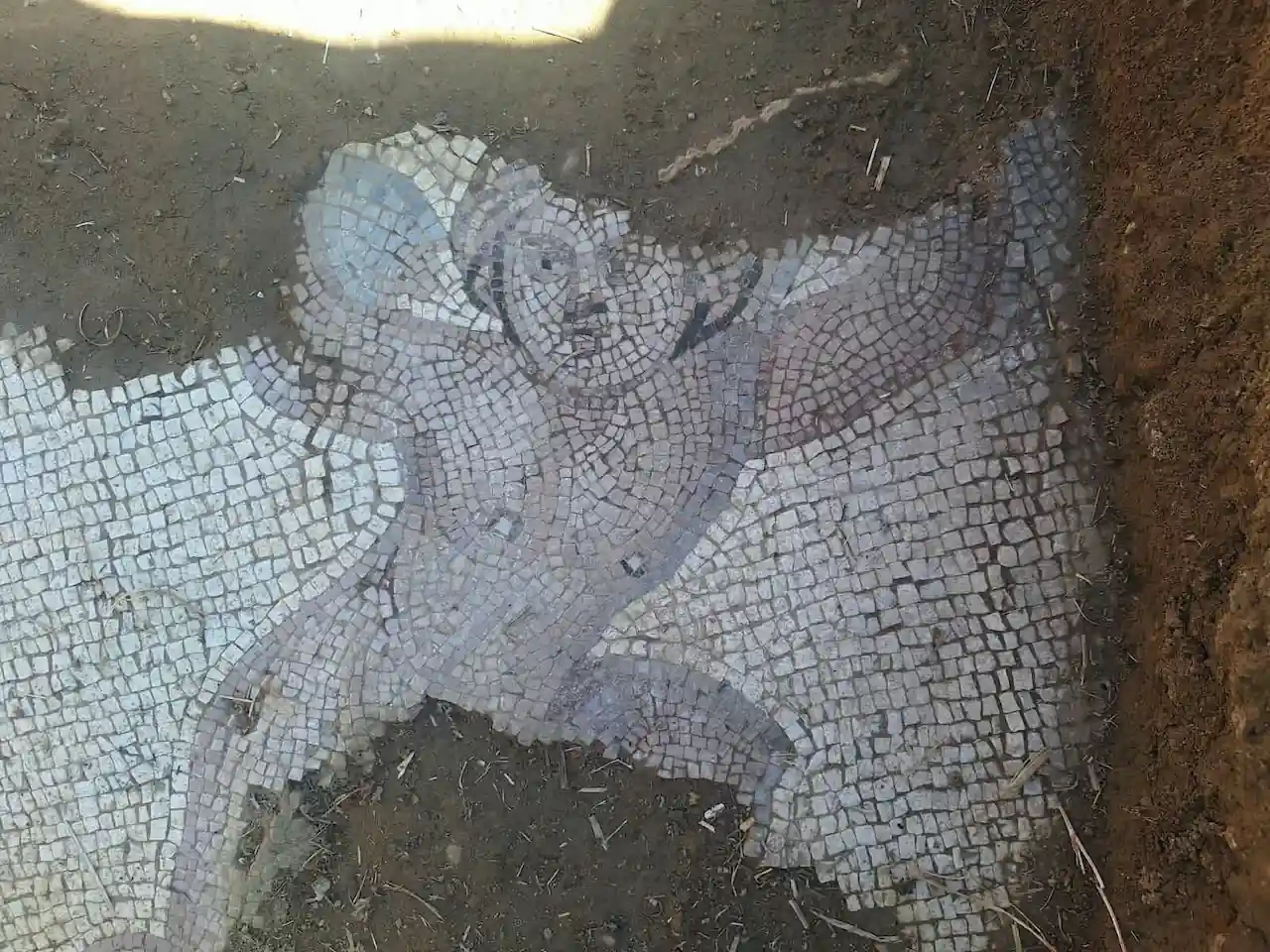
Descubren en Albania una villa romana con mosaicos del siglo IV junto al último río salvaje de Europa

El hallazgo se ha producido en Qesarat, una pequeña población de la Albania meridional, en la zona de Tepelenë, muy cerca del Parque Nacional del Río Salvaje Vjosa —el primer espacio protegido de Europa dedicado a un río que corre libre, sin una sola presa, desde las montañas griegas del Pindo hasta el mar Adriático—. […]

  •  
❌