Immigration agents descended upon Oscar Belgal, a Dominican immigrant, along a strip of small stores in New York as people made their way home from work or accompanied their children after school.
Two Romanian F-16s shot down two jet-powered Russian Geran attack drones over Romania’s territorial waters near Sulina on the evening of 17 October, Romania’s Defense Ministry said. The ministry released cockpit images of the mission the next day, as NATO allies prepare to discuss Black Sea security at a special session Romania requested.
This comes as Moscow continues its air attacks on Ukraine, while the US is trying to make deals with Russia over its diesel and lift sanctions. Russia keeps striking Ukraine’s energy system and cities, while its drones and suspected saboteurs keep turning up inside NATO, from tankers hit off Romania to a foiled arson attempt at a Starlink site in Lithuania.
Down within minutes
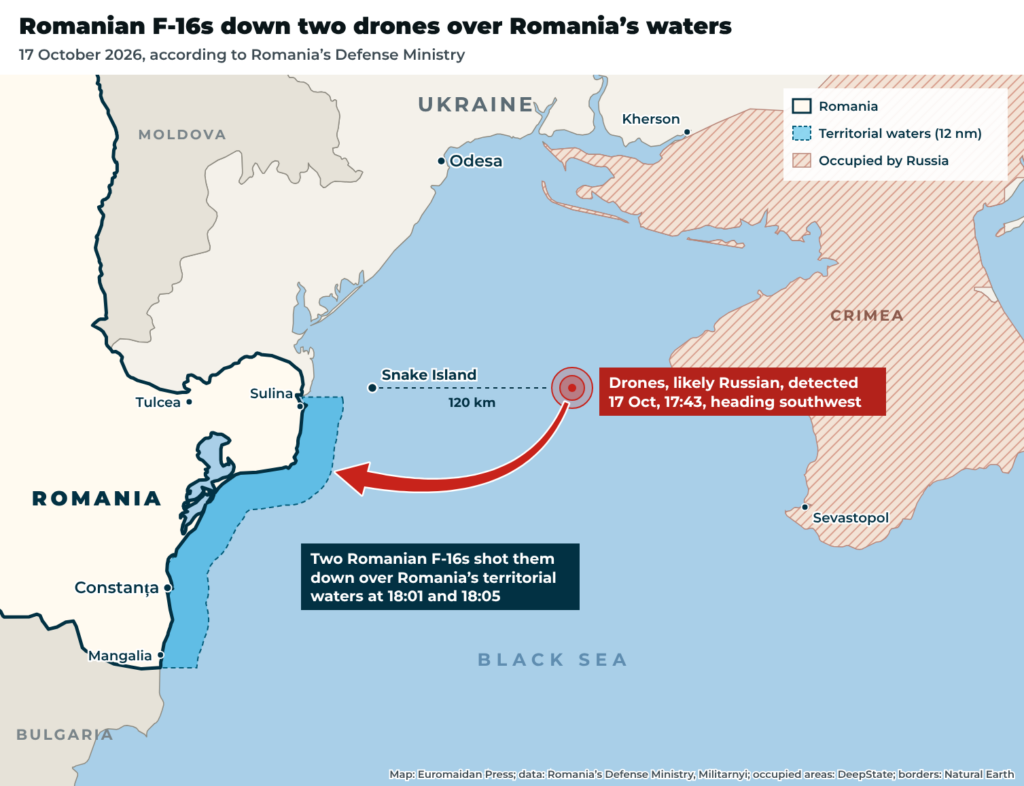
The F-16s took off from the 86th Air Base at Borcea at 17:43 after radar detected a group of air targets about 120 km east of Zmiinyi (Snake) Island, flying southwest, Ukrainian military outlet Militarnyi reported, citing the ministry. The first drone entered Romanian airspace at 17:59 and was shot down at 18:01 southeast of Sulina. The second entered at 18:01 and was downed at 18:05 east of Sulina.
Where Romanian radar detected two drones, about 120 km east of Zmiinyi (Snake) Island, and where Romanian F-16s shot them down over Romania’s territorial waters near Sulina, 17 October 2026. Map: Euromaidan Press
Both were jet-powered attack drones of the Geran family, the ministry said. The Geran is Russia’s version of the Iranian-designed Shahed. When first detected, the drones were about 65 km from the coast of Russian-occupied Crimea and 140 km from the Ukrainian-held shore, and their southwest course may point to Russian origin, Militarnyi calculated.
Explore further
Congress gave Trump 30 days to hit Russia’s oil buyers with 100% tariffs. He waives them two days before deadline, citing US interests. Moscow calls it historic
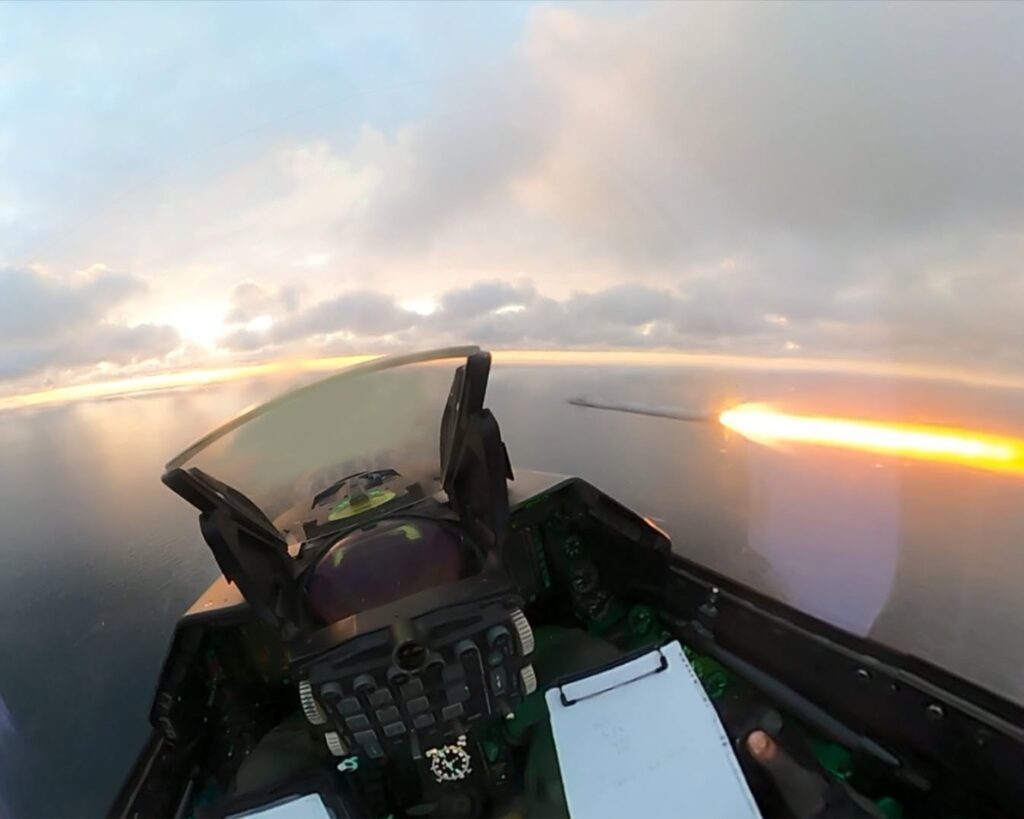
The ministry posted the cockpit images on 18 October, showing a missile launch and a fireball over the sea. “Targets spotted, identified, engaged and neutralized!” it wrote.
A fireball over the Black Sea seen from the cockpit of a Romanian F-16 during the mission to shoot down two drones near Sulina, 17 October 2026. Photo: Romanian Defense Ministry/Facebook
Allies to meet on the Black Sea
A special session of the North Atlantic Council, NATO’s top decision-making body, will discuss defense and deterrence in the Black Sea on 20 October at Romania’s request. Romanian President Nicușor Dan has confirmed that the two tankers that caught fire near Sulina last week were hit by drones, and a NATO military source told Reuters they were Russian.
Romanian radar has logged 54 drone intrusions into the country’s air and sea space since Russia’s full-scale invasion, 35 of them this year, and the military has shot down six such targets in 2026, Defense Ministry data show.
A Romanian Air Force F-16AM/BM Block 15. Illustrative photo: via Militarnyi
Searches in Poland and Lithuania
Within hours, Poland’s Operational Command said it was checking a possible airspace violation by an unknown object overnight into 18 October. Troops, police, and military police searched for a possible crash site south of Lublin after residents reported the loud sound of a flying object around 02:00, Militarnyi reported.
On the morning of 18 October, an unknown drone entered Lithuania’s airspace and triggered air raid alerts, the country’s crisis management center said. NATO jets accompanied it but could not shoot it down because of bad weather, Defense Minister Robertas Kaunas said. Debris preliminarily identified as drone parts was later found in the village of Juodžioniai in Pasvalys district, and the army said the drone may have entered from the direction of Poland.
Romania moved from escorting Russia’s stray drones to firing on them in July, when its F-16s downed three in 72 hours.
The video released by Al Jazeera lasts just 25 seconds but has once again reignited public debate. The footage shows at least 10 fighters in a forest, “coming back from a mission,” as one of them can be heard saying. The group of soldiers, who are Mexican, Colombian, and Panamanian — as acknowledged by the person filming — is allegedly part of Ukraine’s front line in the war launched by Russia.
A criminal investigation into the lawmaker’s immigration process advanced after federal investigators reviewed family text messages from a seized phone.
With several parties at risk of falling short, small shifts make a huge difference. Plus, Israel's electorate is difficult to survey and methodology is often opaque. But even so, analysts say, polls are still worthwhile
Dublin Fire Brigade has said there was "overmixing" of chemicals before yesterday's chemical leak at a Dublin swimming pool, which resulted in 12 children and an adult being brought to hospital.
Non è escluso che domenica a guidare l’Angelus, dal Policlinico Gemelli e non da piazza San Pietro, sia Papa Leone in persona. A figurare questa possibilità è il cardinale Pietro Parolin, segretario di Stato vaticano, a margine di un evento all’ambasciata irachena a Roma. “Dipenderà dal decorso della convalescenza. Se entro fine settimana starà meglio, penso che farà l’Angelus e lo farà da lì” ha spiegato Parolin. Sarebbe il segno di una guarigione che procede spedita, confermata dallo stesso cardinale che, interrogato sulle condizioni del Santo Padre, ha sottolineato di averlo trovato benedopo l’operazione per rimuovere un tumore maligno al polmone.
Il segretario di Stato vaticano si è poi espresso sul futuro del pontificato di Papa Leone: “Sono appena due giorni che è stato ricoverato. Non si possono fare previsioni. Si tratta di vedere adesso quando tornerà e cosa diranno i medici. In base a tutti questi elementi, se necessario, il Papa rimodulerà il suo pontificato“. I viaggi e le attività del pontefice saranno, dunque, parametrati all’evolvere del quadro clinico. Lo stesso Parolin si è espresso con cautela in merito al viaggio in America Latina che attenderebbe il Santo Padre agli inizi di novembre e che, vista la situazione, sembra essere destinato a essere rimandato (probabilmente in primavera): “Dipenderà da come vanno le cose. Il Papa ancora non si è pronunciato su questo tema”.
Papa Leone XIV, Parolin: “Se necessario rimodulerà il pontificato”
Il ricovero di Papa Leone XIV potrebbe portare a una revisione degli impegni e delle modalità con cui proseguirà il pontificato. A chiarirlo è il segretario di Stato vaticano, il cardinale Pietro Parolin, che invita ad attendere il decorso della degenza e le indicazioni dei medici prima di fare previsioni sulle prossime decisioni del Pontefice.
“Sono appena due giorni che il Papa è stato ricoverato, non si possono fare previsioni di nessun tipo. Si tratta di vedere adesso quando tornerà, in che situazione tornerà, cosa diranno i medici. E, in base a tutti questi elementi poi il Papa anche rimodulerà il suo pontificato, se sarà necessario rimodularlo“. Lo ha affermato Parolin parlando con i giornalisti a margine di un evento all’ambasciata irachena a Roma, rispondendo a una domanda sulle possibili conseguenze del ricovero per il futuro del pontificato.
Il viaggio in America Latina e l’Angelus
Tra gli appuntamenti da valutare c’è anche il viaggio in America Latina, inizialmente confermato e ora subordinato alle condizioni di salute del Papa. “È un viaggio lungo e impegnativo, dipenderà dai medici”, ha spiegato Parolin. “Dipenderà da come vanno le cose – ha osservato -. Il Papa ancora non si è pronunciato su questo tema e quindi dobbiamo attendere prima di tutto che torni dall’ospedale e poi in base a quello che diranno i medici ecco se lui potrà viaggiare o meno e quindi affrontare un viaggio, affrontare un viaggio così lungo impegnativo come quello che si prospetta in America Latina”.
Il segretario di Stato ha ricordato che, al momento del ricovero, il programma non era stato modificato: “la decisione iniziale quando il Papa è stato ricoverato era che il viaggio si sarebbe mantenuto nella sua forma prevista, quindi immagino che se tutto va bene, se, diciamo, la situazione si sviluppa come avevano previsto all’inizio, il viaggio si farà se poi ci sono delle novità questo non lo possiamo prevedere ora“.
Anche la possibilità che Leone XIV pronunci l’Angelus di domenica dal Policlinico Gemelli dipenderà dall’evoluzione della convalescenza. “Dipenderà un po’ dal decorso della convalescenza. Mi pare che hanno dato cinque giorni, no? Quindi adesso, se entro fine settimana, starà meglio penso che lo farà l’Angelus e lo farà di là, se poi rimane ancora… Però sono tutte illazioni che faccio”, ha precisato Parolin.
Le condizioni del Pontefice
Il cardinale ha inoltre riferito di aver ricevuto aggiornamenti sulle condizioni del Papa attraverso mons. Paolo Rudelli, sostituto alla Segreteria di Stato vaticana, che lo ha incontrato al Gemelli. “Le notizie che mi ha portato corrispondono esattamente a quanto hanno detto i comunicati”, ha dichiarato Parolin, confermando poi che il Pontefice sta bene.
Infine, il segretario di Stato ha espresso apprezzamento per il modo in cui Leone XIV ha reso pubblica la propria malattia. “È bellissimo” il modo in cui il Papa ha comunicato la sua malattia, ha sottolineato, aggiungendo: “Sono molto molto lieto che ci sia stato, in modo tale che non ci sono dietrologie, ecco, cose che i giornalisti cercano sempre”.
Raivis Melnis walks down a long corridor inside Latvia’s Ministry of Defense, located in an aging building in central Riga, the capital. He shows up all alone, a striking oddity for someone with government responsibility. Born 48 years ago in the Balvi municipality, about 20 kilometers (12 miles) from the Russian border, the Latvian army colonel has held the defense portfolio since late May. That was when several attack drones penetrated the Baltic country’s airspace without encountering any opposition. Two struck near an empty fuel depot. The crisis prompted then–prime minister Evika Silina to dismiss the defense minister and turn to Melnis.
German services detained two Turkish citizens on 12 October over the 23 September arson attack on a Starlink ground station in Wola Krobowska, near Warsaw, Poland’s Internal Security Agency (ABW) said. Both are suspected of arson, and Polish officials blame Russian intelligence. RMF24 later reported that German police also detained two more people who may be connected to the attack.
Poland is one of the main corridors for Western aid to Ukraine, and Polish Foreign Minister Radosław Sikorski has said Poland spends about $50 million a year on Ukraine's Starlink service. That puts Polish infrastructure in the path of a Russian campaign that already hacks cameras to track arms heading east.
Fingerprints, DNA, and a route out
The men were held under European arrest warrants and now await transfer to Poland. Interior Minister Marcin Kierwiński wrote that the suspects would face charges of “subversion, sabotage on behalf of a foreign intelligence service” after their transfer to Poland. Polish authorities issued European arrest warrants for the suspects, who were subsequently detained in Germany.
Działania @PolskaPolicja i @ABW_GOV_PL we współpracy ze służbami niemieckimi (BKA) doprowadziły do zatrzymania na terenie Niemiec 2 obywateli Turcji odpowiedzialnych za podpalenie stacji Starlink w Woli Krobowskiej. Zarzut-dywersja, sabotaż na rzecz obcego wywiadu. @CBSPolicji
Police chief Marek Boroń said investigators reconstructed how the suspects prepared the attack and fled. “We have secured recordings pointing to this specific action. We have fingerprints, the perpetrators’ DNA, how they moved, when they came to Poland, and when they were evacuated from our country,” he said. One suspect lives in Germany, and the other had been ordered to leave the country, he added.
Warsaw points at Moscow
Prime Minister Donald Tusk called the fire another act of Russia's hybrid war and promised the saboteurs will answer to Polish justice.
Na zlecenie polskich służb niemiecka policja zatrzymała dwóch obywateli tureckich podejrzanych o podpalenie stacji Starlink na Mazowszu. To kolejny akt wojny hybrydowej. Sprawcy sabotażu odpowiedzą przed polskim wymiarem sprawiedliwości.
“We have no doubt that Russian intelligence services are behind this act of sabotage,” said Tomasz Siemoniak, the minister coordinating Poland’s special services.
Those services increasingly turn to people tied to the criminal world, he added.
Two more possible links
German counterterrorism officers detained a woman in Berlin, and a man is also in German custody, Polish radio RMF FM reported, citing its reporter. Both may be linked to the arson. The woman allegedly picked up the Turkish men near Łódź after they entered Poland from Germany, then drove them to Wola Krobowska. The man’s role is still being examined.
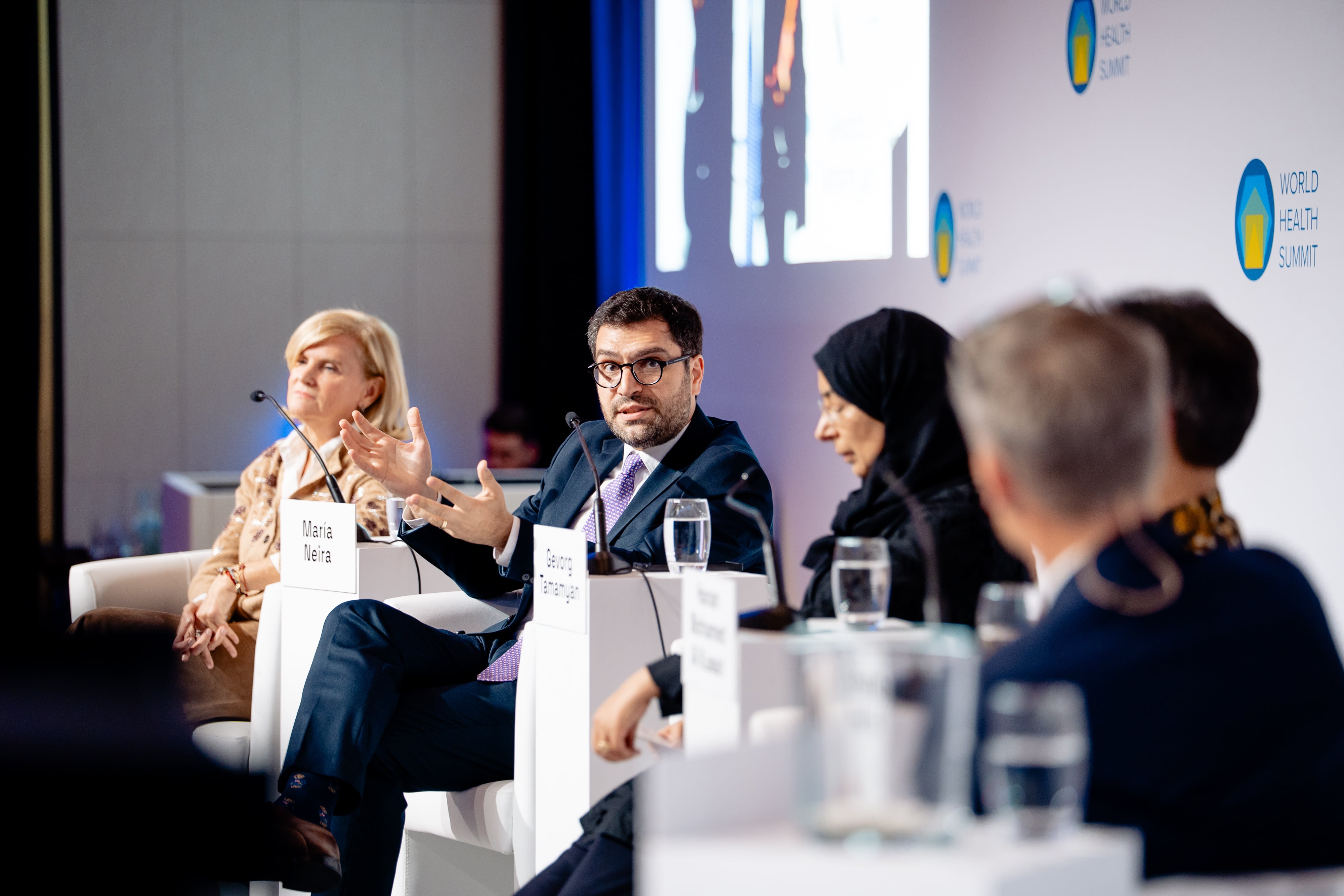
A woman in her 70s holds a sign against the World Health Organization (WHO) in the rain outside the World Health Summit in Berlin, one of the main international forums on global health. The image catches the eye of Gevorg Tamamyan, an Armenian physician and candidate to lead the agency. “When I was a child, the WHO meant trust. Why has that trust become so fragile?” he asks hours later during the first debate among several of the seven contenders to succeed Tedros Adhanom Ghebreyesus.
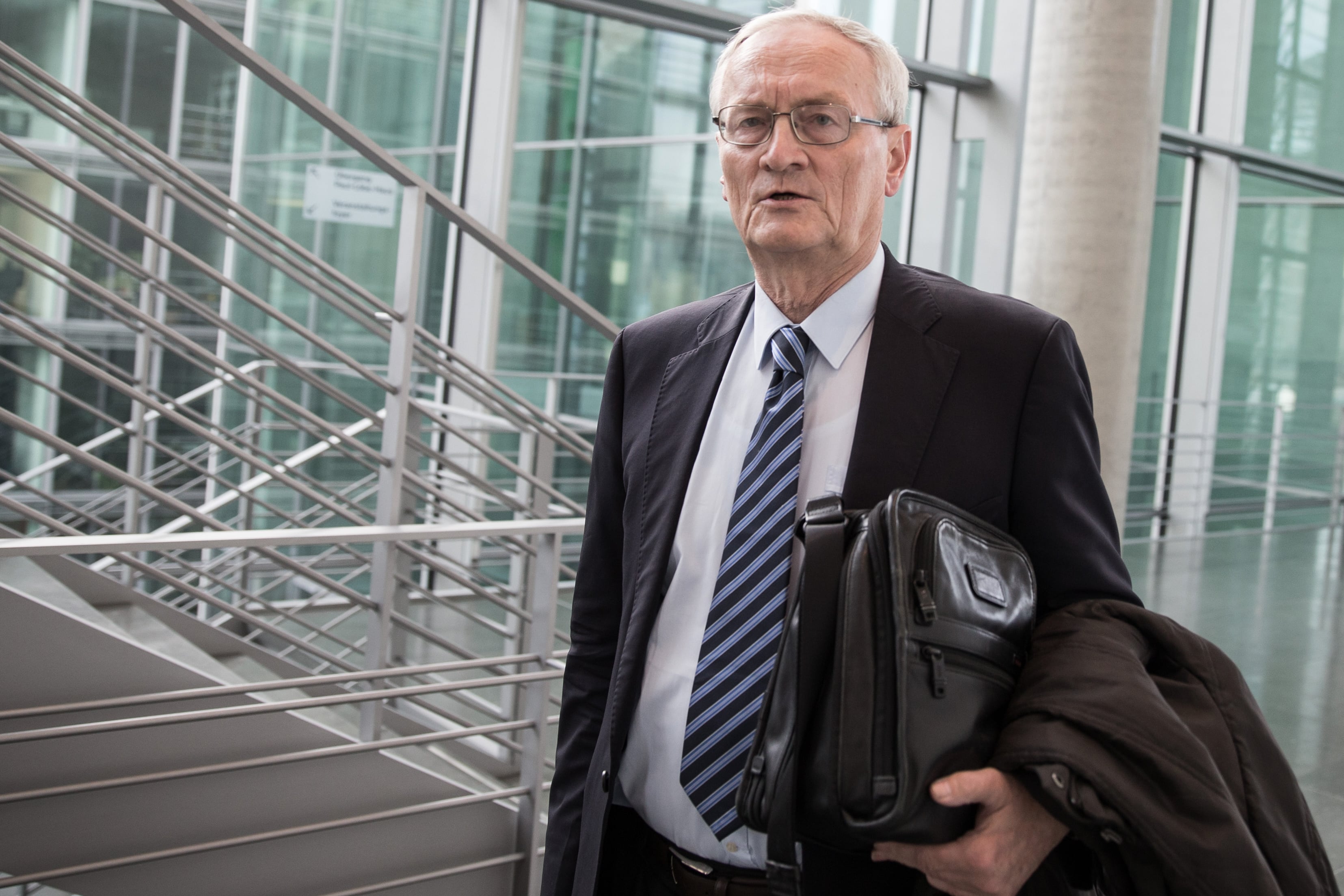
“What makes a good intelligence officer is that they do not attract attention.” This was one of the mottos that August Hanning repeatedly invoked in public appearances during his tenure as head of Germany’s intelligence services. Hanning, now 80, has been in custody since October 6 precisely for attracting too much attention. The former president of Germany’s foreign intelligence service, the BND, earned a reputation for being available to the highest bidder, whoever that might be. Germany’s federal prosecutor is investigating him on suspicion of treason and espionage on behalf of foreign countries.
The Georgian government has placed the wine collection that belonged to Soviet leader Joseph Stalin up for auction, Reuters reported on May 29. Authorities intend to use the proceeds from the sale to establish a winemaking school in Georgia. Stalin’s collection comprised approximately 40,000 bottles of rare French and Georgian wines, some dating back to […]
UK Prime Minister Andy Burnham said Russia interfered in the 2016 referendum that took Britain out of the European Union, in podcast excerpts released on 11 October, the Associated Press reported. His remarks are believed to be the first time a British prime minister has publicly acknowledged such meddling.
Russia’s information war keeps running through Europe’s ballots. German security sources said in August that Moscow was escalating disinformation before state elections, and Ukraine’s Center for Countering Disinformation found more than 200 Russian fake news sites aimed at France last year.
One question, one clear answer
Burnham told The Rest Is Politics podcast that he asked his advisers whether Russia had interfered in the 2016 vote. He asked after taking office in July.
“I’ve had the clear answer that yes, there was,” he said.
He argued that such things must now be put clearly on the record. He did not say how Russia interfered or offer evidence, and Moscow has long denied interfering in foreign votes.
Burnham said he had discussed Russian interference with German Chancellor Friedrich Merz in Berlin the previous week. “You know he was saying to me that the AfD are clearly linked to Russia, funded I believe,” Burnham said, referring to Germany’s far-right Alternative for Germany party. Putting such interference on the record would help “voters in Germany and France understand that some of this politics is instigated via our enemies, namely Russia,” he added.
Years of silence
In 2020, Parliament’s Intelligence and Security Committee found that the government had actively avoided investigating whether Russia meddled in the referendum. The report noted open-source signs of Russian attempts to sway the Brexit campaign. The government, it said, had never looked for hard evidence.
The government rejected the committee’s call for a review.
“We have seen no evidence of successful interference in the EU Referendum,” it said.
That same year, London said Russian actors had almost certainly tried to interfere in the 2019 general election. The government said they did it by amplifying leaked UK-US trade documents online.
From 2019 to 2016
Three weeks ago, Burnham stopped short of this. At the UN General Assembly on 22 September, he said the Kremlin spends around £1.3 billion each year on manipulating information. That is roughly $1.7 billion at recent exchange rates. He cited evidence that Russian agencies tried to interfere in the 2019 general election, but he did not mention 2016.
In the same speech, he said Britain had already helped Moldova protect its elections from Russian interference.
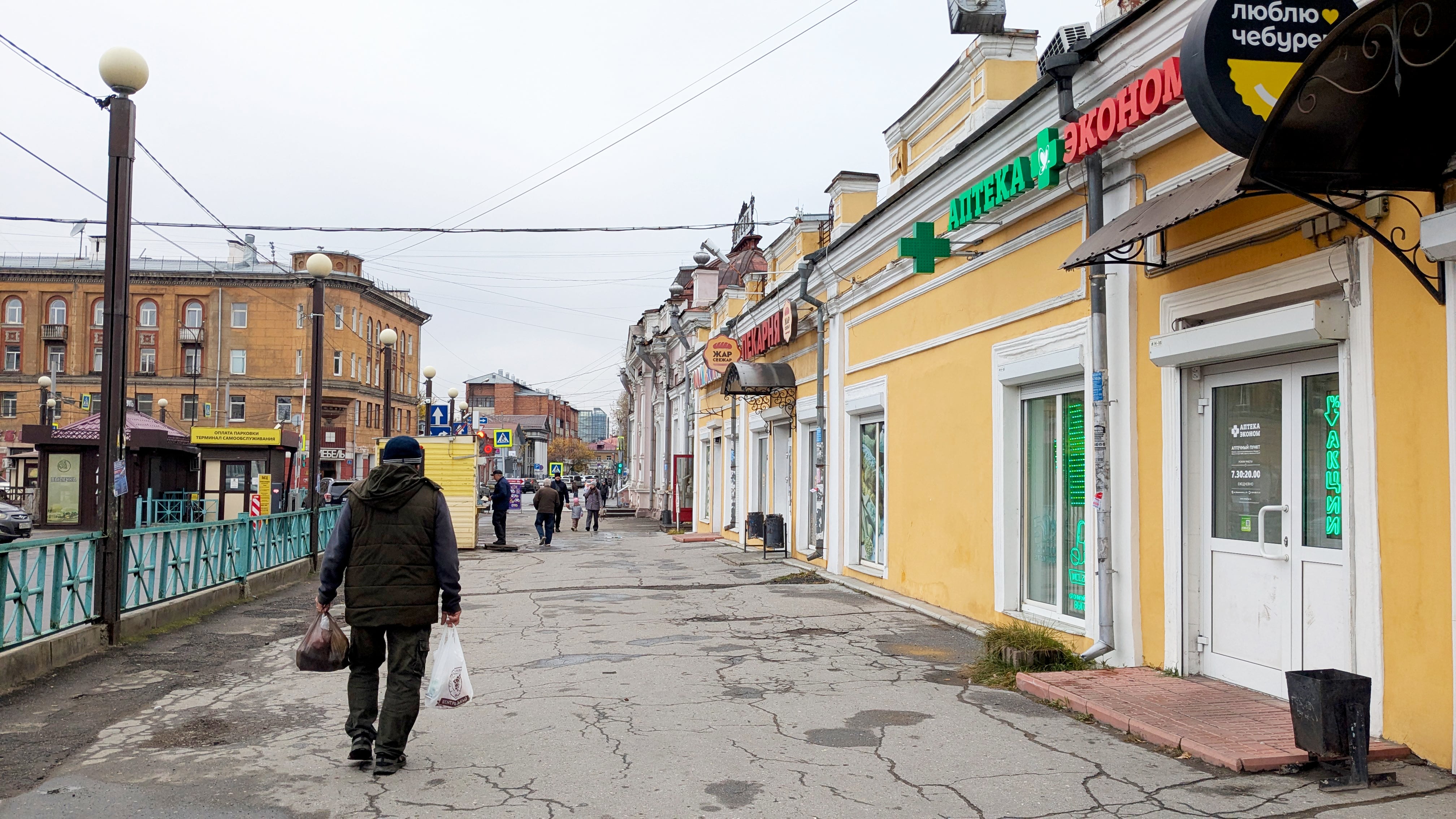
“What plague?” an Irkutsk resident exclaims when the epidemiological crisis that has put this small Siberian city near Mongolia on the front pages over the past week is mentioned. “Do you see me wearing a mask?” the annoyed clerk at a pharmacy retorts when asked whether she has noticed any concern over reports of quarantines and the death of a laboratory worker. “Whatever the authorities say, we’ll obey. We all obey the authorities,” say two elderly women, carefree as they sit on swings in a park in Shelekhov, the suburb that their own governor advised people not to visit due to “a particularly dangerous infection.”

 Login