Login

Parana River Flooding Forces Mass Evacuations in Paraguay
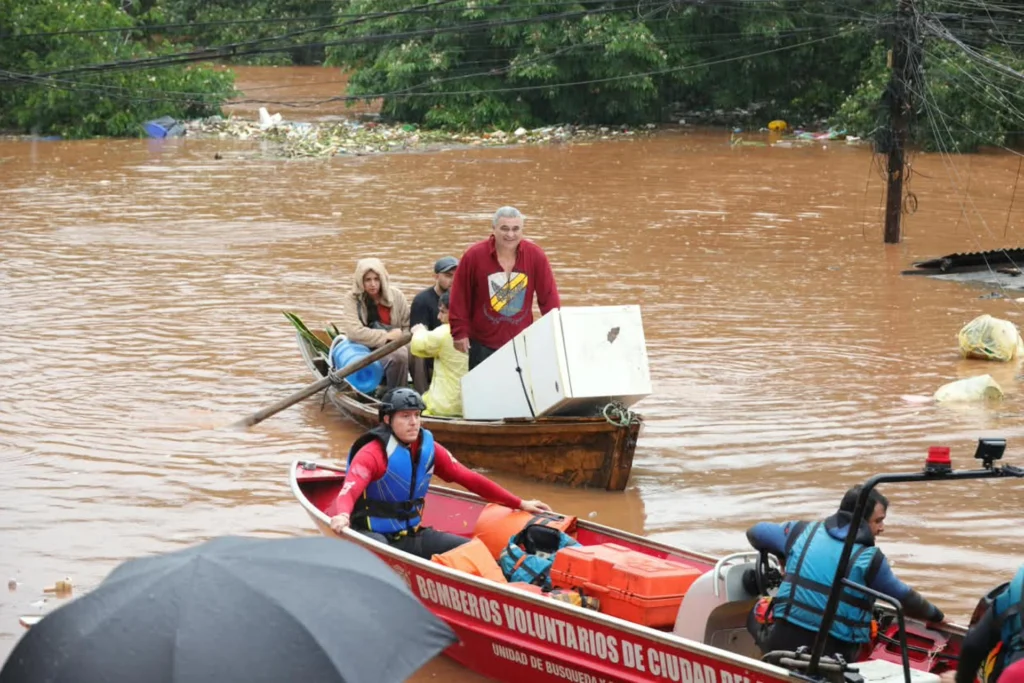
More than 100 families were evacuated from low-lying neighborhoods in Paraguay as the Parana River swelled rapidly, forcing military and emergency teams into action across the Alto Paraná and Misiones departments.
Intense rainfall across the Southern Cone and the fast-rising Parana River pushed Paraguayan authorities to launch emergency evacuation and relocation operations for affected families.
The effort has focused on riverside communities that stand directly in the path of a waterway now running far above its normal level.
RELATED: Ecuador Flooding Damages Thousands of Homes Across Three Provinces
Relief organizations and Armed Forces personnel intensified preventive work as rivers and streams rose at a dizzying pace. The sharp increase in water flow has placed vulnerable families settled in riverside zones at immediate risk, leaving little time between the first warning and the moment floodwater reaches their homes.
In Alto Paraná, the most critical impact is in the San Rafael neighborhood of Ciudad del Este, where dozens of homes were flooded. Officials of the Logistics Command said rising waters forced the immediate relocation of more than 100 families living in the lowest-lying areas.
Preventive eviction protocols were also activated for about 60 additional families, given technical projections of further rises in the river level. The distinction between the two groups reflects the staged nature of the operation. Families already surrounded by water were moved first, while those in areas projected to flood next were placed under preventive orders.
INTENSAS LLUVIAS PROVOCAN CRECIDA DE RÍO Y OBLIGAN A EVACUAR FAMILIAS EN PARAGUAY
— Soyapango Noticias (@soyanoticias) October 12, 2026
Las intensas lluvias que provocaron la crecida del río Paraná mantienen en alerta a las autoridades de Paraguay, donde se realizan evacuaciones y se ha desplegado personal militar para atender a… pic.twitter.com/9b3LnXxIWd
Text reads: “Heavy rains cause the river to flood and force families to evacuate in Paraguay. The heavy rains that caused the flood of the Parana River keep the authorities in Paraguay on alert, where evacuations are being carried out and military personnel have been deployed to assist affected families in the south of Ciudad del Este. At least 100 homes have been affected by the floods, especially in vulnerable areas…”
The effects spread to other parts of the country. In the city of Ayolas, in Misiones department, the Emergency Operations Center, naval units and fire brigades coordinated the relocation of residents to sports centers converted into temporary shelters.
In San Juan Bautista, the overflow of peripheral streams led to emergency housing for affected families at military grounds belonging to the Second Cavalry Division.
Across the border, authorities reported port closures, restrictions in riverside tourist areas such as Puerto Iguazú, and the evacuation of island residents. The Argentine side of the basin is grappling with the same wave of water that has already flooded Paraguayan communities.
According to the reports, the emergency stems from water saturation caused by severe rainfall in the upper basin, located in Brazilian territory. That accumulation forced the binational Itaipú hydroelectric plant to keep its 18 spillway gates open throughout the week after reaching its maximum operational safety levels. The flow increased to between 18,000 and 19,000 cubic meters per second.
Regional Alert Raised
The rise in flow, which grew by as much as 7,000 cubic meters per second within days, set off operational alarms in both Paraguay and Argentina. Argentine authorities also reported port closures, restrictions in riverside tourist areas such as Puerto Iguazú and the evacuation of island residents.
Operational forces and local authorities are maintaining permanent technical monitoring of the Parana basin, as weather forecasts point to continued rainfall.
Floods of this kind often hit the poorest communities hardest, since low-income families tend to settle on riverbanks and low-lying ground. Whether the water level will begin to fall in the coming days will depend largely on rainfall in the upper basin in Brazil, which forecasters expect to continue. i}n this sense, officials stressed the importance of not returning to flood-prone areas and of respecting the river’s natural beds to avoid a cyclical repetition of socio-environmental emergencies.