❌

Reading view

Shabana Mahmood to hold talks with EU over law enforcement cooperation

UK home secretary’s meeting comes after PM said he wanted to rejoin European law enforcement databases

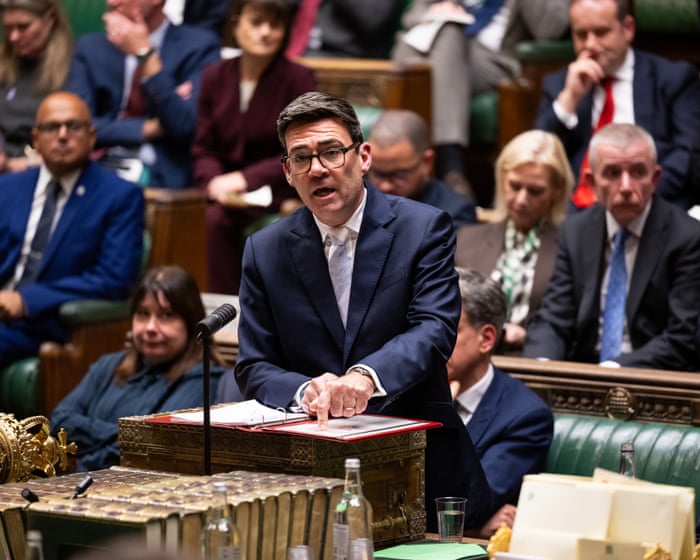
The UK home secretary, Shabana Mahmood, will meet the EU’s home affairs commissioner on Monday for further talks just days after Andy Burnham said he wanted to rejoin European law enforcement databases from which the UK has been locked out of since Brexit.

According to the European Commission, they will discuss “migration, border management, law enforcement cooperation and counter-terrorism”, with the latest Frontex data published on Monday showing a 43% decline in small boats crossing the Channel.

Continue reading...

© Photograph: Marcin Nowak/Anadolu/Getty Images

© Photograph: Marcin Nowak/Anadolu/Getty Images

© Photograph: Marcin Nowak/Anadolu/Getty Images

  •  

Revealed: French police used UK-funded 4x4 vehicles to charge student protesters

French government investigating why cars funded by UK to prevent asylum seekers crossing Channel were used in school protests

French police have used 4x4 vehicles paid for by British taxpayers to charge at student protesters during the school protests that have swept the country.

The French government has confirmed that an investigation has been launched into why the cars, funded by the UK government specifically to prevent asylum seekers crossing the Channel, were used during a protest involving school students in Dunkirk.

Continue reading...

© Photograph: Sameer Al-Doumy/AFP/Getty Images

© Photograph: Sameer Al-Doumy/AFP/Getty Images

© Photograph: Sameer Al-Doumy/AFP/Getty Images

  •  

Italy and Spain Move Towards Ending Schengen Border Controls After Meloni–Sánchez Talks

Italy has extended checks on travellers from Spain for another week, but talks between Giorgia Meloni and Pedro Sánchez have opened the way for an end to reciprocal restrictions imposed after the migration crisis in Ceuta.

Italy and Spain have agreed to work towards ending their reciprocal Schengen border controls following discussions between Prime Ministers Giorgia Meloni and Pedro Sánchez at the European Council summit in Brussels. Rome nevertheless extended its restrictions for another seven days on Friday, 16 October, as the two governments consider how to bring their respective measures to an end.

The decision marks a possible turning point in a dispute that has disrupted travel between two of the European Union’s largest countries since the summer. According to the notifications recorded by the European Commission, the restrictions concern air and sea connections between Italy and Spain, which do not share a land border.

The two governments have instructed their interior ministers to consider alternative arrangements over the coming week. Although neither side has formally withdrawn its measures, the agreement to coordinate their removal suggests that both capitals are seeking a way out of an increasingly uncomfortable confrontation over migration and internal European security.

How the Ceuta crisis reached Schengen

The dispute began after an extraordinary influx of migrants from Morocco into Spain’s North African enclave of Ceuta in late July. More than 72,000 people crossed the border, prompting serious questions about the management of the EU’s external borders and the possibility of onward movements into other member states.

Italy responded by introducing checks on passengers arriving from Spain, arguing that the situation created risks for public order and internal security. Rome also raised concerns about the possible movement of individuals presenting security threats, although the extent of any such movement remained disputed.

Madrid rejected the justification and introduced reciprocal measures. What began as an emergency response to events on an external border consequently developed into a disagreement about whether one Schengen member could impose restrictions on another on the basis of anticipated migration movements.

EU Today examined the original Spanish retaliation in August, when the dispute first threatened to turn temporary border controls into an instrument of political pressure.

The wider consequences of the Ceuta incident have raised questions about the vulnerabilities exposed at the EU’s external border and the effectiveness of common European migration and crisis-response policy.

The limits of temporary border controls

Schengen is built on the principle that people can travel between participating countries without routine internal border checks. Member states nevertheless retain the right to reintroduce temporary controls in response to serious threats to public policy or internal security, subject to the requirements of EU law.

The difficulty lies in determining when those exceptional powers are justified. Italy has maintained that the Ceuta crisis warranted precautionary action. Spain has argued that controls imposed specifically on travellers from its territory were unjustified and discriminatory.

These opposing positions matter beyond the two countries. If concerns over irregular arrivals in one member state become sufficient grounds for another to introduce sustained checks, the distinction between Europe’s external borders and its internal travel area becomes increasingly difficult to maintain.

The operational results have also entered the political argument. Italian figures cited during the dispute indicate that nearly half a million passengers were checked during the first month, with 31 refused entry. Those numbers demonstrate that the measures were substantial, but do not by themselves establish whether the original security concerns were proportionate to the restrictions imposed.

Madrid, meanwhile, has maintained that migrants involved in the Ceuta influx had not moved onwards to mainland Spain in the manner suggested by Italian concerns.

Meloni and Sánchez seek a practical compromise

The latest discussions offer both governments a route towards de-escalation without formally conceding their underlying positions. Meloni can present the additional week of controls as a continuation of Italy’s security precautions, while Sánchez can point to an agreement to prepare their coordinated removal.

The two prime ministers remain politically divided on migration. Meloni has consistently argued for stronger border enforcement and deterrence, while Sánchez has defended an approach incorporating legalisation and labour-market integration for migrants already living in Spain.

Those disagreements were also visible during the Brussels summit, where European leaders returned to the question of migration management and the consequences of national decisions for the wider Union.

For Brussels, the immediate concern is whether the two governments can replace competing national restrictions with arrangements that address security concerns without unnecessarily interrupting movement between Schengen countries.

A coordinated end to the controls would not resolve the underlying problems exposed by Ceuta. It would, however, remove one of the more unusual internal consequences of that crisis and demonstrate that political negotiations can still prevent emergency border measures from becoming semi-permanent.

The decisive period is now the coming week. Whether the controls expire as planned will depend on the discussions between the Italian and Spanish interior ministries and their ability to agree practical alternatives.

  •  

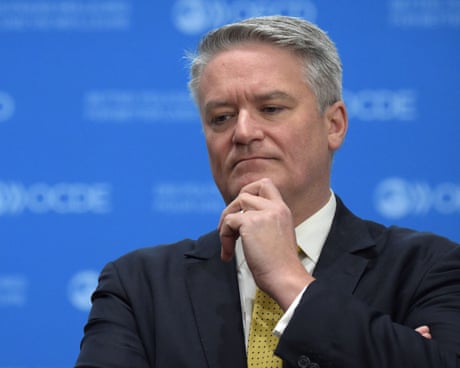
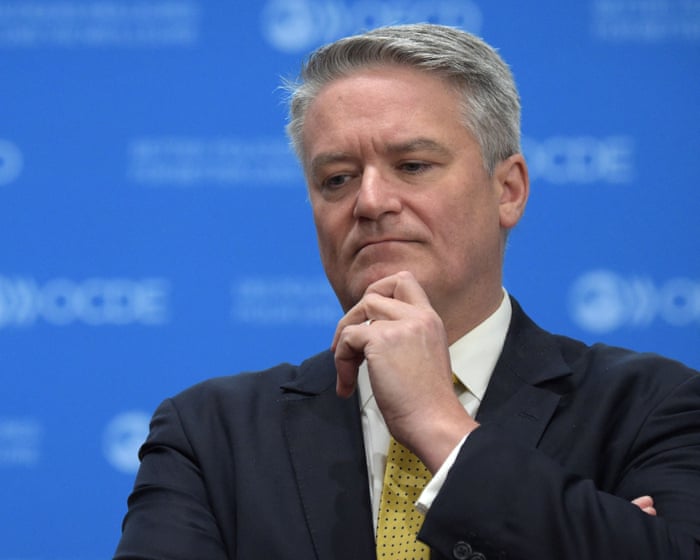
Mimicking populists will not ease cost of living or boost productivity, Mathias Cormann warns

Former minister and OECD head urges Australia not to adopt migration caps, with research showing migrants boost employment

Australia’s mainstream political parties are being warned not to adopt populist policies such as migration caps to address voters’ grievances over the cost of living.

Instead, Australia’s longest-serving finance minister, Mathias Cormann, is urging politicians to deliver housing, real wage growth and lower energy costs by boosting productivity.

Continue reading...

© Photograph: Éric Piermont/AFP/Getty Images

© Photograph: Éric Piermont/AFP/Getty Images

© Photograph: Éric Piermont/AFP/Getty Images

  •  

Spain’s King & Queen Visit Ceuta as Migration Crisis Fuels Sovereignty Dispute with Morocco

King Felipe VI and Queen Letizia visited Ceuta on Tuesday, 13th October, in a demonstration of Spanish sovereignty over the North African territory following a migration crisis that brought tens of thousands of people across the Moroccan border and sharply increased diplomatic tensions between Madrid and Rabat.

The visit, the first by a Spanish monarch since 2007, took place less than three months after the mass crossings of 30th–31st July, when more than 70,000 people entered or attempted to enter Ceuta from Morocco. The scale of the movement overwhelmed local infrastructure and resulted in substantial loss of life.

Casualty figures differ between available accounts, with reports indicating more than 100 deaths. The royal couple paid their respects at the city’s Muslim cemetery, where many of those who died during the crisis are buried.

The King called for relations with Morocco to be conducted in good faith and with mutual respect, while reaffirming Ceuta’s position within Spain and the European Union.

Territorial dispute returns to the forefront

Ceuta and neighbouring Melilla occupy a politically unusual position. Both are Spanish autonomous cities on the northern African coast, forming part of the European Union despite their geographic location outside continental Europe.

Morocco disputes Spanish sovereignty over both territories, regarding them as territories that should come under Moroccan control. Madrid considers their status settled and maintains that neither city’s sovereignty is open to negotiation.

The July migration crisis has brought these longstanding differences back into the centre of Spanish domestic politics.

Spain has accused Moroccan border authorities of failing to prevent the mass crossings. Questions remain about whether the Moroccan authorities were overwhelmed by events, failed to act adequately or deliberately permitted the movement as a means of applying diplomatic pressure.

Evidence establishing an organised Moroccan operation has not been made public. Nevertheless, the crisis has demonstrated how profoundly Spanish border security depends on the actions of authorities on the other side of the frontier.

The Moroccan monarchy has subsequently indicated that existing migration cooperation with Spain is approaching its limits.

Migration creates pressure on Spanish politics

The consequences extend beyond the immediate border crisis. Ceuta’s population is approximately 80,000, making the number of arrivals during the two-day emergency comparable to the city’s total number of residents.

Temporary shelters were established to accommodate migrants who remained in the territory, including unaccompanied minors. Authorities subsequently undertook operations to clear informal settlements and transfer residents to reception facilities.

Spanish authorities also face questions concerning their handling of the emergency. Allegations of mistreatment involving security personnel are under investigation, while local organisations have criticised hostility towards migrants and difficulties in delivering humanitarian assistance.

Ceuta’s mixed religious and cultural population has made the political atmosphere particularly sensitive. Muslim residents form a substantial proportion of the city, and local community representatives have warned against treating entire neighbourhoods as responsible for the disorder.

Prime Minister Pedro Sánchez’s government has presented the royal visit as a demonstration of national support for Ceuta. Opposition parties have accused the government of failing to defend Spanish interests adequately during the crisis.

The dispute is also unfolding ahead of Spain’s general election scheduled for 29th November, placing migration, sovereignty and relations with Morocco among the central questions facing voters.

A European border controlled through cooperation

For Brussels, the immediate question concerns the effectiveness of Europe’s migration arrangements with neighbouring countries.

The EU relies on cooperation with Morocco to prevent irregular crossings, disrupt migrant-smuggling networks and manage movements towards European territory.

Spain has traditionally supported a close relationship between Brussels and Rabat, recognising Morocco’s importance to migration management, trade and regional security.

Yet the events in Ceuta have demonstrated the vulnerability of arrangements that depend heavily on the continued cooperation of governments outside the Union.

Unlike migration routes crossing the Mediterranean, the Ceuta frontier provides direct land access to EU territory. A sudden deterioration in bilateral cooperation can therefore produce an immediate crisis without requiring migrants to undertake a sea crossing.

Wider consequences for European diplomacy

The dispute also intersects with economic competition around the Strait of Gibraltar.

Morocco has invested heavily in ports and logistics infrastructure, including Tanger Med, while Ceuta and Melilla remain economically dependent on commercial relationships with their surrounding regions.

Spain must manage competing interests: maintaining territorial sovereignty, protecting the security of its borders and preserving cooperation with a country that remains an important economic and diplomatic partner.

The European Commission has an interest in avoiding a confrontation that could undermine wider migration arrangements between the Union and North African states.

At the same time, Brussels cannot treat questions concerning the status and security of territory belonging to an EU member state as exclusively bilateral matters.

The royal couple are scheduled to visit Melilla on Wednesday, extending the political significance of the journey beyond Ceuta.

The immediate migration emergency has subsided, but the underlying disagreement remains unresolved. Spain continues to insist on its territorial sovereignty, while Morocco retains its claims and considerable influence over the practical management of the frontier.

Main Image: LIMITED PICTURES

  •  

Wednesday briefing: ​Why small boat crossings are here to stay ​

In today’s newsletter: The ​collapse of the UK’s ‘one in, one out’ asylum deal with France exposes the limits of border enforcement that did little to stop crossings, and only made them more dangerous

Good morning. You’d be forgiven for missing it. Earlier this month, the government quietly scrapped its “one in, one out” deal with France. The partnership was supposed to eliminate small boat crossings by deterring asylum seekers from making the treacherous journey across the world’s busiest shipping channel.

The deal, which lasted just 423 days, was beset with problems, had a negligible impact, and now joins a long list of policies that have tried and failed to address highly visible, often tragic small boat crossings. This morning, the Home Office announced that it would be doubling the number of riot police along the French coast in lieu of the deal.

UK news | Extremists holding anti-immigration opinions are becoming increasingly likely to consider carrying out terrorist attacks against immigration centres and asylum hotels, the head of MI5 has warned.

UK politics | Nigel Farage has denied that a Reform UK government would authorise lethal force against small boat crossings in the Channel.

Ukraine | Andy Burnham will host Volodymyr Zelenskyy at Downing Street on Wednesday as the UK seeks to further underline its support for the Ukrainian president, in contrast to his difficulties with Donald Trump.

US politics | Kimberly Guilfoyle is stepping down as US ambassador to Greece after weeks of reports that she sought payment from a Trump donor in exchange for access to administration officials.

Pope Leo XIV | Pope Leo has lung cancer, the Vatican said late on Tuesday. Leo, 71, underwent an operation and had the lower lobe of his right lung removed, with tests confirming a diagnosis of lung adenocarcinoma, the Vatican said.

Continue reading...

© Photograph: Chris J Ratcliffe/Reuters

© Photograph: Chris J Ratcliffe/Reuters

© Photograph: Chris J Ratcliffe/Reuters

  •  

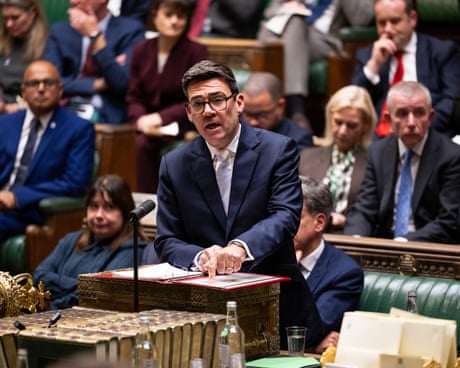
Andy Burnham promises ‘serious dialogue’ over UK’s relationship with EU

PM hails next month’s ‘reset’ summit as first step to closer ties, but tensions over trade may prove problematic

Andy Burnham has promised a “serious dialogue” over the UK’s future place in Europe, saying the existing relationship is “not good enough” as he framed next month’s Brussels summit as a possible first step to EU membership.

The prime minister said Britain must take a “clear-eyed rational look” at its long-term relationship with the bloc to boost economic growth and control immigration, which needed to go beyond Labour’s existing red lines.

Continue reading...

© Photograph: House of Commons/PA

© Photograph: House of Commons/PA

© Photograph: House of Commons/PA

  •  

Burnham says ‘public will be the boss’ in any future decision about closer relationship with the EU – as it happened

The prime minister tells MPs the next summit with the EU will be held on 20 November

Burnham to urge MPs to embrace closer ties with EU

Zia Yusuf, Reform UK’s home affairs spokesperson, is speaking now. He started his speech with an account of a 73-year-old woman dying in North Wales after having to wait 23 hours for an ambulance, and he sought to link this to immigration.

He said:

The Royal College of Emergency Medicine estimates that 15,000 people across Britain died last year due to excess wait times for emergency treatment. That’s 300 people a week, 300 lives destroyed, 300 families devastated.

And that number has increased tenfold over the last decade. This is a moral outrage, and it is a direct result of decisions made by Tory and Labour governments.

I don’t think that’s because he wants to have a fight over the European Union. I think that’s because he knows what we’re talking about today impacts hard in what is known as the red wall.

Continue reading...

© Photograph: House of Commons/UK Parliament/PA

© Photograph: House of Commons/UK Parliament/PA

© Photograph: House of Commons/UK Parliament/PA

  •  

EU Gives Final Approval to Return Hubs Outside Bloc Under New Migration Rules

The European Union has formally adopted new rules allowing member states to establish migrant return hubs outside the bloc, completing a legislative process that significantly expands the tools available to governments seeking to remove people with no legal right to remain.

The Council gave its final approval to the Return Regulation on 1 October. The measure introduces a common European framework for returns, including a European Return Order, stronger obligations on people ordered to leave and special provisions for individuals regarded as security risks.

It also creates an explicit legal basis for member states to send people subject to return decisions to facilities established in non-EU countries.

Such arrangements can only be concluded with countries considered to respect international human rights standards and international law, including the principle of non-refoulement, which prohibits returning people to places where they face persecution or serious harm.

Unaccompanied minors are excluded from transfers to return hubs.

The regulation will enter into force the day after its publication in the EU’s Official Journal. Provisions dealing with return hubs will apply immediately, while measures requiring administrative preparations will take effect one year later.

The decision moves the return-hub policy beyond the negotiating stage. In September, EU Today reported that Denmark, Germany, the Netherlands, Austria and Greece had begun actively seeking third countries willing to host return centres.

By the end of September, the same group was preparing a pilot system intended to begin transferring rejected asylum seekers outside the EU during 2027.

The European Commission has argued that the existing returns system has been one of the weakest parts of EU migration policy. When agreement on the legislation was reached in June, it said the effective return rate had risen to 28 per cent in 2025 but remained too low.

The Council now puts the problem more starkly: around two in every three people ordered to leave the EU do not actually leave.

A central element of the new framework is the European Return Order.

A member state issuing a return decision will enter essential information on a standard European form. That will give other member states the information required to recognise the decision if the person subsequently moves elsewhere within the Union.

Automatic recognition will not initially be compulsory. Governments will be able to recognise another country’s return decision voluntarily, with the arrangement due to be reviewed three years after the regulation enters into force.

The Commission may then propose making mutual recognition mandatory.

People ordered to leave will also face an EU-wide obligation to cooperate with national authorities. Failure to do so can lead to reduced benefits or allowances, withdrawal of incentives for voluntary departure, financial penalties and, where national legislation permits, criminal sanctions.

Separate rules apply to individuals considered security risks.

Governments may impose indefinite entry bans where justified and proportionate and may detain such individuals for periods exceeding 24 months.

The Return Regulation complements the wider EU Pact on Migration and Asylum, which entered application on 12 June. That system introduced new arrangements covering border screening, asylum procedures, biometric registration and responsibility-sharing between member states.

Return hubs have nevertheless become one of the most politically significant elements of the wider migration policy.

The European Parliament approved the new returns framework in June, after Council and parliamentary negotiators had reached a provisional agreement earlier that month.

Attention subsequently moved to implementation — particularly the question of finding governments outside the EU willing to host people removed from member states.

The regulation cannot compel a third country to accept a return centre. An agreement or arrangement must first be negotiated with the country concerned, covering legal safeguards and the operation of the facility.

That requirement leaves the most difficult diplomatic question unresolved.

The five governments already working together on return hubs have discussed possible partner countries, while Greece has separately moved to create national legislation supporting transfers to centres outside the EU.

The Council’s decision gives those initiatives a common European legal framework. Whether return hubs become a significant part of EU migration policy will now depend on agreements with countries prepared to host them.

  •  
❌