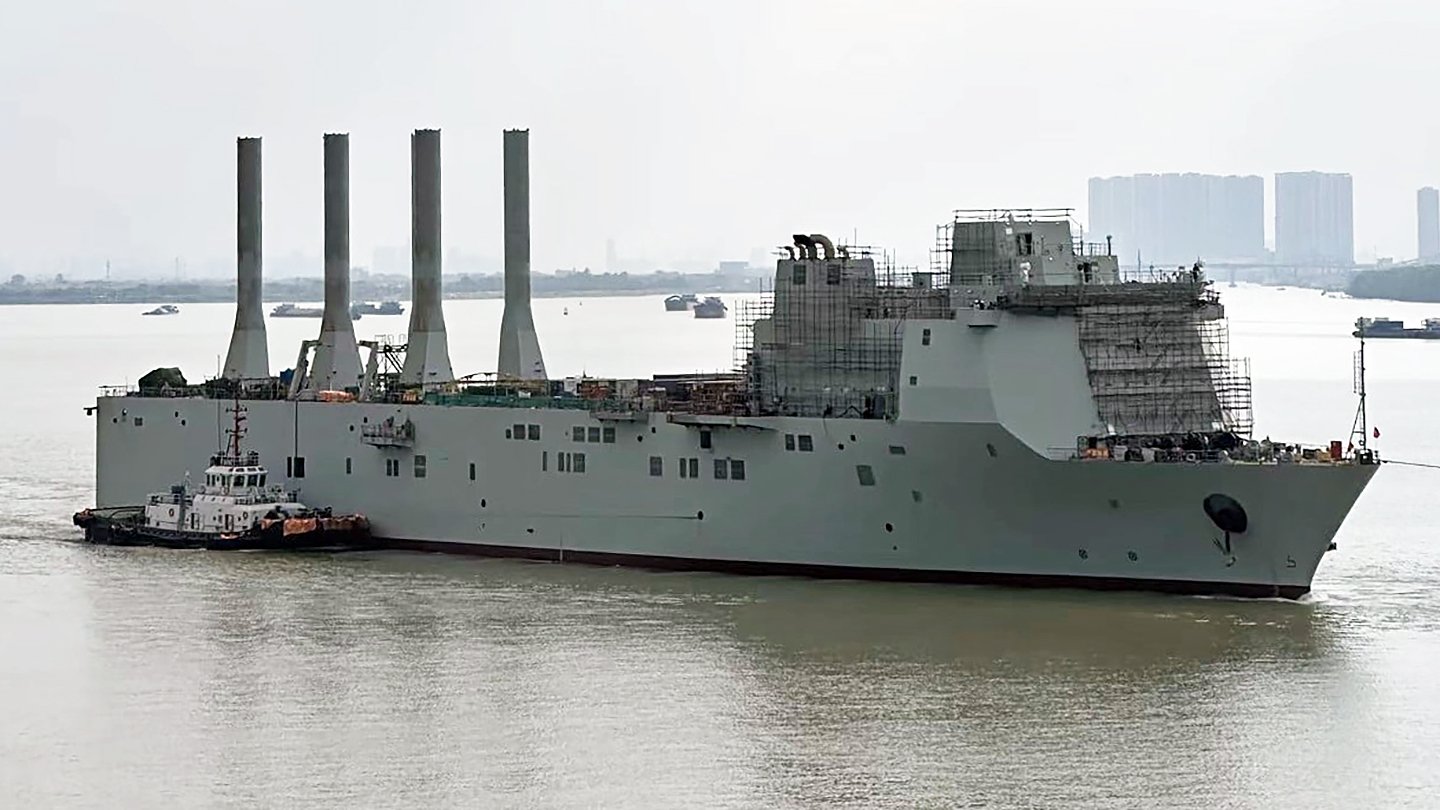
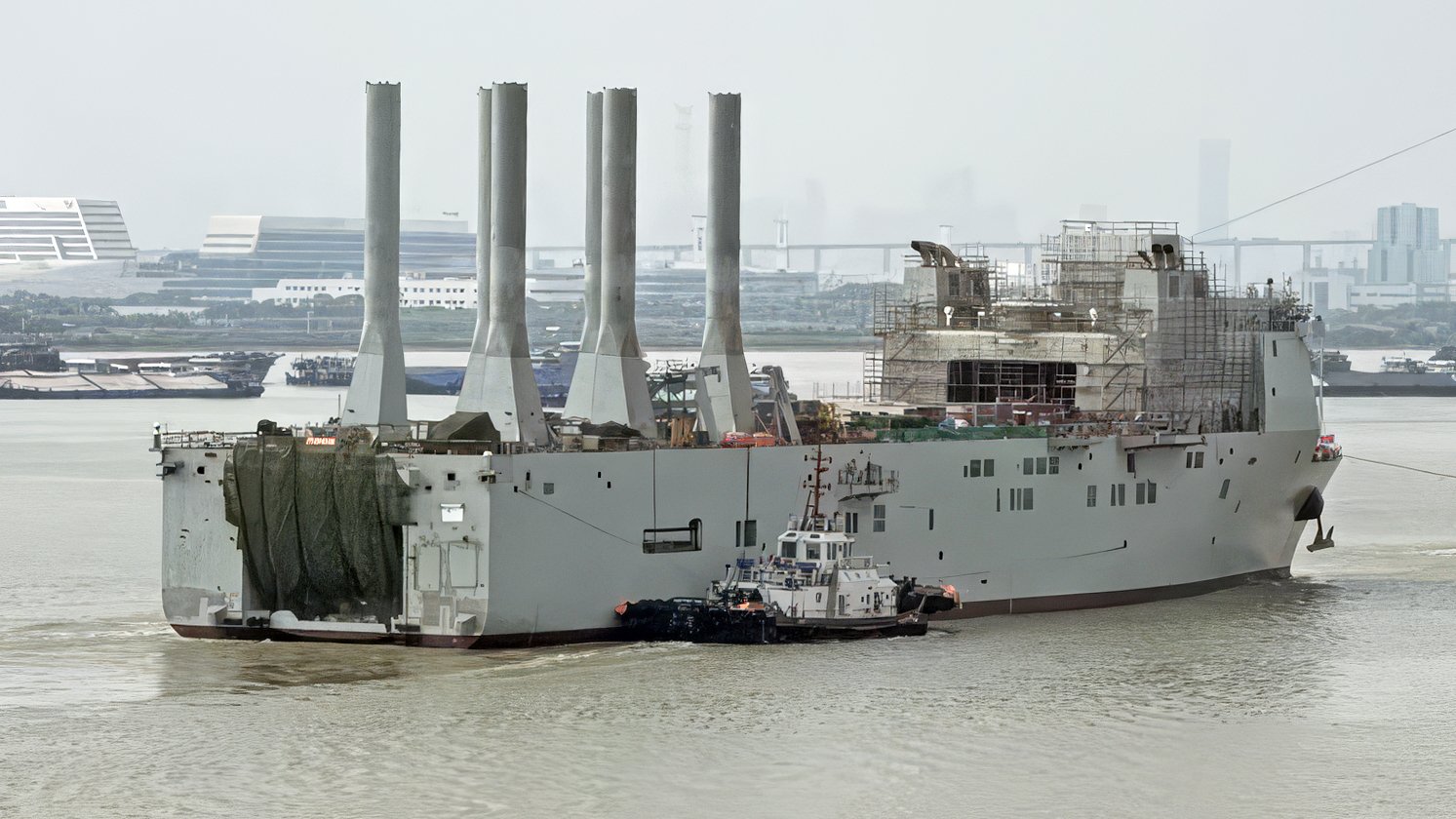
Nearly a month ago, we reported on a uniquely configured vessel that was far along in its construction at Hudong-Zhonghua Shipyard on Changxing Island in Shanghai. The intentions behind this design appeared to be as an uncrewed underwater vehicle (UUV) mothership, capable of deploying a handful of very large vehicles or many more smaller ones via its stern garage door and well deck. Its large pylons would be used to lift the vessels up and down out of the water and to different levels in the ship. Now it appears China has not just one, but two of these vessels nearly complete.
Make sure to read our initial report on this vessel configuration for full context by clicking here.
(Chinese Internet)
The new image was taken in Guangzhou and the vessel has a near identical shape, but with smaller proportions and minor changes to its overall moldline, compared to the larger one in Shanghai. This new vessel appears to be about a third smaller overall than its counterpart. The lift towers number six in total instead of six larger ones and six smaller ones on the Shanghai vessel. Regardless, the major design features are all there, including the flight deck and hangar behind the forward superstructure, the location of the smokestacks, and so on.
The larger but very similar in configuration UUV mothership that has now been launched in Shanghai. (Chinese Internet)
While two of these assets could still be considered largely intended for experimental use, a growing fleet would have increasing tactical and even strategic importance. Being able to easily launch and recover large numbers of UUVs, or a few very large ones, far from Chinese shores would provide an asymmetric capability. A fleet of ships that is dedicated to deploying, recovering, and tending to these systems, some of which can remain on patrol for very long periods, would be a major indication of how important China sees UUV operations as part of its future strategy.
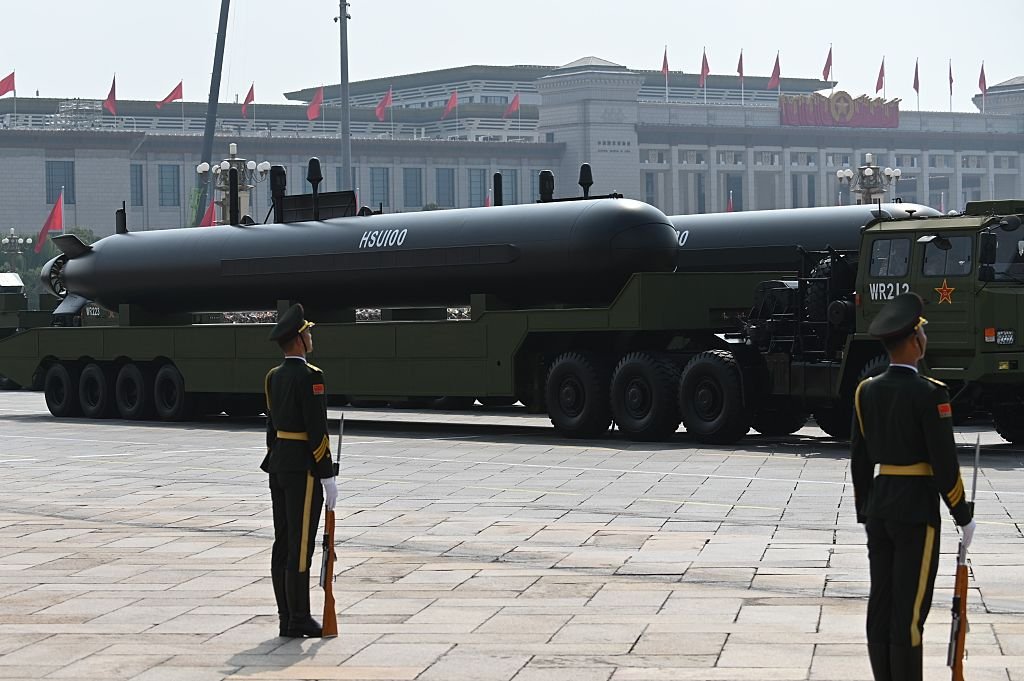
03 September 2025, China, Beijing: HSU100 uncrewed underwater drones ride along on military transporters at Tiananmen Square in Beijing during a military parade to mark the 80th anniversary of the end of World War II. Photo: Johannes Neudecker/picture alliance via Getty Images picture alliance
There have been rumors that these vessels are part of a larger overall program that will see more ships with similar capabilities constructed. Once again, this would be a strong indication that these vessels’ utility will go beyond testing and limited operational use cases. The launch and recovery of large UUVs remains a conceptual work in progress for the U.S., with nothing similar in the U.S. Navy’s inventory, as we discussed in our original post.
Large long-range UUVs can be used for many tasks, from mapping the sea floor to hunting submarines and ships to searching for mines to launching cruise missiles and drones to being turned into immensely destructive weapons in their own right that can circumvent traditional strategic defenses. For China, providing a credible threat to America’s outposts deep in the Pacific and even the U.S. seaboard would be on the table.
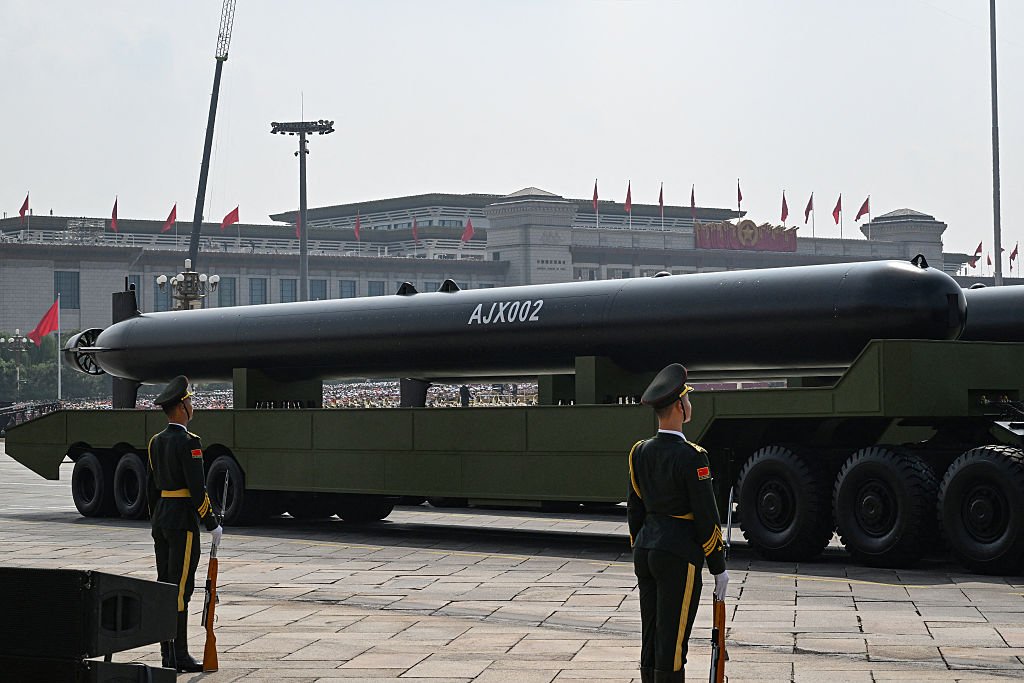
An AJX002 uncrewed underwater vehicle is seen during a military parade marking the 80th anniversary of victory over Japan and the end of World War II, in Beijing’s Tiananmen Square on September 3, 2025. (Photo by Greg Baker / AFP) GREG BAKER
There is speculation online as to where exactly this vessel was built. The first place that came to mind is Guangzhou Shipyard International’s (GSI) facilities on Longxue Island, just southeast of the city of Guangzhou. GSI is a subsidiary of the China State Shipbuilding Corporation (CSSC). It is here that many of China’s most unique vessels are born. These include drone test ships of various kinds, massive beach landing barges, and giant supply ships. Upon closer review of archival satellite imagery, we can say for certain that GSI did build this ship. An image from October 2nd shows it peeking out of a covered graving yard area at the facility prior to launch.
The emergence of two of these large UUV tenders in such a short period of time underscores China’s major bet on the technologies they will support. If more ships are added to the currently known fleet of two, a clearer picture of the People’s Liberation Army Navy’s large UUV plans, and its expeditionary potential, will come into focus.
The children’s horror author, along with filmmaker Jem Garrard and Tubi’s VP of Original Scripted Content Josh Van Houdt on bringing 'Pumpkinhead' and its sequel to the screen, and the streamer's future with 'Afraid of Clowns' and 'The Babysitter.'
Armed with a Michelin Bib Gourmand recognition under his belt at the age of 30, Cchef Vamshi Krishna Adi wants to take Indian fine dining to urban centrescenters outside the metropolises of the US. We speak to him about the roller coaster journey behind his restaurant, Zamindar’s Clubhouse
Despite legal protections, the Belarusian state is building a sprawling academy complex for the KGB on the grounds of a historic Catholic cemetery in the heart of Minsk, RFE/RL’s Belarus Service has found. Plans call for a swimming pool, a shooting gallery, and office suites for senior officials.
From Taiyaba Ali’s contemporary take on Lucknowi cuisine at SEHN and Bar Find’s cocktail residency at Circa 11 to a bread-focused café and a Bengali feast at The Oberoi, here is what is new on Bengaluru’s food scene
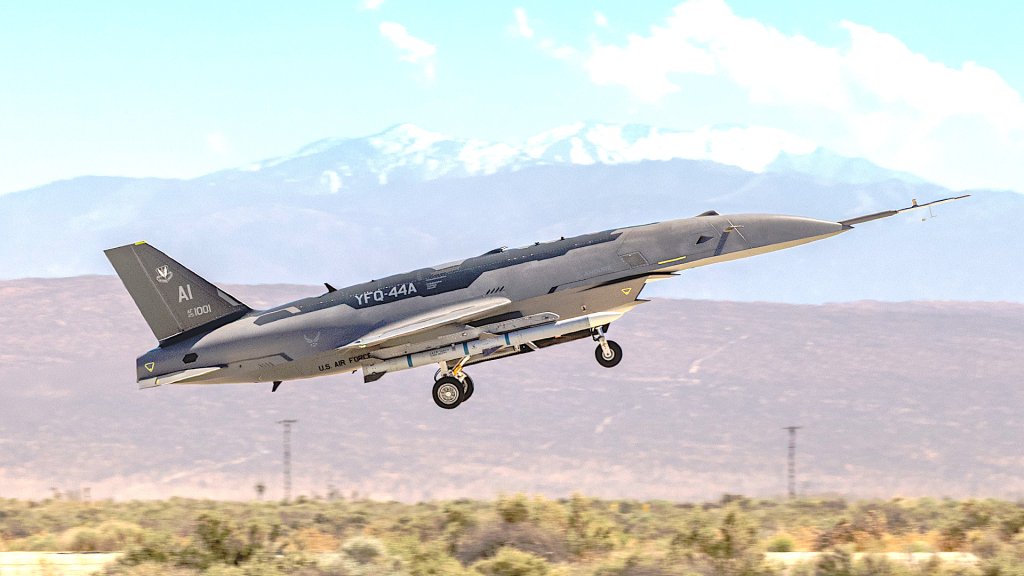
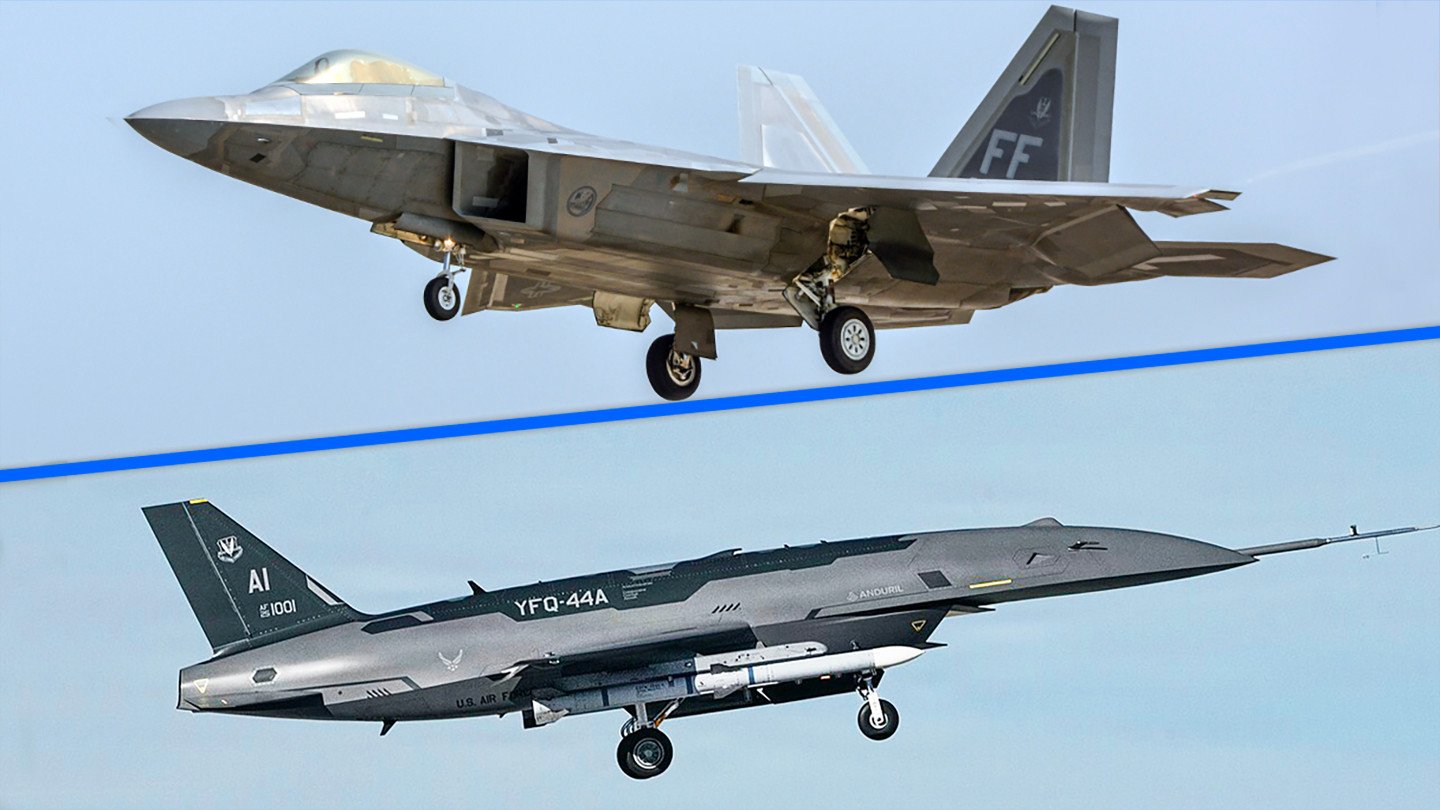
A pilot flying an F-22 Raptor fighter has issued commands to a YFQ-44A Fury Collaborative Combat Aircraft (CCA) drone in a first-of-its-kind test. This is an important development for the U.S. Air Force’s CCA program, as its F-22s are set to be the first aerial ‘quarterbacks’ for these uncrewed aircraft once they enter operational service.
The Air Force and Anduril, Fury’s prime contractor, announced the “airborne tactical-control demonstration” today, but it occurred sometime earlier this month. An Anduril spokesperson confirmed directly to TWZ that this was a first for an F-22 and a pre-production YFQ-44A. Last month, the company disclosed tests involving Fury flying in formation with F-35 fighters, but stressed that the latter were not yet issuing commands to the former in mid-air. A Fury drone also launched an AIM-120 Advanced Medium-Range Air-to-Air Missile (AMRAAM) for the first time earlier this year.
A stock picture of a pre-production YFQ-44A Fury CCA drone. USAF
The Air Force has orders in now for production of FQ-44As, as well as General Atomics’ FQ-42A Vengeance drones, under the first phase, or Increment 1, of its CCA program. The service is still planning to acquire additional CCAs, which could be of entirely different types, through a follow-on Increment 2. The goal now is to have a fleet of at least 500 Increment 1 CCAs by 2032. The recent test is part of efforts to lay the groundwork for an initial tranche of CCAs to start entering operational service around the end of the decade.
“During the demonstration, an F-22 pilot served as an airborne ‘quarterback,’ issuing high-level tactical directives to a single YFQ-44A,” according to a press release from the Air Force. “The aircraft’s onboard autonomy software interpreted and executed those directives in real time, conducting dynamic flight maneuvers and simulated combat tasks.”
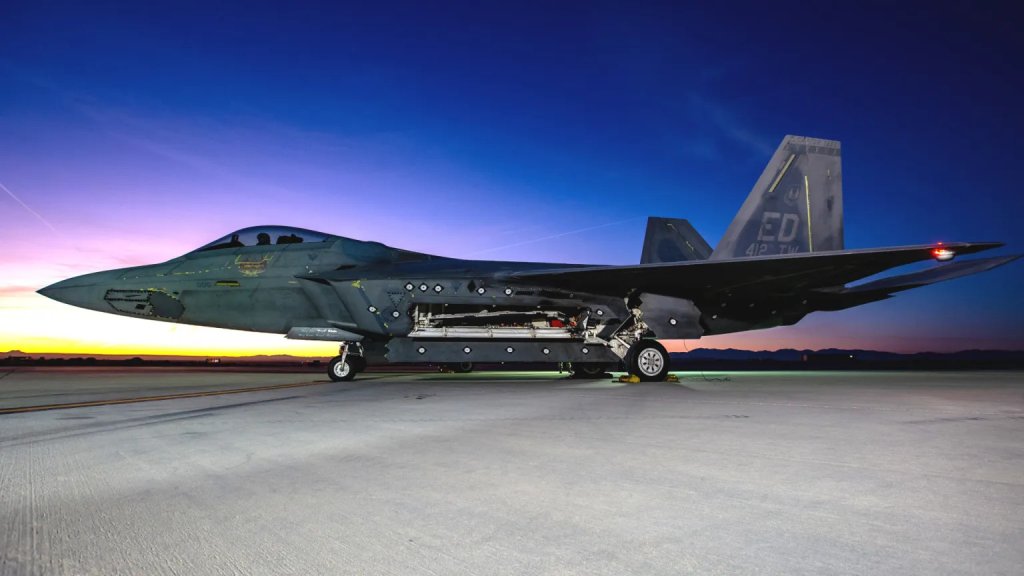
A stock picture of an F-22 Raptor test jet. USAF
“The event brought together personnel from the 412th Test Wing, 422nd Test and Evaluation Squadron, 309th Software Engineering Group, Experimental Operations Unit, F-22 System Program Office and the CCA Software Autonomy and Teaming Branch,” according to the Air Force release.
The Experimental Operations Unit (EOU) mentioned here is based at Nellis Air Force Base in Nevada and has been leading efforts to pave the way for future Air Force CCA operations.
The “Fury and an F-22 both took off [from] Edwards AFB [Air Force Base in California] and joined up midair,” according to a separate release from Anduril. “While in flight, the Raptor pilot sent an updated mission plan to Fury using a tactical data link, commanding Fury through operationally-relevant maneuvers from the cockpit of the crewed quarterback.”
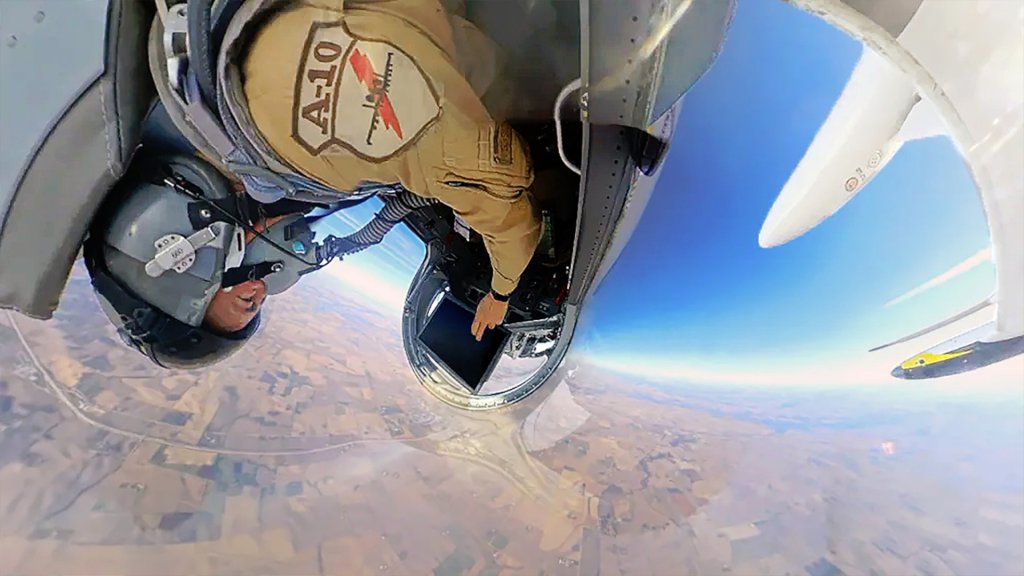
Neither the Air Force nor Anduril provided further details on how the F-22 was configured for this test. Past Air Force budget documents have mentioned the need to integrate “tablets, cables, and associated materials” onto the Raptor for this purpose. A single Raptor is also expected to be able to manage multiple CCA drones simultaneously.
A view of a “battle manager” in the back seat of an L-39 light jet using a tablet-like device during a past test of capabilities to control drones in mid-air conducted by Lockheed Martin’s Skunk Works. Lockheed Martin
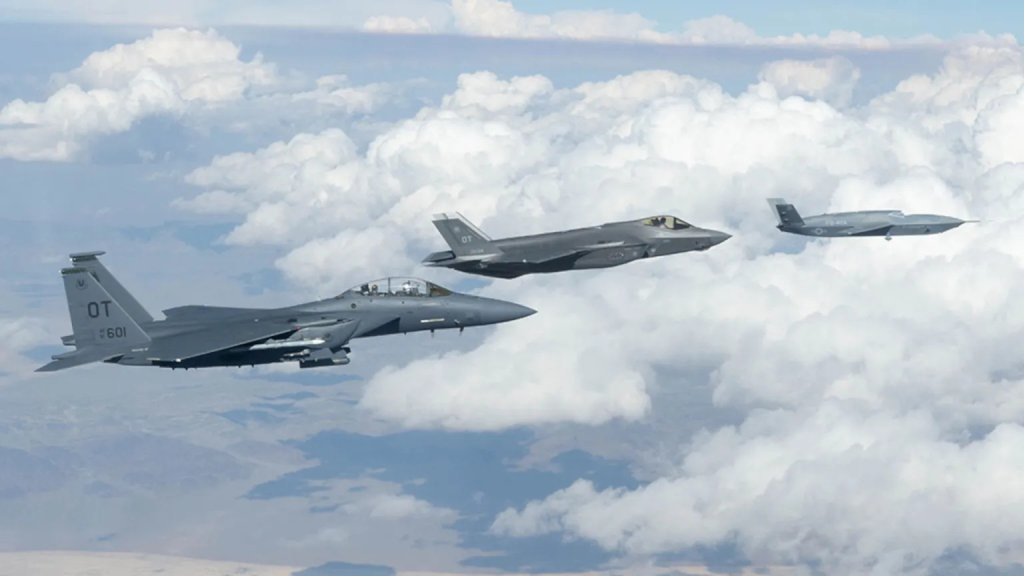
A General Atomics Vengeance drone, at right, in flight together with an F-35A Joint Strike Fighter and an F-15E Strike Eagle. General Atomics
In addition, Fury and Vengeance are set to make their debut in a large-scale exercise before the end of the year. Bringing the CCAs to the next iteration of Exercise Emerald Flag will give the Air Force further opportunity to test them in a more operationally relevant context alongside crewed fighters.
“We have not yet done a LFE [large-force employment exercise] with these [CCAs], for real. The first one is going to be Emerald Flag. That’s in December,” Lt. Col. Lyndon “OTTO” Bartlett, the EOU’s Director of Operations, said during a panel at the Air & Space Forces Association’s (AFA) 2026 Air, Space & Cyber Conference in September, at which TWZ was in attendance. “That’ll be our first tip [sic] dip of the toe in an actual force integration.”
The EOU, working together with other Air Force elements and industry partners, still has to answer a host of other outstanding questions unrelated to tactical operations. CCAs will be deployed, launched, recovered, supported, and otherwise operated in ways that are distinct from their crewed counterparts, and for which new policies and procedures will need to be developed. Just making sure human pilots have trust in their uncrewed wingmen operating as expected will be critical, underscoring the specific importance of the demonstration disclosed today. All of this applies equally to the U.S. Marine Corps and U.S. Navy CCA programs, which are being run in very close coordination with the Air Force’s efforts.
When it comes to the recent test involving the F-22 and the YFQ-44A, “this achievement demonstrates what is possible when we are aligned with industry on a shared imperative: delivering capability to the warfighter at unprecedented speed,” Secretary of the Air Force Troy Meink said in a statement today. “We are driving urgency into every part of acquisition from rapid integration and flight learning to disciplined assessment, so we can turn promising technology into combat capability at the pace the threat demands.”
A graphic showing the FQ-42 and FQ-44 designs together. USAF
“This flight shows the power of crewed-uncrewed teaming and the advantage it provides our warfighters,” Air Force Chief of Staff Gen. Ken Wilsbach also said. “We must test often, learn fast, and give commanders what they need, when they need it.”
“The U.S. Air Force’s CCA program is the fastest moving, most mature CCA program anywhere in the world, and will be the first to field operational aircraft,” Mark Shushnar, Anduril’s Vice President of Autonomous Airpower, said as well. “Getting there demands that Anduril and the U.S. Air Force work together to prove out the capability, define the operational procedures, and build trust between operators and their semi-autonomous wingmen.”
With all this in mind, an F-22 issuing orders to a YFQ-44A in mid-air is an important new sign of what is on the horizon for the U.S. Air Force, though there is still work to be done.
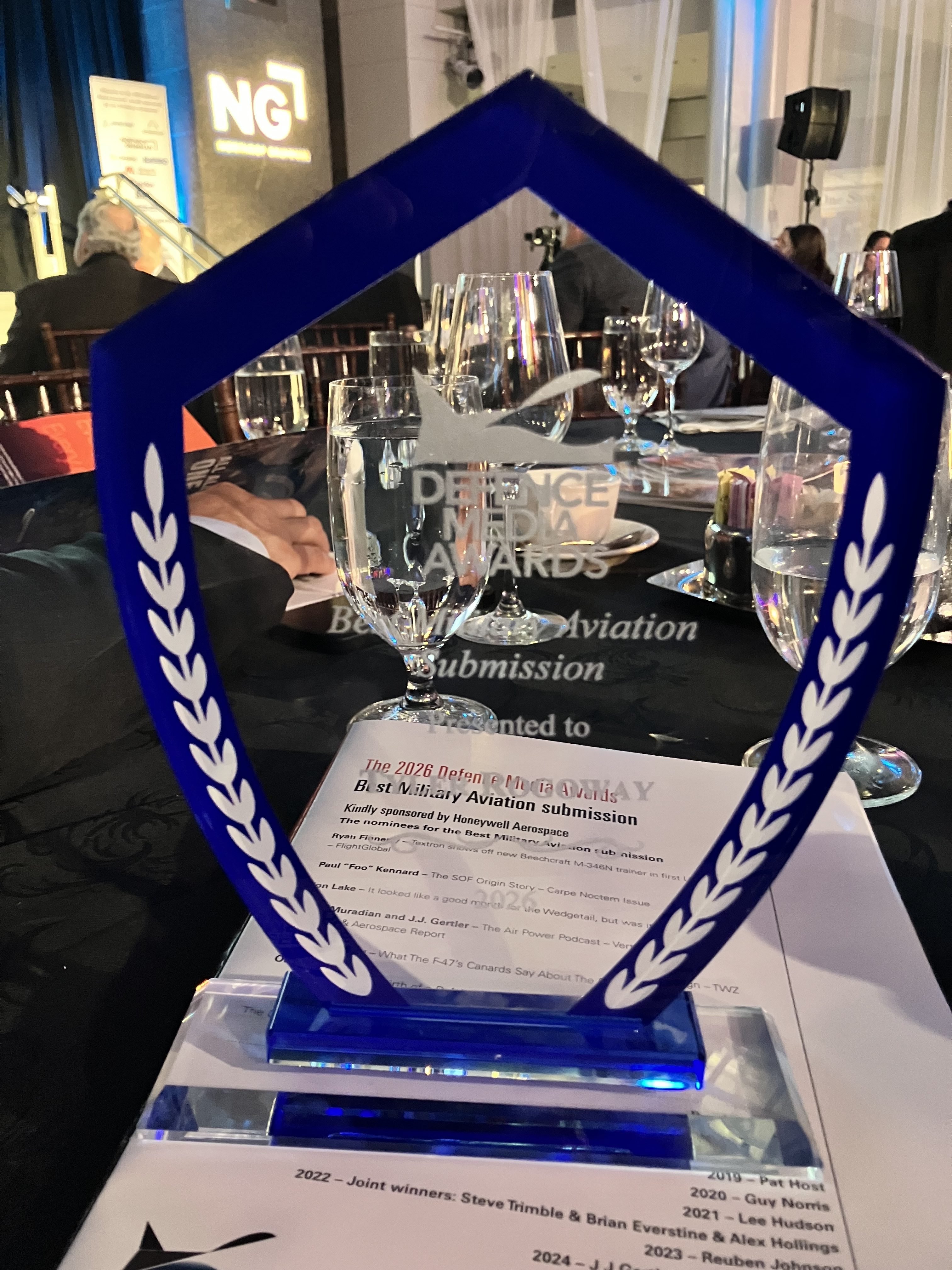
Hey guys, just wanted to talk about a cool thing that happened last Sunday. We won Best Military Aviation Submission at the 2026 Defense Media Awards in Washington, D.C., for “What The F-47’s Canards Say About The Rest Of Its Design.” This is the biggest deal in our little corner of journalism. Not just that, but we were nominated in many categories:
Tyler: Best Defense Electronics and Best Missile Defense
Tyler and Joe Trevithick: Best Rotorcraft
Howard Altman: Integrated Maritime, AI Integration, and the John Morrocco Award for In Depth Reporting
Thomas Newdick: Training, Simulation and Readiness, and Missile Defense
Jamie Hunter: Best Multimedia
Hope Seck: National Security Space
Joe Trevithick: Space and Mobile Combat Systems
A big thanks to the committee and the Defense Media Awards!
Welcome to Bunker Talk. This is a weekend open discussion post for the best commenting crew on the net, in which we can chat about all the stuff that went on this week that we didn’t cover. We can also talk about the stuff we did or whatever else grabs your interest. In other words, it’s an off-topic thread.
This week’s caption reads:
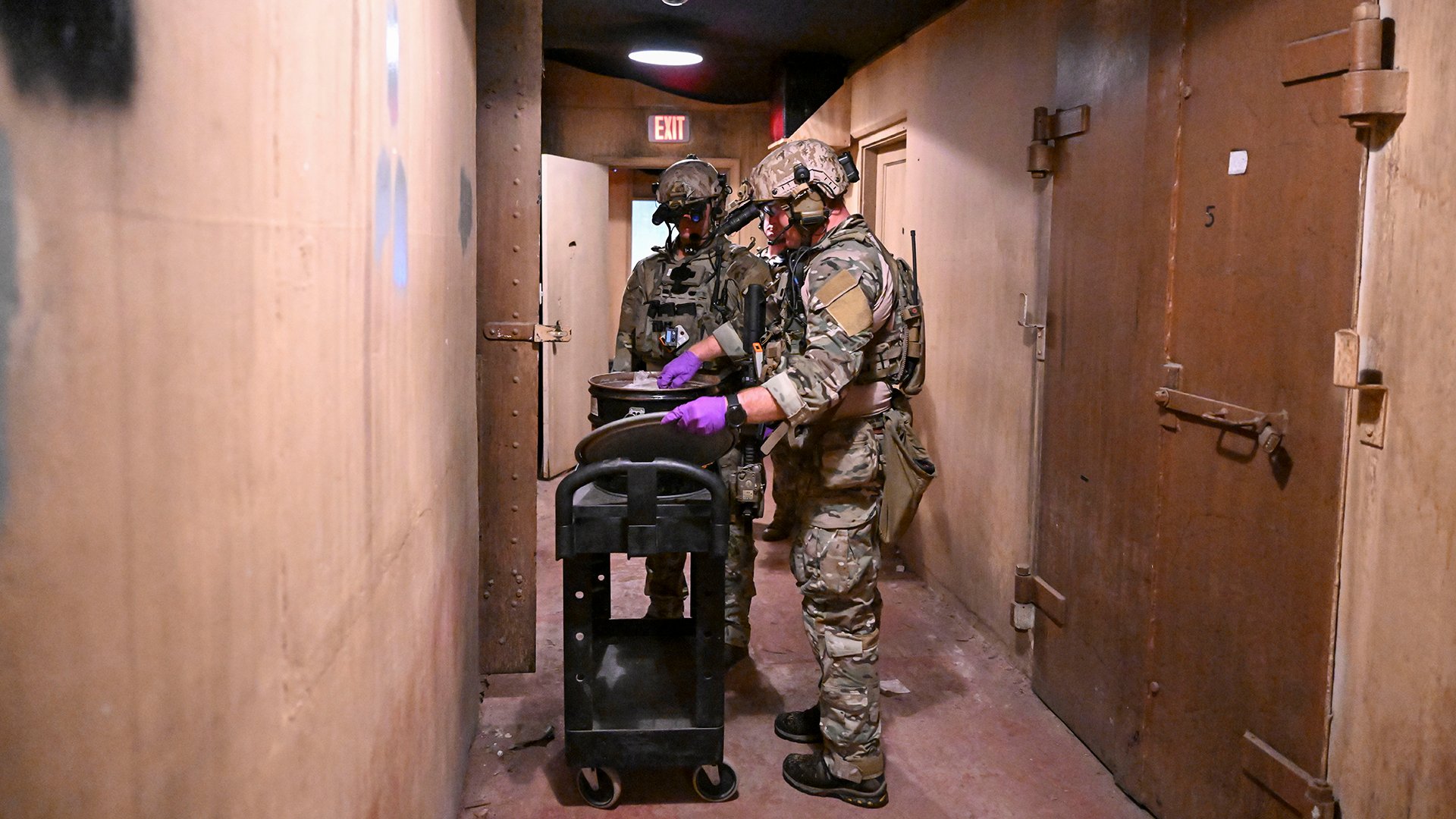
VIRGINIA BEACH, Va. (Sep. 18, 2023) – Navy Explosive ordnance disposal (EOD) technicians assigned to EOD Mobile Unit (EODMU) 6 conduct radiological search procedures at a training bunker onboard Joint Expeditionary Base Little Creek-Fort Story as part of a training evolution, Sep. 18. EODMU 6 provides operational EOD capabilities for the location, identification, rendering safe, recovery, field evaluation and disposal of explosive ordnance, including chemical and nuclear weapons.
PRIME DIRECTIVES:
If you want to talk politics, do so respectfully and know that there’s always somebody that isn’t going to agree with you.
If you have political differences, hash it out respectfully, stick to the facts, and no childish name-calling or personal attacks of any kind. If you can’t handle yourself in that manner, then please, discuss virtually anything else.
No drive-by garbage political memes. No conspiracy theory rants. Links to crackpot sites will be axed, too. Trolling and shitposting will not be tolerated. No obsessive behavior about other users. Just don’t interact with folks you don’t like.
Do not be a sucker and feed trolls! That’s as much on you as on them. Use the mute button if you don’t like what you see.
So unless you have something of quality to say, know how to treat people with respect, understand that everyone isn’t going to subscribe to your exact same worldview, and have come to terms with the reality that there is no perfect solution when it comes to moderation of a community like this, it’s probably best to just move on.
Finally, as always, report offenders, please. This doesn’t mean reporting people who don’t share your political views, but we really need your help in this regard.
These conversations took place during the recently wrapped Association of the U.S. Army (AUSA) annual convention in Washington, D.C., which TWZ attended.
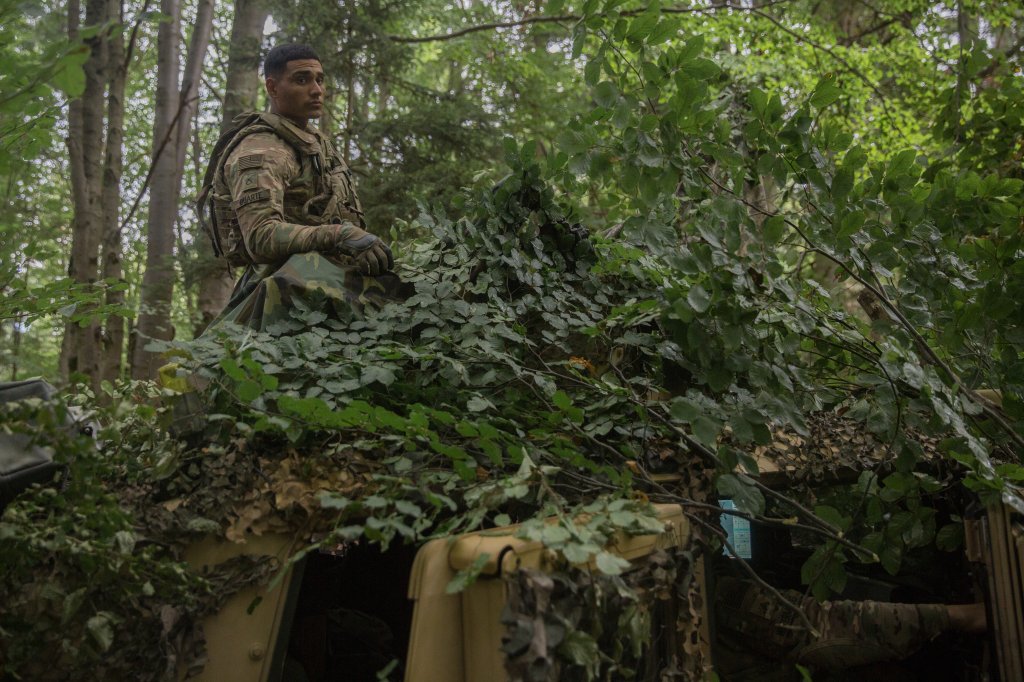
“A lot of the things that are happening right now in terms of long-range fires, integrated air and missile defense, and the lessons that we’re learning from them, we’re able to bring a lot of that to our potential challenges in the Pacific,” Gen. Ron Clark, commander of U.S. Army Pacific (USARPAC), told us at a media roundtable. “Specifically, I am thinking through mobility and camouflage. So it’s one of those age-old Army forgotten sciences of how to hide in plain sight and how to camouflage ourselves from observation, because the ability to be able to see surface entities is almost ubiquitous.”
“Our ability to be able to use electronic warfare, to be able to use just good old-fashioned camouflage, and the ability to deceive our adversary is a must,” Clark added. You can read more about the U.S. military’s camouflage and deception efforts in our story here.
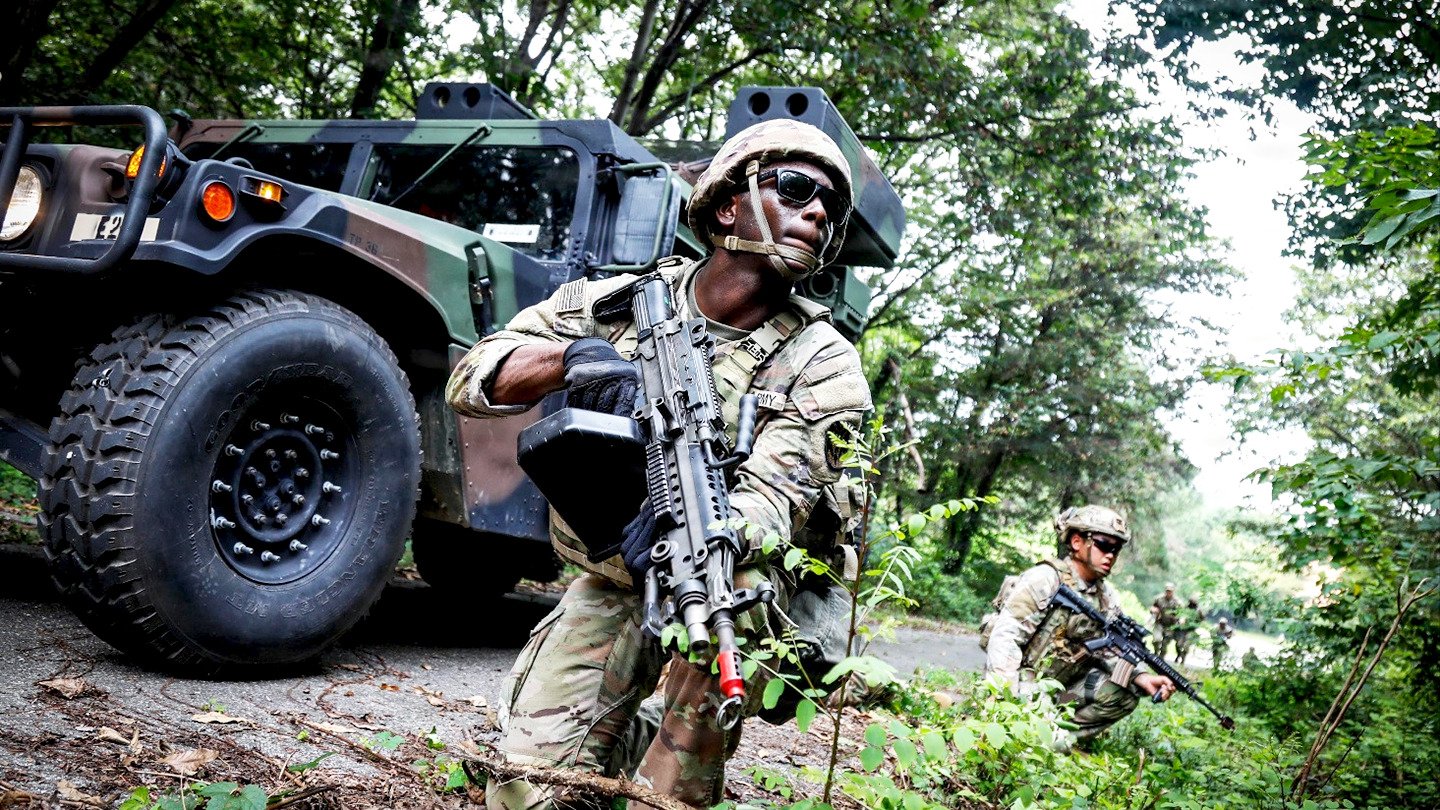
U.S. Army soldiers of Brigade Engineer Battalion camouflages a Humvee while conducting preparations during exercise Combined Resolve VII at the U.S. Army’s Joint Multinational Readiness Center in Hohenfels Germany. (U.S. Army photo by Pfc. Randy Wren) Spc. Randy Wren
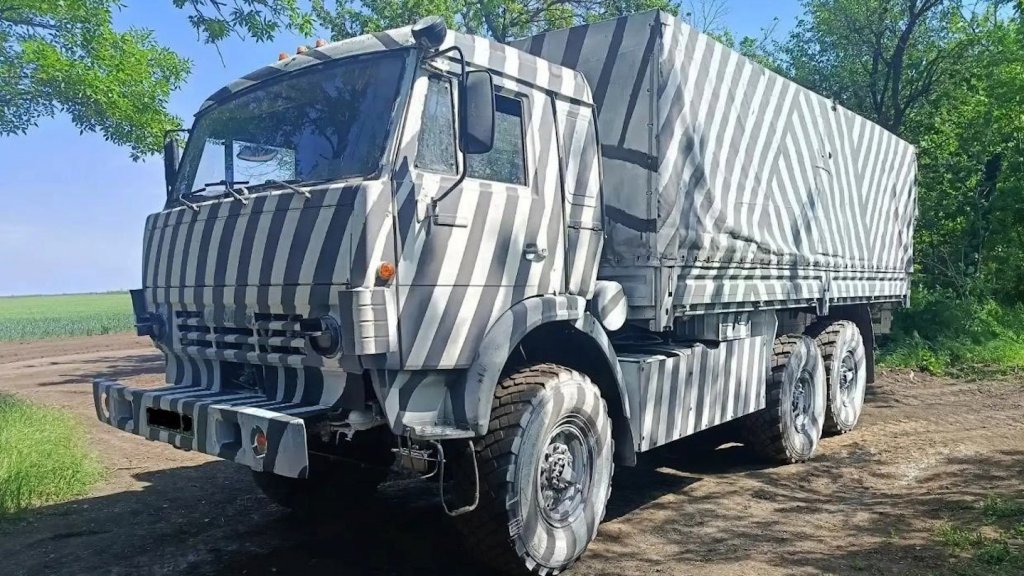
A Russian heavy-duty truck painted with zebra-style stripes to confuse AI-assisted target seeking equipment. via X
As tough as things have been for Ukraine and for U.S. forces in the Middle East, the challenges will be even greater in the Pacific, Clark warned.
In Europe and the Middle East, “it’s not a near-peer adversary that we will be working against,” said Clark, referring respectively to Russia and Iran.
“Whereas in our theater, it absolutely is,” the USARPAC commander noted in a reference to China without naming the country. “So our ability to scale that and to think through the problem sets of how do we fight Type One, Type Two UAS? How do we think through ballistic missile defense holistically in the region? We spend a lot of time working with the joint force for solutions associated with that. How do we maneuver inside an archipelagic environment?”
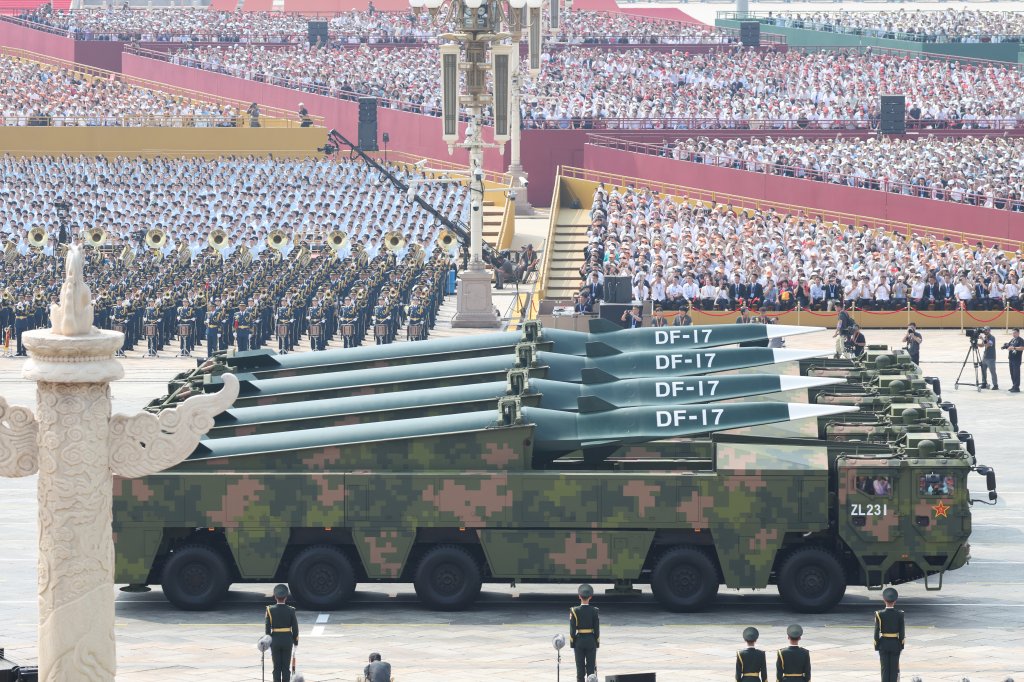
DF-17 medium-range hypersonic ballistic missiles on display during the V-Day military parade in Beijing. (Photo by Sheng Jiapeng/China News Service/VCG via Getty Images) China News Service
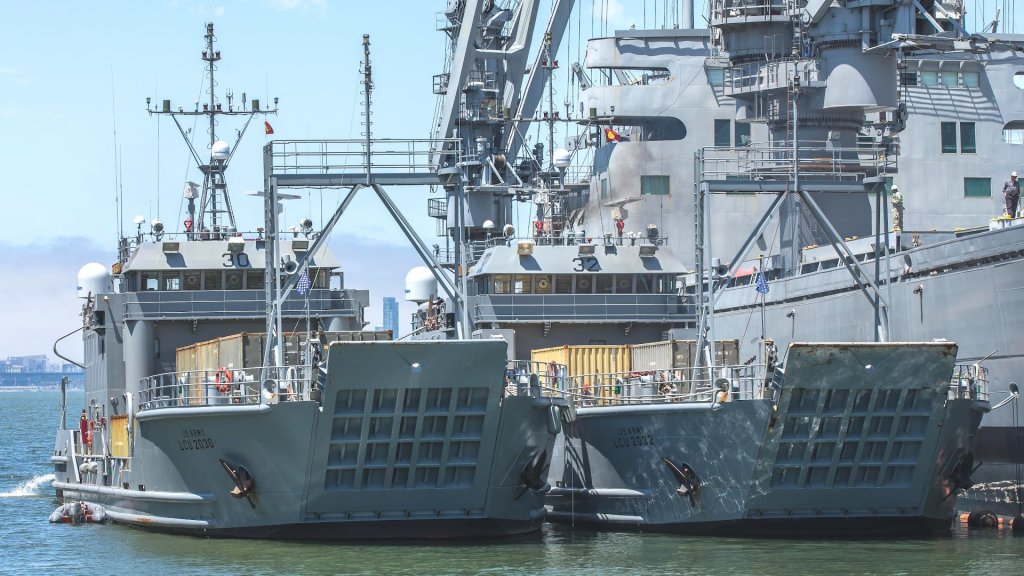
For the Army, any fight in the Pacific will require soldiers to be able to hop islands and move through vast swaths of ocean, constantly hunted and frequently inside the Chinese weapons engagement zone. Clark said that the Army’s organic fleet of ships like landing craft, small tugs, and modular causeway systems operated by the service’s 8th Theater Sustainment Command will be vital for maneuver.
Two U.S. Army Landing Craft Utility (LCU) vessels. (U.S. Army) www.twz.com
“But we also have to be able to conduct tactical maneuver with forces on the ground that can provide long-range precision fires, as an example, and then move so that fires, radars, sensors are not easily targeted,” Clark added. “Because if they can see you, they can hit you. And if you know they have an opportunity to return fire, they will. So our lessons that we’re learning are, in some cases, are very, very relevant. In some cases, we can learn from some of the changing characteristics of war.”
Still, the wide-open plains and dense cities of Ukraine are quite different from the beaches and jungles of the Pacific, Clark reminded us.
A U.S. Army soldier assigned to the 1st Battalion, 27th Infantry Regiment, 2nd Mobile Brigade, 25th Infantry Division, observes a linear danger area during the Joint Pacific Multinational Readiness Center Rotation (JPMRC) 26-01 at Schofield Barracks, Hawaii, Nov. 6, 2025. (U.S. Army photo by Sgt. Duke Edwards) Sgt. Duke Edwards
“The way we generally fight does not equate specifically in the Ukraine piece to the maneuver that you would see out of U.S. forces if deployed in a conflict like that,” the USARPAC commander explained. “To be able to use operational maneuver and tactical maneuver in a way that it’s not just simply drone on drone or firing long range fires at one another at scale for an extended period of time. We find our way to work through that problem set and maneuver to positions of advantage and to prevail.”
Ukraine’s 115th Mechanized Brigade has released new footage showing a VB-140 Flamingo interceptor drone attacking a Russian Mi-28 attack helicopter in flight.
The drone approaches from above and flies directly into the helicopter’s spinning main rotor. It’s unclear whether… pic.twitter.com/GCb9FodXG3
When we pushed further on that point, Gen. Xavier T. Brunson, commander of United Nations Command, Combined Forces Command and United States Forces Korea, weighed in.
“To be able to move with sensors everywhere at all times causes us to achieve positions of advantage from distributed locations,” Brunson pointed out. “So the fight is: you look at maneuver. You might maneuver to a position of advantage, knowing that you’re going to change that again. The ability to utilize not only joint sensors but joint effectors, if you will, joint fires, to be able to use those things from different positions changes the shape of the operating environment.”
The bottom line, he added, is that “maneuver is always going to be maneuver. You’re going from A to B, but you might go from A to A1 to A2 to A3 to get to B, and that’s what I think we realize in this distributed fight that’s going on in Ukraine, and so we continue to watch to see what lessons might be coming back into” effect.
In part reacting to lessons learned from Ukraine and the Middle East, the Army is also changing how it trains, Clark stated. In South Korea, he said the service has to get out of the habit of concentrating so heavily on just two annual major training exercises.
“We recognize… that largely the two big exercises every year in Korea focus on large command posts,” Clark proffered. “We’ve got to move away from that. So what we intend to do is take advantage of the knowledge that we have of the threats that exist or that prevail in the Ukraine fight.”
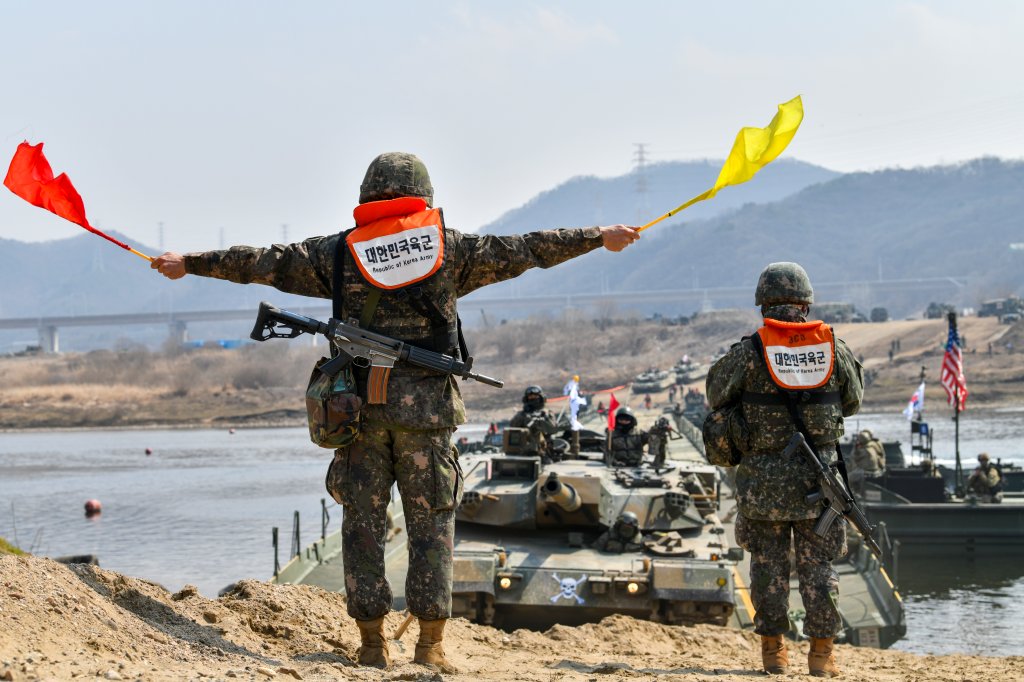
A Republic of Korea Army 5th Engineer Brigade, K1A2 tank crosses a U.S. Army Improved Ribbon Bridge (IRB) during joint wet gap training as part of Freedom Shield 25 at Yeoncheon-gun, Republic of Korea, Mar. 20, 2025. (U.S. Army photo by Sgt. Daniela Lechuga Liggio) Sgt. Daniela Lechuga
Clark said these discussions are underway with his deputy commander, Republic of Korea Army Gen. Sungmin Kim.
“We talk about how we would operate in a distributed fashion. You know as well as I do, there’s a location that we go to to train every year in Korea, and we stay in that place,” Clark said in response to a question from another reporter. “What would it look like if we train from Jeju all the way up to Gyeonggi Province in the north? What would that look like, just with our headquarters alone?”
“So just imagine,” Clark postulated, “if we train across the entirety of the peninsula, and got ourselves in the shape where we would say [to North Korea], ‘You can’t utilize the things that you’ve learned in the fight and the battlefield in Ukraine on us, because we learned the same lessons and we’ve distributed ourselves in such a way that we don’t make ourselves the target. We won’t be moored in place,’ and that’s what I’m talking about when I talk about positional advantage. It might not be the same place to the continuum. It might not be the same place when you’re in crisis or conflict or competition. We might have to change that, and that’s what we’re learning.”
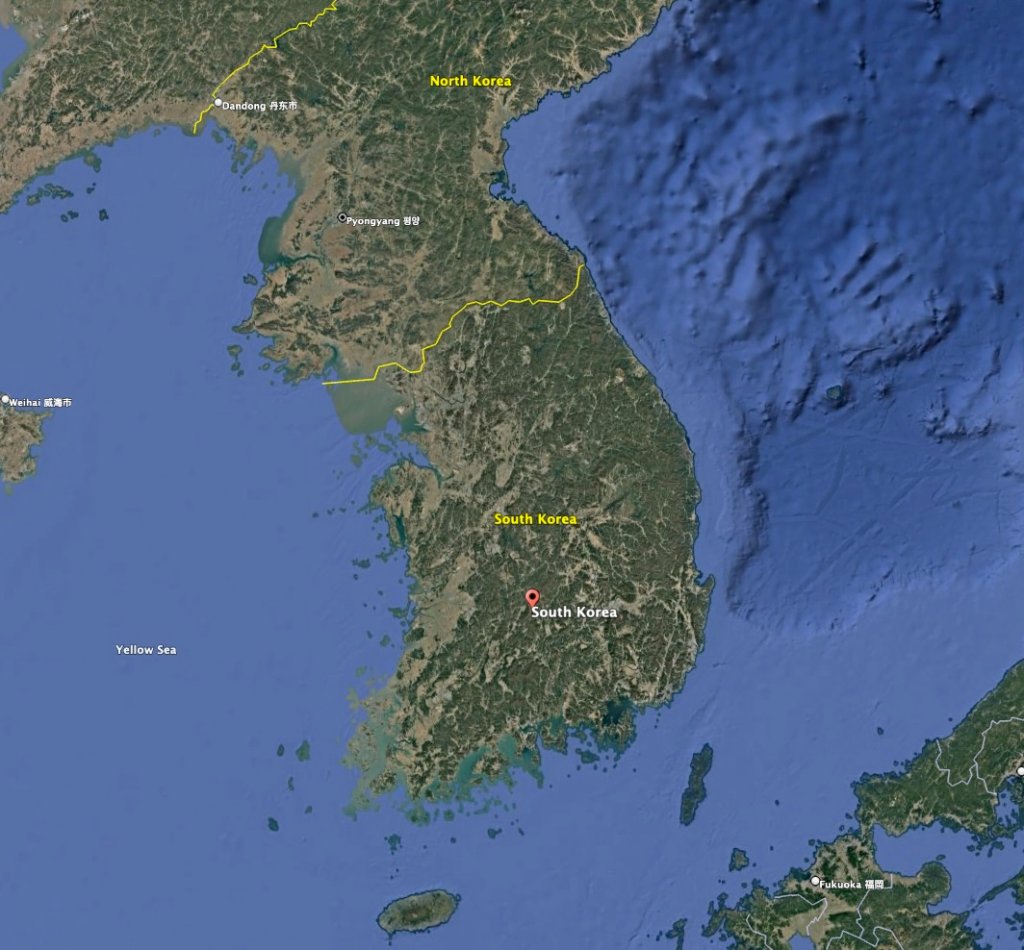
South Korea. (Google Earth)
Another lesson from Ukraine that Army leaders should be paying attention to, said another panelist, is how both sides are using aerial and ground drones to supply frontline forces and evacuate the wounded because human efforts have now become too deadly, thanks to drones.
“I think you also can’t talk about Ukraine without talking about autonomy,” said Tara Murphy Dougherty, CEO of a company called Air, which provides AI-based sustainment solutions to the Army.
“One of the advantages that you get from using simulation and automation, and really using models and compute in order to create convoy plans, as opposed to humans with Excel spreadsheets, is you are able to do many fewer actual convoys because you’re using all of your capabilities so much more effectively and efficiently,” Dougherty posited. “And while it’s an indirect example, I think it does tie to soldier protection because you’re putting fewer soldiers out there in vulnerable settings. I see that not as an end-goal outcome; we need convoys.”
Ultimately, however, the Army will have to advance what Ukraine and Russia are doing with the deployment of aerial drones and uncrewed ground vehicles for logistics by creating “convoys” of autonomous vehicles.
“I see the end goal outcome as having as many autonomous convoys as possible, and we’ve heard today already at this event some of those ideas,” the CEO added. “In the interim, until we get to more autonomy in medevac and more autonomy in convoys when it’s non-soldier material that’s going out to the battlefield, let’s try and put fewer out there while actually getting more material and capability into the force where it needs to be.”
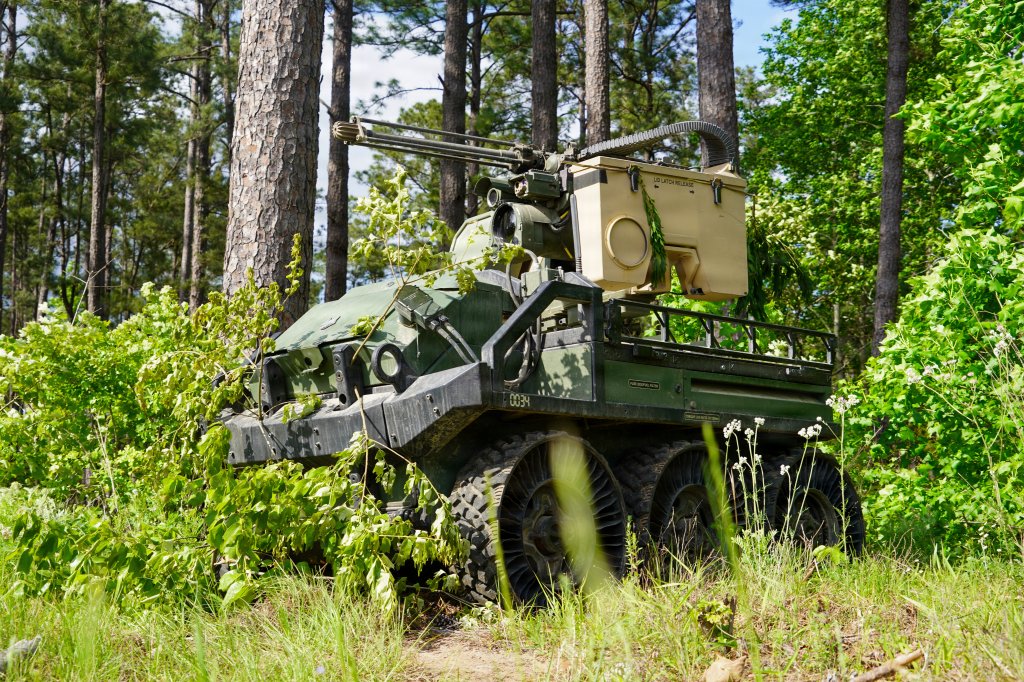
A Hunter Wolf unmanned ground vehicle assigned to Charlie Battery, 3rd Battalion, 320th Field Artillery Regiment, 3rd Mobile Brigade, 101st Airborne Division (Air Assault). (U.S. Army photo by Master Sgt. Anthony Hewitt) Master Sgt. Anthony Hewitt
The Iranian missile and drone barrages on fixed U.S. bases across the Middle East have created some very costly lessons for American forces. As we noted earlier in this story, several troops were killed and critical air defense radars, aircraft and other important equipment were destroyed or damaged. U.S. installations across the region have also suffered damage.
In another media session, we pressed Army officials operating in South Korea about what they learned from watching the destruction caused by Iran and what they are doing to address it.
You can see a satellite image of damage to a U.S. radar site in Jordan below:
NEW: The radar for a THAAD system was struck and apparently destroyed in Jordan while two other THAAD radar systems may have been hit in the UAE, satellite images show – w/ @ThomasBordeaux7https://t.co/qiuWVQgyda
— Gianluca Mezzofiore (@GianlucaMezzo) March 5, 2026
“We certainly are watching what’s happening, and we are learning from what is happening in Operation Epic Fury,” Lt. Gen. Joseph “Joe” Hilbert, commanding general of Eighth Army, stationed in South Korea, told us. “We’re learning what’s happening in Ukraine, and we are working through changes in our own tactics and techniques and procedures to be able to react to those threats and to be able to defend against them.”
For more details, he turned the microphone over to Col. Rosanna “Ro” M. Clemente, commander of the 35th Air Defense Artillery Brigade in South Korea.
“Drawing from those lessons learned, a lot of it is trying to understand how our systems are being hunted by the adversary,” she told us. “So, strictly into all of our training plans, and as we conduct our own internal exercises, all of our air defenders are practicing something as simple as mobility and survivability jumps, which is being able to reposition and displace your systems to different alternative locations based on any type of threat warnings that we receive. They’re very, very well trained. I think all of our soldiers know how to move their systems extremely, extremely well. They move them quickly, and they are able to move them and reposition them into different locations across the peninsula that still maintains that ballistic missile defense coverage.”
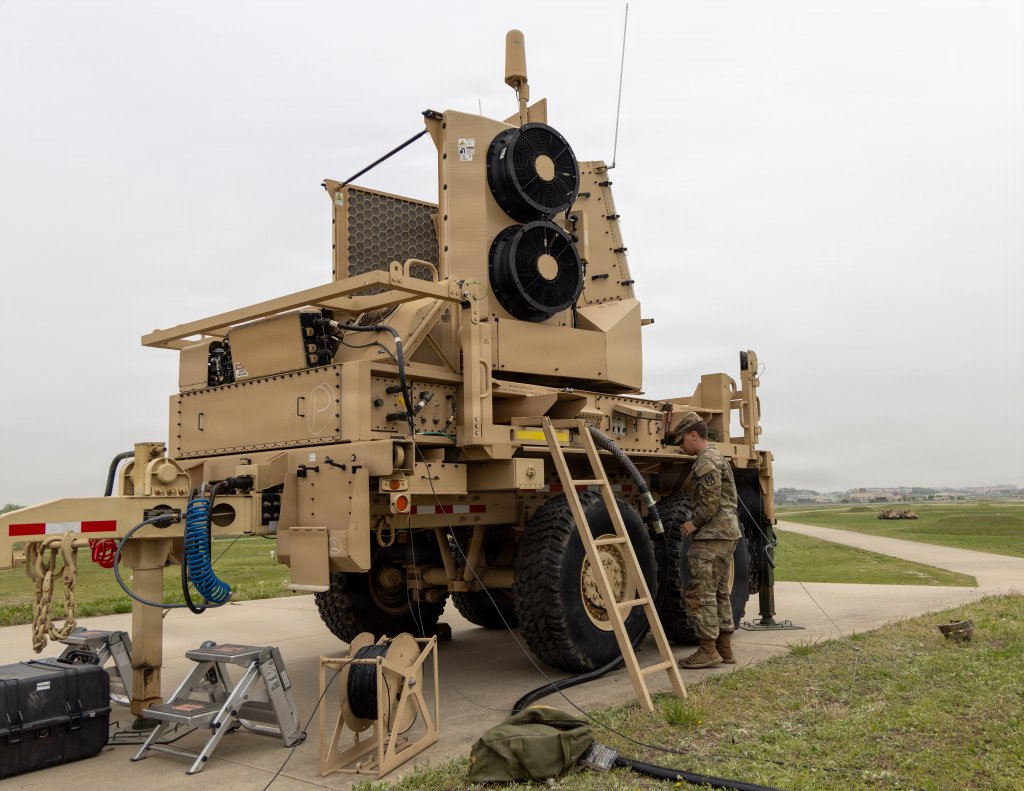
U.S. Army Pvt. Nathaniel Mullins, assigned to the 35th Air Defense Artillery Brigade, analyzes a Sentinel A4 air and missile defense radar during a training exercise at Camp Humphreys, South Korea, April 22, 2026. The training highlighted Eighth Army’s continued modernization efforts by preparing soldiers to operate the new radar system. (U.S. Army photo by Cpl. Luciano Alcala) Sgt. Luciano Alcala
In addition, “we also have to rely on the other pillars of integrated air and missile defense, most specifically the passive defensive measures that we also have in place,” she added.
Those measures involve “a little bit more than just hardening – but a couple of other techniques that we’ve learned from the Russia-Ukraine war in terms of deception, how to move things around, create distractions, and make sure that we create different types of dilemmas for the adversary in terms of where our capabilities are and where are they positioned to protect its defended assets.”
The veteran actor speaks with The Hollywood Reporter about his debut as Papa Legba in the Ryan Murphy universe, the witches' fight against Satan and the "magical" experience of sharing the screen with Jessica Lange and the returning Coven cast.
With 'Colin From Accounts' now behind him, the actor-writer the collaboration with his wife became a sleeper hit, upping his game with roles in 'The Devil Wears Prada 2' and 'Last Seen' and auditioning with his hands tied.
Russian Chess grandmaster Garry Kasparov tells RFE/RL Putin is set on “liquidating Ukraine” and will not concessions. Slamming a proposed US deal to buy Russian diesel, Kasparov said that if Ukraine wins the war Putin will fall – giving a chance for democracy in Russia.
Donal MacIntyre’s new book ‘Noah Donohoe: The Search for Truth’ examines what happened to the Belfast teenager. In this extract, the investigative journalist explores how crucial CCTV footage could have answered remaining questions over the tragic teen’s death

 Login








 Ukraine’s 115th Mechanized Brigade has released new footage showing a VB-140 Flamingo interceptor drone attacking a Russian Mi-28 attack helicopter in flight.

 (@bayraktar_1love)