❌

Reading view

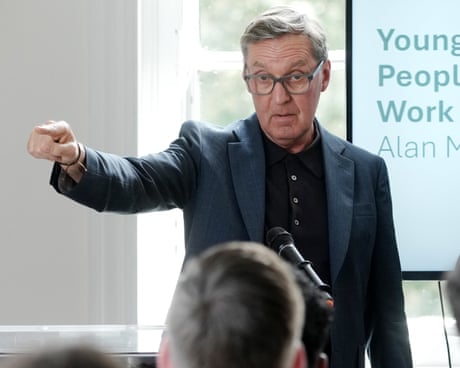
Cut benefits to fund work support for young people, says Neet review author Alan Milburn

Exclusive: Former health secretary says upfront investment in support is needed ‘if we are going to end the Neet crisis’

Ministers should cut welfare spending to fund more employment support if it wants to end the youth Neet crisis, the author of a government-led review has said.

Alan Milburn, the Tony Blair-era health secretary, told the Guardian he believed ministers should reduce benefits payments to help pay for more employment support, opening a potentially contentious debate within the Labour party over welfare cuts.

Continue reading...

© Photograph: Jeff Moore/PA

© Photograph: Jeff Moore/PA

© Photograph: Jeff Moore/PA

  •  

I saw rioting, looting, above all, anger. If French leaders think more violence will solve this, they’re mistaken | Oliver Haynes

It’s a perfect storm of protesters with heartfelt grievances and others set on conflict. The key here is the sense of betrayal that united them on the streets

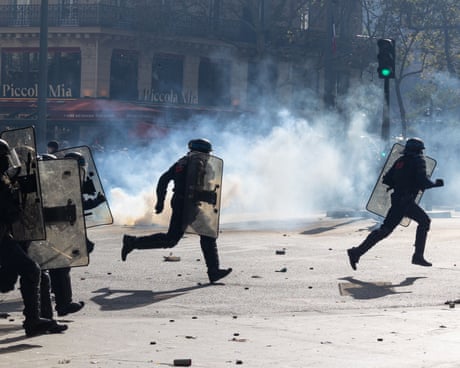
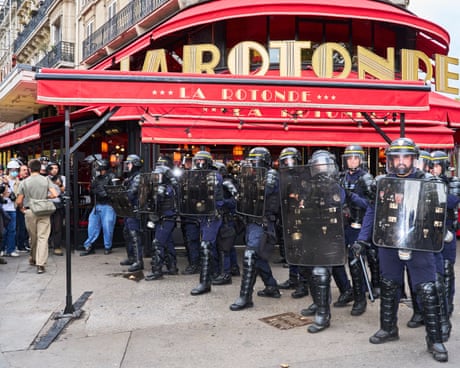
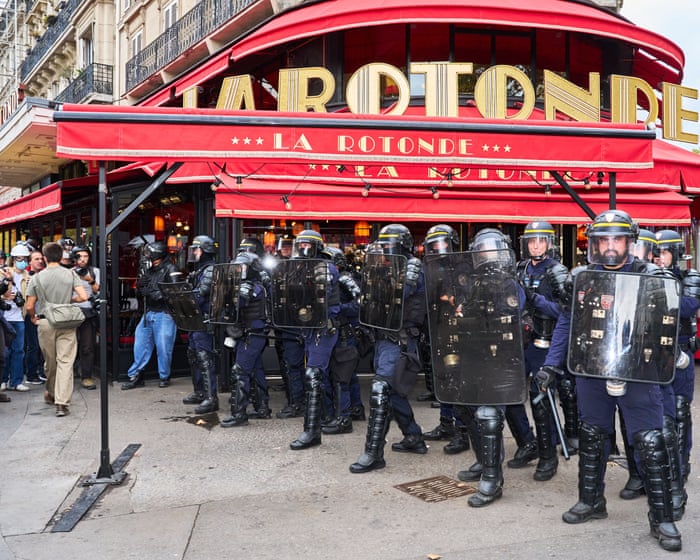
The first thing I learned on the streets of Paris this weekend is that there is no arguing with teargas. I arrived at Place de la République just after 1pm yesterday. The mood was festive until police started firing volleys of teargas into the square from Rue du Faubourg-du-Temple.

I didn’t see the inciting incident – if there even was one – and tried walking into the cloud of CS gas hanging in the air. It was impossible. The gas clings to your nose and burns your eyes, and you quickly start struggling to breathe. I retreated towards the Boulevard de Magenta, blinking furiously to stop the stinging.

Oliver Haynes is a journalist and co-host of Sacré Bleu: the French presidential election podcast

Do you have an opinion on the issues raised in this article? If you would like to submit a response of up to 300 words by email to be considered for publication in our letters section, please click here.

Continue reading...

© Photograph: Abitbol Shana/ABACA/Shutterstock

© Photograph: Abitbol Shana/ABACA/Shutterstock

© Photograph: Abitbol Shana/ABACA/Shutterstock

  •  

Is sisterhood the secret to a long life? The Sardinian village that could hold key to women’s longevity

Meet some of the elderly residents of Bolotana, in line to be the world’s sixth ‘blue zone’ for its high number of female centenarians

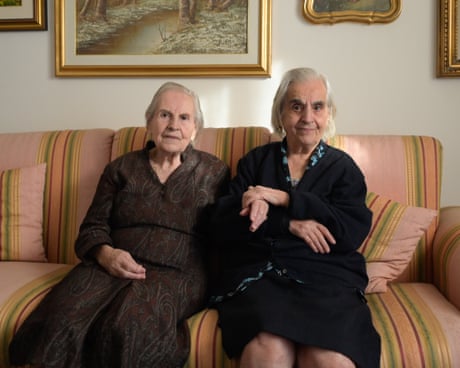
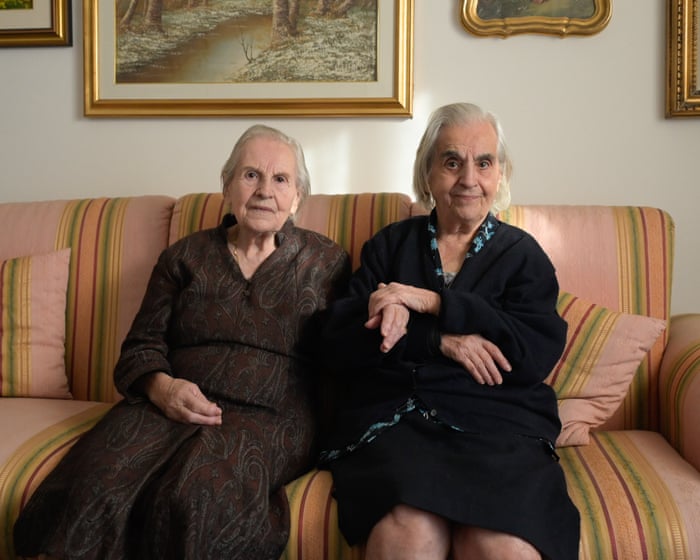
When Giovanna Marras opens the door to her home in Bolotana, a mountain village in central Sardinia, her eyes are bright with curiosity as she sizes up her visitors. Her sister, Mariangela, peeks out too, soon ushering her guests inside and handing out dishes of ice-cream. The sisters are full of life, talking animatedly. Giovanna is 101 and Mariangela is 99.

Sitting in their living room, Giovanna swiftly recaps her life story: she excelled at school before moving to Cagliari, the capital of the Italian island, at 18 to train as a seamstress. The sisters went on to run a successful tailoring business in Bolotana before travelling the world after retirement. Neither married.

Continue reading...

© Photograph: Victor Sokolowicz/The Guardian

© Photograph: Victor Sokolowicz/The Guardian

© Photograph: Victor Sokolowicz/The Guardian

  •  

‘Drones all night. By morning, you smell the smoke’: life in the last hotel on Ukraine’s frontline

Amid blackouts, artillery fire and the onslaught of Russian drone attacks, the Richelievsky in Kherson provides a refuge for those with nowhere else to go

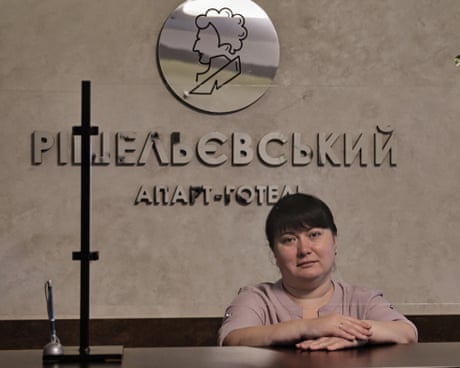
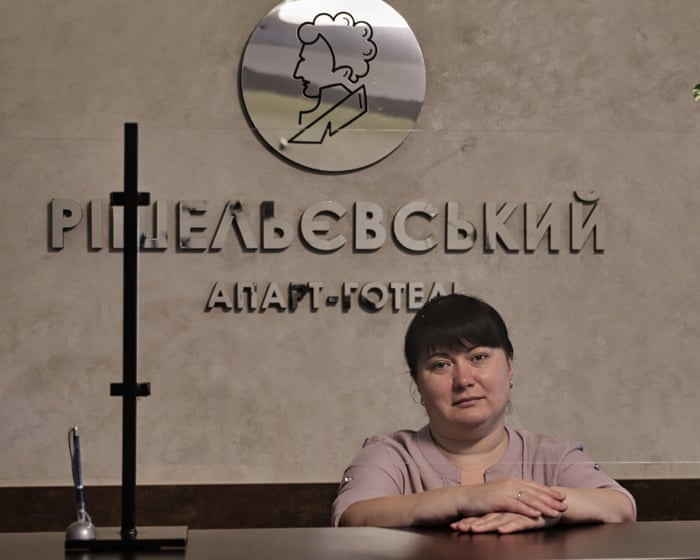
There is one important rule in the Richelievsky, Kherson’s last functioning hotel: close the curtains before dusk. Less than a kilometre away lies the Dnipro, the river that has formed the frontline since Ukrainian forces liberated Kherson in November 2022; Moscow’s troops are on the opposite bank.

In a city where Russian drone operators hunt civilians in what is now widely known as the “human safari”, even a sliver of light escaping through a window may be enough to reveal someone’s location after dark.

Hotel manager Yevhen Emtsov, 46, in the building’s former conference room

Continue reading...

© Photograph: Leo Kramer

© Photograph: Leo Kramer

© Photograph: Leo Kramer

  •  
  •  

French schoolchildren have been treated like enemies to be crushed – for telling the truth | Rokhaya Diallo

To protest against shameful conditions in schools is entirely legitimate. The government’s response is not

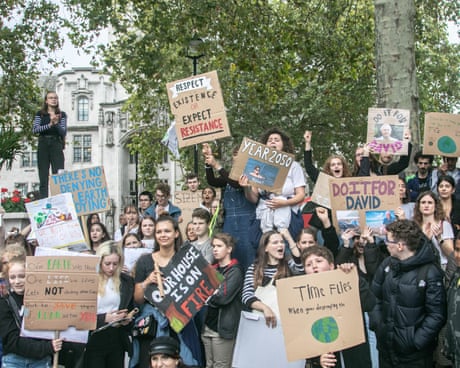
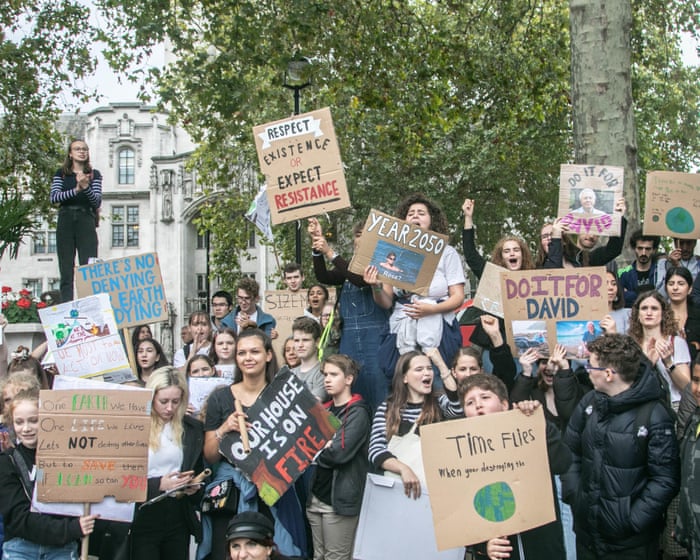
As a secondary school pupil in 1994, I took part in protests against a reform that would have allowed French employers to pay young people below the minimum wage. Our campaign was successful, but if we had had to face the terrifying police response unleashed on student protesters in France over recent weeks, I would have stayed at home.

A 14-year-old boy, Eden, suffered a fractured jaw and had teeth knocked out after a police teargas grenade struck him in the face. Sixteen-year-old Maël lost the sight in one eye allegedly after being struck by a shot from an LBD, a form of rubber-bullet launcher. Evan, 15, had his hand blown off in an explosion involving a police stun grenade. And in Dunkirk, a police SUV is alleged to have driven repeatedly at groups of secondary school pupils, as an officer could be heard saying: “Come closer, we’ll smash their fucking faces in.” Accounts from children left terrified by brutal treatment in police custody describe traumatic experiences with severe psychological and physical consequences.

Rokhaya Diallo is a French journalist, film-maker, activist and Guardian Europe columnist

Do you have an opinion on the issues raised in this article? If you would like to submit a response of up to 300 words by email to be considered for publication in our letters section, please click here.

Continue reading...

© Photograph: Tonny Linke/NurPhoto/Shutterstock

© Photograph: Tonny Linke/NurPhoto/Shutterstock

© Photograph: Tonny Linke/NurPhoto/Shutterstock

  •  

British students, like their French peers, have been known to challenge authority | Letters

Pete Crockett says the history of British education is not simply one of children dutifully accepting adult instruction, while Simon Dawson says Kitty Sayers misses the mark when describing English attitudes. Plus a letter from Kevin Donnelly

Reading Kitty Sayers’ interesting article, I was reminded of the rich, and perhaps too easily forgotten, history of direct action by British schoolchildren (Angry French students take to the streets. British students don’t – and I think I know why, 10 October). Far from being historically meek or unquestioningly compliant, they have demonstrated a remarkable capacity for challenging authority.

At Marlborough college, troops were once summoned to dislodge rebellious pupils occupying an island in the school grounds. In the late 1700s, Winchester college experienced several rebellions.

Continue reading...

© Photograph: Amer Ghazzal/Alamy

© Photograph: Amer Ghazzal/Alamy

© Photograph: Amer Ghazzal/Alamy

  •  

Saudi Arabia to execute man for being at protests and funerals when he was 15

Use of death penalty against people for crimes committed when they were children a ‘new low’, say rights groups

A young man faces imminent execution in Saudi Arabia for attending protests and funerals when he was aged 15 to 17, say human rights groups, in the latest example of the kingdom’s surging use of the death penalty for non-violent crimes.

Youssef al-Manasif was arrested in 2017 and accused of crimes including joining demonstrations for religious freedom by the Shia minority and attending funerals that the Saudi authorities deem to be protests. He was convicted and sentenced to death by the specialised criminal court, a secretive tribunal set up for terrorism-related cases.

Continue reading...

© Photograph: Handout

© Photograph: Handout

© Photograph: Handout

  •  

Lessons from Ben Sasse about Life, Death, and Politics

Sasse has a lot of hard-earned wisdom to impart, including some that only comes when facing a terminal diagnosis. Like the wise companion of Proverbs 13, he’s inviting us to walk with him through that dark valley.   Note from Randy: All human beings have a terminal disease called mortality. The death rate is 100... Continue Reading
  •  

Trump messed with Texas. Now an army of pissed-off Texans are fighting his border wall

Photo of Texas landowners protesting on foot and on horseback in front of the State Capitol building in Austin, Texas, on August 30, 2026. Protestors are holding signs that say, “Landowners Against Border Wall.” Photo courtesy of No Big Bend Wall.
https://www.spreaker.com/show/2952221/episodes/feed

President Trump has renewed his efforts to “Build the Wall” in areas along the US-Mexico Border that don’t currently have border barriers—including the Big Bend region of West Texas. Invading people’s private properties and upending their local economies and shared ecosystem with a border wall residents say they don’t want or need, the Trump administration continues to dole out billions of taxpayer dollars to flood Texas border towns like Terlingua, Sanderson, and Marfa with troops and federal agents—and to pay construction contractors with ties to the Trump family.

In this episode of Working People, we speak with a panel of residents living near Big Bend National Park and Big Bend Ranch State Park who have banded together with their neighbors to fight back against the federally funded destruction of their homes. Panelists include: Yolanda Alvarado, a fifth-generation cattle rancher and the regional director for Conserve Big Bend: No Big Bend Wall; Crystal Allbright, a longtime resident and bicycle shop owner in Terlingua; Sara Ryza, a longtime resident, small-business owner, and proprietor of the Desert Air Motel in Sanderson, Texas; Scott Whitener, a longtime resident of Marfa, Texas, and a former superintendent on the Big Bend Ranch State Park; and Sharron Reed Gavin, a retiree and longtime resident of Terlingua.

Additional links/info:

Featured Music:

  • Jules Taylor, Working People Theme Song

Credits:

  • Audio Post-Production: Jules Taylor
Transcript

The following is a rushed transcript and may contain errors. It will be updated.

Maximillian Alvarez:

Alright. Welcome everyone to Working People, a podcast about the lives, jobs, dreams, and struggles of the working class today. My name is Maximillian Alvarez.

Jules Taylor:

And I’m Jules Taylor.

Maximillian Alvarez:

And today we are going to Terlingua in West Texas, right on the US-Mexico border and right next to Big Bend National Park. As the Texas Tribune reports, “Since President Trump returned to office in January of 2025, his administration has renewed efforts to erect border barriers in parts of the US-Mexico border that don’t currently have any. That includes the Big Bend region in far West Texas, home to the Big Bend National Park and Big Bend Ranch State Park, both of which the Trump administration has targeted for border security infrastructure. Historically, the region has recorded the fewest illegal crossings along the entire Southwest border, but the Trump administration has awarded billions of dollars worth of contracts to build some form of infrastructure to deter illegal border crossings, while telling concerned West Texas residents that they will not build a border wall or fence in the national park.

Local residents, environmentalists, and a bipartisan group of elected officials, including sheriffs and county judges, have still asked the administration to stop all construction.”

Jules Taylor:

According to the website of the community advocacy group, No Big Bend Wall, 2.1 billion in contracts have already been awarded for wall construction in Presidio and Hudspeth counties. Over 500 private landowners stand to lose access to the Rio Grande due to the proposed border wall. Construction is planned for Texas gems, including Big Bend National Park and Big Bend Ranch State Park, and the Department of Homeland Security is waiving 31 federal laws, including National Environmental Policy Act, National Historic Preservation Act, Native American Graves Protection and Reparations Act, and Wild and Scenic Rivers Act.

Maximillian Alvarez:

So to talk about what the hell is happening on the US-Mexico border, we are really grateful to be joined on the show today by a panel of folks who are on the front lines of this story and who are joining us from in or near Terlingua, Texas. Thank you all so much for joining us. Please introduce yourselves to our listeners.

Yolanda Alvarado:

I’m Yolanda Alvarado. I’m a fifth generation cattle rancher and the regional director for Conserve Big Bend: No Big Bend Wall.

Crystal Allbright:

Hi, I’m Crystal Allbright. I live in Terlingua, Texas. I’ve lived here 36 years. My husband and I own a bicycle shop and have outdoor gear as well as art. We’ve operated the river for 29 years, but we’ve phased that out for now. I’ve visited the area since I was a young child and love it very much.

Sara Ryza:

I’m Sara Ryza and I have the Desert Air Motel in Sanderson, Texas. It’s a renovated 1960 motel in Sanderson, which is a gateway town into Big Bend. So while the national park and the state park are kind of the anchor places that bring people into the region, they’re going through gateway towns to the region and into the park. And so a big part of this area is tourism and there are a lot of independently owned small businesses that are concerned about what all of this is going to do in the short and long term for tourism.

Scott Whitener:

My name’s Scott Whitener. I was a former superintendent on the Big Bend Ranch State Park along the river corridor located along the river road, which is just along the Rio Grande and covered about 50,000 acres of the front country of the state park side. I have been going to the Big Bend for 30 years. My wife fell in love with me there, I think, to check and see if that’s still true. But I currently live in Marfa, which is in Presidio County. I also am a property owner in three of the six counties in the affected area in the Big Bend sector. And yeah, this is near and dear to my heart, my family’s heart, and it will remain that way.

Sharron Reed Gavin:

My name is Sharron Reed Gavin and I also live in Terlingua with my husband. We moved there in 2013 full-time. We had both loved the Big Bend independently of knowing one another. My first time to go there, and this is before most of y’all were born, but was 1976 and went with some friends with the canoe and we wanted to do the river. And there weren’t such things as desert sports really at the time, but we found some good folks like Crystal and her husband who would help us get down to the river and go on it for a while. But I have six grandchildren and that’s why this is so important to me, also for my neighbors and all that love the Big Bend. There’s not a lot being done to save it by our elected officials, but I think all of our voices matter.

All of these people are working so hard at their real jobs and on top of it, especially what Yolanda and Sarah are doing with No Big Bend Wall. It’s just all of these people are doing full-time jobs and doing a full-time job with no Big Bend wall, and I just appreciate them.

Maximillian Alvarez:

Well, and we genuinely appreciate all of you for being here and talking to us about this. I’m just incredibly sorry that you and your community are going through this, that our country is going through this. It’s like every week it’s another horror show, but I really want to zero in on what you were just talking about, Sharon. I’ve never had the pleasure of going to see Big Bend or being in this part of the country. I really hope to correct that soon. But this is, from what I’ve seen, one of the most just beautiful places on God’s green earth. But for those of us who are not from there and for folks who are listening who have never been there, I want to ask if y’all can describe what our listeners can’t see for themselves. Tell us more about this area and what it’s like to live and work there.

Yolanda Alvarado:

Yeah, so I’m not directly near Big Bend National Park. My family ranches in the Big Bend region and that starts from Hudspeth County and it goes all the way to Valverde County. But we have ranches in Hudspeth and Presidio and near Jeff Davis. And we’ve been out here for hundreds of years and it’s really just quite desolate. You could see four hundreds of miles just desert and no one around. It’s a really serene environment and it’s also really harsh to be in the desert. It’s filled with rural communities. No communities are huge out here. We have very few ambulances, small schools. My children go to a school with 35 students from kindergarten to high school. So it’s just a really small time, small town, rural environment. And we throw on tourism and people going to the National Park and passing through these small areas. So even though we are small in size or small landowners, it still feels big.

It still feels connected to the rest of America because we still have all these visitors and people coming through.

Sara Ryza:

It also feels like time slows down here. You can relax and it’s kind of the call of the desert. You wouldn’t expect that you would love it so much if you weren’t originally thought of yourself as a desert person, but it’s also, it’s very gritty. There’s a grit to the people that live and work here and a lot of the business owners have several businesses. We also have a liquor store and also we’re part of this bigger region, but we’re also our own little communities. And in Sanderson, it’s Terrell County that’s getting vehicle barriers going through our county, which is only 20 miles to the border to the river, but that’s all private land. So we’re connected geographically to the river where we are, but also to the region through the tourism. It’s all really interconnected.

Crystal Allbright:

Yeah, I agree with both Yolanda and Sarah. It’s very remote and fairly isolated, but we all are connected. In the national park, I like to describe it as three biomes. There’s the mountains, the Chisos mountains, and then there’s the open expanse of the desert, and then there’s the river corridor that connects us all. So if you start at Yolanda’s Ranch and drive the Chispa Road all the way through Presidio and to Terlingua and then up through Alpine and then Marfa, you can make a big loop. You can do Fort Davis and Sanderson. And so we’re all connected. This has brought us together in so many ways from learning about each other’s businesses and lives as well as participating in the community meetings, whether it’s a town hall or a commissioner’s meeting or a groundwater meeting. We’re all working together to learn ways that we can delay the construction, which we prefer to call destruction of this area that we love.

Scott Whitener:

We all have to continue agreeing with each other because everybody else before me said it way better than I think I will. But at the same time, a few days ago I put it into perspective. I looked at all the population in all of our six counties that are affected right now in the Big Bend sector, and there’s like 23,000 people. You know how many square miles there is in those six counties? 23,000 square miles. Think about that. That’s a one person per square mile. Could you imagine being anywhere that allows you to have that type of expanse? We are all connected by this region, honestly. We all know what each other are doing because we love it out here. We love one another and it’s trampling on our freedoms, it’s trampling on what we love, and this government overreach is, it’s destroying our way of life, but we’re not going to let it.

And I’ll continue to say that, but at the same time, it’s made this community bigger, better, stronger. And I can’t say enough about the people, the place, the sunrises, the sunsets, the mountains, the open expanse, the plains. This is a special place, and if you haven’t been down here, you don’t have to come because like Austin used to say, “Hey, come for the fun, but don’t move here, please.” We do love the visitors. We love having people down here, but you live out here for a reason and we share this place with one another because it’s not any of ours, but it sure is ours to share.

Sharron Reed Gavin:

And the only thing I would add to that is you asked what it would look like to people who haven’t been here and everybody’s kind of hit that nail on the head, but it really is something that you can’t understand until you see it in person. And my favorite other place in the world is the north rim of the Grand Canyon, and I promise they have nothing on us, absolutely nothing. But we also, the beauty is here, but there’s archeological sites, there’s historical sites. They’re not paying any mind to those. They even started working on one of those sites and were interrupted. Yolanda, I can’t remember if it was by you or somebody else out near you, but the scale of the destruction and the history and the things that we absolutely cannot replace, it’s mind-boggling. And then everybody said this too about how we are all working together and we may be different and love our isolation, but boy, you step on this anthill and you’ve got a lot to contend with.

The thing that makes me feel really good about it though is this group isn’t going away. These people across the country who have banded together to fight this wall, they’re here to stay. They’re here to stay and the people are going to make their voices heard, and I think just at the end of the day, get this to stop.

Scott Whitener:

I don’t work for the state park system anymore, which is why I can be on this podcast and talk as much shit as I want. Pardon my French. But I actually work for an animal rescue. We rescue dogs out of shelters one tail at a time. We cover an area about the size of South Carolina, even bigger than our six sexers. So we save a lot of shelter animals and abandoned animals, and probably that’s what 40 to 50 to 60 hours of my week is. And then the other waking hours is fighting this.

Crystal Allbright:

I said earlier that my husband and I have a bicycle shop and we worked in the river outfitting business. We work six to seven days a week all day long. And again, using that time, especially when people come through the shop, we have displays about what’s going on in the area and we encourage people to voice their opinions about what’s going on and contact representatives. We use our space to show photographs of some of the destruction as well as to help raise money for these organizations that are working so hard to stay on top of what’s going on.

Yolanda Alvarado:

Yeah. I’m a cattle rancher, as I mentioned. I manage all my family’s ranches, and so I work every day outside in the desert. I work with mother nature. I work with the animals with droughts, with floods, the rain, any type of environmental issue you can think of a hundred and plus degrees outside or freezing outside. So my everyday working life and what it has been for the past almost 10 years has just been me and the desert, me and the animals, and that is my job. And carrying my family’s legacy, it has been my responsibility to be a steward of the land and continue that and teach my children how to take care and live out here, take care of the desert, the ranches and the animals, what it means, what you can use the plants for. So yeah, that’s basically what I do all day.

And then now I am fighting the border wall as the regional director, spending a lot of my time behind a computer now, but here we are.

Sharron Reed Gavin:

Yeah, I’ll say one thing. None of these folks work nine to five. I mean, I’m retired and that’s very fortunate because I have some more time to help on the no wall fight, but none of these people work nine to five. I can’t even imagine the number of miles that Yolanda drives or Scott used to do when he was with the state park or Crystal on their river trips. It’s mind-boggling. I do know where Crystal lives, and you have to love it out here to drive from where she lives into Terrlingo. It may be like seven miles, but it can take you up to 30, 40 minutes. So these people are working before and after work and during the working hours.

Jules Taylor:

National borders everywhere in the world are deeply political constructs with complicated histories, and the US-Mexico border is no different. I mean, it’s been a political talking point our entire lives. Can you talk to us about what it’s like to live somewhere that is so regularly charged by political narrative and policy battles and tell us why that’s different now?

Yolanda Alvarado:

Well, historically, the river down here in this part in the Big Bend sector, it’s been so isolated and desolate that we don’t have many crossings here, as you mentioned. So for many years up until almost recently, and still actually today, the communities on the river are on both sides. So you see Presidio and Ohinaga sharing a river, you see Bokias, we are one community. So politically, not until the first border wall came through, it wasn’t something that we even thought about for us and my family and the ranchers because we’ve always just been safe out there. We’ve been alone and we’ve been one community with the other side of the border that was Pilates, Mexico. And it wasn’t until, I guess, Bush, he built a fail billion dollar wall that’s actually on my aunt’s property. And that’s when we started seeing, for us anyways, in this region, it being more politically charged.

And even then at that time, I don’t believe anyone looked at the Big Bend region close to the National Park and said, “We need a wall here.” So I personally felt a little separated from what was going on in other places. I mean, me and my family never thought in a hundred years they would try to put a wall where we are because it just doesn’t make sense at all. It’s like you go down there, I even took the border patrol agents, the head director, infrastructure project directors of the Border Wall Project, and they said, “Yolanda, I see what you’re talking about because that’s how ridiculous it looks in person when you get off of a map.” We did see when Kersey Nome was a Homeland Security Director, we started seeing Stryker military vehicles, the army lining the border. Still today, I’m passed by Army people.

Our border’s completely militarized now. So it was a very isolated, safe place. And now I have to worry about running into a Stryker military vehicle hitting me on the way to the ranch. And most of the time I find them napping in their trucks because it’s so quiet and they don’t have anything to do. I see them on just, there’s actually a weightlifting area where they’re bored and they’re lifting weights because there’s no emergency on the border, yet our military’s deployed in our own homes, in our own backyards, filling up all the hotel rooms in these small rural communities already causing damage to tourism. So it’s been interesting watching it in real time. I was sitting on our back porch less than half a mile from Mexico on the Rio Grande reading that we were in a state of emergency and within the week we had military driving in and showing up at our property.

I even had military personnel drive through our gate in the middle of the night because they were just messing around, driving really fast. So it’s been a really interesting experience watching it in real time, not on the news saying like, “Oh, we have an emergency. Oh, there’s the military. Now we’re getting a wall.” It’s been really crazy and at the very least, such a disturbance to our peace or what was peaceful.

Scott Whitener:

This should make every taxpayer mad, and I’m only going to put it into perspective. I won’t put names under the bus. I live in Marfa, which everybody poo-poos Marfa just because it’s fun to do it anyway, and I get it. We’re a little art community, everybody’s a little bougie, whatever. I live in an old train warehouse, which it’s fun. Anyway, but I go down the street and I have the US military staying at a place that costs $285 a night minimum, and they’ve been staying there full-time since February of 2026. They use the pool, they use the weight room, all the things that people in this community can’t afford to use. Our US military is occupying that hotel and they’re not paying hotel taxes, they’re not helping the community, and they’re showing up to the pool and drinking at the bars. And it’s like, what are they defending?

And when we ask them, “What are you doing here?” They said, “We’re here to help this place. We’re here to defend you guys.” And I’m like, “Defend me from what? Art critics?” I mean, certainly it should make any taxpayer mad of what’s being wasted down here. These guys cruise around all day, all night and do nothing. And I’m not dogging the military, I’m dogging the decision. And it’s going on all over this region and it’s despicable.

Maximillian Alvarez:

I mean, it’s going on all over the country, right? I go to Washington DC this week and there are a bunch of board national guardsmen just walking around. It’s like, what the hell are we doing?

Yolanda Alvarado:

Really an insult on, I think, our military service also. My sister’s in the Air Force, and I mean, it’s insulting to even separate them from their families, deploy them in the United States, separate them from their families. They’re off on a mission, but it’s really there’s no mission down here. There’s nothing going on. But yeah, millions and millions, if not billions of our taxpayer dollars are going towards this. So I’m glad you said that, Scott.

Sara Ryza:

Yeah. It feels like an upside down world where before it was like, yeah, we’re safe. We didn’t even think about our safety, but people that don’t live here, that don’t work here, they’re talking about how it’s a scary place. We have to put up physical barriers. And so it’s created a narrative that is not what reality was. And now in addition to people thinking that we need a wall, well, now people think that, well, if they needed a wall, then it probably wasn’t safe. So why am I going to visit there? There’s so many other national parks, so many other places that people could go on a trip, and it’s really messing up our tourism and the economy that drives on the tourism. And while contractors coming in, the military coming in, that’s not an investment in our communities and in this long-term economic development.

Anybody that thinks that might be good that it could bring in money to our towns or to our county, that’s just a very shortsighted view and it hurts us in the long run.

Sharron Reed Gavin:

And when you were talking about being politically charged, I mean, it all goes back to the false pretense that we need a wall because of the border crisis down here. It’s all bogus. There is no border crisis. The border crisis right now are the construction workers or as Crystal said, the destruction workers. But yeah, I think that’s really important. This isn’t needed. It’s all about our president rewarding the people that are funding him for his political office, and it’s not doing this community any good whatsoever. It’s harming it significantly. One of our Texas state senators has a bill called the Fed Act, which is supposed to protect landowners specifically in West Texas from federal overreach, yet he hasn’t said a word about the overreach that’s happening here. So yeah, I better stop because it really makes me mad.

Maximillian Alvarez:

Well, I mean, I was going to ask y’all to, let’s get more mad, right? Because I mean, Jules and I have also been talking to fellow Texans who are dealing with data centers in their damn backyards now, all over the place. It feels like local control is just being ripped away and people are just having, whether it’s a border wall, whether it’s a data center or some other polluting piece of crap in their community, we get no say in it and they’re just steamrolling everybody. Because I wanted to sort of ask y’all, if you could speak to the non-Texans who are listening to this, right? We all know that there’s a, speaking of narratives, there’s a narrative in this country that makes a lot of people assume that Texans would be for this, that Texans would be shooting their guns into the air and say, “Yeah, let’s build a big border wall.” What do you want to say to people who think that about you?

Sharron Reed Gavin:

Come down and see for yourself. It’s nothing like the narrative that you’re hearing. Nothing at all.

Yolanda Alvarado:

Yeah. I mean, the data center border wall is so correlated. It’s the same fight that everybody’s been starting to fight across the country. So the only difference is that say it’s Boise, Idaho, and the only difference is the president saying there’s only rapists and murderers coming to Boise, Idaho. We need a wall around it and not a data center. It’s the same correlation. So we were just painted this black. We were already painted black, and that’s why people are not really opening their eyes to the issue, but it is exactly like you said, it’s just like having a data center show up in your community and taking your natural resources, jobs, all of the above. So to speak to the greater America, one thing I’ve been saying is that they declared a national emergency to waive laws to do this project. Who’s to say they’re not going to do it in Boise, Idaho?

Who’s to say they’re not going to say, “Oh, we see this emergency here. Let’s deploy the army and build and do whatever we want to these Americans. Forget American sovereignty, forget whatever existed.” It’s disgusting, the overreach. So I think everyone in America should be upset about what they’re doing to abuse this power to take advantage of American citizens, Texans. It’s not right.

Maximillian Alvarez:

Weren’t we raised to hate this stuff? Didn’t we all learn in school that this is exactly the kind of thing that as good red-blooded Americans we should despise and fight against? And you got ICE agents in unmarked vehicles wearing masks, driving all over people’s property, being peaceful protestors. I mean, just the violation of rights and property and everything, it’s mind-boggling.

Sara Ryza:

Right. In Terrell County, there’s a $2.6 billion contract over the Big Bend five project, which bans all of Terrell County, some of Brewster, some of Valverde. It’s not the 30-foot wall. It’s four and six-foot tall steel bollards that’s the vehicle barrier system to stop vehicles from crossing. This is on the other side of canyons, the river, the wild and scenic river right there. It’s canyons. And so they’re putting this vehicle barrier up saying it’s to stop vehicles, but vehicles aren’t crossing and people can go under it. So it’s not stopping people. It just doesn’t make sense and it’s a waste of taxpayer money and it just does not make any sense. But it’s back to this narrative that if somebody says that we need it, then I guess half the country’s going to believe it.

Crystal Allbright:

Just my take on it is my life here has spent a lot of time on the river and never had a bad experience. Usually people were hungry, starving, needed water, but just the thought of losing access to our river, the river we share with Mexico, it is appalling to me that we wouldn’t have access. We want border security, but we were already secure before. And a lot of that was because there’s several villages along the river. Prior to nine eleven, it was an open border and you could go across and have lunch at the villages and people would share news about what was going on. If there was something bad going on, we would learn from the people that lived there. And then after nine eleven, the border was shut and then we were cut off from our friends. We still get together once a year on Mother’s Day and we go to the river and bands play on each side.

They take turns, a band in Mexico and a band in the United States and they take turns playing and the families come together and we eat, we sing, we laugh, we dance, and we get to do that one day a year. And to have the idea that they’re going to come in with whether it’s vehicle barriers or walls, it just cuts us off more from friends and family that live in Mexico. I just agree with the sheriffs and the border patrol that can talk to us that they’re doing a good job already and that just more the technology that they can use to detect people crossing and being able to get to them, they could use more drones and maybe a helicopter that sure doesn’t cost $7.46 billion, which is how much they’re trying to spend on 517 miles of riverfront in Texas. And just the whole idea of landowners along the river, farmers, ranchers losing access to the water, again, we’re all saying it doesn’t make sense and we think we’re pretty logical people.

So I just want them to slow down, think about what they’re doing and start believing in the rule of law again.

Yolanda Alvarado:

Yeah. Speaking on the border security we have, as a rancher, I got a new four-wheeler. I was chasing cows near the border in the middle of nowhere. And border patrol knows me. They know my truck, they know pretty much what I do, but this was new to them. They were there within 10, 15 minutes, found me in the middle of nowhere and was like, “Oh, it’s just you, Yolanda. All right, have a good day.” That is a response time already. And I was going really fast on that four-wheeler. So just the idea of them being able to come in and take land away from landowners to ruin this entire region when we already have a very secure border. I mean, if you look at CBP, the Customs and Border Patrol Instagram right now, they just posted a video that says the border is secure. Even they’re admitting it at this point.

It’s comical, but they’re getting away with this at a national level because again, for me, and I’ve said this from the beginning, I’m very vocal about it. I think it’s a very racist agenda. It’s very anti-Latino. It’s very anti-brown. That’s why we can see ICE getting away with kidnapping people, murdering them in the street because they’ve pushed this anti-Latino narrative for a long time now since Clinton era, Bush did it and even Obama did it and it’s getting worse and worse. So people are turning a blind eye to it and it’s really frustrating because just as Crystal described, it’s not what it seems like here. We are communities, we are families, we are one on the river, and it’s really deserving to watch in real time of how people are being treated just for this agenda. And honestly, in the very end, it’s just so people can make some money at top.

It’s for these large contract deals. It’s to sell beds to detention centers. It’s all of the above. And we are just a byproduct of this huge anti-Latino showboat.

Sharron Reed Gavin:

Sometimes people will ask if they haven’t been down here on some of these chats and all, is it safe down there? Do you feel safe down there? I said, “We feel perfectly safe. We haven’t locked our door in 13 years. We don’t even know where the key is.” But then I also say, “I feel a lot safer here than I do going to Dallas or I do going to DC or some other place. This place is safe.” And if you took the amount, and Yolanda, you can probably correct me, but somebody did a calculation of the amount they’re paying, the seven however many billion dollars versus the number of people who have crossed, it comes out to something like $500,000 a person or $50,000 a person. I’m not a mathematician, but it’s ridiculous that that’s where our taxpayers’ money is going.

Yolanda Alvarado:

Yeah, it’s definitely the higher number. I believe it’s more over a million a person per apprehension, but it is $14 million a mile to build this border wall in our region. That’s our taxpayer dollar. So my family’s property, we’re going to have, I believe, a new fence, a 30-foot bollard wall that’s costing taxpayers. On our property alone, rough math, almost a hundred million dollars just on our property. That’s our new fence. So the cows aren’t going to go to Mexico anymore, but it is actually ridiculous what is happening and how much money’s being spent.

Sara Ryza:

Isn’t it 17 million per mile, right? Is that right? I think that’s the number, 17 million per mile. And the entire county budget for Terrell County is less, just less than 2.5 million for the entire year for the entire county, but they’re spending 17 million per mile.

Jules Taylor:

The last time I was there in Terlingua, I realized that water is scarce as a resource. It’s something that y’all could use more of. Sometimes power would go out or power did not seem like it was necessarily in all places. So when y’all talk about these huge numbers going on in terms of… I just think about how better that could be used within your communities to make better the lives of the people who choose to live there. And instead it goes to this godawful cause that helps no one hurts everyone who lives there and is completely unnecessary and ridiculous. And if you just were to look at the landscape of where they are intending to place it, like you mentioned, Yolanda, it doesn’t make sense, like vehicle barriers on the other sides of canyons. I mean, it just all sounds like a giant shit show, and I’m sorry that everyone’s having to live through this and deal with it.

And in terms of how the community of Terlingua is, man, I remember being there last year, there’s the Boathouse and there’s a Starlight Theater and there’s DB’s Rustic Iron. And I was reading somewhere in the Texas Tribune, there are actual signs that all these businesses have put up where if you are working with the contractors, we don’t want your business here, please take it elsewhere and you’re not welcome. And I just think it’s incredible the way that the businesses and the people who live out there have sort of been galvanized by this entire ordeal. As a wrap up question here, where do things stand now, like upcoming events? What can people, listeners do to get involved and what’s the current status now? Because I understand that the actual construction was paused and I think I remember reading today the pause ceased or something. Can we get an update on where things stand at this point and how listeners can help?

Sara Ryza:

It’s really easy to get mad and it’s nonsense, but the way that we’ve come together has been really great. We’re stronger than we thought we ever needed to be. We didn’t know we were going to need to be this strong, but the businesses, there’s a business network, we come together, we’ve talked about all of this. And the thing that has helped us, I know you want an update on the construction, but what we’re working on is fighting for tourism. That’s helped kind of shift the narrative because yes, we’re fighting against the wall and all of that, but we’re also fighting for something. Crystal reminds us all the time we’re fighting for what we love. The businesses are fighting for tourism. So the thing that people can do is to keep coming, keep coming to Big Bend, support the local businesses, come to the parks, even watch what’s going on if construction resumes.

But there’s a big tourism campaign called Big Love for Big Bend that reminds people that when you come to Big Bend, you’re supporting these businesses and these independently owned restaurants, gas station, grocery stores, motels. So that’s in addition to writing representatives and a lot of other things that they can do, a really huge thing would be to keep visiting Big Bend.

Yolanda Alvarado:

We just took a trip to Washington DC. We talked to lawmakers. We were trying to wrap our minds around what are they saying? What are they doing? And the biggest thing that stuck out was all of them have said they’ve received phone calls, they’ve heard from their constituents, and it’s huge no matter where you are outside of Texas to keep calling your representatives and let them know that putting a wall or any infrastructure in Big Bend will hurt you as well and it’s not needed and that’s not where you want to spend your taxpayer dollars. And we’re working on some bills and things there to hopefully halt that. And on top of that, our coalition, Conserve Big Bend, we started a landowner coalition and we have almost over half of the landowners on the border in our coalition who is against the wall. And we just filed a lawsuit a couple weeks ago against the federal government.

So it’s landowners versus DHS and we’re taking it all the way to the top. It was filed in DC and we’re hoping to see another TRO there and hopefully we can halt construction. We are challenging the waivers, letting them know that they can’t just come in and claim a national security and take away all of our rights. So yeah, aside from other small events we’re working on, that and donating to all the people who are working hard, it’s not just No Big Bend Wall, but there’s so many people in Terlingua all over. Anyone who even shares an Instagram post or Facebook post and talks about what is happening helps us. This is all really good and really helpful.

Crystal Allbright:

There’s another hearing tomorrow in El Paso. So some of the people originally scheduled for this podcast are in El Paso with the lawyers getting ready for that tomorrow and hopefully that will pause it again. We have not seen construction resume, but there are people watching for that. I think they’re just still waiting, but they’re still not talking to us. That’s been a big thing. The lack of transparency has been really aggravating. If they would just talk to us and we could give them ideas on alternatives for what’s going on, that would help. In Terlingua from February, we started having rallies on Saturdays and this Saturday is our 32nd rally. People come from all over and join us. We’ve had people from New York and California and Florida, Atlanta, all over Texas come and join us. And then in the big cities on Sundays like Houston, Dallas, they’re having rallies there as well.

So the moment they started bulldozing at Santa Elena Canyon, finally the news broke out to a bigger audience, even though we had been chipping away at that for six months. So more people are aware, but we just keep spreading the word.

Scott Whitener:

Yeah. And being able to attend the ones in Terlingua are at the rally at the Y is always special. That kicked it all off. And the bigger point here, and that was amazing, and what’s happened after that has been even more amazing. But if you’re talking about how can people help right now, not only attending those rallies at the Y, but what we’ve been doing, and everybody on this call and everybody’s in El Paso, I talked about how big this area is. The people on this call and the other people, our constituents out here have been driving to county meetings, city councils, groundwater meetings. You go to every single one of those, and I think every American should be paying attention to what’s going on down here. I know people are objecting to AI data centers, but looking at the gas, paying $4.50 a gallon, we’ve got people that are retirees thriving on social security, people that are part-time workers, part-time, anything, seasonal workers, because this is all tourism.

People are showing up to these county meetings and holding the people we put in office, holding them to account to do what we ask them to do because it’s bullshit. I’m sorry, you can bleep that one out. I mean, it’s bullshit. I keep saying it. It’s

Maximillian Alvarez:

All right, man. Go for it. Let it fly.

Scott Whitener:

It’s bullshit that they keep going and they’re not listening to… We have the county commissioners probably scared to object to anything when we show up with 150 people that drove from all over the place. Like last week, I mean, we are calling people out that have been sitting in a La-Z-Boy enjoying their county judge position, their commissioner position, their city council mayor, people that just thought this was going to be easy and they can just check the box and say, “Hey, yeah, y’all go ahead and we’re just going to go bulldozer here because nobody lives out here because like I said, 23,000 square miles with 23,000 people.” Oh yeah, this isn’t like a city full of liberal dims or something that are going to object to everything. It’s us and we’re pissed and we’re going to keep showing up. And that’s what everybody, not only in the state of Texas, but definitely in the Big Bend region is doing it on their own.

And they’re out and my wife’s in El Paso, which is two and a half hours away right now. People in Terlingue in El Paso right now, which is five hours for them. People just need to show up and I think the gig is up. I mean, I’m done. I mean, I’m done with this crap.

Maximillian Alvarez:

All right, gang, that’s going to wrap things up for us today. Before we go, I do want to give you an update on this story that occurred after we recorded the conversation that you just heard. As Martha Piskowski reported on October 6th in Mother Jones, “Federal Judge Kathleen Cardone granted a preliminary injunction Friday to halt construction on the border wall in Texas’s expansive Big Bend sector, including the national and state parks. Cardone read a brief order from the bench after hearing more than four hours of testimony from conservation groups and residents of the Big Bend region, known internationally for its dark night skies, abundant biodiversity, and rugged river canyons. Cardone said that the plaintiffs are likely to succeed on the merits in at least one of their claims and to suffer irreparable harm if construction continues. Her ruling stops border barrier construction in the entire Big Bend sector until the federal government complies with all applicable laws.

The ruling applies to all of Big Bend National Park, Big Bend Ranch State Park, and the border along the Rio Grande in the rest of the sector. The injunction will remain in place while the court considers the lawsuit, which was filed in April.” So the struggle is still very much not over, but that is huge news and that is a huge win. I want to thank our guests in and around Terlingua, Texas, near Big Bend National Park, Yolanda Alvarado, Crystal Albright, Sarah Riza, Scott Whitener, and Sharon Reed Gavin. And if you want to learn more about what our guests are doing out there in West Texas and you want to connect with them, please use the links that we provided in the show notes for this episode. And Jules, I actually wanted to ask if you could give our listeners the scoop on an event that is happening in Terlingua this month that you are a part of.

Jules Taylor:

Yes. This month from October 15th to 18th, I will be taking part in the TerrLingua Music Bash. I believe there’s about 40 different artists spread across half a dozen or so venues, which are different businesses there in Big Bend. It’s all a benefit for school that’s out there. I mean, it’s all a really good cause. My friend John Whipple puts it on and it’s all free admission. So if you’re anywhere near TerrLingua on the 15th through the 18th, come hang out. There’s also a Day of the Dead costume parade that we’re going to do, which is also really super cool. But yeah, I can’t wait to be back out in Big Bend. I can’t wait to be back out in Terrlingua. It’s just a fantastic place and you can’t really describe how wonderful it is until you go there and then you’re just kind of at a loss for words.

When folks say you have to be there yourself to experience it and it has nothing on the north side of the Grand Canyon, I’m like, “Yeah, I’ve been there. I’ve been to the Grand Canyon too. This Big Bend is where I want to go every October for this music bash, and this will be my second year going.”

Maximillian Alvarez:

You heard it here first, folks. Our Texas co-hosts and guests say Grand Canyon ain’t shit. So thank you so, so much again to all of our incredible guests, and thank you to Jules for helping us put this incredible panel together. And of course, I want to thank you all for listening, and I want to thank you for caring about this. We do this work for you, but we cannot do it without you. Working People is brought to you in partnership with In These Times Magazine and the Real News Network. The show is produced by the great Jules Taylor and is a proud member of the Labor Radio Podcast Network. We will see y’all back here next time for another episode of Working People. And in the meantime, go explore all the great work that we’re doing at the Real News Network, where we do grassroots reporting that lifts up the voices and stories from the front lines of struggle across the US and around the world.

Subscribe to our YouTube channel. Check out our great podcasts like Under the Shadow and the Mark Steiner Show, and connect with us on social media and get updates on our reporting there and help us do more work like this by going to therealnews.com/donate and becoming a supporter today. I promise you guys, it really makes a difference. I’m Maximillian Alvarez.

Jules Taylor:

And I’m Jules Taylor.

Maximillian Alvarez:

Take care of yourselves. Take care of each other. Solidarity forever.

  •  

He loved working in concrete. Now, he’s dying from the chemical exposure.

Photo of James “NDN” Gardner. Photo courtesy of James Quigg.
https://www.spreaker.com/show/2952221/episodes/feed

Because he was bullied in elementary school for being Native American, James Gardner’s friends lovingly call him “NDN.” His friends and family know NDN to be a fiercely loyal, loving person, and a fiercely hard worker. But as a third-generation concrete specialist, NDN was exposed to chemicals that have left him disabled, terminal, and facing foreclosure on his home. In this episode of Working People, we speak with James “NDN” Gardner and his best friend James Quigg.

Additional links/info:

Featured Music:

  • Jules Taylor, Working People Theme Song

Credits:

  • Audio Post-Production: Jules Taylor
Transcript

The following is a rushed transcript and may contain errors. It will be updated.

Maximillian Alvarez:

Alright. Welcome everyone to Working People, a podcast about the lives, jobs, dreams, and struggles of the working class today. My name is Maximillian Alvarez, and today we are in Fort Worth, Texas, and we’re talking about a fellow worker named James. As Maven Navarro recently reported in the Fort Worth Star Telegram, “After leaving Oklahoma, James Gardner built a life for himself in Fort Worth. Now he could lose it all. When Gardner walks into doctor’s offices to receive treatment for his terminal liver failure, he has to ask staff to remove all the air fresheners for his skin condition. Gardner has multiple chemical sensitivity, which he says was caused by his time as a concrete specialist working with two-part epoxy resin. The illness causes him to break out anytime he gets around chemicals, air fresheners, perfumes, cleaning supplies, and paint spark allergy flare-ups that can last for 10 days.

Concrete work is known to cause health problems. Cement plants can also cause respiratory or cardiovascular issues according to the Environmental Protection Agency. James Quigg first met Gardner in high school in Oklahoma where he was given the nickname NDN after enduring bullying for being Native American and kids calling him Indian. A few of Gardner’s friends started calling him NDN or Indian, and it stuck. Now, Quig started a GoFundMe to help prevent Gardner from losing his house. As he is unable to work and has faced challenges receiving disability, Gardner was denied disability the first two times he applied for it. It wasn’t until his third application that he was approved because of his internal organs shutting down.” So to talk about all of this, I am truly grateful to have James Indian Gardner himself and James Quigg, who they have given me permission to call them “NDN” and “Quigg,” friends since high school, both here on the show with us today.

Thank you guys so much for being here. It is really, really great to be connecting with y’all. And my God, I wish we were connecting under less horrifying circumstances and I’m so sorry that you’re going through all of this. And NDN, as much as you’re comfortable, I want us to make sure that we focus a good chunk of time today talking about what you’re going through now, where things stand now and what people listening can do to help. But we’ve got 50 minutes here and I really want listeners to get to know you and your lives more, your friendship and all the things that make you, you, not just these horrible people and jobs and systems that have done all this unforgivable damage to you. So NDN, start us off. Tell us the story of you and what brought you to Fort Worth. And then Quigq, hop in and tell us your story and how it intertwines with Indians.

James “NDN” Gardner:

I’ll start with a nickname “NDN” and then I’ll go from there. So as you were saying, back in school, kids were making fun of me and bullying me, and my principal called us into the office in my freshman year, said, “You guys can’t call him an Indian anymore. You’re being racist.” And one of my friends stood and said, “We’re not calling him Indian. We’re calling him letter N, letter D, letter N.” And he says, “Well, I can’t do anything about that.” And it just stuck and I’ve always enjoyed it. A lot of people are like, “He’s not just a Indian, he’s the Indian. There’s only one of them running around.” As far as career goes, I am third generation doing precast concrete with the passion. I’ve always enjoyed doing concrete. I’ve loved it. Being able to take the raw elements of earth and forging it into something that’s going to last and help the world is phenomenal to me.

I relocated down here to Fort Worth to actually do the McKinley Stadium, which is my third stadium to be a part of. Years ago, I was working for a company that dealt with a very strong epoxy resin and only 4% of the people that are exposed directly to it will develop an allergy to it. And with the company, it’s easier for them just to pay you off than it is to change their safety protocols, which shouldn’t be the way, but it’s cheaper for them that way. And over time, my symptoms and my condition got worse and worse and worse because it just doesn’t stop once you’re out of the environment of that specific thing. I remember one time they laid a new asphalt in front of my house here on the road and I broke out for a week because of the adhesive and the tar and the asphalt and I couldn’t avoid it because I was in my own home.

Maximillian Alvarez:

So I have so many questions about that specifically because I don’t know if you guys know about it, but on this show specifically, I’ve been doing a lot of interviews with working people who have been exposed to toxic chemicals from work, from industrial disasters near their homes, all this kind of stuff that poor and working people are being exposed to daily. I mean, I was just filming in South Baltimore last night where residents just like you guys, but here in Baltimore are fighting trash incinerators that are blasting toxic chemicals into the lungs of their children. So this is definitely something that we’ve talked a lot about on the show, but I do want to talk about what that looked like for you, Indian, on a day-to-day working level. But before we get there, I want to go deeper into some of the lore here. Take me back to where you guys were in high school where you first met.

Quigg, who was this guy in high school when you met? And NDN, same question about Quigg.

James Quigg:

So Indian is a grade above me. So I came in as a freshman. He was already an established sophomore. He had a cool car. It was painted. He had some lady. Did it have a female on the hood and it had the universe? I mean, you couldn’t miss this car.

Maximillian Alvarez:

You had a low rider?

James “NDN” Gardner:

No, actually, it was a 91 Chevy Cavalier and anytime I’d get bored, we would just re-spray paint it. It was all animal print once. Once it was all hippied out, make love, not war. Even at one point I gave all the kids an art paint pens and we just wrote quotes over the entire car. People would stand there and read it for hours. It was just something to do. So

James Quigg:

You’d see this car. I’d see the car around before I was even in high school. So then you see, oh, this is the cool guy with the cool car. And then he’s always hanging out in the courtyard and he’s always got this group of girls because he’s just very didn’t try very hard, I guess. And honestly, I don’t think we liked each other necessarily in the beginning. It was just he had this girls that I was trying to hang out with, talk to, and he just didn’t really like the new guy, the new skinny white dude that was hanging around.

Maximillian Alvarez:

You got to earn your keep, baby.

James Quigg:

It took a couple years.

James “NDN” Gardner:

He really had to. And most of these girls I’ve been friends with for years, so I was very protective of them because they were my friends. And here’s this scrawny kid coming in trying to ask them all different kinds of things and get involved. I’m like, “Hey, hey, you don’t need to be around here right now.” But eventually he warmed over to me and I warmed over to him.

James Quigg:

Yeah, I was saying hope I was best friends with his cousin for a couple years. Then probably what, sophomore, not sophomore, junior, senior year, we started maybe hanging out a little bit more. You invited me to your house.

James “NDN” Gardner:

I had a house that most people weren’t allowed to. I was very young and I lived on my own, so it was just me and this trailer house at 16 years old. So a lot of parents didn’t even allow their kids over to my place. And they spray painted up too in the walls.

Maximillian Alvarez:

Yeah. I mean, to be honest, I don’t think my parents wouldn’t allow that either, but that would be exactly the house we’d all want to go to. Exactly. Exactly. I mean, can I ask how you ended up having your own kind of place when you were 16?

James “NDN” Gardner:

My parents separated and it was a choice of either do I go live with my dad or do I go live with my mom? And I was already working full-time at the time, and I bought a trailer house on state auction and moved into it. And it was just simpler that way. My mother ended up moving back in with me a few years later, but it was just more convenient. So like I said, I already had the income coming in.

Maximillian Alvarez:

What were you doing back then for work?

James “NDN” Gardner:

Back then? Well, my first job was working for the Department of Wildlife through a program called ATEC, which was American Indian Education Training Association. They took Native Americans and put them at federal buildings and gave them summer jobs. So that got me experience. Pretty much I was doing property management, mowing the yard, stuff like that, but I got to do a lot of really cool stuff with them because I was, “Hey, let’s grab him and take him with us to go do this fish survey or let’s go explore the bat caves and do a survey out there.” And so it was very fun as a youth to have that. And then I went straight from that to Home Depot, working at Home Depot as a pro associate.

Maximillian Alvarez:

So paint a picture for me. When you guys were back there in Oklahoma, are we talking kind of small town Oklahoma, medium town, city? Yeah, paint a picture for me.

James “NDN” Gardner:

So Bethany, Oklahoma at that point was the very edge of Oklahoma City. So it’s pretty much small town. I knew all the police officers, they all knew me, not because I was in trouble, just because there wasn’t a lot of us running around. And of course it was the late ’90s, early 2000s, so we were always getting into some sort of trouble as we all did back in that time.

James Quigg:

Oklahoma is a pretty small, big town. I think less than a million people in the whole city, probably less than that now, but I mean it takes what, 10 minutes or less to get down into the heart of Bricktown, downtown Oklahoma City. I mean, it still is small town, but it’s trying to be bigger than it really is.

Maximillian Alvarez:

I mean, I come from Southern California, the land of endless lights and sprawl from the beach to the mountains. So everything feels small town to me to some extent. But to be honest, I kind of got a lot of love for the small and medium-sized towns in the country. I don’t think I gave them enough credit when I was younger, but the older I get and go visit more, the more fascinating they are. But I wanted to ask in that vein, we’re talking about Oklahoma. I guess we’re talking in the colonial project of the United States of America, so everything is ironic, but living in a state named Oklahoma and going to a school where you make fun of Native American kids feels so ironic and ridiculous that I don’t even know what to do with myself. But was that normal Indian? I mean, what was the kind of ratio?

Were there a lot of indigenous kids going to school there?

James “NDN” Gardner:

No. No, there wasn’t. In high school, there was maybe five of us altogether. I mean, there’s not a lot of us left. It’s sad to say. I was fortunate enough to run into… I mean, we just kind of all clicked together because, oh yeah, you’re native too. Cool. What tribe? What’s your family line? But the whole reason why we were in Oklahoma City is that my father was one of the Native Americans you hear about in the past being adopted off the res for a very low amount of money. And then he was adopted with four other siblings, all native from different tribes raised by a white man in the city. So yeah, there just wasn’t a lot that made it to the inner city area at that time. They all stayed out near the reservations, near the small towns like Carnegie and Adarko. So being inside the city, yeah, there wasn’t a lot of us.

Maximillian Alvarez:

And I take it from the origin story of your nickname that it wasn’t a very kind place to Native kids like you?

James “NDN” Gardner:

Oh, no, no, no. I remember once I was 14 walking down the street and the cops pulled me over because they had an APP put out on a Native American with long hair. I just happened to be a Native American with long hair. And they picked me up and took me down to the police station, which was just three blocks from my house. I wasn’t the person they were looking for. The person they were looking for had robbed a gas station and he was in his late 20s and I was 14. We stood out, so you either knew who we were or it’s just the way it was.

James Quigg:

It’s true. And what they only taught us in school about Native American culture is just an annual field trip we take to the Cowboy Hall of Fame and they’d show us the statues and talk about the Trail of Tears.

Speaker 4:

Yeah.

Maximillian Alvarez:

But there’s a lot to this story that I identify with in certain ways. I don’t know what that’s like Indian, but I know what it’s like to be a bald, scary looking Mexican dude in America. I’ll take looking like Quigg over looking like us on a normal day if I don’t want to get stopped by the cops. But that’s all the more reason why it just fills my heart when I hear stories of comradery and lifesaving solidarity, even among kids who are standing up for a friend. Tell me more about that, both of you, the stepping in to sort of reclaim the name and to say this is not how we’re going to do things. This guy’s our friend, not our enemy.

James “NDN” Gardner:

Oh yeah. I mean, Quig is my white guy. I always joke with people like, “I got my white guy. He’s right here. I’m safe. I don’t need a card. I got a whole person.” And I mean, he’s always had my back. Once we really connected and I realized that this is somebody that I needed to be part of my life and everything he’s done for me over the years, I can’t live up to. I try.

James Quigg:

I seriously doubt that, brother. I have computer smarts and I can do techie stuff, but this guy is the dude if you need any help. I mean, I’ll go back to last year, we had a leak in my daughter’s bathroom and it was coming down in the guest bathroom and I was like, “I don’t know what the hell to do, man. It’s just coming down.” And he just hopped in his car and he brought all his tools because he’s just that guy. And so he came and he helped me change the drywall. And as he’s doing this and helping me with all the stepping outside because I got to spray some kills on the wood, I mean, he’s getting hives, he’s getting blisters. I’m feeling incredibly guilty and he’s like, “Don’t worry about it. Don’t worry about it. Let’s just get it done.” But he’s just that kind of guy and it’s been like that anytime I’ve needed him.

He’s just always there. And it’s not just me, it’s everybody. He’s helped damn near everybody that we know, either with a place to stay, help fixing their car, mowing a yard. It doesn’t matter. He’s a helper, he’s a doer, and that’s just something I’ve always admired from him.

Maximillian Alvarez:

Well, and it’s genuinely beautiful to hear you guys say that, right? Because first and foremost, I’m thinking just as three men in the country today, we don’t say this enough to each other and we don’t allow ourselves to be that for each other. And so I just wanted to kind of honor the beautiful friendship that you guys have, having each other’s backs for this long is a marvelous thing. And I’ll be honest with all of you listening, Quig reached out to me about Indian’s story and told me about it, and that’s how it got on my radar. So these guys have been together for years and they’re still looking out for each other, and I think the world will be a better place if we all do a little more of that for each other. And Quig, even you telling that story reminds me that we’ve still got so much to talk about here, Indian, about your working life and the conditions and chemicals that you were exposed to that are now collapsing your health and your quality of life.

So that’s normally what we talk about on this show is I talk to workers and I say, “Tell me about your working life.What does it look like on the job?

For people who’ve never worked in this line of work, what does it entail?” Can you kind of take us a little bit on that journey and then tell us about the kind of work hazards that you were exposed to?

James “NDN” Gardner:

Yeah. The company where I was working for made burial vaults and the poncho that they used went on the liners of the burial vaults to seal it to the concrete so it maintain a watertight sealness for 50 to 100 years. That’s what they were concerned about. The people working in there that were alive being exposed to a hazardous chemical to keep somebody that’s going to go in the ground from being exposed to the elements of the ground was more important to them than the people actually doing the job because there was other things that could have been used that was more efficient but cost more money.

And after my initial exposure with this company, I was still passionate about concrete. I still wanted to do concrete, but I had to relearn what companies I could work for, where I could work at, and how I could do it because now I got to change everything. I can’t be around anything that has sold chemicals. I’ve got to be in open environments. And one of the things, I was also a journeyman iron worker because every now and then you get tired of staring at gray when you do concrete long enough. And back to the whole having lung and breathing respiratory issues, as a journeyman iron worker, I was working on the Devon Tower, which is the tallest building in Oklahoma City, and I was going from the ground up a thousand feet every day, and I had developed acute altitude sickness from just working on the outside of the building every day.

But a lot of that was contributed because they did a long biopsy on me to test me for silicosis, which is from concrete dust. And I did have some concrete dust built up in my lungs at the time. And that’s just because not wearing enough protection when you should wear protection because old school concrete guys just get the job done, which I got no problem getting a job done, but it should be done safely, effectively, and efficiently, not the other direction around, efficiently and safety being one of the last concerns. So after no longer working for the company that caused my initial, and I didn’t realize how bad I was going to get over the years, because initially it was just adhesives in general. Then it got where I couldn’t even put a bandaid on without breaking out from the adhesives as I am now.

I actually have to order special medical stuff when I do get a cut so I can seal myself and not have a reaction to it for a long period of time.

James Quigg:

He has to take his own adhesives to the ER when he’s got to go to the ER because of his terminal liver failure, otherwise he’ll break out from that.

James “NDN” Gardner:

Yeah. Even going in for a procedure, they put an EKG machine on me. I’m going to break out from every point where the EKG machine is.

Maximillian Alvarez:

Jesus, man.

James “NDN” Gardner:

Even the tape on my fingers or to monitor my heart rate and my breathing will make me break out. So I travel with my own medical stuff now. It

Maximillian Alvarez:

Sounds like hell.

James “NDN” Gardner:

It is. It made me a shut in for quite a while because going to Walmart, going to the grocery store, luckily there’s DoorDash and things like that now where I don’t have to get out and get exposed. But again, like I said, it made me change how I worked in concrete. I went to places that had super structures that worked outside, still making beautiful things with concrete, but eventually the skin allergy, the multiple chemical sensitivity just overtook everything. I did work for a trailer company for a little while working three days a week because they knew my skin issue, they knew my thing. So I would go there whenever they needed something welded or something wired that they couldn’t figure out. But again, now I’m going to this place to work on a trailer and that trailer might’ve had paint in it. It might’ve had construction debris.

I can’t even walk into a Home Depot or a Walmart or Lowe’s. Fast food restaurants get me pretty good too. And as much as I love old people, they’re a little heavy with that perfume.That’s

Maximillian Alvarez:

Putting it mildly, man. And yeah, I’m sure so many of us don’t even realize all the spaces that we walk into where those irritants are, but if you start breaking out in hives the second that you’re exposed to it, you start realizing that actually there are a lot of places you can’t go. And that is just something that I think so many of us don’t have to think about. But when you’re in your position and you have to think about it, it must be just genuinely overwhelming at times.

James “NDN” Gardner:

T-Mobile has their own scent of air freshener. So when you open a T-Mobile store door, it puts a little spray into the air for a sensory thing. I understand how that can be with marketing. Oh, this is what T-Mobile smells like. I’m getting a new phone. And I didn’t know that till they rolled out with that and I went into a T-Mobile and next thing I know I’m being sprayed and now I’m breaking out in hives and I’ve got a leak.

Maximillian Alvarez:

Jesus, man. So as we sort of get to the situation that you’re dealing with now, I’ve heard from you a number of things already. We’re talking silicosis, we’re talking exposure to epoxy resin generating a chronic skin sensitivity, right? I mean the altitude sickness that you developed on the job. I guess if you had to sort of sum it up, if you could, what conditions do you have now that came from working in this country, from being exposed to things or repetitive actions to things? I guess I wanted to try to collect all that for listeners and ask what is the kind of sum total of all the crap that you’re dealing with from all the jobs that you’ve worked?

James “NDN” Gardner:

If the MSDS is laid out and has its certain rules and regulations, if the company will abide by the MSDS correctly, I would’ve never been overexposed.

James Quigg:

What’s the MSDS?

James “NDN” Gardner:

Material safety data sheets. It tells you about the hazardous of the chemicals, what you’re supposed to be wearing and be doing to you’re not hurt by it and it doesn’t affect you. And most companies, yeah, we’ve got an MSDS. It’s in a book on the wall over there. You can go look at it if you want to. And then they tell you to go to work. And I was guilty of doing that to people too. I’m like, “Well, yeah, the MSDS is over there, but just put this little mask on.” In reality, they needed a respirator instead of just a dust mask and went on with the day to get the day done. Things have changed a lot now than how bad it used to be when me starting off in the industry of concrete and everything else, because again, it was you’d stand in a cloud of dust grinding and just put on some safety glasses and hold your breath.

Maximillian Alvarez:

Well, and let’s talk about when these health conditions started piling up and to the point that you needed disability checks and then had to navigate this Kafka-esque system that doesn’t work to try to get the aid that you need to live. Tell us more about the kind of crisis that you’re in now and all the people who are supposed to be helping you right now but aren’t.

James “NDN” Gardner:

Yeah. I mean, even going to the social security office to file for disability, I would sit there breaking out because I’m waiting for long periods of time in the line in a room full of people with chemicals on. So it became I have no choice. I have to go do this. I’ve got to go file this paperwork and I filed the paperwork and I wait and I wait and I wait. And then, “Well, we want to send you to this doctor.” Well, I call the doctor’s office. I’m like, “Listen, I can’t just go in there and they don’t abide by those rules.” They’re like, “No, you’ve got to come in, you’ve got to wait, you’ve got to go through this.” Even now, I’ve got some doctors that really help me with my situation and make sure the days that I’m scheduled, that nobody’s wearing perfume and that it’s going to be a nice, clean environment for me.

And then I have other doctors that could care less, but I’ve got to go through them because the social security’s telling me, “Well, you need to go to this guy and get tested for this.” I mean, they just did an allergy test on me, and part of the allergy test, the bonding agent in the allergy test is an adhesive. So I tested positive for everything, even though I told them I’m an adhesive and yeah, it just has to be on my skin for a few minutes to test me for allergies. Well, that’s still an adhesive on my skin for a few minutes. And I ended up having to get an epishot in the middle of the test, which now became an inclisive test.

James Quigg:

And I do want to clarify that Fort Worth Star Telegram’s article, I don’t believe he’s been approved for disability yet.

James “NDN” Gardner:

No. No, I haven’t been approved yet, but since we’ve gotten the articles, they’ve started reaching out to me more instead of me having to wait and call them. So now we’re actually communicating back and forth for the first time, but I’ve been denied twice.

Maximillian Alvarez:

So the situation, as I understand it, please correct me if I’m wrong, is that you now, because of what you’ve been exposed to over the course of your working life, are no longer able to work and you are disabled by those things you were exposed to, but you have received no money from the disability office. Your life is in limbo right now.

James “NDN” Gardner:

Yes, I am in limbo. And the first two times I was denied because they did not recognize multiple chemical sensitivity as a disability until the past five years. And I’ve been dealing with it for 10 years now. So it wasn’t recognized as a disability. Now they’re starting to, “Well, what do we have to do to prove that this is a disability?” And because of my skin always having to fight these battles and me being on experimental drugs, trying to overcome with it, and part of being native is that most drugs aren’t made for a 40-year-old Native American guy. They’re made for a 40-year-old white man who has years and years of antibodies built up in the systems where if I get a flu shot, I’m ending up with walking pneumonia, where if Quigley got a flu shot, he’s just fine the next day because it’s more developed.

So my body started shutting down because of it’s trying to fight all the time, always battling, always battling my skin, always fighting, led to me having internal organ failure. I go in for another surgery on Monday, which will be my 10th surgery this year alone because my body’s just shutting down.

But yeah, I’m just in limbo. But now, so I was able to refile for social security with the internal organ failure and the liver failure and the terminal diagnostics now. So it’s not even really taking the multiple chemical sensitivity into effect with my disability. That’s just added to it now.

Maximillian Alvarez:

Well, and I guarantee that there are going to be folks that I know who are going to listen to this and they’re going to reach out and they’re going to say, “You’re damn right it’s a disability. They have it. A lot of the residents I was talking about who have been exposed to these chemicals, now they are so hypersensitive to these chemicals and they bioaccumulate and they make them feel worse and their kids are getting sick or staying sick or they haven’t been not sick for years at this point. And it’s just this kind of hell that they’re living through. And I can’t help but think of all the other workers like you who are exposed to this stuff. I mean, in the year 2026, black lung is on the rise in this country. There are men our age dying from coal mining or other forms of silicosis because of the stuff they’re inhaling, the lack of PPE they’re getting, just this whole system of grinding people down to dust and subjecting our bodies to the most toxic conditions just to make a buck.

And it’s so systemic, but it impacts us in so many different ways. And I kind of wanted to just ask you guys about that.What does this all say about the daily realities that working people are going through in this country? And especially if you’re disabled or indigenous or both?

James Quigg:

Well, I’ll say that invisible disabilities are easily ignored. That is one thing that Andy and I both have in common. You look at both of us on a normal day, you don’t see a disability. You don’t see a multiple chemical sensitivity in him. You don’t see type one diabetes in me. So it’s easy, kind of out of sight, out of mind for a lot of people, except for the people that have to deal with it day in, day out when they wake up to when they go to bed.

James “NDN” Gardner:

I feel like in a way I was robbed because I always wanted to provide for my family. I always wanted to work hard and make a living. And because I was working hard and making a living and the companies that I worked for ignored safety protocols, I can no longer do what I want to do for my family and be there for my family the way I should have been allowed to. And a lot of working people, that’s all we want to do is make ends meet, survive and enjoy life and enjoy the little things. And to not be able to do that now because a company wanted to make more money isn’t justified.

James Quigg:

I mean, it’s true. America is built on the backs of people like Indian and a lot of people just use them as stepping stones to get to the future.

Speaker 4:

Yeah.

Maximillian Alvarez:

I think that was beautifully and powerfully and put and it’s so depressingly true. I mean, Jesus, we just passed the 25th anniversary of nine eleven and we’re learning about all the things that not just first responders, but people all over New York were exposed to and lied to about for years later. This is unacceptable at every single level and we can’t keep accepting it. We’ve got to do something about it and we got to start by taking care of each other. And I wanted to bring us there for the final turn here because I know I can’t keep you guys for much longer, but I wanted to ask where things currently stand. I mean, you guys already gave us an important update from the Fort Worth Star Telegram that apparently Indian still hasn’t received anything from the disability office and he was denied two times before that anyway until his organs started shutting down.

Then he got some movement, but where does that leave Indian now? Where does that leave your family now? And what are folks doing in response? What can folks listening do to help?

James “NDN” Gardner:

Right. I mean, to back it down, sage up, pray to whoever will listen.

James Quigg:

Yeah. We’re kind of waiting to see what disability says. Hopefully he gets an approval and he’ll get some sort of back money so that he can get caught up with his bills because the bills haven’t stopped. The mortgage hasn’t stopped. They’re still trying to foreclose as far as I know because he’s terminal. They’re trying to get at least the ability for him to stay in his home and not be evicted. But that doesn’t solve a problem. That just pushes it down the road and it leaves it for his kids when Indian’s no longer here to help. But as far as what’s keeping him afloat has been this GoFundMe the last month or so, just from the kindness of strangers. Indian spent his life helping anybody and everybody. That doesn’t mean that those people are in positions to be able to help financially or monetarily in any way.

Indian’s always been that person to support others.

It’s just there’s nobody there maybe outside of myself that’s able to help him in that sense. And so we were sitting around his cousin, my other best friend and his mother on his birthday, what, six weeks ago, something like that, sitting around the kitchen table trying to figure out how do we stop this foreclosure? What can we do? Can we get a loan? Can we try to refinance? Can we refinance his mom’s house? Can I afford to purchase the home on my own? And realistically, none of us, we couldn’t do any of that. So I went home frustrated that we had to do this on his birthday, kind of cried about it a little bit and said, “Fuck it, I’m going to do this. I’m going to make a GoFundMe. I’m going to tell my friend’s story the best that I can and see if people are willing to respond.” Just try to show the world the kind person and generous person he’s always been and hopefully karma will come back tenfold on him.

Maximillian Alvarez:

Well, Indian, I want to give you the last word here and it can really be anything that you want, but I guess if you could know that you’re speaking to fellow workers around the country who listen to this show, who work in industries like this and industries that unlike this, if you could talk to those folks who are working jobs like this now or folks out there who could help, what would you just want to leave them with?

James “NDN” Gardner:

My family’s got a motto. If someone needs help, you help. You don’t ever respect anything in return. Whether it’s an old lady crossing the street, somebody on the side of the road with a flat tire, any situation. Somebody needs you to help them push a car or you notice your neighbor’s grass is too tall and you know he hasn’t been feeling well the last few weeks. Nothing’s going to cost you but time. Time is all we have for each other and let’s enjoy it and spend it and help everybody together. We’re all in this together. This is one world, one life. We’re all part of this. We’re all part of this.

Maximillian Alvarez:

All right gang, that’s going to wrap things up for us today. I want to thank our guests, James Indian Gardner and James Quigg. You can get in touch with them and keep up to date with Indian story by using the links that we’ve included in the show notes for this episode. And of course, I want to thank you all for listening and I want to thank you for caring about this. We do this work for you, but we can’t do it without you. So thank you. Working People is brought to you in partnership with In These Times Magazine and the Real News Network. The show is produced by the great Jules Taylor and is a proud member of the Labor Radio Podcast Network. We’ll see y’all back here next time for another episode of Working People. And in the meantime, go explore all the great work that we’re doing at the Real News Network, where we do grassroots reporting that lifts up the voices and stories from the front lines of struggle across the US and around the world.

Subscribe to our YouTube channel and check out our other great podcasts like Under the Shadow and the Battle for Free Speech and connect with us on social media and get updates on our reporting there and help us do more work like this by going to therealnews.com/donate and becoming a supporter today. I promise you guys, it really makes a difference. I’m Maximillian Alvarez. Take care of yourselves. Take care of each other. Solidarity forever.

  •  

Iran has published a naive letter to the American People

by Paul Craig Roberts, Paul Craig Roberts: “As the first casualty of the endless wars waged by the US government has without exception been the truth, with the American people perpetually receiving the greatest harm as the result of the US government’s campaign of deception, we wish to highlight some of the facts that are […]
  •  

How Uncle William Changed the World

In Tyndale’s own published work, and in the form of the Geneva and King James Bibles, his endeavors brought untold numbers of people throughout Europe to a deeper understanding of Christ and His gospel. Those words were then brought across the ocean to America, where they formed the basis of a people seeking to love... Continue Reading
  •  
❌