El pasado 15 de junio Ilia Topuria sufrió la primera derrota de su carrera deportiva ante Justin Gaethje en UFC Freedom 250. El hispano-georgiano, que siempre ha estado envuelto en un aura de invencibilidad, tuvo que retirarse antes del último asalto y perdió el cinturón del peso ligero. Tras esta derrota, hay una gran expectación acerca de qué versión de El Matador volverá.
Para Paddy Pimblett, uno de sus rivales más directos en la UFC, Topuria nunca será el mismo después de haber perdido ante The Highlight. "Está un poco tocado. Ya sabes, nunca antes había perdido, así que no creo que vuelva a ser el mismo cuando regrese", aseguraba Pimblett en una entrevista para All Out Fighting.
"Yo perdí mi primera pelea a los 18 años y tuve que reconstruirme; luego tuve que hacerlo de nuevo a los 22 o 23 años. Él nunca había perdido antes y tiene unos 27 años, más o menos. Tenía toda esa aura de invencibilidad y todo eso", explicaba el de Liverpool. "Ahora que ha sido derrotado, eso se le ha quedado grabado en la cabeza, y lo demostraré si termino peleando contra él a continuación", decía.
The Baddy y Topuria tiene una de las rivalidades más mediáticas del momento en la UFC y su combate parece estar cada vez más cercano. Después de la victoria de Arman Tsarukyan ante Mauricio Ruffy en UFC 331, el armenio se ha posicionado como el principal aspirante al título, lo que deja el combate entre el inglés y El Matador como uno de los más factibles en el peso ligero.
Pimblett está seguro de que derrotará a Topuria si llega el momento. "Lo respeto; es un muy buen peleador, pero nunca se ha enfrentado a alguien como yo. Soy demasiado grande y tengo un mayor alcance que él, y se lo demostraré cuando le dé una paliza", sentenciaba el inglés.
Ministers, officials and police under pressure over response to protests as government holds crisis talks amid ‘colossal failure of the state’
The French president, Emmanuel Macron, has criticised “unbridled violence” after one of the most violent days of unrest in years left public buildings burned, hundreds of shops destroyed and looted and at least 2,400 people arrested in cities across the country.
“Watching these images, we have all asked ourselves how could French people do this to France?” he said in a televised address.
The author and her family moved to the Gold Coast this year.
Courtesy of Melissa Noble
My family of five moved from a small country town to a city earlier this year.
I wanted to spend more time with my parents, and there is plenty to love about the city.
However, I miss the slower pace of life and the close-knit community.
I've always been a city mouse, so when we decided to move from Melbourne, Australia, to Bright in country Victoria in 2021, I wasn't sure how long I'd last. Our family ended up falling in love with the slower pace of life and the people, and spent four years in the small alpine town at the foothills of the Victorian Alps.
But in January, we moved from Bright to the Gold Coast, where I grew up. My parents' health was declining, and I wanted to spend quality time with them before it was too late.
Moving from a small regional town of fewer than 3,000 people to a city of almost 700,000 was a profound lifestyle shift for our family of five. We had to make new friends, learn how to navigate a traffic light again (joking!), and get used to the buzzing city life.
Overall, we've gained a lot from moving to the city, and I feel it's been especially beneficial to our kids, as it's helped build resilience. But there are definitely things about country life that I do miss, if I'm being honest.
Life is full of trade-offs, and we've definitely made a few.
We've gained convenience and accessibility
In country Victoria, our nearest major retailer was an hour's drive away. If the kids needed new shoes or I needed new underwear, off we'd drive to the nearest major town. It often felt like a mission just to access simple amenities.
Nowadays, everything we need is at our fingertips. If we want to eat Italian one night and Nepalese the next, we can. The Gold Coast has all the amenities we need, and a good mix of beaches, hinterland hikes, nightlife, festivals, and an up-and-coming food scene.
There are more career and education opportunities
Cities generally offer better career and education opportunities, without a doubt. In our family, my husband has probably benefited the most in that regard.
When we moved here in January, he expanded his Muscle Freedom remedial massage and myotherapy business and started a clinic on the Gold Coast. Since then, the opportunities have been incredible, and he's treated some of Australia's biggest sporting identities. That would likely never have happened in country Victoria (unless they were holidaying there).
Likewise, our kids seem to be thriving at school and in their extra-curricular activities, many of which were unavailable where we used to live.
I enjoy the anonymity, and the diversity here is also a big plus
When I was having a bad mental health day in Bright, there was no escaping friends and family (bless them). Once, at the supermarket, I was weeping in the bread aisle, only to be greeted by my husband's cheerful colleague, who was keen to chat about the weather. I wanted to scream and run away.
In the city, I quite enjoy the anonymity and being a number in the crowd, especially on harder days.
I also love having access to a diverse range of art, music, entertainment, and food on the Gold Coast. After four years living in the country, I began to feel a bit starved of culture.
My kids are also mingling with children from different backgrounds and walks of life, which I am really happy about.
However, we miss having nature at our doorstep, and wide open spaces
Bright is surrounded by mountains, forests, rivers, and cycling trails, with gorgeous national parks a short drive away. It really is a smorgasbord of activities for outdoor enthusiasts.
The Gold Coast has plenty of sunshine and offers some spectacular natural scenery, but you do have to drive to access it. I've actually put on a few kilos living in the city, and I think it's mainly because I'm not walking or cycling as much.
When we recently returned to Bright for a family holiday, I realized how much I've missed those wide open spaces. The air seems to feel fresher there.
Living in suburbia on the Gold Coast, the blocks are tighter, and some areas feel like the properties are on top of each other. Even as I write this, I can overhear the next-door neighbor arguing with her husband about his messy household habits.
I also miss the close-knit community and slower pace
I've been lucky enough to make some wonderful friends on the Gold Coast. The kind who check in on us when we're sick or offer to babysit if my husband and I need a night out. But it also seems that people are busier in the city, and get-togethers happen less often.
In a small town like Bright, it's easier to catch up with people because everyone lives close by. I found that living in the country helped me form deeper connections with friends. That brought a sense of security, knowing that someone always has your back.
Since moving to the city, life has felt frantic. For the first six months, every weekend was jam-packed with catch-ups with family and new and old friends.
In a small country town, the pace of life was much slower. Recently, while we were holidaying in Bright, I felt my shoulders relax, and my stress levels decrease. There's something to be said for a simple life.
What our next chapter holds
We'd intended to give the Gold Coast 12 months and then make a call about where to base ourselves long-term. But now that we're almost at that mark, we've realized it's too soon to make a decision.
And so, we'll be spending 2027 here, then reassessing our options late next year. Part of me craves the open skies, fresh mountain air, and the stillness I took for granted in the country, but I'm also enjoying having Aldi a kilometer away and more choices overall.
I suppose at the end of the day, there's no perfect place to live, just places that suit you at different life stages. For now, the Gold Coast is giving us convenience, variety, and time with my folks, and I intend to enjoy the best of what city life has to offer.
El barre se ha convertido en una de las disciplinas que más interés despiertan entre quienes buscan combinar ejercicio de fuerza y trabajo muscular sin necesidad de levantar grandes cargas. A través de movimientos pequeños, repeticiones y ejercicios mantenidos durante bastante tiempo, una clase puede llegar a generar una sensación de esfuerzo considerable. Pero, ¿qué ocurre realmente a nivel muscular cuando hacemos barre y hasta qué punto puede ayudarnos a ganar fuerza?
María Barrientos, de Concept Barre, explica a los lectores de 20Minutos que se trata de un entrenamiento mucho más completo de lo que puede parecer a simple vista: "En las clases en Concept Barre trabajamos prácticamente todo el cuerpo. Son clases full body, donde hacemos un trabajo completo pasando por los patrones básicos de movimiento de piernas, glúteos, brazos y Core". La diferencia entre unas clases y otras está principalmente en el tipo de estímulo: "Depende del tipo de clase de barre, cardio o 'isométric', se trabaja en una más el sistema cardiovascular y en la otra el trabajo de fuerza a través de la sobrecarga progresiva, pero en todas hay un trabajo full body".
Una disciplina con movimientos pequeños
Los pulsos y los movimientos de pequeño rango son una de las señas de identidad del barre, pero su función no es trabajar un músculo de manera "mágica" por el simple hecho de reducir el recorrido. Lo que cambia es la forma en la que se acumula el esfuerzo: "Los pulsos y movimientos de pequeño rango, cuando los combinamos con movimientos de rango completo y más carga, permiten mantener al músculo bajo tensión durante bastante tiempo. Al limitar el descanso y acumular repeticiones, aumenta el tiempo bajo tensión y aparece fatiga muscular incluso utilizando cargas más ligeras", explica la especialista María Barrientos.
En este tipo de entrenamiento, además, las repeticiones tienen un papel importante: "Especialmente en las clases de barre se trabaja subiendo el número de repeticiones para llegar al fallo muscular y fatigar el músculo con pesos más 'light'. De ahí que, al bajar la carga del peso, jugamos con las repeticiones y el tiempo bajo tensión para llegar a la fatiga", señala la experta.
Eso no significa que los movimientos pequeños sean suficientes por sí solos. La propia especialista recuerda que el entrenamiento de fuerza puede plantearse utilizando diferentes estímulos: "La idea es que estimulemos al músculo de diferentes maneras, por ejemplo, con más carga y menos repes, con pulsos y pequeñas repeticiones después… y menos carga, etc.". Por eso, una clase de barre bien estructurada puede combinar fuerza, resistencia muscular, estabilidad, control, coordinación y movilidad.
¿Se puede ganar fuerza haciendo barre?
La respuesta depende, en buena medida, de cómo esté diseñada la clase. "Hay clases que se quedan más en un concepto de 'yoga', mientras que otras están bien estructuradas y desarrolladas siguiendo los principios del entrenamiento de fuerza, por lo que sí permiten trabajar y ganar fuerza", apunta María Barrientos.
La ausencia de grandes pesos tampoco significa necesariamente que el músculo no esté recibiendo un estímulo suficiente. "La carga externa no es el único factor necesario para generar masa muscular. La intensidad del ejercicio y la proximidad al fallo muscular también son aspectos importantes, y existen diferentes formas de alcanzar ese nivel de esfuerzo", explica.
Por último, tampoco todas las personas que hacen barre necesitan añadir obligatoriamente otro entrenamiento de fuerza. Todo depende del tipo de clase y de si existe una progresión adecuada: "Si es un barre que no se trabaja la sobrecarga progresiva sí, se debería hacer un trabajo al menos 3 días a la semana de sobrecarga progresiva. Si, por el contrario, son clases ya estructuradas para trabajar sobrecarga progresiva y que unas se complementan con otras para tener a lo largo de la semana todas las variantes y estímulos de entrenos que tu cuerpo necesita, no".
Un billete puede pasar de una mano a otra en cuestión de segundos. En ese tiempo, quien lo recibe suele mirarlo, palparlo o inclinarlo para comprobar alguno de sus elementos de seguridad. Son gestos cotidianos, casi automáticos, que ahora forman parte de una línea de investigación del Banco de España para estudiar cómo perciben las personas el dinero en efectivo.
La institución desarrolló junto con el Laboratorio de Neurociencia y Economía Experimental de la Universidad Politécnica de Valencia, LabLENI, una metodología denominada Neurocash. Su objetivo es observar qué sucede cuando un usuario se enfrenta a un billete: dónde fija la vista, qué características toca, cuánto esfuerzo necesita para localizar una señal de autenticidad y qué reacciones emocionales pueden aparecer durante esa comprobación.
La idea es obtener información que una encuesta convencional no siempre permite recoger. Una persona puede decir que un billete es fácil de reconocer o que confía en sus medidas de seguridad. Pero esa respuesta no refleja necesariamente si tuvo dudas, si necesitó concentrarse mucho o si encontró intuitiva la forma de comprobarlo.
Neurocash intenta completar esa imagen. Según el Banco de España, la metodología estudia la atención visual, la percepción del tacto y la interacción de las personas con el efectivo. También busca identificar respuestas conscientes e inconscientes ante sus características.
El objetivo no es decidir por sí solo cómo será un futuro billete en euros. El Banco de España puede aportar estudios, herramientas y evidencia al trabajo común del Eurosistema, pero el diseño final corresponde al Consejo de Gobierno del Banco Central Europeo.
Qué puede revelar la mirada ante un billete
La atención visual es una de las dimensiones que contempla Neurocash. Saber qué parte de un billete llama primero la atención o qué detalles pasan inadvertidos puede ayudar a estudiar cómo se relacionan los usuarios con el efectivo.
Un billete debe transmitir información de forma rápida. Debe permitir que una persona reconozca su valor y que pueda comprobar algunos de sus rasgos de seguridad sin conocimientos especializados. La percepción visual interviene en ambos procesos.
El documento del Banco de España sitúa el análisis de la voz dentro de este marco más amplio. Los autores explican que las señales procedentes de la mirada, el tacto y otras respuestas fisiológicas pueden complementarse para conocer mejor la reacción de las personas ante el diseño del efectivo.
No se trata de que una única señal determine si un billete funciona o no. La intención es reunir distintos indicadores y compararlos con las respuestas directas de los participantes. De esa forma, una institución puede conocer no solo lo que una persona declara sobre un billete, sino también cómo reacciona durante una prueba.
La voz podría aportar señales de duda, esfuerzo o confianza
El Documento Ocasional 2618 del Banco de España se centra en una posible ampliación de Neurocash: el reconocimiento de emociones en el habla. La propuesta consiste en analizar respuestas orales dadas por participantes durante una prueba. En vez de limitarse a elegir una opción en una pantalla, podrían responder a preguntas sobre lo que han visto o tocado. Después, un modelo informático examinaría aspectos de la voz como el tono, el ritmo, la intensidad, las pausas o la calidad vocal.
El interés no estaría solo en las palabras. También importaría la forma de expresarlas. Los autores plantean que algunos cambios en la voz pueden aportar información sobre reacciones afectivas y cognitivas sutiles.Según los autores, el análisis podría aportar señales adicionales sobre el esfuerzo mental que exige una tarea o la sensación de seguridad que transmite un billete.
El informe evita presentar esta tecnología como un detector infalible de emociones. Sus autores advierten que no existe un modelo universal para interpretar la voz. Los resultados dependen del idioma, de la calidad de las grabaciones, de las condiciones en que se realizan las pruebas y de los datos con los que se entrenan los sistemas.
Qué necesita una persona para confiar en un billete
El documento tampoco comunica la puesta en circulación de un nuevo billete ni ofrece resultados de un experimento concluido con ciudadanos. Es una revisión sobre el reconocimiento de emociones en el habla y una propuesta para incorporar esa herramienta a Neurocash.
Los autores también plantean que un uso futuro de estas tecnologías requeriría precauciones. Mencionan la necesidad de proteger la privacidad, pedir consentimiento a los participantes, informar con claridad sobre el tratamiento de las grabaciones y vigilar posibles sesgos.
La investigación parte de una pregunta sencilla: qué necesita una persona para entender y confiar en un billete. La respuesta, según este enfoque, puede estar en lo que dice sobre él, pero también en dónde mira, cómo lo toca y en las señales que deja su voz al intentar evaluarlo.
La madrugada del próximo 25 de octubredormiremos una hora más, al menos en teoría. A las tres volverán a ser las dos y, aunque los relojes digitales se ajustarán automáticamente, nuestro organismo necesitará algo más de tiempo para adaptarse al nuevo horario. El cambio puede influir durante los días siguientes en el sueño, la somnolencia y la capacidad de concentración, ya que el cerebro no modifica su ritmo al mismo tiempo que las agujas del reloj.
Lo cierto es que el organismo cuenta con un reloj biológico que regula cuándo sentimos sueño, en qué momentos estamos más alerta y cómo varían determinados procesos a lo largo del día. Cuando los horarios de actividad y descanso cambian de golpe, el cuerpo puede seguir funcionando inicialmente según el ritmo anterior.
"Algunas personas apenas lo notan o se adaptan en uno o dos días, mientras que otras pueden experimentar cambios en el sueño o mayor somnolencia durante alrededor de una semana y, en algunos casos, más tiempo", explica Valeria Medina, neuropsicóloga de NeuronUP.
El horario de invierno encaja mejor con nuestro reloj biológico
La buena noticia es que la transición de octubre suele resultar más sencilla que la de primavera porque al sistema circadiano le resulta más fácil retrasar sus horarios que adelantarlos. Además, el horario de invierno favorece una mayor coincidencia entre la luz de la mañana y el inicio de las actividades, por lo que encaja mejor con el ciclo natural de luz y oscuridad.
"Esto puede favorecer que el sueño llegue a una hora compatible con las obligaciones del día siguiente, aunque no significa que todo el mundo vaya automáticamente a dormir mejor o a tener mejor memoria o atención", matiza Valeria Medina. Y aunque en octubre se suele decir que “ganamos una hora de sueño", disponer de ese tiempo adicional no garantiza que vayamos a dormir una hora más ya que el organismo puede despertarse a su ritmo anterior.
La atención es especialmente sensible cuando dormimos peor
Si durante la adaptación dormimos menos o descansamos peor, la atención sostenida es una de las funciones cognitivas más sensibles. Pueden aparecer lapsos más cortos de atención, dificultades para concentrarse o respuestas más lentas. También pueden verse comprometidas la memoria de trabajo y algunas capacidades relacionadas con la planificación o la toma de decisiones.
En el día a día esto puede traducirse en tener que releer un correo electrónico, perder el hilo de una conversación o tardar más en completar una tarea. La experta recuerda, no obstante, que no está demostrado que cambiar una hora el reloj altere por sí mismo todas estas funciones y que la evidencia es más consistente en la somnolencia y la atención.
Cómo facilitar la adaptación al nuevo horario
Para facilitar la transición, el equipo de NeuronUP recomienda mantener horarios regulares y procurar que el cambio de hora no se sume a una falta de descanso acumulada. También aconseja aprovechar la luz natural durante el día y reducir la iluminación intensa cuando se acerca la hora de dormir. La luz es una de las principales señales que utiliza nuestro reloj biológico y no solo importa cuánto se expone a ella, sino también en qué momento del día se hace.
La exposición real a la luz, además, puede ser muy diferente de una persona a otra. Dos personas que viven en la misma ciudad pueden recibir cantidades muy distintas si una pasa buena parte del día al aire libre y la otra permanece principalmente en interiores. Por eso, un paseo durante las horas de luz puede ser una opción sencilla para combinar exposición a la luz natural, movimiento y una actividad agradable. Valeria Medina también recomienda mantener la actividad física, las actividades que se disfrutan y el contacto con otras personas durante estos días.
Aunque no existe un plazo idéntico para todo el mundo, la evolución de los síntomas puede servir como referencia. Si después de una o dos semanas el cansancio, el mal descanso o las dificultades de concentración no mejoran, conviene dejar de atribuir automáticamente el malestar al cambio de hora y valorar otras causas. Tampoco es necesario esperar si los síntomas son intensos, interfieren de forma importante en la vida o aparece somnolencia al conducir.
Mucho ha llovido en la prestigiosa Universidad de Brown (Estados Unidos) desde que su catedrático Roberto Serrano denunciase en este diario en junio un fraude masivo con inteligencia artificial (IA) en uno de sus exámenes, sin que el decanato reaccionase. La noticia fue replicada por los principales medios ―hasta la revista Nature le pidió un artículo―, Serrano ha recibido “cientos” de cartas de apoyo y la persona que estaba al frente del Comité del Código Académico ha sido cesada. Pero lo que más conmueve al eminente economista español es que cree que sus alumnos han aprendido la lección.
El aumento de las denuncias por delitos sexuales en el sector y la percepción de inseguridad entre las pasajeras y conductoras impulsan un nuevo modelo de transporte exclusivo para mujeres
Entre la felicidad y la austeridad: la crisis de la deuda empuja a Finlandia a grandes recortes en bienestar
Finlandia figura entre los países del mundo con mayores niveles de seguridad e igualdad de género y, sin embargo, esto no evita que viajar en autobús, metro, tranvía o taxi, especialmente de noche, pueda convertirse en una situación en la que las mujeres estén expuestas a situaciones de acoso o violencia.
Una encuesta realizada en las ciudades de Helsinki y Espoo revelaba que el 43% de las mujeres había experimentado problemas relacionados con su seguridad en el transporte público, frente al 30% de los hombres. Una percepción de inseguridad que, en algunos casos, lleva a las pasajeras a reducir o incluso evitar el uso del transporte público en su día a día, según destacaba el estudio.
Este problema volvió a cobrar protagonismo en el país nórdico después de que la televisión pública Yle informara del caso de un taxista condenado por violar a una pasajera al que se le permitió seguir trabajando durante casi dos años antes de revocar su licencia. Este caso, que ha conmocionado a la opinión pública en las últimas semanas, refleja un problema mayor: desde que el Gobierno desreguló el sector del taxi en el año 2018, solamente en la ciudad de Helsinki se han presentado 100 denuncias penales por delitos sexuales cometidos por taxistas.
Katariina Kainulainen, junto a otras tres amigas, se dieron cuenta de que ellas también habían dejado de utilizar el taxi y, en menor medida, el transporte público por no sentirse seguras, especialmente cuando viajaban solas y de noche. “Ya no me sentía segura viajando sola en taxi por el hecho de estar en un espacio íntimo y tan pequeño con una persona que no conoces”, dice a elDiario.es. De aquí que las cuatro amigas decidieran crear un servicio de taxi exclusivo para mujeres, un modelo pionero en capitales europeas y que está ganando terreno en las principales ciudades de Finlandia.
La empresa se llama Wowo, acrónimo de Women to Women en inglés, y funciona a través de una aplicación móvil. Para reservar un trayecto, las usuarias deben registrarse e indicar su género, que se basa únicamente en su propia declaración. Las mujeres también pueden viajar con sus hijos menores de 14 años, pero no con parejas masculinas. Según Kainulainen, el principal elemento diferenciador de Wowo es que la pasajera y la conductora son siempre mujeres. “No ofrecemos medidas de seguridad diferentes respecto de otros taxis más allá de ser un servicio de mujeres para mujeres”, dice.
Ya no me sentía segura viajando sola en taxi por el hecho de estar en un espacio íntimo y tan pequeño con una persona que no conoces
Katariina Kainulainen— fundadora de WoWo
Con este modelo, Wowo empezó a operar a principios de este año y en pocos meses ha crecido rápidamente, hasta el punto de que le ha surgido otra empresa competidora, Naistaxi, mientras que la compañía Bolt ha incorporado la opción de ofrecer a sus clientas la posibilidad de pedir un taxi conducido por otra mujer.
En un inicio, Kainulainen cuenta que pensaban que el servicio se utilizaría principalmente por mujeres que quisieran volver de noche a casa. “Pero enseguida nos dimos cuenta de que las clientas recurren a la aplicación en su día a día, en trayectos para ir al aeropuerto, en viajes de trabajo o para llegar a la cita con el médico”, admite.
Una ventaja también para las conductoras
Aunque en un inicio las creadoras de Wowo pensaron sobre todo en las necesidades de las clientas, cuando empezaron a contactar con conductoras vieron que también existía una necesidad en el lado de las mujeres que están al volante: “Hablando con las conductoras, vimos que también había la necesidad de escuchar sus experiencias”, dice Kainulainen.
Tara Oinonen es una de las conductoras que trabaja con Wowo (la empresa no las emplea directamente, sino que trabajan por cuenta propia y con otras empresas de taxi). Oinonen cuenta que en ocasiones ha sentido verdadero miedo al volante de su taxi: “Un pasajero me agarró la cabeza y me besó en los labios, mientras que otro me tocó de forma inapropiada estando sentado detrás del asiento del conductor”, explica a Yle. Varios de estos casos fueron denunciados ante el tribunal de distrito.
La fundadora de Wowo, Katariina Kainulainen, admite que al principio fue difícil captar a conductoras para su compañía debido al poco peso de las mujeres en este sector: “Por supuesto que fue un reto, pero todas las conductoras que encontramos corrieron la voz entre otras conductoras”.
Hablando con las conductoras, vimos que también había la necesidad de escuchar sus experiencias
Katariina Kainulainen— fundadora de WoWo
Tras el caso del hombre taxista que violó a una mujer y continuó trabajando durante dos años más, Yle ha investigado a fondo el asunto y descubrió que antes de la liberalización del sector en 2018 los delitos sexuales en taxis eran muy poco frecuentes. En cambio, en los últimos siete años las denuncias por presuntos delitos sexuales cometidos por taxistas han ido en claro incremento, llegando a un máximo de 40 denuncias en el año 2023 solamente en la ciudad de Helsinki. Yle atribuye este cambio al hecho de que la liberalización supuso una importante flexibilización de la normativa, ya que ahora los conductores no tienen que acudir a un curso de formación obligatorio y solamente tienen que superar un examen práctico para obtener una licencia.
En los últimos años, además, varios casos de agresiones sexuales cometidas presuntamente en taxis han llegado a los tribunales, con mujeres jóvenes y personas con discapacidad entre las víctimas. La investigación de la televisión pública señala, no obstante, que muchos de estos incidentes nunca llegan a denunciarse.
Respaldo del Defensor del Pueblo
Desde Wowo señalan que la reacción al nuevo concepto de taxis solamente para mujeres ha sido positiva, aunque también recibieron críticas desde el sector, mayoritariamente dominado por hombres conductores, que acusaban a la compañía de discriminación por género. Como Kainulainen y sus socias ya se esperaban esta reacción, lo primero que hicieron al fundar la empresa fue dirigirse al Defensor del Pueblo para la Igualdad: “Algunos hombres dijeron que estábamos en su contra, pero nosotras simplemente queríamos ofrecer esta opción a las mujeres para que pudieran sentirse más seguras”.
Finalmente, el Defensor del Pueblo consideró que los servicios de taxi exclusivos para mujeres estaban permitidos porque algunas se sienten inseguras en los taxis y otras han sufrido violencia sexual en los vehículos. Por lo tanto, consideró que Wowo y otras empresas similares mejoran la seguridad de los pasajeros y no incurren en discriminación.
For the first time in her career, Cynthia Short let a folder of crime-scene photographs lie untouched on the corner of her desk, because she couldn’t bring herself to look at them. Short had been a criminal-defense attorney in Kansas City, Missouri, for 12 years, and on the payroll of the Missouri State Public Defender’s Office for the past decade. She had spent much of that time immersed in graphic records of the worst human conduct. Even so, the case of Richard DeLong had shocked her.
DeLong, 34, was facing capital punishment for five counts of murder. In January 1999, he had killed his ex-girlfriend Erin Vanderhoef—who was shortly due to deliver their child, a daughter they had named Hannah—as well as the three school-age children she’d had with two other men. DeLong had entered their decaying clapboard house in Springfield, Missouri, on the morning of January 19 and strangled each member of the family using scarves and cords, hog-tying Erin and gagging two of the children. When he was arrested several days later, he promptly confessed to each of the murders and immediately became the most hated man in Springfield. Short wished she didn’t have to take the case, but it was her duty as a public defender.
When, after several weeks, she finally forced herself to look at the crime-scene photos, she saw that the bodies of the children were partly hidden by debris—clothes, a plastic lawn chair, an overturned lamp. One of the boys, 10-year-old Chris, was still in bed; the other boy, 11-year-old Jimmy, had been left on the floor. Vanderhoef herself lay on her side on a rug in the living room, her blue top riding up over her pregnant belly. The youngest of the children, 8-year-old Darlene, was found in her sky-blue pajamas, tossed upside down onto a heap of garbage in the corner of her room, a jacket thrown over her face.
Short was then raising two young children of her own, and she wasn’t sure she would be able to hide her revulsion from a jury. “As a public defender, I’d seen all sorts of things, but it was the first time where I thought, I don’t know that I can stand in the courtroom next to him,” she told me when we first spoke by phone, in January. She also doubted that she could do much to help DeLong. He had committed a horrific crime and then admitted to it in a hateful taped confession.
In capital trials in the United States, proceedings are typically split into two phases: The first phase establishes a defendant’s guilt or innocence; if a jury returns a guilty verdict, it then determines in the second phase whether the defendant is sentenced to death or to life in prison. Prosecutors sometimes agree not to pursue capital punishment in exchange for a guilty plea, and on Short’s advice, DeLong did offer to plead guilty and waive all appeals in exchange for life without parole. But the prosecutors had no interest in a deal.
Because DeLong’s guilt was not in question, Short would focus on the sentencing phase. In capital cases, juries are instructed to consider statutorily defined aggravating factors cited by the prosecution—including, for instance, the death of multiple victims or of children, or the use of particularly sadistic methods of killing, all of which applied in DeLong’s case. Juries are told to weigh these aggravating factors against a much broader category of mitigating factors presented by the defense. These may include mental illness, intellectual disability, and a history of significant trauma or abuse. If the jury finds that the aggravators outweigh the mitigators, then it will likely hand down a penalty of death; if the mitigators prevail, then the jury will likely elect a lesser sentence, usually life in prison without parole. DeLong’s fate depended on Short’s ability to investigate his background and determine whether any possible mitigating evidence could be found that might persuade a jury to spare his life.
Despite deep misgivings, Short threw herself into the case. She had inherited her work ethic from her father, who helped manage the Apollo program as NASA’s vice president of space operations. His job took the family all around the country, from New Jersey to California, Virginia to Texas. Both she and her husband were attorneys; she’d earned her degree at Saint Louis University School of Law. Short worked grueling hours, spending six days a week at the office and traveling so often that her children became accustomed to her absence. Once, Short startled her 5-year-old son when she arrived home early from a long work trip. Assuming that she had lost her case, he asked, “Is the man dead?”
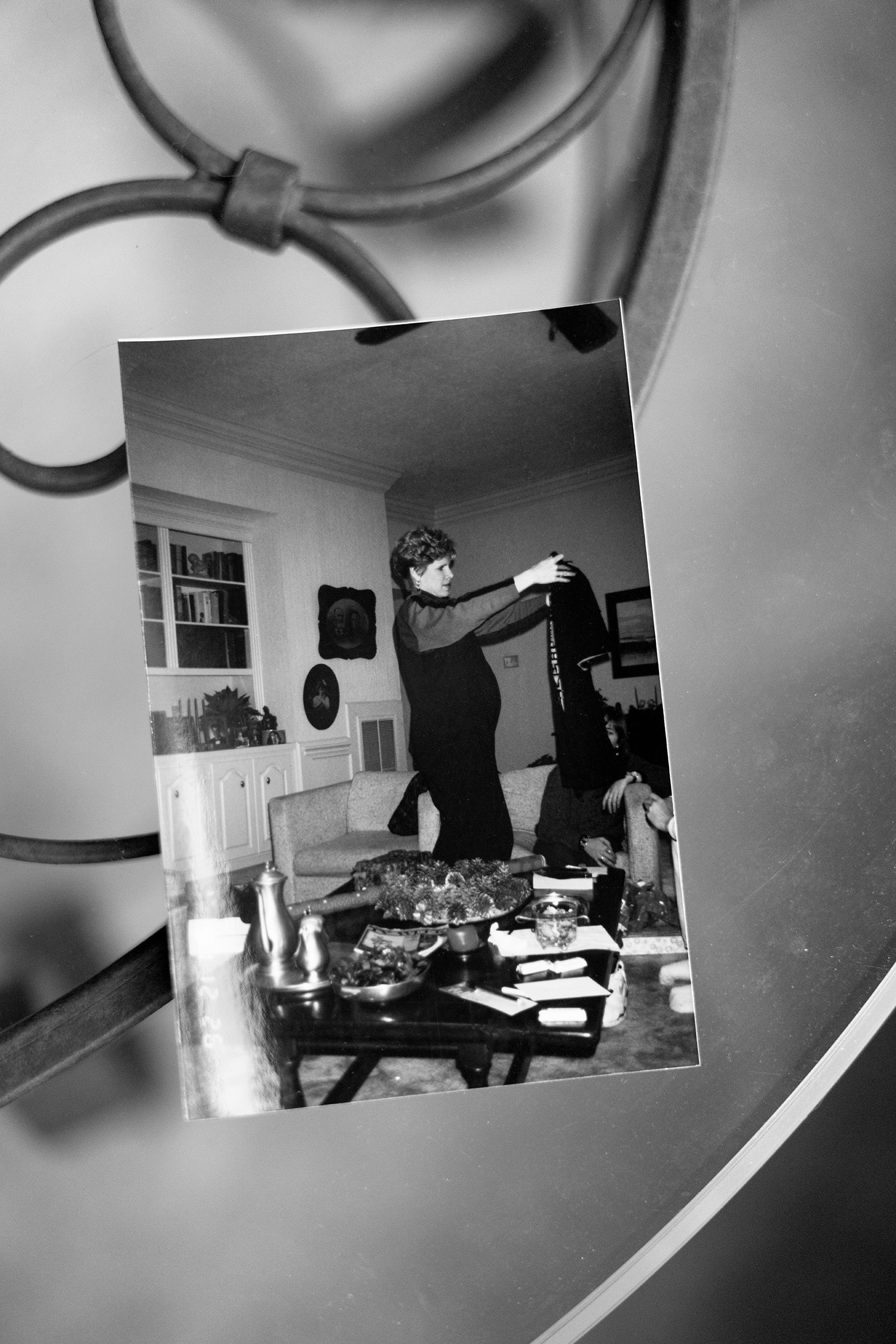
(Courtesy of Cynthia Short) When she took on Richard DeLong’s case, Short was raising two children of her own, and she wasn’t sure she’d be able to hide her revulsion from the jury.
Short wasn’t opposed to the death penalty when she first started practicing law, but as she gained experience in capital cases, she came to doubt that the criminal legal system was capable of consistently producing fair and equal outcomes. Capital punishment is inherently arbitrary. Some defendants have money and seasoned legal teams at trial; others do not. Some prosecutors favor the death penalty and others don’t, meaning defendants might be executed not strictly because of the nature of their offense but because of the side of a state or county line on which they happened to commit it. As she came to understand the capriciousness of criminal justice, Short changed her mind about capital punishment. The experience of representing several defendants whom she believed had been wrongly accused strengthened her opposition.
To defend Rick DeLong, Short knew, she didn’t need to make the jury believe that he was a good man or that he shouldn’t receive a terrible punishment. In capital trials in Missouri, as in most states, juries must return a unanimous verdict for a death sentence to be handed down, so Short needed only to introduce a shred of doubt in a single juror’s mind that her client had forfeited his right to live.
But even that seemed daunting, given the repugnance that she, DeLong’s own lawyer, could not suppress. Short may have wished that she didn’t have to take this case, but it would ultimately change her perspective on criminal behavior and set her career on a new path, taking her from the public defender’s office to a field known as mitigation, then still developing but now a central feature of every legal defense in capital cases. Mitigators are investigators whose mission, now mandated by law and precedent, is the granular search for circumstances that might convince a jury that their clients deserve a lesser sentence; in their most crucial cases, these specialists are the final advocates for a defendant’s life. Short would help pioneer the field and become one of its foremost practitioners. But in January 1999, all she had was a guilty client and bad odds.
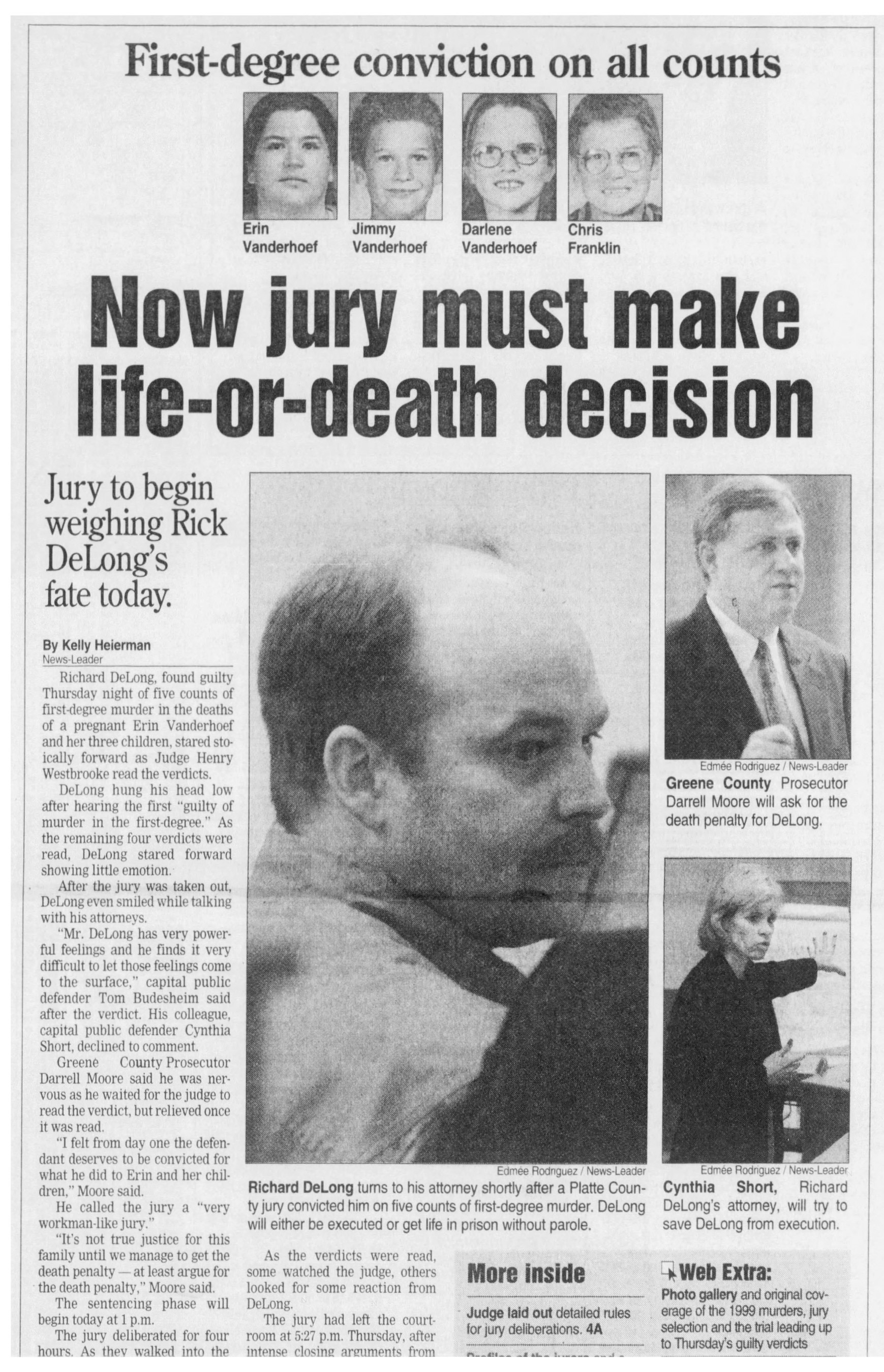
Newspapers.com The front page of the Springfield News-Leader the day after Richard DeLong’s conviction
Doubt is central to mitigation: creating doubt that a person is wholly given over to evil, or doubt that there is no universe—no set of terrible circumstances—in which you yourself might commit a horrific crime. I do believe that there are people who commit acts of perfect evil; a frank appraisal of human nature suggests as much. But those who oppose capital punishment, as I do, oppose the death penalty even for the worst criminals in the worst cases. The reason to stay the executioner’s hand has less to do with the nature of the defendant than it does with the nature of society: Showing mercy is morally beneficial to everyone. The legal system, of course, does not think this way; it needs a solid rationale to hang decisions on, and it must establish that what appears to be abject wickedness, and nothing else, may in fact be more complicated and tragic.
The work of mitigation—searching for reasons a defendant’s life should be spared—is, unsurprisingly, not always well received in the legal community or by the public. As a society, we like to believe that our choices and actions are entirely within our control. Mitigators introduce an element of uncertainty. Their investigations routinely produce information that calls into question whether defendants would have, in better circumstances, committed their crimes at all. To some, this seems like making excuses for criminals.
For Short, now 65, mitigation isn’t about rationalizing crimes. “It is about telling the truth,” she told me. “The crime is real. The harm is real. Nothing I do changes that.” She does not wish to downplay suffering or to pretend that something awful did not happen. The goal of a mitigator, she said, is to understand how a person becomes a criminal. “Every life leaves a trail. Abuse, neglect, poverty, brain injury, trauma, addiction, resilience, acts of kindness, moments of courage—all become a part of that person’s story,” Short told me over email. “Mitigation is not the art of making people less guilty. It is the discipline of making sure we judge them as a whole human being.”
When Short was preparing for the DeLong case, mitigation had only just begun to emerge as a routine component of a legal defense in capital cases. It became formalized not long afterward, with the case of Kevin Wiggins. In September 1988, Wiggins, a Maryland construction worker, was charged with the murder of 77-year-old Florence Lacs. He had been arrested while driving her car and had already used her credit cards and pawned her jewelry. A jury convicted him of murder and sentenced him to death. But Wiggins, who was intellectually disabled and had been sexually abused as a child, appealed the sentence on the grounds that his attorneys had not presented sufficient evidence of extenuating circumstances in his defense. His case went to the Supreme Court, which ruled in his favor in Wiggins v. Smith in 2003.
The Wiggins decision held that capital defendants have a right to an effective defense, including an investigation into circumstances that might explain their crimes—a ruling that fueled the rise of mitigation work. In 2008, the American Bar Association revised its guidelines to direct defense teams in capital cases to include both an investigator, who conducts an independent inquiry into the crime itself, and a mitigation specialist, who is responsible for producing information that might convince a jury that there is something more to a client than their crime suggests.
Mitigators sift through the past and familiarize themselves with all elements of a defendant’s personal history. Fragments of clients’ lives may be strewn across the country or around the world, hidden among scattered documents and scattered memories. Mitigation specialists conduct scores of in-person interviews for each case—with extended family, friends, teachers, coaches, doctors, co-workers—to put the pieces together. The Marshall Project estimates that there may be fewer than 1,000 mitigation specialists nationwide; the majority of them deal with capital cases. About twice that number of people are currently on death row.
Because mitigation specialists often have little time to prepare their cases for trial, they frequently continue their investigations during the long death-penalty appeals process. Legal teams involved in capital cases are typically reluctant to discuss their findings if judicial processes remain ongoing, but at the Mwalimu Center for Justice, a law office in New Orleans that handles capital appeals, mitigation specialists on staff agreed to share information they had uncovered about some of their clients. Benjamin Cole, an Oklahoma man who murdered his infant daughter a few days before Christmas 2002, was found by specialists on his defense team to be schizophrenic; a brain scan revealed a severe lesion. Cole spoke in riddles and frequently broke into song while interacting with his defense team, until his disease became so advanced that he chose to sit in his dark prison cell hoarding religious pamphlets and rotting food while his hair grew matted and his mind decomposed. The mitigators argued that he was too sick to be subject to execution under the Supreme Court’s 1986 decision in Ford v. Wainwright, but state authorities were undeterred. Oklahoma executed Cole in 2022.
Sometimes mitigation, no matter how legitimate, cannot overcome people’s inherent disgust with horrific crimes. Cynthia Short was facing that very possibility.
Sky Maggiore for The Atlantic Mitigators familiarize themselves with all elements of a defendant’s personal history.
Sky Maggiore for The Atlantic Short worked on DeLong’s case throughout much of her third pregnancy.
Short still hadn’t looked at the crime-scene photographs when she first met Rick DeLong, a few days after he was taken into custody in January 1999. But she had watched his maniacal taped confession, which would later be played at trial and shared with the Springfield News-Leader. “Now laugh,” he had reportedly said to 8-year-old Darlene Vanderhoef’s lifeless body as she lay thrown over a piece of bedroom furniture with an electrical cord around her neck. Even so, Short insisted on speaking with DeLong in person, with no partition between them and no shackles to hold him in place. He was much smaller than she had expected, thin and balding, and had a scraggly mullet and a dirty-blond beard.
In Short’s experience, clients facing capital charges sometimes open a first conversation by declaring suicidal intent: The path ahead otherwise leads to either death in a prison cell or death in an execution chamber. But DeLong clearly wanted to live. And surprisingly, he was obsessed with the well-being of another person: Stacie Leffingwell, his long-term partner and the mother of his youngest child. Leffingwell had helped him kill Erin Vanderhoef and her children. And she was dying from AIDS. “Everything in that first conversation was what could I do for Stacie?” Short recalled. “How could I help Stacie?”
In a photograph Short has seen, Leffingwell kneels next to DeLong and their infant son on a sunlit lawn, a mischievous smile flashing across her face. They had met in the early 1990s when DeLong was barbecuing in a friend’s backyard in Springfield and Leffingwell, a neighbor, dropped by and struck up a conversation.
Leffingwell was dark-haired, petite, and funny. Born in California in 1967 to a teenage heroin addict, she had dropped out of high school and never learned to read. DeLong and Leffingwell both used drugs, especially methamphetamines. When they met, Leffingwell was HIV-positive, but she didn’t tell DeLong. He himself was the child of a teenage mother. Born in Springfield in 1964, he grew up in poverty and was subjected to vicious assaults by his stepfather. He began using drugs at the age of 15 and was eventually snorting or smoking meth several times a week. He got by on intermittent jobs as a mechanic and manual laborer.
These details and more were revealed as Short worked with a mitigation specialist and former welfare caseworker named Kathy Schneider. The pair traveled six hours from Kansas City to Springfield and back each week to interview everyone they could find who knew DeLong. They interviewed people in parks and churches, and once went into a drug house in the middle of a snowstorm. Every month, Schneider went to see DeLong in jail, where she also interviewed his mother and sisters. Schneider created a history of DeLong’s family going back three generations, documenting the life of his biological father, a man known as Howard Littles, and his stepfather, Buzz, who had been diagnosed as mentally ill and institutionalized.
DeLong was a twice-divorced father of four when, in 1996, he was introduced to Erin Vanderhoef, who worked at a McDonald’s in Springfield. Vanderhoef had also suffered a life marked by poverty and loss, and she took a liking to DeLong right away, confiding in others that she was interested in him romantically, even though he was already involved with Leffingwell. They formed a close friendship.
DeLong had a child with Leffingwell, a son born in 1997 whom they named Lyle. Leffingwell had tried to stay clean during her pregnancy, but she resumed using drugs after the baby was born. She disappeared for a time, leaving DeLong alone to care for their newborn. Vanderhoef stepped in to help. When Leffingwell came home, she was in treatment for depression. DeLong and Vanderhoef by then were sleeping together. DeLong’s place was often in a state of chaos and frequented by drug users. Despite the infidelity and the strangeness of the arrangement, Leffingwell and Lyle moved in with Vanderhoef and her three children. A volatile love triangle developed.
In February 1998, DeLong and Leffingwell abruptly moved into a motel in Joplin, roughly 70 miles west of Springfield, near the Kansas border. But DeLong still saw Vanderhoef, and by summer she knew she was pregnant. The news sent Leffingwell into a bout of jealousy and deeper into addiction. That July, she was admitted to a hospital for pancreatitis and stayed for three weeks. She weighed less than 90 pounds. Leffingwell and DeLong told family and friends that she had stomach cancer. In fact, she was dying of AIDS. In September, DeLong himself was diagnosed with HIV. He began using meth every day.
In the days leading up to the murders, DeLong and Leffingwell went on a meth binge. On the night of January 18, 1999, Leffingwell was high and distraught, racked with fear that Vanderhoef was going to replace her. DeLong, for his part, was furious with Vanderhoef for messing up his relationship with Leffingwell. The couple came to the shared belief that Vanderhoef presented a problem, and Leffingwell demanded that DeLong fix it—permanently. Early the following morning, DeLong drove from Joplin to Springfield to kill Vanderhoef. Leffingwell rode with him, as did Harold “Bobby” Lingle, a friend and neighbor who had agreed to help carry out DeLong’s plan in exchange for an eight ball of meth.
At around eight that morning, they pulled up to Vanderhoef’s three-bedroom house. Lingle, who had met Vanderhoef before, lured her out of the house on the pretext of a grocery errand so that DeLong and Leffingwell could wait and catch her by surprise when she returned. Then DeLong slipped inside, where he found Vanderhoef’s three children getting ready for school. Wired on meth, DeLong killed them one by one. When Vanderhoef came back, Lingle told her that the children had been sent to their rooms. Then he and Leffingwell helped DeLong subdue and murder Vanderhoef. It was a cold mercy that she died thinking her children were still alive.
DeLong, Leffingwell, and Lingle were quickly apprehended. Leffingwell died of AIDS before the year was out. The lead Greene County prosecutor, Darrell Moore, decided not to seek the death penalty against Lingle, who was said to have an IQ of 72; he was eventually sentenced to life in prison without parole. But Moore was adamant about bringing capital charges against DeLong.
A series of delays pushed DeLong’s trial to June 2001. Public furor in Springfield ran hot, and press coverage was intense. When Short stood before the jurors, the first thing she said was that DeLong was unquestionably guilty. She acknowledged the horror and disgust that they were surely feeling. “There are things that we need to do in this courtroom,” she recalled telling the jury. “And one of those things that you’re going to need to do is, you’re going to need to really look closely at his mental state. That will be your job.”
But it would have to be a job mainly for phase two—the sentencing phase—rather than phase one, the guilt-or-innocence phase. No one was surprised when, on June 28, after a week and a half of testimony and less than four hours of deliberation, the jury convicted Rick DeLong on all five counts of murder.
Sky Maggiore for The Atlantic “Mitigation is not the art of making people less guilty,” Short said. “It is the discipline of making sure we judge them as a whole human being.”
Short knew that the sentencing phase would be difficult. She knew this in part because she had used her own extended family and friends—some of whom were highly conservative and generally skeptical of the defendants she represented—as test subjects, a kind of informal focus group.
When Short and her team had finished their mitigation work, well before DeLong’s trial was scheduled to begin, they collated the findings into spiral-bound books, each more than 100 pages long. Inside were detailed descriptions of DeLong’s crimes, a DVD of his confession, photographs of the crime scene, and a photograph of Vanderhoef and her three children, young and bright and beautiful, posed on a bench in front of their mother, who is holding Lyle in her arms. The books also contained a detailed account of the mitigating factors in DeLong’s case, including his abusive stepfather, his drug addiction, and his HIV status. Scattered throughout were questionnaires asking readers for their reactions at various stages. The prompts had a clinical feel, as though Short were asking for opinions on a company’s new logo or a politician’s campaign slogan, not the killing of three children and a pregnant woman. If you did choose to look at the photographs, please describe what you learned from them. But it was the best simulation of a jury’s deliberation that Short could create.
The responses from her family and friends were not encouraging. At the beginning of the book, readers were asked to gauge their support for capital punishment in general. One reader put her support at a 5 on a scale of 1 to 7, but after reading through the mitigation evidence, this same woman put her support for executing DeLong specifically at a 6. Her views were aligned with those of the prosecutor, Darrell Moore, who told reporters in advance of the sentencing phase that he and the judge had received numerous phone calls from angry citizens who wanted DeLong to die for his crimes. In front of the jury, Moore read a letter written by Vanderhoef’s brother in which he told DeLong, “You do not deserve the right to live, in a prison or any other place. You are not a man, you are a coward and an animal.”
On DeLong’s behalf, Short introduced the array of mitigating information that she and Kathy Schneider had compiled. Some of the material had been presented in phase one—a tactic known as front-loading. The idea was not to try to sway jurors on the question of guilt or innocence—in this instance, there was nothing to be done—but to prepare the jury for arguments that would be presented again, and enhanced, later on. Short was aware that much of the information could be seen as all too familiar: When it comes to defendants facing the death penalty, a life like DeLong’s is normal;very few people guilty of aggravated first-degree murder have peaceful, healthy backgrounds. But two aspects of his story had taken Short by surprise. First, as she combed through the police files, Short had noticed a coincidence: Mark Deeds, the officer who had coaxed the confession out of DeLong and emerged as the hero of the investigation, had encountered her client before.
In 1991, when DeLong was 27, he was arrested for selling cocaine and marijuana to Deeds, who was then working undercover for the Springfield Police Department. DeLong was so deeply enmeshed in the local drug culture that Deeds saw an opportunity. According to the testimony of DeLong’s former defense attorney, who negotiated a plea deal, Deeds threatened DeLong with decades in prison unless he began working as an informant. DeLong agreed. Police and prosecutors paid DeLong for information and granted him leniency on subsequent drug-related charges. At one point, his bond on arrest was reduced from $75,000 to $2,500. At another point, he received a sentence of five years’ probation for charges that ought to have resulted in prison time.
The policies of the Missouri Board of Probation and Parole specifically prohibited offenders on probation from serving as police informants, but the department kept working with him anyway. Because of his protected status, DeLong continued to get little to no prison time when he was caught using. His addiction deepened. By the time of the murders, DeLong had helped Deeds and the Springfield Police Department clear a number of high-profile narcotics cases, even as he himself disintegrated from years of dependence. His career as a police informant came at the expense of any attempt at rehab—the one had simply precluded the other. Given all of this, Short asked, did the police bear any responsibility for DeLong’s condition?
The second discovery that Short and her team made came while going through DeLong’s medical records. A week before the murders, he had begun taking Sustiva, an experimental drug that can help slow the progression of HIV but whose side effects include dizziness, insomnia, confusion, abnormal thinking, amnesia, agitation, and hallucinations. Patients abusing drugs or who have preexisting mental illness are at increased risk of developing neurological symptoms. And the drug’s side effects tend to be most severe when a patient is just starting to use the drug, as DeLong had been.
The witnesses for the defense included an addiction specialist who testified that DeLong’s meth use easily could have contributed to a shattered mental state; a medical specialist who confirmed that Sustiva is known to induce delusions, hallucinations, and psychosis, and that the drug combined with meth could have disastrous results; and a psychiatrist who testified that DeLong had likely been in the grip of a psychotic episode when he carried out the murders.
Short did not know what to expect when the jury began to deliberate. The new information had raised provocative questions about a case whose conclusion had once seemed preordained. In the end, the jury declined to impose the death penalty. It instead sentenced DeLong to life without parole.
Sky Maggiore for The Atlantic In Short’s 23 years as a full-time mitigation specialist, she has worked with approximately 200 clients, none of whom has received the death penalty.
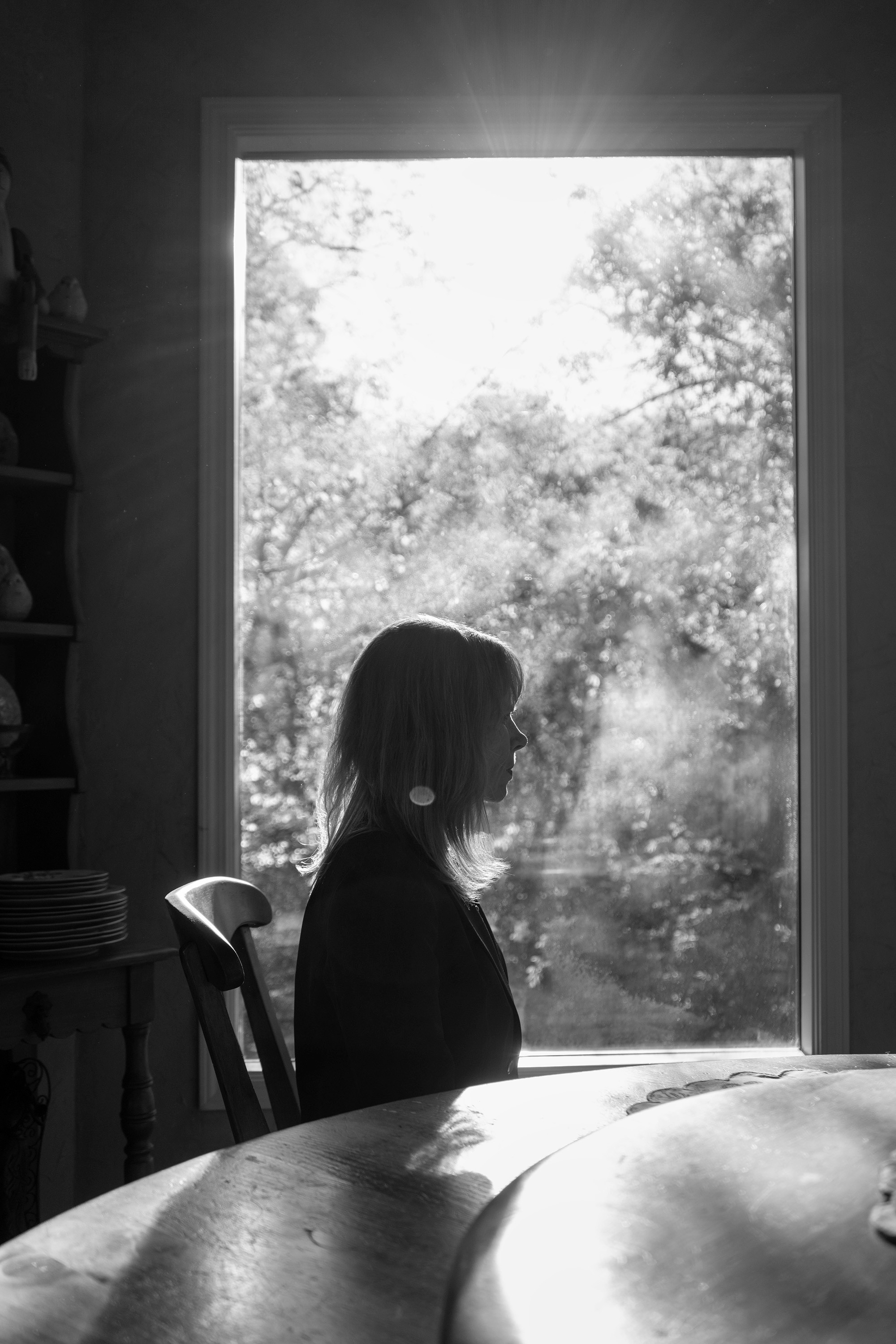
Sky Maggiore for The Atlantic Cynthia Short in her home office in Kansas City, Missouri
In 2003, Short left her job with the Public Defender’s Office due to a round of funding cuts, and decided to become a full-time mitigation specialist. In the 23 years since then, she says that she has worked with approximately 200 clients, none of whom has received the death penalty. Her attitude toward the field, as a practical matter, can be simply put: If mitigators are able to present a full picture of a defendant’s life, then no reasonable jury will return a verdict of death, not even for the most brutal killer. Her job is to persuade jurors to bestow something that she feels everyone deserves. “Mercy is not something that is earned,” she said to the jury during DeLong’s trial. “Mercy is something that is given.” Her words were printed in large display type in the Springfield News-Leader’s front-page story about DeLong’s sentencing.
Short is well aware that much of the public—including thoughtful citizens and community leaders—finds mitigation not only unjustifiable but incomprehensible. Still, she cannot set aside her principles or her obligations: Every defendant deserves a full measure of effort, even if onlookers deem it a waste of time and money for people who deserve nothing. She is sustained by some of those she encounters along the way. Several weeks after DeLong’s sentencing, Short received a note from James Spindler, the Greene County medical examiner. She had cross-examined him on the stand, and had probed him about his own struggles with drugs. Addiction, she suggested, was not something that happens strictly to evil and hopeless people. That resonated with Spindler, who wrote that although he had come across a number of dangerously antisocial defendants in his career whose executions he would by no means oppose, Short had convinced him that DeLong was not a “sociopath beyond redemption.”
The past few years have been among the busiest in Short’s career as a mitigator. After a federal moratorium on new death sentences during the Biden administration—and the mass commutation of most federal death sentences already handed down—the Trump administration has reinstated the federal death penalty. Trump’s former attorney general Pam Bondi encouraged states to aggressively pursue capital punishment and take advantage of foreshortened appeals processes that would fast-track executions. Mitigation specialists have seen their workload increase in volume and urgency.
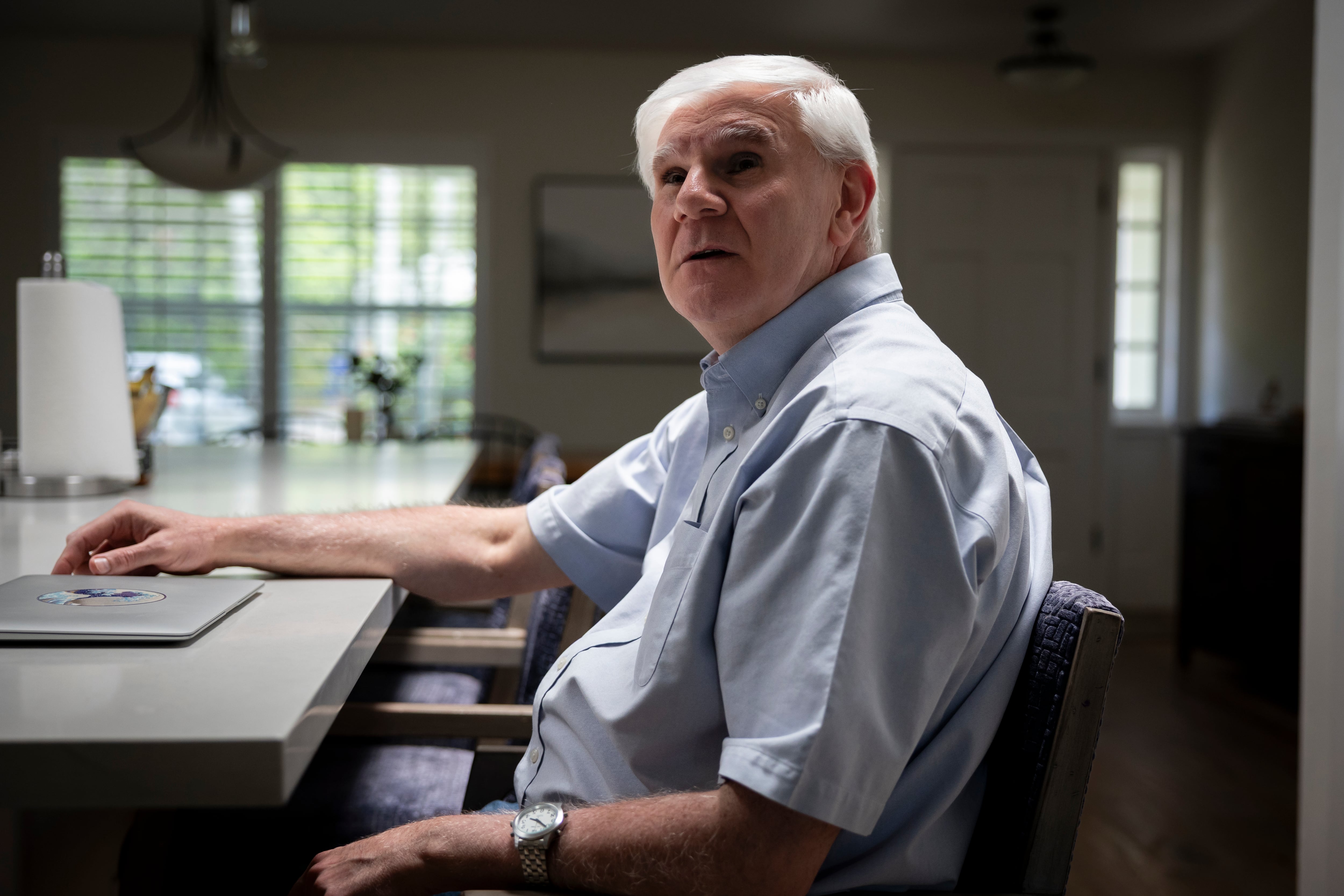
Short’s determination to try to see beyond the worst of what her clients have done struck me as rare and admirable, and I kept it in mind when I picked up the phone to call the Missouri prison where Rick DeLong is incarcerated. I have spoken with many people who have committed murder, and many people on death row. Capital punishment, and the victims and perpetrators of capital crimes, have long been a focus of my reporting. But I had never spoken with a child killer before.
A prison receptionist answered, and after a pause put DeLong on the phone. His voice was both hoarse and soft; his disease is advanced now, and he has had several heart attacks. He told me what his life had been like before he committed the murders, how he loved working as a mechanic—“There was nothing I couldn’t do to a car,” he said. He recalled his stepfather, and how abusive he was, and how the meth had made the bad moments more bearable. Meeting Leffingwell had made things better, too, because she came from the same world, and for once he felt understood. They had loved going to rodeos and carnivals together, a kind of fantastic escape.
DeLong talked about his five children, only three of whom will speak with him. He also talked about his grandchildren, though he has seen them only in photos. His son Lyle is in prison, convicted of murder in 2022 and now serving a 32-year sentence. DeLong told me he had loved being a father to Lyle—“That’s my joy,” he said. “I took him everywhere.” He recalled bringing him on fishing trips, and once, in a misguided display of devotion, buying a heavy-duty backpack, cutting holes in it for arms and legs—a makeshift infant carrier—and taking him for rides on his motorcycle. Now the boy was a man, and had followed his father behind bars.
As for his own crimes, DeLong told me that he was glad he’d been caught, and that he knows he deserves the sentence he received. I could not forget that the thin voice on the other end of the line belonged to a man who had taken five lives. It was also the voice of a frail 61-year-old slowly dying in prison. DeLong remembered Cynthia Short fondly, though he told me that he had initially doubted that a woman would be able to see past what he had done to a mother and her children. But Short, he admitted, had understood everything: the crime, his life, how he might appear in the eyes of a jury. And she knew what it would take to save him. He didn’t have much of a life anymore, but thanks to this woman, he was alive. “You couldn’t ask for better,” he told me. “There’s no way.”
Le reti di telecomunicazione sono diventate uno dei principali terreni della competizione strategica internazionale. La loro sicurezza, la provenienza delle tecnologie utilizzate e le vulnerabilità introdotte dall’intelligenza artificiale rappresentano ormai questioni direttamente collegate alla sicurezza nazionale. È su queste premesse che i Five Eyes, l’alleanza di intelligence che riunisce Stati Uniti, Regno Unito, Australia, Canada e Nuova Zelanda, hanno concordato di rafforzare la cooperazione per proteggere le infrastrutture di comunicazione dalle minacce informatiche, con particolare attenzione alle attività riconducibili alla Cina.
L’intesa è stata raggiunta a Washington durante il terzo incontro annuale dei regolatori delle telecomunicazioni dei cinque Paesi, convocato dalla Federal Communications Commission (FCC) e conclusosi con una dichiarazione congiunta che stabilisce sette ambiti prioritari di collaborazione.
L’accordo comprende la protezione delle reti e delle infrastrutture critiche, la sicurezza delle catene di approvvigionamento tecnologico, il rafforzamento del coordinamento internazionale e il contrasto alle frodi digitali. Particolare attenzione è stata riservata anche al ruolo della superintelligenza nella sicurezza delle comunicazioni, un riferimento che segnala quanto rapidamente l’evoluzione dell’intelligenza artificiale stia entrando nelle valutazioni strategiche dei governi occidentali.
La minaccia cinese e la sicurezza delle infrastrutture
Sullo sfondo dell’iniziativa rimane la crescente preoccupazione per le operazioni di cyberspionaggio condotte attraverso le infrastrutture di telecomunicazione.
Nel comunicato diffuso il 16 ottobre, la FCC richiama esplicitamente Salt Typhoon, il gruppo di hacker associato alle attività di cyberspionaggio sostenute dallo Stato cinese, indicandolo tra gli attori che cercano di sfruttare le vulnerabilità delle reti, compromettere sistemi sensibili e interferire con servizi essenziali.
Il riferimento è significativo perché evidenzia una trasformazione della percezione occidentale della minaccia informatica. Le telecomunicazioni costituiscono un’infrastruttura strategica attraverso cui transitano informazioni governative, comunicazioni commerciali e dati sensibili. La possibilità che attori ostili possano penetrarvi stabilmente pone problemi che superano la tradizionale protezione dei singoli sistemi informatici.
Da qui l’attenzione alla sicurezza delle supply chain, diventata una componente essenziale della competizione tecnologica tra Washington e Pechino. La provenienza delle apparecchiature, l’affidabilità dei fornitori e la possibilità di individuare vulnerabilità lungo la catena produttiva assumono una rilevanza direttamente collegata alla resilienza nazionale.
“Dalla promozione della sicurezza delle catene di approvvigionamento al contrasto degli attacchi informatici, il lavoro di questo gruppo continua a essere cruciale sia per la sicurezza nazionale degli Stati Uniti sia per la difesa del mondo libero”, ha dichiarato il presidente della FCC, Brendan Carr (in foto).
La superintelligenza entra nell’agenda
Uno degli aspetti più interessanti dell’incontro riguarda l’inclusione della superintelligenza tra le priorità della cooperazione.
Il comunicato non specifica quali iniziative operative saranno sviluppate in questo ambito, ma la scelta di inserirlo formalmente nell’agenda segnala l’attenzione dei regolatori verso le implicazioni di sistemi di intelligenza artificiale sempre più avanzati.
L’evoluzione di queste tecnologie potrebbe modificare profondamente sia le capacità di difesa delle infrastrutture digitali sia gli strumenti disponibili per comprometterle. L’automazione delle attività di identificazione delle vulnerabilità, l’analisi di grandi quantità di dati e la crescente sofisticazione degli attacchi rappresentano altrettanti elementi destinati a influenzare gli equilibri della cybersicurezza.
Il tema assume una dimensione strategica ulteriore considerando che le reti di telecomunicazione costituiscono anche l’infrastruttura attraverso cui vengono distribuiti e utilizzati numerosi servizi basati sull’intelligenza artificiale.
Verso un coordinamento più ampio
L’incontro ha affrontato anche l’armonizzazione delle regole per le certificazioni di sicurezza informatica, con una sessione guidata dalla commissaria FCC Olivia Trusty. Il riferimento è al rafforzamento della fiducia nei dispositivi e nei prodotti connessi, anche attraverso iniziative come il programma statunitense Cyber Trust Mark.
La FCC ha inoltre ampliato il formato della riunione, coinvolgendo altri Paesi partner in una nuova sessione dedicata alla collaborazione internazionale.
È un passaggio politicamente rilevante. La protezione delle telecomunicazioni richiede infatti un coordinamento che superi i confini della tradizionale alleanza di intelligence anglosassone, soprattutto considerando la natura transnazionale delle infrastrutture digitali.
La direzione indicata dai Five Eyes riflette una tendenza più ampia: la sicurezza delle reti sta diventando parte integrante delle politiche industriali, tecnologiche e di difesa. In un contesto caratterizzato dalla competizione con la Cina e dalla rapida evoluzione dell’intelligenza artificiale, la capacità di costruire infrastrutture affidabili e catene di approvvigionamento sicure si configura sempre più come una componente della sovranità strategica.
La frammentazione dell’economia globale sta ridisegnando la geografia strategica dell’Europa. Le guerre in Ucraina e Medio Oriente, le tensioni sulle rotte marittime, la competizione commerciale tra Stati Uniti e Cina e la crescente attenzione alla sicurezza delle infrastrutture stanno modificando il valore di porti e corridoi logistici. In questo scenario, il Mare Adriatico, a lungo considerato periferico rispetto ai grandi centri del commercio europeo, potrebbe assumere un ruolo sempre più importante nella sicurezza economica del continente.
È la tesi centrale di The New Centrality of the Adriatic Sea and Napa in the Age of Fragmentation, un rapporto realizzato dall’Istituto per gli Studi di Politica Internazionale (Ispi) insieme alla North Adriatic Ports Association (Napa), con Roberto Italia, Giovanni Maria Della Gatta e Matteo Villa come autori principali. Il documento esamina come i cambiamenti negli equilibri internazionali stiano creando nuove opportunità per il sistema portuale dell’Alto Adriatico, individuando una questione che riguarda direttamente Bruxelles: quanto può contribuire questa regione alla resilienza strategica dell’Unione europea?
La risposta parte dalla geografia. I cinque porti dell’associazione – Ravenna, Trieste-Monfalcone, Venezia-Chioggia, Capodistria e Fiume – costituiscono una porta d’accesso naturale all’Europa centrale e orientale. Una nave proveniente da Busan, in Corea del Sud, può raggiungere il Nord Adriatico attraverso Suez percorrendo circa 2.000 miglia nautiche in meno rispetto a una destinazione nell’Europa settentrionale, con un risparmio teorico di circa cinque giorni.
Eppure, storicamente, i grandi porti del Northern Range, da Rotterdam ad Anversa, hanno dominato il commercio continentale grazie alla loro capacità logistica e alle connessioni con i mercati interni. Oggi, secondo l’Ispi, la crescente importanza della diversificazione delle rotte potrebbe contribuire a riequilibrare questa gerarchia.
La sicurezza economica cambia la geografia
Il punto di partenza del rapporto è che le infrastrutture marittime sono diventate parte integrante della sicurezza nazionale ed europea. Le crisi nel Mar Rosso e nello Stretto di Hormuz hanno mostrato quanto le catene di approvvigionamento dipendano da pochi passaggi vulnerabili. La guerra in Ucraina ha trasformato il Mar Nero in uno spazio di confronto militare, mentre nel Baltico le minacce ibride russe aumentano l’attenzione verso le infrastrutture critiche.
In questo contesto, il Nord Adriatico offre un accesso meridionale ai mercati europei, complementare alle tradizionali rotte settentrionali. La sua importanza deriva anche dalla possibilità di collegare Mediterraneo, Balcani ed Europa centrale attraverso infrastrutture già inserite nelle reti transeuropee di trasporto.
Le prospettive economiche rafforzano questa valutazione. Secondo le proiezioni elaborate nel rapporto, il traffico complessivo dei porti Napa potrebbe aumentare da 144 milioni di tonnellate nel 2024 a circa 170 milioni nel 2031, una crescita del 18%. Un’espansione legata soprattutto alla domanda dei mercati retrostanti, alla diversificazione energetica e alla ricerca di collegamenti commerciali più affidabili. La geografia favorevole, tuttavia, non garantisce automaticamente competitività. La capacità ferroviaria, l’interoperabilità transfrontaliera e l’efficienza dei collegamenti terrestri rimangono decisive.
Dall’Adriatico ai nuovi corridoi eurasiatici
La nuova centralità dell’Adriatico si inserisce anche nella competizione per le connessioni tra Europa e Asia. Il rapporto dedica particolare attenzione all’India-Middle East-Europe Economic Corridor (Imec), l’iniziativa lanciata al G20 di Nuova Delhi nel 2023 per sviluppare collegamenti commerciali, energetici e digitali attraverso India, Golfo, Medio Oriente ed Europa.
Per i porti adriatici, Imec rappresenta una possibile opportunità di integrazione nelle nuove reti eurasiatiche. Il documento sottolinea però che il corridoio richiederà anni per diventare pienamente operativo e dovrà superare ostacoli infrastrutturali e geopolitici considerevoli. Accanto a Imec, l’Ispi analizza il Middle Corridor, la rotta transcaspica che collega Asia centrale ed Europa aggirando la Russia. Entrambe le iniziative rispondono alla ricerca di ridondanza delle connessioni commerciali: una priorità crescente per un’Unione europea che intende ridurre le proprie vulnerabilità senza rinunciare all’apertura internazionale. Il Nord Adriatico potrebbe così consolidarsi come punto di convergenza tra diverse direttrici, collegando i flussi mediterranei con quelli provenienti dai Balcani, dal Caucaso e dall’Europa orientale.
Energia, difesa e infrastrutture digitali
La dimensione commerciale costituisce soltanto una parte del potenziale individuato dall’Ispi. I porti adriatici sono già importanti per la diversificazione degli approvvigionamenti energetici europei, soprattutto verso i Paesi senza accesso diretto al mare. La riduzione della dipendenza dagli idrocarburi russi ha rafforzato il valore strategico delle infrastrutture regionali.
A questo si aggiungono la transizione energetica, i progetti di decarbonizzazione e le prospettive della connettività digitale, compreso il futuro sistema di cavi sottomarini GreenMed. Il rapporto attribuisce inoltre crescente rilevanza alla mobilità militare. In un’Europa impegnata ad aumentare gli investimenti nella difesa, porti, ferrovie e collegamenti intermodali diventano infrastrutture a duplice uso, necessarie anche per il trasferimento di materiali e mezzi verso il fianco orientale della Nato. È qui che la centralità adriatica assume una dimensione propriamente strategica: quella di un sistema capace di contribuire simultaneamente alla competitività economica, alla sicurezza energetica e alla resilienza europea.
La sfida per Bruxelles
La trasformazione descritta dall’Ispi richiede investimenti e coordinamento. Il rapporto individua 43 progetti infrastrutturali collegati alla rete TEN-T nei porti Napa, per circa 3,26 miliardi di euro. Ma evidenzia anche i rischi di interventi frammentati, incapaci di risolvere le strozzature lungo i corridoi logistici. La proposta è considerare i cinque porti come un sistema integrato, preservandone le specializzazioni e rafforzando la cooperazione transfrontaliera. Un modello di governance che potrebbe offrire indicazioni utili anche ad altre regioni europee.
Il messaggio politico arriva mentre l’Unione negozia il prossimo quadro finanziario pluriennale. Per Bruxelles, riconoscere la centralità dell’Adriatico significherebbe investire in una geografia economica europea più diversificata, capace di sostenere l’integrazione dei Balcani e dell’Europa orientale. La conclusione del rapporto è, in definitiva, una sollecitazione strategica: in un mondo nel quale le rotte commerciali sono sempre più esposte alle rivalità geopolitiche, la sicurezza europea dipenderà anche dalla capacità di moltiplicare gli accessi al continente. E l’Adriatico potrebbe diventare uno dei protagonisti di questa trasformazione.
"Las Naciones Unidas no son una plataforma para la persecución política, la injerencia en los asuntos internos de los Estados ni las campañas destinadas a socavar su soberanía", dijo el representante de Cuba ante una nueva maniobra de EE.UU. para condicionar la votación sobre el bloqueo.
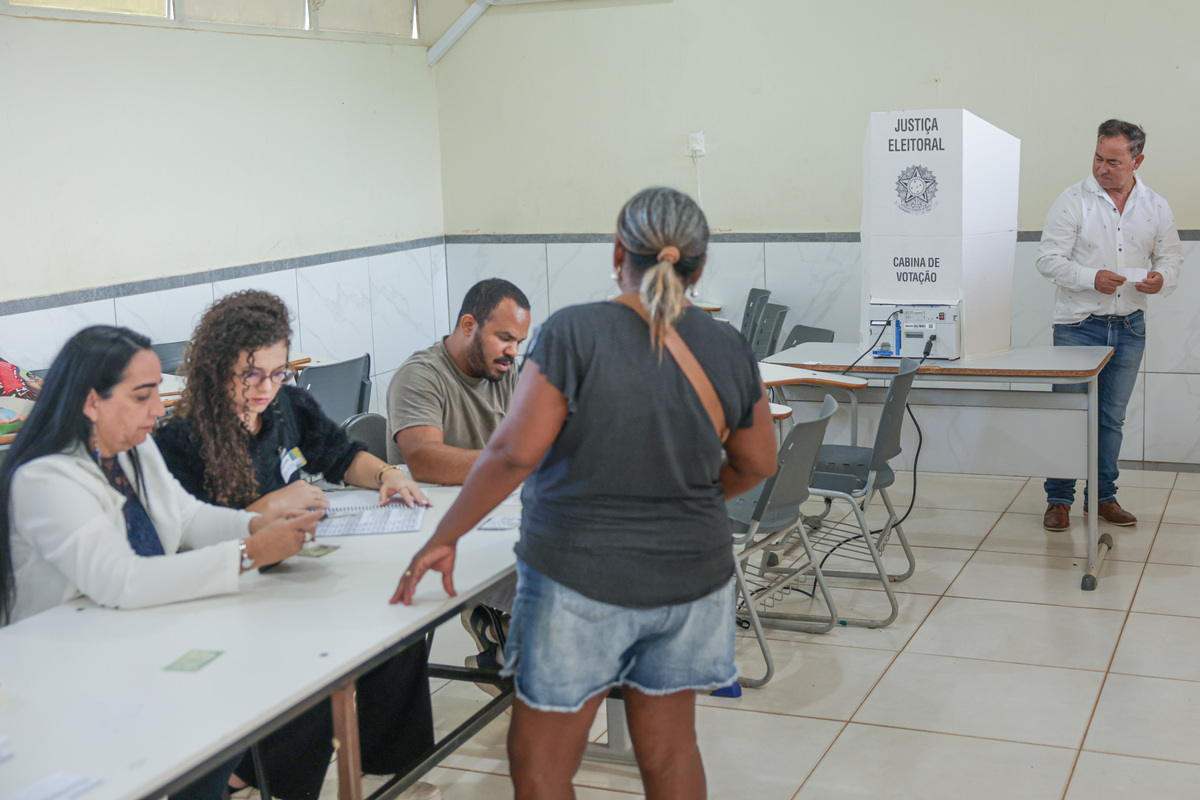
No primeiro turno das eleições de 2026, a alteração de locais de votação pelo Tribunal Regional Eleitoral do Rio Janeiro (TRE-RJ) impactou mais da metade dos eleitores do Complexo da Maré, na zona norte da capital fluminense. A justificativa do tribunal é que as comunidades da Maré são uma “área de risco” pela dominação de facções e do tráfico de drogas.
“O Estado reconhece que aqui [na Maré] não é seguro para votar e coloca os moradores para votar do lado de fora. Qual o impacto disso? [Que a] gente está sempre no antagonismo”, afirma Tainá Alvarenga, coordenadora da organização Redes da Maré, no eixo direito à segurança pública e acesso à Justiça.
Para Alvarenga, várias instâncias do poder público utilizam a falta de segurança como argumento, mas acabam interferindo no acesso a direitos fundamentais dos moradores das comunidades como transporte, saúde, investigações de crimes e, entre eles, o de “não ter os espaços de votação mudados com o discurso da segurança pública”, declara à Agência Pública.
“A escola oferece menos dias de aula por causa da segurança, a defensoria não pode vir sem uma autorização por causa da segurança, o Ministério Público não pode vir porque é um território conflagrado, não pode ter perícia [pelo mesmo motivo]”, afirma a coordenadora.
Em um artigo publicado no Jornal O Globo, a diretora fundadora da organização Redes da Maré, Eliana Sousa Silva, explica que a Zona Eleitoral (ZE) 161ª é a mais representativa para a Maré porque cerca de 60% de suas seções estão localizadas dentro do território ou em seu entorno.
Um levantamento feito pelo Consultor Jurídico mostra que as nove zonas eleitorais do Rio de Janeiro com locais de votação alterados apresentaram um índice maior de abstenção. Nelas, a média de abstenção foi de 25,83% enquanto o índice nacional ficou em 21,08%. A 161ª ZE foi justamente a que teve o maior número de endereços trocados, segundo a pesquisa, e alcançou o maior índice de abstenção, 28,46%.
No total, 72 locais de votação do Rio de Janeiro foram alterados pelo TRE-RJ, atingindo 20 municípios do Estado e cerca de 200 mil eleitores, segundo Eliana Sousa Silva. No Complexo da Maré, eleitores foram remanejados para locais com até 7 quilômetros de distância do local original.
A fundadora da Redes Maré também aponta em seu artigo que na 161ª ZE, Lula venceu Flávio Bolsonaro por uma diferença de 14 pontos percentuais, alcançando quase 10 pontos a mais do que obteve na cidade do Rio. E, para governador, Eduardo Paes teve 8 pontos percentuais a mais do que a sua média no restante da capital. “Falta transparência sobre quais critérios justificam a retirada de algumas seções e a manutenção de outras na mesma região” avalia Silva.
“Os locais transferidos funcionam em escolas municipais. Se esses prédios recebem crianças diariamente, por que seriam inadequados para adultos votarem por algumas horas? Sem critérios transparentes, a decisão reforça o estigma da favela como território perigoso e desconsidera a sua organização comunitária”, complementa.
Não é a primeira vez que o TRE-RJ transfere eleitores para outros lugares. Em 2024, a Redes da Maré calculou que 50,6% dos eleitores aptos do local foram impactados pelas mudanças de locais de votação. O estudo “Como vota a Maré”, realizado pela organização, ressalta que o alerta sobre o risco de abstenção em função das constantes alterações de endereço feitas pela Justiça eleitoral do estado já era feito na votação anterior.
Segundo a análise, os moradores da Maré que antes votavam dentro do território foram os que mais sofreram com as dificuldades de acessibilidade e mobilidade urbana. “A transferência pode significar aumento do tempo de caminhada, necessidade de atravessar grandes vias como a Avenida Brasil e Linha Amarela, ausência ou inadequação de transporte público, […] o que impacta desproporcionalmente jovens, mulheres chefes de família, pessoas com deficiência e pessoas idosas que vivem na Maré”, detalha.
A pesquisa ainda destaca que, por mais que o transporte público gratuito nos dias de votação seja “fundamental para reduzir barreiras econômicas ao voto”, não é o suficiente para garantir o direito ao voto. “Gratuidade não significa, por si só, acessibilidade territorial. Essa distinção é especialmente importante na Maré, onde o transporte coletivo se concentra nas grandes vias que margeiam o território”, avalia.
A Justiça Eleitoral, neste ano, incluiu a Maré no projeto “Seu Voto Importa”, destinado a auxiliar pessoas com mobilidade reduzida e pessoas com deficiência para se locomover até suas áreas de votação, em Bonsucesso.
La diplomática Tanieris Diéguez, manifestó que Cuba mantiene su disposición a conversar sobre cualquier asunto, siempre que exista respeto mutuo y no se cuestionen su soberanía ni su orden constitucional.
A distinção será entregue em fevereiro, durante os Actor Awards, e reconhece não só o legado artístico de uma das figuras mais emblemáticas de Hollywood, mas também o contributo para a sociedade.

 Login