❌

Reading view

EU Ministers Agree New Homelessness Measures as Housing Costs Continue to Rise

European Union ministers have adopted a new recommendation calling for stronger measures to prevent homelessness and housing exclusion, as governments face increasing pressure over housing shortages and the cost of accommodation.

The recommendation was approved at a meeting of employment and social affairs ministers in Luxembourg on Monday, 19 October, and forms part of the European Commission’s wider efforts to address Europe’s housing crisis.

It proposes measures ranging from early intervention for households facing eviction to increased investment in affordable housing, improved access to social services and more coordinated support for people without permanent accommodation.

However, the recommendation is not legally binding. Member States will retain responsibility for deciding which measures to introduce, how they should be financed and the extent to which existing national housing policies should be changed.

More than one million people affected

According to the Council’s announcement, more than one million people are estimated to experience homelessness across the European Union.

The problem extends beyond people sleeping on streets or using emergency shelters.

The term housing exclusion also encompasses households living in inadequate accommodation, people facing imminent eviction and those unable to secure stable housing because of financial or personal circumstances.

The Council identifies poverty, unemployment, domestic violence, disability, poor health and insufficient affordable housing among the factors contributing to the problem.

Housing costs have also risen considerably faster than incomes in several European countries.

Between 2013 and 2024, nominal house prices increased by more than 60 per cent across the EU. In some Member States, average increases exceeded 220 per cent during the same period.

These developments have placed additional pressure on households with lower incomes, particularly in cities where rental accommodation is increasingly expensive and social housing is limited.

The shortage affects not only unemployed people but also individuals in paid employment whose earnings are insufficient to cover market rents.

Prevention before eviction

A central element of the new recommendation is the introduction or strengthening of national strategies intended to prevent homelessness before people lose their accommodation.

The Council encourages Member States to establish early-warning mechanisms capable of identifying households experiencing serious financial or housing difficulties.

Proposed interventions include debt counselling, emergency rental assistance, mediation between landlords and tenants, and appropriate safeguards against forced eviction.

The emphasis on prevention reflects the potentially substantial social and financial consequences of losing stable accommodation.

Once a person becomes homeless, obtaining employment, maintaining healthcare arrangements and securing permanent accommodation can become considerably more difficult.

The Council also calls for particular attention to children, young people leaving care and people facing domestic abuse.

Member States are encouraged to ensure that children have access to adequate housing and that young people leaving institutional or foster care are not placed at risk of homelessness because appropriate support arrangements are unavailable.

Greater emphasis on permanent housing

The recommendation promotes a housing-led approach, under which securing suitable and stable accommodation becomes a central element of the response to homelessness.

This differs from policies relying primarily on emergency shelters or temporary accommodation, although such facilities remain necessary for people facing immediate housing difficulties.

Housing-led programmes can include permanent accommodation accompanied by individual support services, depending on the person’s circumstances.

The Council also proposes simplifying access to social and healthcare services through integrated arrangements that allow people to obtain assistance without repeatedly approaching different public authorities.

One suggested model involves providing access to relevant services through a single contact point, with support from social workers, healthcare professionals and other organisations.

However, access to permanent housing ultimately depends on the availability of suitable properties.

The recommendation therefore calls for increased public and private investment in affordable and social housing, renovation of existing accommodation and support for non-profit housing models.

Questions over implementation and funding

The non-binding character of the recommendation remains one of its principal limitations.

European institutions can coordinate policies, provide guidance and support investment, but national governments and local authorities retain substantial responsibility for housing provision and social welfare arrangements.

The recommendation does not automatically establish a new EU housing entitlement or provide dedicated funding to every Member State.

Its effectiveness will depend on whether governments introduce measures capable of increasing housing supply and reducing the number of people entering homelessness.

The European Federation of National Organisations Working with the Homeless, known as FEANTSA, previously welcomed the Commission’s proposal while identifying shortcomings.

In its assessment of the original proposal, the organisation argued that EU policy should place greater emphasis on permanently ending homelessness rather than primarily managing housing exclusion.

It also questioned the adequacy of funding arrangements and the proposed five-year interval for national progress reporting.

Five-year assessment planned

Under the adopted recommendation, Member States are encouraged to provide the European Commission with information on the effectiveness of their national strategies every five years.

The Commission is expected to evaluate national progress and report to the Council five years after the recommendation’s adoption.

The policy follows the European Affordable Housing Plan, presented in December 2025, and the EU’s Anti-Poverty Strategy, introduced in May 2026.

Together, these initiatives seek to expand the Union’s role in coordinating housing policy without transferring national housing responsibilities to Brussels.

The first indication of whether the recommendation will produce measurable results will come from national decisions on social housing investment, eviction prevention and access to permanent accommodation. Without changes to those practical arrangements, the Council’s commitments will remain principally a framework for voluntary cooperation.

  •  

Belgium Agrees New Water Pollution Measures with European Commission Amid PFAS Concerns

Belgium’s three regions have reached an agreement with the European Commission to strengthen measures against water pollution, improve wastewater treatment and increase protection against floods and droughts.

The joint statement, signed in Leuven on Monday, 19th October, sets out commitments for Flanders, Wallonia and the Brussels-Capital Region, including action on industrial pollution, pesticides and persistent chemicals such as per- and polyfluoroalkyl substances, commonly known as PFAS.

The agreement was signed by European Commissioner for Environment, Water Resilience and a Competitive Circular Economy Jessika Roswall, Flemish Environment Minister Jo Brouns, Walloon Environment Minister Yves Coppieters and Brussels State Secretary Ans Persoons.

According to the European Commission’s announcement, the agreement follows a detailed examination of Belgium’s implementation of European water legislation and identifies measures requiring greater attention from regional authorities.

European Commission seeks faster implementation

Belgium is the second EU Member State to complete a structured dialogue under a Commission initiative launched in November 2025.

The process is intended to improve implementation of existing environmental requirements rather than establish an entirely new legislative framework.

European water legislation already obliges Member States to assess the condition of their rivers and groundwater, control pollution and prepare management plans intended to improve water quality.

However, achieving the objectives of the EU’s Water Framework Directive remains difficult in several countries, particularly where pollution, agricultural activity and urban development place competing demands on water resources.

Belgium presents additional administrative complications because responsibility for environmental policy and water management is divided principally between three regional governments.

Watercourses also cross regional and international boundaries, requiring cooperation with neighbouring countries.

The Commission’s review examined Belgium’s third generation of river basin management plans and its second generation of flood risk management plans.

Technical discussions identified areas where implementation could be accelerated, particularly regarding pollution controls, water efficiency and coordination between public authorities.

Flanders to address industrial pollution

Under the agreement, Flanders will prioritise investment in water resilience and stronger action against industrial pollution.

The region intends to use its IMPULSE programme to support improvements in water management and pollution reduction.

Industrial discharges are among the issues specifically identified for closer scrutiny.

The joint statement calls for more systematic reviews of permits governing water abstraction and industrial wastewater discharges, particularly where existing activities place pressure on rivers and groundwater.

The agreement also highlights the need to tackle persistent chemical pollution.

PFAS have become a significant environmental concern because many of these substances degrade extremely slowly and can accumulate in water, soil and living organisms.

Certain PFAS compounds have been associated with adverse health effects, although the risks depend on the individual chemical, exposure level and duration.

The Commission’s commitments include stronger action on PFAS and pesticides, alongside improvements in monitoring and pollution prevention.

Agricultural pollution is another area requiring attention.

Fertilisers and pesticides can enter rivers and groundwater through runoff or infiltration, creating difficulties for water treatment and contributing to the deterioration of aquatic ecosystems.

The three regions have agreed to strengthen cooperation with farmers, retailers and researchers to support more sustainable agricultural practices, including expanding markets for organic products.

€300 million for river restoration in Wallonia

Wallonia has committed to continuing investment in river restoration and improved water resilience, with particular attention to the Vesdre basin.

The region intends to use a €300 million loan secured from the European Investment Bank in 2025 to support restoration work.

The Vesdre basin experienced severe flooding in July 2021, when widespread destruction across eastern Belgium exposed weaknesses in flood protection and the management of vulnerable river valleys.

Restoration measures can include improving river channels, reconnecting floodplains and using natural systems to retain water during periods of heavy rainfall.

The regional authorities also intend to support industrial companies investing in water-efficient production technologies and environmental innovation.

These measures are intended to reduce pressure on water resources while helping businesses adapt to changing environmental requirements.

Wallonia has additionally committed to supporting cleaner agricultural practices, consistent with the wider national objective of reducing pollution from fertilisers and pesticides.

Brussels focuses on wastewater treatment

The Brussels-Capital Region will concentrate on improving water governance and wastewater treatment.

Urban wastewater infrastructure is particularly important in densely populated areas, where drainage networks and treatment facilities must accommodate domestic sewage, commercial activity and rainfall.

Heavy precipitation can place additional pressure on combined sewer systems, potentially increasing the risk of untreated or insufficiently treated wastewater entering natural watercourses.

Improving treatment capacity and water management requires investment in infrastructure, monitoring and coordination between the authorities responsible for sanitation and environmental protection.

The Brussels commitments therefore form part of the wider European effort to modernise urban wastewater systems and improve the ecological condition of rivers passing through major cities.

Cross-border water management

The agreement also identifies the need for closer cooperation in the Scheldt and Meuse river basins.

Both river systems cross national boundaries, making their management dependent on coordination between Belgium and neighbouring countries.

Regional governments have committed to supporting the restoration of floodplains and the removal of barriers affecting shared watercourses where appropriate.

The measures are intended to improve the condition of aquatic ecosystems while strengthening natural protection against floods and droughts.

The Commission will support Belgium through initiatives under the European Water Resilience Strategy, including research, digital technologies, technical expertise and assistance in mobilising public and private investment.

However, the joint statement signed in Leuven does not itself establish a new binding regulatory regime or guarantee that all the investments identified will be financed.

Its importance will depend on whether the three regional governments translate their commitments into funded projects, revised permits and measurable improvements in water quality.

For the European Commission, Belgium’s agreement is also part of a wider programme of structured discussions with Member States on compliance with EU water legislation. Further national dialogues are expected as Brussels seeks to improve implementation across the Union.

  •  

Electric Car Sales Surge 70 Per Cent as France and Germany Seek Changes to EU Emissions Rules

Registrations of fully electric cars across 17 European markets increased by 70.3 per cent in September, according to industry figures published on Monday, 19 October, as France and Germany seek to ease the European Union’s emissions requirements for new vehicles.

The data show that 300,202 battery-electric cars were registered during the month, accounting for 32.6 per cent of new passenger-car registrations in the markets surveyed.

The figures emerge three days after Paris and Berlin announced a joint position on the future of Europe’s automotive industry, proposing greater flexibility in the EU’s 2035 emissions regime while introducing measures intended to favour vehicles manufactured in Europe.

Electric vehicles gain market share

The latest figures, compiled by E-Mobility Europe, New Automotive and Fier Automotive, indicate that electric vehicle demand accelerated sharply during September.

According to the industry data published on 19 October, approximately 1.98 million battery-electric cars have been registered across the 17 markets during the first nine months of 2026, an increase of 38.1 per cent compared with the equivalent period last year.

Higher oil prices, government incentives and the introduction of more affordable electric models have all contributed to demand.

The figures represent a substantial change in the composition of European new-car sales, although they cover selected markets rather than constituting a complete statistical account of the EU’s 27 Member States.

France recorded 65,243 battery-electric registrations in September, representing 41.7 per cent of its new-car market. Germany registered 88,724 electric vehicles, giving the technology a market share of 34.6 per cent.

Both countries have substantial automotive manufacturing industries and are directly involved in negotiations over Europe’s future emissions legislation.

Significant differences between European markets

Despite the overall increase, electric vehicle adoption remains uneven across the continent.

Norway retained its position as Europe’s most electrified new-car market, with battery-electric vehicles accounting for 98.8 per cent of registrations in September.

Denmark followed with 88.8 per cent, while Finland recorded 62.7 per cent and Sweden 49 per cent.

Electric models also accounted for approximately half of new-car registrations in Belgium, the Netherlands, Ireland and Portugal.

At the other end of the market, battery-electric vehicles represented only 11.2 per cent of registrations in the Czech Republic, 7.6 per cent in Italy and 6.2 per cent in Poland.

These differences illustrate the difficulty of establishing a uniform European transition timetable.

Household incomes, purchase incentives, vehicle prices and charging infrastructure differ substantially between countries. The availability of affordable electric cars is particularly important in markets where buyers are more sensitive to the initial purchase price.

The varying national figures also complicate the EU’s industrial calculations, since manufacturers must operate across markets progressing at different rates.

France and Germany reach automotive compromise

On 16 October, French President Emmanuel Macron and German Chancellor Friedrich Merz agreed on a joint approach to changes in European automotive regulations.

Under the proposed compromise, car manufacturers would be required to reduce carbon dioxide emissions from new vehicles by 90 per cent by 2035 compared with the 2021 reference level.

The agreement would also remove a proposed requirement to compensate for the remaining emissions through measures such as the use of low-carbon steel.

The change would create additional opportunities for manufacturers to continue selling vehicles powered by combustion engines beyond 2035, subject to the final legislative framework.

In their joint declaration on the automotive industry’s future, the French and German governments argued that emissions reduction must be combined with industrial competitiveness, investment and European manufacturing capacity.

The agreement also envisages preferential treatment for vehicles produced in Europe under certain public procurement and subsidy arrangements.

Britain could potentially benefit from provisions allowing selected European partners to qualify under the proposed industrial framework.

The Franco-German understanding is not, however, a final EU legislative decision. Changes to the regulatory regime require agreement through the relevant European legislative procedures.

Automotive competitiveness enters the debate

The principal argument advanced by supporters of greater regulatory flexibility is that European manufacturers need additional time to adapt production, protect employment and compete with international rivals.

German manufacturers retain extensive investment in combustion-engine and hybrid technology, while French producers have placed considerable emphasis on electric vehicles and maintaining European supply chains.

The negotiations therefore concern more than emissions limits. They also involve battery production, access to raw materials, manufacturing costs and the ability of European companies to compete with producers in China and other markets.

Supporters of the existing transition timetable argue that weakening long-term requirements could discourage investment in electric manufacturing capacity just as consumer demand is increasing.

Manufacturers seeking greater flexibility maintain that regulatory targets must account for uneven market conditions and the cost of developing new technologies.

September’s sales figures provide evidence that electric vehicle adoption is accelerating, but they do not establish whether the same rate of growth will continue without existing incentives.

The debate now centres on whether regulatory relaxation will preserve Europe’s automotive industry during the transition or slow investment in the technology that is already capturing an increasing share of the market.

  •  

EU Parliament Moves to Strengthen Critical Raw Materials Rules Amid Growing Dependence on China

The European Parliament is preparing to vote on amendments to the as Brussels seeks to reduce its dependence on foreign suppliers of minerals essential for defence equipment, electric vehicles, advanced electronics and industrial production.

The proposals, scheduled for debate in Strasbourg on Monday, 19 October, and a vote on Tuesday, would strengthen coordination over strategic supplies and revise the responsibilities of European companies that depend on vulnerable international supply chains.

At the centre of the discussions is a proposal to establish a European Critical Raw Materials Centre, which would coordinate purchasing arrangements, assess supply risks and support the development of strategic reserves.

The initiative comes amid increasing concern over China’s dominant position in the processing and supply of several materials regarded as indispensable to European industry.

Parliament considers stronger European coordination

According to the European Parliament’s October plenary briefing, the proposed Critical Raw Materials Centre would operate as an EU body responsible for several functions currently distributed between European institutions and national authorities.

These would include identifying vulnerabilities in supply chains, conducting risk assessments, coordinating contingency stocks and supporting joint purchasing arrangements.

The objective is to give European governments and manufacturers greater capacity to respond to interruptions in supplies of minerals and processed materials that cannot easily be replaced.

The legislative report has been prepared by the Parliament’s Committee on Industry, Research and Energy, with Dutch Social Democrat MEP Mohammed Chahim serving as rapporteur.

The committee examined amendments to the existing legislation during 2026, with its revised report submitted for plenary consideration on 9th October.

Tuesday’s vote is intended to establish Parliament’s position for negotiations with the Council. It would not, by itself, constitute final adoption of the amended regulation.

China’s position creates supply risks

The European Union depends heavily on imported critical raw materials, particularly those required for batteries, permanent magnets, semiconductors and specialist industrial equipment.

China occupies a particularly important position in the refining and processing of rare earth elements, graphite and several other materials used in high-technology manufacturing.

The concentration of production creates vulnerabilities because disruption at a single stage of processing can affect manufacturers operating across multiple European countries.

According to the Council of the European Union’s assessment of strategic mineral supplies, China is the principal supplier to the EU for numerous materials, including gallium, germanium, magnesium and rare earth elements.

These substances are used in applications extending well beyond electric vehicles.

Permanent magnets are required for certain electric motors, wind turbines and defence systems, while other critical materials are used in radar, satellites, aircraft components and advanced electronic equipment.

Restrictions affecting their availability can therefore have consequences for European industrial output, defence procurement and the development of new technology.

The question for EU policymakers is not simply whether minerals can be obtained, but whether Europe has sufficient alternative sources and processing capacity to withstand restrictions imposed by a dominant supplier.

Existing targets remain difficult to achieve

The Critical Raw Materials Act entered into force in May 2024 and established benchmarks intended to strengthen European production and diversify imports by 2030.

Under the existing framework, the EU aims to develop extraction capacity equivalent to at least 10 per cent of its annual consumption of strategic raw materials, where geological reserves allow.

The corresponding benchmarks are 40 per cent for processing and 25 per cent for recycling.

The legislation also seeks to prevent any single non-EU country from supplying more than 65 per cent of the Union’s annual consumption of a particular strategic raw material at any relevant processing stage.

These are policy benchmarks rather than binding production quotas imposed on individual companies.

Their achievement depends on the development of mines, processing facilities and recycling operations, as well as the ability to attract investment.

New extraction projects frequently require lengthy environmental assessments, infrastructure development and extensive capital investment. Processing operations face additional challenges involving energy costs, technical expertise and commercial competitiveness.

Consequently, reducing import dependence involves more than identifying mineral deposits within European territory.

Greater obligations for manufacturers

The proposed amendments also address the responsibilities of major European companies using strategic raw materials.

Under provisions examined by the parliamentary committee, the European Commission would take a greater role in identifying large manufacturers whose operations depend on strategically important supplies.

These companies could face requirements to assess vulnerabilities in their supply chains, including the geographical location of extraction and processing operations and the ownership of relevant facilities.

The arrangements would be particularly significant for businesses producing batteries, aircraft, drones, satellites, advanced chips and other products considered strategically important.

Where significant risks are identified, companies could be expected to consider measures including diversification, improved material efficiency or maintaining stocks.

The proposals also seek to strengthen recycling and the recovery of valuable materials from existing products, reducing the quantity of newly extracted resources required by European industry.

Recycling alone cannot remove the need for imports, particularly where demand for new technologies is increasing, but it can provide an additional source of supply.

Supply security becomes an industrial priority

The legislation forms part of a wider effort to link European industrial policy with economic security.

Brussels has been seeking additional raw materials partnerships with third countries, while manufacturers remain concerned about the commercial cost of building alternative supply chains.

Recent EU discussions concerning cooperation with Vietnam illustrate the emphasis being placed on securing alternative access to minerals such as tungsten and rare earth elements.

However, diversifying supplies does not necessarily mean transferring extraction and processing to Europe. Partnerships with reliable external producers may remain essential, particularly for materials unavailable in sufficient quantities within the Union.

The proposed European centre would therefore have to balance internal production, international purchasing, strategic stocks and commercial demand.

The immediate legislative issue is whether the revised framework gives European institutions sufficient powers to coordinate these activities without placing disproportionate administrative obligations on businesses.

Tuesday’s parliamentary vote will determine the negotiating position MEPs take into discussions with EU governments over how those responsibilities should be distributed.

  •  

Hatch Act complaint filed against Carr, Burgum and Lutnick

Democracy Defenders Fund and Reporters Without Borders filed a Hatch Act complaint against three Trump administration officials for campaigning in Alaska with Sen. Dan Sullivan (R-Alaska) earlier this month. The complaint asks the U.S. Office of Special Counsel to investigate appearances and brief remarks delivered at Sullivan’s rally by Federal Communication Commission (FCC) Chair Brendan…

  •  

Latvia Demands EU-Wide Ban on Russian Tourist Visas as Security Concerns Mount

Latvia has called for a European Union-wide ban on tourist visas for Russian citizens, reopening a dispute between member states over border security, freedom of movement and the treatment of Russian nationals during Moscow’s continuing war against Ukraine.

Prime Minister Andris Kulbergs is pressing Brussels and other European capitals to adopt a common approach, arguing that continued visa issuance by some Schengen countries weakens restrictions imposed by states bordering Russia.

His intervention comes amid growing concerns over suspected Russian sabotage, espionage and other hostile activities across Europe. The Latvian government regards restrictions on non-essential travel as an additional measure to reduce potential security risks.

According to details of the Latvian proposal, Kulbergs has criticised the continued issuance of tourist visas by countries including France, Italy and Spain, maintaining that the consequences extend beyond the states granting entry.

The proposal would go considerably further than the restrictions already introduced by the EU since Russia launched its full-scale invasion of Ukraine in February 2022.

A divided European visa policy

The European Union suspended its visa facilitation agreement with Russia in September 2022, ending the preferential conditions previously available to Russian applicants.

The Council’s original decision introduced more demanding documentation requirements, higher application fees and stricter scrutiny, but it did not prohibit Russian citizens from obtaining short-stay visas.

National authorities therefore retained considerable discretion when assessing applications, subject to common Schengen rules.

In November 2025, the Commission introduced additional restrictions on multiple-entry visas, requiring Russian travellers covered by the new rules to apply again for subsequent visits.

The EU has also agreed a legal basis for restrictions targeting Russian military personnel and former combatants involved in the invasion of Ukraine, although implementation requires further measures.

Latvia argues that these steps remain insufficient because ordinary tourist visas continue to be available through some European consulates.

Once admitted to the Schengen area, a visitor can generally travel between participating countries without routine internal border checks. This creates difficulties for governments seeking to enforce stricter national entry policies.

Security concerns on the eastern border

Latvia shares borders with Russia and Belarus and has repeatedly warned that Moscow’s activities present risks extending beyond conventional military threats.

European governments have investigated incidents involving suspected sabotage, cyber operations, intelligence gathering and interference with transport infrastructure.

Such concerns have intensified following drone incursions and security alerts affecting NATO’s eastern members.

These concerns were also evident in EU Today’s reporting on suspected security breaches in Europe, although the circumstances of individual incidents must be investigated rather than assumed to involve foreign intelligence services.

The distinction is relevant to the Latvian proposal. European intelligence agencies have identified Russian-linked activities, but this does not establish that ordinary Russian tourists are collectively involved in intelligence operations.

Supporters of tighter visa restrictions argue that limiting discretionary entry could reduce opportunities for hostile activity and simplify security screening.

Opponents question whether a nationality-based prohibition would be proportionate or effective, particularly when intelligence operations may involve individuals travelling under other nationalities or using established residency arrangements.

Political and legal complications

A comprehensive tourist visa ban would require agreement on its precise scope, legal basis and implementation.

European governments would need to determine how the restrictions apply to Russian citizens with family members in the EU, people travelling for humanitarian purposes and individuals seeking protection from the Russian authorities.

The EU Visa Code already permits refusals where applicants present security risks, but a general prohibition based on nationality would involve a different policy decision.

Humanitarian exceptions would be particularly important for Russian dissidents, independent journalists and other individuals facing political persecution.

France has supported restrictions on entry by Russian combatants, while other member states are considering further measures. That does not necessarily mean they support Latvia’s broader proposal covering ordinary tourists.

Kulbergs is also seeking greater European financial assistance for countries facing the economic and security consequences of their proximity to Russia and Belarus.

Sanctions and Schengen controls

The renewed visa debate coincides with disagreements between Washington and Brussels over economic restrictions on Moscow.

EU leaders have maintained that sanctions should remain in place until Russia ends its aggression against Ukraine. Visa policy, however, requires separate legal and political consideration from economic sanctions.

Latvia’s proposal has not been adopted as an EU-wide rule. The immediate question is whether enough member states are prepared to move from tighter individual screening towards a general restriction on Russian leisure travel.

Until that agreement is reached, European countries will continue to apply different policies within a shared Schengen system, leaving the security concerns raised by Riga unresolved.

  •  

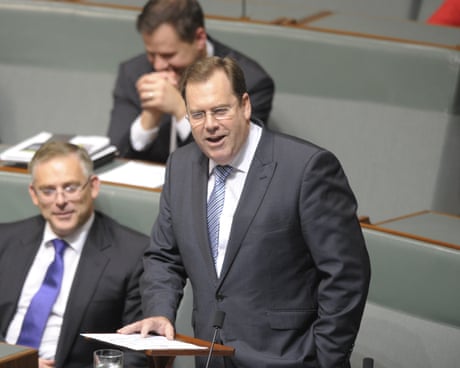
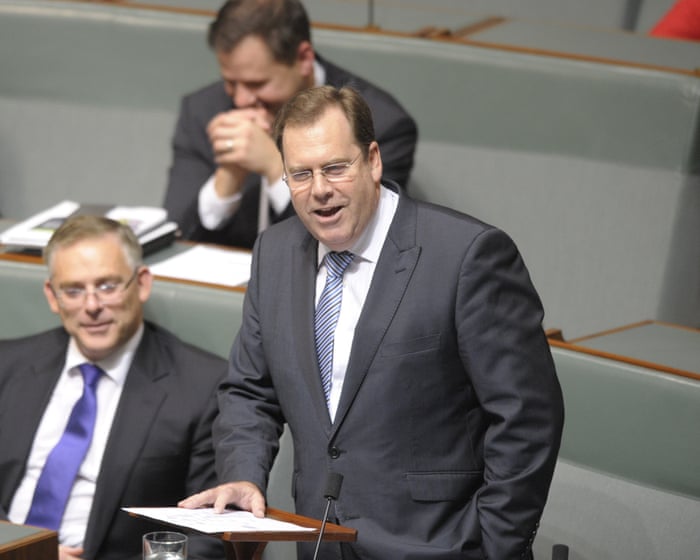
Former Labor attorney general turned judge Robert McClelland named new anti-corruption boss

McClelland, who served in the Rudd government, named as boss of National Anti-Corruption Commission after Paul Brereton quit in May

Former Labor attorney general and federal court judge Robert McClelland has been named as the new boss of the National Anti-Corruption Commission.

McClelland was the country’s top law officer in the Rudd government, serving from 2007 until 2011. After leaving parliament in 2013, he has served as the deputy chief justice of the federal circuit and family court of Australia since 2018, after being appointed to the court by the former Coalition government in 2015.

Continue reading...

© Photograph: AAP

© Photograph: AAP

© Photograph: AAP

  •  

Shabana Mahmood to hold talks with EU over law enforcement cooperation

UK home secretary’s meeting comes after PM said he wanted to rejoin European law enforcement databases

The UK home secretary, Shabana Mahmood, will meet the EU’s home affairs commissioner on Monday for further talks just days after Andy Burnham said he wanted to rejoin European law enforcement databases from which the UK has been locked out of since Brexit.

According to the European Commission, they will discuss “migration, border management, law enforcement cooperation and counter-terrorism”, with the latest Frontex data published on Monday showing a 43% decline in small boats crossing the Channel.

Continue reading...

© Photograph: Marcin Nowak/Anadolu/Getty Images

© Photograph: Marcin Nowak/Anadolu/Getty Images

© Photograph: Marcin Nowak/Anadolu/Getty Images

  •  

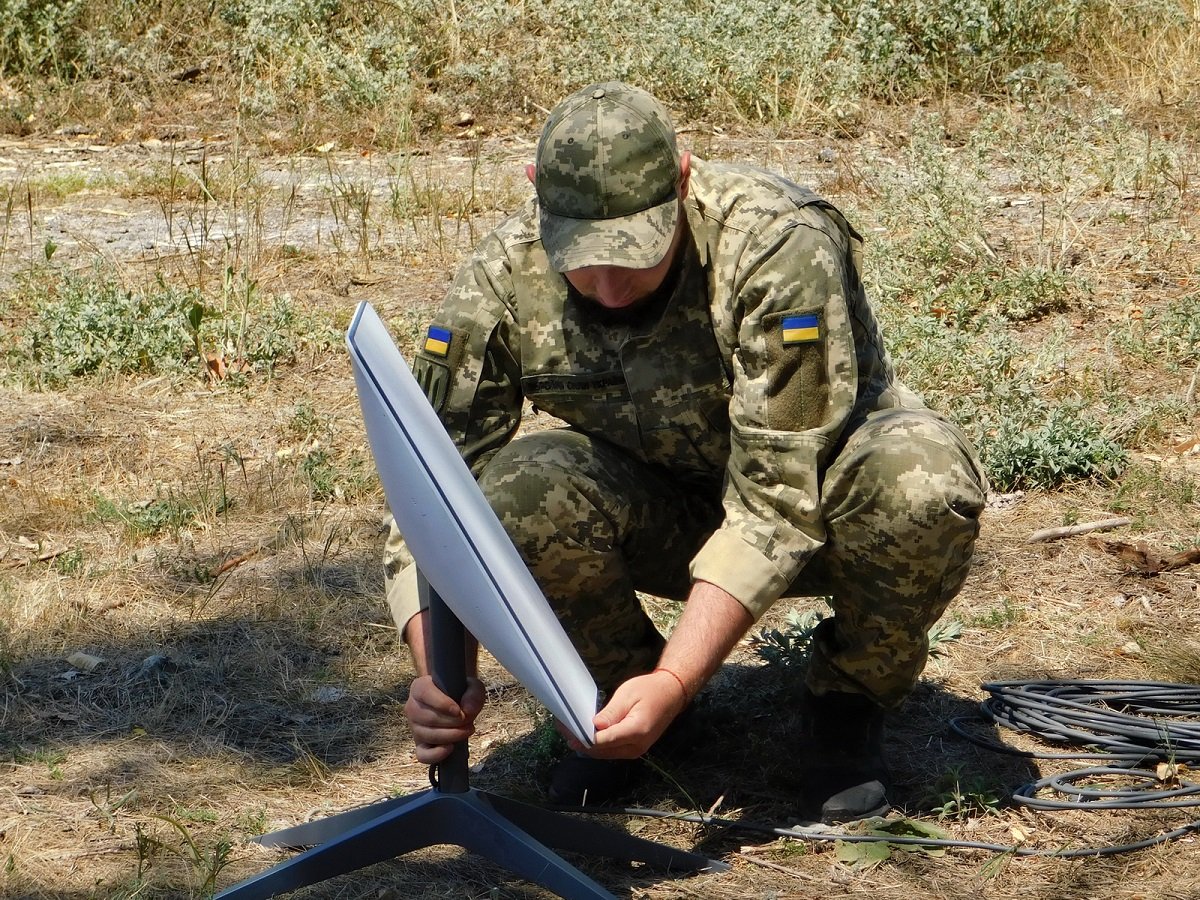
Poland, Bulgaria, now Lithuania: Russia’s suspected arson campaign reaches a third Starlink site serving Ukraine

poland bulgaria now lithuania russia’s suspected arson campaign reaches third starlink site serving ukraine · post ukrainian soldier installs terminal news reports

Someone tried to set fire overnight to a Lithuanian company that stores Starlink communication equipment, but tipped-off guards foiled the attempt, Lithuanian Prime Minister Mindaugas Sinkevičius said. He linked the attack to Russia’s hybrid war against Europe. It is the third suspected sabotage of Starlink infrastructure in Europe in under a month.

Russia keeps attacking Ukraine at the front and from the air while running a sabotage campaign behind the lines in Europe, which ISW has linked into one pattern. Starlink keeps Ukraine’s drone units and front-line troops connected, and Poland pays for much of that service.

Fuel canisters and a control unit

The attack came just after midnight, the prime minister wrote. Security services had warned the company about possible attacks, security was stepped up, and the attempt failed.

The company provides connectivity through nine Starlink satellite antennas used by Ukraine, Sinkevičius told Lithuanian public radio LRT. At almost 2 a.m., intruders tried to burn the antennas and their control unit, leaving behind incendiary liquid in canisters of 3 to 10 liters.

“It is obvious that this is part of Russia’s hybrid war with elements of sabotage,” he said, adding that the client was likely “the Russian side.”

He said he believes the people involved, and how many there were, are known, but gave no details, citing the investigation.

Police Commissioner General Arūnas Paulauskas said no suspects had been detained, any damage was minimal, and the company kept working. A pretrial investigation is under way.

poland bulgaria now lithuania russia’s suspected arson campaign reaches third starlink site serving ukraine · post ukrainian soldier installs terminal news reports
Explore further

New Starlink restrictions disrupt Ukrainian drone missions. Kyiv adviser says move is tied to “political situation”

A drone the same morning

Hours later, an object that apparently entered from Poland crossed northern Lithuania, and NATO jets failed to identify it, Defense Minister Robertas Kaunas said. Possible fragments were found in the Pasvalys district near the Latvian border. Latvia’s military said the object may have blown itself up on a course toward Latvia.

Sinkevičius said the sabotage version had to be checked for the drone too. He called the National Security Commission for Monday, 19 October, to examine both incidents and consider giving services more powers to neutralize drones.

The third Starlink site

In September, a fire destroyed the distribution panel at a Starlink ground station in Wola Krobowska, Poland. Germany detained two Turkish nationals on 12 October, and Warsaw blamed Russian intelligence. In Bulgaria, masked intruders burned 11 of 17 Starlink antennas near Sofia.

  •  

EU Resists Further Delay to Carbon Pricing as Energy Costs Divide European Leaders

Italy and five other member states have failed to secure a further postponement of the EU’s new carbon market for heating and transport fuels, although European leaders have ordered a fresh assessment of its impact on households and businesses.

European Union leaders have resisted demands for another postponement of carbon pricing for road transport and building fuels, exposing deep disagreements over climate policy, industrial competitiveness and the burden of energy costs on European households.

At the European Council summit in Brussels on 15–16 October, the Visegrad countries — Poland, Hungary, Slovakia and the Czech Republic — pressed for the second European Emissions Trading System, known as ETS2, to be delayed until 2030. Italy and Greece joined calls for greater flexibility over carbon costs, although Rome also sought a national exemption from aspects of the energy-price regime rather than simply a uniform delay. No further postponement was agreed.

The European Council conclusions call on the European Commission to update its assessment of ETS2, particularly its design and safeguards. Leaders also demanded action to reduce volatility in the existing carbon market and limit the effect of carbon prices on electricity costs.

The outcome stops short of the further postponement sought by several governments, but demonstrates how far energy affordability has moved towards the centre of European climate negotiations.

The growing rebellion over ETS2

ETS2 is designed to extend the principle of carbon pricing to fuels used for heating buildings, road transport and certain smaller industrial activities. Unlike the existing Emissions Trading System, which covers large industrial installations and power generation, the new mechanism reaches sectors closely connected to everyday household expenditure.

Under the scheme, fuel suppliers must purchase allowances corresponding to the emissions associated with the fuels they sell. Households and motorists will not buy allowances themselves, but suppliers may pass those additional costs through to customers.

That distinction is fundamental. A policy designed to encourage investment in cleaner heating systems and vehicles may initially appear to consumers as an increase in petrol, diesel and domestic heating bills.

The current legislative timetable provides for ETS2 to become operational in 2028, following an earlier one-year postponement. The latest demands from several Central European governments would push that date back to 2030.

Their argument is that consumers and smaller businesses cannot reasonably be expected to absorb another source of energy-price pressure while European economies continue to contend with geopolitical uncertainty, expensive fuel and comparatively weak industrial competitiveness.

Czech Prime Minister Andrej Babiš has been particularly outspoken in his criticism, arguing that carbon pricing risks weakening Europe’s industrial base and making everyday life more expensive.

Italy has supported calls for greater flexibility, with Prime Minister Giorgia Meloni presenting the discussion as part of a wider attempt to restore competitiveness and make the transition more affordable.

Why other governments opposed another delay

The initiative encountered resistance from governments concerned that repeatedly postponing established climate legislation would weaken investment certainty and reduce confidence in European policy.

The Nordic member states have been particularly reluctant to reopen the timetable. Their position reflects a broader concern that businesses investing in clean technologies need credible long-term rules, rather than legislation liable to be revised whenever political opposition intensifies.

Carbon pricing is intended to change economic incentives gradually. Higher costs for carbon-intensive fuels are supposed to make alternatives such as better-insulated buildings, electric vehicles and cleaner heating more financially attractive.

Critics of further postponement argue that delaying implementation would also delay those incentives, potentially increasing the eventual cost of reaching the Union’s emissions-reduction targets.

Yet the opposition has exposed a weakness in that argument: consumers cannot always respond quickly to price signals. A household relying on an older heating system or a worker with no practical alternative to driving may face higher costs long before affordable low-carbon options become available.

That issue has been central to earlier discussions over ETS2. EU Today reported on stronger carbon-price safeguards in June, when European institutions moved to provide additional market intervention if allowance prices rose sharply.

Commission ordered to reassess the economic impact

Rather than endorsing a new delay, European leaders have asked the Commission to review ETS2’s economic impact and safeguards.

The summit also urged faster progress on adjustments to the Market Stability Reserve, the mechanism intended to help manage the supply of carbon allowances and prevent excessive price volatility.

Under the existing scheme, market interventions can increase or reduce allowance availability in response to defined conditions. For ETS2, safeguards are especially politically sensitive because the cost of carbon allowances may ultimately be reflected in household transport and heating expenditure.

The European Commission’s updated auction arrangements already envisage auctions of ETS2 allowances beginning in 2027, ahead of the system’s operational launch in 2028.

That timetable gives governments a relatively narrow window to settle the remaining political disputes and put protective measures into effect.

A central part of the response is the Social Climate Fund, intended to support vulnerable households, transport users and small businesses through investments in energy efficiency, cleaner heating, improved transport and temporary financial assistance.

EU Today previously examined the European Investment Bank’s €3 billion advance financing initiative, which aims to accelerate support for households before the new carbon market becomes fully operational.

The central practical question is whether such assistance reaches consumers quickly enough to offset rising costs, particularly in member states where incomes are lower and households remain heavily dependent on fossil fuels.

Climate commitments meet industrial reality

The ETS2 dispute is connected to a broader argument over Europe’s existing carbon market and its effects on energy-intensive industries.

Manufacturers already face substantial costs arising from electricity, fuel, regulatory requirements and international competition. Governments concerned about deindustrialisation argue that European climate policy must account more directly for these pressures.

The summit conclusions acknowledged those concerns by demanding a predictable carbon market that limits price volatility and protects industry against the relocation of production to jurisdictions with less demanding environmental rules.

At the same time, leaders reaffirmed the importance of maintaining carbon pricing as an incentive for investment and emissions reduction.

For the governments seeking a postponement, the Commission’s new assessment offers an opportunity to maintain pressure for further concessions. For governments defending the existing timetable, it provides an alternative to another politically damaging delay.

The immediate result is therefore a compromise over scrutiny rather than a change in law. ETS2 remains scheduled for 2028, while Brussels must demonstrate that its safeguards can withstand both market volatility and political opposition.

The next phase will be determined less by arguments about long-term emissions targets than by the ability of EU institutions and national governments to show households and businesses how the transition can be financed without placing disproportionate costs on those least able to adjust.

  •  

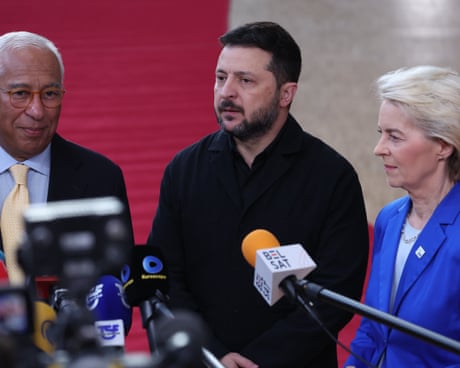
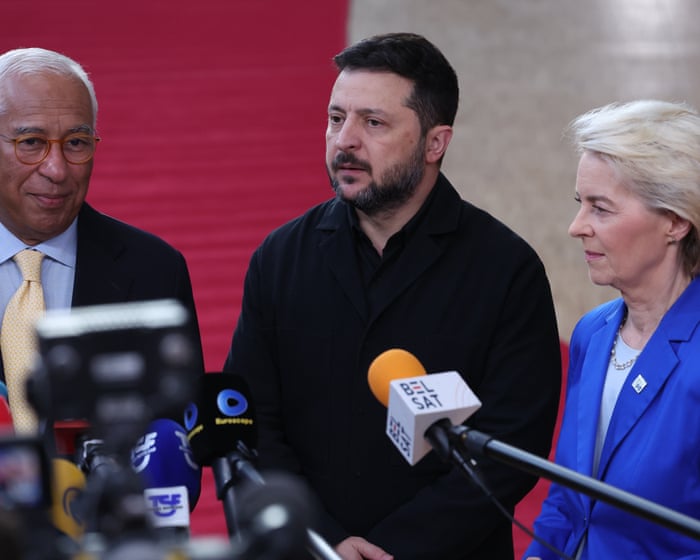
Zelenskyy thanks 'real leaders' at EU summit for their support – video

The Ukrainian president, Volodymyr Zelenskyy, told reporters on the second day of the European Council summit in Brussels that he was happy to have support from 'leaders, real leaders'. Zelenskyy's comment came after pressure from the White House to stop strikes on Russian oil facilities. His strained relationship with the US president, Donald Trump, was in evidence this week, with Trump stating: 'I’m not a big fan of Zelenskyy.'

Continue reading...

© Photograph: AP

© Photograph: AP

© Photograph: AP

  •  

EU Delays Methane Rules as Energy Crisis Forces Brussels to Ease Import Requirements

The European Commission has proposed postponing new methane reporting and verification obligations for fossil-fuel imports by one year, responding to pressure from energy suppliers and member states amid disruption to global oil and gas markets.

The European Commission has proposed delaying key methane emissions requirements for imported oil, gas and coal by one year, acknowledging that the present energy crisis could make the original timetable difficult to enforce without threatening Europe’s fuel supplies.

The legislative proposal presented on 14th October would postpone obligations requiring importers to demonstrate that their overseas suppliers meet monitoring, reporting and verification standards equivalent to those imposed on European producers.

The requirements were scheduled to take effect on 1st January 2027. Under the revised arrangements, compliance would begin in 2028, with the first annual demonstrations to national authorities due by 31st May 2029.

The decision follows months of pressure from European governments, American energy companies and importers concerned that the regulation could complicate contracts and restrict access to alternative supplies during a period of exceptional international disruption.

Energy security takes precedence

The Commission’s explanatory memorandum places the decision directly within the consequences of the Middle East conflict, which has disrupted trade through the Strait of Hormuz since February.

According to the Commission, approximately 20 per cent of global liquefied natural gas supplies and 25 per cent of seaborne oil trade have been affected. Alternative producers have only partially compensated for the interruption, leaving European buyers competing for increasingly expensive supplies.

Brussels acknowledges that the disruption is likely to continue affecting energy markets after the immediate crisis subsides, partly because damaged infrastructure will require time to repair and restart.

Under these circumstances, importers have warned that they may be unable to obtain sufficient fuel meeting the original compliance requirements by January.

The Commission’s formal amendment to Regulation 2024/1787 responds to these concerns by extending deadlines rather than cancelling the legislation.

The development follows wider discussions about Europe’s energy costs. As EU Today reported during the Brussels summit, high energy prices have become a central concern for governments attempting to protect European industrial competitiveness.

Washington presses for regulatory relief

The United States has been particularly concerned about the effect of the methane rules on transatlantic energy trade.

American producers have become increasingly important suppliers of liquefied natural gas to Europe since Russia’s full-scale invasion of Ukraine in 2022 accelerated the diversification of European energy imports.

According to the reporting on the Commission’s decision, American companies, including ExxonMobil, have raised objections to the requirements, while Washington has pressed Brussels to provide additional flexibility.

French President Emmanuel Macron has also expressed concern about the legal risks facing importers attempting to demonstrate compliance across complicated international supply chains.

The problem involves obtaining reliable emissions measurements from production facilities that may be located thousands of miles from Europe and operate under different regulatory systems.

European importers must then establish whether the information satisfies EU standards, even when the companies operating those facilities are not themselves subject to European jurisdiction.

For suppliers with several production sites, transport arrangements and intermediary contracts, collecting consistent and independently verified information can be a substantial undertaking.

Climate legislation remains in force

The Commission insists that the postponement does not represent an abandonment of its methane reduction objectives.

The original EU methane regulation entered into force in August 2024. It introduced requirements covering methane measurement, leak detection, reporting and restrictions on routine venting and flaring.

Methane is a powerful greenhouse gas, and emissions from oil and gas operations can arise through equipment leaks, deliberate releases and incomplete combustion.

The International Energy Agency estimates that more than 350 billion cubic metres of gas were lost globally through flaring, venting and leakage in 2024. Reducing those losses could increase the quantity of gas available for commercial use.

The Commission is therefore attempting to preserve its environmental objectives while allowing additional time for verification systems and national enforcement arrangements to become operational.

The proposal also postpones methane-intensity reporting obligations for EU producers and importers from August 2028 to August 2029. Requirements to demonstrate compliance with maximum methane-intensity values would move from August 2030 to August 2031.

Existing obligations to provide information about overseas emissions, in force since May 2025, would remain unaffected.

Parliament faces another regulatory confrontation

The proposed changes require approval from the European Parliament and the Council under the ordinary legislative procedure.

That process could expose differences between governments seeking greater flexibility and lawmakers concerned about weakening the timetable for reducing fossil-fuel emissions.

Industry representatives have sought longer extensions, while environmental organisations argue that delaying methane reductions will not resolve the structural causes of Europe’s energy problems.

Brussels is also confronting the consequences of its decision to phase out Russian gas imports. As EU Today’s examination of the Nord Stream 2 legal challenge explained, the Union’s efforts to eliminate dependence on Moscow have already generated disputes over energy security and European regulatory authority.

The Commission now faces two competing requirements: maintaining a common environmental standard for imported fossil fuels while ensuring that suppliers remain willing and able to serve the European market.

Whether the proposed one-year extension proves sufficient will depend on the recovery of international energy supplies and the ability of producers, importers and national authorities to establish reliable verification arrangements before the revised deadlines.

  •  

Europe faces a test of economic resolve as China and affordable energy dominate EU summit

EU leaders gathering in Brussels must reconcile demands for stronger industrial protection, affordable energy and a workable budget while maintaining support for Ukraine.

Europe’s economic vulnerabilities converge in Brussels today as EU leaders confront three closely connected challenges: competition from China, persistently expensive energy and disagreement over the Union’s next long-term budget. Together, they raise a question that successive summits have struggled to answer: can Europe translate its economic weight into a coherent strategy?

The immediate pressure comes from industry. Reuters reports that manufacturers blame rising Chinese exports for factory closures, while governments face mounting anxiety about employment and competitiveness. The political danger is clear. When established parties promise prosperity but communities experience industrial decline, voters become increasingly receptive to those offering simpler, more confrontational answers.

The Commission’s recent agreement with Beijing to limit Chinese hybrid-car imports offers leaders evidence that negotiation can deliver results. Yet one sectoral arrangement cannot settle a much broader dispute. Chemicals, steel and machinery remain sources of concern, demonstrating that Europe’s difficulties extend well beyond its automotive industry.

Europe should nevertheless distinguish between legitimate competition and demonstrably unfair trading practices. A trade deficit alone does not establish wrongdoing. Imported goods can benefit consumers and businesses that depend on affordable components. The stronger case for intervention rests on evidence of subsidies, market distortions or strategic dependencies that leave essential industries dangerously exposed.

Germany’s changing position is therefore significant. Previously a prominent opponent of EU tariffs on Chinese electric vehicles, Berlin now backs Franco-German proposals for stronger action, including measures addressing chemicals and PET packaging plastics. Europe’s largest economy appears increasingly willing to reconsider assumptions that once favoured commercial engagement above confrontation.

That shift could strengthen Brussels’ negotiating position. Beijing has less reason to compromise when European capitals publicly disagree about whether action is necessary. A common approach would make the threat of trade measures more credible. But unity will be tested whenever retaliation threatens particular national industries or commercially influential companies.

Energy presents an equally demanding challenge. According to Reuters, draft summit conclusions seek additional short-term relief and refer to a proposed one-year delay in methane-emissions requirements affecting oil and gas imports. These remain proposals under discussion, rather than measures already agreed by leaders.

Temporary adjustments may ease immediate pressures, but postponing regulation cannot substitute for an energy strategy. European manufacturers need confidence about future costs before committing investment. That requires reliable supplies, stronger electricity networks and faster delivery of additional generating capacity. Repeated emergency interventions leave companies uncertain about the conditions under which they will operate.

Trade protection and energy policy must consequently work together. Raising barriers against imported products will achieve little if European factories remain burdened by uncompetitive operating costs. Equally, cheaper energy cannot compensate indefinitely for unfair competition. Treating these problems separately risks producing expensive measures that fail to address the underlying industrial weakness.

The budget discussion will expose whether governments are prepared to finance their ambitions. The proposed 2028–2034 framework requires unanimity, and Reuters reports that a special summit is planned for late November to pursue agreement. The familiar divide between national contributions and shared expenditure remains difficult to bridge.

Every government can identify European priorities worth supporting. Agreement becomes harder when those priorities require higher contributions, changes to established funding arrangements or reductions elsewhere. A credible settlement must explain which investments genuinely benefit from collective action and how spending will deliver measurable results. Larger totals alone cannot establish strategic seriousness.

Ukraine gives these negotiations an additional urgency. President Volodymyr Zelenskiy is expected to join Friday’s discussions, with financing for 2027 among the anticipated subjects. Europe’s ability to sustain assistance will test the durability of commitments repeatedly expressed at summit tables.

Ultimately, this gathering should be judged by whether its decisions reinforce one another. Defending industry, securing affordable energy and funding common commitments are parts of the same task. Europe possesses substantial market power and institutional resources. Its continuing challenge is to combine them effectively, before another round of political assurances gives way to further industrial disappointment.

  •  

Germany Protects Deutsche Börse as EU Ministers Agree Reduced Financial Supervision Reform

EU finance ministers have approved a compromise that would expand the European Securities and Markets Authority’s powers while exempting some major trading venues from centralised oversight. The agreement reflects continuing resistance to transferring financial supervision from national authorities to Brussels.

European Union finance ministers have reached an agreement to expand centralised supervision of financial markets, but Germany has secured provisions allowing important parts of Deutsche Börse to remain under national oversight, substantially narrowing the European Commission’s original reform proposals.

The compromise, agreed at a meeting in Luxembourg on 9 October, would transfer responsibility for supervising selected trading venues, clearing houses and securities settlement institutions to the European Securities and Markets Authority (ESMA).

However, the agreement introduces exemptions and thresholds that reduce the number of institutions automatically subject to direct European supervision.

The result is a significant political compromise between governments seeking deeper financial integration and those reluctant to surrender oversight of nationally important market operators.

Berlin secures its exemption

The most contentious element of the negotiations concerned Deutsche Börse, the German financial-market group that operates the Frankfurt stock exchange and provides trading, clearing and other financial infrastructure services.

Germany opposed arrangements that would place all major market operators under direct ESMA supervision, arguing that institutions with predominantly domestic activities should continue to be regulated nationally.

The agreed compromise refines the criteria for determining which trading venues qualify for centralised oversight.

These conditions allow certain Deutsche Börse operations to remain outside the new supervisory regime.

The exemption had already become a point of contention during negotiations among European governments.

As EU Today reported in June, Berlin had sought to protect Deutsche Börse from mandatory European supervision despite Germany’s broader support for integrating EU capital markets.

The October agreement formalises a narrower approach within the Council’s negotiating position, although the legislation remains subject to approval by the European Parliament.

Europe’s fragmented financial markets

The European Commission has repeatedly argued that fragmented national supervision weakens the EU’s ability to compete with financial markets in the United States.

Although the Union operates a single market, many financial institutions continue to face differing regulatory interpretations, procedures and supervisory relationships across member states.

These differences can increase operating costs and discourage financial businesses from expanding across borders.

The Market Integration and Supervision Package is intended to simplify those arrangements and strengthen common oversight of financial infrastructure with significant cross-border activity.

Under the Council’s position, ESMA would assume direct supervision of selected trading platforms and institutions involved in clearing and securities settlement.

Such institutions perform essential functions in financial markets, including managing transactions, transferring securities and controlling risks between counterparties.

Differences in supervisory arrangements can complicate the operation of financial services that increasingly function across national borders.

The Commission argues that greater consistency would allow European capital to move more efficiently between member states and provide businesses with improved access to investment.

Compromise reduces original ambitions

The Commission’s original approach envisaged broader centralisation of supervisory responsibilities.

The Council agreement of 9 October introduces more restrictive criteria governing the institutions that would fall under ESMA’s direct authority.

In addition to the treatment of trading venues, ministers agreed that direct supervision of crypto-asset service providers should initially concentrate on businesses with the most significant cross-border operations.

The Council also supported changes to ESMA’s governance arrangements, including the creation of a full-time executive board.

The proposed board would strengthen the authority’s ability to make supervisory decisions independently of individual national regulators, while preserving mechanisms for cooperation with those authorities.

The compromise also introduces arrangements allowing national supervisors collectively to challenge certain decisions.

These provisions reflect concerns about concentrating regulatory powers within an institution that must oversee financial businesses operating under different national legal systems.

Why capital markets matter for European investment

The supervision reforms form part of the EU’s broader Savings and Investments Union initiative.

European policymakers want to increase the availability of private capital for companies investing in technology, defence, infrastructure and industrial development.

The Union has substantial household savings, but much of that money remains in bank deposits or is invested outside the European economy.

Companies seeking capital for expansion may consequently face higher financing costs or more limited investment opportunities than comparable businesses operating in larger and more integrated markets.

The Commission’s Savings and Investments Union programme seeks to improve access to finance and make cross-border investment more attractive.

Financial-market supervision represents only one element of that programme.

Differences in taxation, insolvency law, national investment products and corporate governance requirements also influence where investors allocate their money.

Nevertheless, regulators regard consistent supervision as an important condition for reducing fragmentation.

Parliament faces a political decision

The agreement reached by finance ministers does not conclude the legislative process.

The European Parliament must adopt its position before negotiations can determine the final provisions.

Parliamentary discussions could revisit the exemptions secured by Germany and the criteria determining which institutions fall under direct ESMA supervision.

The debate will expose differences over whether European financial integration should proceed through incremental reforms or a more substantial transfer of regulatory authority.

Governments supporting national exemptions argue that supervision should reflect the actual geographic scope of a company’s activities.

Supporters of broader European oversight contend that major trading businesses can influence financial markets beyond their home jurisdictions even when individual operations appear predominantly domestic.

The Deutsche Börse exemption has become a prominent example of the conflict between those positions.

Europe’s largest economies broadly support the objective of deeper capital markets, but remain divided over the institutional powers needed to achieve it.

The final legislation will determine whether the expanded responsibilities granted to ESMA are sufficient to reduce fragmentation or leave important parts of Europe’s financial infrastructure operating under substantially different national supervisory systems.

  •  

Hungary Remains Under EU Article 7 Scrutiny Despite Progress Under Magyar Government

EU ministers have reviewed reforms introduced by Prime Minister Péter Magyar’s administration but left the Article 7 proceedings against Hungary unresolved. The European Commission has acknowledged significant progress while warning that further changes are required to restore the rule of law.

The European Union has maintained its Article 7 proceedings against Hungary despite acknowledging significant improvements in the country’s rule-of-law situation since Prime Minister Péter Magyar’s government took office earlier this year.

Ministers meeting at the General Affairs Council in Luxembourg on Tuesday, 13 October, reviewed reforms introduced by the Hungarian administration and received an updated assessment from the European Commission.

The proceedings, initiated by the European Parliament in September 2018, remain open eight years after concerns over judicial independence, corruption, media freedom and democratic accountability first prompted action under the EU treaties.

No decision was announced to terminate the procedure following the latest meeting.

Brussels acknowledges progress

European Commissioner Michael McGrath said ahead of the discussions that Hungary had made substantial progress towards addressing the institutional problems inherited from the administration of former prime minister Viktor Orbán.

Speaking in Luxembourg, McGrath acknowledged improved cooperation between the Hungarian government and European institutions.

However, he also indicated that the reform process remained incomplete, noting that the new administration had been in office for only several months.

The Commission’s assessment reflects the changing relationship between Budapest and Brussels following Magyar’s election victory and the subsequent introduction of reforms intended to restore judicial and institutional independence.

As EU Today reported in June, the change of government created an opportunity to resolve long-standing disputes over the condition of Hungary’s democratic institutions and the suspension of European funding.

The latest Council discussions indicate that the EU is prepared to recognise reforms already undertaken without automatically treating them as sufficient to close the Article 7 procedure.

An eight-year institutional dispute

The European Parliament initiated the proceedings in 2018 after raising concerns over developments affecting Hungary’s constitutional system, judicial independence, corruption safeguards and civil society.

Article 7 of the Treaty on European Union provides mechanisms for responding when a member state is considered at risk of seriously breaching the Union’s fundamental values.

Under its preventive provisions, the Council can determine whether there is a clear risk of such a breach.

More severe measures, including the possible suspension of certain membership rights, require additional procedures and higher institutional thresholds.

Hungary’s case has remained within the preventive stage, with successive Council meetings examining the country’s legal and political developments.

The Council’s account of the 13 October meeting confirms that Hungarian representatives presented measures intended to address concerns raised by the European Parliament and member states during earlier proceedings.

The Commission also briefed ministers on its latest assessment.

The meeting did not produce a formal finding that the outstanding concerns had been fully resolved.

Magyar faces the consequences of Orbán’s legacy

Since assuming office, Magyar has sought to reverse elements of the institutional structure established during Orbán’s lengthy premiership.

The reforms have included measures concerning public administration, judicial accountability and the relationship between national institutions and European law.

The new government has also attempted to improve relations with Brussels after years of disputes that affected EU budget decisions, sanctions policy and cooperation over Ukraine.

EU Today has previously examined Magyar’s programme of institutional renewal and the political difficulties involved in changing institutions shaped by the previous administration.

Reforming legislation does not necessarily transform the institutions responsible for applying it.

Judicial appointments, regulatory structures, public procurement procedures and anti-corruption enforcement may all require additional measures before the effects of reform can be fully assessed.

The European Commission must therefore consider not only the laws adopted by the new government but also whether the institutions concerned operate independently and effectively.

EU funding remains a separate question

The Article 7 proceedings are closely associated with wider disputes over Hungary’s access to European funding, although the relevant legal mechanisms are different.

During Orbán’s administration, the Commission and Council used financial conditionality procedures to restrict access to certain EU resources because of concerns affecting the protection of the Union’s budget.

Magyar’s reforms have opened the possibility of reversing some of those restrictions.

As EU Today reported in September, the Commission moved towards releasing €4.2 billion following changes intended to address rule-of-law concerns.

The financial decisions involve compliance with conditions attached to EU funding and can proceed independently of the Article 7 mechanism.

Consequently, the release of money does not automatically establish that all the institutional problems identified in the original parliamentary proceedings have been resolved.

Likewise, the continuation of Article 7 does not necessarily prevent the Commission from recognising progress under separate funding arrangements.

Who can end the proceedings?

McGrath addressed the possibility of terminating the procedure during remarks before Tuesday’s meeting.

He explained that the Commission could provide its assessment but did not have unilateral authority to bring the Article 7 process to an end.

In his recorded statement in Luxembourg, the Commissioner pointed to the responsibilities of the European Parliament, which initiated the case, and the Council, which has conducted the subsequent examination.

The institutional arrangements mean that improved relations between the Commission and the Hungarian government cannot by themselves dispose of the proceedings.

The Council must consider the reforms and the remaining concerns within the framework established by the treaties.

Political agreement among member states will consequently be required to determine how the process develops.

A changed relationship with Brussels

The latest discussions take place against a substantially different political background from previous years.

Budapest has recently withdrawn objections to further steps in Ukraine’s EU accession negotiations following Ukrainian legislation addressing educational rights for Hungarian speakers and other national minorities.

The change has removed one obstacle to enlargement negotiations and reflects the government’s more cooperative approach towards other EU institutions.

Nevertheless, Hungary’s position on foreign policy and enlargement is distinct from the assessment of its domestic rule-of-law arrangements.

The Council’s examination remains focused on the institutional concerns that led to the procedure being initiated.

The Irish presidency’s summary of the October Council meeting confirms that ministers received an update rather than reaching a new formal determination.

The proceedings therefore remain open while the Commission and member states continue examining the measures introduced by Magyar’s administration.

The coming decisions will establish how European institutions respond when a new government undertakes reforms intended to reverse the conduct that originally led to action under Article 7.

For Hungary, the outcome will influence its relationship with Brussels well beyond the immediate debate over EU funding. For the Union, it will demonstrate how its rule-of-law procedures operate when political circumstances change and the member state concerned begins addressing previously identified institutional problems.

  •  
❌