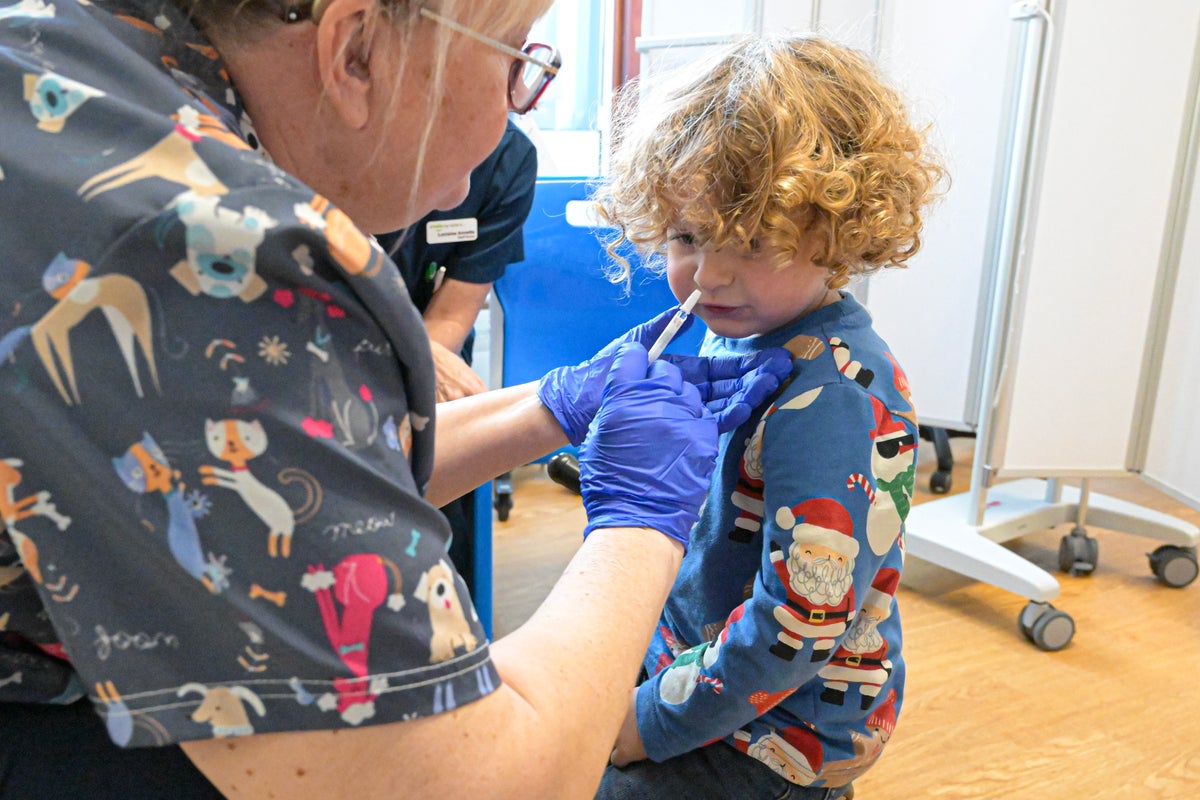
President Donald Trump on Monday directed the federal government to bolster federal research into women's health, a move pushed by his wife, first lady Melania Trump.
The sight of a half-eaten cutlet on a child's plate rarely triggers a conscious decision to eat. More often, it is an automatic reflex: the spoon moves to the mouth, the remainder is consumed, and only minutes later does the mind register that the stomach was already full. This subtle habit, often described as "finishing a child's plate,” has emerged as a quiet but persistent factor influencing an adult's weight and relationship with food. Anna Divinskaya, a biochemist and food behavior specialist, notes that this mechanics creates a pattern where consumption is driven not by hunger, but by external context.
The roots of this practice lie deep in historical memory. For generations that experienced scarcity, hunger, or empty shelves, discarding edible food was not merely wasteful but felt like a violation of survival instincts. This taboo against "losing food” has been passed down, though its form has changed. Today, an adult may finish someone else's plate not because they are hungry, but because food is perceived as a shared family resource that cannot be left to waste. In the mind, the child's plate stops being their personal space and becomes part of a common fund that requires "disposal.”
What the data shows
Research supports a link between the habit of systematically clearing plates and higher body weight. A study by researchers at the University of Liverpool — Freya Shin, Charlotte Hardman, and Eric Robinson — found that people who regularly eat everything on their plate, regardless of whether they feel satiated, weigh more on average than those who rely on their body's internal signals. A key factor in developing this tendency in childhood is cited as the persistent parental demand to "clean your plate.”
Dean Karnazes holds the world record for the longest distance a human has ever run nonstop.
His advice for going farther than you think you can: redefine success before the race begins.
When the pain hits, Karnazes says there’s one rule: keep moving — even if you have to walk.
For decades, scientists have tried to understand what separates people capable of extraordinary endurance from everyone else. Is it genetics? VO₂ max? Pain tolerance? Mental toughness?
Dean Karnazes has spent more than 30 years giving them a remarkable case study.
He's run 50 marathons in 50 states in 50 consecutive days, crossed Death Valley in the middle of summer, and in 2005 set the record for the longest nonstop run — covering 350 miles in 80 hours and 44 minutes.
Even that wasn't enough.
"I actually made it 350 miles, which was somewhat of a letdown because I thought maybe I could run 500 miles," Karnazes told me. "That was kind of the ultimate goal." His world record still stands today, 21 years later.
After decades of ultrarunning, Karnazes says he's learned that doing hard things comes down to a handful of simple habits that anyone can practice.
Don't make winning the goal
Dean Karnazes has traveled the world, running ultramarathons for more than 30 years.
Courtesy of Dean Karnazes
Karnazes has finished on the podium plenty of times, but he says that's never been what pulled him to the starting line.
"I do it for the adventure," he said. "Both the inner and the outer adventure. I've never really said I want to win a race. I just thought, be the best Dean that Dean can be on race day."
He says approaching races that way has changed how he defines success. The podium, if it comes, is just the cherry on top.
That mindset, he says, has kept him motivated through hundreds of marathons and ultramarathons, long after chasing trophies stopped being interesting.
Redefine what success looks like
Karnazes ran 350 miles nonstop, setting the world record for the longest continuous run by any human.
Courtesy of Dean Karnazes
When Karnazes gives advice to new ultrarunners, he doesn't start with mileage or pace.
"Just set your goal on finishing," he said. "Don't say I want to do it in sub five hours or sub six hours. Just say, 'For me, success is reaching the finish line before the cutoff.'"
Karnazes says that approach has a way of changing how you see your own limits.
"You'll prove to yourself that you're better than you think you are. And you can go further than you think you could."
Keep moving, even if you have to slow down
Karnazes has placed in many races, but he says that's not what drives him.
Courtesy of Dean Karnazes
The advice sounds simple, but following it is another story.
At some point during his 350-mile run, Karnazes stopped trusting what he was seeing.
After nearly three days without sleep, he said he started hallucinating. He felt as though he had left his own body and was watching himself from above.
"When you're in these altered states, it's as though you don't have conscious control of your mind," he said. "You're fighting your mind to stay present, but your mind gets away from you."
The Council of the European Union has formally adopted revised workplace safety legislation introducing stricter limits on workers’ exposure to potentially dangerous chemicals, including substances used in battery manufacturing, metal production and the chemical industry.
The decision, announced on Monday, 19th October, completes the Council’s approval of the sixth revision of the EU’s Carcinogens, Mutagens and Reprotoxic Substances Directive. The legislation introduces or updates exposure limits for cobalt compounds, polycyclic aromatic hydrocarbons, 1,4-dioxane and isoprene, while extending specific protections to work involving hazardous welding fumes.
According to the Council’s announcement, the measures could prevent approximately 1,700 cases of lung cancer and 19,000 other work-related illnesses across the European Union over 40 years.
New exposure limits for industrial substances
The legislation addresses chemicals encountered in industries that remain important to European manufacturing and industrial employment.
Cobalt and its inorganic compounds are used in several industrial applications, including certain battery technologies, metal processing and specialist manufacturing.
Exposure to cobalt-containing dust and fumes can occur during production processes, particularly where workers handle powders or undertake activities that generate airborne particles.
Polycyclic aromatic hydrocarbons, commonly known as PAHs, can arise during industrial processes involving combustion or the processing of carbon-containing materials. Workers in parts of the steel, aluminium and carbon industries may encounter these compounds.
The new legislation also covers 1,4-dioxane, a chemical used in industrial production processes, including applications connected with chemical and textile manufacturing.
Isoprene was added to the revised framework during negotiations between the Council and European Parliament. The substance is used in the manufacture of synthetic rubber and other industrial products.
Exposure limits establish the maximum permissible concentration of specified hazardous substances in workplace air, subject to the measurement methods and averaging periods laid down in the legislation.
Employers must also apply wider preventive measures, which can include replacing hazardous substances where technically possible, improving ventilation, containing industrial processes and monitoring workplace exposure.
Welding fumes brought within revised framework
One of the significant changes concerns welding fumes, which can contain hazardous substances depending on the materials and processes involved.
Welding is used extensively in construction, automotive production, shipbuilding, infrastructure maintenance and the manufacture of industrial equipment.
Workers may be exposed to mixtures of particles and gases produced when metals are heated, melted or joined.
The revised directive adds relevant welding fumes to the list of substances, mixtures and industrial processes subject to specific requirements under EU occupational safety legislation.
This is particularly relevant where the fumes contain substances classified as carcinogenic, mutagenic or harmful to reproduction.
The legislation does not prohibit welding. Instead, it establishes a clearer legal framework for assessing and reducing occupational exposure.
European institutions have also recognised the need for additional practical guidance to assist employers in applying the new provisions across industries using different welding technologies and materials.
The legislation was negotiated against concerns that some manufacturers would require substantial investment to comply with the revised exposure limits.
Industrial employers may need to install extraction systems, improve ventilation, adapt production equipment or introduce additional monitoring arrangements.
For certain substances, the final compromise therefore includes transitional periods intended to give affected sectors time to make the necessary changes.
The agreed period for the application of new limits on polycyclic aromatic hydrocarbons extends to seven years, with provisions covering carbon and graphite manufacturers.
This was one of the modifications introduced during negotiations to balance occupational health requirements with the technical constraints facing individual industries.
The agreement also provides for regular breaks for workers required to wear personal protective equipment and clarifies how those measures interact with existing EU legislation.
Protective equipment remains part of the safety framework, although the directive also recognises the importance of preventing exposure through engineering controls and improved working practices.
Health and economic implications
The European Commission estimates that more than 2.5 million workers could be exposed to the substances or processes covered by the revision.
Occupational illnesses can produce substantial costs for workers, employers and public health systems, including treatment expenses, sickness absence, reduced productivity and long-term disability.
The Commission previously estimated that the updated legislation could generate up to €1.16 billion in healthcare savings over the coming decades.
These figures are projections derived from assessments of expected exposure reductions rather than outcomes already achieved.
Their accuracy will depend on how effectively Member States implement the legislation and how consistently employers comply with the new requirements.
The measures also form part of the EU’s broader programme to reduce workplace exposure to substances associated with cancer and other serious illnesses.
Two years for national implementation
The directive will enter into force following publication in the Official Journal of the European Union. Member States will then have two years to transpose its provisions into national law.
National authorities will remain responsible for inspections and enforcement, while employers will need to assess which new requirements apply to their operations.
For businesses operating across several EU countries, the revised framework is intended to provide more consistent standards, although national enforcement arrangements may differ.
The practical effects will be most apparent in industrial workplaces where airborne chemical exposure remains a routine occupational risk. Compliance will require manufacturers to examine their production processes before the new requirements become enforceable.
A national refuse company has lost nearly a billion dollars in income and spent a billion more trying to satisfy a dozen “green” agencies in California with conflicting demands and regulations that have kept Los Angeles’s second largest landfill shut down for nearly two years.
Walking into Sugar Rhymes in Jeddah’s Al-Naeem district feels like stepping into a fairytale. With whimsical cottage-style interiors and Disney-like charm, the bakery and cafe is especially appealing to families with children. Breakfast is served from 8 a.m. to 3 p.m., with familiar morning dishes given imaginative names and creative presentations. The Basigiano Treasure of Benedetta, an Italian take on eggs benedict, features two poached eggs on a grilled English muffin with basil spread, beef
Andy Burnham has announced "big changes" to welfare to get one million NEETs back into work – but only once he's "rebuilt the education system". Sounds expensive, says Mary Gilleece. It’s clearly never going to happen.
The author said she realized teaching her kids (not pictured) to cooperate isn't always the best plan.
StockPlanets/Getty Images
I thought it was important to teach my three kids obedience.
Now that they're older, I know it's important to teach them boundaries, too.
When one of my children respectfully says no to something, I make it a point to validate them and their choice.
As soon as children learn to follow instructions, we start teaching them obedience. I know that's what I did with my kids.
I asked them to share their things, take turns, and compromise even when they're not always ready to do so willingly. I pushed them to cooperate not only because I felt it was the right thing to do, but because I wanted to keep the peace and be seen as a good parent.
Sadly, it seems society only sees agreeable, generous children as good ones, so parents raise them with a give-in mindset. I followed that path until I realized just how my actions were shaping my children's personalities.
Now I am strongly focused on improving myself while developing a parenting approach tailored to what works best for my children.
I wasn't seeing the whole picture
At some point, I realized that constantly pushing my children to say yes to everything, acting like good children are meant to, is affecting their personal boundaries.
When my children were not allowed to say no, I noticed they felt uncomfortable, frustrated, and even angry. My older son had no interest in his weekend archery class, yet I kept forcing him to attend. Every Saturday morning became a struggle, as I spent a lot of time convincing him to go. Within a few weeks, I realized that instead of building discipline or a skill, it was creating unnecessary stress for both of us. So I let him opt out.
Since then, I make it a point to ask my children before enrolling them in extracurricular activities, so they spend their time doing things they genuinely enjoy rather than ticking boxes for me.
They're learning to set boundaries with others, too
I also noticed that my children were happy to share snacks from their cabinet with visiting friends, but became upset when someone opened it without asking. I taught them that there is nothing wrong with saying no when someone crosses a boundary or takes something that belongs to them without their permission.
The author said she wants her three kids to have manners while also learning to stand up for themselves.
Courtesy of Ariba Mobin.
Setting physical boundaries was another challenge. When relatives and friends would lovingly ask my children for a hug or a kiss on the cheek, I could see them becoming uncomfortable. I could see that they felt obliged to agree, not wanting to be impolite. Without questioning anyone's good intentions, I now let my children decline physical affection when they are uncomfortable. I simply remind them that they can respond with a high-five, a wave, or a smile instead. It helps them respect others' kindness without feeling they have to give up their own boundaries.
People sometimes judge my approach
I have been told I am spoiling my kids by letting them have their say. But because my children know their voice matters, I have watched them handle peer pressure with remarkable maturity.
Recently, when my son's friends urged him to climb a high wall and jump off it to retrieve a lost ball, he confidently refused. They began teasing him, but he later told me he stayed calm and simply replied that he wasn't going to risk a fracture for a ball. Standing up to peer pressure is hard, but because he knew he could set a boundary, it made things easier.
This practice starts at home, even with me. I now allow my children to respectfully say no to low-stakes matters involving personal preferences. Like it's fine if they choose to stay behind with their grandmother rather than attending an outing they won't enjoy. As their parent, I want to teach them that respectful disagreement is acceptable.
I'm also validating their choices
Whenever one of my children respectfully says no to something, I make it a point to validate them, reinforcing that their boundaries matter.
Of course, setting boundaries isn't a free pass for entitlement. It doesn't mean being extra picky about eating or saying no to their assigned homework and household chores. They know that while they are developing these healthy boundaries, I still expect them to demonstrate basic manners.
I want them to be confident individuals who show genuine kindness, but no one should be allowed to exploit it. They should be able to resist unhealthy pressure and hold firm even when saying no feels uncomfortable. I hope that this helps them live a life built with courage, clarity, and true self-worth.
Barbara Palvin walked the Victoria's Secret runway six weeks after giving birth.
Michael Buckner/WWD via Getty Images
Barbara Palvin walked the Victoria's Secret runway six weeks postpartum.
The model told outlets that she's just doing "what every woman does in America."
The US is the only wealthy country to provide no national paid maternity leave.
Barbara Palvin is getting praise for walking the Victoria's Secret fashion show in lingerie six weeks postpartum, but she doesn't want it.
In multiple interviews, the Hungarian-born model downplayed the feat, saying it's common for new mothers in the US to be back at work within a similar timeframe.
"In the US, maternity leave is six to eight weeks. I'm six weeks tomorrow, so nothing major here. I'm just doing what every woman does in America," the 33-year-old told USA Today backstage at the fashion show, which took place in Los Angeles on October 18.
"And I only have to walk down a runway," Palvin told Page Six.
In 2025, the US was the only country among the 38 OECD countries, including the UK, Australia, and Japan, to have no national paid maternity leave, according to the OECD Family Database.
New mothers in the US are entitled to up to 12 weeks of unpaid, job-protected leave under the Family and Medical Leave Act, but they must meet certain eligibility criteria. The new mother must have worked for their employer for at least 12 months, worked at least 1,250 hours in the previous 12 months, and their employer must have 50 or more employees within 75 miles of their job site.
Federal workers are generally entitled to 12 weeks of paid leave, but private companies are not legally required to pay employees on parental leave. Some states, including California, New York, Massachusetts, Minnesota, and Maine, have paid family leave programs, but the majority don't.
Data released this year from the Federal Reserve Bank of Minneapolis suggests mothers in the US took an average of 7.2 weeks off to care for a new child.
Palvin wore two looks throughout the show.
Frazer Harrison/Getty Images for Victoria's Secret
Palvin, who has been married to actor Dylan Sprouse since July 2023, gave birth to her first child, a girl called Sylvie, on September 7.
Palvin was named a Victoria's Secret Angel in 2019. She first walked the Victoria's Secret fashion show in 2012. At the 2025 Victoria's Secret fashion show, Sprouse told reporters that Palvin had broken her foot four weeks earlier and was walking the runway with a "half-healed foot."
The first Victoria's Secret Fashion Show took place at The Plaza Hotel in New York City in 1995. It was broadcast online for the first time in 1999, and was so popular that the host site crashed.
We often think of air pollution as a burden for the lungs or the heart, organs tucked safely inside the chest. But the eyes are different; they are our most direct point of contact with the outside world. Recent evidence suggests that this constant exposure may leave our vision vulnerable to the very air we breathe.
An extensive analysis of 41 studies, covering millions of people across East Asia and the United Kingdom, has identified a statistical link between air pollution and the development of eye diseases. While aging remains the primary risk factor for vision loss, the data indicates that long-term exposure to fine particulate matter-specifically PM2.5-increases the likelihood of developing glaucoma and cataracts.
The invisible irritant
Researchers looked at a variety of pollutants, including nitrogen dioxide, sulfur dioxide, ozone, and carbon monoxide. However, the most distinct association emerged with PM2.5-particles measuring 2.5 micrometers or less. These particles are small enough to bypass many of the body's natural filters.
These doctors and community health workers are a safety net for patients losing coverage as premiums soar and Medicaid cuts mount, even as their clinic struggles to stay afloat.
More information doesn’t automatically empower. True empowerment happens through shared decision-making, a genuine psychological partnership where clinical evidence meets a patient’s personal values and priorities
Warning for other Arctic communities as residents told not to use water in Longyearbyen in Svalbard, one of the fastest-warming places in the world
Residents of a remote town in Norway that is in one of the fastest-warming places in the world have been told they must no longer drink tap water due to heavy metal contamination that scientists have linked to the thawing permafrost.
Longyearbyen, in the archipelago of Svalbard, gets its main drinking water supply from a 1.5 mile-long (2.5km) dammed lake called Isdammen, or “ice pond”. Higher temperatures as a result of the climate crisis have thawed permafrost, leading to newly exposed bedrock leaching metals into the pond.
Up to 20 maternity units in England will have to shut to ensure mothers and babies receive safe care amid shortages of doctors and rising caesarean section rates, an NHS leader has warned.
Matthew Hopkins, the NHS Alliance’s director for acute care, said centralising childbirth services into fewer hospitals was “inevitable” and the “right thing”, but would lead to a political backlash against unpopular changes.
 Login