❌

Reading view

Houthis Claim Six Strikes on Saudi Oil, Airports and Bases in 48 Hours
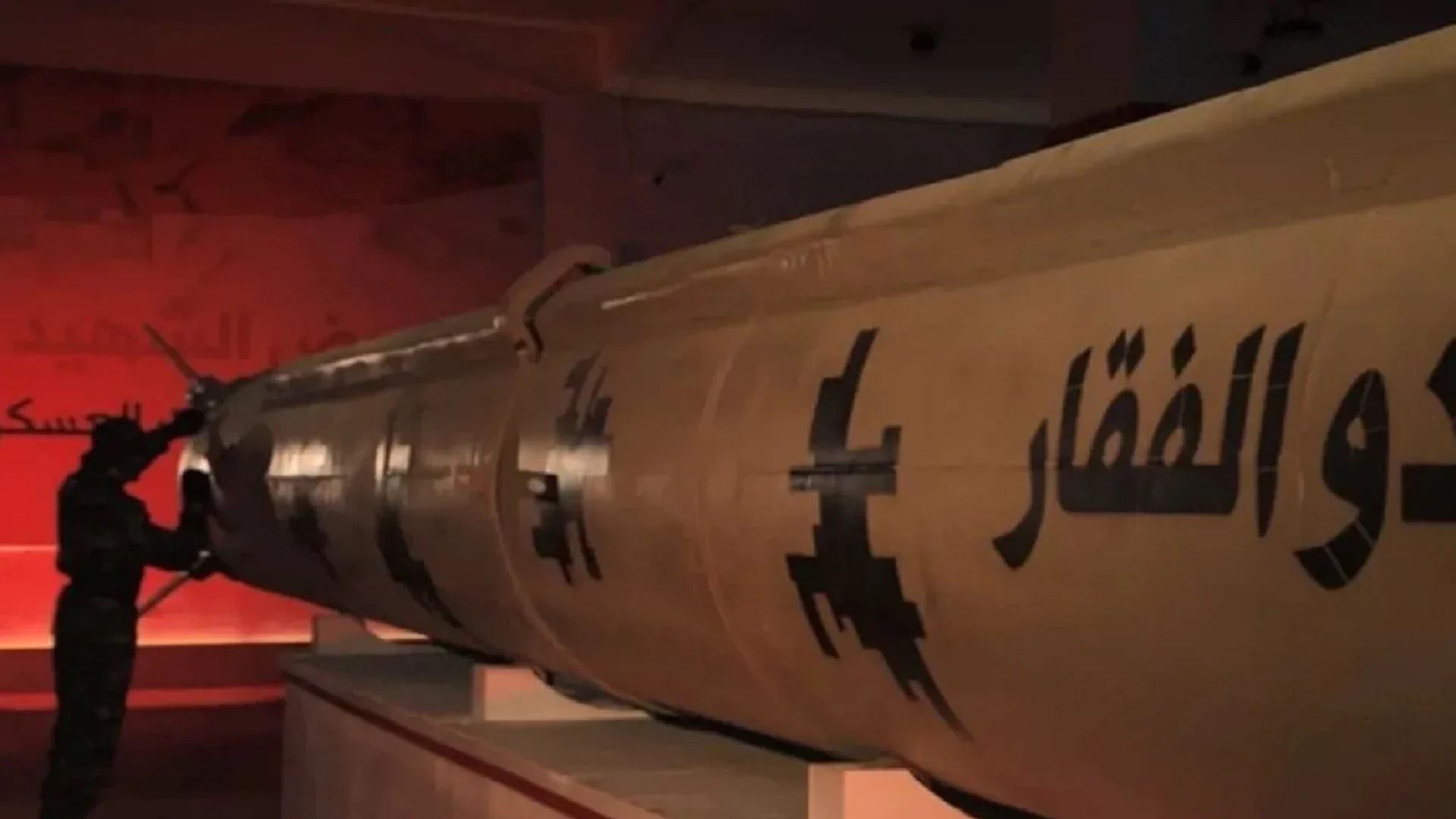
Illustrative image.

Yemen’s Houthis (Ansar Allah) announced on October 19 that they had carried out six operations against Saudi oil facilities, airports and military installations over 48 hours, claiming fires at energy sites, disrupted air traffic and casualties among Saudi forces.

Brig. Gen. Yahya Saree, the Houthis’ military spokesman, said in a statement that the operations involved “a large number of ballistic and cruise missiles and drones.” The targets included Saudi Aramco facilities in Yanbu, the Shaybah oil field, King Khalid International Airport in Riyadh, Abha International Airport and several military installations.

Saree noted that the operation against Aramco facilities in the Red Sea port city of Yanbu was carried out in two phases and caused “large fires” at the targeted sites. A separate strike on the Shaybah oil field also scored a direct hit and sparked fires, he added.

The third operation targeted King Khalid International Airport in Riyadh in three phases. Saree described the strikes as accurate and direct but did not specify any resulting damage.

The fourth operation targeted Abha International Airport, Saudi radar installations in the al-Hisn and al-Rahma mountains, and Khamis Mushait air base. Saree claimed the strikes disrupted air traffic at Abha airport and damaged the air base.

The fifth operation struck a camp belonging to the Saudi naval task force, killing and wounding Saudi personnel, according to Saree. The sixth targeted a Saudi radar installation at Bir Askar, which he said was destroyed.

On the Saudi side, the Saudi-led coalition said a day earlier that its air defenses intercepted and destroyed two ballistic missiles fired toward Khamis Mushait and a drone in the Riyadh region. Saudi Civil Defense separately reported that a projectile fired by the Houthis landed in a residential area of Najran province, wounding six people.

Saree also accused Saudi Arabia of carrying out more than 200 airstrikes and missile attacks against civilian sites in Sanaa and other Houthi-held areas during the same 48-hour period, causing dozens of deaths and injuries, most of them among women and children.

The spokesman said the total number of Saudi airstrikes and missile attacks since the escalation began had exceeded 2,700.

Vowing to continue the campaign, Saree said Yemen would not submit to Saudi Arabia and threatened “wider operations, harsher strikes and more severe targeting.”

“We will continue our military operations deep inside Saudi territory and enforce the equation of blockade for blockade, escalation for escalation,” he said, adding that the attacks would continue until Saudi military operations and the blockade against Yemen ended.

The Houthis’ latest operations show that the conflict is escalating, and despite taking some serious losses, Saudi Arabia and its allies in Yemen do not seem to be planning to take a step back.

_______________________________________________________________________________________________________________________

SouthFront: Analysis and Intelligence

NOW hosted at southfront.press

Previously, SouthFront: Analysis and Intelligence was at southfront.org.

The .org domain name had been blocked by the US (NATO) (https://southfront.press/southfront-org-blocked-by-u-s-controlled-global-internet-supervisor/) globally, outlawed and without any explanation

Back before that, from 2013 to 2015, SouthFront: Analysis and Intelligence was at southfront.com

SOUTHFRONT.PRESS

MORE ON THIS TOPIC:

The post Houthis Claim Six Strikes on Saudi Oil, Airports and Bases in 48 Hours appeared first on South Front.

  •  

Egypt’s Civil Democratic Movement rejects involvement in regional war

Al Mayadeen| October 19, 2026

Egypt’s Civil Democratic Movement rejected any involvement of the Egyptian armed forces in a regional war on behalf of any side, insisting that Cairo make its decisions independently of foreign influence.

The movement said Monday that no outside party should dictate Egypt’s position, arguing that the country’s most important role lies in pursuing “wise mediation to establish peace.”

Turning to domestic affairs, the movement called on civilian opposition groups, its own members included, to begin preparing for the presidential election scheduled for 2030. The call follows President Abdel Fattah el-Sisi’s recent statement that his presidency will end in 2030 and that the matter of constitutional changes to alter that timeline is “completely settled.”

Parliament postpones debate on troop deployment

The statement comes as Egypt’s parliament has yet to take up a proposal to authorize the president to send troops abroad. Lawmakers adjourned an emergency session devoted to discussing support for Saudi Arabia, and deliberations were due to resume on Monday. The debate was postponed again on Monday, this time until October 26.

The session was convened at el-Sisi’s request after he said Cairo would take any action Saudi Arabia asks of it to defend its security and sovereignty.

Yemen’s Sanaa-based Parliament Speaker Yahya Ali al-Ra’i had urged Egypt’s parliament on Saturday not to let the country be drawn into the Saudi escalation, saying such a step would contradict Egypt’s historical role in defending Arab causes.

Yemeni scholars welcome Al-Azhar initiative

Separately, Al-Azhar urged the urgent formation of a mediation committee bringing together respected figures from across the Muslim world. It said the committee should start work immediately to end conflicts and wars in the Arab region, defuse crises, and bridge differences between the parties involved.

The Association of Yemeni Scholars, in turn, reaffirmed its commitment to engaging constructively and in good faith with the invitation extended by the Grand Imam of Al-Azhar, expressing appreciation for the Islamic values and principles it conveyed.

The association also declared Sanaa’s readiness to host the committee proposed by the Grand Imam, comprising respected and wise figures from across the Arab and Islamic worlds.

  •  

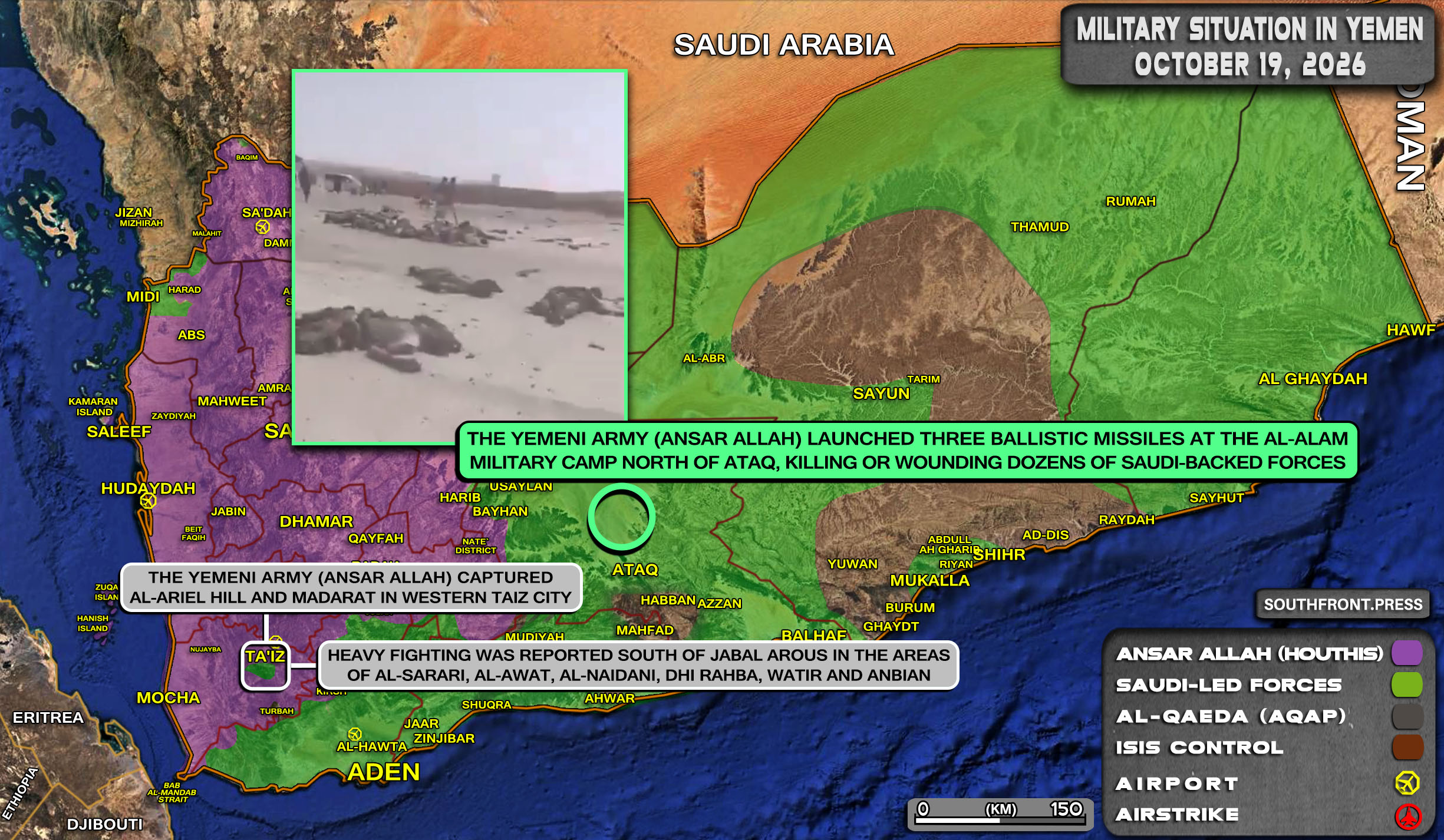
Military Situation In Yemen On October 19, 2026 (Map Update)

Click to see full-size map.

  • The Yemeni army (Ansar Allah) captured Al-Ariel hill and Madarat in western Taiz city;
  • Heavy fighting was reported south of Jabal Arous in the areas of al-Sarari, al-Awat, al-Naidani, Dhi Rahba, Watir and Anbian;
  • The Yemeni army (Ansar Allah) launched three ballistic missiles at the al-Alam military camp north of Ataq, killing or wounding dozens of Saudi-backed forces.

_______________________________________________________________________________________________________________________

MORE ON THIS TOPIC:


The post Military Situation In Yemen On October 19, 2026 (Map Update) appeared first on South Front.
  •  

Houthi Strikes Kill Dozens in Yemeni Desert Military Camp, Officials Say

The Iranian-backed militia struck with ballistic missiles deep in government-held central Yemen, in what appeared to be among the deadliest attacks of the renewed war.

© Social Media, via Reuters

A still from a social media video verified by The New York Times as from Al Alam camp in Shabwa Province, Yemen, after officials said Houthi strikes killed dozens of Yemeni soldiers on Monday.
  •  

Ansar Allah Strikes Military Training Camp in Yemen’s Shabwah Governorate, Killing Over 50

The Ansar Allah-led Yemeni Armed Forces announced on Monday that its forces attacked the al-Alam camp in Yemen’s south-central Shabwa province, which it described as being run by “Saudi officers.” The local authority told Reuters that there were significant casualties, reporting that 53 people were killed and more than 200 were wounded. The report described […]
  •  

In Video: Houthis Turn Saudi-Backed Assault in Al-Jawf Into a Burning Retreat

File image.

Yemen’s Houthis (Ansar Allah) said on October 19 that they had repelled a large-scale attack by Saudi-backed government forces in eastern al-Jawf province, destroying and damaging military vehicles and seizing weapons during the fighting.

The Houthi military media unit released footage showing the group’s fighters engaging the attacking force at varying distances, using machine guns, artillery, rocket-propelled grenades and anti-tank guided missiles to target personnel and vehicles.

The attack was supported by Saudi warplanes and involved a coordinated advance toward Houthi positions and deeper into territory under their control. Houthi fighters, however, halted the push using prepared defensive positions.

The footage showed several vehicles being struck or left disabled, while Houthi fighters captured a range of weapons and military vehicles.

According to the Houthi military media report, the attacking force eventually withdrew, leaving dead and wounded fighters behind.

The attack in al-Jawf may have been intended to divert Houthi forces and resources from the fronts around Taiz and Bab al-Mandab, where the group has made recent advances against Saudi-backed forces. By applying pressure on a separate front in the northeast, the government side may have sought to stretch the group’s forces and disrupt their ongoing operations in the southwest.

_______________________________________________________________________________________________________________________

SouthFront: Analysis and Intelligence

NOW hosted at southfront.press

Previously, SouthFront: Analysis and Intelligence was at southfront.org.

The .org domain name had been blocked by the US (NATO) (https://southfront.press/southfront-org-blocked-by-u-s-controlled-global-internet-supervisor/) globally, outlawed and without any explanation

Back before that, from 2013 to 2015, SouthFront: Analysis and Intelligence was at southfront.com

SOUTHFRONT.PRESS

MORE ON THIS TOPIC:


The post In Video: Houthis Turn Saudi-Backed Assault in Al-Jawf Into a Burning Retreat appeared first on South Front.

  •  

Houthi attack kills 53 in biggest single loss of life since Yemen civil war reignited

More than 200 mostly young people said to be injured after ballistic missile attack on training camp for government forces

At least 53 people have been killed in a Houthi ballistic missile attack on a training camp for Yemeni government security forces, making it the largest single loss of life since the country’s civil war reignited in September.

The attack on al-Alam camp in the southern Shabwa province was said to have injured more than 200 others, mostly young recruits, and was described as a disaster by the country’s UN-recognised government. The injured were taken from the police and army training camp in the Jardan district to a hospital in the local capital, Ataq, where pleas for blood donations were made.

Continue reading...

© Photograph: Ahmad Al-Basha/AFP/Getty Images

© Photograph: Ahmad Al-Basha/AFP/Getty Images

© Photograph: Ahmad Al-Basha/AFP/Getty Images

  •  

Loose Fit Over Tight Silhouettes for Autumn Wardrobe Refresh

For many, the autumn wardrobe refresh is a moment to audit what is still in the closet. A common observation among style professionals is that garments worn too tightly, even when they are clean and intact, can alter the perception of age and vitality. The issue often lies not in the fabric's condition, but in the relationship between the material and the body. A silhouette that compresses the frame can create a visual weight that feels dated, regardless of how modern the color palette or grooming may be. The current shift toward ease of movement suggests that the fit of the garment, rather than its strict tailoring, is the primary driver of a fresh appearance. Outerwear and Structure The change in outerwear is visible in the move away from short, glossy, and body-hugging puffer jackets. These items, which cling closely to the hips and shoulders, often resemble styles from a decade ago. In contrast, longer, straight-cut down jackets with wide quilting or structured leather jackets offer a different proportion. These cuts introduce space around the torso, creating a sense of volume that feels less restrictive. The visual effect is one of lightness; the wearer is not boxed in by the shell, allowing the movement of the body beneath to remain the focus. Knitwear and Denim Similarly, the state of knitwear plays a role in how an outfit reads. Worn sweaters with stretched shoulder seams or pilling lose their structural integrity, which can make the upper body appear less defined. The preference now leans toward dense, structured knits with a distinct shoulder line. A zip-up model with a high collar, for instance, provides a clear framework that pairs naturally with straight-leg trousers, avoiding the slouch that can blur the line of the neck and shoulders.

  •  

Dozens of Saudi-Backed Fighters Massacred in Pinpoint Houthi Missile Strike (18+ Videos)

File image.

At least 18 people were killed on October 19 when missiles struck a government military training camp in Yemen’s Shabwa province in an attack later claimed by the Houthis (Ansar Allah), four government and medical sources told Reuters.

At least three ballistic missiles hit Al-Alam camp during morning training, according to the sources cited by the news agency.

China’s Xinhua news agency reported a higher death toll, saying at least 25 soldiers were killed and more than 30 others were wounded. Xinhua cited a government military official and a local medical source.

A Houthi military source later told the Saba news agency that the group had targeted troop concentrations at the camp, claiming dozens of people were killed or wounded.

The deadly strike comes amid escalating fighting between the Houthis, who control the capital, Sanaa, and much of northern Yemen, and forces backing the internationally recognized government.

Saudi-backed government forces launched a counterattack earlier this month to recapture Houthi-held territory, regaining ground near the strategic Bab al-Mandab Strait, a key shipping chokepoint at the southern entrance to the Red Sea. However, the counterattack has largely failed.

Meanwhile, in the province of Taiz, the Houthis managed to place Saudi-backed forces under a tight siege. The group’s fighters are now advancing there slowly but steadily.

The latest strike was a demonstration of the Houthis’ military and intelligence capabilities, which are far superior to those of Saudi-backed forces.

_______________________________________________________________________________________________________________________

SouthFront: Analysis and Intelligence

NOW hosted at southfront.press

Previously, SouthFront: Analysis and Intelligence was at southfront.org.

The .org domain name had been blocked by the US (NATO) (https://southfront.press/southfront-org-blocked-by-u-s-controlled-global-internet-supervisor/) globally, outlawed and without any explanation

Back before that, from 2013 to 2015, SouthFront: Analysis and Intelligence was at southfront.com

SOUTHFRONT.PRESS

MORE ON THIS TOPIC:

The post Dozens of Saudi-Backed Fighters Massacred in Pinpoint Houthi Missile Strike (18+ Videos) appeared first on South Front.

  •  

Pregnant women face workplace hostility and ‘sham redundancies’, Australian human rights report finds

Sex discrimination commissioner says too often ‘it’s the woman who has the burden of bringing a complaint’ in parental discrimination cases

Women are being forced out of employment through “sham redundancies”, losing shifts and facing hostile work environments after having a baby, according to a report by the Australian Human Rights Commission, which warns parental discrimination remains a major barrier to gender equality.

The commission’s report suggests pregnancy discrimination is more prominent for vulnerable groups, including immigrant and First Nations women, people with disability and LGBTQ+ people. The commission held roundtables with dozens of parents, legal and community advocates when compiling the report.

Sign up for Guardian Australia’s Politics, really newsletter here

Continue reading...

© Photograph: damircudic/Getty Images

© Photograph: damircudic/Getty Images

© Photograph: damircudic/Getty Images

  •  

Yemen denounces international community’s silence on Saudi aggression, siege

Press TV – October 18, 2026

Yemen has condemned the international community’s silence on Saudi Arabia’s ongoing aggression and blockade, saying it emboldens Riyadh to continue its atrocities.

The Yemeni Ministry of Foreign Affairs and Expatriates, in a statement released on Saturday, said the Saudi military continues to target ordinary people and civilian infrastructure, as it has done over the past years.

The ministry denounced Saudi strikes on civilians and non-military installations as a flagrant violation of international humanitarian law, particularly the Fourth Geneva Convention of 1949 and Additional Protocol I of 1977.

In the latest attack, a series of Saudi airstrikes targeted a residential neighborhood in the Maqbanah district of Yemen’s southwestern Ta’izz province, killing nine civilians, including a woman and a girl, and injuring 16 others.

The statement also censured the deafening silence of the international community, which claims to uphold human rights while lecturing others about them.

It noted that such an approach would offer Saudi officials the carte blanche to keep on their brutalities, and would make the international community complicit in Riyadh’s crimes and aggression.

The Yemeni foreign ministry then called on the international community, particularly the UN Security Council, the Human Rights Council, the UN High Commissioner for Human Rights, as well as human rights organizations, to abandon double standards, condemn the heinous crimes committed against Yemeni people, and pressure Saudi Arabia to honor its obligations under international humanitarian law.

The ministry finally emphasized that Saudi atrocities would not go unpunished, and that the House of Saud, “whose hands are stained with blood and whose fingers with guilt,” would be held accountable.

On July 20, the Sana’a government announced a maritime blockade against Saudi Arabia in response to “an unjust and oppressive siege” on Yemen for almost 12 years.

Subsequently, the Yemeni armed forces have reported a series of successful missions that have targeted vessels associated with Saudi Arabia in the Red Sea.

In March 2015, Saudi Arabia and its allies imposed a blockade on Yemen, initiating a comprehensive military offensive that received support in terms of military, political, and logistical assistance from the United States and several Western countries.

Tens of thousands of Yemenis have lost their lives; however, Saudi Arabia has failed to achieve its primary goal of reestablishing a puppet government that served its interests.

  •  

UAE and Saudi Arabia move toward renewed coordination against Sanaa

Al Mayadeen | October 18, 2026

The United Arab Emirates has reportedly agreed to resume funding selected forces in southern Yemen fighting the Yemeni Armed Forces, while Saudi Arabia has agreed to provide air cover for those forces, according to sources in Yemen.

The reported arrangement signals a possible thaw in relations between Riyadh and Abu Dhabi after months of disagreement over the scope of each other’s political influence in Yemen.

The renewed coordination comes as the Yemeni Armed Forces continues to make gains and Saudi Arabia faces repeated drone and missile attacks targeting its territory, airports, and energy infrastructure.

Gulf rivals reconsider their positions

Southern forces, particularly the Giant Brigades, were previously trained and funded by the UAE and are considered among the more effective formations in the fragmented coalition opposing the YAF. Abu Dhabi withdrew its involvement in Yemen in January, cutting off financial support to forces it had backed, following pressure from Saudi Arabia.

The reported agreement suggests that advances by the YAF are prompting rival Gulf powers to reconsider their differences. However, neither Saudi Arabia nor the UAE has responded to a recent demand by southern separatists for an independence referendum that would restore the borders in place between 1967 and 1990, when Yemen was divided into two states.

The Southern Transitional Council (STC) has also yet to agree to deploy its forces beyond the boundaries of the former South Yemen. Saudi approval of a referendum could potentially remove that restriction, although no such agreement has been announced.

Attacks on Aden intensify pressure

The Aden government announced a counteroffensive last week aimed at retaking Sanaa. The campaign achieved limited gains around Majzar near Marib and the Bab al-Mandab Strait, but was met with a sizeable retaliation by Sanaa’s forces.

On Friday, two missiles struck Aden airport; Information Minister Moammar Al-Eryani said the missiles landed about 500 meters from the Yemenia Airways aircraft and roughly 100 meters from the runway’s midpoint. No casualties were reported.

The attack followed a strike on a presidential palace in Aden that killed at least five people and wounded 16, further underscoring the risks facing the Gulf-backed south.

Relations between the STC and Riyadh remain strained. STC leader Aidarous al-Zubaidi fled to Abu Dhabi in January after an unsuccessful attempt by the council to assert control across southern Yemen and announce a referendum on independence within two years.

Saudi Arabia subsequently bombed UAE arms shipments intended for STC forces. Abu Dhabi then announced its withdrawal from Yemen, while the Saudi-backed government said it would seek to prosecute Zubaidi for treason.

Egypt and UK face decisions over military support

Regional involvement is also expanding beyond the Gulf rivals. Egyptian President Abdel Fattah el-Sisi has called for an emergency parliamentary session to authorize possible military action to “defend” Saudi Arabia if requested, while emphasizing that Egypt would not undertake offensive operations.

Sanaa’s Parliament Speaker Yahya Ali al-Ra’i warned Egypt against a potential involvement in the Saudi military aggression against Yemen, urging Cairo not to allow itself to be drawn into a confrontation that serves Riyadh’s policies.

In an urgent letter to Egyptian Parliament Speaker Hisham Badawi, al-Ra’i expressed serious concern that developments could lead to Egyptian military participation alongside Saudi Arabia, stressing that such a move would contradict Egypt’s historical role in defending Arab causes.

In the UK, discussions continue over a Saudi request for additional military assistance. London has deployed an RAF Voyager aerial refueling aircraft, but some Arab officials are pressing for further support.

The prospect of deeper British involvement raises legal concerns. In 2019, the UK Court of Appeal ruled that the government had acted unlawfully in granting arms export licenses during the previous Saudi bombing campaign in Yemen in 2015–2016. The Campaign Against Arms Trade argued that officials had failed to properly assess potential violations of international humanitarian law, prompting revisions to export licensing procedures.

Sanaa’s resistance against Saudi aggression followed a brutal, years-long siege that caused one of the worst famines in modern history. The Ansar Allah government has made clear that their fight against Saudi Arabia will not cease so long as Riyadh continues to escalate it even further. 

The Yemeni Armed Forces forces have remained firm in their resistance under the banner of a military equation: blockade for blockade and escalation for escalation. 

  •  

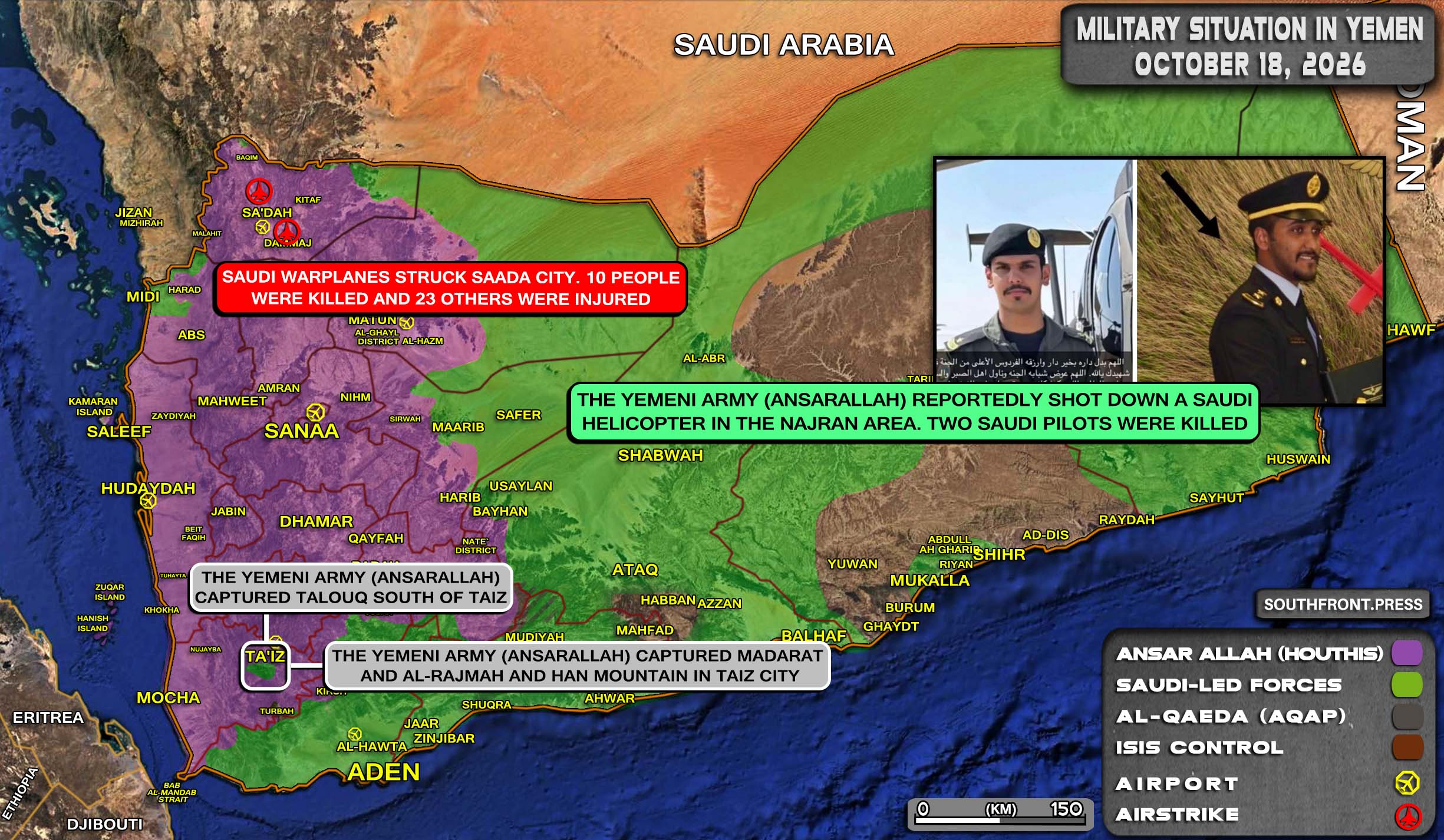
Military Situation In Yemen On October 18, 2026 (Map Update)

Click to see the full-size image

  • The Yemeni army (AnsarAllah) captured Madarat and Al-Rajmah and Han mountain in Taiz city;
  • The Yemeni army (AnsarAllah) captured Talouq south of Taiz;
  • Saudi warplanes struck Saada city. 10 people were killed and 23 others were injured;
  • The Yemeni army (AnsarAllah) reportedly shot down a Saudi helicopter in the Najran area. Two Saudi pilots were killed.

MORE ON THE TOPIC:

The post Military Situation In Yemen On October 18, 2026 (Map Update) appeared first on South Front.

  •  

Netanjahu erklärt, Israel müsse die „Aufgaben an allen Fronten“ innerhalb von zwei Jahren abschließen

Der israelische Premierminister Benjamin Netanjahu erklärte in einer Wahlkampfbotschaft auf X, Israel müsse seine wichtigen „Aufgaben an allen Fronten“ in den kommenden zwei Jahren abschließen, solange Donald Trump als US-Präsident im Amt ist: „Uns bleiben noch zwei Jahre der Amtszeit meines Freundes Donald Trump, und genau in dieser Zeit müssen wir unsere wichtigsten Aufgaben an […]
  •  

Layered Facial Rejuvenation: SMAS, RF, and Skin Surface Treatments

Aging changes in the face occur across multiple tissue layers simultaneously. The skin loses density and moisture reserves, elasticity declines, and soft tissues gradually shift downward. As these processes compound, isolated procedures rarely address all concerns at once. Aesthetic medicine professionals emphasize that durable results require a layered approach, where each method targets a specific anatomical level. This strategy aims not merely to mask signs of aging temporarily, but to delay the necessity of surgical intervention by addressing structural, dermal, and surface-level issues in sequence. The deepest intervention targets the musculo-aponeurotic system, or SMAS. Technologies such as Ultraformer utilize focused ultrasound to create thermal points within the tissue. This action is designed to stimulate neocollagenesis, the natural synthesis of new collagen and elastin fibers. Historically, this layer was addressed primarily by plastic surgeons or through thread-lift techniques, but focused ultrasound now offers a non-invasive alternative. The physical mechanism relies on controlled heat generation to trigger the body's own repair response. Results from this procedure are not immediate; they develop gradually over three to six months. The effect may persist for up to 18 months. The primary structural outcomes include a reduction in the prominence of the double chin and jowls. Post-procedure recovery is typically minimal, limited to possible mild swelling in the first few days. At a shallower depth, radiofrequency (RF) lifting operates on the mid and deep dermis. This method uses electromagnetic waves to heat tissue to temperatures between 40 and 42 degrees Celsius. The thermal stimulus activates fibroblasts, the cells responsible for producing structural skin proteins. The intended outcome is a restoration of skin turgor and density, specifically addressing moderate soft-tissue sagging in the cheeks and a loss of facial contour definition. Unlike the deep structural repositioning of ultrasound SMAS, RF lifting focuses on tightening the existing tissue matrix to improve firmness.

  •  
❌