❌

Reading view

He Campaigned for the East Cleveland Mayor's Opponent. Then Police Came for His Truck.
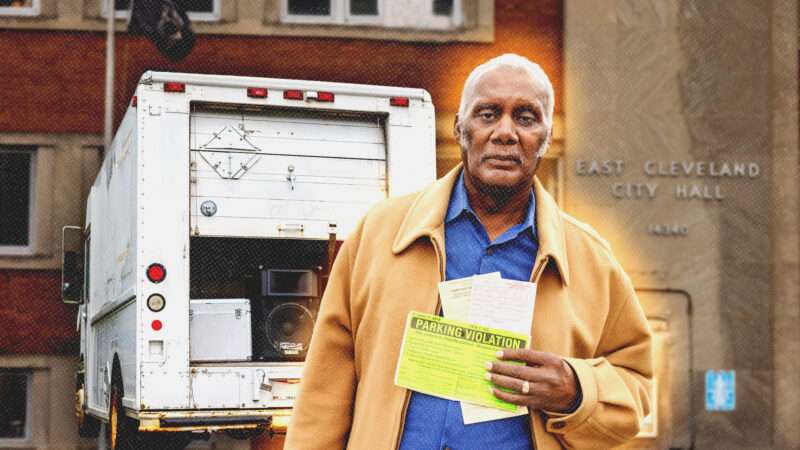
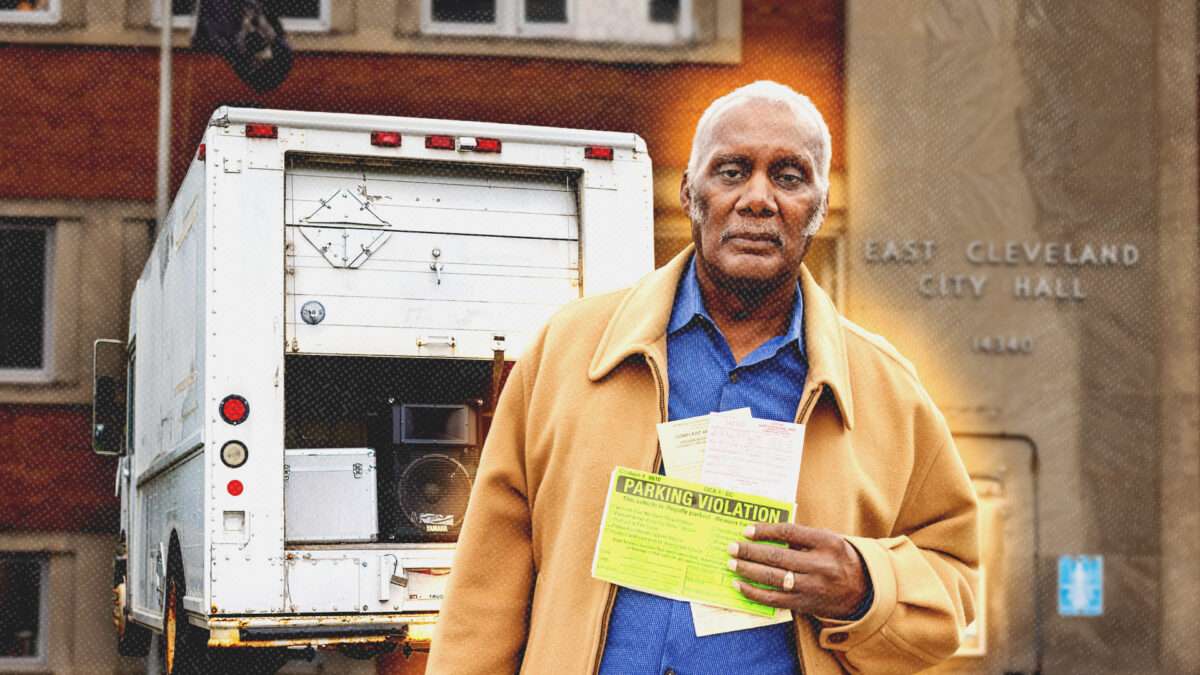
William Fambrough seen in front of his sound truck | Institute for Justice

Walking through East Cleveland, Ohio, feels a touch like you've wandered onto the set of a postapocalyptic film noir. Grand, gilded homes announce themselves on neighborhood streets, some crowned with turrets, many with windows punched out like missing teeth. Often, no one is home, because no one lives there. It is safer than 1 percent of U.S. cities.

So why did local law enforcement pour considerable time and resources into pursuing a man for a sound truck?

That question is not really a legal one, at least not in the most technical sense. But it is the driving force behind a thorny case a federal court recently resuscitated: Fambrough v. City of East Cleveland, a saga concerning a man whose vehicle became an obsessive target of the East Cleveland Police Department (ECPD) after he used it to campaign for a mayoral challenger.

Some of the facts are in dispute. But the basic gist is as follows: William Fambrough, long a politically engaged East Clevelander, campaigned for Juanita Gowdy—a challenger to then-Mayor Brandon King—by broadcasting messages around the city with his sound truck. That ultimately came to an end after law enforcement impounded the car, cited him for parking and noise violations, and prosecuted him for the latter.

Fambrough sued, alleging the complex legal odyssey set into motion over his step van amounted to First Amendment retaliation, an unreasonable seizure under the Fourth Amendment, and a violation of the 14th Amendment's proscription against selective enforcement. The U.S. Court of Appeals for the 6th Circuit rejected some of those claims. But it resurrected claims against King and his chief of staff, Michael Smedley—depriving them of qualified immunity, the legal doctrine that inoculates state and local government officials from facing lawsuits if their alleged misconduct was not "clearly established" as illegal in prior case law. It also revived Fambrough's retaliation claim against the city.

As the 6th Circuit summarizes: King "says he received a phone call from a resident who complained about Fambrough's sound truck and someone else's box truck being parked in a residential area," so he told someone to take care of it. Scott Gardner, then the city's chief of police, "was concerned about selectively enforcing" the parking ordinance—which prohibits parking a truck in front of residential property, except for loading or unloading—because it is indeed almost never enforced. This was the beginning of a long pursuit, which ultimately saw a swarm of officers dispatched to Fambrough's house in August 2021 to confiscate the vehicle, allegedly resulting in $6,000 in damage. Fambrough also had to pay $528 in fees to get the damaged truck back.

"All the attention City officials gave Fambrough struck Gardner as unusual," the 6th Circuit notes. "The mayor's office wasn't this attentive even in homicide cases. And considering that the City had around only 50 police officers at the time and had 'serious crime problems,' Gardner thought it was odd to devote this much attention to permitting and parking issues." Based on available data, East Cleveland's violent crime rate is 1,409 per 100,000 residents, about four times higher than the national average.

Yet Gardner ultimately got on board. Smedley phoned him on August 9 "extremely upset," according to Gardner, and told the police chief he was "incompetent" for failing to "take care of" Fambrough's sound truck. Smedley wanted the "utmost enforcement as possible." So Gardner sent an email. "Please, find this vehicle and tow it," he wrote to all of ECPD. "Cite the operator with disturbing the peace and loud music. Please contact me as soon as this is complete to claim a surprise." A surprise!

Police succeeded. "On its face, the email told officers to tow Fambrough's truck regardless of whether it was parked illegally," writes the 6th Circuit. "And the Noise Ordinance authorizes seizure only of 'the sound device used,' and only upon conviction. So Gardner's instruction to tow the truck wasn't authorized by municipal law." The court still held that the seizure did not violate the Fourth Amendment. It also gave Gardner qualified immunity, ruling it is not clearly established that someone who acts as a conduit for someone else's alleged retaliation—which here came from the mayor's office—is a "responsible party."

Heather McCollough, the city's assistant law director, subsequently prosecuted Fambrough for allegedly violating the noise ordinance. According to a sworn declaration from Fambrough's attorney, McCollough outlined some of Fambrough's offenses on a call: that he "made complaints about the police department" and filed "public records requests," among other issues. Notably, it is legal to do those things. McCollough was typically willing to resolve minor noise complaints, she added, but not so much in this case, because Fambrough needed to "stand down." (He ultimately pleaded no contest to disorderly conduct, a reduced charge.)

East Cleveland police step van
Institute for Justice

"Only after [Fambrough] began supporting Gowdy's election was the weight of the law thrown against him," the 6th Circuit writes in its analysis of potential municipal wrongdoing. "And the City's police officers didn't uncover Fambrough's violations of their own accord. Instead, City decisionmakers sent them to Fambrough's home each time to enforce the Parking Ordinance. So the timing of the parking-related enforcement actions supports an inference that Fambrough's political speech was the motivating factor—as does the fact that the City rarely enforced the Parking Ordinance against anyone else despite having plenty of opportunities to do so." Incredibly, a photo of another truck can be seen down the street on the same day law enforcement came to fetch Fambrough's vehicle. (The law also includes pickup trucks, so the city arguably has a lot of enforcement to do if it sincerely believes this law matters.)

King allegedly set the chain of events into motion while Smedley took the driver's seat. "Smedley's pattern of incessantly calling and berating Gardner," the 6th Circuit adds, "clashes with the idea that Smedley was chiefly concerned with minor permitting, noise, or parking issues." After all, if that were true, why would the problem appear to begin and end with one person?

Over five years have passed since the ordeal. Although Fambrough is now potentially closer to getting in front of a jury, he has yet to actually state his case, still burdened by the onerous process government actors invoke to kill such suits before the community can assess the merits. King, meanwhile, won that election. He left office in May 2025, however, after he was found guilty of one count of theft in office, four counts of having an unlawful interest in a public contract, three counts of representation by public official or employee, one count of filing a false disclosure statement, and one count of soliciting improper compensation.

The post He Campaigned for the East Cleveland Mayor's Opponent. Then Police Came for His Truck. appeared first on Reason Magazine.

  •  

‘I felt disgusted’: MEP speaks out over nude deepfakes and urges EU action

Lena Schilling of Austrian Greens says images are ‘digital violence against women’ and a threat to democracy

An Austrian MEP has spoken out about her experience of being “stripped naked” online without her consent and has urged the EU to take action, as a report found that one in six female MEPs had been targeted by sexualised AI-generated content.

Lena Schilling of the Green party said she had learned last month about nude deepfakes of herself circulating online. When she opened the links, she found herself staring at images from one of her first ever press conferences – but the images had been digitally altered to remove her clothing.

Continue reading...

© Photograph: APA-Images/Alamy

© Photograph: APA-Images/Alamy

© Photograph: APA-Images/Alamy

  •  

Georgia Cop Who Shot a Miniature Donkey Says Body Camera Footage Shows an 'Imminent Threat'

Screenshot from a body camera video showing a a handgun drawn at a small donkey | The Civil Rights Lawyer Raw/Youtube/Cedartown Georgia Police Department

The Georgia officer responsible for killing a 1-year-old miniature donkey, HeeHaw, has filed a motion to dismiss the lawsuit against him, claiming the body camera footage proves he "reasonably believed the donkey posed an imminent threat to a fellow officer." But even if it doesn't, the officer argues he is immune from liability. 

In the early morning hours of August 30, Hannah Michelle Israel was at her Cedartown home in western Georgia when she received a distressing phone call. A supervisor with the Cedartown Police Department "tersely informed [Israel] that a donkey on her property had been 'dispatched,'" according to her federal lawsuit. After some clarification, she learned that police had not only entered her enclosed private property in the middle of the night without permission while looking for a missing person, but also shot and killed her miniature donkey in the process. 

Israel immediately set out to search for her beloved pet, HeeHaw, only to find her bottle-raised donkey's lifeless body alone in her field. Israel told ABC7 News the incident has left her "traumatized and shocked." She continued, "I honestly can't even believe he's not here…There's no words."

Demanding accountability, Israel filed a lawsuit in the U.S. District Court for the Northern District of Georgia in September against the shooting officer, Officer Trenton Ryan Garner, for violating her Fourth Amendment rights and submitted a separate demand for $1 million from the City of Cedartown.  

Last week, Garner responded by asking the court to dismiss the case, arguing in part that he did not violate Israel's constitutional rights when he entered her property. Under the open fields doctrine, there is no reasonable expectation of privacy in one's pastureland, even if enclosed. Further, the motion argues, exigent circumstances existed in the search for a missing 12-year-old girl. 

As far as HeeHaw is concerned, Garner claims he acted reasonably by using deadly force and argues the footage clearly shows HeeHaw "charging" and posing an "imminent threat to a fellow officer." 

However, the footage, posted by the Civil Rights Lawyer Raw, may not be so clear-cut. Garner's body camera was off at the time of the shooting but had a "rolling buffer of video," a recording without audio of the 30 seconds preceding activation of the camera, according to court documents. During the silent portion, two officers and a bloodhound are in front of Garner with flashlights in a dark field. A small donkey, roughly 3 feet tall, appears and slowly moves toward one of the officers. The officer backs away slowly, but the donkey moves closer and picks up speed. Garner pulls his gun and fires. The donkey turns and runs before falling over.

Whether Garner reasonably believed HeeHaw posed an imminent threat to his fellow officer may be up for debate.

When the audio kicks in, a fellow officer asks, "Why'd you shoot it up?" "I don't know," Garner responds rather nonchalantly before telling dispatch he had to shoot a donkey because "it was trying to attack." If another officer on the scene wasn't sure why Garner used deadly force, perhaps the decision wasn't so reasonable after all. 

In her lawsuit, Israel accuses Garner of needlessly killing HeeHaw "maliciously…and recklessly, with deliberate indifference…for [Israel's] constitutional rights." The suit continues: "No reasonable officer in…Garner's position would have believed that such force was necessary or justified." 

But whether Garner acted reasonably or not by shooting HeeHaw, qualified immunity may still shield him from accountability. Qualified immunity is a legal doctrine that protects government actors from lawsuits alleging rights violations, unless the right is clearly established. In practice, that means plaintiffs must be able to point to a previous court ruling in a case with the same circumstances to show that the right was obvious to government officials. 

The bar can be quite high to show a right is clearly established. For example, in March, the Supreme Court reversed a 2nd Circuit decision in a case involving an officer who was sued for using a rear wristlock to arrest a protester. The 2nd Circuit denied qualified immunity, reasoning that a previous case from 2004 clearly established that rear wristlocks used to arrest anti-abortion protesters constitute excessive force. But the Court disagreed, stressing that "principles stated generally, such as that 'an officer may not use reasonable and excessive force,' do not suffice." 

And while there may be ample cases involving officers shooting pet dogs, cases involving miniature donkeys are in short supply. If the court finds that there is no clearly established rule that specifically prohibits officers from shooting a miniature donkey moving toward a fellow officer in the dark, the court may end up dismissing the case and sidestepping both the reasonableness and constitutional questions entirely.

The post Georgia Cop Who Shot a Miniature Donkey Says Body Camera Footage Shows an 'Imminent Threat' appeared first on Reason Magazine.

  •  

Lisbon school investigated over horrific child abuse allegations

Lisbon school investigated over horrific child abuse allegations

Portugal’s Public Prosecutor’s Office has opened an investigation into allegations of mistreatment of children at a school in Lisbon, following a complaint by a former employee. The investigation concerns Externato

The post Lisbon school investigated over horrific child abuse allegations appeared first on Portugal Resident.

  •  

3 Charlotte Cops Resign After Group Chat Reveals Competition To Arrest the Most Black People

Illustration of a smartphone showing a text conversation, with a file folder in the background with a police officer's photo on it | Oleg Dudko/Dreamstime/Midjourney/Fatima Ruiz.Charlotte.jpg

​Three Charlotte cops have resigned and three more are facing termination after a Flock probe uncovered a text chain littered with racist messages, religious and sexual bias and a reported competition over who could arrest the most black people.

The group chat came to light after Charlotte-Mecklenburg Police Department (CMPD) officer Seth Elliott was caught using Flock's database to out an undercover cop to his drug dealer friend, which sparked an investigation by the North Carolina State Bureau of Investigation (NCSBI).

When questioned by the NCSBI, Elliott, who has since resigned, admitted he ran the plate but denied knowing that it belonged to an undercover officer. He told agents that his friend had reached out to ask if Elliott could help identify a strange person hanging out around his father's business, so Elliott ran the plate through Flock's database.​ According to reporting from the Watauga Democrat, the NCSBI arrested Elliott in July and charged him with " illegally accessing a government computer, a Class 1 misdemeanor."

During its investigation into Elliott, the NCSBI downloaded data from his phone, which it turned over to the CMPD, where a subsequent review uncovered the racist text thread. ​According to anonymous sources who spoke to Charlotte's WBTV, the group chat included "numerous uses of the 'n-word' related to use of force and discharging firearms at black residents," and a competition to see who could arrest the most black people. In one text reportedly written by a member of the group, an officer said, "Our texts sound like a clan [sic] rally," according to a message reviewed by WCNC Charlotte, a local NBC affiliate. At a press conference on Thursday, CMPD Police Chief Estella Patterson said that an independent chain-of-command board unanimously voted for the officers' termination. Three have already resigned and the other three she "hopes to refer to as former employees."

The fallout won't end there. Every case these officers touched could now be called into question, and for good reason. In Giglio v. United States (1972), the Supreme Court ruled that prosecutors must disclose information that could undermine the credibility of a government witness or law enforcement officer. Mecklenburg County District Attorney Spencer Merriweather will have to examine the messages and determine whether their word as witnesses can still be trusted. Depending on his decision, this could lead to dropped cases and challenges to prior convictions.

Defense attorney Tim Emery weighed in, telling WBTV that the officers' "credibility is severely questioned and compromised," and that the district attorney's office should consider halting cases in which the officers were heavily involved.

Police abuse of Flock and other automatic license plate readers (ALPRs) is not new. The Institute for Justice, a libertarian public interest law firm, has cataloged over 200 instances of ALPR abuse at the hands of the police since 2018. In the last year alone, officers have been caught using ALPRs for everything from pursuing personal grudges to stalking exes and romantic interests. This time, the victim of Flock misuse was an undercover officer rather than a civilian.

The post 3 Charlotte Cops Resign After Group Chat Reveals Competition To Arrest the Most Black People appeared first on Reason Magazine.

  •  

The 8th Circuit Rejects Qualified Immunity for a Judge Who Jailed 2 Kids for 'Refusing To Follow Directions'

a hand holding a judge's gavel | Atit Phetmuangtong/Dreamstime

A Missouri judge who locked two children in jail cells because he was frustrated by their resistance to a parental custody decision is liable for violating their Fourth Amendment rights, a federal appeals court ruled this week. The U.S. Court of Appeals for the 8th Circuit rejected Taney County Judge Eric Eighmy's claim that he was shielded by qualified immunity, a doctrine that blocks federal civil rights claims unless they allege a violation of "clearly established" law.

"A reasonable judge should have known better," Judge David Stras writes in an opinion joined by the two other members of the 8th Circuit panel. "The law was 'clearly established' enough" to "place the issue 'beyond debate.'"

Institute for Justice attorney Dylan Moore, who wrote an 8th Circuit brief arguing against immunity for Eighmy and participated in oral arguments, welcomed the decision. "Every reasonable person knows that a judge can't throw children in jail for no good reason," he said. "Yet Judge Eighmy claimed qualified immunity shielded him from accountability anyway because no prior case told him that imprisoning innocent kids is unconstitutional. That defense is ridiculous, and we are thrilled that the court saw through it. When government officials commit such obvious constitutional violations, qualified immunity should never enter the picture."

The incident at the center of the case happened after an October 2019 custody hearing involving Kadan Rockett, then 14, and his 12-year-old sister, Brooklyn, who had achieved a modicum of fame as magicians performing on America's Got Talent. Their divorced parents, Bart Rockett and Kami Ballard, agreed that Ballard, who at that point lived in Missouri, would have primary custody of the children, while Rockett, who was living in California, would be "responsible for them at the beginning of each month and 'during TV pilot season.'" But Kadan and Brooklyn did not want to go home with their mother, which led to an argument in the lobby of the courthouse.

Eighmy intervened, telling Kadan and Brooklyn to come with him to a conference room, where he informed them that they had to leave with Ballard. "The children would not budge, even after the judge mentioned that the other option was foster care," Stras notes. "Frustrated, Judge Eighmy had the children follow him again, this time to a waiting area in the courthouse's juvenile division." A few minutes later, Eighmy "led them down a hallway to two holding cells."

Outside the cells, Eighmy again threatened Kadan and Brooklyn with foster care, but they were still unmoved. "Lock them up," the judge told an officer, who "patted them down and ordered them to remove their socks and shoes" before confining them in separate cells.

It is not clear exactly how much time Kadan and Brooklyn spent in the cells. The Institute for Justice says "about an hour," while Stras says "the time spent in the holding-cell area was between twenty and forty minutes." In any case, the children's respect for Eighmy's authority had improved by the time he came back. He "asked them one more time whether they would leave with their mother," Stras writes. "This time, they both nodded yes, so he let them go."

In June 2021, Rockett, the children's father, sued Eighmy on their behalf under 42 USC 1983, which authorizes claims against state or local officials who violate constitutional rights under color of law. In his motion to dismiss the lawsuit, Eighmy argued that he was protected by judicial immunity, which is absolute with respect to a judge's official duties. U.S. District Judge Douglas Harpool disagreed, and the 8th Circuit affirmed that ruling in 2023, noting that Kadan and Brooklyn were beyond Eighmy's contempt power because they were not parties to the custody case and that "judges do not do double duty as jailers."

Eighmy reiterated his judicial immunity claim in a motion for summary judgment, and Harpool rejected it again. After the trial began, Eighmy claimed qualified immunity twice, once after all the evidence had been submitted and again after the jury's verdict in favor of Kadan and Brooklyn. Harpool denied him that defense both times.

The jury ultimately awarded Kadan and Brooklyn $5,000 each in damages, and Harpool added about $327,000 in attorney fees. Eighmy appealed again, reiterating his judicial immunity claim. But the appeals court ruled that he had abandoned that argument by failing to raise it during the trial or after the verdict. So Eighmy was left with qualified immunity, which the appeals court said he did not deserve.

Eighmy clearly violated the Fourth Amendment's prohibition of unreasonable seizures, Stras says, because he "did not have 'probable cause to believe that [the children had] committed' an offense, much less one that justified placing them in a holding cell. Rather, their only misdeed was one every parent knows well: resisting authority. Even in the context of legal-custody proceedings, refusing to leave with a parent is not a jailable offense. Nor were there 'exigent circumstances' arising out of danger to themselves or others."

Did Eighmy's authority as a judge give him extra leeway? Nope. "Criminal contempt was off the table because the children were neither parties to the custody case nor present inside the courtroom," Stras notes. "Nor could the power to punish a party for violating an injunction have provided the justification, given that Judge Eighmy never issued one."

Eighmy's motive for jailing the children does not change that analysis. "We have no doubt that Judge Eighmy believed he was acting in 'good faith,' and possibly even in the children's best interests, by detaining them," Stras writes. "But good faith in the Fourth Amendment context is about reasonable reliance, either on binding appellate precedent or a warrant issued by a 'neutral magistrate.'"

What about Eighmy's argument that he had no way of knowing his actions were unconstitutional? "The law in this area" was "clearly established," Stras says. "'[I]t would have been sufficiently clear [to] every reasonable official,' Judge Eighmy included, that locking up two children for refusing to follow directions violated the Fourth Amendment. As we put it over a decade and a half ago, long before the events in this case, '[i]t is clearly established that a warrantless arrest, unsupported by probable cause, violates the Fourth Amendment."

That principle was so well established, in fact, that Kadan and Brooklyn, neither of whom had attended law school, took it for granted. "I don't know how you have a right to lock us up," Kadan told Eighmy when he threatened to jail them, according to Rockett's amended complaint. "We have done nothing wrong." The complaint says Brooklyn raised the same point. "How can you just lock up kids?" she asked. "This isn't legal. We've done nothing wrong."

Given Eighmy's obvious disregard for Kadan and Brooklyn's Fourth Amendment rights, "we are not concerned about the lack of a prior case" with "fundamentally similar" facts, Stras says. "Indeed, given how clear the law is, it would have been surprising to find one." He quotes an observation that Supreme Court Justice Neil Gorsuch made as a 10th Circuit judge: "Sometimes the most obviously unlawful things happen so rarely that a case on point is itself an unusual thing."

The post The 8th Circuit Rejects Qualified Immunity for a Judge Who Jailed 2 Kids for 'Refusing To Follow Directions' appeared first on Reason Magazine.

  •  

What Happens When Your Abuser Kills Himself?

Eve Livingston sensitively draws us into the worlds of two women who share a similar past: abusive partners who committed suicide. Through powerful scene‑setting, we’re there when each woman hears the news, and we feel the complex emotions these deaths provoke. This is a difficult, complicated subject—not often tackled. Livingston bravely shines a light on how, in these particular circumstances, suicide can bring both grief and relief.

Things started as they so often do: he was older, professionally successful in a similar field to Siri’s, and there was something “magnetic” about him. There was also, she came to realise, a darkness beneath the surface. A tragic bereavement in his past had left him struggling with his mental health, something which immediately evoked sympathy in Siri and made him seem a deeper and more sensitive person, qualities she was drawn to. At the beginning of their relationship, he would often turn up uninvited to her home or events she was attending, or bombard her with messages — behaviour she now views as stalking, but found flattering in those hazy early days of a new relationship.

  •  

How Local Governments Turn Minor Violations Into Financial Ruin

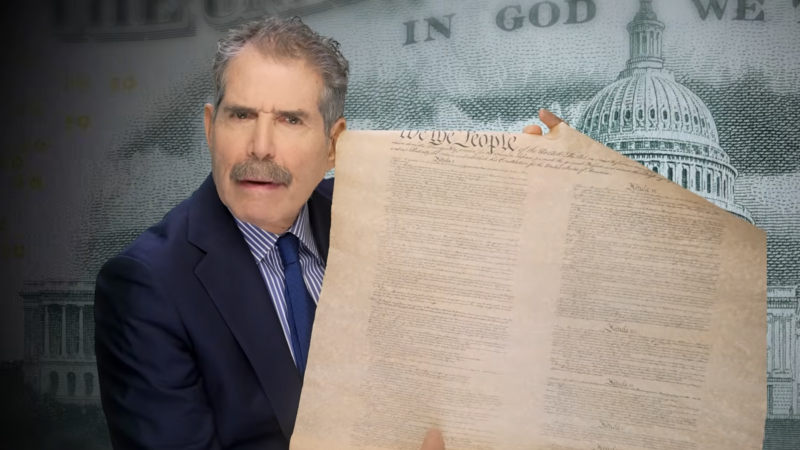
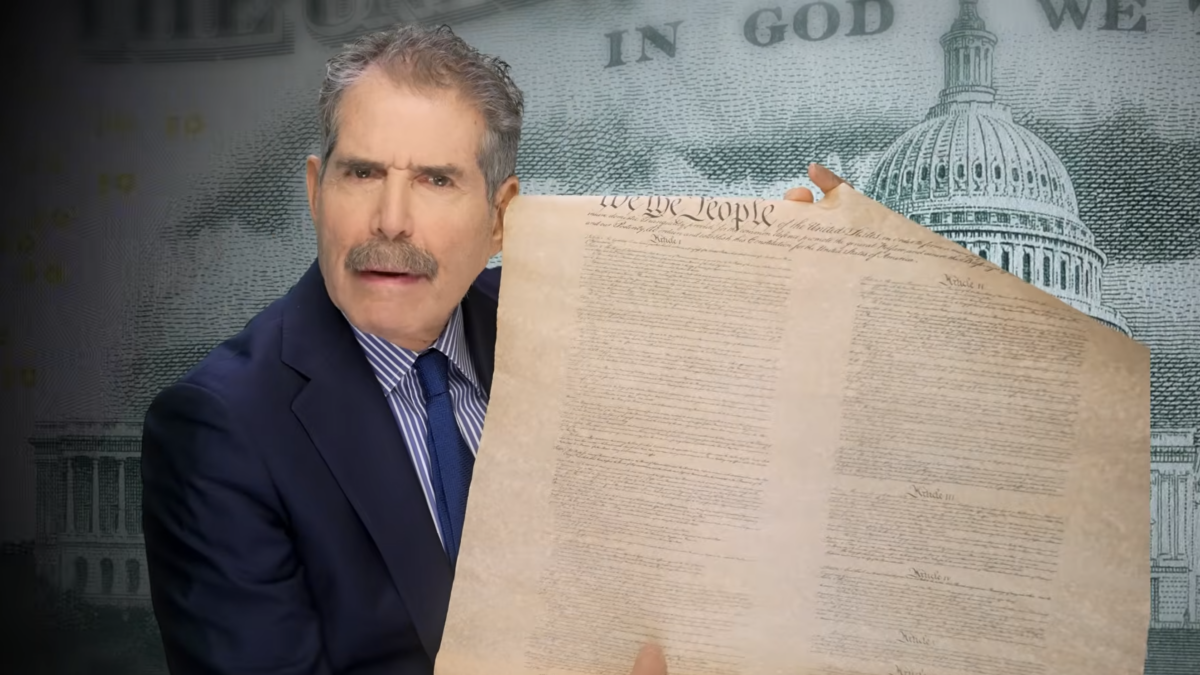
John Stossel holds a copy of the U.S. Constitution | John Stossel

Imagine getting a bill from your local government for $900,000 because they see a greenhouse on your property and just assume you're growing marijuana without a permit.

Imagine government demanding $400,000 because you didn't know to fill out a single-page form.

Or you get slapped with a $100,000 fine for parking your car on your own property.

It sounds absurd, but as my newest video shows, that's really happening.

How can that be? Doesn't America's Constitution say government may not impose "excessive fines"?

It happens because some bureaucrats, savoring their power, act like tyrants.

At least now there is hope for a remedy. One of these excessive fine cases has reached the Supreme Court.

Ken Jouppi worked as a pilot in Alaska for 30 years, until one day, state troopers stopped his plane before takeoff.

"I didn't think we had anything to hide," he says. "They searched the airplane, opened up this lady's boxes of groceries and found beer."

Transporting beer. That was his crime.

"Isn't beer legal in America?" I ask Jouppi's lawyer, Mike Greenberg.

"In most places," he replies. But some towns in Alaska ban beer.

Jouppi was convicted of bootlegging.

Every pilot must know which town has what rule, and search everybody?

"They think pilots should search people's luggage," says Jouppi. "It was such a terrible thing to do to another individual, invade their privacy, and assault their dignity….I just didn't feel right about doing that."

Alaskan officials say the beer was visible, so Jouppi should have known about it. They jailed him for three days and seized his plane.

"That airplane was my primary source of income," says Jouppi. "Without it, I didn't have a business anymore."

I assumed such excessive punishment would be dismissed quickly by a court. But it wasn't.

"Jouppi has been fighting to keep his plane for 14 years," says Greenberg. "The plane is still sitting on a tarmac….It's a ludicrous situation where the state has every interest in going after valuable assets rather than actually fighting supposed harms of alcohol."

Greenberg's law firm, the Institute for Justice, took Jouppi's case, and now the U.S. Supreme Court will hear it.

I hope he wins. It's just wrong when governments destroy lives for small mistakes.

They're also doing that to Tuncay Saydam, a retired professor.

The IRS demands he pay $400,000 because he didn't know to fill out a one-page form about an old bank account in his native Turkey.

"The fines," says Saydam, "will destroy my life….We have never been rich."

His unpaid tax is less than $30,000. But the IRS demands he pay them more than $400,000. A California court upheld that penalty. Northern Californian Chief Magistrate Judge Donna Ryu wrote, "Government suffered a significant tax loss."

Finally, bureaucrats in Humboldt County, California, took aerial photos of people's property to search for unlicensed marijuana farms.

When they saw greenhouses, they fined property owners.

Blu Graham was fined $900,000, "$30,000 a day, when all I've ever done is grow vegetables in my greenhouses."

"There actually was no marijuana on the property!" says Greenberg. "They were just guessing that if you built a greenhouse, this must be connected to marijuana."

Finally, a lawsuit got the county to promise to end its ruinous fine system.

But it took four years.

Why do governments fight to keep outrageous fines that punish largely innocent people?

"Unlike other forms of punishment," says Greenberg, "fines make the government money. The prosecutor's office, state troopers, they get to keep the proceeds. It's an abusive system because they have every incentive to continue to prosecute."

I invited the heavy-fining judges and government lawyers to appear in my video to explain these fines. None would agree to talk about it.

Bureaucrats always want more money. It's a reason the Constitution prohibits excessive fines.

I trust that the Supreme Court will put a stop to these abuses.

COPYRIGHT 2026 BY JFS PRODUCTIONS INC.

The post How Local Governments Turn Minor Violations Into Financial Ruin appeared first on Reason Magazine.

  •  

Trump Fired Kimberly Guilfoyle for Influence Peddling That Pales Next to His Presidential Profiteering

President Donald Trump embraces Kimberly Guilfoyle with a pile of cash under the picture | CNP/AdMedia/Newscom/Altinosmanaj/Gearstd/Dreamstime/Midjourney/Fatima Ruiz

Kimberly Guilfoyle today resigned from her position as the U.S. ambassador to Greece shortly after the White House confirmed that President Donald Trump had asked her to do so. The main provocation seems to have been Guilfoyle's alleged influence peddling, which reportedly featured a request that Republican donor Eric Deters pay off her $100,000 American Express bill, in exchange for which she promised him special access to "Trump world."

The president signaled his displeasure on Monday, saying "we're looking at" axing Guilfoyle, his son's former girlfriend, because "we're not happy." On Tuesday, Trump added that "we didn't like what we were reading." That reaction is not surprising, since Guilfoyle would have been horning in on Trump's territory by trying to sell access and use her office for personal gain. That's his thing.

Consider Trump's attempts to promote the memecoin that he launched three days before beginning his second term. That April, the top 220 $TRUMP holders were invited to "an intimate private dinner" with the president on May 22. The "top 25 coin holders" were promised "an Exclusive Reception before Dinner with YOUR FAVORITE PRESIDENT," plus a "Special VIP Tour" of the White House the next day. The coin's price, which after an initial surge had fallen dramatically since Inauguration Day, rose by more than 50 percent immediately after that announcement.

"Since the announcement, crypto investors around the world have raced to expand their holdings of $TRUMP," The New York Times reported 10 days before the dinner. "Certain buyers, in interviews and statements, have said they bought the coins or entered the dinner contest with the intention of securing an action by Mr. Trump to affect United States policy."

NBC reported that the coin investors who attended the dinner, which was held at the Trump National Golf Club in Sterling, Virginia, had collectively spent $394 million on $TRUMP. On average, that worked out to about $1.8 million a plate.

"This is my president that we're talking about, but I am willing to say that this gives me pause," Sen. Cynthia Lummis (R–Wyo.) said a few weeks before the dinner. "In abstract," Sen. Thom Tillis (R–N.C.) allowed, the event "is hard to understand." Sen. Lisa Murkowski (R–Alaska) drew an analogy: "I don't think it would be appropriate for me to charge people to come into the Capitol and take a tour."

Donald Sherman, executive director of Citizens for Responsibility and Ethics in Washington, was blunter. "This is one of the most blatant and appalling instances of selling access to the presidency I've ever seen," he said.

Compared to that episode, the controversy over the income that Trump's hotel in Washington, D.C., received from influence seekers during his first term might seem tame. But it raised similar ethical questions, albeit in a slightly more subtle way.

The Trump International Hotel's customers included Republican political organizations and a long list of trade groups, such as the National Mining Association, the Independent Petroleum Association of America, the National Confectioners Association, and the Vapor Technology Association, whose interests might be served by currying favor with the president. The hotel also attracted business from the governments of foreign countries, such as Kuwait, Bahrain, Saudi Arabia, Azerbaijan, Malaysia, and Romania, that likewise may have been investing in Trump's good will.

"Believe me, all the delegations will go there," a "Middle Eastern diplomat" told The Washington Post after Trump's election. "Why wouldn't I stay at his hotel blocks from the White House, so I can tell the new president, 'I love your new hotel!'" an "Asian diplomat" said. "Isn't it rude to come to his city and say, 'I am staying at your competitor'?" The Embassy of Kuwait, which had previously held its annual National Day celebration at the Four Seasons, reportedly canceled its reservation there and switched to the president-elect's hotel under pressure from the Trump Organization.

Trump saw no problem with any of this. "The law is totally on my side," he told The New York Times in November 2016. "The president can't have a conflict of interest." He reiterated that take at a press conference nine days before his inauguration. "I have a no-conflict situation because I'm president," he said.

Trump nevertheless said he would donate the profits from money spent by foreign governments at his hotels to the U.S. Treasury. But that solution did not address the money he was taking in from various domestic interest groups or his ability to enrich himself by encouraging Republican organizations or other federal officials to patronize his businesses.

One example of the latter: Vice President Mike Pence and his party stayed at Trump's golf resort in Doonbeg, Ireland, during an official trip in 2019. Although Trump insisted he "had nothing to do" with that decision, critics perceived a violation of the Domestic Emoluments Clause, which says the president may not receive additional compensation from the federal government beyond his official salary.

Trump later said he regretted his attempts to address conflicts of interest during his first term, including his promise that the Trump Organization would avoid new foreign business deals. "I prohibited [my sons] from doing business in my first term, and I got absolutely no credit for it," he told The New York Times 12 days before his second inauguration. "I didn't have to do that, and it's really unfair to them." The lesson he drew was that "nobody cared."

Consistent with that assessment, Trump has thrown all caution to the wind during his second term, capitalizing on his position to rake in millions of dollars by hawking all manner of presidentially branded merchandise, ranging from bibles to cologne; obtain a $400 million "palace in the sky" from the government of Qatar; extort $1 billion in pro bono legal work from disfavored law firms; earn billions from the same cryptocurrency industry he was simultaneously deregulating; and arrange a sweet IRS immunity deal that could save him more than $100 million in back taxes, interest, and penalties. Any worries about unseemly profiteering by Trump's family are long gone, as evidenced by federal contracts with businesses backed by his sons and highly lucrative foreign deals negotiated by his son-in-law.

Compared to all of that, the $100,000 that Guilfoyle allegedly sought in exchange for using her influence with the Trump administration to help Deters looks like pocket change. Her real sin, one suspects, was failing to offer her boss a piece of the action.

The post Trump Fired Kimberly Guilfoyle for Influence Peddling That Pales Next to His Presidential Profiteering appeared first on Reason Magazine.

  •  

Doctor detained in Albufeira on suspicion of raping patient during consultation

doctors-2017-b69c9b6c.jpeg

A 61-year-old doctor has been arrested in the Algarve on suspicion of raping a patient during a consultation at a private clinic in Albufeira. The crime allegedly occurred in June

The post Doctor detained in Albufeira on suspicion of raping patient during consultation appeared first on Portugal Resident.

  •  

Behind His Great Novels, an Unbearable Family Secret

A few years ago, Sebastian Barry—whose collected literary works, drawn from family history and lore, offer “a loser’s history of 20th-century Ireland”—announced that the final novel in his series would tackle the relationship between his parents. “The declaration seemed to set the table for a feast of disclosure,” writes Giles Harvey, who spoke with Barry for more than a year as the novel took shape. But the feast never arrived. The “career-spanning profile” Harvey once suggested to Barry becomes a study of abuse, memory, and revelation—one Barry’s forte, and now, perhaps, his greatest struggle.

Barry and I corresponded for the next year and a half, during which the novel appeared to be on course. Then, in July of last year, he sent me a surprising email. Something had happened in the time since his father died, Barry explained. “Where there was once a great need to proclaim aloud,” he wrote — neglecting to specify just what it was he’d felt the need to proclaim — Barry now found himself in a different state of mind. “A matter I thought so urgent and in need of saying” had come to seem better served by a “strange new beneficent silence.”

  •  

Young mother confesses abuse of her newborn; infant in critical condition

A young mother on the island of Crete confessed to judicial authorities on Tuesday that she had beaten her newborn baby. The 17-day-old infant is in critical condition and is struggling for its life with heave head injuries in the ICU of the Neonatal ICU in Heraklion. The 18-year-old mother apologized for beating her newborn […]

The post Young mother confesses abuse of her newborn; infant in critical condition appeared first on Keep Talking Greece.

  •  

The Children a Scientist Took Home

Carleton Gajdusek won the Nobel Prize for his work on a disease in Papua New Guinea. But his biggest experiment was on the children he took from the field to the US—many of whom he sexually molested, with the knowledge and, in some cases, approval of his professional peers and colleagues:

In his journals and in letters to colleagues, Gajdusek was self-righteous, arguing that what he’d done was “no more serious than lying on the grass or picking a dandelion,” and he cited the Anga initiation rites as justification. These ceremonies had brought boys into their communities, as part of a shared passage into manhood, but Gajdusek treated them as a timeless license for the acts that he’d committed privately, one boy at a time. George Klein, a professor at the Karolinska Institute, in Stockholm, who was part of the Nobel Assembly for thirty-six years, validated Gajdusek’s opinions, telling him that he wondered if “the Western world can ‘catch up with you.’” He wrote, “I share your indignation about the typically Jewish-Christian-Moslem hypocrisy on sexual matters.” Gajdusek was troubled, though, by how many colleagues wrote letters saying that they knew the charges must be untrue. “I thought better of my friends,” he said. “They are dissimulating and lying.”


  •  

Turtles painted with oil paint: rescued from fire, abused by humans

Four turtles rescued from a fire-stricken area in northern Greece were found to have been abused by human thugs who painted their shells  with orange oil paint.The discovery prompted the  intervention of the Prosecutor’s Office in Thessaloniki on Tuesday. The unprecedented incident was revealed when members of the Wild Animal Rescue & Reintegration Team arrived […]

The post Turtles painted with oil paint: rescued from fire, abused by humans appeared first on Keep Talking Greece.

  •  

Nudification blocks: The EU’s struggle for more safety online 

The European Union is bringing out the big guns in the face of widespread outrage over the use of Artificial Intelligence (AI) violating people’s privacy and dignity.  

Brussels is considering the possibility of classifying the creation of sexual deepfakes as a prohibited practice under the Artificial Intelligence Act following the scandal involving sexualised images created by Grok AI, the chatbot integrated into Elon Musk’s X platform. 

Grok outrage

Musk’s company xAI – after prolonged international criticism – has introduced new restrictions in mid-January on sexually suggestive AI-generated images in Grok. The move follows criticism that Grok allowed users to digitally replace women’s clothing with bikinis and, in some cases, create sexualised depictions of minors. 

The first images of people being stripped naked without consent (“nudification”) began circulating in the days following the release of the feature, but their spread increased particularly around New Year’s Eve. According to CNN, between January 5 and 6 alone, Grok was used to generate at least 6,700 sexual images. These often involved women or minors. 

“Grok is now offering a ‘spicy mode’ showing explicit sexual content with some output generated with childlike images. This is not spicy. This is illegal. This is appalling,” EU digital affairs spokesman Thomas Regnier told reporters back then.

The European Commission, which acts as the bloc’s digital watchdog, said it would take note of new measures taken by X and would review them. Officials warned that if the steps prove insufficient, the EU will consider using the full scope of its Digital Services Act (DSA).

European Commission Vice-President Henna Virkkunen has stated that the Commission is considering explicitly banning these types of AI-generated sexual images under the AI Act, classifying them as unacceptable risks. 

The prohibition of harmful practices in the field of AI could be relevant to addressing the issue of non-consensual sexual deepfakes and child pornography, said Virkkunen, who is also the responsible commissioner for Tech Sovereignty, Security and Democracy, at this week’s plenary session of the European Parliament in Strasbourg. She also said the DSA mitigated the risk of online sexual material being disseminated without consent. 

She also recalled that the Commission had sent a request for information to X regarding Grok as part of its investigation into the platform under the DSA. 

The platform was asked to preserve all internal documents and data relating to it until the end of the year. “We are now examining the extent to which X may in any case be in breach of the DSA and will not hesitate to take further action if the evidence suggests it,” she said.

The Commission had previously stepped up pressure on X, which was fined 120 million Euro in early December over transparency violations. The EU has insisted it will enforce its rules despite causing backlash from the US administration.

“The DSA is very clear in Europe. All platforms have to get their own house in order, because what they’re generating here is unacceptable, and compliance with EU law is not an option. It’s an obligation,” Regnier said at the height of the scandal in early January. 

Last week, a group of about 50 MEPs had called on the Commission to ban artificial intelligence apps used to create nude images from the EU market. 

Illustration: 12 July 2025: In this photo illustration, the xAI Grok logo is seen displayed on a smartphone screen. Grok is a generative artificial intelligence chatbot developed by xAI. Photo: Algi Febri Sugita/ZUMA Press Wire/dpa

Can’t live without X

Despite criticism of X, nearly all senior EU officials continue to post there rather than on European alternatives, according to research by dpa.

European Commission President Ursula von der Leyen and other top officials still do not have official accounts on Mastodon, a Germany-based alternative. Virkkunen  opened an official Mastodon account in January. High-ranking EU politicians are also active on Bluesky, another US-based platform currently gaining traction.

The Commission justifies continued use of X due to its reach: Mastodon has roughly 750,000 monthly users, compared with 100 million on X, according to the companies.

The long legal path towards better safety online

The path towards protection of minors in the EU is long-winded as concerns of privacy, business and protection clash. Several regulations intersect:

  • Chat Control

The Commission in 2022 proposed a regulation to require platforms to detect and report images and videos of abuse (child sexual abuse material or CSAM), as well as attempts by predators to contact minors.

Supported by several child protection groups, the plan nicknamed “Chat Control” sparked fierce privacy debates inside the 27-country bloc and led to accusations of mass surveillance. 

The final legislation is expected to be negotiated in early 2026, aiming to bridge the gap between Parliament’s privacy-focused approach and the EU Council’s desire for broad voluntary scanning powers. 

While extending temporary voluntary scanning measures until April 2026 to avoid a legal vacuum, MEPs have expressed urgency for a permanent solution.

October 9, 2025, Berlin: Members of the alliance “Stop Chat Control!” demonstrate in front of the Federal Ministry of the Interior. Civil society organizations demonstrate in front of the Federal Ministry of the Interior in Berlin against the planned EU-wide chat control and hand over more than 300,000 signatures. Photo: Fabian Sommer/dpa
  • DSA

The European Union uses the Digital Services Act to sanction online platforms by imposing massive fines, requiring immediate operational changes, and – as a last resort – temporarily suspending their services. It can apply fines if platforms violate DSA obligations, fail to comply with interim measures or breach commitments.

It is an EU regulation for a safer online world, requiring platforms to tackle illegal content, protect users, and increase transparency.

  • AI Act

The AI Act was adopted in 2024 and is the world’s first and only comprehensive legal framework in the artificial intelligence context. It establishes a risk-based system to regulate AI technologies within the EU, aiming to ensure they are safe, trustworthy, and respect fundamental rights while fostering innovation. 

It bans certain unacceptable AI practices, such as social scoring, and sets rules for areas of high risk for AI use – like in critical infrastructure or employment. It also sets out restrictions on manipulative AI uses such as deepfakes targeting children, among others. 

  • Social media bans

France, which is considering banning social media for children under 15, has been testing an age verification app developed by the European Commission since this summer. This tool is one of several methods used to verify the age of internet users, which is a headache for tech giants and authorities alike.

Individual efforts

The Spanish Minister of Youth and Children, Sira Rego, in early January asked the attorney general’s office to investigate whether Grok may be committing crimes related to the dissemination of child sexual abuse material.

Currently, Spain is developing its own law for the protection of minors in digital environments. The law strengthens the framework for protecting personal integrity and privacy against new forms of violation linked to the use of technologies such as artificial intelligence, reaffirming that the best interests of the child must always prevail over any digital business model.

Bulgaria has stepped up efforts to combat online child sexual abuse through international law enforcement cooperation, national prevention campaigns and policy discussions aligned with EU legislation. In 2025, Bulgarian authorities took part in a major international operation that shut down Kidflix, one of the world’s largest platforms for child sexual exploitation, used between 2022 and 2025 by nearly 2 million users.

Romania has legislative mechanisms in place to combat child sexual abuse material through its criminal code, and the authorities are seeking to expand and modernise these rules. 

Since 2025 an important bill on the protection of children online (called the Online Age of Majority Law) has been under parliamentary debate, and Romania is also gradually participating in and implementing EU rules on the prevention and combating of online sexual abuse. The Online Age of Majority Law introduces mandatory age verification and parental consent for minors (under 16) to access online services such as social media, gaming and streaming platforms.

EU candidate country Bosnia and Herzegovina still has no specific law regulating this area. In BiH, criminal liability for the production, distribution and possession of such material is based on criminal laws that cover the sexual exploitation of children, but do not contain explicit provisions on AI-generated or simulated content. 

The EU has put into place a set of complementary tools and measures to protect its citizens – young and old – from harmful practices online, but weak points include challenges in enforcement, algorithmic amplification of harm, inconsistent national implementation, and debates over balancing security with privacy.

This article is an ENR Key Story. The content is based on information published by ENR participating agencies.

  •  
❌