Our White House correspondent Tyler Pager traveled with President Trump as he campaigned across the country ahead of the midterms. As the president touted his record, political drama mounted in Washington.
Saudi officials paid for his wife and son to fly out of the U.S. and offered to cover his bail, according to court filings. A judge ordered the engineer to remain in custody.
Frequently asked questions about early voting for the 2026 midterm general elections in North Carolina in 2026.
Early voting in NC in 2026. Everything you need to know. is a story from Carolina Public Press, an award-winning independent newsroom. Our breakthrough journalism shines a light on the critical overlooked and under-reported issues facing North Carolina’s more than 11 million residents. Please consider making a contribution to support our journalism.
Government attorneys sparred with Judge Ana C. Reyes over testimony by several government witnesses about the chain of decisions surrounding East Potomac Golf Links.
President Volodymyr Zelensky said he didn’t want to believe that Washington wanted an end to the war at Ukraine’s expense. “But that’s how it looks,” he added.
Damage from a Russian attack in Kyiv, Ukraine, on Monday. The country has complained about what it describes as lapses in U.S. intelligence sharing before attacks.
The interior minister acknowledged that the police were underprepared for the scale of the riots. But Prime Minister Sébastien Lecornu defended their efforts and pledged to restore order.
Female colleague says she was forced out shortly after incident with Luke Campbell, Hull and East Yorkshire mayor
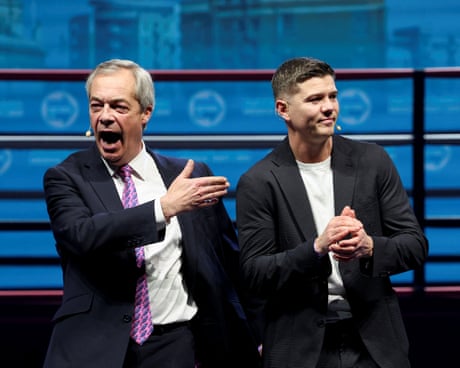
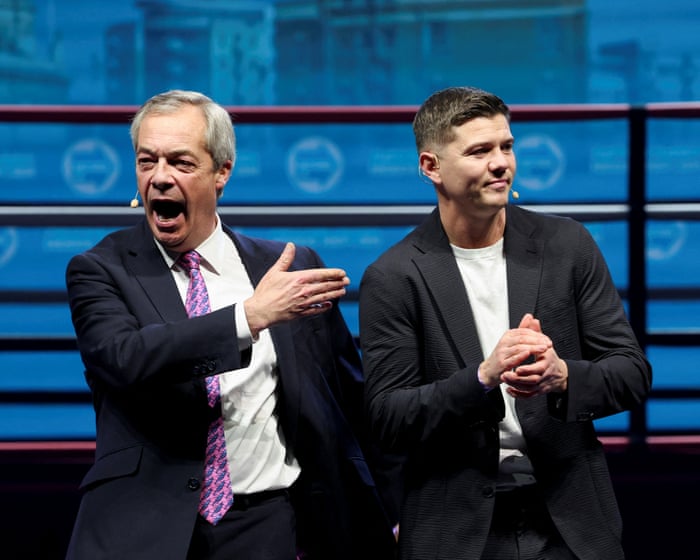
A Reform UK mayor is under police investigation for allegedly showing “naked and sexualised” images of himself to a female member of staff.
Luke Campbell, a former Olympic boxing champion and the mayor of Hull and East Yorkshire, is understood to have been questioned under caution by Humberside police earlier this month.
Scrutiny committee looks into financing of Manchester Life project as PM promises ‘full transparency’
A £55m loan to Manchester City’s Abu Dhabi owner will be investigated as part of a review into a fund for housing projects while Andy Burnham was mayor.
The prime minister has faced weeks of scrutiny over his links to Manchester City’s super-rich owners after the club was found guilty of boosting its income by £900m in a nine-year breach of financial rules.
Cabinet ministers are turning on Ed Miliband, accusing him of blocking AI investment to protect Net Zero – while families pay the price in lost jobs and holidays.
Walking through East Cleveland, Ohio, feels a touch like you've wandered onto the set of a postapocalyptic film noir. Grand, gilded homes announce themselves on neighborhood streets, some crowned with turrets, many with windows punched out like missing teeth. Often, no one is home, because no one lives there. It is safer than 1 percent of U.S. cities.
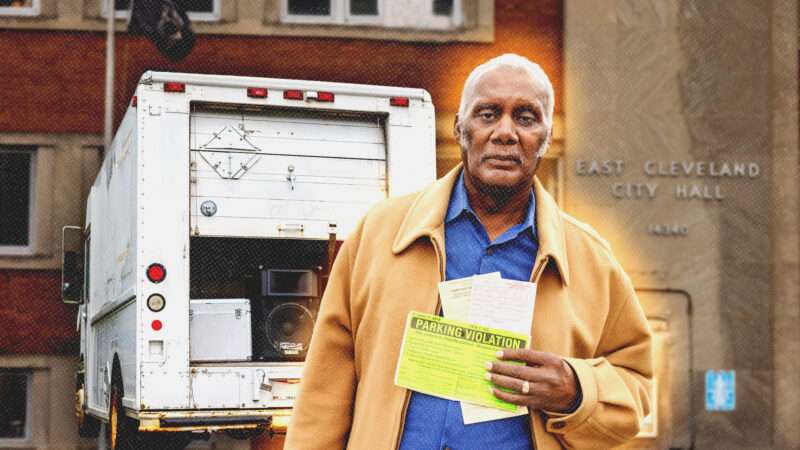
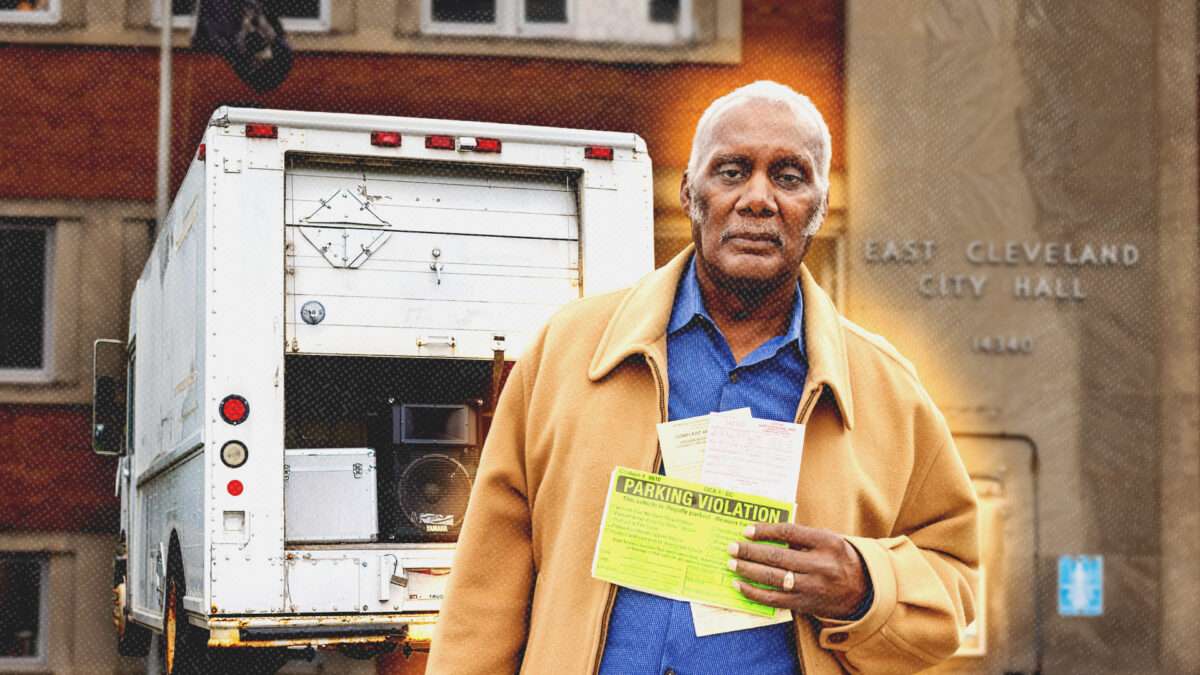
That question is not really a legal one, at least not in the most technical sense. But it is the driving force behind a thorny case a federal court recently resuscitated: Fambrough v. City of East Cleveland, a saga concerning a man whose vehicle became an obsessive target of the East Cleveland Police Department (ECPD) after he used it to campaign for a mayoral challenger.
Some of the facts are in dispute. But the basic gist is as follows: William Fambrough, long a politically engaged East Clevelander, campaigned for Juanita Gowdy—a challenger to then-Mayor Brandon King—by broadcasting messages around the city with his sound truck. That ultimately came to an end after law enforcement impounded the car, cited him for parking and noise violations, and prosecuted him for the latter.
Fambrough sued, alleging the complex legal odyssey set into motion over his step van amounted to First Amendment retaliation, an unreasonable seizure under the Fourth Amendment, and a violation of the 14th Amendment's proscription against selective enforcement. The U.S. Court of Appeals for the 6th Circuit rejected some of those claims. But it resurrected claims against King and his chief of staff, Michael Smedley—depriving them of qualified immunity, the legal doctrine that inoculates state and local government officials from facing lawsuits if their alleged misconduct was not "clearly established" as illegal in prior case law. It also revived Fambrough's retaliation claim against the city.
As the 6th Circuit summarizes: King "says he received a phone call from a resident who complained about Fambrough's sound truck and someone else's box truck being parked in a residential area," so he told someone to take care of it. Scott Gardner, then the city's chief of police, "was concerned about selectively enforcing" the parking ordinance—which prohibits parking a truck in front of residential property, except for loading or unloading—because it is indeed almost never enforced. This was the beginning of a long pursuit, which ultimately saw a swarm of officers dispatched to Fambrough's house in August 2021 to confiscate the vehicle, allegedly resulting in $6,000 in damage. Fambrough also had to pay $528 in fees to get the damaged truck back.
"All the attention City officials gave Fambrough struck Gardner as unusual," the 6th Circuit notes. "The mayor's office wasn't this attentive even in homicide cases. And considering that the City had around only 50 police officers at the time and had 'serious crime problems,' Gardner thought it was odd to devote this much attention to permitting and parking issues." Based on available data, East Cleveland's violent crime rate is 1,409 per 100,000 residents, about four times higher than the national average.
Yet Gardner ultimately got on board. Smedley phoned him on August 9 "extremely upset," according to Gardner, and told the police chief he was "incompetent" for failing to "take care of" Fambrough's sound truck. Smedley wanted the "utmost enforcement as possible." So Gardner sent an email. "Please, find this vehicle and tow it," he wrote to all of ECPD. "Cite the operator with disturbing the peace and loud music. Please contact me as soon as this is complete to claim a surprise." A surprise!
Police succeeded. "On its face, the email told officers to tow Fambrough's truck regardless of whether it was parked illegally," writes the 6th Circuit. "And the Noise Ordinance authorizes seizure only of 'the sound device used,' and only upon conviction. So Gardner's instruction to tow the truck wasn't authorized by municipal law." The court still held that the seizure did not violate the Fourth Amendment. It also gave Gardner qualified immunity, ruling it is not clearly established that someone who acts as a conduit for someone else's alleged retaliation—which here came from the mayor's office—is a "responsible party."
Heather McCollough, the city's assistant law director, subsequently prosecuted Fambrough for allegedly violating the noise ordinance. According to a sworn declaration from Fambrough's attorney, McCollough outlined some of Fambrough's offenses on a call: that he "made complaints about the police department" and filed "public records requests," among other issues. Notably, it is legal to do those things. McCollough was typically willing to resolve minor noise complaints, she added, but not so much in this case, because Fambrough needed to "stand down." (He ultimately pleaded no contest to disorderly conduct, a reduced charge.)
Institute for Justice
"Only after [Fambrough] began supporting Gowdy's election was the weight of the law thrown against him," the 6th Circuit writes in its analysis of potential municipal wrongdoing. "And the City's police officers didn't uncover Fambrough's violations of their own accord. Instead, City decisionmakers sent them to Fambrough's home each time to enforce the Parking Ordinance. So the timing of the parking-related enforcement actions supports an inference that Fambrough's political speech was the motivating factor—as does the fact that the City rarely enforced the Parking Ordinance against anyone else despite having plenty of opportunities to do so." Incredibly, a photo of another truck can be seen down the street on the same day law enforcement came to fetch Fambrough's vehicle. (The law also includes pickup trucks, so the city arguably has a lot of enforcement to do if it sincerely believes this law matters.)
King allegedly set the chain of events into motion while Smedley took the driver's seat. "Smedley's pattern of incessantly calling and berating Gardner," the 6th Circuit adds, "clashes with the idea that Smedley was chiefly concerned with minor permitting, noise, or parking issues." After all, if that were true, why would the problem appear to begin and end with one person?
Over five years have passed since the ordeal. Although Fambrough is now potentially closer to getting in front of a jury, he has yet to actually state his case, still burdened by the onerous process government actors invoke to kill such suits before the community can assess the merits. King, meanwhile, won that election. He left office in May 2025, however, after he was found guilty of one count of theft in office, four counts of having an unlawful interest in a public contract, three counts of representation by public official or employee, one count of filing a false disclosure statement, and one count of soliciting improper compensation.
From a press release last month, just posted on Westlaw:
N.C. Detective Agency, a Durham-based security company, will pay $65,231 in compensatory damages and back pay, and take other corrective actions to voluntarily resolve a religious discrimination investigation by the U.S. Equal Employment Opportunity Commission (EEOC), the federal agency announced today.
The EEOC's investigation found reasonable cause to believe that an employee requested to be excused from work due to a Muslim religious holiday, but the request was denied. The company was aware of the employee's need for a religious accommodation but did not engage in the legally required interactive process, and instead terminated her in June 2025 when she did not report for duty.
And from another press release two weeks later, also just posted on Westlaw:
Reynolds IGA Foodliner, Inc., owner and operator of a chain of grocery stores, will pay $65,000 and provide other equitable relief to settle a religious discrimination and retaliation lawsuit filed by the U.S. Equal Employment Opportunity Commission (EEOC), the federal agency announced today.
According to the suit, shortly after she was hired as a deli clerk at the Piggly Wiggly store in Hazlehurst, Georgia, the employee requested Sundays off to observe her Sabbath. The employee's supervisor denied the request, claiming that, if the store gave the employee Sundays off, it would have to do the same for all other employees. The employee continued to request the accommodation, and the company fired her in January 2025.
More from the second press release:
"Employers cannot deny religious accommodation requests simply for fear of upsetting other employees," said Marcus G. Keegan, regional attorney for the EEOC's Atlanta District. "The EEOC remains committed to enforcing federal anti-discrimination law and protecting employees' rights to religious freedom."
Darrell E. Graham, director of the EEOC's Atlanta District, said, "Employers must thoughtfully consider each request for religious accommodation on an individual, case-by-case basis and otherwise make good-faith efforts to accommodate their employees' religious beliefs. Employers must be aware of their obligations under federal law to provide reasonable religious accommodations absent undue hardship."
Finally, from a third press release from last month (it was published in between the first two, but was again just posted on Westlaw); this one involves a lawsuit and not a settlement:
Blue Bell Creameries, Inc., a Brenham, Texas-based frozen snack manufacturer and distributor with a production facility in Sylacauga, Alabama, unlawfully terminated a Jewish body shop technician soon after he requested a beard‑related religious accommodation, the U.S. Equal Employment Opportunity Commission (EEOC) charged in a lawsuit announced today.
Even supporters of bans on religious discrimination by private employers might debate whether employers should be required to give religious exemptions from generally applicable rules (exemptions that could themselves be seen as discrimination in favor of religious observers). But Congress has indeed mandated such exemptions: Title VII of the Civil Rights Act, as amended in 1972, generally requires employers to accommodate religious objectors' requests for exemptions from generally applicable work rules, unless doing so would pose an "undue hardship" for the employer.
That extends to time off for religious holidays: Indeed, the leading recent case on the subject, Groff v. DeJoy, involved a Christian employee's request for an exemption from having to work Sundays. And of course it extends, as it must, to all religions.
Andy Burnham's Government has been accused of waging a £500 million "class war" on wealthy councils, slashing funding from rural Tory and Lib Dem areas to bankroll urban Labour Party strongholds.
In recent years, one of the predominant policy initiatives of the progressive left has been raising the minimum wage in locales around the country. At the same time, left-leaning politicians have sought the elimination of what's known as the tip credit, which allows employers to pay restaurant servers and other tipped employees a lower hourly base wage that they then bolster with gratuities.
Just a few years into this experiment, however, policymakers are showing signs of an about-face on the tip credit's abolition as they grapple with the unfortunate, and predictable, economic results.
In 2022, Washington, D.C., made news headlines when voters passed Initiative 82. As originally designed, it would have repealed the tip credit and required servers to be paid the District's full statutory minimum wage by 2027. (D.C.'s minimum wage was $16.10 per hour in 2022, but has since risen to $18.40 due to inflation indexation.) Prior to Initiative 82, D.C. servers could be paid a $5.35 tipped wage, so long as they earned enough tips to make up the difference between the lower tipped wage and the higher traditional minimum wage.
D.C.'s Initiative 82 was just the beginning. One Fair Wage, a progressive group that lobbies against subminimum wages, quarterbacked an all-out push to eliminate the tip credit in jurisdictions across America. Chicago became the second prominent city to follow suit. States like New York, Connecticut, and Illinois also quickly saw legislation introduced to eliminate the tip credit at a statewide level. (Apart from this recent wave, a small handful of American states—including California, Oregon, and Alaska—have long operated without a tip credit).
But just when it seemed like momentum against the tip credit had reached its apex, progressive politicians started to see the writing on the wall. In the aftermath of the tip credit's repeal, D.C. saw a close to 5 percent decline in full-service restaurant jobs. Tipped worker earnings also dropped by just under $12 million—likely a result, at least in part, of restaurants reducing hours for staff in the face of higher labor costs. At the same time, many D.C. restaurants began implementing service fees or so-called auto-gratuity policies that added mandatory 10-20 percent charges onto customers' bills.
Mugged by this economic reality, D.C. Mayor Muriel Bowser called for the full repeal of Initiative 82. Ultimately, the D.C. Council settled for a partial repeal in 2025, maintaining at least some semblance of a tipped wage that sits below the traditional minimum wage into the years ahead (although the tipped wage eventually rises to 75 percent of the traditional wage by 2034). This was a familiar story: The council had previously repealed Initiative 77, a near-identical attempt to abolish the tipped wage that voters passed in 2018.
After Chicago moved to eliminate the tip credit, the Illinois Restaurant Association found that 89 percent of Windy City restaurants raised menu prices; another 79 percent responded by reducing worker hours. Again bowing to economic reality, the progressive Chicago City Council voted to freeze the tip credit's planned elimination, only to see the effort vetoed by Mayor Brandon Johnson. Eventually, a compromise was brokered to at least pause the tip credit at its current level for two years—which punts the issue until after Johnson stands for election again, allowing a potential successor to endorse a more lasting reversal.
In Michigan, a 2024 state supreme court ruling set the tip credit on the path toward elimination by 2030. But state lawmakers intervened last year, deciding to maintain a 50 percent tip credit in perpetuity after 2031. Notably, Michigan is currently governed by a Democratic trifecta in the governorship and both houses of the Legislature. The tip credit's revival garnered key support from Republican lawmakers to pass in a bipartisan fashion, before being signed into law by Democratic Gov. Gretchen Whitmer.
While progressive efforts to eliminate the tip credit may be motivated by an earnest desire to ensure waiters are paid more, the math isn't that simple. Requiring a server to be paid a $16 traditional minimum wage—up from a $5 tipped wage—might appear to raise their pay on paper. But this fails to consider several important factors.
Under our "No Taxes on Tips" new normal, raising the minimum wage for servers could lead to a partial reduction in tips, which under certain scenarios can result in less take-home pay for waiters once the taxman takes his cut. If more server earnings come in the form of "auto-gratuity" policies—which are treated as taxed wages under the law—then the tax repercussions may grow even grimmer.
But more broadly, these laws attempt to subvert basic economics. As of 2025, Bureau of Labor Statistics data show that D.C. restaurants shed over 1,600 jobs in aftermath of Initiative 82; meanwhile, between 2022 and 2025, restaurant job growth in the District declined by more than 8 percent. This is just one example. The fallout is the inevitable result of restaurants responding to labor costs that suddenly skyrocket, forcing establishments to cut worker hours and sometimes transition to quick-service models that require less hourly staff. And that's to say nothing of the diners who bear the cost with higher prices and new service fees.
"We're watching a beloved bar back, a beloved busser, a dishwasher have their jobs taken away," D.C. restaurant worker Valerie Graham toldReason in 2024. "Not because our owner-operator is an evil billionaire but because they're an independent business owner who had to make some business decisions and there's a callousness with which our industry is talked about."
To be sure, the tip credit has only survived in modified and reduced form in D.C., Chicago, and Michigan—and in the case of Chicago, the about-face is only temporary. But the partial reversals show the tip credit's elimination is not a foregone conclusion. Economic reality continues to rear its head.
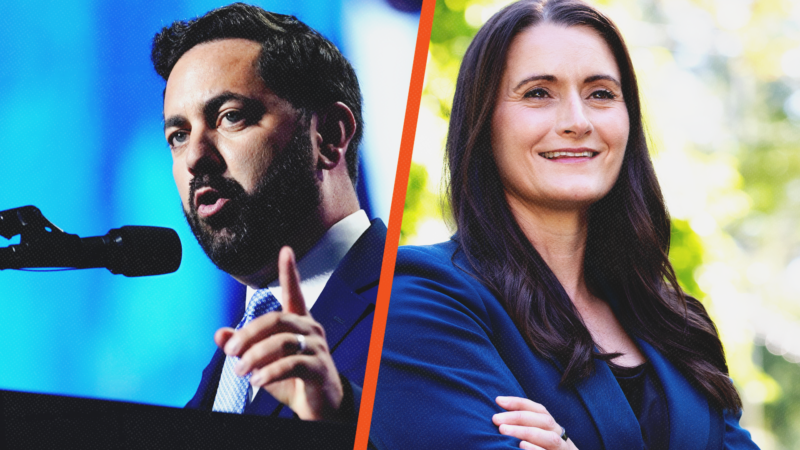
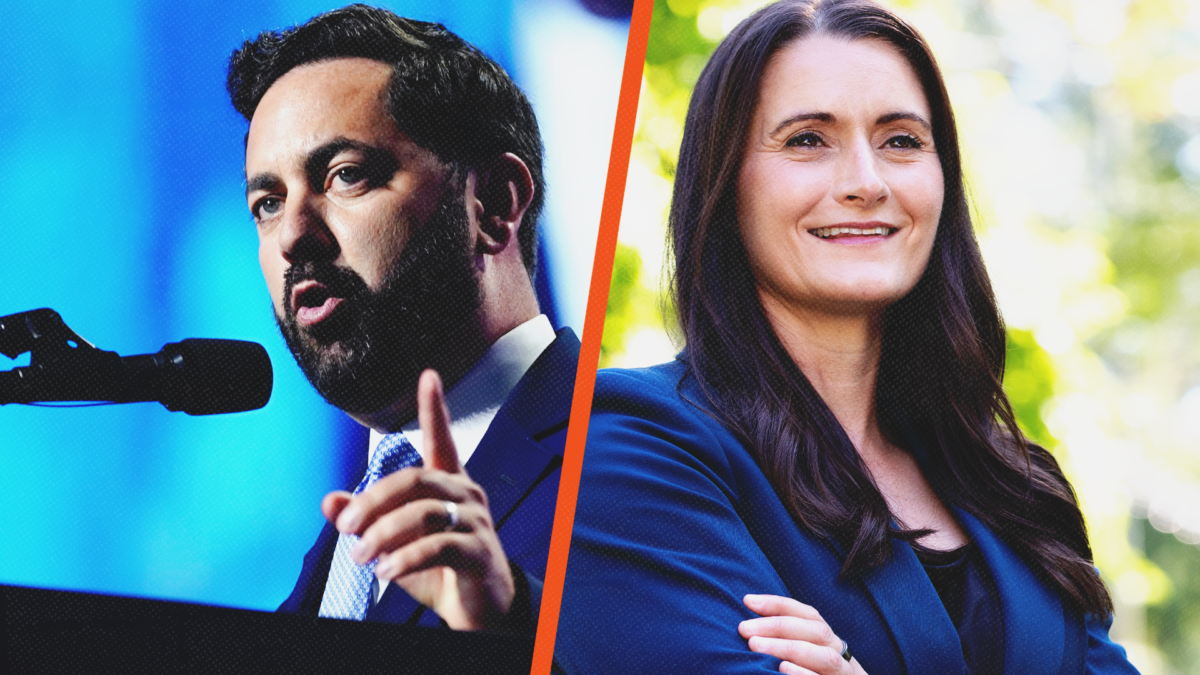
The Democratic Socialists of America (DSA) candidates running for the House of Representatives and endorsed by NYC Mayor Zohran Mamdani are all but guaranteed to win their general elections this November, but that does not mean the midterm drama is over in New York. In the state's 17th congressional district, which includes the lower Hudson Valley, Democratic challenger Cait Conley, a combat veteran who served on the Biden administration's National Security Council, could unseat incumbent Republican congressman Mike Lawler in one of the most consequential races of the midterms.
The highly contested purple district voted for former Vice President Kamala Harris in the 2024 election while reelecting Lawler for his second term. Now, Lawler is attempting to win a third term as support for President Donald Trump wanes ahead of the midterms. As of Friday, The Cook Political Report lists the race, which could determine control of the House, as a toss-up.
If elected, Conley would have far more in common with the "Badass Women" coalition of security state and military veterans than with DSA types (think more Sen. Elissa Slotkin from Michigan than Darializa Avila Chevalier). As Judge Street Journal's Timmy Facciolanotes, "Conley's candidacy is testing the viability of a tactful centrism that rebukes left-wing positions like abolishing ICE or restricting weapon shipments to Israel." Lawler is also vying for moderates, pitching himself as "one of the most bipartisan members of Congress" and emphasizing his willingness to break with Trump occasionally while still welcoming Trump's support.
While Lawler and Conley certainly are not pure MAGA acolytes or DSA members, both have leaned into a tech-critical position, much like that of more radical populists like Lina Khan or Steve Bannon, revealing how pervasive anti-tech sentiment has become in mainstream politics.
This tech skepticism was on full display during an October 14 debate, when each candidate made the case for why they were the most equipped to regulate AI, insisting that the industry needs guardrails.
Conley said members of Congress do not want to regulate AI because "they want to look out for their billionaire and trillionaire backers like Elon Musk, who is pouring over $260 million into this midterm election." She then added that Musk backed Lawler in his 2024 race.
Lawler then accused Conley, who previously consulted for Primer AI, of being "the AI candidate for the AI industry."
While Lawler and Conley disagree on specific data center regulations (Conley supports Democratic Gov. Kathy Hochul's data center moratorium while Lawler supports local zoning control over data centers), neither wants to pitch themselves as an explicitly pro-data center candidate. During the debate, Conley claimed that, "On Mike Lawler's watch there have been five data centers built in Rockland County." Lawler has said that he had no say in the decision to build the data centers, and during the debate, he pointed out that the facilities were built for financial services. Lawler also attempted to attack Conley over data centers, slamming her in an ad for saying "we need data centers." Regardless of the candidates' specific policies on data centers, their attacks on one another demonstrate that cheerleading hyperscale data center development is a political liability. In their district, data center has presumably become a dirty term.
The candidates' tech-skeptical rhetoric did not end with unchecked data center development. After the debate, Reason asked both candidates about their positions on age-verification laws for social media and AI, since such regulations raise significant privacy and censorship concerns by age-gating the internet. Unsurprisingly, both Lawler, who votedfor the controversial KIDS Act, and Conley, who has proposed stricter age verification for AI tools, parroted platitudes about why such online safety regulations are necessary to protect children.
"We have watched how social media is literally hurting the mental health of children," Conley told Reason. "And when you talk about the power of AI and what that power could do, we have to regulate this."
Lawler gave a similar response, telling Reason that he respects free speech but that protecting children "is paramount."
This bipartisan consensus over social media regulation has long been brewing in Congress. The mainstream political conversations about AI and data centers, however, are relatively new this midterm election cycle. And it appears both Lawler and Conley have figured out which way Americans' sentiment toward AI is leaning, and they have waged their campaigns accordingly.

 Login