I've spent the last three years living out of suitcases and housesitting from Washington to Mexico, trying to figure out where I want to retire.
Amber Campbell
At 55, I thought I would have already figured out where I want to retire in the next few years.
Instead, I've been living out of suitcases and housesitting in different places to see what I like.
I still don't know where I will retire, but I do have a much better idea of what I want — and don't.
I always thought I'd be settled somewhere for good by age 55, with a comfortable home, established garden, and chest freezer in the garage.
But after growing up in the San Francisco Bay Area, raising my kids in Seattle, and becoming an empty nester, I realized I had no idea where I wanted to settle down.
For the first time in more than 20 years, I suddenly had the freedom to choose where I wanted to live.
So at 52, I started housesitting in exchange for places to stay so I could travel without depleting my savings. I quickly realized how much I enjoyed the nomadic lifestyle and how this gave me the opportunity to test out places I might eventually want to live in.
After a few months, I liked it so much that I gave away almost everything I owned, put the rest in storage, and decided to do it full-time.
That was almost three years ago. Since then, I've lived in dozens of cities, towns, and remote islands, from northern Washington to the southeastern coast of Mexico's Baja California peninsula.
Housesitting has changed my mind about what I thought I wanted
Living in so many different places for several weeks or even months at a time helped me realize that how I want to live is just as important as where I want to live.
Amber Campbell
I typically stay in each home for two weeks to three months at a time, which allows me to get to know a new place without signing a lease, buying a house, or committing to a community.
Instead, I chat with locals, visit the library and grocery store, explore nearby nature trails, and try to imagine what it would be like to live there.
I ask myself a lot of questions: Can I tolerate this climate? Do I feel able to connect with this community? Could I live without whatever thing this place might be missing … which is sometimes as simple as my beloved Trader Joe's?
Throughout my stays, I've learned new things about myself and what I really want.
For example, I'd long pictured myself settling in a city since I've spent most of my life in major metropolitan areas.
So, I was thrilled to book a housesitting job right across the street from my old high school in San Francisco. I couldn't wait to walk the same streets I did in my youth and revisit my old haunts.
But the nostalgia wore off quickly, and a $105 street-cleaning ticket reminded me of the hassles of city life. I realized that a noisy, crowded, expensive city isn't where I want to settle after all.
These days, less traffic, more green space, and a slower pace feel more like my style.
I also thought I needed convenience and assumed I'd want to stay in the US, but housesitting changed my mind.
Amber Campbell
After that stint in the city, I went to the other extreme and booked a multi-week housesit on a remote Pacific Northwest island where the closest grocery store was a ferry ride away — long enough to require ice packs and a cooler to get my frozen food home before it defrosted.
At first, I couldn't imagine staying there for more than a few weeks, but I quickly fell in love with the solitude and have returned several times.
I realized that being surrounded by water, going days without talking to another person, hearing owls hoot at night, and watching a mother deer and her fawn wander across the yard made the extra effort of island life worthwhile.
I was willing to plan errands around the ferry schedule and give up some of the conveniences I'd always taken for granted for that kind of peace.
Now, I'm rethinking what it means to settle down — and if I'd even stay in the US
After three years and dozens of housesitting jobs, I still don't know where I want to retire — but I do have a much better idea of how I want to do it.
Amber Campbell
I'd also never even considered moving abroad until I booked a five-week housesitting gig for an American woman who had retired in La Paz, Mexico.
I felt inspired by my client's willingness to give up familiar comforts and conveniences to risk starting over in a new country in search of the life she wanted.
Although I'm not sure Mexico is where I want to settle, I loved my time in the Sonoran Desert and haven't ruled out retiring outside of the US. This experience helped me learn what living abroad was really like and realize I'm more capable of making that jump than I ever imagined if it's what I ultimately choose.
After trying out more than 50 locations in three years, I still don't know where I eventually want to retire. But I know I want to be somewhere I can walk in nature, enjoy some solitude without feeling isolated, and engage with a community when I'm ready for company.
Above all, I'm searching for a place that makes me feel at home — even when I'm visiting for the first time.
In 19th-century Munich, a woman with no formal banking experience began promising ordinary people extraordinary returns on their savings. Workers, servants, craftsmen and farmers flocked to her door, carrying the money they had spent years accumulating. Some mortgaged their homes or sold their land to take advantage of her generosity. For a time, the money flowed so freely that her business appeared almost invincible.
The woman was Adele Spitzeder, a former actress who became one of the most notorious financial swindlers in 19th-century Germany. Her private banking enterprise, popularly known as the Dachauer Bank, promised returns of as much as 10 per cent a month. But behind the apparent prosperity lay a simple deception: much of the money paid to earlier investors came not from profitable investments, but from the deposits of newcomers.
Some of my favorite lesser-known South Korean cities are Suwon, Incheon, and Gyeongju.
I was born in South Korea and moved to the United States when I was 5 years old. I've traveled back almost every year since.
Usually, when people ask me for South Korean travel recommendations, what they really want are ideas for things to do in Seoul.
I can understand why tourists flock to the capital city of South Korea: Seoul has culture, technology, tons of entertainment, and amazing fashion and cuisine.
However, if you ask me, you're missing out if you don't visit some of the other, lesser-known cities that contribute to South Korea's heartbeat.
Here are four of my favorite cities to visit in South Korea that aren't Seoul.
I always go the distance for Busan
I love visiting Busan during the fall.
Justine Lee
About four hours south of Seoul lies Busan. Growing up, my family visited this city over the summer to swim, soak up the sun, and eat incredibly fresh seafood.
You don't have to treat Busan exclusively as a warm-weather getaway, though: My favorite time to visit Busan is actually in the fall, when the days are sunny and the nights are breezy with sea-salt air.
My favorite destination in Busan is Gamcheon Culture Village, a steep slope dotted with hundreds of colorfully painted homes.
During the Korean War, refugees first settled in this area. Later, Gamcheon was restored and enhanced with brightly colored exterior paint to attract tourism.
Today, Gamcheon Village stands as a beloved landmark in Busan, where visitors can get lost in the twisted alleyways and enjoy stunning views overlooking the hilly scenery.
A trip to Busan is incomplete without a visit to Haeundae Beach.
35007/Getty Images
I also strongly recommend that anyone who visits Busan dedicate one morning to waking up early and watching the sunrise over Haeundae Beach.
In my opinion, the view alone can wash away any negative feelings, even for a brief moment.
When you're in Busan, don't forget to check out the Jagalchi Market for excellent fish and the Nampo-dong Food Alley for the best street food.
Suwon is a chill day trip from Seoul
Hwaseong Fortress is a must-visit.
sookkyung Han/Getty Images
If you want to stay in Seoul for most of your trip but crave an easy day trip with a laid-back vibe, Suwon is your answer. Whenever I take the hour-and-a-half-long bus trip, excitement brews in my stomach.
The main attraction of this very chill city is the Hwaseong Fortress, a towering stone-and-brick fortress that passes through the center of Suwon. It was built in the 18th century to protect the city, and in 1997, it was designated a UNESCO World Heritage site.
I love to walk the length of the fortress — because of the lack of high-rise buildings, it's an excellent way to take in the city's scenery, which includes a mix of traditional houses, cozy little cottages, and low-rise industrial buildings.
Running along the length of the historical site, the city has many unassuming, cute cafés where you can get delicious coffee drinks and desserts.
It's nice to sit down outside one of them and lose track of time, soaking up the beautiful street art that paints the alleyways of Suwon.
Gyeongju is rich with history
Gyeongju has tons of beauty and history.
Sanghwan Kim/Getty Images
Once the capital of the ancient Silla Kingdom, Gyeongju is filled with landmarks that bring the country's deep history to life.
From the grand Bulguksa Temple and the mystical Seokguram Grotto to the ancient royal tombs scattered throughout Tumuli Park, the city offers a rare glimpse into Korea's royal past and Buddhist origins.
Strolling through Gyeongju, especially in the later hours of the day, immerses you in a peaceful blend of quiet ponds and lantern-lit walkways.
You can't leave Gyeongju without trying Hwangnam-ppang, a small soft pastry filled with sweet red-bean filling. This treat is a local specialty of Gyeongju — so much so that locals and visitors refer to it as Gyeongju bread.
You can find this treat at various food shops and vendors throughout the city.
Incheon is more than just an airport hub
The food in Incheon is unforgettable.
Justine Lee
Anyone who flies into South Korea will instantly recognize Incheon, at least by name. It is home to the country's largest international airport.
Long before the airport's creation in 2001, though, there was the Incheon port through which goods from China arrived and were sold.
The port also paved the way for the establishment of Incheon's Chinatown, where the blend of Chinese and Korean flavors endures in the neighborhood's small slew of standout restaurants.
I recommend taking a walk through the streets and alleyways of the neighborhood while munching on street food. I'm personally partial to the giant fried dumplings and tanghulu, or skewers of sugar-coated fruit, that I've enjoyed there.
If you have a chance, enjoy a sit-down meal of jjajangmyeon, a Chinese-Korean black bean noodle dish, and soak up some of the bustling area's history and culture.
This story was originally published on December 24, 2025, and most recently updated on October 19, 2026.
“As a child, I thought of the burrito as something predictable, filling, and reliable. It would be years before I saw it as a source of political conviction; something that once split my family’s loyalty between their hungry children and a revolutionary cause.” In this essay at Orion, Victoria Blanco writes about her Abuelita, whose family had owned a burrería in downtown Juárez during the Mexican Revolution, and how she worked hard there through childhood, making burritos for Pancho Villa’s troops—an army fighting for a better life for the next generation. “The food we ate was built for movement,” she writes, “the same way we were.” Blanco reflects on the burrito as a symbol resistance, the borderland, and belonging.
I found the unspoken parts of Abuelita’s childhood when I was working in a university archive as a student, examining photographs no one in my family had ever seen. One image stopped me completely: a rooftop terrace at the Paso del Norte hotel, where well-dressed Americans held cocktails and binoculars, watching the war across the river as though it were a form of entertainment. On the other side of that same river—a river with two names, Río Bravo on one bank, Rio Grande on the other—men were falling from gunfire while children went without food so that revolutionaries could have the sustenance they needed to keep fighting. I sat with that photograph for a long time, thinking about my abuelita, a girl somewhere in that city while Americans sipped cocktails and watched her world from a hotel roof.
The richest countries climbed to prosperity by methods they now forbid everyone else to use. Hamilton, List, Carey and Polanyi, four economists explained why those methods work and why abandoning them ends badly. There is a story the world’s wealthiest capitals love to tell about themselves. Prosperity, it goes, is the reward for opening your […]
Elizabeth Holmes’ husband is a major figure in Nathan Fielder’s new documentary. But who is Billy Evans—and is he really working on a second blood-testing company?
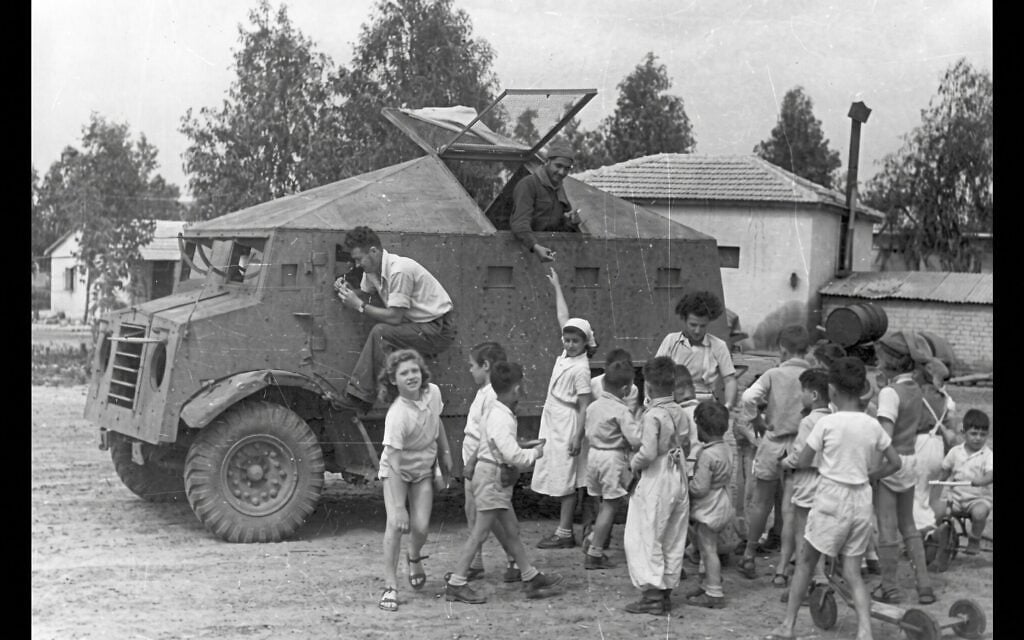
Named for a Warsaw Ghetto Uprising hero, Kibbutz Yad Mordechai embodies Jewish resistance. From 1948 to Oct 7, 2023, it rebuilds anew, a testament to resilience, hope, and renewal.
Working remotely on an Amtrak train wasn't easy, but I would do it again.
Laura Gio Carroll
This summer, I took a four-day Amtrak trip with my spouse, and worked remotely the entire journey.
I loved working in the café car while taking in views of the Mississippi River and the Great Plains.
Even though the internet wasn't reliable, it was a great experience that I can't wait to do again.
This summer, my spouse and I decided to take the longest Amtrak trip we've ever taken — three trains from Washington, DC, to Vancouver over four days.
My partner, who is a teacher, had a break between the school year and the summer program, so this adventure was the perfect excuse to relax, disconnect from the world, and enjoy the train's views. That was, unfortunately, not the case for me.
Since I have an office job with limited vacation time, I decided I would work remotely throughout the entire trip. Even though I had my boss's permission to work on the train and had packed all my essentials, I still wondered how successful this endeavor would be.
Turns out, it was more challenging than I anticipated, but still worth the hassle.
I made sure to prepare for any WiFi outages and pack accordingly.
Laura Gio Carroll
Before the trip, I researched whether the trains would have WiFi, but found that it could vary by route.
Since I wasn't sure how reliable my internet options would be on board, I made sure to download the most important documents onto my computer instead of just relying on the cloud. This way, even if there was an unstable connection, I'd still be able to access them.
Additionally, I made sure to have my phone's hotspot at the ready for whenever there wasn't WiFi on the train.
And just as an extra precaution, I made a point of scheduling any important calls for either before or after our train rides, so that I wouldn't risk losing signal while speaking with my team.
To prevent any other hiccups, I packed everything I could think of that I might need: my work laptop, my portable monitor, all the appropriate cords and chargers, and my planner for anything I needed to do on paper.
The roomette's privacy was great, but it didn't have enough outlets.
Laura Gio Carroll
On two of our three train rides, we booked a roomette, a small bedroom with two seats facing each other that would convert into bunks at night.
The internet was spotty in there, but I was still able to wrap up the last emails of the day without any problems.
On the first train ride from DC to Chicago, the roomette had two power outlets, but on our journey from Chicago to Seattle, it had only one — forcing my spouse and me to take turns charging our devices.
I loved working in the café car.
Laura Gio Carroll
Sometimes, the roomette felt pretty cramped, so I took my work setup to the café car as often as I could.
Not only was there plenty of room for me to spread out with my laptop and second screen, but I could also witness amazing views — like the Mississippi River or the Great Plains — from the window.
However, since there weren't any power outlets in the café car, I was only able to be productive for as long as my computer and phone batteries lasted, which was about 2 hours. Then, once everything had run out of power, I had to return to the roomette and plug everything in, which disrupted my workflow.
I didn't think about how my hotspot wouldn't be reliable in rural areas.
Laura Gio Carroll
Since there was only stable WiFi on one of our three trains, I was relying heavily on my hotspot for most of the trip. But by the third day, the cellular signal kept getting spotty as we entered more rural areas of the country, making my hotspot less reliable.
Because of the weak connection, I couldn't access my team's folders, so I had to email my boss a report instead of uploading it to SharePoint.
I panicked a little, since we're not supposed to save documents directly to our computers, but this was my only option without a consistent signal.
When we sat in coach, I could barely get any work done.
Laura Gio Carroll
For the last leg of our trip from Seattle to Vancouver, we sat in coach instead of reserving a roomette.
We were able to sit at a small table, but it was too cramped to take out my laptop, and there wasn't any space to work in my seat either. This was the only portion of the trip where it was impossible to do any work, and it really made me miss my roomette.
Even though working on the train was challenging, the station lounges were perfect.
Laura Gio Carroll
Whenever we had train delays, I would work at the Amtrak stations, which were great places to be productive.
The station in DC had a place to stash our suitcases, decent WiFi, and various tables and chairs. The one in Chicago was also a great size, was well-lit, and had a strong internet connection and plenty of seating.
Similarly, the upper level of the Amtrak station in Seattle had a small art gallery and sitting area — a perfectly comfortable space for me to do my job.
It wasn't the easiest way to work, but I'd do it again.
Laura Gio Carroll
Although working on these trains wasn't always smooth, I still had a great experience and would definitely love to do it again.
Next time, though, I would pack a power bank to charge my phone and monitor without needing an outlet, and overprepare for a lack of WiFi.
Overall, even though working remotely on Amtrak trains had its challenges, I loved the stunning views and the chance to see new sights rather than just sitting at my desk.
Business Insider reached out to Amtrak for comment.
I loved living in a 500-square-foot apartment with my family, but moving to a bigger home changed my perspective.
Courtesy of Alona Vasylieva
I enjoyed living in a small, one-bedroom apartment with my family of three for years.
Once we moved to a house more than triple the size, I totally changed my minimalist mindset.
Now that we live in a bigger space, I can't imagine going back to living small or minimally.
When my husband and I bought our apartment in Kyiv back in 2017, we were thrilled to finally have a family nest of our own.
It was a cozy, 500-square-foot place with one bedroom, and we meticulously planned to optimize every inch of it. Our kitchen table doubled as my workspace, and our living room couch became the guest bed whenever family stayed over.
Hosting required pure creative problem-solving and, with limited seating around our small table, I'd sometimes feed guests in shifts. It was chaotic at times, but I didn't mind.
After our son was born, bright plastic toys, endless boxes of diapers, and bulky baby gear started claiming every free corner of our apartment. With the three of us packed into a single bedroom, finding space was a daily puzzle, but we made it work.
Surprisingly, living so close together didn't feel limited back then — it felt intimate, cozy, and deeply fulfilling. Then COVID-19 hit.
Spending so much time indoors made me feel isolated, and for the first time, I began dreaming about more living space. But we barely had time to figure things out before life took a drastic turn: When the war in Ukraine escalated in 2022, we made the heavy, life-changing decision to relocate to Canada.
A few months after moving, we began renting a two-bedroom house, where we currently reside. At 1,700 square feet, it wasn't considered especially large by local standards, but to us, it felt vast.
It didn't take long to adjust to having more space — and to quickly fill it up
It's been nice having room for the gadgets and tools we've wanted to buy.
Courtesy of Alona Vasylieva
At first, our house seemed almost too large for just three people.
For the first time, we had two bedrooms and a basement, which instantly doubled our usable space at a ground level.
After years of apartment living, though, the sheer thought of having so much space to keep clean felt exhausting. However, it didn't take long to change my mind.
It turns out that when both you and your belongings finally have room to breathe — and you've got a trusty robot vacuum doing the heavy lifting — life shines in completely different colors.
It didn't take long to fill up our space.
Courtesy of Alona Vasylieva
It's also been wonderful to have more room to host, from a dedicated guest space (in the basement) to a table big enough to actually seat larger groups.
In time, we began to pick up local habits and traditions, too. Many of our neighbors in Canada decorate for different holidays, so we started joining in.
And of course, seasonal decor needs a place to be stored when it's not in use — and since we now had a full basement, I didn't feel super limited with what I could buy.
A lot of neighbors also had an extra stand-alone freezer in their homes. It seemed ridiculous for our family of three to also get one … until my first Costco run.
I caved when I realized I needed a place for all those bulk-sized boxes of frozen food. In our bigger home, large grocery hauls began feeling normal.
Large grocery hauls started to feel normal, especially because we now had space for all the groceries.
Courtesy of Alona Vasylieva
Gradually, I felt a shift in my identity: I was no longer the strict minimalist I used to be.
In Kyiv, whenever my husband wanted a new kitchen gadget or a giant toy truck for our son, I was firm about saying no. We simply didn't have room for "extra." I took pride in keeping our home completely clutter-free.
But between the extra space and North American convenience, I'd completely changed my minimalist rules. Now, saying "yes" to big additions — like the bulky food dehydrator I'd been eyeing for drying fruits and vegetables, or the roomy couch we'd dreamed of for years — felt easy.
I didn't need to worry about where something would be stored or if it'd take up too much space: We finally had the room to bring those dreams home.
Ultimately, my family and I have thrived with more room to breathe
It turned out that having a larger home wasn't about holding more things, but giving our family room to breathe
Courtesy of Alona Vasylieva
Over time, I realized this shift was much deeper than just being able to shop more and store more stuff. In a bigger space, our family had room to breathe and grow.
In Kyiv, our whole routine and my minimalist mindset felt shaped by how tight everything felt, but here, the extra room opened up a whole new chapter.
I've become more outgoing, more relaxed, and genuinely excited to gather people together. Our home has turned into a place for hosting friends, cooking weekend dinners, and laughing over backyard barbecues.
Living small was a beautiful, intimate part of my life that I will always hold close to my heart. It taught me intentionality and gratitude.
However, creating space to thrive, host, and watch my family grow has completely transformed my definition of home — now, going back to 500 square feet no longer feels like an option.
In her revelatory work The Cultural Cold War, the late British author was the first to shine so unblinking a light on the sprawl of the C.I.A.’s cultural interventions.
Frances Stonor Saunders was fond of epigraphs (as am I). At the front of The Cultural Cold War: The C.I.A. and the World of Arts and Letters (The New Press, 1999), the British journalist, documentarian and author quotes some lines from Dante’s Inferno, the last of which is, “Before my age was full, I went astray.”
I had not lived half my life when I succumbed to complacency and moral blindness: This is my reading of the line from Canto XV. And how fitting it is at the start of Saunders’ exhaustively researched account of how the Central Intelligence Agency, its tentacles reaching into every corner of American culture, did so much to lead our republic into what the Italian poet would call its selva oscura, its dark wood —the state of lostness America has never since escaped.
Frances Stonor Saunders died on the last day of August, having suffered from a virulent strain of brain cancer. She was a mere 60. We had a few acquaintances in common, but I never met her. It was nonetheless something like losing a friend when, just this past week, I heard of her death. And so this brief appreciation.
The Cultural Cold War made Stonor Saunders’ reputation. It took a prominent place on my shelf of Cold War books as soon as it was published. At last the curtain parted on the insidious use the C.I.A. made, or attempted to make, of painters, poets, playwrights, novelists, editors, jazz musicians, singers, dancers, actors, scholars and other cultural figures in its long-running operation to promote the appeal of American life as against the Soviet Union and altogether the postwar socialist alternative.
This was an immense “soft power” operation avant la lettre — before we had the term. One could also call it an early variant of the “cognitive warfare” to which we are now incessantly subjected, the primary object of which was to keep postwar Europe from swinging leftward, as the French, the Italians and others were poised to do.
From Saunders’s Introduction:
“Drawing on an extensive, highly influential network of intelligence personnel, political strategists, the corporate establishment, and the old school Ivy League universities, the incipient CIA started, from 1947, to build a ‘consortium’ whose double task was to inoculate the world against the contagion of Communism and to ease the passage of American foreign policy abroad. The result was a remarkably tight network of people who worked alongside the Agency… Whether they liked it or not, whether they knew it or not, there were few writers, poets, artists, historians, scientists, or critics in postwar Europe whose names were not in some way linked to this covert enterprise.”
Who Was Who & Who Stood Where
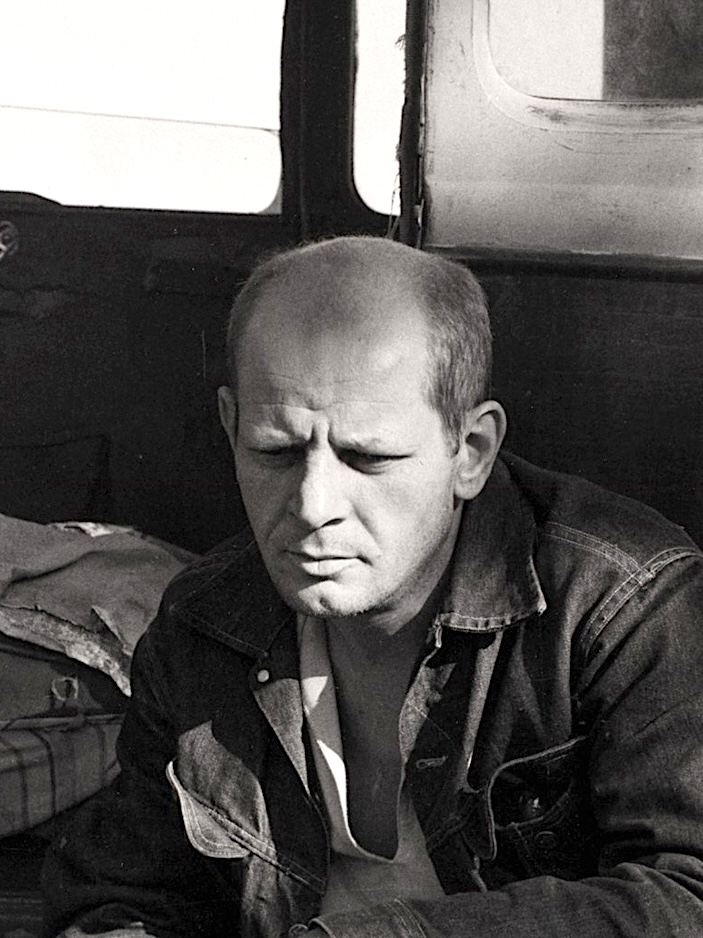
Jackson Pollock in 1951. (Hans Namuth /Wikimedia Commons,Public Domain)
Jackson Pollock and others among the Abstract Expressionists, Leonard Bernstein and others among the American composers then prominent, Robert Lowell, James Baldwin, Mary McCarthy and other writers of their generation, Duke Ellington and other jazz stars — if they weren’t sent abroad on the C.I.A.’s nickel, their work was.
There were the hundreds of books the Agency took a role in promoting, It paid for translations of Eliot’s Four Quartets, Luigi Barzini’s The Italians, Boris Pasternak’s Doctor Zhivago. It covertly supported magazines — Encounter and The Paris Review famous among them — along with radio stations and, of course, newspapers — and those who wrote and edited for them. As of 1956 the Agency owned a considerable piece of the Rome Daily American.
Saunders, who did years of interviewing and archival research for this book, lays out her findings over 427 well-written pages and was the first to shine so unblinking a light on the sprawl of the C.I.A.’s cultural interventions.
One of the things I like about Saunders’s book, among many, is her exposure of those artists and writers who knew of the Agency’s interventions and wanted nothing to do with them, those who knew and cooperated and those who served its purposes unwittingly.
Pollock had no idea of the use to which the Agency put his work, Baldwin wanted nothing to do with the Congress for Cultural Freedom (C.C.F.), infamous as a C.I.A. front. Ever true to her tough-minded politics, neither did Lillian Hellman.
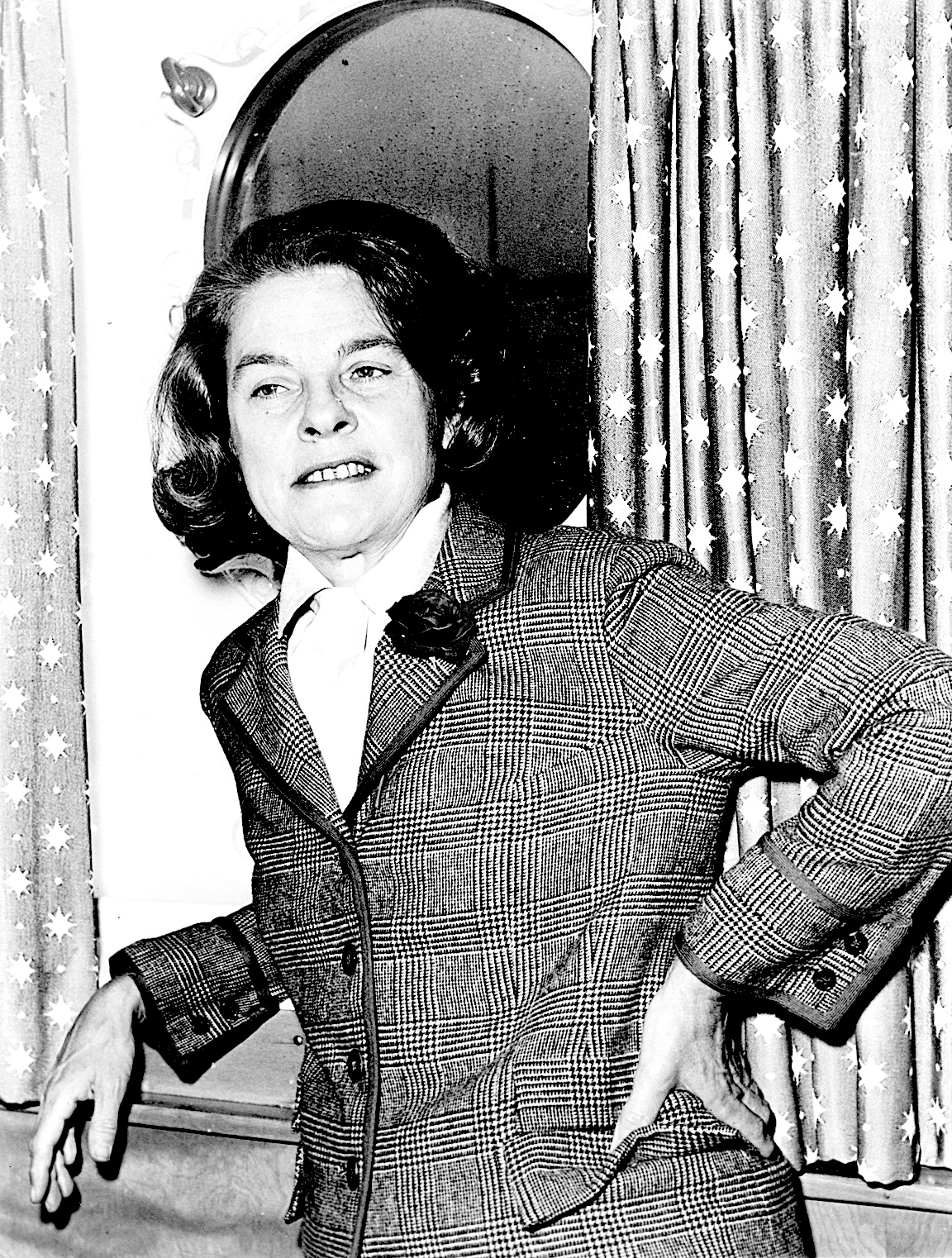
Mary McCarthy knew all about the Agency’s funding of the C.C.F. and its other projects and was fine with all of it. I’ve never liked McCarthy’s novels, and Saunders gave me a good reason to distrust her. She was prominent among that group of Americans known as Cold War liberals, for whom I have long nursed an abiding contempt.
McCarthy in 1963. (Dick DeMarsico/ World Telegram / Library of Congress. New York World-Telegram & Sun Collection/Wikimedia Commons/Public Domain)
I wish Saunders had given more attention to the profligate corruptions of generations of American journalists and newspaper editors, but her definition of culture is narrower than mine; I speculate that journalism’s service to the Agency was a room so large she chose not to enter it.
The surrender of many American journalists to the Cold War cause is well-enough documented in any case. See, for example, Carl Bernstein’s celebrated “The C.I.A. and the Media,” which Rolling Stone published in October 1977, and the House hearings that Bernstein’s piece prompted a couple of months later — the Church Committee, whose hearings ran from January 1975 to April 1976, having flinched from this responsibility.
Chronicler of Secrecy
The who-was-who and the who-stood-where and the who-did-what of The Cultural Cold War give Saunders’s book an historical specificity I do not think anyone has matched, with the exception of Joel Whitney’s Finks (OR Books, 2016), which draws heavily on Saunders’s work. She did not leave those of whom she wrote any place to hide.
As I reflect back on her accomplishment now, it seems to me to lie in something she never mentions. Saunders gave us a chronicle of the U.S. culture of secrecy in its earliest days, the first decades after the 1945 victories, when America set about making itself a global imperium.
What comes through in The Cultural Cold War is how little those alive at the time were able to know about their time. Too many events, too many decisions, too many reasons for things happening as they did were hidden, rendered inaccessible.
The C.I.A.’s Cold War interventions have had many enduring consequences. The Agency systematically discredited the principle of nonalignment, which was held high among then-emergent non–Western nations. America brings the same with-us-or-against-us fallacy to the 11 members and 10 partners comprising the BRICS — a complete failure to grasp one of the 21st century’s significant realities.
It is the same with the out-of-hand dismissal of all suggestions of moral equivalence in global affairs with those it deems adversaries: The United States is always righteous and never acts but in defense of itself or its always-democratic allies and/or clients. It is never to be accused of aggression. This is what I mean by moral blindness.
The Agency’s most disturbing legacy, at least to me, is how little of our world we are able actually to see. Daniel Patrick Monihan warned us of this just before the U.S. century turned in Secrecy: The American Experience (Yale, 1998). So, in her way, did Saunders a year later. Foolish it would be, naïve in the extreme, to think the time she described so piercingly is not the time in which we live.
It is the historians now who tell us who we are — this by telling us who we were. This is why I honor Frances Stonor Saunders as I do. She told Americans of their past, and, so, of their present.
A new play revisits the story of Ireland’s 18th-century German refugees, whose experience of prejudice and exclusion resonates with today’s debates over immigration
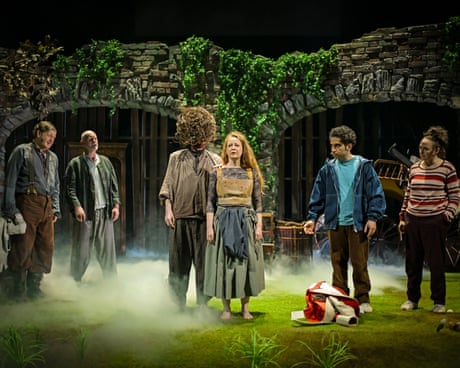
In the early 18th century, a few thousand Germans fled religious persecution and near starvation in their homeland and ended up in remote rural Irish villages. The Irish Palatines, as they were known, were poor, conservative homesteaders who couldn’t speak the language and were the object of suspicion and violence – precursors to the displaced Syrians or Afghans of the past decade.
Their story is told in Refuge, a co-production between Staatstheater Mainz and the Irish company Fishamble. Part love story, part social commentary, it is performed by a mixed cast, mainly in English but with some German interludes.
Local prosecutors said that at least 15 people have been arrested in connection with the riots that broke out in Limoges and the arson which destroyed the city's historic Town Hall.
The veteran actor speaks with The Hollywood Reporter about his debut as Papa Legba in the Ryan Murphy universe, the witches' fight against Satan and the "magical" experience of sharing the screen with Jessica Lange and the returning Coven cast.
I've lived in Colorado for over 10 years. If you really want to get a taste of the state, try visiting the city of Golden.
milehightraveler/Getty Images
As a Colorado local, I love bringing first-time visitors to the state to Golden instead of Denver.
It's a short drive from downtown Denver with beautiful mountain views and a walkable downtown.
There are great places to eat alongside mountain views, hike, and enjoy the scenery in Golden.
I've lived in Colorado for over a decade. If I had just a single day to show someone what I love about the state, I wouldn't take them to our capital city, Denver.
Instead, I'd bring them to the much smaller city of Golden.
Golden gives has a little bit of everything for visitors: mountains and hiking trails, a creek running through town, a historic downtown made for wandering on foot, and plenty of places to eat and drink.
It's located just about 15 miles west of downtown Denver, or about a 25-minute drive, and typically less than an hour's drive from the Denver International Airport.
Here's why I love bringing out-of-towners to Golden — and where I'd take them when they visited.
I'd start the morning with coffee at a family-owned shop.
Sogo Beans and Boards is one of my favorite morning stops.
Courtesy of Lexi Marshall
Golden has several coffee shops, but I'd start my perfect day here at Sogo Beans and Boards.
The family-owned coffee and skate shop is just minutes from downtown. I love that Sogo air-roasts its fair-trade coffee and makes its own syrups and pastries.
Its plant-filled room, free Wi-Fi, and garden patio make it easy to linger over a latte, and it's the kind of independent shop that makes a morning feel unhurried.
We'd spend lots of time outside, which is easy to do in Golden
Hiking North Table Mountain Park is one of my favorite ways to see the foothills around Golden
Courtesy of Lexi Marshall
The city makes it easy to go from a coffee shop to a trail without a long drive.
For a leisurely morning, I'd rent an e-bike and follow the paved Clear Creek Trail, which winds alongside the water through parks and greenery.
For more of a workout, I'd hike North Table Mountain, where the initial climb stings but rewards you with sweeping views of the city and surrounding mesas.
Riding the Clear Creek Trail is a great way to see Golden by e-bike.
Courtesy of Lexi Marshall
In warmer months, tubing on Clear Creek is another way to take in the town's outdoor culture and scenic views.
If I had more time, I'd take the short drive from town to visit Golden Gate Canyon State Park, a beautiful place to enjoy aspen groves and mountain scenery. Come winter, the same park is a serene place to snowshoe through snow-covered trails.
The Golden Mill is my go-to for lunch
The rooftop patio at The Golden Mill has mountain views.
Courtesy of Lexi Marshall
After working up an appetite, I'd head to The Golden Mill, a food hall and community gathering space along Clear Creek.
It offers several food concepts — from sushi and tacos to fried chicken, barbecue, and New Zealand-style ice cream — which means a group with different tastes can all leave happy. More than 50 self-pour taps offer beer, wine, cider, and more.
The best part is the setting. Large creekside and rooftop patios have mountain views, which makes it an ideal spot to settle in after a morning outside.
My sister and I recently spent a morning there for rooftop yoga led by a local teacher, then walked around town afterward before returning for lunch.
My sister and I spent a peaceful morning in Golden.
Courtesy of Lexi Marshall
It was peaceful, and it reinforced what makes the place work: It feels less like a traditional restaurant and more like somewhere you can spend a few hours eating, drinking, and watching Golden go by.
The yoga is a summer series that typically returns in May, and the event lineup rotates with the seasons. Past offerings have included rooftop barre and Keg Conditioning, a workout that uses empty kegs as equipment.
Downtown is made for wandering
Washington Avenue is lined with locally owned boutiques, galleries, and Western outfitters, and a seasonal Saturday farmers market adds to the scene.
Kayakers can play at Clear Creek Whitewater Park and beer fans can tour the Coors Brewery. Coors began brewing beside the creek in 1873.
One year later, the Colorado School of Mines was established nearby. It's part of an industrial past you can still sense as you walk.
I'd leave some of the afternoon unscheduled, too. Part of Golden's appeal is simply walking along the creek, looking up at the foothills, and stopping wherever something catches your attention.
Golden is proof that the best trips aren't always the flashiest
Golden is just as beautiful in winter as it is in spring, summer, and fall.
Denver has plenty to offer, but Golden gives you a concentrated version of the state I'd want to share with a first-time visitor: mountain views without a long mountainous drive; outdoor adventure alongside a walkable downtown; and enough food, beer, and local character to fill the day.
Sometimes it's not the most extravagant destinations that create the most meaningful memories. Some of my favorites in Golden have been the simplest, like that quiet morning with my sister.
After more than a decade here, that combination of ease and charm still feels like Colorado to me.
 Login





 , X
 , and VK
 .