Deadly Haitian gangs over the weekend ambushed members of an international security force deployed in Haiti, kidnapping four Salvadoran Air Force members, authorities confirmed Monday.
U.S. Army Chief Financial Officer Marc E. Andersen argues that the nation must implement a National Security Capital Strategy to leverage private investment and super intelligence to modernize the military and rebuild the defense industrial base.
U.S. Army Chief Financial Officer Marc E. Andersen argues that the nation must implement a National Security Capital Strategy to leverage private investment and super intelligence to modernize the military and rebuild the defense industrial base.
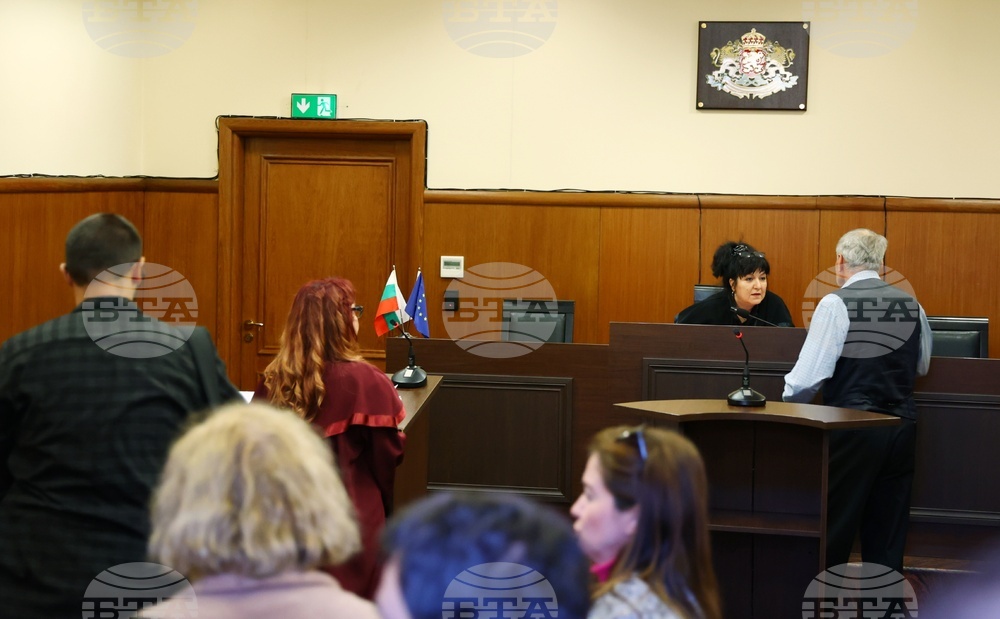
A Sofia court has cleared European arrest warrants for two 19-year-old Germans charged with setting fire to Starlink antennas south of the Bulgarian capital, a court spokeswoman told dpa. Prosecutors named the pair in court, but both had already left Bulgaria. The case adds Bulgaria to a run of attacks on Starlink sites in Europe, which Poland and Lithuania have linked to Russia.
While Russia presses its assault along the front and strikes Ukraine’s cities, Starlink keeps Ukraine’s drone units and front-line troops connected, and Poland pays about $50 million a year for its terminals. The network’s ground links in Europe are now a target in their own right, and ISW has linked the Polish fire to a wider Russian pattern of sabotage. Each attack on a ground station hits a network whose speed caps already disrupted Ukraine’s drone missions this month.
Two names, a few hours in Bulgaria
Prosecutors identified the suspects as Zeka Islam and Tirpan Beytullah, Bulgaria’s state news agency BTA reported, noting the names may be misspelled. Their whereabouts are unknown, according to German authorities cited by the agency. They were charged in absentia on 14 October and face three to 12 years in prison if convicted.
According to the indictment, the two crossed from Serbia at the Kalotina checkpoint at 17:37 on 9 October and told border officers they were tourists. At about 22:25, wearing gloves and masks, they allegedly set fire to antennas at the Plana teleport, a satellite ground station near the village of Plana. They drove back into Serbia through the same checkpoint at 23:55.
Three antennas burned completely, two were partly damaged, and three more were affected, prosecutors say. The pair traveled in a Volkswagen with German plates, and a national warrant followed two days after the charges, ZDF reported.
Explore further
Musk pushed Trump to slow Starlink in Ukraine, weakening air defenses as Russian drones attacked cities – The Telegraph
The court-appointed lawyers argued that investigators had pinned down the vehicle, not the men in it. The court rejected those objections, finding reasonable grounds to suspect the pair. The lawyers said they would appeal. The ruling can be challenged within three days.
A Starlink antenna. Illustrative photo: Christoph Soeder/dpa
An opposition MP made the fire public three days later
The fire became public only on 12 October, when opposition MP Ivaylo Mirchev of Democratic Bulgaria posted about it on Facebook. He said 11 antennas had been set on fire, more than prosecutors later counted.
In parliament two days later, Prime Minister Rumen Radev asked the head of the State Agency for National Security (DANS) not to reveal details, saying disclosure could harm the investigation. DANS head Plamen Tonchev told lawmakers he believes the fire was sabotage and that more such attacks cannot be ruled out, dpa reported.
Explore further
White House ordered limits on Ukraine’s military satellite service — Reuters. Who made the decision remains unclear
After the ruling, Mirchev wrote that Radev personally owes the public an explanation of what has been achieved, BTA reported.
Bulgaria’s case joins attacks Poland and Lithuania tie to Russia
Bulgaria has not said who might be behind the fire. Authorities in Poland and Lithuania have linked similar recent arsons on Starlink equipment to Russia.
In September, fire hit a Starlink ground station south of Warsaw, and Germany later detained two suspects. On 18 October, Lithuania’s prime minister said intruders had tried to burn a company’s Starlink antennas used by Ukraine, calling it part of Russia’s hybrid war. Moscow claims such accusations are baseless, Reuters reported.
A judge ordered Abdulrahman Alfozan to remain in custody, likening the Saudi government’s offer to secure the former OpenAI engineer’s release to a “blank check.”
In 1st such security briefing since Oct. 7 Hamas massacre, PM warns of existential stakes in next week's ballot, pledges to complete war objectives, and outlines new offensive doctrine
As hate is amplified, as distractions grow and as protests turn violent, the truly patriotic young men and women in our military and our government must accomplish something almost superhuman: they must overcome their biases for the greater good of our nation and our people.
Despite Illinois’ sanctuary laws, local police in and around Chicago helped ICE investigative agents track activists engaged in First Amendment–protected activities.
Tensions could explode into a new war between any two of the countries that are at loggerheads there, and that could in turn draw in both of those powerful states.
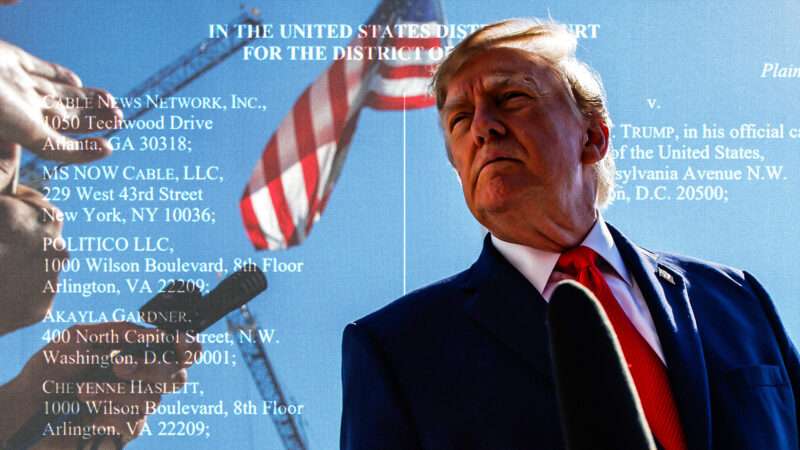
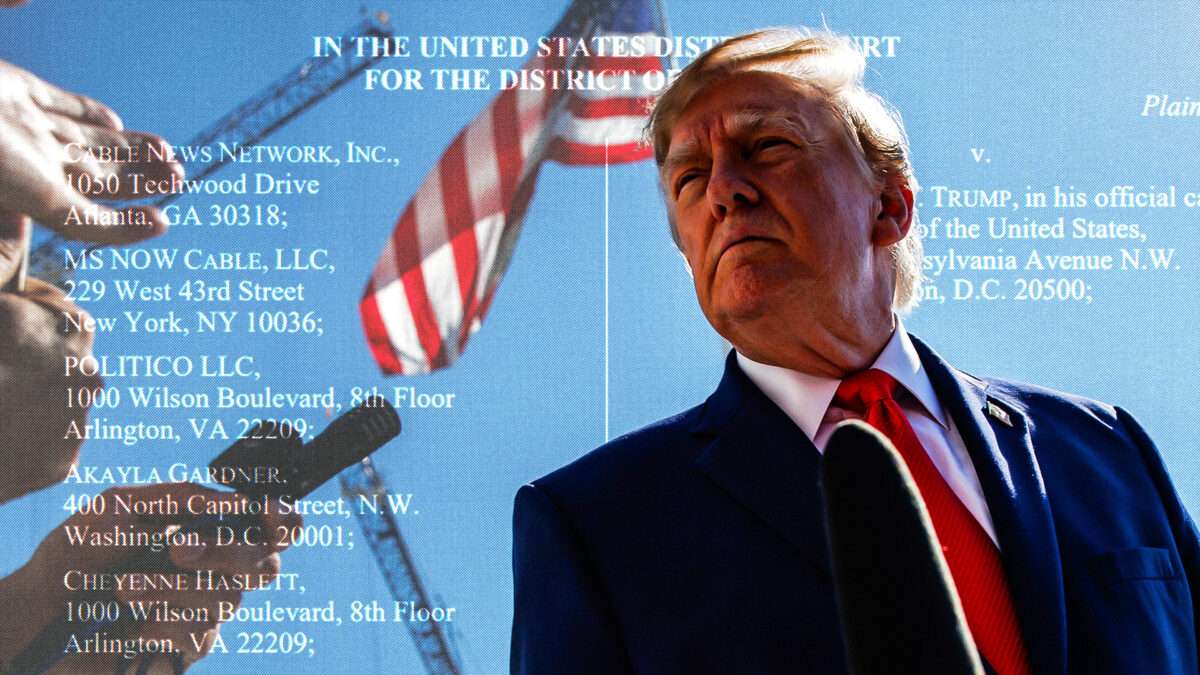
Last month, a federal judge in Washington, D.C., issued a temporary restraining order (TRO) that required restoration of press passes for 78 journalists employed by three news outlets that President Donald Trump peremptorily banned from the White House on September 18. U.S. District Judge Timothy J. Kelly, a Trump appointee, extended that order on Tuesday, granting a preliminary injunction to CNN, MS NOW, and Politico.
While Kelly's TRO was based on CNN et al.'s claim that their sudden banishment violated the Fifth Amendment's guarantee of due process, his justification for the preliminary injunction also addresses their argument that revocation of their press passes violated the First Amendment by retaliating against them for constitutionally protected speech and discriminating against them based on viewpoint. Kelly concludes that the plaintiffs "are likely to succeed not only on their due process claim, but also on their two First Amendment claims."
A retaliation claim requires showing that the plaintiff engaged in conduct protected by the First Amendment, that the defendant's action was "sufficient to deter a person of ordinary firmness" from "speaking again," and that there was "a causal link between the exercise of a constitutional right and the adverse action." Although the government's lawyers did not dispute that the CNN et al.'s journalism is constitutionally protected, they argued that the plaintiffs had failed to satisfy the two other elements.
Kelly disagrees. The "hard passes" at issue in this case, he notes, give journalists unescorted access to the White House "press area," which includes "the briefing room, the press offices, and certain other locations in and around the White House that are open to correspondents." CNN et al. argued that "a hard pass is an important credential because it 'allows a reporter to react to fast-developing news' and gives them 'swift and easy access to key official sources.'" Since "the revocation of Plaintiffs' hard passes matters a lot as to how, whether, and to what extent they can do their jobs," Kelly says, "it is likely that the open-ended ban here would chill a reporter's work."
Trump's "own comments suggest that he intended the revocation of Plaintiffs'
hard passes to alter their reporting on him, bolstering the case that his action here is sufficient to deter a reporter of ordinary firmness from reporting in the same way she had before," Kelly adds. The day he announced the ban, Trump complained that CNN et al. "purposely write negative news" to "try and diminish the Republicans and a Republican administration." Although "the ban would go as far as you can," he added, "I'd love it" if "they could straighten themselves out."
The plaintiffs also have shown "there is likely a causal link between the exercise of their First Amendment rights and the revocation of their hard passes and exclusion from the White House press area," Kelly writes. "President Trump likely banned Plaintiffs from the White House because he believes that their reporting is generally inaccurate and biased against him."
Again, Trump's public comments amply support that conclusion. He explicitly said he was banning CNN, MS NOW, and Politico "as a result of their constant 'reporting' [of] FAKE NEWS," adding that journalists "shouldn't be able to constantly write or report FICTION and LIES when they're covering the President of the United States, the Trump Administration, or the United States of America." When asked whether his decision was motivated by a "particular reason" or "particular story," Trump replied: "No, no. It's really just cumulative stories over the last two years." The problem, he said, was "purposely negative stories."
In a Truth Social post three days later, Trump likewise condemned "Fake News" that he said was "corrupt, purposeful, pervasive, fully coordinated, and totally out of control." CNN et al.'s reporters are "Third Rate Clowns" who "purposefully distort, twist, and degrade with everything they write or publish," he added that evening. "Virtually every story about me, or anything having to do with me, is negative, wrong and, in many cases, DANGEROUS for our Country! No matter how GREAT my Achievements, they trivialize and demean."
Trump offered a similar defense of the ban in a September 28 interview with Time. "It's just bad story after bad story," and "most of them are fake," he complained. "I don't think anybody should be forced to bear fake news, constantly bad stories, because I've done great things." Although "I can name 100 great things I've done," he added, "I never get good press. I never get fair press."
The government's lawyers maintained that Trump or another official "would have reached the same decision" based on the "alternative ground" that CNN et al. had violated "minimum professional journalistic standards" by "publishing classified and national security information." Kelly was not impressed by that belated rationale, which no one mentioned until after the news outlets gave the government a copy of their lawsuit.
"There is no evidence in the record that President Trump made the decision to revoke
Plaintiffs' hard passes on national security grounds," Kelly writes. "Nor at any time has he directly stated that national security was the reason for his decision. When he announced the ban with his post on September 18, he did not mention national security. When he was asked later that day about the 'particular reason' for his action, he did not mention national security."
Trump did mention "national security" in Truth Social posts he wrote the day that CNN et al. filed their lawsuit. But "that expression appears to have been simply another way for him to describe Plaintiffs' alleged inaccuracies and unfairness in their reporting about topics like his achievements or electoral success," Kelly says. "All this suggests that 'national security' was merely a post-hoc justification for the decision, which greatly undermines" the claim that Trump would have "taken the same action in the absence of Plaintiffs' protected speech."
The government also cited letters to CNN, MS NOW, and Politico from the White House Press Office, which were sent four days after Trump banned them. Those letters averred that the three news outlets had violated "the standards of professionalism and decorum expected of those given access to the White House Complex" by "publishing sensitive or classified information" and "trafficking in verifiable falsehoods about national security and other issues."
The letters "hardly move the needle" on the question of why Trump banned CNN et al. from the White House, Kelly says. They "appear to conflate concerns about otherwise protected speech" with "national security concerns," he notes, and they do not even explicitly say that Trump "made the decision for national security reasons."
Each letter lists specific stories to which the White House objected. But Kelly notes that two reporters "had their hard passes renewed after publishing articles that Defendants cite in their September 22 letters as supporting the potential revocation of their hard passes."
The Trump administration tried to shore up its "national security" justification by submitting a declaration from Pentagon Press Secretary Kingsley Wilson. While Wilson explains "how the publication of classified and sensitive information can undermine national security," Kelly notes, she "says little to nothing about President Trump's decision to revoke Plaintiffs' hard passes" and does not say "anything about White House press practices or operations."
The defendants "have not really tried to support" the claim that CNN et al.'s reporting "damaged national security," Kelly says, noting that news stories based on "sensitive or classified information" are "commonplace, for better or worse." If Trump "would have banned Plaintiffs from the White House even in the absence of their protected speech," he suggests, "Defendants would not have had to scramble to make their case with unsigned letters and a declarant who does not even work there."
The evidence of retaliation also supports the claim that Trump discriminated against CNN et al. based on viewpoint, which is presumptively unconstitutional. The U.S. Court of Appeals for the D.C. Circuit, Kelly notes, has held that "the White House Press Area" qualifies as a "nonpublic forum," meaning journalists cannot be excluded because of the views they have expressed.
"It is likely that Plaintiffs were selected by President Trump for revocation of their access to the White House press area because he believes their coverage of him and his administration is generally inaccurate and biased," Kelly writes. "In other words, it was 'an effort to suppress the speaker's activity due to disagreement with the speaker's view,' rather than to vindicate any other purportedly 'compelling governmental interest,' including maintaining professional standards for journalists or protecting national security. Simply put, that is unlawful viewpoint discrimination."
Kelly's decision "is a stinging defeat for Trump's assault on the free press and a powerful vindication of the First Amendment," Caitlin Vogus, senior adviser for advocacy at the Freedom of the Press Foundation, said in an emailed press release. "As Kelly rightly recognized, presidents don't get to use their power to purge journalists because they don't like what they report."
A giant wind farm risks blinding radar used to track Russian jets and missiles, the Ministry of Defence has warned as it opposes Net Zero plans to build 23 turbines twice the height of Big Ben in Yorkshire.
British counter-terrorism police are investigating a security breach at RAF Molesworth in Cambridgeshire after two Latvian nationals were found inside the military installation. The arrests come amid heightened security concerns following a separate suspected terrorist plot targeting RAF Fairford, which prompted the withdrawal of American bombers.
Two Latvian nationals have been arrested in Britain on suspicion of entering a restricted military installation for purposes potentially harmful to national security. The men were discovered inside RAF Molesworth, a sensitive military facility in Cambridgeshire that houses American and NATO intelligence operations, during the early hours of Thursday, 8 October.
The suspects, aged 36 and 32, are both Latvian citizens residing in the United Kingdom. According to an official statement issued by the Metropolitan Police, they were initially detained on suspicion of trespassing and criminal damage before being arrested under the National Security Act 2023.
The incident follows a separate investigation into a suspected terrorist plot near RAF Fairford in Gloucestershire, where American strategic bombers had been deployed. British counter-terrorism officers have emphasised that there is currently no evidence connecting the two cases.
Security breach discovered during routine patrol
The investigation began at approximately 10pm on Wednesday, 7 October, when Ministry of Defence Police officers patrolling RAF Molesworth discovered an abandoned vehicle near the installation’s perimeter.
Officers from Cambridgeshire Constabulary joined the search and subsequently identified a small breach in the security fence. At approximately 2am on Thursday, the two men were located inside the restricted area and taken into custody.
The suspects were initially questioned over alleged trespassing and criminal damage. However, investigators subsequently invoked Section 4 of the National Security Act 2023, which covers entering, approaching or inspecting prohibited locations for purposes prejudicial to Britain’s safety or interests.
The legislation carries a maximum sentence of 14 years’ imprisonment upon conviction. Neither man has been publicly identified, and police have not disclosed evidence establishing their alleged intentions or any connection with a foreign intelligence service.
Officers have also searched two addresses in the Peterborough area. The abandoned vehicle was recovered and examined by specialist explosive ordnance disposal personnel after concerns arose during initial inspections.
As a precaution, police established a cordon affecting roads around Glatton, including part of the A1. Specialists subsequently found nothing of concern, allowing the restrictions to be lifted.
Intelligence facility serving American and NATO operations
RAF Molesworth is not an ordinary operational airfield. Although designated as a Royal Air Force station, the installation accommodates intelligence facilities supporting American military operations and NATO.
Among the organisations associated with the site is the NATO Intelligence Fusion Centre, which contributes to intelligence collection, assessment and information-sharing between allied military authorities. The installation also supports American military intelligence activities relating to operations in Europe and Africa.
The presence of these facilities makes Molesworth a sensitive location, where unauthorised access raises questions extending beyond conventional trespassing. Investigators will seek to establish how the men entered the compound, why they were there and whether they attempted to approach or examine restricted equipment or infrastructure.
Separate investigation at RAF Fairford
The arrests come less than two weeks after British police detained seven men in connection with a suspected terrorist plot involving RAF Fairford, another British installation used by the United States Air Force.
The Fairford investigation began on 27 September after suspicious activity was reported near the base. Police subsequently investigated possible offences involving explosives and preparations for terrorist acts. Those arrested in connection with that investigation have since been released on bail.
The incident was followed by the withdrawal of American bombers from Fairford. President Donald Trump subsequently referred to security threats affecting the installation, raising further questions about the protection of American military assets stationed in Britain.
Commander Helen Flanagan, head of Counter Terrorism Policing London, which is leading the Molesworth investigation, cautioned against drawing conclusions about the relationship between the two cases.
She said investigators had found nothing so far suggesting a connection with the Fairford incident and were continuing to examine possible motives.
British authorities have not publicly identified a foreign state or organisation as being responsible for the Molesworth breach.
The two Latvian nationals remain in police custody while investigators continue examining the circumstances surrounding their presence at the installation. The inquiry involves Counter Terrorism Policing, the Ministry of Defence Police and Cambridgeshire Constabulary.
The investigation is taking place against a wider background of security concerns involving European military facilities. Latvia itself reported an armed border provocation and sabotage of surveillance infrastructure near Belarus earlier this week, although there is no evidence linking that incident to the arrests in Britain.
For British investigators, the immediate task remains establishing whether the Molesworth intrusion was an isolated security breach or involved an intention to compromise military operations or intelligence infrastructure.
A major incident has been declared at RAF Fairford with several men arrested, residents evacuated and a bomb squad deployed amid a suspected car bomb threat.

 Login