❌

Reading view

Salvadorian President Bukele Allocates $77 Million to Advertising
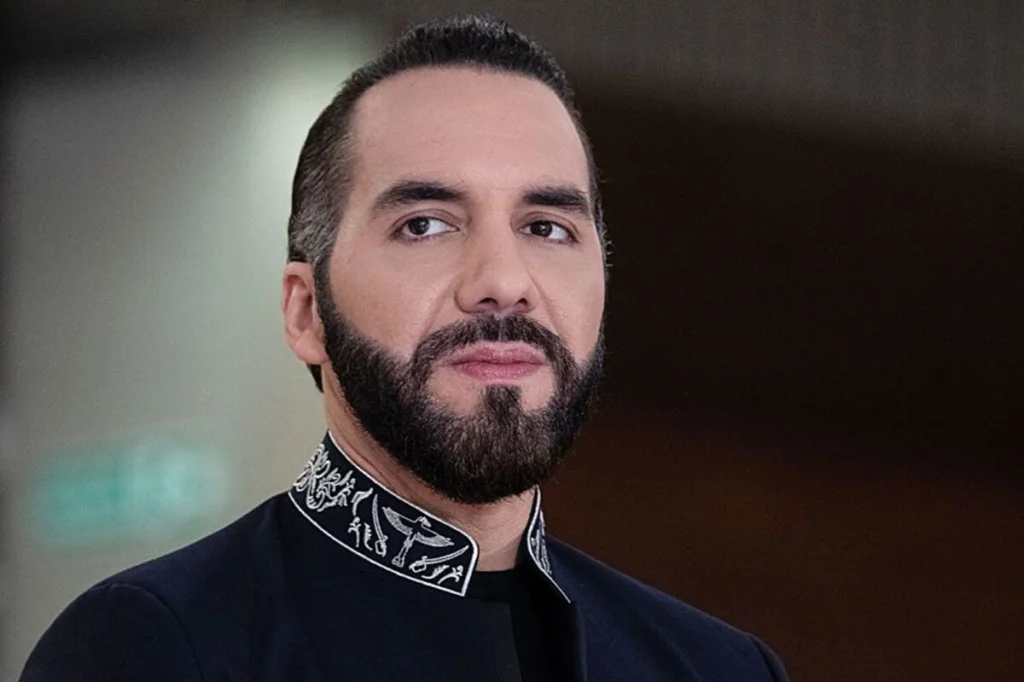
The funds were channeled to private agencies to develop national and international advertising campaigns.

An investigation by the specialized media outlet Infodemia reported that the Nayib Bukele administration allocated at least US$76.6 million over the past seven years to advertising, media consulting, and strategic communication services funded with state resources.

RELATED:

Hidden Costs of Bukele Prison Model El Salvador Crisis 2026

According to the report, spending on institutional promotion has maintained an upward trend since Bukele took office in 2019, reaching its highest level during his administration in the first seven months of 2026.

The investigation indicates that the funds were channeled to private agencies to develop national and international campaigns, manage social media, purchase advertising space, organize events, and monitor media coverage by public bodies.

The journalists responsible for the analysis reviewed more than 2,150 public procurement processes and identified over 2,000 contracts related to communication and marketing services awarded to hundreds of companies and suppliers.

The report also questions the lack of transparency surrounding these expenditures, noting that the Presidency keeps information related to institutional advertising confidential and that some contracts are not available in public records.

Among the cases examined is Obermet company, historically linked to the Bukele family, which obtained a contract from the Ministry of Health in 2019 for communication services worth more than US$108,000, according to the analyzed documentation.

Lo que pasó en El Salvador pasó en Colombia: falsos positivos y judiciales para decir que estaban ganando la guerra para vender seguridad. Bukele tendrá que dejar en libertad a 45 000 inocentes.@petrogustavo tenía razón, lo de Bukele se va a caer por violación de los DDHH. pic.twitter.com/BRSlqIrQDZ

— U L D A R I C O (@UldaricoRamire) October 17, 2026

The text reads, “What happened in El Salvador happened in Colombia: false positives and judicial setups to claim they were winning the war in order to sell security. Bukele will have to release 45,000 innocents.”

The investigation also recalls that the company has been the “subject of previous scrutiny” for alleged conflicts of interest related to public contracts during the current Salvadoran president’s political career.

Another finding concerns the financing of advertising space in Diario El Salvador, a newspaper that reportedly received more than one million dollars through hundreds of contracts from various state entities.

Infodemia maintains that this newspaper has repeatedly published information deemed false, misleading, or presented out of context by fact-checkers, especially on issues related to public safety and national political activity.

The investigation also identifies contracts awarded to Lared, a company linked to influencer Porfirio Chica, to develop digital communication strategies aimed at promoting programs of state institutions.

The media outlet indicates that some of the agencies that benefited from contracts during the current administration had previously appeared in judicial investigations related to cases of corruption and misappropriation of public funds during previous governments.

#FromTheSouth News Bits | Costa Rican President Laura Fernandez visited El Salvador’s controversial Cecot megaprison to align national security policies with President Nayib Bukele's militarized model. pic.twitter.com/eCP6g8xfMA

— teleSUR English (@telesurenglish) October 20, 2026

teleSUR: JP

Source: Resumen Latinoamericano

  •  

Apple breaks its silence on the privacy crackdown that’s roiled the online ad industry

Apple CEO John Ternus
John Ternus' Apple is waging war on advertising identifiers.

Benjamin Fanjoy/Getty Images

  • Apple roiled the ad industry with an unexpected new crackdown on web trackers.
  • The tech giant has now issued a rationale for why it's stamping out "identity resolution."
  • The ad industry has concerns Apple's latest privacy move may hamper targeting and measurement.

Apple's latest privacy crackdown left the online ad industry scrambling for answers. Now, the tech giant has finally offered some.

Late on Monday, Apple published a blog post laying out its rationale for new restrictions that block technology used to identify and track consumers across websites. The changes are implemented through WebKit, the browser engine that powers Safari and other browsers on iPhones and iPads.

Apple said the change was designed to target "identity resolution," a method adtech companies use to connect separate data points about users — such as email addresses, phone numbers, IP addresses, browsing history, or information about the device they're using — to identify and track them across devices.

The method grew in popularity as many web browsers, including Apple's Safari, began phasing out third-party tracking cookies, the small files dropped on a user's device that were traditionally used for web tracking. The ad industry deploys tracking to precisely target specific audiences and measure whether their campaigns are working.

In its blog post, Apple said that while users might readily offer their email address to log in to a website or sign up for a newsletter, most wouldn't expect it to also be shared with other companies for invisible tracking purposes.

"It's not enough to block cross-site cookies to prevent cross-site tracking today because the tracking industry has not stopped trying to track users on the web," Apple said. "They have ushered into what they call the post cookie era and in our latest releases we have put strong protection in place."

The blog post explains that Apple is implementing "domain-level" blocking, a broad intervention designed to ensure that identity providers can't circumvent the restriction by changing how they send data.

Apple took the adtech industry by surprise earlier this month when it came to light that it had begun blocking the domains operated by several companies that offer alternative identifiers, without warning. The blocked domains included those operated by The Trade Desk, LiveRamp, ID5, Permutive, and Audigent.

The stakes are high for adtech companies that have invested heavily in building identity graphs and alternative tracking identifiers to mitigate the impact of the loss of third-party cookies. Apple's latest move threatens to undermine those efforts and put a dent in their businesses if targeting its users across the web becomes more difficult.

The initial rollout had also blocked The Trade Desk's ability to serve ads at all on Apple-operated browsers. Apple rolled out a fix a few days later that restored The Trade Desk's ad-serving domain from being blocked alongside its advertising identifier, Unified ID 2.0.

The ad industry braces for fallout

The ad industry is now bracing for impact as more users begin updating their devices to iOS 27. Ad pros previously told CMO Insider that the change will make it harder for advertisers to identify and reach people across the open web.

Industry insiders said that by effectively shrinking the pool of users they can target, advertisers are expecting less reach, higher prices to reach the audiences they can still identify, and more difficulty in controlling how often people see an ad and measuring whether their campaigns worked.

Identity resolution has become widespread across the open web. An academic paper published in September that analyzed 600,000 websites over 41 months found that 83.76% of those sites were using alternative identifiers by May 2025.

If advertising becomes less effective on the open web, marketers could funnel more of their budgets into so-called "walled garden" platforms like Meta and Google, which aren't as heavily reliant on alternative identifiers because they have reams of their own logged-in user data. Apple, too, has a growing advertising business within its App Store and apps, including News and Maps.

Apple isn't backing down

There are still unanswered questions about Apple's exact definition of an identity resolution provider, and the company has already demonstrated it can add domains to its block list without warning.

There's also an indication Apple is only getting started. First reported by AdExchanger, Apple has created a broader list that can dynamically block potentially hundreds of adtech, martech, and data companies. Affected companies may not realize they've been added to the list until they begin experiencing disruptions.

In Monday's blog post, Apple linked to its long-standing tracking-prevention policy, which acknowledges that its blocking rules may have unintended impacts. Those include disrupting the funding of websites that use targeted or personalized advertising, advertising measurement, and fraud prevention.

The policy states that while Apple will try to limit unintended impact, "when faced with a tradeoff, we will typically prioritize user benefits over preserving current website practices."

Ever since Apple launched its Intelligent Tracking Prevention feature in 2017, the tech giant has been locked in a cat-and-mouse game with the adtech industry, which has persistently developed workarounds to its privacy updates. Adtech companies have argued that these techniques were necessary to help publishers effectively monetize their websites with ads while still maintaining user privacy.

Apple, which has long held that "privacy is a fundamental human right," makes it clear in its policy that it won't allow workarounds to proceed on its watch.

"We treat circumvention of shipping anti-tracking measures with the same seriousness as exploitation of security vulnerabilities," the Apple policy states. "If a party attempts to circumvent our tracking prevention methods, we may add additional restrictions without prior notice."

Read the original article on Business Insider

  •  

Republicans Barely Mention Trump in Political Ads Ahead of the Midterms

Only a small fraction of recent G.O.P. broadcast and streaming ads mention the president, according to a Times analysis of ad data.

© Kenny Holston/The New York Times

President Trump, seen on a partially covered television screen, during a speech earlier this year.
  •  

We need to stop disinformation in UK political adverts. Here’s a chance to do so | Letter

Alex Tait on a proposed amendment to the representation of the people bill, and Dr Joseph Mullen on Russian interference in the Brexit referendum

Andy Burnham’s comments about Russian interference in Brexit (Report, 11 October) and the warning by the MI5 chief, Ken McCallum, against exaggerating its impact (Report, 13 October) risk overlooking another serious threat to electoral integrity: disinformation from our own political parties and campaigners.

Foreign interference deserves scrutiny, but misleading factual claims in electoral advertising are unregulated, unlike in commercial advertising. We have four sets of rules to ensure an advert for a packet of sausages is accurate, but none for the most important advertising of all – ads that influence how we vote.

Continue reading...

© Photograph: Tuomas A Lehtinen/Getty Images

© Photograph: Tuomas A Lehtinen/Getty Images

© Photograph: Tuomas A Lehtinen/Getty Images

  •  

Republicans Are Vastly Outspending Democrats on Senate Races

With Republicans seen as less likely to hold their majority in the House, the party is focusing more on the battle for the Senate, where it is vastly outspending Democrats on ads.

© The New York Times

  •  

Israeli firm used online ads to run vast spy operation, researchers say

Israeli digital advertising agency Discover-Tech used a sprawling network of online ads to track internet users and help hack their devices, according to reports from Citizen Lab and Confiant.

  •  

Judge Blocks Trump Administration’s $20 Million Ad Campaign

Federal judge blocks Trump administration’s $20 million political advertising campaign funded through the Department of Homeland Security.

A federal court imposed a 14-day restraining order over allegations that the administration misused public funds for political advertising ahead of midterm elections.


A federal judge in New York has blocked the Trump administration from entering into, renewing or expanding contracts for a controversial advertising campaign, freezing $20 million in funding allocated through the Department of Homeland Security (DHS) amid allegations that public money was being used for partisan political messaging.

RELATED: Trump Demands Leadership Change in Ukraine Amid Zelensky Rift

U.S. District Judge Jennifer Rochon of the Southern District of New York issued a 14-day temporary restraining order on Sunday, citing the risk of “irreparable harm” before publishing her full legal reasoning. The ruling came just over three weeks before the midterm elections.

The lawsuit was filed by a coalition of civic organizations, including the nonpartisan group Common Cause, represented by the legal firm Democracy Forward. The plaintiffs argued that the campaign violated federal restrictions on using funds appropriated by Congress for partisan advertising or propaganda.

“There is no legal justification or precedent for the president to use the machinery of government and public funds to influence election results,” the plaintiffs said in a statement following the ruling.

The advertisements, which began airing in late September, feature footage from Donald Trump’s previous presidential campaign, excerpts from speeches warning of the threat of communism and references to recent military operations, including U.S. military action against Iran and the abduction of Venezuelan President Nicolás Maduro.

The Justice Department argued late Saturday that the court order was unnecessary because the advertising campaign was scheduled to end on Sunday. The judge nevertheless imposed the restrictions.

The White House has defended the spending, describing the advertisements as “public service and educational messages” and rejecting allegations that they constitute electoral propaganda. Trump has maintained that the campaign promotes the United States rather than himself, noting that he is not a candidate in the midterm elections.

The president has also offered to cover the cost with personal funds or money from his political campaign if authorities determine that the expenditure was improper. Government officials, however, have said there are no immediate plans for reimbursement.

The controversy has drawn criticism across party lines. Republican Senate Majority Leader John Thune has questioned the use of taxpayer money to finance the advertisements, while the Democratic National Committee has filed separate lawsuits against the administration over the same issue.

  •  
❌