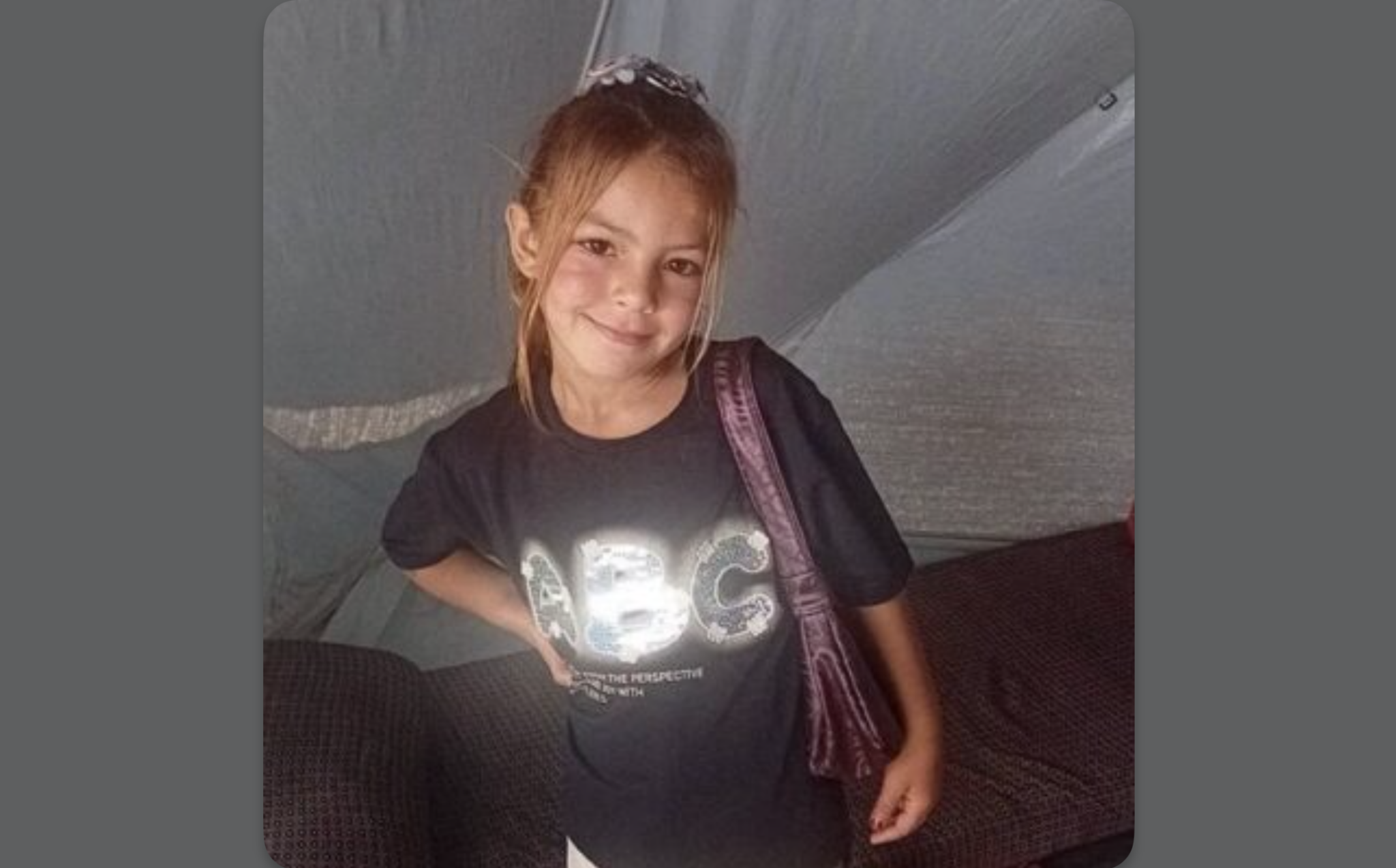
Among the children returned to Ukrainian-controlled territory is 9-year-old Stefan, who was forced to undergo military training at a school under Russian occupation, according to Bring Kids Back UA.
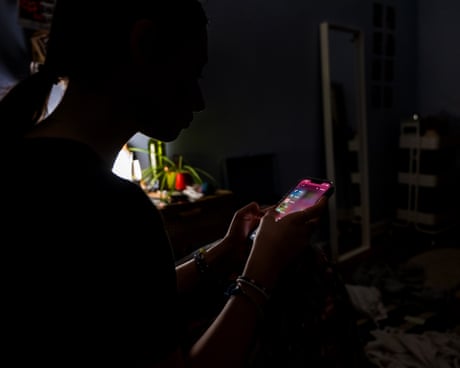
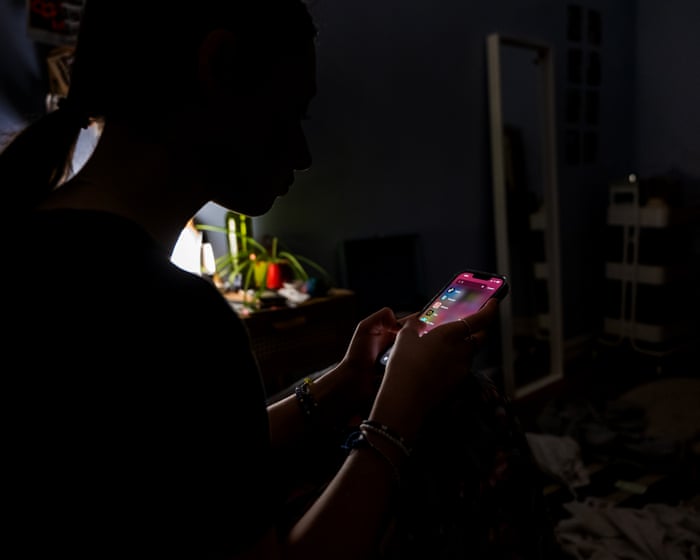
Exclusive: Using test accounts acting as 13-year-olds, Tech Transparency Project downloaded 135 apps with features to generate nonconsensual nude imagery
In December 2025, Morgan Dorfman received distressing news: a student at her daughter’s Pennsylvania high school was making AI-generated pornographic material using the daughter’s image.
He was using an artificial intelligence image-editing app called Movely to create sexual videos from pictures of her daughter and five other girls.
Downing Street delivered a rare rebuke to a senior member of Donald Trump’s administration
Asked why the Lib Dems were opposed to a third runway at Heathrow when they professed to be in favour of growth, Cooper said she did not accept that a third runway would produce all the benefits its supporters claimed.
She explained:
On Heathrow, it is clear from looking at all of the economic analysis of airport growth over the last few years that many of the promises made by all sorts of different airport companies simply haven’t come to bear.
The promise of higher wage jobs hasn’t been substantiated. Often it’s lower paid jobs, and often not as many as they’ve claimed.
by Michael Nevradakis Ph.D., Activist Post: State health departments can now purchase this season’s COVID-19 vaccines for low-income children through the CDC’s Vaccines for Children Program. Vaccine advocates had complained about a delay — but families and pediatricians concerned about vaccine safety criticized the decision. “The days of just injecting everyone without considering the individual […]
The BBC has been accused of using its Bitesize website to push open borders, Net Zero and woke ideology on children as young as 11, teaching them that more immigration is great and anyone who disagrees is likely a bigot.
The driver of the vehicle is in custody, and two juveniles were in the vehicle, according to Wichita police department
Two people, including a child, were killed during a soccer game in Wichita, Kansas, when a person drove a vehicle through the field at Stryker soccer complex, police have confirmed. Multiple other people were injured.
The driver of the vehicle is in custody, Aaron Moses of the Wichita police department said Saturday in a news conference. There were two juveniles in the vehicle, he said.
To protest against shameful conditions in schools is entirely legitimate. The government’s response is not
As a secondary school pupil in 1994, I took part in protests against a reform that would have allowed French employers to pay young people below the minimum wage. Our campaign was successful, but if we had had to face the terrifying police response unleashed on student protesters in France over recent weeks, I would have stayed at home.
A 14-year-old boy, Eden, suffered a fractured jaw and had teeth knocked out after a police teargas grenade struck him in the face. Sixteen-year-old Maël lost the sight in one eye allegedly after being struck by a shot from an LBD, a form of rubber-bullet launcher. Evan, 15, had his hand blown off in an explosion involving a police stun grenade. And in Dunkirk, a police SUV is alleged to have driven repeatedly at groups of secondary school pupils, as an officer could be heard saying: “Come closer, we’ll smash their fucking faces in.” Accounts from children left terrified by brutal treatment in police custody describe traumatic experiences with severe psychological and physical consequences.
Rokhaya Diallo is a French journalist, film-maker, activist and Guardian Europe columnist
Do you have an opinion on the issues raised in this article? If you would like to submit a response of up to 300 words by email to be considered for publication in our letters section, please click here.
At least 350 children remain in custody at this time, where they face harsh conditions, including torture, food deprivation, isolation, and denial of medical care.
Israel is restricting prosthetics and rehabilitation equipment from entering Gaza, leaving thousands of children waiting for a medical evacuation that may never come.
A Missouri judge who locked two children in jail cells because he was frustrated by their resistance to a parental custody decision is liable for violating their Fourth Amendment rights, a federal appeals court ruled this week. The U.S. Court of Appeals for the 8th Circuit rejected Taney County Judge Eric Eighmy's claim that he was shielded by qualified immunity, a doctrine that blocks federal civil rights claims unless they allege a violation of "clearly established" law.
"A reasonable judge should have known better," Judge David Stras writes in an opinion joined by the two other members of the 8th Circuit panel. "The law was 'clearly established' enough" to "place the issue 'beyond debate.'"
Institute for Justice attorney Dylan Moore, who wrote an 8th Circuit brief arguing against immunity for Eighmy and participated in oral arguments, welcomed the decision. "Every reasonable person knows that a judge can't throw children in jail for no good reason," he said. "Yet Judge Eighmy claimed qualified immunity shielded him from accountability anyway because no prior case told him that imprisoning innocent kids is unconstitutional. That defense is ridiculous, and we are thrilled that the court saw through it. When government officials commit such obvious constitutional violations, qualified immunity should never enter the picture."
The incident at the center of the case happened after an October 2019 custody hearing involving Kadan Rockett, then 14, and his 12-year-old sister, Brooklyn, who had achieved a modicum of fame as magicians performing on America's Got Talent. Their divorced parents, Bart Rockett and Kami Ballard, agreed that Ballard, who at that point lived in Missouri, would have primary custody of the children, while Rockett, who was living in California, would be "responsible for them at the beginning of each month and 'during TV pilot season.'" But Kadan and Brooklyn did not want to go home with their mother, which led to an argument in the lobby of the courthouse.
Eighmy intervened, telling Kadan and Brooklyn to come with him to a conference room, where he informed them that they had to leave with Ballard. "The children would not budge, even after the judge mentioned that the other option was foster care," Stras notes. "Frustrated, Judge Eighmy had the children follow him again, this time to a waiting area in the courthouse's juvenile division." A few minutes later, Eighmy "led them down a hallway to two holding cells."
Outside the cells, Eighmy again threatened Kadan and Brooklyn with foster care, but they were still unmoved. "Lock them up," the judge told an officer, who "patted them down and ordered them to remove their socks and shoes" before confining them in separate cells.
It is not clear exactly how much time Kadan and Brooklyn spent in the cells. The Institute for Justice says "about an hour," while Stras says "the time spent in the holding-cell area was between twenty and forty minutes." In any case, the children's respect for Eighmy's authority had improved by the time he came back. He "asked them one more time whether they would leave with their mother," Stras writes. "This time, they both nodded yes, so he let them go."
In June 2021, Rockett, the children's father, sued Eighmy on their behalf under 42 USC 1983, which authorizes claims against state or local officials who violate constitutional rights under color of law. In his motion to dismiss the lawsuit, Eighmy argued that he was protected by judicial immunity, which is absolute with respect to a judge's official duties. U.S. District Judge Douglas Harpooldisagreed, and the 8th Circuit affirmed that ruling in 2023, noting that Kadan and Brooklyn were beyond Eighmy's contempt power because they were not parties to the custody case and that "judges do not do double duty as jailers."
Eighmy reiterated his judicial immunity claim in a motion for summary judgment, and Harpool rejected it again. After the trial began, Eighmy claimed qualified immunity twice, once after all the evidence had been submitted and again after the jury's verdict in favor of Kadan and Brooklyn. Harpool denied him that defense both times.
The jury ultimately awarded Kadan and Brooklyn $5,000 each in damages, and Harpool added about $327,000 in attorney fees. Eighmy appealed again, reiterating his judicial immunity claim. But the appeals court ruled that he had abandoned that argument by failing to raise it during the trial or after the verdict. So Eighmy was left with qualified immunity, which the appeals court said he did not deserve.
Eighmy clearly violated the Fourth Amendment's prohibition of unreasonable seizures, Stras says, because he "did not have 'probable cause to believe that [the children had] committed' an offense, much less one that justified placing them in a holding cell. Rather, their only misdeed was one every parent knows well: resisting authority. Even in the context of legal-custody proceedings, refusing to leave with a parent is not a jailable offense. Nor were there 'exigent circumstances' arising out of danger to themselves or others."
Did Eighmy's authority as a judge give him extra leeway? Nope. "Criminal contempt was off the table because the children were neither parties to the custody case nor present inside the courtroom," Stras notes. "Nor could the power to punish a party for violating an injunction have provided the justification, given that Judge Eighmy never issued one."
Eighmy's motive for jailing the children does not change that analysis. "We have no doubt that Judge Eighmy believed he was acting in 'good faith,' and possibly even in the children's best interests, by detaining them," Stras writes. "But good faith in the Fourth Amendment context is about reasonable reliance, either on binding appellate precedent or a warrant issued by a 'neutral magistrate.'"
What about Eighmy's argument that he had no way of knowing his actions were unconstitutional? "The law in this area" was "clearly established," Stras says. "'[I]t would have been sufficiently clear [to] every reasonable official,' Judge Eighmy included, that locking up two children for refusing to follow directions violated the Fourth Amendment. As we put it over a decade and a half ago, long before the events in this case, '[i]t is clearly established that a warrantless arrest, unsupported by probable cause, violates the Fourth Amendment."
That principle was so well established, in fact, that Kadan and Brooklyn, neither of whom had attended law school, took it for granted. "I don't know how you have a right to lock us up," Kadan told Eighmy when he threatened to jail them, according to Rockett's amended complaint. "We have done nothing wrong." The complaint says Brooklyn raised the same point. "How can you just lock up kids?" she asked. "This isn't legal. We've done nothing wrong."
Given Eighmy's obvious disregard for Kadan and Brooklyn's Fourth Amendment rights, "we are not concerned about the lack of a prior case" with "fundamentally similar" facts, Stras says. "Indeed, given how clear the law is, it would have been surprising to find one." He quotes an observation that Supreme Court Justice Neil Gorsuch made as a 10th Circuit judge: "Sometimes the most obviously unlawful things happen so rarely that a case on point is itself an unusual thing."
“No Palestinians in the West Bank are exempt from this threat, including Christian communities and institutions,” said Bishop Dr Imad Haddad of the Evangelical Lutheran Church in Jordan and the Holy Land
Along with other medical supplies, dental materials have not been allowed into Gaza for the past three years, forcing patients to choose between unaffordable treatment, extraction, or painkillers.
More seven year-olds are on disability benefits than 50 year-olds amid a surge in payouts for childhood ADHD and other mental health conditions, official figures show.
Jerry Seinfeld mocked protesters highlighting Palestinian children’s deaths, dancing onstage and saying he would send a demonstrator’s ticket money to Israel.
For Boston Magazine, Kara Baskin explores a growing subculture of tweens and teens who don’t feel entirely human. Some identify as one animal, like a cat or a dog; others identify with multiple animals. One kid Baskin speaks to, Sol, says she “doesn’t summon the animals, but rather they come and go on their own schedule.” These young people call themselves therians (distinct from furries, who are fans of anthropomorphic animal characters). Baskin provides a fascinating glimpse into a world where adolescents can express themselves and explore their identities.
Bafflement is the baseline condition of raising kids right now. The adolescent quest for self-discovery is timeless—but today’s parents experimented in ways that were analog: new hairstyles, inscrutable music, beer snuck in the woods. Their own parents might not have liked it, but they could at least relate.
Now the landscape of adolescent discovery is literally foreign, thanks to social media, which has turbocharged once-obscure subcultures like the furry fandom—and, at its rarer edge, therianthropy—and redefined what “fringe” even means. Even if a kid is the only therian at school, she can find 400 more people just like her online. That’s one of the biggest challenges for parents in the algorithm age: The world your kid actually lives in is one you can’t enter. It touches the fear in every parent, therian kid or not: What happens when our kids inhabit a world we don’t understand, with idols we don’t recognize?
No doubt Ed Davey lovingly cares for his disabled son, says Joanna Gray. But he's not his "carer"; he's his father. It's a distinction Britain is fast losing sight of, to the detriment of us all.
The National Trust has sparked outrage over its "ultra-woke" plans to teach five- to 12-year-olds about the Black Power salute during a Black History Month baking workshop.

 Login