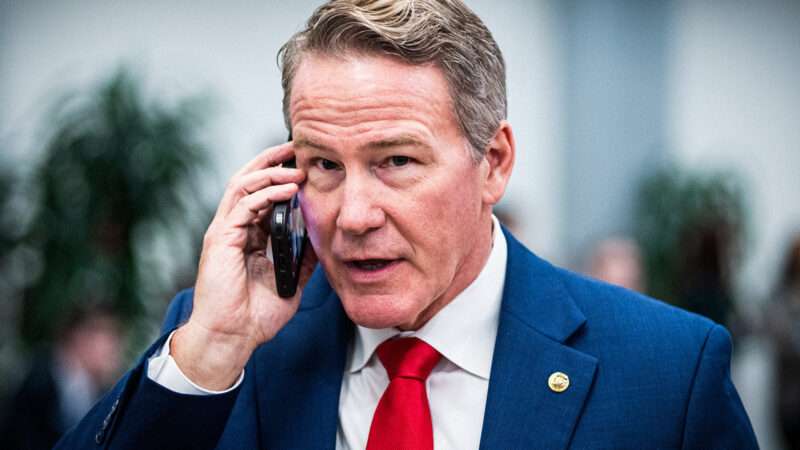
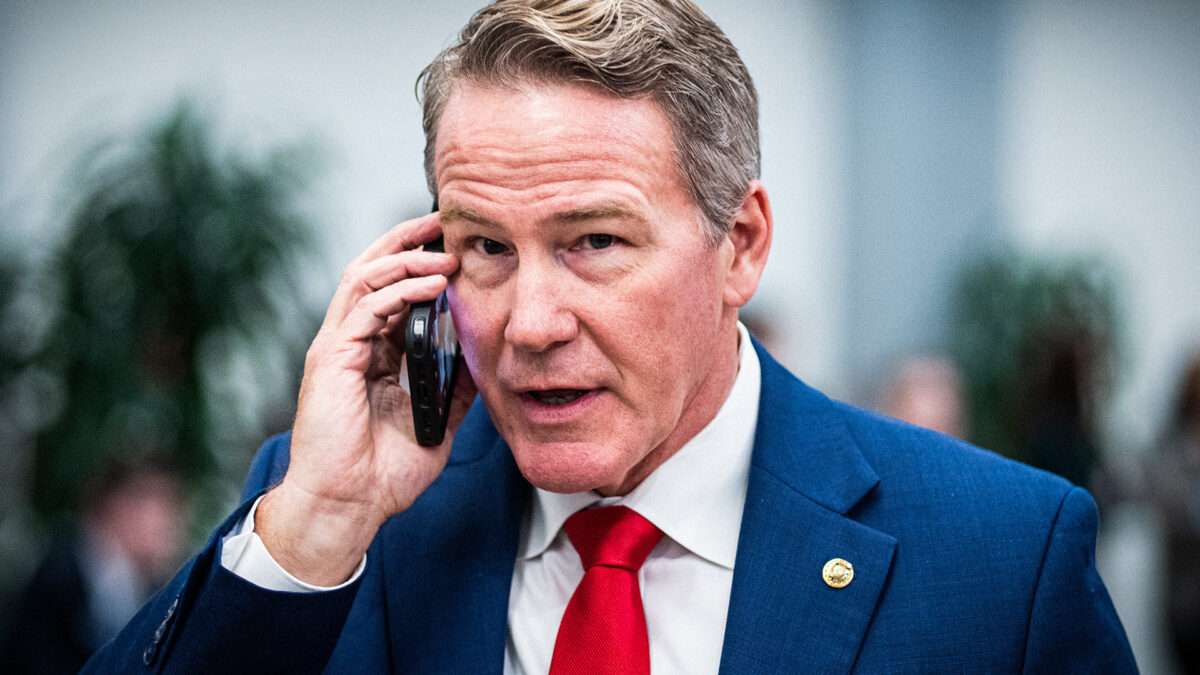
Joel Kaplan, Meta's chief global affairs officer, is leaving, Meta confirmed to Business Insider.
Kaplan, a Republican who once worked for the Bush administration, spent 15 years at Meta.
Kaplan helped bridge ties between Meta CEO Mark Zuckerberg and President Donald Trump.
A longtime political operative at Meta who played a key role in bridging ties between the company and President Donald Trump's administration is leaving.
Joel Kaplan, Meta's chief global affairs officer, will leave after the midterm elections and a transition period, Axios first reported. Meta confirmed the report to Business Insider.
A veteran Marine Corps artillery officer, Kaplan is a Republican who served as an advisor and deputy chief of staff to former president George W. Bush.
Kaplan joined Meta in 2011. At Meta, he oversaw the company's response to policy issues ranging from the Cambridge Analytica scandal to the end of its fact-checking program.
Kaplan helped repair a once-fraught relationship between Meta CEO Mark Zuckerberg and Trump after Meta temporarily suspended Trump's account following the January 6 riot.
Kaplan posted on X on Tuesday that he plans to spend time with his family and figure out what to do next.
Kaplan didn't respond to a request for comment from Business Insider.
Kaplan has served as Meta's chief global affairs officer since 2025, succeeding former UK politician Nick Clegg. Other Meta executives will share his responsibilities, Axios reported.
Have a tip? Contact this reporter securely on Signal at charlesrollet.12 or +1-628-282-2811. Use a personal email address and a non-work device; here's our guide to sharing information securely.
Can Republicans just spend their way to success in Ohio? "Republicans have bombarded Ohioans with ads with $19 million spent on competitive races through Oct. 12, intended to sell voters on the tax law that had been called the One Big Beautiful Bill," reportsThe Washington Post. "But the message is struggling to connect with voters amid anxiety over tariffs and the war with Iran, which have pushed up prices for everyday products. The ad blitz, the most spent on the topic in any state with competitive races, is aimed at bolstering vulnerable GOP candidates in a state that was considered safely Republican for the better part of the last decade."
Republicans in states across the Midwest (and the country) have experimented with distancing themselves from the Trump administration and its agenda; it's hard to know if this strategy will prove successful, or if it's just too little, too late. In Ohio, though, Republican candidates are mostly staying close to Dear Leader.
Sen. Jon Husted, a Republican, is running for U.S. Senate against Democrat Sherrod Brown in what looks to be an extremely tight race; ads claim Husted has "supported ending taxes on tips, overtime and Social Security, plus a $200 million investment in rural hospitals," trying to tie him closely to President Donald Trump's agenda. But it's really not clear whether this type of pitch will be enough to make voters forget about tariffs and inflation, the war in the Middle East and gas prices. A New York Times/Siena poll found that 79 percent of likely Ohio voters disapproved of Trump's handling of gas prices. It's hard to sell people on a tax cut when they're paying a different tax, in the form of tariffs, every time they go to the store; Ohio voters might not be so easily swindled.
Gun laws in Oregon: In the aftermath of the tragic shooting at an elementary school in Bend, Oregon, where a 16-year-old killed three little kids and one teacher, some parents of elementary schoolers there are asking what laws can be changed.
But "Oregon earns high marks from gun safety advocates for its firearms laws," notesThe New York Times. "Everytown for Gun Safety, one of the nation's largest gun violence prevention organizations, ranks Oregon 12th in the country for the strength of its laws, citing recent legislation tightening storage requirements, banning untraceable 'ghost guns' and prohibiting devices that can convert semiautomatic firearms into machine guns." Gifting laws are pretty lax, though, and that might be what happened here: The 16-year-old's mother seems to have been the one who purchased the Maverick 88 12-gauge pump-action shotgun, so it's possible she either gifted the gun to her son or that he stole it from her. "Decades ago, Oregon lawmakers made an exception to gun laws that allow parents to give rifles and shotguns to minors. In many areas of the state, as in other parts of the American West and South, it's a rite of passage for a young person to receive a weapon for hunting or target practice."
There's no law that can really prevent theft of weapons, especially when the thief is a teenager living inside the home where the gun is stored, and there's no law that can prevent parents from foolishly gifting guns to teenagers or young adults whom they've misjudged as capable of handling the responsibility. These are terribly unsatisfying realities.
Prosecutors could, of course, attempt to try the parent for the crimes of their teenager. They "could consider charges ranging from reckless endangerment to manslaughter or criminally negligent homicide, a felony punishable by up to 10 years in prison," continues the Times. "But that would require evidence of more than just a parent's awareness that a child was troubled. Prosecutors would have to establish that the mother disregarded—or, in the case of criminal negligence, failed to recognize—a substantial and unjustifiable risk."
Scenes from New York: "Mayor Zohran Mamdani announced on Monday that New York City will expand free child care for 2-year-olds to Staten Island and across the Bronx as the city moves to add 10,000 seats next school year," reportsThe New York Times. Here's why that won't work:
QUICK HITS
Something juicy for you, readers, since I too frequently subject you to my Catholicism. Let's switch it up: "I'd been thinking about turning down the speed on my vibrator for a long time, but I'd considered my affliction personal, not society-wide. Now it was dawning on me that the problem wasn't simply mine. Women are being sold egg-shaped suction devices in the pages of New York magazine, and BookTok influencers pair with sex-toy companies for promotional collabs. Yes, there is a bookmark that doubles as a vibrator," writes Sarah Hepola for The Atlantic. "Does this consumer game of one-upmanship amid the mainstreaming of vibrators even matter? There are too many varieties of women's razors, too, and I don't care. But what worries me is how this points in the direction in which so much of modern life has been barreling: self-pleasure, self-love, self-care, self, self, self.…Like so much of our day-to-day lives, getting off is becoming more efficient, easier, faster. But has it gotten better?"
"Next year, I will give one of my SpaceX shares to every kid in America," wrote Elon Musk on X yesterday. "This will be the first of many."
"Mahmoud Khalil, the Columbia University graduate arrested last year by Immigration and Customs Enforcement agents amid campus protests, appealed to the Supreme Court on Monday in an attempt to prevent his deportation," reportsThe New York Times. "Khalil, a legal permanent U.S. resident who is married to an American, became an early and high-profile example of President Trump's crackdown on pro-Palestinian demonstrations on college campuses."
With little more than two weeks to go until the midterm elections, it seems increasingly possible that the Democrats, already a big favorite to win control of the House of Representatives, will also take charge of the planet's most elite nursing home, the United States Senate, where the median age is 64 years old. RealClearPolitics' poll aggregator has moved control of "the world's greatest deliberative body" (as its members are grandiosely wont to call it) to "toss up," status and prediction markets are now breaking big toward a blue wave. As of this writing, Kalshi has its Senate odds at 63 percent for the Dems vs. 37 percent for the GOP; Polymarket is at 62 percent vs. 39 percent.
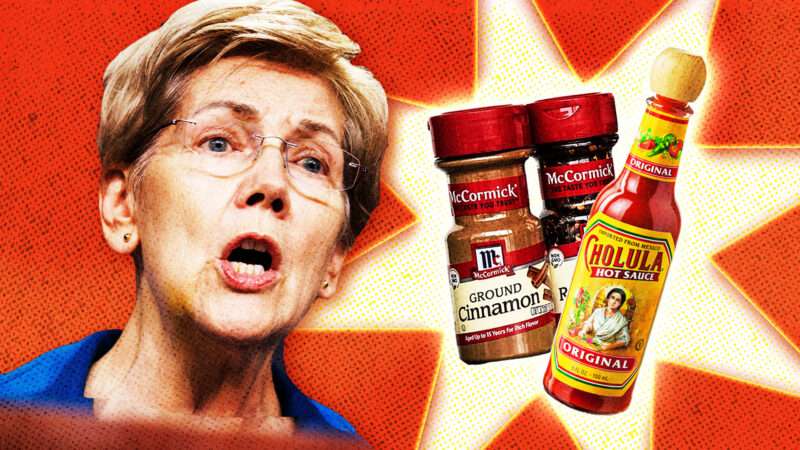
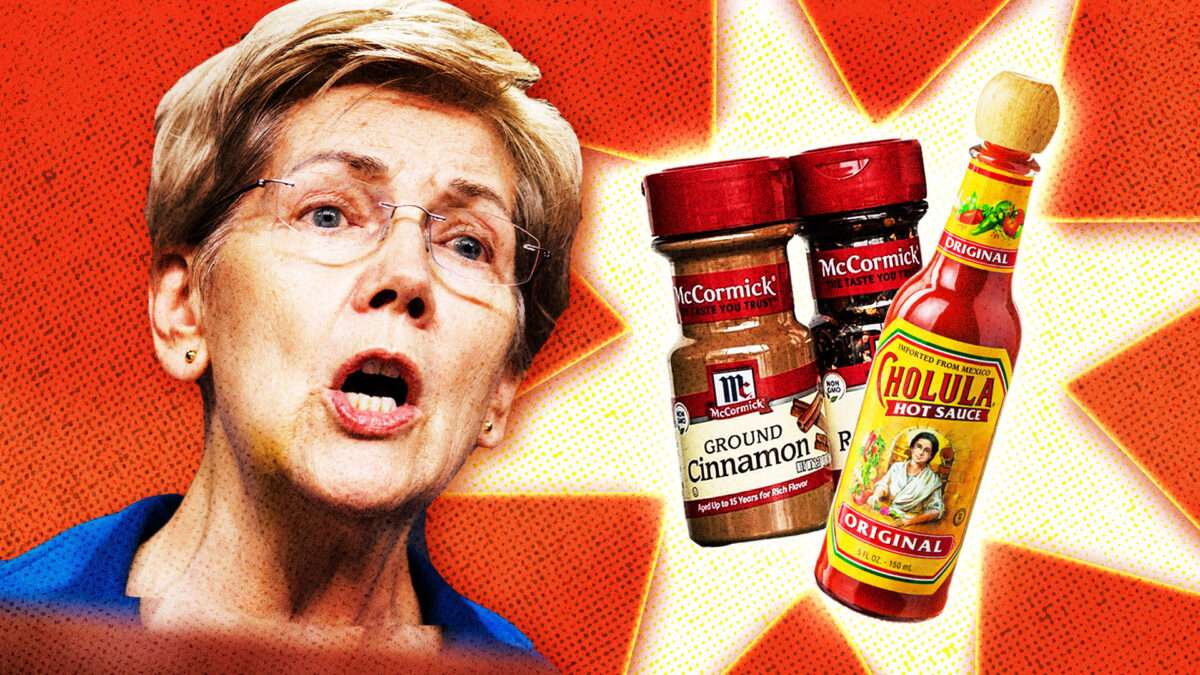
As gratifying as it might be to see unprincipled Trump enablers reduced to minority status after signing off on economy-wrecking tariffs, inhumane immigration detentions, and wars of choice, there's at least one good reason to dread a Democratic majority too: Sen. Elizabeth Warren, the Massachusetts progressive who is spending the run-up to the midterms freaking out over possible consolidation in the condiments business and accusing private equity firms of gutting such shopping-mall favorites as Claire's and Toys R Us. There's every reason to believe that a Senate run by Warren and other economic interventionists will waste time, money, and resources trying to prevent a world in which, per the X wag Iowahawkblog, "a panopticon conglomerate owns two brands of hot sauce."
On October 13, Warren posted this dire warning to X:
Hellmann's mayo McCormick spices Cholula hot sauce Frank's RedHot
What do these products have in common? One company could soon control them all.
I have concerns that McCormick and Unilever's $45 billion merger could increase YOUR grocery prices.
It's hard to think of a more competitive and varied market than the one for hot sauces, which is expected to more than double over the next decade. The barriers to entry are generally low, as are the key ingredients, and new entrants can easily market and sell online, avoiding the costs of buying shelf space in conventional supermarkets. Yet Warren is urging regulators at the Department of Justice and the Federal Trade Commission to halt mergers of both product makers like McCormick and Unilever and grocery stores like Kroger and Giant Eagle.
The latter complaint is particularly picayune. Kroger is one of the country's largest supermarket chains, operating around 2,800 stores under its own name as well as Harris Teeter, Ralph's, and others. Giant Eagle operates about 170 stores. This merger is no more the stuff of nightmares than a single company producing both Cholula and Frank's RedHot. If Warren gains more clout from being in the majority, expect her to butt in more and more on such mergers.
Making it harder for businesses to adapt is not a recipe for making goods and services more affordable. But Warren is keen to blame economic creative destruction not on "new forms of industrial organization that capitalist enterprise creates" (as Joseph Schumpeter would have it), but on pure greed. In a TikTok released earlier this month, she shows a poster board with corporate logos from once-thriving companies that she says have been "gutted" by "private equity" firms.
"Here's your local mall," she piously intones. "Now, private equity wants you to believe that Red Lobster went bankrupt because of their endless shrimp….They want you to believe that Claire's went bankrupt because teens stopped shopping at the mall." In Warren's telling, private equity firms magically take over thriving businesses and then strip them bare. The typical pattern is that private equity enters the picture after a business is failing.
Virtually all accounts of the decline of, for example, Red Lobster, note that the chain had been spiraling for several reasons before the private equity firm Golden Gate Capital got involved in 2014. As this CNN article notes, the chain, which started in 1968, had seen drops in sales as customer desires changed. Management compounded the difficulties with a series of bad decisions, including continuing various all-you-can-eat menu specials, before coming out of Chapter 11 bankruptcy last year.
Similarly, it's true that some teens still go to malls and get their ears pierced at Claire's. But anyone who has spent time in retail America over the past few decades knows that malls are no longer the destination that they once were. As CapitalOne Shopping Research documents, "in 1986, there were 25,000 malls, large and small, nationwide." By 2023, that number had shrunk to just 1,200. While some malls are coming back, most are not, and for reasons that have nothing to do with private equity. Online retails plays a role (though a smaller one than usually imagined, with e-commerce accounting for less than 20 percent of all retail sales). But mostly, it's that people today tend to want a different sort of retail environment. Anchor stores—think Macy's and J.C. Penney—are shadows of themselves, and younger people have less unstructured time in which to prowl food courts and arcades.
For politicians like Elizabeth Warren, though, there can be no financial gains or losses that aren't the result of shadowy, conspiratorial forces. If her party takes control of the Senate, her words will carry more weight. But it will be American consumers that ultimately shoulder the burden of an even-more-regulated economy. The market for hot sauces will almost certainly stay spicy, but many other parts will surely suffer.
Le elezioni americane di metà mandato del 3 novembre potrebbero cambiare gli equilibri della politica industriale degli Stati Uniti, con conseguenze per i costruttori automobilistici e la filiera dei componenti. Una vittoria democratica alla Camera e al Senato, scenario considerato possibile dai sondaggi, darebbe al Congresso maggiori strumenti per intervenire sulle scelte dell’amministrazione Trump in materia di dazi, accordi commerciali e mobilità elettrica.
Secondo un’analisi della testata specializzata Automotive News, il ritorno dei democratici alla guida delle due Camere aprirebbe una fase di confronto con la Casa Bianca su alcune delle questioni che condizionano gli investimenti del settore. Trump conserverebbe il potere di veto, ma il Congresso potrebbe avviare indagini sulle politiche commerciali, convocare i responsabili delle agenzie federali e cercare di limitare l’autorità presidenziale.
Per l’industria automobilistica il primo nodo riguarda i dazi, che incidono sulle importazioni, sui costi di produzione, sui prezzi delle vetture e sull’organizzazione delle catene di fornitura. Un Congresso democratico potrebbe sottoporre a maggiori controlli le misure adottate dall’amministrazione, senza arrivare alla loro cancellazione. Anche tra i democratici, del resto, la difesa della produzione nazionale e dell’occupazione industriale resta una priorità.
Un passaggio sarà la revisione dell’USMCA, l’accordo commerciale tra Stati Uniti, Messico e Canada. I tre Paesi ospitano una rete di stabilimenti e fornitori nella quale componenti e veicoli attraversano più volte le frontiere prima di arrivare sul mercato. La revisione prevista nel luglio 2027 potrebbe modificare le condizioni degli scambi e incidere sulle strategie produttive dei gruppi presenti in Nord America: il Congresso potrebbe influenzare il negoziato, chiedendo maggiori garanzie e controlli.
L’altro fronte è quello dell’elettrificazione. La politica di Trump ha ridotto il sostegno normativo alla diffusione delle auto a batteria, mentre diversi costruttori hanno investito nella produzione di veicoli elettrici e accumulatori. Una maggioranza democratica potrebbe tentare di recuperare parte delle misure a favore della transizione, incontrando però i limiti imposti dal potere presidenziale.
A pesare sarà anche il risultato delle elezioni in California, che ha fissato l’obiettivo di arrivare al 100% di vendite di nuove auto a zero emissioni nel 2035, una scadenza adottata da altri Stati americani. La normativa è al centro di una controversia giudiziaria dopo gli interventi del Congresso contro l’autonomia regolatoria californiana. Il prossimo governatore, con il democratico Xavier Becerra favorito, avrà un ruolo nella definizione della strategia. Le sue dichiarazioni hanno alternato il sostegno all’obiettivo del 2035 alla richiesta di considerare costi e infrastrutture.
Un’altra occasione di confronto potrebbe arrivare nel 2027, quando gli Stati Uniti rischiano di raggiungere il tetto del debito federale. I democratici potrebbero utilizzare il negoziato per ottenere concessioni anche sulle politiche energetiche e sui trasporti.
Per i costruttori, l’esito delle elezioni non comporterebbe dunque un cambio immediato delle regole. Potrebbe invece incidere sui tempi e sui contenuti delle decisioni che riguardano importazioni, produzione e investimenti nell’elettrico. Questioni sulle quali l’industria deve programmare attività e risorse con anni di anticipo.
È una scommessa che, per Donald Trump, non sarà facile vincere. La scommessa è il cosiddetto “diesel deal”, l’accordo stipulato tra il presidente Usa e Vladimir Putin per la fornitura sul mercato statunitense e globale di migliaia di tonnellate di diesel. L’obiettivo dichiarato è bloccare l’aumento record dei costi energetici negli Stati Uniti e riuscire a farlo in modo consistente e rapido, prima delle elezioni di midterm del 3 novembre. Con lo stesso obiettivo, il tycoon ha poi deciso di sospendere le sanzioni nei confronti di Mosca. Gli elementi in gioco sono però molti, molto incerti, tali da rendere la strategia di Trump un azzardo, prima ancora che una scommessa.
Il “diesel deal” è una storia globale, che dalle pianure del Montana porta all’Iran e dall’Iran alla Russia. L’evento da cui partire è sicuramente il 28 febbraio 2026, quando i jet militari Usa lanciano le prime bombe su Teheran. Il midterm è ancora lontano e gli americani sono certi della vittoria totale nel giro di “4/5 settimane”. Cosa è successo è noto. Nonostante i proclami di Trump, la vittoria non c’è stata e gli Stati Uniti le hanno tentate tutte – minaccia di distruzione, aperture al negoziato, promessa di affari miliardari per gli ayatollah – prima di rendersi conto che le cose non sono andate come previsto. È a questo punto – più o meno nel corso dell’estate 2026 – che tra i responsabili dell’amministrazione si fa strada la possibilità più temuta, quella di un voto di midterm a guerra in corso, Stretto di Hormuz chiuso, americani furibondi per l’esorbitante costo della vita. A Washington si cerca quindi di correre ai ripari e il riparo trovato ha un nome: Ucraina. Un conflitto dimenticato per mesi, lasciato tragicamente vivacchiare perché considerato insolubile, torna improvvisamente d’attualità.
È chiaro ciò cui Trump e i suoi pensano, nel disegnare il “diesel deal”. Pensano di aggirare il “problema Iran” promuovendo un accordo tra Mosca e Kiev che faccia affluire sul mercato centinaia di migliaia di tonnellate di diesel e serva come calmiere dei prezzi. Trump sa ovviamente molto bene che europei e soprattutto ucraini non sono per nulla convinti da una strategia che appare come una resa di fronte alle richieste del Cremlino. Il suo problema in questo momento non sono però europei e ucraini, bensì gli agricoltori del Montana, l’industria manifatturiera e siderurgica del Midwest, i consumatori delle grandi città, tutti gli americani che subiscono costi della vita troppo alti e che il 3 novembre andranno a votare. È in nome della difesa del voto repubblicano, e della sua sopravvivenza politica, che il presidente riapre il canale d’affari con la Russia di Putin e abbandona gli ucraini al loro destino.
Il “diesel deal” è quindi ciò che dovrebbe risollevare l’America dalla crisi in cui è precipitata a partire dal 28 febbraio scorso. Le incognite sono però molte. Perché il piano abbia successo, gli Stati Uniti hanno anzitutto bisogno di piegare le resistenze degli ucraini. I messaggi partiti nei giorni scorsi da Washington, direzione Kiev, sono molto chiari. Trump ha chiesto agli ucraini di sospendere gli attacchi sulle raffinerie russe, mentre i russi continuano tranquillamente a bombardare le infrastrutture energetiche ucraine. Ancora Trump si è scatenato in una filippica contro Volodymyr Zelensky, chiedendone le dimissioni. L’esercito ucraino ha quindi perso, senza preavviso, l’accesso a una versione militare di Starlink, Starshield, pagata dal Pentagono e che ha sinora consentito di scambiarsi intelligence sul campo di battaglia. Ci sono pochi dubbi sul fatto che il “diesel deal” rappresenti la morsa che Mosca e Washington stringono attorno alle speranze di Kiev di opporsi all’invasione russa. Non sembra, almeno per ora, che il piano abbia sicuro successo. L’intervista di Zelensky al Financial Times giovedì, con l’annuncio della ripresa delle operazioni militari sulle raffinerie russe, è una sfida ai piani di Trump e la prova che l’Ucraina non ritiene inevitabile una conclusione del conflitto ai suoi danni.
Ciò in cui Zelensky confida, oltre all’immutato appoggio europeo, è infatti l’aleatorietà del piano. L’intesa con la Russia viola anzitutto l’Ending Importation of Russian Oil Act del 2022 che vieta l’importazione di prodotti energetici russi sino a quando Mosca non porrà fine alla guerra, riconoscendo l’integrità territoriale dell’Ucraina. Trump potrebbe certo, lo ha fatto altre volte, trascurare il dettato della legge e impegnarsi in una prova di forza con il Congresso. In questo caso, dovrà però affrontare non solo l’ostilità dei Democratici, ma anche la resistenza di vasti settori del suo partito. “L’accordo che hai concluso con il presidente Putin il 9 ottobre non porterà a cose giuste, né andrà a vantaggio degli americani. L’accordo è un regalo al nostro avversario e un tradimento nei confronti dei nostri alleati. Deve essere revocato”, ha scritto in una lettera un gruppo bipartisan di senatori, tra cui i repubblicani Mitch McConnell, Alan Armstrong e John Cornyn. Ci sono poi i ricorsi in tribunale per violazione della legge del 2022 ed eccesso di potere esecutivo che affluiranno sicuramente numerosi da parte di associazioni, membri del Congresso, soggetti commerciali.
Ci sono infine due altri elementi che rendono così incerto il futuro del dell’intesa. Anzitutto, non si sa quanto la Russia sia in grado di sostenerla in termini produttivi. Gli attacchi dei droni ucraini hanno seriamente danneggiato gli impianti di raffinazione. La ripresa delle operazioni militari, orgogliosamente rivendicata da Zelensky, rischia di aggravare la situazione e rendere impraticabile il rispetto dei target di esportazione fissati. Quelle esportazioni non rappresentano del resto l’affare del secolo per Mosca – le 300 tonnellate iniziali valgono circa 400 milioni di dollari – e si può supporre che Putin non sia disponibile a svuotare il mercato interno per salvare Trump al midterm. Per il capo del Cremlino, il “diesel deal” ha un valore soprattutto politico, più che economico, in quanto segnala come Trump abbia deciso di scaricare Zelensky. C’è infine quella che potrebbe diventare la pietra tombale sull’intesa. L’accordo risolve molto poco. I volumi fissati per le esportazioni sono troppo bassi, le raffinerie russe troppo malmesse, la crisi energetica troppo profonda e carica di ostacoli logistici. Non sarà insomma l’accordo con Putin a risollevare Trump. Come in altre fasi della sua irresistibile ascesa, il presidente ha sperato che un annuncio, una promessa, la rappresentazione di qualcosa che non c’è bastasse a ridargli lo slancio perduto. È un gioco che oggi, in America, non funziona forse più.
Elon Musk, seen here with President Donald Trump last month, is bankrolling Republican campaigns.
Bloomberg/Getty Images
Elon Musk is giving reams of cash to Republicans.
Most of that dough is ending up in Texas, according to financial disclosure forms.
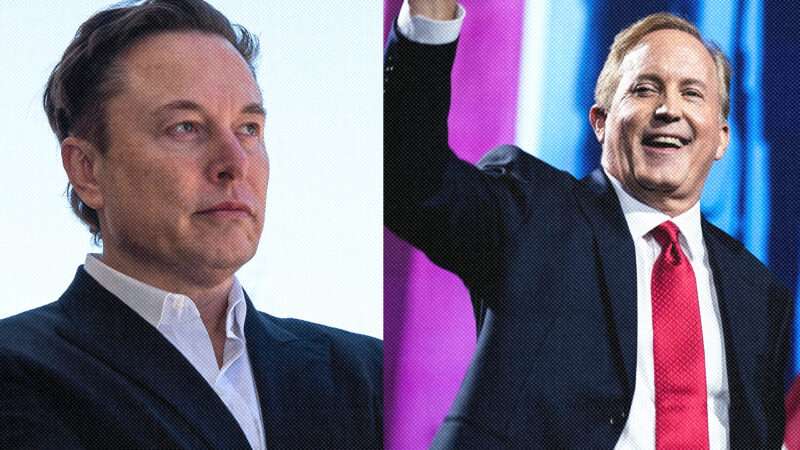
In Texas, Ken Paxton is running a tight race against James Talarico.
Elon Musk is forking over generational wealth to Republicans facing tough midterm elections this cycle.
Over two donations in September, Musk gave a combined $158 million to the Senate Leadership Fund, a super PAC aligned with Senate Republicans, which has, in turn, given reams of cash to funds supporting the Republican candidate in Texas.
The money, shown in new federal disclosure forms, cements Musk as a major player in Republican politics over a year after he publicly split with President Donald Trump over the latter's handling of the Epstein files (though the two have since reconciled).
Republicans are facing serious headwinds over the Iran war, rising inflation, and sky-high gas prices. Polls show that American voters are largely dissatisfied with Trump's leadership and handling of the economy.
All told, Musk has given about $276 million since July. Much of Musk's political donations have ended up in Texas, according to federal disclosure forms, where embattled Attorney General Ken Paxton is engaged in a mudslinging battle for the Senate with state representative James Talarico.
One day after Musk notched a $75 million donation to the Senate Leadership Fund, the Super PAC gave a $75 million donation to the Texas PAC, a group aligned with Paxton.
Then, also in September, another $83 million donation by Musk was matched the next day by an identical donation to the Texas PAC, according to federal disclosure forms.
Talarico's campaign, meanwhile, has raised about $129 million.
Musk's companies are already investing billions in the Lone Star State, as the business magnate builds SpaceX's terafab semiconductor facility outside Houston.
In 2024, Musk announced that he was moving SpaceX's headquarters from California to Texas in response to Gov. Gavin Newsom's policies on gender identity.
Representatives for Paxton and Musk did not immediately respond to requests for comment on Saturday.
Musk, the CEO of SpaceX and Tesla, said last year that he had probably "done enough" political spending, though he left the door open.
"Well, if I see a reason to do political spending in the future, I'll do it. I don't currently see a reason," he told Bloomberg at the time.
The Democratic Socialists of America (DSA) candidates running for the House of Representatives and endorsed by NYC Mayor Zohran Mamdani are all but guaranteed to win their general elections this November, but that does not mean the midterm drama is over in New York. In the state's 17th congressional district, which includes the lower Hudson Valley, Democratic challenger Cait Conley, a combat veteran who served on the Biden administration's National Security Council, could unseat incumbent Republican congressman Mike Lawler in one of the most consequential races of the midterms.
The highly contested purple district voted for former Vice President Kamala Harris in the 2024 election while reelecting Lawler for his second term. Now, Lawler is attempting to win a third term as support for President Donald Trump wanes ahead of the midterms. As of Friday, The Cook Political Report lists the race, which could determine control of the House, as a toss-up.
If elected, Conley would have far more in common with the "Badass Women" coalition of security state and military veterans than with DSA types (think more Sen. Elissa Slotkin from Michigan than Darializa Avila Chevalier). As Judge Street Journal's Timmy Facciolanotes, "Conley's candidacy is testing the viability of a tactful centrism that rebukes left-wing positions like abolishing ICE or restricting weapon shipments to Israel." Lawler is also vying for moderates, pitching himself as "one of the most bipartisan members of Congress" and emphasizing his willingness to break with Trump occasionally while still welcoming Trump's support.
While Lawler and Conley certainly are not pure MAGA acolytes or DSA members, both have leaned into a tech-critical position, much like that of more radical populists like Lina Khan or Steve Bannon, revealing how pervasive anti-tech sentiment has become in mainstream politics.
This tech skepticism was on full display during an October 14 debate, when each candidate made the case for why they were the most equipped to regulate AI, insisting that the industry needs guardrails.
Conley said members of Congress do not want to regulate AI because "they want to look out for their billionaire and trillionaire backers like Elon Musk, who is pouring over $260 million into this midterm election." She then added that Musk backed Lawler in his 2024 race.
Lawler then accused Conley, who previously consulted for Primer AI, of being "the AI candidate for the AI industry."
While Lawler and Conley disagree on specific data center regulations (Conley supports Democratic Gov. Kathy Hochul's data center moratorium while Lawler supports local zoning control over data centers), neither wants to pitch themselves as an explicitly pro-data center candidate. During the debate, Conley claimed that, "On Mike Lawler's watch there have been five data centers built in Rockland County." Lawler has said that he had no say in the decision to build the data centers, and during the debate, he pointed out that the facilities were built for financial services. Lawler also attempted to attack Conley over data centers, slamming her in an ad for saying "we need data centers." Regardless of the candidates' specific policies on data centers, their attacks on one another demonstrate that cheerleading hyperscale data center development is a political liability. In their district, data center has presumably become a dirty term.
The candidates' tech-skeptical rhetoric did not end with unchecked data center development. After the debate, Reason asked both candidates about their positions on age-verification laws for social media and AI, since such regulations raise significant privacy and censorship concerns by age-gating the internet. Unsurprisingly, both Lawler, who votedfor the controversial KIDS Act, and Conley, who has proposed stricter age verification for AI tools, parroted platitudes about why such online safety regulations are necessary to protect children.
"We have watched how social media is literally hurting the mental health of children," Conley told Reason. "And when you talk about the power of AI and what that power could do, we have to regulate this."
Lawler gave a similar response, telling Reason that he respects free speech but that protecting children "is paramount."
This bipartisan consensus over social media regulation has long been brewing in Congress. The mainstream political conversations about AI and data centers, however, are relatively new this midterm election cycle. And it appears both Lawler and Conley have figured out which way Americans' sentiment toward AI is leaning, and they have waged their campaigns accordingly.
Musk is the big Paxton funder: According to campaign filings released yesterday, Elon Musk sent $158 million in September to a super PAC that immediately gave that amount of money to a group backing Texas Republican Ken Paxton's Senate bid against Democrat James Talarico.
"On Sept. 9, the first day of the GOP midterm convention in Dallas, Musk gave $75 million to SLF," reportsThe Texas Tribune. "The next day, SLF put $75 million into a new entity called Texas PAC. By the weekend after the convention, the new super PAC was up on the air with a positive spot about Paxton's work on sex trafficking and a negative ad attacking Talarico as being for 'they/them, not you.'"
Then, two weeks later, "Musk gave an additional $83 million to SLF, according to the group's filing. Sure enough, SLF deposited $83 million into Texas PAC's coffers the following day."
It would be wild if Paxton still loses. Paxton has been embroiled in rolling scandals for years, and some current polls have him underwater by 13 points. A New YorkTimes/Siena survey found only 38 percent of likely Texas voters believe he has "good character," versus 56 percent for Talarico.
Paxton was indicted on securities fraud charges in 2015, and that case dragged on for most of a decade before ending in a pretrial agreement. Then the Texas House, led by Republicans, accused him of bribery and abuse of public trust and successfully impeached him in 2023. The charges centered on allegations that he used his office to help donor Nate Paul—so you can imagine why Musk might want to curry favor with Paxton. Though Paxton was later acquitted by the state Senate, scandal keeps chasing him: Last year, his wife, state Sen. Angela Paxton, filed for divorce on "biblical" grounds, citing adultery as one of the reasons.
Of course, many Republican voters at the state level saw the impeachment as nothing more than a political hit job, one echoing what's happened to President Donald Trump at the national level. But what far-right, already-convinced Republicans believe about Paxton is sort of beside the point: He needs turnout, and he needs to win over more moderate Republicans and maybe even some fence-sitters if he hopes to beat Talarico. It's possible Musk's cash infusion will help, but it's also possible a cash infusion of many millions of dollars won't be enough to rehabilitate Paxton's shitty image.
A poll from the University of Texas and Texas Politics Project conducted in August "contained four major warning signs for Paxton: a drop in his support from June, lagging GOP motivation to vote, worse favorability numbers than Talarico and Trump's approval being underwater in the state."
Scenes from New York: "When Gov. Kathy Hochul first ran for re-election, Republicans in New York tried to prey on fears over crime, rising inflation and illegal immigration to boost the chances of their ticket statewide in the critical 2022 midterms," reportsThe New York Times. "The strategy seemed to work. Republicans flipped four House seats in New York, while putting a scare into Ms. Hochul, who eked out a six-point victory over Lee Zeldin, then a Long Island congressman who now leads the E.P.A." This year, Republicans have picked Bruce Blakeman, the Nassau County executive, as the guy with the best odds of beating Hochul, and they're running on crime fears again. But it's not working so well.
The crime and public disorder is, to my mind, still a problem, but it's not as rampant as it once was during the peak pandemic years. And it's certainly not perceived as very bad right now.
QUICK HITS
"Three children and a teacher were killed, and two others were critically wounded, in a shooting Thursday at Silver Rail Elementary School in Bend, Oregon, authorities said," reports CBS News. "The suspect, a 16-year-old male, was shot and killed by a bystander, Bend police said.…Officials would not say exactly what type of weapon was used in the attack or how many rounds were fired. Multiple law enforcement sources told CBS News the suspect used a shotgun, and The Associated Press cited a law enforcement official briefed on the incident as saying it was a pump-action shotgun purchased by his mother."
"A climate of radical paranoia around AI seems like it will be a feature of our world for the foreseeable future," writes Ross Douthat in The Free Press, "because human beings are really good at being paranoid about mysterious new things. With, of course, the AI doomers themselves being a prime example: As Mike Solana of Pirate Wires notes in his own recent reading of the doom canon, the prophecies of Yudkowsky and Co. are already moderately less credible insofar as they don't account for their own cultural success."
"Taiwan is preparing to tighten export controls on AI chips to further align with US restrictions, according to a senior official in Taipei, joining a Trump administration clampdown on the smuggling of cutting-edge semiconductors to China," reportsBloomberg. "Taipei plans to add artificial intelligence servers and cutting-edge semiconductors to a list of controlled items, Taiwan's Minister of Economic Affairs Kung Ming-hsin told Bloomberg News. After the measures take effect, he said, shipping restricted AI hardware to China will become a criminal offense under the Foreign Trade Act."
I'll leave you with a quote from Kennedy (not John or Robert) to start your weekend off right: "Kimberly [Guilfoyle] talked about sex so cavalierly that she made Samantha from Sex and the City seem like Greta Thunberg."
This year, Alaska held its primary elections on August 18.
As per a 2020 ballot measure, Alaska primary voters pick among all qualified candidates for a single office, regardless of party affiliation, and the top four then advance to the general election.
In the U.S. Senate primary, Republican incumbent Dan Sullivan won 41 percent of the vote, while former Rep. Mary Peltola, a Democrat, captured nearly 50 percent.
Dan Sullivan was also the distant third-place finisher—but in this case, it was Daniel J. Sullivan Jr., a retired schoolteacher who is also running as a Republican but is not the same person as Daniel S. Sullivan, the junior U.S. senator for the 49th state.
The presence of dual Dan Sullivans is a headache for Republicans, who have fought to keep Daniel J. off the ballot, concerned he would split their votes and cost their candidate his seat.
"Mary Peltola and Chuck Schumer know they can't beat Senator Sullivan on his record, so they're resorting to deceitful political maneuvers that attempt to trick Alaskans and buy a seat," a Republican spokesman told Fox News.
"We are looking into it," President Donald Trump said this week. "It's a disgrace." In fact, NBC News reported in July that the FBI and Department of Justice had launched an investigation "looking for possible wire fraud or a conspiracy to deprive Alaskan voters of a free and fair elections process, which could be a civil rights violation."
In August, the government apparently issued subpoenas, though Daniel J. later said he had not received anything.
But is what he is doing actually illegal? For that matter, should it be?
Carol Beecher, director of the Alaska Division of Elections, barred Daniel J. from the ballot in June after concluding that he was running "with the purpose of confusing or misleading the electorate and compromising the fairness of the ballot."
But a state superior court reversed that decision. "Despite the Division's assertion that Mr. Sullivan may be excluded from the ballot because he lacks 'good-faith,' there is no statute which provides such a criterion," wrote Judge Thomas A. Matthews. "The concept of 'good-faith,' or pure motive, or bona fide intent is simply absent." The Alaska Supreme Court agreed, keeping both Sullivans on the November ballot.
Granted, it seems extremely likely that Republicans are right, and Daniel J. is running specifically to hurt Daniel S.'s prospects.
"Campaign material metadata reveals that Amber Lee, a progressive consultant, authored a press release announcing [Daniel J.'s] Senate bid," WFMD reported in May.
Daniel J. told The New York Times that he was running as a moderate Republican in an attempt to steer the party away from its MAGA wing. But he also admitted that he had voted for the Democrat in the last three presidential races and for Peltola in her races for the U.S. House.
In Beecher's original order keeping Daniel J. off the ballot, she wrote that Daniel J. had asked to be identified as "Dan S. Sullivan" on the ballot, the same name as the senator's. (Alaska reporter Dermot Cole wrote in July that this was not true: Daniel J. wrote "Dan S. Sullivan" in an email to Beecher but followed up hours later to correct it to "Dan J. Sullivan.")
If Daniel J.'s goal truly is to mislead voters, then that is indefensible. But it's not clear that it's illegal, or whether it should be.
"I am not sure exploiting voter confusion about names is any worse than exploiting their ignorance about policy issues like crime, immigration, and health care," wrote George Mason University law professor Ilya Somin. "Trying to prevent such exploitation through criminal and civil liability is likely to violate the First Amendment. In addition, it would likely end up giving incumbent political leaders broad power to curb speech and control electoral campaigns that they cannot be trusted with."
"This is a case about someone running for office with impure motives who is lucky enough to have a name that could confuse some voters," agreed election law expert Richard Hasen. "I don't see how the government could criminalize his running for office for having impure motives. And if it could do so, then it could be a crime every time that the Republican Party backs a Green Party candidate, or Democrats support a MAGA candidate in a primary in the hopes that the candidate would be weaker against a Democrat in the general election. This stuff happens all the time."
But it's entirely possible that Alaska's ranked choice voting system will solve the problem on Election Day.
After the August open primary, the top four candidates compete on a ranked choice ballot, where voters list the candidates in order of preference. If no candidate gets an outright majority, then the lowest performer is eliminated, and every ballot that picked them first is retallied and applied to their second choice.
As long as every Alaskan who wants to vote for Dan Sullivan—either one—lists both Dan Sullivans as their first and second choices, then the system will take care of any confusion. In the (highly likely) event that Daniel J. does not capture a majority on the first ballot, his votes will be retallied and applied to their second choices. The only plausible hiccup is if Peltola, the Democratic candidate, wins a majority in the first round—in which case either Sullivan would have lost anyway.
Of course, Republicans have opposed the ranked choice system since Alaska adopted it. Former Gov. Sarah Palin, who ran against Peltola twice unsuccessfully, said ranked choice was "so weird" that "it results in voter suppression."
In a post last week on Truth Social, Trump called ranked choice voting "Corrupt" and said it "shouldn't be allowed in our Country."
"I just left Alaska, where we have a real bad thing," Trump said Wednesday at a campaign rally in Arizona. "They have the ranked choice voting, where you go into I guess some kind of a test tube or something, and they pick whoever the hell they want. That's another disgrace."
As ever, it's not clear what Trump was talking about. And despite Republicans' complaints, ranked choice voting works quite well: According to the American Bar Association, recent research finds that it "is an improvement over plurality voting with clear benefits in terms of representation, campaign quality, mobilization, and turnout." It also "encourages greater consensus building as well as more civil political campaigns," and voters find it easy to understand.
In the event that a political party finds itself, for example, with two Dan Sullivans on the ballot, ranked choice voting is a perfect solution. If only the party weren't so hostile to it.
Donald Trump ha dovuto fare un passo indietro sull’esecuzione in diretta streaming di Nidal Malik Hasan, l’ex soldato autore della strage nella base di Fort Hood del 2009, nella quale uccise 13 suoi commilitoni. Le proteste bipartisan, l’opposizione della Chiesa e anche il rifiuto di una parte dell’esercito di prendere parte all’uccisione dell’ex militare hanno reso quello che doveva essere l’atto più eclatante dell’amministrazione in vista del midterm, quello che avrebbe dovuto compiacere l’ala più estremista del mondo MAGA, in un boomerang.
Il presidente, come spesso accade, ha dato l’annuncio sul suo social Truth: “Morirà, come previsto, davanti a un plotone d’esecuzione, ma l’evento non sarà trasmesso in streaming – ha scritto il tycoon – Tuttavia, i familiari più stretti delle vittime potranno assistere all’esecuzione di persona, se lo desiderano. Meritano di vedere la giustizia in azione”.
Sulla questione da giorni è in corso un dibattito molto intenso negli Stati Uniti. Critiche sono arrivate non solo dalle opposizioni, ma anche da membri del Congresso tra le file repubblicane. Anche il vicepresidente JD Vance aveva preannunciato che, nel caso fosse stata trasmessa, non avrebbe guardato l’esecuzione. Un indirizzo contrario era arrivato anche da Papa Leone XIV e dai Vescovi americani, mentre 60 militari avevano chiesto di essere esentati dalla partecipazione all’uccisione di Hasan. La trovata di Hegseth si stava quindi trasformando in un autogol e Donald Trump ha tentato di rimediare con una smentita.
No longer so red: Long a swing state, Ohio went for President Donald Trump back in 2016, in 2020, and in 2024. Now, with midterms approaching, it looks likely to vote blue again, and there are early indicators that Republicans have failed to win over Ohio's working-class voters in particular.
"After the first days of early voting in Ohio, a state that could help determine control of the Senate, there are clear signs Democrats are more enthusiastic to vote," reports CNN. "So far, affiliated Democrats make up larger shares of pre-election voters than they did two years ago, even in the most Republican parts of the state. At this point in 2024, Republicans had a 30-percentage point lead over Democrats in counties that voted for President Donald Trump by 20 points or more, according to data from the Ohio Secretary of State. This year, that's shrunk to just five points."
Take this data with a grain of salt: It is just early-voter data.
But this is all rather high-stakes because Republicans are defending a Senate seat, as well as the governor's office. Two races for House seats are considered toss-ups. The conventional wisdom has been that Ohio is now solidly red, with three cycles of presidential election data to support that. But it's possible Trump has pissed off the voters who supported him to such a degree that Ohio will be sent back into swing-state territory.
"God knows we didn't vote for this," one voter—a pastor who went for Trump, then Biden, then Trump—told Reuters, referring to inflation. Other voters wonder about the decline in manufacturing jobs and the fact that the president has paid lip service to these problems but done very little to actually improve people's circumstances.
On Monday, Trump rallied in support of Sen. Jon Husted, who hopes to retain his seat. In the Mahoning Valley, the president announced a few new, uh, incentives to voters: a Defense Department facility based in Cleveland, and promises that a heat provider for Youngstown remained open. "The Youngstown area for decades used to vote Democrat, and then you ran for office in 2016 and flipped it red forever," said Husted in his speech. "Is that right, folks?"
OpenAI arrest: The FBI arrested a Saudi national who worked at OpenAI "and charged him with installing a hidden audio recording device in an executive conference room," per the Department of Justice. Abdulrahman Alfozan had worked as an engineer at OpenAI since July 2025, in the San Francisco office. The company found the recording device "plugged into a USB port on the back of a television in an executive conference room," per Reuters. The device had a microphone and allegedly connected to a camera; the data it stored was encrypted.
"At this time, we have no indications of this individual inappropriately accessing or exfiltrating model weights, source code, or customer data. The employee was terminated," said OpenAI. It's not clear who Alfozan may have been working for or with; he has been a permanent resident of the U.S. since 2020, with stints at Meta and Microsoft.
"If convicted, Alfozan faces up to five years in prison, a $250,000 fine and three years of supervised release," notes Reuters.
Scenes from New York: Mayor Zohran Mamdani has reportedly reached a deal with the City Council to ban horse carriages in the city, perPolitico. I'll admit, I don't really care, but I'm intrigued by the fact that the reason this has taken so long to get through has been because the union representing the carriage-drivers has been so successful at advocating for its members' interests.
QUICK HITS
Pope Leo XIV was diagnosed with lung cancer, said the Vatican yesterday. He underwent a successful surgery, and there's no additional information about prognosis at this time.
Daniel Cox's new book, Generation Uncoupled, makes the case "that problems with dating and romantic partnership are downstream from the decades-long deterioration of American social and civic life." Cox tells Derek Thompson (in a wonderful interview worth checking out): "There's a cultural dimension to all of this, as well. It's not entirely that young people have fewer social opportunities, but that they are encouraged to prioritize their own personal experiences and expression. On social media, self-optimization culture teaches young people that the most coveted rewards in life are secured through individual effort and ambition alone. There is a fear that our relational obligations can work against these goals by restricting our autonomy. It explains why more young people worry about what marriage and parenthood will require of them, rather than the benefits they offer. Not surprisingly, rates of family estrangement are at record highs, prenuptial agreements are more popular than ever, and most young people now feel that obtaining a divorce should be made easier." This obsession with self-actualization, or controlling one's circumstances, as well as risk-aversion, is something I'll be covering a bit in my book, City Without Children. This culture is shaping not only our decision to (not) couple up and get married, but also our decision to delay having kids, and how we parent them once they're here.
"The bond-market turbulence last month seeped into results as the banks each posted weaker-than-expected revenue from their businesses trading bonds on behalf of clients, and dealmaking slowed more than they had anticipated," reportsThe Wall Street Journal. "In a somewhat rare occurrence, JPMorgan missed analysts' expectations."
"The White House has asked Kimberly Guilfoyle, the ambassador to Greece, to resign, new White House press secretary Katie Zacharia told reporters on Tuesday, a day after President Donald Trump said he was considering firing her after allegations she asked a political donor for $100,000 to pay her personal American Express bill," reportsThe Washington Post.
The FIRE ("financial independence, retire early") people are now saying the quiet part out loud: that living on canned lentils well into your 40s is practically the same as being imprisoned.
Di tutte le scelte impulsive e scriteriate di Donald Trump, la guerra in Iran è forse quella che più di tutte gli si è ritorta contro. Il conflitto è impopolare, i prezzi della benzina sono aumentati e i candidati repubblicani temono che l’argomento possa essere la causa di un risultato disastroso al voto del 3 novembre. Anche per questo nelle ultime settimane si era instaurata una specie di regola non scritta: niente nuovi grandi attacchi americani prima delle elezioni di midterm. Una certezza che adesso si sta sbriciolando, come tutte le certezze che pensiamo acquisite ai tempi di Trump.
La Casa Bianca ha chiesto al Pentagono di preparare opzioni per nuovi attacchi contro obiettivi iraniani che potrebbero essere eseguiti anche prima del voto. La notizia l’ha data ieri l’Atlantic dopo aver sentito diversi funzionari dell’amministrazione. I piani vengono elaborati dal Central Command, il comando militare che coordina le operazioni americane nella regione. «La dimensione e gli obiettivi degli attacchi potenziali, così come l’eventualità che l’amministrazione decida infine di procedere, sono ancora oggetto di discussione», scrive l’Atlantic, ma il semplice fatto che il Pentagono stia preparando delle opzioni è significativo.
Il ragionamento alla Casa Bianca è soprattutto politico. Trump vuole abbassare il prezzo della benzina e mostrare agli elettori di essere riuscito a ottenere un risultato dalla guerra. Anche i sostenitori di una nuova azione riconoscono che «attacchi limitati non basterebbero, da soli, a riportare l’Iran al tavolo dei negoziati, a ripristinare la sicurezza dei trasporti attraverso lo stretto di Hormuz o a far scendere il prezzo della benzina prima del giorno delle elezioni», scrive l’Atlantic. La loro speranza è che una nuova operazione, dopo mesi di relativa calma, permetta invece a Trump di mostrare la propria forza e di rivendicare una qualche forma di vittoria, dando ai repubblicani una spinta necessaria verso il voto.
Eppure in questi mesi la guerra ha già dimostrato di poter produrre l’effetto contrario. Il petrolio è arrivato quasi a 118 dollari al barile nella primavera scorsa e anche dopo le successive discese è rimasto intorno ai cento dollari. La benzina negli Stati Uniti costa in media 4,37 dollari al gallone, contro poco meno di tre dollari prima dell’inizio dell’offensiva americana e israeliana del 28 febbraio. «L’azione militare non ha fatto nulla per abbassare i prezzi del petrolio; ha fatto esattamente il contrario», ha detto all’Atlantic Will Walldorf, professore alla Wake Forest University e senior fellow di Defense Priorities.
A Linkiesta l’abbiamo detto fin dall’inizio, Trump fa annunci roboanti per risolvere militarmente problemi che prima dell’inizio della guerra semplicemente non esistevano. E dal punto di vista elettorale non è un problema da poco, perché nei due rami del Congresso la maggioranza repubblicana è a rischio, e anche per molti candidati repubblicani in tutto il Paese il contraccolpo dell’improvvisazione trumpiana potrebbe costare caro. Un esempio su tutti: Ken Paxton, candidato repubblicano al Senato in Texas, ha detto in privato ai suoi finanziatori che l’aumento dei prezzi di benzina e diesel provocato dalla guerra è «di gran lunga il nostro problema più grande».
Va detto anche che Trump ieri sera ha provato a smentire la notizia di un attacco. «Non attaccheremo l’Iran in nessun momento prima delle elezioni di medio termine che si terranno negli Stati Uniti il 3 novembre», ha scritto su Truth, il suo social. Ma i suoi annunci, roboanti o meno, vanno sempre presi con le pinze. Soprattutto perché il primo a smentirli potrebbe essere lo stesso Trump, anche nelle prossime ore.
A Washington si teme anche che sia Teheran a voler sfruttare le settimane che precedono le elezioni. A inizio settimana, Semafor scriveva che alcuni funzionari dell’amministrazione considerano concreta la possibilità che l’Iran cerchi di danneggiare politicamente Trump prima delle midterm. «Potrebbero voler infliggere dei danni al presidente prima delle elezioni», ha detto a Semafor un funzionario dell’amministrazione, ipotizzando una possibile iniziativa iraniana nelle prossime settimane.
«L’Iran sta guardando il calendario e sa che si avvicinano le elezioni», ha scritto ancora l’Atlantic citando un consigliere dell’amministrazione. Ed è proprio questo a rendere più complicato il calcolo americano: un attacco prima del voto potrebbe servire a Trump per dimostrare forza, ma potrebbe anche riportare la guerra al centro della campagna elettorale, con conseguenze indesiderate – anche sulla sicurezza delle circa cinquantamila truppe americane in Medio Oriente.
La situazione sempre più intricata è dettata dal grado di improvvisazione, sempre più elevato, dell’amministrazione Trump. La Casa Bianca avrebbe voluto arrivare alle midterm con la guerra fuori dalle prime pagine e con il prezzo della benzina in discesa. Ma per ottenere entrambe le cose Trump sta valutando un nuovo attacco: farebbe tutto il necessario per poter dichiarare una vittoria, anche a costo di mandare tutto all’aria riaccendendo una guerra impopolare nel momento peggiore possibile.

 Login