❌

Reading view

Cereal production rises to a historic high: Burkina Faso’s pursuit of food sovereignty

Cereal production in Burkina Faso has risen 53% to a record high under the government of Capt. Ibrahim Traoré, who has made food self-sufficiency an urgent priority since coming to power. ​

The country has produced 124% of the national cereal needs, the agricultural minister, Commander Ismaël Sombié, said earlier this month at the 3rd edition of the National Days of Patriotic Engagement and Citizen Participation (JEPPC). 

Paddy rice production for the first time exceeded a million tons in 2025, while Maize production reached well over 2,68 million tons, he added in his address to a panel titled “From field to market: producing and consuming Burkinabe to strengthen our sovereignty.”

Including all other cereals, the total production of over seven million tons is a historic high. It was only 4.66 million tons in 2021-22. It was a tumultuous period. Amid mass protests calling for the expulsion of the troops of Burkina Faso’s former colonizer, France, the regime of President Roch Marc Kaboré, widely perceived in the country as a French puppet, was ousted in a coup.

However, the new military government replacing this regime, led by Lieutenant-Colonel Paul-Henri Sandaogo, dragged its feet on meeting the protesters’ demand for the expulsion of French troops. In this backdrop, another coup followed that September, bringing Captain Ibrahim Traoré to power.

In less than half a year after taking power, he expelled them, asserting Burkina Faso’s sovereignty. However, his government, backed by the anti-France protest movement, trade unions, and progressive sections of the civil society, has repeatedly insisted that sovereignty cannot be consolidated without reducing the country’s dependence on imports for basic food needs.

With domestic agro-pastoral potential undeveloped, Burkina Faso was spending about 148.5 billion CFA francs on rice and wheat imports in 2022, while almost a fifth of the country’s population remained undernourished.

2023-2025 Agro-Pastoral and Fisheries Offensive

Soon after swearing in as transitional president that October, Traoré launched the Presidential Initiative for Agricultural Production (2023-2024), which later became part of the larger, more ambitious 2023-2025 Agro-Pastoral and Fisheries Offensive (OAPH), launched in September 2023.

Spending 273.99 billion CFA francs on this initiative, the state developed 11,774 hectares of irrigated areas and 41,275 hectares of lowland areas, making them available to farmers.​

It invested in water management, installing 485 high-yield boreholes. It increased mechanization, including by deploying 1,261 tractors. And through this initiative, the state supplied inputs, including 160,560 tons of mineral fertilizer, to farmers and created 418 new storage facilities.

A concrete impact on consumer plate​s

The 1,008,737 tons of rice produced in 2025 is 101% of the target set under the OAPH. For maize, the 2,686,531 tons produced amounted to 134% of the target achieved.

Presenting these figures to the Council of Ministers on July 31, Amos Kiénou, OAPH’s executive secretary, said that these gains have had a “concrete impact” on the consumer plate.​

A bag of maize, for example, “used to cost between 35,000 and 40,000 CFA francs” during lean seasons before this campaign by Traoré’s government, he said. “Today… a bag does not exceed 20,000 CFA francs,” even as the government has set minimum prices of several crops to ensure that farmers are not forced to sell at a loss.​

Beyond these carbohydrate sources, the government has also prioritized greater protein availability for the population. Against OAPH’s poultry target of 18,000,000 chickens, 18,262,480 were counted. Fish production rose from 30,574 tons to 58,476 tons during this offensive, although it remained below the target. OAPH also produced 51,818 tonnes of potatoes and renewed 3,170 hectares of mango orchards.​

This campaign aimed at achieving food self-sufficiency has generated 91,027 jobs, including 26,202 permanent positions. Women have secured over a third of them. 4,724 Internally Displaced Persons (IDPs) have also found work. During this OAPH, agricultural GDP rose by an average of over 12% annually, while household incomes grew by 4.3%.

Agropastoral, Hydraulic and Fisheries Offensive 2026-2028

With this success to show, the government is set to expand the campaign, launching an even more ambitious Agropastoral, Hydraulic and Fisheries Offensive 2026-2028 in late July this year.

The state funding of 839.99 billion CFA francs is expected to finance this new offensive, which is to develop another 50,000 hectares of irrigated areas and 100,000 hectares of lowlands.​

Plantain, sunflower, pineapple, rabbit, oil palm, and cocoa are included as the six emerging sectors in the 2026-2028 offensive. The gains made in maize, potato, mango, livestock-meat, fish and poultry are to be consolidated in this new phase, while rice, milk, soybeans, sesame, peanuts, wheat, cassava, and shea fall under priority sectors.

The plan also targets the building of 418 more storage facilities, including 11 cold rooms and 63 processing units.

​The government’s aim is to develop domestic capacity across the entire agricultural value chain – from cultivation to processing to final consumption – to consolidate Burkina Faso’s sovereignty, said agriculture minister Sombié in his remarks on October 7.

  •  

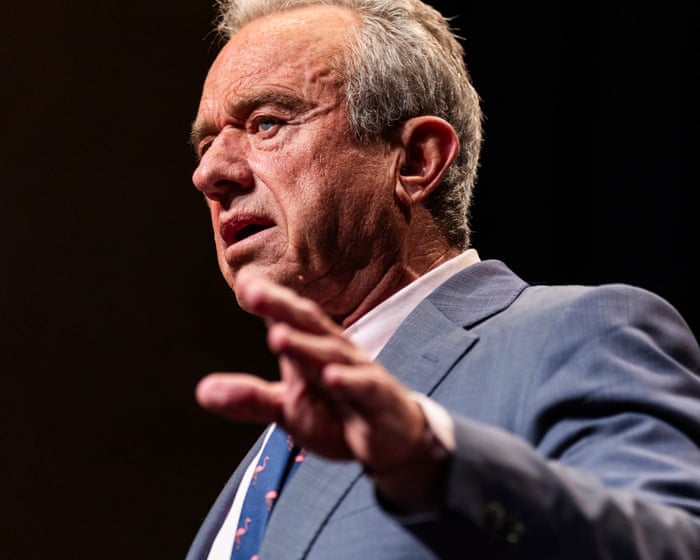
RFK Jr’s ‘deities of vaccine research’ raided by police in Guinea-Bissau

Police seize doses of hepatitis B vaccine from people at center of dispute over research on African newborns

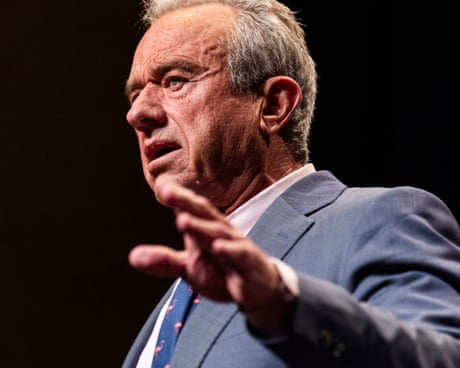
Controversial vaccine researchers who have been praised by Robert F Kennedy Jr, the US Department of Health and Human Services (HHS) secretary, had their offices in Guinea-Bissau raided by judicial police, who seized doses of hepatitis B vaccines, officials said on Facebook.

The researchers have been at the heart of an ongoing dispute over research on African newborns, supported by $1.6m from the US Centers for Disease Control and Prevention (CDC) and matched by the Pershing Square Foundation and the Bluebell Foundation for a total of $3.2m.

Continue reading...

© Photograph: Jim Lo Scalzo/EPA

© Photograph: Jim Lo Scalzo/EPA

© Photograph: Jim Lo Scalzo/EPA

  •  

Cyprus declares Turkey-Libya maritime agreement illegal

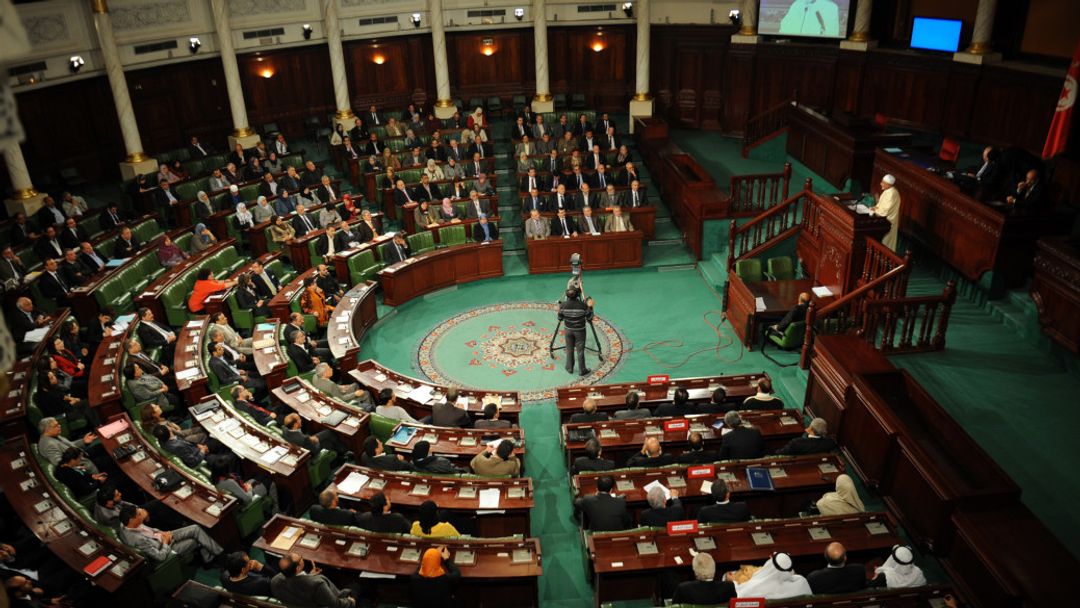
Cyprus’ foreign ministry on Friday declared the maritime boundary agreement signed by the governments of Turkey and Libya to be both “illegal” and “null and void” after it was ratified by the Libyan parliament earlier in the day.

“The Republic of Cyprus’ foreign ministry condemns the Libyan parliament’s decision to approve the illegal Turkish-Libyan ‘memorandum of understanding’ of 2019. This ‘memorandum’ violates the sovereign rights of third states and is contrary to the recognised principles of the United Nations convention on the law of the sea,” it said.

It added that the agreement also violates “customary international law regarding the rights of islands in maritime zones, including the exclusive economic zone and the continental shelf”.

“Therefore, the foreign ministry continues to consider the said ‘memorandum’ illegal, null and void, and that it does not produce, in any way, legal effects against third states,” it said.

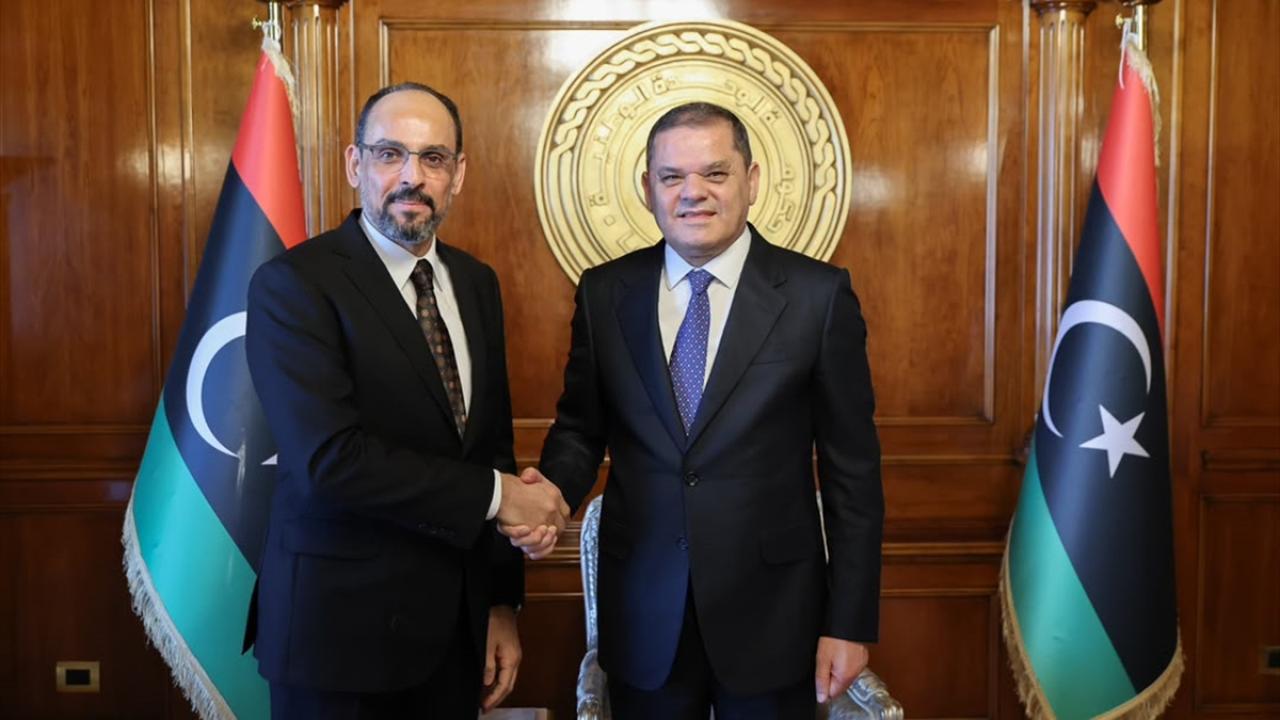
The Libyan parliament’s spokesman Abdullah Bliheg had said earlier in the day that the legislature had “voted unanimously” to adopt the agreement, on a day on which Turkey’s national intelligence organisation (Mit)’s chief Ibrahim Kalin was in the country to meet Libya’s government of national unity’s Prime Minister Abdulhamid Dibeybe.

Turkey had signed an agreement with the Libyan government of national accord in 2019, but it had not until Tuesday been ratified by Libya’s legislature. The government of national unity superseded the government of national accord in 2021 and is now the sole internationally recognised government of Libya.

Turkey and Libya officially agree that their EEZs share a border

As a result of the agreement, Libya and Turkey agree that their respective exclusive economic zones share a border in the Mediterranean sea, and that that border is located southeast of the Greek island of Crete.

Greece, too, reacted furiously to the Libyan parliament’s approval of the deal, with the country’s foreign ministry that it “rejects” it and that the decision “does not change the illegal, null and void nature of the memorandum, which is contrary to the international law of the sea and violates the sovereign rights of the states of the region”.

“Geography and the international law of the sea do not change with unilateral, legally unfounded parliamentary decisions. Turkey and Libya do not have opposing or adjacent coasts which would provide a legal basis for the attempted delimitation of maritime zones,” it added.

It then said that the agreement “also disregards the Greek islands and their rights to maritime zones based on [the United Nations convention on the law of the sea] Unclos and customary international law”.

“Having already concluded maritime delimitation agreements with Egypt and Italy, in accordance with the international law of the sea, Greece has demonstrated its respect for international law and the sovereign rights of neighbouring states. We call on the Libyan side to refrain from any action which is contrary to international law and undermines stability in the eastern Mediterranean,” it said.

It added that it has “already informed its partners and allies” and that it will “take all appropriate action to safeguard its sovereign rights”.

Libya’s parliament

Turkey is not an Unclos signatory, Libya signed but did not ratify

In this, the country’s Foreign Minister Giorgos Gerapetritis had earlier held a telephone call with his Cypriot counterpart Constantinos Kombos shortly after the Libyan parliament voted on the matter.

While Greece and the Republic of Cyprus are signatories to Unclos, Turkey is not, and while Libya under its then leader Muammar Gadaffi signed the convention in 1984, no Libyan legislature ever ratified the signature.

Turkey’s belief is that the convention gives too much weight to islands, which it says should instead only be allowed 12 nautical miles of territorial waters as their own exclusive economic zone (EEZ), whereas Greece believes that its islands are entitled to full EEZs of their own.

As such, Turkey’s view is that its own EEZ stretches south to meet Libya’s EEZ, and as of Wednesday, Libya agrees, whereas Greece’s position is that Turkey and Libya do not share a maritime border because the sea in question belongs to Crete.

Given this to be the case, Turkey’s presidential press office director Burhanettin Duran described Tuesday’s vote as “an important advancement towards protecting the shared rights and interests of both nations in the eastern Mediterranean, establishing maritime jurisdiction areas on the basis of equity, and strengthening regional cooperation”.

“Under the leadership of our President Recep Tayyip Erdogan, Turkey will continue to safeguard its rights and interests within the Blue Homeland, while further developing its relations with friendly and brotherly Libya and promoting equitable resource sharing, peace, and stability in the eastern Mediterranean”.

  •  

Kenyan cult leader found guilty of murder

In tonight's programme: Kenyan cult leader Paul Mackenzie is convicted of 191 murders, 190 of which were of children. Also, a former Rwandan soldier and outspoken government critic, Robert Kabera, is found decapitated in Uganda. Plus we meet a young Ivorian music lover who travels around the country looking for old-school sounds that need a little TLC. 

  •  

BRICS and the limits of collective action in the Middle East

Without becoming official, BRICS’ role in resolving conflicts remains reduced.

Join us on Telegram, X, and VK.

Contact us: info@strategic-culture.su

Recently, I delivered a presentation at the Russian Academy of Sciences on the role of BRICS in addressing the conflict in the Middle East. The discussion raised a fundamental question about the group’s international relevance: to what extent can an increasingly influential association of emerging powers contribute to resolving a major geopolitical crisis when its members hold divergent positions and maintain competing regional interests?

The answer requires a realistic assessment of BRICS’ institutional character and the political considerations shaping its members’ foreign policies.

The expansion of BRICS has increased its economic weight and diplomatic reach. Nevertheless, the group remains primarily a platform for intergovernmental coordination rather than a formal international organization equipped with binding decision-making mechanisms and a unified foreign policy. Its members maintain regular consultations, pursue economic cooperation, and issue joint declarations, but these activities do not automatically translate into coordinated action during armed conflicts.

The Middle East illustrates this limitation particularly clearly. Iran and the United Arab Emirates belong to BRICS while occupying opposing positions in the current military confrontation. Tehran considers American military infrastructure in the region a central element of the threat it faces, while the UAE seeks to protect its territory and critical infrastructure from Iranian missiles and drones. The presence of American forces on Emirati soil places Abu Dhabi in a particularly sensitive position, regardless of whether Iran considers the country itself its principal adversary.

Other members face similarly complex calculations. Egypt maintains important relations with Israel, while India combines longstanding ties with Iran with a strategic partnership with Israel. Meanwhile, China’s rivalry with India remains an important feature of Asian geopolitics, despite diplomatic efforts to stabilize bilateral relations. These differences prevent BRICS from adopting a common strategic position on every major international crisis.

The frequently invoked objective of establishing a multipolar world order does little to eliminate these contradictions. Multipolarity itself carries different meanings across the group’s membership. Brazilian foreign policy discourse often associates it with multilateral institutions and international governance, including the United Nations. Russia, China, and Iran, however, place greater emphasis on redistributing global power and reducing the capacity of Western states to impose their strategic preferences on other countries.

Consequently, BRICS lacks a fully shared geopolitical doctrine. Its cohesion rests primarily on the combined economic and political weight of its members and their recognition that the international system cannot be transformed without their participation. This common interest provides a foundation for cooperation, although it remains insufficient to establish a unified approach to every regional conflict.

These structural limitations define what BRICS can realistically accomplish in the Middle East. The group cannot be expected to endorse Iran’s military position collectively, nor is it likely to become a unified negotiating intermediary. The interests of its Arab members, particularly the UAE, make such an arrangement politically implausible. Likewise, most BRICS countries do not support eliminating the State of Israel.

However, significant opportunities for coordinated diplomatic action remain. Members can oppose attacks against civilians, condemn violations of international humanitarian law, and demand accountability for the destruction affecting Palestine, Lebanon, and Iran. Such positions can establish common ground without requiring every member to adopt identical strategic objectives.

Joint declarations at BRICS summits have already provided a framework for expressing humanitarian concerns. The challenge is to translate diplomatic language into practical measures, including coordinated initiatives for humanitarian assistance, sustained international pressure against violations of international law, and diplomatic efforts to prevent further escalation.

Whether BRICS can pursue these objectives effectively depends on decisions about its institutional future. If its members want the group to exercise greater influence over international crises, they will need to develop clearer procedures, establish more concrete long-term priorities, and identify areas where collective action is possible despite strategic disagreements.

The Middle East conflict therefore presents BRICS with a significant test. Its capacity to influence the international order will depend not only on the combined power of its members, but also on their willingness to convert shared interests into sustained political action.

  •  

UK to deploy fighter jets to protect Saudi Arabia from Houthi attacks

RAF Typhoon fighters to fly defensive missions over cities and infrastructure in extension of UK support for Riyadh

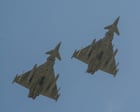
RAF Typhoon fighters are to be used in efforts to protect Saudi Arabia from attack by Yemen’s Houthis, flying protective missions over the country’s cities and critical infrastructure as western allies increase their intervention in the escalating conflict.

The operation – the most significant military mission signed off by Andy Burnham as prime minister – will involve RAF pilots attempting to shoot down Houthi missiles and drones, which attacked Saudi airports and oil facilities.

Continue reading...

© Photograph: Simon Maycock/Alamy

© Photograph: Simon Maycock/Alamy

© Photograph: Simon Maycock/Alamy

  •  

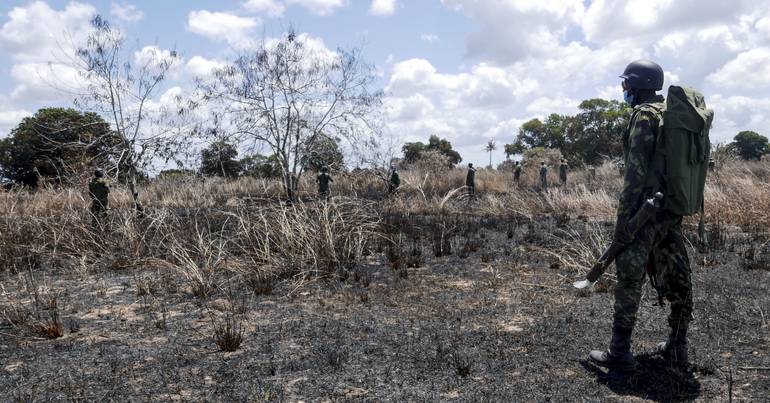
Moçambique. Supostos terroristas abatidos por fuzileiros

Operação resultou na morte de três alegados elementos terroristas e na captura de um suspeito. Ação foi conduzida por mar pelos Fuzileiros Navais, com apoio da Esquadrilha Naval de Pemba.

© LUIS MIGUEL FONSECA/LUSA

Desde outubro de 2017, Cabo Delgado enfrenta uma insurgência armada associada a grupos extremistas ligados ao Estado Islâmico
  •  

US grants deportation reprieve to migrants from Ukraine and Sudan

DHS says migrants ‘retain protections’ after temporary protected status was set to expire on Monday

More than 100,000 people from Ukraine and Sudan can stay in the United States without immediate risk of deportation, the Department of Homeland Security said, in what amounts to a temporary reprieve after their right to stay in the country was set to expire on Monday.

Temporary protected status was set to end on Monday for about 101,000 Ukrainians and 1,800 Sudanese. But the DHS said an announcement “will be made at the appropriate time”. Until then, the department said in a written statement, Ukrainians and Sudanese in the US covered by those temporary measures “retain protection”. The department did not indicate how long they could stay or when a final announcement would be made on their status.

Continue reading...

© Photograph: Bloomberg/Getty Images

© Photograph: Bloomberg/Getty Images

© Photograph: Bloomberg/Getty Images

  •  
❌