❌

Reading view

Alaska’s HAARP Site Now Being Used To Test New Air Force Over-The-Horizon Radar Tech

The U.S. military has successfully demonstrated a new lower-cost receiver that could form part of a future over-the-horizon (OTH) radar. The testing also raises the question of whether the High Frequency Active Auroral Research Program (HAARP) research site in Alaska, which the U.S. Air Force transferred away more than a decade ago, could be repurposed for operational use in this role. A new radar of this kind would help the United States plug critical gaps in surveillance coverage over the ever-more strategic Arctic region. Canada is notably already pursuing a multi-billion-dollar OTH radar project in cooperation with Australia for this exact purpose.

The U.S. military put out a press release yesterday regarding the testing of the newly developed receiver array, which occurred between September 7 and September 11. This was the culmination of a series of “Arctic air domain awareness” experiments conducted cooperatively by U.S. and Canadian authorities over the past three years.
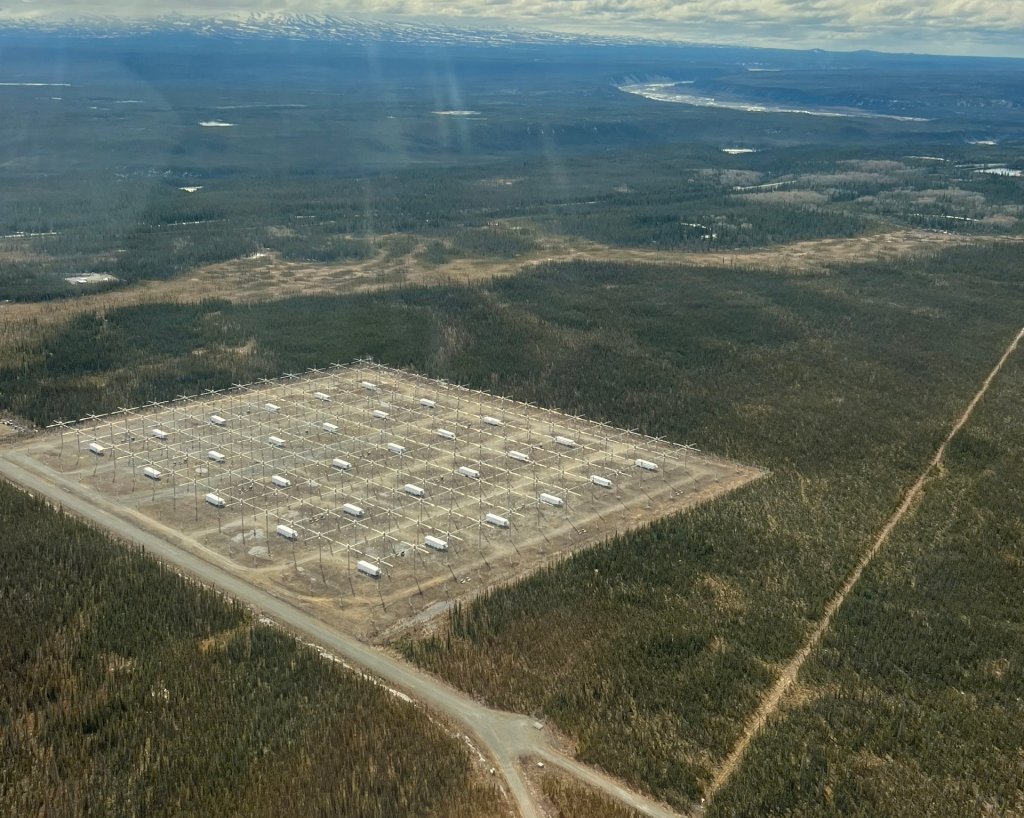
An aerial view of the HAARP site in Alaska, taken on September 7, 2026. USAF

The final round of experimentation last month “examined whether an existing high-frequency transmitter [HAARP], paired with a newly developed, low-cost [16-element high-frequency] receiver array, could detect aircraft beyond the coverage of current long-range radar sites,” according to the release. “The effort focused on improving awareness across a region where vast distances, harsh weather and limited infrastructure present challenges for air surveillance.”

“Researchers used the University of Alaska Fairbanks’ High Frequency Active Auroral Research Program [HAARP] facility and a receiver array in Cold Bay developed by MITRE to collect data on participating aircraft over the Gulf of Alaska and Bering Sea,” the release added. “MITRE also supported the effort throughout the three-year experiment series and designed and executed the field experiment in partnership with government, scientific, and operational participants.”
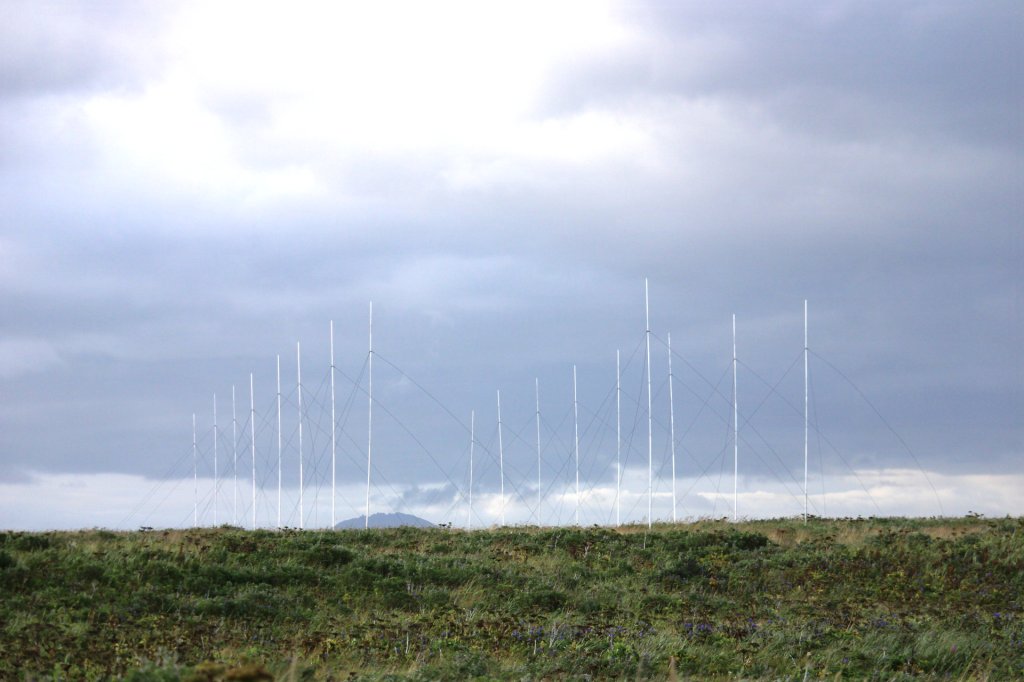
A view of the MITRE-developed array in Cold Bay, Alaska, which was part of the testing in September. USAF

The remote HAARP site was built in the 1990s as part of a joint U.S. Air Force and U.S. Navy effort. The Defense Advanced Research Projects Agency (DARPA) was also involved. The central component of the 33-acre facility is an array of 180 crossed-dipole antennas, which can transmit up to 3.6 megawatts of radio frequency energy, according to the Air Force.

The primary purpose of HAARP was to provide U.S. government and independent researchers with a state-of-the-art facility to explore ionospheric phenomena. On the U.S. military side, work was focused on improving long-range surveillance and communications capabilities, including ways to communicate with submerged submarines. Over the years, HAARP has also been the subject of several entirely unsubstantiated conspiracy theories.

In 2014, the U.S. Air Force announced that it would shutter the HAARP site and dismantle it. However, the following year, the decision was instead made to transfer it to the University of Alaska Fairbanks, which has continued to operate it as a civilian research facility.

“During an experimental air domain awareness initiative, HAARP served as a high-power illuminator, transmitting signals toward the ionosphere to support the detection of airborne targets over Alaska’s maritime approaches,” according to the captions of several pictures that accompanied the release yesterday. “The experiment evaluated bistatic over-the-horizon detection methods to explore potential improvements in long-range surveillance and air domain awareness across Alaska’s maritime approaches.”
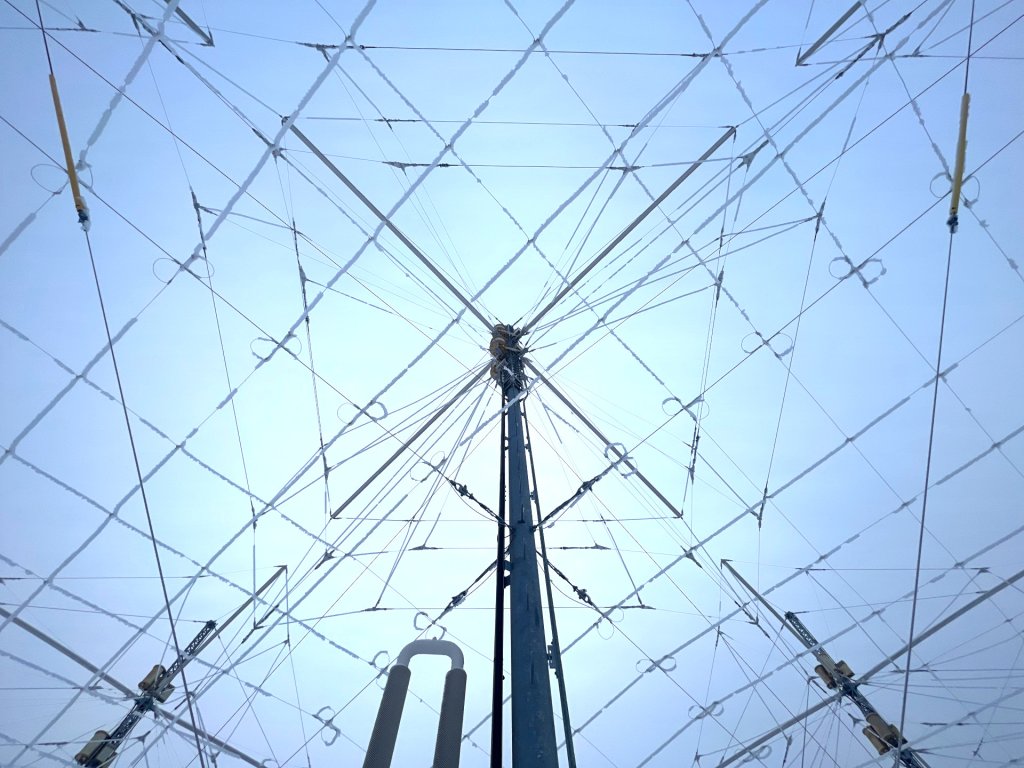
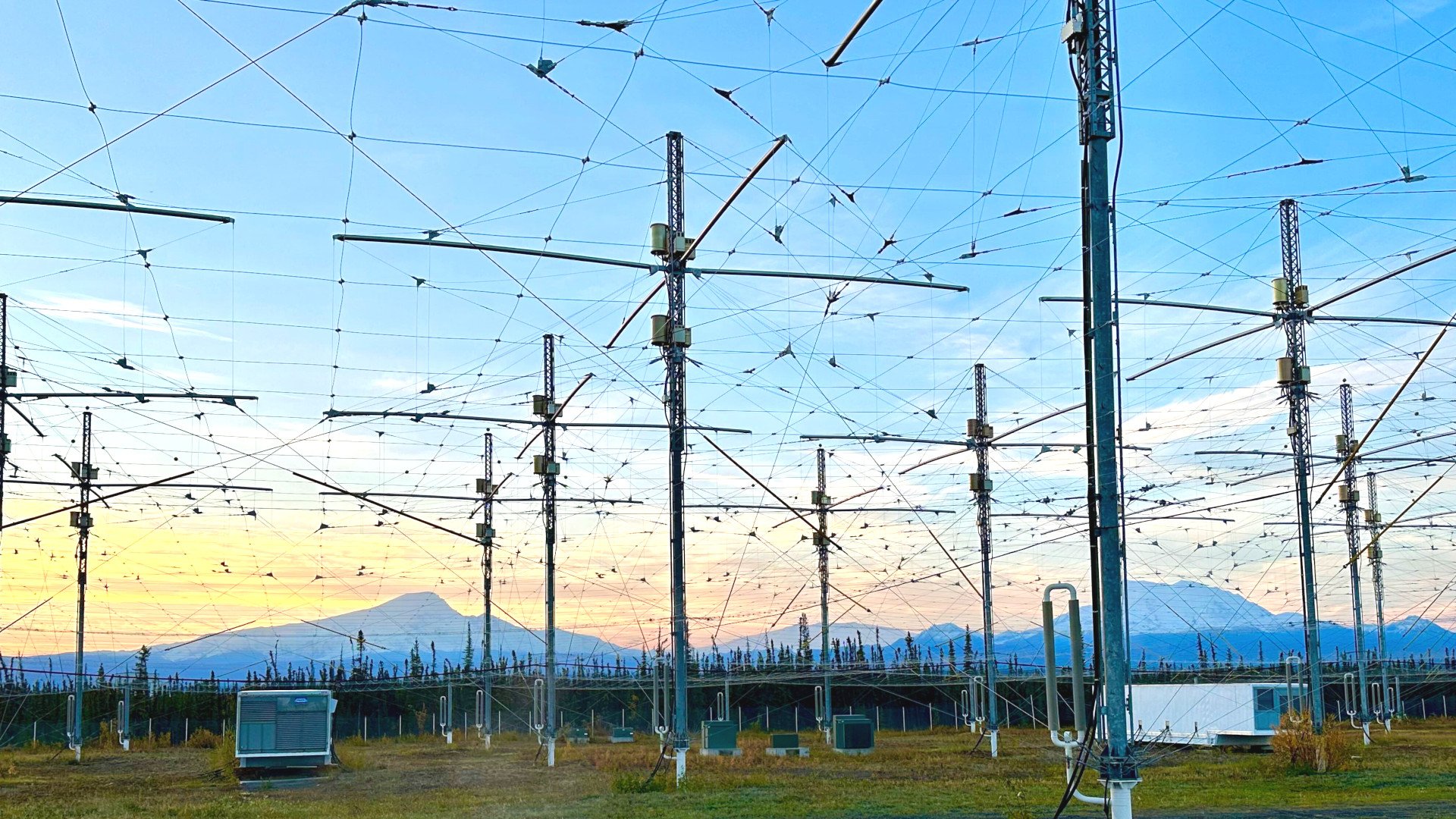
Another view of crossed-dipole antennas at the HAARP site. USAF

The most common types of OTH radars are so-called ‘skywave’ or ‘backscatter’ designs. They usually consist of two large and geographically separated arrays of antennas. The ‘illuminator’ array pumps out signals that are bounced off the ionosphere, the ionized layer of Earth’s upper atmosphere, at a specific angle so that they return to the ‘receiver’ array. Objects of interest (in the air and/or on the surface depending on the specific configuration) are detected in the process. As TWZ has previously written:

“Commonly, radars are limited by line of sight due to the curvature of the Earth in relation to the altitude they are operating at. OTHRs overcome this critical limitation, but with some major drawbacks.”

…

“While they offer much lower fidelity than many of their line-of-sight counterparts in most cases, they make up for it in huge range, hundreds of miles to thousands of miles (1,500 miles is common, for instance, for powerful military sky wave/backscatter OTHR systems) and a large coverage area. The sky wave type of OTHRs achieve this by bouncing their radio waves off the ionosphere to a coverage area where they hit targets and return the same way to the receiving station. The angle at which the radio waves hit the ionosphere dictates the range, and that angle is limited to a specific envelope or the waves won’t properly bounce back toward Earth. As such, placing the radar in the right place in relation to the targeted surveillance area or areas, to begin with, is key.”

In the testing last month, Air Force E-3 Sentry Airborne Warning and Control System (AWACS) radar planes, HC-130J Combat King II rescue aircraft, and KC-135 aerial refueling tankers “served as cooperative targets, providing known positions against which researchers could compare the experimental data,” according to the official release. “The team successfully completed testing, meeting or exceeding its test execution objectives. Initial results show the system was successfully able to achieve full skywave (beyond line of sight) detections of aircraft and correlation to truth flights. Thorough data analysis is ongoing.”
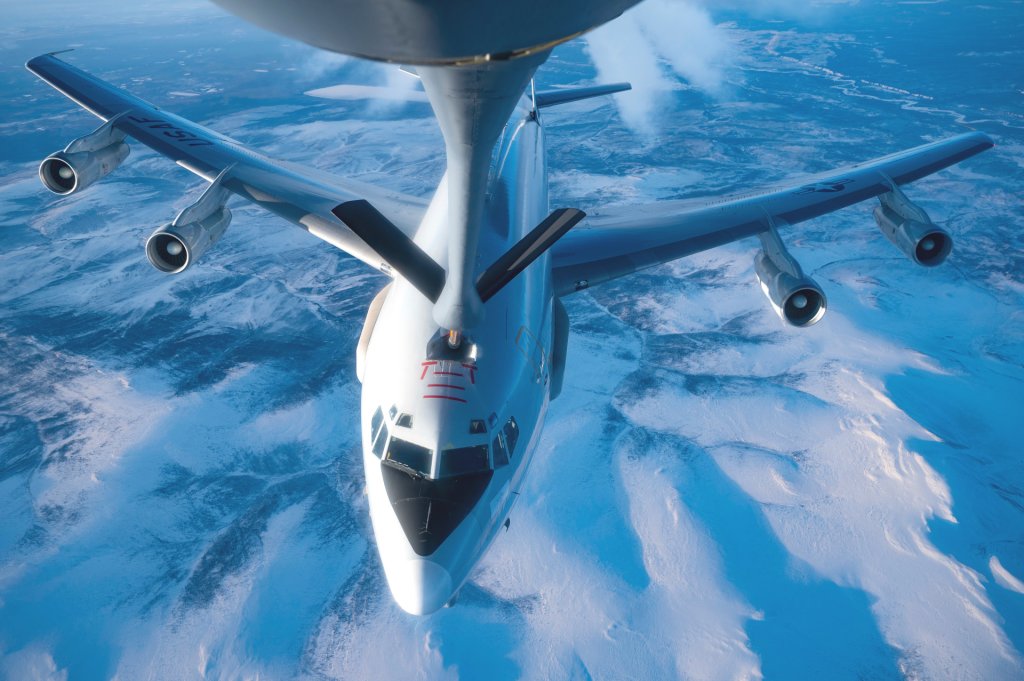
An Alaska-based E-3 Sentry receives fuel from a KC-135 tanker during an exercise in 2022. USAF
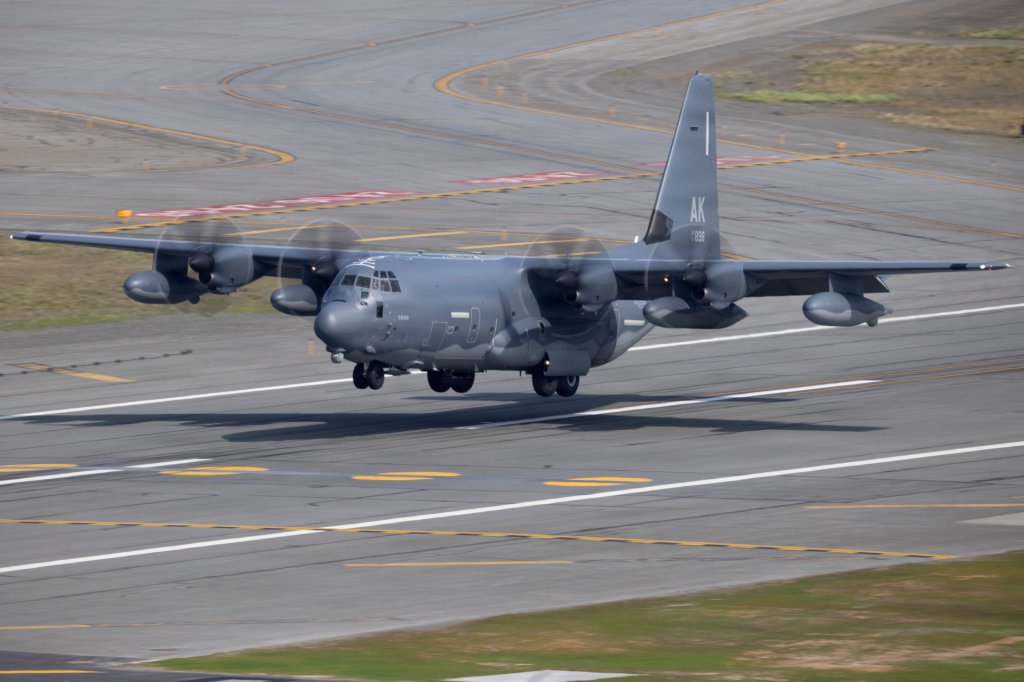
An HC-130J Combat King II seen landing at Joint Base Elmendorf-Richardson in Alaska in August. USAF/Alejandro Pena

The release also says that the tests “explored how existing infrastructure and emerging technology could complement current surveillance capabilities.” This raises the possibility that the HAARP site, specifically, might be utilized as part of a new OTH radar. Whether or not this is actually under consideration is still unclear, and TWZ has reached out for more information.

Regardless, OTH radars have been experiencing something of a renaissance in recent years in the United States and elsewhere globally. Separate reports just in the past day or so have highlighted what appears to be significant progress on at least one part of a long-planned OTH radar in Russia’s Kaliningrad enclave.

Outside of Alaska, the U.S. military has been working to establish a Tactical Mobile Over-the-Horizon Radar (TACMOR) site in the South Pacific archipelago nation of Palau. The originally stated goal had been to finish work on this facility in 2026, but the project has faced legal challenges.

As already mentioned, OTH radars have also been part of U.S. plans to improve surveillance coverage in the Arctic. Like the recent testing in Alaska, there has been significant cooperation with Canada in this regard over the years, including through the U.S.-Canadian North American Aerospace Defense Command (NORAD).

Today, NORAD relies heavily on a network of ground-based radars called the North Warning System (NWS) to provide aerial surveillance coverage in the High North. The radars that make up the NWS are also all pointed northward, and none of them provide the kind of wide-area long-range coverage that an OTH design would offer.
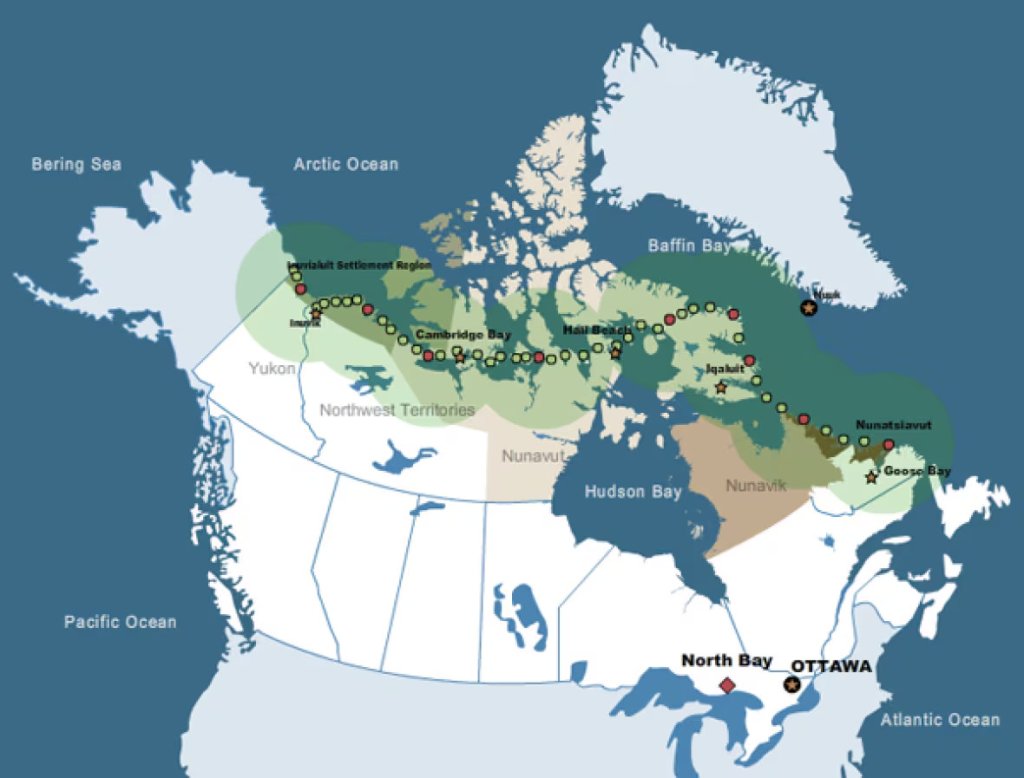
A map showing NWS radar sites in Canada and their coverage arcs. Nasittuq Corporation

The NWS reflects a long-standing focus on monitoring for aerial threats heading across the North Pole toward North America, especially possible nuclear strikes from Russia (and the Soviet Union before it). However, new avenues for geostrategic competition in the Arctic with Russia, as well as China, over natural resources, from oil and natural gas to fish and other sealife, as well as trade routes have emerged in recent years amid receding ice and other impacts of global climate change. This, in turn, has only prompted growing demand for surveillance coverage.

“We need a layered sensing grid, from [the] seafloor to the space layer. And we have no choice. It has to be layered and deep, a defense in depth, from a sensing point of view,” Royal Canadian Air Force (RCAF) Maj. Gen. Chris McKenna, head of 1 Canadian Air Division and the Canadian NORAD Region, also said during a panel discussion at the Air & Space Forces Association’s (AFA) annual Warfare Symposium in 2025, at which TWZ was in attendance. “And I will say I suffer from an insufficiency of ISR [intelligence, surveillance, and reconnaissance] in the Arctic on a daily basis. And I am fighting for information.”

McKenna was responding at the time to a direct question about gaps in so-called “domain awareness” in and around the Arctic and how to address them.

“I think there’s an importance here of not just air domain, but also space domain, and having a sufficiency of ISR in the Arctic to actually build you the [domain awareness] picture,” he added. “I haven’t really touched on over-the-horizon radar, but I certainly can get into it. I think that’s a really important capability given the austerity of the Arctic and the need for it to cue other things.”

For its part, Canada is now building its own new Arctic Over The Horizon Radar (A-OTHR), at an estimated cost of more than $4 billion. In an announcement last year that caught many off guard, the Canadian government announced that it would be leveraging technology originally developed for Australia’s Jindalee Operational Radar Network (JORN) to support this development. It is also important to note here that relations between Canadian authorities and the Trump administration have been and continue to be heavily strained over a variety of issues, which has prompted broad concerns about future defense and security cooperation.
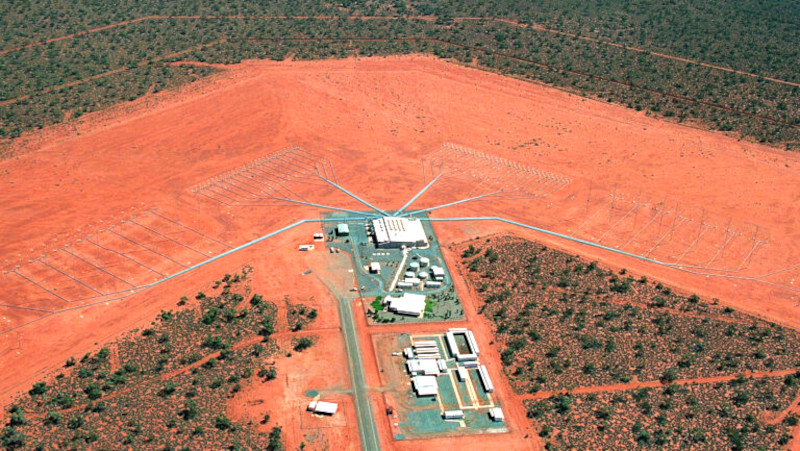
An element of Australia’s Jindalee Operational Radar Network (JORN). Australian Department of Defense

Back in the United States, OTH radar plans are also now tied in with the broader Golden Dome air and missile defense initiative. Golden Dome is seeking to establish new layers of defense around the U.S. homeland against a wide array of threat types, and puts major emphasis on new space-based sensor and interceptor capabilities. Expanded defensive architectures within the Earth’s atmosphere are also part of this plan.

“Adversaries are developing and building advanced nuclear and conventional delivery capabilities,” U.S. Army Lt. Gen. Joseph Jarrard, Vice Commander of the U.S. element of NORAD and Deputy Commander of U.S. Northern Command (NORTHCOM), warned at the annual Space & Missile Defense (SMD) Symposium in August. This includes “cruise, hypersonic, and ballistic missiles, as well as fractional orbital bombardment systems, or FOBS, to threaten not only Alaska and Hawaii, but the entire continent of the United States.”

Chinese hypersonic and other developments, in particular, enable new modes of attack that “can approach North America from the south, rather than the traditional northerly vector for which our legacy early warning radars were designed,” Jarrard continued. “The Chinese have also been building a conventionally-armed ICBM [intercontinental ballistic missile] equipped with hypersonic glide vehicles that can range [sic] targets throughout Alaska, providing Chinese leaders strike options against our homeland below the nuclear threshold.”

“Russia’s advanced missiles, like the nuclear-armed Avangard hypersonic glide vehicle, are designed to circumvent the ground-based radars used by NORAD and NORTHCOM to detect and characterize an inbound threat, and challenge the ability to provide threat warning and attack assessment,” he added.

New OTH radars positioned in Alaska and elsewhere in the Pacific will not be able to address all of these threat developments alone. At the same time, the recent testing leveraging the HAARP site is another step toward meeting demands for sorely needed expanded long-range radar coverage in the Arctic.

Contact the author: joe@twz.com

The post Alaska’s HAARP Site Now Being Used To Test New Air Force Over-The-Horizon Radar Tech appeared first on TWZ.

  •  

EU vows to stop buying Arctic oil and gas, but drops ban from its new strategy

The EU “will not drill and will not buy” Arctic oil and gas, EU officials said on Tuesday (20 October), as the European Commission presented its new Arctic strategy. 

“Our position on Arctic oil, gas and coal has not changed,” a senior EU official told reporters. “It’s fairly simple. We will not drill in the Arctic, and we will not buy hydrocarbons from the Arctic.”

The strategy follows months of heavy lobbying by Norway’s prime minister Jonas Gahr Støre and his cabinet. 

Oslo used the energy supply disruption caused by the Iran war to push the EU to drop its 2021 support for a moratorium on oil and gas drilling in the Arctic, insisting that it was crucial for future energy security. 

But EU officials made clear on Tuesday they did not buy that argument. “We do not need Arctic resources to keep our energy supply secure,” the official said.

What happened to the moratorium?

This article continues, but the full version is available only to EUobserver.com subscribers. Visit account.euobserver.com/membership

  •  

EU to bolster tracking of Russian shadow fleet and hybrid attacks with new Arctic Strategy

"When we see Russia rebuilding its Arctic military footprint, pursuing hybrid strategies against its neighbors, and reshaping the security of the Arctic, it impacts the EU as a whole," said European Commission President Ursula von der Leyen.

  •  

Northern Sea Route Transits Surpass 2025 Total as Arctic Shipping Gains Momentum

The number of commercial transit voyages through Russia’s Northern Sea Route (NSR) had already surpassed the full-year 2025 total by the end of September, putting Arctic shipping on course for another record season as cargo volumes rise and more vessels test the route between Asia and Europe.
  •  

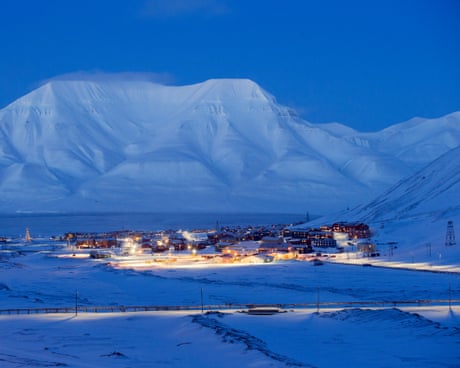
Tap water no longer drinkable in Norwegian town as climate-related thawing releases heavy metals

Warning for other Arctic communities as residents told not to use water in Longyearbyen in Svalbard, one of the fastest-warming places in the world

Residents of a remote town in Norway that is in one of the fastest-warming places in the world have been told they must no longer drink tap water due to heavy metal contamination that scientists have linked to the thawing permafrost.

Longyearbyen, in the archipelago of Svalbard, gets its main drinking water supply from a 1.5 mile-long (2.5km) dammed lake called Isdammen, or “ice pond”. Higher temperatures as a result of the climate crisis have thawed permafrost, leading to newly exposed bedrock leaching metals into the pond.

Continue reading...

© Photograph: Rimante_Hegland/Getty Images/iStockphoto

© Photograph: Rimante_Hegland/Getty Images/iStockphoto

© Photograph: Rimante_Hegland/Getty Images/iStockphoto

  •  

How a cruise ship navigates Greenland's icebergs and extreme Arctic conditions

We went aboard a cruise ship navigating some of the world's most dangerous waters. In the Arctic, drifting icebergs, sea ice, sudden storms and fierce winds make sailing unpredictable. Yet every year, around 100,000 cruise passengers travel to Greenland to explore its remote coastline and experience one of the world's last great wildernesses.

Read the original article on Business Insider

  •  

South Korean President Hails Arctic Container Shipping Trial, but Commercial and Sanctions Questions Remain

South Korean President Lee Jae Myung welcomed the PanStar Acro and its crew home on Tuesday after the container ship completed the country’s first round-trip commercial trial through the Arctic to Europe, hailing the voyage as a potential alternative to traditional shipping lanes even as questions remain over commercial viability and cooperation with Russia.
  •  

The Warmongering fiction: Europe’s elite and the politics of self-destruction

When an elite loses the capacity to imagine, create, and persuade, it may be a harbinger that an era is coming to an end.

Join us on Telegram, X, and VK.

Contact us: info@strategic-culture.su

In a burst of posturing during the recent European Arctic Summit in Rovaniemi, Finland, European leaders donned military attire to convey a message of readiness for a confrontation with Russia, while the political and media apparatus repeats, almost in unison, warnings about the “Russian threat.” The Summit’s official declaration places security at the heart of discussions and insists on the need to strengthen the European presence and capabilities in the region, which is deemed strategic for continental security.

There is something deeply unsettling about this staging. These leaders present themselves as representatives of societies mobilized for war, even as they govern deeply divided countries and face a growing erosion of public trust. This gap alone – between leadership rhetoric and the actual disposition of their societies – should counsel prudence. Instead, we are witnessing the creation of a psychological atmosphere of confrontation. And that is precisely where the danger lies.

The real risk of self-destruction

First, there is an element of pretense, as Europe lacks the industrial capacity required to autonomously sustain a prolonged military mobilization on the scale suggested by such warmongering rhetoric. The very effort to rebuild stockpiles, ramp up ammunition production, and restore industrial capacity demonstrates just how much that infrastructure has been scaled back in recent decades. Yet, the most serious issue is not industrial, but strategic.

The Russian Federation possesses a massive nuclear arsenal and advanced strike systems, including hypersonic missiles. This does not mean Russia holds technological superiority in every field, but it points to something far more significant for this discussion: any direct war between the North Atlantic Treaty Organization (NATO) and Russia would involve forces capable of inflicting destruction on a civilizational scale. Russia and the US continue to hold the overwhelming majority of existing nuclear warheads, even as major nuclear states modernize their arsenals and arms control mechanisms weaken. Therefore, treating a direct confrontation with Russia as merely another foreign policy option is not an act of courage; it is courting the possibility of self-destruction.

Once a certain threshold is crossed, there is no longer any guarantee that events will remain under the control of those who initiated them. This is the crucial point missing from the current warmongering theatricalization.

And there is something even more disturbing. The language of destruction is once again being openly voiced by Western leaders themselves. At the United Nations General Assembly, President Donald Trump proclaimed that the US could “annihilate” Iran if an agreement were not reached. If a threat of this nature – a “final solution” – can be uttered at the UN without triggering a political rupture commensurate with the enormity of the statement, then something extremely serious is happening to the Western perception of the limits of war. For the normalization of the language of annihilation does not necessarily remain confined to the adversary against whom it was originally directed.

Today it might be Iran. Tomorrow, in a spiral of escalation beyond anyone’s control, it could be European cities. It is in this sense that current warmongering fantasies cease to be mere political posturing and begin to represent a concrete danger of self-destruction for European civilization. Europe, which for centuries was a fundamental center of Western civilization, has lived through two world wars and knows firsthand what it means to turn political rivalries into wars of annihilation. Precisely for this reason, one would expect its leaders to be the first to understand that a war between nuclear powers offers no second chance to correct miscalculations. Yet we see them toying with military symbols, mobilizing rhetoric, existential enemies, and the prospect of confrontation, as if we were still living in the world that existed before Hiroshima and Nagasaki. That is precisely the nature of the fiction: portraying war as a readily available political tool without fully confronting what it could actually entail. And if the confrontation spirals out of control, the price will be paid not merely by governments, parties, or military alliances, but by the very civilization these leaders claim to be defending.

Who needs the threat?

So, let us ask: who is behind all this falsehood? Who funds this play? Who needs this constant atmosphere of threats? And why does a political order facing an evident crisis of legitimacy seem to find, in the prospect of war, one of the last narratives capable of justifying its own survival?

The simplest answer would be to explain this attitude as an attempt to prop up unpopular regimes by invoking an imaginary external threat, while simultaneously condemning or suppressing emerging political forces, portrayed as foreign agents or tools of an enemy power – in this case, linked to the Russian “beast”.

Undoubtedly, there is some truth to this. History offers numerous examples of governments resorting to external threats to restore crumbling internal cohesion, discredit opponents, and justify measures that would face greater resistance under normal circumstances. Yet, this explanation is insufficient. The crisis is not merely about the legitimacy of a group of European leaders; it affects the very system that placed them in power – and it is that system which is in crisis.

The crisis of the liberal-financial order

The so-called “rules-based world,” the financial globalization, the free trade elevated to the status of dogma, and the progressive displacement of the productive economy by financialization are being challenged by the resurgence of the sovereign nation-state, industrial policies, energy security, strategic supply chains, and the defense of national economic interests. Paradoxically, this return of the nation-state could also offer a path for the West to reclaim some of its own civilizational roots (that are essentially Christian), in which political power was not conceived as absolute, but rather subject to a higher moral order. At a deeper level, however, what lies behind these chimeras is an even greater crisis: the crisis of the liberal-financial system organized around “independent” central banks, the growing autonomy of financial power from national communities, and an economic conception that, over decades, has progressively shifted the center of wealth from production to financial returns. This system has historical roots in the formation of the Anglo-Dutch commercial and financial order of the 17th and 18th centuries – an order that was subsequently projected across much of the world through British and, later, American imperial and financial structures.

Over time, this model has taken on new forms but retained an essential characteristic: the ability of financial power to present itself as a reality standing almost outside politics, as if its decisions were technical, neutral, and independent of the sovereign choices of societies. It is precisely this architecture that is now being called into question.

A secular religion without the promise of redemption

The underlying system of Western oligarchies has lost the capacity to generate ideas and projects capable of mobilizing societies around a vision of the future. This sterility is also reflected in the mediocrity of much of the current leaders, who act more as administrators of an order in crisis than as creators of a new political reality. Liberal politics has thus transformed into a kind of secular religion devoid of any promise of redemption. And this is perhaps one of its most unsettling characteristics.

The great political movements of the 19th and 20th centuries, even when they led entire societies to catastrophe, still promised some form of historical redemption: the classless society, national greatness, empire, revolution, the “new man,” or a supposedly definitive future order.

The secular religion of the decaying liberal order no longer offers even that. It demands sacrifices without holding out the prospect of a future paradise. It demands impoverishment in the name of stability, a loss of sovereignty in the name of rules, deindustrialization in the name of efficiency and environmental “protection,” and censorship in the name of democracy; ultimately, it even accepts the risk of war to preserve an order whose purpose it can no longer explain. There is no longer a genuine promise of redemption. There is only the promise that the system will continue to exist. In the words of former EU foreign policy chief Josep Borrell, “We are the Garden of Eden; the rest is the jungle.”

At this point, politics ceases to defend society and instead demands that society sacrifice itself to defend the system. This is precisely where a secular religion can become self-destructive: when preserving the existing order comes to matter more than preserving the people living under that order.

From creative minority to dominant minority

This is, perhaps, one of the deepest signs of civilizational exhaustion. An elite ceases to be creative when it can no longer imagine a future distinct from the mere continuation of itself. The English historian Arnold Toynbee grasped this phenomenon with profound insight when he distinguished the creative minority from the dominant minority. A creative minority exercises leadership because it offers responses capable of inspiring allegiance. Its authority stems from its ability to respond to historical challenges and to generate new forms of organization, culture, and meaning. When this capacity vanishes, the former creative minority may transform into a dominant minority – one that no longer leads by inspiring, but sustains itself through control. Persuasion is progressively replaced by discipline; imagination by administration; vision by propaganda; and trust by fear.

It is at this juncture that the system risks turning the crisis itself into a justification for its continued existence. The more it fails, the more power it demands. The more legitimacy it loses, the more it requires enemies. The less it is able to imagine a future, the more dramatically it must portray the present as an existential battle.

When the temporal takes the place of the transcendent

Here, the reflections of German-American philosopher Eric Voegelin on totalitarian ideologies as “political religions” converge with Toynbee’s ideas regarding the disintegration of civilizations. When a society loses its reference to a transcendent order, the human need for the absolute does not necessarily disappear; it may simply be transferred elsewhere. The nation, race, class, party, revolution, the market, “the rules,” or democracy (understood not merely as a political system but as an absolute moral category)  –  any temporal reality can be sacralized and elevated to a status beyond questioning.

In this process, the temporal takes the place of the transcendent. Yet there is a decisive difference between the political movements of the past and this potential secular religion of an exhausted order. The former promised a future redemption. The latter seems to demand present sacrifice solely to prevent the system from vanishing. It is a secular religion devoid of eschatology, paradise, a “new man,” or a truly new horizon. Its only future is the indefinite continuation of the present.

When fear replaces imagination

This absence of a future may well explain the growing prominence of fear: fear of the external enemy, of rupture, of dissent, of losing control. It is the fear that what was presented for decades as inevitable might suddenly cease to be so. When an order can no longer generate hope, it must generate fear. And when fear replaces imagination, conflict can transform into a form of legitimation. War, then, ceases to be merely an external instrument of policy and can become an internal necessity for the system. It is precisely here that contemporary warmongering fantasies take on a dimension far deeper than the day-to-day debates regarding Russia, Ukraine, NATO, or military spending.

The issue becomes civilizational. An order that has lost the capacity to envision its own future may begin to accept risks that, under normal circumstances, would seem unthinkable. It may end up conflating the survival of its own structures with the survival of civilization itself. And this confusion is among the most dangerous errors an elite can make. For institutions, economic regimes, and political systems are historical constructs; civilizations are far greater than they are. When a system begins to demand that civilization risk itself so that the system may survive, the relationship between means and ends has been completely inverted.

Signs of the end of an era

It is at this point that one can truly speak of self-destruction.

A civilization may begin to self-destruct not because it has ceased to believe, but because it has turned its own historical order into an object of absolute belief. And when leaders can no longer envision a future different from the one they administer; when war begins to replace politics; when fear supplants vision; when the preservation of institutions is deemed more important than the people for whom those institutions ought to exist – then we are facing not merely a political or economic crisis, but a profound crisis of civilization itself.

When an elite loses the capacity to imagine, create, and persuade, it may be a harbinger that an era is coming to an end. Yet, this does not necessarily mean the civilization is doomed. It may signify the exact opposite: that structures no longer capable of meeting present challenges are making way for other forms of organization, new ideas, and the recovery of principles that seemed forgotten. For the loss of a specific vision of order does not spell the end of human imagination. And when those in power can conceive of nothing beyond their own perpetuation, that may well be the very first sign that something new is drawing near.

  •  

Ficções belicistas: a teatralização da guerra

Líderes europeus vestem uniformes militares e brincam com guerra nuclear. Uma ordem sem futuro troca esperança por medo e arrisca autodestruição.

Junte-se a nós no Telegram , X e VK.

Escreva para nós: info@strategic-culture.su

Em um surto de simulação, durante a recente Cúpula Europeia do Ártico, em Rovaniemi, Finlândia, líderes europeus vestiram trajes militares para transmitir uma mensagem de preparação para uma confrontação com a Rússia, enquanto a máquina política e midiática repete, quase em uníssono, o alerta contra a “ameaça russa”. A declaração oficial da Cúpula coloca a segurança no centro das discussões e insiste na necessidade de fortalecimento da presença e das capacidades europeias na região, considerada estratégica para a segurança continental.

Essa encenação tem algo de profundamente inquietante. Tais dirigentes apresentam-se na condição de representantes de sociedades mobilizadas para a guerra, enquanto governam países profundamente divididos e enfrentam uma crescente erosão da confiança pública. Por si só, essa distância entre a retórica das lideranças e a disposição real das sociedades deveria recomendar prudência. Em vez disso, assistimos à construção de uma atmosfera psicológica de confrontação. E é justamente aí que começa o perigo.

O risco real de autodestruição

Em primeiro lugar, há um elemento de fingimento, pois a Europa não dispõe das condições industriais necessárias para sustentar autonomamente uma mobilização militar prolongada na escala sugerida pela retórica belicista. O próprio esforço para reconstruir estoques, aumentar a produção de munições e recuperar capacidade industrial demonstra o quanto essa estrutura foi reduzida nas últimas décadas. Mas a questão mais grave não é industrial, mas estratégica.

A Federação Russa dispõe de um enorme arsenal nuclear e de sistemas de ataque avançados, inclusive mísseis hipersônicos. Isto não significa que a Rússia possua superioridade tecnológica em todos os campos, mas algo muito mais importante para essa reflexão: qualquer guerra direta entre a Organização do Tratado do Atlântico Norte (OTAN) e a Rússia envolveria forças capazes de provocar uma destruição de escala civilizacional. A Rússia e os EUA continuam concentrando a esmagadora maioria das ogivas nucleares existentes, ao mesmo tempo em que os principais Estados nucleares modernizam seus arsenais e os mecanismos de controle de armas se enfraquecem. Portanto, tratar uma confrontação direta com a Rússia como apenas mais uma opção de política externa não é demonstração de coragem: é cortejar uma possibilidade de autodestruição.

Quando se atravessa determinado limiar, já não existe garantia de que os acontecimentos permaneçam sob o controle daqueles que os iniciaram. É este o ponto ausente da atual teatralização belicista.

E há algo ainda mais perturbador. A linguagem da destruição voltou a ser pronunciada abertamente pelas próprias lideranças ocidentais. Na Assembleia Geral das Nações Unidas, o presidente Donald Trump proclamou que os EUA poderiam “aniquilar” o Irã caso não fosse alcançado um acordo. Se uma ameaça dessa natureza – uma “solução final” – pode ser pronunciada na ONU sem provocar uma ruptura política proporcional à enormidade do que está sendo dito, algo extremamente grave está ocorrendo com a percepção ocidental dos limites da guerra. Porque a normalização da linguagem de aniquilação não permanece necessariamente confinada ao adversário contra o qual foi originalmente dirigida.

Hoje pode ser o Irã. Amanhã, numa espiral de escalada que ninguém consiga mais controlar, podem ser cidades europeias. É neste sentido que os atuais devaneios belicistas deixam de ser apenas uma encenação política e passam a representar um perigo concreto de autodestruição da própria civilização europeia. A Europa, que durante séculos foi um dos centros fundamentais da civilização ocidental, atravessou duas guerras mundiais e conheceu diretamente o que significa transformar rivalidades políticas em guerras de aniquilação. Justamente por isso, seria de esperar que suas lideranças fossem as primeiras a compreender que uma guerra entre potências nucleares não oferece uma segunda oportunidade para se corrigirem erros de cálculo.

No entanto, os vemos brincando com símbolos militares, discursos de mobilização, inimigos existenciais e horizontes de confrontação, como se ainda estivéssemos no mundo anterior a Hiroshima e Nagasaki. A ficção consiste precisamente nisso: representar a guerra como instrumento político disponível sem encarar até o fim o que ela poderia significar. E, se a confrontação escapar ao controle, não serão apenas governos, partidos ou alianças militares que pagarão o preço, mas a própria civilização que esses dirigentes afirmam estar defendendo.

Quem precisa da ameaça?

Então, perguntemos: quem está por trás de toda essa falsidade? Quem alimenta essa representação? Quem necessita dessa atmosfera permanente de ameaças? E por que uma ordem política em evidente crise de legitimidade parece encontrar na perspectiva da guerra uma das últimas narrativas capazes de justificar a sua própria continuidade?

A resposta mais simplória consistiria em explicar essa atitude como uma tentativa de manter regimes impopulares sob uma imaginária ameaça externa, ao mesmo tempo em que se condenam ou reprimem as forças políticas emergentes, apresentadas como agentes externos ou instrumentos de uma potência inimiga – no caso, vinculadas à “besta” russa.

Sem dúvida, há algo disso. A História oferece numerosos exemplos de governos que recorrem à ameaça externa para recompor coesões internas deterioradas, desacreditar adversários e justificar medidas que enfrentariam maior resistência em circunstâncias normais. Mas essa explicação é insuficiente. A crise não diz respeito apenas à legitimidade de um grupo de líderes europeus. Ela atinge o próprio sistema que os colocou nessa posição de poder – e é ele que está em crise.

A crise da ordem liberal-financeira

O chamado “mundo baseado em regras”, a globalização financeira, o livre comércio elevado à condição de dogma e a progressiva substituição da economia produtiva pela financeirização, estão sendo confrontados pelo retorno do Estado nacional soberano, das políticas industriais, da segurança energética, das cadeias produtivas estratégicas e da defesa dos interesses econômicos nacionais. Paradoxalmente, esse retorno do Estado nacional poderia representar também um caminho para que o Ocidente recuperasse parte de suas próprias raízes civilizatórias, essencialmente cristãs, nas quais o poder político não era concebido como absoluto, mas submetido a uma ordem moral superior.

Em profundidade, porém, o que se encontra por trás dessas quimeras é uma crise ainda maior: a crise do sistema liberal-financeiro organizado em torno de bancos centrais “independentes”, da autonomia crescente do poder financeiro em relação às comunidades nacionais e de uma concepção econômica que, ao longo de décadas, deslocou progressivamente o centro da riqueza da produção para as rendas financeiras. Esse sistema possui raízes históricas na formação da ordem comercial e financeira anglo-holandesa dos séculos XVII e XVIII, que posteriormente seria projetada sobre grande parte do mundo por meio das estruturas imperiais e financeiras britânicas e, depois, estadunidenses.

Com o passar do tempo, esse modelo adquiriu formas novas, mas conservou uma característica essencial: a capacidade do poder financeiro de se apresentar como uma realidade quase exterior à política, como se suas decisões fossem técnicas, neutras e independentes das escolhas soberanas das sociedades. É justamente essa arquitetura que hoje começa a ser questionada.

Uma religião secular sem promessa de redenção

O sistema profundo das oligarquias ocidentais perdeu a capacidade de gerar ideias e projetos capazes de mobilizar as sociedades em torno de um horizonte de futuro. Essa esterilidade se expressa também na mediocridade de grande parte das atuais lideranças, cada vez mais administradoras de uma ordem em crise do que criadoras de uma nova realidade política. A política liberal transformou-se, assim, em uma espécie de religião secular sem promessa de redenção. E esta talvez seja uma de suas características mais inquietantes.

Os grandes movimentos políticos dos séculos XIX e XX, mesmo quando conduziram sociedades inteiras à catástrofe, ainda prometiam alguma forma de redenção histórica: a sociedade sem classes, a grandeza nacional, o império, a revolução, o homem novo ou uma ordem futura supostamente definitiva.

A religião secular da ordem liberal em decomposição já não oferece sequer isso. Ela exige sacrifícios sem apresentar um paraíso futuro. Exige empobrecimento em nome da estabilidade, perda de soberania em nome das regras, desindustrialização em nome da eficiência e da “proteção” do meio ambiente, censura em nome da democracia e, finalmente, admite até mesmo o risco da guerra em nome da preservação de uma ordem cuja finalidade já não consegue explicar. Não existe mais uma verdadeira promessa de redenção. Existe apenas a promessa de que o sistema continuará existindo. Nas palavras do ex-chanceler da União Europeia, Josep Borrel, “nós somos o jardim do Éden, o resto é a selva”.

Nesse ponto, a política deixa de defender a sociedade e passa a exigir que a sociedade se sacrifique para defender o sistema. É precisamente aí que uma religião secular pode tornar-se autodestrutiva: quando a conservação da ordem existente passa a valer mais do que a conservação daqueles que vivem sob essa ordem.

Da minoria criadora à minoria dominante

Esse é, talvez, um dos sinais mais profundos de esgotamento civilizatório. Uma elite deixa de ser criadora quando já não consegue imaginar um futuro distinto da simples continuação de si mesma. O historiador inglês Arnold Toynbee percebeu com enorme profundidade esse fenômeno ao distinguir a minoria criadora da minoria dominante. Uma minoria criadora exerce liderança, porque oferece respostas capazes de inspirar adesão. Sua autoridade nasce de sua capacidade de responder aos desafios históricos e de produzir formas novas de organização, cultura e sentido. Quando essa capacidade desaparece, a antiga minoria criadora pode converter-se numa minoria dominante, que já não lidera porque inspira, mas conserva-se porque controla. A persuasão é progressivamente substituída pela disciplina; a imaginação, pela administração; o projeto, pela propaganda; e a confiança, pelo medo.

É nesse momento que o sistema corre o risco de transformar a própria crise em justificativa para continuar existindo. Quanto mais fracassa, mais exige poder. Quanto mais perde legitimidade, mais necessita de inimigos. Quanto menos consegue imaginar um futuro, mais dramaticamente precisa apresentar o presente como uma batalha existencial.

Quando o temporal ocupa o lugar do transcendente

Aqui, a reflexão do filósofo germano-estadunidense Eric Voegelin sobre as ideologias totalitárias como “religiões políticas” se encontra com a de Toynbee sobre a desintegração das civilizações. Quando uma sociedade perde a referência a uma ordem transcendente, a necessidade humana do absoluto não desaparece necessariamente. Ela pode simplesmente ser transferida. A nação, a raça, a classe, o partido, a revolução, o mercado, as “regras”, a democracia entendida não como regime político, mas como categoria moral absoluta – qualquer realidade temporal pode ser sacralizada e elevada a uma condição que já não admite questionamento.

Nesse processo, o temporal ocupa o lugar do transcendente. Mas há uma diferença decisiva entre os antigos movimentos políticos e essa possível religião secular de uma ordem esgotada. Os primeiros prometiam uma redenção futura. Essa última parece pedir o sacrifício presente apenas para impedir que o sistema desapareça. É uma religião secular sem escatologia, paraíso, homem novo e um horizonte verdadeiramente novo. Seu único futuro é a continuação indefinida do presente.

Quando o medo substitui a imaginação

Possivelmente, essa ausência de futuro é o que explica a crescente importância do medo: do inimigo externo; da ruptura; da dissidência; da perda do controle. O medo de que aquilo que durante décadas foi apresentado como inevitável deixe subitamente de sê-lo. Quando uma ordem não consegue mais produzir esperança, precisa produzir medo. E quando o medo substitui a imaginação, o conflito pode converter-se numa forma de legitimação. A guerra, então, deixa de ser apenas um instrumento externo de política e pode tornar-se uma necessidade interna do sistema. É justamente aí que os devaneios belicistas contemporâneos adquirem uma dimensão muito mais profunda do que a discussão cotidiana sobre a Rússia, Ucrânia, OTAN ou os gastos militares.

A questão passa a ser civilizacional. Uma ordem que perdeu a capacidade de imaginar o seu próprio futuro pode começar a aceitar riscos que, em condições normais, pareceriam impensáveis. Pode terminar confundindo a sobrevivência de suas estruturas com a sobrevivência da própria civilização. E essa confusão é uma das mais perigosas que uma elite possa cometer. Porque instituições, regimes econômicos e sistemas políticos são históricos. Civilizações são muito maiores do que eles. Quando um sistema passa a exigir que a civilização se arrisque para que ele próprio sobreviva, a relação entre meios e fins foi completamente invertida.

Os sinais de uma mudança de época

É nesse ponto que se torna possível falar verdadeiramente em autodestruição.

Uma civilização pode começar a autodestruir-se, não porque tenha deixado de acreditar, mas porque transformou a sua própria ordem histórica em objeto de crença absoluta. E quando os dirigentes deixam de imaginar um futuro diferente daquele que administram; quando a guerra começa a substituir a política; quando o medo substitui o projeto; quando a conservação das instituições passa a ser considerada mais importante do que as pessoas para as quais essas instituições deveriam existir; não estamos diante apenas de uma crise política ou econômica, mas de uma profunda crise civilizacional.

E quando uma elite perde a capacidade de imaginar, criar e persuadir, isto pode ser o sinal premonitório de que uma época está terminando. Mas não necessariamente de que a civilização esteja condenada. Pode significar exatamente o contrário: que as estruturas que já não conseguem responder aos desafios do presente estão abrindo espaço para outras formas de organização, outras ideias e uma recuperação de princípios que pareciam esquecidos. Porque a perda da imaginação de uma ordem não significa o fim da imaginação humana. E quando aqueles que governam já não conseguem conceber nada além da perpetuação de si mesmos, talvez, este seja precisamente o primeiro sinal de que algo novo começa a aproximar-se.

  •  

Sanctioned 22-Year-Old Tanker Makes Rare Late-Season Arctic Voyage

A 22-year-old product tanker sanctioned by the European Union is making an unusual late-season voyage along Russia's Northern Sea Route, highlighting the growing use of older, lower-specification vessels to move petroleum products through the Arctic.
  •  

China Completes First Season of Regular Arctic Container Service

China has completed the first season of regular weekly container shipping between China and Europe via the Northern Sea Route, with the operator completing all eight sailings planned for 2026 before ending departures slightly earlier than scheduled because of Arctic ice forecasts.
  •  

South Korean Operator Emerges as New Force in Arctic LNG Shipping

New company takes on four Arc4 LNG carriers as Seoul looks to expand Busan’s role in Arctic shipping. A newly established South Korean ship manager is emerging as a potential new player in Arctic LNG shipping, taking control of four ice-class LNG carriers while planning a rapid expansion into the specialized fleet needed to transport gas along Russia’s Northern Sea Route.
  •  

Shadow Fleet Traffic on Northern Sea Route Surges as Arctic Safety Concerns Grow

The number of shadow-fleet vessels carrying Russian oil and LNG through the Northern Sea Route has surged this summer, according to a new analysis by the Bellona Environmental Transparency Center, raising concerns about the ability to respond to accidents in one of the world's most remote shipping environments.
  •  
❌