Russia’s Rubicon drone unit, which is sent to hunt Ukrainian drone pilots, was not used to being hunted itself, Brigadier General Andrii Biletskyi told journalists on 19 October. He was summing up Operation Vivaldi, which his Third Army Corps fought in northern Donetsk Oblast from May to mid-October. Once its pilots realized they were being killed, Rubicon’s morale dropped sharply, he said.
Russia has fought for 12 years to take all of Donetsk Oblast, and Sloviansk and Kramatorsk anchor the fortress belt of cities Ukraine still holds there. Vivaldi retook 277 km² in northern Donetsk Oblast. Biletskyi says it destroyed Russia’s bridgehead on the Chornyi Zherebets River and forced Moscow to drop its plan to bypass Lyman from the north and encircle the two cities. On that front, the Third Corps had flagged Rubicon, Russia’s elite drone unit, as a threat.
Hunting the hunters
Once a Rubicon position was found, the Third Assault Brigade and the KRAKEN drone regiment committed any number of FPV and bomber drones to destroy its crews, Biletskyi said.
The brigade’s commander, Yaroslav Levenets, said his troops prepared for Rubicon’s arrival and concentrated on killing its pilots. He gave no details.
“Not stable in defense,” Levenets said of Rubicon’s troops.
They dislike sitting in trenches, he said, and under pressure they grow nervous and change positions.
An FPV drone. Illustrative photo: ArmyInform
Named for four seasons
Biletskyi said the name was chosen at the very start of planning, in winter 2025–2026, many months before the operation began. The original plan had four stages, one for each season, and later grew to slightly more, ArmyInform reported.
When he first unveiled the operation in September, he put it this way:
“Vivaldi, as is known, has four seasons. And this is only the first one.”
He credited two planners, known by the call signs Yurist and Leshyi. Leshyi, an assault soldier wounded seven times who later moved to staff work, was killed. Yurist was seriously wounded.
Explore further
Ukraine blocks Russia from outflanking its fortress cities in Donbas, retaking 277 square kilometers and hitting 8,000 Russian troops
A new hand at the Third Corps
Major Dmytro Rohoziuk is now acting commander of the Third Army Corps, the corps press service said on 20 October. The press service said the move is not a transfer, and Biletskyi keeps his formal post as corps commander while he leads the “Center” grouping of the Third, 11th, and 19th corps.
Major Dmytro Rohoziuk, acting commander of Ukraine’s Third Army Corps. Photo: Armed Forces of Ukraine
Rohoziuk took over the 60th Mechanized Brigade in October 2025. Its previous commander was arrested in January after the State Bureau of Investigation accused him of embezzling about $1 million in weapons procurement. The brigade fought in all four phases of Vivaldi and retook Kolodiazi without street fighting.
Ukrainian troops capture a Russian infiltrator carrying a Russian flag during Operation Vivaldi in northern Donetsk Oblast. Photo: Third Army Corps
Biletskyi also declined command of the Ground Forces, which oversee mobilization.
“There’s no point taking on something you don’t truly believe you can improve,” he said.
Biletskyi’s count
Russian losses in Vivaldi topped 8,000 troops, and about 270 Russian soldiers were taken prisoner, Biletskyi said. More than 20 officers surrendered, including a chief of staff and three company commanders.
The territory matters less than disrupting Russia’s strategic plan, he said. Russian forces still press toward Dobropillia, where Ukraine is counterattacking.
Katz: 'Star Wars, made in Israel'; division will oversee force buildup and operations beyond earth; military also selects heads of new Robotics Division and revived tank brigade
Navy corpsmen check the airway of a simulated Marine casualty during a flight training event off the coast of California.
LCpl. Nicole Stuart/US Marine Corps
The Marines are fielding new medical gear to treat casualties when evacuation is delayed.
New portable blood coolers and warmers will help corpsmen treat wounded troops closer to combat.
AI-assisted ultrasounds could help front-line medics identify internal injuries and prioritize evacuation.
The US Marine Corps has begun fielding new medical equipment meant to help troops survive when wounded service members can't be quickly evacuated from the battlefield.
The new technology is designed to store blood, identify internal injuries, and treat wounded service members closer to the battlefield as the military prepares for future wars in which casualties may be unable to reach a hospital for hours or even days.
The equipment includes improved, lighter-weight mobile blood coolers, better blood warmers, and small AI-assisted ultrasound devices and is designed to help Navy corpsmen and other providers treat casualties with less bulky equipment and less reliance on extensive medical infrastructure.
During the wars in Iraq and Afghanistan, US air supremacy frequently allowed helicopters to quickly evacuate wounded troops to well-equipped and defended medical facilities near the battlefield.
The proliferation of drone warfare and other technological advancements seen in Ukraine has, however, raised doubts about whether rapid casualty evacuations will be possible in future conflicts. Now, military planners assume that a sophisticated foe is likely to possess tools that could severely disrupt military tasks such as casualty evacuation, resupply, and communications.
Throughout the post 9/11 wars in the Middle East, the military planned on getting wounded troops to advanced medical facilities within an hour, said Navy Capt. Shari Gentry, the Marine Corps' deputy medical officer, speaking to reporters at a media event near Quantico, Virginia. "And we do not foresee that being the case."
The Corps has already begun distributing the systems to medical units, with some equipment reaching troops deployed to the Middle East.
Among the new devices is a portable refrigerator capable of storing approximately 30 units of blood, potentially enough for four seriously wounded Marines, according to military medical guidance. Each battalion aid station is set to receive one, giving medical personnel a supply of blood closer to the battlefield.
Weighing about 60 pounds, it replaces a system that weighs over twice as much and uses rechargeable batteries already common throughout the Marine Corps. The smaller refrigerator allows medical teams to maintain blood supplies without relying continuously on generators or fuel deliveries, said Navy Cmdr. Kyleigh Hupfl, the Corps' clinical lead for Expeditionary Medical Systems.
The capability has already proved useful in the Middle East, Hupfl said. The Corps accelerated delivery after units raised concerns about the reliability of existing refrigeration equipment. One unit told her that the new device allowed it to maintain a ready supply of blood throughout its deployment.
Small deviations in temperature can render blood and other pharmaceuticals unusable. "We need to be able to bring cold chain distribution forward without relying on heavy generators, and we need to be able to do that in a sustainable way," she said.
The service is also fielding new portable blood warmers that can deliver warmed fluids faster than the previous equipment. The warmer works by passing blood through a tube, warming it before it flows into a patient's veins. Such warmth is crucial to prevent hypothermia, a serious complication in injured patients.
Another major change involves portable ultrasound machines equipped with AI-assisted imaging. Previously held only at higher levels of battlefield medical care, the new machines are now being pushed toward the lowest level of tactical care, known as Role 1 facilities, where Navy corpsmen and physicians provide immediate life-saving care for wounded Marines.
The AI software helps users identify anatomical structures on ultrasound images, allowing providers with less ultrasound experience to spot signs of internal bleeding or other injuries that might otherwise be difficult to detect. That information can also help medical teams determine which casualties need evacuation or surgery most urgently, said Navy Chief Petty Officer Matthew Brown, the chief biomedical equipment technician for the Corps' Expeditionary Medical Systems.
"I have 10 people that are hurt. Who should I get out?" Brown said of the dilemma and the new ultrasounds being fielded to front-line medics to address it. "And at the end of the day, that's what's going to save their life."
Ukrainian infantry encircled and retook the village of Kolodiazi north of Lyman without getting drawn into street fighting, while a drone battalion kept the sky above them shut, the battalion’s chief of staff told Suspilne on 18 October. The village fell during the fourth and final phase of Operation Vivaldi, Ukraine’s counteroffensive in northern Donetsk Oblast.
For years now, Russia has aimed to seize Lyman and cross the Siverskyi Donets River. It needs this area to encircle Ukraine’s fortress belt of Donetsk Oblast cities from the northwest, ISW assesses. Vivaldi’s four phases retook 277 km² and 16 settlements on that approach, and a veteran of the operation has said Ukraine’s assault troops suffered more than ten times fewer casualties than Russian forces doing it.
Drones over the infantry
The 60th Mechanized Brigade fought in all four phases of Vivaldi and took Kolodiazi in the last one, said the chief of staff of the brigade’s Fatum unmanned systems battalion, callsign Krash.
“Our task, as an unmanned systems battalion, was to escort and ‘close’ the air in front of our infantry to make it impossible for the enemy to hit it. To suppress all the firing assets possible,” he said.
The brigade’s 3rd Mechanized Battalion, the main striking force, encircled Kolodiazi and retook it without getting drawn into street fighting, Krash said. The 1st Mechanized Battalion kept Russian reinforcements out of the area, while drone crews suppressed artillery, hit supply runs, and worked against Russian drone operators.
Explore further
Vivaldi counteroffensive advanced after Ukraine took Russia’s drones out of the fight, ISW assesses
500 troops and 200-plus vehicles
The drone battalion killed or wounded about 500 Russian troops during the fourth phase and struck Russian armored vehicles, trucks, and motorbikes, its chief of staff said.
“More than two hundred pieces of various equipment: Grad and Uragan multiple rocket launchers, various armored vehicles, tanks, armored combat vehicles. Most of all motorbikes and quad bikes, there the count runs into the hundreds. This is our enemy’s main logistics tool,” he said.
Lyman sector now. Map: ISW
Ghost villages
The villages retaken in northern Donetsk Oblast are nearly empty of civilians, Krash said.
“It’s very typical for de-occupied settlements: these are ghost towns. You can see right away where the occupier stepped. All the settlements are under the control of the Third Army Corps, our forces stand there and prevent enemy infiltration. But civilian life in these towns is either absent or very scarce,” he said.
Third Army Corps commander Brigadier General Andrii Biletskyi reported Kolodiazi’s liberation, along with Zelena Dolyna and Lypove, when he summed up Vivaldi’s fourth phase, which secured 101 km².
Russia’s drone and missile attacks on Ukraine’s population and infrastructure continue to dominate coverage of the conflict. But on the ground, Ukraine has been making significant, if still limited, gains. In mid-September, Ukraine formally announced the existence of Operation Vivaldi, which has retaken territory near Lyman and disrupted a Russian advance toward the fortified cities […]
Russian reinforcements are surging toward Dobropillia in eastern Ukraine's Donetsk Oblast
The Russians have a plan: take Dobropillia and close the southern jaw of a pincer around Kramatorsk and Sloviansk
Ukrainian forces aren't powerless to resist, but many of their own best troops are busy attacking elsewhere
The Russians are pouring troops into a key sector just southeast of the town of Dobropillia in eastern Ukraine's Donetsk Oblast, threatening to overwhelm Ukrainian defenses and march one settlement closer to Kramatorsk and Sloviansk, the last two big free cities in Donetsk.
But the Russians' push toward Dobropillia isn't without cost. Russian losses in this sector are "colossal," according to the mapper Playfra. And every soldier the Kremlin deploys along the Dobropillia axis is a soldier it can't deploy elsewhere.
And that may help explain why the Russians are falling back in two other key sectors, in northern Donetsk Oblast and in neighboring Dnipropetrovsk Oblast. The Dobropillia axis is the Russians' clear priority. For the Ukrainians, that's an opportunity to attack elsewhere.
Dobropillia ORBAT - Summer 2026
Similar to last year, Russia has significantly reinforced the Dobropillia direction, seeking to capture the town itself while simultaneously developing the southeastern approach toward Druzhkivka and Kramatorsk.
Dobropillia, a former mining town with a pre-war population of around 28,000, is now a fortress. It anchors Ukrainian positions along the highway that threads northeast to Kramatorsk.
Russia has attacked here before. In August 2025, Russian troops pushed a salient toward the Dobropillia–Kramatorsk highway, and Ukrainian counterattacks cut it apart. By October that year, President Volodymyr Zelensky put Russian losses on the Dobropillia front at about 13,000.
Ukrainian military analyst Kostiantyn Mashovets describes the push on Dobropillia as the southern flank of a Russian operation to envelop the whole Sloviansk–Kramatorsk urban area. The other approaches are harder going. From the southeast, the Russians are blocked by stubborn Ukrainian forces still clinging to positions in the ruins of Kostiantynivka. From the north, starting this spring, the Ukrainian 3rd Army Corps rolled back 18 months of Russian gains.
For an army that's been struggling to complete its conquest of Donetsk, to say nothing of breaking through in other front-line oblasts, Dobropillia has become the priority.
And that's why the Russians are channeling fresh forces into the Dobropillia sector. Part of the 41st Combined Arms Army and units of its 90th Guards Tank Division are now fighting there, Mashovets wrote on 9 October, and the Russian command keeps feeding fresh assault infantry into the sector through the village of Nove Shakhove despite heavy losses. The open-source account Unit Observer tracked the buildup as early as September.
Potentially tens of thousands of troops from those formations join the main forces of the 2nd and 51st Combined Arms Armies, according to Mashovets, as well as elements of the Russian naval infantry, facing the Ukrainian 1st Azov Corps and 19th Army Corps around Dobropillia.
The reinforcements give Russian commanders more options. Mashovets expects the 51st CAA to push south and southwest of Dobropillia and the 2nd CAA toward Raksha and Sviatohorivka, enveloping the town and cutting its supply routes from Bilozerske before any direct assault. The neighboring 8th CAA is fighting around Kostiantynivka. The Russians' immediate goal is "to maintain this offensive pressure from summer into the fall," Unit Observer wrote, setting conditions for a possible siege of Kramatorsk next year.
The outlook for the Ukrainian defenders of Dobropillia is "worsening," Playfra warned on 13 October:
The Russians have a seemingly infinite manpower pool here and a clear numerical advantage, which allows them to significantly increase the flow of infiltrators and, as such, the chance of some passing through Ukrainian defenses.
This leads to especially deep Russian infiltrations, which in turn slowly but surely destabilize the situation for the Ukrainians, which are progressively forced to abandon their most advanced positions.
The Ukrainians aren't without options, Playfra explained. They should double down on their current strategy of saturating the fields around Dobropillia with drones in a ring at least 2 to 3 km deep, forestalling large-scale Russian movements until the winter strips the leaves off the trees, depriving the Russians of their best cover from overhead surveillance. This could buy Dobropillia "much more time," Playfra predicted.
Mashovets puts a date on how long Dobropillia has to hold. If it and Druzhkivka, the town just south of Kramatorsk, hold until mid-to-late December, he wrote, the whole Russian plan for Sloviansk and Kramatorsk would collapse and have to be rewritten almost from scratch.
ISW’s map of the Dobropillia area on 22 September 2026 shows Russian-controlled and infiltration areas near the city. Source: Institute for the Study of War.
Help isn't coming
Just don't expect a lot of Ukrainian reinforcements along the Dobropillia axis. Many of Ukraine's best troops are busy attacking.
Taking advantage of the surge of Russian manpower in the direction of Dobropillia, Ukrainian forces have counterattacked where the Russians are weakest: in northern Donetsk Oblast and also in Dnipropetrovsk Oblast, just south of Donetsk.
Map: Euromaidan Press
In months of carefully planned assaults supported by ground robots and intensive drone strikes, Ukrainian forces have liberated hundreds of square kilometers in northern Donetsk and Dnipropetrovsk. The Ukrainian 3rd Army Corps' Operation Vivaldi in northern Donetsk largely removed the immediate northern threat to Sloviansk and neighboring Kramatorsk.
But it didn't do anything to help in the direction of Dobropillia, where the Russians have many more troops, much more firepower, and—equally importantly—a singular focus: closing the southern jaw around the last big free cities in Donetsk.
Explore further
Ukraine’s 3rd Army Corps took the lessons of the failed 2023 counteroffensive into Operation Vivaldi. It fought small, and won.
A federal judge has once again ordered the White House to restore access for three news organizations President Trump banned last month over their coverage of his administration. The judge ordered full access for CNN, MS NOW and Politico while their legal challenge moves forward. Geoff Bennett discussed more with Ted Boutrous, the attorney representing the three outlets.
Ukraine has completed its Operation Vivaldi, aimed at protecting its fortress belt cities of Donetsk Oblast, which helped Kyiv preserve the region from Russian occupation for 12 years. Brigadier General Andrii Biletskyi, the commander of the Third Army Corps behind the operation, has reported that the fourth phase secured 101 km² of territory. Among the latest achievements is the liberation of three settlements—Zelena Dolyna, Lypove, and Kolodiazi.
The operation's main objective was to move Ukrainian troops into more advantageous defensive positions, Biletskyi said in the first days after the operation was made public. Vivaldi has now summed up the results of all four phases: Ukraine has established full control over 16 settlements, liberated 277 km² of territory, and inflicted 8,000 casualties on Russian forces.
Ukraine worked against Russia's deadline
During Operation Vivaldi, Ukrainian forces have prevented Russian troops from outflanking the Sloviansk-Kramatorsk agglomeration and cutting the Kharkiv–Sloviansk highway, a key supply route for Ukraine’s forces in Donbas, Biletskyi says.
“We thwarted the offensive of the Zapad grouping and forced it to redeploy some units of the 1st Tank Army, which eased pressure on Kupiansk-Vuzlovyi,” Biletskyi announces.
Previously, the Institute for the Study of War noted that Russian President Vladimir Putin was confident that Russian forces would be able to seize the entire Donetsk Oblast by the end of 2026 — the Kremlin’s latest deadline for achieving this goal.
Ukraine’s military was on a mission to prevent this.
Season one: clearing russian infiltration groups
On 15 September 2026, Ukraine’s Third Army Corps announced Operation Vivaldi in northern Donetsk Oblast. During the first phase, Ukrainian troops cleared Russian groups from 75 km² of territory and liberated another 10 km².
The Third Army Corps said it had struck Russian supply routes and fuel infrastructure, prompting Russia to relocate its fuel and lubricant reserves to Voronezh Oblast. According to the corps, Russian forces lost around 1,500 troops, more than 12,000 drones, and hundreds of pieces of equipment.
Season two: liberation of Shandryholove and Derylove
On 20 September, the Third Army Corps reported the liberation of Shandryholove and Derylove and the establishment of full control over Drobysheve.
During the second season, Russian forces lost another 800 troops, bringing their total losses across the first two seasons to more than 3,000, according to the corps.
During the first two seasons of the operation, Ukrainian troops and attached units regained control of 125 km² of territory, including 50 km² that had been fully liberated.
Soldiers of Ukraine’s Third Army Corps. Source: Ukraine’s Third Army Corps
The first phase of Vivaldi involved eliminating Russian groups that had infiltrated Ukrainian positions, explained the commander of a battalion in the 125th Brigade, callsign Darwin, per ArmyInform. After clearing those groups, the Defense Forces moved on to the operation’s second phase, using reconnaissance drones to detect Russian forces, he added.
For this, Ukraine used UAVs and ground robotic systems.
“The Third Army Corps was the first in the world to begin deploying ground robotic systems by air. Our heavy bombers deliver kamikaze ground robotic systems more than 10 kilometers behind enemy lines,” Biletskyi noted.
Season three: advances near Novе and Ridkodub
On 28 September, the Third Army Corps reported the liberation of Nove, Ridkodub, and Katerynivka and the restoration of control over Karpivka and Novomykhailivka. Ukrainian forces regained another 51 km² of territory, bringing the total area liberated since the start of the offensive to 176 km². Russian forces lost around 2,000 troops, and more than 250 were taken prisoner, the corps said in its summary of the operation’s third phase.
Settlements Ukraine's 3rd Army Corps says it liberated during Operation Vivaldi north of Lyman, Donetsk Oblast, Ukraine, as of 28 September 2026. Map: ISW
“The Russians were convinced that the main axis of attack was Shandryholove–Zelena Dolyna. This led it to squander its reserves in counterattacks along that very axis. The Russians slept through the actual strike, which was focused on capturing Nove,” Biletskyi said.
Operation Vivaldi aimed to disrupt Russia’s plans in Donetsk Oblast
The need for Operation Vivaldi arose amid Russian attempts to encircle Ukraine’s fortified belt in Donetsk Oblast. Ukrainian forces conducted preparatory efforts aimed at degrading Russia’s offensive capabilities, including strikes on Russian drone operators, the Institute for the Study of War reported on 9 October.
Ukrainian counterattacks in the Lyman direction and east of Sloviansk and Kramatorsk were intended to complicate Russian efforts to seize the fortified belt in Donetsk Oblast, the report noted.
The corps advanced gradually, reclaiming small areas instead of attempting a large-scale breakthrough.
Ukraine’s presidential adviser Serhii Beskrestnov said SpaceX had imposed a 100 mph (160 km/h) speed limit on its military Starshield service overnight into 14 October, disrupting several missions without warning Ukraine’s defense forces.
Ukraine’s forces use Starlink-connected drones to strike Russian positions and logistics, including targets behind the front line. Unlike earlier restrictions introduced at Kyiv’s request to stop Russian forces from exploiting Starlink, the latest change reportedly targets the military Starshield service and was imposed without warning Ukraine’s military.
What the new restriction covers
Beskrestnov wrote that the restriction applies to the “military package” of Starshield services. He said the move “obviously cannot be a coincidence” and was connected with the “current political situation,” but did not explain what he meant.
Activist Serhii Sternenko, a former adviser to Ukraine’s defense minister, reported that connections began disappearing at speeds above 160 km/h. He suggested SpaceX had acted at the Trump administration’s request but provided no evidence. Starlink does not work inside Russia, and the drones hitting Russia’s oil industry use other means of communication, Reuters noted. Sternenko added that the ordinary satellite terminals were still working.
Later on 14 October, Sternenko wrote that, according to military reports, restrictions had been tightened further, with connections starting to drop at 60–70 km/h. Beskrestnov later warned that the restriction also hits Starlink-linked interceptor drones, which he called Ukraine’s most effective current defense against jet-powered Shaheds.
Front-line units report dropped connections
Ukraine’s 7th Rapid Reaction Corps confirmed the disruptions in a statement to Reuters. The corps’ press service told Novynarnia that its units on the Huliaipole front began experiencing problems overnight. The corps said the change affected drones controlled through Starlink in flight and concerned Starshield’s data-transmission speed, which it said had previously been unrestricted.
The corps said connections could disappear for 10–20 seconds at movement speeds of 110–120 km/h, complicating drone control. Flying slower creates its own risk, it said, because “slower targets become more vulnerable to being hit by the enemy.”
Some high-speed drones, particularly mid-range strike models, must reach high speed quickly, the corps said. An unstable connection “will make it impossible to launch such aircraft or use them as intended.” Since the start of the day, one unmanned systems unit on the Huliaipole front had to cancel some missions because of connection problems, the corps said.
Earlier limits came at Kyiv’s request
In late January, SpaceX began restricting Starlink in Ukraine at Kyiv’s request after Russian forces started mounting terminals on strike drones. After Russian drones struck a passenger train in Kharkiv Oblast on 27 January, Beskrestnov, then an adviser to the defense minister, suggested one of them may have been controlled via Starlink. In early February, Ukraine introduced a whitelist under which only registered terminals could continue operating. Beskrestnov called the earlier countermeasures “temporary” and “emergency.”
SpaceX had not publicly commented on the restriction, and Ukraine’s Defense Ministry was looking into its cause, Radio Svoboda reported. Polish Foreign Minister Radosław Sikorski asked Elon Musk on X whether he was “playing politics with your products again,” adding: “As your European customers, we are watching you.”
Ukraine's Operation Vivaldi has succeeded because ground commanders thought small instead of big
Rather than hoping for a major breakthrough, they fought incrementally and with heavy support from the air
Contrast Operation Vivaldi's small but successful thinking with the big thinking of Ukraine's failed 2023 counteroffensive
Five months after launching Operation Vivaldi, a local counteroffensive in northern Donetsk Oblast, the Ukrainian 3rd Army Corps has eliminated the Russian bridgehead on its most important long-term objective: the Zherebets River, which flows south through eastern Ukraine and forms a natural defensive barrier east of the last big free cities in Donetsk: Sloviansk and Kramatorsk.
Attacking methodically under strict secrecy, the 3rd Army Corps has pushed back the Russian 20th and 25th Combined Arms Armies and returned 176 sq km of northern Donetsk to Ukrainian control as of 30 September, according to Ukraine's presidential office. The figure could not be independently verified. Operation Vivaldi netted the Ukrainians hundreds of Russian prisoners and erased 18 months of Russian advances toward Sloviansk.
"Ukrainian forces have defeated the 2026 Russian campaign to seize Donetsk Oblast," the Institute for the Study of War in Washington concluded.
It's a remarkable feat for the overall outgunned and outmanned Ukrainian forces. Equally remarkably, the Ukrainians deftly dodged several potentially fatal traps as they flanked the 20th and 25th CAAs. They didn't get stuck in the Russians' dense minefields. They didn't expose themselves to devastating air attack. Perhaps most importantly, they didn't set their sights on distant objectives. They thought small instead of big, stacking small gains on top of small gains until those wins amounted to a big victory.
Explore further
Armored assaults aren’t dead. Robots got the credit, but it was Ukrainian infantry in armored trucks that reversed a year of Russian gains near Lyman
A trio of US Army officers—Col. Timothy Price, Capt. Patrick Visser, and Capt. Andrew Carter—described this achievement in academic terms. The corps' defeat of the Russian bridgehead on the Zherebets "had little to do with maneuver warfare," the officers wrote for the Modern War Institute at the US Military Academy in West Point, New York.
In military parlance, "maneuver" generally involves heavy ground forces supported by air strikes and artillery decisively breaking through enemy lines and then rushing vehicles and troops into the panicking enemy's unguarded rear area to quickly inflict maximal destruction and achieve maximal territorial gains.
That's not what the 3rd Army Corps did in its five-month—and ongoing—counteroffensive. No, the Ukrainians "won through systematic, geometric interdiction and positional pressure," Price, Visser, and Carter wrote. Put plainly, the corps carefully probed for tree-covered assault lanes toward key settlements, deployed unmanned ground vehicles to clear mines and explode the most important nearby Russian strongpoints, and then rushed in armored vehicles carrying infantry.
Settlements Ukraine's 3rd Army Corps says it liberated during Operation Vivaldi north of Lyman, Donetsk Oblast, Ukraine, as of 28 September 2026. Map: ISW
They marched step by step, incrementally liberating a kilometer at a time instead of running a marathon toward a major objective tens of kilometers away. In that way, Operation Vivaldi is the very opposite of Ukraine's failed 2023 summer counteroffensive, which massed tanks for what commanders hoped would be a decisive breakthrough around the village of Mala Tokmachka in southern Ukraine's Zaporizhzhia Oblast.
The objective at that time was to break into the Russian rear and speed tanks 80 km to the occupied city of Melitopol near the Sea of Azov. That never happened. The Ukrainians got mired in minefields around Mala Tokmachka, suffered badly from Russian air attacks, and, after a grueling season of costly attacks, lost momentum just 10 km south of Mala Tokmachka. Later Russian counterattacks erased even those modest Ukrainian gains.
Explore further
In Ukraine’s Vivaldi offensive, nobody rides in the BTR-60s. Bulgaria’s old troop carriers go into Russian bunkers packed with mines
Old thinking versus new
The planners of the failed 2023 counteroffensive were stuck in an old way of thinking about maneuver warfare. The planners of the successful 2026 counteroffensive shrugged off obsolete ideas. They thought smaller—and, ironically, achieved much more as a result.
The 3rd Army Corps couldn't, and didn't, do it alone. Indeed, the corps depended on the Ukrainian Unmanned Systems Forces to fray the Russians' supply lines, electronic warfare teams to jam Russian drones, and the Ukrainian air force to bomb Russian drone operators the EW teams couldn't suppress. By contrast, the Ukrainian forces attacking south from Mala Tokmachka in 2023 did so without much aerial support.
The aerial and electronic preparation was a prerequisite for each of the 3rd Army Corps' incremental advances this spring and summer. The lesson, the officers argue, is that "higher headquarters must degrade key enemy capabilities" before a smaller ground formation can expect to gain ground and keep it. If the support falters, the ground forces won't be able to hold.
Think small. Prepare hard. Now that the Ukrainians know this is how to win on the ground, can they repeat Operation Vivaldi's success?
There's some evidence they're already doing so in the southeast, where a clutch of Ukrainian air assault brigades has been pushing back the Russian 29th Combined Arms Army.
Ukraine's Khartiia Corps has accused Russian forces of using civilians as human shields and then shelling them near a gas pipeline in Kupiansk, Kharkiv Oblast, on 13 October. The group included two women, a child, and several men, according to the Ukrainian military unit.
Khartiia warned that Russian media could use footage of the incident to accuse Ukrainian forces of attacking civilians. The corps said the shelling came from Russian-held territory and described the incident as a deliberate provocation.
The corps said Russian troops led the civilians toward the Shebelinka–Ostrogozhsk gas pipeline before the group came under repeated mortar and artillery fire. Aerial reconnaissance footage recorded casualties among the civilians, the unit said.
Russian forces used civilians as human shields before shelling them near Kupiansk, Ukraine’s Khartiia Corps alleges.
The group included two women, a child, and several men who were being led toward a gas pipeline when they came under mortar and artillery fire, according to the… pic.twitter.com/XvbcwRIwLb
Khartiia says Russian forces fired from occupied side of Oskil River
According to Khartiia, Ukrainian forces did not open fire on the group.
The corps said an analysis of the explosions indicated that the shelling came from the eastern bank of the Oskil River, from territory held by Russian forces.
The unit described the incident as a deliberate provocation, warning that Russian media could use footage from the scene to falsely accuse Ukraine of attacking civilians.
Evidence to be submitted for war crimes investigation
Khartiia said it would submit the collected materials for investigation into potential war crimes.
The corps did not provide a confirmed number of civilian casualties or further details about the condition of those shown in the reconnaissance footage.
The allegations have not been independently verified.
Ukrainian strikes hit a site housing Russian troops in Khrustalnyi, a city in Russian-occupied Luhansk Oblast, overnight on 12 October, according to local reports. Satellite fire data recorded blazes at a former motor depot there, in an area Russia once used as a logistics base for its offensive in the region.
Russia keeps attacking in Ukraine’s Donetsk Oblast and strikes Ukrainian cities and power plants every day. Its offensive depends on troops, ammunition, and fuel moved through occupied Ukraine, so strikes there reach the supply chain behind the front.
Fires at a former motor depot in occupied Khrustalnyi
Ukrainian forces launched heavy strikes around Khrustalnyi in eastern Ukraine overnight, the Ukrainian monitoring channel Exilenova+ reported. It counted three separate fires and one large blaze, and said local residents reported a hit on a site where Russian troops were based. Ukraine’s military had not officially commented on the strike by the publication time of this article on 12 October.
Ukraine’s Defense Forces are carrying out massive strikes in the area of occupied Khrustalnyi in Luhansk Oblast. Three separate fire hotspots and a large-scale blaze have been reported.
NASA’s Fire Information for Resource Management System (FIRMS), which tracks active fires by satellite, shows blazes at a former motor transport enterprise and an industrial zone in Khrustalnyi, Ukrainian military outlet Militarnyi reported. Three fire hotspots appeared there at 01:10 and spread by 02:07, the outlet said.
Fire hotspots recorded by NASA’s FIRMS system near a former motor transport enterprise in occupied Khrustalnyi, Luhansk Oblast, Ukraine, 12 October 2026. Map: NASA FIRMS/Militarnyi
Ukraine also hit the site on 16 June 2022, striking an ammunition depot there, and local residents then heard secondary detonations, Militarnyi said. The site served as an important logistics base for Russia’s 2nd Army Corps in its offensive on Sievierodonetsk and Lysychansk, two cities in Luhansk Oblast, the outlet added.
Khrustalnyi in Russian-occupied Luhansk Oblast, Ukraine, where local reports said Ukrainian strikes hit a Russian troop site on 12 October 2026. Map: Euromaidan Press/DeepStateMap
Explosions at a Crimean airfield Russia used to launch drones overnight
Drones attacked occupied Crimea from the evening of 11 October into the night, and Russian air defenses, including mobile fire groups, fired across the peninsula, Krym.Realii, Radio Liberty’s Crimea service, reported. Explosions sounded in Simferopol, Feodosiia, and Yevpatoriia, among other places, the Crimean monitoring Telegram channel Crimean Wind said, according to the outlet.
Subscribers told the channel about a series of explosions and a glow at Russia’s Hvardiiske military airfield in Simferopol district as air defenses fired. Krym.Realii said neither Ukraine’s nor Russia’s military had commented and that it could not verify the reports independently.
Explore further
Ukraine says it struck a Bastion in Crimea, the launcher Russia pairs Zircon and Oniks missiles on
Overnight, Russia also launched attack drones at Ukraine from several directions, including Hvardiiske in occupied Crimea, Ukraine’s Air Force reported.
Ukraine’s General Staff said in August that a 3 August strike on the Hvardiiske airfield destroyed nine aviation fuel tanks and damaged two aircraft hangars.
Ukraine keeps hitting Russian rear areas in occupied territory
On 10 and 11 October alone, the General Staff reported hitting a Russian repair base and supply depots in occupied Luhansk Oblast, along with Russian troop concentrations near Lysychansk and two other towns there.
Ukraine has also kept up its campaign of so-called middle strikes, drone attacks on Russian supply lines in occupied territory beyond the front. French mapper Clément Molin counted 770 confirmed drone hits on Russian trucks in September, up from 630 in August, with the strikes concentrated on supply routes running through occupied southern Ukraine into Crimea.
Strikes on troop sites and airfields far behind the front leave Russia fewer safe places in occupied territory to house troops and launch drones, adding to the battlefield losses Ukraine’s drones already inflict.
Kenya wants five of its citizens captured fighting for Russia in Ukraine to be treated as victims of human trafficking rather than prisoners of war, Foreign Affairs Cabinet Secretary Musalia Mudavadi told Kenyan lawmakers on 8 October, Bloomberg reported. Botswana is also seeking a citizen's return.
In 2025, Ukrainian ambassador Ivan Kholostenko called Russia's role in Africa neocolonialism. As Africa Corps troops prop up friendly regimes, the Kremlin is carrying out "a typical colonial practice of resource extraction," taking gold, diamonds, bauxite, and uranium, according to Ukraine's Foreign Intelligence. Russia also uses the continent as a recruiting ground for its war: nearly 500 Africans have died fighting for Russia, Ukraine says.
Five Kenyans in a Ukrainian camp
Kenya is negotiating to bring the five men home, and President William Ruto has raised the matter with Ukrainian President Volodymyr Zelenskyy, Mudavadi told the Senate. One has been held since November 2025, the others since March and April. The youngest is 23, Bloomberg reported. Kenya's honorary consul found them held in humane conditions at the Zakhid-1 camp, with access to medical care, the government said. Ukraine also holds the remains of four Kenyans.
Victims or fighters for hire
African governments say some of their citizens went to Russia for promised work as drivers, security guards, or cooks and were then forced into military service. The Kenyans "report having been recruited under false promises of employment," Mudavadi said.
"The circumstances of their recruitment and conscription are consistent with trafficking in persons," he said.
Ukraine's POW authority sees most foreign recruits differently. "The main motive for most of these mercenaries is financial gain," Dmytro Usov, secretary of Ukraine's Coordination Headquarters for the Treatment of Prisoners of War, said in November 2025, while stressing that many had ended up in Russia's army through fraud or coercion.
Ukraine holds that prisoners of war go home through exchanges, but Russia has never asked to trade for any foreign fighter except North Koreans, the headquarters said in May, adding it may consider other solutions if diplomats and lawyers find one.
Thousands of foreigners in Russia's ranks
Russia has recruited more than 28,000 foreigners from 135 countries, and more than 5,000 have been killed, a Ukrainian government website cited by Bloomberg says. Ukraine holds at least 213 foreign prisoners of war, not counting Russians and North Koreans, 37 of them African, according to documents Bloomberg saw. Russian dictator Vladimir Putin claimed on 3 September that people are "coming forward voluntarily and signing contracts."
Kenya's government counts 354 citizens linked to the war: 84 killed or missing, 34 hospitalized in Russia, and 62 repatriated. Petitioners told senators that 841 Kenyans remain unaccounted for. Mudavadi said his March visit to Moscow put Kenya on a Russian recruitment "stop list," with no new Kenyans enlisted since.
Some African governments take steps
In August, Botswana stopped eight citizens from joining the Russian military at airports in Botswana, South Africa, and Ethiopia, Bloomberg reported.
Captured Russian soldiers and an African mercenary. Illustrative photo: ArmyTV
Ghana accused Russia of luring its citizens into the war the same month, after Kenya and South Africa. The European Parliament said in March that Russia strips African recruits of their documents. Ukraine, meanwhile, is drafting its first Africa strategy.
Defying the trend toward footborne infantry assaults, the Ukrainian 3rd Army Corps deployed armored vehicles for Operation Vivaldi
The operation was a reminder that vehicles are still useful despite the ever-present danger from drones
But vehicles need a lot of support to give them a fighting chance
Armored vehicles aren't dead in Ukraine—they just need a lot of help. That's one of the biggest lessons from the Ukrainian 3rd Army Corps' Operation Vivaldi, its recent successful counteroffensive just north of the town of Lyman in eastern Ukraine's Donetsk Oblast.
Russia spent 18 months building its salient toward Sloviansk; Ukraine took much of it back in three. By 30 September, three of four planned phases in, the operation had returned 176 sq km to Ukrainian control, taken 250 Russian prisoners, and cost Russia more than 5,000 killed and wounded, Ukraine's presidential office said. It also foiled a Russian plan to break into the rear of the Sloviansk-Kramatorsk urban area, the office said.
Defying critics who insisted vehicles couldn't possibly survive in the drone-patrolled gray zone, the 3rd Army Corps repeatedly deployed mechanized forces as it counterattacked across a roughly 100 sq km salient the Russian 20th and 25th Combined Arms Armies had extended toward Sloviansk, one of the last two big free cities in Donetsk Oblast.
Maneuvering for months under a veil of secrecy, the 3rd Army Corps found and exploited gaps along the flanks of the 20th and 25th CAAs, ultimately breaking into the Russian armies' rears and forcing them to pull back across the Zherebets River in order to avoid encirclement.
Armored vehicles were key to the Ukrainian effort. They sped assault troops into battle, dropped them off under fire, and then supported them as they clashed with the Russians. "Maneuver warfare isn't going anywhere," stated Ryan O'Leary, a US Army veteran who once commanded volunteers in Ukraine.
Explore further
Ukraine is now sending its tanks into battle with drone escorts: they can drive into a Russian kill zone and come back alive
3rd Army Corps commanders knew they were taking a risk deploying armored vehicles in a Russian-controlled salient patrolled by first-person-view drones from Russia's elite Rubicon Center drone unit. But they clearly believed that, with adequate support, the vehicles could accomplish their missions—and survive.
They were right. A dramatic video shot by 3rd Army Corps troopers depicts the troopers disembarking from their armored trucks and rushing into the fight while small arms fire clatters all around them.
Given the intensity of the Russian fire, a mechanized assault "was the only real way to push positions in an effective manner to keep losses low as well as gain and hold momentum and aggression," O'Leary wrote. Walking into battle under the cover of trees might help the infantry avoid the attention of overhead drones, but it takes too long to sustain an aggressive assault, and it can be difficult to mass enough footborne infantry to overcome stiff enemy defenses.
"This is something that hasn't changed even with the advent of drone warfare coming of age," O'Leary added. "Suppression tactics and such have changed and now there is more than just indirect fires and counterassaults that you must be able to suppress and plan for."
But the concept of the infantry-carrying armored vehicle "isn't going anywhere," O'Leary stressed. "Especially when it takes a drone tens of minutes to get to target area, acquire target and hit the target. Right now, the front is extremely susceptible to maneuvering forces on assaults if it is planned right and executed properly."
The 3rd Army Corps' Operation Vivaldi is an excellent example of an operation that was planned right and executed properly—in ways that helped the corps' mechanized forces fight and survive.
New footage shows Ukrainian forces storming and clearing Russian positions during the "Vivaldi" counteroffensive in the Lyman direction. The assault was captured firsthand by Ukrainian soldiers using GoPro cameras. pic.twitter.com/qxyNHl0n3A
The corps explained that it deployed footborne scouts to find the best paths for follow-on vehicular assaults—and subsequent medical evacuations. Scouts "conducted recon of the front lines, ensured the breakthrough of equipment and led adjacent units along secret paths while evacuating the wounded," the 3rd Army Corps stated.
Ukraine liberates area above Lyman in Operation Vivaldi. Map: Euromaidan Press
Before the armored vehicles rolled into action along the pre-scouted paths, the 3rd Army Corps deployed robotic engineering vehicles to clear Russian mines. After that, the corps sent in old BTR-60 wheeled armored vehicles modified for remote control and packed with anti-tank mines. These "robotic kamikaze complexes ... were used to demolish the enemy's strongest fortifications," the corps said.
Only after the assault routes were scouted and cleared of mines and Russian strongpoints did the manned vehicles and their precious infantry cargo roll out. We don't know how many losses the 3rd Army Corps' mechanized infantry suffered on the attack, but we do know they ultimately prevailed—when the battered Russian 20th and 25th CAAs retreated.
Explore further
In Ukraine’s Vivaldi offensive, nobody rides in the BTR-60s. Bulgaria’s old troop carriers go into Russian bunkers packed with mines
"Recent Ukrainian operations demonstrate that maneuver is not dead," stressed Mick Ryan, a retired Australian army general. "Despite the difficulty in ground operations maneuver observed in eastern Ukraine over the past few years, offensive operations are still possible in modern war. But they need the intellectual effort to develop new techniques to make them viable and repeatable at scale."
In addition to the reconnaissance and robots-first engineering and suppression tactics the 3rd Army Corps employed, Ryan recommended commanders deploy more drone-grounding electronic warfare and use AI tools to help plan attacks.
But ages-old human elements are still essential, Ryan wrote. "Developing viable methods for offensive tactical and operational maneuver in the 21st century also demands the inclusion of older ideas about the employment of mass, logistic support and casualty evacuation [and the] maintenance of morale and leader's provision of purpose to their people."
Even when the assault route is clear, it's understandably terrifying to ride in an armored vehicle across drone-patrolled terrain. But a good leader can motivate their troops to try.
Ukraine's drone pilots are killing and wounding far more Russian infantry than they did a month ago. Ukraine's Unmanned Systems Forces confirmed that their pilots took out 2,699 Russian infantry from 1 to 5 October, 39.7% more than in the first five days of September, Commander Robert "Madiar" Brovdi wrote on Telegram on 6 October.
The Unmanned Systems Forces, the branch of Ukraine's military that fights with drones, count only losses verified by their own pilots in the military's Delta system, so the full picture of Russian losses is larger, Brovdi stressed. Compared with the first five days of August, the rise is 76.5%, from 1,529 losses, which he ties to denser and more frequent Russian assaults.
The sharpest growth occurred in the area of the 1st Azov Corps of Ukraine's National Guard on the Dobropillia-Pokrovsk axis in Donetsk Oblast, as fighting for fortress-belt cities continues. Drone pilots recorded 1,268 Russian losses there, 43% more than the 884 of early September and 91% more than the 664 of early August.
"Russia's hidden mobilization is in action. This is the beginning," Brovdi said ironically.
Russia doubles its monthly recruitment pace
Russian recruitment, mobilization, and contracts run at about 70,000 people a month, twice the 35,000 monthly average from January to August 2026, Brovdi noted on 16 September, when he forecast 12,500 losses for his pilots in September.
He expected the toll to keep climbing. Bigger records still lie ahead because of Russia's unannounced mobilization, Brovdi added on 24 September.
Drone pilots outpaced August by a quarter
September was completed above that forecast. The pilots logged 13,358 Russians killed or wounded, 25.35% more than the 11,010 of August, an average of 445 a day against 355, Brovdi reported. By his count, that equals the full assault infantry of one battalion every day, and his pilots hit a Russian target every 42 seconds.
Two sets of axes took the heaviest toll. In the first 24 days of September, the Dobropillia and Pokrovsk axes accounted for 4,018 losses, and the Oleksandrivka and Huliaipole axes for 3,021, according to Brovdi. The first of those groups covers the same Dobropillia-Pokrovsk axis where the Azov corps zone recorded the sharpest October rise.
Iran's open letter to Americans on why the U.S. & Tehran cannot enjoy a peaceful relationship, why the U.S. has failed to secure an Iranian surrender, how America’s leaders have spent decades causing chaos in the Middle East, the true meaning behind “Death to America” chants, how constantly fighting Israel’s wars has gravely weakened the U.S.
On Sunday, NBC News reported that Marines were injured during an Iranian cruise missile attack while transiting the Strait of Hormuz on Sept. 14. The network’s sources said the Marines were not on a U.S. Navy ship, but they did not identify which vessel they were on. However, a former Royal Mail vessel that at one point was being converted into a floating armory stands out as a strong possibility.
While much remains unclear about the Sept. 14 incident, there was only one vessel known to have been struck that day, according to the United Kingdom Maritime Trade Operations (UKMTO) and a maritime security official we spoke with. The ship was eventually identified by several maritime media outlets as the M/V St. Helena. Again, the St. Helena’s involvement remains unconfirmed, but the ship’s interesting background is of particular note.
The St Helena logistics ship during the Saudi Arabia on March 30, 2021. Photo by Colin McMaster
“Eight U.S. Marines were injured two weeks ago when an Iranian cruise missile attacked the ship they were operating on in the Strait of Hormuz,” NBC reported, citing three U.S. officials. “The Marines were not seriously injured, but they sustained smoke inhalation and possibly traumatic brain injuries, as they had symptoms of concussions, such as headaches, the officials said.”
“The Marines, seven of them enlisted and one officer, all returned to duty soon after the Sept. 14 attack, the U.S. officials said,” according to the network. “The officials said the Marines were operating as part of a battalion landing team during the Iranian anti-ship cruise missile attack.”
TWZ cannot independently confirm that Marines were on board the St. Helena or that they were injured. We reached out to the Pentagon and U.S. Central Command (CENTCOM) for more information. The Pentagon referred us to CENTCOM, and CENTCOM declined comment.
The incident took place amid an uneasy truce between Iran and the U.S. broken up by sporadic Iranian attacks on ships transiting the Strait of Hormuz. At the same time, the U.S. military is enforcing a blockade on Iranian ships, during which it has struck several for trying to bypass that effort as well as in retaliation for Iranian attacks on shipping. Negotiations between Washington and Iran have ebbed and flowed, and U.S. President Donald Trump is once again mulling a choice between continuing talks or renewing large-scale attacks.
As we noted earlier in this piece, after the vessel was struck, several maritime industry trade publications identified it as the St. Helena.
“Iran has attacked a historic former British Royal Mail passenger ship in the Strait of Hormuz,” TradeWinds News reported on Sept. 15, a day after the incident. “Maritime security sources identify the 6,800-gt St Helena (built 1989) as the latest vessel to be hit by an ‘unknown projectile’ in the war-torn waterway. The attack was reported late on Monday, according to UK Maritime Trade Operations, which cited a ‘verified source’ for the incident without identifying the vessel.”
Aerial view of the St Helena transport ship in the sea off Porto Pino during the Sardinia on July 4, 2022. Photo by Sam Bagnall
“UKMTO has received a time late report of an incident within the Strait of Hormuz,” the organization reported on Sept. 15, citing an incident that took place a day earlier. “A verified source has reported that a vessel has been struck by an unknown projectile.”
“There is no reported damage or environmental impact,” UKMTO added. “Authorities are investigating.”
According to Lloyd’s List, the ship was being operated by the Ambrey maritime security firm at the time it was struck. Ambrey declined to comment.
Shipping expert Sal Mercogliano and open-source investigator Tom Bike were among those suggesting the St. Helena could have been the vessel at the heart of the NBC report.
So piecing together the evidence it appears that the US may have converted St Helena into a armed merchant cruiser.
The Marines looked at putting Armed Guards on board commercial ships three years ago as reported by @USNINews.
Exactly what the St. Helena was doing at the time it was struck is unclear; however, the ship has had a very unusual past.
The vessel entered into service in 1990 and “sailed between Cape Town, South Africa and Saint Helena and Ascension Islands, carrying both passengers and cargo, some of which was Royal Mail, earning her the rare RMS designation,” according to Cruise Arabia and Africa.
The St. Helena was Britain’s last working postal ship, according to Maritime Executive. After it was retired in 2018 because it was no longer needed for that function, things got really interesting.
Two different organizations took over the vessel, including, as we noted earlier in this story, a company that was planning to use it as a floating armory in the Middle East.
“Renamed MNG Tahiti, the 103-meter (340-foot) ship is being readied by her new owner MNG Maritime to become a floating armory working in the Gulf of Oman,” Maritime Executive wrote on April 22, 2018. “She will deliver security guards and weapons to vessels sailing through the region and is expected to be operational in her new role in the next few months.”
It is unclear what happened to that plan. However, two years later, an off-road racing series called Extreme E said that it “secured exclusive use of the former Royal Mail ship in 2018.” After that, the ship underwent “an extensive refurbishment process, which has included total overhaul of steelwork, engines, generators, propellers, interior and cabin space, and more, making it not only fit for purpose, but also as efficient as possible ahead of its new mission.”
Aerial view of the St Helena transport ship in the sea off Porto Pino during the Sardinia on July 4, 2022. Photo by Sam Bagnall
The ship was “specifically designed to transport all the infrastructure and equipment the Extreme E needs for their race weekends,” the organization stated. The plan was to have the ship serve “as its freight and logistics hub due to her versatility and ability to carry and unload a mixture of cargo, like all 10 of the championship’s ODYSSEY 21’s [electric off-road racecar], as well as team members and guests. This was also fit with a Science Laboratory so research can be conducted enroute to the race locations.”
On Sept. 17, 2024, the St. Helena was put up for sale, according to Horizon Ship Brokers. The current ownership is unclear. We reached out to Horizon Ship Brokers for more details.
Horizon Ship Brokers
Last year, the saga of the St. Helena took a new turn. A company called Terra Nova Expeditions chartered the vessel for Antarctic cruises, but those plans were scrubbed last month because the vessel was stuck in the Persian Gulf and was no longer available for the Antarctic sailing season.
While we can’t confirm that Marines were onboard when St. Helena was hit, Marines have been training for this exact mission set. USNI News reported in 2023 that a “force of 100 Marines, newly trained by Navy personnel,” stood ready “to respond, if ordered, to provide armed security aboard foreign commercial ships transiting the Strait of Hormuz.”
Those Marines were members of the 26th Marine Expeditionary Unit (MEU) embarked on the three-ship Bataan Amphibious Ready Group (ARG), USNI added at the time.
It is unclear if those plans are still in place and if Marines in the region have actually been ordered to provide armed security for foreign vessels sailing through or near the strait. Regardless, Marines could be quickly trained to take on this mission set and have drilled for ship boarding and searches for years, especially special operations and specially-tasked units. CENTCOM declined to comment when we asked if there are U.S. personnel embarking on commercial ships transiting the Strait of Hormuz.
At the same time, it is possible that the unique attributes of St. Helena made it a convenient host ship for sea base operations for U.S. forces in the region specifically for this crisis. Adapting commercial vessels for exactly this purpose has a long history around the Strait of Hormuz, as it was a central facet of the Tanker Wars during the 1980s, that saw U.S. forces operate from barges in the region. Today, commercial vessels remarkably similar to St. Helena operate in similar roles, especially in support of special operations and interdiction operations.
The special mission ship U.S. Motor Vessel Kellie Chouest steams in the Caribbean Sea while participating in a passing exercise (PASSEX), with the Dominican Republic Navy and USS Billings (LCS 15) Oct. 24, 2021. Kellie Chouest is deployed to the U.S. 4th Fleet area of operations to support Joint Interagency Task Force South’s mission, which includes counter-illicit drug trafficking missions in the Caribbean and Eastern Pacific. Photo by Petty Officer 2nd Class Austin C
Once again, we have no idea what the ship’s mission was at the time of the incident and if Marines were simply helping it transit safely out of the Persian Gulf or something more, but the attack did expose the fact that individual Marines are more involved with activities in this tumultuous body of water than it may seem.
The officer who led the 31st Marine Expeditionary Unit (MEU) on its recent combat deployment to the Middle East told us he needs his own uncrewed surface vessels (USVs) on future deployments. Operationalizing USVs is an area where the Marines are lagging behind. In particular, he wants the ability to send USVs forward to reconnoiter potential highly-contested beach landing areas, a mission largely assumed by the Navy.
As we have frequently reported, the military use of USVs is now proliferating around the globe at an increasing rate. Ukraine has employed sea drones to devastating effect against Russia’s Black Sea Fleet vessels and facilities, forcing the general evacuation of Russian naval assets from occupied Crimea to bases in Russia proper. During Operation Epic Fury, the U.S. used them for the first time in combat, as one-way attack weapons against Iranian targets, to hunt for mines, and for a search and rescue operation to locate the crew of an AH-64 Apache helicopter downed by Iran, as well as general broad-area surveillance and awareness. China is investing heavily in the space, as well, along with many other navies around the globe, both friend and foe.
The following video shows the first U.S. use of a USV as a kamikaze weapon.
Yesterday, using multiple one-way attack surface drones, CENTCOM forces successfully struck a submarine and ship maintenance facility in Iran. Three Corsair unmanned surface vessels hit the port at Bandar Abbas Naval Base, marking the first time American forces have employed sea… pic.twitter.com/bOM2kmgRxz
“There was a lot in theater that were being used, but it wasn’t something that we went out with,” Col. Chris P. Niedziocha told us when asked if the 31st MEU deployed with USVs. He then answered in the affirmative in response to a question about if MEUs need sea drones on future deployments. He said it is part of the “explosion in robotics and autonomy” being used in combat.
“These systems are incredibly useful and capable,” explained Niedziocha, now director of the USMC Expeditionary Warfare School. “And you say, ‘Hey, you know, [in] the next war, if the first thing you’re putting through the breach isn’t a robot, something’s wrong. You say never send a Marine someplace you haven’t sent a bullet. I think the new way is [you] never want to send a Marine someplace you haven’t already sent a robot. So yeah, we’re embracing [the technology] and we’re not leaders. We’re fast followers in that regime.”
Asked for specific use cases he sees for USVs, the colonel talked about using them before putting Marines ashore.
“I can tell you if you’re doing an amphibious operation, you want to understand what’s waiting beneath the surface in the water column,” Niedziocha noted. “So something can go either with a side-looking sonar array or even forward-looking to demonstrate that there’s nothing there, and the hydrography and bathymetry is what you… need for the operation to be successful.”
Hydrography measures “the shape and features of the shoreline; the characteristics of tides, currents, and waves; and the physical and chemical properties of the water itself,” according to NOAA. Bathymetry, which is part of that, focuses on mapping the depths and shapes of underwater terrain.
NOAA
These functions are critical for mine detection and determining whether there are man-made or natural obstacles that would impede landing operations. While these missions are largely being performed by the Navy, including with USVs, the Marines are moving toward making that an organic capability. Recently, the Marines announced they were testing a counter-mine USV system. The evaluation was conducted late last month at Camp Pendleton by the Program Manager Combat Support Systems (PM CSS) Explosive Hazard Defeat Team.
The test of the USV was “in response to a littoral capability gap,” according to the media release. “The solution: seek a commercial USV solution that is equipped with integrated autonomous driving and payloads that consist of Sonar, Forward-Looking Infrared (FLIR) cameras, Line of Sight (LOS) Communications and Acoustic Communications (AComms).”
This was part of the overall effort to develop “solutions that enable increased standoff for Marines to detect, investigate and neutralize threats,” the release added. “The innovation of Explosive Ordnance Disposal (EOD) and Littoral Explosive Ordnance Neutralization (LEON) systems will provide Marine EOD Technicians with the confidence to operate in contested environments while preserving combat power, increasing operational reach, and minimizing exposure to explosive threats.”
LEON is a so-called system of systems, using a remotely operated vehicle, diver equipment, an unmanned underwater vehicle (UUV), a USV, and an Amphibious Unmanned Ground Vehicle to enable “EOD to confirm and mark hazards and obstacles from very shallow water to the beach zone,” the media release added.
While unmanned systems have long been part of EOD operations, “we’re expanding that into maritime systems that allow more endurance and less risk for operators,” said Chief Warrant Officer 2 Alfredo Andrade, officer in charge, Explosive Ordnance Disposal Company, 7th Engineer Support Battalion (ESB). “Some of the conflicts that we are engaged in take a toll on the force, and surging in new forces is costly. It turns into a logistical problem. To preserve the safety and the health of the forces… the USV and the [LEON] program exist to ensure that we have readily available combat power.”
In late August at Camp Pendleton, the PM CSS Explosive Hazard Defeat Team tested an unmanned surface vessel in response to a littoral capability gap. (PAE Marine Corps photo by Kristiana Gehly) Kristiana Gehly
While Niedziocha didn’t address USVs for offensive combat roles, the Marines have evaluated them for that use as well as for logistics, among other functions.
Our Autonomous Low-Profile Vessel (ALPV) solicitation is now accepting submissions.
The @DeptofWar and the @USMC need to resupply units spread over wide distances in contested littoral environments. Increased all-domain threats targeting logistics capabilities, locations, and… pic.twitter.com/Af8v0DTRHS
— Department of War Innovation Unit (@DIU_x) March 3, 2026
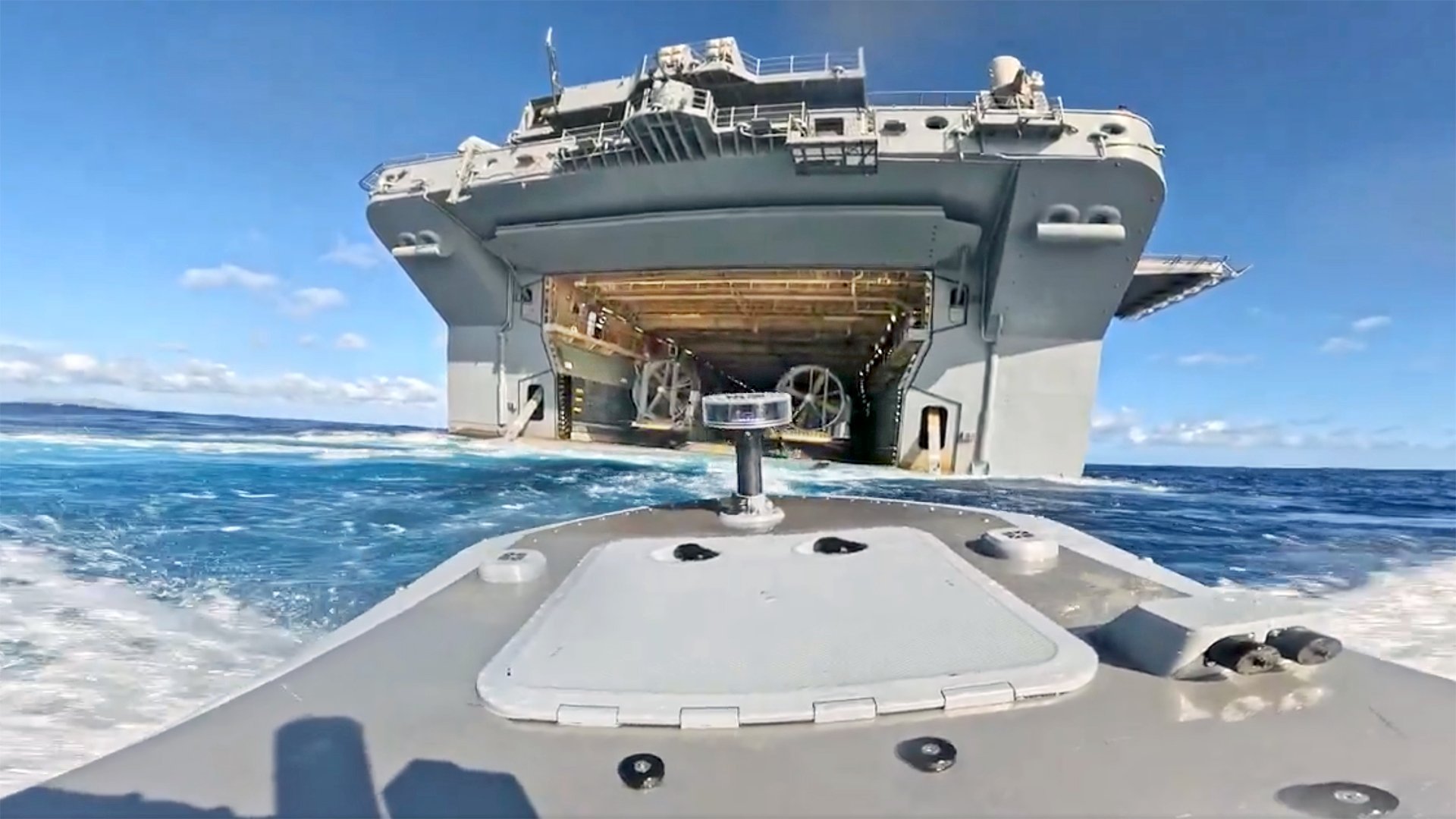
There have been many other tests, as well. Including one just this summer at RIMPAC. These trials saw the launch and recovery of one of Splash Industries’ Typhoon USVs aboard the USS Essex. The ‘Gator Navy’ of amphibious assault vessels that haul Marines and their kit around the oceans is uniquely suited to act as USV motherships. Their well decks allow for easy deployment and recovery of USVs of many sizes and capabilities near seamlessly. So it won’t be surprising if these vessels and the Marines aboard them quickly become staples in the Pentagon’s USV playbook.
Watch us land one of our drone-boats inside a moving US Navy warship during RIMPAC. This world-first resupply mission was performed completely autonomously using a Splash Industries Typhoon USV. pic.twitter.com/AEzNzZjsL1
You can see that engagement in the following video.
Ukraine's Navy says a Sargan unmanned surface vessel destroyed a Russian unmanned boat with machine-gun fire in the Black Sea, the first-ever battle between unmanned surface vessels. Ukrainian Navy personnel operated in coordination with HUR. #Ukrainepic.twitter.com/Avg4ecz8m6
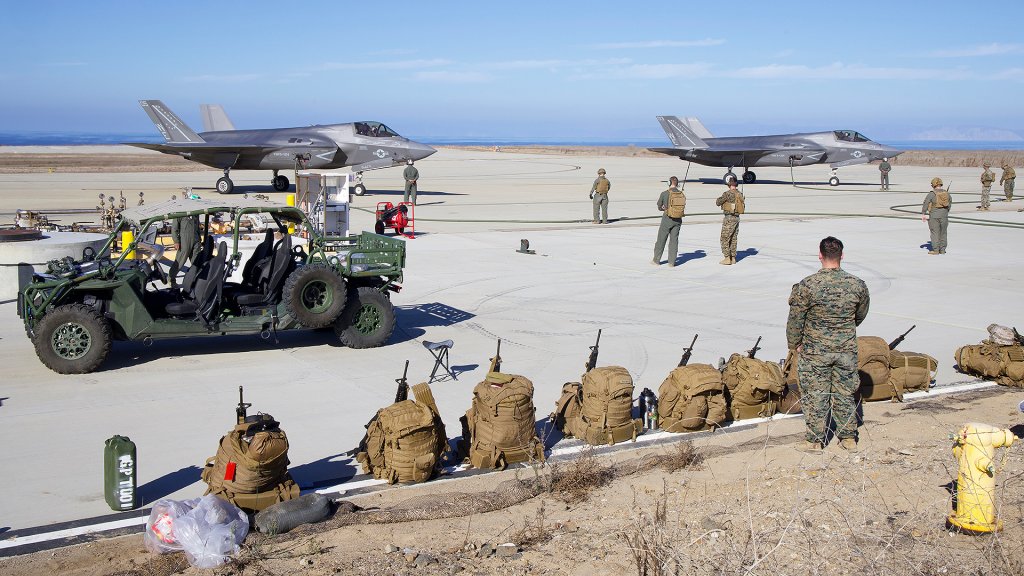
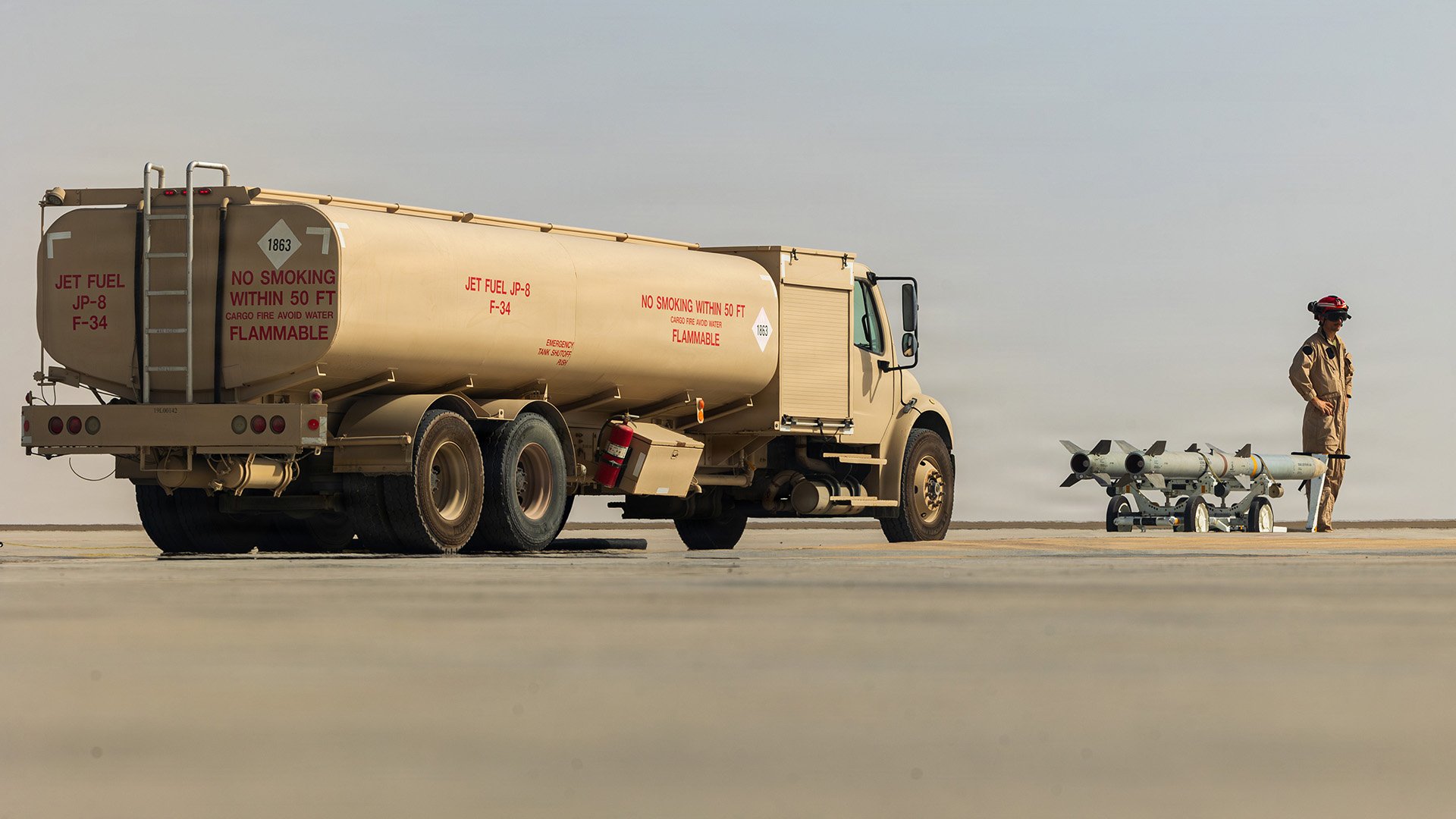
Having recently returned from a six-month deployment that saw the Marine Corps’ first use of its Expeditionary Advanced Base Operations (EABO) concept in a combat setting during the fight against Iran, Niedziocha has a good sense of the realities of modern warfare. His Marines operated forward arming and refueling points (FARPs) for various aircraft in combat for the first time and set up remote sensing locations.
That a commander like him sees value in USVs is a good sign for progress in the development of these systems.
The 31st Marine Expeditionary Unit’s (31st MEU) recent deployment to the Middle East marked the first time the United States Marine Corps (USMC) used its Expeditionary Advanced Base Operations (EABO) concept in a combat setting, the service confirmed to TWZ on Thursday. At its core, EABO involves relatively small groups of Marines quickly establishing bases of operation in forward areas, often within the enemy’s weapons range. During operations in the fight against Iran, Marines refueled and rearmed their own aircraft, as well as those from the joint force, at these austere locales. They also set up remote sensing locations, among other actions from the EABO playbook.
This employment of EABO for Epic Fury is a highly significant development. After years of progressively evolving the EABO playbook, it was no longer an experimental exercise. This meant that Marines were forward deployed in a contested area in a region where established bases were taking heavy fire from Iranian missile and drone barrages. Troops were killed in some of these attacks and U.S. aircraft, buildings and equipment were damaged and destroyed across the Middle East. Pushing aircraft from the MEU, as well as the joint force, to FARPs (forward arming and refueling point) would have been a relevant asset preservation tactic as well as one that would help accelerate combat operations, and it’s exactly what EABO is meant to do.
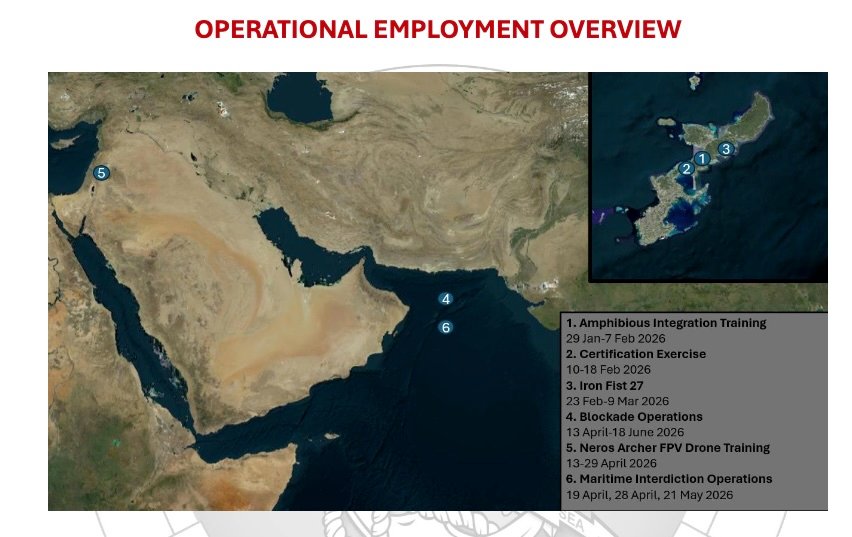
The 31st MEU’s six-month deployment began in January in the Pacific, before the unit was ordered to the Middle East in March, returning to Okinawa, Japan, in July. That’s where it is stationed as the USMC’s only continuously forward-based MEU.
A map of the 31st MEU’s deployment. (31st MEU)
“This was the first time we were able to implement EABO in combat operations since the concept was created for the force,” Capt. Steven J. Keenan, a USMC spokesperson, told us. “We have practiced it many times, but this was a first for supporting a Joint Force named operation with forward FARPs and forward bases that supported joint ops and combat power sustainment.”
EABO was first introduced in 2020 by then-Commandant Gen. David Berger in his Force Design 2030 plan for the future of the Corps. It was created with a fight against China in mind, especially utilizing small Pacific islands. The idea is to have highly mobile, low-signature forces deployed forward in austere, contested or potentially contested maritime locations. The mission is to “support sea control operation, conduct sea denial operations within the littorals, contribute to maritime domain awareness, provide forward command, control, communications, computers, combat systems, intelligence, surveillance, reconnaissance, targeting, and counter-targeting capability and forward sustainment,” according to the Marines.
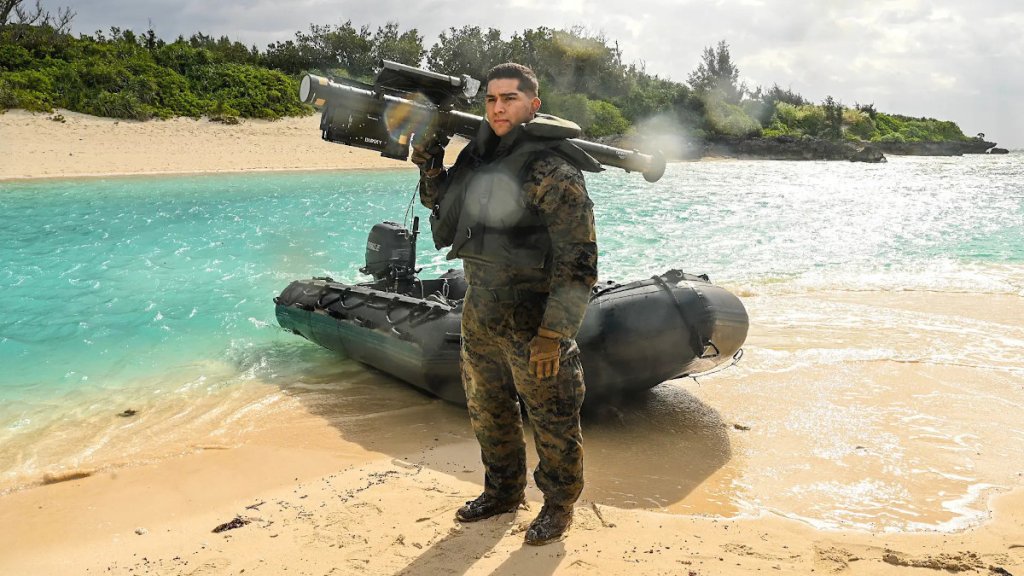
A Marine holding a Stinger missile launcher stands in front of a Combat Rubber Raiding Craft on Ukibaru Island off the coast of Okinawa during Exercise Hagatna Fury 21. (USMC) A Marine holding a Stinger missile launcher stands in front of a Combat Rubber Raiding Craft on Ukibaru Island off the coast of Okinawa during Exercise Hagatna Fury 21. USMC
The news of the first activation of the EABO concept in combat came Wednesday during a media roundtable with Col. Chris P. Niedziocha, who commanded the 31st MEU during its deployment to the Middle East in support of Operation Epic Fury. Now director of the USMC Expeditionary Warfare School, Niedziocha discussed EABO and a range of other operations during that deployment, including boarding vessels during the blockade of Iranian ports.
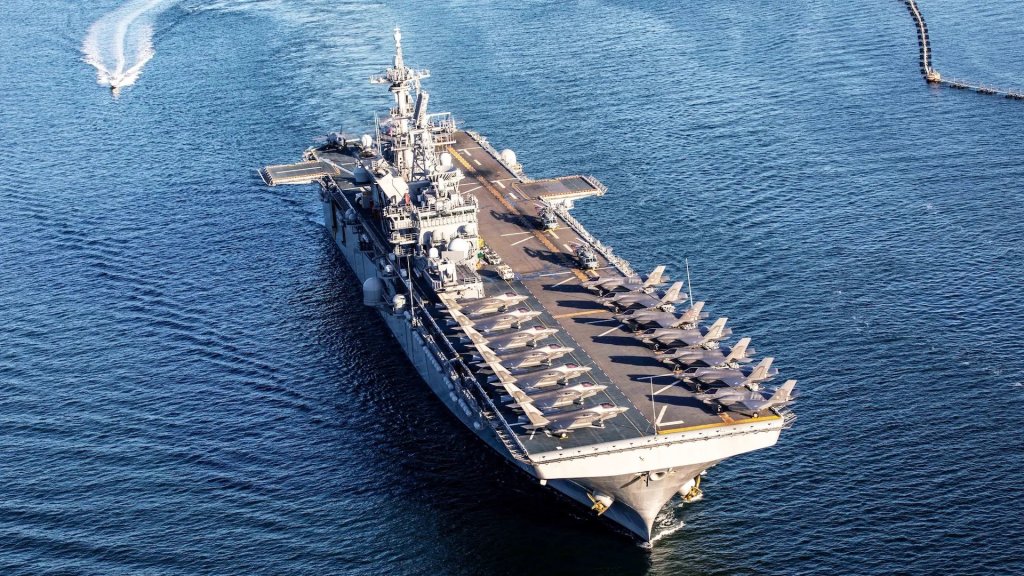
The 31st MEU was embarked aboard the Tripoli Amphibious Ready Group (ARG), which consisted of the America class amphibious assault ship USS Tripoli, San Antonio class amphibious transport dock ship USS New Orleans, and Whidbey Island class dock landing ship USS Rushmore. You can read more about the ARG/MEU and its assets in our initial story about the deployment to the Middle East here.
USS Tripoli. (Staff Sgt. Samuel Ruiz)
“You’re starting to see this has been validated,” the colonel said of the EABO concept during the roundtable TWZ attended virtually. “It’s still nascent, but we actually, for the first time, demonstrated what we thought we were able to do, which I think is pretty exciting. And then things like forward arming and refueling to extend the operational reach of aircraft and expeditionary reloading, and then the ever-present logistic challenge of doing something like that. So that’s pretty significant.”
“We successfully implemented critical Expeditionary Advanced Base Operations (EABO), establishing sensor expeditionary advanced bases and forward arming and refueling points (FARPs) where none existed,” the colonel added. “Through our forward logistic elements, we proved that an agile Marine Air-Ground Task Force can sustain itself and generate ready, lethal power in contested maritime environments, directly setting the theater for follow-on joint forces.”
“There was all manner of tankers all the time, but the FARP is to extend the operational reach, and if you can do it, you reduce the load on that,” Niedziocha noted. “Because there’s some aircraft that are basically for expeditionary austere operations, especially the F-35B,” the Marine Corps’ variant of the aircraft designed for short take off and vertical landing.
“There are some trade-offs associated with the Bravo,” Niedziocha pointed out, using a slang for the jets. “There’s less internal fuel, but you have the lift [system], which gives you the option to do these kinds of things. So, the goal there was to walk that fine line between providing the full sortie over wherever you needed it, and keeping the ships far enough away to make them as survivable as possible.”
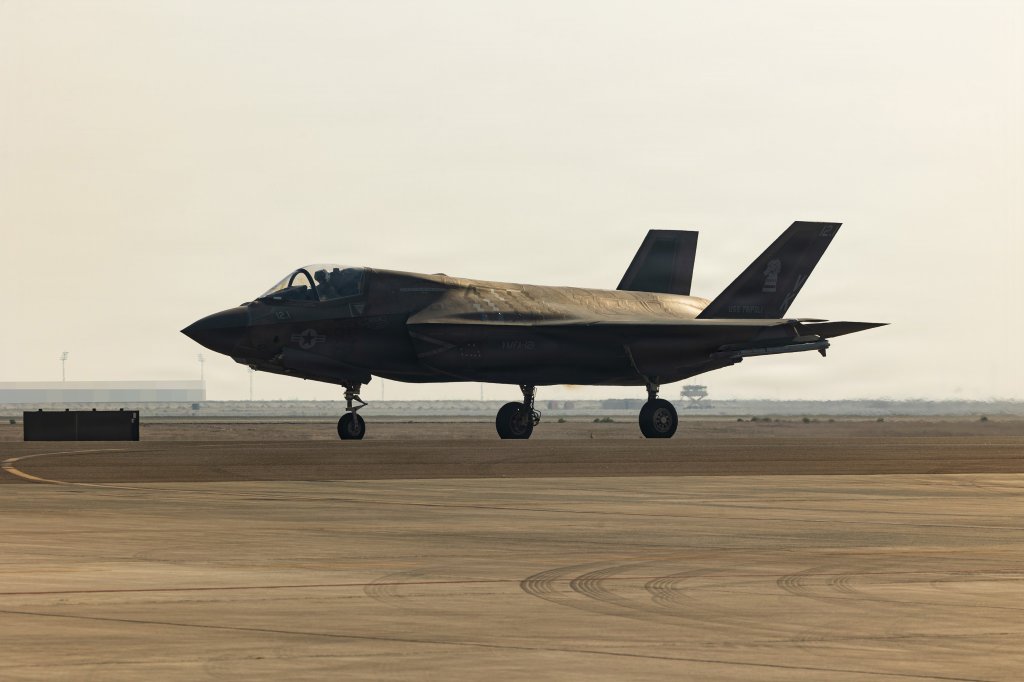
An F-35B Lightning II aircraft taxis to a forward arming and refueling point in the U.S. Central Command area of responsibility, May 26, 2026. (U.S. Marine Corps photo by Cpl. Maksim Masloboev) Cpl. Maksim Masloboev
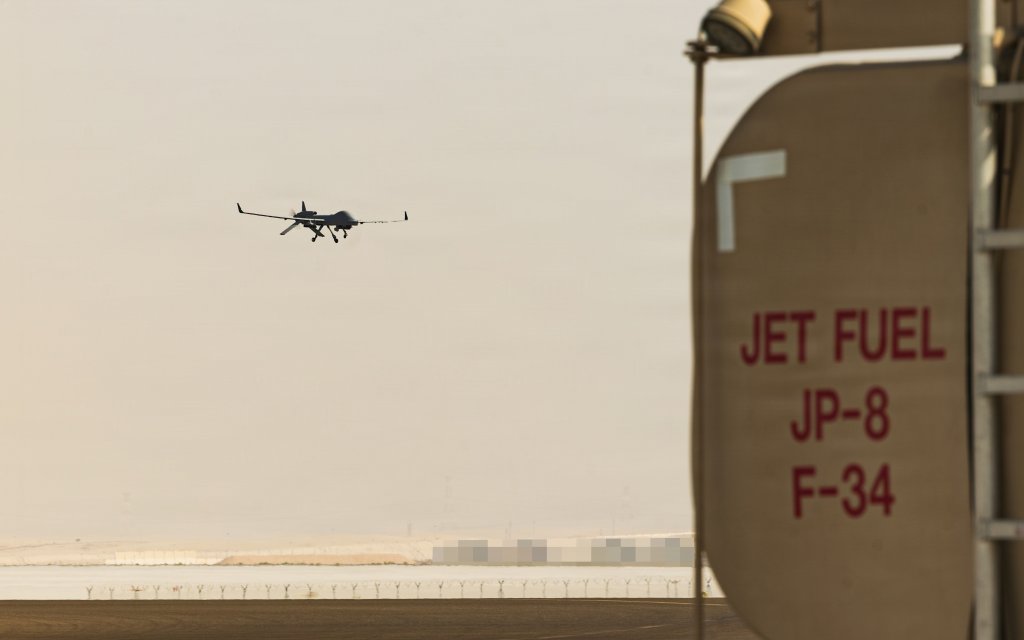
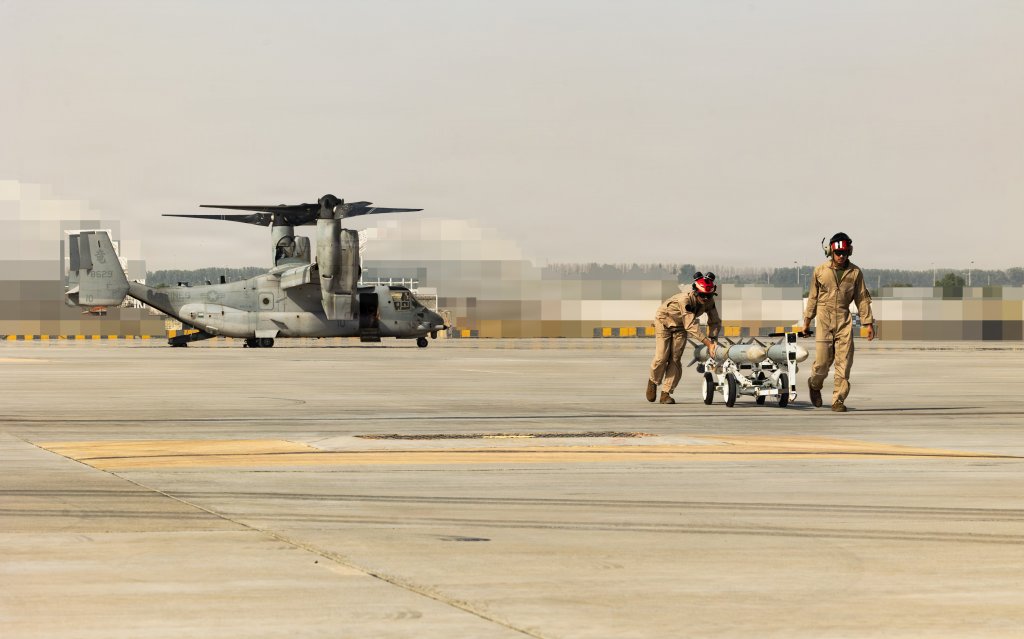
In addition to the F-35Bs and other aircraft organic to the 31st MEU, the FARPs were also used by Army helicopters, Keenan told us. Imagery posted on the Pentagon’s image distribution site also showed U.S. Army Gray Eagle drones and Marine MV-22B Osprey tiltrotor aircraft were included.
A Gray Eagle drone lands at a forward arming and refueling point in the U.S. Central Command area of responsibility, May 26, 2026. (U.S. Marine Corps photo by Cpl. Maksim Masloboev) Cpl. Maksim MasloboevU.S. Marines with the 31st Marine Expeditionary Unit transport AIM-120 AMRAAMs to a forward arming and refueling point in the U.S. Central Command area of responsibility, May 26, 2026. (U.S. Marine Corps photo by Cpl. Maksim Masloboev) Cpl. Maksim Masloboev
Niedziocha did not provide details about where the FARPs were set up, but a U.S. defense official told us they were “disaggregated throughout the Middle East.” The official declined to provide further information, citing operational security concerns since they are still being used.
“Throughout the deployment, the Tripoli ARG and 31st MEU successfully conducted over 1,600 mishap-free flight hours of combat aviation missions, including precision strikes, transporting 800,000 pounds of cargo, and moving 5,000 personnel,” a 31st MEU overview of the deployment explained. “The units also provided sustained combat support to joint force operations by delivering critical intelligence and refueling over 300 aircraft ashore and underway.”
The colonel also didn’t provide details about the sensor expeditionary advanced bases. According to the Marines, “a sensing expeditionary advanced base (SEAB) brings together coastal surveillance radars, electronic sensors, and Marines ashore to extend maritime domain awareness, complementing the radars and sensors already at work aboard naval ships off the coast.”
“When SEAB systems identify surface vessels in nearby sea lanes, small unmanned aircraft system (sUAS) operators launch their platforms to visually identify and track the contacts,” the Marines added. “Sensor data and imagery are transmitted in real time across the blue-green command network to decision-makers.”
U.S. Marines with 12th Marine Regiment, 3rd Marine Division, prepare to set up a Ground/Air Task Oriented Radar (G/ATOR) system during a routine unit level training exercise on Iejima, Okinawa, Japan, July 15, 2023. (U.S. Marine Corps photo by Staff Sgt. Manuel A. Serrano) Gunnery Sgt. Manuel Serrano
This capability could have been used to track Iran’s remaining fleet of small boats that it has used to harass shipping and mine the Strait of Hormuz, as well as larger vessels trying to transport oil. Other sensors, like radars and counter-drone systems, could also help identify incoming threats and provide general situational awareness. The EABO concept was employed as part of the 31st MEU’s larger role in supporting the blockade and mine clearance efforts.
The 31st MEU interdicted four vessels during the deployment, three of which led to boardings. On April 19, Marines boarded the MV Touska; on April 28, the MV Blue Star III; and on May 19, the MT Celestial Sea.
The Touska was boarded after USS Spruance fired multiple 5-inch rounds, targeting the engine room and disabling the vessel’s propulsion. The crew of the vessel was retained for about two weeks before being repatriated.
Niedziocha told us that none of the crews offered any resistance.
“At two in the morning, when 30 Force Reconnaissance Marines fast rope onto your vessel, [you are] just compliant with a capital C. They did exactly what they were directed to do. The overmatch that you put onto that vessel is pretty surprising. And then there’s overwatch provided by UAS and manned aircraft, so you create this bubble around the vessel. So yeah, they complied.”
You can see the Touska being boarded in the following video.
The U.S. just released a video of its forces boarding and seizing the Iranian container ship M/V Touska near the Hormuz Strait after it tried to break the U.S. naval blockade pic.twitter.com/FpB2obb3jY
Two years ago, as the EABO concept was maturing, TWZ was invited to get an exclusive look at how an advanced EABO concept would be put into action, including how squadrons operated the F-35B out of an austere combat environment while generating combat sorties. It was an unprecedented and exclusive peek into the EABO playbook and what a real fight in the Pacific with the USMC’s most advanced fighter aircraft could actually look like. You can read about that in our story here. It appears the operations in the Middle East mirrored this exercise closely.
James Deboer
Now back in Japan, the ARG/MEU is getting ready for a new deployment, said the colonel.
“We got back to Okinawa, I think July 22nd, and they had already begun their workup cycle in earnest to be on the water in early January to go out and do another Iron Fist [training exercise] with the Japanese, and then long periods of a crisis response,” said Niedziocha, who relinquished command in August before moving on to his new role. “Just being there, present in the First Island Chain to partner with your allies, demonstrates the resolve and commitment to deter whatever needs deterring.”
As noted earlier in this story, the EABO concept was designed with a Pacific fight in mind. Its first combat employment in the Middle East clearly offers lessons that can now be adapted to enhance EABO operations globally.

 Login


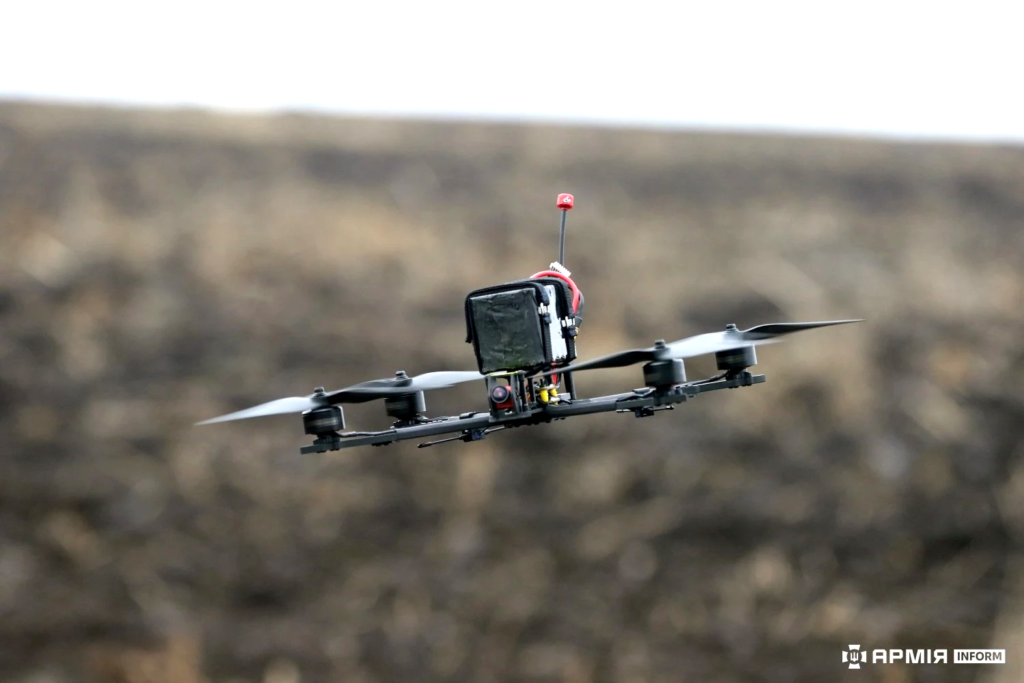
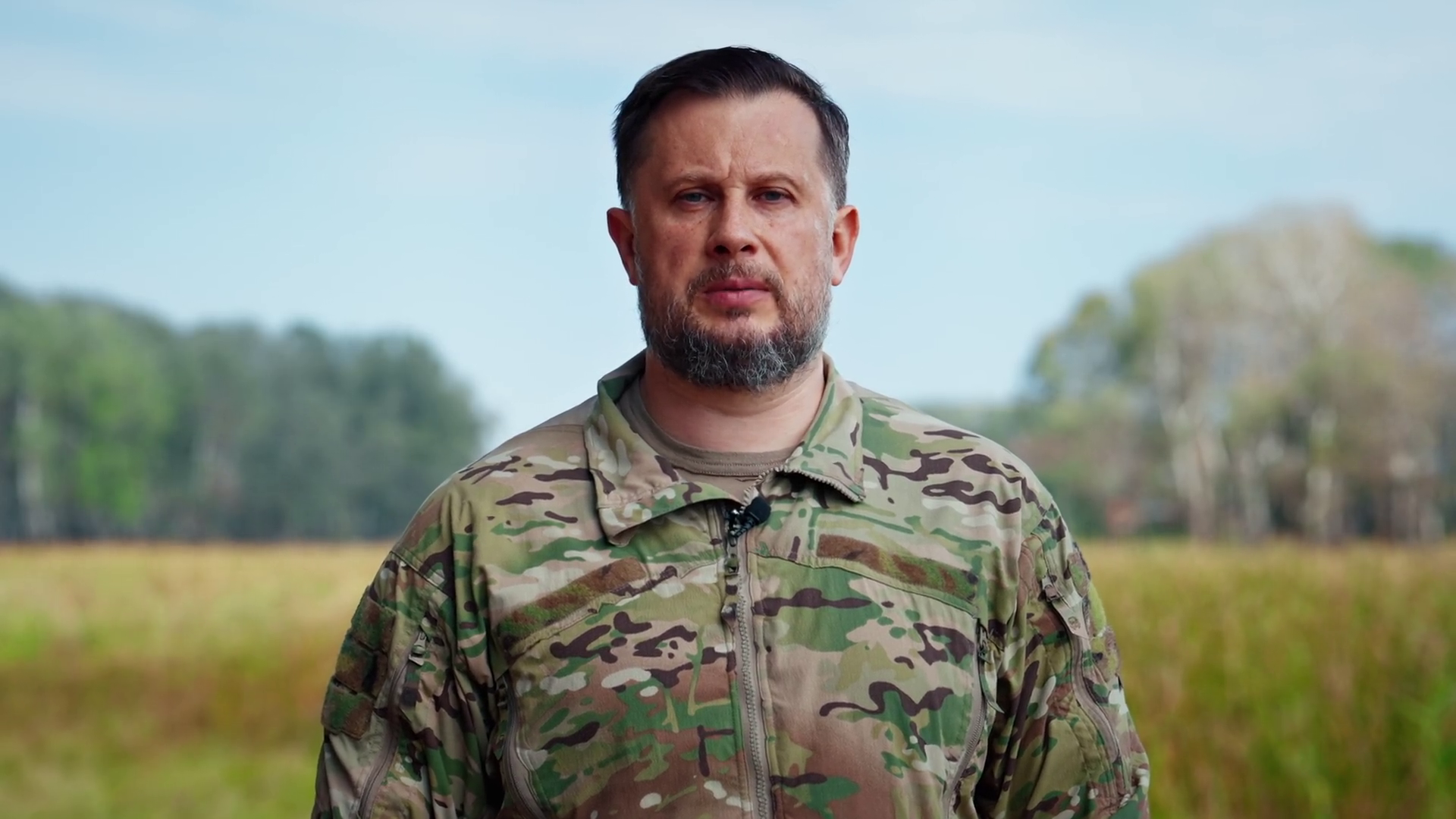


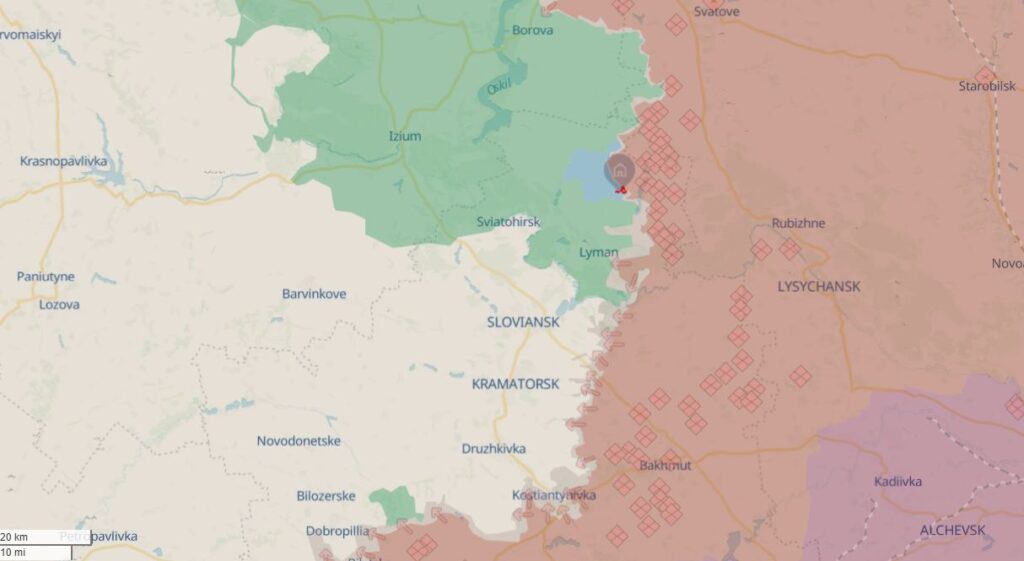
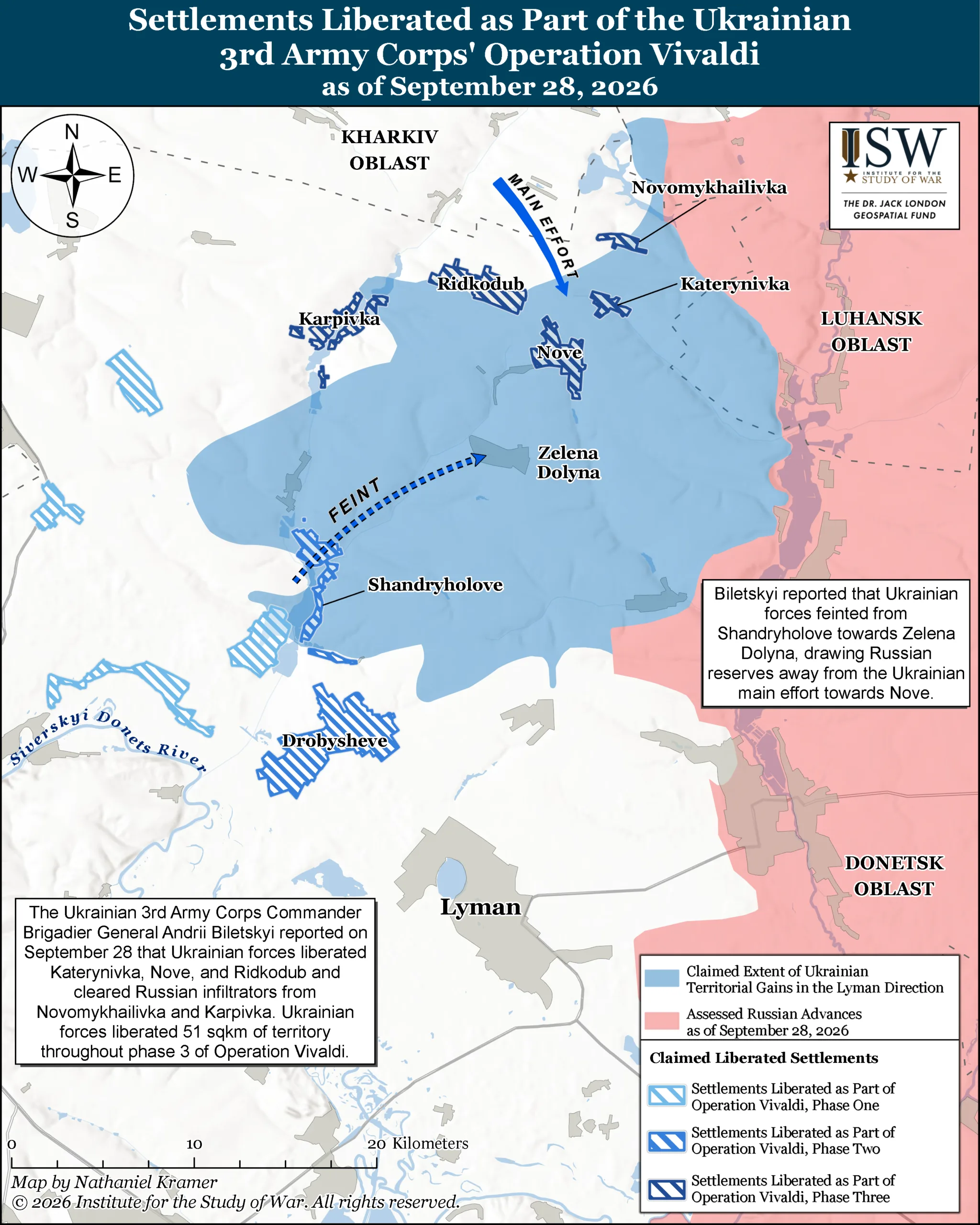


 ORBAT - Summer 2026
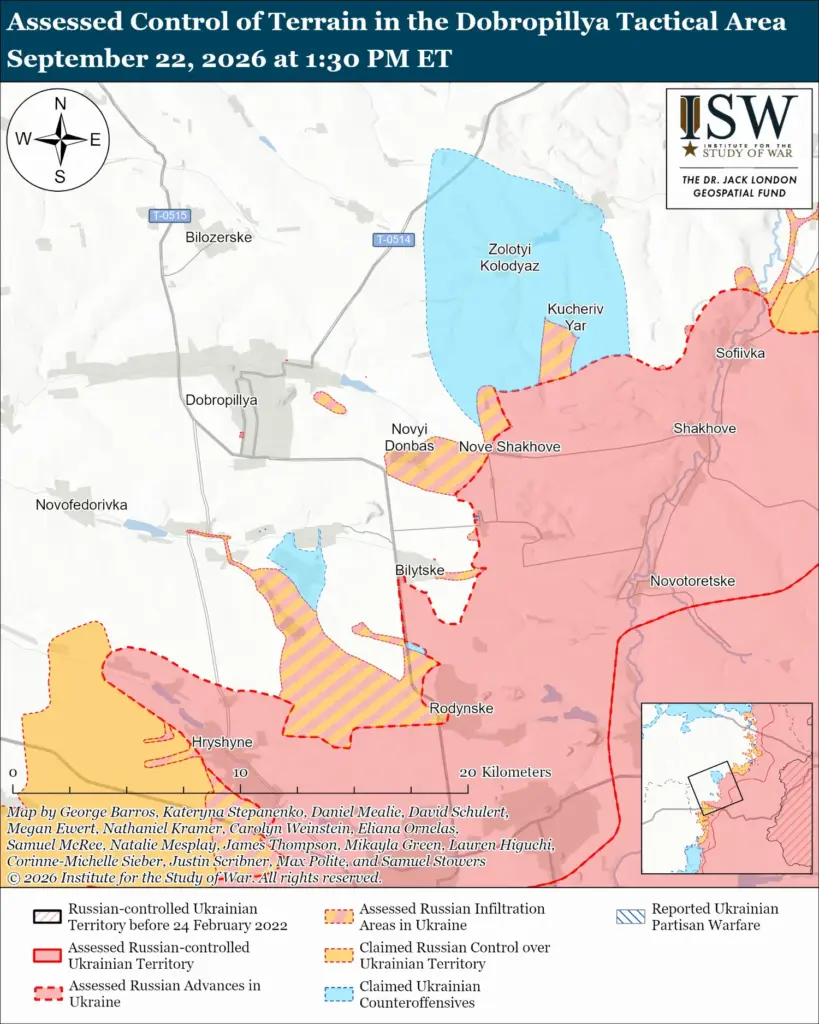

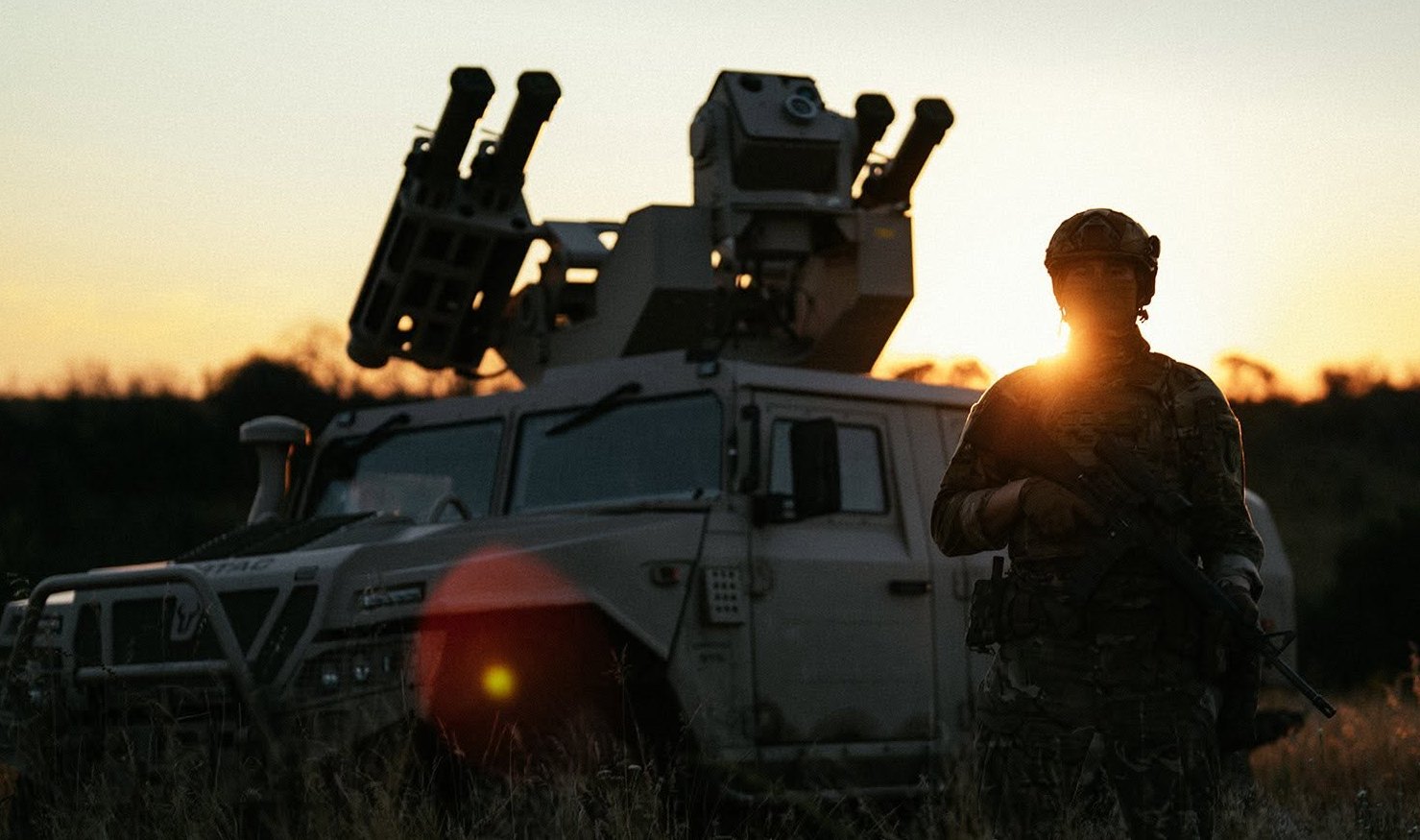

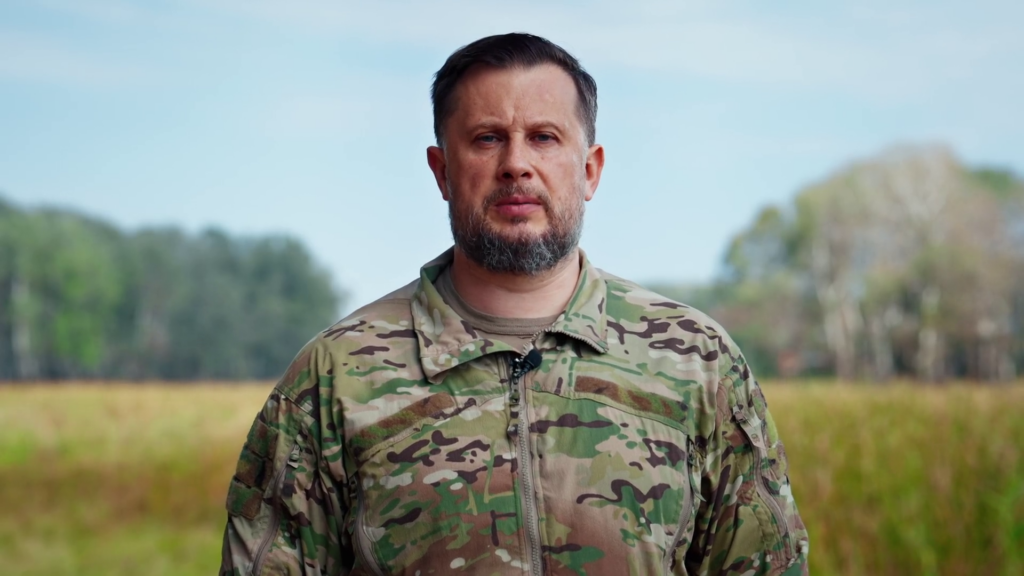


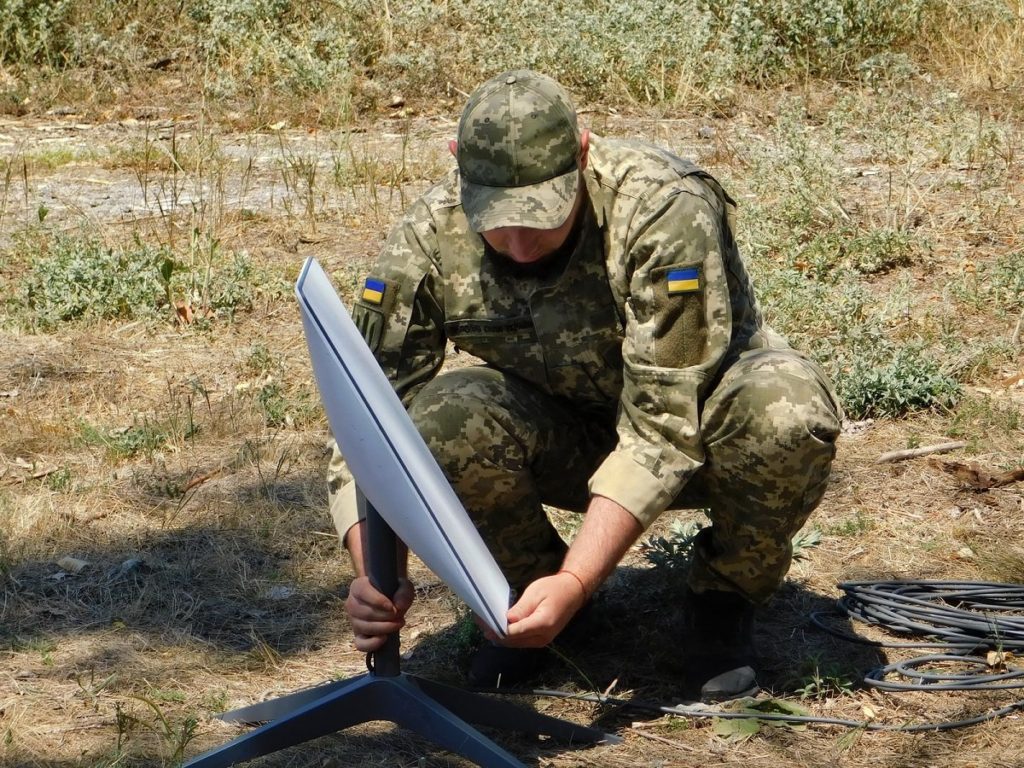


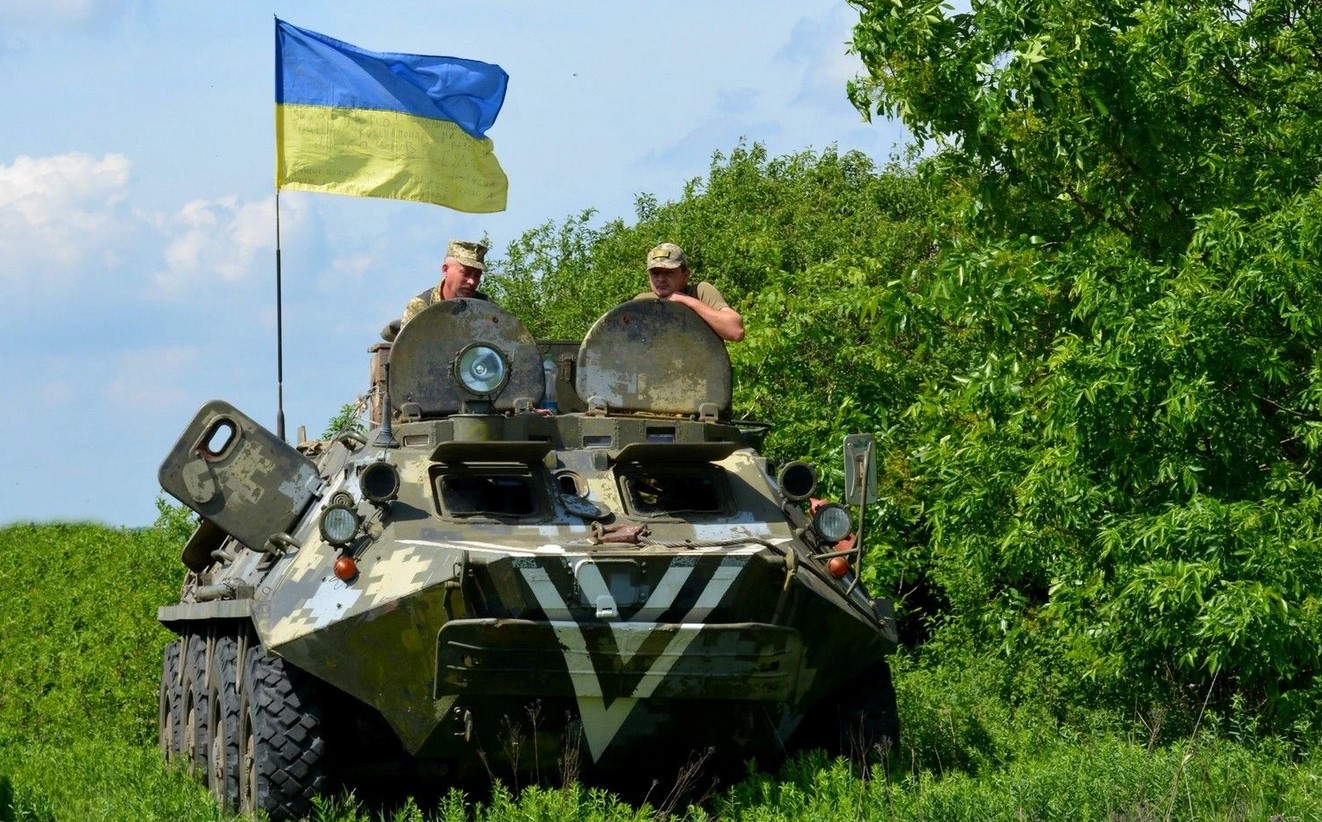


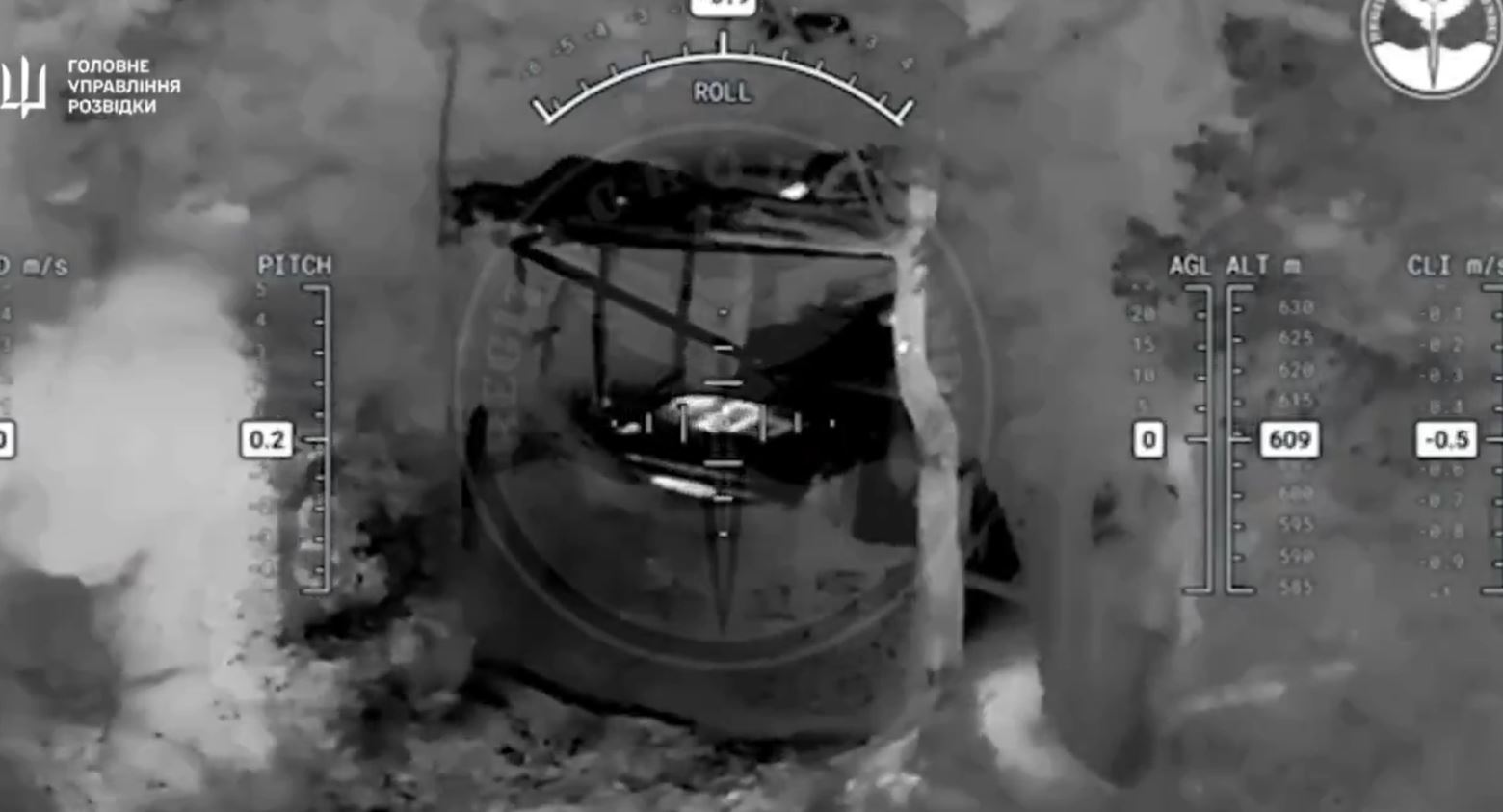
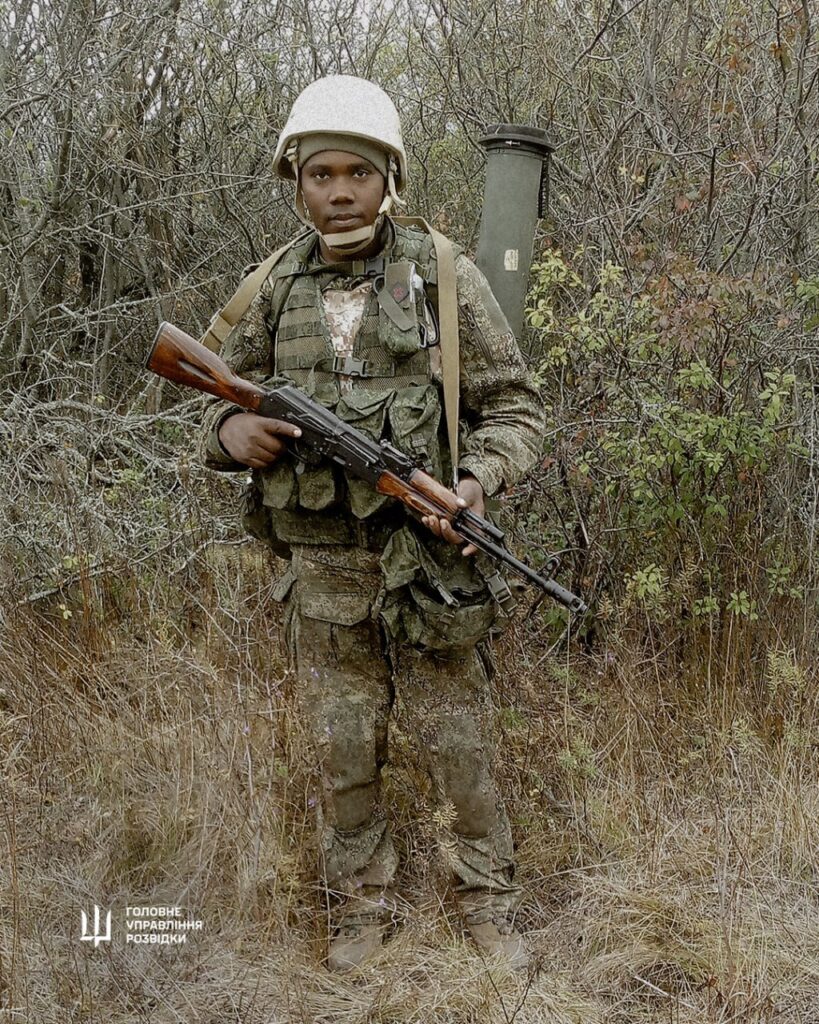



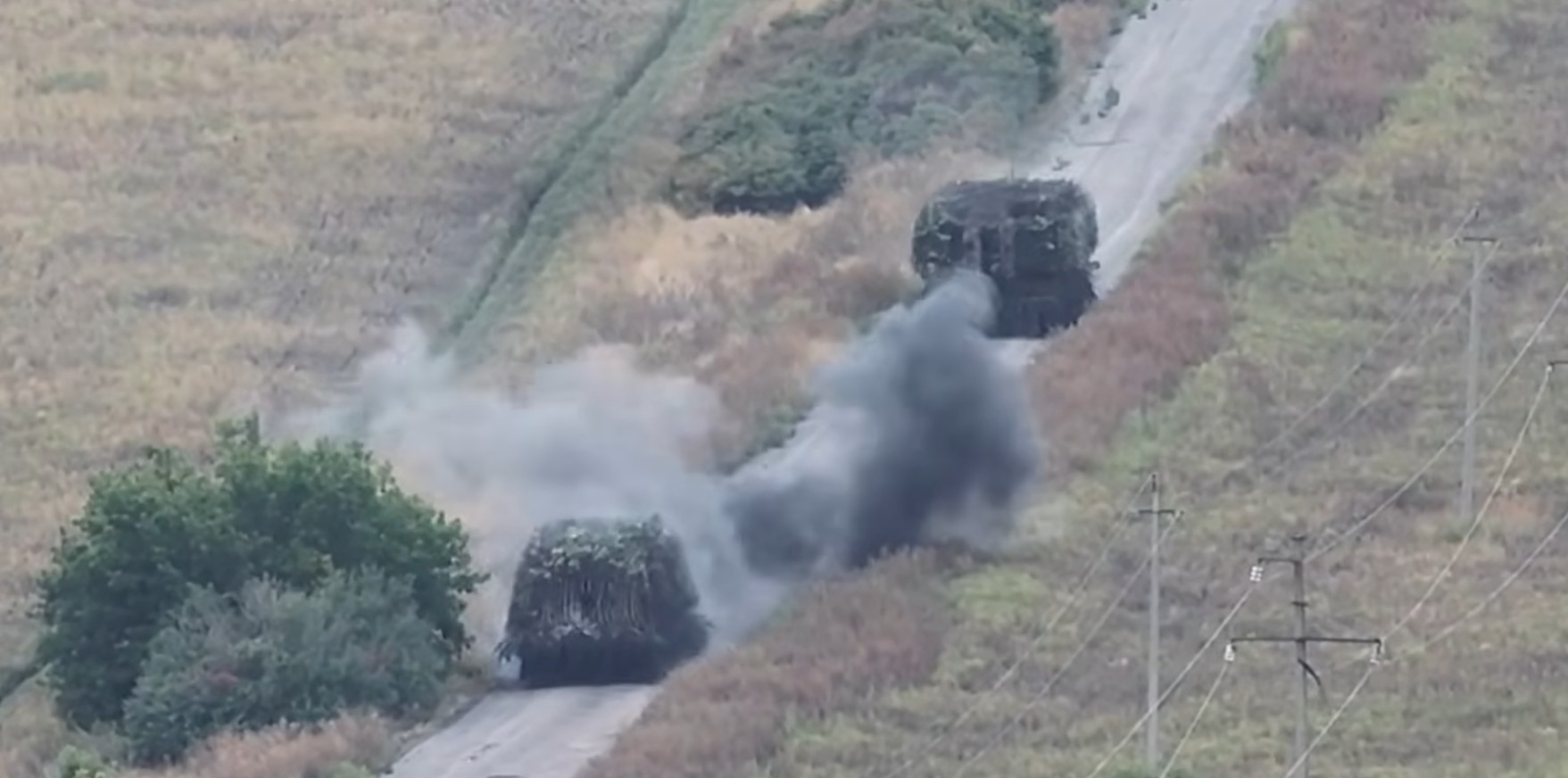

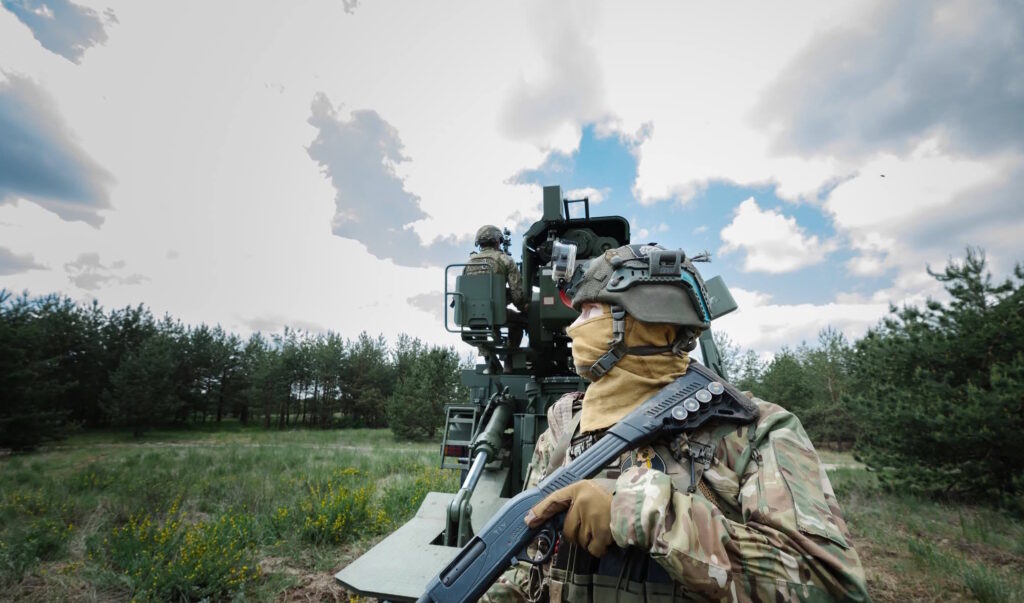
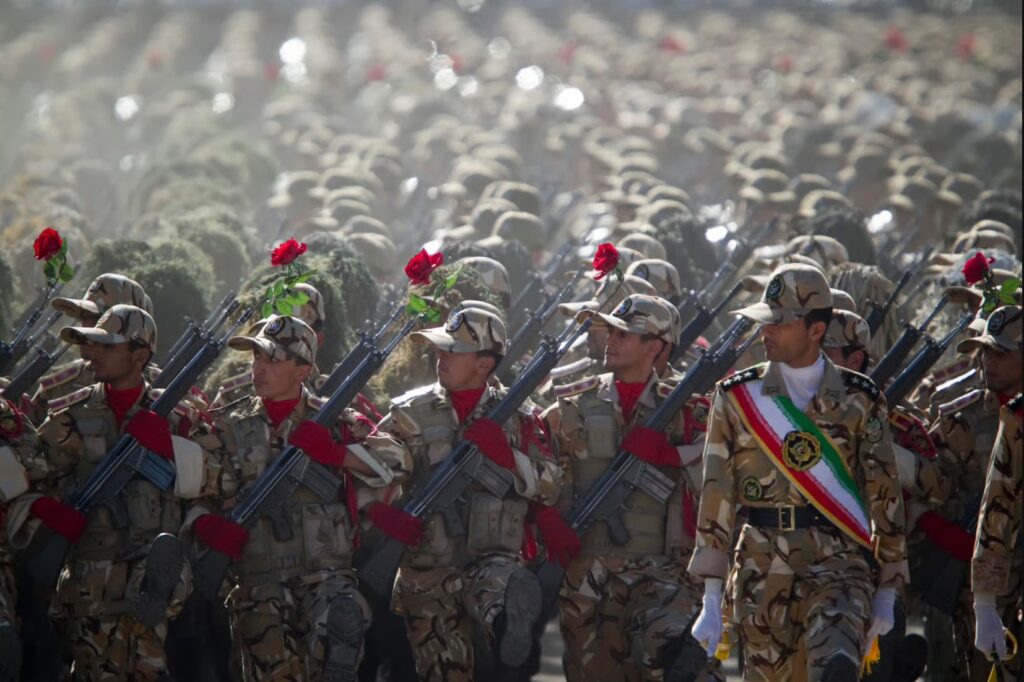
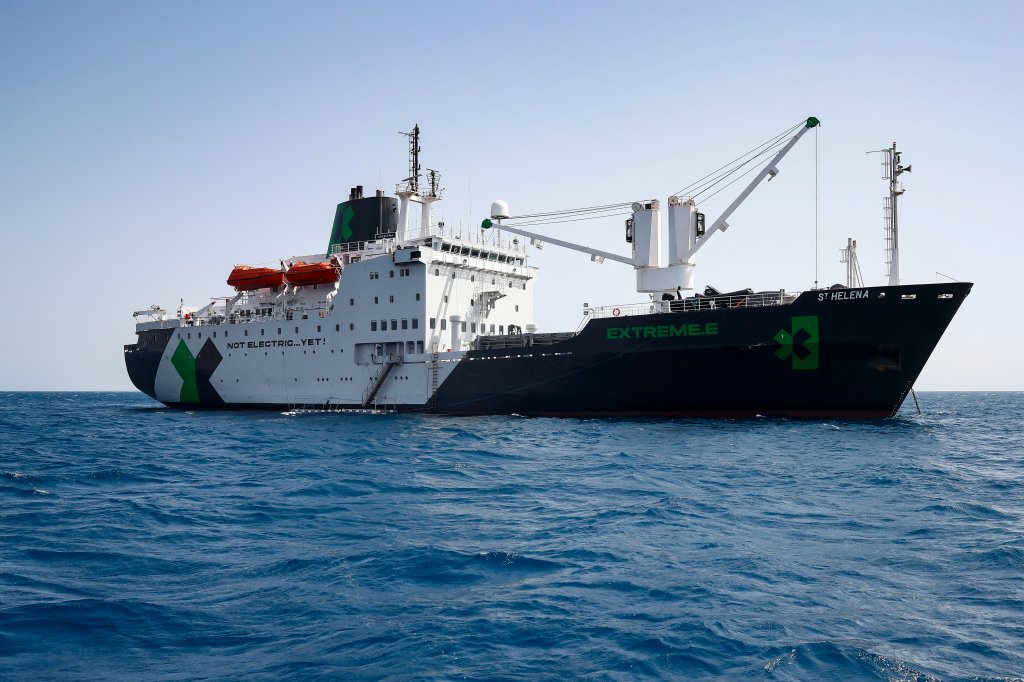
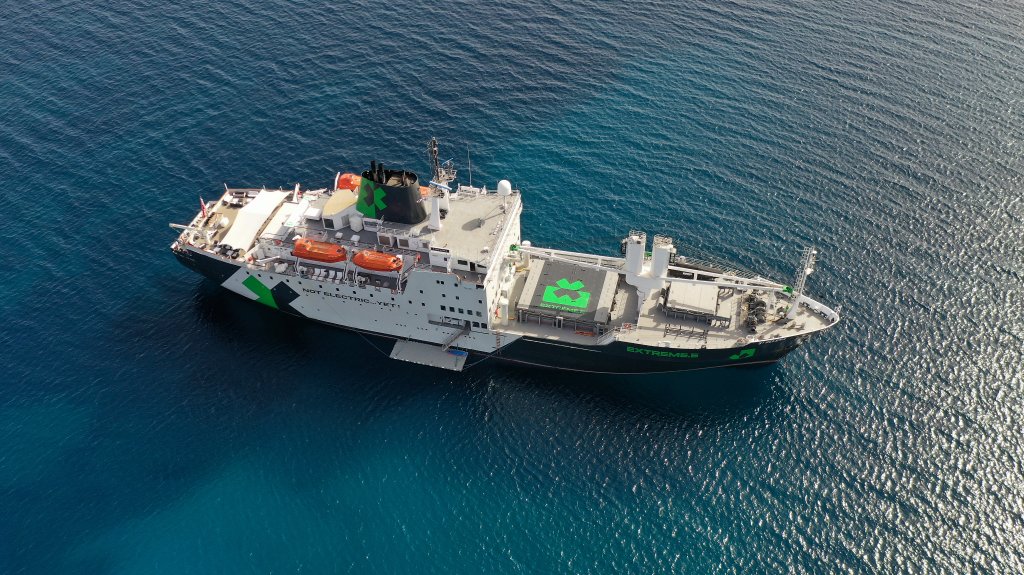


 (@mercoglianos)
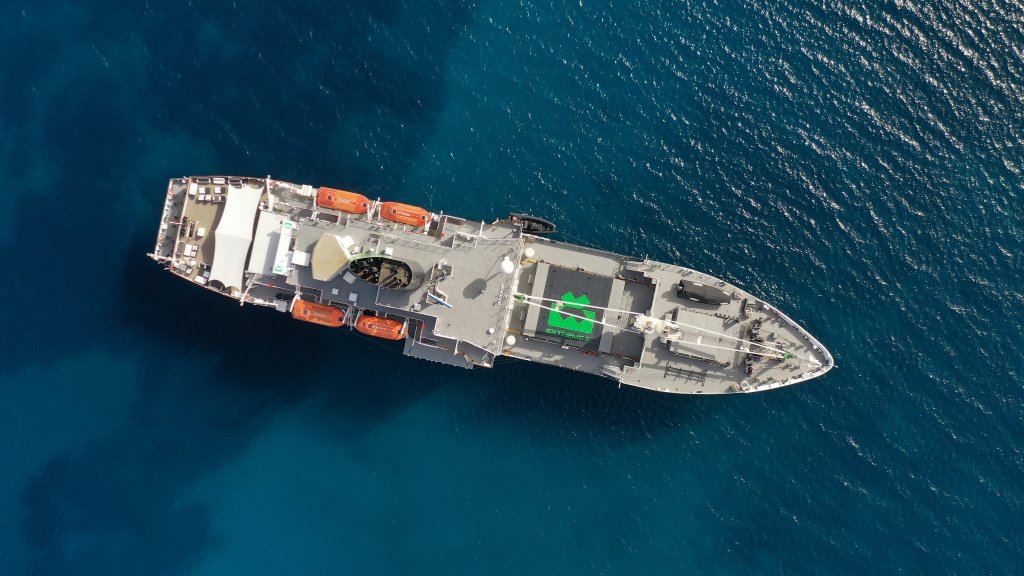



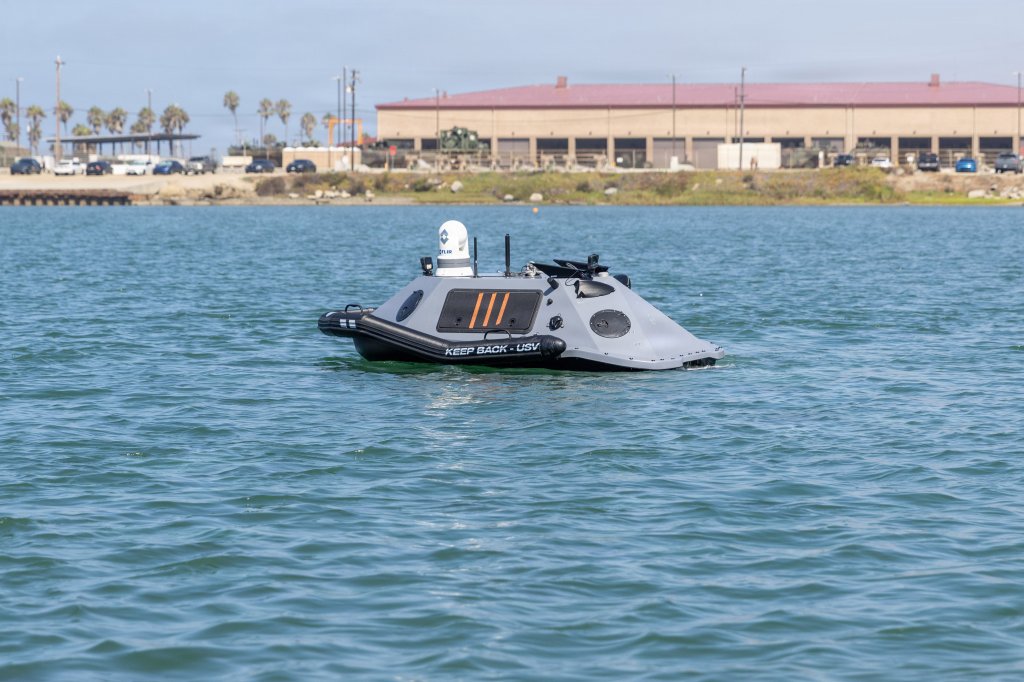

 (@NOELreports)