❌

Reading view

‘These risks are real’: the threat of AI bioweapons – podcast

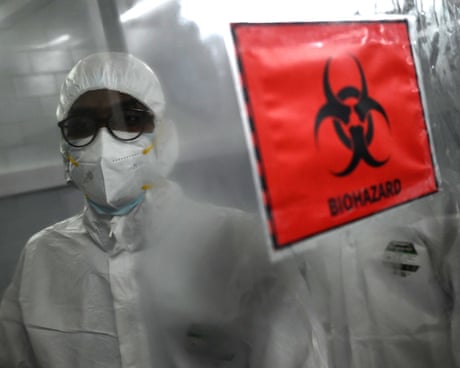
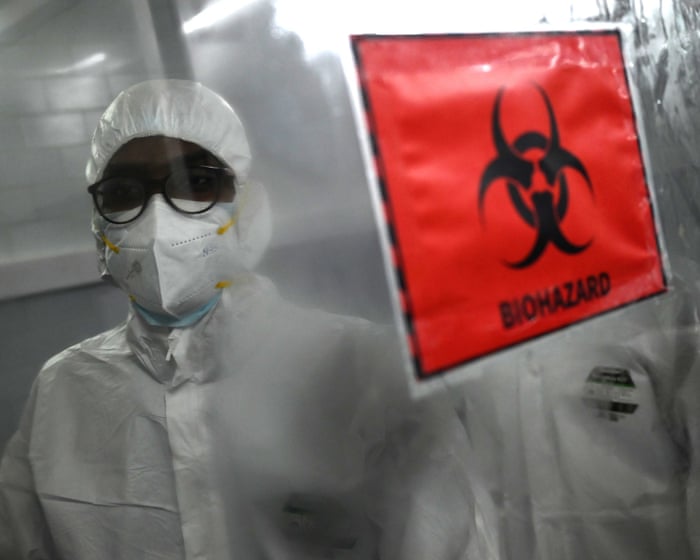
In his annual speech on threats to the nation, Sir Ken McCallum, the head of the UK’s intelligence service, MI5, warned that AI had the potential to ‘change the stakes’ on existing and even new bioweapons. To find out why, and how, Ian Sample speaks to Dr Tom Inglesby, director of the Johns Hopkins Center for Health Security and the Bloomberg School of Public Health. He explains what has governments so worried and what measures could be put in place to reduce the risks

Could AI ‘change the stakes’ in the development of bioweapons?

Support the Guardian: theguardian.com/sciencepod

Continue reading...

© Photograph: Arun Sankar/AFP/Getty Images

© Photograph: Arun Sankar/AFP/Getty Images

© Photograph: Arun Sankar/AFP/Getty Images

  •  

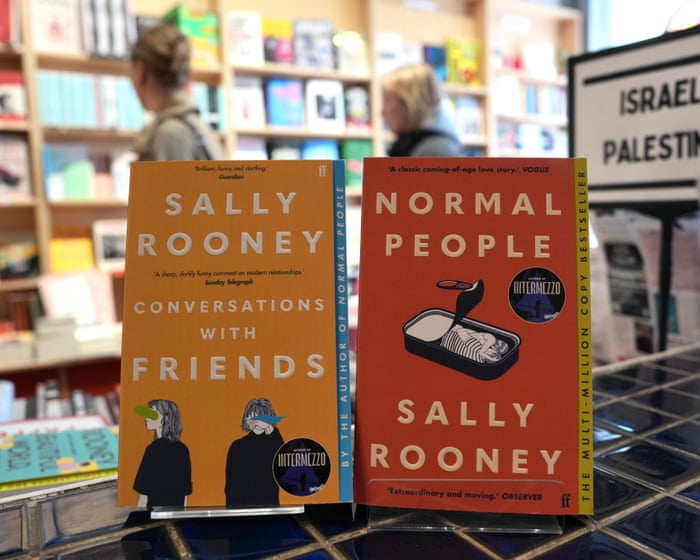
Why terrorism laws stopped Sally Rooney selling books in the UK – podcast

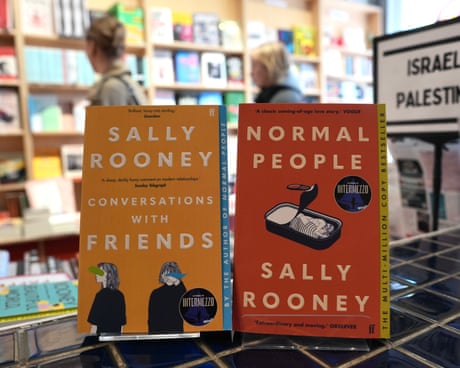
The bestselling author says her books will no longer be supplied to UK bookshops over fears of prosecution. Zoe Williams and Haroon Siddique report

For now there might be a copy or two of Intermezzo left kicking around in your local bookshop – snap it up if you haven’t already, because soon that will be it.

Last year, Sally Rooney said she would be using her royalties to support Palestine Action, a group that is proscribed as a terrorist organisation under UK law. Since then, thousands of people have been arrested for supporting the group. Now, faced with the risk of prosecution under terrorism legislation, Rooney and her publishers have decided to stop supplying her books to retailers in the UK.

Continue reading...

© Photograph: Kin Cheung/AP

© Photograph: Kin Cheung/AP

© Photograph: Kin Cheung/AP

  •  

A Once-in-Half-a-Century Setback? US Withdraws from Iraq after meddling

The United States is bringing its long-standing presence in Iraq to an end—a country whose fate it had shaped since 1980. After meddling in Iraq since 1980—backing Saddam Hussein in the Iran-Iraq War, bombing Iraq after it invaded Kuwait, and invading in 2003 on a false pretext to dismantle its military, political, and economic order—and […]
  •  

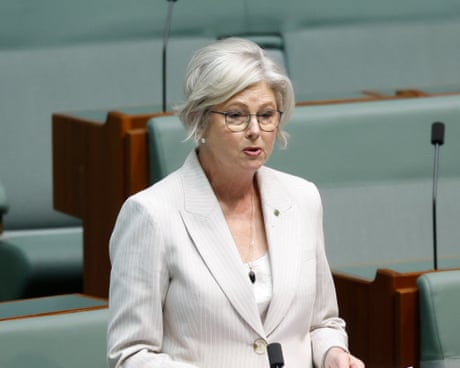
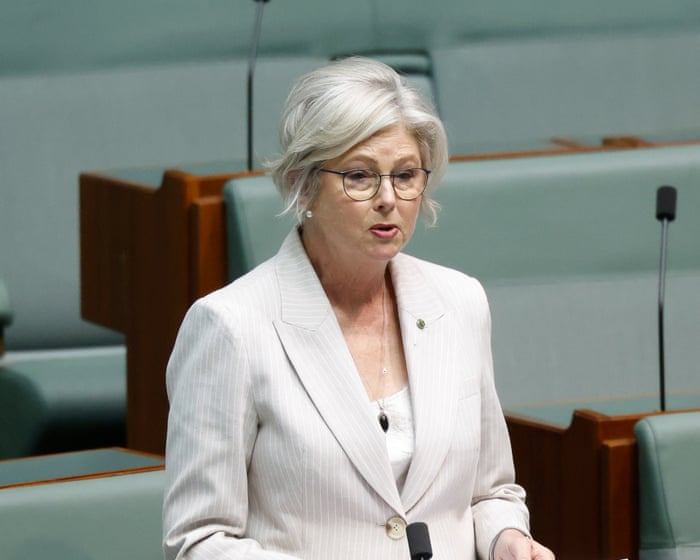
‘Deeply appalled’: politicians condemn alleged attack after independent MP Helen Haines critically injured

Anthony Albanese says his thoughts are with Indi MP after arrest of driver in Wangaratta

The independent MP Helen Haines has been critically injured in an alleged attack involving a vehicle outside her electorate office in Wangaratta, in regional Victoria.

The prime minister, Anthony Albanese, confirmed on Monday night that a man was in custody after the alleged attack on Haines that was now being investigated by the Australian federal police (AFP), Asio and the joint counter-terror taskforce.

Continue reading...

© Photograph: Hilary Wardhaugh/Getty Images

© Photograph: Hilary Wardhaugh/Getty Images

© Photograph: Hilary Wardhaugh/Getty Images

  •  

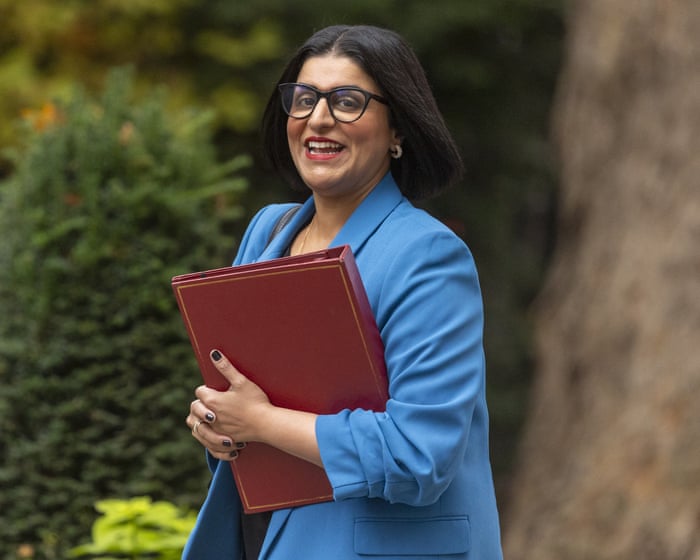
Shabana Mahmood to hold talks with EU over law enforcement cooperation

UK home secretary’s meeting comes after PM said he wanted to rejoin European law enforcement databases

The UK home secretary, Shabana Mahmood, will meet the EU’s home affairs commissioner on Monday for further talks just days after Andy Burnham said he wanted to rejoin European law enforcement databases from which the UK has been locked out of since Brexit.

According to the European Commission, they will discuss “migration, border management, law enforcement cooperation and counter-terrorism”, with the latest Frontex data published on Monday showing a 43% decline in small boats crossing the Channel.

Continue reading...

© Photograph: Marcin Nowak/Anadolu/Getty Images

© Photograph: Marcin Nowak/Anadolu/Getty Images

© Photograph: Marcin Nowak/Anadolu/Getty Images

  •  

Reclaiming States and Value: Recapture of Kidal and Creation of Gold Refineries Across Sahel

Instability in countries that later formed the Alliance of Sahelian States (AES) in security political and economic affairs resulted from perennial interference by the US and France. Military assistance from Russia is helping these countries to regain sovereignty and capture more value from their resources. Mali and Africa Corps reenter Kidal On October 6, 2026, […]
  •  

Far-right and Iran add to mix of terror threats UK faces – not to mention AI

Annual update from MI5 chief highlighted a complex cocktail that could have real-life consequences for Britain

MI5’s annual threat update covers so much ground it is easy to feel anxious. The terror threat has become more diverse, with far-right anti-migrant threats on the rise; while Iran has now firmly emerged alongside Russia as a country seeking to undertake violent and deadly plots in the UK.

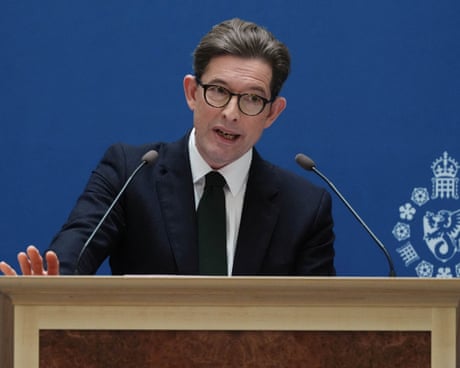
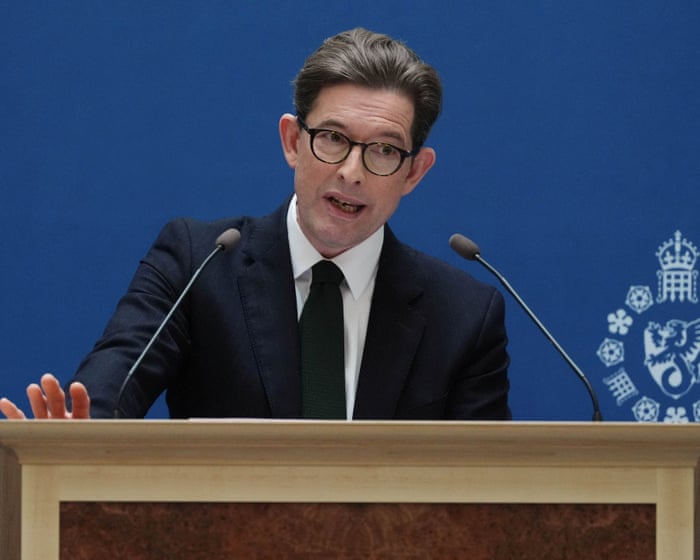
“There is no law of physics dictating that rising state threats will be accompanied by diminishing terrorist threats,” MI5’s director general, Ken McCallum, said, although one of his core messages was that people and the country at large needed to focus on being more resilient. “In this new world, we should expect to be tested.”

Continue reading...

© Photograph: Toby Shepheard/Reuters

© Photograph: Toby Shepheard/Reuters

© Photograph: Toby Shepheard/Reuters

  •  

Russia did try to interfere in Brexit referendum, head of MI5 confirms

Ken McCallum says Kremlin attempted to influence vote through social media and TV reports but had little impact

Russia did try to interfere in the Brexit referendum through social media and television reports, the head of MI5 said on Tuesday, but he added that did not mean the Kremlin had any impact on the result.

Ken McCallum endorsed comments by Andy Burnham, who raised the issue over the past two days, though he said continuing to debate it risked giving the Kremlin a needless propaganda victory.

Continue reading...

© Photograph: Jonathan Brady/Reuters

© Photograph: Jonathan Brady/Reuters

© Photograph: Jonathan Brady/Reuters

  •  

How significant are Burnham’s remarks on Kremlin interference in Brexit vote?

Prime minister has reopened the debate over whether Russia sought to influence the 2016 referendum

Andy Burnham unexpectedly reopened an old Brexit debate when he said he had been told after becoming prime minister that Russia had interfered in the 2016 EU referendum.

It was a contentious issue in the second half of the previous decade, but one that had largely been forgotten about as the UK finally adjusted to the reality of leaving the EU. Now Burnham’s comments have given the topic a fresh impetus.

Continue reading...

© Photograph: Christopher Furlong/Reuters

© Photograph: Christopher Furlong/Reuters

© Photograph: Christopher Furlong/Reuters

  •  

Two Latvian Nationals Arrested at RAF Base Housing US and NATO Intelligence Operations

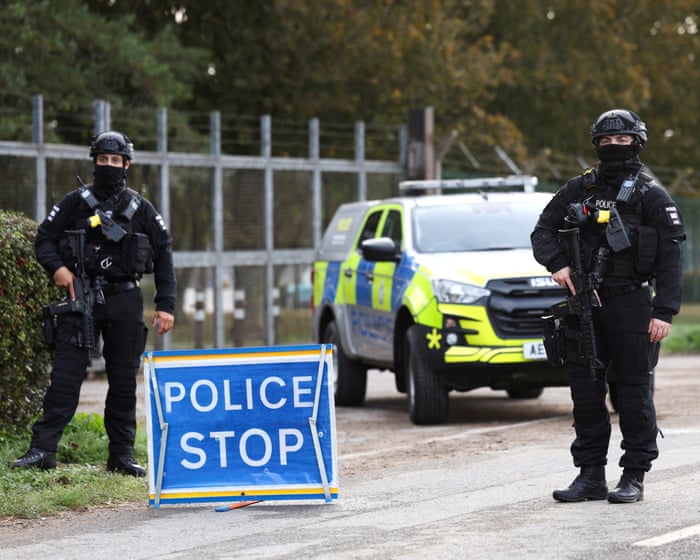
British counter-terrorism police are investigating a security breach at RAF Molesworth in Cambridgeshire after two Latvian nationals were found inside the military installation. The arrests come amid heightened security concerns following a separate suspected terrorist plot targeting RAF Fairford, which prompted the withdrawal of American bombers.

Two Latvian nationals have been arrested in Britain on suspicion of entering a restricted military installation for purposes potentially harmful to national security. The men were discovered inside RAF Molesworth, a sensitive military facility in Cambridgeshire that houses American and NATO intelligence operations, during the early hours of Thursday, 8 October.

The suspects, aged 36 and 32, are both Latvian citizens residing in the United Kingdom. According to an official statement issued by the Metropolitan Police, they were initially detained on suspicion of trespassing and criminal damage before being arrested under the National Security Act 2023.

The incident follows a separate investigation into a suspected terrorist plot near RAF Fairford in Gloucestershire, where American strategic bombers had been deployed. British counter-terrorism officers have emphasised that there is currently no evidence connecting the two cases.

Security breach discovered during routine patrol

The investigation began at approximately 10pm on Wednesday, 7 October, when Ministry of Defence Police officers patrolling RAF Molesworth discovered an abandoned vehicle near the installation’s perimeter.

Officers from Cambridgeshire Constabulary joined the search and subsequently identified a small breach in the security fence. At approximately 2am on Thursday, the two men were located inside the restricted area and taken into custody.

The suspects were initially questioned over alleged trespassing and criminal damage. However, investigators subsequently invoked Section 4 of the National Security Act 2023, which covers entering, approaching or inspecting prohibited locations for purposes prejudicial to Britain’s safety or interests.

The legislation carries a maximum sentence of 14 years’ imprisonment upon conviction. Neither man has been publicly identified, and police have not disclosed evidence establishing their alleged intentions or any connection with a foreign intelligence service.

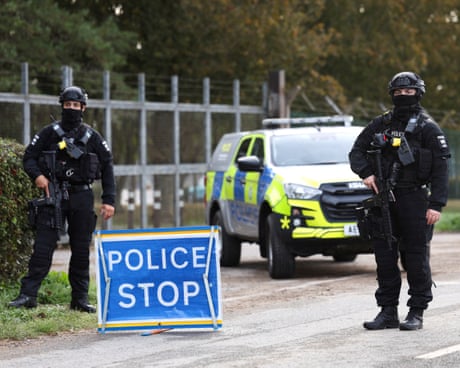
Officers have also searched two addresses in the Peterborough area. The abandoned vehicle was recovered and examined by specialist explosive ordnance disposal personnel after concerns arose during initial inspections.

As a precaution, police established a cordon affecting roads around Glatton, including part of the A1. Specialists subsequently found nothing of concern, allowing the restrictions to be lifted.

Intelligence facility serving American and NATO operations

RAF Molesworth is not an ordinary operational airfield. Although designated as a Royal Air Force station, the installation accommodates intelligence facilities supporting American military operations and NATO.

Among the organisations associated with the site is the NATO Intelligence Fusion Centre, which contributes to intelligence collection, assessment and information-sharing between allied military authorities. The installation also supports American military intelligence activities relating to operations in Europe and Africa.

The presence of these facilities makes Molesworth a sensitive location, where unauthorised access raises questions extending beyond conventional trespassing. Investigators will seek to establish how the men entered the compound, why they were there and whether they attempted to approach or examine restricted equipment or infrastructure.

Separate investigation at RAF Fairford

The arrests come less than two weeks after British police detained seven men in connection with a suspected terrorist plot involving RAF Fairford, another British installation used by the United States Air Force.

The Fairford investigation began on 27 September after suspicious activity was reported near the base. Police subsequently investigated possible offences involving explosives and preparations for terrorist acts. Those arrested in connection with that investigation have since been released on bail.

The incident was followed by the withdrawal of American bombers from Fairford. President Donald Trump subsequently referred to security threats affecting the installation, raising further questions about the protection of American military assets stationed in Britain.

Commander Helen Flanagan, head of Counter Terrorism Policing London, which is leading the Molesworth investigation, cautioned against drawing conclusions about the relationship between the two cases.

She said investigators had found nothing so far suggesting a connection with the Fairford incident and were continuing to examine possible motives.

British authorities have not publicly identified a foreign state or organisation as being responsible for the Molesworth breach.

The two Latvian nationals remain in police custody while investigators continue examining the circumstances surrounding their presence at the installation. The inquiry involves Counter Terrorism Policing, the Ministry of Defence Police and Cambridgeshire Constabulary.

The investigation is taking place against a wider background of security concerns involving European military facilities. Latvia itself reported an armed border provocation and sabotage of surveillance infrastructure near Belarus earlier this week, although there is no evidence linking that incident to the arrests in Britain.

For British investigators, the immediate task remains establishing whether the Molesworth intrusion was an isolated security breach or involved an intention to compromise military operations or intelligence infrastructure.

  •  

Geneva UNHRC side event examines Pakistan terrorism, GSP+ and minority rights

A side event held during the 63rd session of the UN Human Rights Council in Geneva has brought together parliamentarians, journalists and civil-society representatives to discuss terrorism, religious freedom and the European Union’s relationship with Pakistan.

The event, “Remembrance and Tribute to the Victims of Terrorism”, took place at the Palais des Nations on 1st October. Speakers included Greek MP Georgios Manous, EU Today Publisher and Editor Gary Cartwright, Stéphane Michot of Ideal International, with a contribution from Prof K. Warikoo.

Two interventions focused particularly on Pakistan and the implications for European policy.

Victims of terrorism at centre of debate

Gary Cartwright began with the victims rather than trade or institutional policy.

“Terrorism is not an abstract concept,” he told the meeting, describing a bomb exploding in a market, a child killed outside a school and families waiting for someone who will never return.

He acknowledged that Pakistan itself has suffered heavily from terrorist violence. The 2026 Global Terrorism Index ranked Pakistan as the country most affected by terrorism in 2025, recording 1,139 deaths and 1,045 incidents.

At the same time, Gary raised the record of militant organisations operating from Pakistani territory. The UN Security Council describes Lashkar-e-Tayyiba as a Pakistan-based organisation involved in terrorist activity and records its involvement in the November 2008 Mumbai attacks, in which approximately 164 people were killed and hundreds injured. The same UN entry also records links to the December 2001 attack on the Indian Parliament.

Questions over EU education funding

Gary also questioned the safeguards surrounding European education funding in Pakistan.

In December 2024, Dutch MEP Bert-Jan Ruissen asked the European Commission whether EU money intended for education could reach Islamic religious seminaries and what controls were in place over the use of those funds.

In its February 2025 response, the Commission said EU assistance in Sindh and Balochistan was primarily directed through provincial education authorities. It also confirmed that, in selected areas of Balochistan, EU support facilitated formal education for pupils enrolled in religious seminaries through a government-recognised certification programme intended to ease their transition into state education. The Commission said projects were subject to field visits, reporting, monitoring and evaluation.

Gary stressed that he was not arguing that religious education itself constituted extremism. His argument was that European taxpayers should be able to establish where money was going, who administered programmes and what safeguards existed against extremist recruitment.

His intervention then turned to Pakistan’s GSP+ trade status.

Pakistan has benefited from GSP+ since 2014 and is currently the scheme’s largest beneficiary. According to the European Commission’s figures on EU-Pakistan trade, more than 85 per cent of Pakistan’s exports enter the EU duty and quota free. Continued participation requires Pakistan to ratify and effectively implement 27 international conventions covering human and labour rights, environmental protection and good governance.

Gary called for Pakistan’s GSP+ preferences to be suspended pending an assessment of the country’s compliance with its international commitments, counter-terrorism obligations and safeguards surrounding EU-funded programmes.

The issue has been examined previously by EU Today. Its 2025 white paper on Pakistan’s GSP+ compliance argued that the evidential threshold for beginning temporary withdrawal proceedings had been reached, while a Geneva side event in March 2026 considered Pakistan’s human-rights record and the conditionality attached to GSP+ preferences.

Pahalgam attack raised by Greek MP

Greek MP Georgios Manous approached the subject through terrorism, religious freedom and European security.

He referred to the terrorist attack at Pahalgam in Indian-administered Kashmir on 22 April 2025, in which 25 tourists and one local civilian were killed. EU Today previously examined the attack and its victims in its coverage of the Pahalgam massacre.

In December 2025, India’s National Investigation Agency filed a 1,597-page charge sheet naming Lashkar-e-Tayyiba/The Resistance Front and six other accused. The NIA said its investigation alleged that the attack had been planned, facilitated and executed with direction from Pakistan.

Pakistan rejects Indian allegations of responsibility. Islamabad has said India acted without verifiable evidence and maintains that Prime Minister Shehbaz Sharif offered a transparent and independent investigation into the Pahalgam attack.

Manous also addressed Pakistan’s blasphemy legislation and the position of Christians, Hindus and Ahmadis, linking those questions to the broader problem of religious extremism. Concerns over minority rights and blasphemy laws have also featured in EU Today’s continuing coverage of the debate over Pakistan’s GSP+ eligibility.

The Greek MP then turned to Europe, arguing that extremist ideologies and networks should not be viewed solely as a South Asian security problem.

Pakistan, meanwhile, continues to present itself as both a major victim of terrorism and an international counter-terrorism partner. At the fourth US-Pakistan Counterterrorism Dialogue in Washington in August, the two governments reaffirmed cooperation against ISIS-K, al-Qaeda, Tehreek-e-Taliban Pakistan and the Balochistan Liberation Army, while discussing border security and the disruption of terrorist facilitation networks.

The Geneva discussion therefore centred on two linked questions for European policymakers: how Pakistan’s counter-terrorism record should be assessed, and how that assessment should interact with the conditions attached to EU trade preferences and European-funded programmes.

  •  
❌