Foursquare cofounder Dennis Crowley wrote that "watching the company slowly decay has been a grind on my soul."
Bloomberg/Getty Images
Foursquare cofounder Dennis Crowley said the company's acquisition paid $0 to equity holders.
"I am sorry the Foursquare story ended in such a way," he wrote to employees.
Crowley said the company decayed after a private equity investment.
Foursquare's acquisition left its cofounder sad and angry.
Dennis Crowley helped launch the location technology company in 2009. Seventeen years later, Foursquare was acquired by Infillion. Crowley wrote on Substack that one point of the acquisition left him "heartbroken."
Foursquare's acquisition earned equity holders exactly $0, Crowley wrote, with no money offered for preferred or common stock.
"To our ~1600 former employees over 17 years, I am sorry the Foursquare story ended in such a way that makes it seem like our collective efforts were worth… nothing?" Crowley wrote.
Crowley left the CEO role in 2016, though he continued to lead Foursquare's research and development lab through 2021. After that, Crowley kept a seat on the board.
Foursquare raised capital from The Raine Group, a private equity firm, in 2019. Less than two years later, Gary Little became CEO. Little was one of The Raine Group's managing directors.
"Leadership was unable to preserve the value it inherited or create new value during those six years," Crowley wrote.
Foursquare employees reached out to Crowley to express their frustrations with leadership, he wrote. He cited the company's Glassdoor reviews, which rate it 2.1 stars out of 5. The Raine Group did not respond to a request for comment from Business Insider.
Crowley also wrote that the $0 equity outcome was buried in a 125-page PDF for Foursquare's legal team. "No single individual stood up to own (or even acknowledge) the outcome," he wrote.
Calynn Krieger, an executive vice president of marketing for Infillion, told Business Insider in an email that Foursquare had "remarkable technology and a talented team."
"We have nothing to say about Foursquare's former leadership, but we're glad the business and its value continue, and we're committed to creating even more of it," Krieger said.
The lesson Crowley learned
Crowley took responsibility for his role in the lead-up to Foursquare's $0 outcome for equity holders. His decisions as CEO led to the need for a private equity investment, Crowley wrote, and he said he wished he were louder on the board.
His takeaway: "Maybe the biggest mistake I've made in my career is falling in love with this company."
Crowley was too loyal to "making it work," he wrote, and stayed longer than he should have. "Watching the company slowly decay has been a grind on my soul," he wrote.
"It's okay to fall in love with the company you're building, but don't deny yourself the ability to get closure and move on just because the company itself hasn't yet experienced an exit or ending," he wrote.
The Mississippi attorney general’s office said in a statement Monday that a state investigation found the use of force was “justified” in an officer-involved shooting in June that took the life of a 1-year-old boy. While responding to a shoplifting call at a Walmart in Senatobia, an officer fired at a moving vehicle, killing Kohen…
Mississippi's attorney general says a Senatobia officer was justified in using force when he responded to a shoplifting call and fired at a moving vehicle that investigators said was driving toward police, killing a boy who was in the car.
Cooley has made billions doing what law firms do: hire great lawyers, bill for their time, and keep clients happy. Artificial intelligence is scrambling that formula. If machines can do in minutes what once took an associate hours, what exactly should clients be paying for?
Rachel Proffitt thinks she has the answer.
On a toasty October afternoon in San Francisco, I met Proffitt for lunch to talk about the future of the global law firm she now leads. When the check arrived, neither of us knew how much the restaurant paid the dishwasher or how many minutes the chef spent preparing our meal. We were paying for the experience, not the labor behind it.
Why, she wondered, should legal services be so different?
"Clients have never been excited about the fact that it took us 82 hours to do something. They don't care," she says. "They just want the outcome. They want the results."
The billable hour is only the beginning. AI is forcing law firms to rethink how many associates they really need and how those young lawyers learn their craft. Client relationships are changing as companies use software to get a head start on the work they send to outside counsel. Some of that work may never reach a lawyer at all.
If tech is about to reinvent law firms, Cooley should be one of the firms with the clearest view of what's coming. From its early days on San Francisco's Market Street, it worked with semiconductor manufacturers and venture capitalists when the valley was still covered in fruit trees and canneries. Cooley grew up alongside the tech industry, and today it is as comfortable defending Meta in court as it is helping Andreessen Horowitz round up billion-dollar funds.
That evolution has been lucrative. Cooley says its gross revenue jumped from $912 million in 2015 to $2.4 billion last fiscal year. Its crosstown rival, Wilson Sonsini, brought in $1.7 billion in 2025, according to The American Lawyer. Still, the gulf between Cooley and Big Law's largest firms remains enormous. Kirkland & Ellis, the industry's revenue leader, cracked $10 billion last year. Latham & Watkins, another go-to firm for Silicon Valley, hit $8.3 billion.
The next wave of tech public listings promises a fortune in legal fees for the chosen few. Gibson Dunn landed SpaceX's IPO. Anthropic tapped Wilson Sonsini for its coming listing. And Cooley is reportedly sharing OpenAI's IPO work with Wachtell Lipton, one of Wall Street's most formidable law firms.
The irony is hard to miss. Big Law is fighting for a piece of the biggest technology companies in the world, even as those companies build the tools that could upend the business of law itself.
Proffitt came up as a lawyer under the old rules. Her next task is to figure out what it will take to build a great law firm under the new ones.
'The winner's circle'
Rachael Wright for BI
Profitt didn't grow up wanting to be a lawyer but liked how law school taught her to think. Litigation was out of the question: Public speaking during mock trials made her stomach turn. "It was transactional law or bust," she says.
She started her career as a summer associate at Wilson Sonsini and worked her way up to partner. She fell in love with the intensity of the work, pulling all-nighters at the financial printers where she marked up securities filings by hand. She recalls the Christmas Eve when her father marveled that she had made it through the day without taking a work call. After 15 years at the firm, she left for Cooley in 2017.
Three years ago, Proffitt got a call at home that she didn't see coming. Joe Conroy, then Cooley's chief executive, wanted to know whether she would consider succeeding him.
She was flattered, but also "a bit terrified," she says. She spent two decades helping startups, including Unity Software, Procore, and Instacart, raise money and go public. Running a firm with 3,000 employees was another matter. She talked to her family, then put herself forward for the job. She started in 2024.
Proffitt couldn't have guessed how quickly AI would jolt her industry from its steady state. It wasn't too long ago that clients insisted that the technology go nowhere near their work, fearing what would happen if their data disappeared into someone else's model.
"It was clear to me then that we don't get to just exist as we are and continue to be at the top of our game," she says.
Cooley had remade itself once before. The firm's Silicon Valley roots were both a strength and a liability, said Conroy in an interview. Cooley was known for helping startups get off the ground. The conventional wisdom was that as those companies grew, they would graduate to one of the elite New York law firms for their biggest deals and courtroom battles.
To keep clients from the garage to the boardroom, as Conroy put it, Cooley needed to expand. It opened new offices and built out its litigation and capital markets practices. The firm also spent years courting Wall Street banks, says Proffitt, so that when a company asked which law firm to hire for its IPO, Cooley would make its shortlist.
Today, its client roster reads like a Kiplinger roundup of hot tech stocks: Nvidia, Uber, Snowflake, and Zoom, to name a few listings it worked on. Since 2016, Cooley has advised issuers on 183 IPOs that raised nearly $59 billion, making it the second-most active firm by deal count after Latham, according to Deal Point Data. Proffitt wouldn't discuss reports that Cooley has landed OpenAI's IPO work.
For 16 years, Conroy pushed Cooley toward what he calls Big Law's "winner's circle." Proffitt's job is to get it there.
Startup speed
Rachael Wright for BI
Her strategy starts with making Cooley move more like the tech companies it represents.
Proffitt recruited David Wang, a former lawyer turned legal technology executive, with an ambitious mandate. She didn't just want to make Cooley's lawyers more productive, Wang said in an interview. She wanted to change how clients interact with them altogether.
Earlier this year, Cooley launched a tool with the startup Legora that lets Y Combinator founders review common contracts without calling a lawyer. OpenAI helped it build a tool for Cooley's lawyers to prepare paperwork for companies going public. Next, Cooley is working with Google on an AI agent that scans documents for confidential information before they're filed in court, then suggests redactions for lawyers to review.
There's something almost cannibalistic about a law firm building software that could eat into its own billable hours. But Cooley sees a bigger risk in letting someone else do it. In-house legal teams are increasingly using chatbots to take the first crack at work they would otherwise send to outside counsel. A new breed of "AI-native" law firms is promising cheaper, faster services.
Big Law does not want to be caught flatfooted. Firms are throwing money at startups like Harvey and Legora, and increasingly, they're building their own technology. Kirkland has committed $500 million to proprietary software, starting with a platform for private equity fundraising built with Palantir. Latham bought its own Nvidia servers so it can customize models in-house. Like Cooley, Wilson Sonsini has self-service tools that let companies handle basic legal work.
For Proffitt, the danger isn't lost billable hours. It's the missed connections. The scrappy startup that needs a contract reviewed today might need help closing an acquisition later. But if the bots take care of the small stuff, Cooley could miss its chance to build the relationship.
Proffitt says Cooley must find new ways to connect with clients. Putting technology in their hands is one option, even if it means giving away a little of the work.
"When you need the next thing that matters, the thing that you don't trust to put into the machine," she says, "how do I ensure that you want to talk to our team?"
The firm is also rethinking its own structure for the new era. Wang now leads Cooley AI, a wholly owned subsidiary designed to operate at something closer to startup speed. The separate company gives his team more freedom to hire engineers and put new technology through its paces, he says, without getting bogged down in the parent firm's bureaucracy.
The irony, Proffitt says, is that all this technology could leave lawyers with more time for the human stuff. Lawyers may visit their clients more. Talk through thorny decisions. Drop in on the strategy session to learn how their advice fits into a client's business.
Keeping those relationships alive might require a little more old-fashioned schmoozing. When I asked Proffitt whether the answer was throwing great parties, she didn't entirely disagree. "Everyone loves a party," she says.
The future of legal work
Proffitt doesn't pretend to have a crystal ball. She has ideas, though.
The billable hour? Not dead yet. She expects law firms to offer clients a menu of pricing options, from hourly rates to flat fees and outcome-based pricing.
Hiring slowdowns at the junior level? "Too early to tell," she says.
The apprenticeship model? That gets trickier. If software can write first drafts and spot issues, how will young lawyers get the practice they need? Proffitt says Cooley is exploring ways for associates to sharpen their skills on simulated legal matters, starting with AI-powered mock depositions.
Proffitt came up in an era when canceled dinners and all-nighters were a badge of honor. She's betting that the next generation won't need quite so many of them to become great lawyers. Her test will come a decade from now, when today's junior associates are ready to make partner.
If Cooley has found a better way to teach them, perhaps the old model won't be missed. If it hasn't, no amount of AI can make up the difference.
Melia Robinson is a senior correspondent at Business Insider, where she writes about how artificial intelligence is changing the legal industry.
One of the factors that led Greg Pirio to buy his house in Loudoun County, in northern Virginia, 14 years ago, was the nature surrounding it. A historian specializing in Africa, he loved to take long walks with his dog and listen to the birds. Three years ago, a large data center was installed just a hundred meters from his door. Since it began operating a year and a half ago, the birdsong has been replaced by a constant buzzing together with fumes that cause headaches, conjunctivitis and respiratory problems.
Cuando Hulk Hogan demandó al medio sensacionalista Gawker en 2016 por la publicación sin su consentimiento de un vídeo de contenido sexual, nadie daba un duro por él. Pero Hogan ganó el juicio y consiguió una indemnización de 140 millones de dólares que acabó con la publicación online. Peter Thiel, uno de los personajes más siniestros de Silicon Valley, decantó la batalla judicial: financió en secreto a los abogados de Hogan. Quería vengarse de Gawker porque lo había ridiculizado durante años y desvelado su homosexualidad.
Matt Groening and Matt Selman sat down for a keynote conversation at the event, which also featured a chat with 'Tangles' stars Abbi Jacobson and Samira Wiley.
Andrew Bailey among finance leaders to leave session in Bangkok when Russian finance minister addressed group
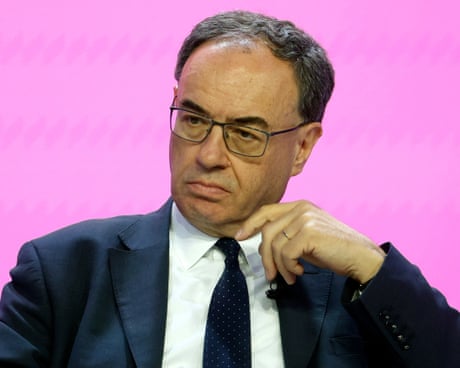
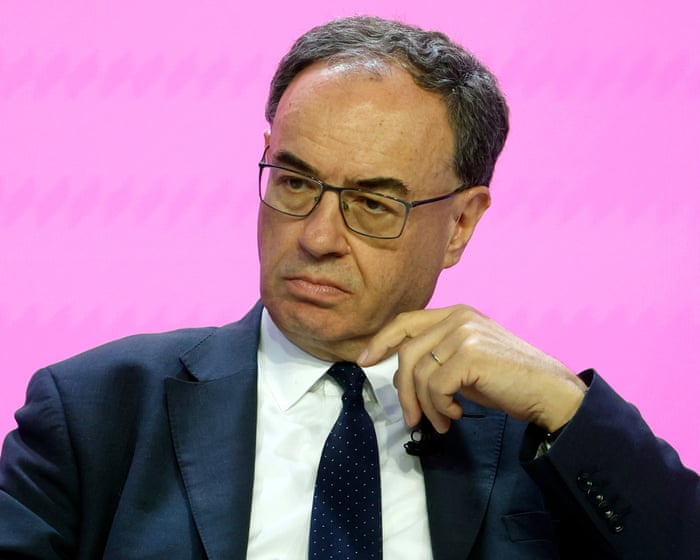
The Bank of England governor, Andrew Bailey, has taken part in a walkout of finance leaders who left an International Monetary Fund meeting in protest against Russian involvement.
Bailey joined counterparts from France, Germany and a number of Scandinavian and Baltic countries who left the session in Bangkok when the Russian finance minister, Anton Siluanov, addressed the group in Russian.
Jagda told Business Insider '996 culture' misses the point.
Courtesy of Proximity Works
Hardik Jagda wants to function like an Olympian, and waking up at 3 a.m. helps him do that.
He commits long hours to his AI-based company, but says he doesn't enforce 996 hours on his team.
For Jagda, 996 misses the point. Here's how he structures his day instead.
This as-told-to essay is based on a conversation with Hardik Jagda, 35, the CEO of Proximity Works, who lives in San Francisco. The following has been edited for length and clarity.
In 2017, I wanted to build my own company, but I couldn't jump into it full-time because of my financial obligations at home.
Instead, I'd spend the mornings and evenings outside my full-time job working on my side projects. That time was foundational for building my company, Proxmity Works, which I launched in 2019. My aim was to help broadcasters scale their live sports streaming platforms worldwide. In 2020, we started building AI infrastructure for live sports.
Those years made me aware of how my body clock works. I read a lot of autobiographies from entrepreneurs and athletes to understand what allowed them to build what they achieved. I noticed athletes would talk about starting their day early to train and work, in time for rest and recovery throughout the day. I started modeling my days after this, waking up early so I could have four to five hours to build my company before work started. I still stick to this lifestyle now that I'm a full-time founder and CEO.
I want to structure my day to function like an Olympian
In the early stages of Proximity, I performed pretty much every role in the company. Today, I have a team of roughly 45 people, five in the US and the rest spread out globally. My cofounder is based in India.
After 7 a.m., my time isn't mine anymore because I have requests coming in from employees in different time zones.
I like to start the day early, so I'm protecting the first three hours as time for myself. I usually wake up between 3 a.m. and 5 a.m. Between 3 and 6 a.m., I don't touch my emails or look at messages.
I use these early hours to focus on strategic decisions. There was one point, roughly two years ago, when we had to interview a lot of engineers quickly for a new project. I sat down with my talent acquisition team and found a way to redesign our recruitment workflow to take place within 72 hours. That wouldn't have been possible if I didn't give myself the three-hour morning block.
Jagda tries to protect the first 3 hours of his day.
Courtesy of Hardik Jagda.
In the mornings, I work out and write my goals down. These are usually measurable and trackable goals for my company, as well as goals for myself and my fitness.
Most of my team calls don't start before 7:30 or 8 a.m. I usually take my first couple of meetings at home before driving to the office. During the day, I try to minimize Zoom calls and take meetings as audio calls so I can move around during them. I try to wrap up my meetings by 2:30 p.m., work out at 3 p.m., and then focus on more creative tasks, like speech-writing, after that. I spend my evenings with loved ones before going to bed around 9 p.m. and trying to get seven hours of sleep.
It's not like I start my day at 4 a.m. and just work through the next 12 hours. I build in slots for "recovery" throughout the day. On my calendar, I put in 15-minute slots before important meetings, where I remind myself of my goal for the call.
For the most part, I work six days a week, spending my Saturdays focusing on a key skill I want to develop, like public speaking.
'996' misses the point. I don't run my team with this schedule in mind.
For the most part, I work six days a week.
I work more than 40 hours a week, but I don't keep track of the time. I listen to my body.
We don't keep track of how many hours the team works. It's more about a culture of ownership, where people really care about the problem they're working on.
Even though I've become a morning person, we're fine with engineers who are more productive at night, as long as they maintain a five-to-six-hour overlap with the other engineers.
"996 culture," working six days a week from 9 a.m. to 9 p.m., has gained traction in Silicon Valley. I think it misses the point. It's more about volume than it is about structure. You want to structure your day towards putting in your best work by thinking about when you'll spend time training, recovering, and learning new skills. I'd rather focus on the right structures than on volume.
Do you have a story to share about working in a 996 culture? Contact this reporter at ccheong@businessinsider.com
Excavations in Germany’s Ruhr region have uncovered evidence of a substantial underground mining operation that predates the area’s industrial expansion. The discovery is providing new clues to the origins of European coal mining.
Archaeologists have identified a previously unknown coal-mining tunnel stretching at least 130 metres beneath woodland near Sprockhövel in western Germany. The remains provide evidence of coordinated underground construction at a time when the Ruhr’s mining industry was still developing, long before the region became synonymous with heavy industry.
The discovery was announced on 15 October by the Westphalia-Lippe Regional Association (LWL), whose archaeologists are working alongside the German Mining Museum in Bochum and GeoPark Ruhrgebiet. The team says its findings shed light on tunnelling techniques used before the eighteenth century, although the newly identified passage has not yet been given a precise scientific date.
At Haßlinghausen, a forest floor conceals old shafts, spoil heaps and depressions left by abandoned mining operations. Researchers did not enter an intact underground gallery. Instead, they identified the location of a collapsed passage by excavating at two former shaft sites and drilling into the surrounding spoil. Subsidence created by the collapse left a recognisable trace above ground.
How Early Miners Organised Underground Work
The evidence suggests a more complex operation than miners simply following exposed seams into the earth. Construction shafts were sunk at intervals along the proposed tunnel. Workers descended through them and excavated separate stretches underground, later joining those sections into a continuous passage.
This method allowed several groups to work simultaneously rather than advancing from a single entrance. It also demanded planning and considerable labour. The filled-in shafts and disturbed soil are still visible in the excavated sections, enabling specialists to reconstruct the miners’ methods even though much of the original tunnel has collapsed.
Till Kasielke of GeoPark Ruhrgebiet explained that the construction shafts were located beside the underground route and then filled after the gallery was completed. Jennifer Garner, an archaeologist at the German Mining Museum, said the excavations would provide material for scientific dating and a better understanding of the effort required to build the structures.
The latest work follows a 2025 investigation of a separate, approximately 70-metre tunnel nearby. That earlier feature reached a coal seam some ten metres below ground. Researchers suspected it might predate the seventeenth century because it appeared to have been overlooked during later mining activity. The newly identified 130-metre passage is a distinct discovery.
The chronology matters because horizontal tunnels changed the possibilities of coal extraction. Early miners could reach seams by digging pits or inclined shafts, but groundwater increasingly obstructed work at depth. Drainage galleries allowed water to escape, making deeper workings more practical and potentially extending the life of individual mining sites.
An Industrial Region’s Earlier History
The Ruhr is usually associated with the vast collieries, factories and transport infrastructure that drove Germany’s expansion in the nineteenth and twentieth centuries. Yet coal was extracted locally during the Middle Ages. The transition from small workings to organised subterranean networks remains poorly documented, partly because written records from the earliest periods are scarce.
The archaeological research programme, which began with related investigations in 2024, is intended to address that gap. The team has excavated soil layers associated with old shafts, and the recovered material may help establish when specific construction techniques were introduced. For now, it would be premature to assign the new passage a medieval date.
At Essen, the UNESCO-listed Zollverein Coal Mine Industrial Complex preserves the architecture and machinery of the Ruhr’s later industrial era. The remains at Sprockhövel represent a different historical record: temporary shafts, collapsed passages and waste deposits left by miners whose operations preceded industrial-scale coal production.
Across Europe, such landscapes have become an important part of cultural heritage. EU Today has previously reported on the preservation of Belgium’s Bois du Cazier colliery, where 262 people died in the 1956 mining disaster. In Sprockhövel, the focus is on a much earlier workforce, whose organisation and technical knowledge must be reconstructed from the ground itself.
Further dating and analysis will determine whether the newly identified tunnel pushes back the known chronology of organised drainage and gallery construction in the Ruhr. The excavations have already established that a substantial underground project once operated beneath a forest whose surface retains remarkably little indication of the work carried out there.
Image credit: LWL-Archäologie für Westfalen / Manuel Zeiler
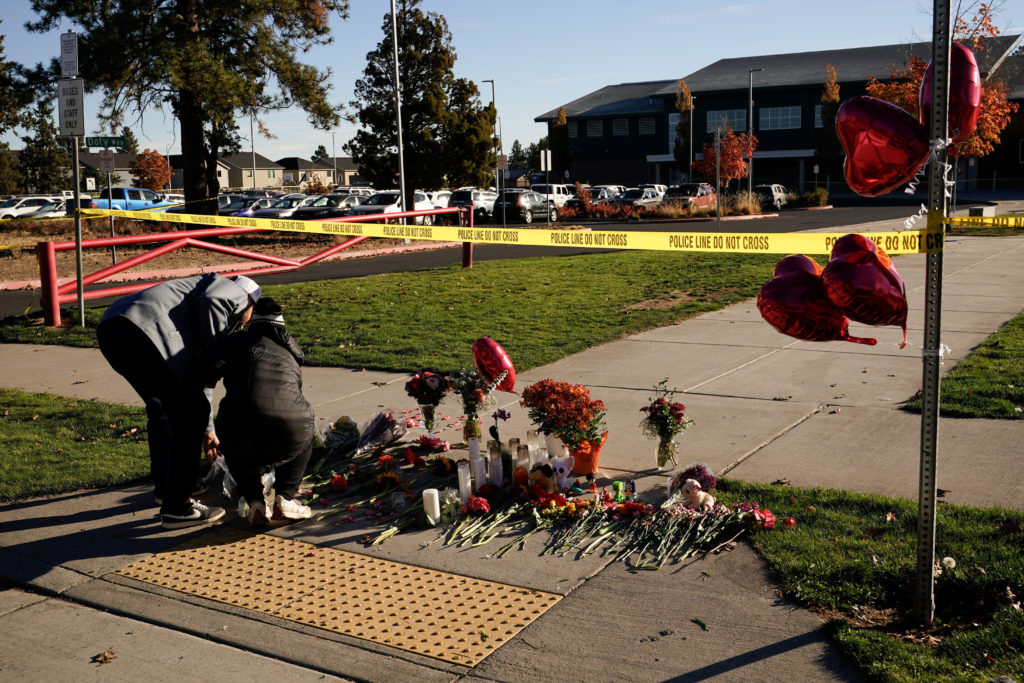
There are many more questions to be answered about the deadly elementary school shooting in Bend, Oregon. To explore some of them, Amna Nawaz spoke with James Densley, professor and chair of criminology and criminal justice at Metro State University. He is best known for co-creating the Violence Prevention Project, a database of mass shooters in the United States.
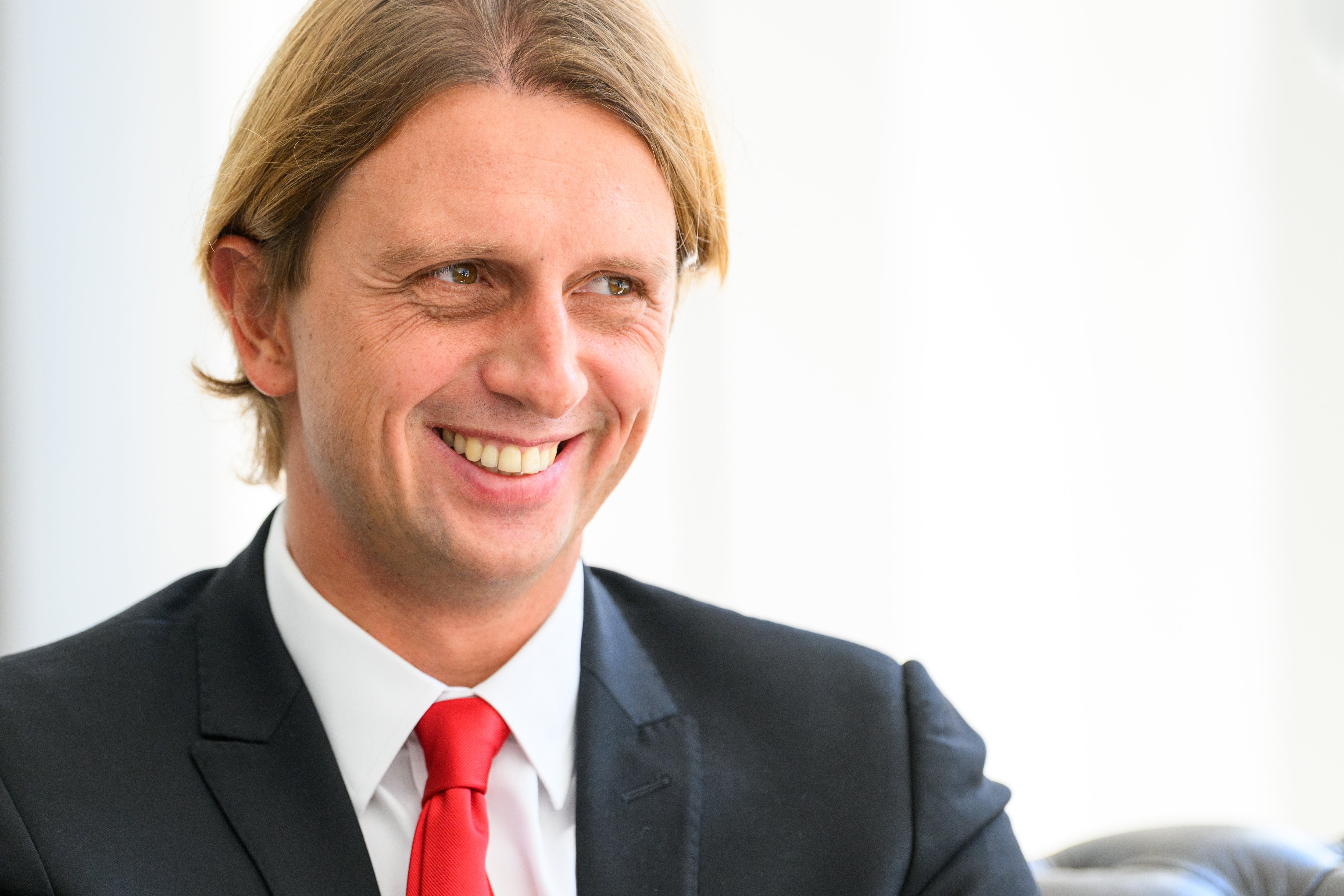
Number 116 on Rue Réaumur in Paris sits at the crossroads of the two worlds that define Revolut. On one side lies the historic financial district centered around the stock exchange; on the other, the Sentier neighborhood, home to much of the French capital’s technology ecosystem. It is at this intersection of finance and technology that the bank is preparing its new headquarters for Western Europe.
Vinod Khosla wants a new chief of staff who can handle 12-hour workdays.
Steph Chambers/Getty Images
Billionaire VC Vinod Khosla is hiring a chief of staff to help evaluate investments and work with founders.
The role requires a three-year commitment, 12-hour days, and availability on nights and weekends.
The opening comes amid growing demand for chiefs of staff and an AI-fueled venture capital boom.
One of the biggest names in venture capital is looking to hire a new right-hand person.
Vinod Khosla, founder of Khosla Ventures, said on X Thursday that he's seeking his next chief of staff, a job that offers a rare opportunity to work in close contact with the billionaire investor whose Silicon Valley firm is known for its early bets on OpenAI, DoorDash, and Instacart.
"What matters is how quickly you learn, the questions you ask, and whether you can think from first principles," Khosla wrote. "You'll help evaluate opportunities and work with founders building consequential companies."
The opening comes as demand for chiefs of staff is growing at a fast clip, with the role offering a potential path to senior leadership. For the person Khosla hires, it also offers a front-row seat to an AI-fueled venture capital boom.
A hot job
Job postings for chiefs of staff on Indeed were nearly 90% above pre-pandemic levels in September, far outpacing management jobs and postings overall. In the San Francisco Bay Area, the median advertised salary for the role is $175,000, compared with about $152,000 nationally, according to Indeed.
Through the first three quarters of this year, US VC deal value reached $516 billion across an estimated 14,199 deals, according to PitchBook. That is already the highest total in the research firm's dataset and roughly 44% above the prior record, set in 2021.
Most chiefs of staff in the US stay in the same profession when they change jobs, but some move into senior leadership roles, according to a March study from LinkedIn. Becoming a chief operating officer was the second most common career move, accounting for 2.9% of transitions. Another 3.7% became founders or cofounders, while 1% became CEOs.
Close contact
Khosla's new chief of staff will work directly with him to evaluate investment opportunities, meet founders, research emerging technologies, and support portfolio companies, according to the job posting. As the person earns Khosla's trust, they'll also lead conversations on his behalf and help determine which opportunities to pursue.
"It will suit someone who wants significant responsibility and is comfortable with ambiguity," the ad says.
Compensation isn't listed. The posting says the position comes with a three-year commitment and long hours. The successful candidate must work in person in Menlo Park, California, generally from 8 a.m. to 8 p.m., and be available nights and weekends when needed.
The potential payoff? Previous chiefs of staff have gone on to start companies, launch investment firms, and take leadership roles at Khosla Ventures, according to the listing.
Applicants shouldn't, however, count on becoming a VC. The posting says the job is "not a dedicated investing seat or a guaranteed path to one."
"Permitir que Arabia Saudita acceda a tecnología estadounidense de energía nuclear civil sin garantías férreas que aseguren que no servirá de base para una bomba nuclear es inaceptable", declaró Edward Markey.
Elizabeth Holmes and Billy Evans leave federal court in San Jose, California, in 2022.
David Paul Morris/Bloomberg via Getty Images
Elizabeth Holmes, the Theranos founder convicted of fraud, has two kids with William "Billy" Evans.
Evans plays a big role in Nathan Fielder's new A24 documentary, "You Can See Everything."
In the film, Evans says he's trying to launch "Theranos 2.0," another blood-testing startup.
William "Billy" Evans emerges as the unlikely star of "You Can See Everything," the new A24 documentary about Theranos founder Elizabeth Holmes. But while Evans is certainly a scene-stealer, the doc doesn't cast him in the best light.
Evans is Holmes' partner and the father of their two young children. The couple met in 2017, and, as Evans says in the doc, fell in love instantaneously.
The couple welcomed their first child, William, in 2021. Their daughter, Invicta (Latin for "invincible"), was born sometime around February 2023, just a few months after Holmes was sentenced to 11 years in prison for defrauding investors.
Holmes has said she knew it was bad timing — to put it lightly — to fall in love and start a family. But she didn't want her felony convictions or the perception of outsiders to "dictate how we live our lives."
"Finding your person in the middle of all of this and experiencing that love when you're going through hell is the most beautiful thing I've ever experienced," Holmes told The New York Times in 2023.
In the weeks before her looming incarceration, Holmes and Evans invited comedian Nathan Fielder to observe and document their domestic life. The resulting film, "You Can See Everything," depicts Evans as a dominant force in their home — chiding Holmes for how she prepares scrambled eggs, dictating her schedule, and frequently cutting in during her conversations with Fielder.
Holmes reported to prison in May 2023, but the movie doesn't end there. Fielder continued to document Evans as he worked on a new blood-testing startup, building upon the vision that Holmes had for Theranos.
"The idea is to put the band back together and do it all again," Evans tells Fielder.
Here's everything we know about Evans and his plans for "Theranos 2.0."
Evans grew up near San Diego as an heir to his family's successful hospitality business
The Lodge Torrey Pines in La Jolla is one of the properties owned by Evans Hotels.
Shutterstock.com
Evans is one of three children born to his parents, Susan and William L. Evans, per the Daily Mail.
The Evans family has lived in the San Diego area for generations.
Billy Evans' grandparents, Anne and William D. Evans, founded a hotel management group in 1953 called Evans Hotels. The group manages three properties in the San Diego area: The Lodge at Torrey Pines, the Bahia Resort Hotel, and the Catamaran Resort Hotel and Spa.
After his grandfather William D. Evans died in 1984, his grandmother, Anne, added two of her children to the Evans Hotels management team, including Billy Evans' father.
He studied economics at M.I.T. and tried to launch a healthcare startup after graduation
The Massachusetts Institute of Technology (MIT) campus is located in Cambridge, Massachusetts.
Erica Denhoff/Icon Sportswire via Getty Images
Evans graduated from the Massachusetts Institute of Technology (MIT) in 2015 with a bachelor's degree in economics. During summers between school, Evans worked at various financial and consulting companies in California, according to a version of his LinkedIn profile that has since been modified.
He was also a student brand manager for Red Bull, his LinkedIn said, and he completed a study abroad program at Fudan University in Shanghai.
After graduating from MIT, Evans reportedly tried to launch a healthcare startup for transporting wealthy Chinese people to the US for "concierge medical attention."
Although he studied Chinese language and literature in Shanghai, the idea never took off, according to theNew York Post.
After that, Evans worked as a strategy and leadership program analyst at LinkedIn until February 2017. Evans then moved to Luminar Technologies, a startup working on radar and sensor technology for autonomous cars, where, according to his LinkedIn, he was a manager of special projects. Evans was reportedly close with Luminar's CEO, Austin Russell, the Post reported.
Evans left his job at Luminar in January 2019. Employees told the Post they suspected the reason was the publicity surrounding his relationship with Holmes.
When asked by The New York Times what he does for work, Evans replied, "A lot of different stuff — investing, starting companies."
Evans and Holmes met in 2017 before her indictment
Evans appeared alongside Holmes frequently during her monthslong trial.
Nick Otto/AFP via Getty Images
Holmes had relocated to San Francisco after Theranos shut down all its clinical labs and Wellness Centers in late 2016. Holmes herself had recently been banned from the lab-testing industry for two years. But it wasn't untilMarch 2018 when Theranos, Holmes, and her former business partner-slash-ex-boyfriend, Ramesh "Sunny" Balwani, were charged with fraud by the SEC.
During that limbo period before Holmes was indicted, she met Evans at a house party in San Francisco, according to their interview with The New York Times. The two were introduced by a mutual friend. She was 32, he was 25.
"To say we immediately fell in love isn't an overstatement," Evans told the Times.
Holmes and Evans were first spotted together at Burning Man, the arts festival in the Nevada desert, days before Theranos fully shut down in 2018. Evans also posted a selfie with Holmes taken at the event, per the Daily Mail.
"Maybe we'll get married someday. But our bond is more than a piece of paper," Holmes said, adding, "We bought rings on Amazon before I went to prison."
Evans said he didn't recognize Holmes at first, and was reluctant to start a relationship
Evans recalled his early misgivings about their relationship in his letter.
In his, Evans recounted the couple's love story, including his initial hesitation to pursue a relationship with Holmes, and gave a glimpse into their private lives throughout the trial.
Evans wrote that when he met Holmes, "it was as if the rest of the world ceased to exist."
He said Holmes wore a sunhat and oversized sunglasses to "stay under the radar," so he didn't initially recognize her as the Theranos founder. (Evans told Fielder a similar story, adding that she also wore a Band-Aid on her face.)
"It was strange to feel so comfortable and willing to share with someone who I didn't know. I was captivated by her childish wonder and authenticity," Evans wrote. "We spoke for hours, I lost track of time, and even if I didn't know it ... I fell in love. She pulled out her business card, scribbled her personal cell on the back and then it clicked who she was."
Evans said they kept things platonic for about six months, writing, "I was admittedly hesitant to dive in given all that had been said, Liz had been consistently vilified in every piece of media imaginable."
"The more I got to know her the more I loved who she was," he continued in his letter to the judge. "It was not long before the friendship turned into something more."
Evans said that he and Holmes struggled to maintain privacy throughout the trial and were forced to relocate multiple times after their home address was revealed.
"This will follow us for the rest of our lives," he wrote. "There is no avoiding the scorn that accompanies Elizabeth Holmes."
Evans was a fixture at Holmes' trial and her attempts to postpone prison time
Elizabeth Holmes and Billy Evans outside a San Jose courthouse.
Peter DaSilva/Reuters
As the clock was running out with a scheduled sentencing date fast approaching, Holmes requested a new trial on the grounds that a key government witness visited her home in August 2022, expressing regret that his testimony had helped convict her.
The witness was Adam Rosendorff, who was Theranos' lab director from April 2013 to November 2014. Holmes' motion relied heavily on a recollection of the encounter documented by Evans, who spoke with Rosendorff when he appeared at their home.
In an email to Holmes' attorneys recalling his encounter with Rosendorff, Evans wrote: "He said he feels guilty, it seemed like he was hurting. He said when he was called as a witness he tried to answer the questions honestly but that the prosecutors tried to make everybody look bad (in the company). He said that the government made things sound worse than they were when he was up on the stand during his testimony. He said he felt like he had done something wrong. And that this was weighing on him, He said he was having trouble sleeping."
Rosendorff explained that he'd felt bad for Holmes because of the possibility that a child would grow up without a mother, but he stressed that his testimony was accurate.
Evans relocated to Texas when Holmes reported to prison
Elizabeth Holmes is serving her prison sentence in Bryan, Texas.
Brandon Bell/Getty Images
Holmes is incarcerated at Federal Prison Camp, a minimum-security women's prison in Bryan, Texas. The facility is located about 100 miles from Houston, where she grew up.
"You Can See Everything" documents the family's move from California to Texas in the days before Holmes turned herself in.
Evans and their two children are able to see Holmes on family visitation days. However, according to People, conjugal visits between Holmes and Evans are not allowed.
"It kills me to put my family through pain the way I do," Holmes told People in 2025. "But when I look back on my life, and these angels that have come into it, I can get through anything. It makes me want to fight for all of it."
For his part, Evans told People, "Everyone tried to break us, but instead we forged an unbreakable bond," calling Holmes his "best friend and soulmate."
Evans said he's planning to launch 'Theranos 2.0' with input from Holmes
Billy Evans and Nathan Fielder in "You Can See Everything."
A24
In 2025, The New York Times and NPR reported that Evans had raised millions for a new blood-testing startup called Haemanthus.
In marketing materials reviewed by The New York Times, Evans described Haemanthus a "the future of diagnostics" and "a radically new approach to health testing." The materials describe the company's goal as "human health optimization."
Evans will solicit Holmes for advice on the new venture, but there are no plans to give her a formal role at the company, according to NPR. As part of a 2018 settlement with the SEC, Holmes is barred from serving as an officer or director of a public company for a decade.
Evans' LinkedIn lists his current role as CEO of Haemanthus since October 2022.
"You Can See Everything" offers a closer look at Evans' biotech ambitions. He repeatedly insists to Fielder that Holmes did nothing wrong at Theranos, that her vision still deserves to be executed, and bristles at the suggestion that her failed company "used the wrong technology."
In one scene, before Holmes reports to prison, she completes a full-body scan. The scan is used to create an AI-generated three-dimensional avatar in her absence; the avatar looks and sounds like Holmes, but it's controlled by Evans, who says he also has power of attorney.
Evans tells Fielder that means he's able to make decisions on Holmes' behalf regarding her voice and likeness: "I can literally do whatever," he says.
Evans also admits to Fielder that he runs Holmes' X account, which has been active throughout her incarceration. When Fielder expresses doubt that Evans is acting in his fiancée's best interest, Evans claims he uses lines and phrases from Holmes' letters to craft the posts. He adds: "Some things that she doesn't frame as for the internet, I put there."
In other scenes, Evans says on-camera, "I've got vengeance in my heart," and says Holmes would describe her legacy as "building monuments of love for me."
Paige Leskin and Sarah Jackson contributed to previous versions of this story.

 Login