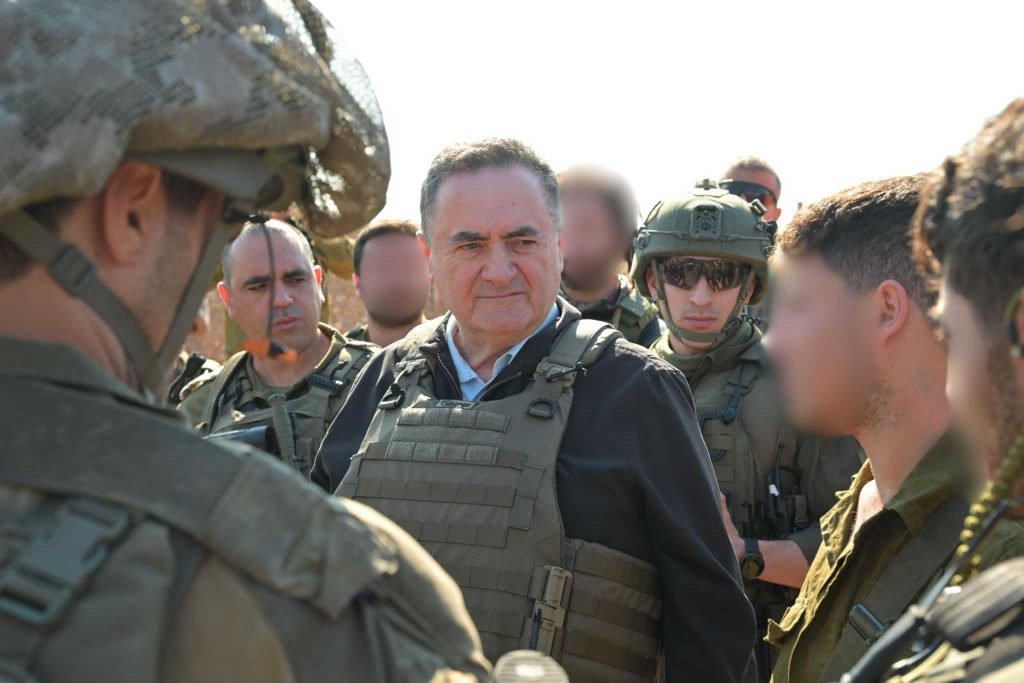
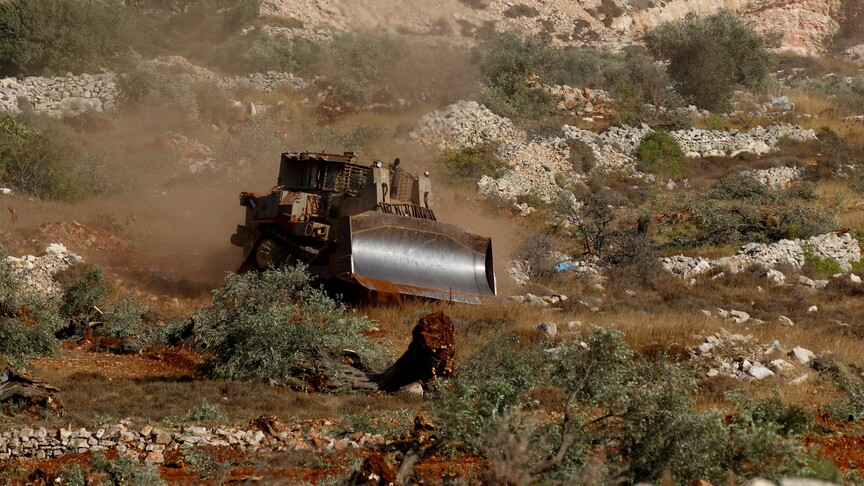
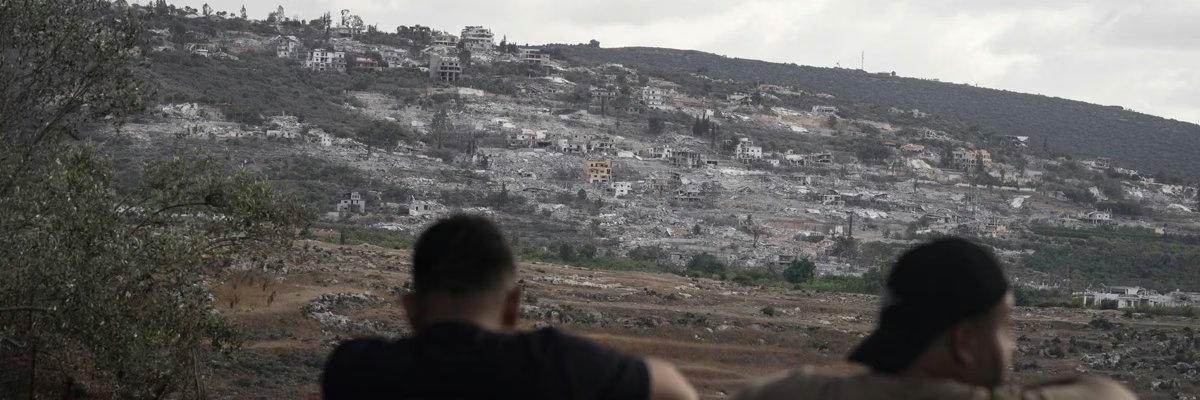
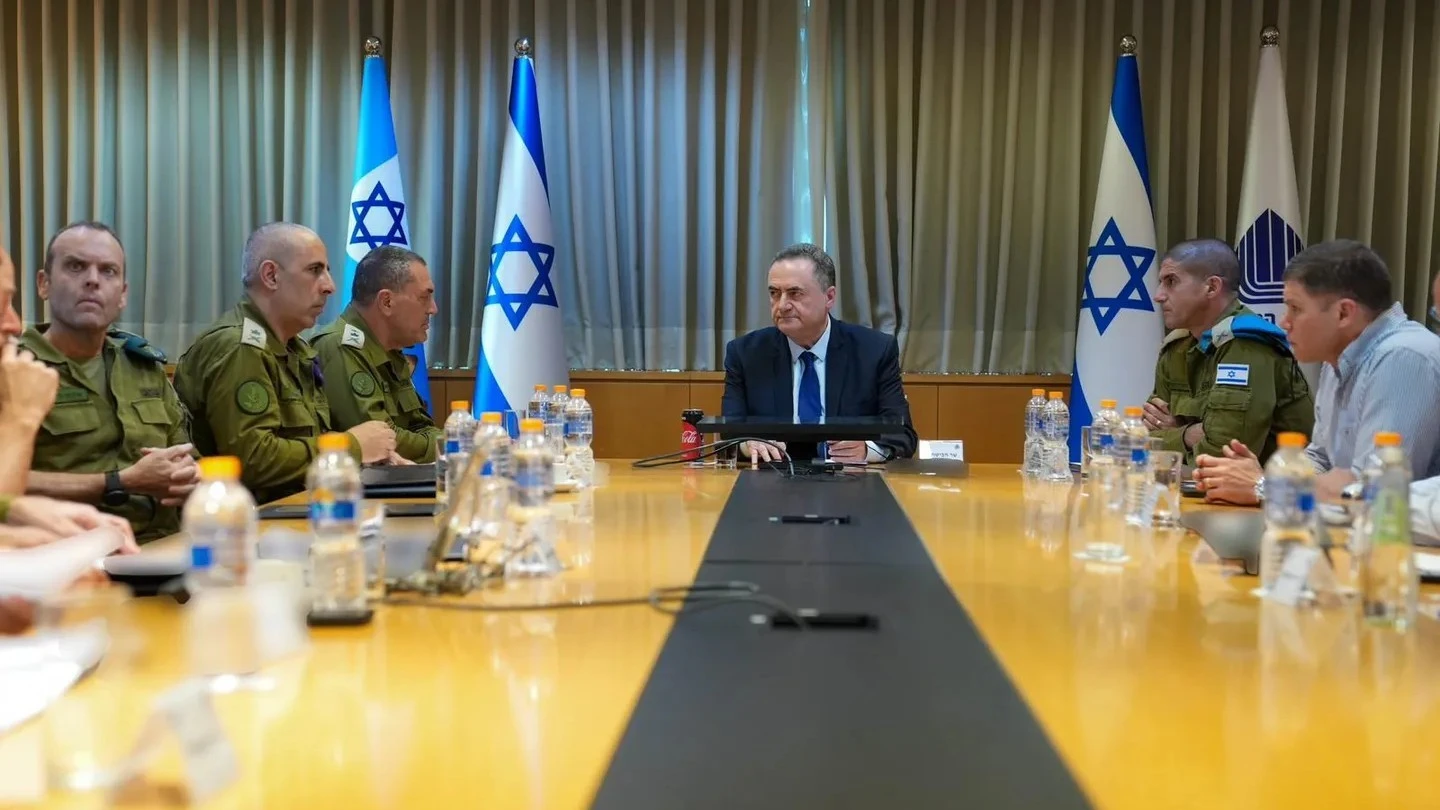
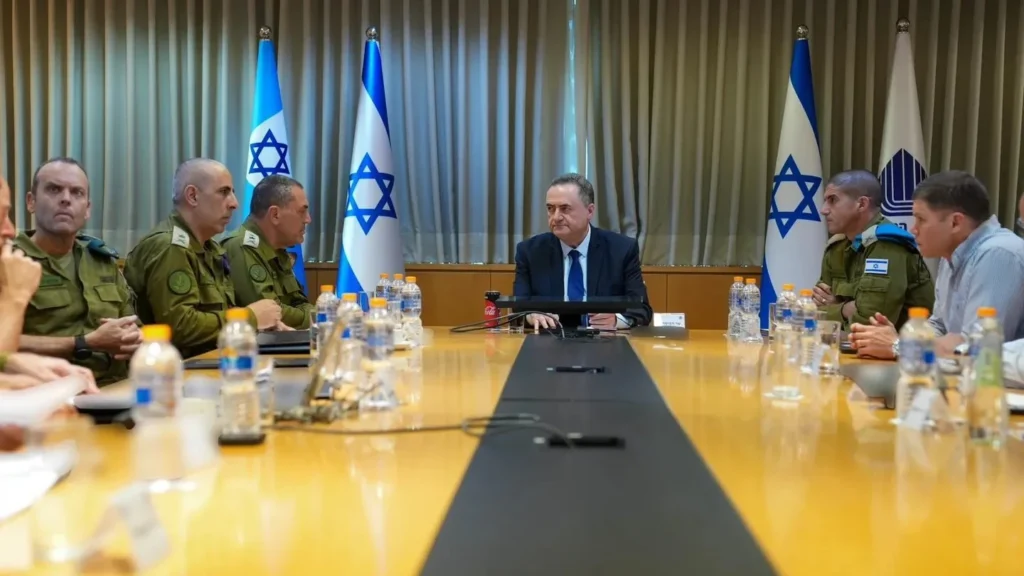
Israeli Defense Minister Katz Says Over 60 Lebanon Villages Have Been Destroyed


At least eight Palestinians, including four children, were killed in Israeli assaults in different parts of the Gaza Strip over the last two days.
On Monday, October 19, Israeli forces launched drone strikes on north-central Gaza City and the southern city of Khan Younis, killing a Palestinian man and two children.
One day earlier, five Palestinians were killed and several others were injured in Israeli shelling and gunfire across the besieged enclave. This includes two children, who were shot dead by Israeli soldiers in separate attacks.
One of the slain children was identified as 13-year-old Tamer Soboh, who was killed in the northern city of Beit Lahia; the other was Misk al-Dalu, who died after Israeli troops opened fire at tents sheltering displaced people in al-Maghazi refugee camp in the central Gaza Strip.
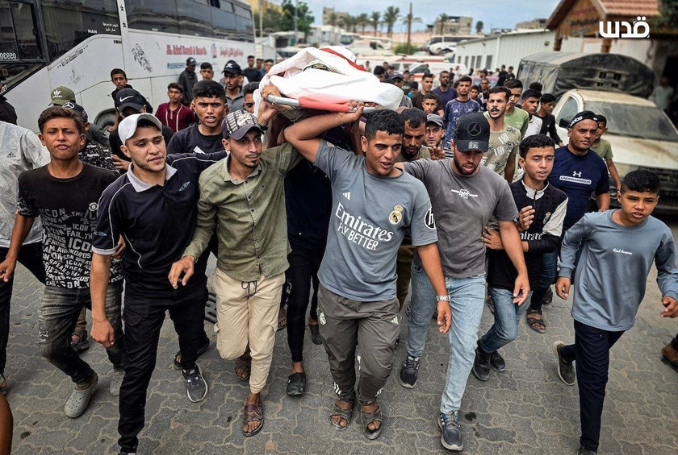
Meanwhile, mass funerals remain common across Gaza as Palestinians dig through the rubble to recover the remains of their loved ones.
On Sunday, the remains of 75 Palestinians were buried in the Sheikh Radwan Cemetery in Gaza city, the majority of whom were children and women killed in Israeli airstrikes that targeted their homes during the three-year genocide.
While mass killings are underway in the war-ravaged territory, the humanitarian crisis further deteriorates not only because of Israel’s continued blockade and restrictions on the entry of goods and supplies, but also because of measures taken by some organizations concerned with providing aid to the population.
On Monday, the United Nations World Food Program (WFP) announced that it will reduce food assistance in Gaza by around one-third due to shortage of funding. This means that 500,000 people will lose access to critical assistance.
It is worth noting that since the beginning of Israel’s genocidal aggression on Gaza, the WFP provided food assistance for up to 90% of families in the Gaza Strip.


Iranian Foreign Minister Abbas Araghchi reiterated that his country’s proposal to end the war with the US and to restart nuclear negotiations is “still on the table,” claiming the Iranian conditions are “completely clear” and “unchanging.”
Talking to Iranian state media on the sidelines of the 52nd session of the Council of Foreign Ministers of the Organization of Islamic Cooperation (OIC) in Baghdad on Sunday, October 18, Araghchi also said that Iran is currently studying the US response to its proposals.
If the US meets its conditions, “the Strait of Hormuz will be reopened on the sixth day, and negotiations will resume on the seventh,” Araghchi said.
Though Araghchi did not talk about them explicitly, he reiterated that the Iranian conditions are the same as what the US had agreed to under the Islamabad Memorandum of Understanding (MoU), signed in June.
On several previous occasions Iran has made clear that if the US lifts its naval blockade, releases Iran’s foreign frozen assets, and ends the war on all fronts in the region, it will allow the Strait of Hormuz to open.
As per the MoU, in the first 60 days after the deal took effect both sides were to initiate negotiations over Iran’s nuclear program. However, the MoU expired in August after hostilities were resumed within weeks of its signing.
The US resumed its military strikes on Iran in July, leading the Iranians to reimpose their blockade in the Strait of Hormuz in response, reversing its decision to open it for navigation as per the MoU.
Tehran had claimed that it presented a plan to reopen the Strait to the US in September, in a brief meeting with its delegation during the annual session of the UN General Assembly. However, US President Donald Trump later declared he had rejected the Iranian proposals.
Araghchi also rejected the repeated threats of new strikes and economic isolation against his country, claiming that Iran will not bow to threats and will defend its strategic and economic interests.
Last week it was reported that Israeli Prime Minister Benjamin Netanyahu, who is facing a tough election at home, apart from planning to escalate war against Palestinians in the West Bank, also pressured Trump to resume the military strikes on Iran.
On the same day, Trump claimed that the US may attack some specific targets in Iran in order to disrupt its nuclear program. Media reports also claimed that the US is preparing to use the so-called “mother of all bombs” to again target Iran’s energy and nuclear infrastructure.
This is despite the fact that Trump has repeatedly boasted about “obliterating” Iran’s nuclear program during the joint US and Israeli airstrikes in June 2025.
Reacting to those reports, Araghchi warned both the US and Israel to learn from their mistakes and stay away from Iran to avoid consequences more severe than during the earlier wars.
“Last time you wanted to “finish the job” Iran emerged even stronger. Want to try your luck again? Be our guest. But be careful; we have unfinished jobs too,” Araghchi said in a post on X on Monday.
He claimed that Netanyahu is pressing for a fresh war simply because he wants to stay in power and out of jail over corruption charges he has been facing for years now, without thinking about consequences to Israel or the US.
In a similar reaction, the head of the Iranian armed forces Ali Abdollahi also claimed on Sunday that his country was waiting for their [the US and Israel’s] foolish decision and miscalculation. Any attack by them would invite “a response war more severe, distinct, and devastating than in the past,” Abdollahi claimed.
Abdollahi’s warnings were relayed by several other Iranian officials on Sunday.
It is reported that the US has spent billions of dollars in the last eight months of war on Iran. It has lost most of its military infrastructure in the Gulf countries in Iranian responses, with over a dozen of its soldiers killed and several dozen of its aircraft lost. The US also faced a severe shortage of crucial ammunition due to the war on Iran, forcing it to suspend the strikes midway.


Al Mayadeen | October 16, 2026
Chinese Foreign Minister Wang Yi delivered a sharp rebuke to Israeli President Isaac Herzog during a diplomatic meeting in Baku, calling the Palestinian cause “the greatest historical injustice of this century” and demanding that “Israel” halt its expansion in the occupied West Bank, according to statements released Friday by Beijing’s Foreign Ministry.
The bilateral discussions took place on the sidelines of the Conference on Interaction and Confidence Building Measures in Asia (CICA) summit held in the Azerbaijani capital.
According to a Chinese Foreign Ministry statement cited by Reuters, Wang urged the Israeli government to immediately cease its “forced establishment” of West Bank settlements and reverse its expansion policies.
He emphasized that Beijing’s long-standing position remains rooted in resolving the core conflict through a “two-state solution,” calling for the full reopening of access routes to the Gaza Strip to relieve ongoing humanitarian suffering.
Summit walkout and diplomatic tension
The direct exchange between Beijing and Israeli leadership unfolded against a backdrop of heightened diplomatic friction at the summit.
Earlier in the proceedings, several delegations representing Arab and Islamic nations walked out of the CICA conference hall during Herzog’s address in protest against Israeli aggression and continued settlement expansion in the West Bank.
Despite the firm pushback from Beijing, Herzog emphasized what he described as Israeli security imperatives during the meeting, pointing to strategic threats posed by regional groups while highlighting the importance of maintaining economic and trade ties between China and the occupation.
China, which has historically supported the Palestinian cause and recognized Palestinian statehood since 1988, has increasingly positioned itself as an active diplomatic mediator in the region. Wang’s remarks signal Beijing’s continued insistence that the Palestinian cause cannot be stabilized without addressing Palestinian sovereignty and halting unilateral territorial changes on the ground.


Two weeks before the Israeli legislative elections scheduled on October 27, 2026, the far-right Israeli government, led by Prime Minister Benjamin Netanyahu, has revealed its intentions to further perpetuate and expand its three-year multi-front war across West Asia.
On Tuesday, October 13, Netanyahu appeared in a televised speech during a visit to the apartheid wall established inside the occupied West Bank, threatening the Palestinian Authority.
Standing near the Tulkarm refugee camp alongside Israel’s Defense Minister Israel Katz, the Israeli PM confirmed that the camp’s displaced residents, whom he described as “terrorists,” will not return to their homes despite an order from the Israeli Supreme Court authorizing their return.
The Tulkarm Refugee Camp was among the three largest Palestinian refugee communities in the northern West Bank targeted in the large-scale Israeli military operation dubbed “Operation Iron Wall.”
The operation resulted in the displacement of at least 33,362 Palestinians, the killing and injury of hundreds of others, and the arrest of over 1,000, according to UN estimates. It also caused severe damage and destruction of residential buildings, infrastructure, and properties.
The “Iron Wall,” which was launched in early 2025, was followed by another extensive operation at the end of the year.
Netanyahu’s government claimed that both operations aimed at eliminating Palestinian armed groups in the targeted areas. However, for many the outcome of the operations makes clear that their objectives reflect Israel’s ethnic-cleansing policy against the Indigenous Palestinian population.
As those operations have seemingly resulted in largely restraining resistance groups across the West Bank, no valid pretext has been left for Netanyahu’s government to further escalate military operations in the occupied territory.
Therefore, Netanyahu has sought to designate a new enemy posing a potential threat to Israel’s security: the Palestinian Authority (PA), whose security apparatus represents the only remaining armed force on the ground today.
The stance and actions of the PA under President Mahmoud Abbas have been, for over two decades, marked by compliance, reconciliation, and on some occasions blatant collaboration with the Israeli authorities.
Thus, accusing the entire political entity of orchestrating hostilities against Israel would not have sounded credible to the public. This arguably led Netanyahu and Katz to formulate the pretext for a justified potential war against Palestinians in the West Bank by alleging that personnel of the PA’s security forces, alongside members of the Fatah-affiliated Tanzim, may defect and launch “Jihadist attacks” against Israeli forces and settlers.
It’s worth noting that the majority of the PA’s security forces are affiliated with Fatah, the ruling and largest Palestinian faction in the West Bank. Meanwhile, the Tanzim represents Fatah’s grassroots and quasi-military field activity.
“Our enemies are thinking of testing us in these days leading up to the elections,” Netanyahu noted, referring to the PA, during his tour near the apartheid wall.
“I warn them: we are prepared for any scenario, including a so-called reversal of roles. In such a case, I do not suggest our enemies test us. You will face force here that you never dreamed of,” he continued.
Netanyahu’s statements came to reaffirm a “contingency plan,” which Katz revealed last week and said Netanyahu had approved in case the imagined scenario occurs.
Analysts believe a war in the West Bank ahead of the upcoming Israeli elections is not off the table, particularly if Netanyahu and his far-right coalition feel their victory is uncertain.
Early polling ahead of the election consistently shows Netanyahu’s bloc falling short of the 61 seats required to form a majority. It is currently positioned at just 51 to 53 seats.
Even if launching the war does not succeed in delaying the upcoming elections, it apparently aims to strengthen public support for his coalition, which gains much of its backing by pushing for ethnic cleansing to fulfill the “Greater Israel” project.
The last few weeks have made clear that Netanyahu’s government previously laid the groundwork for a desired war scenario in the West Bank.
Israeli forces escalated their raids in different parts of the West Bank, focusing on the de facto administrative capital of the PA, Ramallah, and Al-Bireh, which has simultaneously become a flashpoint for settler violence.
The Israeli military has also launched a campaign, destroying memorials of martyrs and late prominent Palestinian leaders all over the territory.
This included the demolition of a memorial displaying photos of the late Palestinian President Yasser Arafat and other deceased top Fatah leaders in the Al-Jalazone refugee camp north of Al-Bireh city on Wednesday, October 14 – a move that many interpreted as an attempt to provoke indignation, particularly among the movement’s grassroots.
The offensive on Al-Jalazone came one day after the Israeli military launched an expanded operation in Ramallah and Al-Bireh, shutting down Addameer and the Union of Palestinian Women’s Committees (two civil society organizations concerned with documenting violations committed by the Israeli occupation authorities against the Palestinian people).
Journalists were obstructed from covering the raid as Israeli soldiers threatened them with rifles, and fired rubber-coated metal bullets and teargas at them.
As part of the operation, the Israeli forces also raided the courtyard of the Palestine Medical Complex (previously known as Ramallah Hospital), arrested journalist Abdul Qader Hailan, and wounded journalist Yousef Shehadeh alongside two other Palestinian citizens.
While the likelihood of igniting a war in the West Bank is seen as higher and more immediate for Netanyahu and his cabinet, recent media reports indicate he has attempted to persuade US President Donald Trump to resume the aggression against Iran before the Israeli elections.
Even if Trump does not comply with Netanyahu’s demand regarding Iran, the situation in the West Bank foreshadows more tragic events for the Palestinian people and a predicament for the PA in the upcoming weeks.


Sputnik – 12.10.2026
MOSCOW – Russia believes that the use of force by the Israel Defense Forces (IDF) in Lebanon grossly violate international law, Russian Foreign Minister Sergey Lavrov said on Monday.
At a press conference with Lebanese Foreign Minister Youssef Raji, Lavrov said that they discussed Israel’s ongoing actions in Lebanon, adding that Moscow has reaffirmed its position in support of Lebanon’s sovereignty, unity, and territorial integrity.
“Of course, we are committed to our assessments that the military actions of the IDF, the Israeli army, grossly violate the norms of international law and provoke an additional escalation of tensions in Lebanon,” Lavrov said.
This was part of a broader discussion of the situation in the Middle East, the Russian minister said.
“We certainly discussed the situation in the region and examined issues related to developments in the Gulf, in and around Syria, and, naturally, in Palestine, where Israel’s actions are a source of particular concern, as they create facts on the ground that directly contradict the UN resolution on the establishment of a Palestinian state,” Lavrov said.
With a modest ceremony, Athens marked on Monday 82 years of Liberation from the Nazi occupation (1941-1944) during the WWII. The ceremony to commemorate the Liberation of Athens started with the hoist of the Greek flag on the Acropolis at 11 o’ clock in the morning in the presence of President of the Republic Constantine […]
The post Athens marks 82. anniversary of Liberation from Nazi occupation appeared first on Keep Talking Greece.
Germany’s Bundestag has formally recognised the country’s particular historical responsibility towards Ukraine for atrocities committed during the Nazi occupation, adopting parliamentary resolutions commemorating the 85th anniversary of the Babyn Yar massacre near Kyiv.
The decision, taken on 9 October, has implications beyond historical remembrance. For decades, Germany’s responsibility for the destruction inflicted on the Soviet Union during the Second World War was frequently interpreted through its relationship with Russia. Moscow occupied a privileged position in German efforts at reconciliation, although some of the Nazi occupation’s worst atrocities took place in territories belonging to present-day Ukraine and Belarus.
The Bundestag’s parliamentary debate and resolutions reflect a different emphasis. Germany’s historical obligations are now being connected explicitly to Ukraine’s sovereignty and its defence against Russia’s invasion, challenging an interpretation of the past that had long influenced Berlin’s approach towards Moscow.
Following German reunification, reconciliation with Russia became a central element of Berlin’s eastern policy. The Soviet Union’s immense wartime losses, officially estimated at approximately 27 million people, were frequently invoked to explain Germany’s special obligation to maintain constructive relations with Moscow.
That historical argument became intertwined with political and economic considerations, contributing to the belief that Russia should remain closely integrated into Europe’s security and economic arrangements, even as relations with its neighbours deteriorated.
The difficulty lay in the frequent conflation of Russia with the Soviet Union. Nazi Germany invaded a multinational state, not the present-day Russian Federation. Ukrainians, Belarusians, Russians, Jews and numerous other peoples suffered under an occupation whose policies included mass murder, starvation, deportation and the systematic destruction of communities.
Ukraine was among the principal territories where the German war of annihilation unfolded. The Holocaust by bullets, the destruction of entire settlements, the exploitation of occupied agricultural regions and the deportation of civilians for forced labour were central features of Nazi rule there.
Nevertheless, German political discourse often approached this history primarily through the framework of German-Russian reconciliation. The suffering of Ukraine and Belarus was acknowledged, but neither country occupied a comparable position in Berlin’s strategic thinking.
This imbalance has been examined by German scholars of foreign policy, who have argued that the historical justification for rapprochement with Russia sometimes obscured the distinct wartime experiences of other former Soviet republics.
The anniversary of Babyn Yar provides a particularly direct illustration of the historical problem.
On 29 and 30 September 1941, German SS and police units, with assistance from local collaborators, murdered 33,771 Jewish men, women and children in a ravine outside Kyiv. The massacre was among the largest single mass shootings of the Holocaust.
Killings continued at the site throughout the German occupation. Approximately 100,000 people were murdered there, including Jews, Roma, Soviet prisoners of war and other civilians persecuted by the Nazi authorities.
Babyn Yar was not an isolated atrocity. Similar mass executions occurred across occupied Ukraine, while millions of people suffered under German military occupation. The country’s experience formed a substantial part of the wider catastrophe conventionally remembered in Germany as the war against the Soviet Union.
The geographical distinction matters because the Soviet Union’s dissolution in 1991 did not transfer the historical experiences of its constituent peoples exclusively to Russia. Nor did Moscow’s position as the principal diplomatic successor to the USSR confer ownership of their wartime suffering.
Recognition of Ukraine’s separate experience therefore requires more than acknowledging the location of Nazi crimes. It involves reconsidering the political assumptions that allowed Russia to become Germany’s principal partner in commemorating a history shared by several nations.
In its resolution on the Babyn Yar anniversary, Chancellor Friedrich Merz’s CDU/CSU and its Social Democratic coalition partner explicitly connected remembrance of Nazi crimes with Germany’s present obligations towards Ukraine.
The document declares that responsibility for German atrocities does not end with commemorating their victims. It requires opposition to antisemitism, racism, historical revisionism and imperialist violence.
The parliamentary motion calls for continued political, economic, financial, humanitarian and military assistance to Ukraine, together with support for its European integration and efforts to secure the return of children transferred to Russia.
The opposition Greens separately submitted a resolution centred on Germany’s historical responsibility towards Ukraine, advocating greater attention to the German occupation in historical education, research and cooperation between memorial institutions.
The development does not mean that Germany has only now recognised Ukrainian victims of Nazi persecution. German officials have previously acknowledged responsibility towards Ukraine alongside Russia and Belarus. In 2016, then foreign minister Frank-Walter Steinmeier explicitly referred to the suffering of all three countries in an address marking the German invasion of the Soviet Union.
What has changed is the political weight attached to that recognition. The historical relationship with Moscow can no longer be treated as the principal expression of Germany’s obligations arising from the war, particularly when Russia is conducting a war of territorial conquest against another country devastated by Nazi aggression.
The reassessment also exposes a contradiction in Germany’s earlier Russia policy.
Historical responsibility was among the arguments used to defend engagement with Moscow, including economic cooperation and efforts to accommodate Russian security concerns. Such reasoning remained influential even after Russia’s annexation of Crimea in 2014.
The Nord Stream pipeline projects exemplified the wider policy of maintaining substantial economic ties with Russia despite objections from Ukraine and several Central and Eastern European governments. Those projects had commercial and geopolitical motivations, but they developed within a political culture in which reconciliation with Moscow carried particular historical significance.
Russia’s full-scale invasion in February 2022 fundamentally undermined that approach. Germany subsequently expanded military assistance to Ukraine, while President Steinmeier acknowledged serious errors in his previous assessment of relations with Moscow.
The Bundestag’s latest resolution adds a historical dimension to that policy correction. Rather than regarding restraint towards Russia as the principal lesson of Germany’s wartime conduct, parliament has articulated a responsibility to assist Ukraine in preserving its independence.
The two positions are not necessarily incompatible as matters of historical remembrance. Germany retains an obligation to commemorate Russian victims of Nazism, just as it does Ukrainian, Belarusian and other victims. The distinction concerns whether responsibility for past atrocities should influence contemporary policy towards the Russian state when that state itself is violating another nation’s sovereignty.
That question has become increasingly important as German political parties debate the duration and extent of military assistance to Kyiv. Calls for renewed accommodation with Moscow continue to feature in domestic politics, including among those opposed to further weapons deliveries.
The Bundestag’s recognition of Ukraine’s particular historical experience does not resolve those disputes or establish a new military commitment. It does, however, challenge one of the historical arguments that shaped Germany’s previous relationship with Russia.
The significance of the Babyn Yar anniversary therefore extends beyond the commemoration of crimes committed in 1941. It concerns a belated adjustment in Germany’s understanding of where its wartime responsibilities lie, and the extent to which those responsibilities should inform its conduct towards Ukraine today.

Three years after Israel launched its genocidal aggression on the Gaza strip, massacres and mass destruction continue to take place on a daily basis, despite the US-brokered ceasefire deal that was reached in October 2025.
The nominal truce was preceded by two other short ceasefire agreements. The first was reached in November 2023 and lasted for only one week, while the second was sealed in mid-January 2025 and collapsed two months later.
For three entire years, the world has borne witness to one of the most heinous genocides in modern history, which has resulted in the killing of at least 75,000 Palestinians, according to the latest official health reports, with women, children, and the elderly comprising 56.2% of the death toll. Meanwhile, 82% of Gaza’s structures have been destroyed.
Starvation and the total blockade of aid have also been used as weapons of war against the Palestinian population in the war-ravaged territory.
As soon as it was launched, the US-backed fierce Israeli military campaign expanded beyond Gaza to include other parts of West Asia, including the occupied West Bank, Lebanon, Yemen, and Syria.
About 9,000 people have been killed in Lebanon, more than 1,136 in the West Bank, dozens in Yemen and scores of others in Syria.
The genocide in Gaza has been characterized by the systematic targeting of journalists and media workers, with the death toll reaching more than 260, according to Naser Abu Baker, President of the Palestinian Journalists’ Syndicate (PJS).
Abu Baker told BreakThrough News that over the same period, 550 journalists were wounded, and over 200 were arrested.
“All of this underscores a systematic policy implemented by the Israeli occupation, which primarily aims to prevent the truth about the crimes committed in the Palestinian territories by the Israeli occupation against the Palestinian people from being documented and transmitted, especially in the Gaza Strip,” he emphasized.
The chief of PJS noted that the targeting of Palestinian journalists by the Israeli forces began over one decade before the October 7 attacks.
“PJS documented more than 9000 assaults on journalists in the occupied Palestinian territories between 2012 and 2023. More than 56 journalists were killed during that period, including three foreign journalists,” Abu Baker clarified.
Simultaneously with the events in Gaza, the Israel Prison Service escalated a brutal crackdown against the Palestinian Prisoners’ Movement, intensifying a campaign that began in early 2023.
While around 5,200 Palestinian political prisoners were held in Israeli detention prior to October 7, 2023, the number jumped to 9,600 after the outbreak of the Israeli genocidal aggression on Gaza. Many of those prisoners have been placed under administrative detention without charge.
These latest figures only represent the prisoners whose whereabouts inside Israeli detention centers were documented by Palestinian prisoners groups. Thousands of additional Palestinians remain unaccounted for and are believed to have faced enforced disappearance amid the ongoing Israeli military operations in Gaza.
During the past three years, Palestinian prisoners have endured miserable detention conditions, including medical neglect, deprivation of adequate food and hygiene supplies, as well as physical and psychological torture.
This horrific situation culminated with the endorsement of an Israeli law mandating the execution of Palestinian prisoners by hanging.
On the third anniversary of October 7, Raed Abu al-Hummus, head of the Palestinian Commission of Detainees and Ex-Detainees Affairs, delivered a message to international human rights organizations via BreakThrough News.
“I call on international human rights organizations to practice their stated objectives, to truthfully convey our message, and to form a parallel front to our heroic prisoners’ front inside the prisons, in an attempt to protect them from these violations, from this far-right monster seeking to slowly kill them,” Abu al-Hummus stated, referring to Israel’s Minister of National Security Itamar Ben-Gvir.
While some media outlets and political analysts suggest that Israel’s intensified atrocities in recent years represent the policy of the far-right wing solely, the Palestinian grassroots believe that they constitute the very core of the Zionist movement.
Palestinian political activist, freedom fighter and former prisoner in Israeli jails Omar Assaf argued that “the genocide does not reflect a policy of an individual or a current within the Israeli government. It rather reflects a general policy, because the Zionist movement as a whole was founded on the exclusion of the Palestinian people, expelling them, and looting their land.”
“Therefore, if this far-right government is practicing genocide, this does not mean that the next government will be a government of peace,” Assaf asserted.
Despite three years of unspeakable atrocities and over 78 years of military occupation amid the total silence and inaction of the international community, the Palestinian people remain steadfast and resilient in their homeland, refusing to leave or surrender.

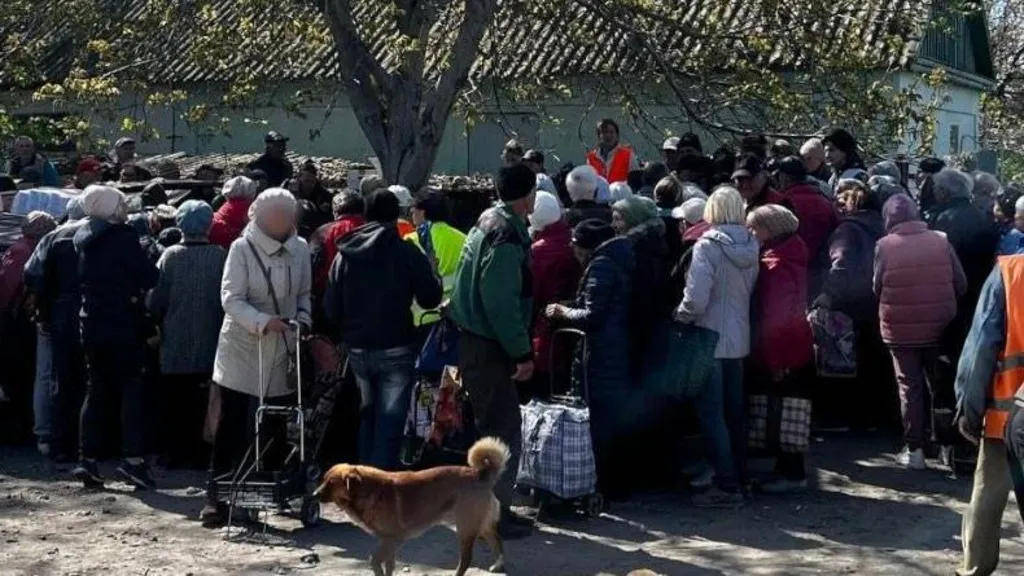
People in Russian-occupied Oleshky, a town in southern Ukraine, are running out of food and medicine and have no way out, a local resident told RBC-Ukraine. Ukraine's human rights ombudsman told the outlet that civilians there are dying of hunger every day.
The part of Kherson Oblast across the Dnipro River has been under Russian occupation since 2022, with civilians facing food and medicine shortages and restrictions on leaving. The UN Human Rights Monitoring Mission in Ukraine has documented deteriorating conditions in Oleshky and neighboring Hola Prystan. There has been no practical breakthrough toward an organized evacuation, though 358 people who need help to leave Oleshky and nearby settlements have been verified. About 2,000 people remain in Oleshky, Kherson Oblast head Oleksandr Prokudin estimated.
The resident, who spoke anonymously, said food is extremely scarce, and residents are waiting for a humanitarian corridor to leave. The local market offers mostly vegetables and fruit, such as tomatoes, cucumbers, zucchini, pears, and apples. Russia made its ruble the only legal currency in occupied Kherson Oblast from 1 January 2023, pushing out the Ukrainian hryvnia. Prices at the market start at 500 rubles (about $6), and "if you're lucky, 10 eggs can be bought for 3,000 rubles" (about $36), the resident said. That is about $3.60 an egg, nearly 20 times the US average of about $0.19, or $2.27 a dozen in August, US government data show.
Ukraine's human rights ombudsman, Dmytro Lubinets, told RBC-Ukraine that civilians in the occupied area were dying every day.
"There is a humanitarian catastrophe there. Ukrainian civilians die there every day because they lack even basic food and water. There have been no medicines there for a long time. According to our information, there is simply hunger there," he said.
The resident said there were practically no medicines available. Expired drugs were being sold at about 100 rubles (about $1.20) a pill. His father has Parkinson's syndrome and has been concussed twice. The resident said he was forced to reduce his father's dose by 25% so the supply would last at least until the new year.
The resident's apartment had burned down, and his house remained damaged. His family had made the house livable and was living there, he said. His wife had lost more than 40 kilograms while the family relied on vegetables and fruit.
Four villages in the Hola Prystan community—Kokhany, Kardashynka, Velyka Kardashynka, and Mala Kardashynka—are effectively blocked, according to the Skhid-SOS fund. The fund told RBC-Ukraine that no transport reaches the villages and no humanitarian aid has been delivered for a prolonged period, although it is difficult to get more information from the villages. Residents are forced to walk or cycle to other settlements to find food, despite the risks of mines and drone strikes.
Lubinets also said Russian troops were using civilians as a buffer and as protection against the Ukrainian military, RBC-Ukraine reported. Because Ukrainian citizens remain in Oleshky, Ukraine cannot conduct active combat operations there, he said—which, in his view, allows Russia to hold civilians effectively as hostages on the front line.
Ukraine has delivered food to Oleshky by drone since March, Prokudin said. Nearly 400 parcels weighing almost 4 tons reached their drop-off points on the night of 4 October, Interior Minister Ivan Vyhivskyi said. How much of the food stays with residents is unclear. Prokudin has said Russian forces shoot down supply drones, confiscate or resell the packages, and detain and beat residents who receive them.
After a previous delivery, Tetiana Hasanenko, head of the Oleshky City Military Administration, said that Russian troops take drone-dropped food and accuse those who receive it of cooperating with Ukraine, and that some residents got several packages while others got none.

As Apple gears up for one of the biggest launches in its history — its first foldable iPhone Duo, hitting stores October 23rd— former employees are asking you to say no to blood tech.
Apple is deeply embedded in Israel, says Tariq Ra’ouf, a Palestinian writer who worked for more than a decade in Apple retail before he was fired in 2024 for speaking out against the company’s silence on Gaza. He joins Rania Khalek and Zoe Alexandra to break down Apple’s ties to Tel Aviv, including its extensive R&D centers in Israel and its $2 billion purchase of an AI startup founded by Unit 8200 veterans. He also explains the systemic discipline faced by pro-Palestine Apple workers — fired for wearing keffiyehs while the company matched employee donations to Friends of the IDF — and warns that having Israeli military intelligence veterans integrated into the supply chain of the world’s most popular devices should terrify every consumer.
Ra’ouf also lays out how the minerals in your iPhone connect the company to genocide in Congo, why organizers are calling for pickets at Apple stores on launch day – and how customers and workers can and should get involved.
Watch full episodes of BT Live, join breakthroughnews.org as a member today!
#breakthroughnews
******
Rough transcript follows:
[Host:] Apple is gearing up for one of the biggest launches in its history, as I’m sure many have heard, with the iPhone Duo. It’s the company’s first foldable phone, which is hitting stores later this month with a starting price of $2,000, which is just wild. But a group of former Apple employees is asking you to skip the line. Their message is: “Say no to blood tech.” Behind that sleek branding about privacy, human rights, and inclusion, Apple is deeply embedded in Israel. It employs around 2,000 people there across R&D centers in Haifa, Herzliya, and Jerusalem, where Israeli engineers help build the chips inside your MacBook. Israel actually hosts Apple’s second-largest R&D facilities outside the U.S., so that’s no joke. And in January, in the middle of the ongoing genocide in Gaza, Apple bought the Israeli AI startup Q.ai for close to $2 billion. I think that’s the second-biggest acquisition in Apple’s history. It’s a company whose founders include veterans of Israeli military intelligence—basically, a bunch of spies. For years, Apple’s employee donation program matched gifts to groups like Friends of the IDF and organizations funding illegal settlements in the West Bank. Activists say the minerals inside your iPhone are tied to the war in Congo. We’ll get into that, too.
Meanwhile, Apple workers who spoke out for Palestine say they were the ones who got punished. They were disciplined for wearing keffiyehs or Palestine pins on the shop floor, and in some cases they were fired. Our next guest is one of them. Zaid Rauf is a Palestinian writer who spent more than a decade at Apple Retail before he was fired in 2024 for speaking out against the company’s silence on Gaza. He’s lost 49 members of his family in the Gaza genocide, and he’s now a leading organizer with Apple’s Against Apartheid, which is calling for pickets at Apple stores on iPhone Duo launch day, among other things. Zaid, welcome to BT Live. It’s really a pleasure to have you on.
[Guest:] Hi. Thank you so much for having me. I’ve been screaming about Apple Zionism for years, so it’s nice to have people listen.
[Host:] Well, scream as loud as you want over here. We have so many questions for you. As I mentioned in the introduction, you spent over a decade at Apple. After October 7, as we’re about to reach the three-year anniversary, you spent months pushing the company internally on Gaza before you were fired in July 2024. Walk us through what you were raising internally that got you fired. And, if you can, please expand a bit on Apple’s complicity in the Israeli death machine.
[Guest:] On October 9, Tim Cook sent an email to the entire company with a headline saying “Israel,” refusing to acknowledge Palestinians or even pretend that we existed in any capacity. His heart went out to all the victims in Israel, but not to any of the victims in Palestine. That made me really upset. I sent him an email begging him to say something about the Palestinians within the company. I was really naive, thinking, “Man, this guy just doesn’t know. He has to treat us equitably,” right?
I got a message from my manager saying he’d read my email. I was like, “Great. Oh my gosh, this is amazing. Is he going to make a statement? Is there anything?” Nothing happened. He remained completely silent. After that experience, a few comrades and I decided to write an open letter demanding that Apple at least treat its Palestinian employees as equitably as it treats its Israeli employees, which I don’t think is a hard ask. We had over 400 current and former Apple employees sign that letter. Again, still no response, still nothing.
So we decided to create Apple’s Against Apartheid, which is dedicated to creating campaigns to educate people. We understand that if they’re not going to do anything internally, what’s required is external pressure and education, because people don’t understand just how deep Apple’s ties to Israel are.
To answer your question about its complicity: your introduction was spot on. Apple’s second-largest R&D center is in Israel. It was the first R&D center the company opened outside California. Apple has massive ties to the Israeli military unit 8200. A bunch of former Israeli spies who worked in Unit 8200 are involved. For people who don’t know what Unit 8200 is, it’s Israel’s IDF tech unit. They’re responsible for planning things like the pager attack in Lebanon. Apple has employees who served in Unit 8200 currently working at its R&D centers in Israel. Apple silicon chips—the M1 chips, the newly designed C1 modem, and the N1 chip for Wi-Fi and Bluetooth—are all currently designed by Israel. It’s a little outrageous to believe Apple thinks it can get away with staying so silent on Israel and Palestine, knowing how deeply complicit it is in all the violence Israel has perpetrated against the Palestinian people.
[Host:] As part of the advocacy you were doing within and outside Apple, hundreds of employees signed a letter in 2024 saying coworkers were being disciplined or fired for things like wearing keffiyehs, Palestine pins, or bracelets, while other causes were openly celebrated in stores. How systematic is this discipline faced by employees who speak up for Palestine? Is it individual managers who overreact and over-enforce, or is there a companywide line on what Palestinian identity is allowed to look like at Apple?
[Guest:] It’s so systemic. It goes all the way down to the attire rules—what you can wear at work. In 2024, they banned scarves because they didn’t want people wearing keffiyehs. They say you can’t wear a Palestine pin, a Palestinian flag pin, or even a bracelet, even though nothing in the handbook says you can’t wear a pin. They’ll say that to you because it’s a Palestine pin.
There was a comrade who had a Palestinian flag in his Slack icon, and a manager reached out to him: “Hey, you have to change your flag. It’s breaking policy.” The employee asked, “Okay, well, what policy am I breaking?” The manager said, “I’ll let you know when I find it.”
In November 2023, there was a Muslim Apple Slack channel, because the company has multiple diversity-group Slack channels. Zionists were coming into the Muslim Apple Slack channel and mass-reporting anything that mentioned Gaza or the genocide. Those messages were removed without Muslim employees being told why. They would come in and harass the Muslim employees. The Muslim employees weren’t going into the Jewish Apple Slack channel and doing the same thing. They were minding their own business and asking these people to leave them alone.
Instead of moderating and punishing the people who were harassing others, Apple closed down the Muslim Apple Slack channel, along with the Jewish Apple Slack channel, for over a year. The company refused to listen to Muslim employees begging for empathy, asking to be heard, and asking it to say something about the incredible losses the Palestinian, Arab, and Muslim communities were facing.
[Host:] That’s wild. In contrast, let’s talk about how Apple treats its Israeli employees and those who support Israel. I mentioned Apple’s matching program, which lets employees route company money to groups like Friends of the IDF and settlement-funding organizations. This year, Apple also spent close to $2 billion on the Israeli AI company Q.ai, whose founders come out of Unit 8200, as you mentioned. What does that tell us about where Apple stands when it comes to Israelis, and about the feelings people who support them are allowed to express and the material support they’re allowed to give to the Israeli military?
[Guest:] It’s so racist and dehumanizing that Israeli employees at the company are allowed to express any sort of genocidal view or racist rhetoric they want on their Slack channels or within company offices, and they don’t get reprimanded nearly as much as Palestinians or pro-Palestinian employees who talk about the empathy and grief they experience.
There are so many cases of Zionist employees harassing Muslim, Arab, and Palestinian employees, but so few cases of those Zionists actually getting reprimanded, fired, or facing any sort of repercussions for their racism. The viewpoint within the company is so inherently Zionist that anytime you send an email advocating for our people and educating people about Zionism and the harm it has done to Palestinians, managers and others will call you antisemitic because you’re being anti-Israel. That’s the company’s line: if you are anti-Israel, you are antisemitic. They’re really good at marketing themselves as a company that claims to care about the world, so few people are seeing the racism at hand.
[Host:] Really shocking stuff. October 23 is when the iPhone Duo is set to drop, and you and other activists are calling on people to picket Apple stores that day instead of lining up for these bizarre smart flip phones. You’re also tying Palestine to Congo, the minerals in every iPhone, and the violence perpetuated in Congo to physically make the iPhone. Why link those two genocides? What are you demanding from Apple? And what can Apple customers or workers watching right now do to support this campaign?
[Guest:] We started working with Congolese activists because we recognized that we’re going through the same struggle: imperialism, colonialism, and white supremacy. People are taking over our lands to take over the resources. Specifically, we’re working with Team Congo and Friends of the Congo to educate people about what’s going on and the depth of the ways Apple’s business practices—and the tech industry’s business practices generally—are negatively affecting the Congolese people.
We’ve reached a point where you can’t expect Apple to pass off the responsibility of ensuring that minerals are ethically sourced to third parties, because everyone who has studied these things can tell you they are not ethically sourced and that the communities mining these minerals are suffering. Apple is one of the tech companies with the ability to change its business and sourcing practices and teach the tech industry what it looks like to mine ethically. It has the power, money, and resources to do so.
Our demands when we ask people to picket Apple stores on the 23rd are that the company research, report, and remediate all the harms its business practices have on marginalized communities, publicly report its findings, and create a meaningful plan to remediate the harm. We want Apple to listen to the community. We have people ready to speak with Apple executives and tell them exactly how harmful its business practices are and how it can help the communities that are literally pleading for its empathy.
We want Apple to get out of the occupation. It has offices in occupied Jerusalem, and on its job website it lists those offices as being in Israel, which is against international law. We want the company to close its offices in occupied territory. Most importantly, we want it to clean up its supply chain and not abandon Congo. It needs to do better because it has the power to do so.
[Host:] I want to pull out a thread of something you mentioned earlier, when we were talking about the ways Apple is complicit in the Israeli death machine. You talked about the Unit 8200 Israeli military intelligence people staffing these R&D facilities in Israel for Apple. Obviously, we should all be very upset about the complicity of Apple and other tech companies in the genocide in Gaza. But having Israeli employees tied to the Israeli military and spy apparatus so integrated into the supply chain of a widely used device by people all over the world is quite frightening.
When you think about what you mentioned—the pager attacks—nothing like that has ever happened in history. It was like a terrorist attack, where a country infiltrated the supply chain to booby-trap electronic devices. I wanted to ask you to expand on why it’s so devastating and scary to have a country whose government is full of genocidal lunatics, willing to do things no other government in history has done to get its way, so integrated into a massive global tech company that builds our phones and computers.
[Guest:] It’s terrifying. The public should be worried, and there should be mass concern over the fact that Apple is filled with Israeli spies—spies who worked in Unit 8200 and worked on… I mean, the fact that Unit 8200 was behind Pegasus—sorry, that it was behind the Lebanon bombings—is so concerning. Then you have employees from the same unit at tech companies.
One thing I need to make clear: Netanyahu was on 60 Minutes, right? He brought out his little iPhone. He was like, “You see this device? We can penetrate any one of these devices.” People like to think that Apple is so secure and so ironclad compared to Android or Google. Pegasus was Israeli-made. The same people who made the Pegasus software made the software and hardware that you’re holding in your hand. Who’s to say? Then you have Netanyahu saying that they can penetrate any one of these devices. Are you joking? They’re basically telling you to your face that they have the ability to hack you whenever they want.
The whole thing in Lebanon is truly terrifying. If Apple wants to control any of this narrative, it has to distance itself from the apartheid ethnostate of Israel—the state that is committing a genocide and blew up a bunch of pagers. That took years; it wasn’t something they just did. Who’s to say these new phones, with an M1, C1, or N1 chip, won’t blow up in your face? There should be mass concern over the safety of these products because of their links to Israel.
[Host:] Well, Zaid, I really appreciate you coming on. I guess the last thing I could ask is: Can you remind people how they can get involved in learning more about this campaign or being a part of it?
[Guest:] Of course. If you’re interested in picketing your local Apple store, we’ve made it really easy. We’ve created flyers, chat lists, and posters. We’ve made it simple for you to print what you want, go to your local Apple store, and make some noise. Just go to applesagainstapartheid.com. You’ll find the resources and fact sheets. Follow us on Instagram if you want to stay updated whenever we add more resources. Stay up to date, because for as long as Apple has links to Israel, we’ll always be here to protest them.
[Host:] Thank you so much for joining us. We really appreciate you.
[Guest:] Thank you very much. Have a good one.

Today marks three years since October 7th, Al-Aqsa Flood and the escalation of Israel’s campaign to eliminate Gaza into a full-blown genocide. The world watched the livestream – and while that turned public opinion on its head, US policy hasn’t budged. Layan Sima Fuleihan, education director at The People’s Forum and an editor at 1804 Books, joins Zoe Alexandra and Rania Khalek to reflect on how Israel lost the hearts and minds of American voters – and how to turn that shift in consciousness into real power.
From Occupy Wall Street to the 2020 uprising for George Floyd, Fuleihan traces the Palestine movement through more than a decade of the mass rebellions that empowered it. She lays out key lessons from the past three years: radical change happens fast, repression can’t intimidate people out of solidarity, and Americans do care what their government does abroad. And she explains how, as Washington stays shielded from public opinion, both parties are equally culpable – and warns of the stakes of letting Democrats court pro-Palestine voters ahead of the midterms while the bombs keep falling.
Watch full episodes of BT Live, join breakthroughnews.org as a member today!


A federal judge just dismissed the Trump administration’s lawsuit against pro-Palestine protesters in New Jersey, in a major First Amendment win after the DOJ claimed a 2024 social media post calling to protest an illegal land sale at a West Orange synagogue amounted to a threat against Jewish worship. The Partnership for Civil Justice Fund called it a vindictive prosecution and viewpoint discrimination, citing the DOJ’s stated aim to “dismantle” the movement. Carl Messineo, co-founder and legal director of the PCJF and its Center for Protest Law and Litigation, joins Rania Khalek and Zoe Alexandra to break down the historic First Amendment victory for PSL New Jersey. They dig into the 1994 FACE Act meant to protect abortion clinic access and the East Jerusalem land sale at the center of the case. Messineo explains what this win means for the Trump administration’s lawfare against pro-Palestinian dissent – and why he says the tide is turning:
“[This] offers protection, safe harbor, and reassurance to all the groups being threatened … that fighting back, legally and politically, is effective.”
Watch full episodes of BT Live, join breakthroughnews.org as a member today!
#breakthroughnews
******
Rough transcript follows:
[Host:]
Last Wednesday, a federal judge in New Jersey dismissed a civil lawsuit the Trump administration’s Department of Justice had brought against pro-Palestine protesters under the FACE Act, a law passed in 1994 actually to protect access to reproductive health clinics. The suit, which was led by Assistant Attorney General Harmeet Dhillon of the Civil Rights Division, named the Party for Socialism and Liberation New Jersey and American Muslims for Palestine New Jersey, among others.
The accusations against PSL New Jersey in this case were that there was a social media post calling for a protest at a public intersection. The protest in question in this lawsuit was against a land sale where stolen Palestinian land in East Jerusalem was being sold to people living in the United States to encourage further settlement, occupation, and ethnic cleansing of Palestinians from their lands. Such events have been strategically held at synagogues in order to create a spectacle where pro-Palestine protesters are outside synagogues, so the accusations of antisemitism just flourish with those photos.
But in this ruling, the DOJ argued that the post amounted to a threat against and interference with Jewish worship. The court disagreed, finding that the post in question was protected speech—a call to assemble and engage in political advocacy in a public forum. The Partnership for Civil Justice Fund, which represented PSL New Jersey in the case, argued that the lawsuit was vindictive prosecution and viewpoint discrimination, pointing to Dhillon’s public statement that the DOJ aims to dismantle groups behind such protests.
To talk about what the ruling means and what comes next, we’re joined by Carl Messineo, co-founder and legal director of the PCJF and its project, the Center for Protest Law and Litigation. Carl, thank you so much for joining us here at BT Live.
[Carl Messineo:]
It’s my pleasure to be here, and you guys do terrific work reporting on critical issues.
[Host:]
Oh, thank you so much for saying that. Well, crucially, in this ruling, which many are calling a victory for free speech, the court found that the social media post in question was protected political speech and not a threat, as the DOJ sought to argue. Can you walk us through the significance of this ruling, and on the other hand, what a ruling against the protest groups would have meant for free speech?
[Carl Messineo:]
Well, we can talk about what the ruling, had it gone the other way, would have meant for protest groups. First, Judge Hayden described in her opinion that allowing this civil prosecution to continue on the terms that it was advanced would effectively demonize protesters who were simply engaged in their First Amendment rights to have free speech on an issue of public importance. It would dramatically undermine the ability of people to organize and peacefully assemble on issues that are critical.
And there are few issues more critical than the subject matter of this protest. The subject matter of this protest was a land sale that was really strategically placed at a synagogue, and the land sale itself was selling Palestinian land in the occupied territories in East Jerusalem in clear violation of international law. Every major human rights or international law organization that has looked at this issue concludes that this plainly constitutes a form of war crime—having an occupying force, the state of Israel, transferring its civilians onto stolen land.
And here that’s very strategic, because the establishment of these settlements would create a barrier for the free movement of Palestinians going from East Jerusalem over to Bethlehem. It’s an absolutely horrible division of land that is not theirs to sell. And indeed, the racism of this practice is inherent. The real estate developer in their advertising materials boasts that they will be bringing a new Anglo community to East Jerusalem to take over this Palestinian land. That’s the language that they themselves use, so no one has to resort to inference as to whether this is racism. It is on its face.
[Host:]
You spoke, Carl, about the illegal land sales, right? And these land sales you said are held in religious institutions. They’re held sometimes in synagogues, which has an impact, of course, in terms of optics, but also legally, like we saw in this case. So can you talk about the legality of shielding these illegal land sales in religious institutions? Because these settlements are actually illegal under international law. So why aren’t these land sales being prosecuted?
[Carl Messineo:]
Well, absolutely, you’re correct. I mean, the Trump administration is using every means to engage in a form of lawfare, which I would say is ideological warfare, using abuse of legal process in order to shut down dissent and to promote what is clearly unlawful, illegal, and a war crime: the sale of Palestinian lands to Anglo investors here in the United States.
[Host:]
Well, in its argument, the PCJF said that this was vindictive prosecution, and it cited Harmeet Dhillon’s statement about dismantling groups like the PSL and others who are part of the movement for Palestine. We just had a really great segment speaking about this movement that’s made tremendous gains and challenged not only Donald Trump, but really has transformed the political scene in the United States. But as the PCJF mentioned, the court did not rule on the claim about this being a vindictive prosecution. So how does the PCJF intend to bring this claim forward in the future? Is there a worry that Dhillon will make good on this threat and continue challenging in such cases? What is the future of that element?
[Carl Messineo:]
Well, the ideological motivations of the Trump administration and Dhillon are clear. It’s overt. When Dhillon says that the Trump administration is going to use a law that was intended to protect medical facilities and also Black churches from the use of force and violence to target and dismantle—and that’s the language that Dhillon uses—to dismantle groups like the PSL New Jersey as well as other groups that engage in protest on a range of important issues. Now, that is plainly unconstitutional and clearly falls under the legal framework of a vindictive prosecution. That is the abuse of legal process in order to shut down a particular disfavored viewpoint.
Look at what has transformed in terms of political and cultural understanding over the past number of years. It’s groups that are engaged in this type of protest that have actually been at the forefront of a tremendous change in understanding across all segments of society about how intolerable this genocidal warfare and also the ethnic cleansing that this land transfer and land theft constitutes. So naturally, what does the Trump administration intend to do? Well, it intends to go and abusively use legal process to try and shut down groups that are having a significant political impact across consciousness.
And what does it mean for the Partnership for Civil Justice Fund? What does it mean for those who are protesting peacefully? Well, we’re all going to continue. The PCJF will continue to be a legal bulwark against this. But most importantly, it’s folks like them, folks from a multitude of organizations that are really changing the tide here. It’s not going to stop that.
[Host:]
And you know, Carl, this case came after a DOJ memo saying FACE Act cases against anti-abortion activists would be brought only in extraordinary circumstances. So what does this ruling signal to other organizations facing similar suits? And do you think it’ll deter the government from using the law this way?
[Carl Messineo:]
Deter this government? Well, I can’t say it’s going to deter them, but what I can say is that it offers protection, safe harbor, and reassurance to all the groups that are being threatened verbally and through abusive legal process that actually fighting back legally and fighting back politically are effective. And there are organizations such as ours and other great civil rights practitioners across the country who come forward and are willing to dedicate their time to help clear the way so that people can engage in peaceful protest and assembly on these critical issues. So I think that this is actually very heartening, and it sends a message of strength and support for those who are engaging in this.
[Host:]
It’s crucially important, and I think that’s why so many people have called this ruling a victory for free speech for the Palestine movement, which did face so much repression of different forms. So Carl, we thank you so much for joining us, and I’m sure that all of the protesters and movements thank the work of the PCJF for defending everyone’s right to free speech, because actually it’s not just the activists who will benefit from this ruling—it’s really everyone who values their right to free speech.
[Carl Messineo:]
That’s right. Thank you so very much for your kind words and for dedicating the time to have this issue here.