❌

Reading view

Americans warned about Paris travel after violence, looting and tear gas-filled streets

The U.S. Embassy in France is warning Americans to steer clear of violent protests as unrest sparked curfews and raised concerns about travel disruptions across the country.

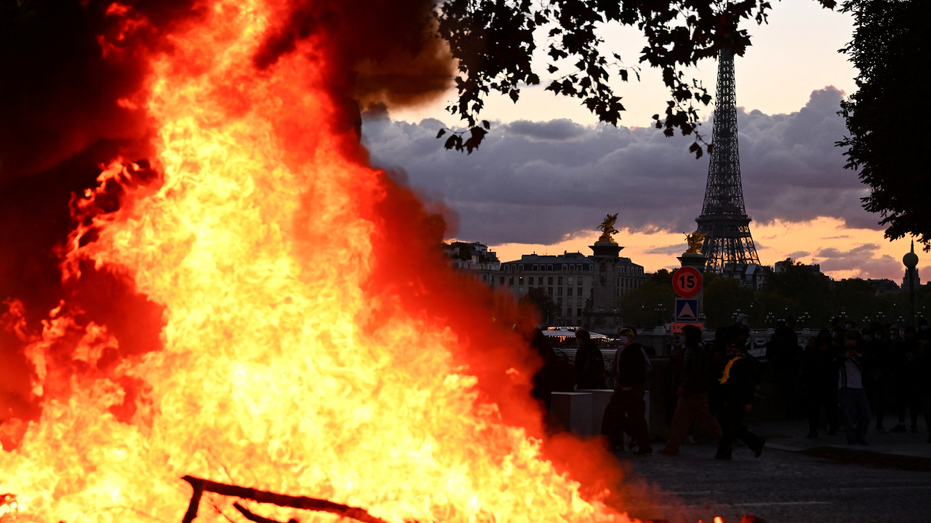
The riots — fueled by a range of grievances, including rising living costs and mass migration — have been reported across France, with protests reported in cities including Paris, Lille and Lyon. Authorities have imposed localized curfews as a result.

The embassy said in a Monday statement that partial curfews had been introduced in several French cities, with additional restrictions possible.

MCDONALD'S RANSACKED AND WRECKED AS STORES, RESTAURANTS SUFFER FROM VIOLENCE AND RIOTING

"Following the October 17 protests that turned violent, media report the Prime Minister’s office introduced partial curfews for Monday, October 19 and Tuesday, October 20 in several cities across France, including Lille," the embassy said.

"Media report more curfews may follow for parts of Paris and in prefectures across the country, and that scattered protests could continue."

In Paris, authorities also imposed overnight curfews in areas including Place de la République and the Les Halles Shopping District, according to The Associated Press (AP).

Riot police deployed tear gas across the streets near Place de la République in an attempt to disperse crowds during the escalating street battles, the same source reported. 

ANGRY LOCALS BLOCK FAMOUS BEACH AS MASS TOURISM PROTESTS ESCALATE AT VACATION HOT SPOT

The gas quickly mixed with heavy, acrid smoke from torched vehicles and street fires, according to Reuters.

The chaos forced Dutch entrepreneur Tije De Boer, who was visiting Paris with his children, to evacuate his hotel at Place de la République. 

De Boer described the scene to Reuters as "like a war zone" following the intense protests that rocked the French capital on Oct. 17.

"It's like a war zone here," De Boer said, according to the Reuters report.

TOP TOURIST DESTINATION IN THE WORLD SHUTS DOWN AMID VIOLENT PROTESTS

Major tourist attractions have also been impacted.

The Louvre Museum in Paris was forced to close Monday after protesters blocked its entrances, Fox News Digital previously reported.

Travelers visiting Paris are being advised to avoid popular protest gathering spots, including Place de la République, Place de la Bastille and Place de la Nation, along with major thoroughfares such as Boulevard Voltaire, which are frequently used for demonstrations, according to The Times of London.

Outside the capital, Lyon's tourism office at Place Bellecour was vandalized and set ablaze during the Oct. 17 demonstrations, according to city officials. 

CLICK HERE TO SIGN UP FOR OUR LIFESTYLE NEWSLETTER

Visitor services have since been relocated to a temporary facility on the same square.

The violence also spread to other French cities, including Limoges, where the historic town hall was set ablaze during the Oct. 17 unrest, according to numerous reports. 

In Bordeaux, the mayor reported that as many as 100 stores had been looted during the demonstrations, Reuters reported.

CLICK HERE FOR MORE LIFESTYLE NEWS

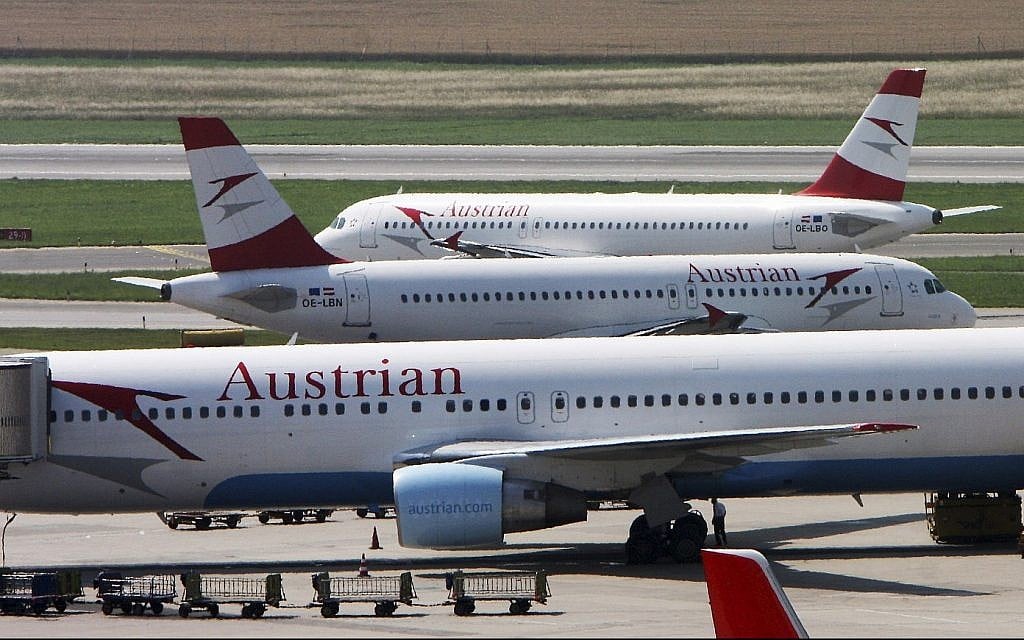
Despite the violence, flights to and from Paris have largely continued operating, according to flight data reviewed by Fox News Digital.

However, travelers could still face disruptions on the ground, with the embassy advising Americans to check for Metro station closures and other transportation interruptions before heading out.

The embassy also urged travelers to confirm flight schedules directly with their airlines and allow extra time to reach their destinations.

TEST YOURSELF WITH OUR LATEST LIFESTYLE QUIZ

"Monitor media and local resources for updated information and curfews in your area," the statement added. "Plan alternative routes and allow extra travel time for travel."

Fox News Digital reached out to the State Department for comment.

CLICK HERE TO DOWNLOAD THE FOX NEWS APP

Fox News Digital's Jessica Mekles and Reuters contributed reporting.
  •  

'We're going to die': Passengers recount midair terror before emergency landing

A passenger flight was forced to make an emergency landing shortly after takeoff following reports of a strange odor on board that left travelers fearing for their lives.

An American Airlines flight departed from St. Louis Lambert International Airport on Oct. 17, bound for Philadelphia, before turning back to the airport.

Gary Leff, a Texas-based aviation expert who founded the blog "View from the Wing," told Fox News Digital that engine oil entering an aircraft's air supply could potentially explain the odor, although the cause of the incident has not yet been confirmed.

PROBE UNDERWAY AS 7 FLIGHT ATTENDANTS SICKENED BY BAFFLING ODOR ON MAJOR AIRLINE

"When that happens, you can get smoke, you can get vibration, you can get loud noises. It can also wind up making people ill," Leff said.

FlightAware data reviewed by Fox News Digital showed that the plane was in the air for 34 minutes before landing back at St. Louis Lambert International Airport.

In a statement to Fox News Digital, American Airlines confirmed that the flight returned to St. Louis shortly after takeoff following a reported odor on board.

The airline said the aircraft landed safely and was taken out of service for inspection by its maintenance team.

The flight had already been delayed roughly two hours following a reported engine issue before passengers experienced trouble in the air, according to a couple who spoke to local outlet First Alert 4.

TRAVEL NIGHTMARE UNFOLDS AS MAJOR AIRLINE SCRAPS FLIGHT AFTER HARROWING 12-HOUR DELAY

The passengers — Tessa and Mark Springer of Waterloo, Illinois — were traveling to Pennsylvania for work when they heard a troubling noise coming from the back of the plane before takeoff.

"We heard just this really horrible noise coming from the back of the plane. It was like ... real loud buzzing, kind of [a] grinding sound," Mark Springer said.

Mark Springer said the pilot then announced there was a mechanical issue.

"The pilot comes back on and says, ‘Uh, there’s a problem with the engine on the airplane,’" the passenger added. "'We can’t get it started.'"

'WE THOUGHT WE WOULD DIE': PASSENGERS THROWN INTO CEILING DURING TERRIFYING FLIGHT

After the delay, the plane finally departed. But about 15 minutes into the flight, passengers experienced a sudden jolt that sent them lunging forward, according to Mark Springer.

"All of a sudden, the plane just felt like it hit a ... like in a car, when you slam on your brakes. ... Everybody kind of lunges forward like this," he said.

"And then, maybe a minute later, the plane just kind of goes boom and drops. … All of the oxygen masks fall. And we just kind of looked at each other like, is this serious? Is this real?" added Mark Springer.

Tessa Springer recalled fearing for her life as the plane turned back toward the airport, telling First Alert 4 she was terrified she would die.

CLICK HERE TO SIGN UP FOR OUR LIFESTYLE NEWSLETTER

She texted her children, "Problem on our plane, love you guys," per the outlet.

"I was like, we’re going to die," Tessa Springer said.

The couple said that once they landed, they evacuated the plane by jumping from its wing, with fellow passengers helping catch one another as they made their way to the ground.

"I don’t think I’ll ever be able to get on another airplane ever again," Mark Springer said.

CLICK HERE FOR MORE LIFESTYLE NEWS

Despite the frightening ordeal, Leff of "View from the Wing" said a lengthy delay due to a mechanical issue does not necessarily indicate that a flight is unsafe.

"Part of that delay is diagnosing, part of it's addressing it and part of it's getting all the paperwork right and just doing all the final readbacks and rechecks to make sure that everything is safe for departure," Leff said.

TEST YOURSELF WITH OUR LATEST LIFESTYLE QUIZ

"A long delay in and of itself is not a safety concern," he added.

Leff also noted that aircraft are equipped with multiple safety systems and emergency procedures designed to protect passengers when problems arise.

"There are tremendous redundancies of systems and emergency procedures in place, such that the cockpit crew immediately reacted, responded and got everyone on the ground and off the aircraft to safety," Leff said.

CLICK HERE TO DOWNLOAD THE FOX NEWS APP

"It's certainly not something that you want to go through — but even when something goes wrong, that doesn't mean that things end badly at all," he added.

  •  

Cause of death released for 3 who perished at Burning Man festival in Nevada

Officials have disclosed the causes of death for three festivalgoers at this year's Burning Man event in Nevada, weeks after the annual gathering was rocked by multiple fatalities.

The causes of death ranged from cardiovascular disease to drug toxicity, according to local outlet KOLO 8 News, citing information from the Washoe County Regional Medical Examiner's Office.

Burning Man, held annually in Nevada's Black Rock Desert, ran from Aug. 30 through Sept. 7 this year, with all three deaths occurring during the festival.

MISSING 72-YEAR-OLD HIKER FOUND ALIVE DAYS AFTER FRIGHTENING 100-FOOT FALL LEFT HER BADLY INJURED

One man, 62, of Santa Monica, California, was pronounced dead at the festival's Rampart Medical Center on Sept. 3 after suddenly collapsing, KOLO 8 reported.

His cause of death was determined to be hypertensive and atherosclerotic cardiovascular disease.

Another man, 51, of Truckee, California, died in an ambulance on Sept. 4 after experiencing chest pain at the festival. 

GRIZZLY BEAR MAULS HIKER, DRAGS HIM DOZENS OF FEET ON GLACIER NATIONAL PARK TRAIL

His death was linked to methamphetamine and MDMA toxicity, heart disease and Type 2 diabetes, with chronic methamphetamine use also contributing, the same outlet said.

A third man, age 60, of Yuma, Arizona, was found dead in his vehicle.

CLICK HERE TO SIGN UP FOR OUR LIFESTYLE NEWSLETTER

He was later determined to have died from cocaine and methamphetamine toxicity, with cardiovascular disease contributing, according to KOLO 8.

Fox News Digital reached out to the Washoe County Regional Medical Examiner's Office for additional information.

The festival draws tens of thousands of participants who gather to build a temporary city known as Black Rock City.

The festival emphasizes communal effort, self-reliance and self-expression, according to the organization. 

CLICK HERE FOR MORE LIFESTYLE NEWS

The event culminates in the burning of a massive wooden effigy known as "the Man."

In a statement earlier in September, Burning Man organizers expressed condolences to the families of those who died and said the three deaths initially appeared to be from natural causes.

TEST YOURSELF WITH OUR LATEST LIFESTYLE QUIZ

"The deaths of three Burning Man participants in 2026 all appear to be from natural causes, but we defer to the medical examiner for official determinations," the organization said.

"We encourage and ask that people focus on the contributions of the individuals lost and avoid speculation about the circumstances of their passing out of respect for the participants and their families."

CLICK HERE TO DOWNLOAD THE FOX NEWS APP

Fox News Digital reached out to Burning Man for additional comment.

  •  

Israeli police detain 10 people in rare raid against West Bank settlers

Move comes after US photojournalist and group of European diplomats and Palestinians were assaulted in separate attacks

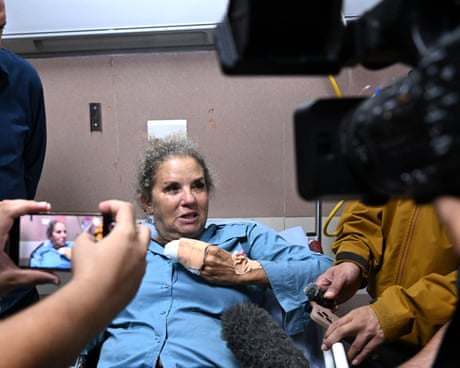
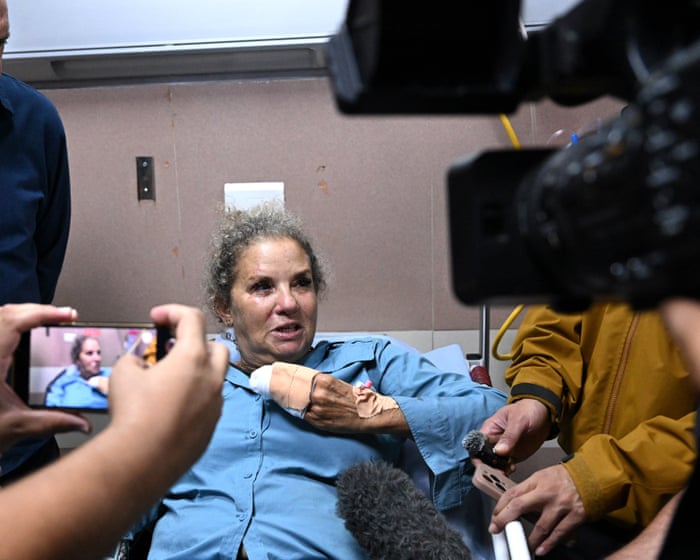
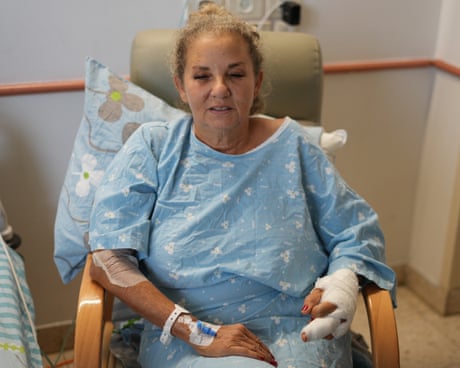
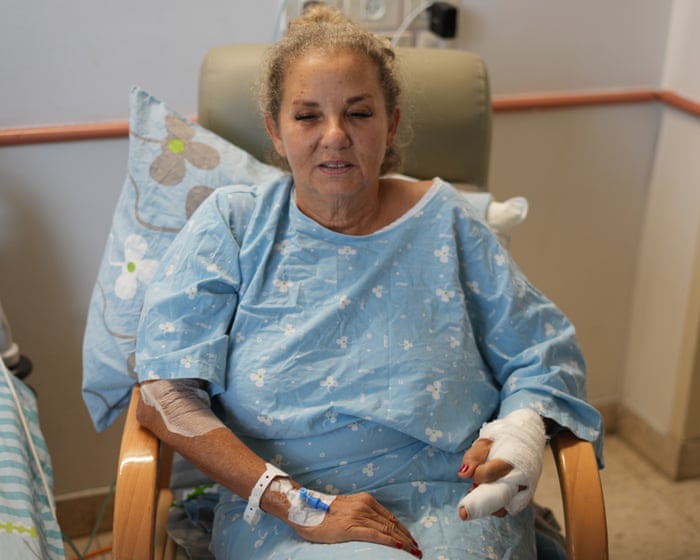
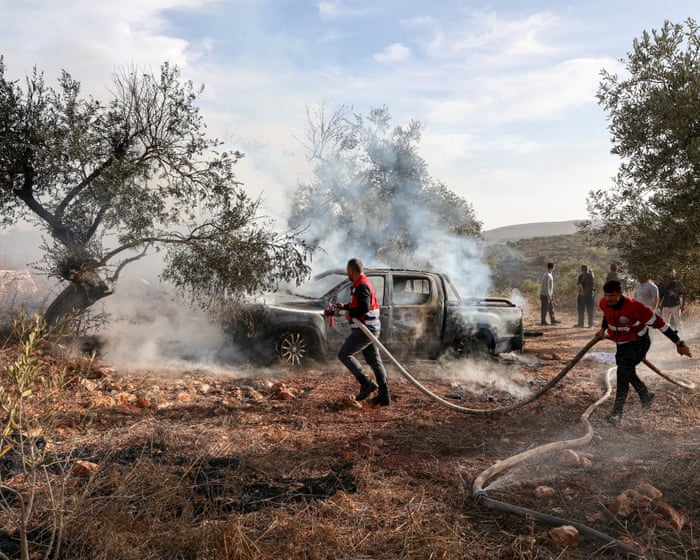
Israeli police have detained 10 people in a rare raid against settlers, after a weekend of extreme violence in the occupied West Bank including an attack on US photojournalist Heidi Levine, which she described as an “attempted lynching”.

She was knocked down, kicked and beaten by a group of masked Israeli men as she covered the olive harvest in a Palestinian village on Friday. The militants broke four vertebrae and a rib, ripped open her finger so it required surgery and left her with lacerations across her body.

Continue reading...

© Photograph: Debbie Hill/UPI/Shutterstock

© Photograph: Debbie Hill/UPI/Shutterstock

© Photograph: Debbie Hill/UPI/Shutterstock

  •  

The 10 safest cities in the US — and the 10 least safe

Aerial view of Juneau, Alaska.
Juneau, Alaska, was named the safest city in the US by WalletHub.

chaolik/Getty Images/iStockphoto

  • WalletHub released a report ranking the safest cities in the US.
  • The ranking analyzed 182 US cities based on 41 safety indicators across three categories.
  • Juneau, Alaska, was ranked the safest city in the US, while New Orleans was ranked the least safe.

American cities face a range of safety concerns, and the risks can vary significantly depending on location.

In some cities, natural disasters such as hurricanes, tornadoes, and floods pose the greatest threats to locals. In others, safety concerns may instead center on financial security or the overall safety of homes and communities.

WalletHub compared a total of 182 cities — the 150 largest cities in the US, plus at least two of the most populous cities in every state — to determine the safest and least-safe cities in the US.

WalletHub examined 41 safety indicators across three categories: home and community safety, natural-disaster risk, and financial safety.

To evaluate home and community safety, WalletHub looked at factors including crime rates, traffic and pedestrian fatalities, and the number of emergency responders per capita.

The natural-disaster risk ranking was determined by cities' risk-index scores for natural disasters such as earthquakes, tornadoes, and wildfires.

The financial safety ranking considered factors such as poverty and unemployment rates, as well as identity theft complaints per capita.

To conduct its analysis, WalletHub looked at data from sources including the US Census Bureau, the Bureau of Labor Statistics, the Federal Emergency Management Agency, and the Federal Bureau of Investigation.

Here are the top 10 safest and least-safe cities in the US.

1. Juneau, Alaska
View of street in downtown Juneau, Alaska, on spring day; mountains in background
Juneau, Alaska.

Lana2011/Getty Images

Out of the 182 cities WalletHub examined, Juneau was ranked the safest city in the US. It ranked 46th in home and community safety, fourth in financial safety, and first in natural-disaster risk.

Juneau featured the lowest murder rate and lowest pedestrian fatality rate, and there have been no recorded terrorist attacks or terrorist-related incidents in the past decade. The risk of natural disasters in Juneau is particularly low, with the second-lowest risk of flooding and tornadoes.

Financially, Juneau has the 21st-lowest percentage of residents below the poverty line.

2. Warwick, Rhode Island
Warwick is a city in Kent County, Rhode Island, the third largest city in the state
Warwick, Rhode Island.

DenisTangneyJr/Getty Images

As the second-safest city in the US, Warwick's home and community safety was ranked ninth, its natural-disaster risk was ranked fifth, and its financial safety was ranked 46th.

Warwick had the fourth-lowest number of aggravated assaults per capita and the sixth-lowest number of thefts per capita.

3. Overland Park, Kansas
Overland Park, Kansas.

MattGush/Getty Images

Overland Park rounded out the top three safest cities in the US, with its home and community safety ranking fourth and its financial safety ranking seventh.

The Kansas City suburb placed 138th in WalletHub's natural-disaster-risk category. The greater Kansas City area had received 88 tornado warnings by June 2026, ABC affiliate KMBC reported.

However, Overland Park had the 19th-lowest pedestrian fatality rate and the 15th-lowest traffic fatality rate among the 182 cities WalletHub analyzed. It also had the 14th-lowest unemployment rate in the country and the third-lowest share of residents who are living in poverty.

4. Burlington, Vermont
Drone shot of the shore of Lake Champlain in Burlington, Vermont at sunset, including the ferry terminal, commercial docks, and downtown streets shaded by trees that are beginning to to turn red, yellow and orange. The Green Mountains can be seen in the distance. Authorization was obtained from the FAA for this operation in restricted airspace.
Burlington, Vermont.

halbergman/Getty Images

Burlington is relatively safe from natural disasters, with its natural-disaster risk ranked third overall. Its financial safety was ranked 24th, and its home and community safety was ranked 43rd.

5. South Burlington, Vermont
view of fall foliage and Adirondack Mountains in New York from Overlook Park in South Burlington, Vermont
South Burlington, Vermont.

vermontalm/Getty Images

South Burlington, Vermont, tied with Burlington for third place in natural-disaster risk. The two cities are only miles apart.

South Burlington's financial safety ranked higher, in sixth place. Its home and community safety ranked lower than Burlington's, at 51st.

6. Virginia Beach, Virginia
Virginia Beach, Virginia.
Virginia Beach is a coastal city in southeastern Virginia where the Chesapeake Bay meets the Atlantic Ocean, renowned as "The Resort City". It is famous for a 3-mile, oceanfront boardwalk, 35 miles of coastline, and distinct, family-friendly areas like the lively Oceanfront, serene Chesapeake Bay, and secluded Sandbridge. Known for its military presence, seafood, and natural spots, it acts as a major year-round tourist destination.

Luiz Castro/Getty Images

WalletHub ranked Virginia Beach 22nd in home and community safety, 10th in natural-disaster risk, and 55th in financial safety.

7. Cedar Rapids, Iowa
Cedar Rapids, Iowa.
Cedar Rapids, Iowa.

Aaron Yoder/Getty Images

In Cedar Rapids, the city's home and community safety ranked 10th, its natural-disaster risk ranked 23rd, and its financial safety ranked 42nd.

8. Casper, Wyoming
Casper, Wyoming.
Casper, Wyoming.

GummyBone/Getty Images

Casper's financial safety ranking placed it in the top 10, in ninth place. Its natural-disaster risk ranked 19th, and its home and community safety ranked 32nd.

9. Boise, Idaho
Boise, Idaho.
Boise, Idaho.

Inland 208 Productions LLC/Getty Images

Boise was ranked No. 33rd in home and community safety, 41st in natural-disaster risk, and fifth in financial safety.

10. Yonkers, New York
Yonkers, New York.
Yonkers, New York.

Brian Logan/Getty Images

WalletHub's ranking named Yonkers as the 10th-safest city in the US. Out of 182 cities, it ranked third in home and community safety, 59th in natural-disaster risk, and 108th in financial safety.

Keep reading for the bottom 10 cities, which are ranked the least safe in the US.

173. St. Louis, Missouri
A photo of a city skyline with a river in the foreground.
St. Louis, Missouri.

: Visions of America/Education Images/Universal Images Group via Getty Images

Out of the 182 cities WalletHub examined, St. Louis ranked 177th in home and community safety and 146th in financial safety.

The Missouri city ranked relatively well in its natural-disaster risk ranking, however, coming in at 34th.

174. Cleveland, Ohio
Cleveland skyline

John Greim/LightRocket via Getty Images

Cleveland ranked well in WalletHub's natural-disaster risk rating, coming in at 74th.

In the financial safety category, the city ranked 153rd. The lowest category it was ranked in was the home and community category, ranking 175th.

175. Houston, Texas
A city skyline.
Houston, Texas.

Carol M. Highsmith/Buyenlarge/Getty Images

Houston's financial safety ranking placed the city 163rd. Its natural-disaster risk ranked 170th, and its home and community safety ranked 171st.

176. Jacksonville, Florida
A city skyline.
Jacksonville, Florida.

: Visions of America/Joseph Sohm/UCG/Universal Images Group via Getty Images

Jacksonville was ranked 170th in home and community safety, 177th in natural-disaster risk, and 166th in financial safety.

177. Detroit, Michigan
A city skyline.
Detroit, Michigan.

Roberto Machado Noa/LightRocket via Getty Images

WalletHub ranked Detroit 173rd in home and community safety and 67th in natural-disaster risk.

It was ranked the least safe city in the US for financial safety, coming in at 182nd.

178. Philadelphia, Pennsylvania
A city skyline.
Philadelphia, Pennsylvania.

ANGELA WEISS / AFP via Getty Images

In Philadelphia, the city's home and community safety ranked 176th, its natural-disaster risk ranked 137th, and its financial safety ranked 159th.

179. Memphis, Tennessee
A city skyline.
Memphis, Tennessee.

: Dukas/Christian Heeb/Universal Images Group via Getty Images

WalletHub ranked Memphis as the second-worst city for financial safety, coming in at 181st, behind Detroit.

The city ranked 179th in home and community safety, and jumped to 60th in the natural-disaster risk category.

180. Baltimore, Maryland
A city skyline.
Baltimore, Maryland.

: Edwin Remsberg/VWPics/Universal Images Group via Getty Images

Baltimore was ranked 180th in home and community safety. It ranked 174th in financial safety, and performed better in the natural-disaster risk category, placing 106th.

181. Baton Rouge, Louisiana
A city skyline.
Baton Rouge, Louisiana.

: Visions of America/Education Images/Universal Images Group via Getty Images

Ranked the second-least-safe city in the US, Baton Rouge came in 181st for home and community safety, 130th for natural-disaster risk, and 144th for financial safety.

182. New Orleans, Louisiana
A city skyline.
New Orleans, Louisiana.

Education Images/Universal Images Group via Getty Images

Out of the 182 cities WalletHub examined, New Orleans is considered the least safe city in the US, largely due to its home and community safety, where it ranked the least safe, and its financial safety, where it ranked 172nd.

As a hurricane-prone city, New Orleans ranked better in the natural-disaster risk category, however, coming in at 104th.

Read the original article on Business Insider

  •  

Anthropic's safety bill would let the US block an AI model if there's imminent risk of 50-plus deaths

Anthropic CEO Dario Amodei
Anthropic CEO Dario Amodei during a September visit to Washington, DC.

Bloomberg/Getty Images

  • Anthropic is looking to shape AI regulation by pitching an AI safety bill of its own.
  • POLITICO obtained a confidential draft of the proposed legislation.
  • The bill would let the government block an AI model only if it poses a foreseeable, imminent risk of more than $1 billion in damages, or of killing or seriously injuring more than 50 people.

Representatives for the artificial intelligence giant Anthropic have quietly pitched Capitol Hill lawmakers on a draft bill to regulate frontier AI safety and security, according to three people with knowledge of the efforts who were granted anonymity to discuss private deliberations.

The confidential draft, obtained by POLITICO and not previously reported, marks a notable effort by the frontier AI lab to shape the rules governing its own technology as Congress weighs how to respond to the fast-moving industry.

"This bill represents the proposals outlined in Anthropic's Advanced AI Framework, which we have been advocating for with federal and state lawmakers since June," an Anthropic spokesperson said. "These are sensible policies we believe Congress should act on."

The bill would let the government block a model's release or use only if it poses a foreseeable, imminent risk of more than $1 billion in damages, or of killing or seriously injuring more than 50 people. The risk must stem from the creation or release of a biological weapon, the model evading its developer's controls or a cyberattack. The language mirrors that found in California's AI laws including SB 53, which was signed into law last year.

Leading AI labs disclosed a series of incidents this summer, in which AI agents hacked or probed websites and platforms. None reported so far appear to have caused widespread deaths or over $1 billion in damages.

Anthropic has yet to publicly back particular legislative efforts in Congress, but they have backed some state AI safety laws, including two in California. Their head of U.S. state and local government relations previously told POLITICO that they hope states will continue to pass ever-stronger AI safety laws that raise the standard nationwide.

Under the bill, independent evaluators, which would register with the Commerce Department, would be tasked with periodically evaluating the lab and its frontier models. The evaluators may be paid for their work by the lab itself so long as the payment is not contingent on the evaluations' results.

If the evaluators determine there is "imminent enumerated risk" for a company's frontier models, they must report it to Commerce within 72 hours of completing their assessment.

While the Commerce Department could bring a request to the judge to halt the release of a model after determining that it poses a risk, the language explicitly prohibits any other U.S. "department, agency, or officer" from suspending the model's development, deployment or internal use. A federal judge for the District Court for the District of Columbia could order the suspension of a model.

Over the summer, Anthropic was subject to sweeping export controls that shut down two of its most advanced models. The decision was made in a whirlwind series of phone calls between administration officials and the company's executives, worrying some in the tech industry that access to their technology may be restricted on the whims of government officials.

Anthropic's bill would also preempt some state AI laws related to public disclosure of risk, third-party evaluation and reporting of critical incidents. Preemption has been a political flashpoint on Capitol Hill, with Democrats rejecting some proposals they feared would neuter regulations passed by the likes of California, Illinois and New York.

Many tech industry groups have argued that a state-by-state patchwork of laws is difficult to comply with compared to a unified national standard.

The legislation would also require frontier labs to create safety frameworks, publish transparency reports for new frontier models, implement protections for whistleblowers and report critical safety incidents to Commerce.

Capitol Hill has seen a flurry of activity on AI safety legislation this summer. In the House, Reps. Lori Trahan (D-Mass.) and Jay Obernolte (R-Calif.) spearheaded the FRONTIER Act, which would give the government the ability to stop the deployment of risky models and preempt some state AI laws.

In the Senate, Majority Leader John Thune and Sens. Amy Klobuchar (D-Minn.) and Ted Cruz (R-Texas) have been negotiating an AI safety bill intended to mitigate catastrophic risks. But it has faced headwinds from some safety-minded groups and Sen. Maria Cantwell (D-Wash.), the top Democrat on Cruz's Commerce Committee, who want the government to have a larger role in reviewing AI models.

Other progressives, including Rep. Greg Casar (D-Texas) and Sen. Bernie Sanders (I-Vt.), have gone well beyond their colleagues in calling for a pause in advanced AI development and a ban on superintelligence, a type of theoretical AI that far surpasses humans' cognitive capabilities.

This story originally appeared on POLITICO and is courtesy of the Axel Springer Global Reporters Network, which harnesses the resources of the company's newsrooms to publish ambitious scoops, investigations, interviews, opinion pieces, and analysis. It allows journalists — including those from POLITICO, Business Insider, WELT, BILD, Onet, and Fakt — to collaborate on major stories for an international audience of hundreds of millions across platforms.

Read the original article on Business Insider

  •  

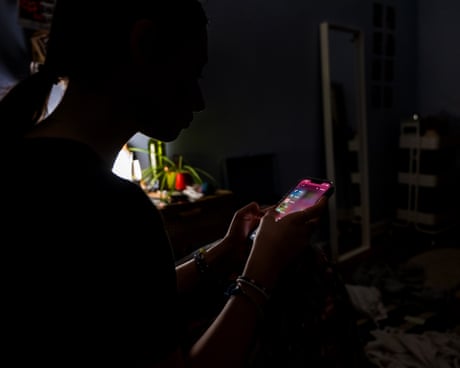
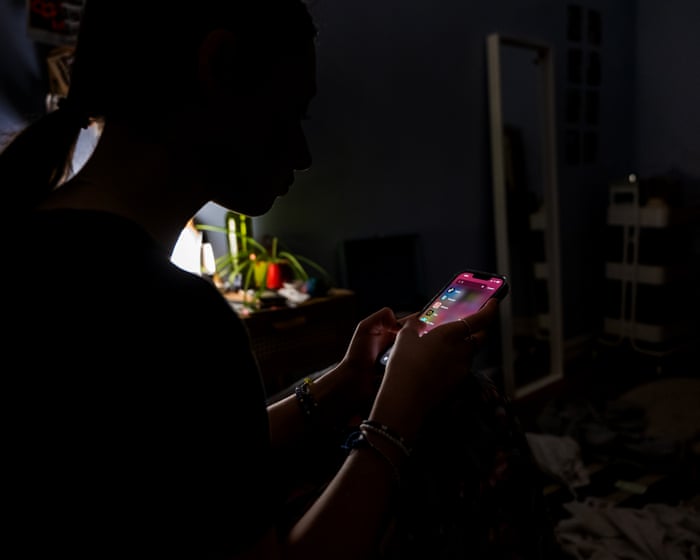
US teens can access ‘nudify’ apps despite Apple and Google’s parental controls, report finds

Exclusive: Using test accounts acting as 13-year-olds, Tech Transparency Project downloaded 135 apps with features to generate nonconsensual nude imagery

In December 2025, Morgan Dorfman received distressing news: a student at her daughter’s Pennsylvania high school was making AI-generated pornographic material using the daughter’s image.

He was using an artificial intelligence image-editing app called Movely to create sexual videos from pictures of her daughter and five other girls.

Continue reading...

© Photograph: Spencer Platt/Getty Images

© Photograph: Spencer Platt/Getty Images

© Photograph: Spencer Platt/Getty Images

  •  

US ambassador to Israel calls West Bank settler attack on American photojournalist ‘terror’

Mike Huckabee calls for arrest and prosecution of those responsible as Heidi Levine, 63, recovers in hospital in Israel

The US ambassador to Israel, Mike Huckabee, has denounced the settler attack that left the Washington Post photojournalist Heidi Levine badly beaten and needing surgery as a “despicable act of terror” and called for the arrest and prosecution of those responsible.

Levine, 63, an award-winning journalist who lives in Israel, was set upon last Friday by masked Israeli settlers who used clubs and other weapons to attack Palestinian people attempting to harvest their olives in occupied West Bank towns.

Continue reading...

© Photograph: Ariel Schalit/AP

© Photograph: Ariel Schalit/AP

© Photograph: Ariel Schalit/AP

  •  

MapQuest’s new ‘surveillance layer’ feature flags Flock cameras on users’ routes

MapQuest added a new feature to its mobile app Thursday that allows users to turn on a “surveillance layer” to find known license plate readers in their route. “The Roads Have Eyes!,” MapQuest said on social platform Bluesky Thursday announcing the new feature. “Turn on the Surveillance Layer in Map Options to see known license…

  •  

G7 pledges 260 million euros to repair Chornobyl’s shield after Russia pierced it. Full repair will require 500 million euros by 2030, before corrosion sets in

A Russian drone tore a hole in the shield over Chornobyl’s dead reactor. Now the G7 is paying to patch it.

The Group of Seven nations plans to allocate 260 million euros ($292 million) to repair the New Safe Confinement at the Chornobyl Nuclear Power Plant, First Deputy Prime Minister and Energy Minister Denys Shmyhal says.

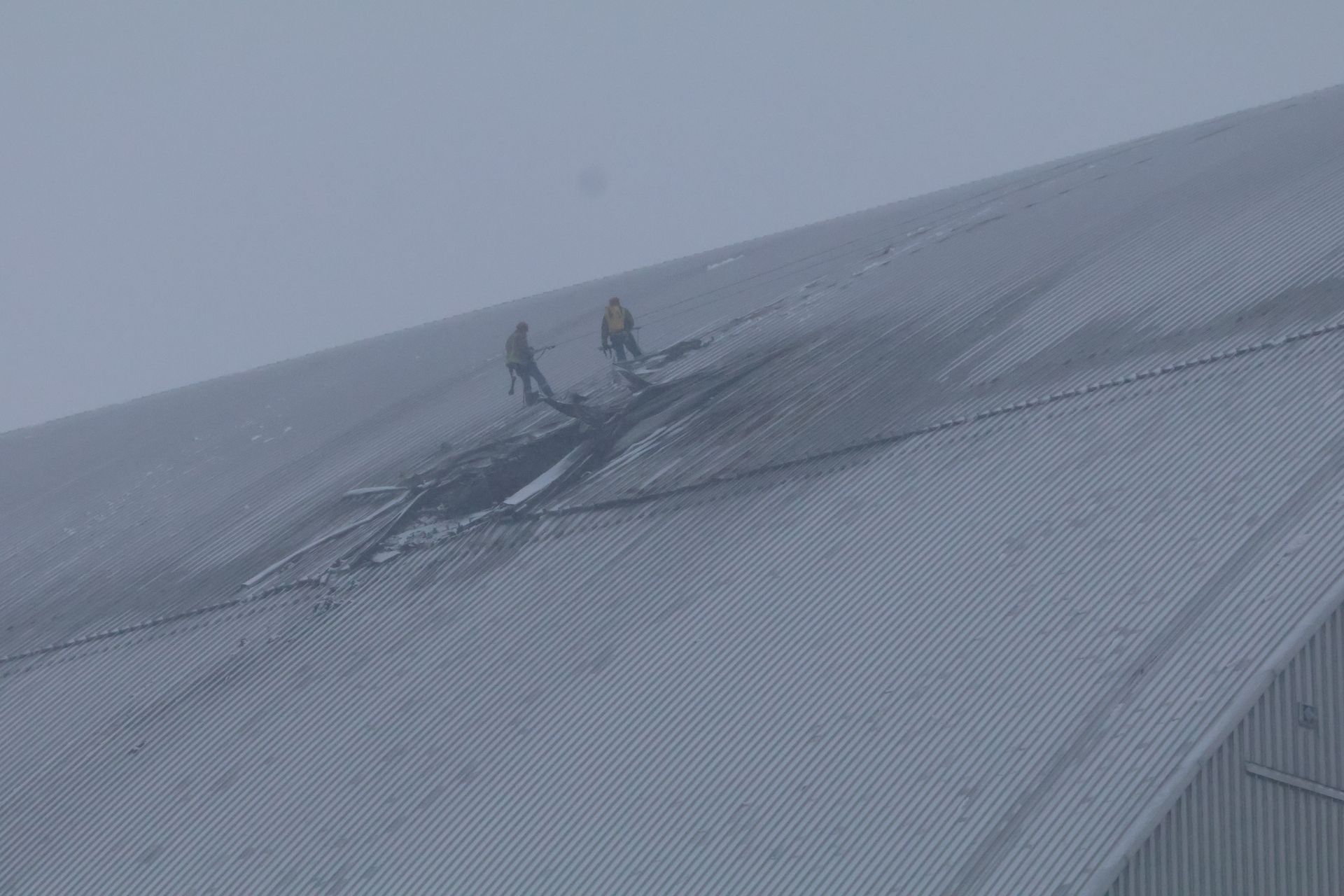
The confinement, a 35-story steel arch sealing the reactor that exploded in the 1986 disaster, was damaged by a Russian drone strike in February 2025. Full restoration will cost at least 500 million euros, the European Bank for Reconstruction and Development (EBRD) estimates, so the G7 pledge covers just over half, leaving about 240 million euros still to raise.

Shmyhal calls the decision an important step toward restoring nuclear safety at the plant, which the Russian strike had compromised. The money will go to priority work, including resealing the structure and restoring its ventilation system.

“Thank you to France and personally to Minister Roland Lescure for leadership in mobilizing international support,” Shmyhal says, crediting France and the EBRD with co-chairing the effort.

The night a drone pierced the sarcophagus

The damage dates to 14 February 2025. A Russian drone carrying a high-explosive warhead punched a hole through the arch’s roof and ignited a fire in the cladding, breaching the structure’s seal and ventilation.

The attack caused a 15 m² breach in the inner and outer cladding and damaged around 200 m² of panels.

"It was a targeted Russian attack on the Chornobyl station with a drone that is an analog of the Iranian Shahed," Ukrainian President Zelenskyy said at that time.

A bill only half-covered, and a 2030 deadline

The G7 money closes only part of the gap. Partners must still raise roughly 240 million euros more, and Ukraine hopes to secure it at a donor conference in Paris co-chaired by Ukraine, France and the EBRD, Shmyhal says.

The clock matters as much as the cost. The work must be finished by 2030 to limit corrosion and protect the arch’s 100-year design life, the EBRD says, turning a repair bill into a race against the rust the strike set loose.

  •  

How a cruise ship navigates Greenland's icebergs and extreme Arctic conditions

We went aboard a cruise ship navigating some of the world's most dangerous waters. In the Arctic, drifting icebergs, sea ice, sudden storms and fierce winds make sailing unpredictable. Yet every year, around 100,000 cruise passengers travel to Greenland to explore its remote coastline and experience one of the world's last great wildernesses.

Read the original article on Business Insider

  •  

After Six Flags Roller Coaster Death, Critics Call for Federal Oversight

Regulation of amusement parks is left to the states, and deaths are rare. But some say stronger rules are needed.

© Elijah Nouvelage/Getty Images

The Goliath roller coaster, where a man fell to his death on Monday.
  •  

What Measures Keep Students Safe? Prevention, Not Defenses, Experts Say

The gunman who killed four in Bend, Ore., entered an elementary school by shooting through a locked door, raising questions about what more schools can do to protect children.

© Mathieu Lewis-Rolland/Getty Images

Three children and a teacher were killed at Silver Rail Elementary School in Bend, Ore., by an armed attacker on Thursday.
  •  

SpaceX Testifies Before NYC Council on Artificial Intelligence Safety

On Friday, Gabriela Castillo Madrid, SpaceX’s Senior Manager of Global Government Affairs, is set to appear before the New York City Council’s Committee on Technology to answer questions about the safety of its artificial intelligence technology.

RELATED:

Artificial Intelligence Pioneers Call for International Body to Oversee Cybersecurity Standards

The hearing comes after City Council Speaker Julie Menin formally subpoenaed the company to participate in an Oct. 5 hearing on AI risks, which it did not attend.

After the initial refusal, the body formally notified the company of its intent to file a petition with the New York State Supreme Court to compel compliance, after which the firm requested a meeting and agreed to testify.

SpaceX’s appearance follows the Oct. 5 hearing, which included senior representatives from OpenAI, Anthropic, Meta and Google, as well as sworn testimony from prominent industry whistleblowers Jacob Coxon, Daniel Kokotajlo and Alex Turner, and British lawmaker Jess Asato.

NEW! @CAgovernor today signed my SB 813, establishing the nation's first independent oversight of artificial intelligence safety risks.

AI is posing unprecedented threats to humanity, and CA is taking the lead on AI safety.
https://t.co/ScSqceqeX9

— Sen. Jerry McNerney (@SenMcNerney) September 9, 2026

“We held a multi-hour hearing with whistleblowers, the world’s largest technology companies and the nation’s leading AI experts. The conspicuous absence of SpaceXAI was unacceptable,” Menin said at the time.

Citizens deserve “to hear directly from the companies developing this powerful technology what safeguards they are implementing to protect people and how they will be held accountable when they fail,” she pointed out, warning that “self-regulation is not enough.”

During the previous hearing, Menin asked spokespeople for OpenAI, Anthropic, Meta and Google under oath to commit to not releasing a model if it failed an internal test or an evaluation by a third party outside the company.

teleSUR/ JF

Source: EFE

  •  

Israeli settlers attack olive farmers and Washington Post journalist in West Bank

Settlers hurl rocks at Palestinians and beat photographer Heidi Levine as part of yearly attacks to disrupt harvest

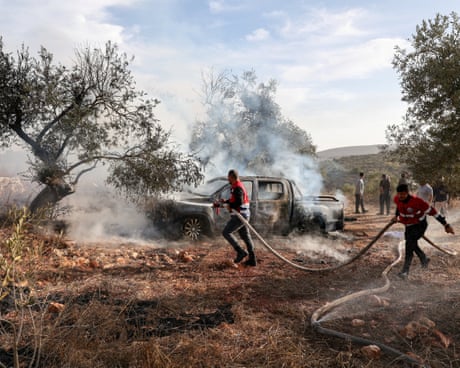
Israeli settlers have attacked Palestinians across the occupied West Bank in a coordinated movement to disrupt the annual olive harvest, burning cars and trees and injuring Palestinians and a Washington Post photographer.

Masked settlers wielding clubs and other weapons attacked people attempting to harvest their olives in West Bank towns on Friday. Palestinian authorities said they recorded attacks in eight villages, and injuries among at least 20 people.

Continue reading...

© Photograph: Ammar Awad/Reuters

© Photograph: Ammar Awad/Reuters

© Photograph: Ammar Awad/Reuters

  •  

The 3rd Circuit Upholds the Gun Rights of a Man Who Committed a Nonviolent Misdemeanor 2 Decades Ago

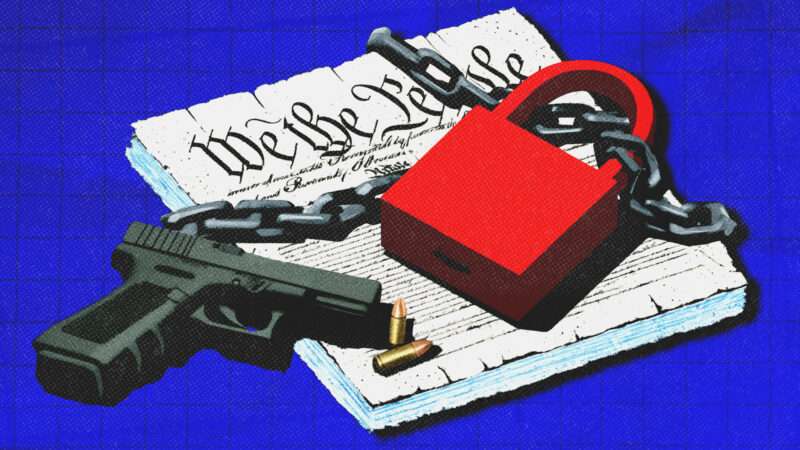
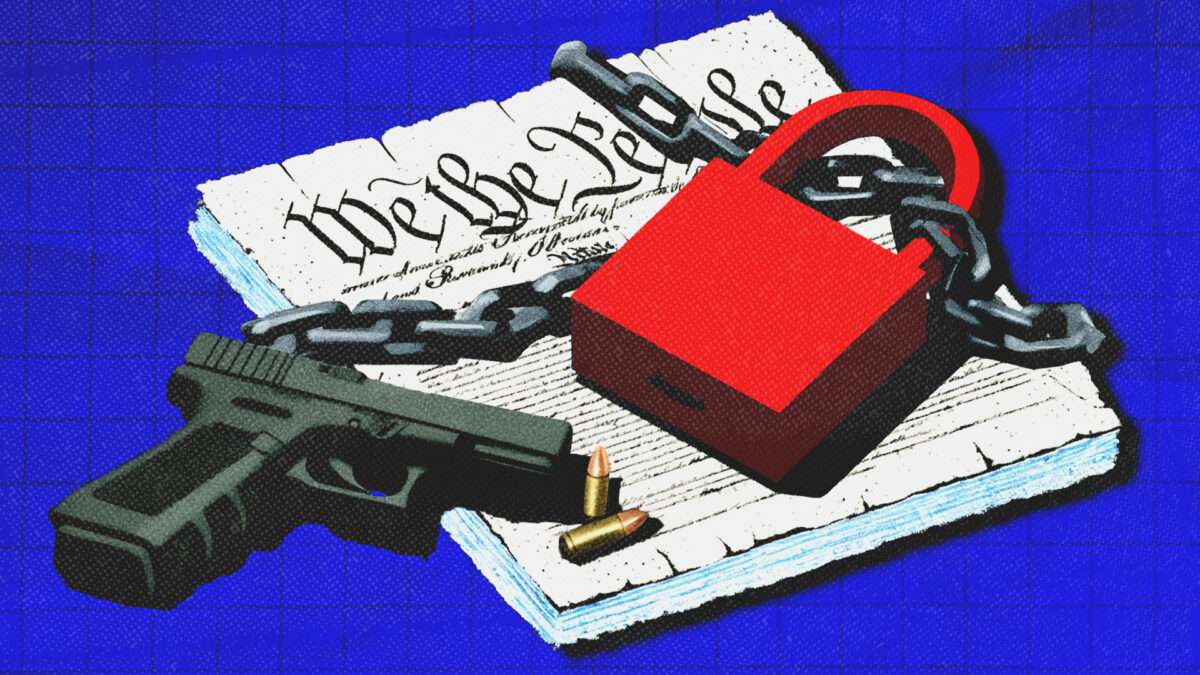
a pistol rests on a padlocked constitution | Luminis/Dreamstime/Midjourney

Thanks to a 2005 DUI conviction in Pennsylvania, Edward Williams permanently lost the constitutional right to keep and bear arms. But he did not realize that until a decade later, and his confusion on that point is understandable.

The federal law that stripped Williams of his Second Amendment rights is commonly described as applying to "felons," and Williams' offense was a misdemeanor. But although his sentence did not include any time behind bars, his crime theoretically could have sent him to prison for up to five years. That was enough to trigger 18 USC 922(g)(1), which covers anyone convicted of "a crime punishable by imprisonment for a term exceeding one year."

When a lawyer alerted Williams to that wrinkle, which made his continued ownership of firearms a federal felony, he got rid of his guns. But he did not think that requirement was fair, reasonable, or constitutional, and this week a federal appeals court agreed. The U.S. Court of Appeals for the 3rd Circuit recognized a historical tradition of disarming "physically dangerous individuals" whose possession of firearms would pose a threat to public safety. But it said Williams plainly does not fit into that category.

"The federal government spent nearly a decade trying to permanently disarm a peaceable man over a nonviolent misdemeanor—and it lost bigly," says Brandon Combs, president of the Firearms Policy Coalition, which supported Williams' lawsuit. "The government does not get to turn a nonviolent conviction into a lifetime ban on exercising a constitutionally protected right."

The 3rd Circuit's en banc decision in Williams v. Attorney General affirms a 2023 ruling by a federal judge who likewise concluded that disarming Williams was unconstitutional. It elaborates on the logic of Range v. Attorney General, a 2023 decision that restored the gun rights of a Pennsylvania man who had been convicted of food stamp fraud. In both cases, the 3rd Circuit held that applying Section 922(g)(1) to the plaintiffs was not "consistent with this Nation's historical tradition of firearm regulation"—the Second Amendment test established by the Supreme Court's 2022 decision in New York State Rifle & Pistol Association v. Bruen.

Writing for the majority in Williams' case, 3rd Circuit Judge Paul Matey acknowledges that the Supreme Court has described "longstanding prohibitions on the possession of firearms by felons" as "presumptively lawful." But "those longstanding customs restricted the violently dangerous (within which some felons would be included), not felons writ large," he says. "Felons were restricted because they posed a physical danger, rather than for their offense of conviction."

Matey argues that "focusing on physical dangerousness corrects the erroneous argument" that "only law-abiding and responsible citizens can exercise the rights protected by the Second Amendment"—a claim that the Supreme Court rejected in the 2024 case United States v. Rahimi. "We find no history that supports disarming irresponsible people, where 'responsible' is defined by the whim of the sovereign or the will of the majority," he says, alluding to the danger of allowing legislators to whittle away at the Second Amendment by criminalizing an ever-widening range of conduct.

Matey emphasizes "the novelty of forever restricting all felons from possessing firearms for lawful purposes." The original restriction, which Congress approved in 1938 as part of the Federal Firearms Act, applied only to violent crimes such as murder, manslaughter, rape, kidnapping, robbery, and assault with a deadly weapon. In 1961, Congress expanded the ban to cover nonviolent crimes punishable by more than a year in prison.

Williams' 2005 DUI conviction qualified for two reasons. He had a prior DUI conviction, stemming from a 2000 arrest in State College. And when he was arrested again in Philadelphia four years later, his blood alcohol concentration was a whopping 0.223 percent. That made his second offense a first-degree misdemeanor, which carries a maximum prison sentence of five years.

Since then, Williams has stayed out of trouble. "He has done nothing violent, let alone dangerous, for over twenty years, and has held steady employment at the same job for over three decades," Matey notes. Williams drinks only occasionally, and a psychological evaluation found he "has a normal personality, without psychopathology and without addiction or violent tendencies."

The Justice Department nevertheless argued that Williams' continuing disarmament is consistent with the Bruen test, which requires historical analogs that are "relevantly similar" in motivation and scope. In making that case, the government relied mainly on early laws aimed at "habitual drunkards"—the same analogy that the Supreme Court unanimously rejected last June in United States v. Hemani, which involved the federal ban on gun possession by "unlawful" drug users.

Although the Justice Department "acknowledges it may proscribe Williams's possession of firearms only if he 'presently poses a physical danger if armed,'" Matey says, it "offers no evidence to establish this as the aim of the habitual drunkard laws." Those laws, the Supreme Court noted in Hemani, "did not seek to protect the public from violence so much as to protect habitual drunkards from themselves and their families from financial devastation."

Nor did the habitual drunkard laws permanently disarm people, as Section 922(g)(1) does. "Most statutes capped the commitment of habitual drunkards to the state inebriate asylum, prison, or hard labor to a few months or years," Matey notes. "Others provided for an indefinite period of incarceration, but had no indication that upon release individuals continued to forfeit their arms. Rather, once someone was 'safe' to 'go at large,' they were restored to the status of a full rights-bearing citizen."

Contrary to the considerations that the Supreme Court deemed relevant in Hemani, Matey says, the Justice Department "fails to show that Williams threatens to 'misuse[] a gun while intoxicated,' or that he 'poses a danger to himself or others as a result' of
alcohol abuse. In fact, much like those nineteenth-century drunkards released from custody and restored their rights, the record shows that Williams poses no present physical danger from the use of a firearm, or anything else."

The 3rd Circuit is one of three federal appeals courts that have allowed people with nonviolent felony records to argue that Section 922(g)(1) is unconstitutional as applied to them. But such challenges have been blocked in six circuits, notwithstanding compelling historical evidence that the law reaches much farther than the Second Amendment allows. So far, the Supreme Court has declined to accept any of the many petitions asking it to resolve that circuit split.

The post The 3rd Circuit Upholds the Gun Rights of a Man Who Committed a Nonviolent Misdemeanor 2 Decades Ago appeared first on Reason Magazine.

  •  

Russia turns to new tactics to destroy Ukraine’s energy grid this winter for good

Subscribe to the Newsletter
Ukraine Business Roundup

Volleys of explosions deafened Kyiv in the early hours of Oct. 14, as Russia targeted multiple energy facilities powering the embattled capital amid a new campaign to isolate and disconnect the city following a brutal summer of relentless strikes on businesses and

  •  
❌