El PSG ha ganado al Barcelona este martes en la tercera jornada de la Champions League y los azulgrana han encajado su primera derrota de la temporada. El inicio de partido del equipo de Luis Enrique fue eléctrico y Kvaratskhelia avisó con un remate al poste. Reaccionó a los 10 minutos el Barça que comenzó a dominar el encuentro y Raphinha estuvo a punto de poner por delante a los de Flick, pero Safonov estuvo muy atento para detener un remate del brasileño a escasos metros de la portería. La contienda se igualó muchísimo y llegaron entonces dos lesiones: Ferran sustituyó a Dembélé y Fermín a Dani Olmo. La entrada de Ferran dio alas a los parisinos y el delantero valenciano tuvo dos mano a mano que Joan García tapó. El PSG se animó de nuevo y en una gran recuperación en campo contrario Doué disparó desde la frontal del área para perforar la portería y poner por delante al equipo de Luis Enrique. En la segunda mitad, Joan García volvió a sacar una gran mano y sostuvo a los azulgrana que lograron empatar el partido por medio de Xavi Espart. A raíz del gol el Barça comenzó a dominar, pero en un saque de esquina Lucas Hernández le ganó la partida a Gordon para cabecear y volver a poner a los parisinos por delante. Parecía que el PSG tomaba el control ahora, pero apareció Lamine para inventarse una nueva genialidad ante Zaire-Emery y batir a Safonov por su palo. Volvieron otra vez las tablas al marcador, pero Vitinha primero y Fabián después sentenciaron el encuentro para los parisinos.
Amado Gil y José Luis Ramos, con Yoani Sánchez y Alejandro Tur, comentan la petición fiscal contra manifestantes de Morón. Mitin de repudio de diplomáticos cubanos en Nueva York contra expresos políticos y embajador de EEUU en la ONU. Ucrania dice no más mercenarios cubanos peleando para Rusia
A inteligência artificial pode democratizar o conhecimento, mas também concentrar riqueza. As ideias divergiram entre os oradores na tarde da conferência ‘Business as Unusual’, promovida pelo BCSD com o Expresso como media partner
A inteligência artificial pode democratizar o conhecimento, mas também concentrar riqueza. As ideias divergiram entre os oradores na tarde da conferência ‘Business as Unusual’, promovida pelo BCSD com o Expresso como media partner
Amado Gil y José Luis Ramos, con Yoani Sánchez y Alejandro Tur, comentan la petición fiscal contra manifestantes de Morón. Mitin de repudio de diplomáticos cubanos en Nueva York contra expresos políticos y embajador de EEUU en la ONU. Ucrania dice no más mercenarios cubanos peleando para Rusia
The U.S. military has successfully demonstrated a new lower-cost receiver that could form part of a future over-the-horizon (OTH) radar. The testing also raises the question of whether the High Frequency Active Auroral Research Program (HAARP) research site in Alaska, which the U.S. Air Force transferred away more than a decade ago, could be repurposed for operational use in this role. A new radar of this kind would help the United States plug critical gaps in surveillance coverage over the ever-more strategic Arctic region. Canada is notably already pursuing a multi-billion-dollar OTH radar project in cooperation with Australia for this exact purpose.
The U.S. military put out a press release yesterday regarding the testing of the newly developed receiver array, which occurred between September 7 and September 11. This was the culmination of a series of “Arctic air domain awareness” experiments conducted cooperatively by U.S. and Canadian authorities over the past three years.
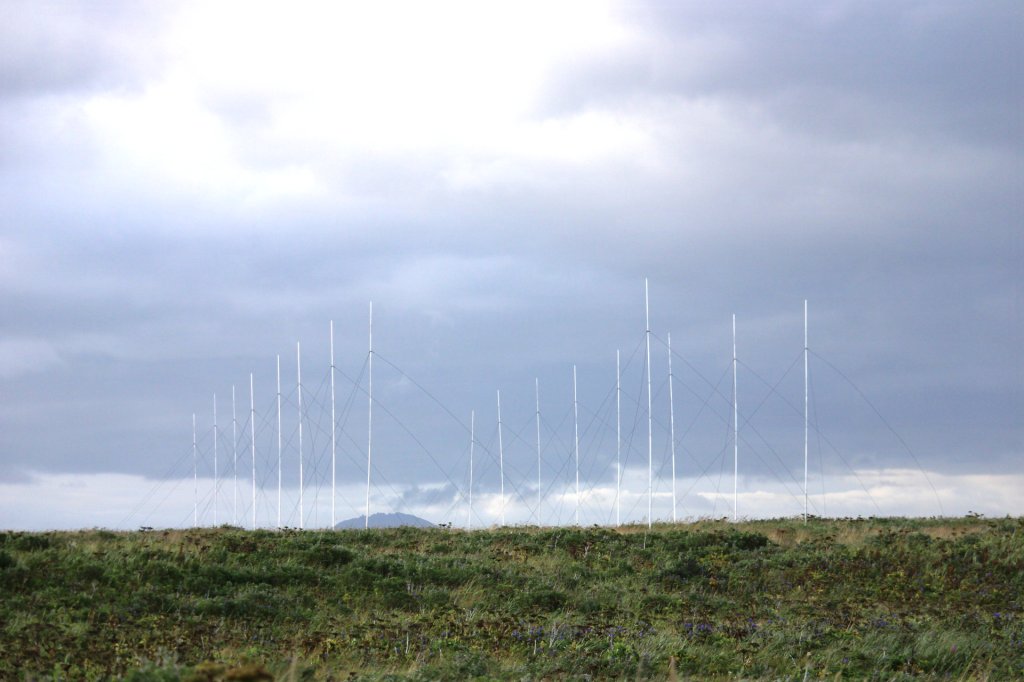
An aerial view of the HAARP site in Alaska, taken on September 7, 2026. USAF
The final round of experimentation last month “examined whether an existing high-frequency transmitter [HAARP], paired with a newly developed, low-cost [16-element high-frequency] receiver array, could detect aircraft beyond the coverage of current long-range radar sites,” according to the release. “The effort focused on improving awareness across a region where vast distances, harsh weather and limited infrastructure present challenges for air surveillance.”
“Researchers used the University of Alaska Fairbanks’ High Frequency Active Auroral Research Program [HAARP] facility and a receiver array in Cold Bay developed by MITRE to collect data on participating aircraft over the Gulf of Alaska and Bering Sea,” the release added. “MITRE also supported the effort throughout the three-year experiment series and designed and executed the field experiment in partnership with government, scientific, and operational participants.”
A view of the MITRE-developed array in Cold Bay, Alaska, which was part of the testing in September. USAF
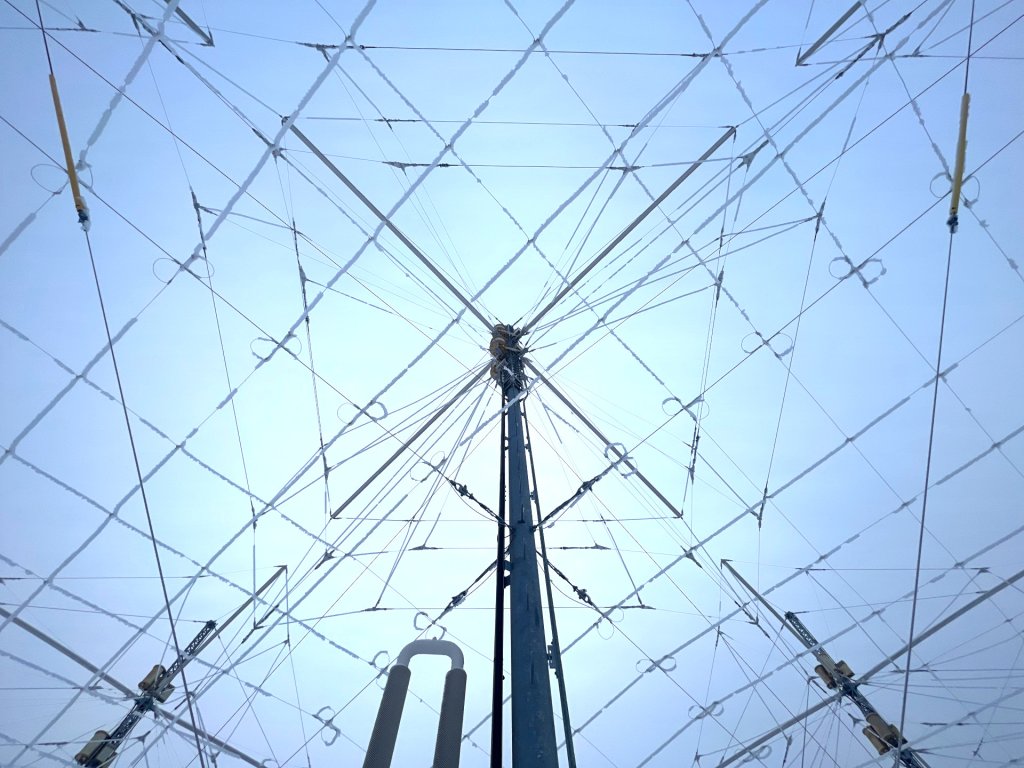
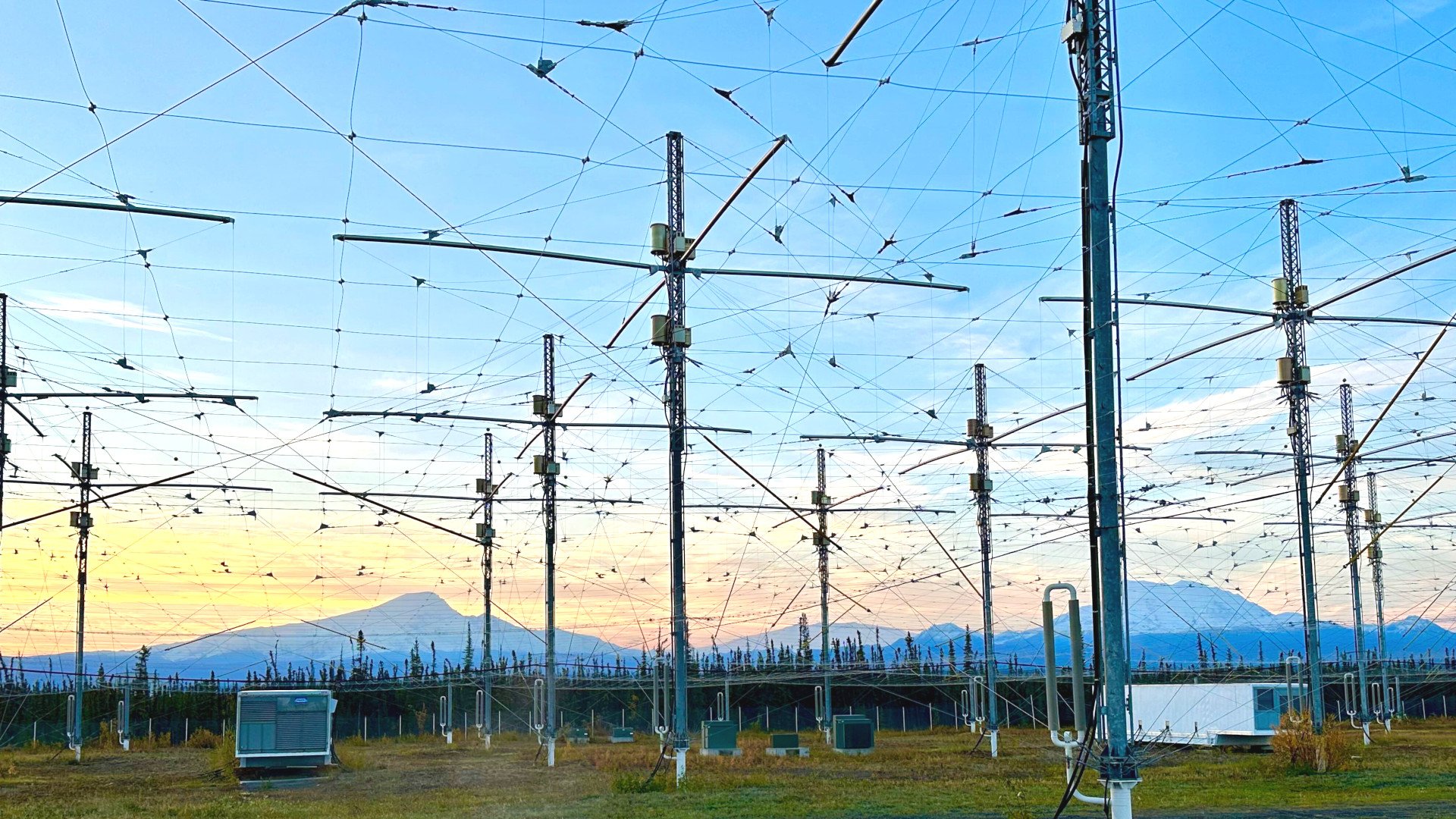
The remote HAARP site was built in the 1990s as part of a joint U.S. Air Force and U.S. Navy effort. The Defense Advanced Research Projects Agency (DARPA) was also involved. The central component of the 33-acre facility is an array of 180 crossed-dipole antennas, which can transmit up to 3.6 megawatts of radio frequency energy, according to the Air Force.
In 2014, the U.S. Air Force announced that it would shutter the HAARP site and dismantle it. However, the following year, the decision was instead made to transfer it to the University of Alaska Fairbanks, which has continued to operate it as a civilian research facility.
“During an experimental air domain awareness initiative, HAARP served as a high-power illuminator, transmitting signals toward the ionosphere to support the detection of airborne targets over Alaska’s maritime approaches,” according to the captions of several pictures that accompanied the release yesterday. “The experiment evaluated bistatic over-the-horizon detection methods to explore potential improvements in long-range surveillance and air domain awareness across Alaska’s maritime approaches.”
Another view of crossed-dipole antennas at the HAARP site. USAF
The most common types of OTH radars are so-called ‘skywave’ or ‘backscatter’ designs. They usually consist of two large and geographically separated arrays of antennas. The ‘illuminator’ array pumps out signals that are bounced off the ionosphere, the ionized layer of Earth’s upper atmosphere, at a specific angle so that they return to the ‘receiver’ array. Objects of interest (in the air and/or on the surface depending on the specific configuration) are detected in the process. AsTWZ has previously written:
“Commonly, radars are limited by line of sight due to the curvature of the Earth in relation to the altitude they are operating at. OTHRs overcome this critical limitation, but with some major drawbacks.”
…
“While they offer much lower fidelity than many of their line-of-sight counterparts in most cases, they make up for it in huge range, hundreds of miles to thousands of miles (1,500 miles is common, for instance, for powerful military sky wave/backscatter OTHR systems) and a large coverage area. The sky wave type of OTHRs achieve this by bouncing their radio waves off the ionosphere to a coverage area where they hit targets and return the same way to the receiving station. The angle at which the radio waves hit the ionosphere dictates the range, and that angle is limited to a specific envelope or the waves won’t properly bounce back toward Earth. As such, placing the radar in the right place in relation to the targeted surveillance area or areas, to begin with, is key.”
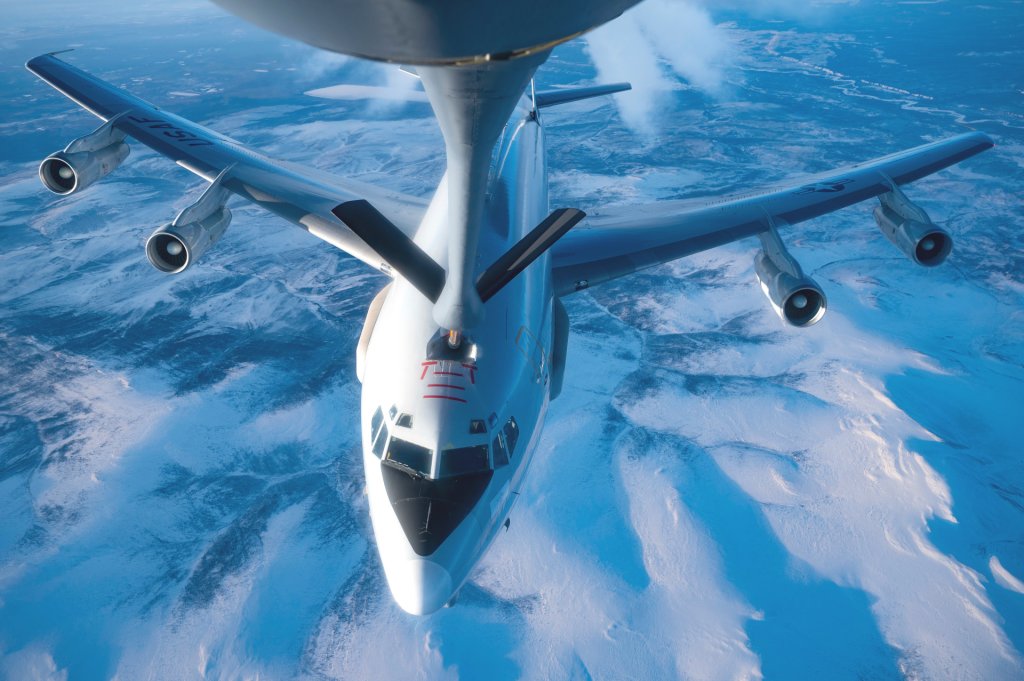
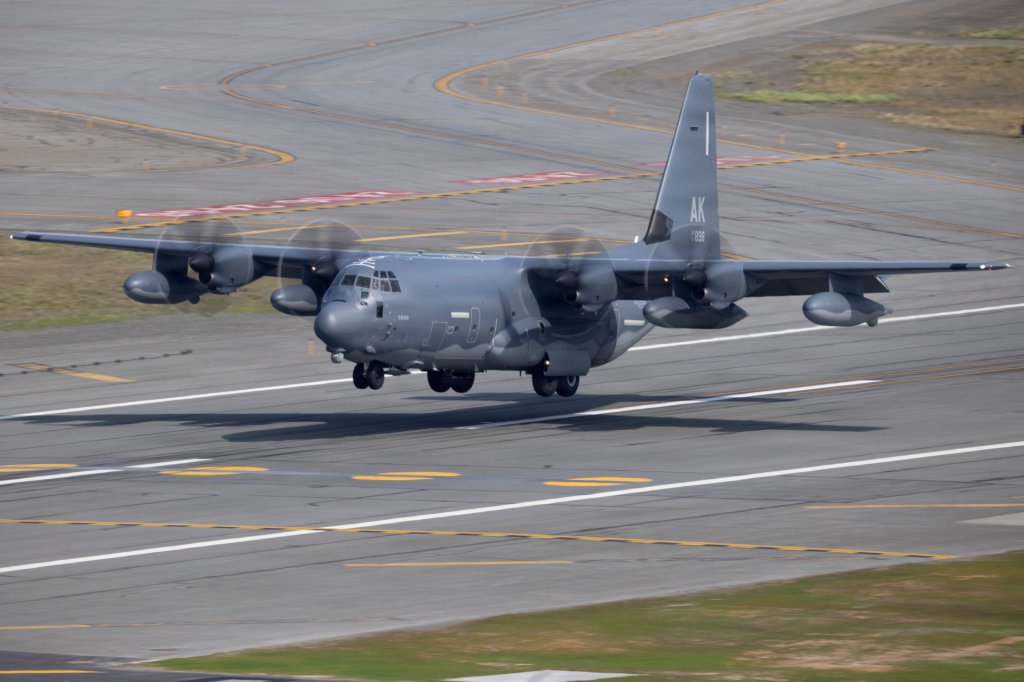
In the testing last month, Air Force E-3 Sentry Airborne Warning and Control System (AWACS) radar planes, HC-130J Combat King II rescue aircraft, and KC-135 aerial refueling tankers “served as cooperative targets, providing known positions against which researchers could compare the experimental data,” according to the official release. “The team successfully completed testing, meeting or exceeding its test execution objectives. Initial results show the system was successfully able to achieve full skywave (beyond line of sight) detections of aircraft and correlation to truth flights. Thorough data analysis is ongoing.”
An Alaska-based E-3 Sentry receives fuel from a KC-135 tanker during an exercise in 2022. USAFAn HC-130J Combat King II seen landing at Joint Base Elmendorf-Richardson in Alaska in August. USAF/Alejandro Pena
The release also says that the tests “explored how existing infrastructure and emerging technology could complement current surveillance capabilities.” This raises the possibility that the HAARP site, specifically, might be utilized as part of a new OTH radar. Whether or not this is actually under consideration is still unclear, and TWZ has reached out for more information.
Today, NORAD relies heavily on a network of ground-based radars called the North Warning System (NWS) to provide aerial surveillance coverage in the High North. The radars that make up the NWS are also all pointed northward, and none of them provide the kind of wide-area long-range coverage that an OTH design would offer.
A map showing NWS radar sites in Canada and their coverage arcs. Nasittuq Corporation
The NWS reflects a long-standing focus on monitoring for aerial threats heading across the North Pole toward North America, especially possible nuclear strikes from Russia (and the Soviet Union before it). However, new avenues for geostrategic competition in the Arctic with Russia, as well as China, over natural resources, from oil and natural gas to fish and other sealife, as well as trade routes have emerged in recent years amid receding ice and other impacts of global climate change. This, in turn, has only prompted growing demand for surveillance coverage.
“We need a layered sensing grid, from [the] seafloor to the space layer. And we have no choice. It has to be layered and deep, a defense in depth, from a sensing point of view,” Royal Canadian Air Force (RCAF) Maj. Gen. Chris McKenna, head of 1 Canadian Air Division and the Canadian NORAD Region, also said during a panel discussion at the Air & Space Forces Association’s (AFA) annual Warfare Symposium in 2025, at which TWZ was in attendance. “And I will say I suffer from an insufficiency of ISR [intelligence, surveillance, and reconnaissance] in the Arctic on a daily basis. And I am fighting for information.”
McKenna was responding at the time to a direct question about gaps in so-called “domain awareness” in and around the Arctic and how to address them.
“I think there’s an importance here of not just air domain, but also space domain, and having a sufficiency of ISR in the Arctic to actually build you the [domain awareness] picture,” he added. “I haven’t really touched on over-the-horizon radar, but I certainly can get into it. I think that’s a really important capability given the austerity of the Arctic and the need for it to cue other things.”
For its part, Canada is now building its own new Arctic Over The Horizon Radar (A-OTHR), at an estimated cost of more than $4 billion. In an announcement last year that caught many off guard, the Canadian government announced that it would be leveraging technology originally developed for Australia’s Jindalee Operational Radar Network (JORN) to support this development. It is also important to note here that relations between Canadian authorities and the Trump administration have been and continue to be heavily strained over a variety of issues, which has prompted broad concerns about future defense and security cooperation.
An element of Australia’s Jindalee Operational Radar Network (JORN). Australian Department of Defense
Back in the United States, OTH radar plans are also now tied in with the broader Golden Dome air and missile defense initiative. Golden Dome is seeking to establish new layers of defense around the U.S. homeland against a wide array of threat types, and puts major emphasis on new space-based sensor and interceptor capabilities. Expanded defensive architectures within the Earth’s atmosphere are also part of this plan.
“Adversaries are developing and building advanced nuclear and conventional delivery capabilities,” U.S. Army Lt. Gen. Joseph Jarrard, Vice Commander of the U.S. element of NORAD and Deputy Commander of U.S. Northern Command (NORTHCOM), warned at the annual Space & Missile Defense (SMD) Symposium in August. This includes “cruise, hypersonic, and ballistic missiles, as well as fractional orbital bombardment systems, or FOBS, to threaten not only Alaska and Hawaii, but the entire continent of the United States.”
Chinese hypersonic and other developments, in particular, enable new modes of attack that “can approach North America from the south, rather than the traditional northerly vector for which our legacy early warning radars were designed,” Jarrard continued. “The Chinese have also been building a conventionally-armed ICBM [intercontinental ballistic missile] equipped with hypersonic glide vehicles that can range [sic] targets throughout Alaska, providing Chinese leaders strike options against our homeland below the nuclear threshold.”
“Russia’s advanced missiles, like the nuclear-armed Avangard hypersonic glide vehicle, are designed to circumvent the ground-based radars used by NORAD and NORTHCOM to detect and characterize an inbound threat, and challenge the ability to provide threat warning and attack assessment,” he added.
New OTH radars positioned in Alaska and elsewhere in the Pacific will not be able to address all of these threat developments alone. At the same time, the recent testing leveraging the HAARP site is another step toward meeting demands for sorely needed expanded long-range radar coverage in the Arctic.
A Russian satellite, Kosmos 2612, may have passed within approximately 85 feet (26 meters) of a U.S.-registered satellite belonging to commercial imagery provider ICEYE. This would be an extraordinarily close and potentially dangerous pass-by for two objects in space traveling at thousands of miles per hour. For weeks beforehand, ICEYE-X36, which would be of special interest to Russia, had already found itself in increasingly close orbital alignment with its pursuer. The two satellites now look to be drifting further and further apart, but the episode has been a clear sign of what is to come as the potential for conflict in space only continues to grow.
Publicly available space tracking data from the satellitemap.space and orbitalradar.com websites show that Kosmos 2612 (also written sometimes Cosmos 2612 and abbreviated K2612) and ICEYE X36 had their especially close encounter at approximately 16:07 UTC today. Private space services company LeoLabs also told TWZ today that it could not “confirm or contradict what other data sources have stated publicly,” but that it has “high-confidence that the objects came within approximately [emphasis in the original] 500 meters [1,640 feet] of each other.” Kosmos 2612 had been making progressively closer passes by ICEYE X36 in recent days.
Short time-lapse of part of this morning’s first pass of ICEYE-X36 (59103) and COSMOS 2612 (68762) over South America under partly cloudy skies. pic.twitter.com/t8RhwmKcV4
6/x Note that while ICEYE-X36 was Finnish built, it is (like other ICEYE sats who's ownership transferred) no longer Finnish. It is registered in the US but might be Ukranian owned/leased now.
“COSMOS 2612 closed from hundreds of kilometers away to extreme proximity to ICEYE-X36. It then maneuvered around ICEYE-X36, remained nearby for an extended period, and then began moving away,” LeoLabs also stated in a report assessing the situation, which was updated today and provided to TWZ. “The latest observations show the spacecraft strongly diverging and confirm that the close-proximity activity had ended.”
LeoLabs’ broader assessment here is supported by data from other publicly available sources, as seen below.
UPDATE: Cosmos 2612 appears to have maneuvered following a close approach with the ICEYE satellite.
The latest TLEs show 2612 in a larger orbit that will drift away with no further maneuvers.
None of the distances stated earlier may seem especially close, let alone worrisome, by terrestrial standards. However, this is absolutely abnormal for operations in space that are not being directly coordinated by the parties involved. As a point of reference, in 2020, another Russian satellite, Kosmos 2542, came within 150 to 300 kilometers (93 to 186 miles) of USA 245, a KH-11 spy satellite, and became a major international news story.
“We are aware of the situation and tracking it closely,” a spokesperson for ICEYE’s U.S.-based division told TWZ this morning. “Our constellation architecture is designed for continuity and resilience.”
ICEYE was founded in Finland, but now has offices globally. The company specializes in providing imagery via synthetic aperture radar (SAR) from satellites like ICEYE X36, which was launched in 2024.
SAR has the benefit of being able to capture images day or night, and regardless of bad weather or other obscurants like heavy smoke. There are trade-offs in terms of the kinds of details typically visible via SAR compared to what is seen in visual spectrum imagery. Ukrainian authorities have been utilizing ICEYE imagery for years now, including for targeting purposes, as part of the ongoing conflict with Russia. There have been reports in the past that ICEYE X36 has been operating more directly under the control of the Ukrainian government, but this has not been confirmed.
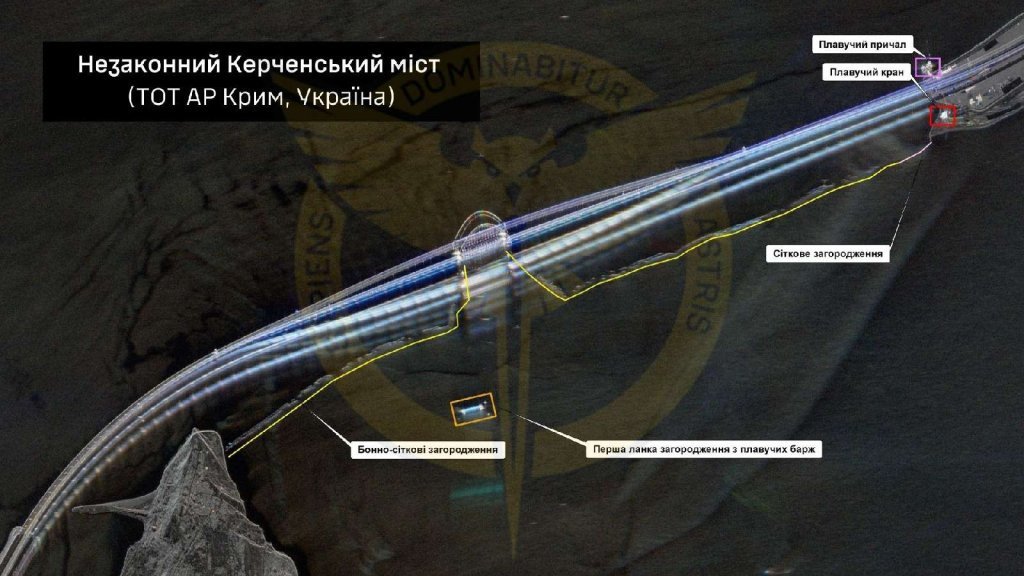
The Main Directorate of Intelligence of the Ministry of Defense of Ukraine (better known by the acronym GUR) previously released this SAR image of the highly strategic Kerch Bridge that links the occupied Crimean Peninsula to undisputed Russian territory, which it said came via ICEYE. GUR
Kosmos 2612 is one of six satellites (Cosmos 2609 through Cosmos 2614) the Russian military launched via a single Soyuz-2.1b rocket on April 17. The exact purpose and configuration of these satellites are unconfirmed. However, they appear to be so-called inspector types capable of rendezvousing and maneuvering close to other objects in space. We will come back to this later on.
What is clear is that Kosmos 2612 has spent the past three weeks deliberately maneuvering to extremely closely shadow ICEYE X36.
“Over two weeks beginning on September 30, 2026, Cosmos 2612 executed a series of new maneuvers that brought it back into coplanar alignment and placed it at nearly the same altitude as the commercial satellite,” Clayton Swope, Deputy Director of the Aerospace Security Project and Senior Fellow at the Center for Strategic and International Studies (CSIS) think tank in Washington, D.C., along with Research Assistant Chantal Li, wrote in an analysis of the situation just last Thursday.
“According to current orbital elements, the Russian #KOSMOS 2612 satellite is now within 1-2 km [0.6 miles to 1.2 miles] of #ICEYE-X36,” Dr. Marco Langbroek, currently a lecturer on Space Situational Awareness at the Faculty of Aerospace Engineering of Delft Technical University in the Netherlands, wrote in a thread on X on Saturday. “Based on current elements, it might come within meters of the latter within a few hours from now. This is an #RPO [rendezvous and proximity operation] without consent.”
2/x Initially I was skeptic whether #ICEYEX36 really was an intentional target: but a series of manoeuvers by #Kosmos2612 starting on Sept 30, were clearly designed to bring the two objects very close and synchronise their orbital periods, orbital altitude and eccentricity: pic.twitter.com/BhIoi8Rtbe
“New TLEs [two-line elements] show that K2612 made a manuever [sic] on Oct 16 and is now stationkeeping within 5 km [3.1 miles] or less of ICEYE X36,” Jonathan McDowell, an astrophysicist and astronomer, who previously worked for the Harvard-Smithsonian Center for Astrophysics and has long been tracking objects of interest in orbit, also wrote in a series of posts on X on Saturday. “To my knowledge this is the first LEO [low Earth orbit] rendezvous of two active satellites where the owner of one of the sats did not give approval.”
McDowell later clarified that “close passes” of objects in orbit had certainly occurred previously, “but not I think rendezvous [sic] (matching velocity vector).”
“This is the most advanced and potentially dangerous uncooperative RPO we’ve observed,” Adam Marsh, LeoLabs vice president for technical solutions, separately told Breaking Defense.
Unprecedented orbital maneuvering
As underscored by the previous interaction of Kosmos 2542 and USA 245, close shadowing of satellites in orbit is certainly nothing new. The U.S. government, as well as Russia and others, have been observed engaging in this kind of activity in the past. At the same time, just how close Kosmos 2612 got to ICEYE X36, and how long they spent in close alignment, are, at the very least, highly unusual.
“It’s important to note that ‘red’ on ‘blue’ engagements, such as this, are relatively uncommon in Low Earth Orbit (LEO),” LeoLabs’ report points out. At the same time, “this was not a routine conjunction or ‘fly by.’ The sequence included a controlled approach, changes in relative position, close-proximity loitering, additional small maneuvers, and a controlled departure. The behavior is consistent with sophisticated rendezvous and proximity operations (RPO).”
On top of this, there are other signs that what just happened between Kosmos 2612 and ICEYE X36 may follow a Russian playbook of sorts that could also be used in a prelude to an on-orbit anti-satellite attack.
Within weeks of their launch in April, Kosmos 2610, 2611, 2612, 2613, and 2614 had all moved orbital planes shared by multiple ICEYE satellites. Three of them subsequently made close passes by ICEYE X36, specifically, but none of them initially kept station with it. ICEYE CEO Rafal Modrzewski did say “the company later moved its satellite, prompting further Russian manoeuvres [sic],” according to a story Reuters published last week.
Russian satellites approaching ICEYE: a closer look at the timeline.
Tracking data via @LeoLabs_Space . Analysis via COMSPOC SSA.
On April 16, Russia launched six maneuverable satellites (Cosmos 2609-2614) from Plesetsk. Five of them — Cosmos 2610, 2611, 2612, 2613, and 2614… pic.twitter.com/ISoToOptnp
To take a step even further back, before Kosmos 2542 was caught shadowing USA 245 in 2020, there were reports that the U.S. spy satellite had shifted its orbit. This was possibly prompted by the movements of another Russian ‘inspector,’ Kosmos 2543. This does not appear to have ever been confirmed.
While in space, Kosmos 2542 had deployed Kosmos 2543 in November 2019. Then, on July 23, 2020, the U.S. military said that it had detected Kosmos 2543 itself launching a smaller object in what it described as a test of a space-based anti-satellite weapon. In a subsequent interview with Time, then-Chief of Space Operations Gen. John “Jay” Raymond, U.S. Space Force’s top uniformed officer, disclosed that American forces had first observed Russian “nesting doll” satellites – a reference to traditional Russian matryoshka dolls – similarly demonstrating the “characteristics of a weapon system” in 2017.
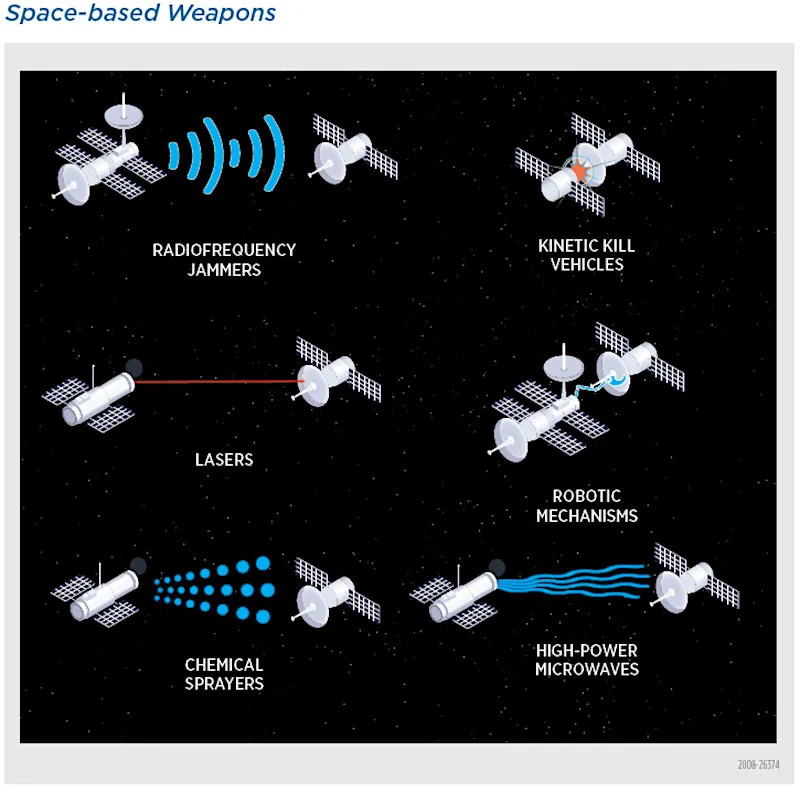
U.S. officials have been warning for years that Russia’s growing array of inspector-type satellites, ostensibly designed to examine other assets the country has in orbit if they break down or otherwise malfunction, are inherently dual-purpose in nature. Beyond launching projectiles, a host of other modes of attack, kinetic and non-kinetic, are enabled by the underlying ability of a spacecraft to maneuver very close to other objects in orbit and hold that position. This includes the use of grappling arms to cause damage or just tow a satellite out of orbit, spraying aerosols to harm or impair optics and solar panels, and electronic warfare jamming. A satellite could turn out to be the weapon itself, becoming a kinetic interceptor that smashes into its target on command.
A U.S. Defense Intelligence Agency graphic highlighting some of the ways on-orbit attacks can be carried out. DIA
One satellite shadowing another closely in orbit allows various kinds of intelligence gathering, as well. Collection of imagery and signal emissions can offer valuable details about a target’s capabilities and vulnerabilities, as well as how it is being used in a particular context.
“As observed by LeoLabs Global Radar Network and analyzed by our team, COSMOS 2612 demonstrated a sequence of capabilities that could be used to inspect, characterize, shadow, or potentially interfere with another spacecraft,” according to LeoLabs’ report. “These actions require planning, maneuverability, precise navigation, and significant fuel. They may also indicate the use of onboard sensors capable of measuring the relative position of another spacecraft.”
What has just transpired between Kosmos 2612 and ICEYE X36 highlights how just a viable threat of attack can be disruptive in its own right. Simply forcing an imagery-gathering satellite out of position could prevent it from collecting over an intended area, or at least doing so in the most effective manner.
Furthermore, satellites only have a limited amount of fuel with which to maneuver in any way after reaching orbit. Harassment in space that forces them to burn off that finite resource at a higher-than-expected rate could reduce their total operational life expectancy, as well as further limit their effectiveness and make them more vulnerable to attacks or accidents. Debris in space is a steadily growing hazard that satellites increasingly need to dodge.
“We can only speculate about the operation’s goal, but it could have been anything from simply intimidation to outright destruction or sabotage of a U.S.-registered satellite,” CSIS’ Clayton Swope told TWZ directly today in light of the new developments regarding Kosmos 2612 and ICEYE X36. “Perhaps the operation is on hold. There are, however, several other satellites that shadowed ICEYE X36 back in May that could be brought in[to] action too.”
Attribution and broader ramifications
It is important to point out that space, as a domain, inherently creates complications when it comes to attributing any form of attack, should one occur. Satellites do suffer mishaps, sometimes with catastrophic results, the causes of which are not always clear.
Update: Debris from active PRC satellite Yaogan 50-02.@S4S_SDA has now cataloged 62 pieces of debris originating from the PRC's active Yaogan 50-02 satellite (68196 / 2026-051A) on around 20 July 2026 (ref my initial analysis on Substack, link in thread).
Some recordings of USA 32 (#19460), whose fragmentation in LEO on 13 Sep 2026 at approximately 2113 UTC was confirmed by U.S. Space Forces–Space (S4S). By the time of the recordings, a large number of fragments had already dispersed over a wide section of the track. pic.twitter.com/gjRxCTPz2o
“While the intention behind COSMOS 2612’s behavior remains uncertain, the deliberate nature of the activity, the fuel required to conduct this activity, and the proximity to a Western commercial imaging satellite make the event strategically important,” LeoLab’s report notes. “This event, and the capabilities demonstrated, do not establish hostile intent. It does, however, demonstrate capabilities that could support intelligence collection, on-orbit inspection, coercive signaling, interference, or preparation for future counterspace operations.”
It is very possible, if not highly probable, that Kosmos 2612’s recent activities will be indicative of a trend going forward. Aggressive and potentially dangerous maneuvering by armed forces in close proximity to each other is not uncommon within the atmosphere, especially in the air and at sea. Extending a variation of those tactics into the space domain would make sense, especially given the central role that capabilities in orbit increasingly play in modern military operations globally. Those roles extend to early warning, general intelligence gathering, weapons guidance, near-real-time communications, and beyond.
American officials have already said in the past that American assets in space are routinely the target of “reversible attacks,” meaning ones that do not cause permanent damage. That also speaks to the difficulty of attribution if there is no lasting effect or impact to draw attention to.
The U.S. government’s long-time monopoly on the space domain has also been steadily eroding in recent years, especially in light of China’s massive expansion of its intelligence-gathering and other satellite constellations. The scale and scope of what commercial satellite imagery and other space services providers, like ICEYE, offer today have led to a further democratization of space-based capabilities to countries like Ukraine that do not possess significant, if any, constellations of their own.
This satellite image indicating multiple Russian Tu-95 Bear bombers having been damaged or destroyed at Belaya Air Base after a Ukrainian strike last year is indicative of what ICEYE provides commercially. Courtesy ICEYE
More details may yet emerge about Kosmos 2612 and its recent rendezvous in orbit with ICEYE X36, but it already points to how space has become an increasingly likely potential zone for direct conflict going forward.
La Audiencia Provincial de Málaga confirmó la extinción de la pensión alimenticia que Prudencio pagaba a su hija mayor de edad, Ariadna, y ordenó también el fin del derecho de uso de la vivienda familiar que ocupaba su exmujer, Felicidad. La sentencia, fechada el 31 de julio de 2026, ratificó el fallo dictado por el Juzgado de Primera Instancia nº 5 de Málaga en enero de ese año.
El tribunal constató que Ariadna, de 22 años cuando se dictó la sentencia de apelación, trabaja 40 horas semanales con contrato indefinido en una heladería; percibe unos ingresos de 1.100 euros mensuales y convive con su pareja en un domicilio distinto del familiar. A partir de esos hechos, consideró extinguida tanto la pensión de 400 euros mensuales fijada en el divorcio de 2009 como el derecho de uso de la vivienda, propiedad privativa del padre.
El caso tiene origen en el divorcio consensual tramitado en 2009, cuando los progenitores acordaron en su convenio regulador una cláusula que condicionaba el uso de la vivienda y los alimentos: “Esta atribución de uso se extenderá mientras que la hija del matrimonio no consiga independencia y autonomía económica estable”. Dieciséis años después, ese pacto fue el eje de la decisión.
La madre alegó estudios y vulnerabilidad psicológica
El padre presentó la demanda el 31 de mayo de 2024. Alegó que Ariadna, nacida en 2004, vivía de forma independiente con su pareja y había comenzado a trabajar como dependienta. Señaló, además, que en 2012 ya había promovido otro procedimiento de modificación, el nº 609/2012. Una sentencia de marzo de 2013 dictada en ese expediente concluyó que ni la madre ni la hija residían en el domicilio familiar, aunque esa resolución nunca llegó a ejecutarse. La madre se opuso. Argumentó que el contrato de Ariadna tenía apenas cinco meses de antigüedad al presentarse la demanda, que la joven cursaba el Grado de Traducción e Interpretación en la Facultad de Filosofía y Letras y que, en abril de 2023, había sufrido un episodio grave de salud mental que la situaba en una condición de vulnerabilidad.
El juzgado de primera instancia no aceptó esos argumentos. En relación con el estado de salud, un informe del servicio de Salud Mental del 7 de enero de 2025 describía una “clínica depresiva leve-moderada”, con tratamiento ajustado a la situación actual. El documento añadía que Ariadna no estaba incluida en el Programa de Primeros Episodios Psicóticos porque su patología no se encuadraba en ese marco de atención.
Sobre los estudios universitarios, el juzgado advirtió que ninguna de las partes aportó boletines de notas ni otro justificante académico. La propia madre reconoció que la hija trabajaba 40 horas semanales, una circunstancia que el juez consideró incompatible con una dedicación universitaria efectiva.
Para acreditar el cambio de domicilio, el padre presentó un informe de detective privado correspondiente a diciembre de 2024 y enero de 2025. El documento constataba que Ariadna pernoctaba en el domicilio de su pareja y disponía de llaves propias. Esa prueba coincidía con el informe de la psicóloga de la madre, fechado el 21 de agosto de 2024, que indicaba que la joven vivía con su nueva pareja.
Felicidad apeló la sentencia ante la Audiencia Provincial. En materia de alimentos, sostuvo que un contrato indefinido reciente, precedido por contratos temporales, no garantizaba una estabilidad laboral real ni ingresos suficientes para cubrir alquiler, manutención, formación universitaria y gastos sanitarios vinculados a la situación psiquiátrica de su hija.
La Audiencia descartó los argumentos sobre la vivienda y la Fiscalía
En cuanto a la vivienda, alegó que Ariadna seguía empadronada en el domicilio familiar y que la convivencia con su pareja era esporádica, limitada a periodos festivos. Defendió que esos elementos no constituían una prueba suficiente de un traslado definitivo. La madre añadió un argumento procesal. Sostuvo que, ante el diagnóstico psiquiátrico de Ariadna, el Ministerio Fiscal debía intervenir para garantizar su protección. Según su recurso, la ausencia del fiscal en la vista vulneraba los derechos de la joven y exigía retrotraer las actuaciones.
La Sección Sexta de la Audiencia Provincial rechazó todos los motivos. Sobre los alimentos, aplicó el artículo 152.3 del Código Civil, que permite extinguir la obligación cuando el alimentista puede ejercer un oficio o profesión que haga innecesaria la pensión para su subsistencia. La Sala descartó que la inestabilidad propia del mercado laboral pudiera justificar el mantenimiento indefinido de la obligación paterna. Los posibles cambios futuros en el empleo de Ariadna, razonó el tribunal, no pueden prolongar una prestación que dejó de resultar exigible cuando la joven alcanzó ingresos suficientes para vivir de forma autónoma.
Respecto de la vivienda, la Audiencia aplicó la doctrina fijada por el Tribunal Supremo en una sentencia del 5 de septiembre de 2011. Esa jurisprudencia establece que ningún hijo mayor de edad puede recibir parte de los alimentos mediante la atribución del uso del domicilio familiar con exclusión del progenitor con quien no convive. Como la vivienda es propiedad privativa del padre, el tribunal añadió otra línea jurisprudencial, recogida en una sentencia del Supremo del 17 de junio de 2013. Según ese criterio, la atribución preferente de uso no puede privar indefinidamente al propietario de las facultades que le reconoce el derecho de dominio.
Sobre la intervención fiscal, la Audiencia fue categórica. Al ser Ariadna mayor de edad, el procedimiento se rige por el principio dispositivo y no por un régimen de intervención necesaria. La joven nunca fue declarada necesitada de medidas de apoyo para el ejercicio de su capacidad jurídica. La resolución precisó que, si la madre considera que su hija necesita esas medidas, deberá iniciar un procedimiento específico ante el órgano competente. En ese marco sí sería preceptiva la intervención del Ministerio Público.
La pensión de 400 euros mensuales queda extinguida desde la presentación de la demanda, el 31 de mayo de 2024. El derecho de uso de la vivienda finaliza desde la sentencia de primera instancia, del 24 de enero de 2025. La Audiencia impuso las costas de la apelación a Felicidad, tras desestimar íntegramente su recurso. Contra la sentencia no cabe recurso ordinario.
La Unidad Central Operativa (UCO) de la Guardia Civil cuestiona que uno de los vehículos del comisionista Víctor de Aldama sufriese un tiroteo como amenaza, según consta en uno de sus informes enviados a la Audiencia Nacional. Los agentes han interceptado varias comunicaciones donde el empresario informa a la aseguradora de que le “han intentado robar” en su Audi A8 y que han tratado de “romper el cristal” con un “punzón”, pero no lo “han conseguido”. “No hemos puesto denuncia porque no lo hemos visto. Ha sido de madrugada y poner denuncia es ridículo porque es perder tres horas”, añadió Víctor de Aldama.
Miguel Pinto Luz recusa a ideia, lançada por José Luís Carneiro, de que a lei das rendas é ”desumana e injusta”. No entanto, aceita a possibilidade de rever o documento com o Partido Socialista.
El motor puede recorrer cientos de miles de kilómetros si recibe el mantenimiento adecuado, pero hay una operación que condiciona buena parte de su desgaste interno: el cambio de aceite.
Una práctica extendida en Japón consiste en adaptar la sustitución del lubricante al uso real del vehículo y adelantarla cuando predominan los trayectos cortos, los atascos o las condiciones exigentes, en lugar de atender solo al kilometraje máximo indicado en los intervalos generales.
La regla no equivale a cambiar el aceite cada 5.000 kilómetros en todos los coches ni responde a una norma única en el país asiático. Cada fabricante fija plazos distintos según el motor, el tipo de aceite y las circunstancias de circulación.
El uso del coche determina cuándo cambiar el aceite
Toyota, por ejemplo, establece para sus modelos de gasolina sin turbo una referencia de 15.000 kilómetros o un año en condiciones normales; el plazo baja a 7.500 kilómetros o seis meses si el vehículo circula en condiciones exigentes. En motores de gasolina turboalimentados, la pauta puede reducirse a 5.000 kilómetros o seis meses, e incluso a 2.500 kilómetros o tres meses en los usos más intensos.
El aceite reduce la fricción entre las piezas móviles del propulsor, contribuye a disipar calor y retira partículas que se generan durante la combustión. Su capacidad de protección disminuye con el tiempo, incluso si el coche recorre pocos kilómetros.
Los desplazamientos urbanos de pocos minutos son uno de los factores que más afectan al lubricante. Cuando el motor no alcanza su temperatura habitual de funcionamiento, pueden acumularse humedad y restos de combustible en el cárter. Los atascos, los arranques frecuentes, los periodos prolongados al ralentí y la conducción a baja velocidad también someten al aceite a una mayor exigencia.
Ese escenario aparece con frecuencia en las grandes ciudades japonesas, donde abundan los coches pequeños, los trayectos urbanos y la circulación lenta. La práctica de adelantar el mantenimiento se ha extendido como respuesta a esas condiciones, aunque la misma lógica sirve para cualquier conductor que utilice el vehículo de forma similar.
No todos los motores requieren el mismo calendario. Los propulsores turboalimentados trabajan a temperaturas y presiones más altas que los atmosféricos, por lo que suelen tener plazos de mantenimiento más cortos. El tipo de aceite homologado también resulta determinante.
El manual fija el intervalo según cada conducción
La recomendación más segura es consultar el libro de mantenimiento y localizar el apartado referido a “condiciones severas” o “uso intensivo”. Ahí suelen figurar situaciones como recorridos muy cortos de forma repetida, circulación frecuente en retenciones, conducción por caminos sin asfaltar, remolque de cargas o trayectos con fuertes pendientes.
Toyota mantiene en Estados Unidos intervalos de hasta 16.093 kilómetros —10.000 millas— o 12 meses en algunos modelos con aceite sintético. Sin embargo, la marca establece cambios cada 8.047 kilómetros —5.000 millas— o seis meses cuando el vehículo realiza trayectos breves repetidos, circula mucho al ralentí, arrastra un remolque o transita por vías sin pavimentar.
El mantenimiento periódico ayuda a prevenir la formación de depósitos y limita el desgaste de elementos como el turbo, la cadena de distribución o los árboles de levas. Aun así, la duración de un coche depende de otros factores: respetar los periodos de revisión, vigilar el nivel de lubricante, usar el producto con la especificación indicada y atender cualquier aviso del cuadro de instrumentos.
Los estudios de durabilidad sitúan a varias marcas japonesas entre las que tienen mayor probabilidad de superar los 402.000 kilómetros. Un análisis de iSeeCars sobre más de 174 millones de vehículos usados colocó al Toyota Sequoia en primer lugar, con un 39,1 % de probabilidad de alcanzar esa cifra, frente al 4,8 % de media del conjunto del mercado.
La conclusión práctica no pasa por adelantar cambios de aceite sin criterio, sino por adecuar la frecuencia a la forma en que se utiliza el automóvil. Quien emplea el coche sobre todo en ciudad y para recorridos cortos debería prestar más atención al plazo temporal que al contador de kilómetros.
El combustible suele concentrar la atención de quienes buscan reducir el gasto del coche, aunque representa solo una parte de la factura. El seguro, las revisiones, los neumáticos, el impuesto de circulación, la Inspección Técnica de Vehículos (ITV), los peajes y el aparcamiento también condicionan el presupuesto.
El Real Automóvil Club de España (RACE) sitúa el coste anual de un coche de combustión entre 2.000 y 3.500 euros, según el uso, el tipo de vehículo y los desembolsos que se incluyan.
La primera vía de ahorro está al volante, ya que una conducción con aceleraciones progresivas, velocidad estable y distancia suficiente respecto al resto de vehículos permite anticipar frenadas y evitar cambios bruscos de ritmo.
La Dirección General de Tráfico (DGT) calcula que este estilo puede reducir el consumo medio de combustible en torno a un 15 %. También aconseja usar las marchas largas cuando sea posible, sin comprometer el control del vehículo, y evitar acelerones al iniciar la marcha.
Planificar, revisar y anticipar gastos
La planificación previa de los desplazamientos puede tener un efecto parecido. Consultar el estado del tráfico antes de salir ayuda a esquivar retenciones, obras y desvíos que suman tiempo y kilómetros.
Agrupar varios recados en un mismo trayecto también limita el consumo y reduce el uso del aparcamiento de pago. En los viajes, conviene retirar los portaequipajes de techo cuando no sean necesarios, ya que empeoran la aerodinámica y elevan el gasto de carburante.
La presión de las ruedas merece una revisión mensual y antes de un viaje largo. Debe comprobarse con los neumáticos fríos y seguir la recomendación del fabricante, que suele figurar en el marco de la puerta, la tapa del depósito o el manual del vehículo. Circular con una presión inadecuada aumenta el consumo y acelera el desgaste de las cubiertas.
El RACE ha señalado que una presión 0,5 bares inferior a la indicada puede incrementar el gasto de combustible un 2 % en trayectos urbanos y un 4 % en carretera. Ese descuido también obliga a cambiar los neumáticos antes de lo previsto. Si el coche viaja cargado, es necesario adaptar la presión al peso adicional.
El mantenimiento preventivo tampoco debería quedar fuera de los recortes. Retrasar el cambio de aceite, filtros o líquidos puede derivar en una avería de mayor coste. Reservar una cantidad mensual para estas operaciones permite repartir los pagos y evita que una revisión prevista altere las cuentas de un solo mes.
Comparar precios y controlar los pagos fijos
Comparar presupuestos es otra medida útil, sobre todo fuera del periodo de garantía. La Organización de Consumidores y Usuarios (OCU) situó en 249 euros el precio medio de una revisión rutinaria, aunque detectó diferencias amplias según la marca y el establecimiento.
Los talleres independientes registraron un coste medio de 200 euros, frente a 240 euros en los servicios oficiales. Antes de contratar, conviene solicitar un desglose con la mano de obra, las piezas, los impuestos y las condiciones de garantía.
El seguro requiere una revisión antes de cada renovación. El precio varía según el conductor, el vehículo, el municipio, el historial de siniestralidad y las coberturas. Comparar ofertas permite encontrar alternativas, aunque la elección no debería limitarse a la prima anual. La asistencia en carretera, las lunas, el coche de sustitución o la cobertura por robo pueden resultar necesarias según el uso del automóvil.
También es recomendable llevar un registro de los desembolsos que pasan más desapercibidos: peajes, lavado, garaje, estacionamiento regulado o el impuesto sobre vehículos de tracción mecánica. La ITV debe entrar en esa previsión. Los turismos particulares están exentos durante sus primeros cuatro años; después pasan la inspección cada dos años hasta cumplir 10 y, desde entonces, deben hacerlo anualmente.
Anotar todos los pagos y dividir el total entre 12 permite saber cuánto cuesta realmente el coche cada mes. Ese cálculo ofrece una base para decidir si resulta más efectivo cambiar hábitos de conducción, ajustar el seguro, buscar otro taller o reducir los desplazamientos que no sean imprescindibles.
Na conferência que assinalou os 25 anos do BCSD Portugal, a que o Expresso se associou como media partner, não restaram dúvidas de que a sustentabilidade é hoje uma condição de competitividade. Da inteligência artificial à gestão de pessoas, os oradores pediram decisões que preparem as empresas para vários futuros
Na conferência que assinalou os 25 anos do BCSD Portugal, a que o Expresso se associou como media partner, não restaram dúvidas de que a sustentabilidade é hoje uma condição de competitividade. Da inteligência artificial à gestão de pessoas, os oradores pediram decisões que preparem as empresas para vários futuros
Cuidar la piel a diario es un hábito que no todo el mundo sigue, pero que es muy importante. En el mercado hay muchos productos, pero uno de los más destacados es la crema corporal Green Tea Honey Drops de Elizabeth Arden. Además, se vende en un tarro generoso de 500 ml, ideal para usar todos los días tras una buena ducha.
La fórmula combina ingredientes tan interesantes como el té verde y la miel para calmar la sequedad. Además, incorpora aloe vera para retener la humedad y conseguir un tacto mucho más flexible. Cada aplicación deja tras de sí el aroma fresco del té verde y de la miel, lo cual es todo un placer también para tu olfato.
Conseguir este tarro por apenas 13 euros en Amazon con envío Prime gratis es una oportunidad sensacional. Por ese coste reducido, cualquier persona puede disfrutar de un cosmético de marca reconocida sin rascarse demasiado el bolsillo. Una compra estupenda para el cuidado de tu piel.
Su textura untuosa se extiende con total facilidad sobre la piel limpia y seca. Con un suave masaje circular, el producto penetra rápidamente sin dejar sensación grasa. Resulta especialmente útil para insistir en aquellas zonas más castigadas como los codos o las rodillas.
El mejor cuidado para tu piel
El uso continuado de esta loción ayuda a unificar la tersura de la piel de forma notable. La dermis recupera un aspecto más liso y uniforme gracias a sus agentes suavizantes. Así, el cuidado diario se convierte en un momento de desconexión muy agradable.
Los antioxidantes presentes en el extracto de té verde actúan como un escudo protector frente a las agresiones externas. Esta característica protege la piel frente al estrés ambiental de las grandes ciudades. Todo son ventajas para mantener una apariencia saludable y luminosa.
La marca cuenta con una larga trayectoria en el sector de la cosmética y la belleza. Su fundadora revolucionó el mercado introduciendo fórmulas innovadoras y técnicas pioneras de comunicación. Esa herencia de calidad se percibe en cada uno de sus tarros actuales.
Para quienes disfrutan de los aromas cítricos y revitalizantes, este formato encaja a la perfección en el tocador. Se puede combinar incluso con la fragancia homóloga de la misma línea para prolongar el perfume durante todo el día. Un detalle que marca la diferencia en el tocador.
Este tarro grande ofrece una solución eficaz y económica para mantener la hidratación de tu piel y evitar la sequedad. Su combinación de ingredientes seleccionados cuida la piel y es una opción fantástica para mimarse un poco cada mañana.
El empresario Julio Martínez Martínez, administrador de Análisis Relevante, describió en julio en la Audiencia Nacional cómo ejercía de intermediario entre el expresidente José Luis Rodríguez Zapatero y la cúpula de la aerolínea Plus Ultra, que recibió un rescate de 53 millones de euros tras la pandemia de coronavirus. “Cuando empezamos en el tema de la solicitud de esa financiación y de ese préstamo, las cosas que se me iban diciendo y las que eran importantes, yo siempre las trasladaba al presidente Zapatero”, afirmó ante el magistrado instructor José Luis Calama. “Voy informando al presidente Zapatero de las necesidades o no en el caso de Plus Ultra”, remachó, según consta en la transcripción de su comparecencia, facilitada ahora a las partes personadas en el sumario abierto contra el antiguo secretario general del PSOE.
Lourdes Cavero, esposa del expresidente madrileño Ignacio González, ha negado este martes que la constructora Dragados costease el acondicionamiento de un jardín en su vivienda en 2006, después de que esa compañía ganase el proyecto para levantar un campo de golf en el centro de la capital. Pese a que la Fiscalía sospecha que esas obras fueron una contraprestación, la mujer del expolítico ha defendido que las abonaron de su bolsillo. “Pagué en efectivo y paulatinamente a medida que se iba avanzando con las obras”, ha insistido Cavero al declarar como testigo en el primer juicio que acoge la Audiencia Nacional contra el exdirigente del PP por el caso Lezo.

 Login








 Russian satellites approaching ICEYE: a closer look at the timeline.