❌

Reading view

The Feds Took $460,000 From This Arizona Convenience Store Owner and Never Explained Why
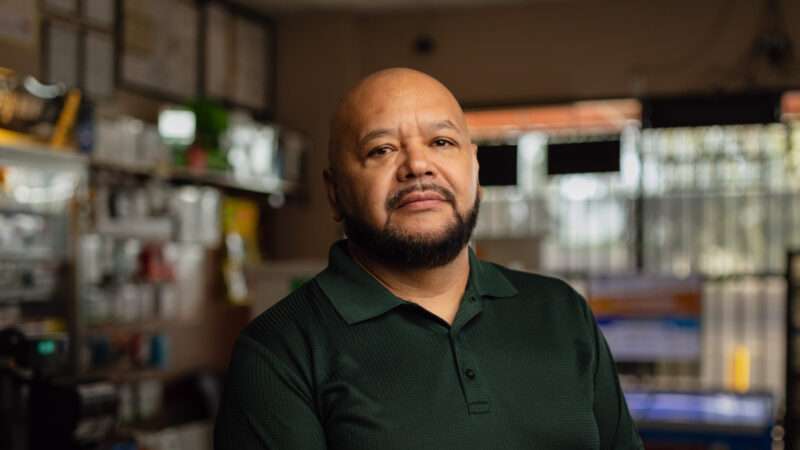
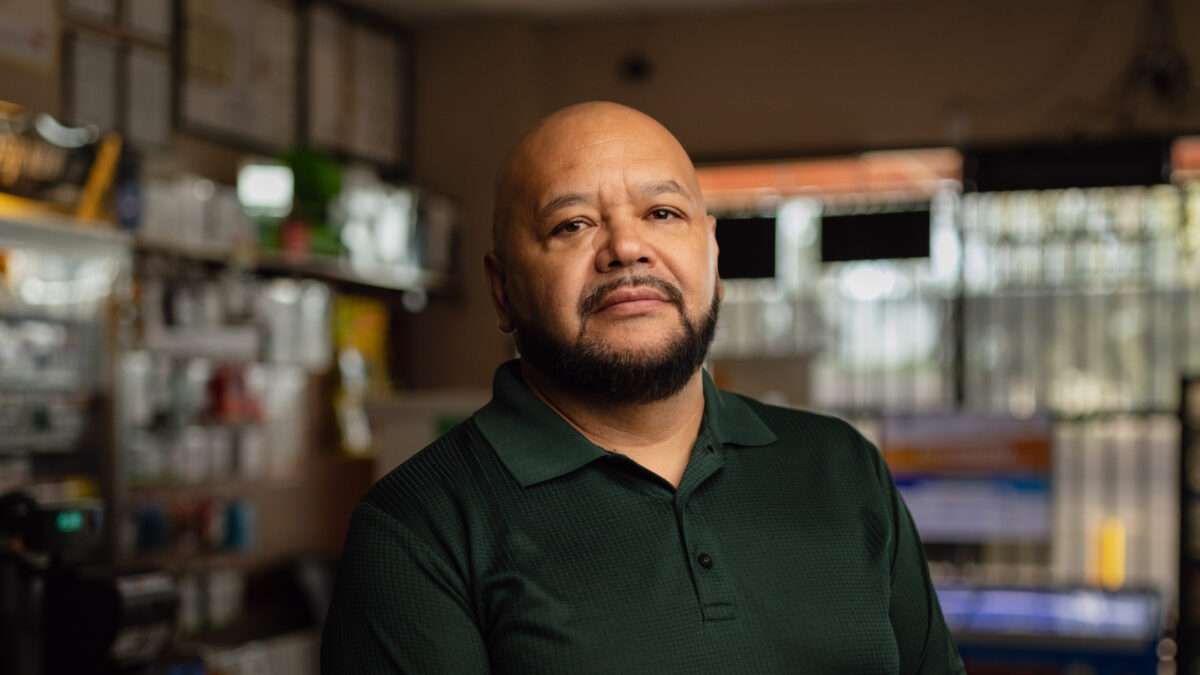
Mario Ayala | Institute for Justice

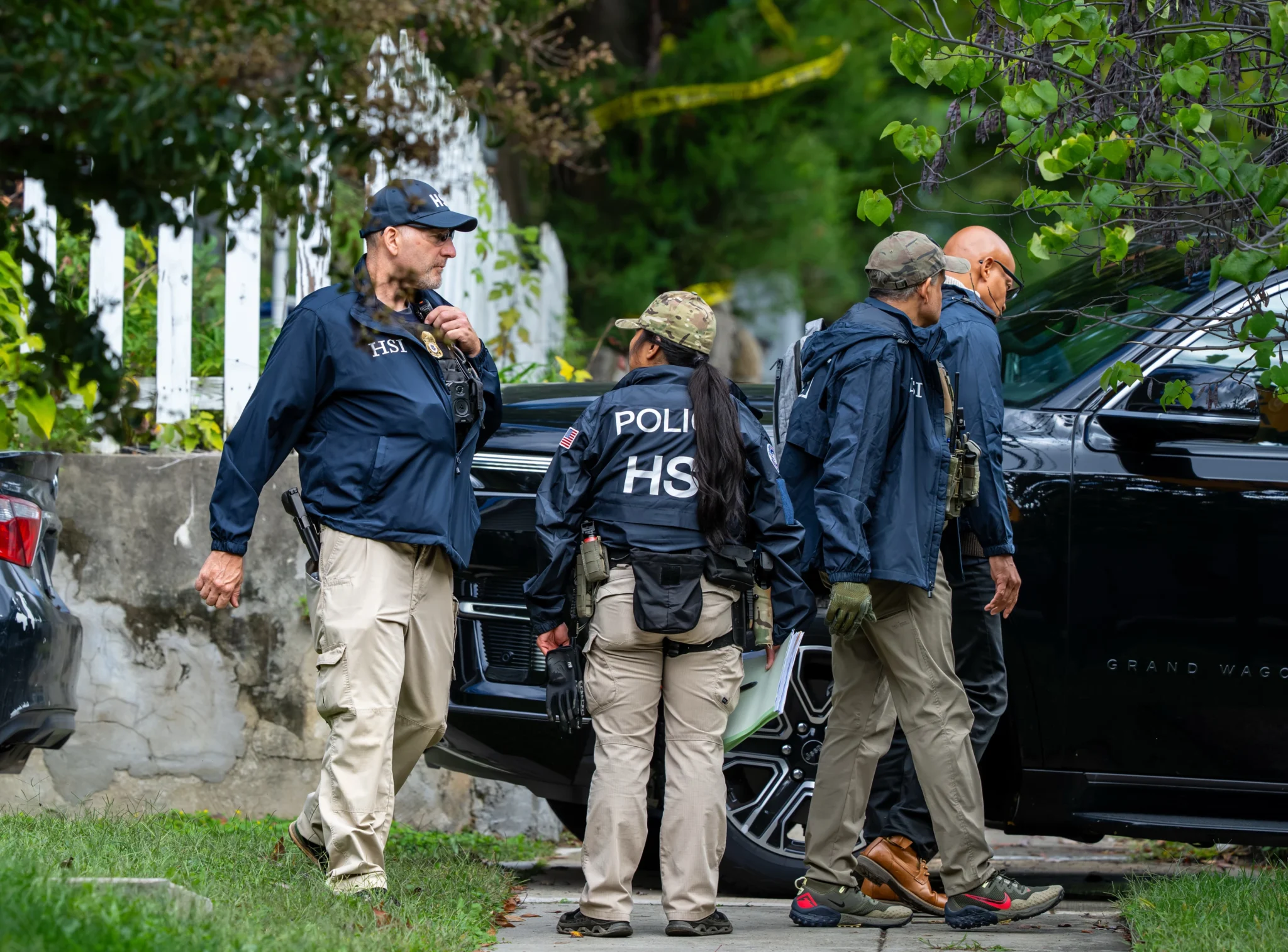
On a Tuesday morning in February 2025, federal agents descended upon Ayala's Mini Market, a convenience store in Glendale, Arizona, that offered check cashing, money transfer, shipping, and cellphone repair services along with standard items such as groceries, snacks, sodas, and cigarettes. The agents, who worked for the Internal Revenue Service (IRS) and the Department of Homeland Security (DHS), seized three computers, five cellphones, and business records, plus about $460,000 in cash and checks. They did not say why.

Twenty months later, the store's owner, Mario Ayala, still has not received a definitive answer to that question. Nor has the government told him what it plans to do with his property or how he can try to get it back. That Kafkaesque situation is unconstitutional, Ayala's lawyers at the Institute for Justice argue in a motion and memorandum they filed on Tuesday in the U.S. District Court for the District of Arizona. The motion seeks the return of the property seized from Ayala's business, saying there is no legitimate reason for the government to keep it.

"The government can't take your stuff, disappear, and then never explain itself," says Institute for Justice attorney Betsy Sanz. "For over a year and a half, the government has been holding Mario's money and property. This prolonged seizure violates the Fourth Amendment and federal law. The government cannot hold onto your property indefinitely without explanation so it can eventually take it permanently using civil forfeiture."

The raid on Ayala's store happened while he was visiting his ailing father in Mexico, who died a couple of months later. After Ayala's wife and son called to tell him what had happened, he rushed back to Arizona, where he tried to figure out why his business had been targeted by the IRS and the DHS. That was harder than you might think.

Ayala "has heard nothing from the government since they raided his business and seized his property," Sanz and her colleagues note in their memorandum. When the agents left, they told Ayala's son that "the business would receive a letter within thirty days," the memorandum says, but "no letter came," and the government "has not told Mario why it took his property or why it refuses to return it."

The agents left a one-page inventory of the property they took, including the computers, cellphones (two of which belonged to Ayala's customers), documents, and currency, although it did not specify the amount of money. They also left the first page of a warrant signed by a federal magistrate judge, which contained no information about the crime they were investigating or the property they were authorized to seize. It referred to attachments that might have clarified those points, but the attachments were missing.

Ayala still has not seen those attachments. But on the same day the agents raided his store, they also searched 18 other businesses in the Phoenix area, all of which offered money services. Judging from the warrants served on three of those other businesses, which were signed by the same magistrate judge at the same time on the same day as the warrant for Ayala's Mini Market, the legal justification for the searches was suspected violations of 31 USC 5324, which makes it a felony to "structure" a financial transaction with the intent of "evading" federal reporting requirements.

The Bank Secrecy Act requires that financial institutions report cash transactions involving more than $10,000 to the Financial Crimes Enforcement Network (FinCEN). Although that mandate is aimed at money laundering, someone can be guilty of structuring even without evidence of any other crime if he deliberately tries to avoid triggering a FinCEN report by breaking up a transaction into amounts below the threshold. As far as Ayala can tell, the search of his store was based on nothing more than suspicion of structuring.

If so, Ayala's lawyers argue, the IRS agents who participated in the raid violated a 2019 federal law that bars the agency from seizing money when structuring is the only suspected crime. Congress passed that law in response to IRS forfeiture abuses highlighted by the Institute for Justice. "For the IRS to legally seize property based on a structuring offense, it must also have an added suspicion of some other criminal act," Sanz et al. note. "Yet the IRS seized Mario's property, apparently on the sole suspicion of a structuring violation."

That is not the only legal problem with the seizure. Assuming the government plans to seek forfeiture of Ayala's money based on an alleged connection to criminal activity, it missed a crucial deadline. The Civil Asset Forfeiture Reform Act (CAFRA) requires the federal government to notify property owners of attempted forfeitures within 60 days of the seizure. That deadline passed a year and a half ago, and Ayala still has received no such notice.

"This notice is crucial because it informs a property owner that the government intends to forfeit his property and triggers his ability to respond by filing a claim or administrative petition," Ayala's lawyers note. If the government fails to meet that requirement, CAFRA says, it "shall return the property."

The government can seek extensions of the CAFRA deadline "only if there is reason to believe that notice may have an adverse result," such as "endangering the life or physical safety of an individual," "flight from prosecution," "destruction of or tampering with evidence," "intimidation of potential witnesses," or "otherwise seriously jeopardizing an investigation or unduly delaying a trial." None of those conditions applies in this case, Sanz et al. say, and their client "is unaware of the government seeking any such extension here."

Another possible rationale for keeping Ayala's property is that the government needs it as evidence in a criminal investigation. But his lawyers argue that the seized items "have no independent evidentiary value."

The government "cannot claim that it is holding the cash as evidence of the suspected structuring offense, because the government—in the usual course—does not continue to hold the physical cash it seizes but rather promptly deposits it," the memorandum says. "To prove the suspected offense here, the government would present evidence documenting the amounts and frequency of transactions and evidence that the defendant intentionally evaded reporting requirements. No fact the government must prove to establish a structuring offense becomes more or less provable by the government's continued possession of Mario's money."

Although "the checks and business documents that the government seized from Mario may at first have had some evidentiary value," Sanz et al. say, it could have long since returned the originals and kept copies. As for the computers and cellphones, "the government has had ample time to extract and copy" any relevant information.

While the benefits of keeping Ayala's property seem highly dubious, the cost to him has been severe. The seizure of the checks and currency wreaked havoc with his business model, which relies on money received for transfers to cash checks, which in turn are scanned and used to pay the companies that handle the transfers.

"The search and seizure of Mario's property upended his business," the memorandum says. "He had to keep his business closed until March 1, 2025, to replace the seized computers and to figure out how they could keep the business open. He took $50,000 of his own money out of the bank so that he could keep cashing customers' checks. When that ran out, the business had to stop cashing checks for a long time, losing customers."

Ayala "also had to come up with $112,097.20 to pay the money transmitters to cover the balance that had accrued while he was away," his lawyers add. "Since all the cash and cashed-but-unscanned checks had been seized, Mario needed to pay this money to the transmitters on his own. Though he did ultimately pay back all the money transmitters over the following month, the consequences of the raid damaged Mario's business relationship with one of the money transmitters he had formerly worked with, InterMex. Today, the business can no longer offer InterMex as an option for money transfers."

Ayala's business "is now finally stable, but it is still not doing as well as it was before the raid," Sanz et al. say. "Mario has changed the way he runs his business because of the raid. He now scans every customer's cashed check to send it to the money transmitters as soon as it is cashed, rather than collecting [checks] and scanning them together as they previously did. He constantly worries that his business will be targeted again."

In the 20 months since the raid, the government has not filed a forfeiture action or even notified Ayala that it intends to do so. Nor has it filed any criminal charges related to the seizure, as far as Ayala knows. "The government has no lawful reason to retain
Mario's property," his lawyers say, "and this Court should exercise its equitable jurisdiction to order its return."

The motion relies on Federal Rule of Criminal Procedure 41(g), which says "a person aggrieved by an unlawful search and seizure of property or by the deprivation of property may move for the property's return." The U.S. Court of Appeals for the 9th Circuit, which includes Arizona, has adopted four criteria for granting such a motion: whether the government "displayed a callous disregard for the constitutional rights of the movant," whether "the movant has an individual interest in and need for the property he wants returned," whether "the movant would be irreparably injured by denying return of the property," and whether "the movant has an adequate remedy at law for the redress of his grievance."

All of those factors count in Ayala's favor, Sanz et al. argue. Ayala's interest in the property and the injury he is suffering are clear, as is the absence of any other remedy. As for the first criterion, "the government can neither forfeit Mario's property nor justify holding it as evidence, so its continued retention is unreasonable under the Fourth Amendment," the memorandum says. "And its nearly 20 months of silence, without any notice or any forum in which to contest the seizure, offends due process. At every turn, the government has 'callous[ly] disregarded' Mario's constitutional rights."

Ayala immigrated to the United States from Mexico in 1991 and struggled for years to make a go of his business, which was successful enough at the time of the raid that he planned to open a new location devoted to cellphone repair. That plan is now on hold because of the financial difficulties caused by the seizure.

"This business is my American Dream, and the government took years of my hard work without telling me what I did," Ayala says. "This raid hurt me and my family. I hope this lawsuit gets my money back and helps make sure this doesn't happen to anyone else."

The post The Feds Took $460,000 From This Arizona Convenience Store Owner and Never Explained Why appeared first on Reason Magazine.

  •  

Homeland Security Lied About Child Porn To Search Activist's Phone

A locked smartphone | Illustration: Africa Images/Envato (AI-modified)/Flowertiare/Dreamstime

One of the unfortunate quirks of the American system is that you can't lie to the government, but the government can lie to you. Samuel Tunick found himself on the receiving end of this setup last year at Atlanta International Airport. When agents from the Department of Homeland Security (DHS) asked for his phone password, he allegedly gave them a self-destruct code that wiped his data. Tunick now faces five years in prison for destroying evidence.

It turns out that the feds were lying to Tunick the entire time. A new court filing, first reported by 404 Media, shows that the DHS had sent out an order to seize Tunick's phone over his involvement in environmentalist protests in Atlanta. When he landed at the airport, however, agents told Tunick that they were looking for "kiddie porn" and he would be allowed to leave with his phone if he cooperated. They also repeatedly denied him access to his lawyer when he asked.

"There can be no real debate that if law enforcement had acted similarly elsewhere in Atlanta, their actions would be unconstitutional. But the government says it was entitled to act this way because Mr. Tunick was returning from an international vacation" in the Dominican Republic, his lawyers wrote in the filing, which includes internal DHS communications and excerpts from his interrogation video.

U.S. law recognizes a "border exception" to Fourth Amendment privacy rights, allowing federal agents to search incoming travelers for contraband. U.S. Customs and Border Protection (CBP) claims that this exemption also allows them to hold travelers for questioning and search their electronic data. Tunick's case reveals just how widely the agency stretches this loophole.

A few hours before Tunick landed, Homeland Security Investigations (HSI) agent Travis Mcghie emailed the CBP station in Atlanta with his photo and information, stating that he is under investigation for "suspected terrorist activities." (Tunick is involved in Save the Atlanta Forest, also known as Stop Cop City, a protest movement against a local police training center.) The email asked CBP to "conduct a 100% baggage exam, retain all electronics and collect passcodes," stating that the HSI will be at the airport to conduct an interrogation.

Pulled into the secondary screening room, Tunick "almost immediately" told CBP officers that "I don't really want to speak without a lawyer any more," according to the filing, which cites the interrogation tape. He would ask for a lawyer multiple times.

The agents asked Tunick if he had "kiddie porn" on his phone and stated that "because you're refusing to talk, we have the authority to go through your phone to see what we're looking for." One of them, Latoya Castro, told Tunick that "either you can give us your password so that we can go through it no problem, or you can refuse to do that, unfortunately, we will have to seize your phone."

Both of those statements were a lie, of course. The HSI's email had asked CBP to take Tunick's phone, whether or not he cooperated.

The lie about child porn may not only have been meant to intimidate Tunick. While there are contradictory lower court rulings about the border search exemption, some courts have ruled that the CBP can only search electronics for "digital contraband," or files that are themselves illegal. A search for child sex abuse material would be on stronger legal ground than a search for mere evidence of other crimes.

Tunick was using GrapheneOS, a secure phone system that allows users to set both a real password and a "duress password" that wipes out all data when entered. The interrogation tape shows his phone appearing to reset after he gave the officers a passcode. HSI agent Nathan Burnham and FBI agent Andrea Coble then entered the room.

"You are not under arrest. Once these gentlemen are done with you, pursuant to your entry into the country, you're free to leave," Burnham said, referring to the CBP officers.

Tunick's lawyers argue that the judge should throw out the phone password Tunick provided and everything that resulted from entering it as an "involuntary" response made under "unlawful interrogation," because the CBP agents did not read Tunick his Fifth Amendment rights and ignored his multiple requests to consult with his lawyer before answering their questions.

The CBP claims that secondary screening at the border doesn't count as a criminal investigation, so detainees don't have the same rights as criminal suspects. "Since the international arrivals inspection is an administrative function, CBP policy and federal regs do not permit the presence of lawyers during secondary examinations," a spokesman told Reason earlier this year.

But Tunick's lawyers insist that his experience was "far outside" a normal border crossing: He was accused of a serious crime to his face, faced an investigation for a different serious crime he didn't know about, and clearly could not leave the situation until he gave information to government agents.

"I hope people understand that the charges against me are meant to intimidate people against protecting their data and their privacy, and the government hopes to set a precedent that no one has the right to privacy," Tunick told 404 Media. 

Defend the Atlanta Forest, the movement that Tunick is involved with, has been a major nuisance for authorities in Georgia. Protesters attacked and burned construction equipment throughout 2022, and police shot a protester in 2023 under unclear circumstances, claiming that they were fired at during a raid.

The Trump administration has brought down the federal government against the movement. In June 2026, the Department of Justice brought federal charges against two alleged arsonists, citing National Security Presidential Memo 7, which directs the feds to go after left-wing domestic terrorism.

But beyond the email line about "suspected terrorist activities," there is no indication of what specific crimes the feds suspected Tunick of, or why they suspected him. And the whole setup of the interrogation was designed to hide those answers. In fact, instead of charging Tunick under typical obstruction or evidence-destruction laws, federal prosecutors chose a rarely-used statute that doesn't require them to disclose what the underlying investigation was about.

"Many times the government wants to highlight what it was trying to investigate because that ups the stakes on what the defendant was doing," former prosecutor Daniel Richman told The New York Times. "This is a case where I think they're trying to avoid exactly that by focusing only on the destruction, and not what the investigation was about." 

The post Homeland Security Lied About Child Porn To Search Activist's Phone appeared first on Reason Magazine.

  •  

DHS orders removal of DeepSeek from government agency IT systems

The Department of Homeland Security (DHS) has ordered that products from the Chinese AI startup DeepSeek be removed from federal agency IT systems and barred from government contracting. The order, which initially went out in July, was published on the Federal Register website Monday. It said DeepSeek’s AI models present “multiple threat vectors,” noting the…

  •  

Trump Slashing Deportation Protections Shows Why Temporary Status Shouldn't Depend on Who's President

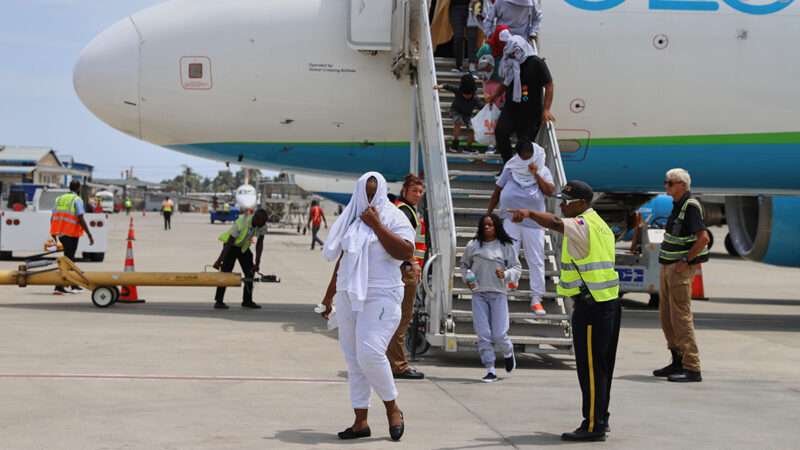
People deboarding a plane | Photo: Haitians deported from the U.S. deplane in Haiti; Ketlain Difficile/A.P.

In late August, President Donald Trump's administration carried out its first deportation flight to Haiti since the Supreme Court allowed it to end temporary protected status (TPS) for the embattled country in June. "There are no extraordinary and temporary conditions in Haiti that prevent Haitian nationals…from returning in safety," the Department of Homeland Security (DHS) claimed in its TPS revocation, describing a country the State Department warns Americans not to visit "for any reason."

The Trump administration has eroded America's humanitarian avenues, including TPS, which shields migrants from deportation. As a result, many noncitizens may become undocumented and could be forced to return to unsafe places.

The DHS secretary may grant TPS for countries facing armed conflicts, natural disasters, or other disruptive events. TPS designations last anywhere from six to 18 months and may be extended. The government has designated 29 countries for TPS since Congress established the status in 1990, offering protection to Salvadorans fleeing a 12-year civil war, Haitians fleeing the 2010 earthquake, and millions of others. The Biden administration repeatedly made and extended TPS designations, but the Trump administration has been working to terminate them.

There were 1.3 million people living in the U.S. under TPS in March 2025, according to the Pew Research Center. By August 2026, the Trump administration had ended TPS for 13 countries, leaving 1 million people without its protections. Once someone loses TPS, he reverts to his previous immigration status, which is often undocumented. Over 600,000 Venezuelans, 330,000 Haitians, 170,000 Salvadorans, and 100,000 Ukrainians had TPS protections as of March 2025, according to the Congressional Research Service.

Critics often point out that TPS isn't really "temporary." That's frequently true: Although some designations have been brief, others have been decades-long. Designations for Haiti, Syria, Honduras, Nepal, Somalia, and El Salvador have all lasted at least 14 years, according to the Migration Policy Institute (MPI).

This says more about the U.S. immigration system and presidential power than it does about TPS. "In the absence of Congress acting to legalize what has become a long-settled unauthorized immigrant population, Republican and Democratic administrations, lawmakers, immigrants, and foreign governments had come to tacitly rely on TPS despite its nominally temporary nature," notes the MPI. Immigration policy is increasingly subject to presidential whims, and due to lengthy processing times and narrow qualifications, more durable immigration pathways such as asylum and refugee status are often inaccessible to eventual TPS beneficiaries. An immigrant-friendly president may use TPS designations to temporarily shield noncitizen populations, but an anti-immigrant successor can also revoke those protections. In either scenario, a TPS holder faces uncertainty.

In a rare bipartisan immigration effort last February, Reps. Laura Gillen (D–N.Y.) and Mike Lawler (R–N.Y.) introduced a bill to extend TPS for Haiti for three years. It passed the House this April and has been languishing in the Senate since. Its future, too, is uncertain.

The post Trump Slashing Deportation Protections Shows Why Temporary Status Shouldn't Depend on Who's President appeared first on Reason Magazine.
  •  

Landowners in Texas' Big Bend Region Fight Trump Administration's Attempts To Seize Land for Border Wall

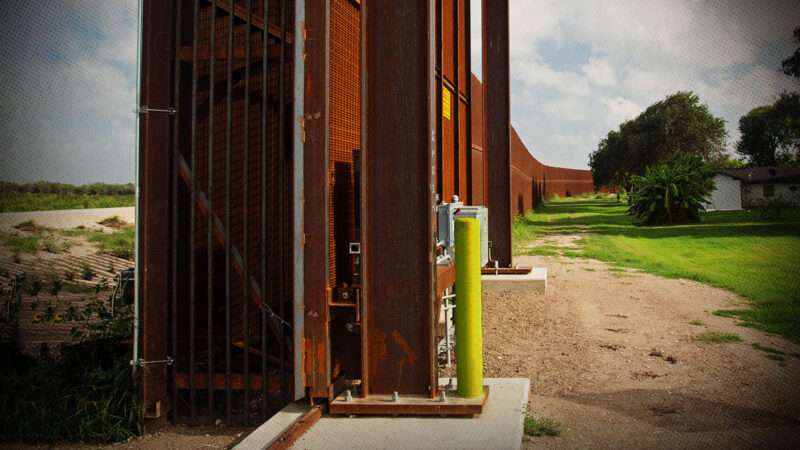
Border wall | Jim West/UCG/Universal Images Group/Newscom

The Trump administration's attempts to fast-track construction of the president's long-promised border wall through Texas' remote Big Bend region have ground to a halt amid fierce opposition, protests, and legal challenges from landowners and conservation groups.

A federal judge on Wednesday released an opinion explaining her decision to issue a preliminary injunction blocking border wall construction through the Big Bend area. U.S. District Judge Kathleen Cardone found that the plaintiffs, which included the Center for Biological Diversity and several longtime residents of the region, had shown a substantial threat of irreparable harm if the construction project is allowed to continue.

The Trump administration wants to spend $7.5 billion building additional security infrastructure along a 500-mile stretch of the U.S.-Mexico border running through the Big Bend region, which includes Big Bend National Park. The federal government began sending threatening letters to property owners announcing its intent to acquire necessary pieces of their land this summer, and it waived several environmental regulations, allowing it to put bulldozers on the ground inside the national park by September.

However, numerous groups and local landowners say the border wall project will alter their way of life and permanently scar one of the most rugged and pristine landscapes in the country. The project attracted bipartisan criticism and protests.

Cardone also found that the plaintiffs were likely to succeed on their claims that Department of Homeland Security (DHS) Secretary Markwayne Mullin exceeded his authority when he issued environmental waivers for the project.

The injunction is a temporary reprieve for property owners such as David Keller, an archaeologist and part-time river guide on the Rio Grande River. The original plans for the border wall expansion would have cut through Keller's 10-acre property near Redford, Texas, putting a 30-foot-tall wall on the levee that sits between the river and the rest of his land.

Keller says the Trump administration gravely underestimated how much anger its tactics and attitude would generate.

"It's a level of arrogance—they're just used to being able to bulldoze over people," David Keller says. "They were moving forward as if they weren't expecting any resistance, but boy, they're due for a wakeup call. And they're having it right now."

Keller is a plaintiff in a separate lawsuit against the DHS by Conserve Big Bend, a coalition of landowners, conservationists, river tour guides, researchers, and other affected parties.

Keller says he's loved wild, open country since he was a child, and as soon as he saw the region in the 1990s, he decided he would find a way to live and work there, which he's done for the past 25 years. "It's visually magnificent," Keller says. "It's incredible. It's like no other place I'd ever seen. It's one of the last unspoiled places remaining in the lower 48."

Keller says it's where he plans on being buried, too, although these days he's unsure whether to say "plans" or "planned." The proposed border construction is an existential threat to the life he's built, he says, and if the wall goes up, he'd likely move.

"I didn't come down here to live in a cage," Keller says.

The proposed border wall would not only block access to the river for farmers, ranchers, and outdoors enthusiasts along the river, as well as block the view into Mexico, it would wreck "the whole feeling of the place, the historical cross-border culture that we've developed," Keller says.

So far, the federal government has not tried to seize any private property in the Big Bend region through eminent domain, although it sent letters to property owners this summer requesting access to survey their land and warning them that it held the option to invoke eminent domain if they did not quickly sell.

Both Keller's and the Center for Biological Diversity's lawsuits argue that the department's justification for building and expediting additional border infrastructure in the Big Bend Region are factually and legally incorrect. The DHS determined that the sector of the border is an "area of high illegal entry."

However, despite making up roughly a quarter of the entire U.S.-Mexico border, the Big Bend sector only accounted for between 0.3 percent and 2.2 percent of total border-wide arrests over the past 30 years.

Cardone cited the low apprehension numbers in her finding that Mullin exceeded his authority to issue the waivers.

"The unrebutted evidence shows that the Big Bend Sector is, by far, the sector with the lowest rate of migrant apprehensions along the entire U.S.-Mexico border, both in terms of gross totals and apprehensions per mile of border," Cardone wrote. "Therefore, if the Big Bend Sector is an area of high illegal entry, so is every other sector, and the waiver authority would apply to the entire U.S.-Mexico border."

The post Landowners in Texas' Big Bend Region Fight Trump Administration's Attempts To Seize Land for Border Wall appeared first on Reason Magazine.
  •  

Zacharia on China: ‘They don’t even have proper toilets’ 

White House press secretary Katie Zacharia took a jab at China, saying the country lacked proper toilets, less than a week into the job where she’s already come under fire over her qualifications and performance. “I remember this very distinctly having just come from China, thinking, how is China the next country on the horizon?…

  •  

ICE Sets Daily Deportation Record Under Trump Administration

Tom Homan at ICE Air Operations in Alexandria, Louisiana, amid record deportations under the Trump administration.

Tom Homan says ICE also carried out more removals last month than in any previous month.


U.S. Immigration and Customs Enforcement (ICE) recorded its highest number of deportations in a single day since President Donald Trump returned to office, border official Tom Homan said, as the administration pushes to expand removals.

RELATED: U.S. Justice Department Sues California Over Mail-In Ballots

Homan announced the record in a social media post, saying ICE had also carried out more removals last month than in any other month. Figures for fiscal year 2026 are still being finalized, he added.

He also said monthly ICE arrest totals and voluntary departures recorded by the Department of Homeland Security (DHS) had been higher since June than in any previous months.

This morning I was on the ground with the ICE Air Operations team in Alexandria, LA to observe and assess removal operations. First up, a plane load of Haitians being sent back home—including those with criminal records for aggravated assault, sex assault, kidnapping, battery,… pic.twitter.com/Ajb9mgd2EA

— Thomas D. Homan (@RealTomHoman) October 15, 2026

The announcement followed Homan’s visit to ICE Air Operations in Alexandria, Louisiana, where he said he had observed and assessed deportation operations. He described a flight carrying Haitian nationals back to Haiti, including people he said had criminal records for aggravated assault, sexual assault, kidnapping, battery and other offenses.

The administration has urged people whose Temporary Protected Status (TPS) has expired, as well as those without legal immigration status, to use its voluntary departure program to return to their countries of origin.

“This Administration has made it clear that temporary means TEMPORARY,” Homan wrote, warning that those who remain in the country without legal status would face arrest and deportation.

If you are here illegally, we will find you, arrest you, and DEPORT you.

Yesterday, the men and women of ICE REMOVED these criminals from our communities:

— U.S. Immigration and Customs Enforcement (@ICEgov) September 1, 2026

Homan said the administration was expanding its enforcement capacity to increase removals beyond current record levels and fulfill Trump’s pledge to carry out mass deportations. He described the effort as part of a broader campaign to restore law and order, protect communities and promote economic prosperity.

ICE’s enforcement practices have drawn both support and opposition among members of the public and political figures.

The federal government tried to turn our public servants into deportation agents and force New York City to carry out ICE’s cruel agenda.

Today, a federal court rejected that effort and upheld our laws.

Every New Yorker deserves to seek help from their city without fear of…

— Mayor Zohran Kwame Mamdani (@NYCMayor) October 16, 2026

The final fiscal-year figures remain pending, while the administration continues to pursue expanded deportation operations.

  •  

DOJ sues California after pushing state to match voter list with USB drive

The Department of Justice (DOJ) sued the state of California on Thursday after giving it a USB drive and demanding that within 48 hours it compare 20,000 names on its data rolls with information provided by the Department of Homeland Security (DHS). The DOJ sent the letter to the state and local election officials Tuesday,…

  •  

Judge Blocks Trump Administration’s $20 Million Ad Campaign

Federal judge blocks Trump administration’s $20 million political advertising campaign funded through the Department of Homeland Security.

A federal court imposed a 14-day restraining order over allegations that the administration misused public funds for political advertising ahead of midterm elections.


A federal judge in New York has blocked the Trump administration from entering into, renewing or expanding contracts for a controversial advertising campaign, freezing $20 million in funding allocated through the Department of Homeland Security (DHS) amid allegations that public money was being used for partisan political messaging.

RELATED: Trump Demands Leadership Change in Ukraine Amid Zelensky Rift

U.S. District Judge Jennifer Rochon of the Southern District of New York issued a 14-day temporary restraining order on Sunday, citing the risk of “irreparable harm” before publishing her full legal reasoning. The ruling came just over three weeks before the midterm elections.

The lawsuit was filed by a coalition of civic organizations, including the nonpartisan group Common Cause, represented by the legal firm Democracy Forward. The plaintiffs argued that the campaign violated federal restrictions on using funds appropriated by Congress for partisan advertising or propaganda.

“There is no legal justification or precedent for the president to use the machinery of government and public funds to influence election results,” the plaintiffs said in a statement following the ruling.

The advertisements, which began airing in late September, feature footage from Donald Trump’s previous presidential campaign, excerpts from speeches warning of the threat of communism and references to recent military operations, including U.S. military action against Iran and the abduction of Venezuelan President Nicolás Maduro.

The Justice Department argued late Saturday that the court order was unnecessary because the advertising campaign was scheduled to end on Sunday. The judge nevertheless imposed the restrictions.

The White House has defended the spending, describing the advertisements as “public service and educational messages” and rejecting allegations that they constitute electoral propaganda. Trump has maintained that the campaign promotes the United States rather than himself, noting that he is not a candidate in the midterm elections.

The president has also offered to cover the cost with personal funds or money from his political campaign if authorities determine that the expenditure was improper. Government officials, however, have said there are no immediate plans for reimbursement.

The controversy has drawn criticism across party lines. Republican Senate Majority Leader John Thune has questioned the use of taxpayer money to finance the advertisements, while the Democratic National Committee has filed separate lawsuits against the administration over the same issue.

  •  

U.S. Cuts Refugees’ Deadline to Challenge Immigration Status Revocation to 10 Days

The International Refugee Assistance Project warns the new policy could facilitate mass deportations.

On Tuesday, the Department of Homeland Security (DHS) announced the United States will reduce from 30 days to 10 days the period refugees have to defend themselves when the federal government seeks to revoke their immigration status.

RELATED:

At Least 139 Migrants Dead in Shipwreck off Djibouti

The new rule shortens the time available to submit evidence and arguments in response to a notice from authorities stating their intention to revoke that protection.

The measure seeks to “restore integrity to the immigration system, mitigate public and national security risks, and prevent fraud,” DHS said.

Under the law, the U.S. government can revoke refugee status only if it determines that the person did not meet the requirements for obtaining it when they were admitted to the country.

If authorities determine that the evidence and arguments submitted do not justify maintaining the protection, they can revoke the person’s status and subject them to deportation proceedings.

The process of obtaining this protection can take years. Available pathways include referral to the U.S. Refugee Admissions Program (USRAP) by the United Nations, a U.S. Embassy, or a nongovernmental organization. Applicants must also pass interviews and security screenings, including background checks conducted by various federal agencies.

ICE deports a man for “traffic infractions” while his wife and kids scream for mercy. If you voted for this you have no soul.

(via abcnews on TikTok) pic.twitter.com/conNvyCA8B

— Warren (@swd2) October 13, 2026

The International Refugee Assistance Project (IRAP) rejected the changes and warned that they would facilitate “mass” deportations of refugees. IRAP said the administration of U.S. President Donald Trump has been persecuting refugees and illegally detaining them since the beginning of the year.

IRAP has sued the U.S. government over its detention of refugees and attempts to deport them to countries including Rwanda, Iraq, and Afghanistan. Trump’s mass deportation campaign has also affected people who had authorization to remain in the United States.

His administration has revoked Temporary Protected Status (TPS) protections for several countries, canceled humanitarian parole programs and pushed for certain asylum applications to be denied without a full hearing. According to the American Immigration Lawyers Association (AILA), 1.6 million immigrants lost their legal status during the first year of Trump’s second term.

The shortened deadline turns the process into a “mere formality” to “strip refugees who were lawfully admitted and are lawfully living in the country of their status and deport them to places where they would face persecution or worse,” said Laurie Ball Cooper, IRAP’s vice president of U.S. legal programs.

teleSUR/ JF

Source: EFE

  •  

Agents search Rep. Omar’s Washington home in criminal probe as she vows she won’t ‘be silenced’

This is an escalation in a criminal investigation of US Rep. Ilhan Omar, in the final weeks of her reelection bid. She is a frequent target of Israel partisans and the Trump Administration over her opposition to Israel's human rights violations and the Israel lobby's destructive influence in the US

  •  

DHS Searched Ilhan Omar's Home as Part of Immigration Fraud Investigation

Ilhan Omar | Illustration: Tom Williams/CQ Roll Call/Newscom.

On Monday, CBS News reported that federal agents searched the Washington, D.C., home of U.S. Rep. Ilhan Omar (D–Minn.), as part of an ongoing investigation that "centers on Omar's immigration paperwork." 

In a statement to the Associated Press, the Justice Department said agents from Homeland Security Investigations (HSI)—an office within the Department of Homeland Security (DHS) that conducts federal criminal investigations into immigration fraud and identity and benefits fraud—"executed a judicially authorized search warrant" as "part of an ongoing federal criminal investigation." 

The search warrant reportedly "lists a series of potential immigration crimes under investigation, including false statements and fraud in immigration paperwork, as well as a general conspiracy charge," according to The New York Times. The Times reported that federal officials are also investigating "whether Ms. Omar derived citizenship from a father who may have been ineligible to obtain naturalized status." In a statement, Omar called the investigation an "outrageous abuse of power and an unprecedented escalation in the weaponization of federal law enforcement to target political enemies," stating she did "nothing wrong."

Omar has been in the Justice Department's crosshairs since January, when President Donald Trump announced that the department and Congress were "looking at 'Congresswoman' Illhan Omar, who left Somalia with NOTHING, and is now reportedly worth more than 44 Million Dollars." 

Trump was referencing an investigation by the House Ethics Committee, based on a 2025 financial disclosure form showing she and her husband held assets worth between $6 million and $30 million, a notable increase from her previous filings. Omar later filed an amended disclosure form that showed the assets were worth $18,004 to $95,000 after accounting for liabilities. However, in September, the Wall Street Journal reported that the Office of Congressional Conduct—which reviews allegations against House members and their staff—voted 5–1 to recommend that the House Ethics Committee dismiss the allegations. Per the Journal, investigators found no "substantial reason to believe that Rep. Omar reported false or incomplete information in her financial disclosures." Omar's office told the Journal she didn't catch the errors, which stemmed from erroneous valuations of her husband's businesses, because she "isn't involved in her husband's businesses and trusted the accountant involved."

The investigation into Omar appears to be part and parcel of the Trump administration's weaponization of government—which the president vowed to end—adding to a list of cases that includes former White House aide Cassidy Hutchinson, former FBI Director James Comey, and former National Security Adviser John Bolton.

Omar's opposition to the Trump administration's immigration enforcement efforts, particularly in her home state of Minnesota, and her Somali heritage have made her a frequent target of the president and his allies. 

Last December, a federal indictment revealed a nearly $9 billion fraud scandal in Minnesota, much of it tied to the state's Somali immigrants. In March, Vice President J.D. Vance—who leads the Trump administration's anti-fraud task force—told right-wing commentator Benny Johnson that Omar "definitely committed immigration fraud against the United States of America." Vance accused Omar of "being at the center of a lot of the worst fraudsters in the Somali community." 

Vance doubled down in May, telling White House reporters the immigration fraud allegations were "something that the Department of Justice is looking at right now." He appeared to pull back from his March claim that he was certain Omar had committed immigration fraud, instead stating that while he didn't want to "prejudge an investigation," it "certainly seems like something fishy is there."

In September, DHS Secretary Markwayne Mullin told Johnson that the investigation into Omar was still "ongoing," and that the department knew she had "married her brother to try to bring him into the United States." Omar's office has denied the accusations, which were first levied against her in 2016. 

Mullin claims the investigation into Omar is "not political." He could be telling the truth; federal investigators have scrutinized Omar before. In 2024, the Biden administration's Justice Department opened an investigation into Omar's "finances, campaign spending and interactions with a foreign citizen," according to The New York Times. Per the Times, the investigation eventually "stalled for lack of evidence." 

But Mullin's words are also hard to take at face value. Despite denying accusations of weaponizing the justice system, the Trump administration has time and again used dubious legal reasoning to investigate the president's political enemies. This includes New York Attorney General Letitia James, who, after successfully suing Trump for financial fraud, was indicted for mortgage fraud by Trump's Justice Department, which used the same petty justification on her. 

The president has also continued a campaign to indict Federal Reserve Governor Lisa Cook, announcing last week that the White House would hold in-person hearings to look into claims she committed mortgage fraud. Ousting Cook would ostensibly allow the president to install a Fed governor aligned with his priorities. It's a tactic that failed Trump once before, when his Justice Department opened a criminal investigation into former Federal Reserve Chair Jerome Powell for his handling of renovations at the central bank's headquarters. Jeanine Pirro, the U.S. attorney for the District of Columbia, dropped the probe in April, and the department ultimately found nothing criminal in Powell's conduct.

An investigation will reveal whether Omar broke the law. Still, if it's anything like the Trump administration's previous efforts, the investigation is likely driven by political animus, not criminal behavior.

The post DHS Searched Ilhan Omar's Home as Part of Immigration Fraud Investigation appeared first on Reason Magazine.
  •  

Are Warrantless Phone Searches at the Border Constitutional? The Supreme Court May Soon Decide.

Border phone search | Tatiana Chekryzhova/Dreamstime/rudenkoalla/Magnific/Mariam Zakaidze

George Anibowei, a U.S. citizen, is a Texas-based immigration attorney with many clients battling the Department of Homeland Security. Border agents have searched his phone at least five times without a warrant as he returned to the United States.

In the first search, agents copied the phone's entire contents, including his confidential communications with clients. The government still has that data, and Anibowei still doesn't know why it was kept or who has seen it. He now leaves his work phone at home when he travels.

On September 29, the Supreme Court asked the federal government to respond to Anibowei's petition, which asks whether the Fourth Amendment lets border agents search the contents of a phone without a warrant. (I'm one of his lawyers.) The government waived its response, expecting the Court would deny the petition without a second look.

But in 2021, the solicitor general told the Court that this very question had produced an "entrenched circuit conflict" of "considerable practical importance." The conflict has only deepened since. Seven federal appeals courts now hold that a warrant is never required to search a phone at the border, while the 4th and 9th Circuits require one in at least some cases. That means one of your constitutional rights currently depends on which airport you fly into.

While circuit courts may disagree, the Supreme Court has already shown the best answer for this question. In Riley v. California (2014), the Court unanimously held that police generally need a warrant to search the phone of someone they arrest. There is an exception for searches incident to arrest, which allows the police to arrest someone without a warrant; that exists to protect officers and preserve evidence. Data can't hurt an officer, and a phone can be secured while police get a warrant. An extension of an old exception to digital data, the court said, "has to rest on its own bottom." Treating a phone like any other container in an arrestee's pockets was like saying "a ride on horseback is materially indistinguishable from a flight to the moon."

The border-search exception fails the same test. Those searches exist to collect duties, keep out people who may not enter, and stop contraband. But duties attach to physical goods, not data. And as the legal scholar Orin Kerr has put it, agents "will not find a person smuggled inside a computer hard drive." As for digital contraband, anyone who wants illicit files can carry a clean phone and download them after clearing customs. Suspicionless phone searches burden millions of innocent travelers while barely inconveniencing smugglers.

The appeals courts that disagree mostly cite one another. But the Supreme Court rejected a lopsided lower-court consensus in Riley, and again in Carpenter v. United States (2018). Counting courts is not a constitutional argument.

Defenders of these searches lean on history. In United States v. Ramsey (1977), the Court noted that the first Congress authorized warrantless customs searches in 1789, less than two months before it proposed the Fourth Amendment. True enough. But that statute let officers search ships for hidden dutiable goods. To search a house, store, or other building for the same goods, officers needed a warrant. And nothing in the statute let officers read a traveler's papers.

That distinction was no accident. Customs abuses had helped spark the Revolution. Writs of assistance gave British customs officers blanket authority to search wherever they pleased, which James Otis said placed "the liberty of every man in the hands of every petty officer." And the founding generation guarded letters especially closely. Benjamin Franklin, as the first postmaster general, made postal workers swear they would not open mail without an express written warrant.

Even Ramsey, the government's favorite border search precedent, respected that distinction. It upheld opening international mail to look for contraband, but the regulations before the court flatly prohibited reading correspondence without a warrant, a point the justices stressed repeatedly. The Court has never held that border agents may read a traveler's papers without a warrant. A phone holds years of correspondence. It deserves at least the same protection the Founders gave a sealed envelope.

Last month, however, the 2nd Circuit joined those courts that have disregarded this tradition. In United States v. Alisigwe, Judge Steven Menashi wrote that agents need no suspicion whatsoever to search a traveler's property at the border, phones included. A border search becomes non-routine, he reasoned, only when it intrudes on the person, as a strip search does. A phone is property, so searching it is routine.

Judge Eunice Lee concurred, agreeing that no warrant was required. But she warned that the majority's rule permits suspicionless searches for any reason, "including political or discriminatory ones."

The Alisigwe majority's premise miscasts the Fourth Amendment. The amendment's text secures "persons, houses, papers, and effects" in a single, unranked list. The abuses that produced the amendment were searches of property, including private papers. Agents may properly physically examine a phone to ensure it's not really a container for smuggling contraband. But reading or viewing its digital contents without a warrant trespasses on a person's papers and effects. The framers protected property because they recognized that human beings are not ghosts: We live in the physical world by exercising our property rights, and so searching our property can reveal much about our lives.

Alisigwe is the latest word from a Court of Appeals, but it contains complications for the constitutional issue. The trial court found that agents had reasonable suspicion, so the no-suspicion holding arguably wasn't needed to decide the case. That suspicion involved a forged passport, which goes to identity and admissibility, the core of border authority. Finally, Alisigwe was a permanent resident, not a citizen, so the government's interest in deciding who may enter was heightened.

Anibowei is simple on each of these counts, which is why one can be hopeful the Supreme Court will take it and address the Fourth Amendment question now. Anibowei is a naturalized citizen, no one suspects him of anything, and he challenges the government's search policies directly rather than seeking suppression of evidence in a criminal case. As the 5th Circuit itself acknowledged, his case "turns squarely and solely" on the warrant question.

The stakes keep growing. In FY 2025, Customs and Border Protection (CBP) searched 55,318 electronic devices, nearly 11 times as many as in 2012—and nearly a quarter of those searches targeted U.S. citizens. According to the directives Anibowei challenges, agents may keep what they find and share it with federal, state, local, and foreign agencies. Investigators have learned to wait for a target to travel and ask CBP to search his phone on the way back in, rather than go to the trouble of demonstrating probable cause to a judge. No wonder universities, bar associations, and press freedom groups now advise travelers to leave their devices at home.

The Founders rebelled against customs officers who could search wherever they pleased and read whatever they found. A rule letting border agents scroll through a citizen's correspondence, photos, and client files without a warrant, or any suspicion at all, revives that power. The Supreme Court should take Anibowei's case. Our papers don't lose Fourth Amendment protections at the border just because they're digital.

The post Are Warrantless Phone Searches at the Border Constitutional? The Supreme Court May Soon Decide. appeared first on Reason Magazine.
  •  
❌